prepared

How Airbnb hosts prepared their rentals for the World Cup

The 2026 FIFA World Cup has wrapped, but some Angelenos who rented their homes to fans are still tallying up profits from a month of soccer frenzy in the city.

Driven by projections of massive tourism and a $750 first-time host incentive from Airbnb, many local property owners expected a sizable payout. While some savvy owners were able to cash in big during the tournament, others experienced only a moderate bump.

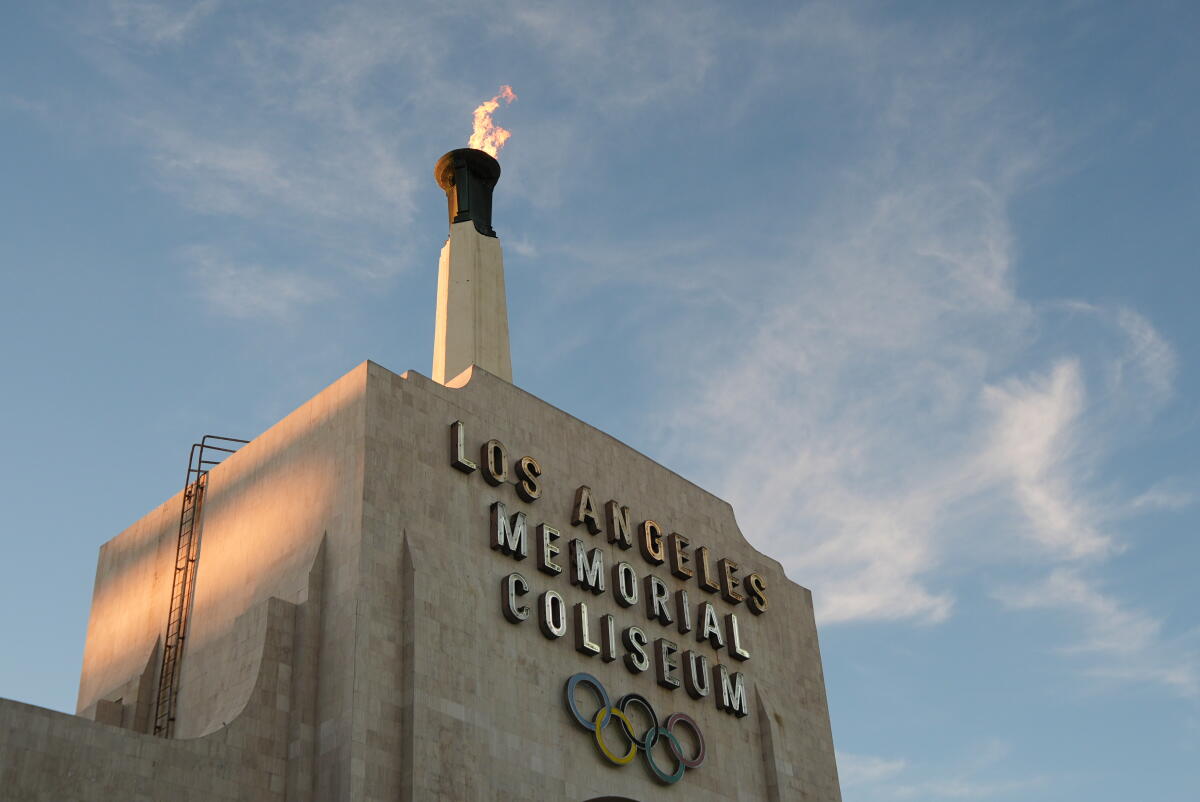
But something they all walked away with was some extra cash in their pockets and a blueprint for the LA28 Olympics.

We spoke with three L.A. Airbnb hosts to find out what they earned through their rentals during the World Cup, the luxurious renovations and amenities that helped their properties stand out and what advice they’d give others to prepare for the next global gold rush.

Wellness retreat-inspired house in Inglewood, 3 bedrooms

Lia Pilla sits in one of her Airbnb properties.

Lia Pilla turned one of her Airbnb properties into what she calls the Pink Palms Retreat. The Inglewood home features an infrared sauna, a large hot tub and more.

Rental host: Lia Pilla

How long have you been a host? Since 2021

Pre-World Cup rate: Ranged from $350 to $550

Price during the World Cup: During opening weekend, I got $2,730 for two nights. Of course, I have to pay a cleaning fee, but just in two nights, I’m a few hundred short of paying my mortgage, so that was really cool. For the following games, I maybe got like $400 to $500 a night. Then for the final weekend, I got like $3,400 for four nights, so it went back up.

What updates did you make, if any, to prepare? Last July, I did a full remodel of the house and turned it into what I call Pink Palms Spa Retreat. It’s all pink on the outside. It has an infrared sauna and a huge hot tub that can fit up to like 20 people. It has a large dining table with a firepit on top of the table, lush privacy trees and a custom gym.

Were you surprised with how things played out? I was expecting to make a couple hundred thousand off this World Cup, I’m not gonna lie, but I didn’t so I was like “OK. That kind of sucks.” I think L.A. got a little bit [cheated] with the teams we had. We had Team USA, which was cool, but we didn’t have any of the the big name teams like Argentina or France or Spain, so I think that’s one reason why the prices weren’t as high. I also think the political climate has made a big impact. Some people are scared to come to the U.S. or they aren’t allowed to come. But I’m happy with what I did get.

What’s one thing you’re thinking about doing with the money you made? I always invest back into the business. I want to touch up everything at all of my properties, so it continues to look like the pictures because your reviews are so important. I also have a Europe vacation planned.

Any advice for hosts preparing for the Olympics? Do your research on the market. Think “If I’m traveling to Los Angeles, what would I want?” because it’s also about the experience you create. Know what amenities people like. If you’re starting out or you’re already a host, I highly recommend having software in place for property management, cleaning and pricing.

‘Hillside hideaway’ in Woodland Hills, 2 bedrooms

A man stands outside his Airbnb.

Matthew Motamedi was surprised to see an influx of bookings on his Woodland Hills hideaway, which is roughly 30 miles away from SoFi Stadium.

(Kayla Bartkowski / Los Angeles Times)

Rental host: Matthew Motamedi

How long have you been a host? Since July 2025

Pre-World Cup rate: In late spring, we were charging $250-$280 per night on average.

Price during the World Cup: It was around $300, which is normal during July for us. We undercut the hotels and some of the other listings in our area by $100.

What updates did you make, if any, to prepare? We added a super crazy, comfy couch made of fake fur and people love it. That’s one of the important things about an Airbnb. There needs to be a really good hangout spot, so the couch needs to be super comfortable, and if the couch isn’t comfortable, no one wants to stay there.

Were you surprised with how things played out? Our property was so far away from SoFi Stadium (nearly 30 miles) so I thought it was going to be a non-event for us. It was supposed to be like that, but it definitely affected us because I started getting a lot of European and Spanish-speaking tenants.

What’s one thing you’re thinking about doing with the money you made? We’re definitely putting the extra money back into the property because we’re not there yet. There’s so much we want to do. During the World Cup, I was able to upgrade the AC unit, added a smart thermostat and invested in landscaping, which we want to do more of. We want to invest in the curb appeal and add more outdoor furniture. Maybe a movie room. We also want to get an auto pen so we can write handwritten cards for guests because it’s kind of hard to write perfect handwriting in different languages and in cursive. [Laughs] You can pick a font and it holds a ballpoint pen. To have that would be really cool.

Any advice for hosts preparing for the Olympics? You have to curate the experience and get more involved. If you can’t get involved, you need a co-host. Find a cousin, a sister, a brother, a friend, someone you trust with good taste to help you. Also, don’t just put up random paintings. Make it so that people want to move there. A lot of my guests are like “I wish I could live here.” You need a hotel scent and to provide laundry supplies. Ask your guests about their allergies and snack preferences then put together a snack basket. They freak out when they see that. Have a comfy couch, add plants like the fiddle-leaf fig (it looks bougie and you only have to water it once a week) and get a good cleaner. With that, you’re going to do really well.

Modern suite with luxurious amenities in Westchester, 1 bedroom, 2 guests

Sara Geissler at one of her Airbnb units.

Sara Geissler at one of her Airbnb units.

(Jason Armond / Los Angeles Times)

Rental host: Sara Geissler

How long have you been a host? I started my [rental management] business about 10 years ago, but have been a full-time host for roughly eight years.

Pre-World Cup rate: About $195 a night.

Price during the World Cup: $234, which is about a 15% increase so a little bump. It wasn’t anything crazy.

Were you surprised with how things played out? I probably was expecting a little bit more because it was such a huge event. What I was a little surprised by though was how long the stays were. I was thinking that people were going to come in for a few days, but most of my stays were for a week or longer. We were pretty booked. I think we only had a couple days in between bookings.

What updates did you make, if any, to prepare? We bought the home a year ago and we’ve been getting it ready for the last four months. I added a private hot tub and an Eight Sleep Pod, which is a really fancy mattress topper that heats and cools your mattress. I tried to go all out with my amenities. We’ve got all the fancy soaps, deluxe robes and we added a washer and dryer. I always think about what I’d want when I’m traveling. I always put Q-tips, cotton balls and makeup wipes. For the kitchen, just having all the little stuff you need there. A wine bottle opener is No. 1.

What’s one thing you’re thinking about doing with the money you made? Paying my property taxes and my mortgage. [Laughs] Honestly, we’re putting it toward our living expenses and being able to afford our house. It’s been a huge help because everything is so high.

Any advice for hosts preparing for the Olympics? Really think about what you would want and put yourself in the shoes of the traveler. I always recommend people to try out your space before they rent it out. That will help you realize things like this faucet doesn’t get hot water or I forgot to put an ice cream scoop in the kitchen. You don’t want your guest to be a guinea pig.

Source link

Ben Stokes: Brendon McCullum prepared to work with returning England Test captain going forward

England head coach Brendon McCullum says he is ready to work with Ben Stokes when the captain returns for the third Test against New Zealand at Trent Bridge.

Stokes and pace bowler Gus Atkinson were made unavailable for the huge second-Test defeat pending an investigation into an incident in a London nightclub.

The results of the investigation are still to be confirmed, but McCullum has confirmed Stokes will return as captain, a position he has held since 2022, in Nottingham.

“Ben will be back,” said McCullum. “He’ll be back and he’ll be captain.”

Following a 4-1 Ashes series defeat that was dogged by off-field problems, both Stokes and McCullum denied their relationship had deteriorated in Australia.

Then, following England’s win in the first Test since the Ashes – against New Zealand at Lord’s – Stokes broke the team’s midnight curfew in celebrating the victory.

On his relationship with Stokes, McCullum told BBC Test Match Special: “You’re just trying to make sure you’re very communicative right throughout.

“We all got the same ambition, which is to make English cricket a very good team and to try to achieve results on the field, and that hasn’t changed.”

McCullum said he has spoken to Stokes “every day” since the nightclub incident, which occurred in the early hours of Monday, 8 June.

The New Zealander also confirmed England director of cricket Rob Key has visited Stokes this week.

Source link

I visited tiny town that’s ‘UK’s best place to live’ — I wasn’t prepared for what I found

I already want to return to this historic town that has quietly built a reputation as one of the most desirable places to live in Britain.

Friends spoke highly of it, travel writers regularly rank it among the UK’s best places to live, and it has built a reputation as one of the country’s most creative and independent towns.

Even so, I wasn’t quite prepared for how much I would enjoy spending a day there. Located in the Upper Calder Valley in West Yorkshire, Hebden Bridge has a fascinating history. Once a small settlement where packhorse routes crossed the River Hebden, it grew rapidly during the Industrial Revolution thanks to textile manufacturing and its position on the Rochdale Canal.

The arrival of the railway in the 19th century further transformed the town, connecting it to nearby cities and helping it prosper. Today, many of the old mill buildings remain, giving Hebden Bridge much of its distinctive character. But rather than being dominated by its industrial past, the town has reinvented itself as a thriving hub for independent businesses, artists and outdoor enthusiasts.

I arrived by train on a bright morning and was immediately struck by the setting. Hebden Bridge is in a narrow valley surrounded by steep hillsides, with rows of traditional stone buildings packed between the river and the slopes above. It’s a dramatic setting but the town itself feels welcoming and surprisingly compact.

My first stop was a walk along the Rochdale Canal, one of Hebden Bridge’s defining features. The towpath was busy with walkers, cyclists and dog owners, while narrowboats drifted slowly through the water. It felt like the perfect introduction to the town, offering a chance to take in both the scenery and the relaxed pace of life.

Full of independent shops

From there, I headed into the centre, wandering along Market Street and the surrounding roads. One of the things that stood out most was the number of independent shops.

Unlike many town centres, there was little sign of the major chains that have become so common elsewhere. Instead, I found bookshops, bakeries, record stores, galleries and cafés occupying handsome stone-fronted buildings. I stopped for coffee and later picked up lunch from a local bakery before spending time browsing some of the shops.

The town was busy without feeling overcrowded, and there seemed to be a strong sense that people were there because they wanted to be, rather than simply passing through.

In the afternoon, I made the walk up to Heptonstall, the historic hilltop village overlooking Hebden Bridge. The climb is steep in places, but the views across the valley more than justify the effort.

Heptonstall itself is well worth exploring, with its cobbled streets, historic church and connections to the poet Sylvia Plath, who is buried in the churchyard.

Back in Hebden Bridge, I spent some time by the river before heading to the station. As I sat watching people come and go, it became clear why the town has attracted so much attention over the years: the combination of history, landscape, community and independence. It manages to feel both lively and relaxed at the same time, while offering easy access to some of the most beautiful countryside in northern England.

I’ve visited plenty of attractive towns across the UK, but few have left me thinking about what it might be like to live there. Hebden Bridge was one of them, and by the time I boarded the train home, I was already planning a return visit.

Source link

How Hollywood’s ‘boys’ club’ prepared these actors for ‘The Pitt’

Since launching at the start of 2025, “The Pitt” has emerged as more than just a hyperrealistic depiction of an embattled American emergency department. Using its hospital setting as a social microcosm, HBO Max’s Emmy-winning juggernaut has explored various systemic issues — including the misogyny that women of color face in the workplace.

“Some of the stories from real physicians and nurses that I’ve spoken to are so crazy. The system feels like it’s 15, 20 years behind other industries,” says Sepideh Moafi, who portrays attending Dr. Baran Al-Hashimi. “There is still this older culture of a boundaryless style of work where [there’s] a lack of understanding and compassion,” with respect to pregnancy and childcare, for working women.

“The Pitt’s” depiction of such subjects includes unflinching attention to microaggressions and unconscious biases. Isa Briones, who plays second-year resident Dr. Trinity Santos, recalls hearing from qualified on-set doctors that “a lot of female physicians will wear their lab coats, because it makes them look like more of an authority.”

“We have a female, half-Asian doctor on our set who consistently says that people talk to the nurse in the room if they’re a white man instead of her,” adds Supriya Ganesh, whose character, fourth-year resident Dr. Samira Mohan, is mistaken for a nurse in Season 2, despite having “DOCTOR” emblazoned on her name tag.

Supriya Ganesh.

Supriya Ganesh.

(Justin Jun Lee / For The Times)

Nor is the series reluctant to show the other side of the dynamic, as doctors Robinavitch (Noah Wyle) and Langdon (Patrick Ball) lash out against their colleagues in lieu of acknowledging their own flaws. Although the women of “The Pitt” would never compare acting to saving lives, Briones believes that the experiences of women — especially from marginalized communities — share commonalities across many male-dominated industries.

“The entertainment business constantly feels like a boys’ club that you cannot penetrate no matter what you do, because it’s still always going to be these older white men who are making all the decisions,” she says. “That’s why seeing the storyline with Langdon and Robby informed my performance so much, because I know this feeling of being like, ‘Why the f— are these men fist-bumping each other? I’m also here! I’m doing my job too!’”

“As a woman in any field, if you express emotion, if you make your opinion or your voice heard, then it’s like, ‘You’re talking too much. You’re being hysterical,’” Moafi says.

Sepideh Moafi.

Sepideh Moafi.

(Justin Jun Lee / For The Times)

In holding up a mirror to the healthcare system, showrunner R. Scott Gemmill also wanted to explore the linguistic diversity of its practitioners, allowing his actors of color to reconnect with their mother tongues.

“Language shapes who you are, how you see the world,” Moafi says. Al-Hashimi became a polyglot — speaking English, Farsi and Armenian — in part to curb the effects of a seizure disorder on her temporal lobe, which is crucial for language comprehension. “[Language] connects you to different registers in the body. The rhythms are different, and the emotional access is more immediate.”

During Season 1, Santos — who, like Briones, is half-Filipino — surprised nurses Princess (Kristin Villanueva) and Perlah (Amielynn Abellera) by chiming in on their gossip session in Tagalog. But wanting to show “a more vulnerable side of Santos” this season, Briones worked with her own actor father, Jon Jon, to find a Filipino lullaby that she could sing to baby Jane Doe.

To reflect the 100-plus languages spoken in the Philippines, they selected a Hiligaynon lullaby called “Ili Ili Tulog Anay.” Briones advocated for the scene not to have subtitles: “It should be just this quiet moment that you don’t have to understand [the language] to understand, but also it’s a great moment for people who do speak it to feel that little secret joy.”

For Briones, speaking Tagalog at work has opened up difficult conversations with her immigrant father, who feels shame about not passing down enough cultural knowledge to his children. “I’ve been starting with Rosetta Stone, so I can start conversing with my dad and then he can help me, because I want to be able to talk to my lola and she doesn’t have to work through English,” she says. “This show has reminded me of how important that is to me.”

Isa Briones.

Isa Briones.

(Justin Jun Lee / For The Times)

Ganesh, who grew up in New Delhi, felt strongly that Mohan should not be fluent in Hindi because of its similarities to Nepali, the language that doctors struggled to identify when treating a patient in the first season. Instead, the actor chose to infuse her own heritage into the character, who uses Tamil as a way to feel connected to her late father.

“She chooses to speak it with her mom, because maybe that’s the only other person she has in her life who she can speak it to,” explains Ganesh, who recalls consulting multiple generations of her own family — and even her on-set coach’s family — for the Tamil dialogue. “She wants to preserve that as much as she can, even though it’s already filtered through her being American and being born in this country.”

That part of Indian American culture will be lost next season, with Ganesh officially departing at the end of Season 2. The actor reiterates that the “creative decision” to write Mohan off was made by executive producers Gemmill, Wyle and John Wells: “They work with such intention on the show and make all the choices that they make for that reason, so I think it’s better to ask them for answers.”

“I’m going to treasure all the memories I had working with these two and everyone else,” Ganesh adds. “It’s been so great just getting all the love from the fans. I feel sad for them, too, that they won’t get to see this character.”

“The representation that you brought to the show is so beautiful,” Briones chimes in. “Seeing the fans ride for you so hard and be like, ‘This was the first time I felt represented on camera,’ it’s really gorgeous to see everyone coming out and celebrating that and celebrating you.”

For her part, Moafi believes that Dr. Mohan will be remembered for the way “she won’t compromise humanity in how she delivers care.” “The power of strength comes from vulnerability, and in order to go fast, you have to slow down,” she adds. “That’s something that is so ingrained in us, as women.”

Source link

Ebola, hantavirus: Is the world prepared for the next pandemic? | Health News

The World Health Organization (WHO) has declared that an Ebola outbreak in Uganda and the Democratic Republic of the Congo (DRC) is a “public health emergency of international concern”, setting off alarm bells around the world.

The WHO’s announcement on Sunday came as several countries are battling to contain a hantavirus outbreak linked to a cruise ship trip to South America.

Recommended Stories

list of 3 itemsend of list

While the cause and treatment for the two viruses differ, news of their outbreaks has caused world leaders and health agencies to question what this means for international travel and cross-border coordination in containing them. These questions are particularly pertinent following the COVID-19 pandemic, which resulted in global lockdowns due to the lack of preparedness for the spread of the coronavirus.

But as the WHO faces a funding crisis, is the world better prepared now if another pandemic occurs – or could it be even less so?

Here’s what we know:

Why is the WHO facing a funding crisis?

Every time a health emergency occurs anywhere in the world, the first response of the WHO is to determine the danger the disease poses and then implement a plan to respond to it.

But since 2025, the United Nations health agency has been struggling financially due to a lack of funding from donors.

WHO Director-General Tedros Adhanom Ghebreyesus warned in May 2025 that global health would be at serious risk without enough donor support and that the agency was facing “the greatest disruption to global health financing in memory”.

The crisis deepened after the United States, which had previously covered nearly one-fifth of the WHO’s budget, officially withdrew from the organisation in January this year. US President Donald Trump announced the decision in January 2025, alleging the WHO had mishandled the COVID-19 pandemic and other international health crises.

As a result, the programme budget for the agency’s 2026-27 projects has been set at more than $6.2bn, a 9 percent decrease from the previous year.

In response, the WHO revised its financial plans and scaled back spending by cutting back some of its critical programmes, which has significantly curtailed pandemic preparedness, health experts told Al Jazeera.

“Funding cuts to the WHO have directly weakened disease surveillance efforts, which in turn affect the readiness and preparedness to deliver an effective response to epidemics and pandemics,” Kaja Abbas, associate professor of infectious disease epidemiology and dynamics at the London School of Hygiene & Tropical Medicine and Nagasaki University, said.

Following the recent hantavirus outbreak, passengers and crew members from more than 20 countries on the affected cruise ship, MV Hondius, required coordinated monitoring, contact tracing, medical evacuation, and public health guidance across borders.

Under the International Health Regulations (IHR), the WHO helps to facilitate communication and response efforts among countries, deploys experts, supports laboratory testing and organises emergency responses in case of an outbreak.

Following the Ebola outbreak in the DRC and Uganda, the WHO has deployed experts, personal protective equipment (PPE), laboratory support and emergency funding while coordinating regional preparedness efforts.

But these sorts of efforts are at risk with the current funding crisis, Krutika Kuppalli, an infectious diseases physician in Dallas, in the US state of Texas, with expertise in emerging pathogens, global health and outbreak response, told Al Jazeera.

As infectious diseases do not respect borders, rapid international coordination is essential, she added.

“Weakening WHO through funding cuts risks delaying outbreak detection, slowing response times, and reducing the world’s ability to contain emerging threats before they spread globally.”

In a statement to Al Jazeera, the International Pandemic Preparedness Secretariat (IPPS), an independent entity which helps world leaders prepare and respond to pandemics, highlighted that preparedness relies on consistent funding.

“Sustained investment and strong multilateral coordination are essential to maintain the systems, partnerships, and scientific capabilities needed before the next pandemic threat emerges,” IPPS said.

What else is hampering a global response to another pandemic?

Besides funding issues, the WHO has been struggling to get world leaders to agree on a pandemic treaty for 2026 amid a pathogen-sharing dispute.

In May 2025, it adopted a Pandemic Agreement, which sets out what it describes as a “comprehensive approach to pandemic prevention, preparedness and response that improves both global health security and global health equity”.

But UN member nations have not been able to reach a consensus on the Pathogen Access and ⁠Benefit-Sharing (PABS) aspect of the agreement – or “annex” – due to differences over ensuring every country receives equitable access to vaccines and treatment after data on disease samples have been shared.

Talks on PABS mainly focus on setting up a system to ensure countries can quickly share pathogens that could cause pandemics while receiving fair access to vaccines, tests and treatments that result from their use.

Following talks on PABS in May this year, the WHO chief urged countries to keep working with urgency and said the next pandemic was “a matter ⁠of when, not if”.

“The PABS annex is the last piece of the puzzle not only for the Pandemic Agreement,” he added.

Kuppalli told Al Jazeera that getting agreement on this is crucial, as international cooperation is essential during emerging outbreaks.

“Countries must rapidly share pathogen samples, genomic sequencing data, and epidemiologic information so diagnostics, vaccines, and therapeutics can be developed quickly,” she said.

“Delays or political disputes over information sharing can cost valuable time in the early stages of an outbreak, when containment is most possible,” she warned.

Why is antivaccine sentiment growing?

During the COVID-19 pandemic, when the US and a handful of other countries began rolling out coronavirus vaccines, many people resisted the vaccines, fearing adverse reactions as social media was flooded with misinformation about their safety and purpose.

According to a July 2025 report in The BMJ (formerly the British Medical Journal), antivaccine sentiment among the leadership of US health agencies has also been on the rise. Robert F Kennedy Jr, US health secretary, is among those leaders who often promotes unverified claims about the dangers of vaccines and also opposed the COVID vaccine.

In the report for the BMJ, authors Anna Kirkland and Scott Greer argued that if health agencies are led by such people, it will “likely mean that vaccination information campaigns are reduced, vaccine hesitancy increases, insurance coverage for vaccinations is limited, and public sector capacity to vaccinate is reduced”.

“Research money will be wasted on investigating already debunked links between autism and vaccination, while vaccination infrastructure, such as vaccination programmes run by local governments, will be eroded,” they added.

This is a major issue because public trust is critical during outbreaks, Kuppalli said.

“If large portions of the population reject vaccines or public health guidance, it becomes much harder to control transmission, protect healthcare systems, and reduce deaths,” she said.

“Equally concerning are funding cuts to vaccine research and development. Pandemic preparedness depends on investing in vaccines before a crisis occurs, not after,” she added.

Last August, the US Department of Health and Human Services (HHS) cancelled about $500 million in contracts and grants dedicated to mRNA vaccine development. These cuts affected 22 research initiatives and clinical trials focused on emerging pathogens, pandemic flu, respiratory syncytial virus (RSV), and COVID-19 boosters, according to Harvard University’s TH Chan School of Public Health.

Kuppalli said the development of mRNA vaccines targeting H5N1 avian influenza is an important effort in preparing for the possibility of a pandemic.

“Reductions in funding for these types of programmes risk slowing scientific progress, limiting manufacturing readiness, and leaving the world less prepared when the next outbreak emerges,” she said.

Is the world economically prepared for a pandemic?

Amid antivaccine movements and funding cuts, the current state of the world economy is also making it challenging for world leaders to prepare a pandemic response.

The US-Israel war on Iran has resulted in a sharp rise in oil and gas prices, which has in turn upended the world economy. High fuel costs have disrupted supply chains and international travel, resulting in a spike in the cost of medicines. In the United Kingdom, for example, pharmacies are charging 20 to 30 percent more for over-the-counter medicines. In India, chemists are reporting price rises of common painkillers of as much as 96 percent.

“Wars and economic pressures also strain supply chains, divert government resources, displace populations and weaken already fragile health systems. These all increase the risk of outbreaks spreading unchecked,” Kuppalli warned.

“Emerging infectious diseases are becoming more frequent and more complex, yet many countries are reducing investments in preparedness rather than strengthening them. The result is a growing mismatch between the scale of the threat and the resources available to respond,” she said.

IPPS told Al Jazeera that pandemics and disease outbreaks have devastating economic consequences. “In 2020 alone, the global economy contracted by around 3 percent of GDP, representing trillions of dollars in lost output, alongside widespread job losses and trade disruption.”

“Sustained investment in pandemic preparedness and response (PPR) can help prevent such losses by ensuring that vaccines, therapeutics, and diagnostics are ready to deploy rapidly when new threats emerge,” IPPS said.

Investing in research and development during peacetime ensures that when the next pandemic threat arises, the world has products and systems in place to respond quickly, protect lives, and avoid the economic losses experienced during COVID-19, it added.

“Sustained and diversified funding for pandemic preparedness is not just a health priority; it is also an economic safeguard.”

Has there been any progress at all since COVID-19?

“The pandemic taught all of us many lessons, especially that global threats demand a global response,” Ghebreyesus said in February, six years after the COVID-19 pandemic hit. “Solidarity is the best immunity,” he added.

Besides adopting a Pandemic Agreement last May, in 2022, the WHO launched a fund in collaboration with the World Bank. As of February this year, the fund has “provided grant funding” totalling more than $1.2bn, the WHO says. It has “helped catalyse an additional $11bn that has so far supported 67 projects in 98 countries across six regions, to expand surveillance, lab networks, workforce training and multi sectoral coordination”, it adds.

In 2023, the WHO also set up the Global Health Emergency Corps “in response to the gaps and challenges identified during the COVID-19 response”. The Corps mainly supports countries experiencing public health emergencies “by assessing emergency workforce capacities, rapidly deploying surge support, and creating a network of emergency leaders from multiple countries to share best practices and coordinate responses”.

As a result of all this, Kuppalli said, there are reasons to be hopeful.

“One of the clearest lessons from recent outbreaks is that the global scientific and public health community can collaborate remarkably quickly when faced with an urgent threat,” she said.

She noted how during COVID-19, scientists around the world rapidly shared genomic sequences, clinical data and research findings in real time.

“The development of highly effective COVID-19 vaccines in less than a year was a historic scientific achievement and demonstrated what is possible when there is political will, funding, international cooperation, and regulatory flexibility,” she said.

“In addition, advances in vaccine platforms, particularly mRNA technology, mean we now have the capability to design and begin producing candidate vaccines much faster than in the past,” she explained.

“While many challenges remain, including funding, misinformation, and geopolitical tensions, the scientific progress made over the last several years has unquestionably improved our ability to detect emerging threats and develop medical countermeasures more rapidly than ever before,” she added.

Source link