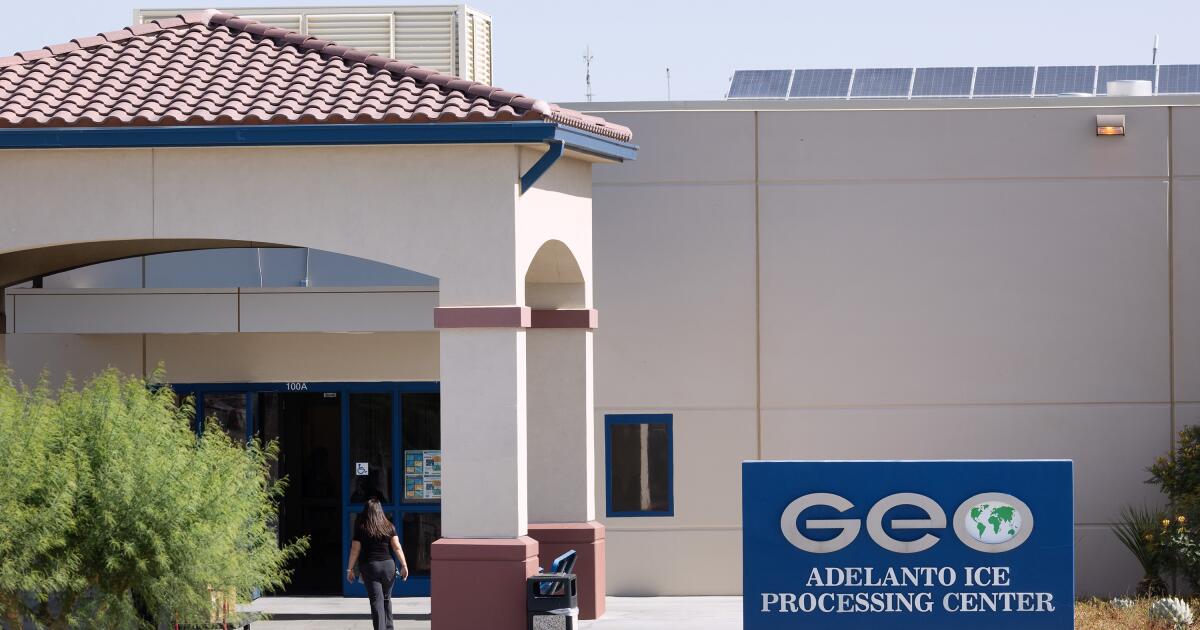
A new report by the California Department of Justice found that conditions at immigrant detention facilities in the state have worsened as surging arrests under the Trump administration’s mass deportation campaign led to overcrowding and insufficient medical care.
For the 175-page report, which was released Friday, California Justice Department staff, along with correctional and healthcare experts, toured all seven facilities that existed in 2025 (an eighth facility, the Central Valley Annex in McFarland, began receiving detainees in April). The team analyzed internal documents and detainee records, and interviewed detention staff and 194 detainees.
“This is the federal government paying for-profit, private companies to run these detention centers, and they are running these detention centers with inhumane, cruel, and unacceptable conditions, “ California Atty. Gen. Rob Bonta said at a news conference Friday.
Department of Homeland Security spokesperson Lauren Bis, in a statement, defended the treatment of those held at detainment centers.
“No lawbreakers in the history of human civilization have been treated better than illegal aliens in the United States,” she said.
Bis added, “This is the best healthcare many aliens have received in their entire lives. Meals are certified by dietitians. Ensuring the safety, security, and well-being of individuals in our custody is a top priority at ICE.”
The inspections were possible because California enacted a law during the first Trump administration requiring state oversight and public reports detailing the conditions of immigrant detention facilities. Bonta said California is the only state in the country with such a law.
Such detailed reports have taken on outsized significance as the Trump administration has whittled down the Department of Homeland Security’s own oversight mechanisms.
The agency said it would respond later to a request for comment.
Christopher Ferreira, a spokesperson for The Geo Group, said the company’s services are monitored by DHS to ensure compliance with federal detention standards and contract requirements regarding detainees. The company oversees four facilities in California, including the Adelanto ICE Processing Center north of San Bernardino.
“The support services GEO provides include around-the-clock access to medical care, in-person and virtual legal and family visitation, general and legal library access, translation services, dietitian-approved meals, religious and specialty diets, recreational amenities, and opportunities to practice their religious beliefs,” Ferreira said.
He added that of the company’s immigration facilities are independently accredited by the American Correctional Assn. and the National Commission on Correctional Health Care.
CoreCivic operates the California City Detention Facility north of Lancaster and Otay Mesa Detention Center in San Diego. Spokesperson Ryan Gustin said the company had not been provided a copy of the report or reviewed its findings.
“The safety, health and well-being of the individuals entrusted to our care is our top priority,” Gustin said. He added that the company’s ICE-contracted facilities are “subject to multiple layers of oversight by our government partners” and auditors.
The report notes that CoreCivic did not make requested documents available to investigators, including records on use of force at the California City facility.
“The decision to deny Cal DOJ access to these files was remarkable in light of the serious legal claims that have been made against the facility, which allege that staff routinely engage in abusive behavior and unreasonable use of force against detainees, including deploying pepper spray, hitting a detainee with riot shields and holding him down with their knees on his back, and aggressively pushing a detainee,” the report states.
According to the report, the detainee population in California grew 162%, from 2,300 to more than 6,000 detainees, between site visits in 2023 and those in 2025. Most detainees had no criminal history and were classified as low-security.
Collectively, the facilities have the capacity to hold up to nearly 8,200 detainees.
Six people have died in ICE custody in California since the start of 2025 — four at Adelanto and two at Imperial Regional Detention Facility. In all of the Adelanto cases, family members alleged that the facility’s medical response was inadequate, the report said.
Inspectors found that staffing failed to keep pace with the growing numbers of detainees, particularly at Adelanto and at California City, where they saw “crisis-level healthcare understaffing.”
At Mesa Verde ICE Processing Center in Bakersfield, the report says, “Medical care delays, including specialty care and referrals, were widespread and appeared to be caused by delays in approvals by ICE Health Service Corps and canceled or dropped referrals due to transfers between facilities.”
The intake process for new detainees, which includes a medical and mental health screening, is supposed to take place within 12 hours of their arrival. But detainees at several facilities reported waiting days or weeks before receiving their housing assignment and medical screening, the report says. While waiting, some slept on the floor without access to water.
In its statement, the Department of Homeland Security said detainees undergo medical, dental, and mental health intake screening within 12 hours of arriving at each detention facility, a full health assessment within 14 days of entering ICE custody or arrival at a facility, and access to medical appointments and 24-hour emergency care.
Gustin, the CoreCivic spokesperson, said its facilities adhere to detention standards on staffing and medical care. Emergency care is available 24 hours a day, he said, and the facilities work closely with local hospitals and providers for specialized care.
Ferreira, the Geo Group spokesperson, said detainees have access to teams of medical professionals and off-site specialists, imaging facilities and emergency services.
At the Adelanto facility, detainees said water coolers remained empty for hours. Justice Department staff saw murky drinking water come out of the tap in the women’s housing unit.
At the Golden State Annex in McFarland and at Mesa Verde, detainees said they spent at least $50 per week on commissary items so they wouldn’t go hungry. Across most facilities, detainees reported undercooked food, a lack of dietary or allergy accommodations and irregular mealtimes.
Basic necessities are also an issue, according to the report. At the California City facility, detainees said they got so cold that they cut the ends off socks to make improvised sleeves and covered the air vents in their cells with sheets of paper.
According to the report, Otay Mesa is the only detention center in California with a policy requiring that detainees be strip searched after being visited by anyone other than their attorney. Detained women recounted being told strip in front of male officers, even when menstruating, the report said.
Gustin said CoreCivic follows federal detention standards regarding searches of detainees.
The report did highlight some improvements, including at the Imperial Regional Detention Facility in Calexico, which inspectors said appeared better staffed with medical and mental health care providers compared to their 2023 visit. Still, the review “identified concerns regarding the facility’s management of detainees with severe mental health issues, including two detainees who experienced extended stays in restrictive housing of over 200 days.”
Emily Lawhead, a spokesperson for Management & Training Corp., which oversees the Imperial facility, said the company takes the report seriously. She noted that the report also highlights prompt responses to sick-call requests, meaningful access to programming and recreation and expanded attorney access through 36 private phone booths.
But Lawhead said the company will examine the concerns raised in the report.
“If our review identifies gaps, delays, or missed standards, we will address them,” she said.
The state law requiring the detention facility inspections expires next year. A bill by state Sen. María Elena Durazo (D-Los Angeles) would make the inspections permanent. Another state bill, by Sen. Steve Padilla (D-San Diego), would prevent the excessive markup of products sold at detention center commissaries.