Venezuela’s aging oil port terminals are essentially imposing export caps on the country’s resurgent crude production, with tankers having to wait up to 30 days to load because of infrastructure in disrepair, power outages, and quality issues, Reuters reported this week, citing shipping data, sources, and documents.
The U.S. military announced its blockade has turned away another 20 vessels, U.S. Central Command said Sunday. File Photo by EPA
Aug. 10 (UPI) — The U.S. military said it blocked an additional 20 ships from reaching or leaving Iran’s ports, as prospects for a resumption of negotiations on ending the war look bleak.
U.S. Central Command announced in a statement Sunday that its blockade has redirected 55 commercial vessels, up from 35 on Aug. 2. It has also disabled two vessels and boarded two others.
The U.S. military resumed its blockade of Iran’s ports on July 14 amid a resumption in fighting between Washington and Tehran over control of the Strait of Hormuz.
The United States is seeking to regain freedom of navigation of the vital energy trade route that Iran has claimed control of since the war between the two erupted in late February.
The Trump administration has said a restoration in a freedom of navigation is necessary for negotiations on ending the war to enter the next phase focused on Iran’s nuclear program. However, Iran is fighting to maintain control of the strait that it seized.
Iranian Foreign Minister Abbas Aragchi told reporters Sunday that while intermediaries were in contact concerning negotiations, no talks would be resumed until the United States ended what he called violations of a June memorandum, the semi-official Tasnim News Agency reported.
The June memorandum of understanding sought to lay the foundation toward end-of-war talks but differences over control of the Strait of Hormuz opened a new chapter in the war. The United States has been enforcing its blockade of Iran’s ports to coerce it to open the strait.
Aragchi said that while Iran was not in negotiations with the United States, talks were underway with Oman on establishing new maritime routes through the Strait of Hormuz.
The foreign minister’s remarks came as U.S. President Donald Trump told Axios that the United States was willing to allow the economic pressure of its blockade to further weigh on Iran’s economy rather than ordering new attacks.
“We are low-keying it,” he said, while stating, “We are only semi-negotiating with them. We are just watching Iran with its huge inflation and the they fact that have no money.”
President Donald Trump hosts Olympic and Paralympic medal-winning athletes during a reception for Team USA in the East Room of the White House on Thursday. The reception honored the team’s medal achievements during this year’s Winter Games, where American athletes earned 57 total medals, including 25 gold. Photo by Aaron Schwartz/UPI | License Photo
Speedier implementation could boost the country as a regional trade gateway.
Freight rail and port reforms being implemented by South Africa can boost the country’s role as a trade gateway between Africa and the Middle East, a key Southern African export and source market for commodities, including minerals, fertilizers, and fuel.
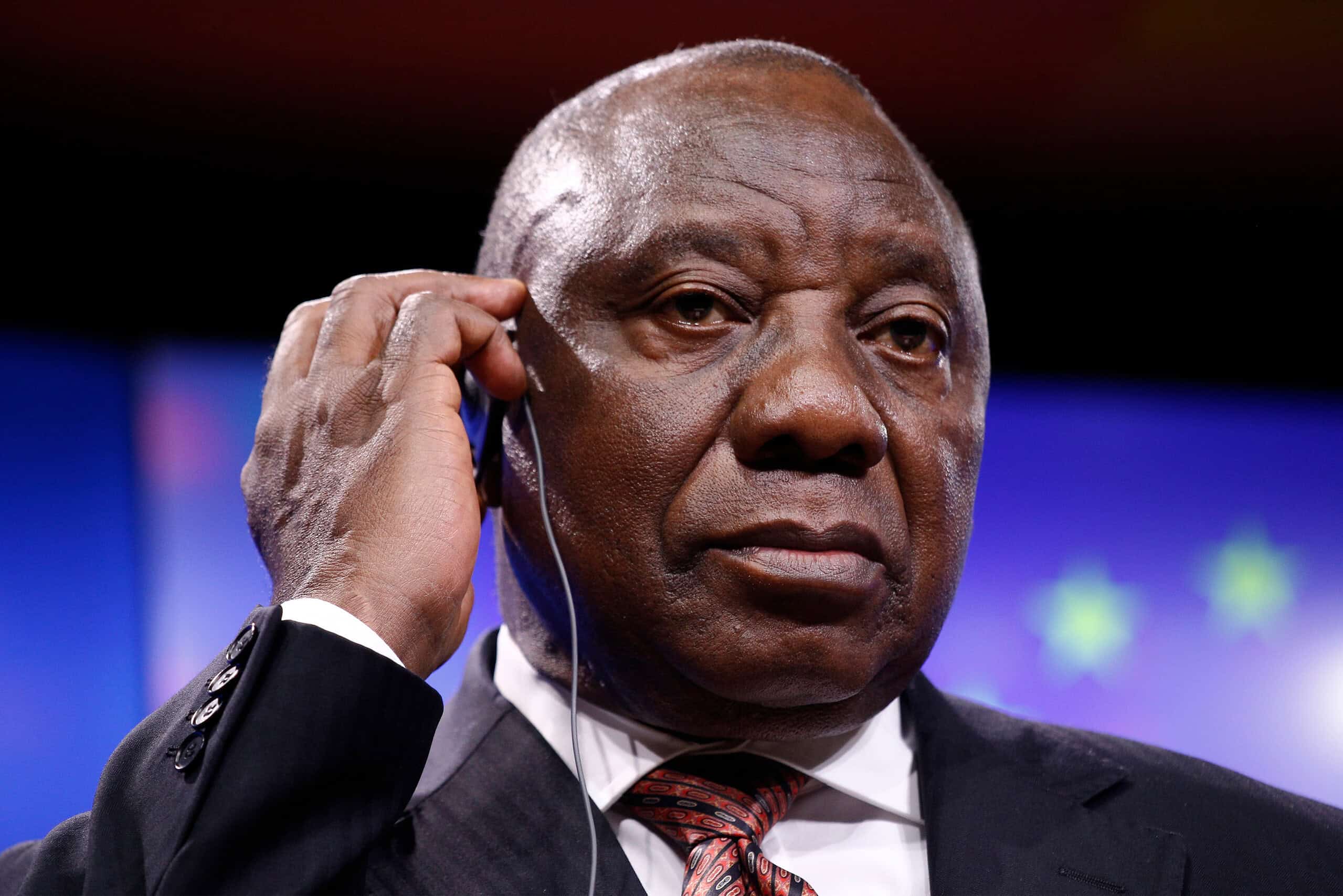
South Africa launched logistics reforms in 2020 to prop up an economy dragged down by freight rail, port, and electricity supply logjams. President Cyril Ramaphosa’s (pictured) administration recently issued a progress report, noting that reforms in the key freight-rail sector are underway but moving slowly.
Boosting Regional Trade Competitiveness
There’s every reason to speed up the process, said Lerato Mzezewa, senior operational risk analyst at Fitch Group’s BMI advisory. Accelerated and effective implementation of freight rail reforms can “improve the movement of Gulf-sourced inputs into South Africa and the wider Southern Africa region while helping exporters move bulk, refrigerated, and containerized” cargo, she said.
“This would strengthen South Africa’s competitiveness as a trade gateway, particularly for firms that require dependable port logistics and inland distribution alongside maritime capacity,” she added. “South Africa’s revived freight rail and port infrastructure will support South Africa-Middle East trade by improving the domestic movement of seaborne cargo between ports, inland production centers, and end users.”
Gulf markets accounted for about 11% of South Africa’s total imports in 2025, totaling approximately $11.6 billion; the Gulf supplied 60% of the country’s crude and refined petroleum imports.
Private Operators Step In
As part of the reform process, South Africa recently finalized contracts with 11 private rail operators. Opening core rail corridors to third-party private-sector players strengthens “the investment proposition by shifting rail recovery away from sole public-sector dependence toward a more competitive, multi-operator” environment, said Matteo Addonizio, head of infrastructure research at BMI.
The moves aim to attract sustained private capital investment in the freight rail sector and support the medium-term recovery of freight rail volumes. The new operators are expected to move an additional 24 million tons of freight rail capacity across coal, manganese, containers, fuel, and general freight. Freight rail volumes rose to about 168 million tons in 2025 from 160.1 million tons in 2024. However, this remains below the 200 million tons of capacity required to improve transport logistics for South African freight rail users.
South Africa’s freight rail and port inefficiencies have significantly affected heavy freight movers, including bulk commodity miners like Kumba Iron Ore, which ships key steelmaking ingredients to China and the Middle East.
Kumba has had to reconfigure its business to “align production more closely with Transnet’s constrained rail” and port capacity, according to a company spokesperson. “Aging infrastructure and inadequate maintenance practices impact the reliability and efficiency of logistics channels, which directly impacts our operations.”
Logistics inefficiencies are not South Africa’s only vulnerability.
The regional powerhouse is also vulnerable to global fuel price fluctuations stemming from the war in Iran, whose effects continue to ripple through supply chains and cost ecosystems across the continent. An overreliance on imported crude oil and refined fuels, alongside a freight system that moves roughly 80% of goods by road, compounds South Africa’s situation, said Jee-A van der Linde, senior economist at Oxford Economics Africa.
Tawanda Karambo is a contributing writer based in South Africa.
The US blockade on Iran was first imposed in mid-April and remained for over nine weeks. It was only lifted after the two sides signed a Memorandum of Understanding (MoU) in June to end four months of fighting and reopen the Strait of Hormuz.
Iran immediately began exporting tens of millions of barrels of crude oil, much of it stored on supertankers anchored close to its oil terminals. However, after the recent resurgence in military strikes over control of the Strait of Hormuz, Washington rescinded oil and banking waivers issued as part of the MoU and prevented vessels linked to Iran from returning to port to load more Iranian oil.
Since the MoU effectively fell apart due to recent strikes, US Central Command (CENTCOM) has redirected several ships operating in the Strait of Hormuz. It also launched a strike to disable the Curacao-flagged supertanker Belma, which had allegedly been transporting Iranian crude during the war.
Iran has also been accused of striking ships in the waterway, leading to the US bombing Iranian coastal areas.
Iranian authorities have acknowledged the previous blockade drastically reduced Iranian crude exports. Iran’s parliament speaker and chief negotiator, Mohammad Bagher Ghalibaf, said in a TV interview at the end of June that “we did not export even one barrel” during the blockade.
Energy analyst Hamidreza Shokouhi told Al Jazeera that the new US siege means that at least 1.5 million barrels per day of Iranian oil exports will be taken off the market. That has contributed to pushing oil prices up to around $90 per barrel and sustained conflict could cause further increases.
“That means more pressure on global strategic reserves, which have already been tapped during the war and are facing unprecedented pressure,” he said.
Shokouhi noted that Iran responded to the siege by trying to ensure that no other regional country could export their oil via the strait, piling pressure on the US and its allies.
“When the US acts this way, Iran also moves in the direction of not prioritising the economy and using the leverage at its disposal,” Shokouhi said.
A broadening conflict
Seven nights of tit-for-tat strikes between the US and Iran have quickly escalated and intensified as the week progressed.
The attacks left a trail of destruction in both Iran and countries across the region, with Kuwait and Bahrain heavily targeted by Iranian missiles and drones in recent days.
The US military has also heavily targeted provinces across Iran, particularly areas in the south closer to the strait.
Civilian infrastructure – including bridges and tunnels, ports and dock facilities, power stations and water plants – have been systematically hit, along with military sites. Some have speculated that could be in preparation for a ground invasion of Iranian coastal regions.
The Aq Tekeh railway bridge in the northern Iranian province of Golestan was among the first targets to be struck by US forces last week after the fighting re-erupted.
Iranian authorities said damage to the bridge was quickly repaired, but the strike signalled US willingness to attack potential import-export routes to exacerbate the impact of the naval blockade.
Aq Tekeh is on the Gorgan-Incheh Borun line, which connects Iran to the east, including Turkmenistan, Russia and China. It is where food and other essentials are imported from Central Asia and Iranian goods are exported, such as iron ore and polyethylene.
Rising inflation
The previous US naval blockade had also significantly impacted goods and markets in Iran, making everyday life for over 90 million people more difficult.
Although there were no widespread shortages of staples, Iran’s inflation rate – already one of the world’s highest – surged. The price of some basic foodstuffs, such as eggs, chicken and cooking oil, has more than tripled compared to a year ago.
Price increases have also damaged other sectors of the Iranian economy and industries.
Iranian shoppers in the Tajrish bazaar in Tehran, 25 April 2026 [Abedin Taherkenareh/EPA]
“Our sales are very inconsistent. The market is struggling to find prices, there’s too much instability and uncertainty about the future,” said Borzou, a merchant dealing in industrial motors and equipment at Tehran’s Grand Bazaar.
“It looks like most distributors here are still tapping into imported inventories from before, we don’t know what to expect in a few months since many of these goods came through China and the UAE and not all can be imported through inland routes,” he told Al Jazeera.
Rial hits all-time low
There has also been intense pressure on the Iranian rial from the renewed military escalation and reimposition of the naval blockade.
The rial changed hands for over 1.93 million against the US dollar in Tehran’s open market on Saturday, the first day of the Iranian week, registering a new all-time low.
The Tehran Stock Exchange continued its downward trend over the past week, with its main index losing another 120,000 points or 2.4 percent on Saturday to stand at 4.77 million.
Iran’s armed forces have warned they will retaliate against any US strikes on Iran’s civilian infrastructure by attacking similar targets in regional countries hosting US military bases.
“Let’s not forget that the US and Israel started attacks against infrastructure, when they hit South Pars gas fields, Tehran’s oil depots and the petrochemicals in Mahshahr,” said energy analyst Shokouhi.
Utilising help from the Houthi group in Yemen, Tehran could also cause significant disruptions to shipping in the strategically important Bab al-Mandab strait off Yemen’s coast – if US President Donald Trump realises his threat to hit more civilian infrastructure in Iran such as power plants and bridges.
“Trump’s actions over recent months, and particularly over recent days, have only made the situation more intractable and the outlook more uncertain. The current situation cannot continue for much longer, but it is broadening the scope of the conflict and that is concerning,” Shokouhi said.
Weekly insights and analysis on the latest developments in military technology, strategy, and foreign policy.
U.S. Central Command (CENTCOM) on Wednesday unleashed a new wave of strikes on Iranian targets. The attacks, on Iran’s Greater Tunb Island, came as the newly restored blockade on Iranian ports entered its first full day and the command began ordering ships headed to Iran to turn around. Meanwhile, Iran claims it damaged several U.S. military facilities in new rounds of missile and drone attacks in the region.
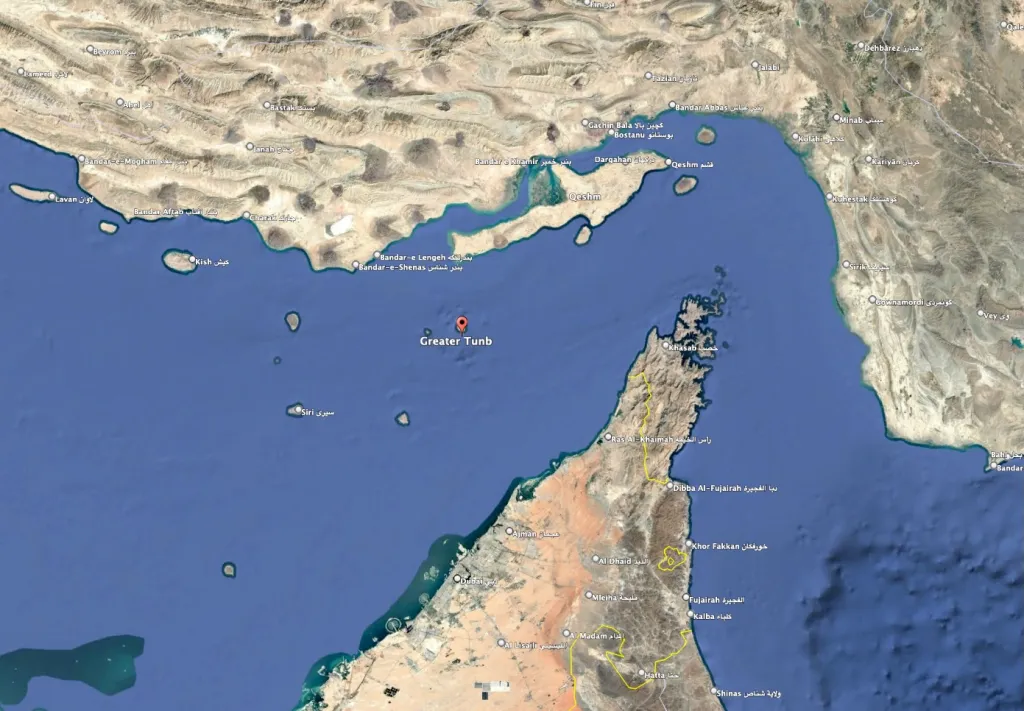
“CENTCOM launched precision munitions against coastal defense systems and cruise missile storage and launch sites on Greater Tunb Island during the 90-minute wave,” the command stated on X. “The strikes further degraded Iran’s ability to attack commercial shipping in the Strait of Hormuz.” The island, located at the western mouth of the Strait, sits about 30 miles south of the Iranian coast and about 50 miles northwest of the United Arab Emirates (UAE), which also lays claim to it, along with the Abu Musa and Lesser Tunb islands that Iran seized in 1971.
US Central Command carried out a 90-minute wave of strikes against coastal defense systems and cruise missile storage and launch sites on Greater Tunb Island on Wednesday, further degrading Iran’s ability to attack commercial shipping in the Strait of Hormuz, CENTCOM said. pic.twitter.com/8GpPtZKAIW
— Iran International English (@IranIntl_En) July 15, 2026
Greater Tunb Island was a frequent target during Operation Epic Fury. A little more than two miles across at its widest point, it hosts a “vast network of underground bunkers,” created by the Islamic Revolutionary Guard Corps (IRGC), according to the Israeli Alma Research and Education Center think tank. “These underground facilities are believed to be storing anti-ship missiles and other weapons threatening freedom of navigation and commerce through the Strait of Hormuz.”
Greater Tunb Island. (Google Earth)
In a subsequent X post, CENTCOM stated that since “restarting the naval blockade against Iranian ports 17 hours ago, U.S. forces have redirected 2 commercial vessels attempting to run the blockade. The U.S. military remains vigilant and prepared to ensure full compliance.”
Since restarting the naval blockade against Iranian ports 17 hours ago, U.S. forces have redirected 2 commercial vessels attempting to run the blockade. The U.S. military remains vigilant and prepared to ensure full compliance. pic.twitter.com/E00JAlmBua
In its announcement on Tuesday that the blockade had been reimposed, CENTCOM stated that there are “currently more than 20 U.S. Navy warships and hundreds of military aircraft operating across the Middle East. American forces remain vigilant, lethal, and ready.”
U.S. forces resumed the naval blockade against vessels transiting to and from Iranian ports and coastal areas today at 4 p.m. ET.
There are currently more than 20 U.S. Navy warships and hundreds of military aircraft operating across the Middle East. American forces remain… pic.twitter.com/ATRJHlLQNo
Control over the Strait has been at the center of most of the flare-ups of violence that have taken place after a shaky ceasefire was agreed to by the U.S. and Iran on April 8. They’ve often involved Iranian attacks on commercial shipping in the Strait followed by U.S. kinetic responses. However, these kinetic encounters have been intensifying over the past five days, leading President Donald Trump to order the resumption of the naval blockade on Iranian ports. It went into effect at 11:30 PM local time on Tuesday.
President Trump on the blockade on the Hormuz Strait: “I don’t think anybody should be able to charge a fee for the Strait or for any other Strait-relationship in terms of other sections of the world… but we were doing it as a reimbursement.” pic.twitter.com/ZNAdSa7wSl
As we have frequently noted, the blockade was lifted on June 17 when the U.S. and Iran signed a 14-point Memorandum of Understanding (MoU). The MoU provided a 60-day extension of the ceasefire to iron out an agreement to end fighting throughout the region, including Lebanon, prevent Iran from seeking nuclear weapons, end U.S. sanctions and resume the flow of traffic through the Strait of Hormuz, among other points.
Iran, as we noted earlier in this story, said it carried out a number of retaliatory strikes on Kuwait, Bahrain and Jordan as it has over the past five days. All three nations host an array of U.S. military facilities.
The Iranian Army’s public relations office said it “launched a seventh wave of drone strikes on U.S. bases in the region on Wednesday, targeting F-18 facilities and support infrastructure at al-Azraq in Jordan,” Iran’s official Mehr news outlet stated on Wednesday. The strikes “were part of ‘Operation Thunderbolt’ and followed six earlier waves of drone attacks on U.S. positions since the American violation of the ceasefire and the start of ‘brutal attacks’ on Iranian territory.”
The Iranian army launched a seventh wave of drone strikes on U.S. bases in the region on Wednesday, targeting F-18 facilities and support infrastructure at al-Azraq in Jordan.https://t.co/hpqsv0WImA
TWZ cannot independently confirm Iran’s claims and CENTCOM declined comment.
“Jordan’s military intercepted three Iranian missiles,” The New York Times reported, citing a statement carried by the official Petra news agency. “The Kuwait Army said earlier that its air defenses were intercepting hostile targets, while Bahrain’s interior ministry said warning sirens had been activated. None of the countries have reported damage or casualties from strikes on Wednesday.”
However, images and videos have emerged online purporting to show damage at several installations in the wake of Iranian attacks over the past several days.
The following post on X uses satellite imagery from Iranian state media to claim damage to an anti-drone radar system at Prince Hassan Air Base in Jordan; however, its low resolution makes it hard to confirm that claim.
Video shared on social media and verified by The New York Timesshowed an Iranian drone hitting the area surrounding an already burning warehouse in Kuwait late on Tuesday night local time.
“The IRGC claimed that the warehouse in Mina Abdulla was a logistics and supply hub for U.S. forces in the region,” the publication noted.
Iranian officials also claimed that “seven members of the 388th Iranshahr Brigade, including permanent personnel and conscripts, were killed during a U.S. strike on one of the Iranian Army Ground Force bases in Bampur early on Wednesday,” according to the IRGC-connected Tasnim news outlet.
Located in southern Iran, Bampur is about 120 miles north of the Gulf of Oman. TWZ cannot verify these claims either.
Seven personnel of Iran’s Army Ground Force were martyred after the US military launched a missile attack on an Army base in Bampur, in the southeastern province of Sistan and Baluchestan, the Army said, vowing a decisive response to the “heinous crime.”https://t.co/v8v7DwAps3pic.twitter.com/kED98QGljV
This latest wave of strikes came after Trump on Tuesday warned that the U.S. would strike bridges and power plants in Iran “next week” unless Tehran returns to the negotiating table.
“We’re going to hit them very hard tomorrow night,” Trump proclaimed in an interview with Fox News. “We’re going to hit them very hard the night after, and then next week it gets really bad for them, because next week comes the power plants. Next week comes the bridges. We’re going to knock out all their power plants. We’re going to knock out all their bridges unless they get to the table and negotiate.”
PRESIDENT TRUMP: “Ultimately, we’ll hit energy targets in Iran. Next week comes the bridges. We’re going to knock out all of their power plants. We’ll knock out all of their bridges unless they get to the table and negotiate” pic.twitter.com/CwbiDxHcwx
The U.S. leader also rescinded his threat to impose a 20% toll on Strait of Hormuz transits.
“I was called by different people, different countries, kings and emirs,” Trump said Tuesday, shortly after announcing the fee reversal. “And they’ve said, ‘We’d love to do it a different way. We’d love to invest in the United States with billions and billions of dollars. I like that actually because I don’t think anybody should be able to charge a fee for the Strait or for any other strait.”
President Trump said Tuesday he changed his mind on charging 20% Strait of Hormuz cargo fees after many countries called him.
“I was called by different people, different countries, kings and emirs,” Trump said shortly after announcing the fee reversal. “And they’ve said, ‘We’d… pic.twitter.com/8IaHfltzKT
Pickaxe Mountain is Iran’s hardest-to-reach facility and Trump saying he may take a “shot right in the front door” wasn’t likely just small talk.https://t.co/SsDnvtAGXZ
Iranian officials on Wednesday reacted to Trump’s statement about attacks on bridges and power plants, saying that: “Wherever the Americans strike, our Armed Forces will respond in the same manner.”
In addition, the Islamic Republic has no intention of returning to the bargaining table, Foreign Ministry spokesperson Esmaeil Baghaei told Iranian media on Wednesday.
“We currently have no plans for negotiations and remain focused on defending the country,” Baghaei told reporters.
⚡️BREAKING
Iran’s Deputy Foreign Minister on the U.S. striking Power Plants and Bridges:
“Wherever the Americans strike, our Armed Forces will Respond in the same Manner
While Trump and Iran are ramping up the rhetoric, there is also tremendous global and domestic pressure on the American leader to refrain from expanding the fighting. In just one example of that playing out, the per barrel price of Brent crude jumped from a recent low of just over $75 a barrel on July 13 to more than $84 a barrel this morning as the attacks are intensifying.
Meanwhile, the MarineTraffic maritime tracking organization reported a slight uptick in Strait of Hormuz transits yesterday. However, the outlook for future traffic is grim given the unfolding security situation, including the renewed blockade, the organization posited.
Strait of Hormuz risks deepen despite slight rise in crossings
Vessel activity through the Strait of Hormuz increased slightly on 14 July, with 21 confirmed crossings recorded, according to #MarineTraffic data. Commercial traffic accounted for most movements, including vessels… pic.twitter.com/oIkrtu2kGl
Trump also faces domestic headwinds, with the November mid-term elections fast approaching and the conflict is unpopular among American voters.
Still, the fighting rages on, and the fact that the U.S. Navy is once again forcing ships away from Iran is a significant step back up the escalation ladder given that the now tattered MoU called for the blockade to end. We will continue to monitor this situation and provide updates when warranted.
UPDATE: 3:22 PM EDT –
CENTCOM announced new strikes against Iranian targets.
“At 3 p.m. ET, U.S. forces launched operations for a second wave of strikes today against Iran,” the command stated on X. “The strikes are targeting Iranian military capabilities used to threaten vessels freely transiting through the Strait of Hormuz, an international waterway vital to global commerce. The U.S. military is holding Iran accountable at the Commander in Chief’s direction.”
At 3 p.m. ET, U.S. forces launched operations for a second wave of strikes today against Iran. The strikes are targeting Iranian military capabilities used to threaten vessels freely transiting through the Strait of Hormuz, an international waterway vital to global commerce. The…
For the first time since resuming the blockade, U.S. forces today fired on a ship trying to run it, CENTCOM stated on X. The Curacao-flagged M/T Belma, an unladen oil tanker, was transiting international waters, headed toward Iran’s Kharg Island terminal, when it “ignored multiple warnings as it attempted to violate the U.S. blockade,” according to the command. “A U.S. aircraft disabled the vessel after firing Hellfire missiles into the ship’s smokestack. The ship is no longer transiting to Iran.”
U.S. Central Command says it disabled the Curaçao-flagged tanker M/T Belma as it sailed toward Iran’s Kharg Island earlier today.
CENTCOM said the unladen vessel ignored repeated warnings before a U.S. aircraft fired Hellfire missiles into its smokestack, stopping it from… pic.twitter.com/zLFHGAOsn7
“U.S. forces struck Iranian command centers, air defense sites, missile and drone capabilities, and coastal surveillance facilities to further degrade Iran’s ability to threaten innocent mariners crewing commercial vessels transiting the Strait of Hormuz,” CENTCOM explained, adding that its forces “used precision munitions to hit targets in multiple locations including Bandar Abbas.”
U.S. military:
“U.S. Central Command (CENTCOM) ended an evening wave of strikes against Iran at 9 p.m. ET on July 15.
U.S. forces struck Iranian command centers, air defense sites, missile and drone capabilities, and coastal surveillance facilities to further degrade Iran’s… pic.twitter.com/6Bx5YZtAoP