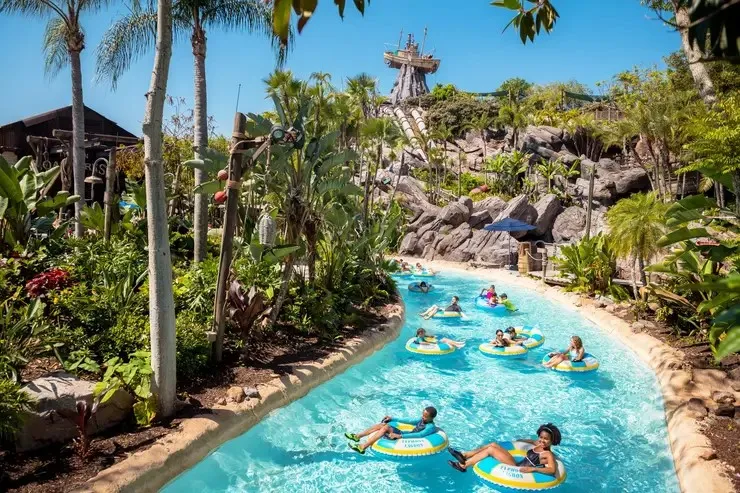
Dotted around the pool are sunloungers as well as an ice cream stall, another serving cocktails and iced drinks.
Leaning Palms is where swimmers can fuel up on rice bowls, burgers, pizza, hot dogs, sandwiches, salads and wraps.
Typhoon Lagoon in Florida is expected to then reopen in spring 2027Credit: Disney
During the closure, the park’s other waterpark called Blizzard Beach will remain open.
The theme park said: “Starting September 9, 2026, Disney’s Typhoon Lagoon water park will temporarily close. During this time, we encourage Guests to enjoy Disney’s Blizzard Beach water park.”
It’s expected that when the refurbishment for Typhoon Lagoon has finished, Blizzard Beach will then close for upgrades.
The waterparks will then both be open in time for the spring 2027 season.
The routes have long been popular with holidaymakers visiting the Brittany area of France, offering a range of daytime and overnight services, and the company has confirmed it’s making changes to other lines as well
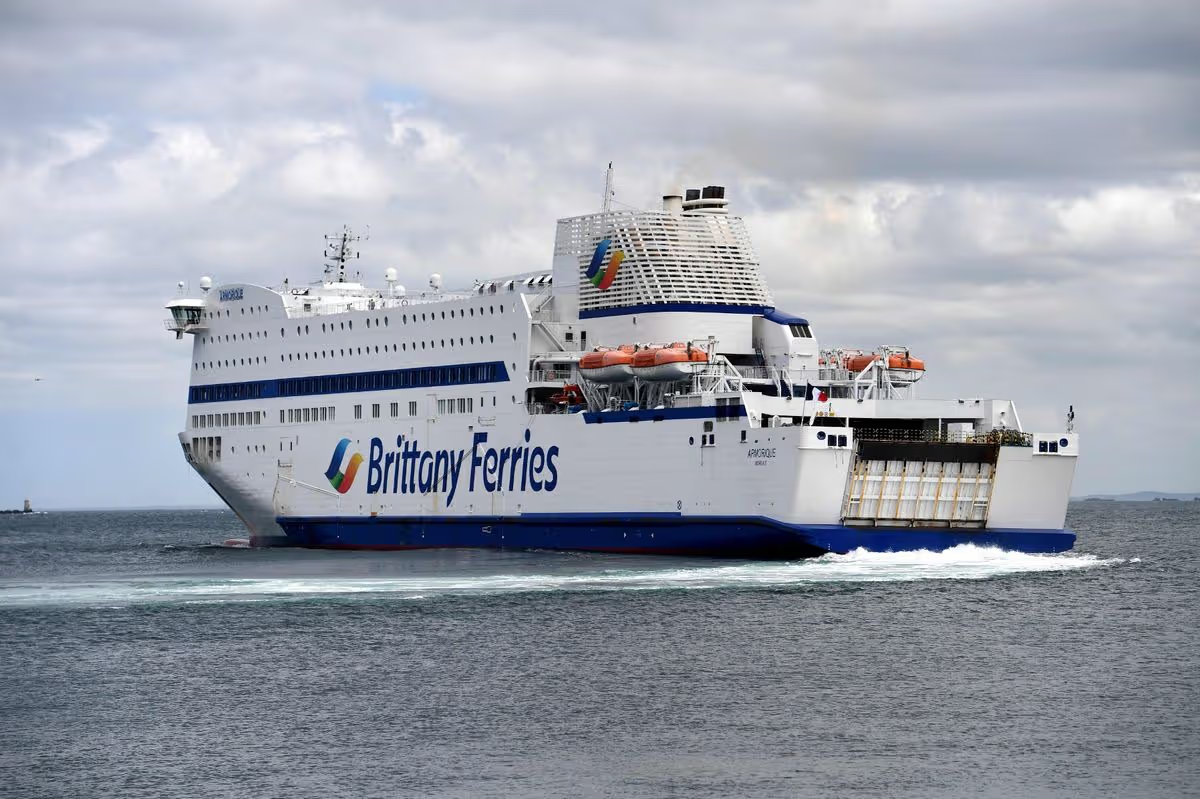
Brittany Ferries announced big changes to its schedule(Image: FRED TANNEAU/AFP via Getty Images)
Brittany Ferries has announced its making big changes to its UK to France routes ahead of the autumn months as it blames the financial impact of Covid and the ongoing effects of Brexit.
The ferry operator will sell two of its ships, including one that operates the current Poole to Cherbourg route, which it has confirmed will be closed from November 1. Passengers will need to travel to Portsmouth where there’s a daily service to Cherbourg operating in its place.
It also confirmed in a statement that: “in the face of unfair competition on the Eastern Channel, caused by subsidies to run the loss-making Dieppe-Newhaven route, the company is looking to close the Portsmouth to Le Havre route from October 2026.”
Brittany Ferries confirmed the closure date as October 1, saying: “It has operated this route for as long as possible while legal challenges are still being considered by Brussels.”
It also clarified that it’ll be moving to a “more efficient schedule” from November 1 for its ships serving Guernsey, Poole and Cherbourg. Brittany Ferries Island will “serve a triangular route as follows: Portsmouth to Guernsey, Guernsey to Cherbourg, Cherbourg to Portsmouth”. While it’s fast craft the Brittany Ferries Voyager “will continue to serve Poole to Guernsey, but with the option to travel on to St Malo”.
The company confirmed there would be: “No job losses in the UK, but potentially a small number in Le Havre subject to a consultation process currently underway.”
Brittany Ferries began running the Poole to Cherbourg route back in 1986, and it runs on the 1992 ferry Barfleur, which the company has confirmed will now be sold. The Portsmouth to Le Havre route has been operated by Brittany Ferries since 2014. Sailings to Le Havre were run during the day, while the return journeys to Portsmouth ran overnight.
Christophe Mathieu, CEO Brittany Ferries, said in a statement: “Brittany Ferries has a track record in adapting its business to long- and short-term challenges. We overcame Covid when borders were shut, we continue to wrestle with the consequences of Brexit and we are taking steps to make a holiday in France or Spain as reasonable as possible.
“But we have to be realistic. We need adapt and that means a plan to secure a future that will continue to bring opportunities for all those who live and work in the regions we serve. We have informed our ports and will work with everyone affected on this plan for the future.”
The company’s statement went on to add that it’s still feeling the effects of its Covid loan, saying it has repaid half of it, but that “the long tail of the crisis continues”.
The ferry operator’s statement goes on to say: “Into this mix has been thrown the rising tax burden of ETS, the EU’s Emission Trading System. Brittany Ferries has invested in the cleanest, greenest fleet on the Channel, including five new vessels in five years, two of which were launched in 2025.
“Despite this, the company faces a bill of some €27 million in 2026, with no allowance for the industry-leading investment already made. That’s an EU financial burden even before the UK begins to introduce an equivalent scheme for ships operating in British waters.”
Have a story you want to share? Email us at webtravel@reachplc.com
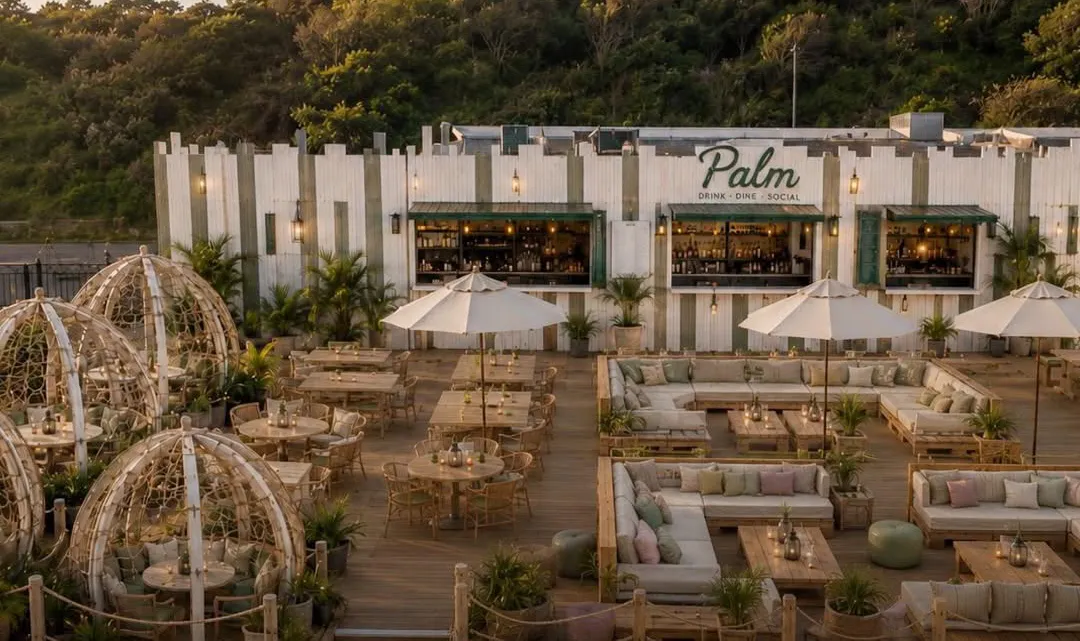
A NEW Mediterranean-style pop-up beach club is coming to the UK.
The new venue will be bringing summer vibes to Bournemouth with dining domes, beach beds, sunloungers and DJs.
Sign up for the Travel newsletter
Thank you!
Palm will open on Bournemouth seafront for the summerCredit: Seventa EventsThe popular UK beach will have a new attraction until SeptemberCredit: Getty
Called ‘Palm’, the Ibiza-style club will open on Bournemouth’s seafront next month.
The seaside town is one of the most sought-after when the sun shines as the golden sandy beach stretches on for seven miles.
For those who know the area, Palm will be a few paces away from Bournemouth Pier on the old WestBeach Restaurant site.
The beach club will be open all day starting at 9am with breakfast and coffee.
From this week, there will be strict rules on the consumption of alcohol in two popular UK seaside towns, and anyone not careful could face a fine of up to a staggering £1,000
Two UK seaside towns will have a ‘booze ban’ in place under a new order(Image: Getty Images)
Two popular UK seaside towns have introduced a ‘booze ban’, with the risk of £1,000 fines for anyone caught flouting the rules.
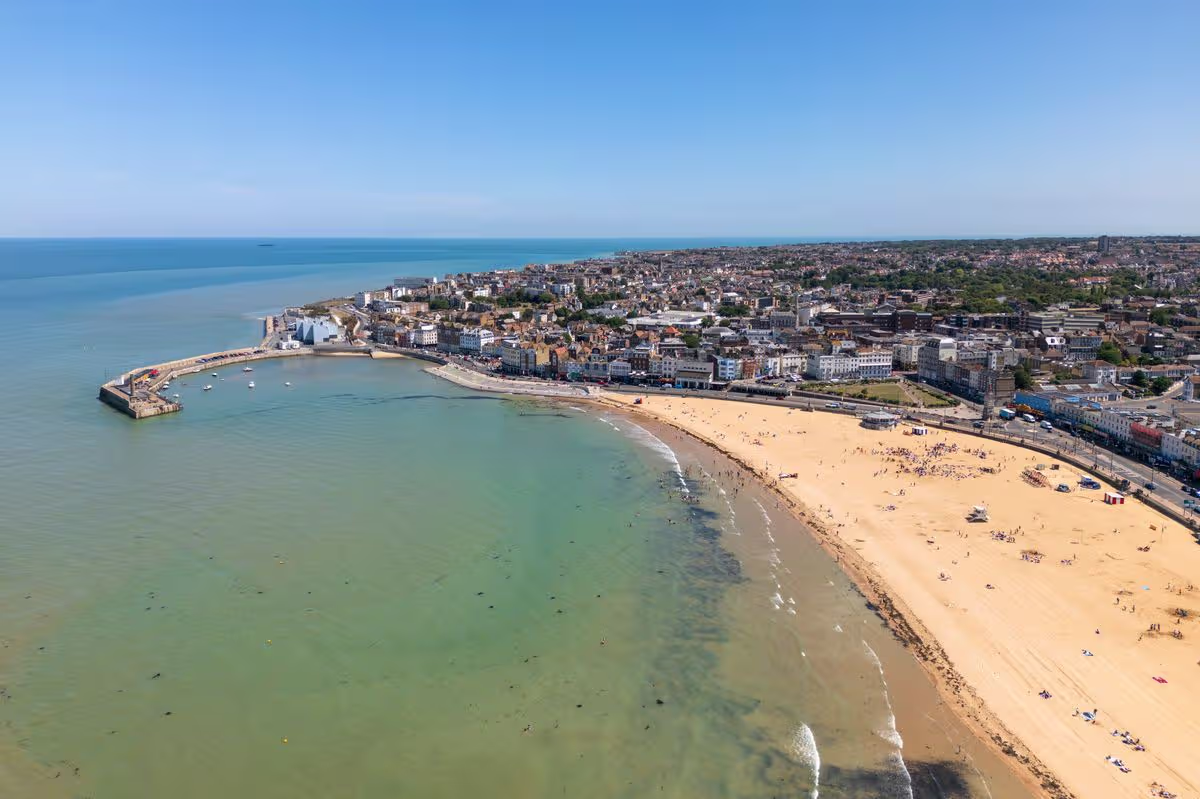
In a bid to help manage anti-social behaviour in Kent, a new Public Spaces Protection Order (PSPO) has been approved for three years. Under this order, which will be in force from Wednesday, 1 July, there will be a year-round blanket ban on the consumption of alcohol in Margate and Ramsgate high streets.
Anyone caught breaking a PSPO, which is a criminal offence, could be fined up to around £100. This can be reduced if it’s paid within 10 to 14 days; however, if anyone avoids paying the fine, they could face prosecution and be fined up to a staggering £1,000.
Margate has long been a popular destination in Kent, thanks to its traditional Victorian charm, stretches of golden beach and close link to London, often earning the nickname of ‘Shoreditch-on-Sea’. Ramsgate is just as popular with its sprawling beaches, Royal Harbour and thriving independent food scene.
But it’s not just these seaside towns taking the brunt of the new order.
The PSPO also sets out that in areas across Broadstairs, Cliftonville West, Margate and Ramsgate, there will be bans on anti-social behaviour related to the consumption of alcohol and not handing over alcohol when asked by authorities. It comes after Kent Police said fights had erupted on Broadstairs and Margate beach last week, while people were also assaulted at Margate Railway Station.
Some businesses in Thanet told BBC Radio Kent that they had been forced to close early on occasions due to anti-social behaviour in the area. One even said they were planning to move out of the area as it had become intimidating.
The aim of the order is to “introduce targeted restrictions to curb alcohol-related disorder, public urination, and defecation for a period of three years”, the Thanet District Council website noted. According to the BBC, East Thanet MP Polly Billington said following approval on Thursday: “It’s vital for our economy that people feel confident about keeping their doors open to their shop, and actually, [it’s vital] for the wellbeing of our residents and our visitors that everybody feels safe.”
Meanwhile, before the order was approved, Councillor Heather Keen, Cabinet Member for Neighbourhoods, highlighted: “We are incredibly grateful to everyone who took the time to share their views. Our communities deserve safe, clean, and welcoming public spaces, and this overwhelming support shows how passionate local people are about protecting their environment.
“If Cabinet agrees to implement these proposals, our safety teams and the police will have an effective tool to address persistent issues impacting our towns. We have listened closely to feedback, and while enforcement would always be a last resort, these measures could significantly improve the quality of life across Thanet.”
Do you have a travel story to share? Email webtravel@reachplc.com
ONE of the biggest rollercoasters at Disneyland Paris is set to close until next summer.
Visitors to the theme park won’t be able to ride the East Australian Current for almost a year.
Sign up for the Travel newsletter
Thank you!
Crush’s Coaster at Disneyland Paris will close for 10 monthsCredit: Alamy
Crush’s Coaster is found in Disney Adventure World, formerly known as Walt Disney Studios Park, and will close for renovations on September 7.
The ride first opened in 2007 and over time has become one of the most popular attractions with wait times often exceeding 60–120 minutes on busy days.
The good news is that Crush’s Coaster is closing for upgrades only and is expected to open nextsummer.
Over 10 months the rollercoaster will go through two phases of works.
The first is technical, which Disneyland Paris has said is “essential to the attraction’s operation”.
It includes the replacement of certain control systems, sensors, communication equipment and sections of track.
The second phase will involve testing what has been changed in phase one to make sure everything is working before it reopens to the public.
During the closure, the attraction will also get a makeover with a repaint and clean.
Crush’s Coaster previously closed in 2015 when it underwent a six month refurbishment.
But this closure will be the longest since it opened 19 years ago.
Crush’s Coaster will undergo technical work – and a refreshCredit: AlamyThe ride first opened in 2007 and has become a very popular attractionCredit: Alamy
TOURISTS may face fees for rinsing off at a popular Spanish beach holiday resort.
A controversial smart meter has been installed at beach showers, upsetting both locals and visitors.
Sign up for the Travel newsletter
Thank you!
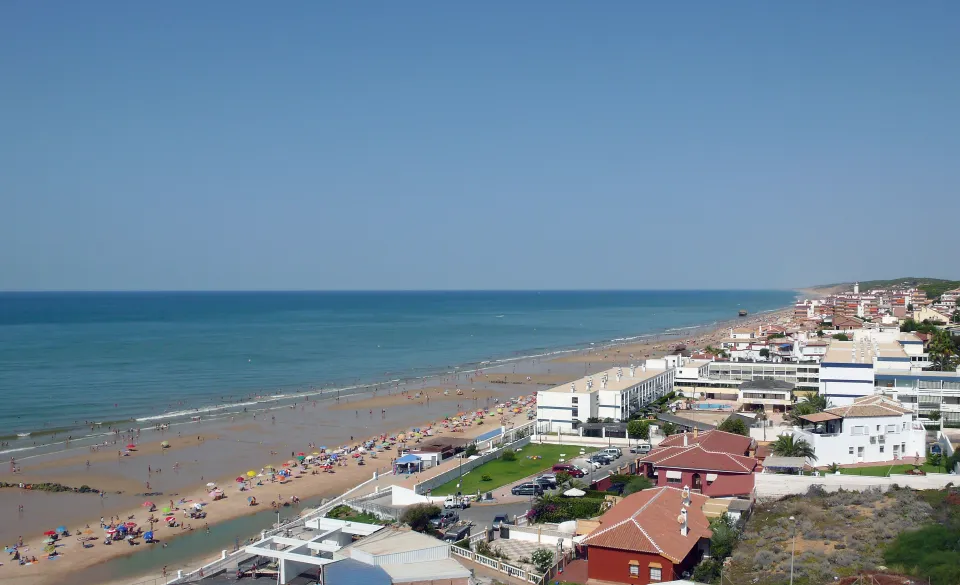
Matalascanas Beach is currently trialling a smart meter on its public showerCredit: SolarpixBeach-goers can opt to use coins or their mobile phone to pay for a shower, which lasts less than one minuteCredit: Solarpix
The smart shower is currently being trialled at Matalascanas Beach at Costa de Luz in south-west Spain.
While it is currently free to use, the plan is for users to be charged via a QR code or they can pay with cash.
The meter accepts two types of coins, with “no change given”, or beach-goers can use their mobile phones to scan the code and pay online.
This initiative has been promoted by two local engineers as a water-saving scheme.
However, claims that the set-up could cost a family-of-four around £3.50 to quickly wash off the sand on their bodies, has caused a stir.
The smart shower has been installed by the four-star On Hotel Oceanfront, which is understood to be the only shower in operation along the entire 2.6 mile-long beach.
It has already been met with backlash from residents, with many pointing out the issues with the set-up.
“Great idea. You have to get your mobile out and when you go to shower where do you leave it?” asked one person.
Another said: “I understand that water is important but I think this is terrible. Do you have to shower with your mobile in your hand?”
Commenting on an online discussion over the proposed charges, one social media user said: “Little by little, we normalize paying for everything.”
“By next year there will be parking metres, paid showers, and in a few years they’ll charge us for stepping on the sand – private beaches, like in other European countries,” they added.
Another person said: “This year the trial to find out how much they’re going to get, and next year they charge everyone.”
Almonte Council, the local authority covering the beach, has not confirmed how long the free trial period will last.
The estimated cost of a shower lasting less than a minute has been put at around €1 (85 p).
It comes after several beaches on the eastern end of the Costa del Sol decided to shut their showers last summer, with only foot washes remaining open.
However, the situation is expected to be much better this summer following a winter of heavy rain.
Rincon de la Victoria Council announced last month it would be opening its beach showers as normal this year.
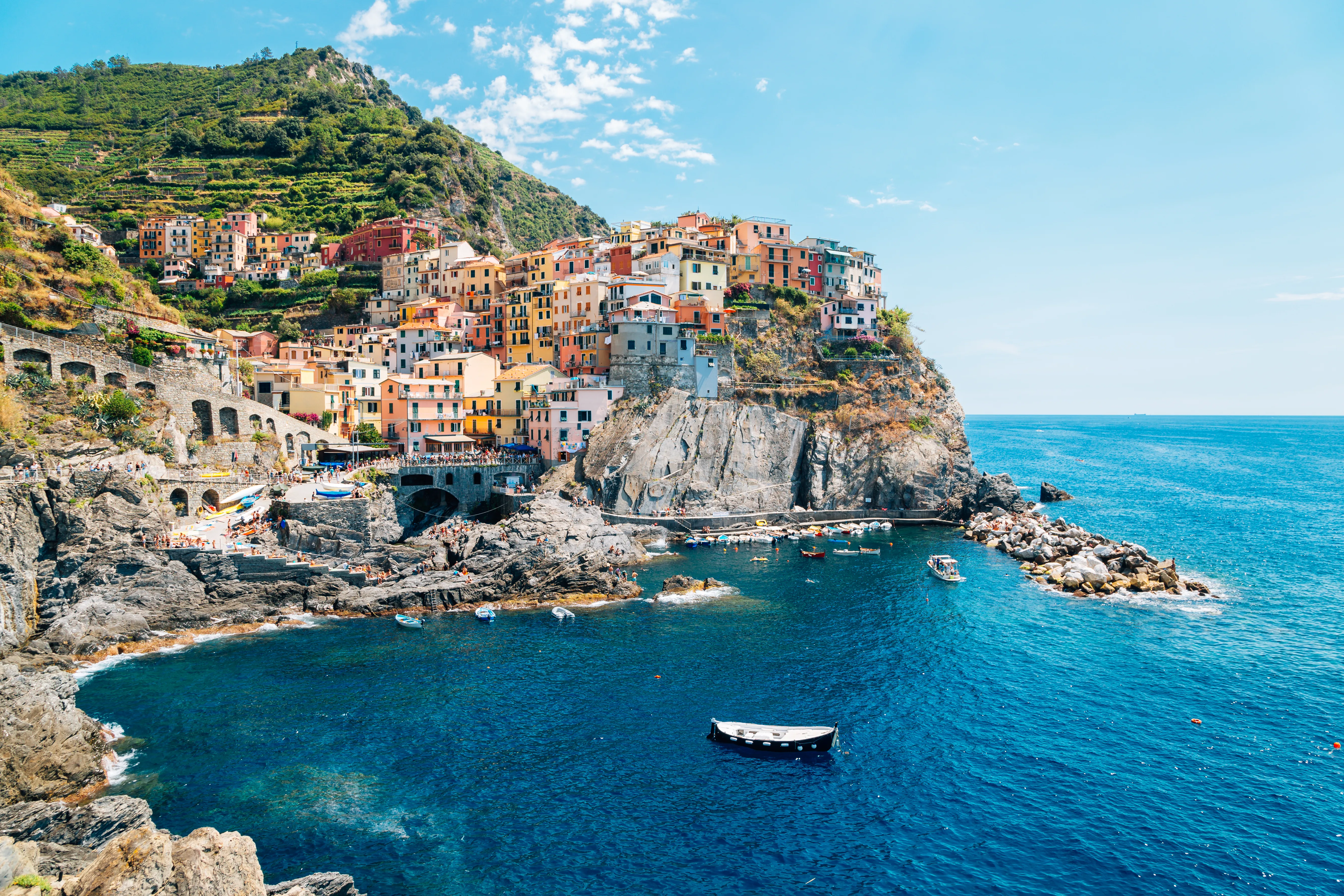
In fact, any shoes deemed unsuitable for the trails – along with flip flop and sandals – could score you a fine of between €50 (£43.15) to €2,500 (£2,157.31).
Staff across the park, as well as guards, can carry out checks including stopping visitors to check they have the right footwear.
If you are caught wearing them on the hiking trails you could be fined over £2,000Credit: Getty
If you don’t have the right footwear, you could get fined on the spot or not be allowed to use the trails.
One trail where flip flops are banned is the famous Blue Path, which connects all five villages in the park.
The path takes between five and eight hours to walk from end-to-end, or longer if you want to explore the villages.
To do the Blue Path, you will usually need a Cinque Terre Card, which gives you access to the trails as well as local shuttle buses and museum discounts.
Flip flops are allowed in some areas though, including the villages in the park – Monterosso al Mare, Vernazza, Corniglia, Manarola and Riomaggiore.
The park isn’t the only spot in Italy where you can’t wear flip flops though.
In Capri, a law that was created back in the 1960s bans people from wearing noisy shoes.
This includes flip flops, as well as squeaky sandals and even wooden clogs.
One particular route was also named the least punctual with the airline, as Birmingham to the Greek party hotspot of Zante had an average delay of 46 minutes
An airline loved by Brits has been rated one of the worst for punctuality (stock)(Image: Maria Korneeva via Getty Images)
A popular airline amongst British holidaymakers has been ranked among the worst for punctuality — and it isn’t easyJet, Ryanair, BA or Jet2. Budget carriers easyJet and Ryanair occasionally face criticism from passengers for a whole host of reasons, yet timekeeping doesn’t appear to be one of their shortcomings.
An airline that also offers package holidays widely favoured by Brits has apparently earned a reputation for poor punctuality.
TUI Airways has landed fifth on a list of the five worst airlines for UK flight delays, with Civil Aviation Authority (CAA) data revealing an average delay of 20 minutes and 24 seconds last year.
One particular route was singled out as the least punctual of all — Birmingham to the Greek party island of Zante — with an average hold-up of 46 minutes. Operating out of more than 20 UK airports, the carrier is owned by TUI Group.
Aage Dunhaupt, from TUI Group, told the Mail that “minimising delays remains a top priority”, noting that TUI Airways runs flights “wherever possible, even if they are delayed, rather than cancelling them”.
He said: “If we were to follow broader industry practices of cancelling flights more readily, our punctuality ranking would improve significantly. However, this would come at the expense of our customers.”
Air India was ranked the worst performer for the second year running, with average delays exceeding 36 minutes, while Scandinavian Airlines topped the table as the most punctual, averaging a mere eight minutes.
Taking second spot for the poorest performance was Blue Islands, which ceased trading at the end of last year, followed by TAP Air Portugal and Saudia.
On a more positive note, average delays have fallen from 18 minutes, 18 seconds in 2024 to 14 minutes, 48 seconds.
A spokesperson for trade body Airlines UK told ITV: “The vast majority of UK airline flights depart on time and CAA data shows customer satisfaction levels are at an all-time high.
“Most delays are the result of issues that are entirely outside airline control, such as adverse weather, forced reductions in the number of planes that are able to land and take off each hour, and industrial action.”
They added: “When these delays do occur, airlines work hard to support customers and get them where they need to be as quickly as possible.”
This follows a flight attendant revealing her top five “basic” habits she “absolutely loves” to see passengers doing. Taking to TikTok, she started by saying: “When you take your headphones out as I walk up to your row.
“Instant respect. You see me. I see you. We’re already besties.”
Her other habits were paying attention during announcements, offering a smile and a sincere thank you, keeping shoes on, and not treating the plane like your living room.
She added: “It’s really that simple. Kindness + awareness + basic hygiene = elite passenger status.”
The now-influencer appeared on BBC’s Song Marry Avoid when she was just 19-years-old
17:38, 18 Jun 2026Updated 19:56, 20 Jun 2026
The now influencer was forced to turn down a number of TV opportunities because of her anxiety(Image: BBC)
A woman who appeared on a popular BBC show says she had no choice but to turn down some major opportunities.
Sophie Bow received a dramatic ‘makeunder’ on BBC’s Snog Marry Avoid, which featured the sassy robotic style guru POD (Personal Overhaul Device).
Rather than being given a makeover, those who appeared on the show were given a ‘makeunder’ as they were persuaded less is more.
The show was a huge hit with fans in the late 00s with singer Jenny Frost followed by comedian and Strictly Come Dancing star Ellie Taylor as the host. The BBC Three show aired from 2008 until its sixth and final series in December 2013.
Sophie was just 19 when she first appeared on our TV screens, when she encountered POD as a teenager who loved lots of fake tan, heavy makeup and eye-catching outfits covered in sequins and glitter.
At the time, viewers fell in love with the teen and show bosses were keen to get her back on our TV screens for other projects.
Now 33, she has become a popular social media content creator but revealed that she was forced to turn down a number of TV opportunities because of her anxiety.
Looking back on her journey since appearing on Snog Marry Avoid, she took to TikTok and gave fans an update on her life today.
She started off by saying: “I would say appearing on telly back in the day definitely helped my career.
“Back then it was a very popular show but it disappeared off the face of the earth and no one knows why or where it went but it would be so good if they brought it back.”
Content cannot be displayed without consent
She revealed: “After being on that show, I did actually get casted for the first ever Love Island but I was in a relationship. I’ve always been in a relationship so I never went on the show. “
However her relationship wasn’t the only thing holding her back as she explained: “But there have been so many opportunities that I actually did miss out on – throughout my life because I do have anxiety – I suffer badly with anxiety.
“I don’t really know what triggered it but I do get quite back anxiety. Even to this day I get asked on brand trips or anything outside my comfort zone, if I’m not going with somebody I can’t.”
The influencer added: “I really need to push myself to do more. I have a little boy and he is the best thing ever so I did take a little break from social media for a little while but then I did go back into social media.
“I did lose quite a lot of following from having the break then I started a TikTok account and here I am.”
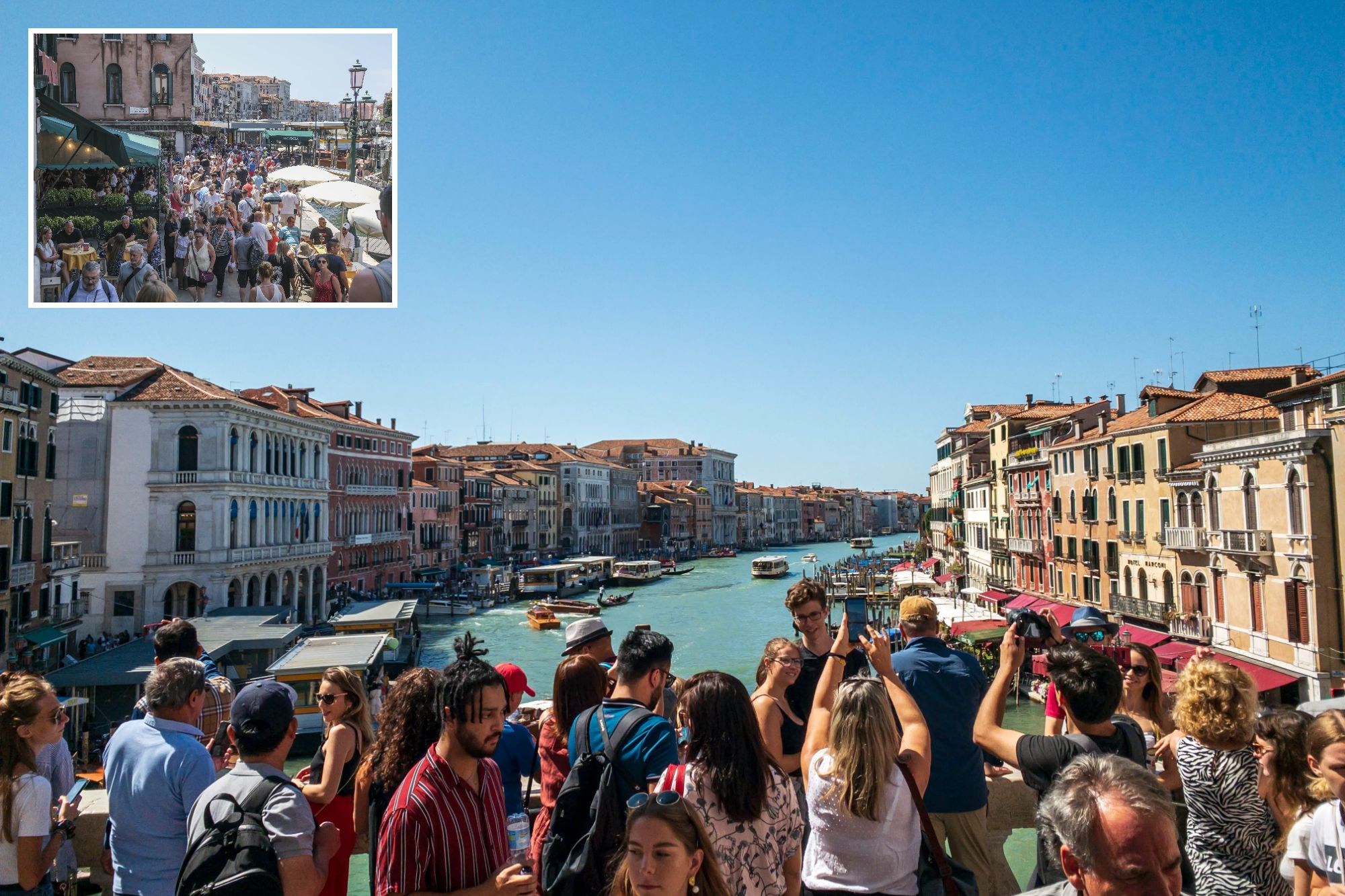
The scheme was introduced in 2024 to try and combat overtourism in peak monthsCredit: GettyThose who do not buy a ticket can be hit with a €300 fineCredit: Getty
Under the current system, day-trippers who book less than four days before their visit pay €10, while those who reserve more than four days in advance pay €5.
Visitors entering before 8.30am or after 4pm are exempt, as are residents, people born in Venice, students and workers.
Tourists staying overnight in hotels or rental accommodation also do not have to pay.
Tickets are purchased online and checked at key entry points, including the railway station.
Those caught without one can face fines of up to €300.
The city is also expanding the scheme, increasing the number of chargeable days from 54 to 60 this year.
Opponents argue the scheme has done little to reduce visitor numbers.
Official figures show average daily visitor numbers fell only slightly during the summer, from 16,676 in 2024 to 13,046 in 2025.
Venturini insists the goal is not to put a cap on tourism altogether.
He said: “We need to keep an eye on the total number of visitors to Venice, but we do not want to put a maximum limit on tourists, so instead we can aim to get them to spread out and avoid coming on those days when we face the prospect of 80,000 visitors.
“That means getting the Italian parliament to approve higher prices, let’s say €30 or €50.
“That will cover the cost of services for tourists, including removing the growing amount of rubbish, but we could also offer ticket holders discounts for museums.”
The idea of charging visitors even more has provoked strong opposition.
Critics argue that if Venice is serious about reducing overcrowding, it should instead focus on limiting the number of properties being rented out through Airbnb.
Former mayor Massimo Cacciari said: “There is no other Italian or European city that you have to buy a ticket to enter, as if it were a museum.
“This is barbarous, uncivil and in my opinion anti-constitutional.”
Constitutional expert Ludovico Mazzarolli also told Corriere della Sera that a €50 entry fee could conflict with the Italian Constitution’s principle of free movement within the country.
Venice is not the only city trying to manage surging visitor numbers.
Béla Guttmann may be the most consequential soccer coach you’ve never heard of. But if it weren’t for Guttmann, you may never have heard of Pelé.
And Brazil may never have become the greatest soccer-playing country on Earth.
That’s because Guttmann changed the shape of modern Brazilian soccer — and changed the sport forever — when he imported the revolutionary 4-2-4 system from Hungary to Sao Paulo in 1957. A year later, Brazil won the first of five World Cups and the joga bonito was born.
But what Guttmann brought to Brazil isn’t nearly as interesting as how he got it there. That’s just one of the fascinating stories in “The Beautiful Game … The Untold Story,” the exhibit that will open the Holocaust Museum LA on Sunday at the Goldrich Cultural Center, a $70-million expansion that will double the size of the Pan Pacific Park museum’s campus to 70,000 square feet.
A soccer ball from the holocaust is among the items on display in the exhibit “The Beautiful Game … The Untold Story” at the Holocaust Museum LA.
(Eric Thayer/Los Angeles Times)
The exhibit was unveiled during a private reception on Saturday followed by a free preview day open to the public from 10 a.m. to 5 p.m. The grand public opening will take place in August.
The show’s launch coincides with eight local World Cup matches, which kicked off with the United States’ 4-1 win over Paraguay on Friday at SoFi Stadium, and it shines a light on the important but largely overlooked relationship between Jewish life and the global game, as well as how Jewish innovators like Guttmann shaped the modern rhythm, style and culture of the sport.
“It was in the same intellectual level as jazz, as art and everything modern and progressive,” journalist Allon Sander, who helped curate the exhibit, said of Jewish participation in European soccer in the years before World War II.
“The origin of the game and how it intersects with Jews and the Holocaust and the impact that these Jewish footballers and coaches had to shape the game and help popularize the sport is so fascinating,” added Beth Kean, the museum’s CEO. “And it’s an unknown history.”
Much of that story can be told through Guttmann, who was born in Budapest in the final year of the 19th century and developed into one of the sport’s first Jewish stars, representing Hungary in the 1924 Olympics and playing for nine teams in two countries before retiring to become a coach.
But none of that success mattered when the Hungarian government began introducing anti-Jewish laws in 1938, costing Guttmann his job and nearly his life when he was sent to a Nazi forced-labor camp, where he was tortured. Just days before he believed he would be shipped to Auschwitz, which meant certain death, he escaped alongside Erno Erbstein, another Jewish coach.
Erbstein revolutionized soccer in Italy before dying in 1949, along with the entire Torino team, when their plane crashed into a hilltop outside Turin. Four years ago, he was inducted into the Italian soccer hall of fame. Guttmann, meanwhile, who lost much of his family in the Nazi death camps, would go on to coach for 42 years in 14 countries, winning championships in six of them yet only staying in a single place for more than two years just once.
“He’s running away from his demons,” said Ronen Dorfan, a journalist and sports historian based in Budapest whose research was instrumental in putting the exhibit together. “His father was murdered, his sister was murdered. You never know how you survived in Budapest during the war so he had guilt feelings.”
A jersey worn by player Max Wozniak and a jersey from the 1930s are displayed in an exhibit called “The Beautiful Game … The Untold Story.”
(Eric Thayer/Los Angeles Times)
The exhibit was designed in three sections, the first devoted to the years before World War II, the second is about the Holocaust and the third is the postwar years. And while it details Jewish participation in, and influence on, global soccer, it also challenges the cliché that Jews were intellectuals, artists and laborers but not athletes.
“We are always trying to challenge stereotypes. Stereotypes that we might have about ourselves and even stereotypes that we believe about others,” said Jordanna Gessler, the museum’s vice president of education and exhibits who helped curate the show. “It’s crucial to help people find their place and their voice and really see the unity, the similarities between people.
“This is a story that was lost in time and we’re really bringing it out,” Gessler added. “To really have this conversation and encourage people to explore stories that they might not know.”
One thing people might not know is that in the 1920s and ‘30s, Europe’s best teams weren’t in England, Germany or France, but in Austria and Hungary, where they were led by Jewish players and coaches such as Hugo Meisl, Jozsef Braun, Arpad Weisz, Marton Bukovi, Gusztav Sebes and Gyula Mandi. Weisz and Braun were both killed by the Nazis.
A soccer ball from the 1974 World Cup is displayed at an exhibit called “The Beautiful Game … The Untold Story.”
(Eric Thayer/Los Angeles Times)
The surge of antisemitism and fascism in Germany, Italy and Eastern Europe helped spread the influence of those revolutionary players and coaches around the world.
“With the rise of the Reich and the Holocaust, the coaches ran away,” Dorfan said. “And they ran to every corner of the world, to Brazil, to Argentina, to Portugal [and] provided coaches to Real Madrid, to Barcelona, to Benfica, to Flamengo.
“There isn’t one of these clubs that doesn’t owe its tactical development in the ‘40s and ‘50s to the Jewish coaches, which came primarily from Hungary.”
The primary tactical development was the shift from the popular but rigid 2-3-5 formation, which required immense physical endurance and tactical discipline, to the fluid 4-2-4, which spread the wingers to the touch line and allowed for improvisation and creativity on the attacking end, a formation pioneered in Budapest in the 1920s.
“They developed a more refined game of passing the ball, keeping it on the carpet rather than the English kick and run, and really put thought into tactical thinking,” Dorfan said.
Guttmann, who played or coached for more than two dozen teams in his career — including one, in Romania, that paid him in vegetables during the postwar period — brought the Hungarian approach to Brazil in 1957 when he coached Sao Paulo to a championship. After Vicente Feola, the manager Guttmann replaced at Sao Paulo, took over the national team a year later, he brought the formation with him, popularizing many of the tactics still used in modern soccer, such as fluid defensive wingers, overlapping full backs, the use of a withdrawn striker and an attacking midfield.
The soccer team at the Theresienstadt concentration camp’s flag is displayed in a Holocaust Museum LA exhibit called “The Beautiful Game … The Untold Story.”
(Eric Thayer/Los Angeles Times)
“He is the whole exhibition in one man,” Dorfan said of Guttmann.
“Obviously if we wouldn’t have had the Holocaust, those [coaches] wouldn’t be kept out of Europe, Europe would be much stronger, much more developed. [And] then the development of Brazil or the success of Brazil would be coming much later,” Sander said.
Dorfan spent the better part of two years tracking down many of the more than 100 trophies, uniforms, photos and trinkets that make up “The Beautiful Game” exhibit, a search that required determination, perseverance and more than a little luck. Many of the items, because of their ties to Jewish athletes and teams, were hidden during the war and presumed lost. Others resurfaced only through detective work that sent Dorfan following leads that spanned decades and crossed more than a dozen borders.
That also cost money. So Alan Rothenberg, the man who, as president of the U.S. Soccer Federation, first brought the World Cup to Los Angeles 32 years ago, stepped up to lead an effort that raised more than $1 million to fund the exhibit.
“The story really needs to be told, particularly with what’s going on right now with respect to antisemitism,” Rothenberg said. “It’s really important for people to realize what can happen. And soccer is a great vehicle to draw them in. The one main thing in the museum is bringing schoolkids in.”
The Nazis and their collaborators failed in their attempt to erase the history of Jewish soccer pioneers; in fact, they inadvertently popularized both the men — and women — and their ideas. But the sport also helped other Jews survive a dark period and Kean said that may be the most beautiful and uplifting part of “The Beautiful Game.”
“The main reason we decided to do this exhibition in the first place is because for years so many survivors, when they talk about their life before the war, so many of them talk about soccer. So many of them were passionate and fond of the sport,” she said.
“We knew the exhibit opening was going to coincide with the World Cup. L.A. is going to be on the world stage. This is a great opportunity for the museum to get these stories out.”
It is one of the most popular holiday destinations in the UK but a 20-minute drive away you’ll find a much better beach.
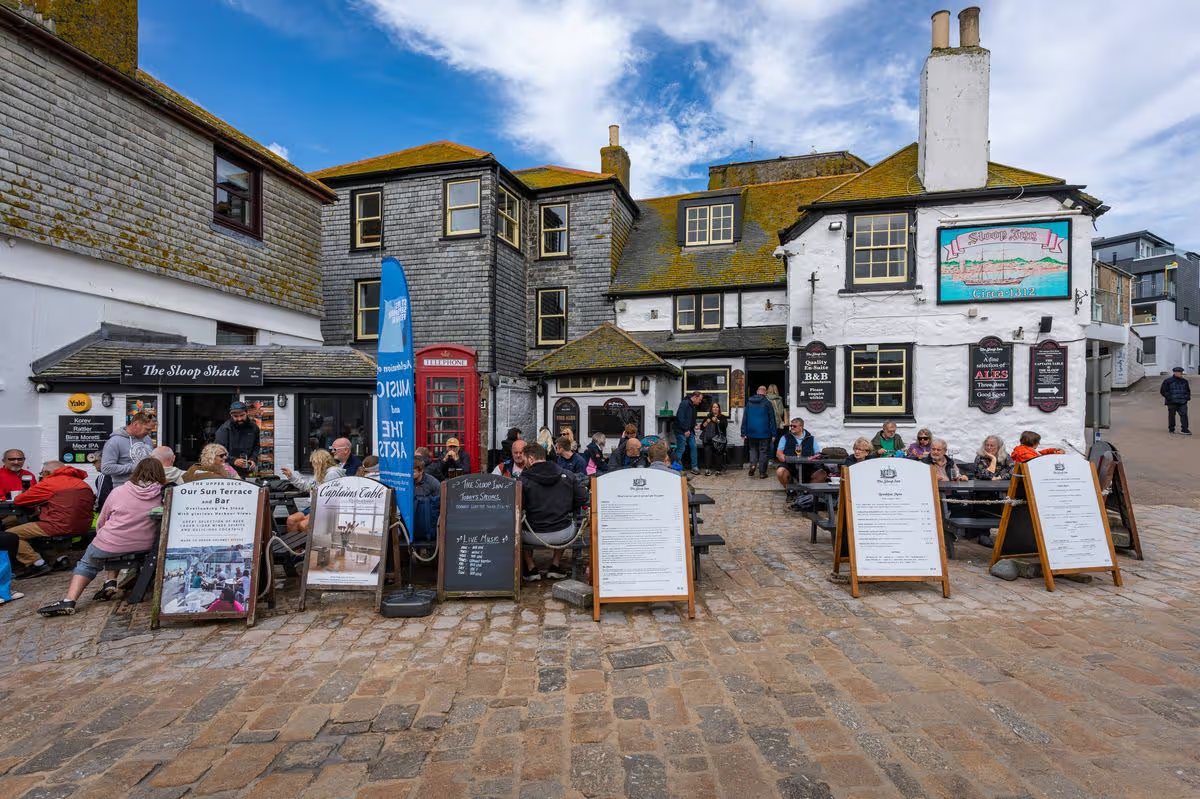
St Ives is set to be one of the busiest holiday destinations in the UK this summer thanks to what it has to offer visitors — pictured is The Sloop Inn, one of the oldest inns in Cornwall(Image: Milos Ruzicka via Getty Images)
Cornwall is famous around the UK and beyond for its beauty, whether it’s the quintessential seaside towns and villages, seafood, dramatic cliffs, golden beaches or azure sea. Each beach and cove has its own unique charm, but some, like St Ives on the north-west coast, are more famous than others. In fact, it is going to be the most popular place for staycations in the UK this year, according to Sykes Holiday Cottages.
And that’s just the latest accolade for the town, which has also been called the “artsiest” in Cornwall. In 2011, the postcard-perfect town outshone rivals from Spain, France and Italy to be named one of Europe’s top beach destinations. However, despite its picturesque appeal, when I visited during a recent summer I found that St Ives was marred by murky waters and an overwhelming number of tourists (including me, of course). And those considering a Cornish getaway might discover a more enchanting spot just around the corner, just like I did.
Is St Ives a good place to visit?
In short, yes. St Ives is brimming with attractions, boasting five sandy beaches and a gently sloping shoreline perfect for families and those looking to bask in the sun. The beachfront is well-equipped with amenities including lifeguard patrols from Easter through September, deck chair rentals and water sports equipment available for hire, including kayaks, stand-up paddleboards and more. On a sunny day, Porthmeor Beach buzzes with activity, earning its reputation as the town’s “premier” beach.
Just beyond the beachfront, visitors can explore a delightful labyrinth of narrow lanes lined with pastel cottages, which play host to several restaurants, bars and cafes. Local dining spots serve up authentic Cornish fare, with traditional dishes like pasties, crab and mussels. It’s also been called “Cornwall’s art mecca” by virtue of being home to the Tate, the Barbara Hepworth Museum and Sculpture Garden, historic studio Leach Pottery, the award-winning Porthminster Gallery and a swathe of smaller indie galleries.
If you’ve never been, like I hadn’t until last summer, it’s a must-visit. Arriving with high hopes, the bay looked breath-taking from afar (that is, from the bustling car park at the top of the town). The honey-coloured stone buildings in the streets below were inviting but once I set foot on the beach reality hit.
Families and groups occupied every bit of sand on a weekday afternoon in July. Even at 4pm, Porthmeor beach was still crowded, including its far side. With a Cornish pasty in hand, I finally found a spot to sit, only to be met by an army of seagulls that had clearly spent the day gorging on litter left on the sand.
The real let-down came when I went for a quick swim in the sea. Having visited Kynance Cove and Pedn Vounder Beach just days before, I was underwhelmed by the slightly murky water that seemed polluted by heavy footfall and frequent boat activity. I questioned why I was swimming here when Cornwall is home to so many clear, secluded coves.
Is there a better alernative?
Later that same evening, when I drove further up the coast towards Hayle, I discovered a gem. Gwithian Towans Beach is at the far end of St Ives Bay and boasts a wide, spacious sandy beach that is popular for surfing but rarely crowded. It’s approximately a 24-minute drive via the Hayle Bypass to this incredible beach, which is backed by massive dunes perfect for a long walk.
When the tide recedes, the nearby Godrevy Beach seamlessly blends with Gwithian to create a vast expanse of beach. At high tide, it transforms into a distinct cove, framed by cliffs and the National Trust-owned headland. Situated at the far end of St Ives Bay, Godrevy Beach is a neighbouring treasure, famed for its iconic lighthouse and a small colony of seals.
The water here is noticeably clearer, likely due to its exposure to Atlantic swells that disperse sediments. A swim here is invigorating and less daunting than in St Ives itself. On the beach, you can find a private spot behind dramatic rocks, even on a bustling afternoon. However, the true marvel of this westerly location is the sunset views.
Is there parking?
Parking is available at the top of the headland in a National Trust car park, from where it’s a short walk down to Gwithian beach for a quick dip. This is arguably more accessible for visitors than parking at the top of St Ives and navigating the steep streets down to the shoreline there. Facilities are somewhat limited, with a small cafe and surf shop at Gwithian and a National Trust cafe at Godrevy. Limited toilet and shower facilities are available in the Gwithian parking areas.
Foreign Office backed experts issue update as tourists from England, Scotland and Wales struck down
09:14, 12 Jun 2026Updated 09:19, 12 Jun 2026
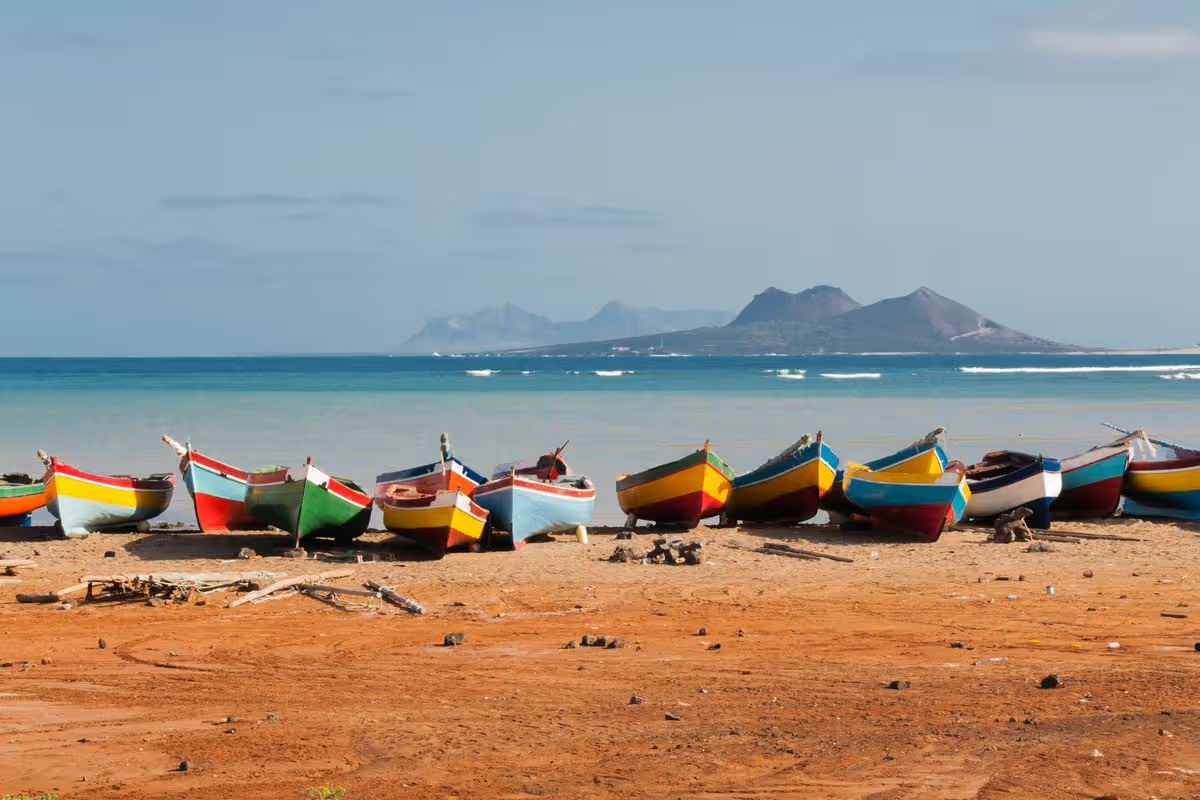
Fishing boats rest in Mindelo beach. Cape Verde has been hit by outbreaks of serious stomach illnesses(Image: Getty Images)
UK health experts have disclosed that 164 individuals have arrived back in England, Scotland and Wales from a holiday destination carrying a serious infection. In a fresh update, the Foreign Office-backed Travel Health Pro stated that people must exercise additional caution.
The surge in stomach bugs Shigella – also referred to as shigellosis or dysentery – and Salmonella has been occurring on the Cape Verde Islands, a favoured destination among British holidaymakers. Authorities confirmed that over the past eight months, cases of Shigella and Salmonella infection have been documented in travellers returning to England, Scotland and Wales from the Cape Verde Islands.
Of 164 confirmed Shigella cases, the majority – 112 – individuals reported travel to Cape Verde, predominantly to the Santa Maria and Boa Vista regions. As of June 2026, of 99 confirmed Salmonella cases, from three distinct clusters reported in England, Scotland and Wales since 1 October 2025, a total of 70 individuals reported travel to Cape Verde.
Cases in the largest of the Salmonella clusters reached their peak in January 2026. The European Centre for Disease Prevention and Control (ECDC) also flagged a surge in Shigella cases amongst travellers returning from Cape Verde since September 2022.
More than 1,000 confirmed and suspected cases of shigella and other gastrointestinal infections, including salmonella, have been identified in travellers returning from Cape Verde to 13 countries across the European Union/European Economic Area: Belgium, Czechia, Denmark, Finland, France, Germany, Ireland, Luxembourg, Norway, Poland, Portugal, Sweden and the Netherlands. Cases have also been recorded amongst US travellers who visited Cape Verde.
Shigella is a bacterium that can trigger shigellosis, a gut infection capable of causing severe diarrhoea, fever and stomach cramps. The majority of people recover within a week.
However, certain individuals, such as older adults, those with weakened immune systems, anyone with complex medical conditions, pregnant women and children under five, may face a heightened risk of complications, including sepsis.
Shigella spreads through contact with contaminated faeces, either directly via person-to-person transmission or indirectly through food, water or surfaces tainted with Shigella. Travellers visiting destinations where food and water safety cannot be guaranteed are particularly at risk.
Globally, the majority of Shigella cases occur in children younger than five years of age, though all age groups can be affected. There is additionally a risk of sexual transmission amongst men who have sex with men.
Salmonella, also known as salmonellosis, is a bacterial illness that primarily targets the intestines. Symptoms such as diarrhoea, stomach cramps, nausea, vomiting and fever typically appear between 12 and 72 hours after infection [8].
Young children, pregnant women, those with underlying health conditions and elderly people are at greater risk of developing severe symptoms. The majority of human cases stem from contaminated food and water.
For further details, click here.
While you are away.
Be sure to follow these steps when travelling overseas.
A 48-HOUR strike in Europe has already seen Eurostar trains cancelled – and more could follow.
Strikes across Italy and France today and tomorrow are impacting rail services including Eurostar trains to and from the UK.
Sign up for the Travel newsletter
Thank you!
Eurostar services are being cancelled today and tomorrow due to strikesCredit: AFP
Cancelled Eurostar trains include the 7:12am service from Paris to London and then the 3:31pm service from London to Paris, both today.
Tomorrow, the 7:12am service from Paris to London will also be cancelled.
A number of other Eurostar trains are facing delays as well including between Paris and Brussels, which will impact Brits changing trains at Paris.
According to the Eurostar website, the cancellations are due to “strike action on the French network” and that “local and national traffic in France will be heavily disrupted”.
Passengers are being advised to keep an eye on Eurostar’s website and app for updates.
The Eurostar delays and cancellations aren’t the only trains impacted.
Across France and Italy there are nationwide strikes over the next 48 hours on rail services.
In France, strike action today is causing disruption across the entire country’s network including trains heading to Normandy, Brittany and Provence.
Trains across Italy and France are also impacted by nationwide strikesCredit: Getty
The action started at 7pm yesterday and will continue until 6am tomorrow.
According to Rail Europe, delays of between one-and-a-half hours and three hours can be expected on trains being run by TGV INOUI, OUIGO, and Eurostar.
On the other hand, in Italy, workers at state-owned rail companies such as Trenitalia, Trenord, and Trenitalia Tper will strike tomorrow from 3am until 2am on Friday.
Delays and cancellations are expected across the country including services to destinations such as Rome, Milan, Florence, Venice and Naples.
Though due to Italian laws, there will be services at peak times which include between 6am and 9am and between 6pm and 9pm.
For Brits on holiday in either Italy or France, if you are due to get on a train within the country or even on a Eurostar service, expect delays and cancellations, as well as busier train stations.
A NUMBER of airlines, including several to a popular long-haul destination, are the latest in updating rules on a popular travel item.
Portable power banks have caused a number of issues on flights in recent months.
Sign up for the Travel newsletter
Thank you!
More airlines are updating their rules and guidance on portable power banksCredit: Getty
And as a result, rules regarding travelling with them on planes have been updated for all flights heading to, within and from Thailand.
The Civil Aviation Authority of Thailand (CAAT) has stated that power banks must now be stored in hand luggage, when previously they were allowed in checked luggage.
Passengers will be allowed up to two power banks but they cannot be used during flights.
The updated rules apply to all airlines that fly to, within and from Thailand such as Thai Airways, Thai AirAsia, Bangkok Airways and Singapore Airlines.
And it isn’t just the airlines flying to Thailand that are issuing updated power bank guidance.
This week Aer Lingus changed its policy as well, with passengers now only able to carry up to two power banks in their cabin baggage.
A spokesperson for the airline told The Irish Times that the change is “in line with guidance from the International Civil Aviation Organisation and the European Union Aviation Safety Agency”.
Airlines changing their rules and guidance on travelling with power banks comes as a number of incidents caused by lithium batteries – which are found inside power banks – have occurred on flights in recent months.
Including updated advice to all airlines flying to, from and within ThailandCredit: Getty
The batteries are prone to overheating and in a number of cases have even caught fire.
For example, on May 19, an easyJet flight travelling from Egypt to the UK was forced to divert to Rome after a passenger revealed they had left a phone connected and charging via a power bank in their checked luggage.
And back in July last year, a power bank caught fire on a Bangkok Airways flight from Samui to Hong Kong.
According to power bank brand Anker, “for those traveling to, from, or within the United Kingdom, you must adhere to Civil Aviation Authority (CAA) guidelines.
“When it comes to carrying power banks on planes, UK regulations are very specific about how these items are stored.
“The CAA emphasises that terminals must be protected from short circuits.
“Major airlines like British Airways, EasyJet, and Virgin Atlantic all enforce the 100Wh limit for automatic acceptance.”
STAYCATIONS are on the rise, according to the experts – and there is a county that is booming in demand.
In its latest Summer Travel Report, Airbnb revealed that not only are staycations up 11 per cent year on year, but an unlikely trending rural destination is Herefordshire where searches have increased by 76 per cent.
Sign up for the Travel newsletter
Thank you!
Herefordshire is rising in popularity when it comes to staycationsCredit: AlamyEardisley is one of Herefordshire’s ‘black and white’ villagesCredit: Alamy
The county bordered by Gloucestershire, Shropshire and Worcestershire is known for its cider and pretty villages that look similar to those found in the nearby Cotswolds.
Earlier this year, Herefordshire was called the ‘quiet corner of England’ by The Independent – but hoped it would be thrust into the spotlight after the release of Hamnet.
Some of the county’s small villages were used for filming and doubled as Shakespeare’s Stratford.
One of the villages is Weobley which is nicknamed a ‘black and white’ village thanks to its half-timbered houses.
Alongside its pubs, fans of Hamnet should head into The Wobbly Badger Cafe which took centre stage for the exterior of Shakespeare’s family home in the film.
It’s not just Weobley – there are lots of other villages like this one and some are part of that are part of Herefordshire’s ‘black and white villages’ trail which is a 40-minute driving route.
Other villages include Pembridge, or Eardisland, which sits on the banks of the River Arrow (and looks similar to Bourton-on-the-Water).
Even smaller villages include Eardisley, Dilswyn, Leominster and Kingsland.
Hereford Cathedral is in the middle of the cityCredit: Alamy
Herefordshire gets around six million visitors each year compared to the Cotswolds’ 25million – so for visitors it will make for a much quieter staycation.
For fans of cider, Herefordshire has around 15,000 orchards growing apples and pears, some of which is used to produce the drink.
Stops on the South Circuit include Little Pomona Cider & Perry, Gregg’s Pit Cider & Perry, Oliver’s Cider & Perry, Ross on Wye Cider & Perry.
Another famous spot that TV fans will recognise in Herefordshire is Symonds Yat.
The spot on the River Wye is known for its enormous limestone gorge.
It even appeared in the Netflix series of Sex Education – one of the most recognisable places is the red and white chalet that sits high above the valley, which was the exterior of Jean and Otis’ house.
There are a number of cider farms and dedicated routes to visit themCredit: Visit Herefordshire
The River Wye within the valley is the fifth longest river in the country.
It’s surrounded by walking paths and tourists are also welcome to take to the water on a kayak, canoe or paddleboard.
Of course, Herefordshire’s centre is the city of Hereford which is home to a large cathedral.
This houses a famous treasure calledMappa Mundi which is a medieval map of the world from 1300.
It also has the unusual 17th century Chained Library – a collection of over 1,500 rare books and manuscripts that are secured to their shelves by iron chains, rods, and locks.
Entry into Hereford Cathedral is free, but to see Mappa Mundi, Chained Library or a Tower Tour there are additional fees.
Eastnor Castle is a popular spot for a weekend with the familyCredit: Alamy
Another popular spot is the Eastnor Castle which while it looks like one isn’t a medieval fortress, instead, it’s a 19th-century mock castle.
Found in Ledbury, the castle was once home to the Hervey-Bathurst Family who lived at there for over 200 years.
It’s open throughout the year holding events like family fun days, bird of prey and supercar displays,
The grounds are popular for hiking and to entertain the kids, there’s a playground, tree top walkway, maze and mini zip wire.
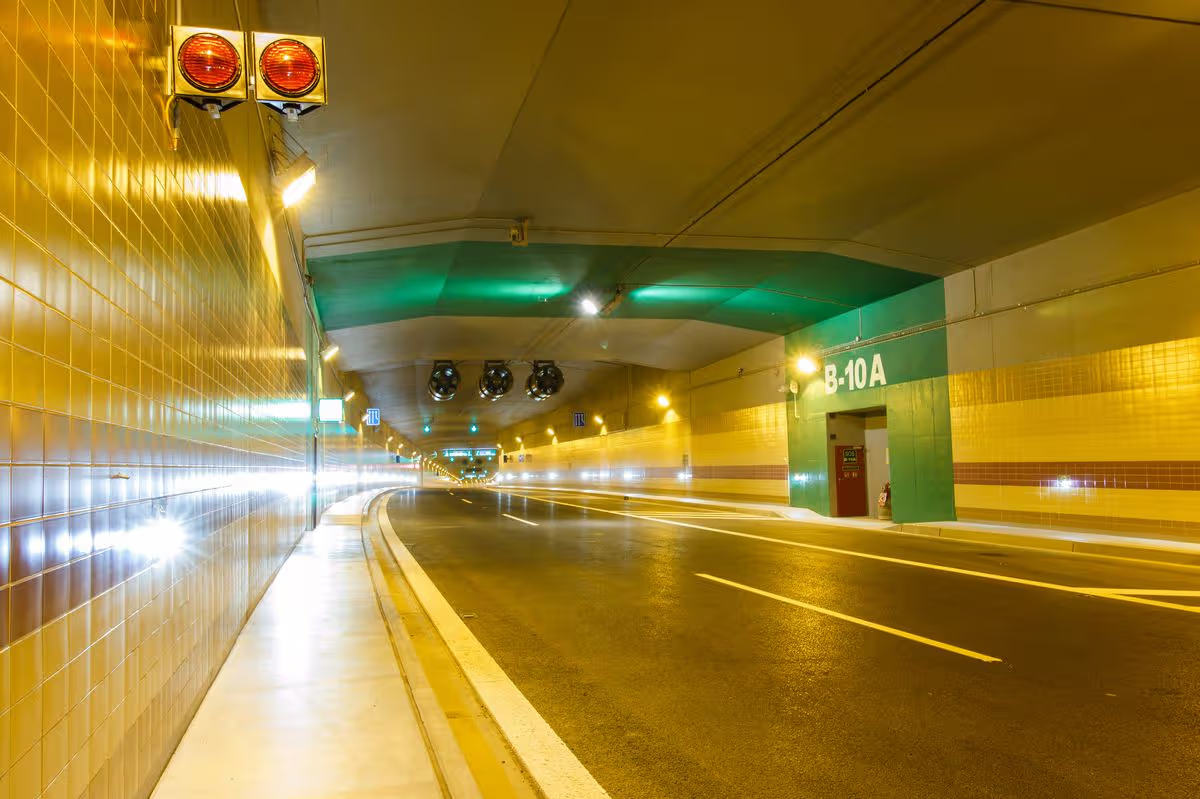
Three tunnels form part of the complex under the city
The tunnel runs right under a European city.
A European city has an extensive network of tunnels beneath it. The Blanka Tunnel Complex is the longest city tunnel in Europe and runs for a total length of 5,502 meters.
The tunnel sits under Prague and is the longest road tunnel in the Czech Republic. It connects the area west of Prague Castle with the Trója district in the North-east of the city.
Three tunnels, consisting of the Bubenečský, Dejvický, and Brusnický, make up the complex, which was designed to relieve heavy traffic from the history city centre. In its first 49 months since opening, it was used by 139 million cars.
Today, it is estimated that 88,000 vehicles use the tunnel every day. The Blanka Tunnel Complex opened on September 19, 2015, but it was a long time coming.
Construction launched in 2006, but it was planned since 1993. The tunnel was due to open in 2011, but the biggest and most expensive project in Prague was delayed by four years.
It cost 43 billion crowns, which is £1.5 billion today and doesn’t include all construction costs. During the construction of the tunnel complex, there were three landfalls.
The incident occurred twice in the Stromovka park, creating a hole measuring 15 to 25 meters. Another landfall happened in the garden area of the Ministry of Culture in Hradčany.
Since opening, the Blanka Tunnel Complex has undergone continuous maintenance. There is 24/7 monitoring by a dedicated control centre that works night shifts to service lights, ventilation systems, cabling and drainage.
Last year, the tunnel marked its 10th anniversary. Prague Daily News said: “It relieved congestion in the city centre, reduced journey times, and took vehicle traffic underground.
“Since its opening, around 780 million vehicles have passed through the tunnel.
“The Dejvický Tunnel has borne the greatest load with more than 271 million vehicles, followed by the Brusnický Tunnel with almost 266 million and the Bubenečský Tunnel with 236 million vehicles.
“Although Blanka has been in regular operation for years, the approval process for part of the project is still not fully concluded.
“A formal decision by the Administrative Court has meant that the relevant section continues to operate only under provisional use.
“Observers, however, expect a final acceptance soon.”
Turkish airline SunExpress says it has cancelled four routes from UK airports to popular holiday destinations in Turkey due to ‘ongoing geopolitical developments’
21:50, 05 Jun 2026Updated 21:50, 05 Jun 2026
SunExpress has suspended some routes (stock)(Image: Getty)
A major airline says it has been forced to cancel flights from the UK to three popular holiday destinations.
Turkish airline SunExpress cited “ongoing geopolitical developments” and the rising cost of jet fuel as it announced the temporary suspension of four routes from the UK to Turkey for the summer 2026 season.
The routes that have been cancelled are Manchester to Bodrum, Leeds Bradford to Antalya, and Glasgow to both Dalaman and Antalya. Flights on these routes have now been taken off sale.
However, Brits wanting to travel to Turkey this summer have a number of other options. SunExpress is still running routes to Antalya from Birmingham, Bristol, Edinburgh, Gatwick, Heathrow, Stansted, Luton, Manchester and Newcastle, as well as to Dalaman from Birmingham, Edinburgh, Gatwick, Manchester, and Newcastle.
Sadly, the changes do mean SunExpress will not be operating a UK to Bodrum service this summer.
A spokesperson for the airline told Travel Gossip: “Due to the ongoing geopolitical developments, the aviation industry is currently operating in a highly volatile environment, characterised by significant cost increases, particularly for jet fuel. SunExpress is therefore taking steps to improve fuel efficiency and optimise flight operations.
“As part of this, we have temporarily suspended our services from Glasgow and Leeds Bradford, and our route from Manchester to Bodrum, along with a number of short-term frequency reductions on other services.
“We regret any inconvenience caused, and will continue to provide UK travellers with a wide range of flights and routes to Türkiye from airports across the UK.”
They added that the airline is not in a position to confirm when the suspended services may be reinstated. SunExpress will provide further updates as soon as more information is available, they said.
This comes after British Airways said flights will not resume to Dubai and three other destinations in the Middle East until at least October, two months later than previously planned.
The airline previously said it would cut flights to some key Middle East destinations after the start of the Iran war with flights to Dubai, Doha and Tel Aviv originally set to resume at the start of July.
British Airways has now said that the ongoing conflict in the Middle East has prompted further changes to the flight schedule.
Fights to Dubai, Tel Aviv, Bahrain and Amman are now not set to resume until after the end of the summer season. The current date for flights to re-start is October 25.
Currently there are only two more flights set to depart from Leeds Bradford for the city on the Turquoise Coast with the last being on June 7.
Flights between Manchester and Bodrum have also been axed – this has been done immediately as there are no tickets on sale or further routes planned on its website.
The Manchester to Bodrum route was only launched a month ago on May 4.
Routes from Glasgow to Dalaman and Antalya have also been axed.
The final flight from Glasgow to Dalaman will be on June 9.
There are no more flights between the Scottish airport and Antalya.
A spokesperson from SunExpress told Travel Gossip that the reasons for the routes being axed were “geopolitical developments” and a “highly volatile environment”.
Another was the increasing price of jet fuel and as a result of this it is also reducing the number of flights on other services.
They added: “We regret any inconvenience caused, and will continue to provide UK travellers with a wide range of flights and routes to Türkiye from airports across the UK.”
The route cancellations will affect Brits heading to destinations like AntalyaCredit: AlamyIt has cancelled one route to Bodrum just a month after it startedCredit: Alamy
“At this stage, we’re not in a position to confirm when the suspended services may be reinstated. We will provide further updates as soon as more information is available.”
SunExpress – a budget airline – will continue other routes to Antalya.
These go from Birmingham, Bristol, Edinburgh, Gatwick, Heathrow, Stansted, Luton, Manchester and Newcastle.
The airline will also continue to fly to Antalya from Birmingham, Edinburgh, Gatwick, Manchester, and Newcastle.
The move will see passengers pay ’65 per cent’ less tax on a number of routes in a bid to make them more ‘affordable’
Robert Rowlands Deputy editor, money and lifestyle, content hub and Maria Ortega
15:24, 03 Jun 2026
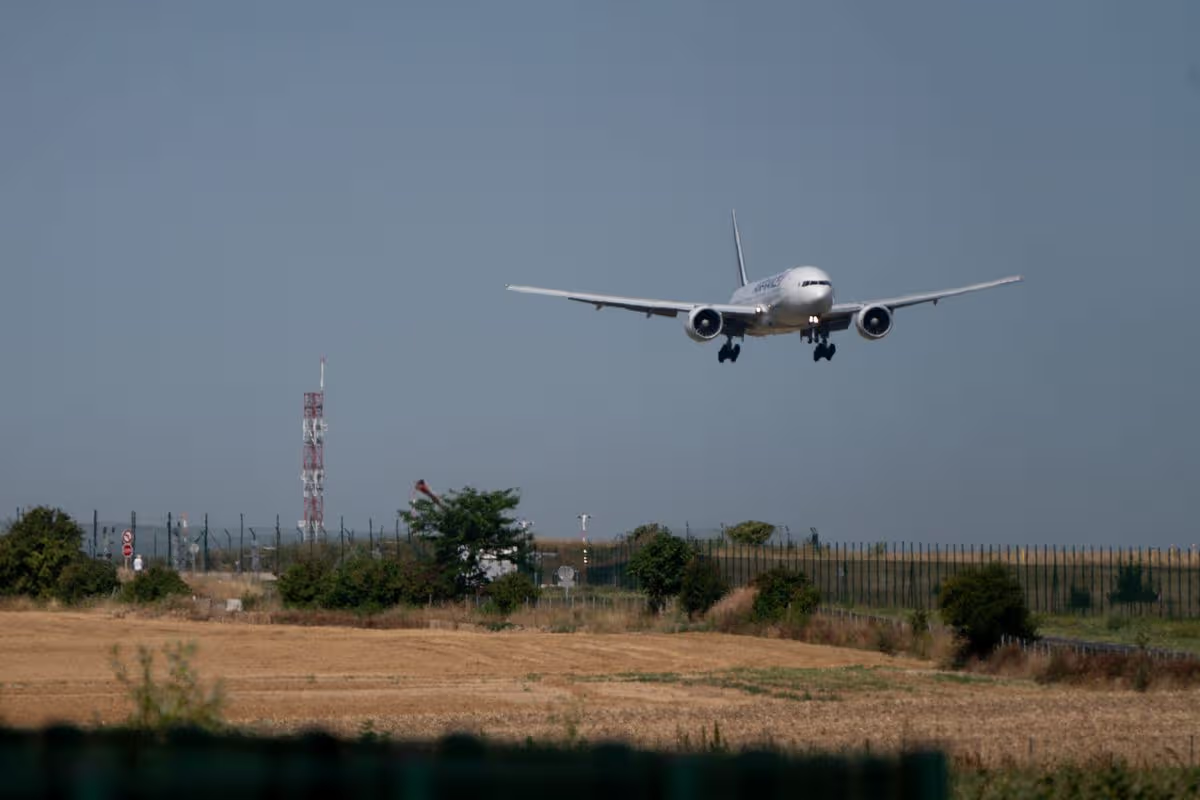
An aircraft landing at the Paris Charles de Gaulle Airport in Paris(Image: Getty)
The prices of tickets for a number of flights in a holiday destination for British travellers will be lowered in a bid to make them more affordable. The move will see flights on 26 specific routes cut in price as tax is reduced on many flights in France, which gets around four million visits from UK travellers every year.
The move was introduced on June 1. Philippe Tabarot, minister at the French Ministry of Transport, confirmed the update this week, and it will affect some international flights as well as trips to some of France’s biggest cities.
Travellers in the UK heading for holidays to France from Heathrow and Gatwick could benefit. Air France, for instance, travels to Paris Charles de Gaulle, while Manchester airport and Birmingham airport also daily flights to both Paris and Lyon, and Newcastle, Edinburgh and Southampton airports also have regular Paris flights.
The move is due to a change in the so-called solidarity tax on airplane tickets (TSBA). French media website 20 Minutes reports that the TSBA had been raised in March 2025 for all flights departing from France.
Local media say the amount rose from €2.63 to €7.40 per passenger. Now passengers flying on certain routes will see the figure returne to the original rate of €2.63.
The Ministry of Transport says this represents a 65% reduction in the tax. That amounts to a saving of €4.77 per ticket.
The flights in France to be affected by the TSBA change
This discount applies to the following routes:
Calvi-Marseille
Ajaccio-Paris (Orly)
La Rochelle–Lyon
Ajaccio-Nice
Brive–Paris
Rodez–Paris
Strasbourg–Madrid
Strasbourg–Munich
Bastia-Nice
Figari-Paris (Orly)
Tarbes–Paris
Calvi-Paris (Orly)
Calvi-Nice
Brest–Ouessant
Bastia-Paris (Orly)
Limoges–Lyon
Figari-Nice
Poitiers–Lyon
Aurillac–Paris
Bastia-Marseille
Strasbourg-Copenhagen
Limoges–Paris
Figari-Marseille
Ajaccio-Marseille
Castres–Paris
Le Puy–Paris
The minister said: “By making these routes more affordable, this measure reflects the government’s commitment to supporting connectivity in the least well-served regions and to reducing the cost of air travel to and from these destinations.”
The move is designed to support routes officials believe are sometimes poorly served by other means of transport. While the flights are almost all domestic, Brits travelling around the country could benefit.
There are also international connections to Strasbourg that are included, as well as most of the links between the French island of Corsica and the mainland. These routes have a special status as ‘public service’ routes because they are in areas where other transport options are limited, or where flying represents the only fast connection, The Local reports.
The eco tax was originally added to plane tickets under Jacques Chirac’s government in 2005, French media reports say. It was doubled in 2024 in a move that Ryanair blamed for its withdrawal from some regional French airports.
The tax is added as an extra fee to each plane ticket bought. It is charged at a sliding rate based on the length of the flight and whether the ticket is standard class, business or first.
A POPULAR UK coastal path is set to close for months this summer.
It’s been confirmed that the scenic walking route will be out of use while essential repairs are made.
Sign up for the Travel newsletter
Thank you!
A popular UK walking route will be closed this summerCredit: GettyHampshire’s Langstone Coastal Path is being repairedCredit: HelenWalkerz65
The Langstone Coastal Path, located behind Farlington Marshes near Portsmouth, is a beloved walking and cycling trail that passes through natural beauty spots and coastal towns.
But the public will not have access to the Hampshire footpath this summer while coastal erosion repairs are underway.
The nature-packed hiking trail, which boasts a 23km route that loops around the Langstone Harbour, will be closed over the summer months from May 26 until September.
This will allow for refurbishments to be done to areas of the sea wall damaged by coastal erosion, in order for the area and its wildlife to remain protected.
The National Highways project means that a diversion will be put in place while the works are in progress. This will run along Eastern Road and Havant Road.
Katarina Saradinova, head of scheme delivery for the South East region, told The Portsmouth News: “This is a beautiful location, and our work will help protect the coastline, wildlife and surrounding environment for future generations.
“We understand the diversion route will lead visitors away from the scenicnature reserve, but these closures are essential to allow repairs to the sea wall, damaged by coastal erosion, to be carried out safely. Unauthorised access could also disrupt the construction schedule,” she added.
Efforts have also been made to ensure that the timing of the works disrupts wildlife habitats as little as possible.
The summer project has been planned in order to avoid disturbing the nesting period of overwintering birds in the area.
While access will still be available from the western entrance of Farlington Marshes, the path between Farlington Marshes car park and Chalk Dock Lake car park will be off limits.
“No to the yankee drill” and “Yankee go home” banners during a protest on Saturday. (Rome Arrieche)
Caracas, May 24, 2026 (venezuelanalysis.com) – Venezuelan grassroots organizations took to the streets on Saturday to protest the US holding “rapid response” military drills in Caracas.
Dozens of activists from multiple collectives belonging to the ALBA Movimientos coalition gathered in the morning in front of the Indigenous Resistance monument in Plaza Venezuela and read a statement expressing “outrage” at the US holding an exercise in Caracas less than five months after its January 3 bombings and kidnapping of President Nicolás Maduro and First Lady Cilia Flores.
“As Venezuelan popular organizations, 141 days since the brutal US military attack and kidnapping of President Maduro and Deputy Cilia Flores, […] we repudiate yankee militarist imperialism and are outraged that the US is executing military exercises in our country,” the organizations expressed.
Speakers, including National Assembly deputies Rigel Sergent and Oliver Rivas, condemned the US-Israel war against Iran and the growing threats against Cuba while reiterating support for the Venezuelan government led by Acting President Delcy Rodríguez.
Also on Saturday, several leftist organizations held a rally in Chacaíto to protest the violation of the country’s sovereignty and denounce the Venezuelan government’s accommodation of US impositions.
“This exercise is extremely serious because it makes concepts like sovereignty appear hollow for younger generations,” trade unionist Adelmo Becerra told those present. “Our challenge is to maintain the idea of sovereignty alive in collective memory.”
Demonstrators painted posters reading “Yankee go home!” and chanted slogans such as “We refuse to be a US colony!” Participating organizations included the Communist Party (PCV), Corriente Comunes, and the Socialist Workers’ League (LTS).
A third rally, called by members of the ruling United Socialist Party (PSUV), took place in Plaza Bolívar, with participants shouting anti-imperialist slogans and burning posters of US President Donald Trump and Secretary of State Marco Rubio.
On Saturday morning, US forces flew two Osprey MV-22B aircraft over Caracas before landing near the embassy compound in the southeast of the capital. The tiltrotor transport aircraft took off from the USS Iwo Jima, one of the warships that participated in the January 3 attacks and where Maduro and Flores were airlifted to after being kidnapped by US special forces.
“Ensuring the military’s rapid response capability is a key component of mission readiness, both here in Venezuela and around the world,” a social media statement from the US embassy read.
US Southern Command (SOUTHCOM) Commander General Francis Donovan oversaw the military drills and visited Caracas for a second time. He flew in on an Osprey alongside a marine contingent.
According to US officials, Donovan met with “senior” Venezuelan government leaders at the embassy. At the time of writing, there is no public information on which officials were present. Donovan’s previous visit in February saw him hold talks with Rodríguez, Interior Minister Diosdado Cabello, and then-Defense Minister Vladimir Padrino López.
In a statement, SOUTHCOM reiterated US forces’ commitment to the Trump administration’s “three-phase plan,” which ends with a political “transition.”
For its part, the Venezuelan government did not comment on the US military drills. Caracas issued a statement on Thursday announcing that it had authorized “evacuation exercises” for eventual “medical emergencies and catastrophic events.” Foreign Minister Yván Gil read the communiqué in a video published through official social media channels.
However, amid fierce public backlash, Venezuelan authorities deleted the statement and video from all accounts. A similar incident occurred in late February when the Foreign Ministry published a statement that criticized Iran’s response to the US-Israeli aggression and then withdrew it following outcry from grassroots and solidarity movements.
On Saturday night, the Communications Ministry posted a video stressing the importance of “controlling emotions and waiting for the right moment.” Though making no reference to the US exercises, it stressed that the priority is safeguarding “the existence and the security of the state.”
Since the January strikes, the Trump White House has exacted major concessions from the acting Rodríguez administration, including taking control of Venezuelan oil revenues, auditing its Central Bank, pushing pro-business legislative reforms, and securing the handover of former diplomatic envoy Alex Saab to face money laundering charges in Florida.
Saturday’s military exercises also elicited strong anti-US reactions on social media from Chavista and opposition figures alike. Writer José Roberto Duque, a staunch government supporter, urged people to paint patriotic murals and express their repudiation of “imperialist arrogance.”
Claudio Fermín, a longtime opposition politician, expressed his “outrage” in a social media message, comparing US forces to “cats marking their territory.” Jesús “Chuo” Torrealba, former secretary-general of the opposition MUD coalition, argued that the US actions appeared to be a “demonstration of military prowess.”