The race between Brazil’s president and the right-wing senator has tightened in recent days.
Published On 24 Oct 202624 Oct 2026
Brazilian President Luiz Inacio Lula da Silva and Senator Flavio Bolsonaro remain about even on the eve of Sunday’s election run-off, shows a CNT/MDA poll.
The right-wing senator, the eldest son of former President Jair Bolsonaro, would receive 46.3 percent of the vote compared with 45 percent for the leftist Lula, according to the poll released on Saturday. Last week, the poll showed Bolsonaro leading Lula 46.8 percent to 45.9 percent.
Recommended Stories
list of 3 itemsend of list
MDA surveyed 2,032 people from October 21 to October 23, with a margin of error of 2.2 percentage points.
The candidates questioned each other on Friday about Brazil’s economy, infrastructure and regional development.
Bolsonaro accused the incumbent of allowing organised crime to expand, driving families into debt and not addressing the higher cost of living.
“He doesn’t know what hunger is,” Brazil’s first working-class president said of Bolsonaro. “He doesn’t know Brazil.”
Sunday’s vote comes after Bolsonaro finished first in the initial round of voting on October 4 with 47 percent to Lula’s 45 percent.
A Datafolha institute survey published on Thursday suggested the pair are now tied with 50 percent support each, compared with Bolsonaro’s four-point lead in polls published two weeks ago.
It didn’t take long for that narrative to start crumbling. A year after Trump’s reelection, Latinos in California helped pass Proposition 50, which allowed Democrats to redraw the state’s congressional map in their favor to counter a successful effort by Texas Republicans to do the same — coincidentally, the Texas gerrymander was at least partially motivated by said gains with Latino voters.
Latinos also helped Democrats pick up governorships in Virginia and New Jersey in 2025 — with two-thirds of their votes going for Abigail Spanberger and Mikie Sherrill, respectively.
Whatever gains Republicans made with Latino voters appear to have vanished. Recent polls show the demographic to be experiencing buyers’ remorse, citing the increased cost of living, the Trump administration’s heavy-handed immigration enforcement tactics, involvement in wars abroad and a stagnating economy as reasons for the disillusionment.
President Trump’s approval rating among Latinos dipped to 27% in an early October NBC News survey. That same poll found that Democrats have a 24-point lead on whom Latino voters want to see in control of Congress.
But don’t expect this whiplash back to the left to be permanent.
“Latinos are completely moving away from both parties and that’s what’s created this dramatic swing of 25 points towards Trump in four years and then massive swings back.”
So how will the Latino vote shake out in two weeks? Below are five races we are keeping tabs on.
L.A. mayoral race
You don’t need to go outside the city limits to find proof that Latino voters aren’t political ideologues.
Bass once again won the Latino vote during the 2026 primaries, carrying 35 Latino-majority neighborhoods in the June 2 election — compared with seven for her current challenger, Councilmember Nithya Raman.
Notably, 34% of Latinos remain undecided heading into the Nov. 3 election.
“Latinos are about a third of the voters in L.A.,” Fernando Guerra, a professor of political science and Chicana/o studies at Loyola Marymount University, told The Times this month. “While they show preferences, they are not deeply committed to either candidate, so they are the quintessential swing voters who decide late.”
Will the embattled incumbent keep her job, or will Los Angeles become the next big city to elect a mayor backed by the Democratic Socialists of America? Latino Angelenos will decide.
California 22nd district
Will Democrats’ Proposition 50 redistricting gambit pay off? Voters of this newly reconfigured Central Valley district populated by blue-collar and agrarian Latinos will decide.
Republican David Valadao is the incumbent and is being challenged by activist and educator Randy Villegas. In 2024, voters in the district backed failed Republican Senate candidate Steve Garvey.
Political forecasts have Villegas — a progressive populist — with a narrow lead over the incumbent.
Part of his appeal, Madrid said, was his messaging.
“[His message is] the establishment’s not working and that institutions aren’t working,” Madrid said. “It’s a much more populist message. I don’t believe this is ideological one bit.”
Colorado 8th district
It doesn’t get more battleground than this congressional district located in the Denver suburbs. It is the center of Latino voting power in Colorado — Latinos account for 40% of the total electorate. .
The incumbent is Republican Gabe Evans and Trump carried the purple district by less than two percentage points.
Evans currently has a slight lead over Democratic candidate Manny Rutinel, an attorney and economist. Rutinel’s messaging has focused on the rising cost of living and the Republicans’ immigration policies.
It could get him elected. A local survey found that 56% of Latino voters in Colorado approve of Democrats in Congress, while 39% said they do not approve.
Florida 27th district
Will disassociating from Trump help this Republican incumbent keep her job?
Journalist-turned-Congress member María Elvira Salazar, a Cuban American, made headlines in September after releasing a political ad calling out the president’s immigration enforcement, alleging that Trump, who carried the majority Latino district by 15 points in 2024, had betrayed her constituents.
Elvira Salazar currently holds a narrow lead over her Democratic rival Elliott Rodriguez, who is also Cuban American.
“She’s trying to show distance and trying to show an independent streak,” Madrid said of the three-term incumbent. “She’s trying to say, ‘I’m not that.’ And you can’t do that on the economy as a Republican, because that changes all the time. What you can do as a Latino in a Latino district … is say your policies have gone too far.”
Texas
Okay, I’ll admit that I’m cheating with this one. But there’s just so much going on in Texas that it deserves its own section. The Lone Star State is ground zero for this supposed great political de-alignment.
In 2025, at the behest of Trump, Texas Republicans undertook an unprecedented mid-decade congressional redistricting in hopes of gerrymandering a map that would give the party an advantage in the 2026 midterm elections. They factored in the historic gains with Latino voters.
“They drew those districts based on what they thought were the 2024 numbers,” said Matt Barreto, a professor of political science and Chicana/o & Central American studies at UCLA. “And now those 2024 numbers are evaporating.”
The plan appears to be backfiring spectacularly, at least in south Texas.
Trump won Texas’ 15th congressional district in 2020 and 2024, and in 2022 the majority Latino electorate voted for Republican Monica De La Cruz. But polls now show that Democratic candidate and singer-turned-politician Bobby Pulido has a seven-point lead. Pulido, who bills himself as a moderate, has focused his messaging on affordability and the rising cost of living.
A similar situation is taking place in the Latino-dense 34th and 35th districts, where Republicans Eric Flores and Carlos De La Cruz, respectively, are hoping to take advantage of the redrawn Republican-friendly boundaries to flip those seats red. Both face uphill battles as polls show them neck-and-neck with their Democratic opponents.
“You now have these two districts, Texas 9th and 35th, that are 51% Latino, but now Latinos are telling us they have lost confidence in the Republican Party,” Barreto said. “What we’re seeing is very strong evidence that Latinos are shifting back even more so against Trump and Republicans because they did not deliver on any of their promises from 2024.”
In the statewide Senate and gubernatorial races, Democrats are feeling hopeful. Democratic challenger James Talarico currently has a slight lead on his Republican opponent Ken Paxton. Among Latinos, that lead was clocked at a whopping 30 points in an October Fox News survey.
But what has been Talarico’s key to connecting with Latino voters?
“He’s turning away from race and ethnic-based politics to class consciousness,” Madrid said. “[He’s acknowledged] that Latinos have had their futures taken away from them.”
The seminary student and educator has also been critical of his own party — calling it out for ineptitude, leaving voters behind — and arguing that anti-establishment messaging is enticing to Latinos who have been spurned by both major parties.
If Texas gets its first Democratic senator since 1993, it’ll be thanks to the Latino vote.
Texas Latinos’ faith in the ruling party is so low that even the state’s governor, Republican powerhouse Greg Abbott, finds himself in a tight race with Democratic challenger Gina Hinojosa. Roughly 56% of Latinos were in favor of Hinojosa over the incumbent, an October poll found.
“Latinos are the only voters voting rationally in a broken system,” Madrid said. “We’re shifting by 25 points. If you don’t pay attention to our priority issues, we’ll vote you out, that’s how the system was designed.”
Latinos appear to be swinging back to the left, but Democrats shouldn’t take those gains for granted, Madrid said.
“The Democratic Party has done nothing to win these voters back. They’re just not Republicans,” Madrid said. “And for the moment, that’s good enough.”
(Jackie Rivera / For The Times; Martina Ibáñez-Baldor / Los Angeles Times)
Join De Los for a Día de Muertos event at Hollywood Forever
Dia de los Muertos at Hollywood Forever
(Diana Ramirez / De Los)
This Saturday, join De Los at Hollywood Forever Cemetery to celebrate Día de Muertos. We’ll have an altar set up from noon to 8 p.m. where visitors can write ofrendas that will be displayed throughout the event.
There will also be a photo booth run by Las Fotos Project on site from 2 to 6 p.m.
This is an all-ages event and will feature performances by música Mexicana act DannyLux, soul singer Trish Toledo, psychedelic cumbia group Tropa Magica and indie rock band Los Shadows.
Registration and event information can be found here.
WASHINGTON — Asian Americans, Native Hawaiians and Pacific Islander adults have become more disillusioned with President Trump and Republicans as the Nov. 3 midterm elections approach, according to a new AP-NORC/AAPI Data poll, giving Democrats a substantial edge on major issues like the economy and health care.
About one-quarter of AAPI adults approve of the way Trump is handling his job as president overall. Only about 2 in 10 approve of his performance on the economy, which the vast majority of AAPI adults see as one of the most important issues for the upcoming election.
But although AAPI adults trust Democrats more than Republicans on a wide range of issues, views of the Democratic Party itself are still split.
Rebecca Larocco, a 45-year-old Korean American in Corning, Iowa, voted for Trump in 2016 and is leaning Republican in the midterm elections. She approves of his immigration policies but is unsure about Trump’s handling of the economy as the Iran war continues to compound gas prices.
“Where I’m at, it’s went up almost $1.50 (a gallon),” she said. “I didn’t expect to go into war at all, that has been definitely unexpected and I’m not sure… I’m just hoping they’ll do what they’re saying and get our economy back on track, get immigration and crime lowered.”
The economy is a top issue for AAPI adults
The economy remains top of mind for an overwhelming majority of the AAPI adult population when they consider the midterms. With the ongoing Iran war affecting gas prices and other costs staying elevated, Americans overall are deeply pessimistic about the state of the economy and see it as a high priority for the midterms. That includes AAPI adults — according to the poll, about 9 in 10 rank the economy as one of the most important issues for the upcoming election, and about 8 in 10 say this about the cost of living.
The economy, the cost of living and healthcare dwarf other issues for AAPI adults. About 7 in 10 AAPI adults say healthcare is one of the most important issues for the election, while only about half say this about foreign policy, crime, immigration, election fairness or climate change.
At the same time, Trump’s economic approval among AAPI adults has dropped about 10 percentage points over the course of the year, and there are other signs his popularity has waned with this group. In late 2024, just after the election, about 4 in 10 AAPI adults had a “somewhat” or “very” favorable view of Trump. That’s fallen to about 3 in 10 now.
“What the data show is that any gains that he made not only during the 2024 election — there was a bit of a honeymoon period that Trump enjoyed after the election before Inauguration Day — that has now largely disappeared,” said Karthick Ramakrishnan, founder and executive director of AAPI Data.
Len Takahashi, 57, of Universal City, Texas, describes himself as conservative but voted for Democrats in the last three presidential elections and for Republicans in midterm elections. For this midterm election, he is simply open to candidates who prioritize the economy.
“I would like policies that look in the best interest of the American public,” said Takahashi, who is Japanese American. “That could be bringing down spending, a balanced budget of U.S. spending, bringing down inflation, working towards a more stable economy and, lastly, just a better atmosphere between the far left and far right.”
AAPIs trust Democrats more on most issues but are not entirely sold on the party
Democrats have gained at Republicans’ expense since Trump returned to the White House when it comes to AAPI adults’ trust in handling many key issues.
In a March 2025 poll, AAPI adults were evenly divided over which political party would better handle the economy and immigration. Now, Democrats have a roughly 20-percentage-point advantage on both issues.
Meanwhile, around two-thirds of AAPI adults have a “somewhat” or “very” unfavorable view of the GOP. Only about one-quarter have a “somewhat” or “very” favorable view.
But while trust in the Democrats on specific issues has increased, AAPI adults are ambivalent about the party as a whole. About half, 48%, of AAPI adults have a “somewhat” or “very” unfavorable impression of the Democratic Party, while 44% have a “somewhat” or “very” favorable impression.
A separate AP-NORC survey of registered voters in September found, similarly, that while voters in general are deeply dissatisfied with Trump and the GOP, few think either party is capable of solving important problems.
Louise Rider, 40, is a Democrat living in Chicago. She believes Democrats are better than Republicans across all issues but says she’s unhappy with how the party has governed.
“I don’t think the Democrats are doing great, I think they need a lot of change as a party,” she said. “It’s kind of a helpless feeling, that nothing will get done with both parties unless there’s major changes.”
Some Republicans still stand behind Trump. James Finley, 74, of Lenox, Massachusetts, said Trump deserves some understanding because he cannot bring down high prices overnight. When it comes to Republicans in general, Finley is a little more critical.
“They’ve had the majority for a couple of years,” said Finley, whose ancestry includes Japanese heritage. “I think they could have done a little bit more or maybe a lot more in terms of passing certain things that I wanted to pass.”
Still, he sticks to the party line and because “all I ever hear from Democrats is to get Trump,” Finley said.
AAPIs concerned about fair midterm elections
As the election approaches, many AAPI adults are worried about problems with misinformation, legal challenges to the results, and voter suppression. About half of AAPI adults say it’s a “major problem” in U.S. elections that people who are eligible are not allowed to vote, while about two-thirds see foreign government attempts to influence results as a “major” problem.
Looking ahead to the November election, about half of AAPI adults are “extremely” or “very” concerned about fake or false information about the candidates, and about half also feel this way about legal challenges to the election results.
Finley is unsure if the voting process can be tightly monitored to prevent undocumented or unregistered people from attempting to vote.
But Takahashi, the conservative from Texas, is worried that Trump will try to manipulate the election.
He’s concerned, he said, that Trump would amplify claims of “fraud in the election system” should the midterms not go in his favor. “(He’ll) make that a point to distract the American public,” he said.
Tang, Jiang and Sanders write for the Associated Press. Tang reported from Phoenix and Jiang from New York. The poll of 1,023 U.S. adults who are Asian American, Native Hawaiian and Pacific Islander was conducted Sept. 8-15, using a sample drawn from NORC’s probability-based Amplify AAPI Panel, designed to be representative of the Asian American, Native Hawaiian and Pacific Islander population. The margin of sampling error for all respondents is ±4.7 percentage points. This poll is part of an ongoing project exploring the views of Asian Americans, Native Hawaiians and Pacific Islanders, which are usually not highlighted in other surveys because of small sample sizes and lack of linguistic representation.
ROSEVILLE, Calif. — San Diego County Republican Carl DeMaio had a warning for conservatives at a get-out-the-vote rally this month in Placer County.
“You are doomed,” DeMaio said, crooning the phrase like a foghorn. The audience chuckled.
“Doomed” is DeMaio’s description for races that lack a conservative candidate. Skip voting in those, he told the crowd, briskly walking them through the Nov. 3 ballot.
Rep. Carl DeMaio speaks to attendees during a “Beer, BBQ & Ballots” event for Proposition 39 at the Nevada County Fairgrounds.
(Fred Greaves / For The Times)
Microphone in hand, the freshman state legislator paced the floor, threw up his hands and scowled as he declared California a “communist state,” the progressive Bay Area “the gates of hell” and Hillary Clinton “the wicked witch.”
Urging volunteers to door-knock at Republican households, he instructed them to ignore Democratic homes entirely.
“I don’t need to remind them there’s an election going on,” he said, prompting more laughs.
DeMaio, 52, is emerging as a prominent voice for California Republicans, promising a path back to power and delighting audiences with his sharp takedowns of Democrats. His vehicle this election is Proposition 39 — he is coauthor of the ballot measure — which would require Californians to provide ID when voting, an initiative backed by millions of dollars from conservatives and condemned by the state’s Democratic leaders and voting rights experts.
A woman grabs a “Yes on 39” lawn sign at the Nevada County Fairgrounds.
(Fred Greaves / For The Times)
On his YouTube channel, he regularly skewers Gov. Gavin Newsom, the Sacramento “swamp” and the media with shows titled, “Thinking of California? 3 Reasons Not to!” and “Socialism on the CA Ballot in 2026!”
His advocacy group, Reform California, supports conservative candidates and helps raise money. Backed by volunteers, the group is usurping the California Republican Party’s influence, according to both his critics and allies.
“Republicans are tired of what’s going on in the state of California, and they’re looking for somebody to lead them out of the minority,” said Corey Gustafson, former chair of the San Diego County Republican Party. “Many people think Carl is the answer to that.”
An alternative GOP machine
In an interview at Reform California’s Escondido office, DeMaio said his goal is to restore political balance in the state by electing more Republicans.
“I’m trying to get my party to pull its head out of its ass, be more effective at campaigning, and get its ideas across,” DeMaio said, ticking off values he believes the Republican Party should champion: socially moderate positions, environmental stewardship and challenging big corporations.
Though the GOP has a poor track record on those issues, DeMaio says: “I’m just simply tapping into something that already exists, that just needs leadership.”
Fairgoers listen to Rep. Carl DeMaio in Nevada County.
(Fred Greaves / For The Times)
Nearby, scores of volunteers sat at long tables, stuffing voter guides — approved and printed by DeMaio’s team — into envelopes. It is an immense undertaking, with every guide tailored to the voter’s local election. Volunteers hand-write the voter’s name and address on the envelope to give it a personal touch.
Matt Rexroad, a political consultant who ran an independent expenditure against DeMaio in his 2024 Assembly race, said that he doesn’t like DeMaio’s “combative side” but praised his effectiveness.
“He’s hardworking and he’s everywhere,” Rexroad said. “What the California Republican Party and the various central committees should be doing? He is basically running and setting up a system that’s totally outside of that which answers to him.”
Ahead of the June primary, the state Republican Party sent a cease-and-desist letter to DeMaio challenging his use of its trademarked elephant emblem and the phrase “Official Republican Voter Guide” on Reform California campaign materials.
Republican candidates endorsed by DeMaio ultimately beat out the party establishment-backed candidates in two significant races in the primary.
Matt Shupe, a spokesperson for the state Republican Party, said that Reform California is benefiting from the strong “foundation” that the party built. “We’re stronger when we work together, and we look forward to doing just that,” Shupe said.
Clashes with business and labor
DeMaio grew up in Orange County, attended a Jesuit school in Maryland and graduated from Georgetown University.
His mother died of breast cancer when he was a teenager, essentially leaving him an orphan because his father was not in the picture, according to DeMaio.
He frequently speaks about his childhood adversity. He recalled visiting his mother in the hospital during her illness, describing how she hid her leg under a blanket and joked that doctors had mistakenly amputated it. “She had a great sense of humor,” he said. “I try to also, no matter what, to keep a sense of humor.”
After college, he founded a think tank dedicated to reforming government. He co-wrote a 2003 report with suggestions for closing California’s massive budget deficit after the dot-com bubble left the state reeling.
Former state Sen. Jim Brulte said the Senate Republican Caucus spent several days reading through DeMaio’s recommendations and ultimately adopted several. DeMaio is “wicked smart,” said Brulte, also the former state GOP party leader.
Former San Diego mayoral candidate Carl DeMaio announces a recall effort against San Diego Mayor Bob Filner in 2013 in San Diego.
(Denis Poroy / Associated Press)
Elected to the San Diego City Council in 2008, he cast himself as a fiscal watchdog, challenging labor unions and businesses’ influence.
He lost a bid for San Diego mayor in 2012, and two tries for Congress, and also twice pursued a voter ID ballot measure before aborting the efforts.
In 2018, he led the successful recall effort against state Sen. Josh Newman over the Fullerton politician’s support of a gas tax, part of what DeMaio called a “gazelle strategy” to target seemingly vulnerable Democrats.
In DeMaio’s winning 2024 state Assembly race, he heavily featured former Gov. Pete Wilson and his signature push for border control. “Gov. Pete Wilson was right,” DeMaio’s ad proclaimed, before blaming both major parties for “doing nothing” on illegal immigration for decades.
The first openly gay Republican Assembly member, he represents a suburban and rural district in northern and eastern San Diego County that covers Santee, Poway and the unincorporated communities of Julian, Ramona and Borrego Springs.
He is running for reelection on Nov. 3 against Democrat Gerald Boursiquot, an IT contractor.
Friction in Sacramento
On his first day in office, DeMaio introduced bills to require voter ID at the polls, repeal California’s “sanctuary state” law, and bar elected officials from trading stocks, among others. All died in the Democratic-controlled Legislature.
DeMaio dubbed it the “Stop Nick Shirley Act,” in reference to the conservative influencer, and said it would prevent activists from doing their jobs. MAGA loyalists flocked to Sacramento in solidarity.
The Democrats “can’t stand him,” said Roger Niello, a Republican state senator from Fair Oaks. “And I think he takes wonderful pleasure in that.”
Assemblymember Josh Lowenthal, a Democrat from Long Beach, called DeMaio’s views and tactics “repugnant” but said he has a friendship with the politician.
“When the camera is on, he’s antagonistic, bombastic and has the capacity to start a nuclear war,” Lowenthal said. “In private, he’s affable, thoughtful and willing to exchange ideas with anyone.”
Campaign Chair Carl DeMaio speaks during a rally at the Santa Clarita Activities Center in 2021 for Gov. Gavin Newsom’s ouster.
(Francine Orr / Los Angeles Times)
Now wrapping up his first term in Sacramento, DeMaio said he dislikes living part time in the state capital and avoids its political culture of nightly fundraisers. Instead, he said, he goes to bed early so he can wake up and record his daily show.
“I’m actually an introvert,” he said. “People don’t believe that. When I am not doing politics, I just want to be home with my cats, my partner and just try to disconnect from the world.”
The voter ID push
DeMaio’s Proposition 39 campaign bus pulled up to Folsom last week, part of a 71-stop tour ahead of the election.
“A lot of people, especially in the Trump era, really like someone who’s loud and fighting for them,” said Sadie Foster, a 34-year-old from Sacramento who volunteered serving potato salad at the event. “Even on the Democrat side, you see that.”
DeMaio, speaking to a large crowd, called his voter ID initiative the “most exciting thing on the ballot to get our base to turn out.”
If passed, Proposition 39 would require voters to present identification at the polls or write a government-approved PIN on the back of mail-in ballot envelopes. It would also require county officials to update voter rolls by removing individuals who have moved or passed away.
Opponents, including prominent Democrats and many voting experts, argue that the measure would make voting harder and disproportionately disenfranchise low-income citizens, rural residents and communities of color. They also point to data consistently indicating that voter fraud, including by noncitizens, is exceedingly rare.
President Trump, who remains widely unpopular in California, also supports stricter voter ID laws. Unlike Trump, DeMaio actively encourages mail-in voting.
A spot for the initiative features a woman asking rhetorically, “Can you dislike Donald Trump and still vote YES on Prop. 39 for voter ID? Yes, you can!”
In an interview, DeMaio linked the proposition to what he described as his longtime interest in election integrity. At the same time, no voter wants to see “an ineligible person casting a vote,” he said.
At an online strategy meeting with volunteers last month, DeMaio instructed them to target “low-propensity, lazy Republicans.”
One volunteer suggested tying their campaign to Trump’s offer to pay voters a $5,000 dividend if Republicans keep control of the U.S. Senate and House of Representatives.
“Please,” said DeMaio, sounding frustrated. “Stay on message. Do not get distracted by shiny objects. Because those shiny objects, according to the data, won’t help us win.”
Poll shows right-wing candidate with two percent advantage over Lula going into second round of voting on October 25.
Published On 15 Oct 202615 Oct 2026
A new poll has found that right-wing Senator Flavio Bolsonaro maintains a slight lead over President Luiz Inacio Lula da Silva as the two candidates seek an edge ahead of Brazil’s tense October 25 run-off vote.
A Quaest poll released on Thursday found that Bolsonaro, son of former far-right President Jair Bolsonaro, would receive 46 percent of the vote compared to Lula’s 44 percent, a difference within the two-percent margin of error.
Recommended Stories
list of 3 itemsend of list
Bolsonaro outperformed expectations during the first round of voting on October 4, beating Lula by less than two points despite most polls suggesting that the leftist president was on track for a marginal first-round win. Neither candidate secured a majority that would have avoided a run-off.
The poll, the first released by Quaest since the initial round of voting, shows that Bolsonaro has held onto his lead and remains the favourite heading into the second round.
Lula has sought to rally his supporters after the October 4 loss, holding large rallies that have drawn millions of people onto the street.
While Bolsonaro has remained ahead in the polls, analysts have pointed out that he has not benefitted as much from the elimination of several conservative candidates, whose supporters would presumably prefer him to Lula, as might have been expected after the first round.
Bolsonaro has made progress securing endorsements from right and centre-right parties, however, seeking to consolidate support from conservatives and build a coalition friendly to business interests and a policy agenda sought by investors.
Brazil’s Senate approved a constitutional amendment on Wednesday reducing the country’s maximum workweek from 44 to 40 hours per week without a reduction in pay, delivering a key priority for Lula as the president presses his case to an electorate that is anxious about cost-of-living issues.
“Today is a day to celebrate a historic achievement for millions of workers,” Lula said in a statement. “This means having more time to live, rest, be with family, watch your children grow up, take care of yourself, and enjoy life. Those who work so hard to build Brazil also deserve to have time to live.”
The president also recently banned sports betting, which had caused an explosion of gambling addiction and contributed to surging household debt across the country.
Widespread voter disillusionment and pocketbook anxieties set a volatile stage for the GOP weeks before election night.
Published On 15 Oct 202615 Oct 2026
Voter sentiment across the United States is increasingly negative towards US President Donald Trump’s domestic and foreign policies, according to a new Associated Press-NORC Center for Public Affairs Research poll.
In the closing weeks before the November 3 US congressional midterm elections, 80 percent of Americans polled said the country needs substantial change or “complete and total upheaval” in how it is run, according to the survey of over 1,100 US adults released on Thursday.
Democrats and independents are much more likely than Republicans to want a total overhaul of the country’s direction, the survey found, but even Republican voters are still looking for some change. Slightly fewer than half, 45 percent, want substantial change, while 13 percent are seeking upheaval.
The results point to a pervasive appetite for legislative realignment that poses a risk to the Republican Party’s power as it looks to keep control of both houses of the US Congress.
Fuelled by soaring living costs, everyday economics is driving a majority of the electorate, with 85 percent of respondents saying the economy is one of the most significant issues in weighing their vote in the upcoming election. About eight in 10 registered voters disapprove of how Trump is handling the cost of living, and about three-quarters disapprove of his performance on the economy.
Only about one-third of registered voters overall have a “very” or “somewhat” favourable view of the Republican president, and a similar share approve of his performance as president.
More voters want Democrats to win control of Congress and have a more negative view of Republicans.
Immigration and crime rates are also top concerns for some voters, according to the survey results, with 45 percent of voters identifying them as top priorities, though the two issues are prioritised disproportionately by Republican voters who reference them more frequently than Democrats. Conversely, Democratic voters are more prone to name healthcare as their top priority.
Emerging cultural and technological concerns drew less immediate alarm across the board: 35 percent of voters ranked artificial intelligence as a substantial issue, while transgender issues sit significantly lower at 12 percent.
Healthcare is also considered a top issue for 69 percent of voters, while 64 percent cite the war on Iran as top-of-mind.
Despite their grievances, a majority of voters across both major American parties still value civic engagement.
About two-thirds of registered voters in the survey say it’s “extremely” important to vote in the upcoming election, while about two in 10 say it’s “very” important. Seventy-five percent of Democratic voters view it as “extremely” important, compared to roughly 60 percent of Republican respondents.
Los Angeles County voters are concerned about a host of voter fraud issues that could disrupt the Nov. 3 general election, even though they have a high degree of confidence in local elections officials, according to a new poll funded by the nonprofit California Community Foundation.
Nearly three-quarters of respondents expressed concern that false rumors and misleading information online could confuse voters or make them believe that their vote won’t count, the poll found. Other top concerns included politicians interfering with the election and mail-in ballots getting lost, stolen or delayed.
Still, most of the voters surveyed expressed confidence in the county’s handling of election proceedings, with 68% saying L.A. County does an excellent or good job at running elections and counting ballots.
Once presented with information about how the county handles elections, that number rose to 72%. Around three-quarters of respondents also believe that the upcoming election will be fair, secure and accurate, the poll found.
The online poll was conducted from Sept. 30 to Oct. 6 by Tulchin Research, a San Francisco-based public opinion firm. It surveyed 500 voters in L.A. County considered likely to cast ballots in the Nov. 3 election and has a margin of error of 4.4%.
“Voters feel good about the local officials running their elections. So, reinforcing the fact that that is who’s in charge of the election and how the process works is reassuring to folks,” said Ben Tulchin, the polling company’s president. “It … reduces their anxiety about some of the outside criticism that California, L.A. County faces.”
The poll was funded by the California Community Foundation, which awards millions of dollars in grants to local charitable groups, to support the “A Count You Can Trust Coalition,” an initiative aimed at enhancing trust in local elections.
Recent polling has suggested that potential federal interference in the Nov. 3 election is a top concern statewide for California voters. The local poll was administered to shed light on how L.A. County voters feel, said former Los Angeles Mayor Antonio Villaraigosa, who co-chairs the A Count You Can Trust group with Miguel Santana, who leads the California Community Foundation.
“This is the epicenter of the California vote,” Villaraigosa said. “The concern is not as great as it is statewide. Here in L.A. County, people seem to trust the vote to a greater degree.”
A recent poll by the UC Berkeley Institute of Governmental Studies, co-sponsored by The Times, found that 61% of California voters identified interference by the Trump administration as a “major concern.” President Trump has fueled doubts over election integrity, spreading unverified claims of widespread voter fraud in blue states such as California.
Young voters and Latino voters expressed the lowest levels of confidence in how the county runs elections, the new poll found. The findings suggest those demographics need “a lot more reassurance” that elections are safe and that their votes matter, Tulchin said.
“It’s not surprising at all, and it means we’ve got work to do,” Villaraigosa said. “We got a lot of work to do to communicate to those people and to make it clear that, in fact, this vote can be trusted.”
Villaraigosa said he plans to focus his efforts on social media engagement and creating video content with poll workers to speak on how vote-counting works in the county.
The poll also asked respondents whether “things in Los Angeles County are going in the right direction or do you feel things have gotten pretty seriously off on the wrong track?” Most — 62% — said wrong track, and 26% said right direction.
Among voter concerns in the upcoming election, 18% listed the economy, the cost of living and inflation as their biggest worry, followed by election integrity, fraud and interference at 17% of respondents. Concerns about Republicans and Trump “winning or retaining power” came in third, with 16% of respondents saying that is their biggest concern.
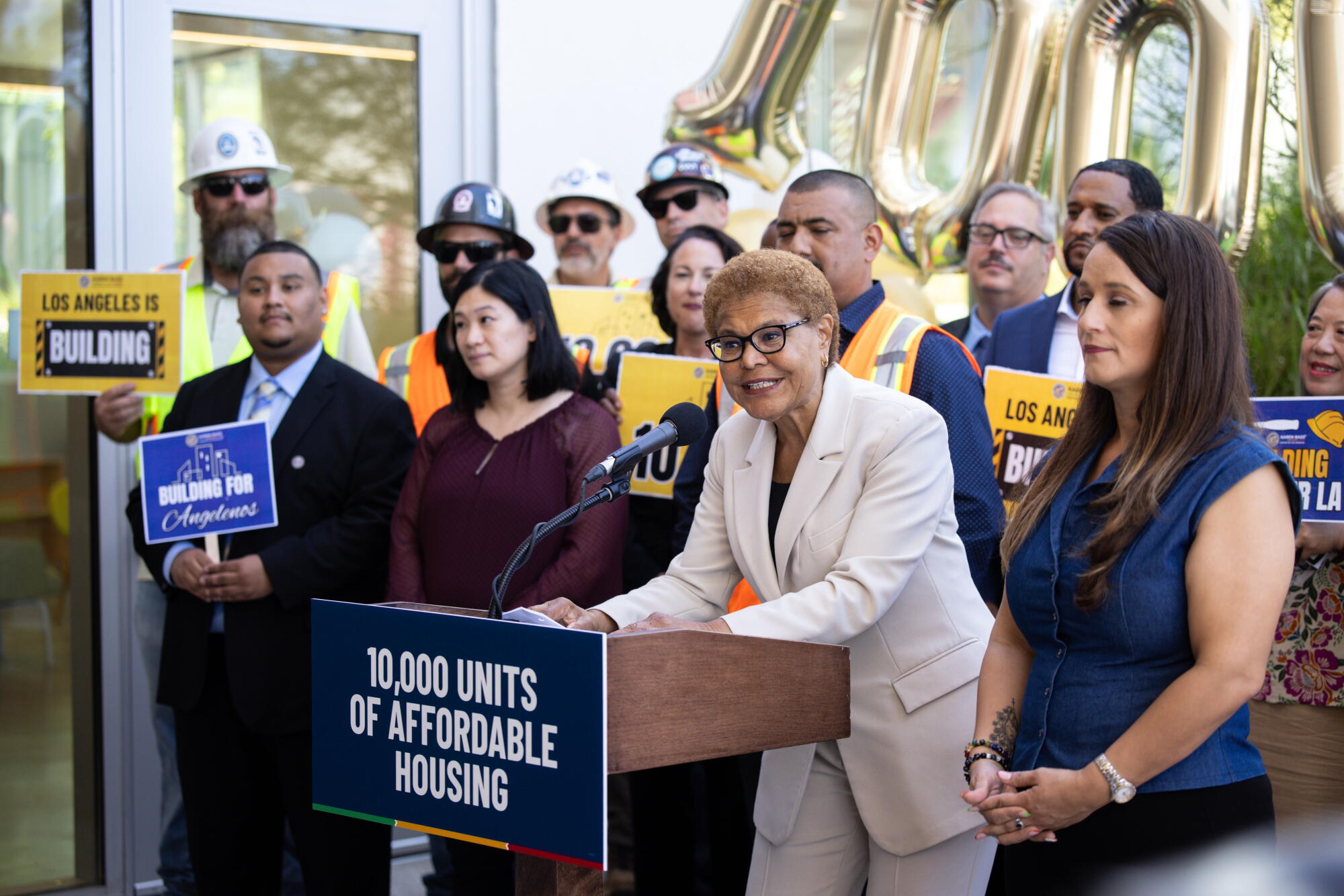
Homelessness and immigration, two issues that have been prominent the L.A. mayoral race between incumbent Karen Bass and Councilmember Nithya Raman, ranked low in the list of concerns for the surveyed voters. Tulchin noted that the focus of the survey was on election integrity, which could have had an effect on what issues were top of mind of respondents.
The survey findings indicate that L.A. County voters seem to trust the county more than voters statewide. Still, just over 30% of surveyed voters have a fair or poor view of how the county runs elections, Villaraigosa said.
“They’re concerned, but what we found in this poll is that there are a number of people who, while concerned, do trust this county,” he said.
A majority of US adults say President Trump and his family have inappropriately profited from presidency.
Published On 13 Oct 202613 Oct 2026
Most US adults believe President Donald Trump has placed his personal financial interests and those of his inner circle ahead of the country’s since returning to the White House in 2025, according to a new nationwide poll.
The poll, conducted by the Associated Press-NORC Center for Public Affairs Research and released on Tuesday, suggests that public perception of the Republican president leans heavily critical: Over half of surveyed adults view Trump’s second term as self-serving by investing in his own business and commercial pursuits “a lot”. Roughly one quarter believe he focuses on national interests, but only 11 percent feel Trump represents regular Americans. Fifty-five percent of Republicans surveyed said that Trump has prioritised his personal business interests “a lot” or “some”.
Recommended Stories
list of 3 itemsend of list
Half of the respondents report that Trump has placed zero priority on people “like them”.
As Trump’s family business pulls in record funds from new ventures helped by his policies, the poll results suggest that most US adults think growing his own finances has been the north star of Trump’s presidency, at least to some extent.
Trump’s June financial disclosure revealed massive post-election influxes of foreign and corporate capital into his business empire, stemming primarily from over $1bn in cryptocurrency ventures after he loosened regulation on the industry, as well as from international real estate.
During his first year as president, the Trump Organisation – Trump’s multinational family-owned enterprise dedicated to property development and global brand licensing – made eight real estate deals with authoritarian or one-party foreign states. Some speculate these countries were highly motivated to maintain favourable relations with the US to keep Trump happy on fronts like trade tariffs, military protection and private business dealings.
The administration, meanwhile, has repeatedly dismissed concerns over Trump’s business conflicts of interest, maintaining that he acts solely in the interest of Americans.
In late September, a separate Reuters/Ipsos poll found that Trump’s approval rating has fallen to 32 percent – the lowest of his political career – as his fellow Republicans soured on his handling of the cost of living crisis amid the deeply unpopular Iran war.
The dip in performance and approval ratings follows a high point in January 2025, when the newly inaugurated president boasted a 47 percent approval rating right after taking office.
According to the AP-NORC poll, which surveyed more than 2,000 US adults in late September, general sentiment around the administration’s ethical conduct is highly polarised, with far more citizens feeling that the president has neither prioritised the country as a whole nor everyday Americans.
Just over 40 percent of respondents believe Trump has “done something illegal” vis-a-vis allegations of personal enrichment while in office, with another 18 percent viewing his financial dealings as “unethical but not illegal”.
Opinions surrounding the lawfulness of the president’s financial practices split sharply along party lines, with Democrats overwhelmingly viewing the actions as illegal, compared with about three in 10 independents and about one in 10 Republicans, who largely see his behaviour as justified.
NEW YORK — UCLA jumped to No. 12 in the latest Associated Press top 25 poll following its upset of Oregon and USC retained its No. 19 ranking following its win at hostile Penn State.
The poll saw many changes following a Saturday filled with upsets.
Georgia moved up to No. 1 after its win at Alabama, Texas dropped six spots to No. 7 after its loss to rival Oklahoma and Oregon was unranked for the first time in four years after losing for the second time in the past month.
The Bulldogs, who had been No. 2 for five straight polls while rolling off five straight lopsided wins, went on the road and beat Alabama 20-17 with the help of what appeared to be a missed pass interference call in the end zone late in the game.
Georgia received 66 first-place votes from the panel of 70 media members after its first victory in Tuscaloosa since 2014 and ascended to the top of the poll for the first time since Sept. 8, 2024.
Notre Dame, which tuned up for this week’s top-10 matchup at BYU with a 58-7 rout of Stanford, moved up one spot to No. 2. The Fighting Irish got one first-place vote and have their highest ranking since they were No. 2 in the final poll of the 2024 season.
No. 3 Miami, which received two first-place votes, is followed by Ohio State and Indiana. The Hoosiers, who received the remaining first-place vote, got a two-spot promotion after their narrow win at Nebraska.
Alabama remained No. 6, and Texas, BYU, Mississippi and Texas Tech completed the top 10.
Oregon came into the season with its highest preseason ranking ever at No. 2. The Ducks’ turnover-fueled 17-15 home loss to UCLA dropped them to 3-2 and knocked them out of the poll for the first time since they went from No. 11 to unranked following a 49-3 loss to Georgia in the 2022 opener.
No. 12 UCLA and No. 15 Kentucky got the biggest promotions. The Bruins moved up nine spots with their win over Oregon, and the Wildcats went from unranked to No. 15 with their 35-34 overtime win over LSU, which dropped from No. 10 to No. 22.
In and out
In: Kentucky, which dropped out last week after beating South Carolina, is back in the poll with its highest ranking since early October 2022.
In: No. 21 Wake Forest is 5-1 and ranked for the first time since late October 2022.
In: No. 25 Northwestern, at 4-1, earned its first ranking under fourth-year coach David Braun.
Out: Oregon hasn’t lost two of its first five games since the 2016 team opened 2-5 and finished 4-8.
Out: Florida has gone from No. 8 to No. 16 to out of the rankings in two weeks following its 38-19 home loss to South Carolina.
Out: Pittsburgh managed just one touchdown on eight second-half possessions in a 21-17 home loss to North Carolina.
Poll points
— This is the second time in three years there have been three or more No. 1 teams in the first six polls. Georgia, Texas and Alabama took turns holding the top spot in the first six polls in 2024. The only other time in the Top 25 era that three teams had been No. 1 at this point of a season was 1990.
— Notre Dame and Miami, dubbed “Catholic vs. Convicts” rivals since their classic game in 1988, haven’t been together in the top three since Nov. 9, 1993.
— Texas’ six-spot fall from No. 1 to No. 7 matched its drop following a season-opening loss to Ohio State last year.
A Gallup survey highlights a deep – and historic – partisan divide over confidence in the country’s elections.
Published On 7 Oct 20267 Oct 2026
With less than a month to go before the United States’ pivotal midterms, a new survey found that most independent voters and supporters of President Donald Trump’s Republican Party do not believe the elections will be honest.
Polling from Gallup, released on Wednesday, found 37 percent of Republicans and 35 percent of independents have confidence in the country’s electoral system, significantly lower than US Democrats (63 percent).
Recommended Stories
list of 3 itemsend of list
Overall, 49 percent of Americans said they were confident in the honesty of elections, while 51 percent said they were not. Those figures are unchanged from the country’s last midterm election in 2022.
This “marks a change from 2025, the first year of Trump’s second term, when confidence was nominally higher among approvers (51 percent) than disapprovers (45 percent)”, Gallup wrote in a statement highlighting the results of the survey.
The numbers highlight a deep, historic partisan divide over confidence in US elections.
“Since 2025 and Trump’s return to the White House, the relationship between leadership approval and confidence in elections has disappeared,” Gallup wrote.
Gallup said that the US is the only country out of more than 100 polled annually over the past 15 years to show this pattern – trust in US election integrity is markedly higher among those who disapprove of the country’s leadership under Trump (52 percent) than those who approve (41 percent).
In more than 100 countries where the polling organisation tracks views of national leadership and confidence in elections, people who approve of their governments have generally been more likely to trust their country’s elections.
In 2025, 70 percent of people globally who approved of their national leadership expressed confidence in the honesty of their elections, compared with 30 percent among those who disapproved.
“The current US pattern is highly unusual compared with the rest of the world,” Gallup wrote.
Under former US President Joe Biden, 81 percent of Americans who approved of the government expressed confidence in elections, compared with just 30 percent of those who disapproved, according to Gallup.
Gallup said the unusual divide could have implications for the November elections, raising questions about whether some voters will view the results as legitimate.
The White House did not respond to a request for comment.
Protesters say the election commission’s voter-roll revision has removed millions of eligible voters to benefit Prime Minister Narendra Modi’s ruling BJP party.
Published On 4 Oct 20264 Oct 2026
Thousands of youth and opposition protesters have rallied for a third day in India demanding the resignation of the country’s election commission chief.
Thousands marched in Mumbai on Sunday, while others gathered for a third day of demonstrations in New Delhi. The protests began on Friday demanding that Election Commission of India (ECI) chief Gyanesh Kumar step down due to reports that he has overseen voter-roll revisions removing millions from electoral lists.
Recommended Stories
list of 3 itemsend of list
Protesters say the disenfranchisement stands to benefit Prime Minister Narendra Modi’s ruling Bharatiya Janata Party (BJP). Both the ECI and the BJP have denied the allegations.
Led by opposition leaders Raj Thackeray and Uddhav Thackeray, thousands marched in Mumbai on Sunday, waving Indian flags and calling for Kumar to step down.
In the capital, New Delhi, protesters started gathering in the early evening. As on previous days, some were detained by police as they arrived, according to the Reuters news agency.
Police in the capital have clamped down in a bid to prevent protesters from assembling over the last two days, detaining dozens and taking them away by bus.
Some of the detainees were released later on Friday and Saturday, but police registered cases against some on charges of violating orders banning mass gatherings in the centre of the capital.
Police and security personnel detain a protester during a demonstration against India’s Chief Election Commissioner Gyanesh Kumar in New Delhi on October 3, 2026, to demand his resignation [Arun Sankar/AFP]
“I just want to tell the ruling party this much … We are angry about how you are wielding that power. It’s the people of this country who should decide who sits in power and who sits in opposition, not the election commission,” Raj Thackeray told the crowd in Mumbai.
The ECI says the voter-roll revision is designed to remove duplicate, deceased or ineligible entries and maintain electoral integrity. On Friday, it directed its officials to register eligible voters inadvertently omitted from electoral rolls.
Kumar has not publicly responded to the demands for his resignation or commented on the protests, which look set to continue over the coming days, with more rallies planned.
An alliance of India’s opposition parties plans to launch protests to “save democracy” with a march to the election commission office on Tuesday. The Gen Z-led Cockroach Janta Party (CJP) has announced plans for a major rally in New Delhi on October 10.
“Mumbai is out on the streets again for free and fair elections!” Abhijeet Dipke, chief of the CJP, said in a social media post on Sunday.
“Solidarity with all the protesters,” he added. “All Indians need to come together. It’s now or never!”
Tens of thousands of people have rallied across Spain as protests have spread since the conservative-dominated parliament rejected a bill proposing measures to tackle a housing crisis.
Parliament on Friday voted down two decrees proposed by Prime Minister Pedro Sanchez’s minority left-wing coalition government that were intended to address the housing crisis.
Recommended Stories
list of 3 itemsend of list
The protests erupted late last month after an 87-year-old woman was evicted from her home of 70 years in the capital, Madrid. Maria del Carmen Abascal’s eviction came after an international investment fund bought her building and hiked the rent.
Local media reports have suggested that Sanchez could call snap elections for as early as November after watching the strength of Saturday’s protests across the country. Spain’s current legislative term is set to end next summer.
Will the housing crisis trigger snap elections? Here’s what we know:
What happened on Friday in parliament?
The emergency measures proposed by Spain’s leftist government to tackle the country’s housing affordability crisis failed to pass on Friday.
The government had proposed two measures to protect renters in the country. The first decree was meant to stop evictions of vulnerable people, make real estate speculation harder, impose tighter restrictions on short-term leases and provide tax incentives to encourage renting and the construction of housing.
The second decree proposed making leases automatically renew when they are set to expire, essentially making them indefinite. A property owner would have to pay a tenant 12 months of rent to break the contract.
Sanchez, who leads a coalition government composed of his Socialist Party and the far-left Sumar, appealed to lawmakers in the run-up to the vote to put aside political calculations and pressure.
“Think about ordinary people, about those who most need the protection of public institutions. Think about the millions of young people who cannot afford to move out of their parents’ homes. Think about the families living with the constant anxiety of ever-rising rents,” he said before the voting.
But his government’s proposed measures were shot down by the majority of the 350-seat lower house of parliament.
The right-wing Catalan separatist party Junts refused to back the housing decrees, saying they would ultimately tighten the housing market. The centre-right Popular Party and far-right Vox also voted against the measures.
Miriam Nogueras of Junts argued the decrees would lead only to owners removing their properties from the rental market and thus driving up prices even further.
“If they really wanted to protect people, collar the vulture funds, and reactivate housing, they would have already done it. They’ve had eight years,” she added on X, referring to Sanchez’s government.
Health Minister Monica Garcia said on X that the right-wing parties “have voted for a feudal economy in which a minority extracts the salary from a majority that works for their luxuries. And they do it against their own voters, who also suffer increasingly high rents, live in fear that the contract will end and can even be evicted.”
“Today the right has given rent-seeking a parliamentary majority that it doesn’t have on the street, but it’s going to pay for it sooner rather than later,” she added.
Before the parliamentary vote, Marta Soler Gallart, head of the Department of Sociology at the University of Barcelona, explained that neither of the two decrees addressed the housing problem in the medium or long term.
“Models such as Vienna’s with its low rents are cited in support of these decrees, but it is overlooked that the Vienna model and others have low rents because of their long history of creating and maintaining public social housing,” Soler Gallart told Al Jazeera on September 30.
“In Spain, however, public funds are invested in social housing which, after a while, the recipients sell at market price.”
Soler Gallart also said the new measures disadvantage landlords with small or few properties by extending five-year tenancy agreements by a further two years and by providing an indefinite extension of their leases.
“However, these extensions are not compulsory if the landlord can prove that they need the property for their own use,” she said.
Why are people protesting across Spain?
Protests erupted across Spain in late September after 87-year-old Abascal was evicted from her home. The investment fund that bought her building hiked her rent by more than 200 percent to roughly $1,880 a month, a move aimed at pushing out the long-term tenant to make way for lucrative tourist apartments.
In recent years, Spain has seen protests against mass tourism, which has been linked to the housing crisis and soaring cost of living. Spain is the second most visited country in the world, attracting 97 million tourists last year.
While Abascal has returned to her home, according to her representatives, she has become the face of the country’s housing crisis, and people across Spain have been demanding the government address the issue.
Angered by parliament’s rejection of the government measures, tens of thousands of people took to the streets.
“It’s a shame,” Nando de Anguulo, 26, who joined Saturday’s protest in Madrid, told the Reuters news agency.
“It only proves that it is us, the people, who have to adapt to the political parties and not the politicians to what the people want, and this can’t go on like that.”
While the protests were mostly peaceful, in the southeastern city of Valencia, police fired rubber bullets and tear gas to break up demonstrations. About 30 protesters managed to get inside the City of Arts and Sciences, a landmark cultural building, before police removed them.
Meanwhile, in Madrid, Spanish police arrested three members of a far-right group and fired rubber bullets on Saturday night.
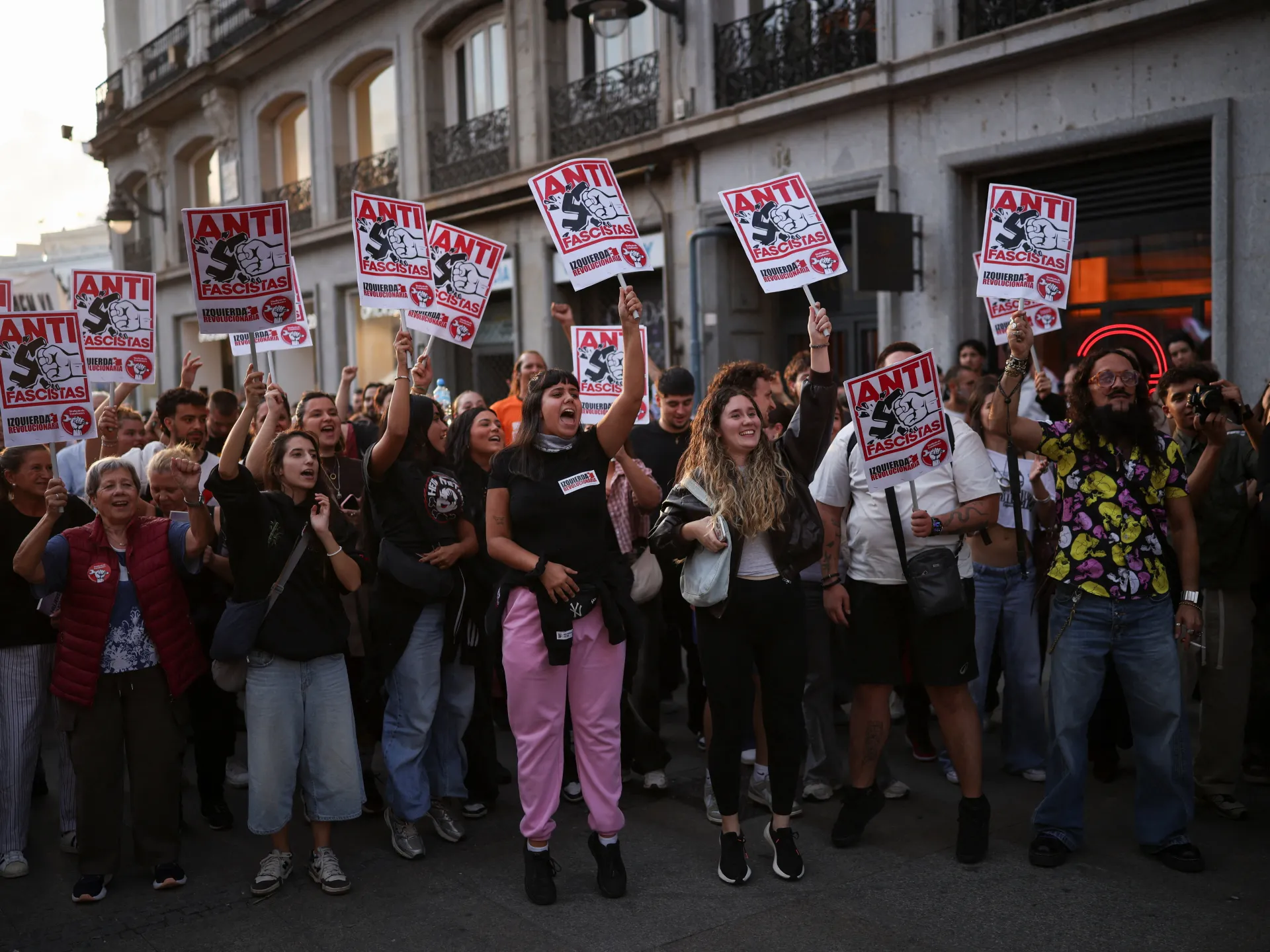
Far-right activists, some of whom performed Nazi salutes, tried to reach demonstrators camped out in the Puerta del Sol, a central square in the Spanish capital, the Spanish government said.
Valeria Racu, a spokesperson for the Tenants’ Union, said Saturday’s rallies revealed “a new energy that we haven’t seen in a long time and energy that is showing that eight days of people’s power can achieve more than eight years of progressive government”.
“Now begins real politics – politics which has always belonged to the people and which will return once and for all to the streets,” Racu added.
Could the housing crisis lead to snap elections?
Housing is a sensitive issue in Spain because it impacts how people vote. The average rent in the country has almost doubled in the past 10 years. The average price per square metre has risen from 8.20 euros (about $9.08 at the time) in 2016 to 15.1 euros ($17.15) this year, according to the real estate website Idealista.
In an October 1 article for Vanity Fair, Spanish journalist Jorge Dioni Lopez noted that after eight years in power, housing is what is causing Sanchez to lose support among educated young people, children of the middle classes.
“The government faces a difficult situation. Firstly, because most of the relevant powers lie with other levels of government. Secondly, because Spain is a nation of homeowners. Unlike in other European countries, almost all the public housing that has been built has ended up in private hands, and historically, homeownership has been more attractive than renting,” he wrote.
“Housing is our savings system and also the primary means of transmitting wealth between generations,” he added.
After Spain’s parliament rejected the government’s housing reform bills on Friday, the leader of the centre-right People’s Party, (PP) Alberto Nunez Feijoo, urged Sanchez to “call elections as soon as possible”, claiming he had the support of “neither the streets nor parliament”.
While Sanchez has not officially announced new elections, the Spanish online news site El Diario has reported that elections could take place as early as November 29. Spain’s general elections are currently scheduled for July 2027.
Nearly 70 percent of Americans say the US-Israeli war is not worth fighting, marking a significant spike since July.
Published On 1 Oct 20261 Oct 2026
Approximately 70 percent of US adults in a new nationwide poll say the US-Israeli war has not been worth fighting, a five-point spike since July.
“Seventy-one percent of adults disapprove of how Trump is handling Iran and 69 percent say the war in Iran has not been worth fighting,” said the survey released on Thursday by The Associated Press-NORC Center for Public Affairs Research.
Recommended Stories
list of 3 itemsend of list
The poll, which surveyed more than 2,000 adults in the US, also suggested that Americans are deeply frustrated with US President Donald Trump’s handling of the economy and rising prices, with only 17 percent of US adults polled approving of his handling of the cost of living. Just 26 percent approved of his handling of the economy overall, marking a new low.
Public angst over fuel costs has surged, with about half of respondents now deeply concerned about being able to fill their tanks —up from 39 percent in July. Roughly half of respondents are also highly concerned about being able to afford food.
The data comes as Trump kickstarts his midterm campaign trail in an all-in effort to galvanise the Republican base, stumping first in Texas and Oklahoma amid widespread voter anxiety surrounding the war on Iran’s mounting economic fallout.
The poll also indicated that, despite their frustration, two-thirds of Republicans surveyed said that higher than usual prices are due to factors outside of Trump’s control, with about one-third saying it was directly related to Trump’s policies.
The sombre numbers suggest the president remains deeply unpopular nationally, with some Republicans also faulting him for failing to deliver on promised relief.
‘Pollsters are corrupt’
Overall, more than half of adult respondents said the national economy and the country as a whole are worse off since President Trump took office again in 2025.
In an interview with TIME magazine, published on Thursday, Trump was asked if the deeply unwanted war would threaten his party’s chances in November, to which he initially responded, “It’s possible,” before adding that “it should help, because Iran will not have a nuclear weapon.”
Confronted with sliding poll numbers, Trump said that the “pollsters are corrupt” and that the bad polls “are fake”, adding that he would beat anybody running today “by 20 points”.
WASHINGTON — About half of rural voters identify with Make America Healthy Again, a sprawling political movement championed by the Trump administration, but most said President Trump’s healthcare policies have not benefited their communities, according to a new poll from The Associated Press in partnership with KFF.
About 8 in 10 rural voters — an important voting bloc for Trump and fellow Republicans — said the Trump administration’s policies have had a negative effect or no impact on the health of people where they live. Most MAHA supporters, 68%, also feel this way, according to the national survey of more than 2,000 rural registered voters.
The findings signal an apparent disconnect between the Trump administration’s MAHA-branded policy priorities and rural America’s perception of their reach and effectiveness.
Iowa pastor Mike Jager, 58, is a registered Republican and considers himself part of the MAHA movement. The Trump administration’s health policies have had “minimal” impact on the health of his community, Jager said, but he added that Trump’s health secretary, Robert F. Kennedy Jr., is moving the needle “in the right direction.”
“It’s a beginning,” Jager said. “It’s a big ship to try and turn around and course-correct.”
Kennedy has used the MAHA label to support various agendas, including abandoning long-standing vaccine guidance, researching ultraprocessed foods and investing in regenerative agriculture.
Jager lives in Sumner, Iowa, “less than a quarter mile from where the corn ends and the city begins.” He’s seen family members and neighbors develop diseases that he believes resulted in part from exposure to agricultural chemicals and consumption of unhealthy, processed foods.
In the June Republican primary for governor, Jager voted for Zach Lahn, a businessman and farmer who ran on a MAHA platform and beat out Trump-backed U.S. Rep. Randy Feenstra. He plans to vote for him again in November.
Many rural voters are prioritizing health issues
About two-thirds of rural voters who support MAHA said it’s “extremely” or “very” important to them to vote for a candidate who does, too, while only 4 in 10 rural voters overall said the same.
Trump sought to seize on MAHA support during his campaign for another term two years ago. Now, amid tight midterm races, Kennedy has campaigned to galvanize the movement’s support. In May, he attended a MAHA bill signing with Iowa Republican Gov. Kim Reynolds, and in August, he went fishing with Lahn, posting about it on social media.
Yet the survey indicates voters are noticing “this weird split in the Trump administration” between what Kennedy messages and what Trump says and does, said David Peterson, a political science professor at Iowa State University.
In Iowa, concerns about what’s causing rising cancer rates are “a big deal,” he said. For many people who identify with MAHA, being healthy includes taking on corporate agriculture and pharmaceutical companies that they think cause cancer, he added.
In the poll, views on healthcare access and costs largely diverged along party lines. Most Democratic and independent voters said the Trump administration’s healthcare policies have had a negative impact on their healthcare costs and the health and well-being of people in their communities. Republicans were likelier to say there hasn’t been an impact.
Talking on the phone from her 200-acre farm in Carroll County, Iowa, 71-year-old Donna Klocke said that her husband had died from cancer and that she has neighbors who also have cancer.
“It’s just very prevalent,” Klocke said. “We’re in a farming community. We use chemicals and pesticides and all kinds of things that aren’t necessarily good for us.”
Klocke, a Democrat, said the MAHA movement is a good idea because she cares about being healthy, but she does not consider herself part of it and will not be voting for a candidate who represents the movement.
“Measles are coming back and polio,” Klocke said. “It’s the measles that really gets me. It’s like, do you not understand how dangerous it is?”
Survey reflects angst over healthcare
Nearly half of rural voters said their communities don’t have enough doctors or other healthcare providers, and even more said there aren’t enough mental health workers specifically. The share of rural voters who said their community does not have enough hospitals increased to 35% from 21% in a similar question asked in a KFF-Washington Post survey in 2017.
And as with the general population, healthcare, gas and grocery costs are top pain points. At least 6 in 10 rural voters said they were worried about healthcare costs.
The level of worry varied based on coverage, with rural voters enrolled in employer plans or Medicare less likely to be worried. The survey found that 80% of working-age rural voters on Medicaid were very or somewhat worried about healthcare costs. Last year, Republicans passed a tax and spending bill that cut over $900 billion in projected Medicaid spending over a decade and mandated new eligibility requirements.
In the tiny community of Lipan, Texas, west of Dallas, Kim Solis and her husband have a handyman-and-home-remodel business and get their insurance on the marketplace. Since Trump returned to office, their premium payment jumped from zero to $166 a month. Their copays went up, and their deductibles each increased by $2,000.
Solis, 62, said she worries what will happen if they get a big medical bill.
“Certainly, we’d be in a world of hurt trying to take money out of savings or getting it out of our 401(k) just to be able to do something about it,” she said.
Most MAHA voters are also MAGA — but not all
Like the general population, rural voters said they trust their own doctors and healthcare providers for health information over government agencies or officials, according to the poll.
Trust in Kennedy and Trump fell largely along partisan lines. About 10% of rural Democratic voters reported having a “great deal” or “fair amount” of trust in Kennedy, compared with 74% of rural Republican voters. About 5% of rural Democrats and 69% of rural Republicans said they trust Trump a “great deal” or “fair amount” for reliable health information.
While Make America Great Again and MAHA identities are “linked in a lot of ways,” the rising costs of healthcare and groceries pose a challenge for those committed to the MAHA principles that Kennedy promotes, said Peterson, the Iowa State professor.
Buying healthy food “becomes, ‘I can’t afford to do that because of Trump’s policies,’” he said.
In Stamping Ground, Kentucky, Alma Johnson, 65, works night security at a horse farm.
Johnson voted for Trump in 2016, 2020 and 2024 and said she “pretty much” likes how Trump is running the country. But she said she is not a MAGA devotee, preferring to “think for myself.”
MAHA, however, is an easy sell for Johnson because, she said, she doesn’t think people should be able to buy junk food in the Supplemental Nutrition Assistance Program, or SNAP.
Still, she said she hasn’t seen much impact from the Trump administration’s healthcare policies, including the new food pyramid.
“It takes a long time to change people, their habits, their thoughts or the things they do,” Johnson said.
Swenson, Tribble and Sanders write for the Associated Press.
The poll of 2,241 U.S. adults registered to vote in rural areas of the country was conducted Aug. 12-24, 2026, using a sample drawn from the probability-based SSRS Opinion Panel. The margin of sampling error for the full sample is plus or minus 3 percentage points. In collaboration with AP, KFF researchers worked to design the survey sample and questionnaire, analyze and report findings. This report is a collaboration between the Associated Press and KFF Health News. KFF Health News is a national newsroom that produces in-depth journalism about health issues and is one of the core operating programs at KFF — the independent source for health policy research, polling and journalism.
With gas prices topping $6 a gallon and an unpopular war continuing in Iran, President Trump’s approval has slipped with California Republicans — a falloff that could diminish the party’s chances in the state’s few competitive congressional races.
A new poll by the UC Berkeley Institute of Governmental Studies, co-sponsored by The Times, found that 76% of Republican voters in the state approve of the president’s performance, down from 83% last year.
The president’s approval has softened even among those who still support his performance. Only 44% of Republicans in California said they strongly support Trump’s performance, down from 57% who said the same in August 2025.
That could translate into lower Republican turnout in the state’s few competitive races, said the poll’s director, Mark DiCamillo.
“Republicans are losing some of their enthusiasm in terms of being motivated to vote,” he said.
In addition, the more Trump tries to make the midterm elections about himself — such as the pro-Trump ads recently sponsored and paid for by the government — the more Democrats might be inclined to show up, said G. Cristina Mora, the UC Berkeley institute’s co-director.
“That might actually have a galvanizing effect on voters,” she said.
The congressional map in the state was already challenging for Republicans after voters last year approved a referendum championed by Gov. Gavin Newsom to redraw districts to be more favorable for Democrats — a response to similar efforts by Republicans in Texas and other states.
In the new map, only four of the state’s 52 districts are currently considered safe Republican districts, while three additional districts are seen as competitive, according to the Cook Political Report, a nonpartisan political handicapper.
The remaining 45 districts are seen as either likely or solidly Democratic in a state where Democrats hold a roughly 20% advantage in party registration.
Only one race is considered by Cook to be a true toss-up — California’s 22nd Congressional District in the Central Valley, which is held by Republican Rep. David Valadao.
“We’re looking at the best case scenario for Democrats at this point,” said Erin Covey, Cook’s U.S. House editor.
Valadao, one of only 10 Republicans to vote for Trump’s impeachment in the wake of the Jan. 6, 2021, insurrection, faces progressive Democrat Randy Villegas, a political science professor who has the backing of Bernie Sanders. The Vermont senator is joining Villegas this weekend for a rally in Bakersfield.
Valadao first won a seat in Congress in 2012, but was ousted from office during the Democrats’ “blue wave” election in 2018, in which the party gained 40 seats in the House in the first election after Trump took office in 2016. Valadao was able to win back his seat in 2020 and has held it since.
There has been scant public polling in the race, but a poll conducted in June by a political committee backing Villegas showed the Democrat holding a 4-point lead over Valadao.
Two other congressional districts in the state are listed by Cook as leaning Democratic:
California’s 48th Congressional District in Riverside and San Diego counties, now held by Republican Rep. Darrell Issa, who opted to retire rather than seek reelection in the redrawn district.
California’s 13th Congressional District in the San Joaquin Valley, where Democratic Rep. Adam Gray is trying to fend off a challenge from Republican Kevin Lincoln, the former mayor of Stockton.
Trump’s approval also dipped among Black and Latino voters in the poll. Both groups were part of Trump’s winning coalition in the 2024 presidential election.
The poll also found broad disapproval of two signature Trump administration policies.
It found that 70% of California voters disapprove of Trump’s decision to go to war in Iran, including 1 in 5 Republicans.
Also, 70% of California voters believe that the president’s immigration policies are hurting California’s economy and local businesses, including 1 in 5 Republicans.
The poll was conducted online in English and Spanish between Sept. 15 and Sept. 20 and included the opinions of 6,989 registered California voters. The margin of error is plus or minus 1.5 percentage points.
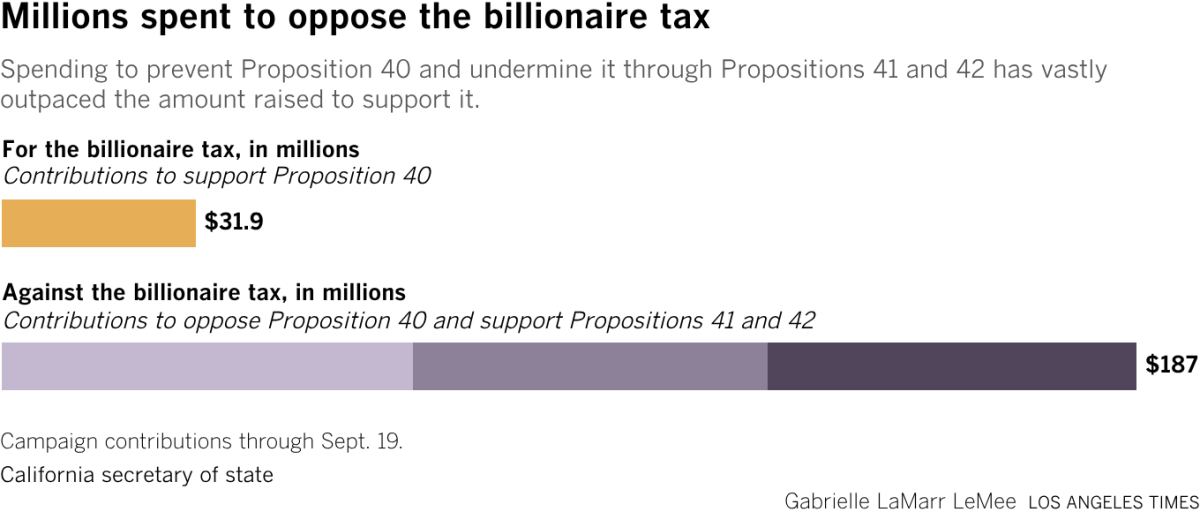
Opponents of the billionaire tax on the November ballot have vastly outraised the proposal’s supporters, with the anti-Proposition 40 effort and the backers of two other ballot measures crafted to nullify it raising $187 million compared to the $32 million raised by boosters of the wealth tax, according to campaign finance documents filed with the state.
The reports, filed Thursday, account for donations through Sept. 19 and do not include several million dollars that have poured into campaign coffers in recent days. The numbers are expected to vastly increase before the Nov. 3 election.
The bulk of the money raised by the proponents of Proposition 40, which would enact a one-time 5% tax on California billionaires’ assets, appears to have been spent on gathering signatures to qualify the measure for the November ballot. The campaign had only $207,000 in the bank, according to the latest campaign finance reports.
A leader of the union that crafted the proposal accused wealthy Californians who are spending heavily against the measure of lying to voters. The measure is designed to offset $100 billion in impending federal healthcare funding cuts expected to impacts millions of Californians.
“The billionaires take and take — tax break after tax break — and now they’re spending that money to deceive voters and avoid paying their fair share,” said Suzanne Jimenez, the chief of staff of the Service Employees International Union-United Healthcare Workers West. “Voters want their money back from the billionaires and want local emergency rooms to stay open. California does not need more tax breaks for billionaires. California needs emergency rooms for patients, hospitals that stay open, and healthcare people can access and afford.”
Opponents of the billionaire tax argue that it would do more harm than good.
“The more Californians learn, the more they see Proposition 40 for what it is — a harmful tax scheme that permanently damages the state’s budget and economy with zero accountability or safeguards to ensure funding actually improves care or lowers costs for patients,” said California Medical Assn. President Dr. René Bravo, the leader of one of the groups opposing the billionaire tax.
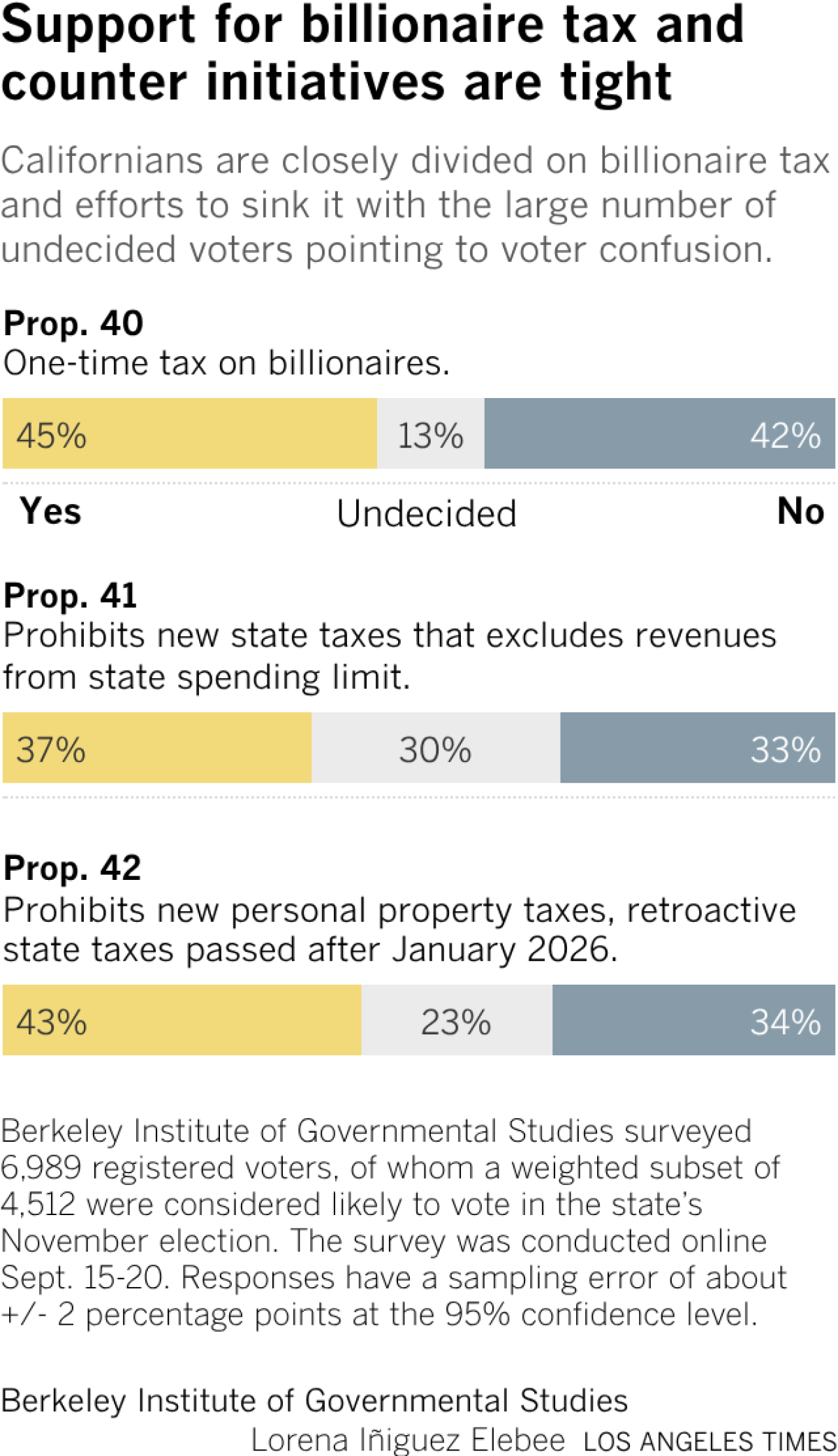
Proposition 41 would nullify the billionaire tax if, in the event that both measures are approved, it receives more “yes” votes. Proposition 41 would prohibit any new state tax from being excluded from a voter-approved cap that restricts how much tax revenue the state can spend each year.
“Californians deserve better results for their hard-earned tax dollars,” said Molly Weedn, a spokesperson for the Proposition 41 campaign.
Proposition 42 would prohibit new taxes on personal property, intellectual property, retirement accounts and other assets, and would limit situations in which a ballot measure or state lawmakers can impose or raise taxes retroactively — both of which are essential parts of Proposition 40. If both measures pass and Proposition 42 receives more “yes” votes, it would nullify the wealth tax.
The proposed billionaire tax has divided California Democrats, with Gov. Gavin Newsom opposing it while the state Democratic party supports it.
In recent polling, a majority of likely voters did not support any of the three proposals.
While 45% of likely voters supported the billionaire tax, 42% opposed it, according to a poll released Friday by UC Berkeley’s Institute of Governmental Studies and co-sponsored by the Los Angeles Times. Voters also are torn about the two ballot measures designed to nullify it.
The other measure receiving great attention, Proposition 39, which would require voters to show government-issued ID to cast ballots, faces a similar financial disparity. Opponents to the measure have raised $39.3 million compared to $15.6 million garnered by supporters.
Fifty-two percent of likely California voters oppose the voter ID proposal, while 39% support it and 9% are undecided, according to the Berkeley poll.
In the race to replace Newsom, Democratic former Biden cabinet member Xavier Becerra has raised $35.8 million, while his GOP rival, conservative strategist and television commentator Steve Hilton, has raised $22.3 million.
Becerra remains the front-runner in the governor’s race, which is not surprising since Democratic voters outnumber Republicans nearly 2 to 1. In last week’s Berkeley poll, the Democrat had the support of 58% of likely voters, while 33% backed the Republican.
California Deputy Atty. Gen. Marissa Roy has a lead in the race to replace Los Angeles City Atty. Hydee Feldstein Soto, who lost her seat in a historic primary rout this spring, new polling shows.
Among likely Los Angeles voters, Roy leads by 10 percentage points over her rival, Los Angeles County Deputy Dist. Atty. John McKinney, following the pair’s shocking electoral upset in June, according to a poll released last week by UC Berkeley’s Institute of Governmental Studies and co-sponsored by The Times.
The spread closely mirrors City Councilmember Nithya Raman’s breakaway lead in her bitter fight to unseat Mayor Karen Bass, who has outraised her for months.
But that’s where the similarities end.
The mayor’s contest has been called a “knife fight” for its no-holds-barred campaigning. It has also drawn sustained — and occasionally sensational — national attention since Raman’s buzzer-beating entrance in February.
By contrast, the city attorney’s race remains all but unknown: More than two-thirds of likely voters are still undecided, versus about a third who remain uncommitted in the mayor’s contest, polling showed.
L.A.’s top litigator commands a budget of nearly $200 million, plays a role in shaping city ordinances, and wages court battles on behalf of the public. The city attorney also prosecutes misdemeanors — a job most other cities keep separate. Each year, the office weighs some 120,000 violations, deciding whether to file charges and how to pursue them.
More recently, city attorneys across the country have championed activist litigation, spearheading suits against the Trump administration, among others.
Yet, few local voters know the job exists, and fewer still know the candidates by name.
Seventy percent of likely voters said they had no opinion of either McKinney or Roy — a fairly typical result for a down-ballot race, experts note.
Still, new data about voter priorities could signal how those undecideds might shake up the race in its final weeks.
Roughly a third of L.A. voters rank “moving homeless people indoors” and “crime and public safety” as top priorities, respectively; just slightly less say “fixing streets, sidewalks, streetlights and other city infrastructure” is essential.
McKinney, 58, pitches himself as a law-and-order moderate with plans to use the city attorney’s prosecutorial power to reduce disorder and move unhoused people off the streets. He manages more than 300 people at the district attorney’s office and spent decades in the courtroom securing high-profile convictions — advantages that he contends outweigh his lack of civil litigation experience.
Roy, 34, campaigns with an aura of sunny progressive pragmatism, arguing that the city can rein in ballooning liability in part by tackling its vexing infrastructure issues. She nods to the recent $17-billion settlement with Meta — a case her team at the attorney general’s office led — as evidence of the kind of ambitious, public interest litigation a large municipal attorney’s office could join.
Those disparate visions — along with crucial endorsements and influxes of cash — helped the pair define clear brands and constituencies going into the primary.
Both also got a boost from nationwide anti-incumbent fervor, staking sides across a mutual opponent whose name recognition had turned sour while rarely taking aim at each other.
But the general election is a different animal.
Although the Los Angeles electorate has been moving leftward for years, primary voters typically skew older and more conservative than those who show up for the general election, experts said.
Polls suggest that fact could create an uphill battle for McKinney, whose sway is biggest among conservatives, about 19% of the city’s electorate.
Some 21% of Republicans and nearly 30% of self-identified MAGA voters favored McKinney in the most recent poll, while Roy is favored by 25% of Democrats and by 3 in 10 voters who identify as progressive or democratic socialists.
By contrast, about a quarter of Republican voters now say they favor Bass for mayor, while Raman has a 14-point lead among Democrats. (Both are about equally underwater with MAGA voters.)
Like Raman, Roy has deep ties to the city’s insurgent democratic socialist political machine and hard-won endorsements from its progressive clubs. She has also successfully courted L.A.‘s influential unions and got an early boost from the L.A. County Democratic Party when it endorsed her this spring.
McKinney is endorsed by the city’s powerful police union and championed by L.A. County Dist. Atty. Nathan Hochman.
The once simple message, “Get out the vote,” now has a corollary: “Protect the vote.”
That message was hammered home Saturday for dozens of voting rights groups, community organizations and unions attending a rally to recruit and train poll watchers for the November election.
Organizers for several groups brought together under the banner of Love Powers L.A. offered scenarios of the threats that could materialize on Nov. 3 — from ICE raids to intimidation by the Proud Boys — and detailed strategies to counter them.
Their goal was to raise a cadre of volunteers for a Neighborhood Vote Protection Program to observe 650 polling places throughout the 11 days of voting and to turn fear and confusion sought by election deniers into a celebration of the right to vote.
“We want to make it a season of excitement,” said Jeremy Payne of the social justice group Catalyst California.
1
2
1.David Gutierrez right, of Inner City Struggle, signs up Jocelyn Elizalde, 22, and Manuel Becerra, 19, from left, to help with outreach, during an event held by Love Powers LA, representing dozens of community groups and labor unions, provide education and training to Angelenos on how to protect their vote and respond to threats of election interference at East Los Angeles College on Saturday, September 26, 2026. (Christina House/Los Angeles Times)2.Participants including Evelyn Gonzalez, right, attend a workshop for activist dance and street activation during an event by Love Powers LA, representing dozens of community groups and labor unions, providing education and training to Angelenos on how to protect their vote and respond to threats of election interference, at East Los Angeles College on Saturday, September 26, 2026. (Christina House/Los Angeles Times)
The event kicked off with multicultural music by Native American, Korean and West African drum ensembles.
“L.A. is a target for retribution and spectacle,” said John Lee, also of Catalyst California. “When they try to steal an election, it is a sign they know they are losing.”
Godfrey Plata of L.A. Forward, left, and Jung Hee Choi of We Are California present skits on how to talk to neighbors about voting during the event Saturday.
(Christina House / Los Angeles Times)
The event, involving numerous nonprofit organizations, stayed away from endorsements or political messages aimed at the coming election. But speakers didn’t hold back on their views of President Trump.
“Trump is a chicken and a loser,” said Jung Hee Choi, of the umbrella group We Are California.
Choi described two personality types, skeptics and frozen, that the group is targeting.
She urged volunteers to hold ballot parties in their homes to move skeptics “from the couch to the poll” and routine voters from the “frozen mode to the fight mode.”
“We need people out at the polls,” she said. “You are the greatest tool to fight back and grow our movement.”
The groups held their event just a day after Trump’s latest move in his attempt to reshape voting in America.
The Supreme Court upheld Trump’s expanded use of government data to search for noncitizens who are registered to vote. The impact of the decision is likely to be limited, other than to highlight Trump’s distrust of elections and his unproven claims that a large number of illegal voters are casting ballots.
Love Powers L.A., representing dozens of community groups and labor unions, provides education and training to Angelenos including Azenith Morales, Marise Roxas, and Liezl Japona, from left, of the Filipino Workers Center, on how to protect their vote and respond to threats of election interference.
(Christina House/Los Angeles Times)
Breakout sessions covered how to plan a ballot party, activist dances and street activations.
Attendee Joe Pugh, who works for the community services organization ATAP, said she planned to host a block party to push the importance of voting in South-Central.
“They’re always talking about ‘my vote doesn’t count,’” she said.
During the poll monitoring session, Emma Olson Sharkey, a partner at the Political Law Group, outlined what poll watchers should look for and what they should do about it.
Their role, she said, is not to engage. They will observe and report any attempt to intimidate voters or poll workers.
The organization provides an online report form to report incidents.
“We hope it is boring,” Payne said. “In most cases, nothing will happen.”
The slate of statewide measures on the Nov. 3 ballot provides voters two opportunities to tax the rich, which in past years has proved tantalizing to California’s left-leaning electorate.
Only one of those measures has strong voter support, however, and it’s not the proposition that’s attracted nationwide attention, ignited a nearly quarter-billion-dollar political slugfest and created a rift among top leaders in the Democratic Party.
Likely voters expressed middling support for Proposition 40, a one-time 5% tax on billionaires’ assets intended to compensate for an impending $100 billion in federal healthcare funding cuts. They were far more likely to back Proposition 3, a ballot measure that would make permanent a tax increase on the wealthy that funds schools and healthcare, according to a poll released Friday by UC Berkeley’s Institute of Governmental Studies that is co-sponsored by The Times.
Proposition 3 appears to be a much less controversial endeavor, which may explain why it has more voter support. The ballot measure would extend a tax enacted in 2012 on individuals who earn at least $360,000 a year that is set to expire in 2031. Proposition 40 proposes a brand-new tax on billionaires and is opposed by Gov. Gavin Newsom, who fears that it could hurt the state’s finances in the long run.
“When you’re going about taxing the billionaires’ assets, I mean that’s something kind of new and different, and it’s risky, and the governor’s against it, and you know a lot of people are expressing caution about it,” said Mark DiCamillo, director of the poll.
Voters are deeply concerned about income disparity but also skeptical about the unusual approach of the billionaire tax.
Proposition 40 has drawn the greatest attention and campaign spending of the 14 ballot measures voters will decide on Nov. 3.
In the poll, 45% of likely voters support the proposal, while 42% oppose it and 13% are undecided. That’s a decline in support compared with six weeks ago, when 48% of likely voters supported it while 41% opposed it, and comes after nearly $100 million of spending on television ads, social media messages and mailers, largely from opponents.
The billionaire tax was crafted by a healthcare union in response to legislation passed by congressional Republicans and signed by President Trump last year that could result in millions of Californians losing Medi-Cal coverage, rural hospitals shuttering and other healthcare services being slashed unless a new funding source is found.
The proposal would retroactively apply to billionaires who lived in California as of Jan. 1, prompting some to preemptively move out of the state. Ninety percent of the revenue would fund healthcare programs, and the remaining funds would be spent on education programs and food assistance.
There are two counterproposals on the ballot that would nullify the wealth tax if either receives more votes than Proposition 40, and they have raised $144 million. Voters are torn about Proposition 41, which would prohibit any new state taxes from being excluded from a voter-approved cap that restricts how much tax revenue the state can spend each year. The billionaire tax would have such an exclusion. Voters also are divided on Proposition 42, which would prohibit new taxes on personal property, intellectual property, retirement accounts and other assets and would limit situations in which a ballot measure or state lawmakers can impose or raise taxes retroactively — both of which are essential parts of the billionaire tax initiative.
Proposition 42 has greater support, with 43% backing it, 34% opposing it and the remainder undecided, according to the poll. Even more voters were uncertain about Proposition 41: 3 in 10 said they were undecided, while 37% said they supported it and 33% said they planned to vote against it.
The large number of undecided voters this close to the election points to voters being overwhelmed by the sheer number of statewide ballot measures, DiCamillo said.
“It’s confusion,” he said, adding that many voters may make a decision once they receive more ballot information.
That said, the fact that none of these proposals has the support of more than 50% of likely voters doesn’t bode well for their prospects, DiCamillo said.
Ballots will begin arriving in the mailboxes of the state’s 23.2 million voters in days.
Democratic voters outnumber Republicans by nearly 2 to 1 in California, but the party’s leaders are deeply divided about the billionaire tax, given the volatile state budget’s reliance on the wealthy. Newsom, who is pondering a 2028 presidential campaign, and the two men vying to replace him — Democrat Xavier Becerra and Republican Steve Hilton — oppose it. Rep. Ro Khanna (D-Fremont), a potential 2028 White House contender, supports it, as does the California Democratic Party.
Additionally, Dave Regan, president of Service Employees International Union-United Healthcare Workers West and architect of the ballot measure, has come under scrutiny. Regan has been accused of threatening and intimidating women who worked for the union’s parent organization, and of physically assaulting one, according to reporting by The Times. He was also accused of trying to extort SEIU’s state council, suggesting that it could face an investigation over “governance issues” if it did not support Proposition 40, according to an investigation commissioned by SEIU.
Regan has denied these claims, describing them as a “smear” campaign orchestrated by Proposition 40 opponents.
Much less attention has been paid to Proposition 3. Californians who earn more than $360,000 now are subject to a 10.3% tax, while those who earn more than $721,000 face a 12.3% levy. The vast majority of the billions raised through this tax go to K-12 schools, while the remainder is spent on community colleges and healthcare.
The other ballot measure that is receiving national attention is Proposition 39, which would require voters to present a government-issued identification document to cast a ballot or provide a PIN or the last four digits of their Social Security number when submitting mail-in ballots.
The measure also would require the California secretary of state and county election officials to verify that registered voters are U.S. citizens by “using government data,” which according to supporters could include information in the federal Social Security Administration database, jury summons information and other government records.
The proposal comes as Trump has continued to make claims that elections, notably in California, are being rigged by Democrats. Americans are increasingly alarmed about the security and sanctity of voting, and growing fears about intimidation efforts at polling places in the midterm elections.
Fifty-two percent of likely California voters oppose the voter ID proposal, while 39% support it and 9% are undecided, according to the poll.
“It doesn’t look like it’s in a strong position,” DiCamillo said, noting that while voters have opposed it in prior polls, the opposition has grown.
Nearly one-third of voters were undecided about two other propositions:
Likely voters were evenly split about Proposition 4, which would repeal a ban on public funding of campaigns, with 35% supporting it and 35% opposing it, and the remainder undecided.
Four out of 10 likely voters opposed Proposition 43, which would increase the threshold necessary to pass local taxes from a simple majority to two-thirds, while 31% supported measure and 29% were undecided.
Voters will also face questions about environmental policy, housing, recall elections and other matters, as well as statewide, congressional and local elections. Californians are fatigued by the length of the ballot.
The Berkeley IGS/Times poll findings are based on an online survey in English and Spanish of 6,989 registered California voters, 4,512 of whom are considered likely voters, on Sept. 15-20. The results are estimated to have a margin of error of about 2 percentage points in either direction in the overall sample, and larger numbers for subgroups.
A stunning new poll showing Los Angeles City Councilmember Nithya Raman gaining a double-digit lead over incumbent Karen Bass in the mayor’s race is increasing pressure on Bass and her allies to go sharply negative against her opponent and to seek support from conservative and undecided voters to narrow the gap.
The poll, conducted by the UC Berkeley Institute of Governmental Studies and co-sponsored by The Times, showed Bass trailing Raman by 11 percentage points — with 28% of likely voters saying they supported the mayor while 39% said they would vote for Raman. The remaining 33% were undecided, an unusually high number this close to the Nov. 3 election.
“The bottom line is this is a huge shot in the arm politically for Raman — and it’s not a good day for the mayor,” said Zev Yaroslavsky, a former L.A. City Council member who now runs the Los Angeles Initiative at the UCLA Luskin School of Public Affairs.
Dan Schnur, a former Republican political consultant, said the poll could have instant negative effects for the mayor’s fundraising ability as potential supporters might now view Raman as the favorite in the race.
“The most immediate tangible result of a poll like this is that Bass’ greatest advantage was her fundraising and it now becomes much more challenging to raise money,” he said.
Bass, appearing Wednesday at a news conference in Hollywood, said she’s seen multiple polls that show a tight race. She said that Raman is “absolutely not” the front-runner in the race.
Mayor Karen Bass speaks at Vermont/Santa Monica Metro Center on Wednesday, touting progress on construction of affordable housing.
(Kayla Bartkowski / Los Angeles Times)
The mayor said she is working to highlight the city’s progress in making rent more affordable, pointing to newly released numbers that show that more than 10,000 units of housing with restricted rents have been built since she took office in December 2022.
“The No. 1 issue to Angelenos continues to be lack of affordability, and our primary way of addressing that from the city is housing,” she said. “So we are absolutely addressing affordability.”
Others in the Bass camp seemed more anxious about the poll results.
“It put a pit in stomachs,” said one supporter close to the Bass campaign who requested anonymity to speak candidly about the poll. “But there is still an outside chance for Bass. It’s not total doomsday.”
The supporter said that the Bass campaign truly doesn’t believe Raman’s lead is that big, but that the poll was still “not good news,” especially for fundraising.
Mike Bonin, a progressive former L.A. City Council member who now runs the Pat Brown Institute at Cal State Los Angeles, said Bass needs to focus on winning over voters who chose former reality television personality Spencer Pratt in the primary election in June. Many of those voters are now on the fence.
Pratt received 26% of the vote in the primary, and most of the voters who cast ballots for him — 63% — say they still haven’t decided whom to vote for in the runoff, the poll found. Among the Pratt voters who have decided, 22% favored Bass compared with 16% for Raman.
Bonin said he expects Bass and her allies to attack Raman’s progressive views in order to reach Pratt voters. Raman is a member of the Democratic Socialists of America and opposed raises for Los Angeles Police Department officers that had been championed by Bass.
“The nature of the attacks will try to reach the Pratt voters particularly since they are the largest bloc of undecideds and they skew conservative,” Bonin said.
The Los Angeles Police Protective League, the union representing LAPD officers, is already airing campaign ads critical of Raman over her opposition to a law barring homeless encampments next to schools. In the coming days, the group will also roll out commercials highlighting Raman’s ties to the DSA, which has endorsed her mayoral bid, said union spokesman Tom Saggau.
“Our own poll told us that the Pratt folks were very much undecided, and that when they heard more about Nithya’s record, and her co-governing with DSA, they moved off of her,” he said, adding that his group still views the race as a dead heat.
Raman, not surprisingly, cheered the poll results.
“This poll reflects the momentum we’re seeing on the ground. Angelenos are ready for change and want to see a City That Works,” Raman said in a post on Instagram.
Raman campaign officials said the poll probably will help their fundraising efforts, which they said had already been gaining momentum over the last few weeks. And Schnur, the former GOP political consultant, said the wide lead allows Raman to spend more time touting her own credentials instead of disparaging Bass.
“For the most part Raman has the front-runner’s luxury of putting out a positive message and reinforcing her own credentials,” Schnur said.
Estevan Montemayor, who is running the pro-Raman Estamos con Nithya independent expenditure group, said his group’s role will be to inform voters about Raman’s positives while the Bass campaign attacks.
“They’re gonna come after Nithya and we’re gonna be here to tell her success story,” he said.
Bass supporter Stuart Waldman, chief executive of the Los Angeles County Business Federation, said the large number of undecided voters this close to the Nov. 3 election is worrying but also leaves an opening for Bass to gain ground.
“Any swing in any direction could make a big change,” Waldman said. “We have no idea who’s going to vote. … Usually by this point in time, everything has tightened up.”
Councilmember Nithya Raman, lower right, campaigns at a Latinos Con Raman rally at La Cita Bar in downtown Los Angeles.
(Genaro Molina / Los Angeles Times)
In courting those undecided voters, however, Bass is burdened by high unfavorability numbers, according to the Berkeley IGS/L.A. Times poll.
The mayor had 63% unfavorable ratings, the poll found, with 28% favorable and 9% having no opinion. By comparison, 40% had a favorable view of Raman, according to the poll, while 39% said they had an unfavorable view of her and 21% had no opinion.
Mike Murphy, a Republican political consultant, said that Bass needs to accept responsibility on core issues upsetting Angelenos about her tenure, such as homelessness and the 2025 Palisades fire, which killed 12 people and destroyed thousands of homes. In a recent interview with The Times, Bass said her biggest mistake as mayor was being in Ghana when the fire began amid high wind warnings.
“You have to say, ‘I hear you,’” he said. “Voters don’t think Karen gets that they are mad about things that happened during her term.”
Then, Murphy said, he believes Bass needs to attack Raman as being more establishment than Bass.
Murphy noted that Bass has frequently attacked Raman for being “at City Hall longer than I have,” which he called a powerful message to voters who are considering Raman because they want change. Raman was elected in 2020 and Bass in 2022.
Other polls taken in the campaign have shown a closer race than the Berkeley IGS/L.A. Times poll.
In an early August poll commissioned by an independent expenditure group supporting Bass, the mayor had the edge, 41% to 35%, with 24% undecided.
Mayor Karen Bass greets community members after speaking at Vermont/Santa Monica Metro Center.
(Kayla Bartkowski / Los Angeles Times)
The Bass campaign cited some of those polls when responding to the Berkeley IGS/L.A. Times poll Wednesday, calling it an “outlier poll” and accusing the pollsters of getting it wrong.
“In the primary … they got it wrong and undercounted Karen Bass’ support,” campaign spokesperson Alex Stack said in a news release.
Stack added that polls conducted online, like the Berkeley IGS/L.A. Times poll, “systematically [undercount] working-class families, seniors, and non-English speaking communities who regularly turn out on Election Day.”
Mark DiCamillo, the director of the Berkeley IGS Poll, defended the methodology, saying he has spent 45 years polling in California and eight years running the Berkeley IGS Poll.
“What would you expect from a campaign down by double digits? They attack the poll,” he said.
Luiz Inacio Lula da Silva is up 2 points, but that’s still within the poll’s margin of error.
Published On 25 Sep 202625 Sep 2026
Brazilian President Luiz Inacio Lula da Silva has maintained a two-percentage-point lead over Senator Flavio Bolsonaro, his main challenger, in a potential run-off ahead of October’s presidential election, a Datafolha poll has shown.
In poll results released Thursday, Lula would receive 47 percent of the vote compared with 45 percent for Bolsonaro in a simulated run-off. A previous Datafolha poll last week had Lula leading Bolsonaro by 46 percent to 44 percent.
The result also represents a technical tie as it falls within the poll’s margin of error of 2 percentage points.
In a first-round scenario, Lula leads with 40 percent of the vote, followed by Bolsonaro (36 percent), Augusto Cury (5 percent), Ronaldo Caiado (4 percent) and Renan Santos (3 percent).
The previous poll showed the leftist president with 39 percent against the right-wing senator’s 36 percent.
Senator Bolsonaro is the eldest son of former President Jair Bolsonaro, who is serving a 27-year prison sentence for attempting to overturn his 2022 election defeat to Lula.
Lula is seeking a fourth nonconsecutive term as Brazil’s president.
If no candidate wins more than 50 percent of valid votes in the first round, the two frontrunners advance to a run-off.
Datafolha surveyed 2,002 people between September 22 and 23.
Earlier this week, two other polls showed similar results.
A Quaest poll released on Monday showed Bolsonaro with 42 percent of voter support in a potential run-off, versus 41 percent for Lula.
Meanwhile, a BTG Pactual/Nexus poll has Lula receiving 46 percent of voter support, compared with 45 percent for Bolsonaro in a potential run-off.




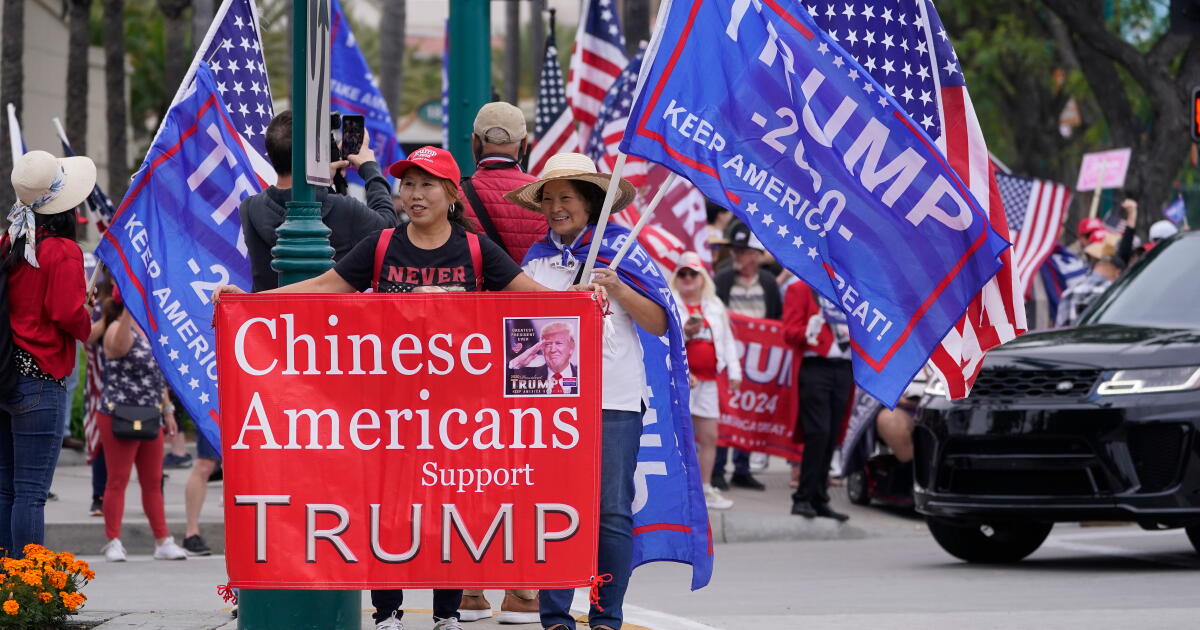
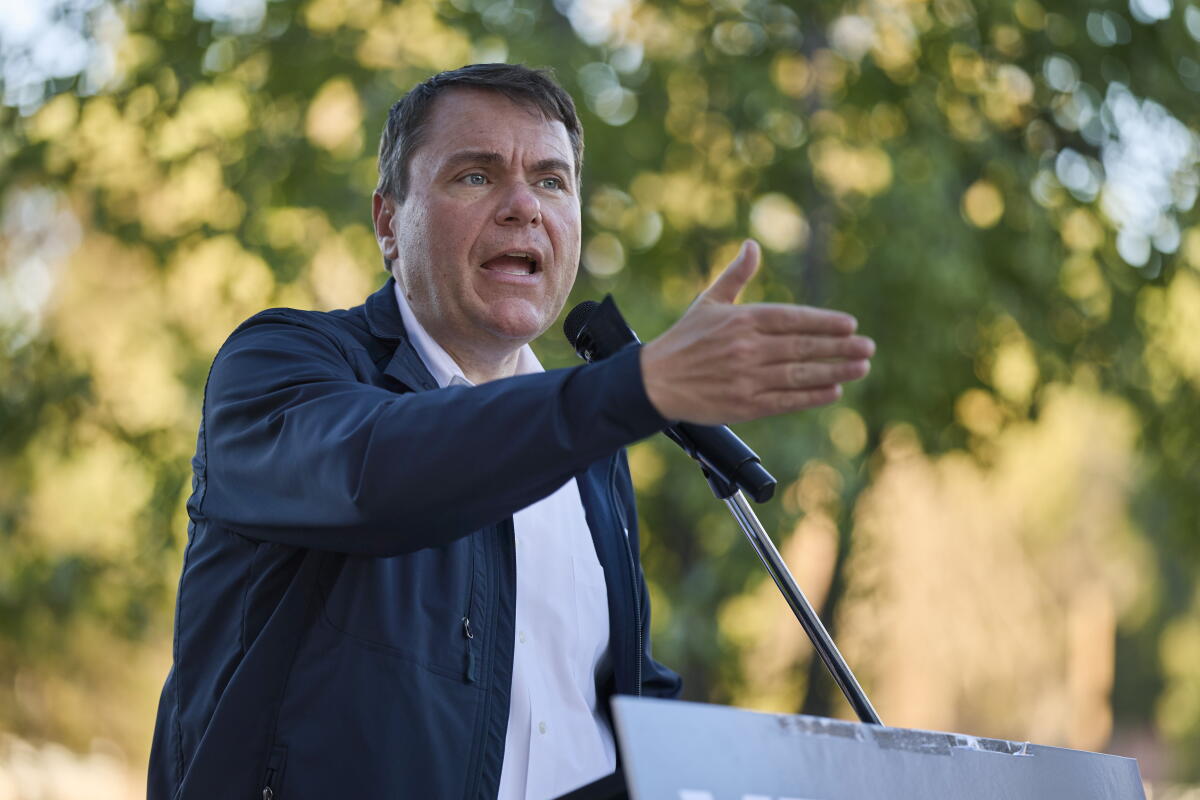


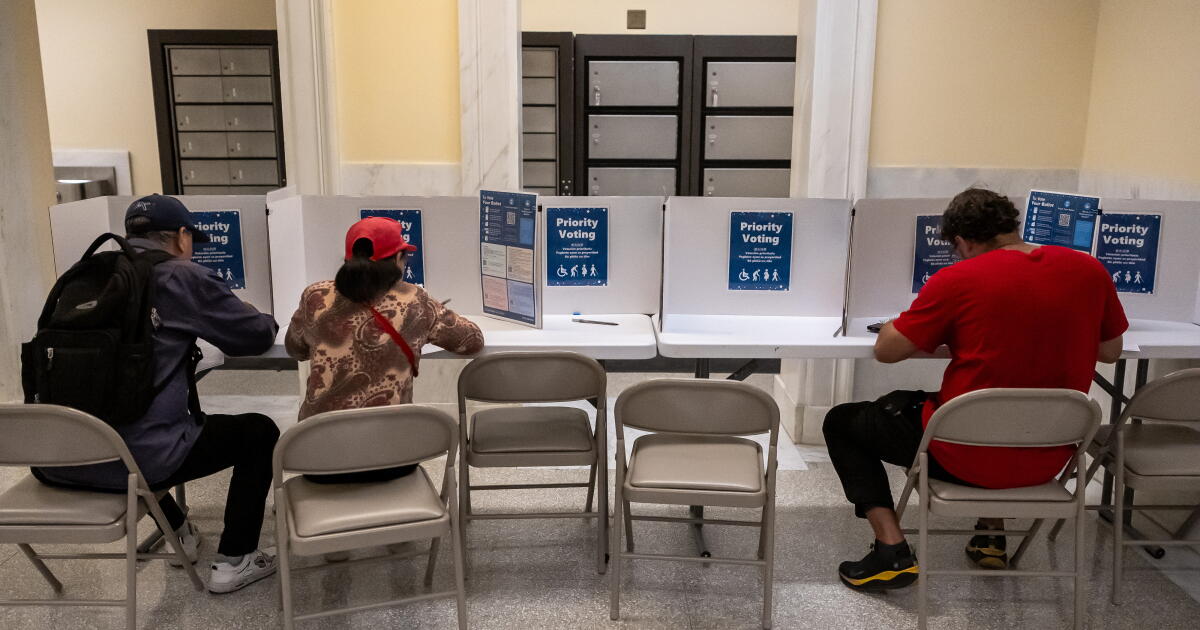
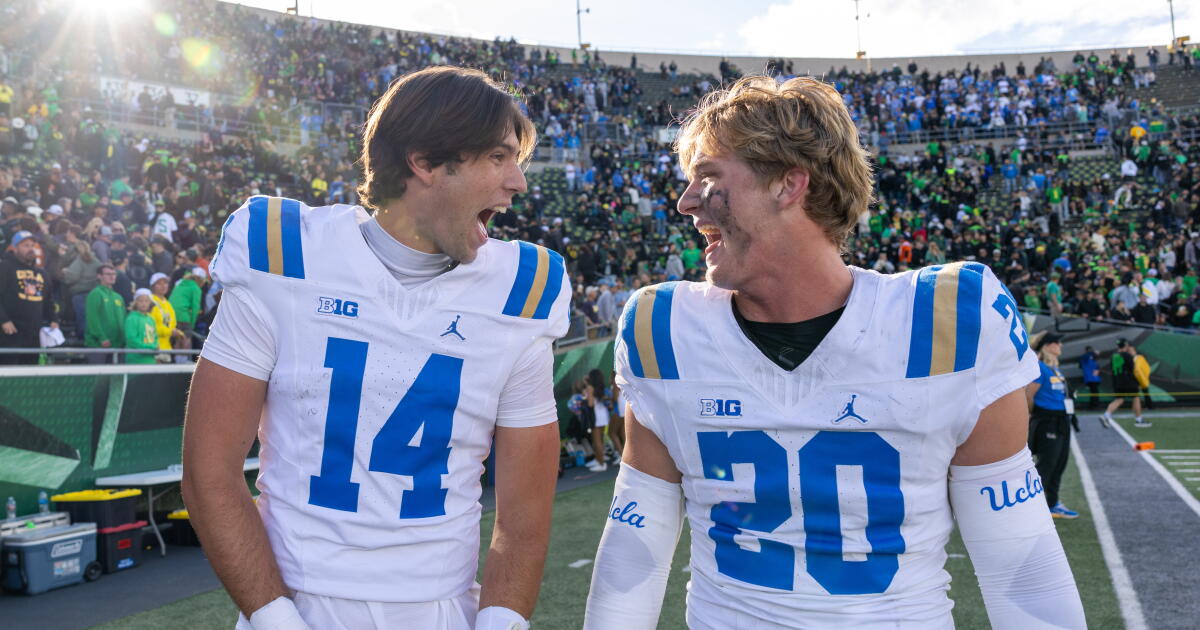
![Police and security personnel detain a protester during a demonstration against India's Chief Election Commissioner Gyanesh Kumar in New Delhi on October 3, 2026, to demand his resignation [Arun SANKAR / AFP]](https://i0.wp.com/occasionaldigest.com/wp-content/uploads/2026/10/AFP__20261003__D24U6XM__v1__HighRes__IndiaPoliticsElectionProtest-1791123918.jpg?w=640&ssl=1)