policy

Gas prices, wildfire, insurance, climate – what each candidate said last night

Wildfire and insurance — issues amped by climate change — along with the price of gas, took center stage at the California governor’s debate on Tuesday night.

Here are some of the candidates’ defining statements, starting left of the stage:

Tony Thurmond

The Democratic State Superintendent of Public Instruction addressed the state’s wildfire insurance crisis, where private insurers have been dropping policies as climate changes fuels more frequent catastrophic fire. The state has allowed insurers to raise rates in return for writing more policies, but so far its backup FAIR Plan, meant to provide coverage when other companies will not, continues to grow.

Thurmond said he would withhold tax credits, subsidies and benefits from non-cooperative insurers, although moderators and other candidates raised questions about the legality of this strategy.

“The governor can certainly work with the Insurance Commissioner to say there should be no rate increase unless the insurance industry is actually writing policies. They have failed California in our greatest need. They’ve taken the money for premiums and then when people needed to have support to rebuild their homes, they said, ‘whoops, we’re not going to help you.’ Then they got a rate increase. I’m sorry, where I come from, when you do a bad job, you don’t get a raise.”

Chad Bianco

The Republican Riverside County Sheriff said insurers aren’t leaving California because of climate change, but because the state has failed to pass and enforce vegetation management and defensible space policies that would reduce wildfire risk.

“It wasn’t global warming, stop believing that. It was a failed environmental policy that doesn’t allow fire departments to prevent defensible space around our homes or clear out the brush for 30 years that are building in our mountains and in our hills that took out a city. [Insurers] specifically said we were going to lose a city, and our governor said ‘we don’t care.’ And so the insurance companies left.”

Inadequate brush clearance has contributed to other fires in the state, although it’s not a factor experts cite in the Los Angeles fires specifically.

Tom Steyer

The Democratic billionaire hedge fund founder who is positioning himself as the climate candidate in the race, touted his drive to make oil companies pay for damages from climate change, including rising insurance rates and homes lost to wildfires.

“In environmentalism, I have three real rules. Number one is polluter pays. It’s absolutely critical that if people are going to pollute and damage the environment and cause harm to their neighbors, they pay. Two, we have to include environmental justice in every single environmental rule. And third is we need to start to deploy all of the clean energy stuff that’s cheaper now and get us back to the front of the world in leading it.

“There is one person that the corporations are going after, including Big Oil, who is spending millions of dollars to stop me. The electric monopolies, PG&E, millions of dollars to stop me, because I’m the person on this stage who’s the change agent.”

Steve Hilton

The former Republican Fox News commentator said insurers should be allowed to raise rates consistent with actual wildfire risk. He also advocated for “modern forest management,” removing fuel from forests, as a way to protect against wildfires, reduce carbon emissions from fire, and revive the state’s timber industry.

“We can create jobs and opportunity in rural California and reduce carbon emissions in the process, because we won’t have the mega wildfires.”

Asked if he supports the transition to electrification, he promoted natural gas: “Yes, but let’s be sensible about electric. Right now, we have a fleet of gas fired power stations generating electricity that are running at 10 to 15% of their capacity, even though we have abundant natural gas in California that we could be using to generate affordable, reliable electricity that would lower the cost of electric bills for consumers and businesses.”

According to the U.S Energy Information Administration, California’s natural gas production provides less than one tenth of what the state consumes.

Xavier Becerra

The former Health and Human Services Secretary said he would call a state of emergency as governor to require wildfire insurers to freeze rates and come to the table.

“This affordability crisis is hitting every family, and we have to act as if this were a break glass moment … Rate payers have to understand what their risk is, so they understand why they are going to pay for what they’re going to pay for their home insurance. But an insurance company has to be open and transparent about how its pricing its policies so people can afford it.”

Moderator Julie Watts noted that California home insurance rates are below the national average and questioned the legality of a freeze.

Katie Porter

The former Democratic Orange County Congresswoman was asked whether California should keep its refineries. Two of them closed in the past year, reducing the state’s refining capacity by 20 percent and causing California to lean more heavily on imports.

She said the state should keep the remaining refineries open, but also rapidly scale up green energy to meet the state’s growing electricity demand: “Right now we need to keep all of our energy sources online. That’s just the reality that we’re in. … Right now those refineries, they’re up, they’re running, they’re creating good jobs. Let’s keep them there. But I want to be really clear … The people who work at those refineries, and the people who live in Kern County also face some of the worst pollution and lower life expectancies. Green energy gets us out of that.”

She also backed an idea to have state dollars cover insurance for insurers, known as reinsurance.

Matt Mahan

Democratic San Jose Mayor called to suspend the state’s 61 cent-per-gallon gas tax, used to fund road repairs, bridges, and public transport. The state is looking at a $216.4 billion revenue shortfall over the next decade due to increasing fuel economy and electric vehicles. The other Democratic candidates support keeping the tax; Mahan has instead proposed a flat fee on all vehicles.

He said: “I’m the only candidate on this stage who has pledged to suspend and then reform the gas tax. It is the most regressive tax in California. Working people, rural people, are spending three times as much maintaining our roads as wealthier EV owners.”

On the wildfire insurance crisis he said: “The government in Sacramento created so many restrictions, including taking over a year to approve any rate changes, prohibiting insurance companies from using climate data to project future costs, that they stopped writing new policies. The answer is bring them back, force them to compete, allow them to appropriately price risk, and then hold government accountable for maintaining our wildland, reducing all that vegetation and wildfire risk so that we don’t have these catastrophic fires.”

Antonio Villaraigosa

The former Democratic L.A. mayor expressed his concerns with the readiness of the state’s infrastructure to support a transition to electric vehicles.

“We need an all of the above strategy that understands we’ve got to transition from oil and gas to renewables. But here’s an example: the 2035 mandate [to ban gas-powered car sales]. We built 167,000 charging stations in the last 10 years. We need 2 million more to get to that mandate, and if we build them, we don’t have a grid. So we ought to build the grid instead of arguing about whether or not we need an all-of-the-above policy.”

Source link

US appeals court rejects Trump’s immigration detention policy | Donald Trump News

In a 3-0 ruling, court says Trump administration misread a decades-old immigration law to justify mandatory detention.

A United States federal appeals court has rejected the Trump administration’s practice of subjecting most people arrested in its immigration crackdown to mandatory detention without the opportunity to seek release on bond.

In a 3-0 ruling on Tuesday, a panel of the New York-based US Court of Appeals for the Second Circuit said the administration relied on a novel but incorrect interpretation of a decades-old immigration law to justify the policy.

Recommended Stories

list of 4 itemsend of list

Writing for the panel, US Circuit Judge Joseph F Bianco, a Trump appointee, warned that the government’s reading “would send a seismic shock through our immigration detention system and society”, straining already overcrowded facilities, separating families and disrupting communities.

Lawyers for the Trump administration say the mandatory detention policy is legal under the Illegal Immigration Reform and Immigrant Responsibility Act, passed in 1996.

But Bianco said the government had made “an attempt to muddy” the law’s “textually clear waters”, arguing that the administration’s interpretation “defies the statute’s context, structure, history, and purpose” and contradicts “longstanding executive branch practice”.

Under the Trump administration policy, the Department of Homeland Security last year took the position that non-citizens already living in the US, not just those arriving at the border, qualify as “applicants for admission” and are subject to mandatory detention.

Under federal immigration law, “applicants for admission” to the US are detained while their cases proceed in immigration courts and are ineligible for bond hearings.

The Department of Homeland Security has been denying bond hearings to immigrants arrested across the country, including those who have been living in the US for years without any criminal history, the Associated Press (AP) news agency reports.

That is a departure from the practice under previous US administrations, when most non-citizens with no criminal record who were arrested away from the border were given the opportunity to request a bond while their cases moved through immigration court, according to AP.

In such cases, bonds were often granted to people who were deemed not to be flight risks, and mandatory detention was limited to those who had just entered the country.

Amy Belsher, director of immigrants rights’ litigation at the New York Civil Liberties Union, said the appeals court ruling affirmed “that the Trump administration’s policy of detaining immigrants without any process is unlawful and cannot stand”.

“The government cannot mandatorily detain millions of noncitizens, many of whom have lived here for decades, without an opportunity to seek release. It defies the Constitution, the Immigration and Nationality Act, and basic human decency,” Belsher said in a statement.

Conflicting rulings set stage for Supreme Court review

The New York court’s decision comes after two other appeals courts ruled in favour of the Trump administration’s policy.

Acknowledging the opposing rulings, Judge Bianco said the panel was parting ways with them and instead aligning with more than 370 lower-court judges nationwide who have rejected the administration’s position as a misreading of the law.

The split among the courts increases the likelihood that the US Supreme Court will weigh in.

The latest ruling also upheld an order by a New York judge that led to the release of Brazilian national Ricardo Aparecido Barbosa da Cunha, who was arrested by immigration officials last year while driving to work after living in the US for more than 20 years.

“The court was right to conclude the Trump administration can’t just ⁠reinterpret the law at its own whim,” Michael Tan, a lawyer for Barbosa at the American Civil Liberties Union, said in a statement.

The Department of Justice, which is defending the mandatory detention policy in court, did not respond to a request for comment.

Source link

President Obama to give speech on Mideast policy

President Obama is planning to speak in the “near future” on U.S. policy in the Mideast, White House Press Secretary Jay Carney said Wednesday.

“It’s a speech to a broader audience than just the Arab world,” Carney said at his televised briefing. He didn’t specify when or where the president will speak, but said it will be in “the relatively near future.”

Obama is scheduled to begin a five-day European trip May 23.

The speech will come as the United States faces a slew of issues in the Middle East, including pro-democracy uprisings in several countries, a stalled Mideast peace process between Israel and the Palestinians, and the ongoing issue of nuclear proliferation and Iran.

The speech also will come within weeks of the U.S. raid in Pakistan during which terrorist leader Osama bin Laden was killed. The raid has raised questions from some about the future of U.S. efforts in Afghanistan, which the West invaded seeking to end the Taliban state that was sheltering terrorists after the Sept. 11, 2001, attacks on New York and the Pentagon. The raid has also raised questions about what Pakistan leaders knew about Bin Laden and whether the founder of Al Qaeda was being protected by elements of the Pakistani intelligence community.

Obama is scheduled to meet next week with Jordan’s King Abdullah II, a strong U.S. ally, and with Israeli Prime Minister Benjamin Netanyahu, who has been invited to address Congress. Efforts to bring peace between Netanyahu’s government and the Palestinians have bogged down despite early U.S. efforts. Complicating that issue is the apparent reconciliation between Mahmoud Abbas, head of the Palestinian National Authority, and Hamas, which controls Gaza, the other part of the Palestinian entity. Israel and the United States view Hamas as a terrorist group.

In 2009, Obama visited Cairo in what was billed as an overture to the Islamic world, still smarting from the Bush years and the invasion of Iraq and Afghanistan. Obama mainly spoke of the positive power of Islam as a world force.

Since then, much of the Arab world has been shattered by ongoing pro-democracy revolutions and, in some cases, civil wars and extensive state repression.

In some countries, notably Syria and Libya, where the United States has had long-term questions about the rulers, the United States strongly condemned the use of force against citizens and took even more severe actions. The Obama administration helped engineer a United Nations resolution that has imposed a no-fly zone on Libya, which is being enforced by NATO. The Obama administration has also spoken out forcefully against Syria’s violence against its citizens.

Though it has condemned state violence, the Obama administration has been less forceful with some nations with friendlier governments, such as Yemen and Bahrain, and it was slow to condemn Egypt’s Hosni Mubarak, who was eventually deposed by the military after extensive demonstrations.

Michael.muskal@latimes.com

Twitter.com/LATimesmuskal


Source link

Houston eases limit on cooperation with ICE after pressure from governor

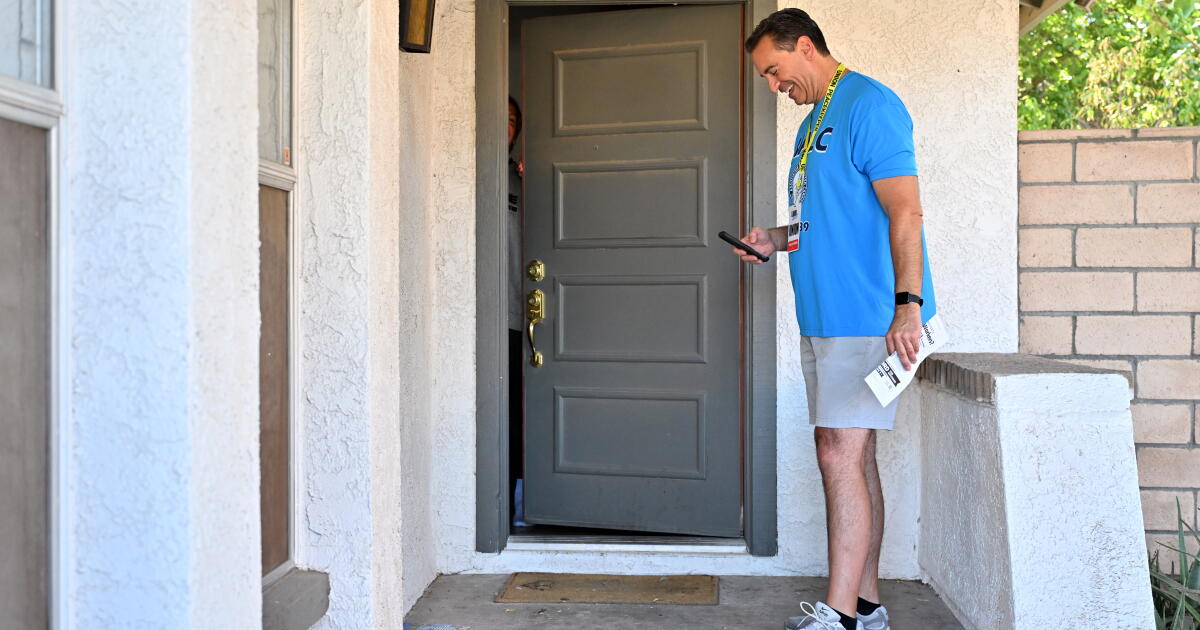
A Houston city ordinance that limited police officers’ cooperation with federal immigration agents was amended on Wednesday after Texas’ governor threatened to take away millions of dollars in public safety grants.

Houston, Austin and Dallas — three of the state’s biggest cities and Democratic strongholds — are being confronted by GOP Gov. Greg Abbott with threats of losing public safety dollars over policies that dictate how law enforcement interacts with federal immigration authorities. The three cities are being threatened with the loss of about $200 million in public safety funding, including tens of millions expected to cover security at World Cup matches this summer in Dallas and Houston.

Two weeks ago, the Houston City Council passed the ordinance, which eliminated a requirement that Houston police officers wait 30 minutes for agents with U.S. Immigration and Customs Enforcement to pick up someone with a nonjudicial administrative warrant. If ICE agents didn’t show up in time, police officers took a detained person’s information and then released them.

But Abbott warned city officials that the new ordinance and its limitation on cooperating with ICE agents violated the terms of $110 million in state grants Houston had received for police and security during the World Cup games the city is hosting in June.

Texas Atty. Gen. Ken Paxton had also filed a lawsuit against Mayor John Whitmire and members of the City Council over the ordinance, accusing them of violating a 2017 state law that prevents cities from adopting policies that limit the enforcement of immigration laws and that also banned “sanctuary city” policies in the state. There is no strict definition for sanctuary policies or sanctuary cities, but the terms generally describe limited cooperation with ICE.

After more than two hours of discussion during its weekly meeting, the Houston City Council voted 13 to 4 to make changes to the ordinance. Whitmire said he had consulted with Abbott’s office about making changes that would prevent Houston from losing its funding.

The amended ordinance deletes language that highlighted that administrative warrants — versus warrants signed by a judge — that ICE agents use to take individuals into custody are not enough for officers to arrest or detain an individual.

Houston Mayor John Whitmire speaks during a City Council meeting on Wednesday.

Houston Mayor John Whitmire speaks during a City Council meeting on Wednesday.

(Raquel Natalicchio/AP)

“We have no alternative for Houston to survive, prepare for [the World Cup], patrol these neighborhoods,” Whitmire said. “We’ve got to have today the restoration of the $114 million.”

Andrew Mahaleris, a spokesperson for Abbott, said the governor expects any policy Houston police adopt has to comply with the city’s certification that it will fully cooperate with the Department of Homeland Security.

“This vote is a step in the right direction after Houston leaders put public safety at risk with reckless policies that undermined law enforcement,” Mahaleris said in a statement.

Councilmember Abbie Kamin, one of three members who had pushed for the ordinance, voted against amending it, saying that doing so was giving in to bullying tactics from state leaders.

“If we roll over now to a bully, what will he come for next?” Kamin said.

Councilmembers Edward Pollard and Alejandra Salinas, who also pushed for the ordinance, said they remained hopeful the changes approved Wednesday would not violate individuals’ constitutional rights and wouldn’t result in people being held on nonjudicial warrants.

Nikki Luellen, an advocate for criminal justice reform for the ACLU of Texas, called the amended ordinance “a green light for deeper collaboration between ICE and the Houston Police Department.”

Martha Castex-Tatum was one of several council members who had supported the ordinance but voted in favor of amending it in order to protect the city’s finances.

“For some people, this may feel like surrender. It’s not. It’s real stewardship,” Castex-Tatum said.

Dallas officials have said they are committed to ensuring public safety.

Austin Mayor Kirk Watson, a moderate Democrat, said the local policy complies with state law. He said Abbott’s threat to cut nearly $3 million in Austin would cut trauma aid for police officers and sexual assault victims.

“We don’t have the time and will not play into this political theater,” Watson said.

Austin officials have since indicated they could try to negotiate with Abbott.

The debate in Houston and other Texas cities comes during fraught times. Whitmire and other local leaders in many of Texas’ left-leaning urban areas have tried not to draw the federal government’s attention amid the aggressive immigration crackdown by President Trump’s administration.

Lozano writes for the Associated Press. AP writer Jim Vertuno in Austin contributed to this report.
Source link

Japan lifts ban on lethal weapons exports in major shift of pacifist policy | Weapons News

Japan could soon sell weapons overseas, including fighter jets, in major shift from pacifist policies introduced after World War II.

The cabinet of Japanese Prime Minister Sanae Takaichi has lifted a ban on exporting lethal weapons, including fighter jets, in a major shift to Japan’s pacifist post-World War II constitution.

In a post on X announcing the changes on Tuesday, Takaichi did not specify which weapons Japan would now sell overseas. However, Japanese newspapers said the changes would encompass fighter jets, missiles and warships, which Japan has recently agreed to build for Australia.

Recommended Stories

list of 4 itemsend of list

“With this amendment, transfers of all defence equipment will in principle become possible,” Takaichi said, adding that “recipients will be limited to countries that commit to use in accordance with the UN Charter”.

“In an increasingly severe security environment, no single country can now protect its own peace and security alone.”

At least 17 countries will be eligible to buy weapons manufactured in Japan under the changes, Japan’s Chunichi newspaper reported, adding that this list may be expanded if more countries enter into bilateral agreements with Japan.


Previous rules, introduced in 1967 and enacted in 1976, had limited Japanese military exports to non-lethal arms, such as those used for surveillance and mine sweeping, Japan’s Asahi newspaper reported.

Asahi also reported that Japan will still restrict exporting weapons to countries where fighting is currently taking place, but exemptions are allowed under “special circumstances” where Japan’s national security needs are taken into account.

Countries interested in buying Japanese-made weapons include Australia, New Zealand, the Philippines and Indonesia, which recently signed a major defence pact with the United States, Chunichi reported, citing Japan’s Ministry of Defence.

Tokyo’s change in policy comes soon after Japan and Australia signed a $7bn deal that will see Japan’s Mitsubishi Heavy Industries build the first three of 11 warships for the Australian navy.

Takaichi sends offering to controversial war shrine

The changes announced by Takaichi on Tuesday come amid reports that the Japanese prime minister had sent a ritual offering to the notorious Yasukuni Shrine in Tokyo on the occasion of its spring festival.

Built in the 1800s to honour Japan’s war dead, the shrine includes the names of more than 1,000 convicted Japanese war criminals from World War II, including 14 who were found guilty of “Class A” crimes.

Visits by Japanese officials to the shrine have long been considered insensitive to the people of China, South Korea, and other countries that Japanese soldiers brutalised during the war.

After the defeat of Axis countries, including the bombing of Japan’s Hiroshima and Nagasaki at the end of World War II, Japan introduced a new constitution renouncing participation in war.

However, Takaichi, considered a China “hawk” and sometimes referred to as Japan’s “Iron Lady”, is among a number of recent Japanese leaders to have pushed back against the country’s pacifist stance.

TOKYO, JAPAN - AUGUST 15: People visit the Yasukuni Shrine on August 15, 2025 in Tokyo, Japan. Japan marked the 80th anniversary of its surrender in World War II today. (Photo by Tomohiro Ohsumi/Getty Images)
Nationalists visit the Yasukuni Shrine in 2025 in Tokyo, Japan [Tomohiro Ohsumi/Getty Images]

Source link

Chávez the Radical XXXII: ‘The Bonus-over-Wage Policy Pulverized Incomes’

Once he got into power, Hugo Chávez spared no effort to reverse the neoliberal policies implemented in the 80s and 90s. This meant impressive advances for the Venezuelan working class.

In this 2006 speech, Chávez paid special attention to the Fourth Republic’s policies to increase the precariousness of the workers and favor business interests, particularly by replacing wages with bonuses.

With the economy under merciless US attacks in recent years, the Venezuelan government has favored non-wage bonuses, sparking widespread debate within Chavismo and criticism from trade unions.

Source: Tatuy Tv


Source link

U.S. bars entry to 26 people as visa restriction policy expands

April 16 (UPI) — The Trump administration on Thursday announced visa restrictions on 26 people across the Western Hemisphere as the State Department unveiled a “significant expansion” of an existing policy to deny entry to those accused of working with U.S. adversaries to undermine Washington’s interests in the region.

Those blacklisted were not identified in the State Department release, which said they were being punished for destabilizing U.S. regional security efforts, undermining U.S. economic interests, conducting influence operations targeting the sovereignty and stability of nations in the region or enabling adversaries to acquire or control key assets and strategic resources in the hemisphere.

“President Trump’s National Security Strategy makes clear: this Administration will deny adversarial powers the ability to own or control vital assets or threaten the security and prosperity of the United States in our region,” a State Department spokesperson said.

“The Department of State is working to advance American leadership in our hemisphere, protect our homeland and ensure access to vital routes and areas throughout our region.”

The blacklisting was permitted as the State Department said it was announcing “a significant expansion” of an existing visa restriction policy, one first announced in early September, permitting the Trump administration to deny visas to Central American nationals accused of undermining the rule of law in the region on behalf of China.

The move comes as the Trump administration seeks to expand its influence in the Western Hemisphere. Under what some administration officials have called the “Donroe Doctrine,” Trump has sought to reassert U.S. dominance in the region in the Western Hemispher and push back on foreign influence, invoking a modern corollary to the Monroe Doctrine of the 1820s.

That initial policy specifically targeted those in Central America who collaborated with the Chinese Communist Party, while the expansion includes anyone in the Western Hemisphere who aids any of the United States’ adversaries.

China protested the earlier version of the policy in November. In a statement from its embassy in Washington, Beijing said the United States imposed visa restrictions on nationals from Panama and other Central American nations over their ties to China.

“Turning visas into political leverage runs against #UN Charter and the principles of sovereign equality and non-interference,” the embassy said. “Central America is no one’s backyard.”

Secretary of Defense Pete Hegseth speaks during a press briefing at the Pentagon on Wednesday. Yesterday, the United States and Iran agreed to a two-week ceasefire, with the U.S. suspending bombing in Iran for two weeks if the country reopens the Straight of Hormuz. Photo by Bonnie Cash/UPI | License Photo

Source link

As world focuses on Iran, Israel ‘engineering starvation policy’ in Gaza | Gaza News

With the global attention fixated on the diplomatic efforts to end the war on Iran, Israel has systematically escalated its attacks on Gaza and choked off vital aid, plunging the besieged enclave into what economic experts are now calling an “engineered, compounded famine”.

The number of aid trucks entering Gaza has dropped drastically in violation of the October 2025 ceasefire with Hamas. Since then, the Government Media Office in Gaza has recorded 2,400 military violations by Israeli forces, resulting in the killing of more than 700 Palestinians.

Recommended Stories

list of 4 itemsend of list

On Tuesday, Israel’s military killed at least 11 Palestinians, including two children, in separate attacks across the war-torn Strip.

The intensity of these attacks spiked during peak regional tensions. Between February 28 and April 8, while Israel and the US were engaged in a bombing campaign against Iran, Israeli forces bombed Gaza on 36 out of those 40 days.

In the last five weeks alone, more than 100 people have been killed, including Al Jazeera journalist Mohammed Wishah. Israel has killed more than 72,336 people since launching the brutal military offensive on October 7, 2023.

Interactive_40Days_Gaza_US-ISRAEL-WAR-APRIL8_2026-FOOD_SECURITY

The ‘truck deception’

While Israel frequently claims it is allowing hundreds of aid trucks into Gaza, Palestinian officials and economic experts argue these figures are a deliberate mathematical deception.

According to the Government Media Office, only 41,714 aid and commercial trucks have entered Gaza over the past six months. This represents a mere 37 percent of the 110,400 trucks stipulated under the ceasefire agreement. The fuel situation is even more critical, with only 1,366 fuel trucks entering out of a promised 9,200 – an abysmal 14 percent compliance rate.

Recent daily logs highlight the severity of the bottleneck. On April 13, a total of only 102 aid trucks and 7 fuel trucks were allowed into the entire Strip, alongside 216 commercial trucks – a fraction of the more than 600 total trucks required daily under the “ceasefire” deal. By April 14, the numbers remained critically low with 122 aid trucks and 12 fuel trucks entering.

Crucially, Israeli authorities entirely shut down additional entry points like the Zikim and Kissufim crossings, which had processed dozens of commercial and aid trucks just a day prior, bottlenecking all limited traffic exclusively through Karem Abu Salem.

Mohammed Abu Jayyab, a Palestinian economic expert based in Gaza, told Al Jazeera that Israel utilises a “technical and commercial deception” to inflate these numbers.

“An Israeli truck carries up to 32 or 34 pallets… which are then unloaded into two or three smaller, dilapidated Palestinian trucks on the Gaza side,” Abu Jayyab explained. “Consequently, the UN and Israel count double or triple the actual number of Israeli trucks entering.” One pallet holds roughly 1 tonne of goods or food items.

Furthermore, Israel recently banned mixed-load shipments. If a merchant brings in 20 pallets of sugar, the remaining 12 pallet spaces on the truck must remain empty, yet it is still registered as a full commercial truck.

“The political agreement stipulated a ‘truck’ but did not specify quantities, weights, or the number of pallets,” Abu Jayyab noted, allowing Israel to weaponise logistics to restrict aid while appearing compliant.

Engineering starvation

This logistical strangulation is part of a broader strategy. Hassan Abu Riyala, undersecretary of the Ministry of National Economy in Gaza, stated in a meeting published on the ministry’s official Telegram channel that Israel is “engineering a policy of starvation”.

To ensure chaos in the local markets and sky-high prices, Israel has deliberately dismantled civil regulatory bodies. “The occupation targeted the majority of the crews that monitored prices, and assassinated the [former] undersecretary of the Ministry of Economy and five directors general during the war,” Abu Riyala said.

The results have been devastating, basic commodities have become scarce, and bread production has plummeted to 200 tonnes daily, far below the 450 tonnes required to feed the population.

“We manage this structural deficit under exceptional and coercive conditions,” Ismail Al-Thawabteh, director general of the Government Media Office, told Al Jazeera.

He described the ongoing reduction of supplies despite the truce as a “systematic restriction of basic supplies” that pushes the population towards dangerous levels of food insecurity. Fresh produce has skyrocketed, with 1kg (2.2lb) of tomatoes jumping from $1.50 to nearly $4 in a matter of weeks.

Moreover, the humanitarian catastrophe is being accelerated by the withdrawal of major aid groups. Al-Thawabteh noted that the scaling back or suspension of operations by key international institutions, most notably the World Food Programme (WFP), due to Israeli restrictions, represents a “highly dangerous development” that threatens the complete collapse of Gaza’s relief system.

“We issue an urgent appeal to the international community and the guarantors of the agreement to immediately pressure Israel to open the crossings… before reaching a point of no return and an imminent human explosion,” he said.

A ‘compounded famine’

The crisis has evolved beyond a simple lack of food; it is now a complete collapse of the Palestinian economy.

Abu Jayyab described the current situation as a “compounded famine”. With unemployment soaring to 80 percent and the destruction of more than 160,000 jobs across industrial, agricultural, and commercial sectors, the population has entirely lost its purchasing power.

“It has become illogical to link the entry of food supplies from the crossings to their availability to Palestinian citizens,” Abu Jayyab told Al Jazeera. Even when goods reach the market, between 70 to 80 percent of families simply cannot afford to buy them due to the total absence of income.

This extreme deprivation is forcing civilians into life-threatening alternatives. “The return of long queues for bakeries, and citizens resorting to burning plastic and waste in the absence of cooking gas, are dangerous field indicators of an unprecedented deterioration,” Al-Thawabteh warned, noting that government health facilities are currently struggling to treat respiratory and skin diseases resulting from this toxic pollution.

The medical blockade

Meanwhile, the stranglehold extends to Gaza’s most vulnerable patients. While the ceasefire agreement mandated the opening of the Rafah crossing for medical evacuations, Israel has kept the borders tightly restricted.

Over the past six months, only 2,703 people have been allowed to cross through Rafah out of an expected 36,800 – a compliance rate of just 7 percent. Consequently, only 8 percent of the severely wounded and chronically ill patients slated for urgent medical evacuation have been permitted to leave. According to the World Health Organization, roughly 18,000 people are still trapped in Gaza waiting for life-saving treatment abroad.

INTERACTIVE - Israel’s closure of the Rafah crossing - OCT 15, 2025 copy 2-1775738950
(Al Jazeera)

Source link

‘Terrible for foreign policy’: Trump attacks Pope Leo after peace appeal | Donald Trump News

Leo, ​who last year became the first US-born pope, has emerged as an outspoken critic of the US-Israeli ⁠war on Iran.

United States President Donald Trump has unleashed a storm of criticism at Pope Leo XIV, calling him “weak on crime” and “terrible for foreign policy”.

Trump delivered the unusual criticism of the head of the Catholic Church in a Sunday night post on social media, saying he does not “want a Pope who criticises the President of the United States”.

Recommended Stories

list of 3 itemsend of list

Trump’s outburst appeared to be triggered by recent remarks from Pope Leo critical of the US-Israel war on Iran.

Last week, Leo issued a rare direct rebuke of Trump’s threat to destroy Iranian civilisation, calling it “truly unacceptable“. And then, on Sunday, the 70-year-old pontiff implored leaders to end ongoing bloodshed, condemning what he described as a “delusion of omnipotence” fuelling war – comments that appeared directed at Trump.

The pope has also previously questioned the Trump administration’s hardline immigration policies, saying, “I don’t know if that’s ⁠pro-life.”

Taking to Truth Social, Trump wrote: “I don’t want a Pope who thinks it’s OK for Iran to have a Nuclear Weapon. I don’t want a Pope who thinks it’s terrible that America attacked Venezuela.”

“Leo should get his act together as Pope, use Common Sense, stop catering to the Radical Left, and focus on being a Great Pope, not a Politician,” said the US president.

Trump also claimed credit for Leo’s leadership in the Catholic Church, suggesting the Vatican picked the first US-born pontiff – elected last year – to curry favour with the White House. “If I wasn’t in the White House, Leo wouldn’t be in the Vatican,” Trump said.

Asked about the comments later on Sunday, Trump reiterated that he is “not a big fan” of Leo, who he said “is not doing a very good job”.

“He likes crime, I guess,” said Trump. “He’s a very liberal person.”

Trump also had a rocky relationship with Leo’s predecessor, Pope Francis, who criticised Trump’s ‌immigration ‌policy proposals when he first ran for president and suggested Trump was “not a Christian“. Trump had called Francis “disgraceful” in early 2016.

Leo is set to begin an 11-day trip to Africa on Monday, starting with a historic visit to Muslim-majority Algeria.

Source link

Travelodge updates pet policy as Brits will now pay more to bring animals

Travelodge confirmed it has changed its pet policy and upped the flat fee it charges pet owners for bringing their animals to its hotels

Budget hotel chain Travelodge has made a major change to its pet policy ahead of the peak May half-term and summer travel season.

Travelodge currently allow pets in all of their hotels in both standard and SuperRooms, and up to two domesticated animals, either cats or dogs, can currently stay with their owners in each room.

Previously, this was charged at £20 per pet per stay, regardless of how many nights the owners stayed, to allow for an additional deep clean of each room at the end of a break. However, this has now been increased to £25 per stay, meaning people who want to travel with their pooch or feline will end up paying more.

A spokesperson for Travelodge confirmed the change, telling the Mirror: “We are proud to be the only UK budget hotel chain to welcome pets at every one of our 600+ hotels, 365 days a year.

“Having held our pet supplement at the same price for over a decade, we have introduced a £5 increase across the majority of our hotels to reflect rising operational costs and ensure we can continue to offer a great quality stay for guests travelling with their animals.

“Unlike many other hotels, our flat fee of £25 per pet covers the entire duration of a pet’s stay, ensuring Travelodge remains a highly competitive and value-for-money option for pet owners. Customers will see the new price on the website when they make a pet booking.”

Travelodge customers who are travelling with pets can add them to their booking as an extra at the payment stage. While pets are allowed to stay in rooms, they’re generally barred from bar and restaurant areas. Its website also confirms: “Assistance dogs are welcome at all Travelodge hotels, free of charge.”

Recently, there has been a lively debate around dogs in public places, as a major European airline announced plans to allow dogs in the cabin. The plans will mean owners travelling on an Italian airline will be able to book a seat for their pup, rather than locking them in crates into the hold. A poll showed that 95% of Mirror readers agreed that dogs should be allowed to sit alongside their owners in the cabin.

READ MORE: Fairytale Cotswolds village with charming cottages is regularly named one of UK’s bestREAD MORE: UK island with beautiful beaches and castles named in UK’s best places to live

A recent poll also showed that six out of ten dog owners choose their holidays based on their pet’s preference. The survey, which involved data from over 2,000 pet owners, showed that top destinations in the UK for dog-friendly travel included Devon and Cornwall.

An impressive 78% of dog owners who took their pet on holiday chose destinations based on whether there were nice places nearby for walkies, while 30% said they’d never return to a staycation spot if it failed to meet their pet’s needs. Around a third of pet owners also plan their routes and travels around doggy-friendly rest stops.

Have a story you want to share? Email us at webtravel@reachplc.com

Source link

Labor group urges worker-focused shift in industry policy

1 of 2 | Yang Kyung-soo, leader of the Korean Confederation of Trade Unions, speaks during a rally in front of the presidential office Cheong Wa Dae to express their objection to the US-Israel war with Iran and South Korea’s dispatch of troops to the conflict, in Seoul, South Korea, 25 March 2026. File. Photo by YONHAP / EPA

April 3 (Asia Today) — South Korea’s largest labor group on Thursday called on the government to adopt a more worker-centered approach in shaping industrial and trade policies, emphasizing job security amid economic and technological changes.

The Korean Confederation of Trade Unions made the request during a meeting with Industry Minister Kim Jeong-kwan at its headquarters in central Seoul.

The group said employment stability must be a key consideration in industrial policymaking and trade negotiations, particularly as industries undergo restructuring driven by artificial intelligence and face overlapping challenges from climate change, global trade tensions and economic uncertainty.

The meeting was organized to raise the need for labor-focused policy and to establish a framework for ongoing communication and cooperation with the government.

Union officials, including Chairman Yang Kyung-soo, Vice Chairman Jeon Ho-il and other senior staff, attended the session, along with ministry officials responsible for industrial and manufacturing policy.

Yang said industrial and trade policies are directly tied to workers’ livelihoods and warned that policies focused primarily on corporate competitiveness could shift economic burdens onto labor.

“Government agencies must rethink their view of labor,” he said. “Labor is not a cost but the foundation that sustains industry.”

He added that industrial transitions should not come at the expense of workers and called for what he described as a “just transition” that protects jobs and working conditions.

The union said it would continue engaging with the government to push for broader changes aimed at placing workers at the center of economic policy decisions.

— Reported by Asia Today; translated by UPI

© Asia Today. Unauthorized reproduction or redistribution prohibited.

Original Korean report: https://www.asiatoday.co.kr/kn/view.php?key=20260403010001087

Source link

Contributor: What can Democrats stand for when there’s no Trump to stand against?

Thanks in large part to President Trump’s disastrous policies, Democrats have a decent shot at not just retaking the House, but maybe even flipping the Senate.

Here’s the thing to know: Midterms are a referendum on the incumbent president. And this is especially true when the president is Donald Trump, who dominates every news cycle. He creates weather. He is, in short, always the issue.

But what happens when Trump is gone? What happens when Democrats have to defend their record of leadership? What happens when the referendum is on them?

Even now — as Dems appear to be surging — polling suggests that fewer than 40% of Americans view the Democratic Party favorably. That’s not exactly a mandate.

Yes, voters might choose Democrats as the lesser of two evils this November, but that doesn’t mean Americans are out there buying Democratic foam fingers. Not yet, anyway.

It also doesn’t mean Democrats are technically competent. As I type this, the Republican National Committee currently has a 7-to-1 money advantage over Democrats.

While Dems might win in 2026 in spite of all of their problems, a false sense of security would not bode well for 2028 — and beyond.

In fact, “beyond” starts to look structurally challenging, with things like the 2030 census and potential changes to voting laws threatening to rearrange the electoral map in ways Democrats will not enjoy.

But before we spiral into a dystopian future, let’s focus on the single most important decision Democrats will make: their 2028 presidential nominee. I’m not saying issues don’t matter. They do. But candidates function as shorthand for those policies.

That’s how politics works now: less like a detailed policy seminar, and more like a series of vibes that overwhelm us on our iPhones.

The next Democratic nominee will redefine what their party stands for. This one choice could spell defeat or a stunning victory that ushers in a political reordering.

Part of the challenge is that Trump has scrambled traditional political categories. He has borrowed selectively from modern Democratic economic policy preferences — tariffs, skepticism of free trade — while discarding unpopular ideas like entitlement reform and parts of the old Republican moral framework.

The next Democratic nominee will have to scramble things, too.

This isn’t a call for them to “move to the center” or “radicalize to the left.” Scrambling isn’t a linear project.

Let’s start with the premise that Democrats cannot afford to be outflanked on populism again. That already happened once, and it was not their finest hour.

Economic inequality is rising, and artificial intelligence threatens to widen that gap while disrupting millions of jobs. Meanwhile, the tech billionaires (who will profit handsomely from AI) are all lining up behind MAGA.

Putting these tech bros on the ballot should be a no-brainer.

Likewise, young people who were wooed in part by Trump’s “no new wars” promise are suddenly disenchanted.

Democrats should capitalize by nominating a candidate who can credibly promise “no stupid wars.”

In 2024, Trump capitalized on areas where progressives became out of step with mainstream values on cultural issues. Here, Democrats face a different challenge: realigning with mainstream public opinion without sounding inauthentic or uncompassionate.

Let’s take the issue of immigration. Democrats can vehemently oppose the ICE raids while also promising to keep most of Trump’s border policies in place.

Consider the recent comments of Texas Democrat James Talarico, the Senate nominee who recently criticized outside advocacy groups that convinced the Biden administration “that it was racist to support border security.” He added: “Nothing could be further from the truth.”

But that’s not the only issue that has proven to be devastating for Dems. As Thomas B. Edsall recently wrote in the New York Times, “The trans issue clearly weakened Kamala Harris’s presidential campaign, leaving her open to devastating pro-Trump ads.”

Here, a future Democratic nominee might simply say, “What adults do is none of our business, but I am not going to support taxpayer funding of ‘gender-affirming surgery’ — or the use of irreversible treatments or procedures for kids, or trans women competing in women’s sports.”

This statement might not sit well with some progressives, but it would decidedly be on the side of public opinion (three-quarters of adults say trans women shouldn’t be allowed to play female sports).

Don’t hold your breath waiting for Dems to take my advice in the 2028 presidential race — especially if they have a great midterm election night.

Indeed, Ruy Teixeira, a political scientist who has warned Democrats that they have shifted too far to the left, recently lamented that “the desire for change seems to be hovering around zero, as more and more Democrats have convinced themselves that their problems have essentially been solved.”

The path forward is not especially mysterious, but it is very difficult.

In the short term, Democrats can probably ride the blue wave. But in the long term, they need a standard bearer who can synthesize economic populism with mainstream American cultural credibility.

The future may rest on whether that political savior ever arrives.

Matt K. Lewis is the author of “Filthy Rich Politicians” and “Too Dumb to Fail.”

Source link

Caster Semenya pledges to fight against Olympic gender-testing policy | Athletics News

‘We’re going to be vocal about it, we’re going to make noise until we’re heard,’ South Africa’s gold medallist says.

Double Olympic champion Caster Semenya ⁠says she intends to fight ⁠against the introduction of gender testing for the female category at the Olympics, a policy the South African insists “undermines women’s rights”.

The International Olympic Committee (IOC) unveiled the policy last week and it is expected to become a universal ⁠rule for competitors in female elite sports after years of fragmented regulation that led to controversy.

Recommended Stories

list of 4 itemsend of list

Semenya has been at the centre of one of those controversies due to her long-running legal case against World Athletics over her right to compete on the track despite having a ⁠Difference of Sexual Development (DSD).

“We’re going to be vocal about it, we’re going to make noise until we’re heard,” the 35-year-old athlete told the Reuters news agency on Monday.

“Now it’s a matter of women standing for themselves to say, ‘Enough is enough.’ We are not going to be told how to do things.

“If really we are accepted as women to take part, why does my appearance or my voice, why do my inner parts ‌need to be a problem to take part in the sport?”

DSDs are a group of rare conditions involving genes, hormones and reproductive organs. Some people with DSDs are raised as female but have XY sex chromosomes and blood testosterone levels in the male range.

The IOC policy document said including “androgen-sensitive XY-DSD athletes” in the female category in events that rely on strength, power or endurance “runs fundamentally counter to ensuring fairness, safety and integrity in elite competition”.

Semenya, who won two Olympic and three world titles in the 800 metres before being limited to shorter events, believes the IOC got the science wrong.

Semenya said “there’s no science” that XY-DSD gave an athlete ⁠an advantage. “I’ve been there, I’ve done that. There’s no such thing as that,” she said.

“There are people ⁠who are delusional. There are people who are convinced because a woman is masculine, a woman is born with intersex conditions, the DSD, they’ve mentioned all those things [that they have an advantage].

“But what I say is that if you’re going to be a great athlete, it’s through hard work.”

The test that will be applied to ⁠all athletes who want to compete in the female class will be conducted by a cheek swab or saliva analysis.

There will be further investigation for any athletes who test positive for the SRY gene, ⁠which is on the Y chromosome and triggers the development of male characteristics in ⁠mammals.

“What this decision does, it undermines women. It undermines women’s dignity. It violates women’s rights because we know historically, these [tests] have failed before,” Semenya said.

“Women need to be celebrated. Women are not supposed to be questioned about their gender. Why that is their physique? Why it is how they look like? It doesn’t matter. Neither also the ‌hormone level. Those are the things that are obviously genetics that cannot be controlled.”

Semenya said IOC President Kirsty Coventry, the first woman and first African to hold the office, had failed to properly consult her or other athletes living with DSDs about the policy.

“They sent us ‌a ‌letter the day they were going to publish [the new policy],” she said.

“If you’re going to consult, consult with a genuine heart. Don’t consult because you’re ticking the box. Unfortunately, they have ticked a wrong box.”

Source link

Southwest Airlines passengers slam new ‘fat tax’ policy as ‘discrimination’ and ‘stressful’

Southwest Airlines has come under fire for its controversial policy change which can require plus-size passengers to purchase an extra seat at the airline’s “sole discretion”, with furious travellers branding it “discrimination”

A so-called “fat tax” aimed at plus-size airline passengers has left travellers furious and feeling “stressed”. Major carrier Southwest Airlines has found itself at the centre of controversy over its contentious new policy, which can compel passengers to shell out for an additional seat at its “sole discretion”.

The policy change comes after 30 years of letting plus-sized passengers request a complimentary extra seat at the gate, and reimbursing those who purchased one in advance – a practice that has now been scrapped.

Under the new rules, customers will only receive a refund for a second seat if their flight departs with at least one empty seat, while those who failed to book ahead can be forced to purchase another ticket on the spot.

In a statement addressing the policy change, a Southwest spokesperson said: “To ensure space, we are communicating to customers who have previously used the extra seat policy that they should purchase it at booking.”

On the airline’s website, the updated “customer of size” policy reads: “Customers who encroach upon the neighboring seat(s) must purchase the number of seats needed. Customers should purchase the seats prior to travel to ensure adjacent seats are available.

“The armrest is considered to be the definitive boundary between seats; you may review information about the width of Passenger seats. In addition, Southwest may determine, in its sole discretion, that an additional seat is necessary for safety purposes.”

But passengers are far from happy. Influencer Samyra Miller turned to TikTok to criticise the policy, branding it a “fat tax”.

She said: “They’ve been doing this way before their little new policy was even supposed to go into effect because, remember, they kicked me off my flight in December.”

She revealed a Southwest representative privately messaged her after she shared her negative experience online and continued: “My primary concern with that whole back and forth with Southwest was for how they were about to treat their plus size customers in changing their customer of size policy.”

Content cannot be displayed without consent

Samyra referred to the wording of the policy on the Southwest website but claimed, at the airport, “they’re just eyeing people”. The content creator went on: “There is no criteria that they are using to determine who has to pay for an extra seat.”

Describing it as “discrimination”, Samyra continued: “It is literally just at the discretion of and fatphobia of whoever is working that day.”

In the comments section, people were eager to share their opinions. One TikTok user said: “This is absolutely horrible!”

Another said: “We have a company trip in May and I told my boss to use any other airline BUT Southwest.”

A third posted: “I have a flight in 5 days I AM STRESSED I DON’T have more money to buy an extra seat”.

While another added: “This isn’t fair at all”.

Fellow TikTok user Sassa Ésmith uploaded a video prior to a Southwest flight and added text overlay which read: “Shoutout to Southwest for contributing to my traveling anxiety with your superfluous ‘customer of size policy'”.

In the caption, she said: “Spent my entire lobby time mentally preparing for a random gate agent to tell me I gotta buy an additional seat for a 40 minute flight”.

Source link

Palestine Action supporters arrested as London’s Met Police reverse policy | Israel-Palestine conflict News

Arrests come days after force announced U-turn, saying that despite High Court ruling, ‘terror’ ban remains in place.

London’s Metropolitan Police have arrested 18 supporters of Palestine Action, days after the force promised to resume arrests in a reversal of policy.

The protesters had sat on the steps of New Scotland Yard, the Met’s headquarters, on Saturday, holding signs that read: “I oppose genocide. I support Palestine Action.”

Recommended Stories

list of 3 itemsend of list

Officers made the arrests under “terrorism” legislation.

Following the High Court’s ruling in February that banning Palestine Action as a “terrorist group” was unlawful, the force had said it would adopt a “proportionate approach” and stop arresting the group’s supporters and focus instead on gathering evidence.

But on Wednesday, Deputy Assistant Commissioner James Harman said that since any “impact of that judgement will not take effect until the government’s appeal has been considered, which could take many months”, it would resume arrests. “We must enforce the law as it is at the time, not as it might be at a future date,” he said.

As she was led away by two officers on Saturday, one woman, in footage posted to social media, can be heard saying: “I’m being arrested for holding a cardboard sign, whereas our government feels the need to sell weapons and use our airbases to commit genocide in Palestine.”

Critics say the Met’s U-turn defies the court ruling.

Palestine Action is a direct action campaign group which has targeted weapons manufacturers linked to Israel and an RAF base.

The government proscribed it as a “terrorist organisation” in July 2025, placing it alongside groups including al-Qaeda and Hezbollah. The High Court called the move “disproportionate” and in breach of freedom of expression.

The government was granted a stay pending an appeal, meaning the ban technically remains in force.

Home Secretary Shabana Mahmood, who said she would fight the High Court ruling in the Court of Appeal, said in February that supporting Palestine Action was not the same as supporting the Palestinian cause.

Chief Magistrate Paul Goldspring has since ordered that hundreds of related prosecutions be paused until after that appeal is heard.

Nearly 3,000 people have been arrested for holding signs in support of the group, contributing to a 660 percent rise in UK “terrorism” arrests in the year to September 2025, Defend Our Juries said.

On the day of the High Court ruling, about 150 people held the same placards outside the court and not a single person was arrested.

The scale of the crackdown has drawn sharp international criticism, including from the UN.

When the ban was first imposed, UN Human Rights Chief Volker Turk said it appeared “disproportionate and unnecessary”, warning it risked criminalising the legitimate exercise of free expression.

In January, US Undersecretary for Public Diplomacy Sarah Rogers told the news platform Semafor that “censoring that speech does more harm than good”.

Amnesty International, which intervened in the court case, said thousands had been “arrested for something that should never have been a crime.”

Eight activists linked to the group staged a lengthy hunger strike in prison, with four held on remand for 15 months before being bailed in February. Four others remain imprisoned.

Earlier this week, Al Jazeera reported that released detainees are now pursuing legal action against the prisons over alleged mistreatment.

Defend Our Juries has called a mass sign-holding event, titled Everyone Day, at Trafalgar Square on April 11, as the government’s appeal heads to court.

Saturday’s arrests took place as the rest of the city was filled with demonstrators who came out to march against the far right.

Source link

Transgender women banned from the 2028 L.A. Olympics by new IOC policy

Transgender women athletes will be excluded from the Olympics beginning with the 2028 Los Angeles Games after the International Olympic Committee implemented a new eligibility policy on Thursday.

Eligibility for women’s competition will be determined by a one-time, mandatory genetics test, according to the IOC. The test requires screening through saliva, a cheek swab or a blood sample.

No woman who transitioned from being born male competed at the 2024 Paris Summer Games, and it is unclear if any transgender women currently compete at an Olympic level. The new policy, however, aligns with President Trump’s executive order banning transgender athletes from participating in women’s or girls’ sporting events in the United States.

The eligibility policy approved by the IOC is not retroactive and does not apply to recreational sports programs.

The IOC said in a statement that it “protects fairness, safety and integrity in the female category.

“Eligibility for any female category event at the Olympic Games or any other IOC event, including individual and team sports, is now limited to biological females.”

Until now, individual sports federations determined whether transgender women were allowed to compete in women’s categories, with the IOC providing only recommendations. Sports that placed restrictions on transgender athletes included track and field, boxing, swimming and rugby.

The IOC Executive Board approved the new policy after 18 months of study. It mirrors the guidelines approved by the World Athletics Council in June, determining eligibility for the female category through screening for the absence or presence of the SRY gene.

The IOC policy leans on scientific research that considers the presence of the SRY gene fixed for life and represents evidence that an athlete has experienced male sex development. Athletes who screen negative for the SRY gene will be eligible to compete in women’s sports.

SRY (which stands for sex-determining region Y gene) is found on the Y chromosome. In the cell, it binds to other DNA, leading to testis formation, according to the National Library of Medicine. Even men who lack Y chromosomes still have a copy of the SRY region on one of their X chromosomes, which accounts for their maleness.

Jane Thornton, the IOC medical and scientific director, last year presented to the executive board findings that transgender athletes born with male sexual markers retained physical advantages, even those that had received treatment to reduce testosterone.

Kirsty Coventry, a former gold-medal Olympics swimmer from Zimbabwe, was elected a year ago as the first woman president of the IOC. She campaigned on the importance of protecting the women’s category.

“At the Olympic Games, even the smallest margins can be the difference between victory and defeat,” Coventry said Thursday in a statement. “So, it is absolutely clear that it would not be fair for biological males to compete in the female category.”

Source link

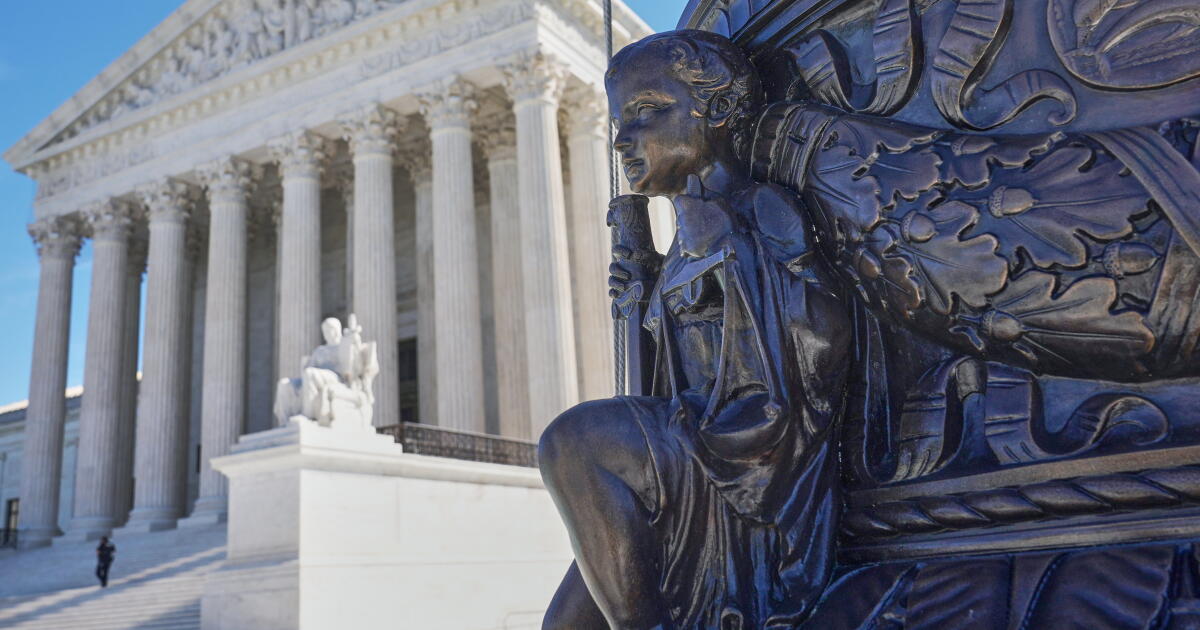
Divided Supreme Court weighs the right to seek asylum at the southern border

The Trump administration urged the Supreme Court on Tuesday to rule that it may block migrants from applying for asylum at ports of entry along the southern border.

The administration’s lawyers argued that the right to asylum, which arose in response to Nazi Germany and the Holocaust, does not extend to those who are stopped just short of a border post in California, Arizona or Texas.

They pointed to part of the immigration law that says a non-citizen who “arrives in the United States … may apply for asylum.”

“You can’t arrive in the United States while you’re still standing in Mexico. That should be the end of this case,” Vivek Suri, a Justice Department attorney, told the court.

Immigration rights advocates called this claim “perverse” and illogical. They said such a rule would encourage migrants to cross the border illegally rather than present themselves legally at a border post.

The justices sounded divided and a bit uncertain over how to proceed. But the conservative majority is nonetheless likely to uphold the administration’s broad power over immigration enforcement.

Several of the justices noted, however, the Trump administration is not currently enforcing a “remain in Mexico” policy.

Liberal Justices Sonia Sotomayor and Ketanji Brown Jackson questioned why the court would make a major decision on immigration and asylum with no immediate, practical impact.

The case posed a fundamental clash between the government’s need to manage surges at the border and the moral and historic right to offer asylum to those fleeing persecution.

In 1939, more than 900 Jewish refugees who were fleeing Nazi Germany aboard the MS St. Louis were turned away by Cuba and the United States. They were forced to return to Europe and more than 250 of them died in the Holocaust.

The worldwide moral reckoning spurred many nations, including the United States, to adopt new laws which offer protection to those fleeing persecution.

In the Refugee Act of 1980, Congress said that non-citizens either “physically present in the United States” or “at a land border or port of entry” may apply for asylum.

To be eligible for asylum, a non-citizen had to demonstrate a well-founded fear of persecution in their home country due to their race, religion, nationality, membership in a particular social group, or political opinion.

Only a small percentage of applicants win their asylum claims, and only after years of litigation.

But faced with overwhelming surge of migrants, the Obama administration in 2016 adopted a “metering” policy that required people to wait on the Mexican side of the border.

The Trump and Biden administrations maintained such policies for a time.

Immigrant rights advocates sued, contending the metering policy was illegal. They won before a federal judge in San Diego who ruled the migrants had a right to claim asylum.

In a 2-1 decision, the 9th Circuit Court of Appeals agreed in 2024.

“To ‘arrive’ means ‘to reach a destination,’” Judge Michelle Friedland wrote for the appeals court. “A person who presents herself to an official at the border has ‘arrived.’”

The Trump administration appealed.

Solicitor Gen. D. John Sauer said the “ordinary meaning of ‘arrives in’ refers to entering a specific place, not just coming close to it. An alien who is stopped in Mexico does not arrive in the United States.”

On Tuesday, the Justice Department attorney said the court should reverse the 9th Circuit and uphold the government’s broad power to block migrants approaching the border.

“I can’t predict the next border surge,” Suri said.

“For more than 45 years, Congress has guaranteed people arriving at our borders the right to seek asylum, consistent with our international treaty obligations,” said Kelsi Corkran, Supreme Court director of the Institute for Constitutional Advocacy and Protection, who argued the case. “Yet this administration believes that Congress gave it discretion to completely ignore those requirements, and turn back those who are seeking refuge from persecution at its whim.”

“The people turned away at our border are fleeing rape, torture, kidnapping, and death threats. You cannot tell families running for their lives to go back and wait in danger because their suffering is inconvenient,” said Nicole Elizabeth Ramos, border rights project directo at Al Otro Lado which was the plaintiff in the case. “We brought this case because the United States made a legal and moral commitment to protect people fleeing persecution.”

Source link

Keir Starmer’s policy on the Iran war is a recipe for catastrophe | US-Israel war on Iran

In March 2003, a million people took to the streets of London to oppose the illegal invasion of Iraq. Seeing straight through the lie that Iraq possessed weapons of mass destruction, protesters warned the British government in no uncertain terms: This action would trigger a spiral of misery, hatred and death.

More than 20 years on, most people now recognise the Iraq war for what it was: a catastrophic mistake that fuelled a string of subsequent conflicts and instability. The United Kingdom had followed the United States into an illegal war – and more than a million Iraqi men, women and children paid the price.

Unfortunately, not everybody has learned the lessons from the past. It has been almost a month since the US and Israel launched their attacks on Iran. More than 1,400 Iranians and more than 1,000 Lebanese people have been killed.

In seeking to justify the bombing, US President Donald Trump spoke of the need to eliminate “imminent threats from the Iranian regime”, whose “menacing activities directly endanger the United States, our troops, our bases overseas and our allies throughout the world”. He said the goal was to make sure Iran “will never have a nuclear weapon”. Sound familiar?

The first casualty of war is the truth, so let us get the facts straight: These are lies that have been peddled to justify an illegal and unprovoked war. As the National Counterterrorism Center Director, Joe Kent, said in his resignation letter last week, Iran “posed no imminent threat to our nation” and that it was “clear that [the US] started this war due to pressure from Israel and its powerful American lobby”.

There is only one nuclear-armed state in the Middle East: Israel. Next month’s UN Conference of the Parties to the Treaty on the Non-Proliferation of Nuclear Weapons would have been the perfect place to call for an end to the nuclear arms race. A diplomatic solution was possible, but the US and Israel chose war instead. In doing so, they have jeopardised the safety of humankind around the world. So, too, have those nations that have decided to lend support to their war of aggression.

Shortly after the attacks on Iran began, British Prime Minister Keir Starmer gave the US permission to use British military bases for strikes on Iranian missile sites. Last week, his government agreed to let the US use British bases to strike Iranian sites targeting the Strait of Hormuz.

The UK could have followed in the footsteps of Spain and said, “No way, absolutely not. We will not be involved in this illegal war in any way whatsoever.” Instead, it has dragged itself into another catastrophic conflict.

Astonishingly, the prime minister still maintains that the British government is not involved – a line that has been regurgitated by many across our media. He says the UK is allowing its sites to be used only for “defensive” strikes. What nonsense.

The reality is, if a bomber takes off from Royal Air Force base Fairford and bombs targets in Iran, we are involved in that act of aggression. If civilians die, will their families stop mourning when they are told that they were bombed for “defensive purposes”? No matter how Starmer dresses it up, he cannot change the truth: The UK is directly involved in this war.

Mark my words: This is a historic mistake that jeopardises the safety of us all. That’s why, earlier this month, I tabled a bill in the House of Commons that would require parliamentary approval for any British involvement in military action. That includes the use of British bases by other nations.

So far, the prime minister has refused to pass this legislation. With no debate, no discussion and no vote, he is dragging Britain into another disastrous illegal war.

Just like with the invasion of Iraq in 2003, today, those of us who oppose the war on Iran are accused of giving succour to authoritarian regimes and leaders. Whatever one thinks of the governments of various places, there is no basis in law for an attack to bring about regime change. There is no basis in history that bombing from the sky would bring about human rights either.

Trump couldn’t care less about people’s human rights. Whether it’s in Iran, Venezuela or Cuba, he is interested in one thing and one thing only: seizing resources and political control around the world.

If the UK cares about international law, it would be standing up to Trump, not bending over backwards to appease him.

The story of US-led foreign interventions is a story of chaos, instability and misery. How many more of these catastrophic failures do we need before we learn the lesson? And what will it take for the UK to finally defend a consistent, ethical foreign policy based on international law, sovereignty and peace?

The views expressed in this article are the author’s own and do not necessarily reflect Al Jazeera’s editorial stance.

Source link

Opposition leader criticizes probe, economic policy, Iran response

People Power Party leader Jang Dong-hyuk, front row center, and other participants take part in a ceremony launching the party’s Central Next-Generation Women’s Committee at the National Assembly Museum in Seoul on Sunday. Photo by Asia Today

March 23 (Asia Today) — People Power Party leader Jang Dong-hyuk on Sunday criticized a parliamentary probe plan led by the ruling party, along with the government’s real estate policy and its response to the Iran crisis.

Speaking at a party leadership meeting at the National Assembly, Jang questioned the need for an investigation into alleged prosecutorial misconduct during the previous administration.

“If a fabricated indictment can be proven through a parliamentary probe, it would be much faster to obtain an acquittal in court,” he said. “The investigation will ultimately only confirm that the prosecution and trial were justified.”

Jang also invoked remarks previously made by President Lee Jae-myung, saying, “If a president commits a crime, he should go to prison,” adding that he was “returning those words as they are.”

The conservative party boycotted the National Assembly plenary session a day earlier and held a protest rally outside the chamber. A brief confrontation occurred with ruling party lawmakers after the probe plan passed.

Jang criticized the government’s real estate policy, accusing the president of centralizing decision-making while excluding public officials from the process.

“By that logic, the president, who is facing multiple trials, should step away from judicial policy,” he said.

He also warned against expanding fiscal spending in response to the Iran crisis, citing concerns over inflation, exchange rates and rising oil prices.

“With a triple shock of high exchange rates, inflation and oil prices, releasing an additional 25 trillion won, about $18.7 billion, would push prices and the currency higher,” he said. “This is not the time for cash handouts but for stabilizing the economy.”

Floor leader Song Eon-seok echoed the criticism, accusing the administration of attempting to consolidate power and warning against what he described as excessive control over parliamentary committees.

— Reported by Asia Today; translated by UPI

© Asia Today. Unauthorized reproduction or redistribution prohibited.

Original Korean report: https://www.asiatoday.co.kr/kn/view.php?key=20260323010006783

Source link

Judge sides with New York Times in challenge to policy limiting reporters’ access to Pentagon

A federal judge agreed Friday to block the Trump administration from enforcing a policy limiting news reporters’ access to the Pentagon, agreeing with The New York Times that key portions of the new rules are unlawful.

U.S. District Judge Paul Friedman in Washington sided with the newspaper and ruled that the Pentagon policy illegally restricts the press credentials of reporters who walked out of the building rather than agree to the new rules.

The Times sued the Pentagon and Defense Secretary Pete Hegseth in December, claiming the credentialing policy violates the journalists’ constitutional rights to free speech and due process.

The current Pentagon press corps is comprised mostly of conservative outlets that agreed to the policy. Reporters from outlets that refused to consent to the new rules, including from the Associated Press, have continued reporting on the military.

Friedman, who was nominated to the bench by Democratic President Bill Clinton, said the policy “fails to provide fair notice of what routine, lawful journalistic practices will result in the denial, suspension, or revocation” of Pentagon press credentials. He ruled that it violates the First and Fifth amendment rights to free speech and due process.

“In sum, the Policy on its face makes any newsgathering and reporting not blessed by the Department a potential basis for the denial, suspension, or revocation of a journalist’s (credential),” he wrote. “It provides no way for journalists to know how they may do their jobs without losing their credentials.”

The Pentagon did not immediately respond to a request for comment on the ruling.

It has argued that the policy imposes “common sense” rules that protect the military from the disclosure of national security information.

“The goal of that process is to prevent those who pose a security risk from having broad access to American military headquarters,” government attorneys wrote.

Times attorneys claim the policy is designed to silence unfavorable press coverage of President Trump’s administration.

“The First Amendment flatly prohibits the government from granting itself the unbridled power to restrict speech because the mere existence of such arbitrary authority can lead to self-censorship,” they wrote.

Kunzelman writes for the Associated Press. AP writer Konstantin Toropin contributed to this report.

Source link

Long before Trump: How US policy has harmed the environment for decades | Climate Crisis News

Health and environment advocacy groups in the United States are suing the Environmental Protection Agency (EPA) over the Trump administration’s decision to withdraw a key 2009 climate change ruling known as the “endangerment finding”.

That finding had established that greenhouse gases are a risk to public health and environmental safety, given that they are the primary drivers of climate change. It formed the legal basis for many regulatory policies aimed at curbing climate change.

When US President Donald Trump, who has called climate change a “hoax” and a “con job”, rescinded the declaration in February this year, the EPA supported the move, deeming it the “single largest deregulatory action in US history”.

The lawsuit, filed on Wednesday this week, alleges that the Trump administration’s decision will risk the health and welfare of US citizens.

“Repealing the Endangerment Finding endangers all of us. People everywhere will face more pollution, higher costs, and thousands of avoidable deaths,” Peter Zalzal, the associate vice president of clean air strategies at the Environmental Defense Fund, one of the plaintiffs, said in a statement.

Trump’s revocation of the endangerment finding is the latest in a series of steps he has taken to prioritise deregulation, boost fossil fuel production and reverse climate regulations.

But Trump is not the first US president to enact policy damaging to the environment. Here’s how decades of US policy have harmed the environment before he arrived in the White House

What is the ‘endangerment finding’?

The endangerment finding was established under the presidency of Democrat Barack Obama. It states that carbon dioxide and other greenhouse gases pose a threat to public health and welfare.

That ruling allowed the EPA under President Obama to move forward on policy aimed at limit the release of greenhouse gases in the US, Michael Kraft, professor emeritus of political science and public and environmental affairs at the University of Wisconsin-Green Bay, told Al Jazeera.

Under the endangerment finding, power plants were required to meet federal limits on carbon emissions or risk being shut down. This forced oil and gas companies to invest more to detect and fix methane leaks, curb flaring, and improve tailpipe and fuel‑economy standards to enable automobile companies to manufacture more efficient, lower‑emitting vehicles.

What does rescinding it mean?

“By allowing for increased pollution, these recent changes [by the Trump administration] will harm practically every single person on the planet,” Washington, DC-based policy researcher Brett Heinz told Al Jazeera.

“People living near fossil fuel facilities will be some of the most immediately affected, as they will be exposed to the new air and water pollution unleashed by deregulatory policies,” Heinz added.

Without the endangerment finding in place, the EPA has lost a key legal basis on which to limit greenhouse gas emissions, making it easier for coal plants, oil refineries and petrochemical complexes to run older, dirtier equipment for longer, expand without installing modern pollution controls, and emit more soot, smog‑forming gases and toxic chemicals into nearby communities.

Heinz explained that higher greenhouse gas emissions from burning fossil fuels in power plants, cars and industry as well as continued deforestation will also amplify the dangers posed by natural disasters. This is because increased warming exacerbates heatwaves, storms, floods and droughts, and raises sea levels – all of which turn existing natural hazards into more frequent and more destructive disasters.

“The only people who will benefit from these decisions are a small handful of wealthy fossil fuel executives and shareholders, who will see healthy profits while the world grows sick. These fossil fuel elites, many of whom contributed money to Trump’s presidential campaign, have now gotten a return on this investment,” Heinz said.

Experts say that Trump’s decision to entirely do away with environmental policy is unlike any president before him.

“The White House’s tidal wave of new pro-pollution policies is completely unprecedented. While past administrations have modified environmental rules, the second Trump administration is essentially trying to eliminate them entirely. So far, this has been the most radically anti-environmental presidency in American history,” Heinz said.

How have previous US presidents endangered the environment?

Trump is by no means the first US president to enact policy which is damaging to the environment, however.

Under Republican Theodore Roosevelt, who was president from 1901 to 1909, Congress passed the Reclamation (Newlands) Act of 1902, which treated land and rivers primarily as raw material for large infrastructure projects rather than as ecosystems in need of protection.

This was furthered by Democrat Harry Truman, who was president from 1945 to 1953 and pushed for rapid post‑war industrial and suburban expansion by commissioning the construction of interstate highways and promoting car‑centric development.

Under Republican Dwight Eisenhower, who was president from 1953 to 1961, the interstate highway system burgeoned, and the private car became a developmental priority in the US.

While Republican Richard Nixon, who was president from 1969 to 1974, signed key environmental laws, he also backed massive fossil‑fuel expansion. Under Nixon, the highly toxic herbicide, known as Agent Orange, was used by the US military during the Vietnam War.

Republican Ronald Reagan, who was president from 1981 to 1989, appointed people to the EPA and the Department of Interior who pushed for expanded oil, gas, coal and timber extraction on public lands.

To facilitate this, they favoured deregulation and industry interests, and rolled back existing environmental policy, slashing budgets for EPA enforcement of the Clean Air and Clean Water Acts, easing rules on toxic emissions and pesticides, and opening up more federal land – including wilderness and wildlife habitat – to oil, gas, mining and logging activities.

Republican George W Bush, who was president from 2001 to 2009, refused to ratify the 1997 UN-backed emissions reductions Kyoto Protocol and actively undermined global climate negotiations by formally withdrawing US support for Kyoto in 2001, appointing senior officials who questioned climate science, and pushing voluntary, industry-friendly approaches instead of binding emissions cuts.

While Obama, who was president from 2009 to 2017, introduced several landmark climate regulations, he also oversaw the fracking boom, making the US the world’s largest oil and gas producer, and locking in long-term fossil infrastructure.

Fracking, or hydraulic fracturing, involves blasting water, sand and chemicals into shale rock to release oil and gas, a process believed to cause methane leaks, groundwater contamination, heavy water use and increased local air pollution.

Democrat Joe Biden, who was president from 2021 to 2024, approved large fossil projects such as the Willow project in Alaska. This involved oil development on federal land in the National Petroleum Reserve, projected to pump hundreds of millions of barrels of crude over several decades.

Figures released by the the US Bureau of Land Management (BLM) suggested that the project would release 239 million to 280 million tonnes of greenhouse gases over its lifetime. The project, approved in 2023 and ongoing, was projected to continue for 30 years.

Biden also backed LNG export growth by approving new and expanded export terminals and long‑term export licences, allowing companies to lock into multidecade contracts to ship US gas to Europe and Asia.

Is this a partisan issue?

No.

“The failure of US policymakers to aggressively tackle global warming is not so much a Democrat versus Republican matter,” Steinberg said.

“It’s neoliberalism, a form of corporate freedom, that is the heart of the problem. A bipartisan consensus on the need for economic growth has led to a general trend toward weakening environmental regulations,” he added.

The US once led the world in conservation by creating an extensive national park system in the 19th century, Ted Steinberg, a history professor at the US-based Case Western Reserve University, told Al Jazeera.

“That was then. US corporate interests, especially the fossil fuel industry, combined with the one-party political system, in which both Republicans and Democrats indenture themselves to the business class, have caused the United States to drag its feet on global warming,” Steinberg said.

What is the history of Washington’s impact on the environment?

The US has historically been the largest contributor to global warming, experts say.

“As in most countries, US environmental policy has been a response to the problems caused by industrialisation and urbanisation, starting in the mid-19th century and proceeding from there, happening at the local, state and national levels,” Chad Montrie, a history professor at the University of Massachusetts Lowell, told Al Jazeera.

“Much of that policy has been limited and inadequate, especially when corporations were able to exert their influence, but in some cases, it has been ahead of what other nations were doing,” Montrie, who specialises in environmental history, added.

There was a time when environmental policy was bipartisan. The EPA was, in fact, created by Republican President Richard Nixon in 1970.

“It wasn’t until the rise of pro-business politics in the 1980s that Republicans like President Reagan took a hard turn against environmental protections,” Heinz said.

“The Democratic Party continues to believe in environmental protection and climate-friendly policies to some degree, while the Republican Party has become one of the few political parties worldwide that completely denies the scientific facts around climate change.”

How does this affect the rest of the world?

“US policy often sets the standards for policy in other parts of the world, both because of its cultural influence and because of the control that the US has over global bodies like the International Monetary Fund,” Heinz said.

“Right now, the US is actively pushing dirty fossil fuels on the rest of the world and even threatening some of its allies for trying to negotiate new environmental agreements.”

Heinz explained that this pressure, coupled with soaring energy prices, seems to have convinced Europe to retreat from some of their climate goals. Household electricity prices jumped by about 20 percent across the European Union between 2021 and 2022, according to Eurostat data.

Heinz said that if the latest United Nations Climate Change Conference, or COP negotiations are any indication, global climate ambition appears to be on the decline right now.

The latest conference concluded in November 2025 in Brazil with a draft proposal which did not include a roadmap for transitioning away from fossil fuels, nor did it mention the term “fossil fuels” at all. This drew rebuke from several countries attending the conference.

“So long as Donald Trump remains in office, the hope of future generations relies upon the nations of the world coming together and acting responsibly to preserve a healthy environment at a time when the United States has gone truly mad.”

Source link

Schools left wondering how to proceed after ruling on transitioning students

The Supreme Court broke new ground this month when it ruled the Constitution forbids school policies in California that prevent parents from being told about their child’s gender transition at school.

But the reach of this new parental right remains unclear.

Does it mean all parents have a right to be informed if their child is using a new name and pronouns at school?

Or is the right limited to parents who inquire and object to being “shut out of participation in decisions involving their children’s mental health,” as the high court said in Mirabelli vs. Bonta.

Both sides in this legal battle accuse the other of creating confusion and uncertainty. And that dispute has not subsided.

UC Davis law professor Aaron Tang says understanding the Supreme Court’s order calls for a close reading of the statewide injunction handed down by U.S. District Judge Roger Benitez in San Diego.

That order prohibits school employees from “misleading” or “lying” to parents. It did not say school officials and teachers had a duty to contact parents whenever they saw that a student changed their appearance or used a new name, he said.

By clearing this order to take effect, the Supreme Court’s decision “means that schools must tell parents the truth about their child’s gender presentation at school if the parents request that information,” Tang said.

“But the initial burden is on the parents. This is not a rule that schools have an affirmative obligation to inform any and all parents if their child is presenting as a different gender,” he said.

The high court’s 6-3 order also indicated the reach of the judge’s injunction was limited.

It “does not provide relief for all the parents of California public school students, but only those parents who object to the challenged policies or seek religious injunctions.”

Religious conservatives who sued say they seek to end “secret transition” policies that encourage students to adopt a new gender identity without their parents knowing about the change.

The lawsuit challenging California’s “parental exclusion” policies was first filed by two teachers in Escondido.

Peter Breen, an attorney for the Thomas More Society, said many of the parents in Escondido “had no clue” their children were undergoing a gender transition at school.

“We need to activate parents,” he said.

Ruling for them, Benitez said the state’s “parental exclusion policies are designed to create a zone of secrecy around a school student who expresses gender incongruity.”

His injunction also said schools must notify their employees that “parents and guardians have a federal constitutional right to be informed if their public school child expresses gender incongruence.”

The Supreme Court’s order cited a dramatic example of nondisclosure.

Two parents who joined the suit had gone to parent-teacher meetings and learned only after their eighth-grade daughter attempted suicide that she had been presenting as a boy at school and suffered from gender dysphoria.

John Bursch, an attorney for Alliance Defending Freedom, argues the Supreme Court’s opinion goes further to empower parents.

“Fairly read, the Mirabelli opinion creates an affirmative obligation on school officials to disclose,” he said. “It’s consistent with the way [the court] describes the parental right: ‘the right not to be shut out of participation in decisions regarding their children’s mental health.’ School officials’ silence (rather than lying) is not notice to and is shutting out parents.”

“All that said, the California attorney general is obviously not getting that message,” Bursch said.

He said the Supreme Court needs to go beyond an emergency order and fully decide a case that squarely presents the issue of parents rights.

“School officials should not be socially transitioning children without parental notice and consent. Period,” he said.

He filed an appeal petition with the Supreme Court in a case from Massachusetts that dissenting Justice Elena Kagan described as a “carbon copy” of the California dispute.

It takes only four votes to grant review of a case, but since November, the justices have repeatedly considered the case of Foote vs. Ludlow and taken no action.

The case is set to be considered again on Friday in the court’s private conference.

Meanwhile, California Atty. Gen. Rob Bonta went back to the 9th Circuit Court of Appeals seeking a clarification to limit the potential sweep of Benitez’s order.

He objected to the part of the judge’s order that said schools must post a notice that “parents and guardians have a federal constitutional right to be informed if their public school student child expresses gender incongruence.”

Bonta said that goes beyond what the Supreme Court approved.

This “could be understood to suggest that public school officials have an affirmative constitutional duty to inform parents whenever they observe a student’s expression of ‘gender incongruence,’ effectively imposing a mandatory ‘see something, say something’ obligation in all circumstances,” he said.

But the 9th Circuit said it would not act until he first presented this request to Benitez.

Meanwhile, transgender rights advocates say the voices and the views of students have been ignored.

“This case has been about states’ and parents’ rights but students have been left out of the conversation. Their voices have not been heard at all,” said Andrew Ortiz, an attorney for the Transgender Law Center. “School should be a place where young people can feel safe and confident they can confide in a teacher.”

“We’re hearing about fear and anxiety,” said Jorge Reyes Salinas, communications director for Equality California, the nation’s largest statewide LGBTQ+ civil rights organization.

“There are students who are unable to speak with their parents. Teachers can encourage them to have a conversation with their parents. But this will weaken the trust they have in their teachers,” he said.

In the past, the court had been wary of reaching into the public schools to decide on education policies and the curriculum, but it took a significant step in that direction last year.

In a Maryland case, the court said religious parents had a right to “opt out” their young children from classes that read “LGBTQ+-inclusive” storybooks.

The 1st Amendment protects the “free exercise of religion” and “government schools … may not place unconstitutional burdens on religious exercise,” wrote Justice Samuel A. Alito, the lone conservative who attended public schools.

The same 6-3 majority cited that precedent to block California school policies that protect the privacy of students and “conceal” information from inquiring parents if the student does not consent.

But the California case went beyond the religious-rights issue in the Maryland “opt out” case because it included a “subclass of parents” who objected without citing religion as the reason.

The justices ruled for them as a matter of parents’ rights.

“Parents — not the state — have primary authority with respect to the upbringing and education of children,” the court said.

That simple assertion touches on a sensitive issue for both the conservative and liberal wings of the court. It rests on the 14th Amendment’s clause that says no state may “deprive any person of life, liberty or property without due process of law.”

In the past, a liberal majority held that the protection for “liberty” included rights to contraceptives, abortion and same-sex marriages.

Conservatives fiercely objected to what was dubbed “substantive due process.”

In the California case, Kagan, speaking for the liberals in dissent, tweaked the conservatives for recognizing a new constitutional right without saying where it came from.

“Anyone remotely familiar with recent debates in constitutional law will understand why: Substantive due process has not been of late in the good graces of this Court — and especially of the Members of today’s majority,” she wrote.

She noted that when the court struck down the right to abortion in the Dobbs case, Justice Clarence Thomas said he would go further and strike down all the rights that rest on “substantive due process.”

In response to Kagan, Justice Amy Coney Barrett filed a concurring opinion that staked out a moderate conservative position.

Since 1997, the court has said it would stand behind rights that were “deeply rooted in the nation’s history and tradition,” she wrote. That includes “a parent’s right to raise her child … and the right to participate in significant decisions about her child’s mental health.”

She said California’s “non-disclosure policy” is unconstitutional and violates the rights of parent because it applies “even if parents expressly ask for information about their child’s gender identification,” she wrote.

Chief Justice John G. Roberts and Justice Brett M. Kavanaugh signed on to her opinion.

While Kagan dissented on procedural grounds, she did not disagree with bottom-line outcome.

“California’s policy, in depriving all parents of information critical to their children’s health and well-being, could have crossed the constitutional line,” she said. “And that would entitle the parents, at the end of the day, to relief.”

Source link