Four states are set to hold their primary votes, further solidifying the battle lines for the United States midterm elections in November.
On Tuesday, citizens in Maine, South Carolina, North Dakota and Nevada are set to cast their ballots in party primaries, designed to select which Democratic and Republican candidates advance to the final round of voting.
Recommended Stories
list of 3 itemsend of list
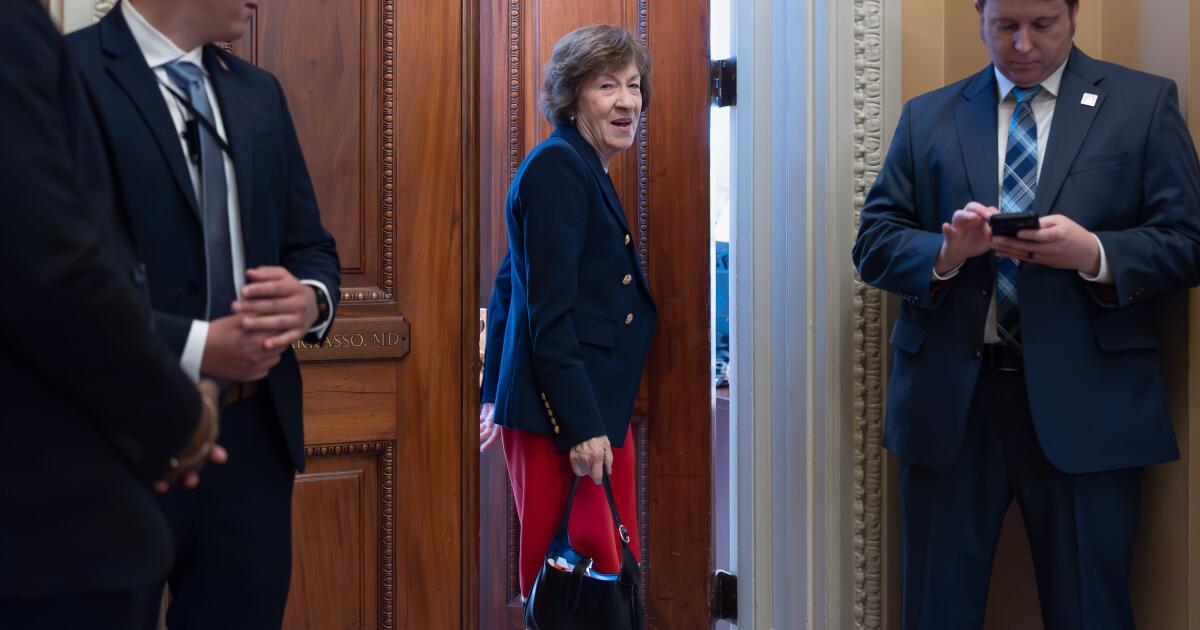
But Maine has emerged as one of the most heated primary battlegrounds. With Democrats desperate to flip four seats in the US Senate, all eyes are on Republican Senator Susan Collins’s re-election campaign.
Democrats are hoping to defeat her in November, but the party has fractured over controversies related to its leading candidate, Graham Platner. The race has become one of the most closely watched of the primary season.
At stake in November is control of Congress, and each party is angling to put forward the strongest contender.
Currently, the Republican Party holds slender majorities in both the Senate and the House of Representatives, but Democrats hope to wrest back control, in what would represent a major rebuke to President Donald Trump.
State-level races are also in play during Tuesday’s primaries. Several in key swing states like Nevada could have outsized influence over election administration in the years ahead.
Here are some of the key races to watch.
Key Senate race in Maine to be decided
The Democratic Party’s long-shot hope of retaking the Senate hinges on Maine, a lushly forested northeastern state largely bordered by Canada and the Atlantic Ocean.
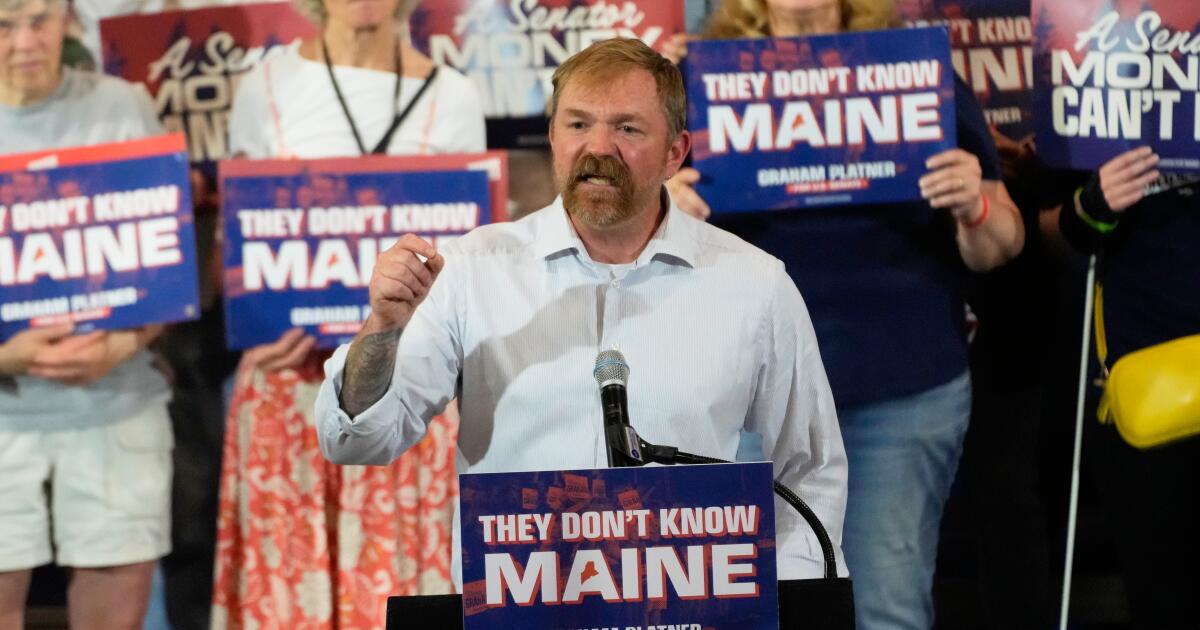
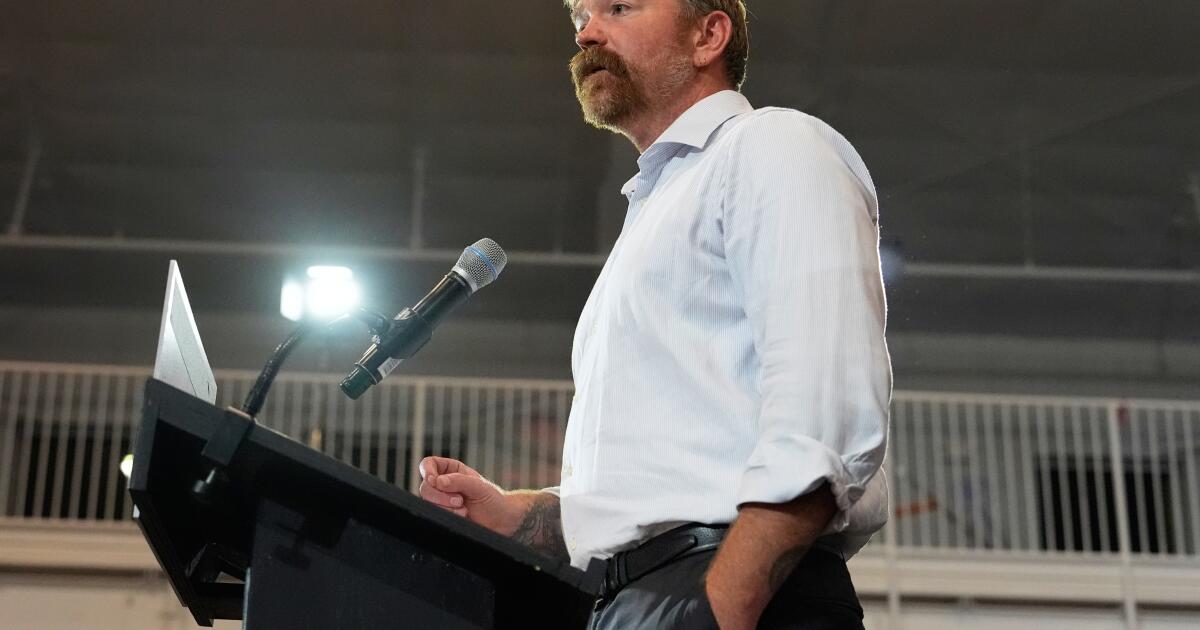
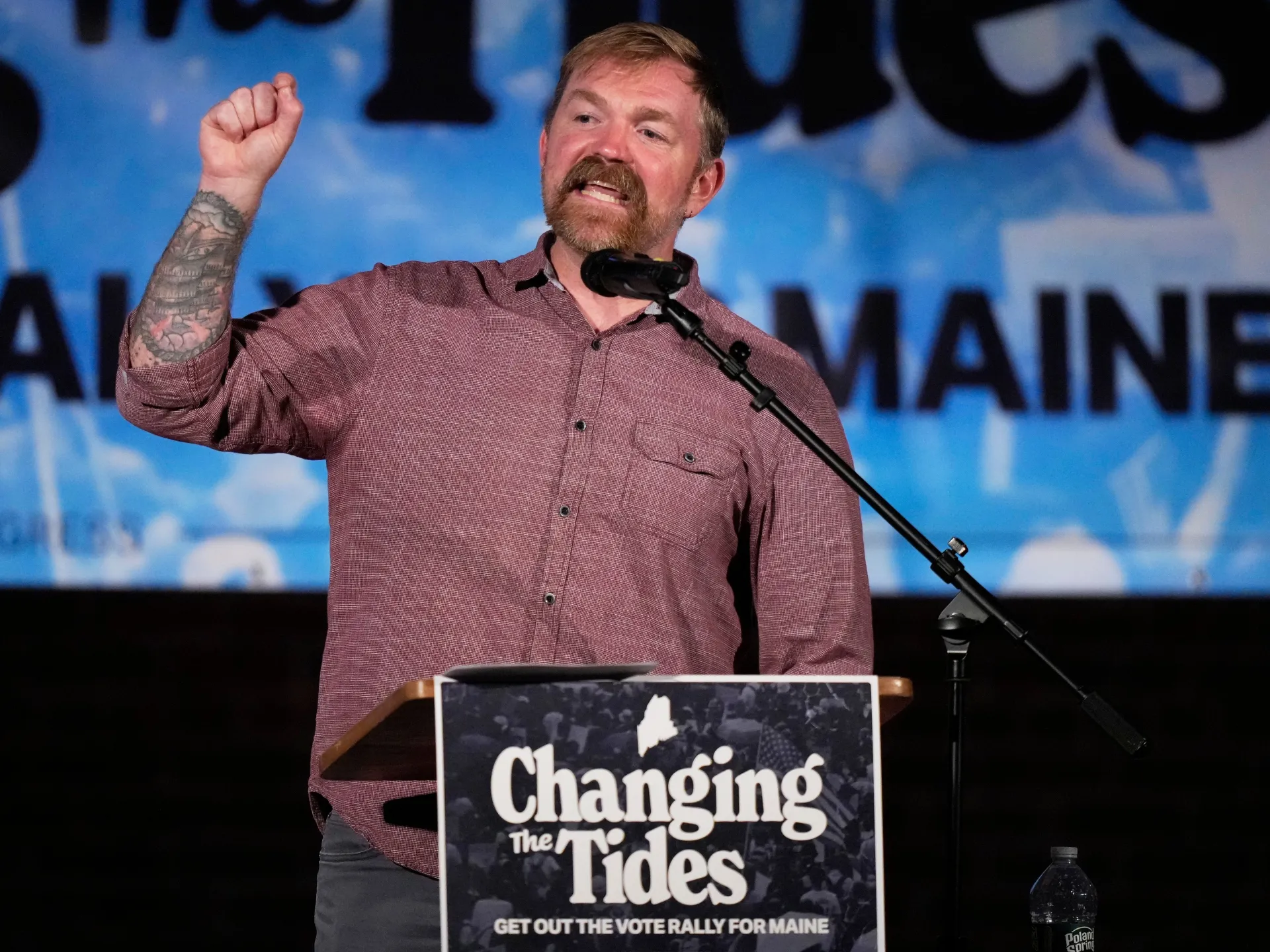
The primary vote on Tuesday is widely expected to result in Platner advancing as the Democratic champion for November’s midterms. If so, he will take on the longtime incumbent, Republican Senator Collins, who is considered vulnerable to defeat.
Polls have consistently shown the 41-year-old progressive narrowly defeating Collins in the midterm in November.
Platner has appealed to left-wing voters with his positions in favour of universal healthcare and ending US support for Israel. But a slate of recent reports about his past relationships has threatened to chill the enthusiasm for his campaign.
An oyster farmer and former US Marine, Platner has faced accusations of “unsettling” behaviour towards women, including an alleged incident where he twisted one romantic partner’s arm. Platner has denied that allegation.
He has also permanently removed a skull-and-bones tattoo that critics likened to a Nazi symbol, saying he did not know its source.
Still, in Tuesday’s primary, Platner is expected to handily beat his closest Democratic rivals: environmental consultant David Costello and Governor Janet Mills, who will remain on the ballot despite announcing her withdrawal from the race.
Contests for Maine’s House and governor seats
But Maine boasts other nationally significant races, too. That includes the contest for the House seat left open after Democratic Representative Jared Golden announced he would not run for re-election.
Golden has represented Maine’s 2nd congressional district since 2019, and he has proven adept at retaining support, even though his coastal district leans conservative.
If Republicans pick up his seat, it would be a boon to the party’s effort to maintain control of the House. Former Republican Governor Paul LePage is running uncontested in his party’s primary to replace Golden.
Four Democrats, meanwhile, are competing in their party primary to take him on.
They include state Senator Joe Baldacci, state auditor Matthew Dunlap, social worker Paige Loud, and congressional staffer Jordan Wood. All four have charted a more leftward course than the outgoing lawmaker.
Maine’s governor’s race is also open, with Mills, a Democrat, leaving her post at the end of the year due to term limits.
The chance to win the governor’s mansion in November has attracted a crowded field to both party primaries. Each race features notable political scions.
On the left, there is Angus King III, whose father currently represents the state in the US Senate, as well as Hannah Pingree, the daughter of a current member of Congress. Running on the right is healthcare executive Jonathan Bush, a cousin of former President George W Bush.
Election administration looms large in Nevada
Nevada has remained a deeply purple state in recent years, leaning neither left nor right.
Democratic presidential contenders have narrowly won the state from 2008 to 2020, but President Donald Trump broke the streak in 2024, carrying just over 50 percent of the vote.
A staggering 45 percent of Nevada’s voters are registered as independents. That means they hold outsized sway in November’s midterm vote, but they will not be able to cast a ballot in Tuesday’s closed primaries, which are limited to party members only.
The sprawling western state is home to about 3.2 million residents. In the middle of its desert landscape sits Las Vegas, a global gambling and entertainment destination.
But the state has become a political football, in part because of its narrow partisan divide.
Trump and his allies have targeted the state by spreading false claims of election fraud in the wake of the Republican leader’s 2020 election defeat. Those assertions led him to clash with state Attorney General Aaron Ford, who pledged to defend his state’s election integrity.
Now, Ford is currently leading a crowded Democratic field to take on Republican incumbent Joe Lambardo for the governor’s mansion. Polls have shown Washoe County Commissioner Alexis Hill as his top challenger in the Democratic primary.
Lombardo — who has broken state records for his use of vetoes — also faces a deep bench of Republican challengers, but he is expected to skate to an easy victory on Tuesday.
Another key state position is up for grabs this November: Nevada’s secretary of state.
Like Ford, the role’s current occupant, Francisco Aguilar, is a vocal critic of Trump’s efforts to assert more federal control over election administration.
He is running unopposed on the Democratic side, so he automatically advances to November’s general election.
Four Republicans are running to challenge Aguilar, including Jim Marchant, a former state assemblyman who supported Trump’s unfounded claims that the 2020 election was stolen.
Another top primary contender is lawyer Shirley Folkins-Roberts, who has been endorsed by the state’s Republican governor.
On the national level, Nevada has four total seats in the House of Representatives. Three are currently held by Democrats, and one by a Republican.
On Tuesday, Republicans will select their challengers in a bid to unseat the Democratic incumbents, all of whom are running for re-election.
Meanwhile, the retirement of Republican Representative Mark Amodei has sparked hope that Democrats might, for the first time ever, win the state’s 2nd congressional district.
Eight Democrats are vying to be their party’s champion, while 13 candidates are running on the Republican side.
Democrats eye long-shot flip in South Carolina
Since last year, the Trump administration has led a controversial redistricting drive, pushing Republican-led states to redraw their congressional districts to better favour the party.
But last month, lawmakers in South Carolina chose not to pursue a redistricting plan — at least, not yet. Part of the reason came down to Tuesday’s primaries.
Thousands of voters cast their ballots last month as part of an early-voting campaign encouraged by Democrats. Any last-minute redistricting would have required throwing out those votes.
That has, for now, protected the majority Black district of longtime Representative Jim Clyburn, the only Democrat representing South Carolina in the House.
South Carolina, a southern, coastal state home to 5.5 million people, is considered rightward-leaning. But Democrats are seeking to defend their House seat in November’s midterms — and maybe pick up a second.
In Tuesday’s primaries, the 85-year-old Clyburn is expected to sail to victory against a long-shot Democratic challenger. He is all but assured to win in November as well, given his district’s reputation as a Democratic stronghold.
Democrats have also set their sights on flipping South Carolina’s 1st district, with Republican Nancy Mace vacating her seat to run for governor. Seven candidates are running in the Democratic primary race for the coastal district, while 10 Republicans will compete in their party primary.
One Senate seat will also be on Tuesday’s primary ballot: the one held by Republican Lindsey Graham. Despite several challengers, polls show the incumbent with a commanding lead.
Graham, a close Trump ally and a notable war hawk, has been one of Congress’s most vocal supporters of the US-Israel war on Iran.
This year, due to term limits, Governor Henry McMaster is unable to run for re-election. Given that South Carolina is a solidly red state overall, whoever wins Tuesday’s Republican primary is expected to coast to victory in November.
Recent polls have shown a tight race. Trump has endorsed Lieutenant Governor Pamela Evette, but surveys show her neck and neck with state Attorney General Alan Wilson and Congresswoman Mace, who has at times broken with Trump over issues like the Iran war.
North Dakota’s lone congressional district
Primary day in the Great Plains state of North Dakota is expected to make few waves nationally.
Neither the governor nor the state’s two senators are up for re-election.
Political observers are expecting few surprises. North Dakota has been a Republican stronghold since the late 1960s.
The 435 seats in the US House are distributed among states based on their population size. But since North Dakota has only about 800,000 people, it has just one congressional district.
During Tuesday’s Republican primary, incumbent Representative Julie Fedorchak will seek to ward off a challenge from former State Department project manager Alex Balazs.
Democrat Trygve Hammer, meanwhile, is running unopposed in his party’s primary.