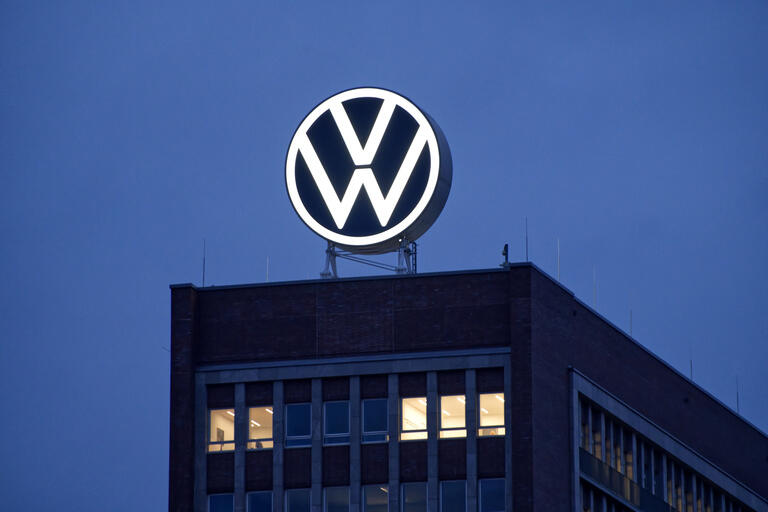
President Trump said Saturday that Volkswagen’s (VWAGY) (VLKAF) Audi subsidiary plans to build a $4.2B assembly plant in Georgia that will produce 200K SUVs annually.
Volkswagen (VWAGY) (VLKAF) will build the new plant in Macon, Georgia, to manufacture the Audi
Sheikh Mohammed also discussed Israeli ‘violations’ in Lebanese territory with Prime Minister Nawaf Salam.
Published On 16 Oct 202616 Oct 2026
Qatar’s prime minister has announced plans to set up what he described as a “massive” solar plant in Lebanon to help ease its energy crisis.
Sheikh Mohammed bin Abdulrahman bin Jassim Al Thani made the announcement during his visit to Beirut on Friday, after meeting his Lebanese counterpart, Nawaf Salam.
Recommended Stories
list of 3 itemsend of list
“We have agreed to establish a comprehensive framework for cooperation in the energy sector and to present viable solutions,” Sheikh Mohammed said.
QatarEnergy has reached an agreement with French company TotalEnergies to jointly develop a solar power plant in Lebanon as an initial project.
The aim is to develop a major investment project “that would benefit the Lebanese economy, as well as the Qatari companies and entities participating in it”, he added.
Prime Minister Salam said he would put the plans for Lebanon’s electricity sector to the Lebanese Cabinet soon.
“The Qatari side will fund, implement and activate the project without any cost on the Lebanese state,” Lebanon’s leader said, adding that such a move is important because of the country’s financial crisis.
Lebanon’s state electricity company is one of the biggest sources of debt, haemorrhaging about $40bn over past decades with a bloated workforce and outdated infrastructure. The company provides only a few hours of electricity a day and the state, until a year ago, took advances from the Central Bank when diesel fuel ran out.
Sheikh Mohammed said Doha stands in “solidarity with the Lebanese people” and the entire region “in this dire hour”. Lebanon has been struggling with multiple energy crises in recent years and the situation has been compounded by the country’s financial collapse and Israel’s ongoing assault.
Earlier in the day, the Qatari PM also met Lebanon’s president and parliament speaker.
Among the topics discussed was the situation in southern Lebanon, where Israel continues its assault, capturing dozens of towns and villages.
Sheikh Mohammed said “Israeli violations within the Lebanese territories” were a large part of his talks.
He said that Israel should withdraw from Lebanon and cease its attacks, adding that Qatar is working in coordination with the United States to help lay the groundwork for future reconstruction in southern Lebanon to allow displaced people to return to their homes.
Israeli attacks on southern Lebanon have continued despite a ceasefire agreed in June. Under the agreement brokered by the US, the Lebanese government is to disarm Iran-backed Hezbollah. In return, Israeli forces will gradually withdraw from southern areas that they occupy. However, Hezbollah is not part of the agreement and has refused to disarm until Israel withdraws from the country.
Lebanese authorities say Israeli attacks have killed more than 4,300 people in the country since March. About 1.2 million people were also displaced in Lebanon at the height of the war.
Although most have returned home since the June ceasefire, more than 300,000 people remain displaced, according to the International Organization for Migration.
Lebanon’s PM Salam thanked Qatar for its “continuous” support during some of Lebanon’s “darkest hours”.
BHP (BHP) said Tuesday it agreed to divest the Kambalda nickel concentrator plant and a package of tenements and mineralization rights in Western Australia to Gold Fields (GFI) for an undisclosed sum.
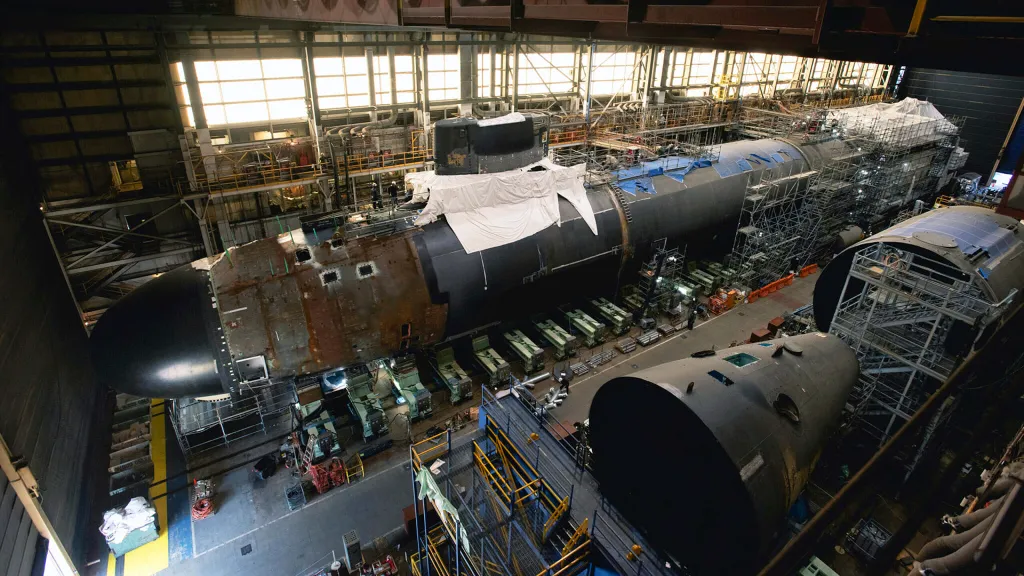
As part of its overall effort to boost America’s flagging shipbuilding capacity, the Trump administration on Tuesday announced that Anduril is building a new two-million-square-foot facility in Baltimore designed to help speed up the production of Virginia class nuclear-powered attack submarines. The plant, dubbed Arsenal-2, will eventually produce components like torpedo tubes and spherical air flasks, which will then be sent to the two shipyards that build nuclear submarines, General Dynamics Electric Boat and Huntington Ingalls Industries’ Newport News Shipbuilding. Anduril’s plan to build complex submarine components is a huge leap for a company with a shipbuilding portfolio consisting of a limited number of smaller craft.
The submarine component plant announcement was made as the Navy is struggling to keep up with its goal of producing two of these boats per year amid a wider issue of construction and delivery delays across the service. However, it will be years before the first Anduril-produced components are placed on a submarine, with no specific timelines for that effort yet established, an industry official told us. We will discuss that in greater detail later in this story.
A Virginia class submarine under construction. (HII) HII
“Today’s $6.6 billion investment represents the president’s commitment to restoring American maritime dominance by constructing new vessels in communities like Baltimore and across the country,” White House spokesperson Anna Kelly told a group of reporters, including from TWZ, at a Tuesday morning press conference.
Those funds include a $3.7 billion investment from Anduril to build and staff the new facility and a contract worth up to $2.9 billion awarded to Anduril by the Navy to produce the components.
“The Virginia class submarine program is one of the most critical warfighting capabilities that our nation has that guarantees deterrence every single day,” Anduril President and Chief Strategy Officer Chris Brose stated. “It is also a program that has been challenged in terms of the ability to meet the Navy’s requirements. So we’re, as a nation, not necessarily where we need to be, and that’s not because of our shipyard workers.”
The Navy currently has 26 Virginia class boats, with two more expected to be commissioned next spring, a senior administration official told reporters on Tuesday. Another 31 vessels are still needed to meet the Navy’s overall plan to have 59 Virginia class boats.
The USS Idaho (SSN 799) pulls into Submarine Base New London in Groton, Conn. for the first time on Monday, Dec. 15, 2025. When commissioned, it became the 26th Virginia class attack submarine and fifth U.S. Navy ship to be named for the Gem State. (U.S. Navy Photo by John Narewski) John Narewski
However, while the Navy has been buying them at a rate of two per year from Fiscal Year 2011 through Fiscal Year 2024, “the actual Virginia class production rate has never reached 2.0 boats per year, and since 2022 has been limited by shipyard and supplier firm workforce and supply chain challenges to about 1.1 to 1.2 boats per year, resulting in a growing backlog of boats procured but not yet built,” according to a Congressional Research Service (CRS) report published in January. “Key drivers of the drop in production include workforce challenges, first-time quality, material and supplier delays, and lead ship issues associated with the Virginia Payload Module [VPM] variant. The Navy is working closely with the shipbuilders to drive improvement throughout the Virginia enterprise.”
A briefing slide with details about the Virginia Payload Module (VPM) that will be added to the Block V Virginia class submarines. USN
Adding to the strain on production and delivery, Australia is set to get one new-build Virginia class boat and two from the U.S. Navy’s fleet under the 2021 trilateral AUKUS nuclear submarine acquisition deal with the United States and the United Kingdom.
In May, Chief of Naval Operations Adm. Daryl Caudle told Congress that the service would meet its two-boat-a-year delivery rate by 2032.
During Tuesday’s press conference, officials laid out claims that the new Anduril plant will address several of the issues that have slowed down the construction and delivery of these submarines.
“If you look at this in terms of capacity, the potential based on the area and what Anduril plans to do is to add about 9 million hours of labor a year at this facility,” stated a senior administration official, who, like others on Tuesday spoke on condition of anonymity. “That would be the equivalent of about a 15% increase, and so that would be directly translatable to Virginia class submarine production. So having those torpedo tubes earlier would let us move production of current Virginia submarines under construction faster.”
Adm. Frank Caldwell, Jr., director of the Naval Nuclear Propulsion Program, examines a torpedo tube aboard the Virginia class fast attack submarine USS Illinois (SSN 786) during Ice Exercise (ICEX) 2022. (U.S. Navy photo by Mass Communication Specialist 1st Class Alfred Coffield/Released) Petty Officer 1st Class Alfred Coffield
In addition, Anduril plans to draw on a huge potential workforce to staff the plant.
“If you basically draw like a one-hour radius around the Baltimore County area, there are millions and millions of people who could potentially contribute and work at this shipyard, and that is a huge selling point for us,” an industry official suggested.
The greater Baltimore area. (Google Earth)
Beyond producing components like torpedo tubes, Anduril aspires to eventually build “full ship sections, bows, sterns, etc.” at Arsenal-2, the industry official added.
Anduril said Arsenal-2 will be “purpose-built” for the “high-volume, high-precision production of undersea naval capabilities.”
“The shipyard’s layout is optimized for production,” the company stated in a media release. “Reduced distances between fabrication, assembly, testing, and integration areas eliminate the staging bottlenecks that slow conventional yards.”
“A functional 1,200-foot graving dock and multimodal road and rail access support large-scale component movement,” Anduril added. “High-bay assembly halls, adjacent fabrication areas, and reconfigurable production lines allow the yard to shift rapidly as Navy requirements evolve.”
ArsenalOS, Anduril’s industrial software platform, “will provide the digital backbone for the yard and its production systems,” the company further pointed out. “It will connect fabrication workflows, outfitting sequences, material movement, inspection protocols, and documentation requirements in a single system, giving workers and managers real-time visibility into the state of production. Digital work instructions, embedded quality controls, modern sensing, and automation will support the expertise of welders, pipefitters, electricians, shipfitters, inspectors, and other skilled trades.”
ArsenalOS™: The Digital Backbone of Modern Defense Manufacturing
Anduril claims the project “will create 3,100 direct jobs and support more than 11,000 indirect jobs. The site will drive $2 billion in annual economic output, including an estimated $312 million in wages each year.”
Before Arsenal-2 is up and running, Anduril said it plans to “manufacture critical Virginia class submarine components at a new 160,000-square-foot facility in Orange County, California, purpose-built to support key submarine construction processes and SUBSAFE-qualified production qualification [efforts].”
The Orange County facility will give Anduril “a two-year operational head start to develop and validate manufacturing methods, production workflows, and quality systems before Arsenal-2 comes online,” the company noted. “It will support prototyping and production of Virginia-class test assets and critical maritime components, including torpedo tubes, while allowing Anduril to recruit and train the early workforce on the systems and standards that will ultimately scale at Arsenal-2. Once Arsenal-2 comes online, the Orange County facility will continue supporting broader maritime manufacturing efforts across Anduril’s industrial network.”
Newly built Virginia-class submarine #Massachusetts launches for the first time #shorts
As we noted earlier in this piece, it will be years before anything produced by Anduril winds up on a sub. In addition to recruiting and training a workforce to build the components and ensuring the production system can meet goals, the parts then have to be tested to ensure they are safe enough to place on boats.
The industry official told TWZ that there is no schedule yet for when that will happen.
“We are starting this work now,” the industry official said. “We’re going to be working quickly. There’s a lot we’re going to have to do to prove the ability to produce the initial components – the torpedo tubes. We’re going to have to work with our partners in industry and partners in government on the certification. So it’s really not possible to put a time stamp on it as much as I’d like to.”
“I think our goal, and I know this is shared by the administration, is to go as fast as possible while keeping the bar of safety as high as it needs to be, and try to get these systems certified so that they go into the production of boats… and solve the critical limiting factor currently in our supply chain, and help our industry partners produce more submarines.”
Arsenal-2 follows the development of Anduril’s Arsenal-1 plant in Ohio, first announced two years ago. That five-million-square-foot facility, once fully up and running, will be able to “produce tens of thousands of autonomous weapons systems addressing the urgent needs of the United States and our allies,” the company said at the time.
Anduril’s Arsenal-1 plant in Ohio. (Anduril)
Arsenal-1, however, remains a work in progress, with more construction work yet to be done. Still, Anduril’s first product from that plant, the U.S. Air Force’s Collaborative Combat Aircraft (CCA) known as the YFQ-44A Fury, rolled off the assembly line there in July. That milestone met the company’s initial production schedule announced in January 2025, according to JobsOhio, the state’s business development arm.
A U.S. Air Force YFQ-44A Fury aircraft, assigned to the Collaborative Combat Aircraft Experimental Operation Unit, takes off for a mission flight during an Agile Combat Employment exercise at Creech Air Force Base, Nevada, July 21, 2026. (U.S. Air Force photo by Staff Sgt. Kristal Munguia) Staff Sgt. Kristal Munguia
Anduril, which also produces systems like the Ghost Shark extra-large autonomous undersea vehicle (in partnership with Australia), the Roadrunner reusable missile-like air vehicle, the Iris family of passive infrared sensors, and a wide range of other items, is playing a growing role in the Trump administration’s weapons development efforts.
Last month, Defense Secretary Pete Hegseth announced that Anduril co-founder Palmer Luckey, who made a name for himself and his fortune in the virtual reality space with Meta, will help lead a new program dubbed Project Meridian. The goal, according to a Pentagon memo, is to “map the trajectory of future warfare, identify critical capability gaps, and propose actionable solutions in furtherance of the identified goals in the 2026 National Security Science and Technology Strategy.”
The Pentagon’s Chief Technology Officer, Emil Michael, has been directed to set up this project. SpaceX founder Elon Musk and Newt Gingrich are other key members.
A screen capture from last month’s livestream of Secretary Hegseth’s speech announcing new plans for autonomous warfare capabilities. From left to right, Palmer Luckey, Newt Gingrich, and Elon Musk. U.S. Military capture
“The inclusion of Musk and Luckey does raise ethical questions, as they both lead companies with major U.S. government contracts already, and which could be in line to see more opportunities based on Project Meridian’s findings. What guardrails might be put in place to prevent conflicts of interest is unclear.”
Regardless of any such concerns, today’s shipyard announcement is a clear indication that the Trump administration and the Pentagon see Anduril as a major player across its weapons manufacturing industrial base. It’s also a reminder of just how challenging it is to actually expand America’s ability to build fighting vessels.
When Brandon Hurst first decided to sell his plants on TikTok Live in 2023, the 32-year-old Sylmar resident didn’t know what to expect. He said he thought he could sell at least 30 plants, but instead sold 250.
Now, three years later, the internet creator, who goes by Brandon the Plant Guy, sells up to 5,000 plants a week, works out of a 3,000-square-foot greenhouse in Sylmar and has a staff of 13. He credits much of this success to the exposure he’s received on TikTok.
“I’d be out of business if it wasn’t for TikTok,” said Hurst. “I would have ended the business and gone back to working the desk job that I was working prior. I was already on that path, that was where we were headed. And then TikTok really did turn that around.”
Hurst is one of the 920,000 California-based businesses using the social media platform to reach new customers and grow their brands, according to new data from consulting firm PF Global.
In 2025, TikTok helped generate $12 billion in advertising and merchandise sales for those businesses and supported 52,000 jobs in the state, said the PF Global report, which was commissioned by TikTok.
Nationwide, economic activity on TikTok last year helped contribute $81 billion to some 8.5 million U.S. businesses, the report said.
The surge in activity reflects a growing trend toward online commerce, as more small businesses and consumers turn to social media platforms like TikTok to buy and sell goods.
“We enable American culture, American creators, American businesses, to reach an audience around the world,” said Nicole Mason, TikTok’s head of U.S. public policy, said during a presentation on Wednesday morning.
The new report comes as TikTok is increasingly eager to tout its economic impact as a newly formed U.S. joint venture. In January, the company was taken over by three managing investors: Silver Lake, Oracle and Emirati investment firm MGX, each holding 15%, with ByteDance retaining 19.9% of investments. This transition came after TikTok’s Chinese parent company, ByteDance, was under pressure to divest its ownership in the app’s U.S. operations or face a nationwide ban, due to security concerns.
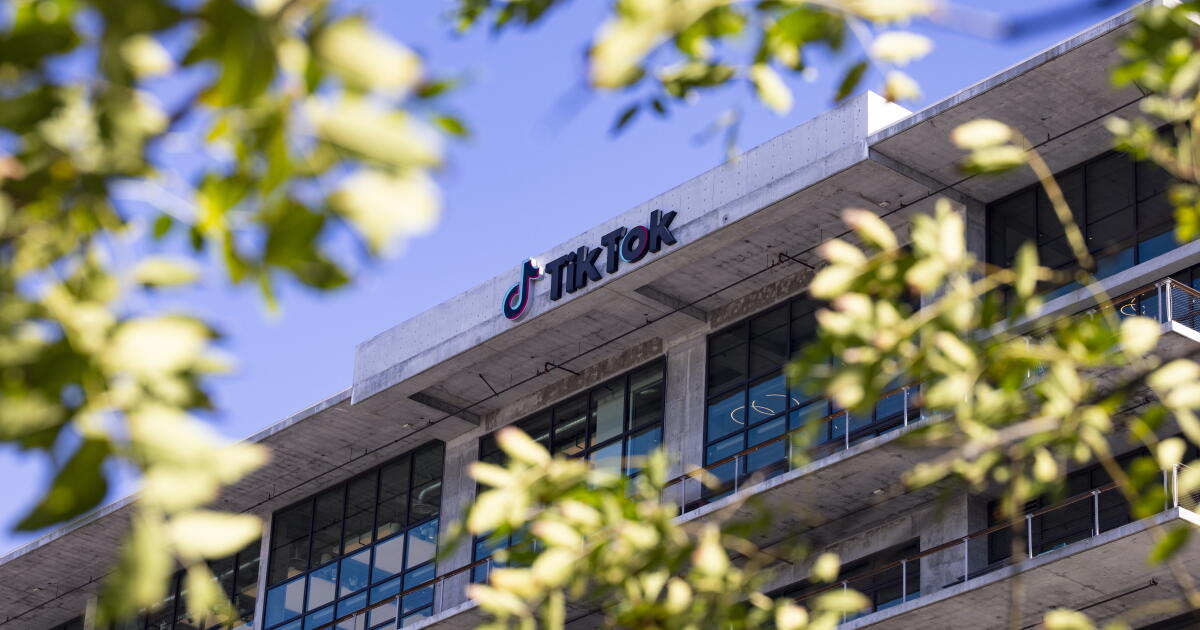
TikTok, which operates its U.S. headquarters in Culver City, where it employs several hundred workers, is mostly known for its viral, short-form vertical videos. But, over the years, the platform has become a hub of curated viral content and a central part of many businesses’ marketing strategies.
The app also has features like TikTok Live, where businesses can host live shopping events, and TikTok Shop, which serves as a direct-to-consumer online marketplace.
For its study, PF Global surveyed more than 11,000 adults in the U.S. and 5,000 businesses. The firm also conducted five case studies with U.S. small businesses and TikTok creators and interviewed over 600 people around the country. The data set combined that survey data with government statistics, industry research and TikTok’s own internal data.
PF Global recently published a similar economic report for the U.K. and is working on reports for 10 other European countries with TikTok.
Neil Ross, a partner at PF Global, said a common global theme is that TikTok users are more likely to see something on the platform and go out and do it.
“People around the world are using it as a kind of digital front door to work out where to go, what to shop, what experiences to have,” Ross said.
The U.S. report states that 27 million Americans “visited an independent shop, cafe or restaurant for the first time after seeing it on the platform.”
The app’s roots date to 2014, when an app called Musical.ly was launched in Shanghai. In 2016, Chinese tech company ByteDance launched a similar platform in China called Douyin.
As the apps grew in popularity, ByteDance picked up on their potential. It purchased Musical.ly in 2017 and combined all these platforms into one, named TikTok. Over the next few years, the app began its rapid ascent, hooking in users with a curated algorithm and viral trends. Today, 200 million Americans use TikTok every month, according to PF Global.
“On a daily basis, TikTok powers real economic impact across the United States, helping entrepreneurs grow their businesses, reach new customers, and create jobs across the country,” said Adam Presser, TikTok’s chief executive in a statement.