A Kalkan sunset is always a beautiful thing – the horseshoe-shaped bay deepening to azure blue against an apricot-rose sky – but, in October, when the light is low and the sun drops early, it’s almost transcendentally lovely. In some Turkish resorts, you’d be sitting watching it surrounded by quiet streets, half-empty bars and that melancholic sense that another season is over. In Kalkan, it still feels like summer; the harbourfront restaurants throng with visitors, the day gulets (wooden boats) still putter in and out of the bay and you don’t have to wait an hour to get a taxi back to your villa.
For me, the best thing about an autumn break – besides the sunsets – is that I can visit some of my favourite places that just get overrun in summer. The glittering beach at Kaputas, sandwiched into a triangular gap on the mountainous Kalkan-Kas road, has become a victim of Instagram; from May to September, it’s impossible to get near. In October, the waters are still warm and the beach – although still busy – has plenty of space for a dip and a laze.
About 20 minutes’ drive inland, the mountain village of Bezirgan, which used to serve as a summer retreat for wealthier Kalkan residents, settles back into complete peace in autumn, save for the woodpeckers battering away at the bark of the almond trees and the squirrels skittering through the leaves. The Lycian Way weaves through the village, past Ottoman-era grain stores, with the lush gardens of the Pirha Köy Sofrası restaurant a great bet for a plate of traditional manti (dumplings in yoghurt) or kofte (meatballs), before setting off for a hike (they do fantastic breakfasts too).
Back in Kalkan, it’s always cocktail hour somewhere; often on a roof terrace, with a jazz soundtrack floating out above the streets of the Old Town. This year, the Fountain Terrace Cocktail Bar has been popular, but I still love sitting in the Merkez Cafe, a Kalkan institution since the early 1990s, smack-bang in the heart of the village and a prime spot for people-watching when the evening begins.
The glittering beach at Kaputas near Kalkan. Photograph: daphnusia/Alamy
And because the season’s end is in sight, all the restaurant owners and waiters are cheerfully giddy, and the whole place swings with an end-of-term vibe. Sitting at the Blue Marlin (tucked away beneath the Pirat hotel) with a cold Efes beer and a selection of the town’s best meze, the only thing that makes me rueful is that it will be several months before I’ll be back here again.
The village of Agua Amarga, where Sexy Beast was filmed. Photograph: Juana Mari Moya/Getty Images
Along Spain’s wild Costa de Almería are a handful of exquisite little towns and villages. San José is probably the best known, put on the map by its most famous inhabitant, the late Joe Strummer, but 25 miles east is the real jewel of the Almería coast. Agua Amarga is a typical Andalucían fishing village moonlighting as a stylish low-key holiday destination, perfect for late-season sun-seekers.
Its location, on a crescent bay, makes for spectacular sunrises and sunsets over the arid headlands that bookend the 500-metre-long beach. In the narrow, whitewashed streets, a lush palm grove and splashes of pink bougainvillaea remind you that north Africa is just a short hop across the Mediterranean. In the summer, Agua Amarga’s unspoilt sands and turquoise waters attract plenty of visitors, but the vibe remains relaxed. There are a handful of restaurants and bars around the main plaza, and a few eateries on the beach, including Los Tarahis, a traditional chiringuito (beach bar) where you can enjoy dishes such as arroz negro con bogavante (black rice with lobster) with your toes in the sand. In winter, the town goes into hibernation, but in autumn the sun and sea are still warm and the bars and restaurants are still open for business.
Agua Amarga is not the place to go to party. It’s a world away from the overdeveloped costas to the west and north, but it is the perfect base to immerse yourself in nature. Hiking trails lead from the village over the cliffs to a string of isolated coves and the ruins of 18th-century forts dotted along the headlands. And if you tire of following the shimmering sea, you can strike out inland to explore the Cabo de Gata nature reserve, with its winding ramblas (dry riverbeds), prickly pears and eerie abandoned goldmines.
The sea by Agua Amarga is still warm in autumn. Photograph: Dronie_Spain/Shutterstock
This corner of Spain is famous for its movie locations, notably Sergio Leone’s spaghetti westerns and Hollywood blockbusters including Lawrence of Arabia and Conan the Barbarian. For UK cinephiles, British gangster classic Sexy Beast was filmed in Agua Amarga, and Ray Winstone’s swanky villa is available as a holiday rental (minus the boulder in the swimming pool).
The name Agua Amarga translates as “bitter water”, dating back to the 19th century and the contamination caused by mining iron ore. Those days are gone, and now Agua Amarga couldn’t be sweeter.
Cascais was once the summer retreat of Europe’s nobility. Photograph: Chunyip Wong/Getty Images
As many of Portugal’s southern resorts prepare to hibernate for winter, Cascais’s green-fingered municipal workers set to work on the town’s well-manicured flower beds, ensuring a seamless seasonal rotation. Violas, primroses and cyclamen furnish pops of purple, magenta and orange below tall palms lining a promenade punctuated with palatial homes and pockets of golden sand. Even in late autumn, the semi-tropical scene banishes the blues.
My happy place when the off-season rolls around, Cascais has enough energy and atmosphere to entertain, and is arguably at its finest after summer’s beach throngs and Lisbon day trippers (Cascais lies 20 miles west of the city, a 30- to 40-minute train ride from Cais do Sodré station) have receded.
Once the summer retreat of Europe’s nobility, Cascais is now Portugal’s year-round crowd-pleaser – and come autumn, accommodation prices are far less aristocratic. There are stately manors and spa hotels aplenty, but my pick is Casa Vela, a surprisingly spacious sidestreet bolthole. Its sauna, shrouded in tropical gardens imported by the owner and his grandfather, brings joy even on the chilliest days. And if rains do come, there are a clutch of cultural attractions in the town, including the pyramid-shaped, terracotta-hued Casa das Histórias Paula Rego, featuring works by the acclaimed Portuguese-British artist.
Still, with about 300 sunny days a year, Cascais’s main off-season pull is for those who like to be active outdoors. Blue-sky mornings see waterfront joggers pass pretty squares carpeted in black-and-white calçada portuguesa (the distinctive patterned pavement mosaics), the hulking 15th-century citadel, and a mustard-hued palace overlooking a cove. Swimming is bracing, but kayaking on the calmer waters where the Tagus River meets the Atlantic more than compensates.
Casa das Histórias Paula Rego in Cascais. Photograph: Witold Skrypczak/Alamy
Better still, hire a bicycle and trace the craggy coastline, which grows wilder as it arches north-west, with sheer cliffs appearing in the distant haze. Praia do Guincho is the star, a glorious dune-backed beach battered by winds that keep surfers of all stripes well sated.
A half-hour bus ride from Cascais, Sintra’s iconic palaces and quintas unfurl across the forest-clad mountains. Summer in the town will test your patience. But with fewer crowds in the off-season, the essence of this former elite enclave and trove of European Romantic architecture returns. Hiking the hewn stairs to the Moorish Castle in thick fog is magical, while the vibrant burgundy-and-yellow facade of the fairytale National Palace of Pena brightens the greyest of days.
As the nights start to draw in, you can chase the dwindling sunlight by heading to windswept Cabo da Roca at Portugal’s far western tip. Not only are the sunsets here spectacular, for much of autumn and winter they are the latest in mainland Europe – a sweetener for the shorter days.
Senigallia and its Velvet Beach. Photograph: Michal Szymel/Alamy
Velvet Beach (Spiaggia di Velluto) is the alluring name for the miles of fine sand that fringe the town of Senigallia, in Italy’s Marche region. But from May to September, that golden loveliness all but disappears under the umbrellas and sunbeds of beach clubs.
Italians love the place, some returning every summer for decades, but in high season it is probably best left to them. However, Senigallia has an allure beyond the beach that can be enjoyed year-round – and autumn is particularly rewarding.
It’s known in Italy as the “five-star town” for the number of Michelin stars its top two restaurants hold between them. At Uliassi (three stars) and Madonnina del Pescatore (two), ambitious locally born chefs have kept one another on their toes for decades, and their fame has encouraged other restaurateurs to up their game.
If Uliassi’s famous €280 tasting menu is beyond your budget, Senigallia has plenty of innovative, quality places that are more affordable. It’s hard to eat badly here, but fish fans will relish the exquisitely prepared raw stuff at Cuocodi Bordo (two courses from €34) on the seafront. The more rustic Rimante (two courses from €27), in the cobbled centre, offers super-friendly service, great pasta and a roast goose speciality. For pizza nights, nearby O’sarracin has superlative margheritas (€8.50) and tasty ragù-filled arancini to start.
Senigallia is renowned for seafood restaurants such as the Michelin-starred Madonnina del Pescatore. Photograph: Brambilla Serrani
Pizza al formaggio, by contrast, isn’t pizza at all, but a sort of savoury panettone, flavoured with parmesan and pecorino cheese, maybe with chunks oozing out of a warm slice. It’s usually an Easter treat, but bakery Pandefrà makes it from October until May. Autumn in Senigallia also brings amazing fresh produce (chestnuts, persimmons, grapes and pomegranates; pumpkins, greens and radicchio) to chefs and market stalls.
And, of course, it brings the olive harvest, with new oil to taste in local delis and at the Festa dell’Olio Nuovo (6-10 November) in Scapezzano, three miles inland, reached by a pleasant hour’s walk up the quiet Strada di Fontenuovo (there’s a bus back).
With so much eating, you do need to work up an appetite. Hiking the Heron Trail along the Misa River will help, and offers downy oaks in their autumn finery, but the best walk for me starts at the splendid Rotonda a Mare gallery on its 1930s pier, heads inland on quiet lanes to Gabriella and Montignano villages, then descends to the coast for a sunset stroll back along that – now peaceful – Velvet Beach.
Saint-Jean-de-Luz holds on to the warmth of summer a little longer than the rest of France’s west coast. Photograph: Mehdi33300/Alamy
Tucked away in the corner of France just before the Basque coast runs into Spain, Saint-Jean-de-Luz hangs on to the warmth of summer a little longer than the rest of the west coast. Its enticing crescent beach is sheltered by two headlands and so, as the Atlantic crashes against the rest of the coast, you can dig your toes into the golden sand as the sea gently laps the shore and truly feel as if you’ve escaped the world.
The town makes for a great introduction to the French Basque Country, with its traditional red or green timber-framed architecture, adorned in many cases with strings of the local espelette chilli pepper – its gentle heat infuses many of the local dishes. Pick up a pot at the local market hall, which is a good place to find other hero products of the local cuisine, such as Ossau-Iraty cheese and black cherry jam.
Elsewhere, the patisserie Maison Adam is the place to find the local almond macaron called the pare gabea (it means incomparable in Basque), which was first made in 1660 to celebrate the marriage of King Louis XIV and Marie-Thérèse of Spain. Their nuptials took place just round the corner at the Saint-Jean-de-Baptiste church – half-built at the time – which has an extraordinarily detailed gilt altarpiece that was installed in 1669, as well as a three-tiered gallery for the congregation. Meanwhile, a votive ship hanging from the ceiling is a nod to the town’s close relationship to the sea, with small fishing boats departing the neat harbour to fish for hake, a local speciality.
You can venture out on to the seas too, with a boat trip on the small cruiser Nivelle V (€20), which goes along the coast towards Spain, first passing the 17th-century cylindrical fort at Socoa and its sea wall that juts across the bay. As you cruise past the Flysch cliffs, which look like layers of diagonally stacked cardboard, you might spot a few silver flying fish jumping out of the steely blue Atlantic.
The neighbouring village of Ciboure. Photograph: Andia/Alamy
On arrival back at port, take the short walk across the bridge that spans the River Nivelle to the neighbouring village of Ciboure. It’s a warren of red and green Basque townhouses that overlook narrow streets winding up the hill. Between them sits the restaurant Chez Mattin (mains from €28), a local institution, where chef Michel Niquet serves his signature dish, ttorro, a fish stew that was invented by his grandfather.
If you’re already dreaming about your next getaway, then you’re in luck, as the best places for 2027 have been named by Lonely Planet, and there’s a lesser-known Spanish city that warrants attention
This article contains affiliate links, we will receive a commission on any sales we generate from it. Learn more
A beautiful Spanish city has been named as the best place to visit in 2027, and its blissfully uncrowded (Image: Getty Images)
We’re all familiar with the Spanish hotspots of Madrid, Barcelona, Ibiza and Palma, but there’s a lesser-known destination worth putting on your radar. Often missed by tourists, Lonely Planet has hailed a Spanish city as the best place for 2027, with blissfully few crowds and free tapas under the Mediterranean sun.
It’s not too early to start thinking about your holiday plans for next year, and now just might be the best time, as Lonely Planet has released its ‘Best in Travel’ list, highlighting the top worldwide destinations to visit in 2027. Among their top 24, five underrated European spots made the list, including the beautiful city of León in Spain.
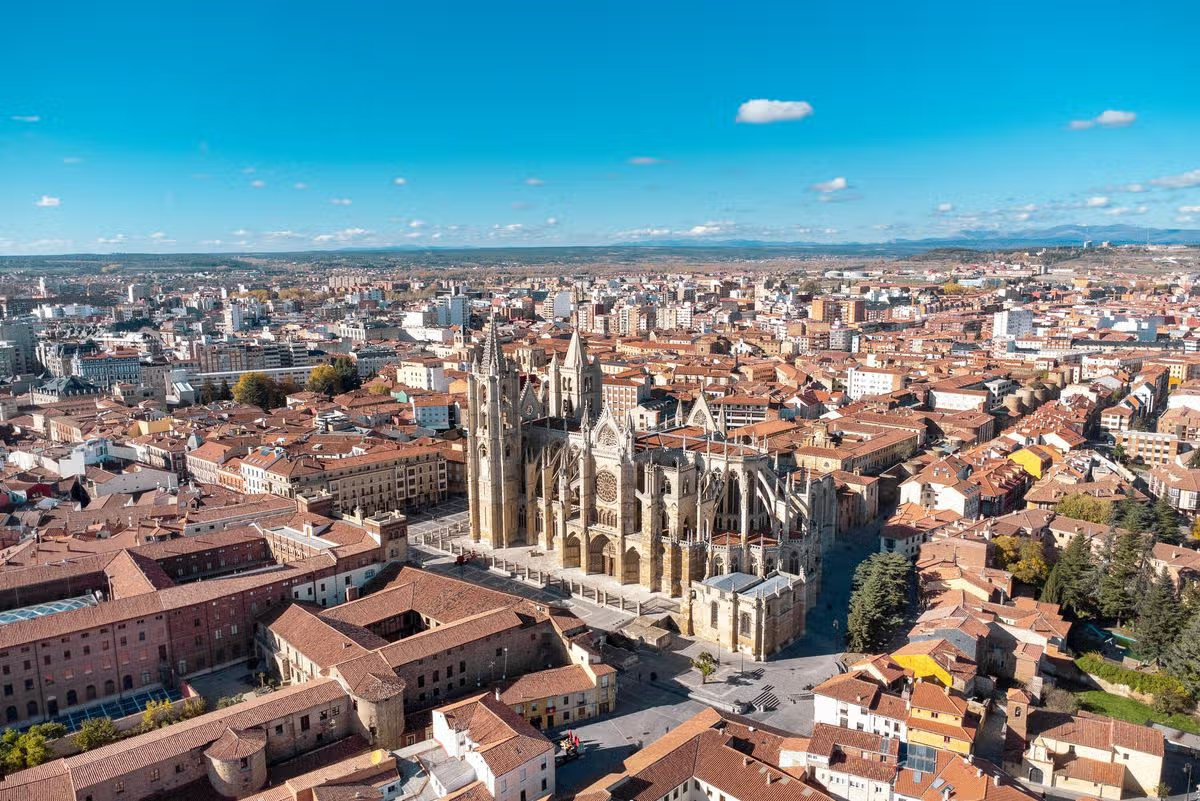
Sitting along the Bernesga River in northern Spain, León is brimming with whimsical architecture, a vibrant old quarter, and a welcoming free-tapas culture. Crowned as one of the best places to visit next year, Lonely Planet noted: “Located in northern Spain, off the traditional tourist radar, it is one of the country’s most evocative medieval cities, combining magnificent Gothic architecture, centuries of history and a lively contemporary spirit.”
Among its striking French-style Gothic landmarks is the majestic 13th-century León Cathedral, known as Pulchra Leonina, meaning ‘the Leonese beauty’ or ‘the House of Light’. It has more than 1,800 square meters of stained glass across 125 windows, along with intricate stone carvings and towering spires, leaving visitors in awe.
One traveller shared on TripAdvisor earlier this month: “This is an extraordinarily beautiful cathedral. The many stained glass windows create a unique ambience in the cathedral. It is an inspiring space for prayer. Take time to attend Mass so that you can just immerse in the beauty of the space.”
A second commented: “A real jewel in a city a little neglected by tourism. A Gothic marvel at the level of Reims Cathedral. And in addition to the splendid stained glass windows and an incredible atmosphere. The museum is also very rich. Worth the trip.” While one more exclaimed, “I think it’s the most spectacular cathedral I’ve ever seen. It’s worth paying to see.”
In the heart of the Spanish city sits the ancient Barrio Húmedo district, packed with more than 100 bars and a legendary free-tapas culture, where Leonese bars automatically serve a hearty free tapa, from croquetas and patatas bravas to stews, with every drink ordered, whether it’s a local wine or a small beer. The quarter comes alive with locals gathering for drinks and traditional Leonese cuisine, alongside a thriving nightlife scene.
Furthermore, the city is home to the Catholic church, the Basílica de San Isidoro, often referred to as the ‘Sistine Chapel of Romanesque art’, which is interestingly located on the site of an ancient Roman temple. The Casa Botines museum is another standout landmark with its fairy-tale design, and it houses a collection of Spanish art dating back to the 19th and 20th centuries.
Yet, there’s plenty to explore in León simply by wandering its narrow lanes and past medieval stone walls, with plenty of authentic espresso bars dotted around the city alongside trendy restaurants and cosy tapas bars serving up the best of Spanish cuisine. There are serene parks and gardens nestled along the river for gentle strolls and to soak up the sun during the warmer months, as well as outdoor terraces offering picturesque views over the unsung Spanish city.
Offering a closer insight into León, writer and traveller Mark Eveleigh told Lonely Planet: “By day, you’ll encounter a city with its roots firmly planted in the soil of northern Castilla, with its grand monuments, Catholic heritage and access to the Camino de Santiago. By night, León is taken over by a deep-into-the-night soundtrack of revelry that floods the narrow streets and plazas of the picturesque old quarter. Two cities in one.”
Do you have a travel story to share? Email webtravel@reachplc.com