Scientists, Black communities grapple with Trump funding cuts
People in a historically Black corner of Pittsburgh took memory tests, tracked their sleep and blood pressure and shared stories of their past to help scientists unravel risks for Alzheimer’s disease.
But they may never get answers. The study was among broader research into why Black Americans are twice as likely as their white peers to develop Alzheimer’s, but the Trump administration abruptly halted it in its final stretch.
Researchers say the move not only wasted more than $8 million in taxpayer money already spent but also is a blow to the hard-earned trust of anxious study participants who won’t even learn if their brain tests showed signs of trouble.
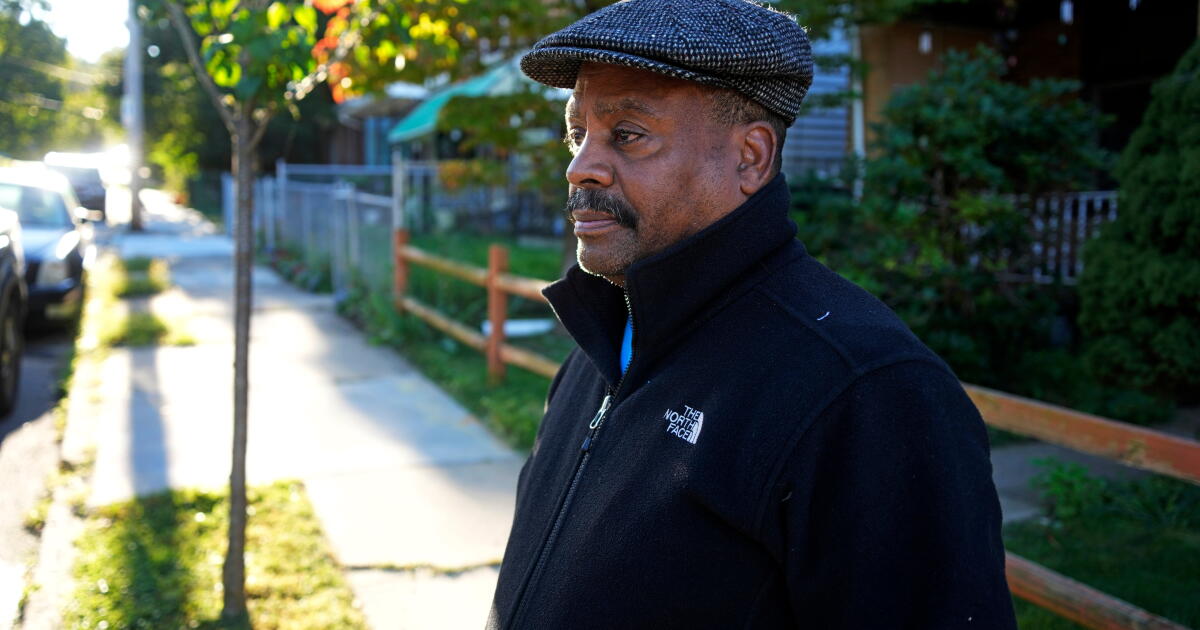
“The community will look like, ’Oh, they came in here, they took all our stuff, they checked us out. Now they’re gonna leave us hanging,’” said Roderick Blair, 70, who had participated in the study for four years.
Trust in U.S. health institutions has long been strained in the Black community, stemming from the nation’s long-standing racial health inequities, unequal access to care and bias within the nation’s medical system. The legacy of the Tuskegee study, which withheld treatment from Black men who had been infected with syphilis in the 1930s, still casts a shadow.
The Pittsburgh study overcame that mistrust. Getting people involved in the city’s Hill and Homewood communities helped get people talking about memory loss, dementia and Alzheimer’s and helped challenge misconceptions about it, according to La’Vette Wagner, the Pittsburgh study’s field coordinator.
Studies are mislabeled as ‘DEI’
Families who once dismissed memory loss as depression began asking about dementia, and people outside the study called her to ask whether family members could join, she said. More than half of Black Americans, or 55%, believe that a significant loss of memory or cognitive abilities is a natural part of aging rather than disease, according to the Alzheimer’s Assn.
As Blair said, “You start forgetting things and you start to wonder, do you have Alzheimer’s? You wonder, do you have dementia?”
Then the study, which had been near completion in its fifth and final year, was stripped of funding last year by the National Institutes of Health, on the grounds that it was “not science,” according to the study’s researchers, despite a rigorous review and vetting from a community advisory board.
“It wasn’t a Black study or a DEI study,” Wagner said. “It was something that was happening that was real.”
Similar terminations happened all over the country. Negar Fani, a neuropsychologist at Emory University in Atlanta, was two years into a five-year, $2.9-million project on how daily experiences of racial discrimination affect the brain and body of Black Americans when NIH terminated it in July.
While Fani tries to find the roughly $2.3 million she needs to complete the study, she and her team were left to try to explain the situation to participants who feel abandoned.
“It takes a lot to restore trust with the Black community, who has experienced so many different betrayals,” she said.
Like the Pittsburgh study’s funding, Fani’s grant had been terminated for being “not scientific” and “subjective” — after the study had been approved and had enrolled 66 of the 220 people it.
“It’s simply brain science research,” she said.
Fewer grants awarded for multiyear studies
In Pittsburgh, study lead researcher Andrea Rosso is one of numerous scientists in a recently filed lawsuit against NIH and its parent Department of Health and Human Services, one of a growing body of legal actions as the Trump administration continues to hunt for and halt medical grants with descriptions that include the words “disparities,” “minority” and “racial.”
Ann Cohen, a director of Pittsburgh’s Alzheimer’s Disease Research Center, also is part of that lawsuit after her separate, complementary study of Alzheimer’s risk also was halted — after spending $5.2 million over three years. She, too, has a troubling ethics problem: what to do with blood samples collected from the participants.
“You lose trust a hell of a lot faster than you build it,” she said.
A spokesperson for HHS said, “Massive amounts of DEI grants have failed to translate into better health outcomes for minority populations. Following President Trump’s directives, NIH is shifting money into rigorous research that will help Americans — including minority populations — live longer, healthier lives.”
This year, the NIH has awarded 2,000 fewer grants for multiyear studies worth a total of $200 million compared with 2025, according to an Assn. of American Medical Colleges report.
“It’s unprecedented. Many of the decisions are based on political biases and based on what politicians think is valuable rather than peer review processes, evidence-based decisions about where to invest our research dollars,” said Jill Rosenthal, the director of public health policy at the Center for American Progress.
“We’re wasting resources, we’re wasting the opportunity to identify cures for diseases,” she said.
Researchers in Pittsburgh are especially concerned that promises made to the community will remain unfulfilled. The study, 15 years in the making, would’ve helped identify participants at a higher risk for Alzheimer’s — and for potential doctor’s visits and care.
Now, Wagner said, the findings are “stuck on a shelf.” And worse, over a decade of trust built with study participants has been breached.
Blair, the study participant, said reinstating trust within their communities will be an uphill battle. “It’s going to take years to reestablish something that was moving pretty good,” he said.
Jiang writes for the Associated Press.