Gaza City – More than 80 percent of Gaza’s buildings have been damaged or destroyed since Israel launched its war on the besieged enclave in October 2023, according to the Palestinian Central Bureau of Statistics, turning whole neighbourhoods into rubble and wiping out much of its infrastructure.
For generations, Gaza’s streets, markets, schools, hospitals and public spaces formed the backdrop to everyday life. They were places where people worked, studied, shopped, met friends and family, and built memories.
Many of the city’s familiar landmarks also carried a much longer history, reflecting Gaza’s thousands of years as a crossroads of different civilisations.
The war has also changed the face of Gaza by damaging or destroying many of those historic and recognisable landmarks.
UNESCO has verified damage to 164 cultural sites since October 2023, including 128 buildings of historical or artistic interest, 14 religious sites, nine monuments, eight archaeological sites, two museums and three depositories of movable cultural property.
Among them are the Great Omari Mosque, Gaza’s oldest mosque, Qasr al-Basha, the ancient Samaritan Bathhouse, al-Qissariya Market and the Church of Saint Porphyrius complex.
Some of these places have been reduced to ruins, while others remain standing but heavily damaged. The destruction has altered not only individual buildings but the streets and neighbourhoods around them, removing landmarks that once helped people recognise and navigate their city.
This photo series contrasts archive images of some of Gaza’s most recognisable streets, markets and public buildings with new photographs taken three years into the war, showing how these familiar places have changed after years of bombardment and destruction.
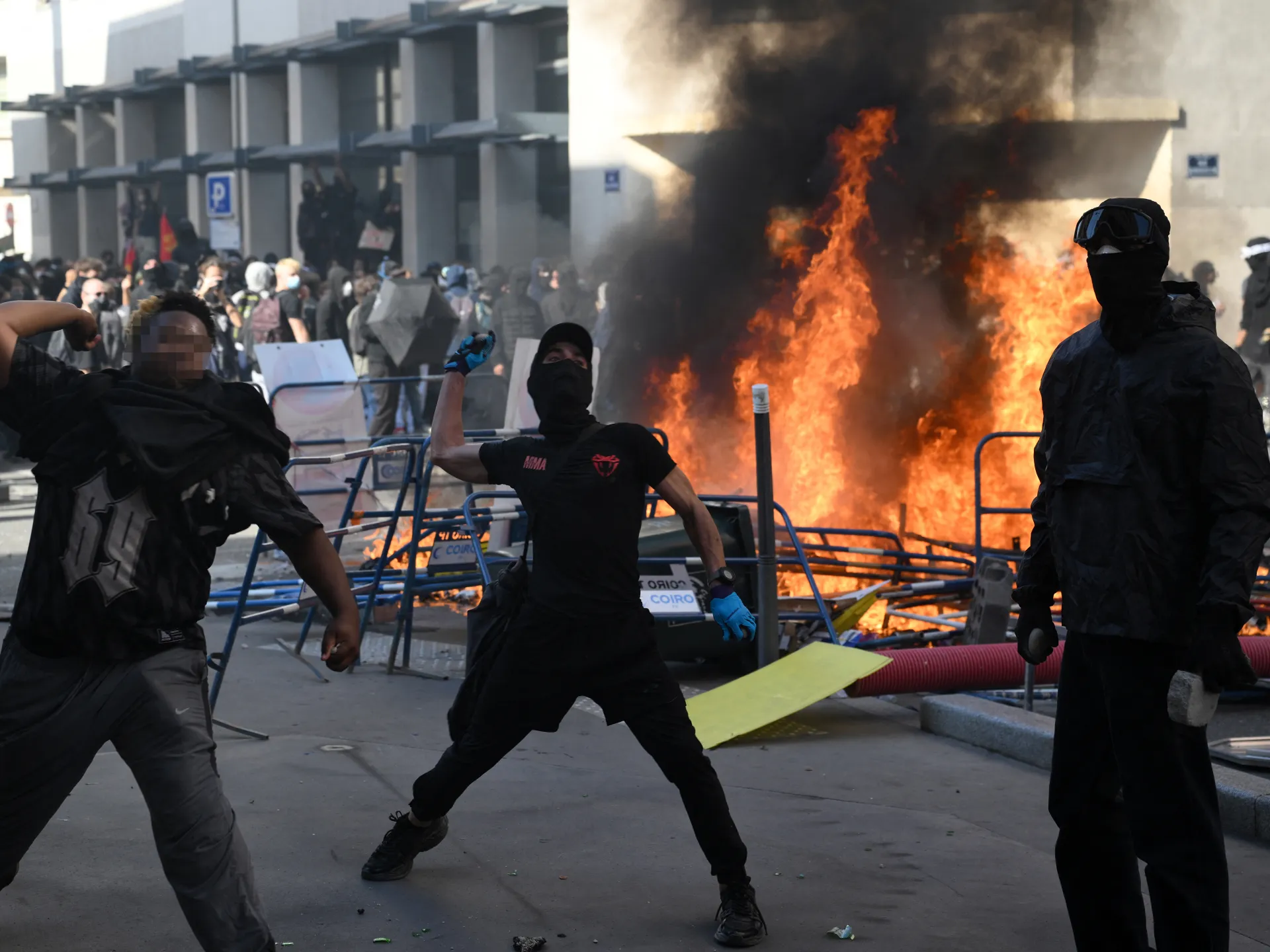
Tens of thousands have taken to the streets across France as unions and teachers joined high school students who, for days, have been demanding better learning conditions in protests punctuated by violent confrontations.
The French Ministry of the Interior said 86,000 people had already joined demonstrations across the country early on Tuesday, while the General Confederation of Labour (CGT) union put the figure at 260,000.
Students have blocked the entrances to hundreds of high schools since late September, complaining of missing teachers, overloaded timetables, dilapidated classrooms and buildings unable to cope with rising temperatures.
While many protests have been peaceful, some demonstrators have started fires, destroyed bus shelters or clashed with riot police.
Police have responded with batons, tear gas and riot-control rounds.
Injuries, investigations
The government says 215 students and 715 police officers have been injured since the start of the movement.
Unions, rights groups and students have accused the authorities of using disproportionate force.
A 15-year-old lost a hand to a stun grenade fired by riot officers in the northern town of Lens on Monday.
Police have launched 10 internal investigations into allegations of brutality since the protests began, Interior Minister Laurent Nunez said late on Monday.
Since the start of the movement, 24 schools have been burned or ransacked, according to the Ministry of Education.
More than 5,000 people, 87 percent of them minors, have been arrested.
Prime Minister Sebastien Lecornu’s office said 85 members of teaching staff have also been injured.
The government is also pushing legislation to make those responsible for damaging public property pay for repairs themselves, instead of using public funds.
Aden, Yemen – In this coastal city long accustomed to sweltering, humid summers, the absence of electricity can reshape an entire day.
When the power cuts out, fans and air conditioners fall silent. Sleep becomes difficult. Students race to finish their homework before darkness arrives. Children spill onto the streets while young men drift towards the sea in search of moving air and cooler waters.
Inside hospitals, where treatment cannot be postponed until the lights come back on, electricity carries a different weight altogether.
Yemen’s power crisis predates the current war. Even before the conflict, only about 55 percent of the population had access to electricity from all sources, which is among the lowest rates in the Middle East and North Africa.
Since 2015, damage to infrastructure, fuel shortages and ageing generation and distribution systems have left supplies even more fragile.
In Aden, power stations continue to face repeated shutdowns, leaving residents without electricity for long periods. Insurance premium increases on tankers carrying fuel to Aden have also reportedly made the crisis worse.
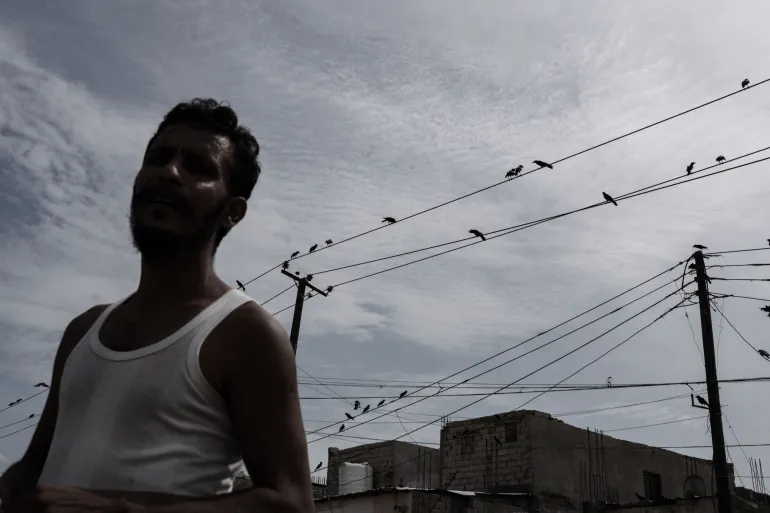
A man walks beneath a web of power lines in a neighbourhood in Aden, where long and frequent power cuts have become part of daily life. [Belal Khaled/Al Jazeera]
An assessment by the International Monetary Fund (IMF) published this year said Aden was receiving just two to six hours of electricity a day as structural weaknesses and fuel shortages caused frequent outages.
As the sun sets over the city, a second part of the day begins. Homes and businesses slip into darkness, punctuated only by small lights powered by batteries and solar systems. Residents often do not know how long the latest blackout will last, or how long the power will stay on once it comes back.
During the summer, when temperatures in Aden climb towards 40 degrees Celsius (104 degrees Fahrenheit), the consequences are hard to escape. Residents in the city interviewed in the middle of the year said their homes had become almost unbearable during the prolonged power cuts that plague the city. The heat does not always disappear when the sun goes down.
After the sun sets in Aden, most of the city falls into darkness with only scattered lights coming from devices powered by batteries or alternative energy systems. [Belal Khaled/Al Jazeera]
“Sometimes the power comes back while we are asleep, so we wake up to use it. Our lives have become tied to when electricity comes and goes,” one resident said. For her family, an outage is measured not just in hours but in problems. Children are unable to sleep, food spoils in warm refrigerators and housework must wait.
When the heat inside becomes too much, Youssef heads for the coast. The sea, he said, is no longer just a place of recreation but a refuge from the unbearable heat of the city.
“When the electricity is off for hours, it is very difficult to stay inside,” he said. “There is no fan and no air conditioning, and the humidity makes the heat worse, so we come to the sea.”
Towards the end of the day, young men and families gather along the waterfront. Some swim. Others simply sit beside the water and wait for the city to cool. But the sea cannot solve Aden’s electricity crisis. Hours later, Youssef returns home and sometimes finds the house exactly as he left it.
“Sometimes we get back and the power is still out, and we start waiting all over again,” he said.
For children like Mohammed, Saeed and Abdullah, blackouts have changed where childhood takes place. When their homes become too hot, they move into the street, running between houses or sitting with other children until late.
A child walks through a neighbourhood in Aden, where a generation has grown up knowing electricity as something that comes and goes rather than being a constant part of daily life. [Belal Khaled/Al Jazeera]
“It gets hot inside the house, so we come down and play in the street,” one of the boys said. “We play football or sit with our friends. Outside is better when the electricity is off.”
For them, a blackout is not an extraordinary event. It is part of the life they have grown up with.
The effects follow them into the classroom. In Aden, the United Nations Development Programme documented more than 7,000 students and teachers struggling in dark, stifling classrooms during power cuts. The installation of solar systems at eight schools and an education office has helped. One teacher reported that some students had fainted due to the heat.
At home, preparing for exams can depend on a rechargeable lamp or a small solar system if they have one.
In hospitals, there is no option but to simply wait out the darkness. Operating theatres, intensive care units, laboratories, medical refrigerators and dialysis machines all depend on continuous power.
The World Health Organization (WHO) says recurring power cuts disrupt lifesaving health services across Yemen, forcing facilities to rely on combinations of grid electricity, generators and solar systems.
In 2025, the WHO supplied about 4.33 million litres (1.14 million gallons) of fuel to 177 health facilities across the country to keep generators and essential equipment running.
An incubator inside a hospital in Aden. At health facilities, power cuts disrupt operating rooms, intensive care units, incubators, laboratories and vital equipment that depend on continuous electricity. [Belal Khaled/Al Jazeera]
Zeina Ahmed, a kidney patient, watches tubes carry her blood to a dialysis machine.
“For people at home, a power cut means heat and darkness. For us here, the first thing we think about is whether we will be able to have our dialysis or not,” she said.
“I come to the hospital knowing that I need this session. If it is delayed, I keep thinking about when I will get it and whether the machines will continue to work.”
After years of unreliable grid supply, solar panels, batteries and generators have become familiar parts of Yemen’s landscape.
They sit on rooftops, providing power to the homes, businesses and schools that can afford them.
More than half of Yemen’s homes now rely on solar power in some form, according to the WHO, while hospitals and other health facilities are increasingly adopting solar systems to keep essential services running.
Families who can afford to buy larger panels and batteries can power more appliances. Others might have just enough electricity for a light, a fan or a phone charger – a fragile shield against the dark and the heat.
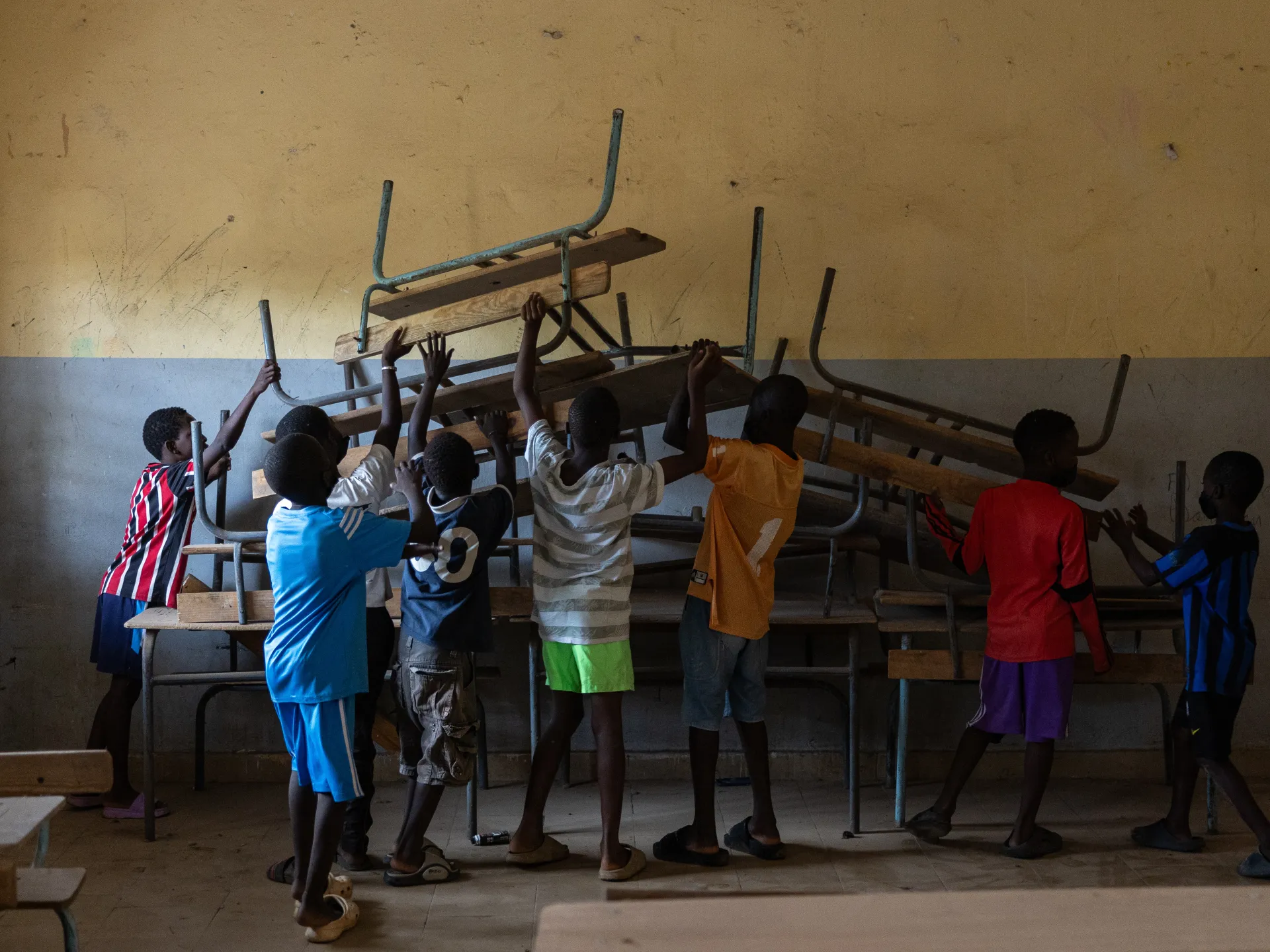
Students, teachers and volunteers in a working-class Dakar neighbourhood have joined forces to clean up the dilapidated Medina Gounass Elementary School in advance of the new academic year, highlighting wider concerns over public education and sanitation in Senegal’s capital.
On Saturday, pupils, members of environmental organisations and residents swept classrooms, cleared drains and collected piles of plastic and household waste from the school in Medina Gounass, a densely populated suburb of Dakar.
The initiative comes as the 2026-27 school year is set to begin on Monday for staff and Tuesday for students.
Footage from the scene shows young students wielding brooms and shovels alongside older volunteers.
Medina Gounass, like many outlying districts of Dakar, struggles with inadequate waste management, blocked drainage and overcrowded classrooms, problems that often worsen during the rainy season.
Organisers say the cleanup is meant not only to ready the school for reopening but also to raise awareness among students and residents about the importance of environmental protection and shared responsibility for public spaces.
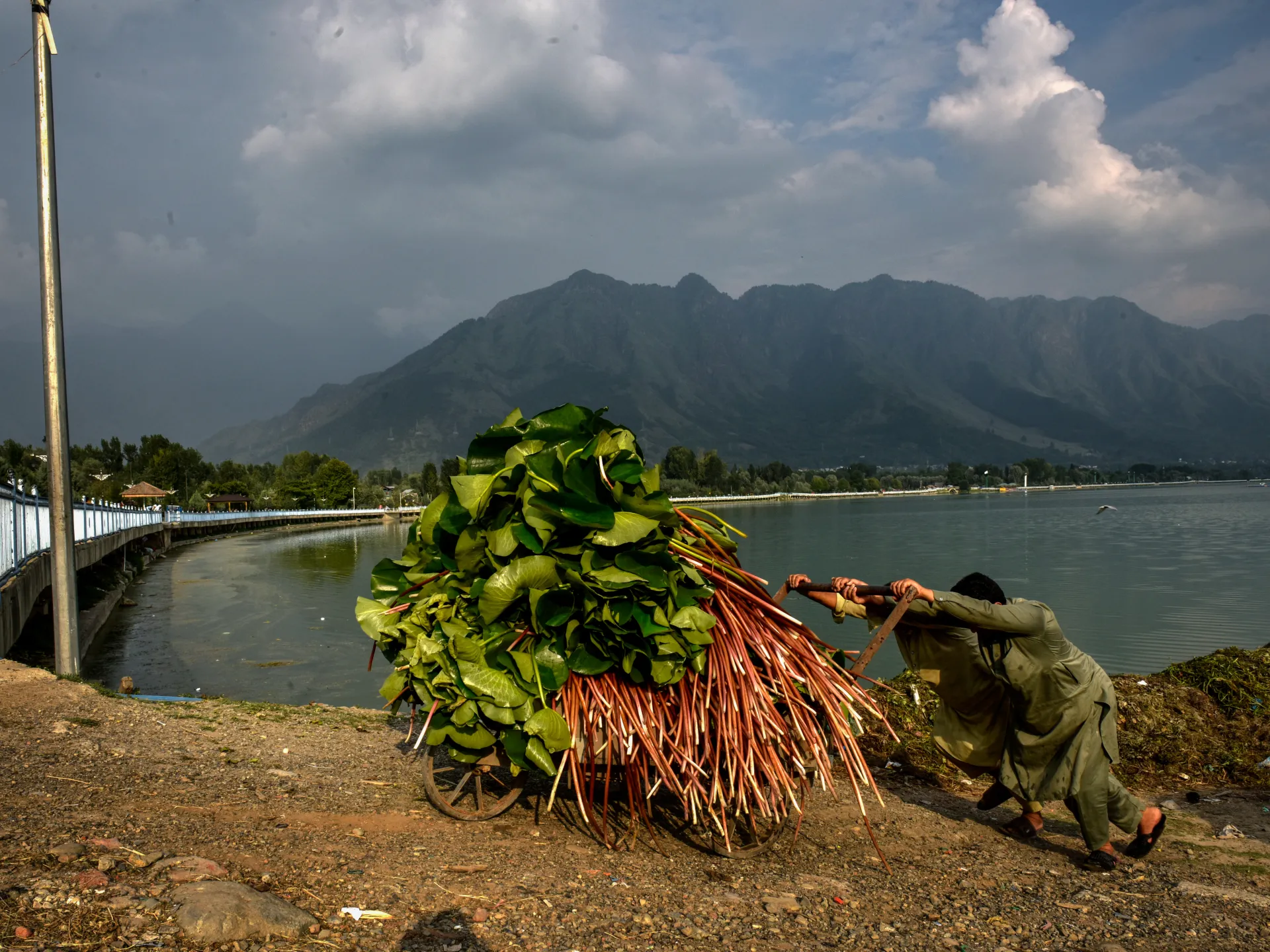
Dal Lake in Srinagar, the heart of tourism and cultural life in Indian-administered Kashmir, is slowly giving way under mounting population and environmental pressures.
Once renowned for its clear waters, floating gardens and houseboats, the lake is now clogged with untreated sewage, plastic waste and rampant weed growth, even as thousands of residents and businesses rely on it for transport and their livelihoods.
Unregulated construction along its shores, land encroachment and the expansion of nearby neighbourhoods have reduced its surface area and further damaged its fragile ecosystem.
The impact of climate change, including erratic rainfall and rising temperatures, is accelerating the lake’s decline.
Despite periodic clean-up campaigns and official conservation schemes, the future of Dal Lake remains uncertain, reflecting a wider environmental crisis across the Kashmir Valley.
As autumn approaches, the rhythmic thud of wooden mallets pounding lamb echoes across courtyards and back lanes in Kashmir, where cooks prepare Wazwan – a lavish, multi-course mutton feast that remains central to traditional wedding celebrations.
Wazwan arrived in the valley from Central Asia in the 14th century, when rulers brought skilled chefs along with the carpet and shawl weavers that later defined the region’s craft heritage.
Today, the feast is both a marker of social status and a powerful symbol of Kashmiri identity.
Among its guardians is 74-year-old Ghulam Nabi Baba, a veteran Wazwan chef who traces his lineage to those early migrants. His forefathers settled in Srinagar’s old city as part of a community of cooks known as Wazpora.
“There were only seven mutton dishes at that time. Over the centuries we added more, and now there are around 20,” Baba said.
He explained how the number of dishes and the amount of meat often reflect a family’s wealth.
“Forty years ago in Delina [a village in north Kashmir] I cooked 4,500kg (9,920 pounds) of meat. That was a very big wedding. Normally, at an average marriage we cook 200kg (440 pounds),” he added.
Despite the expanding menu, the core techniques have changed little. Lightly spiced meat is still pounded by hand before being simmered slowly over wood fires – a labour-intensive process Baba has followed since joining his father as a cook at 15.
But the pressures of modern life are reshaping the tradition. Baba’s son has chosen to open a restaurant rather than work weddings, saying the round-the-clock demands are too exhausting.
He believes he is still carrying forward the family’s centuries-old culinary legacy – just in a different setting, as Wazwan adapts to contemporary tastes and lifestyles.
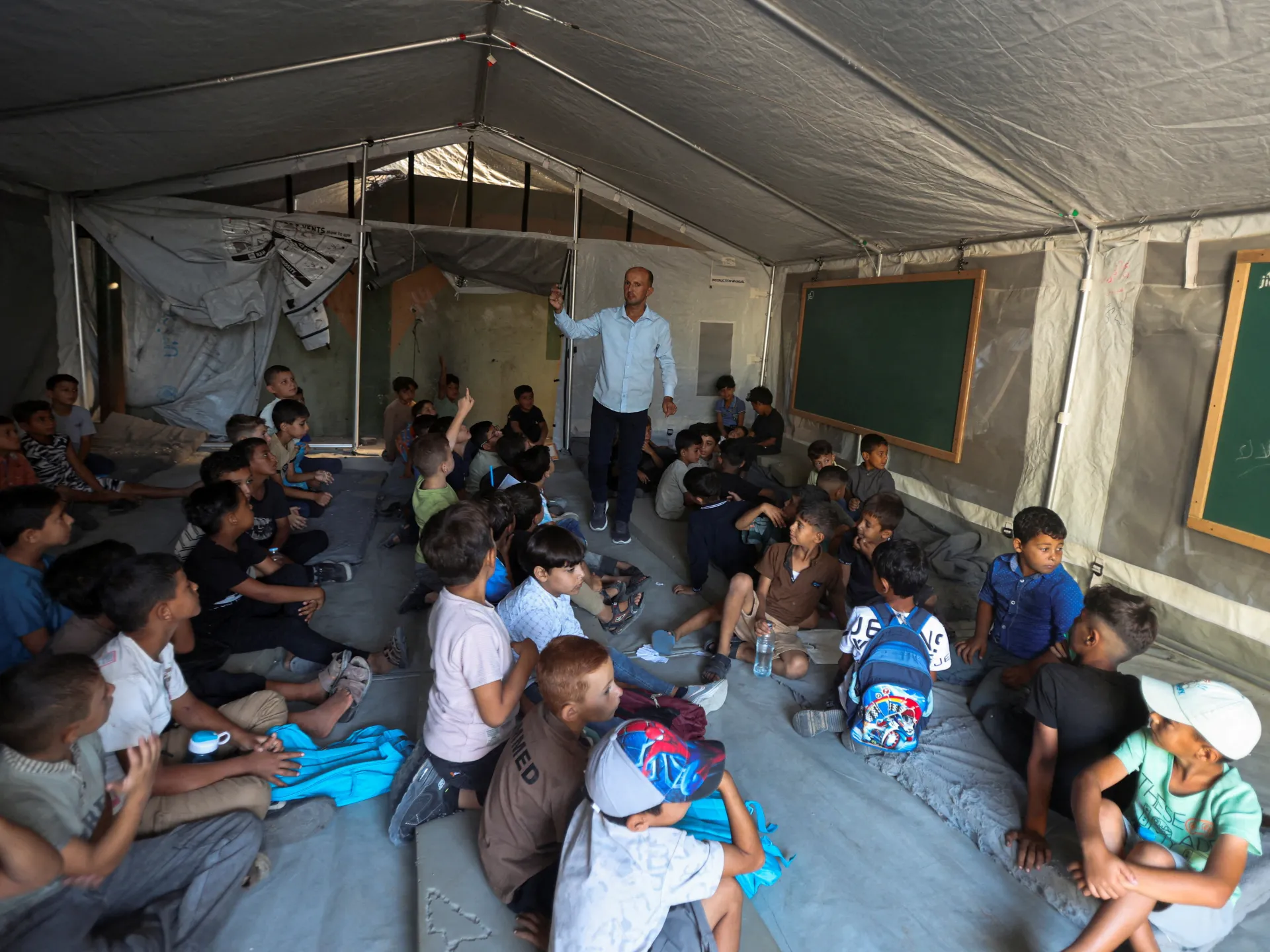
Hundreds of thousands of children returned to in-person classes in Gaza on Saturday for the first time in nearly three years, filing into damaged school buildings, makeshift classrooms and tents amid a severe shortage of basic supplies.
The United Nations Children’s Fund (UNICEF) says 98 percent of schools in the Gaza Strip were destroyed or damaged during Israel’s genocidal war on the enclave, while local education officials estimate about 660,000 students have been deprived of regular, in-person learning.
The reopening is a fragile milestone in a territory where about 22,000 students and more than 770 education workers, including 532 teachers, have been killed, according to Ibrahim Ramadan, director of education for eastern Khan Younis.
“The last time I have been to school was three years ago,” said student Moayed Abu Mustafa in Khan Younis. “Now, we are starting the school year; it is year of joy, happiness and success. Despite all of this, we will learn, we will learn even in a tent.”
Moayed has no proper shoes, notebook or pen, and will sit on the floor in a sweltering tent.
Across Gaza, the Ministry of Education, backed by aid agencies, has set up dozens of temporary schools from tarpaulins, sheet metal and wood. Some classrooms consist of a few mattresses and a blackboard; others still shelter displaced families.
“We studied on phones, and we haven’t seen our teachers. Now, we are back pursuing our dream … from one tent to another,” said 15-year-old Samar Abu Salmi, who lives in a tent with her family and can no longer afford school supplies that were cheap before the war.
Stationery trader Khaled Aliyan said Israeli import restrictions have driven prices up fivefold. “All stationery items are expensive,” he said.
Israeli forces still control more than 60 percent of Gaza despite an October 2025 “ceasefire” that halted large-scale fighting but left the underlying conflict unresolved.