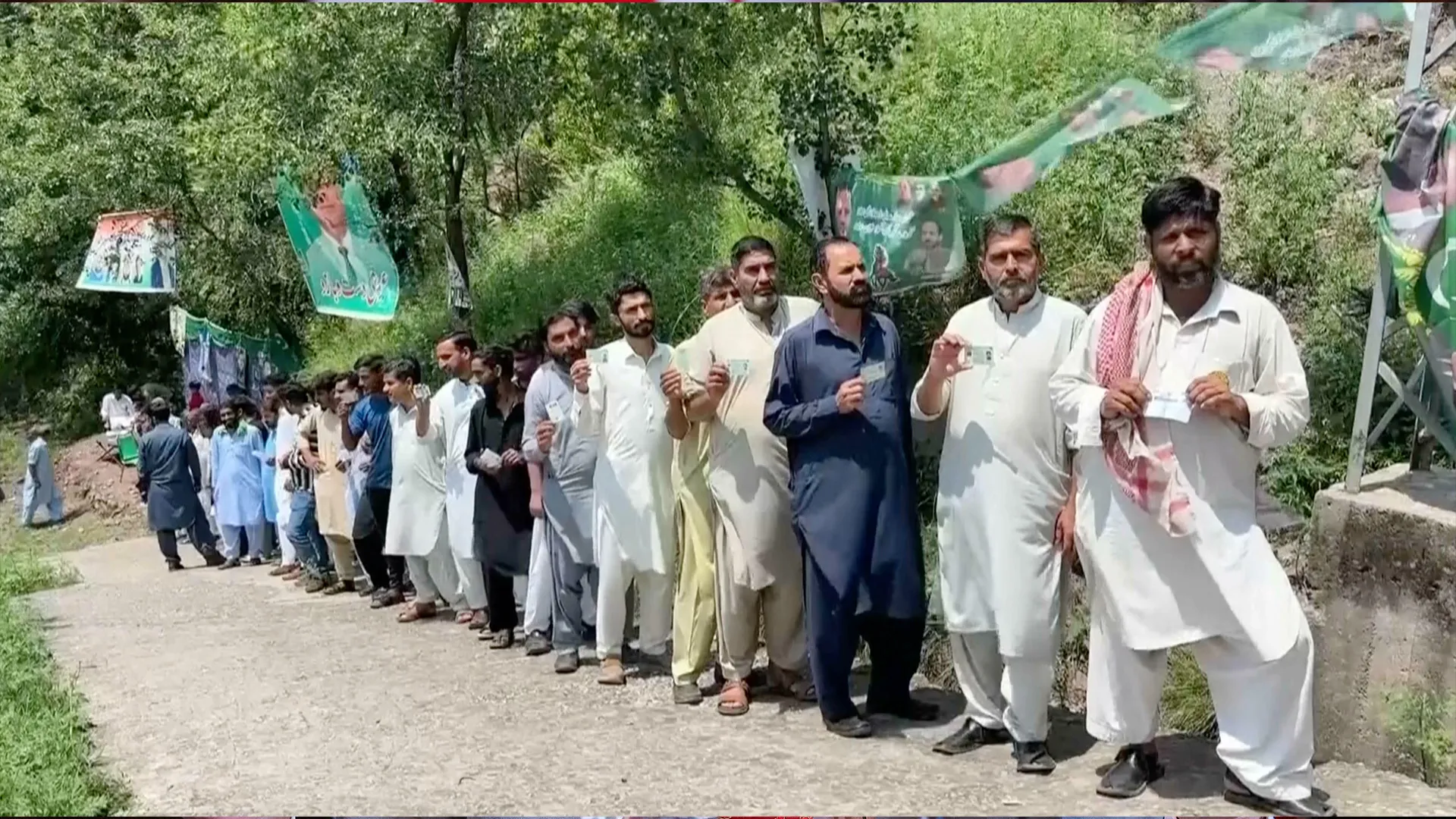
The third and final phase of voting went ahead in Pakistan-administered Kashmir’s Legislative Assembly elections, but just four of the 11 constituencies originally scheduled to vote went to the polls due to unrest in the region.
Voting postponed in seven of 11 Poonch division constituencies as boycott calls and violence mar the region’s legislative elections.
Published On 10 Aug 202610 Aug 2026
Islamabad, Pakistan – Voting is under way in the third and final phase of Pakistan-administered Kashmir’s Legislative Assembly elections, but just four of the 11 constituencies originally scheduled to vote are going to the polls due to unrest in the region.
More than 800 polling booths in Bagh and Haveli districts of Poonch division in Azad Jammu and Kashmir (AJK), as the region is known, opened at 8am (03:00 GMT) on Monday and will close about 5pm (12:00 GMT). About 460,000 people are registered to vote.
Recommended Stories
list of 4 itemsend of list
AJK Prime Minister Faisal Mumtaz Rathore, who belongs to the Pakistan People’s Party (PPP), is defending his seat in Haveli.
In Bagh, two former prime ministers are in the fray – Sardar Tanveer Ilyas of the Istehkam-e-Pakistan Party against Sardar Attique Ahmed Khan of the Muslim Conference.
(Al Jazeera)
Elections in the remaining seven constituencies, five in Poonch and two in Sudhnoti district, were postponed last week over security concerns. Officials said a new polling date will be announced in the coming days.
The postponement came after weeks of protests by the Jammu Kashmir Joint Awami Action Committee (JAAC), a local pressure group demanding the abolition of 12 seats in the regional legislature reserved for displaced Kashmiris living elsewhere in Pakistan.
Violence during the JAAC-led protests killed more than 50 people, according to residents and rights groups. The government has not shared an official death toll but said at least seven police and paramilitary personnel have been killed.
The JAAC, which has called for a boycott of the legislative elections, was banned by the authorities in June under “antiterrorism” laws.
The authorities have also banned international media from reporting from the region. Their reporters were told this month to leave and seek clearance from the government before returning to Pakistan-administered Kashmir.
Monday’s vote is the last of the three-phase polls for the 53-member Legislative Assembly.
The Mirpur division voted on July 27, and the Pakistan Muslim League-Nawaz (PMLN), which governs Pakistan, won nine of its 13 seats. The PPP took four. Polling in the Muzaffarabad division and 12 refugee constituencies across the country took place on August 2 with the PMLN winning 15 seats and the PPP six.
Election authorities recorded a turnout of 46 percent in the first phase and 53 percent in the second – both below the more than 60 percent recorded in 2021 and 2016.
The scaled-back vote reflects months of unrest centred on Poonch division, the JAAC’s stronghold, where an intermittent internet shutdown has stretched beyond 50 days.
Iran says the Strait of Hormuz will remain restricted unless the US meets a series of demands. The UAE accuses Tehran of targeting an oil tanker, while Yemen’s Houthis claim an attack on a Saudi refinery. Al Jazeera’s Nour Hegazy reports.
The Saudi, Pakistan, Turkiye defence pact faces mixed reactions, with some Iranian officials doubting its security guarantees. Iran and Oman agree on a Hormuz framework, while fighting in Yemen escalates between government forces and Houthis.
Al Jazeera’s @Mohammadfff_ reports.
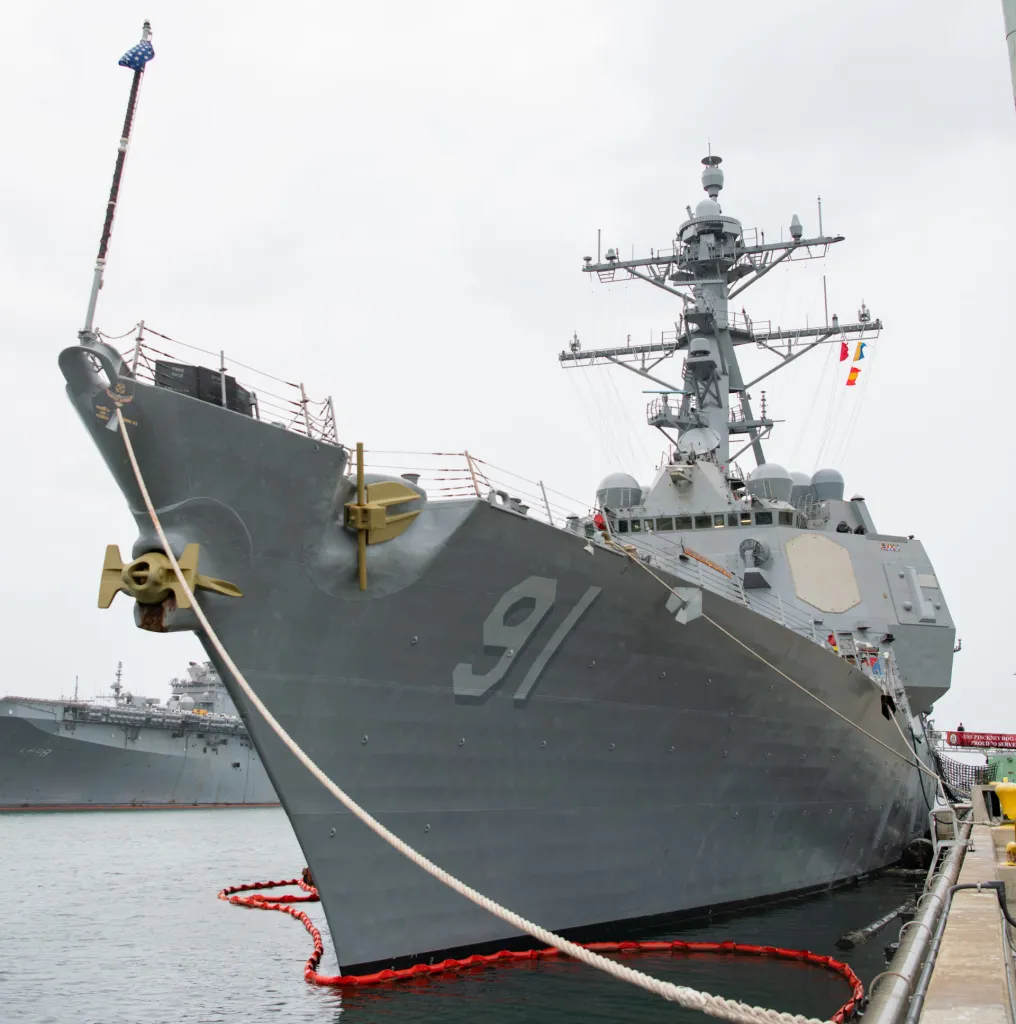
A stock picture of the USS Pinckney taken in September 2025 after the ship had received the SEWIP Block III installation. USN
“The Wallops site, a land‑based test facility situated over an open-water environment, will support extensive testing of the radar and its power and combat system interfaces ahead of installation on USS Pinckney (DDG 91), the first ship to be backfit with SPY‑6(V)4,” according to a press release from prime contractor Raytheon today. “Initial testing will begin later this year and continue through mid‑2028.”
Land-based testing is a routine step in the development of naval radars. Work to integrate the radar onto the USS Pinckney is also set to start this year and wrap up in 2028, according to Raytheon.
“By leveraging the Wallops test site, we’ll be able to integrate SPY‑6(V)4 with its dedicated power system before it reaches the ship, reducing the amount of testing needed on DDG 91,” Barbara Borgonovi, president of Naval Power at Raytheon, said in a statement. “That means less time in the shipyard, more time dedicated to the mission, and a smoother path for future backfit ships.”
The AN/SPY-6(V)4 is also known as the Air and Missile Defense Radar Backfit (AMDR Backfit) radar. It is a scaled-down version of the AN/SPY-6(V)1 AMDR radar that is being integrated onto new Flight III Arleigh Burke class destroyers. The AMDR has four fixed-face arrays, each made up of 37 Radar Modular Assemblies (RMAs). The AMDR Backfit also has a quartet of fixed arrays, but with 24 RMAs apiece.
Raytheon – AN SPY 6V Radar Build Timelapse Video
Each RMA is a two-foot-by-two-foot-by-two-foot cube that contains an independent active electronically scanned antenna. The modules are a key building block of all four radars that currently make up the AN/SPY-6 family. The AN/SPY-6(V)2 and AN/SPY-6(V)3 versions – also known as the Enterprise Air Surveillance Radar (EASR) Rotator and EASR Fixed Face, respectively – have arrays with significantly fewer RMAs than either the AMDR or AMDR Backfit types. AN/SPY-6-series radars are set to become a fixture across the Navy’s surface fleets, with versions also being added to new Ford class aircraft carriers and set to be backfitted onto some Nimitz class types. Various amphibious warfare warships are also getting radars from this family. You can read more about all of this here.
The RMAs that make up any AN/SPY-6-series radar can be utilized individually or linked together with others to focus their energies on a specific task. This offers immense operational flexibility, as well as the ability to produce higher-fidelity tracks over extended ranges. The loss of a single RMA also does not render the entire radar inoperable, and the modules can be replaced individually for repairs and upgrades. This, in turn, translates to increased reliability and upgradability, and less downtime for the radar, in general.
Missile Defense Radars at Sea
With 96 RMAs versus 148, the AMDR Backfit radar is not as capable as its larger AMDR cousin. However, it is still a major capability upgrade for Flight IIA Arleigh Burkes, which are currently equipped with the AN/SPY-1D. The SPY-1D is an aging passive electronically scanned array radar, the development of which traces back to the 1980s. The original AN/SPY-1 entered Navy service in the 1970s.
When paired with the new Baseline 10 configuration of the Aegis Combat System, “the AN/SPY-6(V)4 will provide volume search, tracking, BMD [ballistic missile defense] discrimination, and missile communications in a wide diversity of environments and conditions,” according to a past Navy contracting notice. As noted, this Aegis upgrade is another central aspect of the Destroyer Modernization 2.0 plan.
The Destroyer Modernization 2.0 effort has so far been proceeding in phases, with the SEWIP Block III, Aegis Baseline 10, and chiller upgrades being integrated first, and the AN/SPY-6(V)4 radar coming afterward. In June, the Navy had announced the completion of the SEWIP Block III upgrades on another pair of Flight IIA Arleigh Burkes, the USS Chung-Hoon (DDG-93) and USS James E. Williams (DDG-95).
USS Chung-Hoon seen departing Naval Base San Diego for sea trials on April 20, 2206 after completing its Depot Modernization Period as part of the DDG Modernization 2.0 program. Courtesy photo via USN
As mentioned, the SEWIP III installation requires substantial changes to the ship’s physical structure, inside and out. Arleigh Burke destroyers with the new electronic warfare suite have all-new geometric structures extending off the port and starboard bridge wings that contain key elements of the new electronic warfare suite. When work on Pinckney was completed, some observers dubbed it the ‘muffin top’ destroyer and the ‘USS Thickney.’
A head-on view of the USS Pinckney in San Diego, California, in 2024, offering a good look at the substantial structural changes from the SEWIP Block III installation. @SanDiegoWebCam via @WarshipCam Another head-on view of USS Pinckney before the SEWIP Block III installation. USN
At least as of last year, two more Flight IIAs, USS Halsey (DDG-97) and USS Sterett (DDG-104), were in line to receive the AN/SLQ-32(V)7 and the rest of the Destroyer Modernization 2.0 package. The Navy also previously said that Sterett would be the first ship to get all of the new capabilities in one single in-port availability.
“This destroyer modernization effort is the cornerstone of increasing service life and delivering decisive combat power to the US Navy via our Flight IIA destroyers,” Capt. Tim Moore, the Destroyer Modernization 2.0 (DDG MOD 2.0) program manager, said in a statement in June. “We focused on opportunities to shift milestones supporting acquisition, planning and execution left to provide these game-changing capabilities to the operators sooner. The DDG MOD 2.0 program remains a top priority as the Navy continues to build and sustain a lethal, resilient, and rapidly adaptable force.”
How many Flight IIA Arleigh Burke class destroyers, in total, will eventually receive the full Destroyer Modernization 2.0 upgrade package is unclear. The Navy has said in the past that 20 destroyers could be brought up to this new standard. In 2025, the service said that the USS Kidd (DDG-100) would be among several ships to receive the SEWIP Block III suite, but not the AN/SPY-6(V)4 radar, according to USNI News. The Navy’s Arleigh Burke class destroyer force, as a whole, is in the process of receiving other upgrades, including new defensive capabilities, too.
A stock picture of the USS Kidd, one of several Flight IIA Arleigh Burke class destroyers that might receive just a portion of the Destroyer Modernization 2.0 upgrades. USN
The Navy currently has 75 Arleigh Burke class destroyers in service, altogether, of which 34 are Flight IIA versions. There are another 12 Flight IIA Restart and Flight IIA Technology Insertion subtypes, which feature additional improvements. Production of new ships in this class is now transitioning fully to the Flight III subvariant.
Regardless, the arrival of the first AN/SPY-6(V)4 at Wallops Island is a significant milestone that puts the Navy on track to move ahead with the second phase of its Destroyer Modernization 2.0 plans.
Bamako, Mali – An unprecedented battlefield partnership between a separatist movement and an al-Qaeda affiliate has transformed the conflict in northern Mali, shifting the military balance and deepening divisions over how, if at all, the war can end.
When the Azawad Liberation Front (FLA) and Jama’at Nusrat al-Islam wal-Muslimin (JNIM) launched a joint offensive on April 25, 2026, the conflict entered a phase unlike any before.
A war that had long pitted the Malian state against multiple armed groups gave way to a coordinated campaign stretching from Kidal and Anefis to Tilemsi, Gao and Sevare, posing the most serious challenge to the Malian army in years and to Russia’s Africa Corps, the Kremlin-backed force that replaced the Wagner Group in Mali.
Since then, the fighting has been marked by simultaneous assaults, ambushes, drone strikes and attacks on military convoys, with all sides claiming significant battlefield gains.
Bamako says it is working to restore state authority and dismantle what it calls a “terrorist alliance” between the FLA and JNIM.
The FLA says it remains committed to independence for Azawad, the name separatists use for northern Mali, while JNIM portrays the war as part of a campaign to “liberate” Mali and overthrow the government, which it accuses of relying on Russian forces.
More significant than the offensive itself, however, is the unprecedented military cooperation between a nationalist separatist movement and an al-Qaeda affiliate.
Their political ambitions remain fundamentally different, yet their cooperation has already reshaped the conflict and could have far-reaching implications for security across the Sahel.
The partnership emerged after the collapse of the 2015 Algiers Peace Agreement, which sought to end years of fighting between Bamako and northern armed groups through greater decentralisation and political representation, but whose implementation repeatedly faltered.
Successive military coups after 2020 reshaped Mali’s political leadership and security strategy. The Economic Community of West African States (ECOWAS) suspended Mali and imposed sanctions, while Russia deepened its military role by deploying the Wagner Group in late 2021.
After Russia folded the Wagner Group’s operations into the state-controlled Africa Corps, renewed fighting left neither the government nor northern armed groups able to impose a lasting settlement.
How the alliance took shape
On paper, cooperation between the FLA and JNIM appears unlikely. The FLA traces its roots to northern separatist movements that declared the independence of Azawad during the 2012 rebellion, a claim never recognised by the Malian state or the international community.
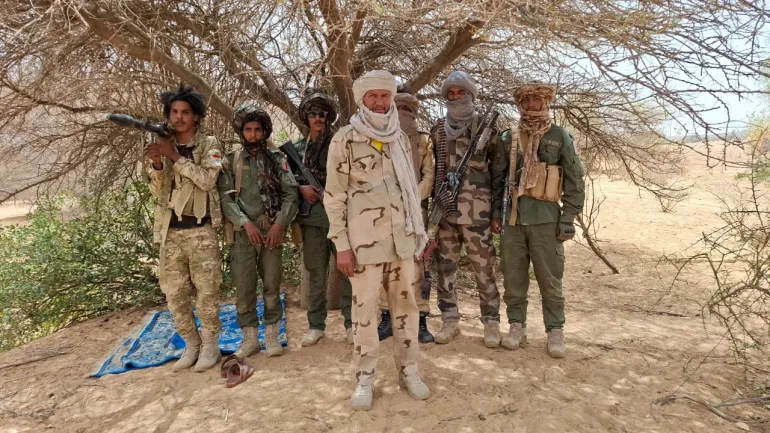
Colonel Mohamed Issa, centre, one of the FLA’s most prominent military commanders [Photo: Courtesy of the Azawad Liberation Front (FLA)]
It presents itself as a secular nationalist movement seeking independence for Azawad, while JNIM seeks to overthrow governments it considers illegitimate and establish governance based on its interpretation of Islamic law.
Yet senior officials from both groups told Al Jazeera those ideological differences have been set aside to confront a common enemy.
Colonel Mohamed Issa, a senior FLA officer, said the movement remained committed to an independent Azawad, arguing that previous peace agreements repeatedly collapsed because successive governments in Bamako failed to honour them.
Negotiations, he said, would only be acceptable if they recognised Azawad’s right to separate.
Issa rejected suggestions of an ideological alliance, describing the relationship as a battlefield arrangement against a common enemy.
He said the JNIM-affiliated fighters operating alongside the FLA were exclusively Azawadis rather than members of the group’s wider regional network, arguing they were motivated primarily by defending their communities against the Malian army and what he described as Russian “mercenaries”.
Suleiman, a senior JNIM field commander who requested that only his first name be used for security reasons, described the relationship in broader terms.
He said the group approved operational coordination with the FLA after internal consultations because fighters on both sides largely came from “one people” caught up in the same conflict and because their liberation goals had become “relatively unified”.
He also claimed the FLA had accepted Islamic legal arbitration by local religious scholars, one of JNIM’s core objectives, a point the FLA itself did not raise. Bamako, meanwhile, has described the relationship as a “JNIM/FLA terrorist alliance” that threatens Mali’s sovereignty.
The differing accounts illustrate both the strength and the fragility of the arrangement. For now, shared battlefield interests appear to outweigh ideological differences. Whether that remains true as the conflict evolves is far less certain.
A shifting balance of power
The partnership has altered not only the battlefield but the way the war is fought.
FLA officials say working alongside JNIM has enabled both groups to divide responsibilities and pool expertise in attacks on military bases and supply convoys.
A destroyed vehicle at the site of recent fighting in northern Mali [Photo: Courtesy of the Azawad Liberation Front (FLA)]
Bamako disputes casualty figures released by the armed groups and insists its forces retain the initiative. Even so, the conflict has become markedly more sophisticated, with simultaneous attacks across distant locations, engagements lasting several days and ambushes targeting reinforcements before they reach the front lines.
Drones have assumed an increasingly prominent role, serving not only as reconnaissance platforms but increasingly as strike weapons against vehicles and military positions. Malian forces, backed by Russia’s Africa Corps, continue to rely heavily on air power, yet months of sustained fighting suggest neither side has secured a decisive advantage.
The war economy
Long-established financing and trafficking networks continue to sustain both sides.
JNIM sources describe a funding model built on regional commercial networks, organised zakat collections and resources accumulated over years, including proceeds linked to earlier al-Qaeda kidnapping-for-ransom operations.
The FLA says it relies primarily on donations organised by tribal leaders, traders and community associations.
Officials from both groups also acknowledged that individuals linked to the movements participate in illicit economies, including trafficking across the Sahara, although the extent to which those activities finance the war remains difficult to verify.
Weapons have proved as important as funding. Arms have flowed across the Sahel since the collapse of Libya in 2011, providing armed groups with a steady source of equipment.
The latest fighting has opened another supply channel: weapons and military vehicles captured from Malian forces now form an increasingly important part of both groups’ arsenals.
Can either side win?
There is little to suggest the conflict is nearing an end.
The Malian army retains a clear advantage in air power, backed by Russia’s Africa Corps. Yet the FLA and JNIM continue to mount coordinated operations across much of northern Mali.
An armed man carries a weapon in a desert area of northern Mali, where government forces and armed groups have been fighting for control of territory [Photo: Courtesy of the Azawad Liberation Front (FLA)]
The military standoff reflects a wider political deadlock. Bamako remains committed to preserving Mali’s territorial integrity, the FLA insists on independence for Azawad and JNIM continues to seek the overthrow of the government.
None has shifted position since the latest fighting began, and nothing on the battlefield has yet forced any of them to do so.
Those competing objectives also cast doubt on how long the two groups can continue fighting together. Their partnership rests on a common enemy rather than a shared political vision, making its future uncertain.
A war without an endgame
Three months into the latest offensive, northern Mali remains locked in a conflict with no obvious end in sight. The partnership between the FLA and JNIM has reshaped the military landscape, while Bamako continues to reject any outcome that could weaken Mali’s territorial integrity.
What began as a confrontation between the state and separate armed movements has evolved into a conflict shaped by competing visions of sovereignty, separatism, rule by al-Qaeda-linked armed groups and the involvement of external powers.
Unless those competing ambitions – territorial unity, independence and regime change – are addressed alongside the fighting, a negotiated settlement is likely to remain elusive.
Whatever happens next, the partnership forged in April 2026 has already changed the course of the war in northern Mali. Whether it endures or fractures under the weight of its competing ambitions, it has created a new military and political reality whose consequences are likely to extend well beyond Mali’s borders.
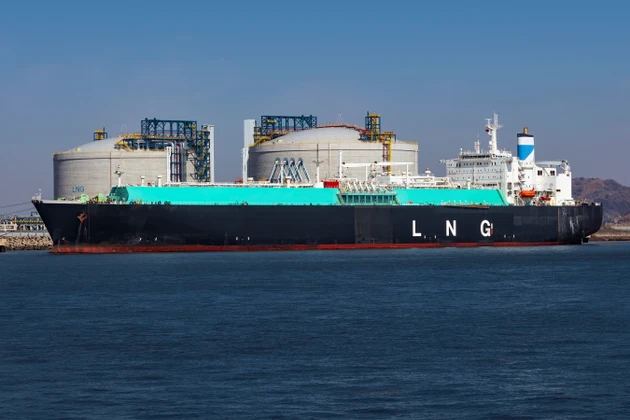
The Shell-led (SHEL) LNG Canada venture said Tuesday it reached a deal for five First Nations to have an equity option to invest as much as C$1B (~US$710M) to acquire infrastructure in Canada’s biggest liquefied natural gas project as a major
India slumped to a nine-wicket defeat in the fourth T20 against England, following a 2-0 series whitewash in Ireland.
Published On 10 Jul 202610 Jul 2026
India’s cricket board will review the T20 team’s performance after a dismal run that saw the world champions lose successive series in Ireland and England, a top official said.
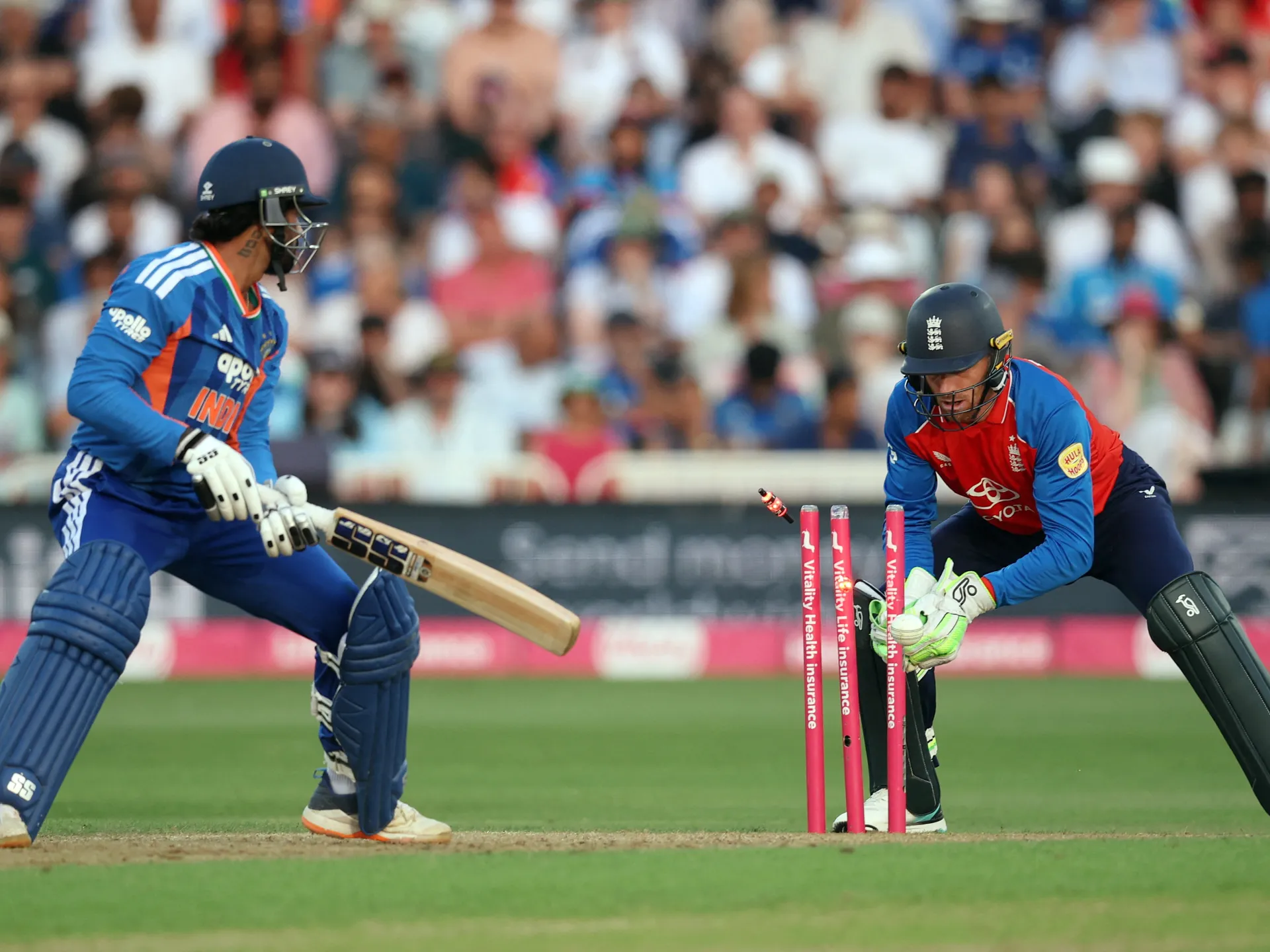
India slumped to a nine-wicket defeat in the fourth T20 against England on Thursday, handing the hosts an unassailable 3-0 lead with one match remaining after the opener was washed out.
Recommended Stories
list of 4 itemsend of list
The loss was India’s fifth straight defeat, following a 2-0 series whitewash in Ireland last month.
The Board of Control for Cricket in India (BCCI) will meet to discuss the reasons for the team’s performance after the England tour ends on July 19, secretary Devajit Saikia said on Friday.
“The BCCI is currently observing the performance of the Indian T20 team which has not been up to the mark in the ongoing series against England,” Saikia, who is in Edinburgh for the annual conference of the International Cricket Council, told the news agency AFP in a phone interview.
“We will have a review meeting with the core members of the team to discuss what went wrong in England.”
India, who lifted the T20 World Cup in March, have endured a dramatic dip in form. On Thursday, they managed 158-7 in Bristol, a target England chased down with nine wickets and more than six overs to spare.
The defeat came days after India were dismissed for just 76 in Nottingham, suffering their heaviest T20 loss by a margin of 125 runs.
Saikia described the slump as a temporary setback.
“This is not something abnormal and can happen in international cricket. We consider it as a purely bad phase,” he said.
India, coached by Gautam Gambhir, has been without pace spearhead Jasprit Bumrah and all-rounder Hardik Pandya because of workload and injury-management concerns.
Teenage batting sensation Vaibhav Sooryavanshi, handed his long-awaited debut aged 15, has struggled to make an impact, with scores of 14, 13 and 15 in his three innings.
The teams meet in the fifth and final T20 in Southampton on Saturday before a three-match ODI series.
More than 11,000 people, including over 5,500 children, have fled escalating fighting around Sudan’s strategic city of el-Obeid over the past two weeks, according to Save the Children, as the United Nations warns that up to 500,000 civilians could be at risk if the violence intensifies. The city has become the latest focal point in a war that has already triggered the world’s largest displacement crisis.
For much of Sudan’s three-year civil war between the Sudanese Armed Forces (SAF) and the paramilitary Rapid Support Forces (RSF), international attention has centred on Khartoum and the Darfur region. In recent weeks, however, attention has increasingly shifted to el-Obeid as fighting has intensified across Kordofan, prompting warnings from UN officials and humanitarian organisations that another acute humanitarian emergency could be unfolding.
Francesco Lanino, deputy country director for Save the Children in Sudan, said the consequences of displacement extend far beyond the loss of housing.
“For children, displacement is far more than the loss of a home,” he said. “It often means losing access to school, healthcare, clean water and the support networks that help them feel safe and protected. Many have already been displaced multiple times, and without urgent action to protect civilians, ensure humanitarian assistance can reach those in need and prevent further violence, thousands of children could be forced to flee while facing increasing risks to their safety, health and wellbeing.”
Why is el-Obeid so important?
El-Obeid, the capital of North Kordofan state, lies about 360km (224 miles) southwest of Khartoum at the intersection of roads linking central Sudan with Darfur and the country’s southern states.
That location has made it one of Sudan’s most important commercial centres and a key logistical hub for both military operations and humanitarian aid.
The city has remained under the control of the SAF, making it one of the army’s most important positions in western Sudan. Military analysts say control of el-Obeid helps shape movement along key supply routes connecting central Sudan with Kordofan and Darfur, helping explain why both the SAF and the RSF consider it strategically important.
Why has the fighting intensified now?
The battle for el-Obeid reflects a broader shift in Sudan’s war.
After the SAF regained territory in and around Khartoum earlier this year, fighting increasingly concentrated in western Sudan, particularly across the Kordofan and Darfur regions.
The RSF has expanded military pressure around el-Obeid while the army has reinforced its positions inside the city. UN officials have warned that the growing military build-up raises the risk of a wider assault, although neither side has announced plans for a full-scale offensive.
The conflict has also evolved. Drone warfare has become an increasingly prominent feature of the conflict, targeting military positions as well as infrastructure civilians rely on, including fuel depots, electricity networks and water facilities.
What are civilians experiencing?
Civilians in el-Obeid are facing mounting hardship as the fighting intensifies and essential services come under increasing strain.
Aid agencies and the United Nations say repeated attacks have disrupted electricity and water supplies, contributed to fuel shortages and driven up the prices of food and other essential goods. Damage to water infrastructure, combined with restricted humanitarian access, has also heightened concerns about waterborne diseases, including cholera.
Many of those now fleeing el-Obeid had already been displaced by fighting elsewhere in Sudan, meaning they are being uprooted for a second or even third time. Save the Children says more than half of the people displaced in the latest wave are children, underscoring the disproportionate impact the conflict is having on young people and their families.
Why are the UN and aid agencies so concerned?
The immediate concern extends beyond the fighting itself to the possibility that el-Obeid could become the next city to experience prolonged urban warfare, with civilians trapped between rival forces.
According to the United Nations, up to 500,000 civilians in and around el-Obeid could be at risk if violence escalates. The figure includes longtime residents as well as people who had already sought refuge in the city after fleeing fighting elsewhere in Sudan.
People are transported in the back of a truck, some 30km east of the city of el-Obeid, in Sudan’s North Kordofan region [ASHRAF SHAZLY / AFP]
Humanitarian organisations warn that continued hostilities could further restrict the delivery of humanitarian assistance into North Kordofan at a time when many communities already face shortages of food, medicine, fuel and clean water.
The UN has also raised alarm over the growing use of drone strikes, warning that repeated attacks on civilian infrastructure are deepening the humanitarian crisis and making it harder for people to access essential services.
Why are officials comparing el-Obeid and el-Fasher?
Officials increasingly fear el-Obeid could follow the trajectory of el-Fasher, the capital of North Darfur, where months of fighting left civilians trapped, humanitarian access severely restricted and basic services devastated.
The comparison does not mean el-Obeid has reached the same stage. Rather, UN officials say it highlights the risk that the city could follow a similar trajectory if fighting intensifies and civilians cannot safely leave or receive humanitarian assistance.
El-Fasher has become one of the starkest examples of the human cost of Sudan’s war. Since fighting escalated there in 2024, repeated clashes, shelling and attacks on displacement camps have forced hundreds of thousands of people to flee, while hospitals, markets and other civilian infrastructure have been damaged or destroyed. Aid agencies have repeatedly warned that restrictions on humanitarian access have deepened hunger and disease, leaving many residents with little access to food, clean water or healthcare.
UN officials fear a similar pattern could unfold in el-Obeid if military pressure continues to build. The city has become a refuge for people displaced from other parts of Sudan, meaning a major offensive could trap large numbers of civilians while further disrupting aid operations across Kordofan. Preventing another prolonged urban battle, they say, is critical to avoiding an even wider humanitarian crisis.
What could happen next?
The next phase of the conflict will depend on whether the current military pressure around el-Obeid develops into a sustained ground offensive or whether diplomatic efforts succeed in reducing hostilities and improving humanitarian access.
For the Sudanese Armed Forces, holding el-Obeid is important to maintaining its position in North Kordofan and preserving access to western Sudan. For the Rapid Support Forces, increasing pressure on the city could strengthen its military position in the region, although the outcome of any future offensive remains uncertain.
If fighting escalates, aid organisations warn that more families are likely to flee while shortages of food, clean water, fuel and medical supplies deepen. A wider battle could also further disrupt humanitarian operations across Kordofan, a region that serves as an important corridor for assistance to communities affected by the war.
More broadly, the battle for el-Obeid reflects the changing geography of Sudan’s war. As front lines shift away from Khartoum, Kordofan is emerging as one of the conflict’s most consequential theatres, carrying profound implications not only for the military balance but also for hundreds of thousands of civilians caught in the fighting.
As the latest wave of displacement illustrates, the humanitarian consequences are already unfolding. Whether el-Obeid becomes another prolonged urban battleground, or whether sustained international efforts help avert a wider assault, may determine not only the next phase of Sudan’s war but also the fate of hundreds of thousands of civilians caught in its path.
“The signs from el-Obeid are clear and unmistakable: another human rights catastrophe is unfolding in Sudan,” UN High Commissioner for Human Rights Volker Turk warned late last week. “This is not a drill. It is a red alert that needs to land on the desks of heads of state and government around the world.”
Dodgers center fielder Andy Pages had been hearing from teammates for weeks that he would be selected as an All-Star. But he wasn’t as bullish.
“I wanted to participate, but that wasn’t in my control. I didn’t want to put it out there until I knew it was for sure,” Pages said in Spanish.
On Saturday it became official. Pages was selected as an All-Star for the first time. After coming so close in 2025, he’s set to start for the National League.
“It’s exciting to be able to participate in my first one,” Pages said before the Dodgers’ 3-0 win over the San Diego Padres at Dodger Stadium. “I’m really proud of the work that I’ve been doing and to have the opportunity.”
Pages is one of five Dodgers on the National League squad. Third baseman Max Muncy (third All-Star selection), first baseman Freddie Freeman (10th) and Yoshinobu Yamamoto (second) were named to the NL roster Saturday. Shohei Ohtani (sixth) was named an All-Star on June 25 after leading the majors in Phase 1 voting.
“It should be [Pages’] second,” Freeman said. “I think he should have had it last year. Andy has been great for a couple years now. So I’m glad he’s getting the recognition. I’m glad the fans are gonna get to see him in Philadelphia.”
It marks the first time since 1980 that the Dodgers have had four All-Star starters. Their five All-Star selections ties the Atlanta Braves and Philadelphia Phillies for the most in the majors.
Muncy is set to be the first Dodger to start the All-Star Game at third base since Ron Cey in 1977.
Though Dodgers pitcher Justin Wrobleski (10-2, 2.80 ERA) was not named an All-Star, he could play as a possible injury replacement.
The All-Star Game will be played July 14 at Citizens Bank Park in Philadelphia.
Fittingly, on Saturday, Yamamoto took the mound against the Padres and threw seven shutout innings.
Dodgers pitcher Yoshinobu Yamamoto raises his arms while walking back to the dugout in the seventh inning after striking out 10 in a 3-0 win over the San Diego Padres on Saturday night at Dodger Stadium.
(Gina Ferazzi / Los Angeles Times)
“He looked like an All-Star,” Roberts said. “He came out with a purpose. You could see the intent tonight, execution, really good from pitch one. And gave his chance to really reset the bullpen and gave us length.”
Once he settled in, he got even better. After giving up three singles in the first two innings, Yamamoto (2.49 ERA) didn’t surrender another hit. He tied a bow on the performance, ending it with his 10th strikeout.
“It’s such an honor to be selected for the All-Star team,” Yamamoto said through interpreter Yoshihiro Sonoda. “I was there last year and this year I feel it is even more meaningful.”
He got run support and defensive backing from his fellow All-Stars.
Andy Pages hits a run-scoring single in the third inning of a 3-0 win over the San Diego Padres at Dodger Stadium on Saturday night.
(Gina Ferazzi / Los Angeles Times)
Pages drove in the first run in the third inning. With runners on second and third, in a 1-2 count, Pages extended to the outside edge of the plate to get around a slider and send it through the left side of the infield. The Dodgers took a 1-0 lead.
Muncy flashed the leather with a backhanded pick up the third-base line in the fifth inning.
Freeman hit a solo homer in the sixth — a moon shot that sailed higher than the fireworks going off in the neighborhoods around Dodger Stadium. Two innings later, he roped an RBI single up the middle.
The Dodgers claimed a series win in the four-game home set against their division rival, with the chance to sweep Sunday. They’ve won seven of nine games against the Padres this season.
Ohtani feeling better
Dodgers pitcher Shohei Ohtani pumps his fist after getting San Diego’s Manny Machado to ground out in the fifth inning Friday.
(Gina Ferazzi / Los Angeles Times)
Ohtani was feeling “considerably better” Saturday, after leaving Friday’s game in the seventh inning with tight right biceps.
“If things trend the way we would expect, then he’ll be in there [Sunday],” Roberts said.
Ohtani didn’t play Saturday. But Roberts confirmed after the game that he expects Ohtani to be back Sunday. Roberts didn’t expect the biceps problem to affect Ohtani’s throwing schedule between pitching starts, especially because he aggravated it on a swing.
The Dodgers, however, could still decide to have Ohtani skip his last pitching start before the All-Star break.
“The first step is how he feels tomorrow, and then the days forthcoming,” Roberts said. “So we don’t need to make that decision today, tomorrow, the next day. So we have time. And I think for us it’s just more of reading and reacting on how he feels.”
Shohei Ohtani was the first Dodger to be named a 2026 All-Star, after leading the majors in Phase 1 voting for the All-Star game on July 14 in Philadelphia. Six other Dodgers were finalists through the fan ballot, giving them a chance to claim starting spots in Phase 2 of voting.
Ohtani locked down the starting DH spot for the National League squad, with 3,341,257 votes. The top vote-getters in each league bypass Phase 2. Second baseman Ernie Clement of the Toronto Blue Jays was the top vote-getter in the Amlerican League, with 3,232,932 votes.
Ohtani was the expected choice, despite a slow offensive start. His red-hot June boosted him up the leaderboards. He entered Thursday with the second-highest OPS in the National League (.963), barely trailing Mets outfielder Juan Soto (.965).
Pitchers aren’t chosen through the fan vote — hurlers and reserves have to wait for the player ballot (which includes votes from players, coaches and managers) and commissioners picks. But Ohtani has been just as impressive on the mound this year.
He has a 1.58 ERA, the fourth-best mark among NL pitchers who have thrown at least 50 innings this season.
Dodgers first baseman Freddie Freeman (2,666,008 votes), third baseman Max Muncy (2,890,181) and outfielder Andy Pages (2,158,664) also led their respective NL position groups in voting. Other Dodgers finalists, who advance to voting Phase 2, include catcher Will Smith (1,871,805), shortstop Mookie Betts (1,762,343 ) and outfielder Teoscar Hernandez (1,569,932).
The vote totals reset for Phase 2, which runs from next Monday through Thursday. The remainder of the All-Star starters are set to be announced on July 4 on Fox Sports.
Galectin Therapeutics (GALT) announced on Tuesday it has reached an agreement with the FDA regarding a Phase 3 program to test its lead asset belapectin in cirrhosis and portal hypertension linked to the liver disease metabolic dysfunction-associated steatohepatitis (MASH).
WASHINGTON — U.S. retaliatory strikes against Iran will continue after its forces shot down an American helicopter, President Trump said Wednesday, accusing the Islamic Republic of stringing him along over months of negotiations to end the war.
The prospect of a renewed U.S. air campaign cast fresh doubt on the viability of a ceasefire between the United States and Iran that has largely held since April, when the two sides reached a tenuous truce, pausing weeks of fighting. Trump’s decision to resume attacks comes after an exchange of fire between Israel and Iran threatened to spiral into open war over the weekend.
The administration has presented Trump with options to expand U.S. targets beyond the immediate area around the Strait of Hormuz to Iranian power plants across the country, an escalation that will open the president up to accusations he is targeting civilian infrastructure, according to a defense official familiar with the matter.
Speaking with reporters in the Oval Office, Trump encouraged the Iranians to accept a framework agreement negotiated between the two sides, and suggested that additional military action might compel Tehran to accept a final truce.
“We hit them hard yesterday, and we’re gonna hit ‘em again hard today,” Trump said. “And we’ll see what happens with the deal. We were really close to a deal, but they keep tapping us along — they keep playing us for suckers.”
The president’s remarks came a few hours after Trump posted on his social media website that Iran “will have to pay the price” for taking too long in negotiating a peace deal.
When pressed by reporters to elaborate, Trump said he meant that bombing would resume but declined to say whether that would include strikes on Iranian power plants and bridges, a threat he has repeatedly issued during the war.
The ongoing conflict, which is in its fourth month, has left a mark on the global and domestic economy. The U.S. Bureau of Labor Statistics reported Wednesday that inflation accelerated in May, driven by a surge in energy prices linked to the war with Iran.
The consumer price index rose 0.5% on a seasonally adjusted basis — the largest monthly increase in three years — pushing the annual inflation rate to 4.2%.
Asked whether he was concerned about the inflation numbers, Trump told reporters that the “numbers were great.”
“You know what I really love? I love the inflation. You know why? Because as soon as this war is over…,” Trump said, without finishing the thought.
The remark prompted near instantaneous news releases from Democratic operatives, as well as the party war room, which sent out a statement accusing Trump of mishandling a reckless war that has devastated the economy in the process.
“Donald Trump’s disastrous economic agenda and deadly and costly war with Iran have made life unbearable for millions of Americans,” Kendall Witmer, the Democratic National Committee’s rapid response director, said in a statement.
“Working families are shouldering skyrocketing costs for basic goods, with their wages being eaten up by Trump’s soaring inflation,” she added. “On the campaign trail, Trump promised to ‘defeat inflation,’ and to lower costs on ‘Day One,’ but two years later, Trump can’t get a handle on his war of choice with Iran as he tanks the economy back home.”
Trump then told reporters about a secret military mission to ensure safe passage for oil tankers through the Strait of Hormuz, one of the world’s most important commercial waterways. He said the operation had secured the passage of more than 100 million barrels of oil through the strait since it began.
“We took out, the other night, 22 ships late at night with no lights because they don’t have any radar because we blasted the crap out of it,” Trump said.
A couple of hours later, Trump wrote in another post that the military operation had been “wildly successful,” and that it proved the United States — not Iran — was in control of the Strait of Hormuz.
“Their military is defeated, and their economy is lost,” he wrote. “It’s over for Iran!”
Over months of diplomacy with Iran, Trump has sought to avoid a return to conflict, often seeking de-escalation when fighting has flared — and repeatedly pressuring Israel to minimize its attacks in Lebanon, where it continues to battle the militant group Hezbollah, a proxy of Iran.
Israeli strikes continued Wednesday, according to local news reports, while Hezbollah said it carried out attacks on Israeli troops stationed in southern Lebanon.
Speaking to journalists in the Oval Office, the president implied he was losing patience with Iranian tactics at the negotiating table.
“I gave them a break, at the request of Pakistan,” he said. “They still are working on trying them to do what’s right. But we want a deal that’s meaningful. We want a deal that works.”
“It was just tap, tap, tap,” the president added. “I don’t know what they’re doing.”
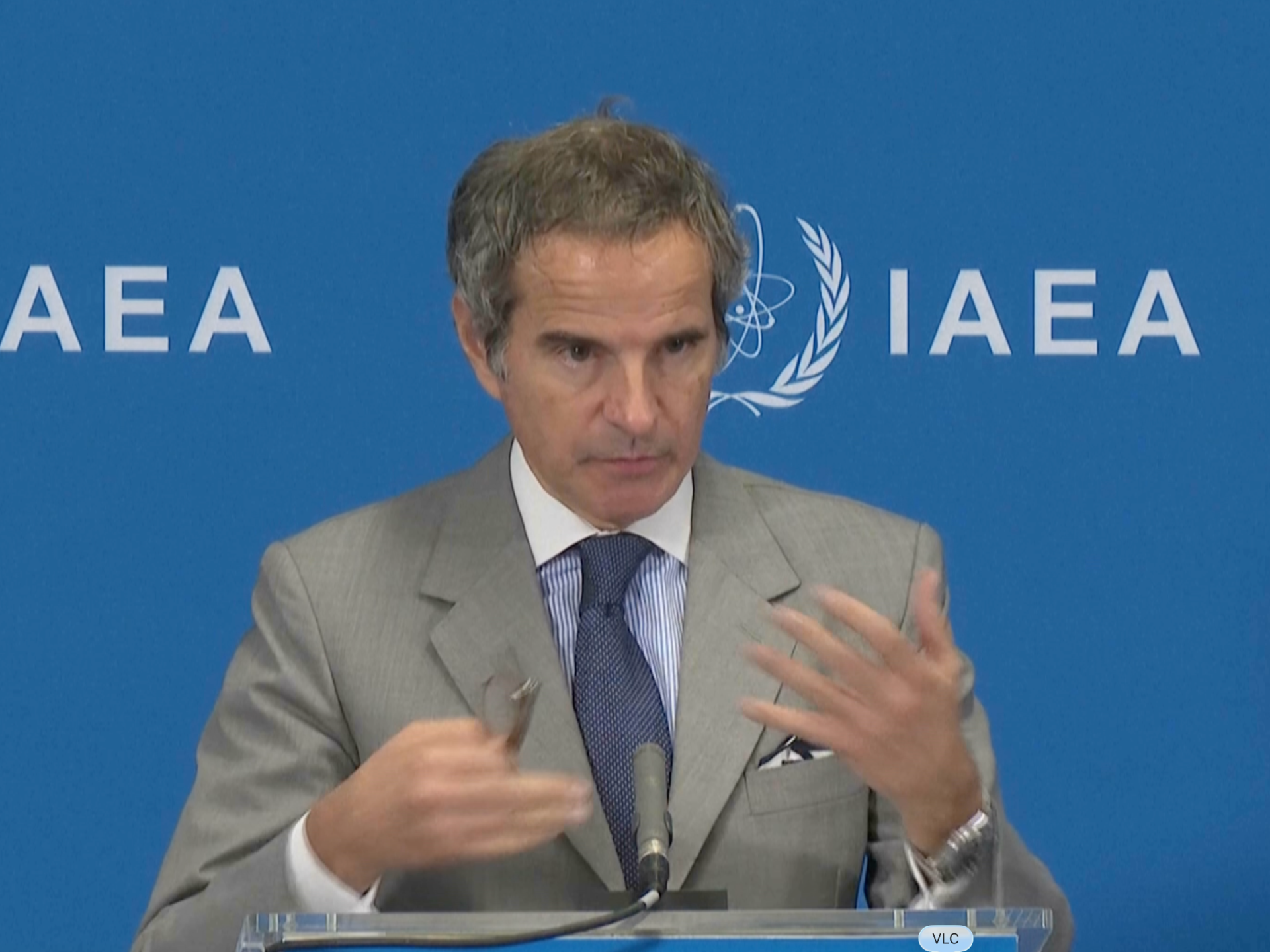
IAEA chief Rafael Grossi said Iran-US nuclear talks were in a ‘complicated phase’ and dialogue with Iran ‘broken’ as Iran and Israel traded fire on Monday, the worst escalation since a ceasefire was reached in April.







![Colonel Mohamed Issa, centre, one of the FLA's most prominent military commanders [Photo: Courtesy of the Azawad Liberation Front (FLA)]](https://i0.wp.com/occasionaldigest.com/wp-content/uploads/2026/07/COL-Mohamed-Issa-1785041292.jpeg?w=640&ssl=1)
![A destroyed vehicle at the site of recent fighting in northern Mali [Photo: Courtesy of the Azawad Liberation Front (FLA)]](https://i0.wp.com/occasionaldigest.com/wp-content/uploads/2026/07/Mali-army-3-1785041272.jpeg?w=640&ssl=1)
![An armed man carries a weapon in a desert area of northern Mali, where government forces and armed groups have been fighting for control of territory [Photo: Courtesy of the Azawad Liberation Front (FLA)]](https://i0.wp.com/occasionaldigest.com/wp-content/uploads/2026/07/FLA2-1785041279.png?w=640&ssl=1)


![People are transported in the back of a truck, some 30km east of the city of El-Obeid, in Sudan's North Kordofan region, on January 9, 2023. -[ASHRAF SHAZLY / AFP]](https://i0.wp.com/www.aljazeera.com/wp-content/uploads/2026/06/AFP__20230119__336T3JG__v3__HighRes__SudanAnimalCamel-1780778998.jpg?w=640&ssl=1)