“The number is classified. At the end of June last year, there were as few as 16 in Ukraine’s arsenal,” the publication stated. Given the low supplies and constant Russian bombardment, Ukrainian President Volodymyr Zelensky has frequently requested additional interceptors from the U.S. and allies.
We were receiving PAC-3 missiles from our partners in certain quantities, but later that monthly volume was cut several times over. It wasn’t due to a lack of funding, but because of the war in the Middle East. This affected different types of weapons. Whatever we could, we… pic.twitter.com/qwPFydwAzC
— Volodymyr Zelenskyy / Володимир Зеленський (@ZelenskyyUa) June 3, 2026
SASC said it “recognizes the importance of Patriot air defense systems and Patriot Advanced Capability-3 (PAC-3) interceptors in supporting Ukraine’s self-defense and notes continued concerns regarding interceptor availability, production capacity, and the impact of transfers on United States military readiness.”
“Accordingly, the committee directs the Secretary of Defense, in coordination with the Under Secretary of Defense for Acquisition and Sustainment, to submit a report to the congressional defense committees, not later than October 1, 2026, assessing the feasibility of increasing deliveries of PAC-3 interceptors to Ukraine,” its directive states.
We have reached out to the committee to find out which variant of the PAC-3 they are referring to. Lockheed Martin is boosting production of the more advanced current-generation Patriot PAC-3 Missile Segment Enhancement (MSE) interceptors and it is unclear how many of the other variants are still being made or are in U.S. stockpiles.
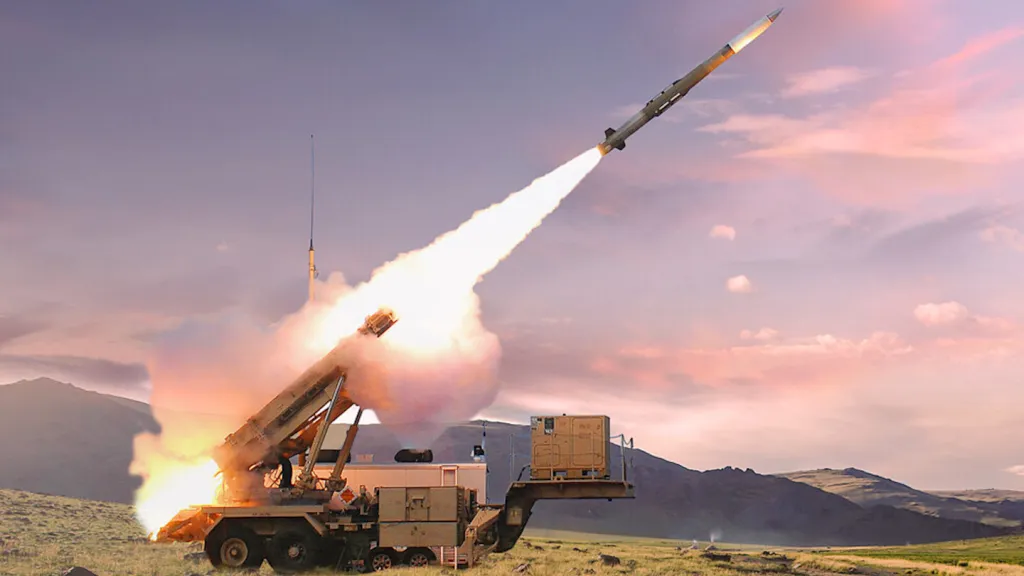
A Patriot Advanced Capability-3 (PAC-3) Cost Reduction Initiative (CRI) missile is launched during an Integrated Battle Command System (IBCS) flight test at White Sands Missile Range in 2021. (Darrell Ames) Darrell Ames
SASC wants the following information from the Pentagon:
“An assessment of current and projected Ukrainian requirements for PAC-3 interceptors over the next 12 months;”
“An assessment of the availability of PAC-3 interceptors from existing Department of Defense inventories for transfer to Ukraine and the impact of such transfers on United States military readiness and operational plans;”
“An evaluation of options to accelerate production of PAC-3 interceptors, including through multiyear procurement authorities, advance procurement, expanded supplier capacity, and other industrial-base investments;”
“An assessment of the feasibility of increasing annual PAC-3 interceptor production and the anticipated timeline for achieving such increases;”
“An identification of any statutory, regulatory, contractual, or supply-chain barriers to increasing interceptor deliveries to Ukraine;”
“An assessment of opportunities for allied and partner nations operating Patriot systems to contribute additional PAC-3 interceptors to Ukraine, including options for United States backfill arrangements;” and
“Recommendations for legislative or administrative actions that would enable increased interceptor deliveries to Ukraine while maintaining acceptable levels of U.S. military readiness.”
In addition, the committee said the secretary should “brief the congressional defense committees on the findings of the report, not later than 15 days after its submission.”
The Pentagon on Wednesday declined comment on the committee’s report, how many interceptors it has provided to Ukraine or whether it has the ability to increase that supply. We have reached out to Lockheed Martin as well and are awaiting a response.
Soldiers from the 11th Air Defense Artillery Brigade conduct a Patriot missile live-fire exercise at MacGregor Range near Fort Bliss, Texas, Aug. 23, 2025. (U.S. Army photo by Sgt. JaDarius Duncan) Sgt. JaDarius Duncan
TWZ recently addressed the supply of these munitions in a story about a new report from the Center for Strategic and International Studies (CSIS).
The report, on the severity of the depletion of U.S. advanced weapons stockpiles, found that current production PAC-3 MSE “is around the baseline rate of 650 interceptors per year, with half the deliveries going to the United States and the rest to allies and partners.”
Lockheed Martin announced Tuesday that it would be increasing its annual production rate of PAC-3 MSE (Missile Segment Enhancement) Interceptors for the MIM-104 “Patriot” Surface-to-Air Missile System from roughly 600, to 2,000 a year, under a new contract with the Department of… pic.twitter.com/aCkVK8xkqx
“Because U.S. procurement in the last decade has averaged 225 missiles per year, deliveries from prior years will not be enough to fully replace expenditures,” CSIS cautioned. “For that, the United States will need to wait for the 3,203 Patriot missiles requested in the Army’s FY 2027 budget. These are projected to start delivery in May 2029.”
As we noted earlier in this story, in addition to the Patriot interceptors already provided to Ukraine, the U.S. used a large amount during the conflict with Iran defending its assets, as well as those of allies.
The CSIS report found that at the start of the war with Iran, “there were about 2,500 Patriot interceptors in the U.S. inventory,” though its accompanying chart does not specify which variant. “During the course of the conflict, between 1,060 and 1,430 Patriots were fired.” We don’t know what that tally includes, but we do know that PAC-2 and PAC-3 series interceptors have been employed in the latest conflict with Iran.
CSIS
Adding to questions about the ability to supply Ukraine with more Patriots, a top official from Lockheed Martin recently warned that the company cannot give U.S. allies any certainty over when they will receive interceptors despite plans to triple capacity, according to Financial Times.
Brian Dunn, vice president for strategy and business development of missiles and fire control, recently said that the company was working hard to scale up production of critical PAC-3 interceptor missiles amid a supply crunch exacerbated by the war in Iran.
But in remarks to journalists at the ILA Berlin Air Show, “he sent a sobering message to American allies including Germany, Japan, Poland, the UAE and Saudi Arabia that operate the Patriot air defense system,” the publication reported.
Dunn said the extra capacity “is obviously going to be able to satisfy multiple user requirements in a faster timeline.” However, he added that Lockheed Martin does not “control what the allocation of those missiles is going to be. We can’t tell anybody where you’re going to be on that [priority list].
“Obviously there’s a lot of rhetoric coming right now from the Department of War . . . about how they’re going to reorder, reorganize, who’s going to get missiles first,” he continued. “We don’t control any of that.”
🇺🇸 American company Lockheed Martin cannot guarantee US allies the delivery of Patriot interceptors, which Ukraine desperately needs, despite plans to triple its production capacity.
This was stated by the company’s vice president, Brian Dunn, according to the Financial Times. pic.twitter.com/fq8QYdtAXR
Meanwhile, for Ukraine, the influx of new Patriot interceptors cannot come soon enough. Two nights ago, for instance, Russian forces launched 70 missiles and over 600 drones in a mass assault, according to the Kyiv Independent.
“Of the 34 ballistic missiles fired, 19 were aimed at the capital,” the publication noted.
You can see a video of one of those strikes below.
The number of Ukrainian cultural sites hit in Russia’s overnight attack on Kyiv continues to rise, with the Mystetskyi Arsenal on fire this morning.
“Kyiv’s beleaguered Patriot batteries did a valiant job, intercepting 15 of them, along with five of the six 3M22 Zircon hypersonic cruise missiles launched in the attack,” the news outlet added. “Still, even layered defenses were stretched beyond the limit.”
Reuters first reported on the price increase to connect the datalinks on LUCAS drones to SpaceX’s space-based networks earlier today. The story cites anonymous sources, as well as Pentagon documents the outlet says it reviewed. This follows the recent announcement that the Pentagon is working to make LUCAS more autonomous with new artificial intelligence (AI) driven swarming capabilities, which could impact future connectivity demands.
In the video in the social media post below, the satellite communications terminal can be seen hanging from a cord on a LUCAS drone said to have been recovered largely intact in Iraq.
Local Iraqi residents are taking the newly deployed, nearly intact American LUCAS drone for themselves. pic.twitter.com/fbx411iAYU
— Special Kherson Cat 🐈🇺🇦 (@bayraktar_1love) March 2, 2026
What we know about SpaceX’s reported upcharge for LUCAS
“Within weeks of the United States launching its bombing campaign, SpaceX executives met Pentagon officials and argued the military had been paying about $5,000 for connection per terminal while effectively using a higher tier of service worth closer to $25,000,” according to Reuters. “SpaceX argued the LUCAS drones were operating under conditions that aligned more closely with its aviation tier subscription rather than a lower priced land or mobility service. Pentagon officials argued that the $25,000 price tag – a monthly fee – was designed for aircraft, not kamikaze drones that used Starlink connection for a matter of minutes or hours.”
“The Pentagon, which was ramping up strikes on Iran, ultimately agreed to pay SpaceX’s proposed price increase,” Reuters‘ report added.
The story also said this reflected broader “tensions” between the Pentagon and SpaceX that have been growing recently over Starlink fees.
“The Fake News media has the story wrong, again,” top Pentagon spokesperson Sean Parnell subsequently wrote in a post on X. “The claims in this article are simply not based in reality and do not reflect the close, effective collaboration between our teams.”
The Fake News media has the story wrong, again. @SpaceX remains a strong and valued partner to the Department of War.
The claims in this article are simply not based in reality and do not reflect the close, effective collaboration between our teams. https://t.co/872Maa5FX2
When reached for comment by TWZ earlier today before Parnell’s post, the Pentagon did not directly address Reuters‘ report.
“The Department of War is committed to fostering a competitive environment for commercial satellite communications and is conducting comprehensive market research to continuously monitor commercial offerings that align with government requirements,” a Pentagon official told us. “We are actively engaging with industry to identify innovative solutions and new entrants, ensuring acquisitions are inclusive of a diverse range of capable vendors.”
“The Commercial Satellite Communications Office is working on additional options with other proliferated low earth orbit partners as part of its strategy to leverage the unprecedented capabilities provided by the commercial SATCOM industry,” that same official added. “The U.S. Space Force is operating in accordance with the terms and conditions of its contracts.”
TWZ has also reached out to SpaceX for more information.
“It is a violation of commercial Starlink terms of service to use the terminal for weapon systems. This applies to all users and is shut down when discovered,” Elon Musk, who is the founder and CEO of SpaceX among his other endeavors, had written on X on March 1 in response to a post about LUCAS making use of Starlink. “There is a separate network called Starshield, which is operated by the US government. This is not under SpaceX control.”
It is a violation of commercial Starlink terms of service to use the terminal for weapon systems. This applies to all users and is shut down when discovered.
There is a separate network called Starshield, which is operated by the US government. This is not under SpaceX control.
Though described as a “monthly fee,” Reuters‘ report indicates that the U.S. military pays the $25,000 only once to employ a LUCAS drone. As the piece points out, the Pentagon reportedly argued that it should get to pay the lower $5,000 rate because it was only using the network to support LUCAS in timeframes measured in “minutes or hours.” This is also in line with Reuters describing the added cost as effectively approaching doubling the LUCAS drone’s $35,000 unit price.
The entire point of these one-way-attack drones is to offer a lower-cost complement to traditional exquisite long-range strike munitions. The Tomahawk cruise missile, the unit cost of a current-generation version of which is generally said to be in the $2 to $2.5 million range, is often used as a point of comparison, although they are far from equal in many ways. The underlying argument for LUCAS also relies on the drone being relatively cheap and easy to produce, as well as employ in large volumes. TWZ laid all of this out in a detailed case for the Pentagon acquiring exactly these kinds of drones in mass, which we published just three months before LUCAS was confirmed to be in operational service.
A combined price tag of some $60,000 (the unit cost plus one month’s fee to connect to Starshield, as reported by Reuters) would still be far less expensive than the cost of a single Tomahawk. Using Starlink/Starshield terminals to begin with, beyond their connectivity advantages, offers the benefit of miniaturized high-bandwidth hardware that is being produced at a commercial scale.
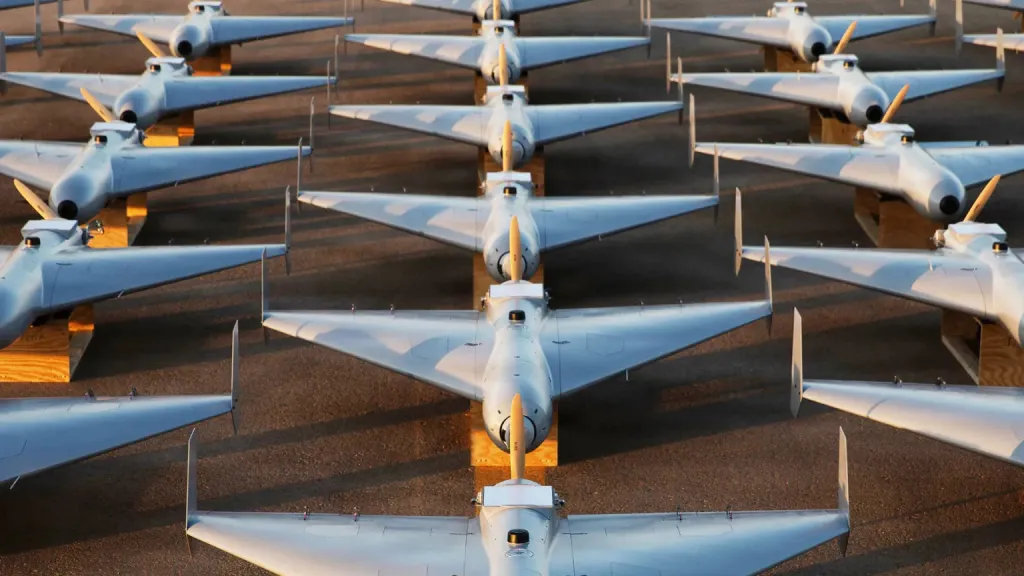
A close-up look at a LUCAS drone, with its square-shaped satellite communications antenna seen at the rear of the main body. CENTCOM
Plans to make LUCAS more autonomous through the addition of new swarming capabilities could affect future network connectivity requirements for the drones. This will be enabled by the integration of Shield AI’s Hivemind autonomy software, as you can read more about here.
Shield AI flies Hivemind AI Pilot on 6th Aircraft
As TWZ recently wrote:
“For the time being, the U.S. military demands a human operator is ‘in or on the loop’ for kinetic or otherwise potentially deadly actions, as opposed to letting autonomous weapons choose what targets to attack on their own without any extra authorization. While less controversial morally, this can also be a tactical hindrance, slowing the swarm’s potential and adding complexity and vulnerabilities to its operations. The debate around this choice will only get more heated as adversaries bypass this elected restriction in order to get an upper hand in future combat scenarios.”
“As we pointed out in our initial reporting on LUCAS’s emergence, the fact that some of the LUCAS drones already include miniature SATCOM terminals is very noteworthy. After all, ‘human in the loop’ swarming would not be possible without this form of communications at the beyond line-of-sight ranges these drones fly. At the same time, an entire swarm can be controlled in this manner, even if just a handful are equipped with SATCOM terminals. While a swarm can be mesh networked within line-of-sight, it has to relay all the important information back to an operator. By using some of the drones as SATCOM relay nodes, the entire swarm can be controlled remotely from most places on the planet.”
“Regardless, the Hivemind AI pilot will allow appropriately equipped LUCAS drones to perceive their environment, make decisions, and act autonomously without continuous human input. Unlike conventional autopilots tied to fixed flight paths, Hivemind is designed to dynamically adjust mission plans, react to unforeseen conditions, avoid obstacles, and carry out complex tasks with minimal operator oversight.”
A LUCAS drone seen being tested at the Yuma Proving Ground in Arizona. Mark Schauer/US Army
An increase in fees to connect individual SATCOM terminals to SpaceX’s networks, as well as cost savings on hardware, might further push the Pentagon toward a hub-and-spoke mesh-like networking arrangement like the one described above. LUCAS drones could also be employed in other contexts where satellite connectivity throughout the course of a mission might not be required, including if used essentially as fire-and-forget missiles aimed at fixed target coordinates. A SATCOM terminal would not be necessary at all for this kind of mission set, although it would be beneficial.
There is also a question about the total bandwidth that might be required to support swarms of LUCAS drones. From Reuters‘ reporting today, the increased load on its networks was a central factor in SpaceX’s demands for higher fees after strikes on Iran began. That being said, as already mentioned, Starlink/Starshield terminals are already designed with relatively high bandwidth use in mind.
These same considerations will apply to current and future programs that rely heavily on SpaceX’s satellite communications networks.
Dependence on SpaceX and U.S. national security
Specific cost figures aside, the LUCAS drone’s reliance on Starlink/Starshield underscores SpaceX’s dominance in the satellite communications market globally. It also highlights how essential the company’s space-based networks have already become for the U.S. military. TWZ explored this reality in detail amid open feuding between President Donald Trump and Elon Musk last year. The relationship between Trump and Musk has since rebounded, with the latter accompanying the President on his recent state visit to China.
Reuters reported today that there are some 10,000 satellites in SpaceX’s constellation supporting Starlink and Starshield, and that this represents more than 60 percent of all satellites currently in orbit. The company’s space-based networks, far and away, dominate the commercial satellite communications space globally. Offerings from competitors like OneWeb and Amazon Leo are more limited in scale and scope.
Watch SpaceX deploy Starlink satellites into space
This is reflected in the U.S. government’s ever-growing use of Starlink/Starshield on aircraft, ships, and in settings on land. This includes integration on some very high-value assets, including the U.S. Marine Corps’ VH-92 Patriot presidential helicopters and U.S. Navy aircraft carriers. There has also been a steadily growing push to use these networks to support tactical operations, as now highlighted by the link to LUCAS. The U.S. military had first demonstrated the ability to use Starlink to transmit targeting data years ago.
The U.S. government’s increasing use of Starlink/Starshield has already prompted operational security questions, even just in the context of supporting day-to-day peacetime operations, as you can read more about here. Starshield is designed to be more secure to help address these concerns for government customers.
At the same time, heavy use of Starlink on both sides of the conflict in Ukraine, including as a means of guiding one-way attackers in the air and at sea, has further underscored potential risks associated with the use of the networks in tactical scenarios. SpaceX and CEO Musk have faced particularly significant criticism in the past over limiting some Ukrainian use of the network. Actions SpaceX took earlier this year to block unregistered Starlink terminals also had major consequences for Russian forces, which were sent scrambling to find alternatives to fill the massive resulting communications gaps.
The very first Ukrainian kamikaze uncrewed surface vessel to emerge in 2022, seen here, very prominently had a Starlink antenna mounted toward the stern. via X
What SpaceX might have been prepared to do if the Pentagon did not agree to pay increased fees to support LUCAS is unknown. We also do not know what kind of protections are currently baked into U.S. contracts with SpaceX to prevent government users from being suddenly disconnected without warning. Regardless, as noted earlier, the Pentagon could deploy LUCAS swarms with just a handful of drones equipped with terminals to relay the critical info needed to control the rest of the formation, and LUCAS can still be used as a fire-and-forget weapon without any beyond line-of-sight connectivity, although this would greatly curtail its flexibility and, in some cases, its efficacy.
A LUCAS drone is prepared for launch from the Independence class Littoral Combat Ship (LCS) USS Santa Barbara during a test. Courtesy photo/Naval Air Warfare Center Weapons Division
As the Pentagon official noted to TWZ today, there is a push to explore commercial alternatives to Starlink/Starshield and promote further competition in this space. At the same time, part of the attractiveness of Starlink/Starshield for the U.S. government has been the relatively low costs and other benefits associated with leveraging such well-established networks, as well as the knowledge base that comes along with that pedigree. Just today, the U.S. Space Force announced it had finalized a new Other Transaction Authority (OTA) agreement with SpaceX, valued at $2.29 billion, for work on the Space Data Network (SDN) Backbone program. The SDN is tied to work on new space-based sensing and targeting capabilities, particularly for missile defense, which could now feed into the Golden Dome initiative.
On top of all this, SpaceX is also by far the top provider of space launch services globally, as well as other space-related services, including for the U.S. government. The core elements of Golden Dome, including the sustainment of planned batteries of space-based interceptors, require reliable, routine access to space at a frequency that only SpaceX can provide within budget constraints.
SpaceX looks set to remain a dominant force in this market space worldwide for the foreseeable future, and it continues to expand its presence, driven heavily by commercial demand. The company’s government contracts, though substantial, only account for around a fifth of its annual revenue, according to Reuters.
Despite the Pentagon’s response to the particulars of Reuters’ story today, being so heavily reliant on one provider for critical technologies still raises important questions not just for LUCAS, but for other efforts across the U.S. military that rely on robust and secure satellite communications connectivity.
Weekly insights and analysis on the latest developments in military technology, strategy, and foreign policy.
The U.S. Space Force has awarded SpaceX a $4.16B deal to help accelerate work on what could be a game-changing space-based air moving-target indicator (AMTI) sensor network. The service says it now hopes to have an “early capability” in orbit by 2028, years ahead of the timelines officials have put forward in the past.
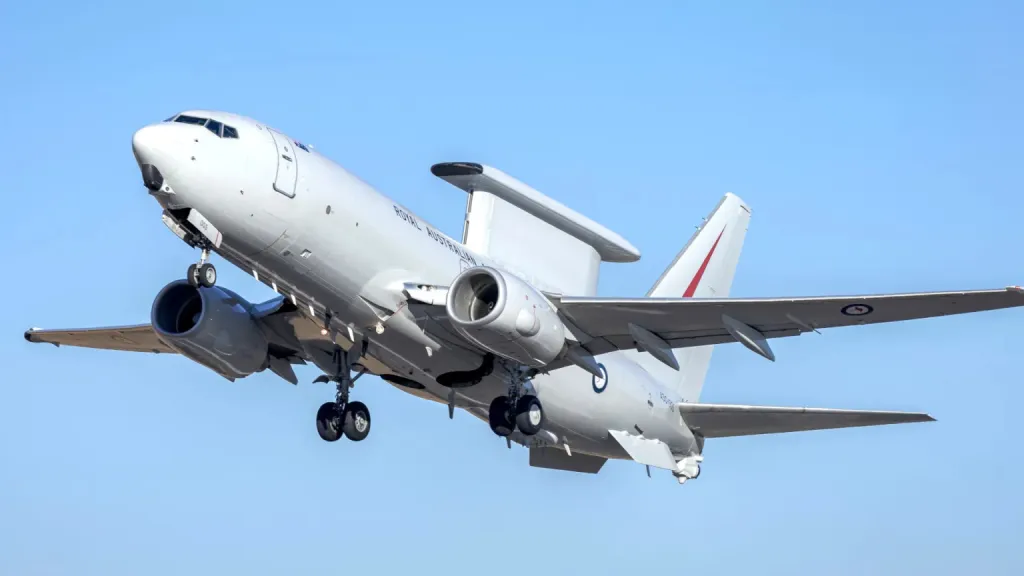
Aircraft like the E-7 Wedgetail seen here have historically been critical providers of AMTI capability. Australian Department of Defense
“The long-standing method of military airborne platforms to track moving targets faces continued challenges as adversaries develop increasingly sophisticated anti-access/area-denial (A2/AD) systems,” the Space Force said in its press release about the new deal with SpaceX today. “To compliment [sic; complement] traditional airborne sensing, the requirement for a layered, highly resilient tracking architecture is evident. SB-AMTI aims to enhance the Space Force’s capabilities to the Joint Force through the establishment of a persistent, global capability to sense and track airborne targets from space.”
The Space Force has described the $4.16 billion deal with SpaceX for the Space-Based Airborne Moving Target Indicator (SB-AMTI) program as a “competitive Other Transaction Authority (OTA) agreement,” rather than a traditional contract. The agreement came via the office of the Portfolio Acquisition Executive for Space-Based Sensing & Targeting (PAE SBST).
“This initial award is projected to field a constellation of satellites by 2028, providing the Joint Force with an early capability to eliminate operational blind spots,” according to the Space Force release.
DARPA
In the past, U.S. officials have generally talked about space-based AMTI becoming a reality sometime in the 2030s. Work is underway to push ground moving-target indicator (GMTI) tasks into orbit, as well.
Some degree of on-orbit prototype AMTI sensor testing has already been ongoing for at least a year, if not much longer, but this work has been heavily classified. In addition to the U.S. Air Force and Space Force, both of which fall under the Department of the Air Force, the National Reconnaissance Office (NRO). The NRO, the activities of which are shrouded in heavy secrecy, is a U.S. military organization that serves as America’s main remote sensing intelligence arm.
“The capabilities that are happening in space are far exceeding our expectations,” then-Air Force Maj. Gen. Christopher Niemi said at a hearing earlier this year as part of a response to a question about plans for the E-7. He declined to offer more details publicly. Niemi, who has since been promoted to lieutenant general, is currently Deputy Chief of Staff of the Air Force for Force Modernization, and the service’s Chief Modernization Officer
SpaceX has already reportedly been deeply involved in this work, too, as you can read about more in this past TWZ feature. This underscores the company’s ever-growing dominance globally in all aspects of the space industry, which we will come back to later on.
As mentioned, a functional, persistent, and distributed AMTI (and GMTI) sensor network in orbit has the potential to be game-changing. As TWZ wrote back in 2024, talking primarily about the future of space-based GMTI capabilities:
“A larger, distributed constellation would have the ability to monitor huge swathes of the Earth simultaneously, and depending on the size of the constellation, at least far more persistently to seamlessly. This could make it difficult, if not impossible, for an opponent to hide activities of interest. A very low revisit rate, or even eliminating revisit rate altogether, could even open up the possibility of continuous ‘streaming’ coverage of a location from low Earth orbit. This would also be essential for persistent GMTI coverage that tracks ground movements in real time that will actually be high enough in fidelity to guide weapons onto those tracks. It’s possible that aerial tracking could also be a function, as well, even to a more limited degree. The E-3 Sentry Airborne Warning and Control System (AWACS) will also be replaced at least partially by space-based capabilities, along with the E-7 Wedgetail.”
A US Air Force E-3 Sentry AWACS jet. USAF
“There is also a fair chance that this is another type of system, perhaps to execute broad area optical/infrared imaging with some exotic capabilities to provide tracking. We just don’t know.”
“Regardless, yes, we are talking about the possibility of panoptic or near panoptic targeting and surveillance from space.”
“Greater collaborative capabilities, especially ones enabled by the use of machine learning and artificial intelligence (AI) technologies, could help to find targets of interest and anomalies far faster than ever before. This could also open a door to more autonomous collection, tasking/retasking, and other capabilities, as well. Areas of interest that need seamless coverage could have extra satellites retasked to the necessary orbit in order to do so automatically, without the need for human deconfliction and even direct operator direction.”
It is not hard to imagine how the satellite constellation being described here would fundamentally change the U.S. military’s ability to not just spot and track targets globally, but also close the kill chains to engage them, even at very long ranges. This has massive implications for future net-centric warfare where all sorts of tangential capabilities will increasingly be networked together. It might impact how tactical aircraft are equipped in the future, including the need for their own radars. There could at least be a reduced need for them to use their own radars to guide missiles, even when no supporting sensor network within the Earth’s atmosphere has relevant data to provide.
Unlike having to rely on a single plane in a single surveillance place, a space-based sensor network made up of a very large number of individual satellites would also be highly resilient to attacks, as well as other attrition just due to technical breakdowns or other factors.
All this being said, U.S. officials have been open about potential challenges when it comes to making space-based AMTI capabilities a reality, even just compared to establishing GMTI networks in orbit.
L3Harris
“So GMTI [ground moving-target indicator capability] and AMTI [air moving-target indicator capability] sound like they’re really close, just because one little letter that is all you changed, [but it] turns out they’re pretty different,” Chief of Space Operations Gen. Chance Saltzman, U.S. Space Force’s top officer, said during a press briefing on the sidelines of a conference in December 2025, according to Breaking Defense. “What it takes to accomplish AMTI is different than what it takes to accomplish GMTI.”
“Things on the ground move slower than things on [sic] the air, so [they] require different levels of fidelity tracks,” he added.
“The [AMTI] data the Intelligence Community and warfighter need presents a multi-phenomenology challenge that requires automated orchestration of the NRO’s collectors, low-latency data transport, and rapid data fusion by the NRO’s unmatched space communications and ground architecture capabilities,” a spokesperson for NRO also told Breaking Defense earlier this year.
It’s worth noting here that satellites with sensors are only one component of the total equation. Robust, resilient, and secure communications networks will be vital to getting the data collected where it needs to go. This is a separate area where SpaceX is already playing an increasingly central role with its Starlink and Starshield networks, as you can read more about here. Laser-based communications relays are set to be another key supporting capability.
Watch SpaceX deploy Starlink satellites into space
In its announcement today, the Space Force did explicitly stress that SpaceX will not be the only company supporting the SB-AMTI effort going forward, and that it has established a larger “vendor pool.”
“By utilizing this multi-vendor framework, we are capitalizing on established industry capacity and continuously evaluating and onboarding the best tech to field this essential capability at speed and scale,” Space Force Col. Ryan Frazier, the acting PAE SBST, said in a statement. “We will not leverage any one single provider; instead, we are partnering with a highly diversified pool of traditional and non-traditional vendors, each bringing various capabilities to support the SB-AMTI architecture, ensuring the Joint Force has access to a strong, competitive industrial base well into the future.”
At the same time, as TWZ has noted in the past, SpaceX’s dominance in the market gives the company a clear advantage for securing further deals. This extends to the additional demands to put all this architecture in space. At least currently, no other company has the same capacity to provide the U.S. military with the kind of reliable access to space at the required cadence, and within budget constraints. SB-AMTI is already a major budget priority, with the Space Force asking for more than $7 billion in additional funds to procure additional elements of the system in its 2027 Fiscal Year budget request.
That being said, the new $4.16 billion agreement with SpaceX makes clear that the Space Force is pressing ahead with its plans for a space-based AMTI sensor network with hopes that at least an early operational capability could be in place within the next two years.
Rep. Tom Cole, an Oklahoma Republican, asked Hegseth for an update on the E-7 during a hearing before members of the House Appropriations Committee earlier today. In his question, Cole, who is Chairman of the committee, also highlighted the loss of one of the Air Force’s existing E-3s, also known as Airborne Warning and Control System (AWACS) aircraft, in an Iranian attack on Prince Sultan Air Base in Saudi Arabia in March. That has put new emphasis on the Wedgetail program. The latest conflict with Iran has also just added to the already significant strains on the dwindling fleet of aging E-3s, as TWZ has previously explored in detail.
“Let me ask you a specific question, and you may want to get back to me on this, I don’t know, but we’ve had some discussion over – you know, we lost one E-3. On the ground, thank goodness. Looks like no crew loss,” Rep. Cole said, leading into his question. “This committee has been interested in investing in the E-7. The Pentagon signed the contract for five additional planes. [It is] not in the Air Force budget [for Fiscal Year 2027]. Is there going to be a fix to that? Where are we at on thinking about the E-7?”
As of April, the Air Force had awarded contracts to Boeing for a total of seven developmental E-7s. Versions of the Wedgetail are already in service in Australia, South Korea, and Turkey. The United Kingdom is also set to field a fleet of these aircraft. However, a U.S.-specific configuration is now in the works.
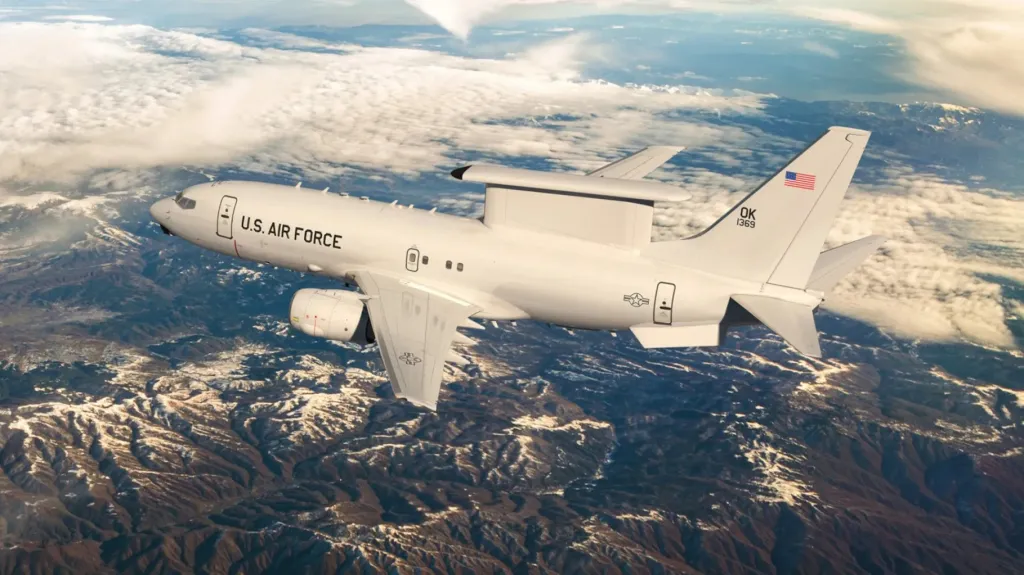
A render of an E-7 Wedgetail in US Air Force service. USAF
“I am well aware of that dynamic. I know our department had taken the position that it was … other satellite ISR [intelligence, surveillance, and reconnaissance capabilities] that was probably going to be capable of a lot of that in the future,” Hegseth said in response to Rep. Cole’s question. “But I think that mindset was indicative of a mindset that we’ve shed, which is the divest-to-invest mindset, which was an austerity mindset, that we’re going to get continuing resolution after continuing resolution. So, we [sic] got to get rid of these platforms in order to invest in these platforms. And there are gaps that need to still be filled. And there are systems that still need to be funded that are used on the battlefield right now, say, MQ-9s, A-10s, you name it.”
“And the E-7 is one of those,” Hegseth continued. “So, we’ve actually sent a budget amendment to OMB [Office of Management and Budget at the White House] to add that. I think it has a future. It has a place on the battlefield. And we’ll get more information for you on that, as well.”
The continuing resolutions referenced here are short-term federal government spending packages that Congress routinely approves when it cannot pass a full annual budget.
Secretary Hegseth also touched on the Air Force’s long-term plan, which remains unchanged publicly, to eventually push most, if not all, air moving-target indicator (AMTI) tasks into orbit. His comments today implicitly acknowledge that cancelling the E-7 program would have risked a serious capability gap in the near term, with the hopes of a better solution coming in the future. This is something TWZ had been sounding the alarm on since last year. Despite major investments and prototyping activities already underway, those space-based capabilities are still years away, at best, from becoming a reality. The Air Force’s original plan to replace a portion of its E-3 fleet with E-7s underscored the expectation that airborne early warning aircraft would also continue to play a vital role for years to come.
As a replacement for the E-3, the E-7 is a much more modern and capable aircraft. The Wedgetail is arguably the best airborne look-down sensor platform anywhere in the world at present, which is especially valuable for spotting long-range kamikaze drones, as well as cruise missiles. The Boeing 737-based design is also adaptable to other mission needs, including battle management and serving as a networking node using its own expansive communications and data-sharing suite. TWZ highlighted all of this in March, when Australia announced it was sending one of its E-7s to the Middle East to help Gulf Arab States defend against Iranian attacks.
Northrop Grumman MESA Radar – Boeing E-7 AEWC
Hegseth’s comments today on the change in mindset at the Pentagon do not touch on the argument that he and others made last year, that the E-7 was too vulnerable to be viable in future conflicts. This was despite an accompanying plan for the acquisition of more of the E-2D Advanced Hawkeyes that the U.S. Navy currently flies to fill airborne early warning capability gaps in the absence of an Air Force Wedgetail fleet. TWZ and others had quickly pointed out that the same survivability questions applied equally to the E-2D, which is also not as capable an aircraft as the E-7, which you can read more about here.
A US Navy E-2D Advanced Hawkeye. USN
When previously arguing for its cancellation, Hegseth and others had also cited cost overruns and delays that had befallen the Air Force’s Wedgetail program since it first kicked off back in 2022.
As noted, Congress had interceded to save the E-7 from purgatory, at least in Fiscal Year 2026, appropriating more than $1 billion in new funding for the program. Of the seven Wedgetails the Air Force has on order now, five were put on contract just this past March. The service had previously ordered two other jets to support rapid prototyping efforts. Even so, the Air Force had continued to sound somewhat noncommittal about the future of the E-7 program.
“We, of course, as we always do, follow congressional direction, and we will do the [E-7] rapid prototypes. We will fund those rapid prototypes,” Secretary of the Air Force Troy Meink told TWZ and other outlets at a roundtable on the sidelines of the Air & Space Forces Association’s (AFA) annual Warfare Symposium in February. “They told us to deliver a plan for additional aircraft. Now we will do that.”
“By the way, ‘deliver a plan’ does not mean we’re going to put it in the budget,” Meink also said at that time. “We will deliver a plan of what it takes to do it, and then we’ll have a discussion with them [Congress].”
This is what turned out to be the case, at least initially, with the E-7 again being absent from the Air Force’s proposed 2027 Fiscal Year budget when it was rolled out in full last month.
A Royal Australian Air Force E-7A Wedgetail. RAAF
“The Department [of the Air Force] is committing to work with you to figure out how to adjust the [20]27 budget submission to fund the E-7, and then work the [20]28 [budget] going forward,” Meink said at a separate hearing more recently, according to Air & Space Forces Magazine.
Despite the Pentagon saying its position on the E-7 has now completely changed, when the Air Force might begin flying the jets operationally remains to be seen. The service’s original goal was to have Wedgetails flying real-world missions in 2027, but the schedule had already slipped to 2032 by the beginning of last year. Though it is back underway now, the program was effectively frozen for much of 2025, which could easily have set the timeline back even further. Steps could also now be taken to try to accelerate the acquisition and fielding of the aircraft.
As it stands now, the Pentagon and the Air Force look to have fully dropped their opposition to moving ahead with fielding the already sorely needed fleet of new E-7s.