IF you fancy a UK staycation or day out but want to avoid the crowds, then autumn is the best time to do it.
Here are seven of our favourite spots for a seasonal break from quiet seaside towns to the remote Scottish highlands and world-famous cities.
Whitby is just as beautiful during the autumn months as the summerCredit: Alamy Cambridge is much quieter and still just as lovely during the autumnCredit: Alamy
Norfolk
Norfolk local Jenna Stevens suggests a walk through SandringhamCredit: Alamy
“There’s nothing better than visiting north-west Norfolk in the autumn. Hailing from Norfolk I might be a bit biased here, but I know the area inside and out.
“Taking a walk through Sandringham is my favourite thing to do at this time of year. Ancient trees shelter woodland paths lined with animal sculptures and dotted with tiny pine cones.
Sign up for the Travel newsletter
Thank you!
“Squirrels rush up tree trunks, children make friends at the giant wooden adventure playground, and dog walkers smile and nod to one another on forest walks.
“Just down the road from here you’ll find Snettisham Park, where you can head out on a deer safari and hand-feed stags on a 329 acre Norfolk farm.
“A short walk from Snettisham Park, past its magnificent 14th-century church, will lead you to the Rose and Crown.
“This is a traditional village pub with a low-ceiling bar that used to house those who built the church in the 1300’s. Inside now you’ll find roaring fires, pints of local ale, fantastic roast dinners and the friendliest staff around.
“Heacham makes for the perfect base for your north-west Norfolk visit. It’s around 10 minutes’ drive from each of these spots, while staying tucked out of the way with its own beach that is a lot more peaceful than its busy neighbour Hunstanton.
Head for an autumn quad biking adventure like Lisa did in the CairngormsCredit: Lisa Minot
“The leaves may be turning on the trees but the Cairngorms was a vision of blue skies and sparkling lakes on my visit to the jewel of the Scottish Highlands in September.
“We made the most of exploring the lochs, forests, mountains and rivers with a quad bike adventure through the Alvie Estate in Aviemore with Cairngorms Quad Treks.
“While it may be snow-covered in winter, our September break saw endless clear blue skies as we weaved through dense forest paths, over open moorland and even through rushing streams.
“Also worth a wander in the sunshine are the paths around Loch An Eilein in Rothiemurchus Forest.
“Fringed by mountains and forest, it features a 14th century castle ruin on an island in its centre.
“Whisky lovers can take to the Malt Whisky Trail to discover the distilleries of the Cairngorms and Speyside region with guided tours and tastings on offer.
“Our base for our autumn break was the cosy Bynack wooden lodge at Pine Bank Chalets in the heart of Aviemore.
“The self-catering cabin featured two bedrooms, a compact kitchen, lounge-diner with a wood-fired stove and a lovely terrace to just sit and take in those gorgeous views – stay from £140per night.” – Head of Sun Travel, Lisa Minot
Cambridge
Alice suggests taking a stroll from Cambridge to GrantchesterCredit: Alice Penwill
“Cambridge is a popular city that’s well-known for its beautiful and prestigious university, as well as for punting along the river.
“Summer might spring to mind as the best time to visit but generally it’s so busy with tourists that it can be hard to walk on the pavement or even get into the shops.
“As a work around, I much prefer autumn as a time to visit – just wrap up warm.
“When it comes to punting along the River Cam, there are always boats available later in the year – whether or not you want to give it a go yourself or head on a guided tour.
“Speaking of, if you fancy a tour of the colleges, or the whole city itself – these run throughout the year.
“Otherwise, there are lots of pubs, museums, markets, shopping and the famous Fitzbillies bakery which is home to the sticky Chelsea bun. But one of my favourite seasonal activities is walking the route from Cambridge to the pretty village of Grantchester.
“It’s a great sight-seeing spot for any fan of the Grantchester TV series that was actually filmed there. My one essential is a pit stop at the Orchard Tea Garden for a homemade scone, which you get with a pot of jam and clotted cream for £5.40.
“There’s also a selection of sandwiches, toasties, seasonal hot food like the Orchard Benedict and rarebit, as well as other homemade treats like coffee and pistachio cake.” – Travel Reporter, Alice Penwill
Cornwall
Padstow can be heaving in the summer – so why not check it out later in the year?Credit: Alamy
“The South West on a whole tends to be swamped with tourists in the summer months, although Padstow surely takes the biscuit for the most crowded destination in Cornwall.
“It’s become so popular that I now refuse to visit during the school holidays – who wants to be sandwiched like sardines in a shop or queue hours for a pasty?
“In autumn, however, the calm streets paint a wildly different picture.
Harbour life is slower, cafe owners are less frazzled and you can potter past the pastel-toned houses at leisure, without the sense of being herded like cattle.
“Padstow’s charm really shines through at this time of year, too.
The seas look even more spectacular under a somewhat moody sky, while the blustery winds will ensure you have the coastal paths to yourself.
“I could spend hours plonked on a bench with a coffee taking in the views of weathered boats bobbing on the water while sea gulls squark overhead.
“Check out Cherry Trees Coffee House for a proper home-cooked breakfast, or Prawn on the Lawn for the freshest seafood dishes – make sure to book in advance, though, the restaurant is tiny.” – Assistant Travel Editor, Sophie Swietochowski
Glasgow
Kara loves a chilly break up to Glasgow during the autumn monthsCredit: Kara Godfrey
“For me, what makes the perfect autumn are trees bursting with colour, crunchy leaves underfoot and those sunny yet chilly days.
“This is when Glasgow comes into its element, making it the perfect post-summer weekend break.
“Too cold for me to brave in winter, there is no better time to wander the city’s cobbled streets and Victorian architecture.
“I had no idea until my visit that the city had even coined its own Scottish version of Art Nouveau, aptly called Glasgow Style (with the best example of this being the Glasgow School of Art).
“Wander around the University of Glasgow’s arched cloisters for free, along with the huge gardens coated in brown leaves in September and October.
“For that sugar hit, don’t miss out on a doughnut from Tantrum, a Glaswegian owned franchise.
“I’m still thinking of their blueberry and white chocolate one, although their classic Birthday Cake was tempting.
“And with the new bouquet Arthouse Hotel opening there (with rooms from £99), I’m already planning my return.” – Deputy Travel Editor, Kara Godfrey
Whitby
You can still enjoy Whitby’s surroundings during the autumn – even the beachCredit: Jenna Stevens
“Spooky Dracula connections, historic abbey ruins, a dramatic coastline and the UK’s best fish and chips? Whitby is truly perfect for an autumn staycation.
“Stroll along the Yorkshire seaside town’s picture-perfect harbour to find traditional amusements, a fascinating Captain Cook museum, and to take in dramatic views of the hilltop Whitby Abbey from across the water.
“For more spooky vibes, walk the famous Whitby 199 steps – the very same which a sinister black dog dashes up to announce Dracula’s arrival in Whitby in the classic novel.
“In fact, Bram Stoker was first inspired to write Dracula when he visited Whitby in 1890, as he was immediately struck by the dramatic Gothic ruins that loom over the pretty coastal town.
“The steps lead you to the 12th century St Mary’s Church, which is well worth a visit for its panoramic views over the bay – particularly at sunset.
“Follow the Cleveland Way coastal path from here and you’ll reach Robin Hood’s Bay – a former smuggler’s village where red-roofed cottages tumble down a steep cliff straight to the sea.
“Stop for lunch by Trenchers, which won Restaurant of the Year at the National Fish and Chips Awards 2026 – which is basically the Oscar‘s for chippies!
“Here you can grab a takeaway cod and chips, haddock and chips or scampi and chips all for £13.50 each. Enjoy them out on the harbour for the perfect way to end your day.” – Travel Reporter, Jenna Stevens
The UK is home to some of the most beautiful beaches in the world, but if you’re looking for a quieter spot to soak up the sun, these twin villages are hidden gems well worth a visit
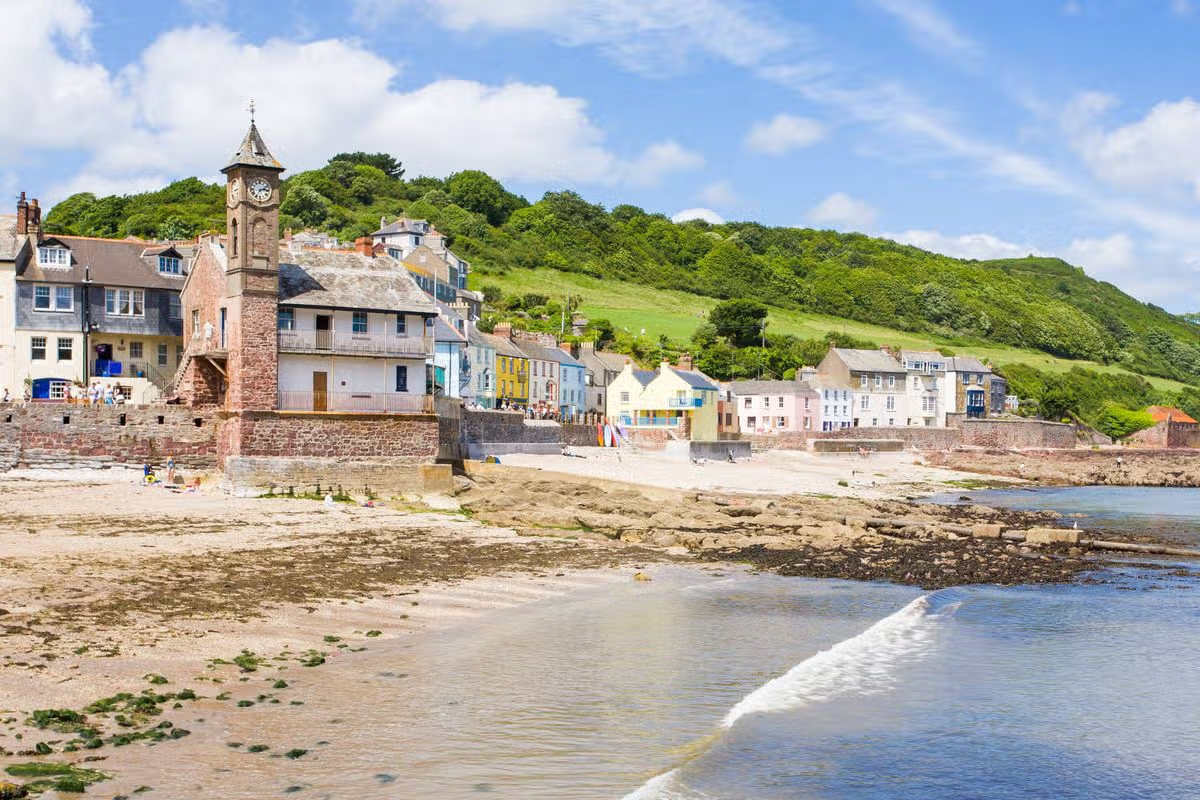
These quiet twin villages are a beautiful part of the country(Image: ianwool via Getty Images)
When the sun makes an appearance across the UK, the nation boasts plenty of remarkable attractions, from beautiful white sandy shores kissed by sparkling waters to quaint cobblestone lanes and idyllic villages. The summer break provides the perfect opportunity to explore some of Britain’s most popular seaside towns and countryside escapes.
Whether you’re drawn to the enduring allure of the Cotswolds or the seaside appeal of places like Weymouth, Scarborough, St Ives or Whitby, one thing is certain – these well-loved destinations will be packed with visitors.
However, if you’d prefer to enjoy the splendour of the British Isles without wrestling through crowds of tourists and social media fans, there’s a secret gem in Cornwall that offers breathtaking views, tranquil shores and a completely peaceful environment.
Nestled on the South-east coastline, the twin villages of Cawsand and Kingsand have everything you could want for a fantastic staycation and more.
Located on the less busy Rame Peninsula, often called Cornwall’s ‘forgotten corner’, these delightful villages are officially recognised as areas of outstanding natural beauty (AONB).
This pristine part of the country serves as a natural sanctuary that somehow avoids the summer throngs.
The scenic villages have maintained their peaceful atmosphere despite being encircled by bustling tourist hotspots. These delightful fishing settlements, with their winding lanes and sandy beaches, remain a well-kept secret away from the usual tourist trail.
And they’re steeped in heritage that encompasses the ancestral homes of Mount Edgcumbe, Port Eliot, and Antony House. Intriguingly, these two villages once formed part of different counties, renowned for their historic rivalry and as a refuge for smugglers.
Today, Cawsand Bay provides a sanctuary for families, walkers, swimmers, and kayakers, with its east-facing shingle-and-sand shore peppered with rock pools and inlets. Its sheltered waters make it a safe and stunning spot for all.
Tourists coming to enjoy the beaches are always close to authentic Cornish cuisine, with local pubs and shops just moments from the sandy expanse.
Kingsand, the adjacent village, is a concealed gem with cottage-lined lanes that rival the charm of Polperro and Port Isaac. Retaining much of its genuine character, Kingsand was formerly a flourishing fishing village, and traces of the old pilchard cellars and boat stores can still be discovered along the seafront.
This peaceful part of the peninsula, nestled beneath the coastal path, is a popular spot for walkers and birdwatchers, stretching all the way to the striking Rame Head, topped with a 14th-century chapel. Seafood lovers should make a beeline for the Devonport Inn in Kingsand, while The Bay Bar in Cawsand provides a peaceful setting for a drink, boasting a view that simply can’t be beaten.
The trip to these twin villages is a delightful experience in itself. As you wind your way for miles alongside sand and sea, the breathtaking views across Whitsand Bay offer a glimpse of the spectacular scenery that awaits.
A European hotel has been described as a ‘ghost town’ because there are no sunbed wars in the morning – all because of a genius solution they’ve come up with
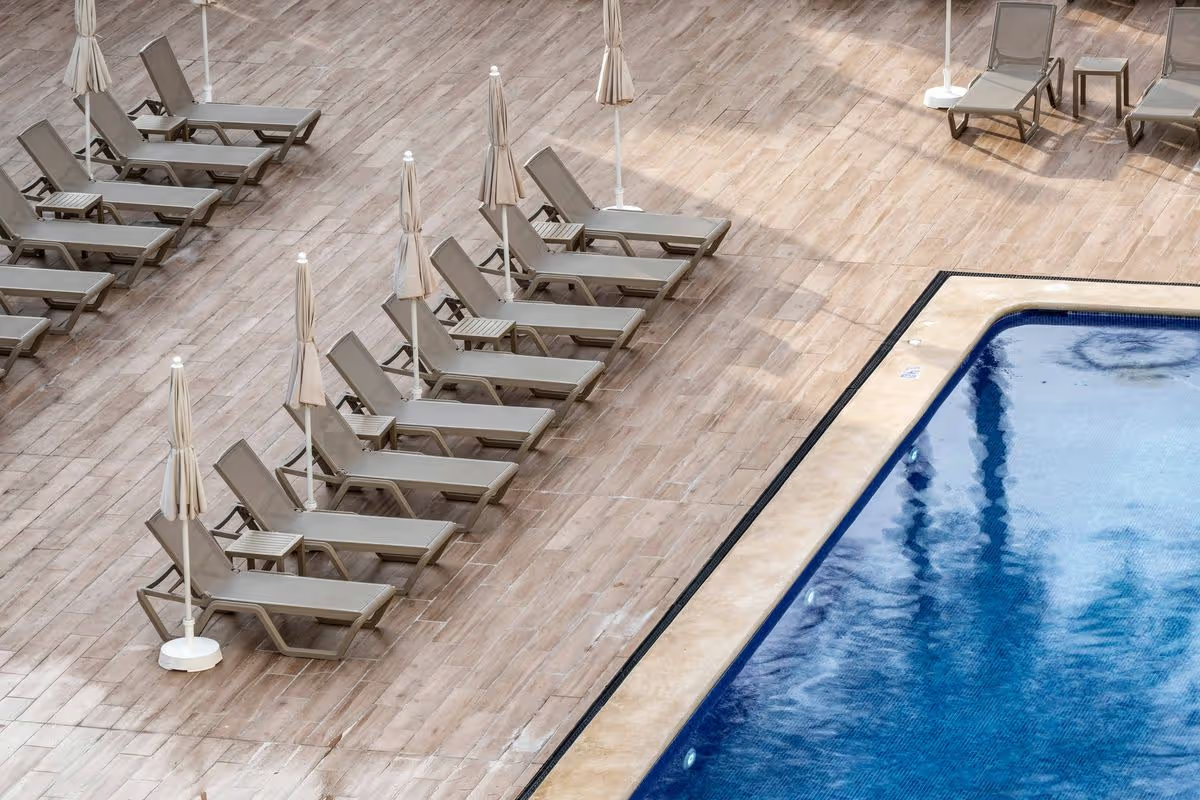
The sun loungers are always empty every morning (stock photo)(Image: Jose A. Bernat Bacete via Getty Images)
Sunbed wars have become an almost unavoidable part of a holiday at a sunny resort, but guests at one hotel in Europe never have to worry about bagging a prime spot by the pool.
If you’ve ever stayed at a resort with a pool and rows of sun loungers, you’ll know all too well about the early morning scramble to secure a sunbed before heading off for breakfast. This frantic rush typically sees guests charging across the courtyard to toss their towel over a lounger, effectively claiming it for the entire day.
The trouble with sunbed wars, however, is that they not only encourage deeply selfish behaviour that denies fellow guests a fair chance at using the facilities, but they also pose a genuine safety risk, with people running poolside and potentially coming to blows over the best spots.
At one hotel in Cyprus, though, that early morning battle simply doesn’t exist – the resort appears positively “deserted” compared to other venues where daily poolside races are commonplace.
It’s not that the hotel is short of guests, however. The real explanation behind the refreshingly towel-free poolside scene each morning is that the resort has introduced a clever system designed to guarantee every guest a spot by the pool without any of the usual squabbling.
Content cannot be displayed without consent
Mark Brown, also known as Right Guys Reviews, recently posted a TikTok video filmed at a hotel during his stay in Paphos, Cyprus. He panned his camera across the sunbeds surrounding a large pool, revealing that not a single one had a towel draped over it – despite it being morning and the majority of guests already seated at breakfast.
He was keen to point out that the pool wasn’t empty simply because the hotel was quiet, claiming it was actually fully booked. Rather, guests at this particular hotel simply have no need to scrap over a sunbed spot.
Mark said: “Honestly, you’d think this was a ghost hotel, and it was actually empty. But if you take a trip over to pool services, you’ll find out now why there’s no towels on the sun loungers.”
He went on to explain that upon checking in, guests are handed plastic “pool towel” exchange cards. Each morning, these are taken down to the pool services kiosk and swapped for towels to use on the sunbeds.
But there’s no mad dash once you’ve got your towel. At the pool services kiosk, guests are also assigned their sunbeds for the day, guaranteed to be theirs regardless, meaning there’s absolutely no need to squabble over the best spot.
Viewers who commented on Mark’s video were thoroughly impressed by the sunbed management system at the unnamed hotel. Many recalled their own battles over sunbeds in the early hours, with the vast majority saying they’d gladly swap the stress for a more relaxed, hotel-managed approach.
One holidaymaker said: “Just been to a five-star resort in Kos with no sunbed management. I had to get up at 6am every day just to secure two sunbeds for me and the wife.”
Another chimed in: “That’s the best way to do it. Booking policy is a brilliant idea.”
A third shared their own experience: “We went to Tenerife a couple of years ago and they allocated beds. It’s brilliant. So much better. You could book for am/pm or all day. Hate it when people put towels on at 7.30 and don’t turn up until 1pm.”