pays

Robson Green pays tribute to ‘the best job I’ve ever done’ as Grantchester ends after 12 years

It has run on ITV since 2014 but ITV’s Grantchester is coming to a close and lead actor Robson says the role has changed him forever

Robson Green has told of his struggle to say goodbye to the “best job I’ve ever done” on ITV’s Grantchester.

The actor, 62, now has a shrine to the drama set up in his office, which incorporates Detective Geordie Keating’s hat and suit, which he’s framed. And having never attended a wrap party before, Robson not only turned up, but he danced for three hours straight.

The actor, who has been in the series since it launched in 2014, said it felt fitting to end the show in 1964, because it was the year he was born. “It is amazing that a series that essentially revolves around a detective who has a thing for vicars, could be a worldwide success,” he quipped.

In the plot, his much-loved character Geordie bows out after being offered a promotion. “He’s been in the police force for a long time. Like myself, it comes to a point where you don’t have the energy to do certain things in your life. So, for Geordie, it’s time to hang up his hat.”

That hat is one of several items that Robson took home as a memento. “I took the hat and I took the suit but they wouldn’t let me have the Columbo coat. Devastated!”

He said that being cast in the role had felt “like a lifeline”, having come the year after his second marriage ended. “This kind of series, in a strange way, changed me as a person, like it changed Geordie as a person,” he explained. “I could become much more progressive in my life, and more understanding.”

The actor feels it also made TV vicars seem like normal people for the first time. “Before Grantchester all vicars were bumbling characters with false teeth, and sing songy voices. And suddenly, James Norton turns up, then Tom Brittney turns up, and Rishi Nair turns up, and they’re beautiful, they’re sexy, they’re cool.

“Suddenly, religion has a nuance to it, and a truth to it, and an honesty to it, and something familiar and authentic. And that’s what this series has been for the last 11 years.”

Norton, who played the Rev Sidney Chambers in the earliest few series, has recently declared that his time spent on Grantchester – which is filmed in the real-life village of the same name, in Cambridgeshire – was the happiest of his career, and Robson feels the same way. “It’s the best job I’ve ever done, it’ll be the best job I will ever do. Ever.”

His love for the show inspired him to attend the first wrap party of his entire career. “It’s such a special show and these are such close friends so, yeah, I went, it was lovely. I danced for three hours with James, Rishi and Tom – and I haven’t danced in a long time.”

Kacey Ainsworth, who plays his wife Cathy, said she also felt the role was a lifeline, coming after her long stint on EastEnders and then a career break to have her two children. “I’d been at home for seven years looking after the kids. I really didn’t want to come back to something where I was constantly filming all the time so this was perfect. Now I’m Little Mo and Cathy – I’ve got there. It’s really difficult to get out of a soap and and do something else.”

Rishi, who plays The Rev Alphy Kottaram, says in this final run viewers will see the character unravel. “He kind of loses things that are most important to him one by one to the point where it almost feels like he doesn’t have anything left. We see a much darker side of him.”

Tessa Peake-Jones, who plays long-serving housekeeper Mrs Chapman, said she’d also taken something home, after Rishi admitted he’d asked for all of Alphy’s 1960s trousers. “Mrs. C’s clothing is not to my taste but I took her Playtex undergarment,” she laughed.

She said the last day of filming had been emotional. “It was all of us gathered together, hugging, and appreciating everything we’d had over however many years. Although it was incredibly sad, it was also sort of uplifting because here we were, still all together, working on a programme we hope will be really well received.”

The decision to pull the plug on the much-loved drama came from executive producer Emma Kingsman-Lloyd and writer Daisy Coulam, who both felt it was important to “go out on a high”

And there was good news for fans, because while this January’s 11th series is officially the last, it could yet stage a mini comeback. Emma said: “We’d love to. Truthfully, if Masterpiece and ITV turned around and said they wanted a Christmas special, I would hope that we’d all be there.”

– Grantchester series 11 will air on ITV and ITVX in January

Like this story? For more of the latest showbiz news and gossip, follow Mirror Celebs on TikTok, Snapchat, Instagram, Twitter, Facebook, YouTube and Threads.


Source link

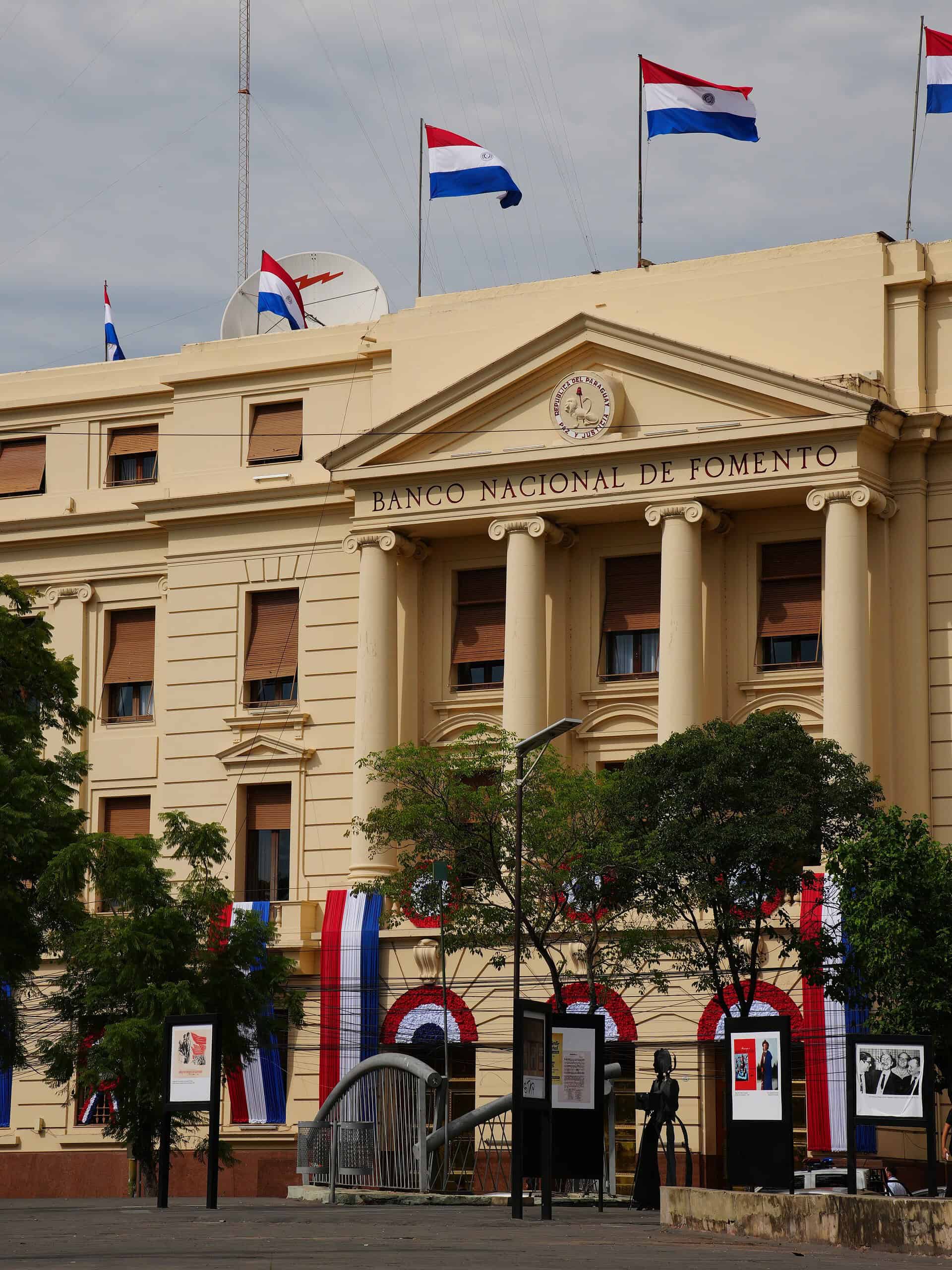
Paraguay Central Bank Pays $644M to Ueno Depositors

The digital lender’s collapse leaves deposit insurance under strain as payouts begin for 1.8 million clients.

A little more than a week after shuttering Ueno Bank, the Central Bank of Paraguay has paid approximately 3.9 trillion guaraníes ($644 million) to more than 1.8 million depositors, according to figures reported Thursday.

The payouts could ultimately drain as much as $928 million, or 58%, from Paraguay’s Deposit Guarantee Fund, according to preliminary central bank estimates. That would leave approximately $672 million in the fund to cover future bank failures, before accounting for any recoveries.

However, any direct contagion risk seems relatively small because deposits, not loans from other banks, funded Ueno Bank, said Rhys Hicks, Associate Banking and Payments Analyst at GlobalData.

“The other banks in Paraguay fund the deposit guarantee scheme, so they will share the bill, and while they seem to be picking up the slack, they are now under some strain,” he said. “A potential issue could be fraud, as these banks are having to onboard so many customers so quickly. In the long run, this should lead to far better regulation in the country, though it may cause costs to rise for everyone.”

An Anatomy of the Pay Out

The central bank began disbursing advances of up to 121.76 million guaraníes from its Deposit Guarantee Fund to each affected depositor on Nov. 5. By the end of Nov. 9, it had made payments to 93.1% of all depositors. The remaining depositors either have restrictions on their accounts, hold certificates of deposit, or have transactions involving the Development Finance Agency.

The fund’s disbursements account for roughly 12.5% of the digital bank’s reported deposits as of Oct. 28.

This is not the first digital bank failure in Latin America this year. According to the Rio Times, Brazil’s central bank liquidated the neobank Will Financeira in January after its controller, Banco Master, collapsed under special administration.

“However, that was more to do with issues at its parent bank, while Ueno’s collapse was caused by its own lending,” said Hicks, adding that the major difference with Ueno was that it was proportionally much larger, reaching around 60% of the adult population.

Rob Daly writes about the economy and fintech. You can reach him at rdaly@gfmag.com.

Editor’s note: This article has been updated to reflect the latest payout totals and the number of depositors paid.

Source link

Palantir harvests battlefield data that Ukraine pays for ‘with blood’ | Technology News

Months into Russia’s full-scale invasion of Ukraine, Palantir’s CEO Alex Karp became the first chief of a major Western Big Tech company to personally visit Kyiv.

President Volodymyr Zelenskyy said in June 2022 that he was “delighted” to receive the support of such a company in the fight against Russia “on the digital front line”.

Recommended Stories

list of 3 itemsend of list

The Florida-based software development firm’s partnership has paid off.

Ukraine has since become the first nation in modern history to systematically collect battlefield data, a crucial asset for training military artificial intelligence (AI) to recognise patterns and make predictions.

The trove of real-world combat data obtained from video and sensor feeds over four years of conflict is helping Ukraine monitor, predict and respond to Russian attacks with the help of Palantir’s products.

Yet observers say the data is also boosting the capabilities of the United States corporation whose technologies are implicated in human rights abuses, including in Israel’s genocide in Gaza, raising questions about the growing leverage that private tech corporations are acquiring over sovereign states.

A ‘strategic advantage’

Palantir was founded in the aftermath of the 2001 attack on New York’s World Trade Center to help the US defence industry build a single data environment from which to monitor and respond to incoming threats.

To reflect such a mission, the company was named after a stone in JRR Tolkien’s The Lord of the Rings that grants powers that border on omniscience.

Yasir Atalan, deputy director of the Futures Lab at the Center for Strategic and International Studies (CSIS), said Palantir makes “different forms of data talk to each other”.

In the military context, data from missiles, radars, the automatic identification system (AIS) and open sources is gathered on one screen, offering a “larger view of the battlefield”, Atalan said.

Similar solutions are available to governments for civil purposes, including border control, health services, tax and revenue – and mass surveillance.

With more data, systems use statistical learning to recognise patterns to make accurate predictions, enabling military systems to make split-second, automated tactical decisions.

Under this premise, large datasets based on real-life scenarios are coveted by companies aiming to outperform their competitors.

“Good battlefield data is extremely rare and hard to come by,” Elke Schwarz, a lecturer focusing on digital technologies at Queen Mary University of London, told Al Jazeera. Because of its scarcity, “those with access to [it] have a strategic advantage”.

Data originating from Ukraine may not be directly applicable to another conflict but is still crucial for training, Schwarz said.

“Building a system that correctly identifies a tank, for instance, requires a large volume of tank images, ideally in all kinds of weather conditions,” she explained.

Similarly, large volumes of behavioural data – information on how people react to a given scenario – are key in tracking, profiling and predicting human activity in mass surveillance systems.

Ukraine’s invaluable battlefield data

The pinnacle of the collaboration between Palantir and Ukraine’s Ministry of Defence came in January with the launch of a specialised software platform, the Brave1 Dataroom, which uses battlefield data to train artificial intelligence for military applications.

But prominent figures in Ukraine’s defence sector have questioned their government’s decision to share the country’s valuable asset with a private tech company under undisclosed terms.

“Ukraine has something that no other country in the world has,” Valerii Markus, a serviceman and former chief sergeant, wrote on Facebook. “We are paying with blood for data that someone else can convert into capital, international influence, and big money.”

The company maintains it does not acquire customer data.

In an emailed statement to Al Jazeera, it said that “customers own and control their data”.

Palantir’s software helps them “integrate and analyse their existing data sets,” the company said, adding: “Palantir never uses or retains customer data for its own purposes.”

Schwarz, at Queen Mary University London, said Palantir does not need to possess the data to benefit from it. “Rather, it works with the data that is made available,” she said.

Civil liberties and data protection

Palantir’s technologies, contracted by private clients and government agencies around the world, are known to have been implicated in human rights abuses.

Its core software platforms, ICM and FALCON, facilitated the administration of US President Donald Trump in detaining and deporting thousands of people, including asylum seekers, since January 2025. Amnesty International found the company aggregated massive amounts of data, built detailed individual profiles to track migrants and asylum seekers and assisted with deportations, contrary to its obligations to avoid causing or contributing to human rights abuses under international law.

The company has also assisted Israel in its war in Gaza, which a United Nations inquiry found bears the hallmarks of genocide.

Last year, UN Special Rapporteur Francesca Albanese found “reasonable grounds” to believe Palantir provided AI platforms used for battlefield data integration and automated decision-making in the war that has killed more than 74,500 Palestinians since October 2023.

In the United Kingdom, the National Health Service (NHS), police, military and local councils all signed multimillion-pound contracts with Palantir to integrate user data, but the agreements have been met with public backlash.

Nonprofit organisation Corporate Accountability launched a campaign against the 330-million-pound ($440m) contract between the NHS and Palantir to provide a new data platform. The watchdog warned the company is “at the heart of the dystopian marriage of Big Tech, the surveillance and detention industry, and rising fascism”.

Palantir in April published a 22-point summary of Karp’s coauthored book on X, which was widely criticised for promoting an authoritarian, antidemocratic worldview by questioning the efficacy of liberal democracy and arguing that some cultures produce vital advances while others are regressive.

Fatimah Shaikh, Corporate Accountability’s deputy campaigns director, said, “Palantir is not a corporation we can trust” to hold British citizens’ sensitive personal information.

“We should all be able to get medical care without fearing for our safety or privacy,” she told Al Jazeera.

Ilia Siatitsa, senior legal officer at Privacy International in the UK, said tech companies like Palantir blur the line between military and civil applications. They are also opaque about how they use customers’ data by virtue of their involvement in national security, she added.

Siatitsa argued the company could potentially use personal information to train its products – including those with a military application – without explicit consent from the users.

“If my data is going to be feeding into a war machine, I want to know about it,” she said. “I need to have the choice, not only [as a matter of] privacy, but also from an ethical point of view.”

In June, Britain announced it was reviewing the NHS’s data contract with Palantir after parliamentary pressure.

Growing dependencies

Private tech companies are supporting military and civil infrastructure, to the point where governments may become reliant on them to conduct military operations or run national services, experts say.

Anna Nadibaidze, researcher at the Center for War Studies at the University of Southern Denmark, said the balance of power has been shifting.

“We’re used to state armies, nations’ armies being the main players,” Nadibaidze said, adding that now those players are reliant on products supplied by the private sector. “So what if they choose to not supply this infrastructure any more?”

She argued Elon Musk’s SpaceX offered a valid example.

Ukraine has come to rely heavily on the company’s Starlink satellites for communications on the battlefield and effective warfare, but in late September 2022, during a pivotal push by Ukraine to retake Kherson from Russia, the tech billionaire suddenly provoked a communications blackout.

Amid tensions between Washington and Europe, several countries are now refraining from using Palantir’s products. France’s Prime Minister Sebastien Lecornu in June said domestic intelligence services would ditch Palantir’s products in an effort to avoid “strategic dependency”. Germany’s military also said it would no longer use the company’s products.

Spanish publication El Confidencial revealed in July that Spanish authorities quietly instructed state-backed companies to avoid signing new contracts with Palantir, citing concerns that sensitive national security information could be exposed.

Palantir’s reliability as a partner has also been called into question in Ukraine after the company finalised in September a strategic partnership with Nebius, a Dutch company founded as an offshoot of Russian technology giant Yandex.

Denys Shtilerman, chief designer and co-owner of Fire Point, a Ukrainian defence-tech company that develops and produces UAV and missile systems, said “the very same Palantir that works with Ukrainian combat data” had struck a deal with Yandex cofounder Arkady Volozh.

Volozh’s description of Russia’s war as “barbaric” has not eased Shtilerman’s concerns.

“Our combat data is not free raw material for Western technology corporations. It is a strategic asset of the state,” he wrote on X in a response to Kyiv’s collaboration with Palantir.

“Ukraine has paid for it with blood. We have no right to simply hand over the most valuable asset we possess.”

Source link

John Leeson dead: Voice behind Dr Who fan favourite K9 & Dad’s Army star dies aged 83 as son pays tribute

JOHN Leeson – best known for voicing the beloved robodog K9 in Dr Who – has died aged 83.

The actor, born John Ducker, passed away after a “summer of illness” his family revealed earlier today.

The actor voiced the dog-like robot companion – one of the show’s most beloved characters Credit: News Group Newspapers Ltd
John Ducker died after a ‘summer of illness’ Credit: Alamy

Leeson was the iconic voice behind the metal dog K9 as well as working on TV shows including Dad’s Army, Sorry!, Crown Court and Longitude.

Earlier this year he reunited with Dr Who co-star Tom Baker to starr as Doctor Watson alongside Baker as Sherlock Holmes in the audio drama Sir Sherlock: The Red Letter Day.

Sharing news of his father’s death to Facebook, Guy Ducker said: “I regret to announce the death of my father, John Ducker, a.k.a. John Leeson, at 3:03pm today after a summer of illness. The end was peaceful.”

Guy added a William Shakespeare quote saying: “Good night, sweet prince, and flights of angels sing thee to thy rest.”

Tributes for the actor have poured in from co-stars, colleagues and fans.

Dr Who writer Russell T Davies said it was “impossible to imagine anyone else” in the role of K9 and praised John as “a fine, fine actor”.

Reminiscing on his performance as the beloved robodog, he added: “What a character: a posh dog, uppity, haughty, wry, but somehow innocent too, and so funny. ‘Maximum defence mode!’ God he was good.”

He ended his heartwarming tribute writing: “A true gent, and a great loss. Good night, sir. Affirmative!”

Fans have hailed him as a ‘true’ gent’ who embodied the ‘heart and soul of K9’
John Leeson started voicing K9 in 1977 Credit: Shutterstock

John played the role of K9 for the majority of the show’s run over six decades – starting in the 1977 episode ‘The Invisible Enemy’.

He has been remembered as “the voice, heart and soul of K9” and a “firm favourite of countless fans”.

“John was a stalwart of the Dr Who universe and is going to be much missed, particularly since literally millions of us can’t think of or hear the word ‘Affirmative’ without hearing it in K9’s voice” said one fan under Russell Davies’ post.

“Such an important part of Doctor Who. Such a sad loss”, added another.

“So soon after sir Patrick Stewart. Terrible time for sci-fi fans.”

One wrote: “Such sad news. John was a true icon. invested K9 with so much charm, character and nobility – he was absolutely integral to K9’s appeal.”

Leeson reprised the role in several Dr Who audio dramas and spin-off series, including CBBC’s The Sarah Jane Adventures, before returning to the original programme after its revival.

His other credits include The Bill, Vanity Fair, Doctors and Blake’s 7, and he was also regularly heard as a continuity announcer on Channel 4.

He also portrayed the original Bungle the Bear in the children’s TV series Rainbow.

Source link

BBC viewers in tears as Matt Baker pays emotional tribute to co-stars on air

Matt Baker returned to screens at the weekend to host coverage of the Gymnastics World Championships

BBC viewers were left feeling emotional over the weekend.

Matt Baker returned to screens on Sunday (October 25) to present live coverage of the concluding apparatus finals on the final day of the 2026 World Gymnastics Championships. Matt was joined in the studio by retired British gymnast Beth Tweddle.

The women’s floor discipline was among those taking place in Rotterdam, with USA athlete Claire Pease winning the title with a dominant score of 13.866. Algeria’s Kaylia Nemour won the gold in the balance beam final, while Artur Davtyan, Zou Jingyuan, and Tang Chia-Hung took home the final men’s titles.

During the coverage, Matt announced that his fellow commentators, Christine Still and Craig Heap, would be leaving the team after many years on air. Ahead of the men’s finals getting underway, Matt said: “I just want to take a moment to say a heartfelt and a massive thank you to two very special people, who are sitting either side of me right now.

“And for those of you who’ve enjoyed our gymnastics coverage on the BBC over the years, you will be very familiar with the wonderful voices of Christine Still and Craig Heap. Now, Christine was one of the first female commentators that BBC Sport has ever had, when she started back in 1993.

“And here we are, Christine, 33 years on. Craig, you joined the team just before Rio in 2016, and, along the way, we have witnessed some incredible moments together.”

An emotional montage of some of Christine and Craig’s memorable moments was then played, before the camera panned to the stars in the commentary box. “Wonderful pictures and wonderful storytelling,” Matt said.

Ensure our latest TV stories always appear at the top of your Google Search by making us a Preferred Source. Click here to activate or add us as Preferred Source in your Google search settings

He went on: “I can’t believe I’m saying this, but this could be the last time that we all sit together and enjoy the gymnastics. Christine, we have worked together for 20 years. You’ve been like a mum to me, you really have, as we’ve travelled all over the world together. And may I say, I’ve loved every single second.”

Matt then turned to Craig, saying, “We’ve been friends for many, many years. I’ve loved your company, mate. Honestly, I’m so gonna miss you both, I really am.”

“We’ll miss you as well, Matt. I’ve been so lucky,” Christine replied, before Craig added: “All good things have to come to an end, I guess… I’m going to miss you all… I’ll stop right there before I start crying.”

BBC viewers were left feeling emotional after watching Matt’s tribute. “Gonna be so weird not hearing Christine Still and Craig Heap commentating on gymnastics on the BBC anymore,” one person wrote on X.

Another added: “Omg Craig and Christine are leaving.” A third said, “I’m actually in tears. End of an era.”

Someone else commented: “I am gutted. Gutted the trio are no longer together.” A fifth viewer similarly shared: “That is so sad. I watch the gymnastics in the Olympic Games and not hearing their voices will be different… They will be missed.”

Coverage of the Gymnastics World Championships is available to stream on BBC iPlayer

Source link