World leaders arrive in New York for UNGA 81 as wars multiply and trust in international institutions erodes. Al Jazeera’s @EmmaWithrow explains the real question is whether global rules still matter when powerful countries choose to ignore them.
Basketball superstar Kyrie Irving has offered to pay a fine for American football player Azeez Al-Shaair, who was penalised for wearing the name of Hind Rajab, a Palestinian girl killed by Israeli forces in Gaza.
Al-Shaair was handed a fine of $11,941 by the National Football League (NFL) on Wednesday as he was found to be in breach of the NFL’s rules on players’ equipment and clothing during his team Houston Texans’ game against the Buffalo Bills last weekend.
Recommended Stories
list of 3 itemsend of list
Shortly after the fine was announced by an NFL reporter on X, the pro-Palestine basketball player responded to the tweet by saying he would “take care” of it.
Al-Shaair, 29, is a linebacker for the Houston-based NFL team and a vocal advocate for Palestinian rights.
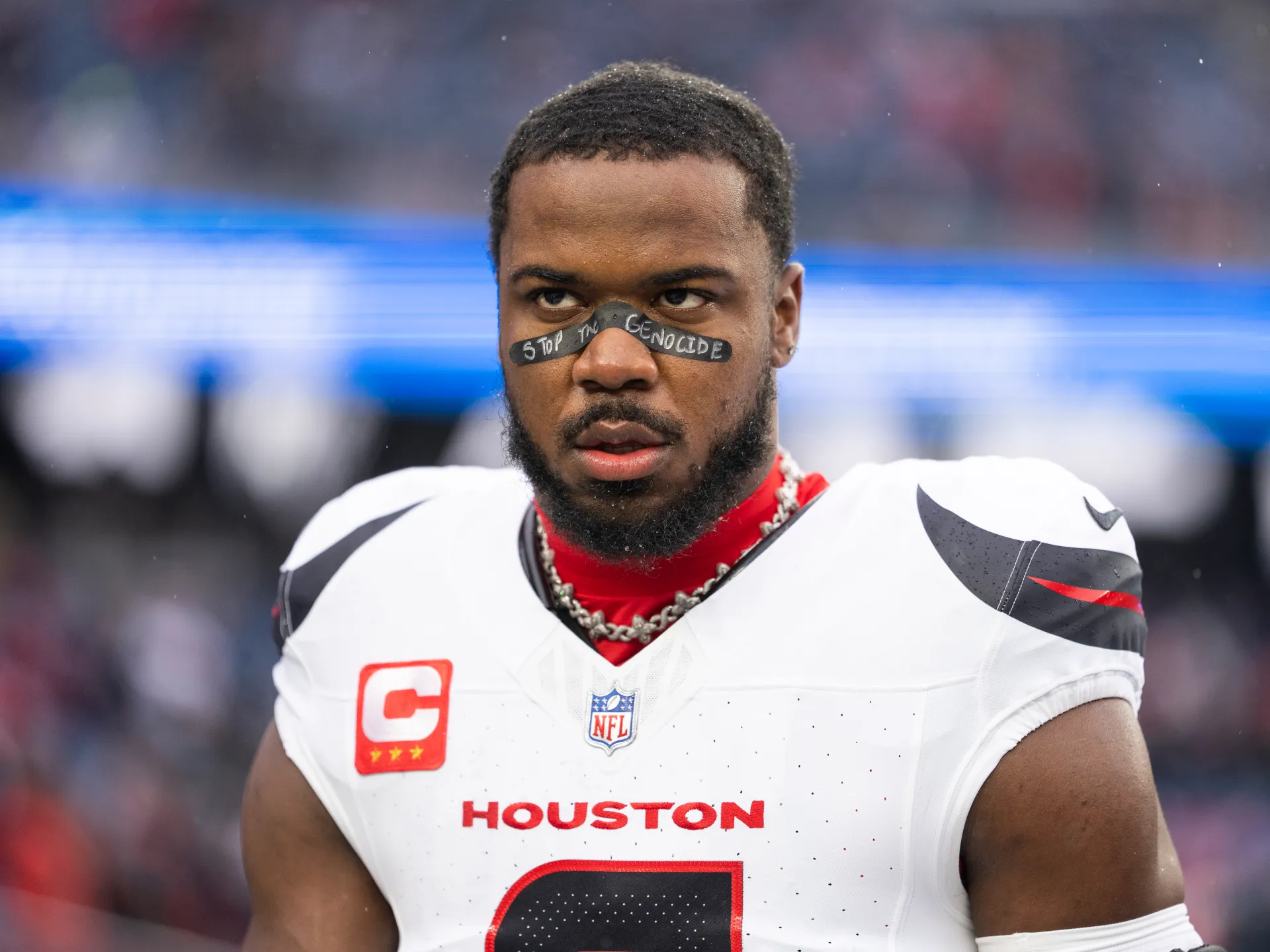
During his team’s last NFL game, Al-Shaair wrote Rajab’s name on his eye black, a sticker or paint frequently used by NFL players to reduce glare.
Five-year-old Rajab was killed in Gaza after Israeli soldiers opened fire on her family’s stranded car. A phone call by the Palestinian Red Crescent documented her final moments and was the subject of an Oscar-nominated docudrama.
Al-Shaair, a Black American Muslim player, has frequently spoken about the plight of Palestinians and has paid the price for it.
He was also fined in January, during the NFL’s last season, when he displayed the message “Stop The Genocide” on his nose tape. While it did not specifically refer to a particular conflict, it was widely understood to be about Gaza and Sudan.
NFL criticised for ‘inhumane’ fine on Al-Shaair
The NFL’s fine on Al-Shaair comes at a time when Robert Kraft, the owner of the Boston-based team New England Patriots, confirmed that he pressured pop star Ed Sheeran to drop rapper Macklemore from his tour of the United States.
The billionaire is the owner of Gillette Stadium in Foxborough, Massachusetts, one of the venues where Macklemore was due to appear on stage as the opening act for Sheeran’s US tour in late September.
Letting Macklemore perform in Gillette Stadium would, Kraft said, cross a line, as he described the rapper’s recent performances as including a “broader history of anti-Semitic rhetoric and imagery”.
Kraft is known for launching a so-called “anti-Semitic campaign” during Israel’s genocide in Gaza in 2023, when players, coaches and executives from his Patriots team wore blue pins.
On October 15, 2023, the NFL observed a moment of silence for Israel during a game between the Baltimore Ravens and the Tennessee Titans in London, United Kingdom, while the league has sanctioned its player for raising awareness for Palestinians.
The NFL was criticised on social media for slapping a fine on Al-Shaair, with one user calling the move “inhumane”.
“He is advocating for the murder of this innocent child Hind Rajab in Palestine and they fine him?! Nah, that is so inhumane. You should be ashamed of yourself,” the user wrote.
Prominent American Muslim scholar Omar Suleiman questioned whether Al-Shaair would have faced a similar punishment if his tape carried the name of Holocaust victim Anne Frank instead.
“Why is honoring murdered Palestinian children ‘an unauthorized message’?” he asked in a post on X.
Meanwhile, the Texas chapter of the Council on American-Islamic Relations backed Al-Shaair over his continued advocacy for Palestinians.
“We commend Al-Shaair for using his platform to highlight the memory of Hind Rajab, one of the many children murdered by the Israeli government during its genocide in Gaza,” the rights group said in a statement on its website.
“The NFL has no problem with coaches wearing pins developed for genocide supporter Robert Kraft’s “Stand Up to Jewish Hate” campaign, and it should have no problem with an NFL player mentioning the name of a girl killed in that genocide,” the statement went on to add.
“Al-Shaair’s message was rooted in basic human decency and concern for innocent lives. That should not be controversial, much less subject to a fine.”
Irving’s pro-Palestine stance
Meanwhile, nine-time National Basketball Association (NBA) All-Star Irving has previously made his pro-Palestine stance on Israel’s genocidal war on Gaza clear.
In February, Irving wore a shirt reading “PRESS” at the NBA All-Star Game to honour journalists who had been killed in Gaza while covering the war.
According to reports, the tag on his shirt read: “Dedicated to our beloved journalists in Gaza showing the world the truth.”
In April, Irving changed his display picture on Instagram to an image of a Palestinian child blocked from attending school by Israeli soldiers in the occupied West Bank.
During a pre-game interview in 2024, he was seen wearing a chain with the Palestine flag in the shape of Israel’s landmass.
In 2023, the basketball player wore a keffiyeh, a cotton headdress with a distinctive checkered pattern worn in many parts of the Arab world that represents Palestinian identity, during a post-match news conference.
Schools in England are to get around £500 million in extra funding towards the teachers’ pay award this school year, reducing the risk of a strike ballot by the largest education union.
Daniel Kebede, the General Secretary of the NEU, said the offer of more funding was a “significant” step in negotiations.
In a letter to the union on Wednesday, which has been seen by the BBC, the government said the increase would be funded by savings in employers’ contributions to the local government pension scheme.
The letter said the 4.9 percentage point drop in what employers are expected to contribute will deliver “significant savings” on the pay bill for support staff, which will not be clawed back by central government.
The National Education Union said it expected the extra money to be around £500m, which schools can now use towards teachers pay this year.
In July, ministers accepted the recommendation of the independent pay review body for teachers and agreed a 3.5% increase from September 2026 would be followed by 3% the following year.
The pay increase had been partly funded by an additional £700m for 2026-27 and £1.1bn for the following year.
Independent economists at the Institute for Fiscal Studies (IFS) said that left schools facing a shortfall of around 1% between rising costs and funding this year.
Luke Sibieta, IFS research fellow, said the extra money would mean the pay increase this year was fully funded – and on top of other funding increases, schools would be £1.6bn better off by next year than they had expected this summer.
The additional money could potentially bring the uplift for this year into line with next year.
Kebede said schools has been “running on empty” and the funding signalled “a welcome return to reality, and a message of hope for the entire school community”.
Paul Whiteman, General Secretary of the National Association of Headteachers, said the decision is “certainly welcome”, putting schools in a “better position”.
He said his union would look carefully at the detail “to determine whether this means the pay uplift is genuinely fully funded” for schools.
Pepe Di’Iasio, General Secretary of the Association of School and College Leaders, said he was “pleased” at the announcement of additional funding but “the wider pressure on school and college budgets remains intense”.
Similarly, the NASUWT union welcomed the news. General Secretary Matt Wrack added schools needed “a sustainable, long-term injection of extra funding” to meet the needs of young people.
In an indicative ballot by the NEU in April, 90% of teachers who voted said they would be prepared to take industrial action over funding and pay, on a turnout of 48%.
A formal ballot was due to begin on 3 October and close 15 December, raising the prospects of teachers pay strikes early in 2027.
The national executive of the NEU will meet on 24 September to consider whether to call that off following the additional funding on offer from the government.
A spokesperson for Education Secretary Lucy Powell said the government was “confident schools can now meet the costs of the award at a national level”.
“The Secretary of State has been clear from day one that supporting teacher recruitment, retention and wellbeing, and rebuilding the relationship with the profession, are among her top priorities.”
“This has been a very difficult time for everybody associated with the Clippers, and for that, I have sincere regrets,” Ballmer said in the statement released 11 days after the NBA first sanctioned the owner and his team. “I want to apologize to our fans, employees, and my fellow NBA team owners for the distraction and distress this matter has caused, for which I accept responsibility as principal owner.”
The investigation found Leonard received $66 million in cash and equity from four companies facilitated by Ballmer and Clippers executives at the behest of Dennis Robertson, Leonard’s uncle and then-agent. Ballmer invested $60 million in Aspiration Partners, while Boingo Wireless, Daktronics and Lockton Insurance received $22 million from the Clippers in consulting fees.
The Clippers initially protested and vowed to use all means available to contest sanctions that included banning Ballmer from all league activities for a year, fining the team $30 million and taking away five first-round draft picks in the 2029, 2030, 2031, 2032 and 2033 drafts.
Leonard previously agreed to pay a $700,000 fine and did not contest the sanctions, removing the possibility of the case going to arbitration because the mechanism only exists for players and not teams.
“We are committing to put this chapter behind us,” Ballmer’s statement read. “We have communicated to the NBA that we are complying with the penalties assessed by the league, have paid the fine and are moving forward. While there are still disagreements concerning the findings in the report, this is not where I want to focus. Team owners should support, not distract.”
Two of Ballmer’s top executives were also sanctioned, altering the way the team will have to operate moving forward.
Clippers president of business operations Gillian Zucker was suspended without pay for one year for “being primarily and directly culpable for the impermissible endorsement arrangements and for providing false and misleading statements to investigators.”
Clippers president of basketball operations Lawrence Frank was suspended without pay for six months for “his involvement with the impermissible endorsement arrangements and for approving impermissible expenses incurred by Mr. Leonard and his family.”
Ballmer, however, has assembled a deep front office staff, giving the Clippers a number of options to offset the loss of those who are suspended.
“The challenges ahead of us are significant, but so is our resolve,” Ballmer wrote. “We will continue to build our team and invest in our community. The confidence of our fans is our priority. With our talented roster, outstanding staff and clear vision, I am certain that we will compete at the highest level and be an organization our fans can be proud of.”
The decision to comply with the sanctions rather than attempting to contest them in the court could help resolve one of the biggest outstanding offseason items the Clippers face.
Leonard’s trade to the Toronto Raptors in exchange for forward Brandon Ingram, shooting guard Gradey Dick, two first-round draft picks, a pick swap and two second-round picks was put on hold while both teams awaited investigation results.
With the NBA stripping the Clippers of five future first-round picks, the package they are expected to receive when the Leonard trade is completed would have a substantial impact on their future roster-building options.
After two of his children fell ill on an all-inclusive Jet2 trip to Turkey, Blake Chapman decided to abandon the holiday and fly home – but says he was left £10,000 out of pocket
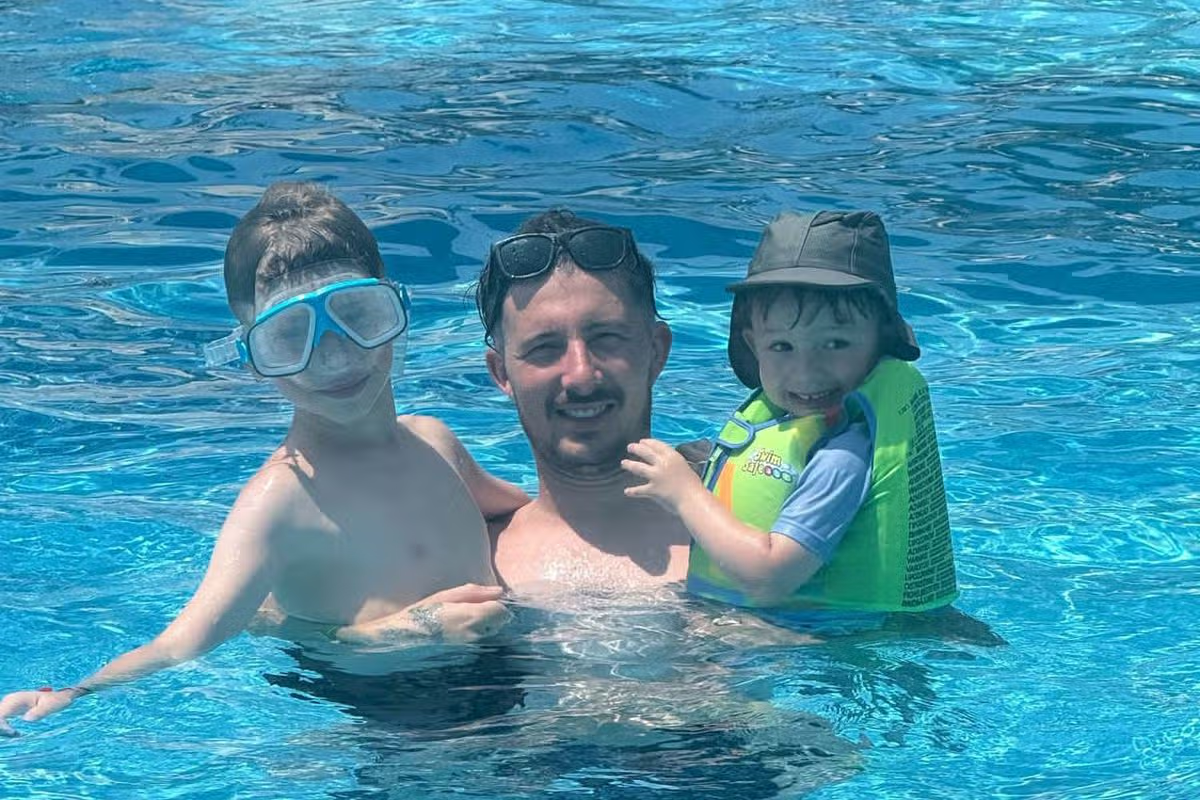
Blake Chapman with Keeton (left) and Tobias (right)(Image: Kennedy News and Media)
A furious dad says he was left £2,000 out of pocket after a holiday nightmare – despite having paid for travel insurance. Blake Chapman flew out with his 29-year-old partner Abbey Andrews and their three children Keeton, 11, Tobias, 3, and Vienna 1, on August 6. They had paid for 10-day £8,000 all-inclusive Jet2 holiday in the Turkish resort of Alanya.
But the family’s holiday started to go wrong just two days after they landed in Turkey, when Blake and Abbey’s youngest child, Vienna, fell ill with symptoms of severe food poisoning. “It started happening with my one-year-old two days in,” Blake said. “She was completely fine then it got to about 11:15pm and she started projectile vomiting, really bad diarrhoea, temperature.
“Because we were in a different country we panicked. I ran down to reception, they told me that they’d call an ambulance. They got to the hospital, they put an IV drip in Vienna.”
Soon after arriving at the hospital, Blake was presented with a £2,000 bill. “I argued it because I said that we’ve got insurance and I paid for the higher insurance,” he said. “In the end I just paid it.”
But things went from bad to worse when the couple’s three-year-old son Tobias began to show the same symptoms.
Blake said: “The following day around 1.00pm we all got out of the pool just about to get some dinner and it happened to my three-year-old Tobias. We kind of knew what to expect this time. Tobias was being sick in the hospital.”
Faced with the prospect of a second massive bill, Blake refused hospital treatment for Tobias and consulted a pharmacist instead.
Meanwhile, although Blake had been given an explanation for Vienna’s symptoms, he didn’t entirely believe it. He continued: ”We got the doctor’s report and they put it down to dehydration but I’m like a helicopter dad, I took the kids all over the world, we’ve never had a problem.
“When Vienna went to hospital she had a blood test and they said she’s got high white blood cells so that indicated an infection. I don’t believe it is dehydration because I’m not going to sit with a one-year-old in the beaming sun.”
With two of his children seriously unwell, Blake made the decision to abandon the holiday: “My plan was ‘let’s get out of here, let’s fly home’,” he says.
Blake says he tried to get hold of the Jet2 rep without success, so he called the company direct. Despite being told that his insurance claims could potentially take months to process, Blake and Abbey decided to leave the hotel before anyone else fell ill, spending another £950 on flights, arriving back in the UK on August 11.
“It’s put me off all-inclusives,” Blake says. “I would never go to Turkey again in my life from this experience.
He stressed that he wasn’t holding anyone responsible, but was frustrated by the slow process of his insurance claim. ”I’m not blaming the hotel, I’m not blaming the hospital for us being ill but it was how we were left in the dark,” he said.
“It’s very frustrating, very emotional. What I want to do is spread awareness because people think if you go all inclusive with the full travel insurance too then you’ll be OK if anything happens – but we were asked to pay thousands.”
A spokesperson for Jet2holidays said: “We were very sorry to hear that members of the Chapman family became unwell during their holiday. Our in-resort team made attempts to contact the family to offer support, but they had already departed before we were able to speak to them.
“Our teams on the ground work tirelessly to support customers throughout their holidays, and we remain committed to providing help whenever it is needed.”
THERE is nothing worse than a delayed or cancelled flight – and one airline is now making passengers pay extra if they want help quicker.
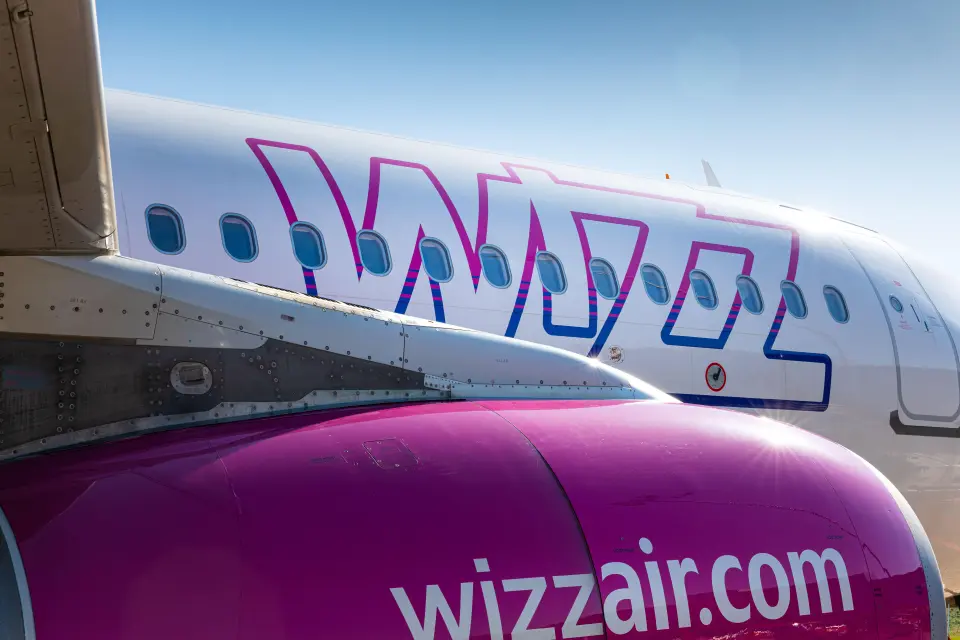
Wizz Air has launched a new add-on called ‘Disruption Assistance’, which it claims is ‘added protection’.
Wizz Air has introduced a new service called ‘Disruption Assistance’Credit: Alamy
According to the airline, passengers will “get extra support if your flight is disrupted on the day of travel”.
The new add-on means that travellers will get notifications for disruptions over two hours, for any reason including severe weather, issues at airports or even strikes.
Sign up for the Travel newsletter
Thank you!
Another part of the add-on is that you will get rebooked quickly when time matters, even if this means needing to travel with another airline.
You will also be able to request a full refund if the alternatives offered to you don’t work.
The final part of the add-on is that you will get “access [to] easy self-service tools or speak to an agent”.
You can add Disruption Assistance during the booking process or in Manage My Booking on the airline’s website or app.
In addition, if your flight is impacted on your day of travel, you will be sent an email to the Disruption Portal where you will be able to rebook via one of the options given or offered a refund.
According to EX-YU Aviation, the add-on costs between €9.90 (£8.51) and €14.90 (£12.80) per person.
Passengers will pay for the add-on which will prioritise booking them onto a new flight if theirs is delayed or cancelled by more than two hoursCredit: Getty
Legally, the airline must rebook you under EU/UK Regulation 261/2004, if your flight is cancelled or delayed by more than five hours.
Airlines will usually try to rebook you on their own airline’s next available flight.
However, if they are unable to get you to your destination on the same day or next day, they must legally book you onto a rival airline and reimburse you.
Essentially, the Disruption Assistance add-on means you don’t have to battle with the airline’s customer service for a new flight or refund.
Flight compensation rules
A look at your rights if a flight is delayed or cancelled, when your entitled to compensation and if your travel insurance can cover the costs.
What are my rights if my flight is cancelled or delayed?
Under UK law, airlines have to provide compensation if your flight arrives at its destination more than three hours late.
If you’re flying to or from the UK, your airline must let you choose a refund or an alternative flight.
You will be able to get your money back for the part of your ticket that you haven’t used yet.
So if you booked a return flight and the outbound leg is cancelled, you can get the full cost of the return ticket refunded.
But if travelling is essential, then your airline has to find you an alternative flight. This could even be with another airline.
When am I not entitled to compensation?
The airline doesn’t have to give you a refund if the flight was cancelled due to reasons beyond their control, such as extreme weather.
Disruptions caused by things like extreme weather, airport or air traffic control employee strikes or other ‘extraordinary circumstances’ are not eligible for compensation.
Some airlines may stretch the definition of “extraordinary circumstances” but you can challenge them through the aviation regulator the Civil Aviation Authority (CAA).
Will my insurance cover me if my flight is cancelled?
If you can’t claim compensation directly through the airline, your travel insurance may refund you.
Policies vary so you should check the small print, but a delay of eight to 12 hours will normally mean you qualify for some money from your insurer.
Remember to get written confirmation of your delay from the airport as your insurer will need proof.
If your flight is cancelled entirely, you’re unlikely to be covered by your insurance.
WASHINGTON — The widow of an airman killed on a combat mission in the Middle East said it took a viral social media post to get resolution from the Pentagon on issues related to her husband’s benefits and basic pay months after his death.
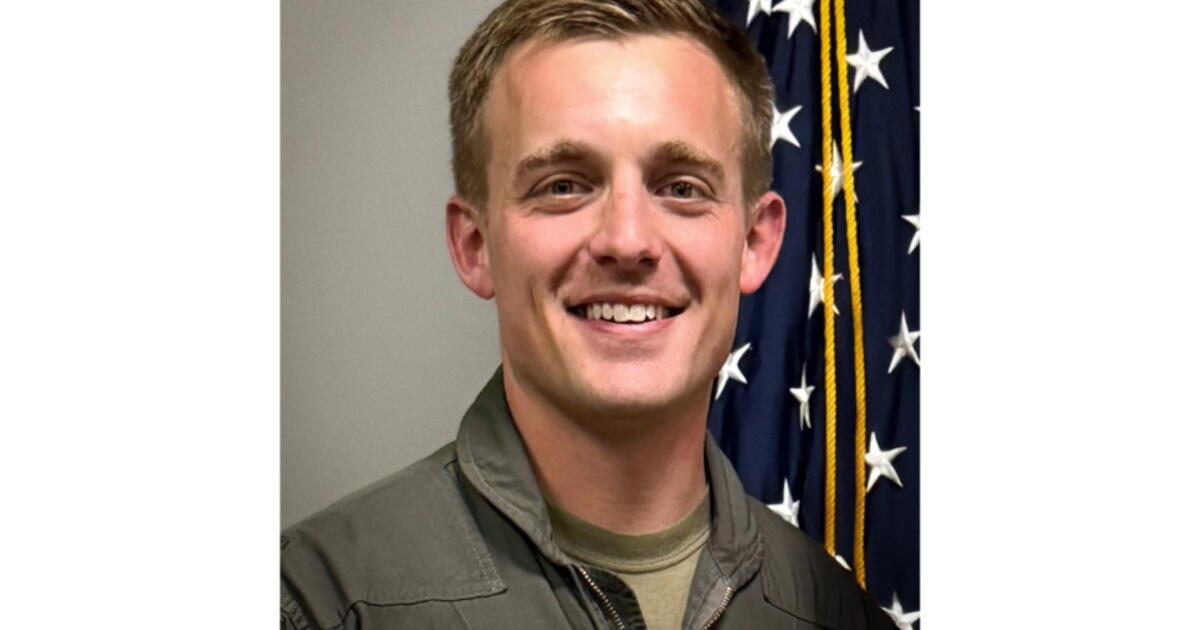
Maj. Alex Klinner, 33, was one of six crew members of a KC-135 refueling aircraft that crashed in western Iraq in March while supporting operations against Iran. He’s one of 18 U.S. service members killed, along with 790 wounded, since the war began more than six months ago.
The Air Force reached out to his widow, Libby Klinner, this week to clarify that his final paycheck would include hazard pay and combat-related tax breaks. This occurred after she voiced frustration on social media at being told by a military officer assigned to support her after her husband’s death that he was ineligible for those benefits because “we were not at war.”
“My husband lost his life because we’re in a war, and then I was told that because it’s not technically a war, we lose out on something,” Klinner told the Associated Press. “It all comes down to principle.”
Trump administration is rejecting the ‘war’ label for current Iran operations
Her post, made over the weekend, gained national attention. Vice President JD Vance promised to look into her case after being asked about it during a White House briefing on Thursday.
“We want to be as helpful as we can and ensure she gets everything that she is entitled to,” Vance said. “My message to her would be, ‘We love ya, we’re grateful for the sacrifice and we very much take very seriously our commitment to get you what you need to get.’”
In response to a separate question, Vance rejected the use of the word “war” to characterize U.S. fighting in Iran, saying that “there is no active shooting.” The military has launched strikes against targets in Iran twice this week, and Iran has retaliated by firing on U.S. allies in the Gulf.
On Friday, President Trump called U.S. strikes “intermittent” and defended Vance’s comments.
“I call it a military conflict because it’s small potatoes for us,” Trump told reporters in the Oval Office.
In late July, the Trump administration created a new, separate category in the Pentagon’s casualty count system for those killed and wounded in renewed U.S.-Iran fighting. Pentagon officials said the change was necessary because “Operation Epic Fury,” the original name for combat operations against Tehran, had ended. Since July 7, all U.S. casualties in the Middle East have been tallied under “Overseas Operations.”
Widow says the Air Force has clarified the issues about her husband’s pay
Libby Klinner said Air Force officials contacted her this week to say they were initiating a review of her husband’s pay. The Air Force acknowledged to her Thursday that it had initially provided inaccurate information and clarified that she was receiving the full pay and benefits her husband was owed, she said.
She said she was told that her husband’s paycheck had already included but incorrectly itemized the combat-related hazard pay and tax breaks.
The pay incentives commonly known as “combat pay” are $225 per month and are conditioned not on a formal war declaration, but on the service member being in an area where there is “grave danger of physical injury” or of being “killed, injured, or wounded by a hostile fire event,” according to a military website.
Alex Klinner’s final paycheck would have included half that amount since troops are paid twice per month. It is difficult to calculate how much in federal tax breaks Klinner would have been receiving without more information.
Klinner declined to specify the amount of money she was initially told her husband, an eight-year Air Force veteran from Birmingham, Ala., would be ineligible to receive.
The Air Force says it’s committed to offering information and support
The Air Force said officials spoke with Klinner this week to “ensure all her questions are fully addressed” and confirmed that “all eligible combat theater benefits were included” in her husband’s pay.
“We remain committed to providing clear information and continued support to Mrs. Klinner, as well as all the families of the Airmen who died in the KC-135 crash,” the Air Force added.
Broadly, errors in pay in the military are very common because service members can often gain or lose eligibility for a variety of payments depending on their deployment status, duty location or even family factors. As a result, unlike their civilian counterparts, some troops can see their paychecks change many times a year, depending on many factors — something that also increases the likelihood of errors.
A GoFundMe for Libby Klinner and her three young children, launched in the days after her husband’s death, has raised more than $1.5 million.
Klinner said she hoped that by speaking out, she could ensure other grieving families receive clear information from the outset.
“I am very fortunate to have a significant support system around us and a platform to advocate for myself and for my kids. Other families may not have those resources,” she said. “If I can do anything to make this awful situation a little bit easier for someone else to navigate, then I am more than willing to do so.”
Brook and Toropin write for the Associated Press. Brook reported from New Orleans.
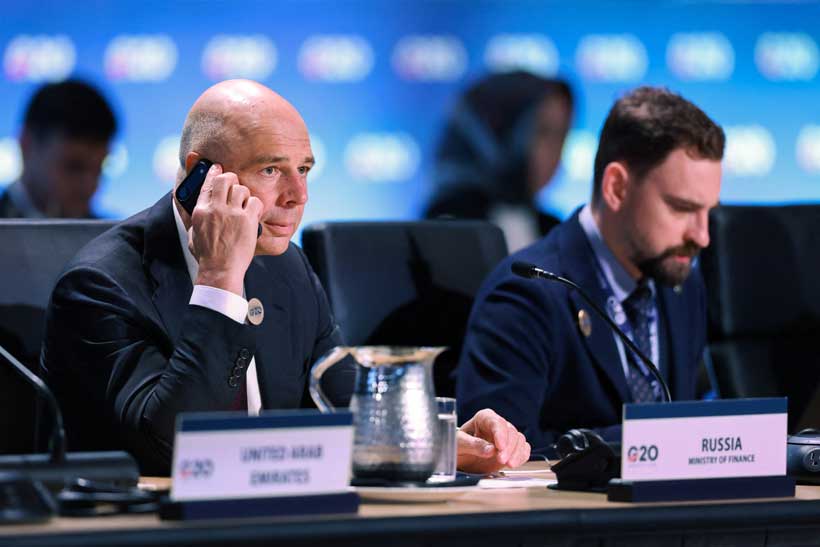
On 31 August, in Asheville, North Carolina, Anton Siluanov sat down at a G20 finance ministers’ meeting for the first time since Russia invaded Ukraine. When he tried to open a conversation about areas of mutual interest, US Treasury Secretary Scott Bessent cut him off: nothing is possible until the war is over. European ministers refused to appear beside him in the traditional group photograph, and the photograph was taken without him.
The snub is not the story. The composition of the delegation is. Ten days earlier, Deputy Foreign Minister Sergey Ryabkov had told a Russian outlet that Moscow was ready to hear new ideas for ending the war, provided they aligned with the goals Putin has set and with realities on the ground. Read alongside Asheville, that statement stops looking like an opening and starts looking like an invoice. Moscow is not testing whether it can stop fighting. It is testing what stopping would be worth, and it sent its finance minister to find out.
The Missing Fifth of Donetsk
Stay ahead of the geopolitical week.
MD Briefing delivers expert analysis across five global fronts — the Indo-Pacific, energy, geoeconomics, European security, and the Middle East — every Monday morning. Free.
Four and a half years in, the war has settled into an asymmetry that neither side’s rhetoric captures. Russian forces hold roughly 80 percent of Donetsk oblast and virtually all of Luhansk, according to the Institute for the Study of War. The missing fifth of Donetsk is the “fortress belt”, the fortified urban chain of Kostiantynivka, Druzhkivka, Kramatorsk and Sloviansk that has anchored Ukraine’s eastern defence since 2014. Putin has issued fifteen separate deadlines to take Donetsk since 2022 and missed all of them. The current one expires on 31 December 2026.
Diplomacy has been dormant since March, when a scheduled round collapsed as Washington went to war with Iran alongside Israel. Before that came a 28-point American framework, drafted with Russian input in late 2025, that would have recognised Crimea, Luhansk and the whole of Donetsk as de facto Russian, frozen the southern front, and phased Russia back into the global economy. Kyiv and Europe forced it into revision. In August, Volodymyr Zelensky put forward a joint Ukrainian-American-European counter-proposal built on three planks: a ceasefire, reciprocal withdrawal from the current line, and security guarantees underwritten by the EU and NATO. Moscow has not responded to it.
Hubert Bartkowiak, from Gniezno in Poland, was told he had to pay £8,640 for three rooms for three nights at the Luxor View Hotel in Egypt, or his reservation would be cancelled
Holidaymakers are being told to pay 12 times more for hotel rooms after booking – or face a cancelled reservation. Forward-thinking Hubert Bartkowiak had been looking forward to a trip to Luxor, Egypt, with friends.
The Pole had booked three rooms for four people at the Luxor View Hotel over a year before the holiday, through Booking.com, forking out $1,040 (£768) for three nights, working out at £64 per person, per night. Hubert, from Gniezno, was shocked to receive a message from the hotel demanding 12 times as much, otherwise the booking would be cancelled.
“Please note that prices have increased; for your booking during this period, the room will be $1,300 (£960) a night,” the message read. With each of the three rooms costing £960 a night, he faced a bill of £8,640. When he refused to pay, the hotel worker implied the reservation would be cancelled and the hotel closed “for renovations” if Hubert turned up.
Do you have a travel story to share? Email webtravel@reachplc.com
“The hotel will be closed for renovations. You’re free to leave. You won’t have any rooms,” a message seen by the Mirror reads. After The Mirror contacted Booking.com on Hubert’s behalf, the hotel decided to honour his booking at the original rate.
However, there are many more people heading to Spain, Tunisia, Egypt and other countries in the path of next August’s eclipse who have already had their bookings cancelled as prices spike. “Raising prices I can understand as demand is high, but changing the price after making a reservation or cancelling it for a better offer is simply unfair,” Hubert said.
Another spurned holidaymaker is Kara Wiley. She booked a hotel in Luxor, paying $681 (£504) for three nights, only to receive a message from the owner demanding $3,900 (£2,886). “This is not affordable for me, and my flights are already booked,” she wrote in a post on a Facebook group.
Facebook groups and Reddit threads are full of such horror stories, with many eclipse hunters now worried that they’ll arrive ahead of the August 2 to discover they’ve nowhere to stay.
Such a scenario befell David Tunnicliffe, who booked a villa in Escalona del Prado, Spain, two years before the eclipse this August. “It was just cancelled by the host one day before we were due to arrive for a week. Sucks to be me, I guess!” David said. David was blanked by the accommodation provider, and his emails bounced. Luckily, David managed to book back-up accommodation at the last minute. It cost twice as much, but the booking platform he used agreed to pay the extra expense.
On Monday, August 2 next year, the moon will block the sun starting in the Atlantic Ocean, crossing southern Spain and North Africa, and moving through the Middle East and the Horn of Africa before ending in the Indian Ocean. The event has been dubbed “the eclipse of the century” due to the length of totality. Total darkness will descend for 6 minutes and 23 seconds in some areas, including Luxor. That is roughly three times the duration of this year’s eclipse.
Following the eclipse this August and the buzz that’s generated, accommodation prices for next year have rocketed. In El Palmar, a villa for six people located around 600 metres from the beach will cost €33,129 (£28,379) for one night. Split between the six potential guests, that would be around €5,522 (£4,730) per person.
According to Citizens Advice, customers should check the terms and conditions for the holiday or booking they’ve made to see if they allow the company to increase the price. Look for something like ‘price variation’ – this means the price can change. They can’t increase it if the terms and conditions don’t allow it. Even if the terms and conditions allow price increases, the company can only increase the price because of:
fuel price rises which mean transport costs have gone up
changes to taxes or fees by third parties – like tourist taxes
exchange rates which affect the price of the holiday
The company has to let you know in writing about their plans to increase the price. They also have to give you a reasonable time to tell them if you accept it or want to cancel. If they’re offering another package instead, they must tell you how much it costs.
The company must tell you about the price rise at least 20 days before the package starts and explain why they put the price up. You have the right to cancel the holiday without paying a fee if the increase is more than 8% – you’ll get back any money you’ve already paid.
WITH the average museum or attraction entrance fee costing between £12 and £21 a day in the UK, you might expect annual passes to be budget-obliterating.
Yet there are tourist spots across England that let you pay for a day and return all year for free, which is a great option for families on a budget.
Many attractions in the UK will let you return for an entire year with just one ticketCredit: AlamyFrom castles to museums – here are the bestCredit: Alamy
If you were to boomerang back to some of the below attractions once a month, the cost of a visit works out as little as 41p a time.
So here are all of the best places across the UK – by region – where you can pay once, then visit again and again for the whole year, absolutely free…
North East
Preston Park, Stockton on Tees
Centred around a 19th century mansion on the banks of the River Tees, this 100-acre site features history galleries, a replica Victoria street, and gardens with a poison plot and honeybee hives.
Adults £12, children (3-16) £8.
Magna Science Adventure Centre, Rotherham
Set within a former steelworks, this interactive science museum has four pavilions dedicated to the concepts of earth, air, fire and water. Plus, there’s a splash park for summer.
Adults £19, children (4 to 15) £17 or (2 to 3) £9.
Beamish, The Living Museum of the North, County Durham
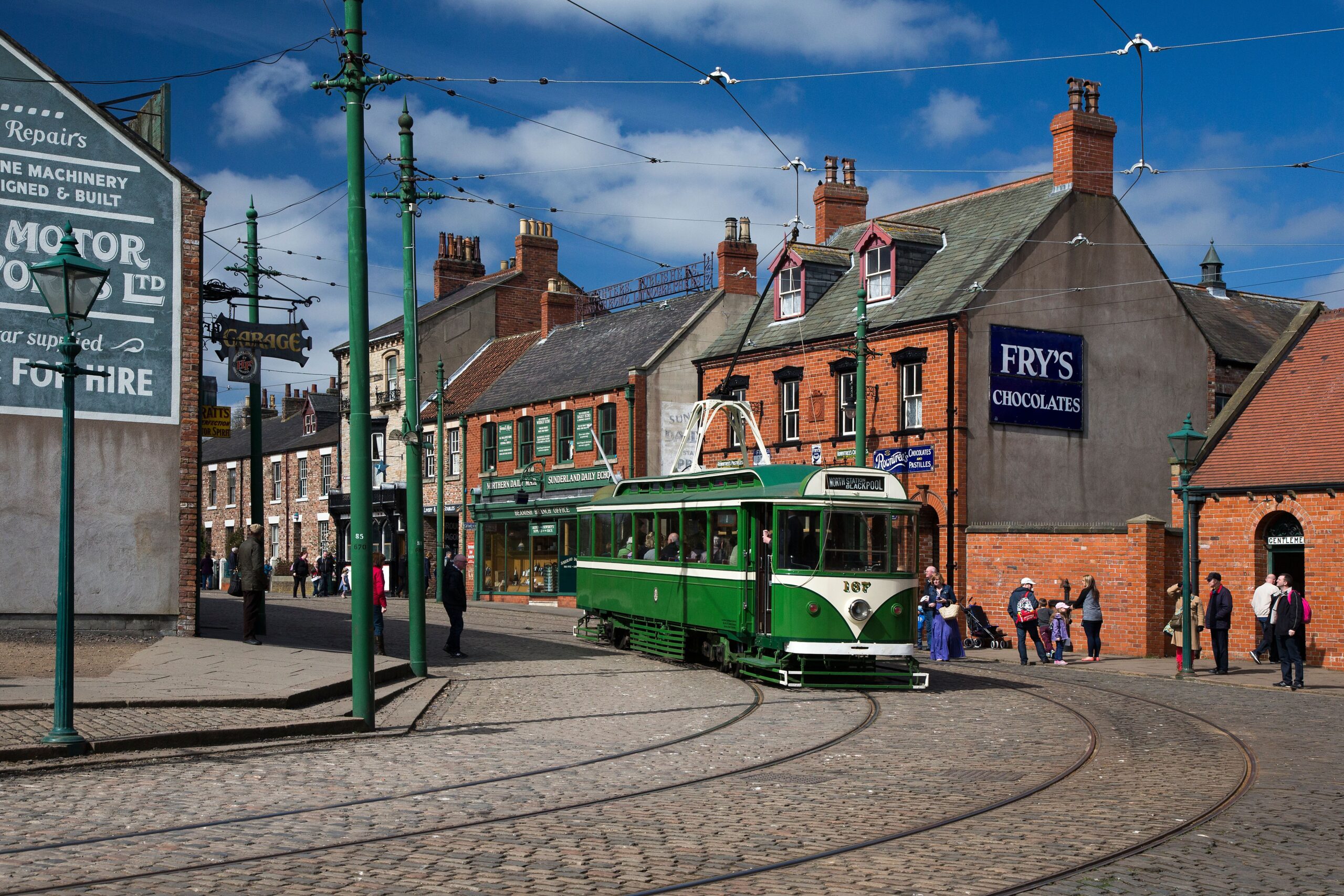
Spreading out across 350 acres, Beamish has revived dozens of 19th and early 20th century buildings like post offices, pubs, and sweet shops, and filled them with costumed characters to interact with.
Adults £35, children (5-16) £20.50.
York Castle Museum, York
Plunge into 400 years of York’s history in the museum’s exhibition rooms, replica Victorian street, and the former cells of York Castle Prison.
Adults £18, children (5-16) £10.80.
Beamish lets you go back in timeCredit: AlamyYork Castle Museum goes back 400 yearsCredit: Alamy
Yorkshire Air Museum, York
The UK’s largest independent aviation museum set on a former WW2 airfield with historic aircraft, displays, a cafe and shop.
Adults £17, children (4-17) £7.
The Deep, Hull
More than 2.5 million litres of water provide shelter to 3,000 fish, sharks, rays, and even penguins at this 24,000 square metre aquarium.
Adults £24, children (3-15) £18.
North West
Port Sunlight, Wirral
Built for soap factory workers in the 19th century, this model village offers a history museum, art gallery, and 130 acres of parkland.
Adults £8, children (5-16) £5.50.
Jodrell Bank, Cheshire
The UK’s largest radio telescope, an immersive planetarium, and a series of hands on exhibitions about space and the universe await visitors to this Unesco World Heritage Site in the Cheshire countryside.
Adults £15, children £10.50.
Eureka! Science + Discovery, Wirral
Walk through a pair of lungs, design your own toothpaste, and hug a heartbeat tree within four interactive zones themed around the science of bodies, homes, and nature.
Adults and children (3+) £15.95.
National Football Museum, Manchester
Everything from trophies and football shirts to Subbuteo tables and VR games are on offer at this museum dedicated to the beautiful game.
Adults £16, children (5 to 15) £10.
Eureka! is the National Children’s Museum in HalifaxCredit: AlamyFootie fans should head to Manchester’s National Football MuseumCredit: Alamy
Fusiliers Museum, Bury
This museum documents 300 years of The Lancashire Fusiliers and the latter Royal Regiment of Fusiliers, with artefacts like Victoria Cross medals and replica First World War trenches.
Adults £4.95, children £2.95.
Windermere Jetty Museum, Bowness-on-Windermere
Get to know the 200-year boating heritage of England’s largest lake through vessels, interactive displays, and oral histories.
Adults £12, children (5-15) £6.
Ryedale Folk Museum, Hutton-le-Hole
A six-acre acre swatch of countryside with 20 heritage buildings such as a 1950s village store, Victorian cottage, and thatched Tudor longhouse.
Adults £12, children (4-15) £10.
Yorkshire Museum
Featuring displays on everything from the Vikings and Romans to Yorkshire during the Jurassic period – with iPads that showcase what the dinosaur skeletons on show really looked like when they were alive.
Adults £10, children (5-16) £6.
Murton Park, Murton
Discover 14 acres of countryside exhibits including a farming museum, railway, farm animals, and a Viking village and Roman fort that are open on weekends and school holidays.
Adults £20, children (1-16) £17.
It’s fun for all the family on a visit to The Jetty Musuem at Bowness-on-Windermere with lots of boats and marine history to explore inside and out.Credit: AlamyThe Murton Park farming museum even has a railway, a Viking village and Roman fortCredit: Alamy
East Midlands
National Tramway Museum, Crich
Set around a recreated period village compete with tea rooms and a sweetshop, this museum displays more than 80 historic trams and features a working rideable tramway.
Adults £24, children (4-15) £15.
Silverstone Museum, Northamptonshire
The two floors of exhibits at Silverstone Museum are crammed with racing memorabilia, F1 cars, immersive experiences like break tests, and photo ops.
Adults £24 online, children (5-15) £20.
Lamport Hall, Lamport
Wander through period rooms dripping in antiques before ambling around 10 acres of gardens, which once boasted the first ever garden gnomes.
Adults £16, children (11-17) £9.
Nottingham Castle, Nottingham
Brush up on your knowledge of Robin Hood, Nottingham lace, and the history of rebellion in Nottinghamshire at the hilltop castle that was first built by William the Conqueror in the 11th century.
Adults £18, children free.
The National Tramway Museum reopened earlier this year after a makeoverCredit: AlamyLearn about Robin Hood, Nottingham lace, and the history of rebellion hereCredit: Alamy
Bakewell Old House Museum, Bakewell
11 rooms of exhibits spill the secrets of Bakewell’s oldest standing residence and its inhabitants from the past 500 years.
Adults £7.50, children (5-16).
King Richard III Visitor Centre, Leicester
Immersive exhibits recount how King Richad III’s body was discovered under a carpark in Leicester and backtrack through 500 years of history, feuds, and intrigue linked to the King.
Adults £12.50, children (5-15) £6.25.
Eyam Museum, Hope Valley
This museum lifts the lid on how the residents of sleepy Eyam responded to the outbreak of Bubonic Plague in the 17th century. Additional displays on local prehistory, mining, and the silk and shoe industry.
Adults £6, children (5+) £4.
National Space Centre, Leicester
Amongst the 150 plus exhibits at this final frontier-themed museum, visitors will find two genuine rockets, real moon rock, and the UK’s largest domed planetarium.
Adults £22, children (5-15) £20.
Did you know the National Space Centre in Leicester has the UK’s largest domed planetarium?Credit: AlamyLive out a mock Victorian trial at the National Justice MuseumCredit: Alamy
1620s House & Garden at Donington le Heath, Coalville
Explore the stone-walled home and gardens that once belonged to the relatives of Sir Everard Digby, who was executed for taking part in the Gunpowder Plot.
Adults £6.65, children (3-15) £3.95.
Bosworth Battlefield Heritage Centre, Sutton Cheney
Nine interactive exhibition rooms walk visitors through the dramatic War of the Roses and the resulting battle that changed the course of British history.
Adults £10, children (3-15) £6.95.
Peak District Lead Mining Museum, Matlock Bath
Hundreds of rocks, minerals, tools, and three interactive mock mine tunnels evoke a time when lead mining was one of the Peak District’s most important industries.
Adults £8.50, children (4-17) £5.
National Justice Museum, Nottingham
Five floors of exhibits on crime, the law, and punishment, including a Victorian courtroom and Georgian jail. Daily mock trials and free workshops.
Adults £16, children (5-15) £11.50.
Wollaton Hall, Wollaton
Cocooned within 500 acres of parkland, this Grade I listed Elizabethan mansion is home to a 750,000 item Natural History Museum.
Adults £18, children free.
Louth Museum, Louth
Learn about brickmaking, carpets, archaeology, the devastating Louth flood of 1920, and the ghost of the green lady at this four gallery town centre museum. Open April to October.
Adults £5, children free.
City of Caves, Nottingham
Burrow through the caves beneath Nottingham, learning about the people who worked and even lived in them over the years as you go.
Adults £12, children (5-15) £9.50.
West Midlands
The Fusilier Museum, Warwick
Artefacts like drums, bearskin hats, uniforms, memorial plaques and even wedding gifts illustrate the personal stories of the soldiers of the Royal Warwickshire Regiment.
Adults £5, children (under 16) free.
Coventry Transport Museum, Coventry
Cast your eyes over more than 300 cycles, 120 motorcycles, and 250 cars, including penny farthings, Triumphs, E-type Jaguars, and the world land speed record-breaking Thrust SSC.
Adults £15.50, children (5-16) £8.50.
Museum of Royal Worcester, Worcester
Starring the largest display of Worcester porcelain in the world, with a sensory trail and regularly updated temporary exhibitions.
Adults £11.95, children (5-17) £4.50.
British Motor Museum, Gaydon
More than 400 classic cars welcome visitors to the British Motor Museum. Free guided tours take place twice a day and there’s an outdoor play area for sunny days.
Adults £18, children (5-16) £9, when booked in advance.
British Motor Museum is one for the motorheadsCredit: AlamyGo deep underground at the City of CavesCredit: Alamy
East of England
Museum of the Broads, Stalham
This dog-friendly museum spotlights the natural and human history of the Norfolk and Suffolk Broads through more than 6,000 artefacts.
Adults £9.50, children (12-17) £5.50.
Ely Musuem, Ely
Root around in Ely’s history through exhibits on the city’s prehistoric settlers, folk traditions, local trades, the importance of eel fishing in the area and plenty more.
Adults £7, children (5 and up) £3.
Denny Abbey & The Farmland Museum, Waterbeach
This yawning site brings together a 12th century abbey, a vintage village shop, rural trade exhibitions, a nun’s refectory, farming equipment displays, a 1940s farmworker’s cottage, and a clutch of gardens and play areas.
Adults £9.50, children (5-17) £6.50.
Norfolk and Suffolk Aviation Museum, Flixton
More than 60 aircraft, 30,000 artefacts, and individual museums on Suffolk’s 446th Bomb Group, RAF Bomber Command, and the Royal Observer Corps come together on this 11 acre site.
Adults £10, children (5-17) £5.
Verulamium Museum, St Albans
Occupying the site of one of Britian’s largest Roman cities, Verulamium depicts what everyday life was like for the people who once lived here. Count on coin hoards, mosaics, and reconstructions of Roman rooms.
Adults £10, children (under 16) £5.
Great London and Outer London
London Transport Museum, Covent Garden
Charting 200 years of transportation developments in London, including exhibits on riverboats, omnibuses, the underground, and the capital’s iconic red Routemasters.
Adults £27, under 18s free.
Foundling Museum, Bloomsbury
Artworks by Tracey Emin and music scores by classical composer Handel are some of the surprising items on display at the UK’s only museum dedicated to the experiences of people who have been in care.
Adults £14.50, 21 and under free.
The Postal Museum, Clerkenwell
See rare Penny Black stamps, dress up in postal uniforms, and have a ride on the narrow gauge underground Mail Rail railway at this museum that documents 500 years of postal history.
Adults £20.50, children (2-17) £11.
London’s iconic Mail Rail ride is found at at the London Postal MuseumCredit: AlamyWindsor Castle is one of the most famous castles in the countryCredit: Alamy
Old Royal Naval College, Greenwich
The hub of Greenwich’s Unesco World Heritage Site, this former hospital treats visitors to an ornately frescoed Painted Hall, an elegant chapel, and an interactive visitor centre.
Adults £19, children free.
The Royal Mews at Buckingham Palace
Discover what goes on behind the scenes at the stables responsible for all the road travel arrangements for the Royal Family, including a peek at the Cinderella-esque golden state coach.
Adult £18, young person (18-24) £12, children £9.
Windsor Castle, Windsor
The largest occupied castle in the world, Windsor Castle welcomes visitors to explore its state apartments, ceremonial rooms, and castle precincts.
Adults £32, young person (18-24) £21, children £16.
South East
Milton Keynes Museum, Wolverton
With displays on prehistoric times, Victorian life, farming, printing, and a street of replica shops from yesteryear, this museum looks into the stories that have shaped Milton Keynes.
Adults £17, children (5-16) £12.
Bletchley Park, Buckinghamshire
The former top-secret workplace of Britain’s World War Two codebreakers features 11 historic buildings, 12 hands-on exhibitions, recreated period rooms, and a cinematic experience.
Adults £28.75, children £7.50.
Soldiers of Oxfordshire Museum, Woodstock
Exploring how conflict has shaped Oxfordshire, the permanent exhibition at this museum looks into everything from The Liberation of Bergen Belsen by the Oxfordshire Yeomanry to the county’s secret agents.
Adults £9, children (5-16) £5.50.
Wallingford Museum, Wallingford
This two-floor, wood beamed museum tackles almost 3,000 years of local history including Wallingford’s links to Queen of Crime fiction, Agatha Christie.
Adults £6, children free.
Milestones Museum, Basingstoke
The replica streetscapes at this film set style museum chart the history of Hampshire from the Victorian era to the swinging sixties.
Adults £18.50, children (5-15) £12.50.
Roald Dahl Museum and Story Centre, Great Missenden
Based in the village where Roald Dahl lived and worked for almost four decades, this museum celebrates the life of the BFG author through memorabilia, hands-on activities, moving images, and craft offerings.
Adults £13.95, children (5-18) £9.95.
Aldershot Military Museum, Aldershot
Highlights at this local military history museum include tank collections, a rifle handling area, recreated army barracks, and a World War Two inspired outdoor assault course.
Adults £11, children (5-15) £8.
Cowper and Newton Museum, House and Gardens, Olney,
Deep dive into the lives and careers of writers William Cowper and John Newton, co-authors of the hymn Amazing Grace, in the restored 18th century mansion where Cowper lived.
Adults £12, children (under 16) free.
Jane Austen’s House, Chawton
This red brick cottage is where Jane Austen lived and wrote her novels. Highlights include Jane’s personal letters and first editions of her stories.
Adults £15.50, young people (17-26) £11, children (6-16) £7.25.
SeaCity Museum, Southampton
Covering 2,000 square metres, SeaCity unveils Southampton’s links to the ill-fated Titanic and reveals how they city became known as The Gateway to the World.
Adults £5, children (5-16) £3.50.
Leeds Castle, Kent
A favourite residence of King Edward I and dwelling place of Catherine of Aragon, this turreted castle treats visitors to a ‘1930s castle experience’, children’s playground and maze, 500 acres of parkland, and a bird of prey centre.
Adults £38.50, children £28.
Let your kids enjoy all of the Roald Dahl classics at this museumCredit: AlamyLeeds Castle also has a kids playground and mazeCredit: Alamy
Huguenot Museum, Rochester
Britian’s only museum about the Huguenots – the French protestants who took sanctuary in Britain after fleeing religious persecution in the early 18th century.
Adults £5.50, children £4.50.
Museum of the Iron Age, Hampshire
This two-floor museum offers an insight into the history of the nearby Danebury Hill Fort and the people who lived there more than 2,500 years ago.
Adults £5, children (5-15) £3.50.
South West
National Maritime Museum, Falmouth
15 galleries spread across five floors explore how the sea has shaped human history and culture with remote-controlled boat pool, play zone and more.
Adults £19, children (five to 18) £10.
Cornwall Museum and Art Gallery, Truro
Swot up on all the elements that have helped forge Cornwall’s identity, from its ancient civilisations and geology to its myths and biodiversity.
Adults £10, under 18s free.
Wheal Martyn Clay Works, Carthew
Learn about Cornwall’s 250-year clay mining history and find out how the industry contributed to the formation of landmarks known as The Cornish Alps.
Adults £17, children (5-15) £7.50.
Newlyn Art Gallery and the Exchange, Penzance
A twin set of contemporary art galleries where the walls are hung with the works of regional, national, and international artists alike. Exhibitions change regularly.
Adults £9, children free.
The Eden Project, Bodelva
30 acres of indoor and outdoor gardens, including two iglu-like biomes filled with rainforest and Mediterranean flowers and plants.
Adults £35.50 online, children (5-15) £12.50.
Torquay Museum, Torquay
More than 400 artefacts on Egyptology – including a mummified body – accompany displays on natural history, archaeology, planetology, world cultures, and ceramics at this eclectic museum.
Adults £10, children (5-17) £5.
Dorset Museum and Art Gallery, Dorchester
Four floors of displays spill the beans on Dorset’s natural history, 500,000 years of people’s history, Hardy’s Dorset, and the county’s artistic heritage.
Adults (26+) £13.95, young people (16-25) £11.70, children (0-15) free.
The Tank Museum, Bovington
The world’s largest collection of tanks and armoured vehicles spreads out across six hangar-sized exhibition halls here, showcasing more than 300 artefacts from 26 nations.
Adults £19.60, children (3-15) £4.80.
Eden Project has acres of indoor and outdoor gardensCredit: AlamyThe world’s biggest collection of tanks is actually in the UK in BovingtonCredit: Alamy
The Etches Collection, Kimmeridge
This modern space is filled with Late Jurassic marine fossils with a ‘sea-rex’ skull, a sea dragon skeleton, and CGI imagery that brings all the information to life.
Adults £9.50, children (5-16) £4.75.
Museum of East Dorset, Wimborne Minster
The 11 galleries inside this Grade II listed house catalogue the social and local history of East Dorset, touching on subjects from childhood to agriculture.
Adults £12.50, children (5-16) £6.
Lyme Regis Museum, Lyme Regis
Overlooking Dorset’s Jurassic Coast, this museum lays bare Lyme Regis’ geological heritage, history, culture, and literary connections using audio, touchscreen displays, and handleable objects. Adults £9.95, children (6+) £6.95.
Bridport Museum, Bridport
The displays at Bridport Museum switch from Jurassic Coast fossils to local rope making history, Anglo Saxon history, and the ‘beastly Bridport’ topic of disease and the ‘deadly Bridport dagger’.
Adults £5, under 21s free.
Somerset Rural Life Museum, Glastonbury
Scattered across the cow shed, farmyard, barn, and orchard of a former abbey farm, the exhibits of this heritage attraction shed light on the working life and rural crafts of countryside Somerset over the ages.
Adults £11, children (5-17) £5.25.
Haynes Motor Museum, Sparkford
15 exhibition rooms showcase more than 300 vehicles here, whilst displays touch on topics from the birth of the internal combustion engine to sustainable transport.
Adults £22.45, children (4-15) £12.74, when booked online.
The Food Museum, Stowmarket
17 historic buildings spread across 84 acres highlight how food is grown, made, and eaten. With daily talks and regularly changing exhibitions.
Adults £17.50, children £12.
Lewes Castle, Lewes
An 850-year-old Norman Castle, where you can climb the keep for views of the South Downs, check out Medieval artefacts in the museum, and picnic in the grounds.
Adults £18, children (5-17) £6.50.
Anne of Cleves House, Lewes
This timber-framed wonky-roofed building was gifted to Henry VIII’s fourth wife, Anne of Cleves, after their royal marriage ended. Wander through the Tudor style rooms to gen-up on this period of history.
Adults £7.50, children (5-17) £4.50.
Fishbourne Roman Palace and Gardens, Fishbourne
See the remains of a once lavish Roman villa, complete with mosaics and artefacts, and mooch around the reconstructed period gardens.
Adults £15, children (5-17) £7.50.
Michelham Priory House & Gardens,Upper Dicker
Get stuck into 800 years of history at this moated building with its period rooms and seven acres of grounds and gardens.
WASHINGTON — A former White House teleprompter operator accused of using inside knowledge to make bets on the prediction market Kalshi has been ordered to turn over more than $100,000 in profits and pay a $65,000 fine as part of a settlement with federal authorities.
The settlement with the Commodity Futures Trading Commission, announced Friday, also dealt Gabriel Perez a three-year trading ban. Perez was placed on unpaid leave from his job at the White House after reports emerged that he used his position to make bets on what President Trump would say in speeches.
The White House did not immediately comment on the settlement. A White House official said in July that Perez was no longer in his position but did not say if he had been fired or resigned.
The commission found that Perez made $107,500 on prediction markets by betting on words and phrases that would appear in Trump’s speeches between December 2025 and February 2026.
“In his position, Perez had access to presidential speeches prior to those speeches being delivered and Perez misappropriated that information — in breach of his duty of trust and confidence,” according to a release from the commission.
Perez was ordered to repay his profits in full, along with the $65,000 civil penalty, which the commission said was a reduction because of his “exemplary cooperation.”
As details emerged July 16, then White House press secretary Karoline Leavitt said it was “unfortunate” and “a disgrace.”
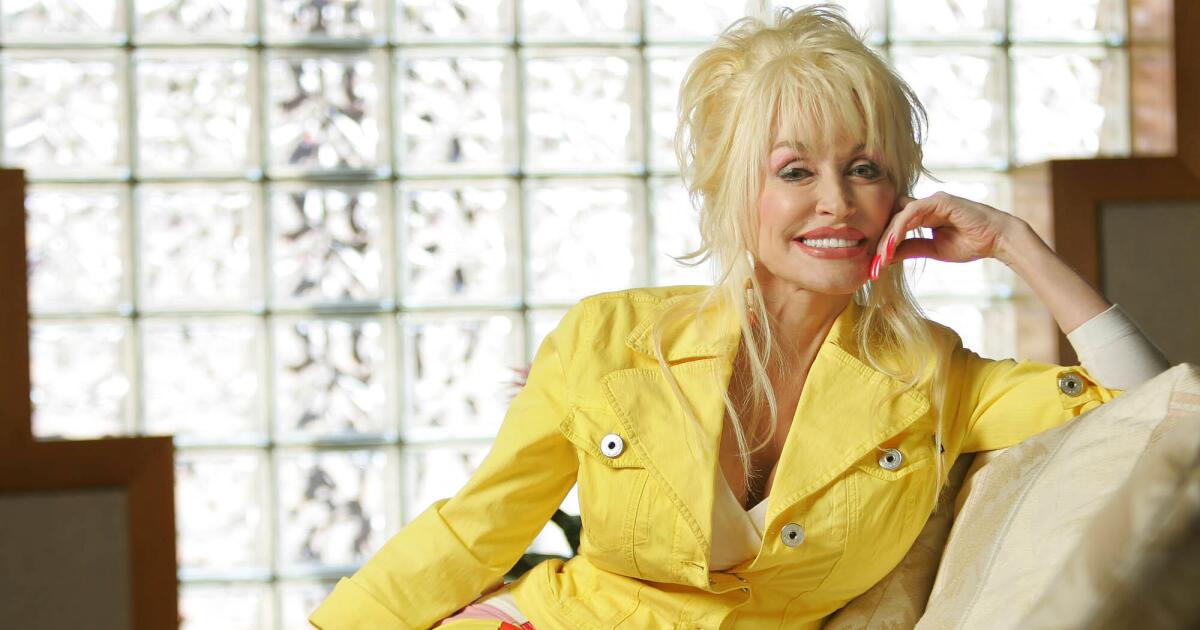
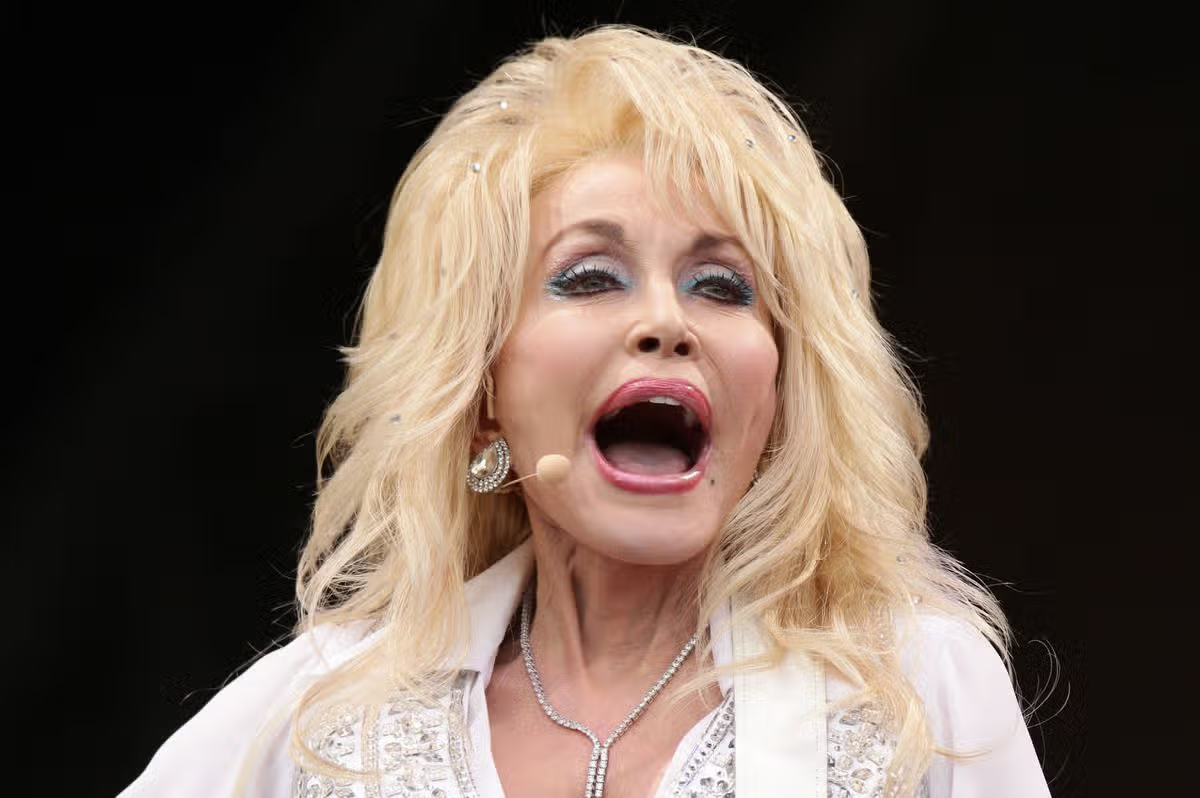
Dolly Parton’s death has left the music, film and television worlds reeling, with stars and luminaries across those industries and more paying tribute to the beloved entertainer’s life and legacy.
Parton, the accomplished country music star who became a national treasure and pop culture icon, died Tuesday at age 80, her nephew Bryan Seaver announced. The singer-actor-philanthropist died after a series of health issues that led her to postpone several performing commitments last year, including a residency in Vegas. She revealed in May that her “immune system and digestive system got all out of whack” in recent years.
The entertainer, an authentic and bright personality whose appearance was made even brighter with bedazzled and fringed ensembles, leaves behind a legacy that includes classics “Jolene” and “I Will Always Love You” (later popularized by powerhouse singer Whitney Houston) that influenced modern country music acts. Her career also included acting, most notably roles in “Steel Magnolias,” “Hannah Montana” and “9 to 5.”
Lily Tomlin, Parton’s co-star on the 1980 comedy “9 to 5,” uploaded a picture of the two to her Instagram profile with the caption: “No words…” along with a broken heart emoji.
Jane Fonda, who also starred in the workplace comedy, posted on Instagram that she was “devastated.”
“I never knew anyone like her. She was simultaneously a naughty, playful southern gal from the hollows of Tennessee and a deep, soulful thinker who could see through people right down to their true selves,” the “Monster-in-Law” star wrote in the caption. “She was the voluptuous embodiment of empathy.”
Country singer and actor Reba McEntire dedicated a heartfelt tribute to Parton on her Instagram account.
“There will never ever be another you. We will remember and cherish every memory and every note you ever played and sang,” she wrote.
The carousel on the post featured various images of the two, who first crossed paths at the Grand Ole Opry’s Opry100 celebration in 1977. Throughout their decades-long friendship, the pair were frequent collaborators; Parton was a guest on McEntire‘s 2001 self-titled sitcom. In 2021, the country stars finally joined forces for their first duet, an acoustic rendition of “Does He Love You” for McEntire’s “Revived Remixed Revisited.”
In an email to The Times, country singer Billy Ray Cyrus recalled the legacy Parton left behind.
“Like every little boy, I grew up loving Dolly Parton. She was a part of our lives, on our TVs, right in our living rooms,” Cyrus wrote.
The two stars developed a close friendship after Cyrus opened for her on tour following his 1992 hit “Achy Breaky Heart.”
“I’ll never forget walking into her dressing room to apologize for all the tabloid stories which claimed I was having an affair with her,” Cyrus added. “In true Dolly fashion, she just looked at me, winked and said, ‘Honey, this trash sells records!’”
Pop starlet Sabrina Carpenter — who reimagined her hit song “Please Please Please” as a country-pop song alongside Parton last year — shared still images of the two in their music video to Instagram.
“I will cherish our laughter and conversations and I will keep your wisdom, your playful outlook on life, and perfect sense of humor in my pocket for the rainy days,” Carpenter wrote in the caption.
Singer-songwriter Sheryl Crow, who shared the stage with Parton in 2025 for a Stand Up to Cancer benefit concert, wrote on her Instagram story: “There is a hole in the universe. There was and will never be anyone like @dollyparton.”
“Dolly Parton had a way of making everyone feel seen,” wrote Kelly Clarkson in an Instagram post, who just yesterday shared a cover that she had done of Parton’s “9 to 5” for the Season 1 premiere of “The Kelly Clarkson Show.”
“I will miss her heart and her voice as I am sure millions will. What an incredible gift and talent she was and still is with an amazing catalogue of art she has left behind for all of us,” the “American Idol” star added to her post.
The late singer later appeared on Season 4 of Clarkson’s talk show, for an impromptu duet of her 1974 song “I Will Always Love You,” a clip that was uploaded to the TV show’s Instagram account hours before Parton’s death was officially announced.
Grammy-winning singer Kacey Musgraves reacted on X (formerly Twitter) to Parton’s death, writing, “the world feels a lot less sparkly all of a sudden.”
The Muppets celebrated Parton on Threads, writing “there will never be another quite like Dolly Parton” and posted photos of the musician sharing the screen with Miss Piggy and Kermit the Frog.
The account for the puppet troupe continued: “She was the ultimate singer, songwriter, actress, performer, and philanthropist. She filled the world with light and we are so grateful for every second we got to spend with her onstage and off.”
Carole King shared on Threads that she was heartbroken by the news. Parton “was an exemplary human being,” she wrote.
The Grand Ole Opry said on Instagram that Parton’s death “will be deeply felt for generations to come” and said the legendary musician “taught us to lead with kindness, generosity, and compassion.”
“One of the most extraordinary musical experiences of my life was recording with her,” said Linda Ronstadt on Instagram. Ronstadt recorded two albums with Parton and Emmylou Harris, 1987’s “Trio” and 1999’s “Trio II.” “The world is a poorer place without her.”
Paul McCartney recalled on Instagram first meeting the star at Grand Ole Opry ahead of her solo career.
“She was so bubbly and full of life it is difficult to take in the news that she passed,” said the Beatles singer, who collaborated with Parton on her rendition of “Let It Be” for her 2023 album, “Rockstar.”
In a post uploaded to Instagram, actor Jamie Lee Curtis upheld Dolly’s bravery, writing that “she was more than they thought she was.”
“The Mandalorian” actor Pedro Pascal posted an image of Parton to his Instagram with a caption that read: “One of one [broken heart]. We must make more.”
“Some people are so extraordinary, their existence feels almost impossible. Dolly was one of those people,” wrote Khloé Kardashian on her Instagram story about the country star, who last year was a guest on her podcast, “Khloé in Wonderland.”
“A once-in-a-lifetime soul. A woman whose light, heart, talent and humanity changed this world forever,” the 42-year-old Kardashian wrote. “To have admired her was a gift.”
United States politicians also chimed in to pay their respects.
President Trump celebrated Parton “one of the greatest Country singers, and far beyond, EVER” on a post to Truth Social and said “this is a true loss for millions of people.” He also announced that he would lower the American flag across the country for a week beginning Tuesday evening.
“Rest in Peace, Dolly!” he continued, “the World loves you.”
On X, former President Obama also underscored Parton’s altruistic legacy, including her donation to Vanderbilt University for coronavirus research in 2020.
“Born in a one-room cabin, she earned 11 Grammys and an Emmy, built a business empire, helped millions of kids learn to read, and — as if that wasn’t enough — helped accelerate the research that led to the Moderna COVID vaccine,” wrote Obama.
In a post on Threads, Vice President Kamala Harris called Parton a “true American icon,” highlighting her work through Imagination Library, a global book-gifting program that sends free books to children ages 5 and under.
The sad news was announced by her family on Tuesday night, 25 August. The legendary musician was best known for her genre-defining hits including 9 To 5, I Will Always Love You and Jolene.
On Tuesday’s The One Show, which aired just as the devastating news was announced, hosts JB Gill and Angellica Bell paid an emotional tribute to ‘big friend of the show’ Dolly at the end of the episode.
JB, 39, said: “Now just before we go, like many of you, we’ve just heard the very sad news that the legendary Dolly Parton has died at the age of 80.
“She was a big friend of the show, having been on many times, and was loved by people all over the world. So our thoughts are very much with her family, friends and fans. We’ll be paying tribute in tomorrow’s show.”
Taking to Twitter, now X, one emotional viewer wrote: “Poor Dolly Parton. RIP. #TheOneShow” while another account added: “#theoneshow RIP dolly parton” with a different fan responding: “very sad!”
It comes as in a video shared on Dolly’s social media accounts, the singer’s nephew announced her death and said: “My name is Brian Seaver, son of Cassie Parton, and I’m representing the Parton and Owens family today announcing the passing of my aunt, Dolly Rebecca Parton Dean.
“Sister, Sis and Granny to one generation and Gigi to the next.” He added: “This video announcement is something Dolly asked of me years ago, before I fully absorbed it as a future reality.
“As her head of security for more than two decades, a role my father Larry held before me, I have imagined the heaviness of this moment but haven’t truly felt it until now.”
The emotional video announcement continued: “It is an honour, an honour that is mixed with absolute pride and great sadness. But sadness lies with us, not with Dolly.
“Dolly has lived in the light and is in the arms of Jesus, surely met by Carl, her parents and countless others who have watched her and longed to meet her in the heavens.”
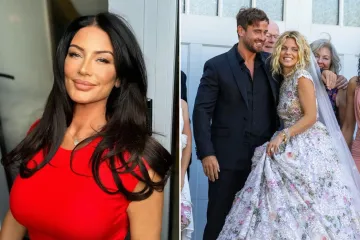
DANNY Cipriani and AnnaLynne McCord’s bid to crowdfund their wedding failed after friends refused to pay for booze at the reception.
The couple tied the knot on Saturday in Los Angeles in what was described as an “elegant bohemian” ceremony in their back garden.
Danny Cipriani and AnnaLynne McCord’s bid to crowfund their wedding failedCredit: Jeff Rayner/Coleman-RaynerThe pair tied the knot in a ceremony in Los Angeles over the weekendCredit: BackGrid
Among the remaining asks are eight £440 ($600) slots for the wedding venue construction, five remaining slots for reception beverages at £146 ($200) and seven remaining slots for the reception catering at £183 ($250).
Adding to this are five unpaid slots for the wedding photography at £220 ($300) and two remaining slots for the rehearsal dinner at £366 ($500).
Guests did in fact fork out £73 for their marriage licence, £91 for the music at their reception, £440 for the wedding cake and £440 for the floral arrangements.
After their crowdfunding idea was released, the pair were said to have received death threats.
The couple asked their guests to help pay for their weddingCredit: Shutterstock EditorialAnnaLynne revealed the pair received death threats after their crowdfunding website was unveiledCredit: Jeff Rayner/Coleman-Rayner
Speaking from a hotel in Hollywood, AnnaLynne told The Sun: “I was told I was despicable — and that I was trying to extort money from my wedding guests.
“People actually donated ten dollars towards the wedding so they could write on the site that Danny and I were disgusting.
“There were even death threats.”
The 90210 actress, 39, stunned a see-through white lace dress and a veil embroidered with flowers on the big day over the weekend.
Meanwhile, rugby ace Danny, 38, looked dapper in all black suit.
Their wedding came 10 years after they first met on dating app Raya which kickstarted a four-year on/off relationship.
Incidentally, it was Danny calling AnnaLynne in 2020 to tell her that he’d got Victoria pregnant that led to their initial time together ending. The following year he married the neuroscience practitioner.
When Danny’s split from Victoria made headlines, AnnaLynne decided to make her feelings known and reached back out to him.
She told us: “He told me he loved me since the day he met me.”
Danny proved his love on Christmas Day when he dropped to one knee in front of the tree in AnnaLynne’s home.