pauses

Federal judge pauses sentencing to weigh argument in Wisconsin judge’s immigration case conviction

A federal judge on Wednesday considered whether to throw out a jury’s guilty verdict against former Wisconsin Judge Hannah Dugan, who was convicted of felony obstruction for helping an immigrant evade federal officers.

The case was an early test of how the courts would respond to President Trump’s sweeping immigration crackdown.

Dugan had been scheduled to be sentenced on Wednesday, but U.S. District Judge Lynn Adelman postponed the proceedings indefinitely to instead hear arguments about whether to overturn her conviction.

Adelman did not rule from the bench and did not indicate when he might issue a decision. Dugan and attorneys for both sides left the courtroom without commenting to reporters.

Former judge’s attorney points to a Virginia case

Dugan’s attorney Steven Biskupic argued that her conviction was invalid and should be overturned. He said that was necessary because a federal appeals court in April overturned a key Virginia immigration case that the judge and prosecutors had cited in the Dugan case.

Biskupic argued that based on the 4th U.S. Circuit Court of Appeals overturning that ruling, Dugan was improperly convicted, procedurally, under a certain federal law.

“Our primary argument is this was an invalid theory of conviction,” Biskupic said.

In the Virginia case, an immigrant who was in the country illegally was detained by U.S. Immigration and Customs Enforcement agents and later escaped. He was recaptured and indicted on a charge of obstructing a pending immigration proceeding.

The federal appeals court found that the ICE action did not constitute a “pending proceeding,” as is required under the federal obstruction law.

Dugan’s attorneys argue that she should not have been charged because there was no “pending proceeding” against the immigrant in her courtroom being sought by ICE agents, only a warrant filed for his arrest. The filing of a warrant does not constitute a “proceeding” under the law, Biskupic argued.

Prosecutors countered that the facts in the Virginia case are different and don’t apply to Dugan’s. They also argued that other cases support Dugan’s conviction.

“The court should stick with its ruling,” said Richard Frohling, acting U.S. attorney for the eastern district of Wisconsin.

In response to a question from the judge, he contended that the appeals court was wrong to overturn the Virginia case. The judge also quizzed Frohling on what constitutes a proceeding under the law and how long it lasts.

“It could be a couple minutes, it could be a couple years,” Frohling said. “It all depends on the context.”

Dugan’s sentencing was postponed so the court can hear new arguments

Dugan, 67, faces up to five years in prison after a jury convicted her on Dec. 19. But it is unlikely that Dugan would be sentenced to prison. Federal sentencing guidelines generally call for probation for defendants like her who have no criminal history and are convicted of a nonviolent crime.

She resigned from her position as a Milwaukee County circuit judge two weeks after her conviction amid threats of impeachment from Republican state lawmakers. She had been a judge for nine years.

Dugan was present for Wednesday’s arguments but did not speak.

The Trump administration brought the case against Dugan as the president pressed ahead with his sweeping immigration crackdown. Trump’s administration and his allies branded Dugan as an activist judge, while Dugan’s attorneys said she was being unfairly targeted and argued, unsuccessfully, that she was immune from being charged because she was a judge.

Dugan’s case marked the first time that a state judge in Wisconsin went to trial on charges of obstructing immigration agents. She was acquitted of concealing an individual to prevent arrest, a misdemeanor.

Dugan helped an immigrant wanted by ICE agents

On April 18, 2025, immigration officers went to the Milwaukee County courthouse after learning Eduardo Flores-Ruiz had reentered the country illegally and was scheduled to appear before Dugan for a hearing in a state battery case.

Dugan confronted agents outside her courtroom and directed them to the chief judge’s office because she told them their administrative warrant wasn’t sufficient grounds to arrest Flores-Ruiz.

After the agents left, she led Flores-Ruiz and his attorney out a private jury door. Agents spotted Flores-Ruiz in the corridor, followed him outside and arrested him after a foot chase. A week later, FBI agents arrested Dugan in the courthouse, leading her outside in handcuffs.

Flores-Ruiz was deported in November.

Bauer writes for the Associated Press.

Source link

US pauses plan to guide ships through the Strait of Hormuz | US-Israel war on Iran

NewsFeed

US president Donald Trump has said that the US military operation “Project Freedom” guiding ships through the Strait of Hormuz will be paused for a short period. He cited a request from Pakistan and progress towards a final deal with Iran.

Source link

Trump pauses US operation in Strait of Hormuz in push for deal with Iran | US-Israel war on Iran News

United States President Donald Trump has said that the US military operation to move stranded ships out of the Strait of Hormuz has been paused temporarily.

Trump made the announcement on his Truth Social platform on Tuesday.

Recommended Stories

list of 4 itemsend of list

He said the decision was made “based on the request” of Pakistan and other countries and the “fact that Great Progress has been made toward a Complete and Final Agreement” with representatives of Iran.

“We have mutually agreed that, while the Blockade will remain in full force and effect, Project Freedom (The Movement of Ships through the Strait of Hormuz) will be paused for a short period of time to see whether or not the Agreement can be finalized and signed,” he wrote.

There was no immediate comment from Iran.

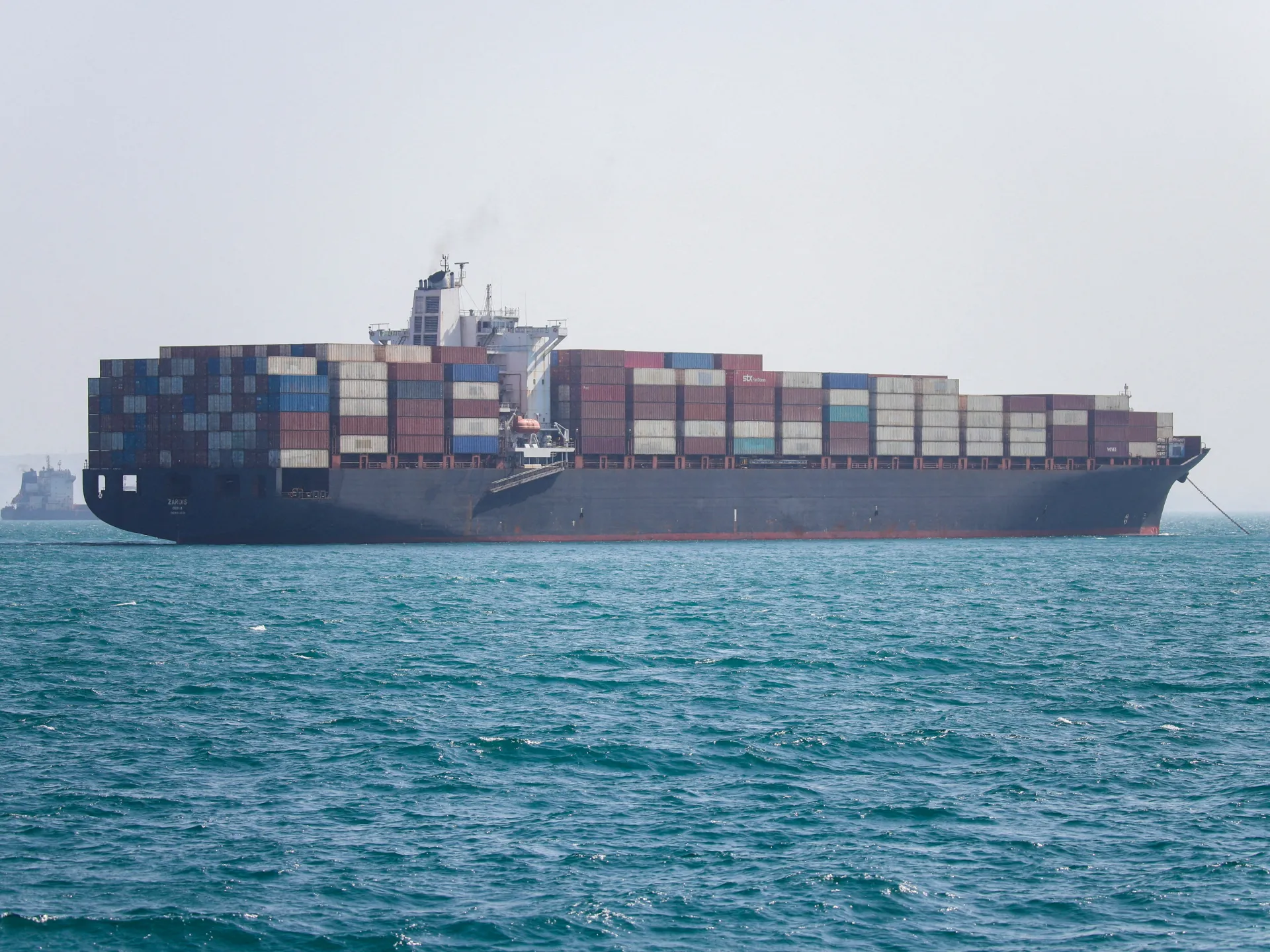
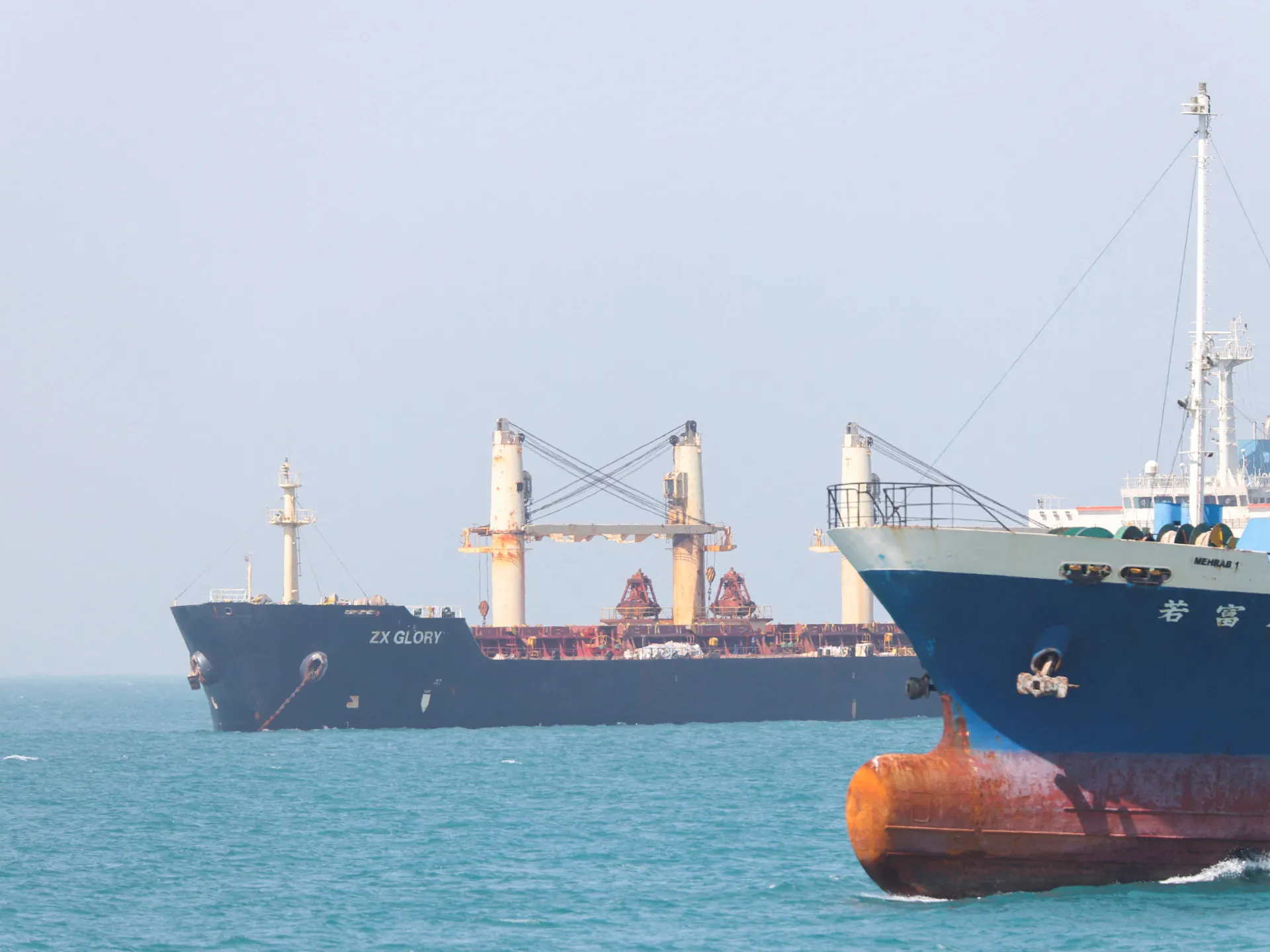
Trump’s announcement came as tensions escalated in the Gulf, with the US military saying it destroyed several Iranian boats in the Strait of Hormuz, as well as cruise missiles and drones. The United Arab Emirates said its air defences dealt with missile and drone attacks from Iran for a second day, while another commercial ship in the Strait of Hormuz reported being hit by an “unknown projectile”.

For its part, Iran’s Islamic Revolutionary Guard Corps (IRGC) issued a new map of the strait, with an expanded area of Iranian control, and warned vessels on Tuesday to stick to the corridors it has set or face a “decisive response”.

In Washington, DC, Secretary of State Marco Rubio told reporters that the US has completed its offensive operations against Iran, dubbed “Operation Epic Fury”, and “there’s no shooting unless we’re shot at first”.

But Iran must “pay a price” for its efforts to control the strait, he said.

“The Straits of Hormuz do not belong to Iran. They don’t have a right to shut it down and blow up ships and lay mines,” Rubio said.

“Under no circumstances can we live in a world where we accept, ‘OK, this is normal – you have to coordinate with Iran. You have to pay them a toll in order to go through the Straits of Hormuz’. Not only is that unacceptable in the straits, you’re creating a precedent that could be repeated in multiple other places around the world.”

The maritime chokepoint, through which roughly one-fifth of the world’s energy supplies normally pass, has been effectively sealed by Iran since the US and Israel launched their war on the country on February 28.

Following a ceasefire in April, the US imposed its own blockade on Iranian ports in a bid to compel Tehran to agree to Washington’s terms in peace talks mediated by Pakistan, including reopening the key waterway and halting all nuclear enrichment.

The closure of the strait has disrupted global trade, causing oil and fertiliser prices to soar and prompting fears of a global recession and a food emergency.

Earlier on Tuesday, Trump told reporters at the White House that the US’s military and economic action was forcing Tehran to the negotiating table despite its defiant public stance.

“Iran wants to make a deal. What I don’t like about Iran is they’ll talk to me with such great respect, and then they’ll go on television. They’ll say, ‘We did not speak to the president’,” he said. “So they play games. But let me just tell you, they want to make a deal. And who wouldn’t? When your military is totally gone, we could do anything we want to them.”

Trump, who is facing mounting pressure at home as petrol prices rise ahead of crucial midterm elections, went on to say that Iran’s military had ‌been reduced to firing “peashooters”.

When asked what Iran would need to do to violate the ceasefire, Trump said: “They know what not ⁠to do.”

US Secretary of Defense Pete Hegseth, meanwhile, said that the renewed violence in the Strait of Hormuz does not constitute a breach of the four-week-old truce.

“American forces won’t need to enter Iranian waters. It’s not necessary. We’re not looking for a fight. But Iran cannot be allowed to block innocent countries and their goods from international waterways,” he said at the Pentagon.

“Right now, the ceasefire certainly holds, but we’re going to be watching very, very closely,” he added.

Source link