paused

Why has the UN paused plans to evacuate sailors from the Strait of Hormuz? | US-Israel war on Iran News

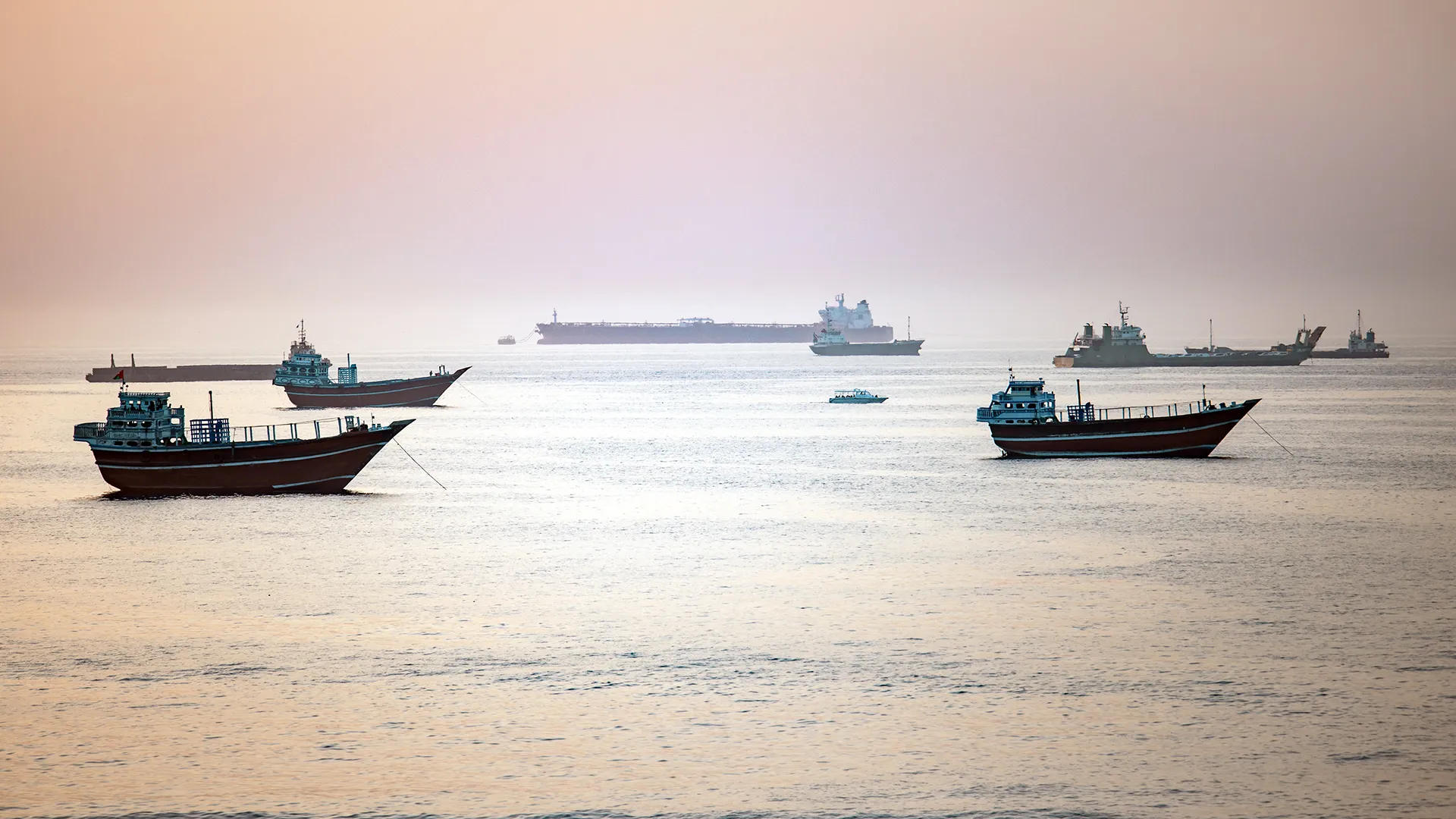
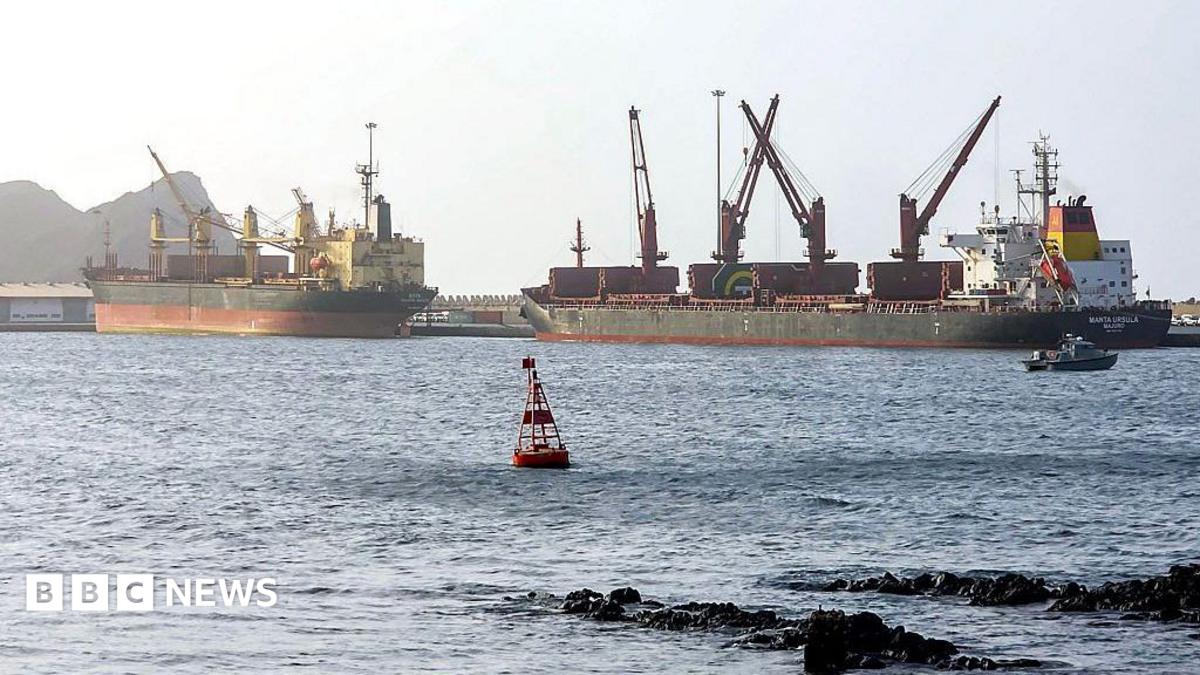
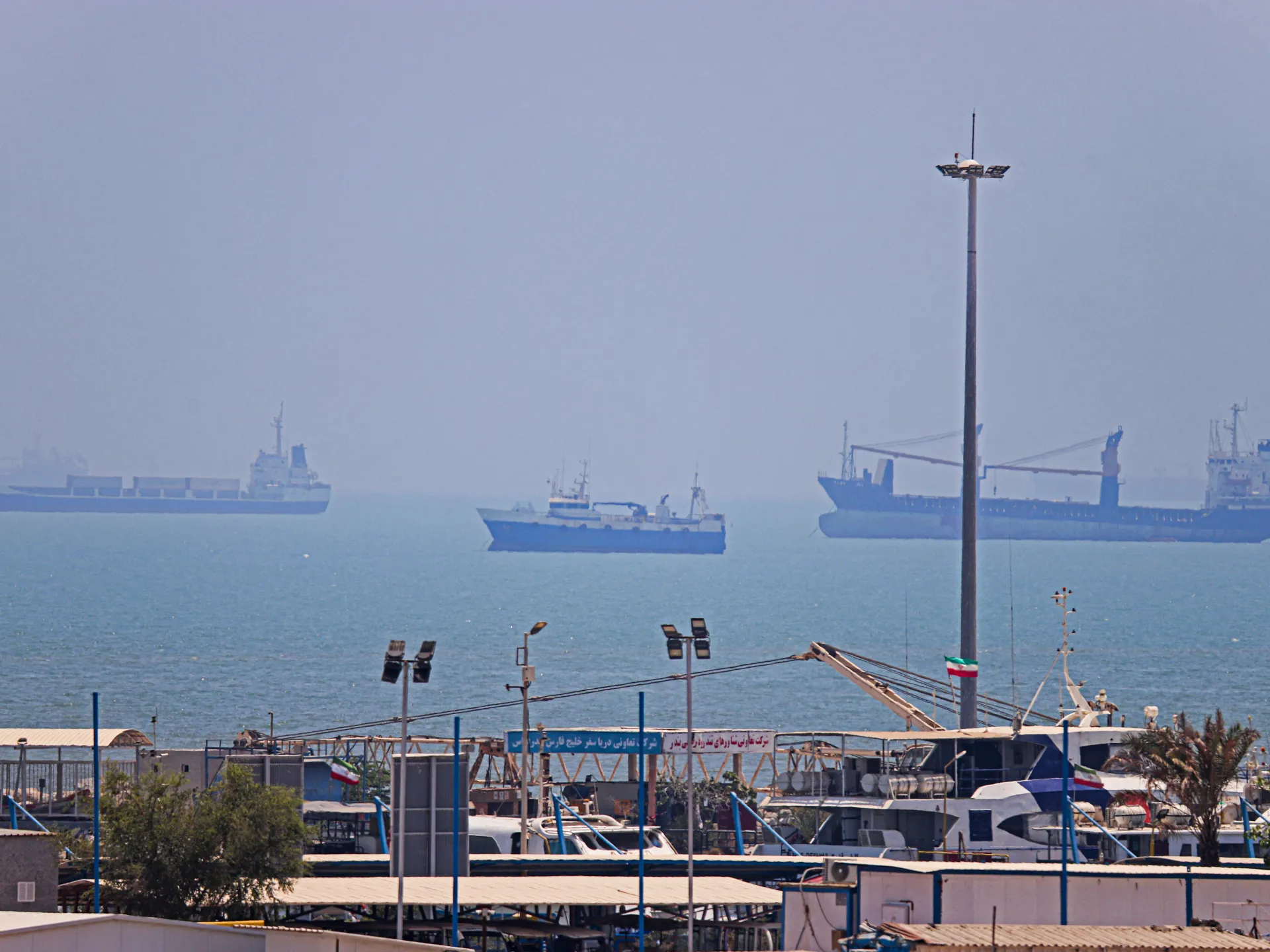
The United Nations’ International Maritime Organization (IMO) has suspended plans to evacuate more than 11,000 sailors stranded in the Strait of Hormuz after a cargo ship transiting the waterway was struck by a projectile.

IMO Secretary-General Arsenio Dominguez said several crews had already been evacuated, but the agency had decided to pause the operation until there were “necessary safety guarantees” for those involved.

Recommended Stories

list of 4 itemsend of list

The United Kingdom Maritime Trade Operations (UKMTO), a Royal Navy maritime security agency, said on Thursday that a cargo vessel had been struck by “an unknown projectile” about 7.5 nautical miles (14km) southeast of Dahit, Oman. No casualties were reported.

The incident comes despite a memorandum of understanding (MoU) signed by the United States and Iran last week that ended hostilities and included provisions aimed at reopening the strategic waterway. Iran had restricted passage through the strait in early March after the US and Israel attacked it on February 28. In April, the US imposed a naval blockade on Iran-linked vessels trying to pass through the waterway.

Since the MoU was signed, commercial traffic has restarted through the strait, but key disagreements remain over which shipping routes vessels should use — and whether Iran gets to charge a toll or fee.

Oman and the IMO have proposed a new shipping corridor that would partially bypass waters under Iran’s direct control. Tehran has rejected the plan, saying it was announced without consultation and raises safety concerns while demining operations are still under way. While Iran has not claimed responsibility for Thursday’s attack on the ship off Oman, it has not denied any role, either.

The latest attack has heightened concerns that tensions over navigation through the strait remain unresolved. Here’s what we know.

Why is the UN evacuating sailors?

Following the outbreak of the US-Israel war on Iran on February 28, Tehran and Washington imposed counter restrictions on the passage of ships through the Strait of Hormuz, leaving thousands of seafarers unable to leave vessels trapped in the waterway.

More than a dozen sailors have also been killed in attacks on ships — some from American missiles, others from Iranian projectiles. Most of those killed were from India.

Even with last week’s agreement between Washington and Tehran to end the conflict, more than 11,000 sailors remain stranded in the strait.

Announcing the evacuation plan on Tuesday, the IMO’s Dominguez said the operation would be conducted in “close cooperation with Iran, Oman, all other coastal states in the region, the United States and the maritime industry”.

Oman’s Ministry of Defence said the operation, which had been under discussion for months, would be carried out in phases.

Denmark also announced on Tuesday that it would join a multinational maritime mission led by France and Britain to help restore safe navigation through the strait.

Why was the ship attacked?

The Singapore-flagged cargo vessel Ever Lovely was struck by what authorities described as an “unknown projectile” while transiting the Strait of Hormuz on Thursday.

Ship-tracking data from MarineTraffic showed the vessel had been following the southern shipping route proposed by the IMO earlier that day, a corridor that passes closer to Oman’s coastline and has been rejected by Iran.

Singapore’s Maritime and Port Authority (MPA) said the vessel had since completed its transit through the strait and was continuing its voyage, adding that all 21 crew members were safe.

The authority said it was “deeply concerned” by an attack it described as “unprovoked, unjustifiable, and a breach of international law”.

“All actions affecting international shipping must fully comply with international law, in particular the United Nations Convention on the Law of the Sea, and not endanger the safety of seafarers and ships at sea,” the MPA said.

The incident prompted the IMO to suspend its planned evacuation of stranded sailors. Dominguez said the Ever Lovely “did not transit under IMO’s evacuation framework”.

“I have always reiterated that the safety of the seafarers remains paramount. Therefore, to ensure a coordinated approach and navigational safety, the evacuation plan will be paused until further clarity is obtained,” he said.

What has Iran said?

While it remains unclear if the attack was carried out by Iran, the country’s Islamic Revolutionary Guard Corps had criticised the new shipping corridor announced by Oman and the IMO, while also warning that passage through the strait, “is only possible via routes announced by Iran,” the state broadcaster IRIB reported.

Kazem Gharibabadi, Iran’s deputy foreign minister, has said safe passage through the Strait of Hormuz cannot be guaranteed for vessels transiting “with ambiguous arrangements, parallel routes, or decision-making outside of Iran’s considerations as the coastal state”.

“Any credible framework must be based on coordination with Iran and the provisions of paragraph five of the Islamabad Memorandum of Understanding,” he said in a statement on X. “Otherwise, the outcome will be the suspension of the designated parallel route.”

Iran first published its own map of approved navigation routes in April, directing ships to sail much closer to the Iranian coastline than before the conflict.

The IRGC’s latest warning came after a Liberian-flagged oil tanker transited the strait on Thursday using a route closer to Oman’s coast.

On Friday, a further three foreign oil tankers that attempted to cross the Strait of Hormuz “without authorisation” were turned back after a warning from the IRGC, Iranian state TV reported.

Analysts say control over the Strait of Hormuz has long been one of Tehran’s most important sources of strategic leverage, allowing it to exert pressure on the US, whose economy is inextricably tied to global markets.

Why was the evacuation suspended?

Reporting from Tehran, Al Jazeera’s Resul Serdar Atas said the attack appeared to show Iran was prepared to enforce its warnings over navigation through the Strait of Hormuz, after Tehran insisted vessels using either the Iranian or Omani route must coordinate with its authorities.

“Yesterday, Oman announced new routes for the passage of the ships. But then the IRGC released a statement, saying that whether the ships go through the Iranian or Omani territorial waters, they need to be in full coordination with Iranian authorities,” Atas said.

“And if they violate that, then Iran is going to act accordingly. So the question was whether Iran is going to really act or not?

“The answer is yes. Now, we have seen that a tanker has been attacked by some projectiles in the Strait of Hormuz. The Revolutionary Guards did not claim responsibility but did not deny it either.”

Atas added that Gharibabadi, Iran’s deputy foreign minister, had also warned that any shipping arrangements made without taking Iran’s position as a coastal state into account would be unacceptable.

“Perhaps, in the coming days and weeks, we are going to see that the Strait of Hormuz will be one of the main sticking points.”

What other disputes remain?

Under last week’s memorandum of understanding, Iran agreed it would “make arrangements using its best efforts for the safe passage of commercial vessels with no charge, for 60 days only, from the Persian Gulf to the Sea of Oman and vice versa”.

Although the agreement says commercial traffic should resume immediately, it also acknowledges that mines laid during the conflict must first be cleared, stating that “demining by the Islamic Republic of Iran will be instated within 30 days”.

It also provides for discussions between Iran, Oman and other Gulf states over future arrangements for managing navigation through the waterway.

However, the agreement does not specify what will happen after the initial 60-day period.

Last week, Tehran announced it would waive any transit fees during those 60 days while negotiations with the United States continue in Switzerland, raising the possibility that charges could be introduced if no broader agreement is reached.

Iran’s chief negotiator, Mohammad Bagher Ghalibaf, has also suggested Tehran does not intend to return to the pre-war status quo.

“Hormuz will never return” to how it operated before the conflict, he said. The proposal has also faced resistance from the United States and several Gulf states.

Are ships still moving through the strait?

Commercial shipping has gradually resumed, although traffic remains well below normal levels. Before the conflict, between 120 and 140 vessels typically passed through the Strait of Hormuz each day.

According to maritime analytics firm Kpler, 54 verified commercial and energy-related vessels transited the strait on Thursday, down from 70 verified crossings the previous day.

“West-to-East movements dominated, while the Omani Route accounted for the largest share of identified passages. Yet route transparency remains incomplete, with several Dark or Unknown crossings recorded.

“A reported projectile strike on a cargo vessel southeast of Dahit, Oman, adds fresh operational risk, underscoring the gap between improving physical flows and still-fragile maritime security conditions,” Kpler added.
Source link

Plan To Move Ships Through Strait Of Hormuz Paused After Iran Strikes Cargo Vessel

The U.N. International Maritime Organization (IMO) paused its plan to evacuate hundreds of ships stuck in the Persian Gulf after a vessel was attacked in the Strait of Hormuz on Thursday. A U.S. official told us the attack was carried out by an Iranian drone, which was confirmed by Iranian officials.

The evacuation plan, which IMO developed with Oman, was designed to provide safe passage to vessels in the Persian Gulf that are still unable to transit the Strait, which has been largely closed since Iran was attacked by the U.S. and Israel. The announcement came as traffic was beginning to move through the Strait again amid ongoing, albeit tense peace talks between the U.S. and Iran. However, these transits represent a tiny fraction of what took place before the war.

The IMO decision today also came after a warning earlier on Thursday by the Islamic Revolutionary Guard Corps Navy (IRGC-N) that safe passage through the Strait was limited to routes designated by Tehran and that other routes were “unacceptable and completely dangerous,” according to The Washington Post. The publication cited Iranian state-run media. The IRGC-N also claimed it turned back several ships trying to transit the Strait through the southern route suggested by IMO. There is also a northern route, near the Iranian coastline while concerns remain about mines in the main route, down the middle of the Strait.

IMO said it is pausing its evacuation plan even though the ship that was attacked was not taking part in that nascent effort.

“Following the launch of the IMO’s evacuation plan, through which several vessels have already been successfully evacuated, I have decided to temporarily pause its implementation in order to reconfirm that the necessary safety guarantees continue to be in place for the ships on our evacuation list and all those in the region,” IMO Secretary-General Mr. Arsenio Dominguez said in a statement. “I have been informed of an attack today in the Gulf of Oman on a vessel which passed through the Strait of Hormuz. This vessel did not transit under IMO’s evacuation framework. I have always reiterated that the safety of the seafarers remains paramount. Therefore, to ensure a coordinated approach and navigational safety, the evacuation plan will be paused until further clarity is obtained.”

“Today marks the Day of the Seafarer, underlining the importance of ensuring that the continued evacuation of the thousands of seafarers stranded in the Persian Gulf can proceed without the risk of them becoming collateral victims in this geopolitical conflict,” Dominguez added.

A maritime security official told us the ship that was attacked was the Ever Lovely, a Singapore-flagged cargo ship, according to MarineTraffic. The incident occurred about 7.5 nautical miles southeast of Dahit, Oman, according to the United Kingdom Maritime Trade Operations (UKMTO) center.

“A cargo vessel has been hit on the starboard side by an unknown projectile, causing damage to the bridge,” UKMTO stated on X. “Master has reported no casualties and no environmental impact. Authorities are investigating. Vessels are advised to transit with caution and report any suspicious activity to UKMTO.”

As we reported yesterday, IMO along with Oman devised a plan to allow vessels to leave the Persian Gulf through a southern route along the Omani coastline. The southern route is clear of mines and is the preferred route, according to the Joint Maritime Information Center.

A second route, to the north along the Iranian coastline, is controlled by the Islamic Republic.

In its initial unveiling of the evacuation plan, IMO said “this large-scale operation will be carried out in close cooperation with Iran, Oman, all other coastal States in the region, the United States and the maritime industry.”

We reached out to IMO for more information given that the IRGC-N is apparently not cooperating.

As we noted earlier in this story, there has been a spike in traffic through the Strait since last week’s signing of the Memorandum of Understanding (MoU) between Washington and Tehran.

However, the IRGC-N’s new stance “marks a reversal in the normalization trajectory building since the MoU signing,” the Windward maritime intelligence firm warned on Thursday. 

“The IRGC published a claim on its official Telegram channel that three tankers transiting the southern corridor had been ordered to turn back. Windward identified five vessels exhibiting behavior consistent with that claim, with a sixth losing AIS signal during the incident,” the intelligence firm noted.

“A VHF Channel 16 broadcast warned all vessels that transit without AIS or IRGC permission would be at their own risk,” Windward added. “The southern corridor, previously described as not requiring Iranian approval, is now subject to active IRGC enforcement, eliminating the only route operators believed to be free of Iranian control.”

It remains to be seen how or if this latest turn of events will alter what has been a positive trajectory for commercial shipping in the Strait. Simmering frictions between the IRGC and Iranian government that have emerged in recent months make it difficult to assess just who is in control in Iran and who has the final say in operations on this strategic waterway. Regardless, a pause in the evacuation plan and a new kinetic strike on shipping are not good omens.

Contact the author: howard@twz.com

Howard is a Senior Staff Writer for TWZ. He writes frequently about conflict, focusing heavily on the Middle East and Ukraine, and interviews with military and intelligence officials and industry leaders from around the globe. He lives near Tampa, Florida, home of U.S. Central Command, U.S. Special Operations Command.


Source link

Kenya transport strike paused after deadly protests | Protests News

A nationwide transport strike in Kenya over surging fuel prices, blamed on the United States-Israeli war on Iran, has been suspended for a week after four people were killed in mass protests against the increases.

Kenya, one of many African countries heavily reliant on fuel imports from the Gulf, has raised petrol prices by 20 percent and diesel by almost 40 percent since Iran in effect blocked traffic through the Strait of Hormuz, a key chokepoint that normally handles about a fifth of the world’s oil.

The strike was launched on Monday by transport operators, particularly the “matatu” bus operators who provide most of Kenya’s public transport, in response to the latest sharp fuel price hike.

“The strike that is going on is suspended for a period of one week to provide an avenue for consultations and negotiations between the government and stakeholders,” interior minister Kipchumba Murkomen told reporters on Tuesday.

Albert Karakacha, the president of Matatu Owners Association, confirmed the suspension.

Authorities said four people were killed and more than 30 were injured nationwide on Monday. Police said on Tuesday that more than 700 people had been arrested in connection with the protests over fuel price increases.

Rights groups condemned the use of lethal force by security forces, with Amnesty International calling for “maximum restraint”.

The unrest also disrupted Kenya’s main trade corridor, with local media reporting that truck drivers had refused to move cargo amid fears their vehicles could be attacked and set alight by demonstrators.

The national energy regulator said last week the government had spent $38.5m to cushion consumers from rising diesel and kerosene costs.

In a further emergency measure, Kenyan authorities last month temporarily suspended fuel quality standards in a bid to maintain supplies amid growing shortages.

Despite being one of East Africa’s most dynamic economies, Kenya still has deep structural inequalities: about a third of its roughly 50 million people live in poverty and unemployment remains high.

Source link

Why Louisiana paused its US House primary election amid redistricting push | US Midterm Elections 2026 News

The US state of Louisiana will hold several primary elections on Thursday, including for the United States Senate, the state’s Supreme Court, and a slate of local offices.

Notably absent will be the primary, in which members of the Democratic and Republican parties will select their candidates for the state’s six US House districts ahead of the general elections in November.

Recommended Stories

list of 3 itemsend of list

The primary vote has been paused by the state’s governor following a major Supreme Court ruling that opens the door to redrawing the state’s congressional district map, eliminating one of two majority-Black districts.

Rights groups have challenged the pause, saying it violates both the US and the state’s constitutions.

The situation comes amid a wider national redistricting battle, which has been shifting both parties’ electoral calculus ahead of consequential midterms that will determine control of the US House and Senate and, in turn, set the tone for the final two years of US President Donald Trump’s second term.

Here’s what to know.

What did the Supreme Court ruling do?

The 6-3 Supreme Court ruling in late April undid a key provision of the Voting Rights Act of 1965 meant to protect Black voting power from being diluted.

That can be achieved by effectively carving up areas with large Black populations to diminish their electoral influence. Black voters in the US have historically heavily skewed Democratic.

The ruling said that congressional districts could only be challenged if there was evidence of racist motivation behind how they were drawn. Dissenting liberal justices and critics have said such motivations would be exceedingly difficult, if not impossible, to prove.

Specifically related to Louisiana, the court ruled that a congressional map drawn in January of 2024, which created a second Black-majority district in the state, was unconstitutional.

That map was created following a legal challenge claiming that Louisiana was in violation of the Voting Rights Act because it had only one Black majority district out of six, despite Black residents making up one-third of the state’s voters.

Why did Louisiana pause its primary?

The Supreme Court ruling on April 29 came about two weeks before Louisiana’s US House primary elections were scheduled.

That left Republicans in the state scrambling to draw new maps ahead of the vote.

“Allowing elections to proceed under an unconstitutional map would undermine the integrity of our system and violate the rights of our voters,” the state’s Governor Jeff Landry said in a statement on April 30.

He said his order suspending the vote “ensures we uphold the rule of law while giving the [state] legislature the time it needs to pass a fair and lawful congressional map”.

On Wednesday, Republicans in the Louisiana State Senate advanced an initial redrawn map.

What have rights groups said?

A coalition of voting and civil rights groups has challenged the suspension of the election, charging that some segments of voters, including those in the military or casting “absentee” ballots, may have already voted.

They further said the abrupt change in date would confuse and subsequently disenfranchise voters while undermining voter education groups already distributing information about the election.

“This illegal executive order threatens the integrity of our democratic system and disregards the voices of voters who have already participated in the May primary election in good faith,” the groups, which included the Legal Defense Fund, the League of Women Voters of Louisiana, the American Civil Liberties Union, and the Harvard Law School Race and Law Clinic, said in a joint statement in early May.

“By attempting to suspend an ongoing election, state officials are creating confusion, undermining public trust, and placing partisan interests above the constitutional rights of Louisiana voters,” the statement said.

What is the wider context?

The standoff in the southern state comes amid a wider, and unorthodox, flurry of congressional redistricting in the US.

While redistricting has historically taken place every decade following the US census population count, President Trump called on Republicans in Texas last year to redraw their maps to create more Republican-leaning districts.

That kicked off a flurry of tit-for-tat redistricting efforts by Democratic- and Republican-controlled state legislatures alike. To date, the US states of California, Missouri, Ohio, Virginia, Utah, Tennessee and Florida have redrawn their maps ahead of the midterms.

Republicans are expected to net more seats than Democrats in the push. While that is expected to cut into the margin, Democrats are still tentatively favoured to retake the US House in November.

Source link