Patients forced to move as part of hospital shut after burst pipe sends A&E into choas
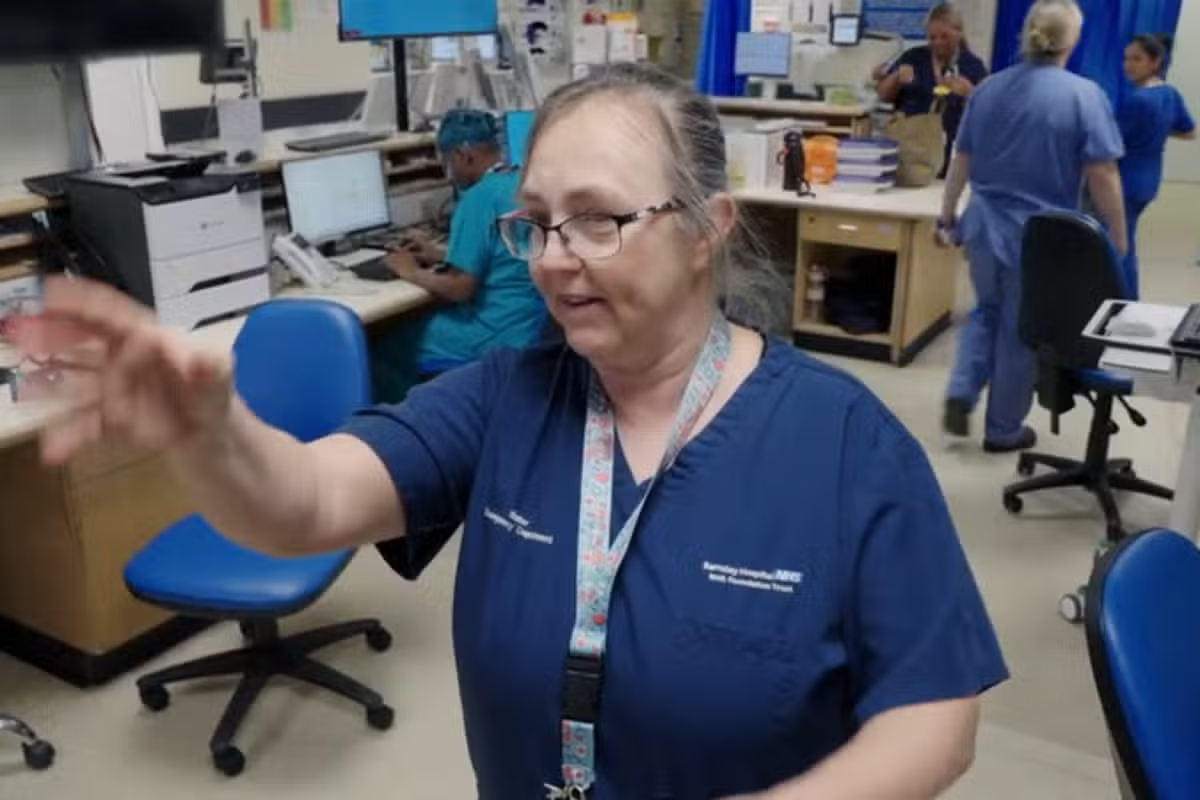
Barnsley Hospital faced a huge disaster during the latest episode of the Channel 5 show(Image: Channel 5)
A hospital department on Channel 5’s Casualty 24/7 was thrown into chaos.
Patients were forced to leave their cubicles after part of a hospital was shut when a burst pipe sent water and steam crashing through the ceiling.
During Wednesday’s episode of the hit show, the emergency department at Barnsley Hospital was plunged into turmoil after the unexpected incident left a large section of the hospital out of use.
Staff were forced to evacuate patients from the affected area and move equipment into corridors as they battled to keep the busy A&E department running.
Three fire engines were called to the South Yorkshire hospital after steam began pouring through the ceiling and part of it came down while doctors were working below.
At first, staff did not know what they were dealing with and feared the fumes could potentially have been gas. A member of staff explained that patients had to be evacuated from the cubicles as steam continued to pour down from the ceiling.
The trolleys were also moved into the back corridor, while staff initially feared the substance could be gas, prompting them to call the fire service.
The incident meant the entire back section of the emergency department had to be shut while staff worked to make the area safe.
With patients still waiting to be seen, the team had to find ways of continuing to treat people despite losing a significant part of the department.
The waiting room remained full as service manager Lindsey was drafted in to help Sister Jo get the department back on track.
Fortunately, nobody was injured during the dramatic incident. Lindsey said: “Nobody was injured, thankfully. Fortunately, it started slowly dripping first so people were standing back looking up as the ceiling came in.”
But the disruption created yet another challenge for staff working in an already pressured environment.
She said: “It’s already a difficult environment to work in, so any additional pressure on top of that is only going to make it even more difficult.”
Staff were forced to improvise, moving computers and equipment as they attempted to keep the department functioning.
One nurse said: “Just getting on really. There’s nothing you can do. They told us to get laptops and make it work.” Another added: “It’s a change but that’s ED for you, isn’t it? Got to work with what you’ve got.” The scale of the disruption on behalf of the hospital was out of use for the day.
Lindsey said she had asked the IT team to bring in computers on wheels so staff could continue working, describing the disruption as “a new challenge to add to the list.”
After hours of disruption, staff finally received some good news when another small section of the hospital was made available.
Computers could be plugged back in and some of the electrical problems had been resolved, allowing the team to start getting back to normal.
Lindsey praised the staff for how they had handled the extraordinary situation. She said: “I’m proud of the team because they handled it the way they do everything.” Meanwhile Sister Jo added: “We managed to keep on top of it and the patients got what they needed.”
You can stream Casualty 24/7: Every Second Counts on Channel 5
Wilfredo Engalla, a 51-year-old Filipino immigrant, alleged in a medical malpractice case that Kaiser doctors misdiagnosed him with colds and allergies for years before eventually informing him he had terminal lung cancer.
He died before his complaint could be heard by an arbitrator, which his Kaiser policy required. His case prompted a withering rebuke from the California Supreme Court, which said Kaiser’s system of arbitrating legal disputes was subject to long delays and unfair to its members. The year was 1997.
Nearly three decades after the landmark decision, the HMO giant — which made a series of sweeping reforms after the ruling — is once again facing questions over whether its arbitration system is stacked against the interests of its members.
Plaintiffs attorneys, legislators and patients say Kaiser’s private and confidential process for arbitrating legal disputes over medical care still has key flaws that favor Kaiser over patients bringing malpractice cases. The company insures about 25% of Californians, including some employees of the Los Angeles Times.
“Kaiser has really lost its way,” said Assemblyman Robert Garcia (D-Rancho Cucamonga). Garcia, who is a longtime Kaiser member, recently introduced a bill to require the California attorney general to oversee arbitrations mandated by any health plan.
Kaiser defended its arbitration system, saying in a statement that it was fair for both patients and the nonprofit.
Many companies and other organizations, including some hospitals, HMOs and physician groups, require their customers or patients to take their complaints to private arbitration rather than to court.
But unlike most other companies, which send claims to large arbitration firms, Kaiser created its own system back in 1971.
Under Kaiser’s system, once a neutral arbitrator is selected, either party can opt to disqualify that person without cause. There is no limit on the number of disqualifications.
Although the health plan designed the system to be fair, patients and their lawyers have alleged that in reality Kaiser’s greater knowledge of arbitrators’ past rulings and its ability to veto arbitrators give it an advantage to pick favorable judges.
Critics such as Arlan Cohen, a physician and attorney who has brought more than two dozen cases against the health plan, say the system also provides a financial incentive to arbitrators to rule in Kaiser’s favor in order to be selected for future cases.
While Kaiser has access to all the decisions made by arbitrators in its system, the patient’s family gets a more limited disclosure of an arbitrator’s history of cases, lawyers say, adding that it’s not easy to see which arbitrators have ruled frequently for Kaiser.
Kaiser said it disagreed that the system allowed it to select favored arbitrators.
“The appointment process is not influenced by whether the arbitrator has ruled for or against KP or has a record of ruling against Kaiser Permanente,” its statement said.
“As required by law, both parties receive information about potential arbitrators and can decline to move forward with any they are not comfortable,” the statement said.
One problem is what experts call the “repeat player effect,” in which a large company appearing repeatedly before the same panel of arbitrators allegedly gains an advantage over the individual bringing a single complaint.
David Allen Larson, past chair of the American Bar Assn.’s dispute resolution section, said the repeat player effect happens because the patient will likely be choosing an arbitrator on the health plan’s system just once, while “Kaiser is selecting them every single day.”
“They know the system. They know the rules,” Larson said of Kaiser. “The entire process gives them an advantage.”
Alan Kang, a lawyer, in a recent petition filed in L.A. County Superior Court, contends that the fees the arbitrators earn from hearing cases — as much as $2,000 an hour — give them an incentive to rule in Kaiser’s favor so they are chosen to hear more cases.
“When a judge’s future income is at stake, it is impossible to be impartial,” Kang wrote in the petition.
The petition seeks to void the December decision of an arbitrator who ruled against the family of Evangelina Aquino, a Kaiser employee who died of cancer at age 40.
Kang, the Aquino family and the medical experts they hired for the case say her cancer would have been treatable if Kaiser doctors had found it with a test they said her symptoms called for. Kaiser argued it was a different kind of cancer that was aggressive and untreatable. The arbitrator agreed with Kaiser in the December decision.
After the ruling, Kang began analyzing data from Kaiser’s system.
His review of dozens of cases in the last six years found that judges overseeing the most cases nearly always ruled for Kaiser.
“The message is clear: deliver wins for Kaiser and you will get additional business,” Kang wrote in his court petition.
The Oakland-based health plan declined to answer questions about its arbitration system and Kang’s claims, but said in a statement that its “arbitration process is designed to be fair, impartial, and accessible to all members. While some arbitrators may handle multiple Kaiser Permanente-related cases, they are not employed by Kaiser Permanente, and they are selected by both parties, in accordance with the law.”
“We recognize that arbitration cases often involve difficult and deeply personal experiences for patients and families,” the statement said, “and we take all concerns raised through these processes seriously.”
Kaiser’s unique arbitration system
Arbitration can have advantages over the court system, including allowing Kaiser to save on legal costs, which otherwise would raise the price of premiums it charges to families, employers and governments.
Kaiser offers to pay the arbitrators’ fees, which can save families tens of thousands of dollars.
Arbitration may also lead to faster outcomes, possibly avoiding years of litigation. Unlike civil litigation, arbitration decisions are especially difficult to appeal.
After the criticism by the state Supreme Court in 1997, Kaiser reformed the system by creating the Office of the Independent Administrator. The office is funded by a Kaiser trust and the $150 fee each patient filing a claim must pay, said Marcella Bell, who serves as the independent administrator.
Bell said the office works independently from Kaiser.
The office selected 195 retired judges and lawyers to serve on a panel that patients and Kaiser can choose from when selecting a neutral arbitrator to oversee and decide a malpractice case.
Rules written by the independent administrator, in consultation with the health plan and an advisory board, allow Kaiser and the family to cut an arbitrator they don’t like, at multiple steps in the process.
The administrator’s office randomly selects 12 members from its panel. Both sides can each remove any four of those arbitrators. The two sides then rank the remaining arbitrators in order of preference. The administrator selects the top-ranked arbitrator to hear the case.
The two parties then still have the ability to disqualify that selection without cause.
Members of the United Nurses Assns. of California and Union of Healthcare Professionals strike outside Kaiser Permanente in Oakland on Jan. 28.
(Jessica Christian / San Francisco Chronicle)
Last year, Kaiser’s arbitration system closed 529 arbitration cases.
The arbitrators threw out 14% of the cases, ruling in favor of Kaiser’s motion for summary judgment, and dismissed an additional 5% of cases on technical or procedural grounds.
Only 23 cases, or 4% of the total, went to a hearing. Among those, the arbitrator decided for Kaiser in 17, with the patient winning the remaining six.
Patients and their families withdrew their claim in 20% of the cases. About half of those patients did not have a lawyer and had tried to represent themselves.
The parties settled for an undisclosed sum in 57% of the cases. The settlements are confidential.
Patient safety questions
Those who have studied the use of arbitration by Kaiser and other HMOs for medical malpractice claims say the secrecy of the settlements and the closed hearings could keep safety problems from coming to light.
“The secrecy of arbitration proceedings may prevent publicity that could reveal poor doctors,” the California Research Bureau warned in a report in 2000 that analyzed Kaiser’s system. That compares with public court cases that could deter “bad behavior” in the future, the researchers wrote.
In December 2023, 53-year-old Francisco Delgadillo arrived at the Kaiser ER in Vallejo with severe chest pain. After an initial assessment, he waited eight hours for care, according to state regulators.
He died in the lobby. A state and federal investigation found multiple violations, including that Kaiser failed to have a licensed nurse monitoring the dozens of patients in the ER’s waiting room.
The Delgadillo family filed an arbitration claim. Their lawyer Jeff Mitchell said the case settled for a confidential sum and he could not discuss it.
Mitchell agreed that the secrecy raised patient safety concerns.
“They love the system, otherwise they would not be so hellbent to keep it,” Mitchell said of Kaiser’s repeated efforts to dispel criticism. “They don’t want these cases to get in front of juries.”
A licensed practical nurse attends to a patient at a Kaiser Permanente in Culver City in September.
(Allen J. Schaben / Los Angeles Times)
Calls for reform
Despite the changes Kaiser made after the 1997 court decision, patients and their families have continued to complain.
According to the administrator’s 2025 annual report, the “most common” complaint the office heard last year was about the neutral arbitrator.
“Most complained that the arbitrator was biased, partisan, unjust, and in Kaiser’s favor,” the report said.
Stephen Martinez, a retired aerospace engineer from Bellflower, is leading the effort to pass the state bill introduced by Garcia.
At an April hearing in the state Assembly, Martinez spoke about how his wife had found a lump in her breast and asked for an appointment with her longtime caregiver at Kaiser to examine it. Instead she was sent to a physician assistant, who dismissed it, he said.
“The PA prescribed warm compresses, a sports bra, and limited chocolate,” Martinez testified. “We would later find that Lindalee did have breast cancer that had already spread.”
Martinez and his wife said they spent $175,000 on lawyers and medical experts to bring that arbitration case. A chief breast surgeon at Kaiser and another surgeon who had retired from that job both testified that the Kaiser physician assistant failed to follow the health system’s guidelines.
Kaiser’s expert argued that the physician assistant did an appropriate exam and that his low suspicion of breast cancer was reasonable. The neutral arbitrator concurred and ruled against the couple.
After passing the Assembly, Assembly Bill 1770 is now in the state Senate for consideration. The bill lets the attorney general decide what actions they will take to ensure health plan arbitrations are handled fairly and transparently. If the bill passes, the state would add four deputy attorneys general, a legal analyst and three legal secretaries to do that work, according to a legislative analyst’s report.
Kaiser says it has concerns about the bill, including that it would “create overlapping state oversight and duplicative reporting requirements.”
Kaiser Permanente’s corporate offices in downtown Oakland in January 2025.
(Jane Tyska / East Bay Times via Getty Images)
Questions of a missed diagnosis
When Janene Fowler was 22, her body seemed to turn against her. She grew weak, pain shot through her hands and feet, her heart raced. She soon required a wheelchair.
Fowler’s medical chart detailed what could have caused her disabling problems. A test eight years before had found a deficiency of vitamin B12, according to the chart. Over the years, Kaiser doctors noted problems such as depression, unexplained pain, shortness of breath, a sore tongue and an abnormal gait — all possible symptoms of vitamin B12 deficiency.
In February 2022, after her family complained about her not being able to see a neurologist, she got an appointment. The specialist noted her vitamin deficiency, telling the nurse to start her on a supplement at once. But the treatment did not begin because the paperwork was lost, her medical records show.
Two weeks later, Fowler left Kaiser to see a doctor at UCLA. A doctor there quickly started injections of B12.
Her symptoms gradually got better, but her new doctors say the years-long deficiency left permanent damage. She still can’t walk without help.
The arbitrator, a retired judge, sided with Kaiser’s doctors and experts, who questioned whether Fowler’s problems were caused by a deficiency of vitamin B12. While one test showed a deficiency, he noted that a second test failed to confirm it. He wrote that Fowler and her lawyers had failed to prove that Kaiser “breached its duty of care.”
Cohen, Fowler’s lawyer, asserted that the retired judge’s decision was contrary to UCLA medical records, which detail her deficiency and treatment.
Fowler now spends most of her time at home. She can’t drive. She often falls when she tries to get around with a cane. She loves to cook, but said she burns herself when she tries.
“My hands don’t really do what I tell them,” she said.
Kaiser declined to answer questions about her case, citing patients’ privacy rights.
Fowler said she’s angry about how the health plan’s doctors and its arbitration system treated her.
“I thought I was going to die, and no one at Kaiser seemed to care,” she said. “What justice can you have in a system that is run by those you are trying to sue?”
There is growing anxiety among residents after nine Ebola virus patients escaped from a treatment centre in the Ituri province of the Democratic Republic of Congo (DRC) after a fire outbreak. Authorities and the local population are deeply concerned that these individuals could spread the Ebola disease to other provinces.
On June 30, nine patients suddenly vanished from the health facility after a group of hostile locals set the Nia-Nia Ebola treatment centre on fire. Among the missing patients are two confirmed cases of Ebola infection and seven suspected cases.
According to Joseph Pemanakue, the chief medical officer of the Nia-Nia treatment centre, the patients have still not been found several hours after fleeing the health facility.
“The burnt-down centre was housing two confirmed positive cases of Ebola as well as seven suspected cases. The nine patients fled from the structure and remain to be tracked down, causing fear of an increased propagation of the epidemic within the community,” Joseph said.
The attack on the treatment facility happened after some members of the community refused to surrender the body of a suspected Ebola patient to the medical team. This confrontation escalated quickly, resulting in the destruction of the treatment centre and the loss of a significant stock of medicine and medical equipment.
The local authorities consider the incident to have seriously compromised the efforts to contain the epidemic in Ituri province.
“Some opinion leaders manipulate the population by affirming that Ebola is a business, whereas the disease actually exists. In PK 51, we have recorded ten deaths. A corpse tested positive was removed from a coffin and transported by the population, an action which increases the risk of spreading the disease. The health facility responsible for taking charge of patients, which was created after several efforts, was unfortunately destroyed,” said Alexis Mungaki, a chief of the Ngayo tribal group.
The incident occurred amid heightened tensions between specific communities and the Ebola treatment teams. Health officials are concerned that the escape of confirmed and suspected patients may trigger new transmission chains, as Ituri province continues to be the focal point of the 17th Ebola outbreak in the DRC.
Nine Ebola patients have escaped from a treatment center in the Ituri province of the Democratic Republic of Congo, following a fire instigated by locals hostile to the medical team.
This incident has heightened concerns among the authorities and locals over the potential spread of Ebola to other regions, as these patients – two confirmed and seven suspected cases – have yet to be located.
The attack on the facility, which also resulted in considerable losses of medical supplies, was escalated by community members refusing to cooperate with health officials. Local leaders express that misinformation, suggesting Ebola as a business ploy rather than a real disease, exacerbates the issue and hinders containment efforts.
With Ituri province central to the ongoing Ebola outbreak, the incident threatens to worsen the epidemic’s impact.
In the early hours of another day of Israel’s genocidal war on Gaza, 20-year-old Hamza al-Ghazali, who lives in the Zeitoun neighborhood south of Gaza City, set out once again in search of an insulin pen.
It was not the first time he had moved between pharmacies and medical centres, looking for a dose. The effort has become a recurring part of his life since the outbreak of war in October 2023 and the tightening Israeli restrictions on the entry of medicines and medical supplies into the Gaza Strip.
Recommended Stories
list of 3 itemsend of list
Hamza knows that delaying an insulin dose is potentially life-threatening. Type 1 diabetes requires strict daily treatment and continuous monitoring. However, under war and blockade conditions, managing the disease has turned into a daily, high-risk struggle.
A Palestinian pharmacist handles medicine as medical supplies run critically low, according to the World Health Organization, at Al-Ahli Arab Hospital in Gaza City, March 8, 2026 [Dawoud Abu Alkas/Reuters]
Hamza recalls how his health condition was more stable before the war. He used to obtain insulin from pharmacies at prices ranging between 25 and 35 shekels ($8.5 and $12) per pen, sometimes even less.
“I started to know all the pharmacies, and they also knew me, because I was always buying insulin pens,” Hamza says.
But this changed drastically with the war and the tightening of restrictions on the entry of medical supplies. The price of a single insulin pen rose to between 75 and 100 shekels ($25 and $34), and, as Hamza needs six to seven pens per month, he was forced to try to extend the use of each pen for as long as possible.
Insulin injections used in the treatment of Type 1 diabetes, essential for regulating blood glucose levels [Lina Ghassan Abu Zayed/Al Jazeera]
Fight for survival
The suffering of diabetes patients in Gaza extends to restrictions on the entry of medicines through border crossings, measures that have led to a severe shortage of insulin, glucose metres, and test strips.
Hamza notes that this shortage has created an unstable medical reality, where, in some cases, medicines that may have been stored for long periods or in improper conditions appear on the market, raising concerns about reduced effectiveness or uncertain quality due to the lack of alternatives.
A year ago, when an Israeli blockade on the entry of food led to a famine in northern Gaza, Hamza was forced to eat anything he could find.
But for Hamza, it wasn’t just about securing enough nutrition for his body, but also about finding the right balance between the insulin he had access to and the food he could find.
If he ate more without sufficient insulin doses, then he could have dangerously high blood sugar levels. If he reduced his food intake out of fear of running out of insulin, then that could result in severe and potentially fatal hypoglycemia (low blood sugar).
“I was afraid for myself during the shelling in northern Gaza,” said Hamza. “We were under siege. If the house was bombed, I might survive under the rubble, but die from low blood sugar. And if I ate without insulin, my sugar could rise dangerously. I was living between two fears all the time.”
He adds that the fear was not only about losing insulin, but also about losing glucose metres and test strips, which he relies on daily to monitor his condition. Every time he was forced to evacuate, the first thing he would carry was his “diabetes bag”.
Hamza al-Ghazali often struggles to find insulin in Gaza [Lina Ghassan Abu Zayed/Al Jazeera]
Equipment shortages
Glucose test strips have been in short supply, limiting Hamza’s ability to monitor his blood sugar levels on a daily basis and forcing him to rely on judging his physical symptoms.
Hamza notes that the cost of a glucose metre ranges between 250 and 300 shekels ($85 and $120), but the real problem lies in the availability of test strips.
Without them, the device becomes useless, forcing some patients to repeatedly buy new devices. Hamza estimates that more than 80 percent of diabetes patients in some areas are unable to test their blood sugar regularly, which he describes as a “medical disaster”, as it turns treatment into daily guesswork.
According to data from the Palestinian Ministry of Health in Gaza, between 70,000 and 80,000 diabetes patients in the Palestinian enclave are at risk due to the severe shortage of insulin and test strips, in addition to the collapse of medical follow-up services and poor nutrition.
Medicine shelves at Al-Ahli Arab Hospital as medical supplies run critically low [Dawoud Abu Alkas/Reuters]
Endocrinology and diabetes specialist Dr Adli al-Ghouti notes that about 2,500 children in Gaza are living with Type 1 diabetes, and are in a highly critical health condition.
As a result of insulin shortages, a lack of proper storage conditions, and power outages, a real crisis is unfolding.
Al-Ghouti warns that the deterioration of insulin quality, the expiration of the stock available in Gaza, and improper storage can all reduce effectiveness, creating a false sense of security while blood sugar levels remain uncontrolled, potentially resulting in severe complications such as diabetic ketoacidosis, a life-threatening emergency condition.
“Taking an expired dose of insulin may cause significant harm inside the body, while giving a temporary impression of improvement,” Dr al-Ghouti said.
Diabetes is therefore no longer a condition that can be managed easily in Gaza. Between the shortage of insulin, a lack of testing tools, rising prices, and deteriorating nutrition, even the simplest aspects of treatment turn into a daily struggle for survival.
More than two years ago, Gaza resident Hanin Muhammad accompanied by her 39-year-old sister Sabreen, a kidney transplant recipient, was flown to the Iraqi capital Baghdad for medical treatment. But Muhammad has since been confined to the Private Nursing Home Hospital inside Baghdad’s Medical City complex, thousands of miles away from her home in Gaza, as her travel documents have been confiscated by Iraqi authorities.
“My six children are in Gaza, and I am entering my third year without seeing them,” 40-year-old Muhammad told Al Jazeera.
Recommended Stories
list of 4 itemsend of list
Her family home in Rafah was destroyed by Israeli forces, forcing her children to be displaced into makeshift tents located between Rafah and Khan Younis.
“I check on them through other people because they lack internet connection. I am begging anyone to intervene so we can get back to Egypt, register, and see our children,” she said. Currently, Palestinians can go in and out of Gaza only using the Rafah crossing, which opens into Egypt.
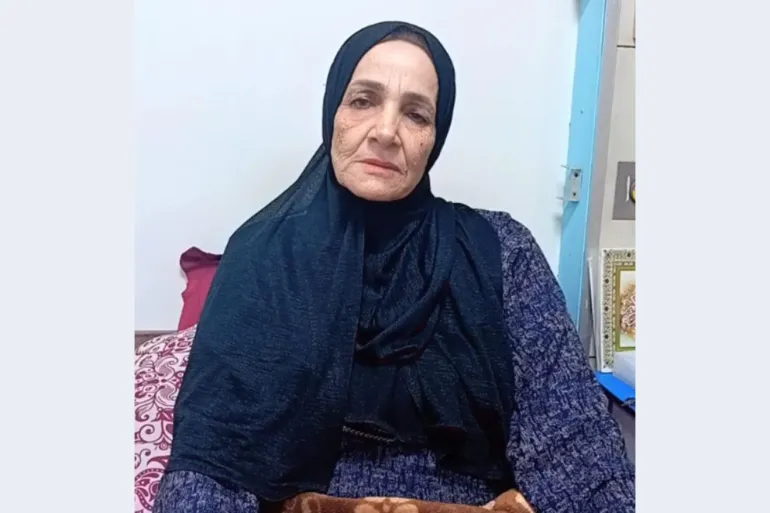
Samah Abdul Moati, 65, an oncology patient stranded in Baghdad, lost two sons in the war and says she no longer cares about her treatment, wishing only to return to her family [Courtesy of Samah Abdul Moati]
Muhammad, who travelled to Iraq as a medical companion to her sister, is part of a forgotten cohort of 46 Palestinians evacuated to Iraq, comprising 21 patients and 25 family escorts.
According to health authorities tracking the group, the clinical breakdown of the patients highlights the severity of their conditions, which include five oncology patients, four suffering from blood disorders, one cardiac patient, one kidney disease patient, and 10 patients wounded in the ongoing genocidal war that has killed nearly 73,000 Palestinians and wounded more than 172,000.
The group was flown to Baghdad in March 2024 on a military aircraft in coordination with the Iraqi and Egyptian governments, with a symbolic presence from the Palestinian Embassy in Cairo.
These rare evacuations highlight a much broader medical crisis back home. According to Gaza’s Health Ministry, more than 20,000 patients and wounded people are currently waiting to travel abroad for medical treatment.
Zaher al-Waheidi, head of the ministry’s Information Unit, reported that 1,200 children in Gaza now suffer from spinal cord injuries and paralysis directly resulting from Israeli attacks, while some 4,000 children require urgent treatment abroad.
Despite the overwhelming need, official data provided by al-Waheidi shows that only 154 children have been allowed to leave Gaza since the Rafah crossing, the enclave’s only gateway to the outside world, partially reopened in February amid heavy Israeli restrictions.
The crisis is equally dire for newborns: in 2025, more than 4,000 women had premature deliveries, and at least 4,800 babies were born with low birth weights – double the pre-war figure. Last year alone, 457 infants died in their first week of life.
For the handful who made it out, like the group in Iraq, the promised sanctuary quickly devolved into a cage defined by confiscated documents, restricted movements, and systemic neglect.
Confiscated documents and suspended lives
Upon their arrival from Egypt’s Heliopolis Hospital, the promised short-term recovery windows evaporated. Evacuees state that their primary identification and travel documents were immediately seized.
“When we left Egypt for Iraq, the Iraqi authorities took our identification papers from the Egyptians, and we haven’t seen them since,” Muhammad told Al Jazeera.
“When we asked for them, they told us they were held by Iraqi Intelligence and the Ministry of Foreign Affairs. We demand them back, but no one answers us.”
The Palestinian Embassy in Baghdad issued new passports for those lacking them, but according to Muhammad, these documents remain unstamped by the Iraqi government and are functionally useless. She noted that without the official stamps, they cannot travel anywhere.
This administrative vacuum has completely frozen the lives of the companions. Noor Ibrahim, a pseudonym for a young woman who arrived as an escort for her cancer-stricken aunt, is stranded along with four of her aunt’s children.
“I have been engaged for four years, and my fiancé and family are in Gaza,” Ibrahim told Al Jazeera. “We left on the promise that it would be a temporary six-month treatment trip, but now, two years have passed.”
She expressed deep frustration as she is stuck inside the medical complex, emphasising that she just wants to return to Egypt, from where she can travel to Gaza to complete her marriage and start her life.
The stress of the confinement has also severely exacerbated underlying health conditions. Ibrahim noted that while her aunt received the necessary cancer treatment, she has developed various other undisclosed health complications in Iraq, and her psychological state is exhausted from leaving her husband and family behind in war-ravaged Gaza.
Retaliation and dire conditions
For the Palestinians living inside Baghdad’s Medical City complex, daily life has become a grind of material deprivation and psychological distress. The evacuees are completely cut off from any monetary stipends, leaving them entirely dependent on the hospital for basic shelter and local citizens for additional charity.
This picture taken on December 24, 2023, shows a view of the Baghdad Medical City hospital complex overlooking the Tigris river in the centre of Baghdad [File: Ahmad Al-Rubaye/AFP]
Samah Abdul Moati, 65, who battles leukaemia, liver cancer, and an arm injury, is accompanied by her injured 43-year-old son and her daughter-in-law. She painted a grim picture of their daily life.
“The hospital brings food every day, but no one can eat it because it is unfit for consumption,” Abdul Moati told Al Jazeera. “We are surviving on the grace of local well-wishers who don’t fail us. But we don’t care about the treatment any more – we just want to return to our children.”
Abdul Moati’s situation is compounded by unfathomable grief: two of her sons were killed in the war, two others have platinum implants from injuries, her husband is fighting cancer in a Gaza intensive care unit with no one to care for him, and her daughters and orphaned grandchildren are living in tents for displaced people.
“The hardest feeling is that I am trapped between the hospital walls while my heart is outside with my family and my people,” Abdul Moati said. “My husband is in the intensive care unit alone, and my children and grandchildren are in tents under the cold and fear.”
Compounding their alienation, evacuees who have tried to protest or publicise their predicament faced swift administrative blowback. When they demanded their right to travel five months ago and spoke to the media, hospital management retaliated by locking down the ward and banning them from even visiting the hospital garden.
Muhammad revealed that they were only allowed out after journalists wrote about their situation, adding that officials continuously throw them from one department to another without providing any straightforward answers.
Bureaucratic runaround
The spokesperson for the Iraqi Ministry of Health, Saif Albadr, did not answer repeated calls from Al Jazeera.
While the head of public relations at the Health Ministry, Ruba Falah Hassan, told Al Jazeera that the case is “political.”
“Frankly, this is a political issue, not health-related.. I’m not authorised to talk about it,” she stated.
The newly appointed Iraqi government spokesperson, Haidar Al-Aboudi, told Al Jazeera that he “will look into the matter”.
For the Palestinians stranded in the Medical City, they maintain that they lack the financial means to buy commercial airline tickets even if their papers are returned, meaning they desperately need a coordinated effort by a charity or government body to facilitate their travel back to Egypt.
“I am not asking for a luxury or an exception,” Abdul Moati pleaded in her final remarks.
“I am asking for a simple human right: that my family does not remain divided between life and death. Open a safe path, facilitate our family reunification, and let me return to my family before it is too late.”
Loved ones and healthcare workers gathered for the burial of a doctor who died after treating Ebola patients in the Democratic Republic of Congo. Fears among frontline medical teams are growing as the outbreak worsens, with more than 900 suspected cases of the virus.








![Samah Abdul Moati, 65, an oncology patient stranded in Baghdad, lost two sons in the war and says she no longer cares about her treatment, wishing only to return to her family. [Courtesy of Samah Abdul Moati]](https://i0.wp.com/www.aljazeera.com/wp-content/uploads/2026/06/WhatsApp-Image-2026-06-01-at-8.37.47-PM-1780388719.jpeg?w=640&ssl=1)