

passports

easyJet launches new scheme where they will PAY for baby passports

EASYJET is allowing parents to claim back the cost of their baby’s first passport from today.

Simply book an easyJet holiday, use the promo code and the £66.60 will come off the price of the break.

Families can redeem the price of their baby’s passport when booking a holiday Credit: Joe Pepler/PinPep
The airline will take £66.60 off the price for qualifying families Credit: Getty

The new initiative starts from today after research showed that almost four in five parents said a baby’s first holiday was a landmark family moment.

Usually when Brits apply for a baby passport online, it costs £66.60 – a paper application sent by post increases the price to £80.

But with the airline, this cost will be paid for by easyJet when families book their next holiday.

Use the promo code FIRSTPASSPORT when making the booking to get the extra discount.

HAPPY HOLLY-DAYS

The 8 UK holiday parks opening for Christmas this year with £6.62pp stays


BAG IT

Cheap summer 2027 holidays you should book NOW for under £60pp – before prices go up

There’s no minimum spend on the holiday and children must be two-years-old or younger at the time of travel.

The offer ends on November 26 at 11pm – for more information, head here.

Stuart Wright, Customer Director at easyJet holidays, said: “Travel has a unique way of bringing families together, and a baby’s very first holiday is often one of those moments parents remember for years to come.

“By covering the cost of a baby’s first passport, we’re helping more families start making those memories that little bit sooner.

“Combined with our great-value packages, family-friendly hotels and thousands of Free Kids Places, it’s another way we’re making family holidays easier and more affordable.”

If you need some inspiration on where to book, easyJet recently announced it would be launching six new routes from UK airports in time for autumn.

Use the promo code FIRSTPASSPORT when making the booking to get the extra discount Credit: David Parry/PA Media Assignments
Collage of travel items including a plane, sunscreen, passport, suitcase, and plane tickets, advertising The Sun's travel Instagram account.

One of these flights will be from Newcastle to Fuerteventura which will start on October 25, and operate twice a week – on Thursdays and Sundays.

Easyjet’s Luton-Ljubljana flights start on October 26 three times a week on Mondays, Wednesdays and Fridays.

There are 18 new routes launching next summer too with a choice of city breaks to island escapes.

Two of these routes will be to Girona which will be a first for easyJet.

One will take off from Liverpool on March 28 and operate twice a week on Wednesdays and Sundays.

Girona will also take off from Gatwick starting on June 3, operating three times a week on Tuesdays, Thursdays and Sundays.


Source link

UK travellers told ‘check passports’ as new rule ‘now in effect’

Advice has also been given on other changes

Brits are being urged to check their passports before travelling, with a new rule now in effect.

Experts said the changes highlighted the risk of simple travel document mistakes. They have explained the rule change and given advice on wider passport checks to make before travelling.

From September 28, passengers travelling on Irish Ferries’ Dublin-Holyhead and Rosslare-Pembroke routes, in both directions, are required to present a valid passport or Irish passport card before boarding. But new research from Saga Travel Insurance suggests many Brits could still be caught out by basic passport and travel document rules.

It said 16% admitted they didn’t know when their passport expires, with a 8% currently holding an expired passport. Further, 10% had less than a year remaining on their passport and one in 14 (7%) had previously been denied entry to a country because they didn’t have enough time left on their passport.

Saga said there was also widespread confusion around post-Brexit travel rules, with half (50%) of holidaymakers saying they were not confident they understood the visa and travel requirements for visiting Europe.

Michelle Cooper, director of Travel Insurance at Saga, said: “Nobody should have their holidays ruined because of a simple passport error. A few quick checks can help people avoid unnecessary stress, unexpected costs and disruption at the airport.”

The travel insurance provider surveyed 500 people in the UK and found that Brits could be at risk of avoidable disruption when travelling overseas due to simple oversights.

The passport rules catching Brits out after Brexit

Half (50%) of holidaymakers are still not confident they understand the visa and travel requirements for visiting Europe after Brexit, the survey found.

Michelle said: “If you’re travelling to Europe for an extended period, you may now be required to apply for a new visa type. Travellers can spend up to 90 days in the Schengen area within any rolling 180‐day period, but it’s not as simple as it sounds.

“The 180 days are counted backwards from each day you’re in the EU or a Schengen country, so every trip adds up. That means even frequent short breaks can push you over the limit without realising.

“If you go beyond 90 days, you could face fines or even a ban from re-entering. Anyone planning to stay longer will need to apply for the new Schengen Visa.”

What is the Schengen area?

The Schengen area is a group of 29 European countries where travellers can move between countries without routine passport checks. It includes popular holiday destinations such as France, Spain, Italy, Greece and Portugal.

Confusion around the ‘10-year passport rule’ is the most widely discussed passport concern online, according to the analysis from Saga Travel Insurance, with Reddit discussions on the issue amassing 35,417 upvotes.

Michelle explained: “EU and Schengen countries require passports to be less than 10 years old on the day of entry. While all new passports last exactly ten years, passports issued before 2018 remain valid for 10 years and nine months. If you have an older passport, make sure you check both the issue date and expiry date before travelling to avoid problems at the border.”

Brits warned over new ETIAS travel checks for Europe

From late 2026, British travellers visiting most European countries will need to apply for a new European Travel Information and Authorisation System (ETIAS) before travelling. The new system is similar to the UK’s Electronic Travel Authorisation (ETA) scheme and will apply to visa-exempt travellers visiting 30 European countries for short stays of up to 90 days within a 180-day period.

Michelle said: “Travellers may not realise that visiting Europe will soon involve an additional pre-travel authorisation step. From late 2026, British holidaymakers will need to apply for ETIAS approval before travelling to many popular European destinations.

“The authorisation will be linked directly to your passport, meaning travellers could be denied boarding if their ETIAS details don’t match their travel document or if the authorisation has expired. Most ETIAS applications are expected to be processed within minutes, but it could take longer if additional checks are required. Holidaymakers should apply well in advance of departure to avoid last-minute disruptions.

“Similar systems already exist elsewhere. For example, UK travellers visiting the United States must apply for an Electronic System for Travel Authorisation (ESTA) before departure. These systems are becoming more common globally, so it’s important to check requirements for each destination well ahead of travel.

“As with passport validity rules, people are responsible for making sure they have the correct travel authorisation before they leave the country. If someone is unable to travel because they failed to obtain valid ETIAS or ESTA approval, travel insurance is unlikely to cover costs associated with denied boarding or cancelled trips.”
Source link

Brits to travel through UK airports WITHOUT scanning passports in new rules

NEW travel technology is being rolled out across UK airports – which will let you leave without having to scan your passport.

There is nothing worse than returning from your holiday tired and wanting to go home, only to have to dig out your passport to travel through the e-gates.

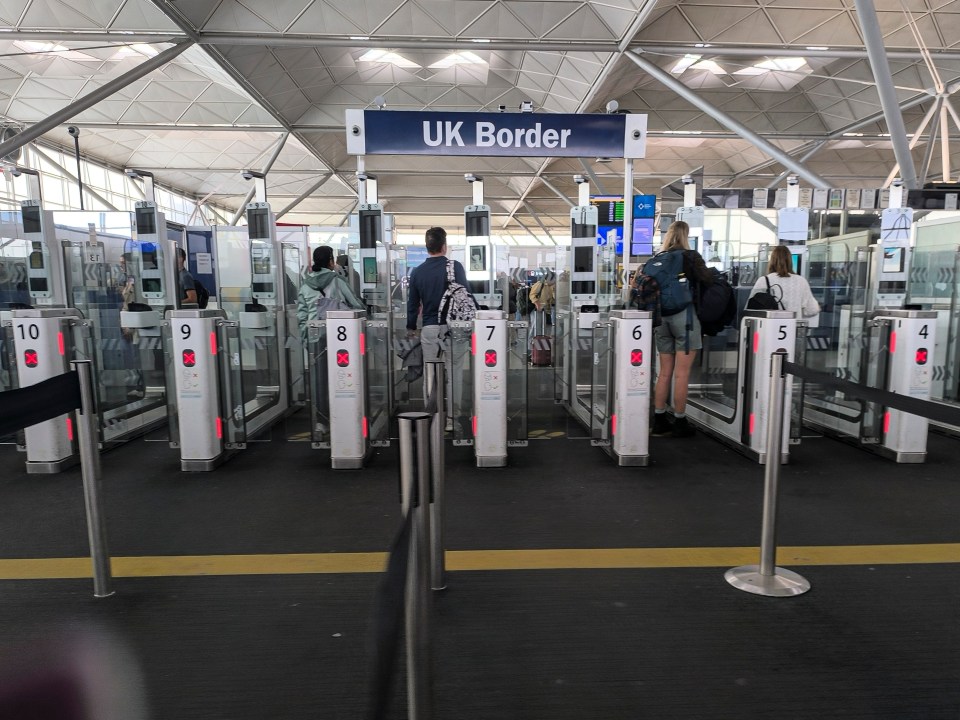
Travelers passing through automated biometric passport control gates beneath a UK Border sign at an airport terminal.
A new airport system is set to be introduced in the UK Credit: Getty

But within the next few weeks new ‘contactless borders’ are expected to be installed at Birmingham and East Midlands airports which won’t require you to scan your passport.

Instead, the new system will scan your face and match it to your passport image stored in its system.

The system would work by airlines sending passport images of British passengers arriving each day, to border control.

Anyone then not recognised at an e-gate, will be asked to revert to the current method of scanning their passport.

Read more on travel inspo

CHEAP BREAKS

UK’s best 100 cheap stays – our pick of the top hotels, holiday parks and pubs


TRAVEL TIP

The £2.99 SIM hack that can save Brits HUNDREDS abroad

If this also failed, then the passenger would need to go to a manned border force desk.

The aim of the new process is to reduce long queues at airports.

The Times reports that it would then eventually be used across all e-gates at a number of airports.

This includes Birmingham, Bristol, Cardiff, East Midlands, Edinburgh, Glasgow, Gatwick, Heathrow, London City, Luton, Manchester, Newcastle and Stansted airports, by early next year.

Passengers using the ePassport gates at UK border control at Stansted Airport.
The first airports to get the system will be Birmingham and East Midlands Credit: Alamy
Collage of travel items including a plane, sunscreen, passport, suitcase, and plane tickets, advertising The Sun's travel Instagram account.

Initially, it would only be for British passport holders, but could extend to other nationalities in the future.

Phil Douglas, the director general of Border Force, said: “It will mean we have a more secure border and a much faster transit through the airport.

“It’s quicker, it’s more modern, it’s more secure.”

Other new e–gate rules were rolled out earlier this year, which now allows kids aged as young as eight to use them, rather than manual checks.


Source link