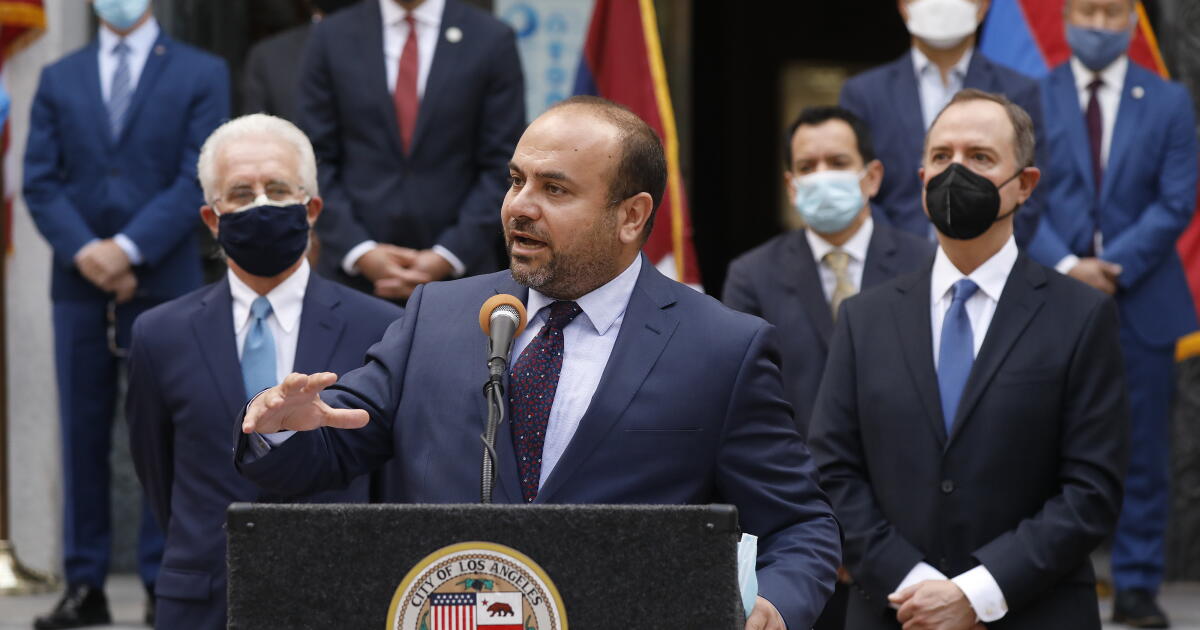
passes

Senate passes resolution to begin budget reconciliation to fund DHS

April 23 (UPI) — Senate Republicans were up all night voting, eventually adopting a budget reconciliation package Thursday morning to prepare to fund the Department of Homeland Security.

The Senate plans to fund the department without Democrats’ help. The resolution was adopted at around 3:30 a.m. EDT Thursday by a vote of 50-48 after about six hours.

The only Republicans to vote against the resolution were Sens. Lisa Murkowski, R-Alaska, and Rand Paul, R-Ky. The bill now goes to the House. If the House adopts the resolution, the final funding bill can be written and voted on by Congress.

They are following a deadline of June 1 set by President Donald Trump.

“We have a multistep process ahead of us, but at the end Republicans will have helped ensure that America’s borders are secure and prevented Democrats from defunding these important agencies,” said Senate Republican Leader John Thune, R-N.D.

Thune told fellow senators to keep the package narrow to ensure speedy passage.

Since the January deaths of Renee Good and Alex Pretti in Minnesota, both shot and killed by DHS officers, Democrats have refused to support funding the department without reforms. The department has been shut down since Feb, 14, though Trump told the department to use emergency funds to pay essential workers.

Just before the Easter recess, the Senate passed a bill that would fund most of DHS but not ICE and Border Patrol. But the House rejected it.

Republicans are hoping to fund the department through 2029 at a cost of between $70 and $80 billion.

The late-night vote-a-rama included votes about amendments that could be added to the resolution. Two Republican Senators who are vulnerable in the November elections — Sens. Susan Collins, R-Maine, and Dan Sullivan, R-Alaska — broke ranks on some amendments.

Collins and Sullivan voted for amendments to lower health care costs, to reverse last year’s Supplemental Nutrition Assistance Program cuts and to tackle insurance companies that delay or deny medical care. Sen. Josh Hawley, R-Mo., joined with Collins and Sullivan on the latter.

Sen. Bernie Sanders, I-Vt., also sponsored an amendment that would tell the budget committee chair to help cut prescription drug prices by half. Hawley, Collins and Sullivan supported Sanders on it. Sanders said his amendment would codify ensuring that Americans wouldn’t pay more for prescriptions than Canadians or Europeans.

The amendments wouldn’t have the power to force Republicans’ hands, but they would make Republicans go on record about their views of these items.

“This reconciliation, or this budget act, will show who’s on whose side, and clearly if Republicans vote against our amendments, they’re not on the side of the American people,” Democratic Leader Chuck Schumer, D-N.Y., said on the Senate floor.

Homeland Security Secretary Markwayne Mullin told Fox and Friends on Tuesday that the department will run out of money for salaries next month.

“I’ve got one payroll left, and there is no more emergency funds so the president can’t do another executive order because there’s no more money there,” The Hill reported he said.

The resolution does not include the SAVE America Act, the voter security bill that Trump and other Republicans have pushed for. Sen. John Kennedy, R-La., sponsored an amendment to add similar restrictions, but it failed 48-50. Collins, Murkowski, Sen. Thom Tillis, R-S.C., and Sen. Mitch McConnell, R-Ky., voted against it.

FBI Director Kash Patel speaks during a press conference at Department of Justice Headquarters on Tuesday. The Trump Administration announced charges against the Southern Poverty Law Center, which the government alleges funneled over $3 million toward white supremacist and extremists groups. Photo by Bonnie Cash/UPI | License Photo

Source link

House Passes Transportation, Military Bills

The House voted Friday to spend more than $41 billion on dams, highways, airports and various military and university projects.

In a rush to finish its work next week and avoid having to return after the November elections, House members voted overwhelmingly in favor of a transportation spending bill and another energy and water spending bill, together amounting to $33 billion.

Also passed by voice vote was an $8.4-billion appropriations bill for military construction projects, including $3.3 billion to build new housing for families of military personnel and nearly $1 billion as the second installment in closing more than 80 military bases over the next few years.

The bills were produced by House-Senate conference committees that reconciled versions passed earlier by each chamber.

Rep. Robert S. Walker (R-Pa.), a member of the House Science and Technology Committee, complained that members of Senate and House appropriations committees had included about $90 million in projects paid for by the Energy Department for home-state universities.

“Eight of those 10 projects happen to be in states or districts of people who happen to be on the conference committee,” he said. “We’re allocating money not based on anything other than who’s in the room divvying up the money.”

But his motion to eliminate the projects was defeated, 308 to 108, as the chairman and top Republican on the House Appropriations Committee’s energy and water subcommittee said all the projects are justified.

“There’s nothing unusual about this,” Rep. Tom Bevill (D-Ala.), the panel’s chairman, said. “We need more labs; we need more scientists; we need more emphasis put on these programs.”

Among the 10 recipients of the funds are research centers at the University of Alabama and the University of Indiana.

Among the projects hurt in the deficit-cutting effort was one of President Bush’s favorites–the proposed $8-billion super collider atom smasher in Texas.

Bush’s request of $318 million to begin construction of the giant particle accelerator had been approved earlier by both the House and the Senate. But it was slashed to $243 billion by their negotiators last week.

Source link

House passes a bill to protect Haitian immigrants, in slap back to the Trump administration

In a rare bipartisan moment, the House passed legislation Thursday that would extend temporary protections for Haitian immigrants, a long-shot effort fighting back against President Trump’s attempts to end the program.

The bill, pushed forward by House Democrats with a group of Republicans over the objections of the GOP leadership, would require a three-year extension of temporary protected status for Haitians by the Trump administration. That would allow hundreds of thousands of qualifying immigrants to remain in the United States without fear of deportation.

The vote was 224-204, drawing applause in the chamber. But it faces uncertainty in the Senate, and the Republican president would almost certainly seek to veto it.

“I know firsthand how important our Haitian neighbors are to our communities, to our civic life, to our culture, to our workforce, to our economy,” said Democratic Rep. Ayanna Pressley of Massachusetts, who is co-chair of the House Haiti Caucus and represents one of the largest Haitian communities in the country.

During the debate, she recounted the number of Haitian immigrants working in healthcare, housing construction and other industries. Haitians with temporary legal status “are not the problem, quite the contrary, they are part of the solution,” she said.

Pressley has said deporting Haitians back to the troubled Caribbean country would be a “death sentence,” given the effects of natural disasters and gang violence. “Congress can do the right thing,” she said.

Ten Republicans, many from districts with large numbers of Haitian residents, joined all Democrats and one independent in voting for passage.

Congress tries to act before the Supreme Court does

The effort to help 350,000 Haitians living lawfully in the United States comes as the administration is working to end the temporary legal status for several groups, exposing them to deportation.

In less than two weeks, the Supreme Court is prepared to consider a fast-track case that would end the protected status for Haitian and Syrian immigrants in a challenge widely seen as threatening the broader program. The administration filed emergency appeals after lower courts stopped the immediate end of the program.

It is part of the administration’s efforts to strip certain immigrant groups of legal status as the White House works to fulfill Trump’s campaign promise of conducting the largest mass deportation operation in history. Some 1.3 million people fleeing countries around the world have been granted temporary protected status in the U.S.

The protections for Haiti, first approved after a devastating 2010 earthquake, have been extended multiple times. The State Department warns Americans not to travel to Haiti “due to kidnapping, crime, terrorist activity, civil unrest.”

Guerline Jozef, executive director of the Haitian Bridge Alliance, an advocacy organization, fought back tears as she described the fear of deportations coursing through the community.

“We are asking, where will you be? On the right side of history?” she said at a news conference outside the Capitol. “Or continuing to cause trauma to people who are asking for nothing other than safety and protection?”

Trump has described migrants from poorer countries in vulgar terms, and he has falsely accused Haitian migrants in Ohio of eating their neighbors’ cats and dogs.

The conservative majority court has allowed the end of temporary legal status for a total of 600,000 people from Venezuela while lawsuits play out, leaving them to face potential deportation.

Lawmakers debate whether to help Haitians or stick with Trump

Rep. Laura Gillen (D-N.Y.) whose district includes Long Island’s Haitian community, said she promised constituents she would work to protect their status. She introduced the legislation with Republican Rep. Mike Lawler of New York as soon as she took office last year.

“It’s cruel to expect Haitians to be forced to return to these deadly, dangerous conditions,” she said at a news conference. “Human lives are at risk.”

Lawler said there are differences of opinion on immigration policy, but that Haitian immigrants have become vital to his community and forcing them out would be unjust and unwise.

“They are small business owners, they are nurses, they are caregivers, they participate in our economy and take care of American citizens,” he said. “Congress has a responsibility to act.”

But Rep. Jim Jordan (R-Ohio) decried the number of immigrants, including Haitians, who have entered the U.S., and cited Democratic efforts to halt funding for enforcement and deportation efforts.

“Make temporary permanent,” he said, “that’s their plan.”

Rep. Brandon Gill (R-Texas) said the program was “backdoor amnesty” for foreigners.

To Rep. Tom McClintock (R-Calif.), the temporary status first granted under the Obama administration has become “an open-ended invitation” for immigrants to enter the country, including some illegally, and remain.

“The Trump administration has heeded the cries of the American people,” he said.

Using a discharge petition to force votes

The vote was the latest effort by House Democrats to maneuver past the Republican majority using a discharge petition — once a rare tool, but now used increasingly to form bipartisan coalitions.

The discharge petition process forces the bill to the House floor for consideration, powering past House Speaker Mike Johnson (R-La.) and GOP leaders. It was used to help pass legislation that required the Justice Department to release the files of the sex trafficking investigation of Jeffrey Epstein.

Republicans hold a slim majority in the House and are typically able to swat back such efforts from Democrats. But Democrats and Republicans have formed bipartisan alliances to reach the majority needed on the discharge petitions.

Pressley’s effort to discharge the bill won support from four Republicans on the initial petition, and several more once it came to the floor vote.

Mascaro writes for the Associated Press.

Source link

State Controller May Freeze Payroll Until Budget Passes : Legislature: Official says some Medi-Cal payments could also stop if agreement isn’t reached by Saturday.

Attempting to force a state budget agreement, California Controller Kathleen Connell said Monday she is considering withholding lawmakers’ salaries, and cannot pay 35,000 state employees if the Legislature and Gov. Pete Wilson fail to approve a budget by Saturday’s constitutional deadline.

Without a budget, Connell said, she also will have no choice but to delay payments of some Medi-Cal bills, such as prescriptions, for elderly people–a step that would add pressure on lawmakers to approve a spending plan.

Under the state Constitution, California must have a new budget by the July 1 start of the 1995-1996 fiscal year. But Wilson and the Legislature remain far apart and seem to be in no rush to approve a budget.

In recent years, it has become common for the deadline to pass without a budget. In 1992, the state went more than 60 days without a budget, leading state government to pay its employees and vendors with IOUs.

Connell, who is in her first year in office and who issues the checks for the state, said California has the cash to pay its bills. However, without agreement on a budget measure authorizing state spending in the new fiscal year, Connell said she will have no choice but to delay paying vendors, some medical bills for the elderly, the blind and the disabled, and as many as 35,000 state employees, including management officials.

“I don’t think any taxpayer is going to be sympathetic to the idea that we have the cash but are not paying our bills,” said Connell, a Democrat.

Connell last week suggested that she would withhold lawmakers’ pay starting July 1 if they had not approved a budget by the deadline. But she softened her position after concluding that there may be a constitutional requirement that she issue their checks. However, Connell said she is still studying the question.

“I’m raising a moral issue here,” Connell said after a speech in Sacramento. “If there are [state] employees who are not going to be paid because we have partisan politics dominating the Legislature, then there has to be a question of who else should accept responsibility.”

In the Legislature, the Senate-Assembly budget conference committee met Monday afternoon. But Wilson and top legislative leaders have not scheduled budget talks to resolve differences.

Wilson has proposed a $56-billion budget that includes deep welfare cuts and requires 10% increases in state college and university tuition. Wilson also is pushing for a 15% income tax cut over three years–an idea opposed by many Democrats.

“We fully expect to have a budget in the month of July,” Wilson spokesman Paul Kranhold said. “We are hopeful that the Legislature will forward us a budget by Saturday, or soon afterward.”

The amount separating Democrats and Republicans is relatively small–$1.8 billion–compared to other years of the Wilson Administration, when the gap between Wilson’s proposals and what the Legislature proposed ranged from $5 billion to $14 billion. But rancor is so dividing the Assembly this year that partisans in the budget fight have yet to take the first steps toward a solution.

“It can happen by Saturday,” said Assembly Republican Leader Jim Brulte. “There is no reason that it couldn’t or shouldn’t happen by Saturday. But I don’t know if it will.”

Past court orders require that, even without a budget, the state pay to keep schools open and issue checks to welfare recipients. The state also will continue to meet its bond debt and pension payments, Connell said.

But starting Saturday, Connell said, the state will not pay vendors who perform various services for the state, or deliver goods to state prisons and state hospitals. Without a budget, she said, state agencies that lease space will be unable to pay rent and cannot pay utility bills. Payments for services such as nursing home care or food deliveries to prisons would be delayed until a budget is approved.

“The effect of having no budget begins immediately. It begins on July 1, and the damage will grow with each day,” Connell said.

If the state goes without a budget through July, the missed payments would total at least $360 million for Medi-Cal and state assistance to counties to operate trial courts. The total for employees was not known.

Unlike 1992, the last time there was a lengthy budget deadlock, the state cannot use IOUs to pay its workers who fall under the Fair Labor Standards Act.

A federal judge, acting on a lawsuit brought by state employees, ruled last year that the state acted illegally in 1992 by issuing the IOUs, and that roughly 120,000 workers covered by the Fair Labor Standards Act must be paid even if there is no budget.

But between 33,000 and 35,000 state workers are not covered by the act, raising the possibility that they will not be paid on time for work done after July 1.

The employees whose pay is in jeopardy include Wilson’s political appointees, and heads of departments and middle-level managers. Professionals such as deputy attorneys general and state physicians and dentists also may have their paychecks delayed. An aide to Connell said the controller’s office is reviewing the law to determine whether judges and other judicial officials can be paid.

The first state employees to miss a paycheck would be in the Department of Transportation, where 50 management employees would miss July 15 paychecks for work done after July 1.

Gov. Pete Wilson has criticized the commission’s findings, and Sens. Barbara Boxer (D-Calif.) and Feinstein have urged the President to throw out the panel’s work entirely. Rep. Vic Fazio (D-West Sacramento), whose district includes the threatened Air Force base, wants Clinton to send the report back and ask the commission to redraft it without the McClellan closure recommendation.

Source link

South Korea passes currency stabilization bill amid economic strain

Lawmakers pass a revision to the Restriction of Special Taxation Act during a plenary session at the National Assembly in Seoul, with 206 votes in favor, 2 against and 2 abstentions out of 210 members present. Photo by Asia Today

March 31 (Asia Today) — South Korea’s ruling and opposition parties agreed Tuesday to pass a package of economic measures, including a currency stabilization bill, as the won weakened sharply amid prolonged conflict in the Middle East.

The legislation was approved during a plenary session alongside more than 60 bills aimed at stabilizing the economy and supporting livelihoods.

The currency measure includes tax incentives designed to encourage domestic investment by individuals who have invested in overseas markets, often referred to in South Korea as retail investors in foreign stocks. Officials said the goal is to increase demand for the Korean won and reduce volatility in foreign exchange markets.

The won traded at 1,530.1 per U.S. dollar on Tuesday, well above the psychologically significant 1,500 level, adding to inflationary pressure.

Floor leader Han Byung-do said the worsening Middle East crisis had begun to affect everyday life, emphasizing the need to contain exchange rate volatility and shield the economy from external shocks.

Lawmakers also approved additional economic legislation tied to the crisis. These include a measure to support corporate restructuring, allowing companies to streamline mergers and spin-offs and receive tax benefits as they respond to industrial challenges and shift into new sectors.

Other bills passed include revisions to trade-related laws aimed at helping businesses adapt to changes in the global trade environment.

Separately, lawmakers voted to fill several vacant leadership posts in National Assembly committees. The Democratic Party nominated Rep. Seo Young-kyo as chair of the Legislation and Judiciary Committee, along with Rep. Kwon Chil-seung and Rep. So Byung-hoon for other committee leadership roles. Their terms will run through May.

The votes were conducted by secret ballot and passed with support from the Democratic Party, while the People Power Party is believed to have opposed the selections.

The People Power Party had argued that the judiciary committee chair should be held by the opposition to ensure checks and balances, noting that the Democratic Party already holds the position of National Assembly speaker.

— Reported by Asia Today; translated by UPI

© Asia Today. Unauthorized reproduction or redistribution prohibited.

Original Korean report: https://www.asiatoday.co.kr/kn/view.php?key=20260401010009707

Source link

Songwriter behind huge hit Wild Thing and Angelina Jolie’s uncle passes away as tributes pour in

ANGELINA Jolie’s renowned songwriter uncle, Chip Taylor, who penned the 1966 song Wild Thing has died aged 86.

The tragic news was announced by friend and Grammy winning producer Billy Vera in a post to social media.

Chip was brother to Angelina Jolie’s dad, Jon VoightCredit: Alamy
It is understood Chip passed away two days after his 86th birthdayCredit: Alamy

Vera wrote on Instagram: “‘RIP: Chip Taylor, my friend and songwriting mentor, last night in hospice.”

He added: “With great sadness I announce the passing of my old friend and songwriting mentor, Chip Taylor last night in hospice.

“He and I wrote some good ones: “Make Me Belong To You,” (Barbara Lewis), “Storybook Children” (BV & Judy Clay, Nancy Sinatra): “Papa Come Quick (Bonnie Raitt).”

It is understood that Chip passed away peacefully two days after his 86th birthday.

HUGE LOSS

BBC Radio 2 station manager dies aged 45 as Vernon Kay stops show to pay tribute


DING GONG!

TV Bafta nominations revealed as Adolescence leads – and Strictly snubbed

Chip was brother to Angelina Jolie‘s dad, Jon Voight, and uncle to the actress’s sibling, James Haven.

He was known for writing several well-loved songs including the 1960s Merrilee Rush song, Angel of the Morning.

Tributes have begun flooding in for the legendary songwriter.

Musician Allan Jones took to social media to pay tribute, writing: “RIP Chip Taylor, who’s just died at 86. Among many other songs, he wrote Wild Thing, Angel of the Morning, and Anyway That You Want Me.

“He played Twickenham Exchange a few years ago, accompanied by John Platiana, for many years Van Morrison’s guitarist.

“It was memorable not only for a lot of great songs, but Taylor’s vast repertoire of extraordinary and hilarious anecdotes, which took up a generous portion of an unforgettable set.

In addition to being a songwriter Chip had a background as a performerCredit: Alamy
In 2007 Chip launched his own independent labelCredit: Alamy

“The man could certainly tell a story as well as he could write a song.”

Born James Wesley Voight, Chip wrote many pop and rock songs, both alone and with other songwriters.

Some of his most notable works include He Sits at Your Table with Willie Nelson and I Can’t Let Go with Evie Sands, the Hollies and Linda Ronstadt.

In addition to being a songwriter Chip had a background as a performer, putting out a number of albums in the 1970s.

He was inducted into the Songwriters Hall of Fame in 2016 for his decades of contributions to the music industry.

In 2007 he launched his own independent label, Train Wreck Records.

Chip famously had a passion for gambling, particularly blackjack, which he was reportedly very good at.

He was married to Joan Carole Frey from 1964, and the couple had both children and grandchildren together. Joan sadly died in June 2025.

Chip was brothers with Angelina Jolie’s dad – Jon VoightCredit: Alamy

Source link

Trump refuses end to DHS shutdown until SAVE Act passes

March 23 (UPI) — President Donald Trump on Sunday said there will be no end to the partial government shutdown until Congress passes the Safeguard American Voter Eligibility Act.

“I don’t think we should make any deal with the Crazy, Country Destroying, Radical Left Democrats unless, and until, they Vote with Republicans to pass ‘THE SAVE AMERICA ACT,'” Trump posted on Truth Social.

“It is far more important than anything else we are doing in the Senate, and that includes giving these same terrible people, the Dems (who are to blame for this mess!), a Five Billion Dollar cut in ICE [Immigration and Customs Enforcement] funding, a deal which, even when disguised as something else, is unacceptable to me and the American people – UNLESS it includes their approval of Voter I.D., (with picture!), Citizenship to Vote, No Mail-In Voting (with exceptions), All Paper Ballots, No Men In Women’s Sports, and No Transgender MUTILIZATION of our precious children,” he added.

Trump also wrote that Thune should “clearly identify” the Republicans who are not supporting the bill and said they were, “Voting against AMERICA.”

“They will never be elected again! In other words, lump everything together as one, and VOTE!!! Kill the Filibuster, and stay in D.C. for Easter, if necessary,” he said.

Lawmakers have not supported abandoning the supermajority needed to end debate.

The DHS, which includes the Transportation Security Administration, shut down on Feb. 14 because Congress couldn’t agree on a funding bill for the department. Democrats don’t want to fund it until guardrails are put on the agency, and Republicans haven’t agreed to Democrats’ demands.

Because of this, TSA workers have been working without pay for more than a month. Some are quitting or taking days off work, creating long lines at airports.

Congress is scheduled to leave Washington in a few days for a recess. If there’s no deal, the partial shutdown could last two months. It would be the longest shutdown of a federal agency.

The Senate is considering staying in session to resolve the shutdown, but House Republicans say they won’t change plans, Politico reported that three anonymous sources said.

The House will likely vote again Thursday.

Trump told NewsNation Sunday that Democrats were going to fold after he said he would send Immigration and Customs Enforcement agents to help TSA agents.

But Sen. Lisa Murkowsky, R-Alaska, doesn’t agree that plan is appropriate.

“This is not the answer for what we need to do. We need to figure out how we get DHS funded. My preference, of course, is to get all of DHS funded, get it done and behind us. But I think we all need to be looking to see if there are any [other] avenues that can gain support. We got to figure it out before [the end of] next week,” The Hill reported she said.

Source link

Motorhead guitarist passes away after major operation as his family pays tribute

An image collage containing 1 images, Image 1 shows Phil Campbell of Motorhead attends the Classic Rock Roll of Honour

MOTORHEAD guitarist, Phil Campbell, has died aged 64.

His family said that he died following “a long and courageous battle in intensive care after a complex operation”.

Phil Campbell of Motorhead attends the Classic Rock Roll of Honour.
Motorhead guitarist Phil Campbell has died aged 64Credit: Getty
Motorhead, Saxon, And Crobot In Concert - Indianapolis, IN
His family said he died following a battle in intensive care after a major operationCredit: Getty

In a heartbreaking statement, his family said: “It is with great sadness that we announce the passing of our beloved father, Philip Anthony Campbell, who passed away peacefully last night following a long and courageous battle in intensive care after a complex major operation.

“Phil was a devoted husband, a wonderful father, and a proud and loving grandfather, known affectionately as “Bampi.”

“He was deeply loved by all who knew him and will be missed immensely. His legacy, music and the memories he created with so many will live on forever.

“We kindly ask that our family’s privacy is respected during this incredibly difficult time.”

GIRL POWER

Harper Beckham, 14, to be UK’s Kylie Jenner after shooting first beauty campaign


FRESH LOOK

90s pop princess and TV star unrecognisable as she takes on TikTok trend

The tribute was posted online by Phil Campbell and the Bastard Sons, a band featuring Phil and his three sons Todd, Dane and Tyla.

The family band were forced to cancel an Australian tour in February due to “medical advice Phil has just received”.

Campbell joined Motorhead in 1984 before they disbanded in 2015 following the death of front man Lemmy, who died in 2015, aged 70.

His studio debut came with the release of Motorhead’s Orgasmatron in 1986.

In 2019, he released his first solo album, Old Lions Still Roar.

More to follow… For the latest news on this story keep checking back at The Sun Online

Thesun.co.uk is your go-to destination for the best celebrity news, real-life stories, jaw-dropping pictures and must-see video.

Like us on Facebook at www.facebook.com/thesun and follow us from our main Twitter account at @TheSun.


Source link

Senate passes bipartisan housing bill to improve access and affordability

The Senate passed a broad bill on Thursday to make U.S. housing more accessible and affordable, a rare bipartisan effort in Congress to address a growing national problem.

The bill, which passed 89 to 10, would reduce regulations, regulate corporate investors and expand how housing dollars can be used to build affordable homes and rentals. It will now head back to the House, which passed a similar bill earlier this year.

“We have a housing shortage all across America,” said Sen. Elizabeth Warren (D-Mass.), who worked with Republicans to win overwhelming support from both parties for the legislation. “We need more housing of every kind. More housing for first-time home buyers, more housing for renters, more housing for seniors, more housing for people with disabilities, more rural housing, more urban housing, more, more, and more.”

The legislation, she said “will help drive down prices.”

Senate Banking Committee Chairman Tim Scott (R-S.C.), led the effort with Warren. He said ahead of the vote that the Senate could “do what so many people failed to do in this legislative body for the last few decades, and that is pass consequential legislation that makes it easier to become a homeowner.”

Roadblocks ahead for the legislation

Despite the overwhelming bipartisan vote in the Senate, It’s unclear whether the House will pass the legislation again — or if President Trump will sign it.

Trump has strongly backed the bill through the bipartisan negotiations, but he has also slowed its momentum with a declaration last weekend that he won’t sign any new measures unless Congress passes legislation that would require voters to show proof of citizenship and end most mail-in balloting. The Senate is expected to begin consideration of that bill next week, but it is unlikely to pass as all Democrats oppose it.

At the same time, House leaders have indicated that they are unlikely to accept the Senate version of the housing legislation and have suggested they could launch a formal conference process to negotiate a final deal between the chambers — a process that could take months.

Senate Majority Leader John Thune (R-S.D.) said ahead of the bill’s passage on Thursday that conference negotiations are a possibility, “but obviously the quickest way to do this would be to pick up the Senate bill and pass it.”

If the White House wants that to happen, he said, “they’ll probably have to make that argument to House leadership.”

Making housing more attainable

The bill would give local governments more power on housing issues, allow banks to invest more in affordable housing and lift limits on the number of units in a public housing development that can receive private financing through Section 8 funding that helps rehabilitate properties.

“You’ve got many provisions in this bill that stop treating the U.S. like one single housing market and start giving local leaders the tools they need to fix their unique regional puzzle,” said Peter Carroll with Cotality, a company that tracks housing data.

The bill aims to make homebuilding easier by streamlining some regulations that require environmental reviews and inspections. It also eliminates a limit on a grant for emergency shelter beds and street homelessness outreach.

As many affordable housing developers are leaning on manufactured and modular homes that can be transported to areas that need housing, the legislation also lifts the requirement that they have to be built on a permanent chassis, making them easier to build and design.

Housing advocacy and policy groups say they wish the bill went further by investing money in building more housing and assisting renters.

“This legislation is the product of essentially senators and House members wanting to come up with something that could pass with both Democratic and Republican votes, which means it’s inherently less ambitious,” said Yonah Freemark, a researcher at Urban Institute.

Corporate investors

One of the more contested provisions of the bill would bar institutional investors from buying single-family homes — a top priority for Trump.

The bill defines such investors as any that directly or indirectly own 350 or more single-family homes. Investors of any size would not be required to sell single-family homes bought before the date that the bill becomes a law.

They would still be allowed to buy or build single-family homes if they rent them out, but would be required to sell them to an individual homebuyer after seven years and offer that buyer “price concessions” and give tenants a 30-day “first-look” period when the time comes to sell the home.

A need for reform

The U.S. housing market has been in a slump dating back to 2022, when mortgage rates began to climb from pandemic-era lows.

Sales of previously occupied U.S. homes have been hovering close to a 4-million annual pace now going back to 2023 — well short of the 5.2-million annual pace that’s historically been the norm. They slowed last year to a 30-year low and have remained sluggish so far this year, declining in January and February versus a year earlier.

A sharp run-up in home prices, especially in the early years of this decade, and a chronic shortage of homes nationally worsened by years of below-average home construction have left many aspiring homeowners priced out of the market.

Meanwhile, while the median U.S. monthly rent has been declining for more than two years, it was still 15.2% higher in January than it was at the start of 2020, according to data from Realtor.com.

The trends have ratcheted pressure on lawmakers this year, with midterm elections looming in November, to show they’re working on ways to make homeownership and rental housing costs more affordable.

Kramon, Veiga and Jalonick write for the Associated Press. Kramon reported from Atlanta and Veiga reported from Los Angeles.

Source link