Paraguay

Thursday 14 May Independence Day in Paraguay

Paraguay is a landlocked country in South America, bordered by Brazil to the east, Argentina to the south and west, and Bolivia to the northwest. Before the arrival of Europeans, the territory was inhabited by various indigenous peoples, including the Guarani, who still make up a significant portion of the population today.

Paraguay was first colonised by the Spanish in the 16th century. The settlement of Asunción, now the capital of Paraguay, was founded by the Spanish on Ascension Day (August 15th) 1537.

There are two theories about where the name “Paraguay” comes from. One version says it means either “River of the Payaguas”, an Indian tribe, or “crowned river” after the native Indian Guaraní words for palm crown and water. A more colourful versions is that there was a parrot named Frank that the first Jesuit settlers befriended when they arrived in the region. To back up this theory, on old maps, Paraguay was labelled as “Parrot”.

The region had shown dissent against the Spanish for several years and tension had risen in the early years of the nineteenth century due to the growing influence of Argentina in the area.

Some bad decisions by the Governor had weakened Spanish presence, which was already affected by the Napoleonic Wars, enabling the Paraguayans, led by a lawyer, Dr José Gaspar Rodríguez de Francia., to overthrow the Spanish in a fairly bloodless revolution on May 14th 1811.

As a result, Paraguay became the second independent nation in the new world – the United States was the first. Dr Francia became the first President of Paraguay, ruling from 1814 to 1840.

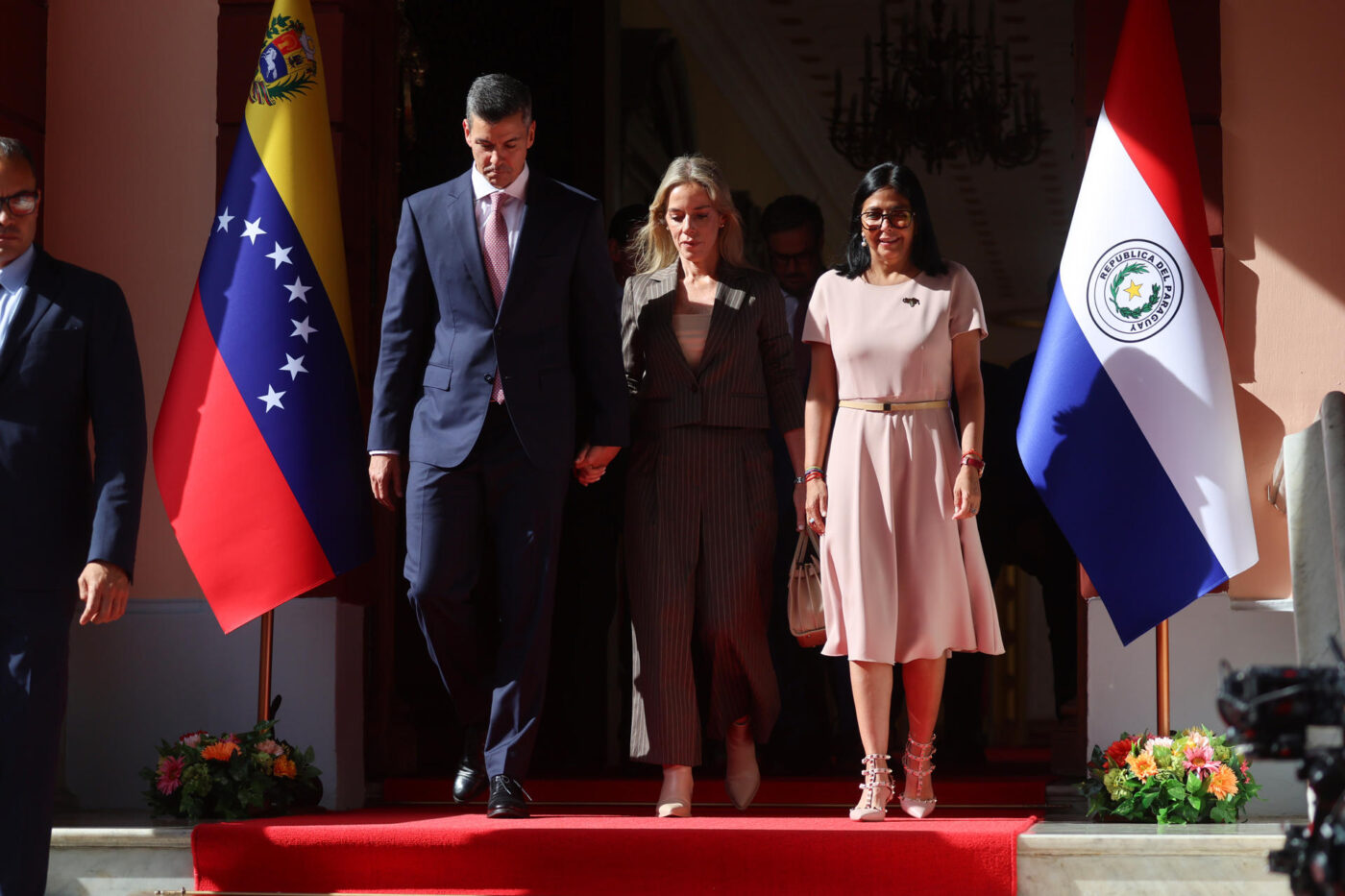
He was influential in the design of the flag of Paraguay, which uniquely is the only national flag in the world that has a different image on each side. In the center of one side is the Paraguayan coat of arms, and on the opposite, the treasury seal with the national motto: “Paz y justicia” (“Peace and Justice”).

China Escalates Pressure on Paraguay Over Taiwan Relations

China has intensified its diplomatic rhetoric against Santiago Peña following his recent visit to Taiwan, reflecting Beijing’s growing efforts to isolate Taipei internationally and weaken the remaining countries that maintain formal diplomatic ties with the island.

Paraguay is one of only 12 states that officially recognize Taiwan instead of the People’s Republic of China. During his visit, Peña reaffirmed support for Taiwan and described relations with Taipei as rooted in shared democratic values and political freedom.

Beijing responded sharply, accusing Paraguayan politicians of serving as “pawns” of Taiwanese separatist forces and suggesting that leaders supporting Taiwan may have “ulterior motives.” The unusually aggressive language highlights how sensitive the Taiwan issue has become within China’s broader foreign policy strategy.

Why Paraguay Matters to China and Taiwan

Although Paraguay is not a major global power, its diplomatic recognition carries significant symbolic and strategic importance for both China and Taiwan.

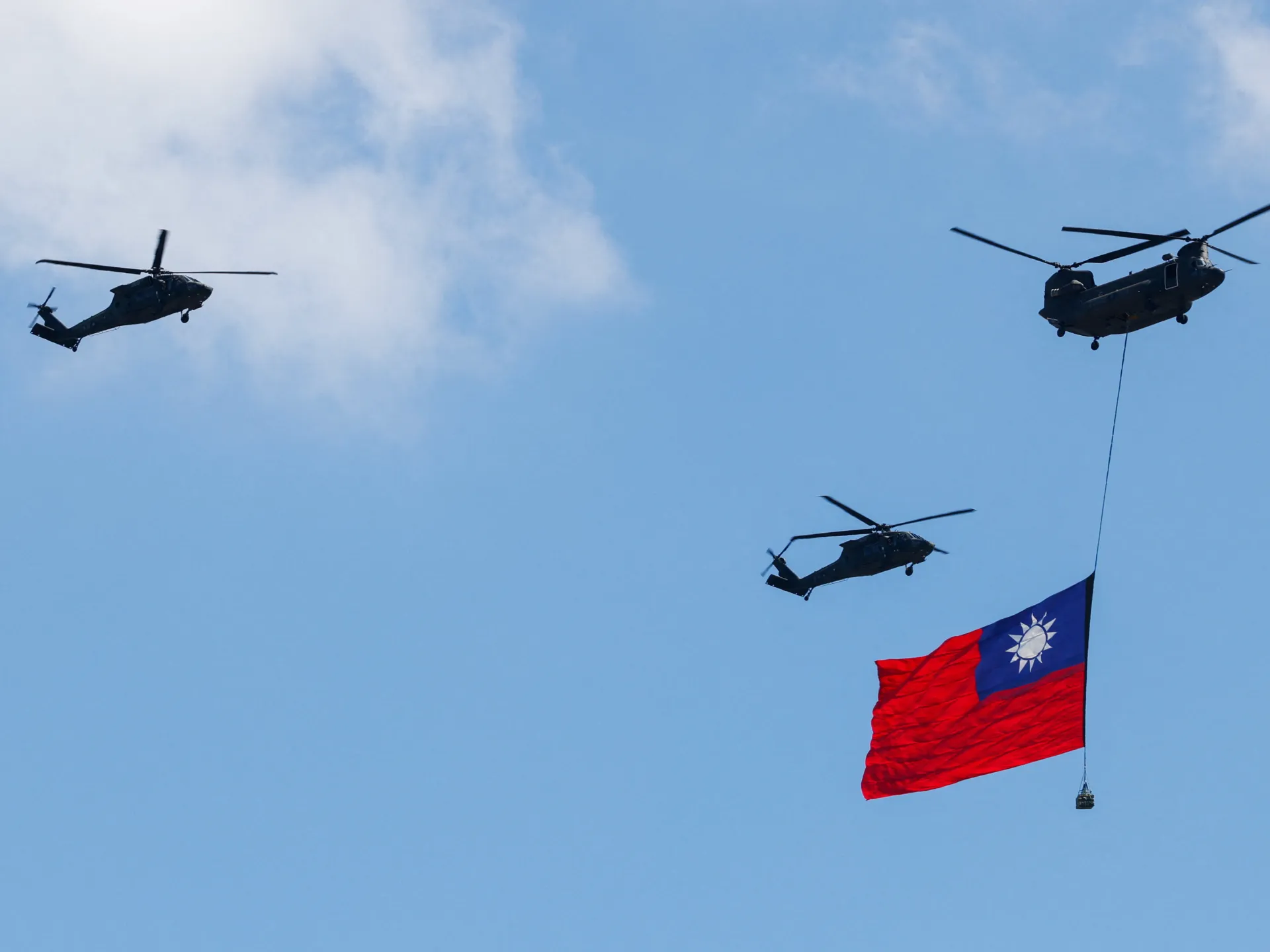
For Taiwan, maintaining formal diplomatic allies is essential to preserving international legitimacy and resisting Beijing’s efforts to diplomatically isolate the island. Each country that continues to recognize Taiwan represents political resistance against China’s One China principle.

For China, reducing Taiwan’s remaining diplomatic partnerships is part of a long term strategy aimed at reinforcing Beijing’s claim that Taiwan lacks the status of an independent state. Over the past decade, several countries have switched diplomatic recognition from Taipei to Beijing after economic and political engagement with China.

Paraguay therefore represents one of Taiwan’s most important remaining diplomatic footholds in South America.

Economic Pressure Shapes the Debate

The controversy surrounding Paraguay’s Taiwan relationship is increasingly driven by economic considerations. Some Paraguayan politicians, agricultural exporters, and business groups argue that maintaining ties with Taiwan limits access to Chinese markets and investment opportunities.

China is the world’s second largest economy and a major importer of agricultural products, making diplomatic recognition economically attractive for many developing states.

Supporters of relations with Beijing argue that Paraguay could gain greater trade access, infrastructure investment, and financial opportunities if it abandoned Taiwan.

However, Peña and supporters of Taiwan emphasize ideological and political considerations, framing the relationship as a partnership based on democratic governance and political sovereignty rather than purely economic interests.

This reflects a broader global trend where smaller states increasingly face pressure to balance economic incentives against political alignment and strategic values.

China’s Diplomatic Messaging Is Becoming More Aggressive

The sharp rhetoric from China’s foreign ministry demonstrates Beijing’s increasingly confrontational diplomatic approach on issues related to Taiwan.

By describing Paraguayan leaders as “pawns” and questioning their motivations, China is signaling that support for Taiwan will be treated not merely as a diplomatic disagreement but as active opposition to Chinese national interests.

This language also serves multiple audiences simultaneously.

Internationally, Beijing seeks to discourage other governments from strengthening ties with Taiwan.

Domestically, strong rhetoric reinforces nationalist narratives surrounding territorial sovereignty and reunification.

Regionally, China is attempting to increase pressure on Paraguay by suggesting that continued support for Taiwan contradicts public opinion and economic interests.

The emphasis on opinion polls claiming support for relations with Beijing also reflects China’s strategy of portraying diplomatic recognition of Taiwan as politically unsustainable.

Taiwan’s Shrinking Diplomatic Space

The dispute illustrates Taiwan’s increasingly difficult international position as China expands its diplomatic, military, and economic influence globally.

Under President Lai Ching-te, Taiwan has continued emphasizing democracy, sovereignty, and international partnerships. However, Beijing views Lai as supporting separatist policies and has intensified political and military pressure against Taipei.

Taiwan’s formal diplomatic allies have steadily declined over recent decades as China has used economic incentives and geopolitical influence to persuade states to switch recognition.

As a result, every remaining ally now carries outsized symbolic importance for Taipei’s international visibility and diplomatic legitimacy.

Analysis

China’s reaction to Peña’s Taiwan visit demonstrates how the Taiwan issue has evolved into one of the most emotionally and strategically sensitive dimensions of Chinese foreign policy.

Beijing no longer views diplomatic recognition of Taiwan as a minor symbolic issue. Instead, it increasingly interprets international engagement with Taipei as a challenge to China’s sovereignty, territorial integrity, and geopolitical authority.

The pressure on Paraguay also reflects the broader transformation of global diplomacy under growing United States China rivalry. Smaller countries are increasingly caught between competing geopolitical and economic pressures, particularly when balancing relations with democratic partners against the economic power of China.

For Paraguay, the debate is ultimately about strategic identity as much as economics. Maintaining relations with Taiwan offers political alignment with democratic values and preserves diplomatic independence from Beijing’s influence. Switching recognition to China could deliver economic benefits but may also reduce Paraguay’s foreign policy autonomy.

For Taiwan, retaining Paraguay is important not only diplomatically but psychologically. Every diplomatic loss strengthens Beijing’s narrative that international recognition of Taiwan is disappearing and that eventual reunification is inevitable.

The dispute therefore reflects a much larger geopolitical contest over legitimacy, influence, and the future international status of Taiwan. As competition between China and Taiwan intensifies, diplomatic battles involving even relatively small states are likely to become increasingly significant within global geopolitics.

With information from Reuters.

Source link

USA vs Paraguay among World Cup games with unsold, exorbitant tickets | World Cup 2026 News

Tickets for the cohosts’ opening game in Los Angeles are available for prices ranging between $1,120 and $6,050.

With under 40 days to go until the World Cup, tournament organisers continue to struggle with ticket sales as seats remain available for most group-stage games, albeit at exorbitant prices.

Home fans can find tickets for tournament cohost United States’ (USA) opener against Paraguay, with prices starting at $1,120 and going as high as $4,105, with many tickets priced around $2,000 for the June 12 match in Los Angeles. Seats in the hospitality package groupings go as high as $6,050 per seat.

Recommended Stories

list of 4 itemsend of list

Tickets are still available on FIFA’s official website through its “last-minute sales” section.

Football fans are already outraged by exorbitant match prices — the most expensive ticket for the final costs nearly $11,000 — since the first phase of ticket sales in December. Late last month, FIFA announced yet another “last-minute ticket phase” with tickets for all 104 matches available on a first-come, first-served basis.

The stagnant sales contradict FIFA President Gianni Infantino’s assertion in January that demand for tickets for this year’s tournament in the US, Canada and Mexico would be the equivalent of “1,000 years of World Cups at once”.

Experts attribute dynamic pricing and greed as key factors, with fans saying they have been “priced out” by FIFA.

While many in the US are accustomed to the pricing model commonly adopted at the Super Bowl, fans from around the world are not used to dynamic pricing and legal profiting from ticket resales, sports executive Peter Moore told Al Jazeera in a recent interview.

“FIFA taking a 30 percent cut of dynamic pricing is outrageous,” the former Liverpool chief executive said.

“FIFA is taking advantage of the unique commercial opportunities in the US, dynamic pricing and the secondary market being legal here, to make money. Infantino has said [he expects] FIFA revenues from the World Cup to exceed] $11bn. Why not make it more reasonable and accessible and make, maybe, $8bn?”

Last month, four seats for the World Cup final were listed at just under $2m each on FIFA’s official resale site.

A total of seven group-stage games still have general sale tickets available for $380, including Austria vs Jordan, New Zealand vs Egypt, Jordan vs Algeria, Cape Verde vs Saudi Arabia, Algeria vs Austria, Congo DR vs Uzbekistan and Curacao vs Ivory Coast.

The USA vs Paraguay opener is the most expensive group game, followed by Argentina vs Austria ($2,925), Ecuador vs Germany ($2,550), Uruguay vs Spain ($2,520) and England vs Croatia ($2,505).

According to FIFA’s website, a total of 17 group-stage games are sold out, including the tournament opener between Mexico and South Africa in Mexico City on June 11.

Seven games staged in Mexico are sold out, including the cohosts’ two other matches against South Korea in Guadalajara and the Czech Republic in Mexico City.

Turkiye vs USA in Los Angeles, Brazil vs Morocco in New York/New Jersey and Scotland vs Brazil in Miami are among other sold-out games.

INTERACTIVE-Football FIFA World Cup 2026 group stage schedule-1776670775
(Al Jazeera)

Source link

Paraguay derby abandoned as police fire rubber bullets and tear gas amid violent clashes

Violent clashes between fans and police caused the abandonment of a match between the top two sides in Paraguay on Sunday.

Hundreds of spectators escaped onto the pitch as police fired rubber bullets and tear gas into the stands at the Superclasico, played between Olimpia and Cerro Porteno, both based in capital city Asuncion.

According to witnesses, the trouble began when firecrackers were detonated in the section of the Defensores del Chaco Stadium which was allocated to Cerro Porteno supporters.

The police detained around 100 people, and while it was not immediately clear whether any fans had been injured, security forces reported that at least six officers were hurt, with one in a serious condition.

David Torales, a spokesperson for a local hospital, said the “officers sustained head injuries, lacerations, including possible stab wounds, and other injuries”.

Source link