Palma

Major Spain airport popular with Brits on new August capacity list – ‘two hour’ warning

It is the only Spanish airport on the official new list – issues could regularly last for two hours or more

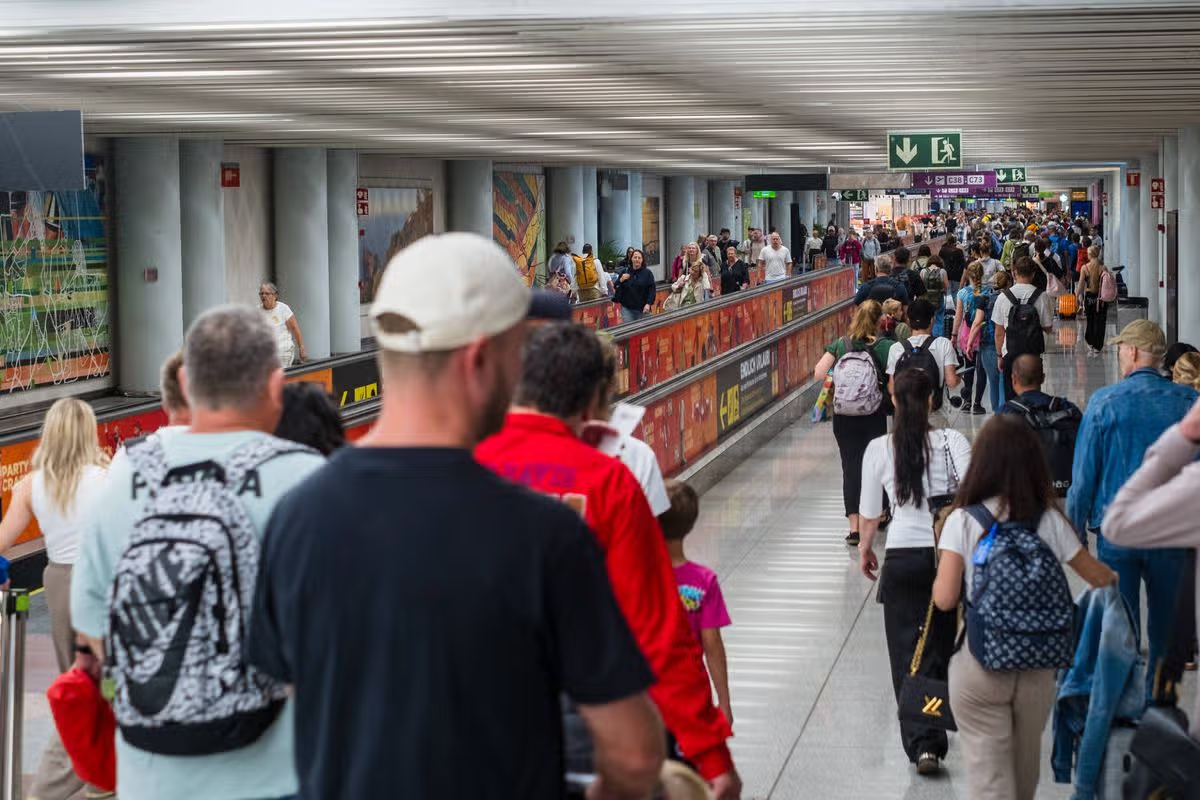
Brits jetting off to a Spanish holiday hotspot in August should pay attention to a new official airport update. Spanish media reports say that Palma Airport will be operating beyond its capacity for 18 days throughout August, according to an official analysis – for more than two hours on 10 occasions.

It has been reported that the airport in Mallorca is the only Spanish airport featured on a list of airports where Eurocontrol – the central organisation for coordination and planning of air traffic control for all of Europe – has identified mismatches between predicted demand and available capacity during August and September.

The list also features several Greek airports – Athens, Corfu, Heraklion, Kos, and Chania – alongside Istanbul’s Sabiha Gökçen and London’s Gatwick. As a result, Palma Airport faces an extremely busy August, Spanish media reports claim. According to Eurocontrol forecasts, it will surpass its operational capacity on 18 days, more than half the month.

On 10 of those occasions, the excess demand will stretch beyond two consecutive hours, while on the remaining eight, it will be concentrated within two-hour windows, Eurocontrol says. The capacity for Palma is set to stand at roughly 74 movements per hour, comprising approximately 33 arrivals and 40 departures, the agency says. During particular time slots, the anticipated flight demand will outstrip the number of operations the system can accommodate, says Eurocontrol.

Eurocontrol says the forecasts do not mean airports will be overwhelmed. Yet they say their analysis aims to identify periods when high concentration of flights may require measures to regulate traffic flow.

El Diario reports that the European agency projects that demand will also surpass the airport’s capacity at least eight times between September 1 and 27, with three instances stretching beyond two consecutive hours and five lasting two hours. Yet airport operator Aena has told media in the country that under no circumstances has Palma Airport been operated “beyond its declared capacity”. They say that if demand ever exceeds the established airspace capacity due to an unforeseen event, such as storms or regulatory measures, not all operations are permitted to take place simultaneously.

In such cases, they say air traffic control regulates the flow of flights through various traffic management and sequencing measures. Sources at the airport have also told Spanish media that a major overhaul there has resulted in a larger security checkpoint featuring hand luggage screening machines that do away with the need to remove liquids and electronic devices, as well as “more efficient routes throughout all areas, including the one dedicated to inter-island passengers”.

Eurocontrol said in its assessment of Europe-wide air traffic: “July 2026 set new records for air traffic. The EUROCONTROL area recorded its highest ever monthly traffic, with over 1.13 million flights and a peak of 37,659 flights on Friday 24 July. Worldwide, commercial aviation also reached an all-time high of 153,359 flights on 23 July.

“On average, capacity among the busiest 10 carriers remained stable compared to the previous week.” The update comes as tourists heading to Spain and other EU nations face the prospect of lengthy queues this summer at airports. The EU rolled out its Entry/Exit System (EES) in April, which requires passengers from the UK and other non-EU countries to register their fingerprints, photograph and personal details upon their first arrival. This has resulted in lengthy hold-ups for countless passengers.

EES delays lead to big increase in waiting times at EU airports

The Financial Times reported this month that peak waiting times at two major European airports – Munich and Frankfurt – have doubled this summer compared with the same period last year, following the EU’s chaotic rollout of its new electronic border system. Mallorca is amongst the many airports where significant delays have been reported on multiple occasions throughout the year..

Ryanair chief executive Michael O’Leary said the system should be moved online. “Only the Europeans would invent s*** like this,” he told investors last month, adding that the airline had witnessed substantial queues at around 15 airports.

The scorching temperatures are also heaping further pressure on the airport, according to the Majorca Daily Bulletin. The publication reported that Palma Airport workers are once again demanding the immediate reopening of the airport canteen.

Staff say the facility is essential as somewhere they can eat and take refuge from the sweltering summer heat. The Balearic Government has urged airport operator Aena to reopen the venue as swiftly as possible.

Reports suggest that officials believe Aena is currently working to adapt the premises with the aim of getting the canteen back up and running in the near future.
Source link

Packing innocent 35p item in bags or suitcases could see you stopped at airport

It might seem harmless at first glance, but it could lead to unnecessary delays

Packing for a holiday can feel like navigating a minefield, with a long list of rules on what can and can’t go in your luggage. While some banned items are obvious, others seem completely innocent at first glance – yet bringing them to the airport could still result in officials delaying your journey.

There is one everyday item that is allowed by all major airlines, including Ryanair, Jet2, TUI, easyJet and British Airways, but could still attract attention during security screening if officers are unable to identify it clearly on the scanner. To avoid unnecessary delays or having to unpack your luggage at the checkpoint, travellers are advised to pack toiletries in a way that makes them easy to inspect.

A simple bar of soap – buyable at Sainsbury’s for 35p, for example – might seem like one of the most harmless items you could take on holiday. However, it is not the soap itself that can cause concern – it is the way a solid item may appear when passing through security scanners.

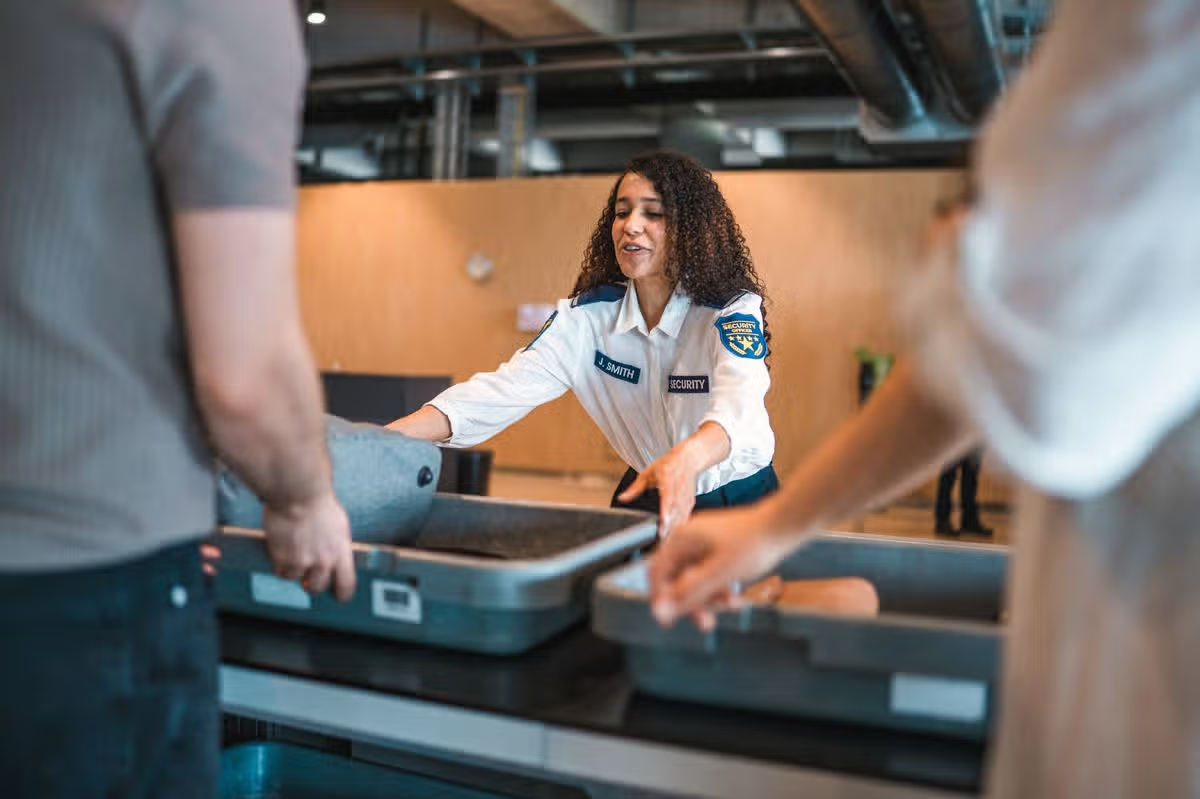
Airport security staff do not routinely search luggage simply because it contains a bar of soap. However, dense items can sometimes make X-ray images harder to interpret, particularly when they are packed alongside electronics, cables or other bulky belongings. If officers cannot clearly identify an item, they may carry out additional checks before allowing passengers through.

The government information website GOV.UK says: “Airport security staff will not let anything through that they consider dangerous – even if it’s normally allowed in hand luggage.” While soap clearly is not dangerous, if a bar of soap raises an alert on the scanner, they are legally required to stop the passenger and inspect it.

The US Transport Security Agency (TSA), for instance, says passengers are often asked to separate dense items because they can “clutter bags and obstruct clear images on the X-ray machine.” When a solid block of soap, cheese, or other dense organic material blocks the scanner’s view or mimics a threat signature, protocol requires a physical bag search or chemical swab testing to clear the item.

According to GOV.UK, solid bars of soap are permitted in both hand luggage and checked baggage. Security officers can still manually inspect any item they are unable to identify clearly during the screening process, regardless of whether it is allowed.

To reduce the chances of your bag being opened, experts recommend keeping dense items easy to access and, if requested, placing them in a separate tray during screening. Avoid storing them inside thick metal tins or rigid plastic cases alongside items such as power banks, charging cables and other electronics, as this can make X-ray images harder to interpret.

It’s also important not to confuse solid soap with liquid toiletries. While bars of soap are exempt from liquid restrictions, liquid soaps, shower gels and similar products carried in hand luggage must normally be in containers holding no more than 100ml, unless you’re travelling through an airport that has introduced next-generation security scanners permitting larger liquids.

The rules apply regardless of which airline you’re flying with, as baggage screening is carried out by the airport rather than carriers such as Ryanair, Jet2, TUI, easyJet or British Airways. A manual inspection is simply a precaution and does not mean you’ve broken any rules or packed a prohibited item.

Taking a few moments to think about how you pack everyday toiletries could help make your journey through security a little smoother. Although a 35p bar of soap is perfectly legal to travel with, storing it sensibly could help avoid unnecessary delays before your holiday even begins.

Source link

Exact date of Spanish islands protests revealed as ‘kill a tourist’ graffiti spotted

Brits heading to popular Spanish islands this summer may find themselves at the heart of anti-tourism protests, with a pressure group insisting that there will be a “historic turnout”

Spain’s anti-tourism protests could escalate this summer, as pressure group Menys Turisme Més Vida (Less Tourism More Life) announced plans for a major demonstration that it expects to have a “historic turnout”.

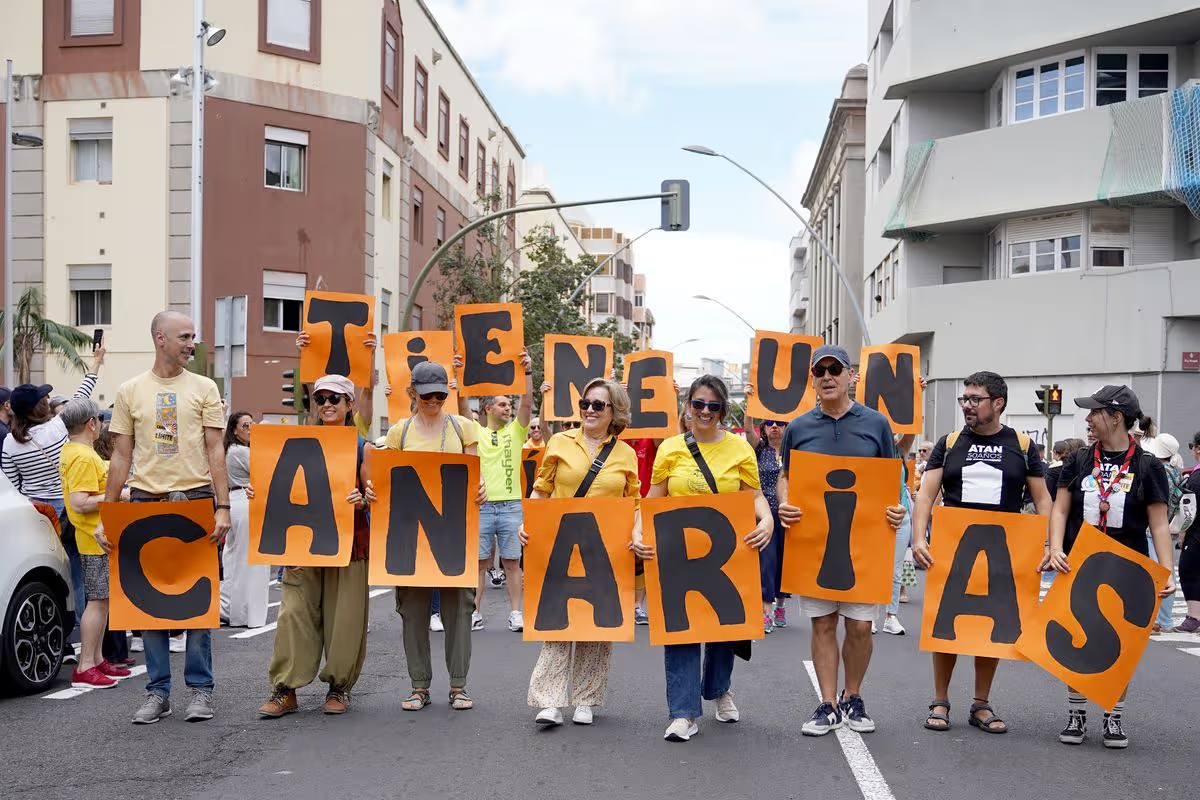
The news comes as sites in the Canary Islands have been daubed with anti-tourist graffiti, including reports from local news outlet Canarian Weekly of a ‘kill a tourist’ slogan being spotted in Tenerife. The graffiti was spotted by two expats hiking in Punta del Hidalgo, who then claimed they saw further disturbing graffiti during a walk to Bollullo Beach on the island’s north coast.

In a separate incident last week, five estate agents in Majorca with international names were daubed with graffiti including ‘guilty’ and ‘Guiris out!’ in an overnight attack. Guiri is a derogatory Spanish term used for tourists from Northern Europe.

Menys Turisme Més Vida announced a protest in Palma, a popular destination for Brits on the island of Majorca on July 26, which coincides with the start of the busiest school holiday season. Meanwhile there are protests planned in Menorca on June 13 with a similar anti-tourism sentiment.

In a statement on its website, the group said: “️We consider that the demands expressed during previous mobilisations have been ignored while problems such as the housing access crisis, tourist saturation, the destruction of the territory, the precariousness of living conditions and the pressure on public resources and services continue to worsen.

“Under the slogan ‘Majorca at the limit’, the call aims to once again demonstrate the strength of existing social unrest in the face of an economic model that continues to break tourism records while the living conditions of a growing part of the resident population worsen.”, it added.

The group claims that the protest has the support of 53 social , environmental, trade union, neighbourhood and cultural groups on the island, which sees nearly 13 million tourists annually, with Brits the second-largest percentage after Germany.

Majorca saw protests last June that organisers claim were attended by 30,000 people, although varying reports claim numbers from 5,000 to 8,000. This included reports of some people sitting on terraces being harassed by protestors. Another notable protest took place in Barcelona on June 15, 2025, in which smoke devices were used and tourists soaked with water pistols.

While there have been reports of a tourist slowdown in the Balearics and Canaries, anti-tourism protests do not seem to have a massive impact on visitor numbers. In April, the Canaries saw a drop in visitors of 8.3% compared to the year before, but this meant 1.2 million foreign tourists still visited the islands. It was also the first drop seen on the volcanic archipelago since the pandemic.

Over Easter, the Balearics reported a fall of nearly 20% in in-person tourist spending by card, despite an overall increase in spending across Spain as a whole, suggesting visitors were choosing to spend their money elsewhere.

Have a story you want to share? Email us at webtravel@reachplc.com

Source link