Several Palestinians have been injured by Israeli settlers, and farmers have been arrested by Israeli forces during Israeli pogroms across the occupied West Bank.
Four women and a child were among six people injured on Saturday when Israeli settlers attacked residents in Ma’in village in the Masafer Yatta area, south of Hebron, according to the Palestine Red Crescent Society (PRCS).
In the town of Deir Ammar, west of Ramallah, Israeli forces opened fire on farmers picking olives, forcing them to leave their land, according to the Palestinian news agency Wafa.
In the same area, Israeli settlers shot and injured two Palestinians. In the village of Tuqu, southeast of Bethlehem, Israeli forces fired on a Palestinian civilian vehicle.
‘Part of campaign’
In the village of Kafr Malek, northeast of Ramallah, settlers raided a farm at dawn and killed about 20 sheep, Mayor Najeh Rustum told Al Jazeera.
He added that Israeli forces had raided the village the previous night as well, firing tear gas canisters that ignited a fire in a house and caused material damage.
Al Jazeera’s Nour Odeh, reporting from Ramallah, said settlers destroyed olive trees across the Beit Furik plain, east of Nablus, in the northern West Bank while Israeli forces arrested landowners and olive pickers.
In the village of Deir Jarir, east of Ramallah, she said, settlers under army protection fired live ammunition at farmers in the al-Hariq area to prevent them from completing the harvest and forced them off their land. Settlers also smashed the vehicle of international activist Jonathan Budlak in the village and threw stones at a farmer’s vehicle.
A settler throws a stone towards Palestinians in Abu Falah near Ramallah on October 16, 2026, during attacks carried out as Palestinians try to harvest olives [Ammar Awad/Reuters]
In the village of Burqa near Ramallah, Israeli forces and settlers prevented farmers from picking olives, Odeh said, adding that settlers attacked farmers in the Wadi al-Sha’er area, southeast of Salfit.
“What we see, whether it’s in Beit Furik, Kafr Malek, Deir Jarir or elsewhere in the occupied West Bank, is part of a campaign,” Odeh said.
She said settlers have become increasingly emboldened, publicly advertising attack campaigns on social media platforms.
“There have been 300 documented attacks since the beginning of October, and that has had a devastating impact on a very important season for Palestinian farmers,” she said, adding that danger comes from soldiers and settlers alike as military forces routinely intervene to protect settlers and attack Palestinians defending their land.
Prominent rabbi justifies attacks
The attacks follow a religious edict issued by Rabbi Dov Lior, a prominent rabbi for National Security Minister Itamar Ben-Gvir’s Jewish Power party and a leading authority among the Hilltop Youth, which is a religious Zionist group devoted to seizing Palestinian land in the West Bank.
In the edict, Lior stated that harvesting olives in the Holy Land is entirely permitted and carries an added virtue, given security dangers.
He wrote that Jews are permitted to harvest olives even in areas far from Jewish communities to publicly display ownership of the land and fulfil God’s commandment of conquering it. He claimed the land belongs to the Jewish people and Palestinians did not buy or rent it.
Odeh said Israeli Prime Minister Benjamin Netanyahu downplays pogroms and no concrete action is taken to stop them.
“It is a matter of debate among politicians, but no one is stopping these settlers, whose names, locations and homes are known,” she said, adding that politicians permit the violence to continue because “it is politically expedient” and secures votes before elections on October 27.
How Israel votes this month will shape the future of over 5.5 million Palestinians who have no say in the election. Even if there’s a new government, Al Jazeera’s Nida Ibrahim says it’s unlikely to change the situation for Palestinians living under occupation.
As Israelis prepare to vote, Palestinians in the occupied West Bank say they have little hope of change, as they face movement restrictions, expanding settlements and the threat of forcible displacement, with no say in the Israeli elections shaping the reality they live under.
Ramallah, occupied West Bank – Every day, Fuad Abu Salam sips his morning coffee outside his rented home in the Thinnabeh suburb, gazing at every detail of the sprawling Tulkarem refugee camp in front of him. This West Bank camp he can see in the distance once housed a two-storey building comprising four apartments, each measuring 300 square metres (3,229sq feet), in which he and his extended family lived.
After he was displaced from the camp, he, his wife, his four children, and his mother were confined to a small, rented apartment no bigger than 100sq metres (1,076sq feet) in Thinnabeh. His home in Tulkarem was partially destroyed when he left the camp.
Recommended Stories
list of 3 itemsend of list
Everything changed for Fuad and his family on January 21, 2025, when Israel launched a military assault in the occupied West Bank dubbed “Iron Wall”, initially targeting the Jenin refugee camp. A week later, the operation expanded to include the Tulkarem and Nur Shams camps in the city of Tulkarem.
Israeli forces forcibly displaced the entire populations of the three camps during January and February 2025 and continue to prevent their return, the United Nations has said.
Mass displacement
Data from UNRWA cited in a report titled, Destruction of Palestinian Refugee Camps in the Northern West Bank, stated that 33,362 Palestinians remain forcibly displaced from the three camps. By October 2025, 52 percent of structures in the Jenin camp, 48 percent in the Nur Shams camp, and 36 percent in the Tulkarem camp had been destroyed or damaged.
The Israeli operation has affected hundreds of homes, roads, and infrastructure, including water and electricity networks, while humanitarian aid to the camps has been cut off.
Israeli forces killed 102 Palestinians, including 21 children, during the period covered, according to the report. This represents 46 percent of the total number of Palestinians killed by Israeli forces in the West Bank during this period.
On Sunday, the Israeli Supreme Court ordered the government to provide a timeline for the return of displaced people to the three camps, setting November 23 as a deadline for a response.
Israel’s far-right Finance Minister Bezalel Smotrich rejected the ruling, warning that the return of residents could allow for the reconstruction of what he termed “terror infrastructure”. He called on the government not to implement the decision.
Meanwhile, Israeli Defence Minister Israel Katz opposed the court’s intervention, asserting that the army’s continued presence in the camps was a security decision and stating his intention to maintain a military presence there.
Fuad, 42, a greenhouse installer, found himself forced to flee with all the camp’s other residents and more than 40 family members. But he and his neighbours carried with them the hope of returning home.
They moved between the homes of relatives, enduring harsh living conditions, until he finally settled in the Thinnabeh suburb of Tulkarem.
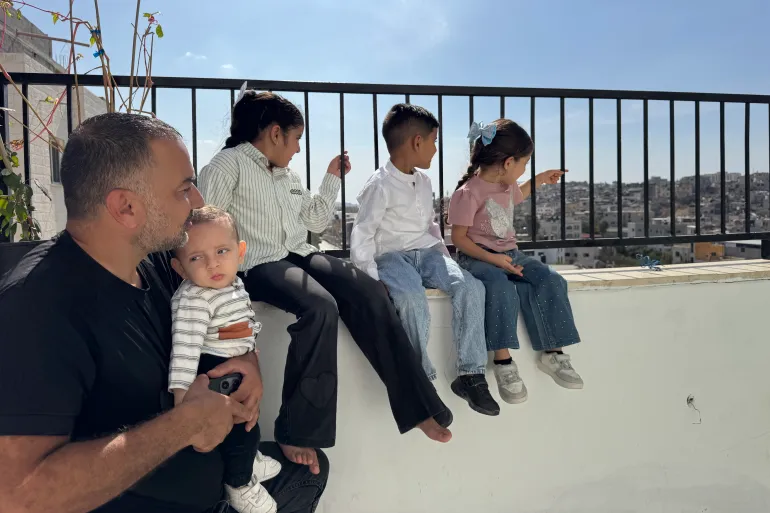
Fuad Abu Salam sits with his children in his rented apartment overlooking the Tulkarem camp, gazing at their destroyed home [Raghad Salameh/Al Jazeera]
The neighbourhood, which overlooks the camp, has “restored his spirit” because he can see his home even if it’s from afar. Although he is unable to reach the building, he can gaze at it and imagine a time when he can return.
“If a decision were issued right now allowing us to return, I would go back immediately without a moment’s hesitation,” he said.
But his home is no longer what it used to be. It was partially demolished and set on fire by Israeli soldiers, rendering more than 80 percent of the apartment block uninhabitable. Fuad plans to use the rubble to rebuild his home.
“I will never waver in my resolve to return, even if it means pitching a tent over the ruins and living there,” he declared.
Mohamad Ararawi, 18, from the Jenin refugee camp, also saw his home razed to the ground with a wide road replacing it.
He told Al Jazeera that his family of 40, who had lived in a five-story building in the al-Damaj neighbourhood, all fled the camp when the Israeli military operation began, seeking shelter in homes belonging to other relatives.
“My mother, father, five sisters, and I took refuge in my brother’s unfinished apartment. We endured harsh conditions, suffering through biting cold and scorching heat, before gradually completing the construction until it became somewhat habitable,” he added.
Returning is all that matters to them, and they refuse to live anywhere but the camp, even if it lacks basic amenities.
A near-impossible return
Returning the displaced back to their homes is not merely an issue of clearing roads for residents. Returning would mean living in a camp in which infrastructure has been damaged and hundreds of homes destroyed, all amid a lack of necessities.
Nihad Shawish, a member of the Nur Shams Camp Popular Services Committee, told Al Jazeera that the scale of destruction makes the residents’ return fraught with immense difficulties, despite their will to go back to their homes.
Approximately 400 homes, most of them three to four stories high, were destroyed, he said, while about 100 homes were burned down during the Israeli army’s presence in the camp.
Even the ones that survived are not necessarily habitable; they sustained severe damage affecting doors, windows, and interior facilities. The collapse of some buildings has also damaged neighbouring homes.
Approximately 10,900 camp residents remain displaced, including families staying in private homes and others at a school in the Thinnabeh suburb.
A photo of Tulkarem camp taken from Fuad Abu Salam’s apartment which overlooks the camp; from there, he looks out at his destroyed home every day [Raghad Salameh/Al Jazeera]
Faisal Salameh, an official with the Tulkarem Camp Popular Committee, told Al Jazeera that more than 2,000 housing units were completely destroyed, while approximately 90 per cent of the camp’s homes sustained partial damage, rendering them uninhabitable.
“Israel has turned the camp into an environment that drives residents away, given the widespread destruction and the ban on reconstruction in certain areas that have been converted into roads,” he noted.
Despite these conditions, Salameh said that displaced residents are eager to return to the camp as soon as a decision by the Israeli government permits them to.
The camp was home to approximately 15,000 people. The majority of the displaced currently live in rented homes or with relatives, while others have sought shelter in schools, mosques, or makeshift tin shacks.
Israeli rejection
While the Israeli Supreme Court’s ruling opens the door to discussing the return of displaced persons to camps in the northern West Bank, its rejection by Israeli government ministers raises questions about whether it will be implemented. Until then, the lives of the displaced families remain in limbo.
Mohamad Halaseh, an expert on Israeli affairs, told Al Jazeera that the Israeli right-wing isn’t just trying to alter the structure of the judicial system, but also seeking to undermine its legitimacy and exert pressure on judges.
He explained that the effect of political stances is evident in the disregard for Supreme Court rulings. He cites the issue of Palestinian prisoner visitations, a case in which the state failed to comply with the court’s decisions, as one example of this.
“The continued disregard for court rulings undermines the judiciary’s ability to compel the government to act when judicial decisions conflict with the stance of the political leadership,” he said.
Several precedents make the implementation of court rulings on the camps unlikely, he said. This is particularly distressing for residents who also face strong Israeli political opposition to the return of Palestinians to the three camps.
“Declared political stances set a limit on the extent to which executive institutions comply with judicial rulings,” he said.
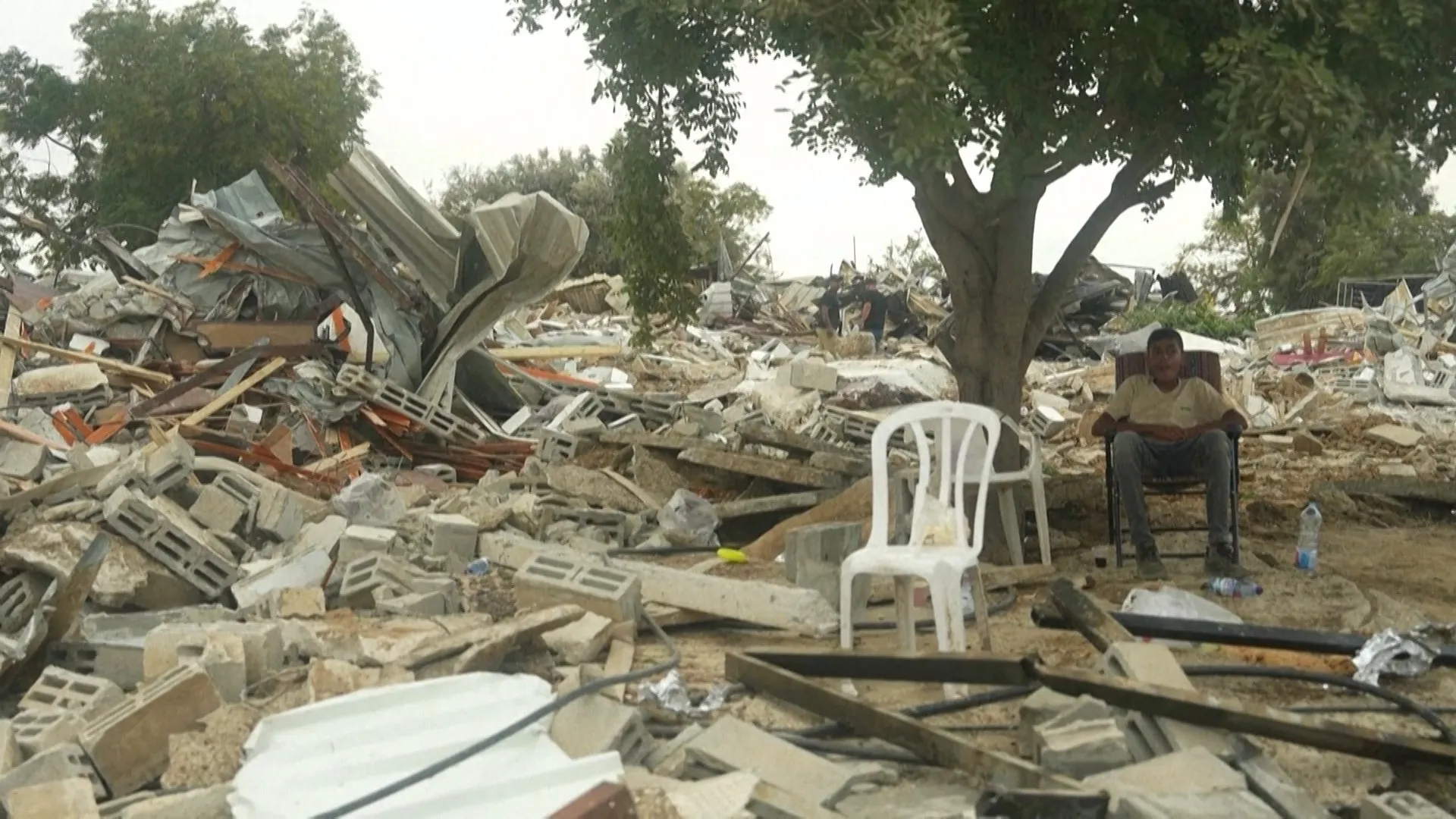
Israeli authorities have demolished 80 structures in Al-Dahiya village in Israel’s Negev Desert, claiming they were built without permits. Rahat’s mayor says the demolitions have displaced around 400 Palestinians, leaving families facing uncertainty over where to find shelter.
Israel has expanded its military occupation in the Gaza Strip in violation of a United States-brokered ‘ceasefire’, forcing Palestinians into an ever-smaller share of the besieged territory, devastated by Israel’s ongoing genocidal war.
Nearly two-thirds of Gaza is now under Israeli military control or subject to access restrictions.
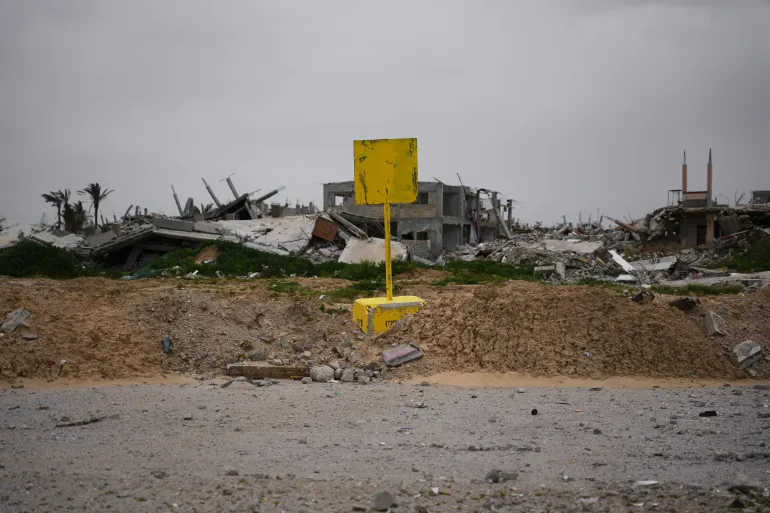
The original ‘Yellow Line’, established under US President Donald Trump’s 20-point plan to end the war, marked the area to which Israeli forces initially withdrew. They were expected to make further withdrawals gradually, but instead, they have seized more territory.
On Sunday, Israeli forces moved yellow concrete blocks dozens of metres west in Shujayea, a neighbourhood in southeastern Gaza City, forcing Palestinian families to flee and bringing more of the neighbourhood under Israeli military control.
A yellow block demarcating the ‘Yellow Line’, which has separated the Gaza Strip’s Israeli-held and Palestinian zones since a ‘ceasefire’ began a year ago, is seen in Khan Younis in the southern Gaza Strip on January 22, 2026 [Abdel Kareem Hana/AP Photo]
“It’s not simply about where the ‘Yellow Line’ is today but where it can move next,” Al Jazeera’s Ibrahim al-Khalili said, reporting from Gaza City. “For families who have been repeatedly displaced in the past three years, the situation remains dire, and they have to make the impossible decision of where they can go.”
More than 90 percent of Gaza’s 2.1 million population has been forcibly displaced by Israel’s war, launched on October 7, 2023, after Hamas-led attacks on southern Israel.
Using maps, Al Jazeera shows how much of Gaza Israel has grabbed since the ‘ceasefire’.
Gaza before the war
Before the war, Palestinians were spread across the Gaza Strip, a 365sq km (141sq-mile) territory roughly 41km (25 miles) long and from 6km to 12km (4 to 7 miles) wide.
That made it one of the most densely populated places on Earth with about 6,000 people per square kilometre, similar to Nairobi or London. Each person had, on average, about 160sq metres (1,722sq ft) of land.
Even then, not all of Gaza’s land was accessible. Israel enforced a buffer zone along the fence with Israel, and Palestinians who approached it risked being shot. In 2010, the United Nations Office for the Coordination of Humanitarian Affairs (OCHA) estimated that the restricted area covered 17 percent of Gaza’s land and 35 percent of its farmland.
Gaza has been under an Israeli land, air and sea blockade since 2007.
Gaza at the ‘ceasefire’
Under the first phase of the “ceasefire”, Israeli forces were to withdraw to the “Yellow Line” within 24 hours, after which a 72-hour period began for the handover of Israeli captives held in Gaza. Trump first published a map of the line on his Truth Social platform.
The line left Israel in control of 53 percent of the Strip, mostly farmland and border areas in the east, and confined Palestinians to the remaining 47 percent, about 172sq km (66sq miles).
By October 2025, two years of war had killed more than 67,000 Palestinians, and tens of thousands more had left the territory, reducing Gaza’s population to about 2.1 million.
Pushed into less than half of Gaza’s territory under the “ceasefire”, its density doubled to about 12,000 people per square kilometre, comparable to New York City. Each person was left with about 82sq metres (883sq ft).
(Al Jazeera)
Gaza today
Since the “ceasefire”, Israeli forces have repeatedly moved the yellow concrete blocks marking the “Yellow Line” farther west, sometimes overnight, expanding the areas under their control. Satellite imagery has also documented continued demolitions in areas held by Israeli forces.
The research group Forensic Architecture estimated that Israel controlled 58 percent of Gaza by December. In March, the Israeli military sent aid agencies maps of a new “orange line”, a restricted zone beyond the “Yellow Line” where humanitarian movements must be coordinated with the army.
According to OCHA, restrictions now cover 65 percent of Gaza. Israel itself said it controls about 70 percent of the territory, a UN official told the Security Council in June.
(Al Jazeera)
That leaves 2.1 million people in about 35 percent of the Strip, roughly 128sq km (49sq miles). The population density has nearly tripled since before the war to about 16,000 people per square kilometre, close to central Tokyo.
Each person now has about 61sq metres (657sq ft) of land for everything: shelter, roads, schools, hospitals and farmland.
Unlike Tokyo, Gaza has little space left to house its people. The UN Satellite Centre, UNOSAT, found 82 percent of structures in the Strip are damaged or destroyed. The UN Food and Agriculture Organization says only 3 percent of Gaza’s cropland is both undamaged and accessible.
(Al Jazeera)
OCHA says the remaining 35 percent of Gaza is “already overcrowded” and access restrictions are a key obstacle as aid groups try to relocate families before the rainy season. More than 950,000 people live in displacement sites at risk of flooding, according to the UN, most of them in tents and makeshift shelters, as seen in the satellite image below.
Approaching the ‘Yellow Line” can be deadly. Israel treats areas beyond it as a free-fire zone, and Palestinians who come near it have been shot. Nearly 1,500 people have been killed across Gaza since the ceasefire was announced.
Israeli attacks force Palestinians in Gaza to flee in panic, while home demolitions in occupied East Jerusalem and settler violence across the occupied West Bank further threaten Palestinian communities.
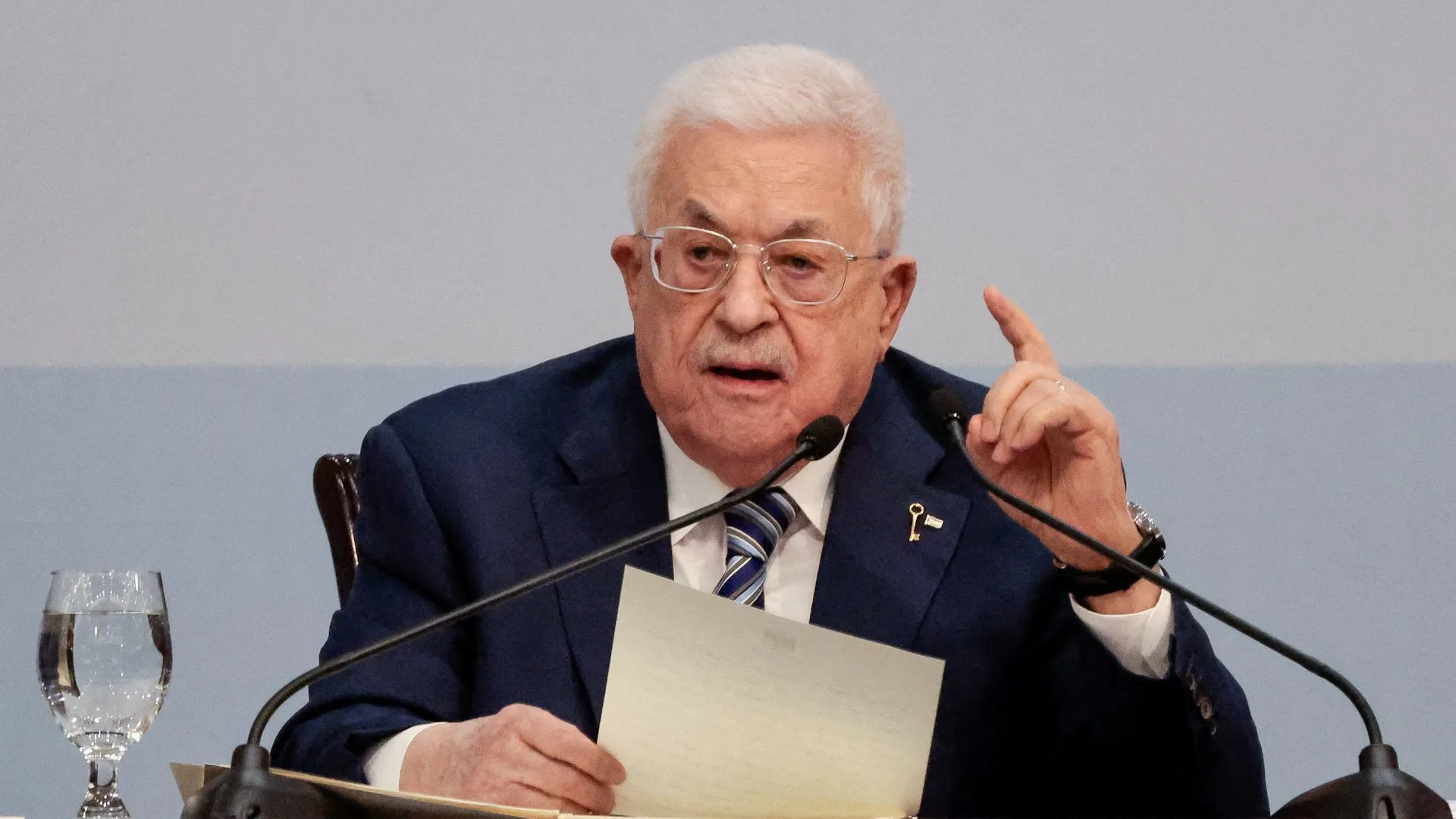
Palestinians have reacted to President Mahmoud Abbas’ decision to postpone the Palestinian legislative elections to September 2027, citing Israeli restrictions and conditions in Gaza and the occupied West Bank.
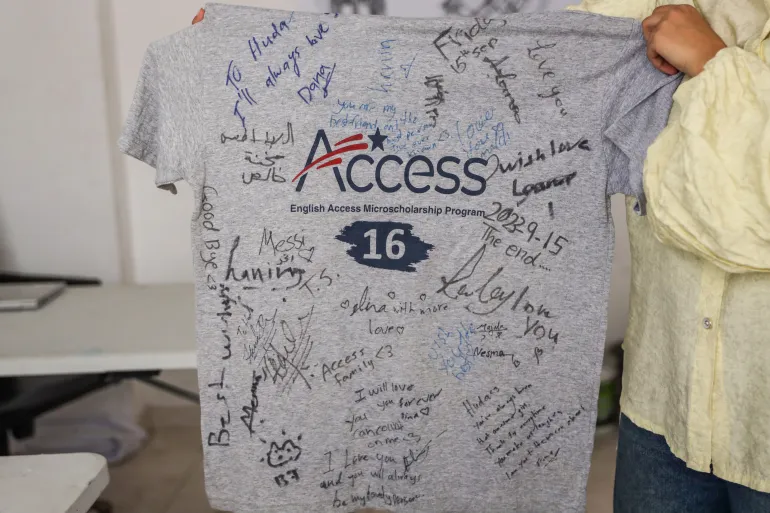
When Huda Helassa, 20, left her home in Tal al-Hawa, southern Gaza city, in the first hours of the war, she took a signed T-shirt from the Access Microscholarship Program, a United States-funded programme that provides English-language and cultural education to young people.
Her classmates had signed the shirt on September 15, 2023, during their final class, two years before she graduated on September 27.
“When we left our home on the first day of the war, the T-shirt was one of the first things that came to my mind,” Huda says.
She put it in her bag almost instinctively, wanting to hold on to something from a part of her life that had ended just days earlier.
[Abdelhakim Abu Riash/Al Jazeera]
Huda and her family first moved to her grandmother’s house in Gaza City, then were displaced south, walking part of the way, and eventually reached Rafah in the south of the Palestinian territory.
In May 2024, they were displaced again, this time to Khan Younis. When they returned to Gaza in January 2025, they found their home completely burned.
“There was nothing left of the life we had there,” she says. “No belongings, no photographs, no memories we could hold onto, just the blackened walls.”
They were displaced again in April 2025, moving to Remal and then Tal al-Hawa, before moving to az-Zawayda in September and returning to Gaza in October. They are currently in Tal al-Hawa.
For Huda, the T-shirt remains a link to the life she had before the war, a period of learning, friendships and experiences that shaped her.
Israeli air strike kills Palestinian Civil Defence rescue volunteer as he was travelling to help wounded people near Kamal Adwan Hospital in Beit Lahiya, northern Gaza, a medical source says.
Published On 7 Oct 20267 Oct 2026
Israeli attacks have killed at least four Palestinians, including a rescue worker, and wounded several others across Gaza.
The Palestinian Civil Defence rescue volunteer was killed in an air strike as he was travelling to help wounded people near Kamal Adwan Hospital in Beit Lahiya, northern Gaza, a medical source said on Wednesday.
Recommended Stories
list of 3 itemsend of list
The Civil Defence identified the victim as Mohamed Tamous.
Meanwhile, an Israeli drone strike in the southern city of Khan Younis killed Hisham Ibrahim Abu Mustafa, 60, and injured several others, Nasser Hospital said.
The body of a 17-year-old Palestinian was also brought to Nasser Hospital after he was killed in an Israeli drone strike in the Qizan Abu Rashwan area south of Khan Younis, Turkiye’s state news agency Anadolu reported, citing a medical source.
A teenage boy died from wounds sustained last month when Israeli forces opened fire east of Khan Younis, Anadolu reported, citing a medical source.
Also on Wednesday, a girl was injured by Israeli gunfire directed at displaced Palestinians’ tents in the Al-Amal neighbourhood, Anadolu reported.
Additionally, in Khan Younis, the Israeli military carried out two demolitions in the northeastern and eastern parts of the city.
The military also carried out demolitions east of Gaza City’s Tuffah neighbourhood.
Israel has killed more than 74,245 Palestinians since it launched its genocidal war on Gaza in response to the Hamas-led October 7, 2023, attack on Israel.
Al-Awsaj, occupied West Bank – On September 23, weeks before Israel’s parliamentary elections, ministers and lawmakers gathered on an occupied West Bank hilltop to inaugurate a new settlement, Metzoke Eretz, illegal under international law. Finance Minister Bezalel Smotrich used the ceremony to salute the settler outpost that made the eventual settlement possible.
“The first pioneering settlers who were here on the farm… we will lift them up as our greatest joy,” Smotrich said. “It shows that the method works: establish a farm, seize the land, prepare it, turn it into a community, move to the next point. There are many, many such heroes – those who prove they are not doing real estate. They are doing Zionism.”
Recommended Stories
list of 3 itemsend of list
Metzoke Eretz was previously an outpost – the name given to the Jewish settlements illegal even under Israeli law – called Netzah Harel, established in 2023 in the middle of al-Muarrajat, a Bedouin community on private Palestinian land east of Ramallah. Alia Mleihat, 29, and others from the community remember those settlers well. “Of course, this outpost played a major role in displacing the Palestinian Bedouin communities in al-Muarrajat and the areas east of Ramallah,” said Alia, now living in a tent in al-Awsaj, a few kilometres away, after her forced displacement in July 2025. “[The Netzah Harel settlers] took part in every attack the settlers carried out on families, and confiscated sheep, under the protection of the Israeli police and army.”
Dror Etkes, founder of Israeli NGO Kerem Navot, said Smotrich’s description of his “method” was spot-on – except for one omission. “The political discourse skips the [Palestinian] expulsion chapter,” said Etkes, suggesting Smotrich and other politicians avoid doing so explicitly to avoid potential scrutiny from international criminal courts. “They want it to happen, and they know that it happens, and they let it happen.”
Haaretz reported that Metzoke Eretz is one of 19 outposts legalised by the Netanyahu government after nearby Palestinians were violently expelled.
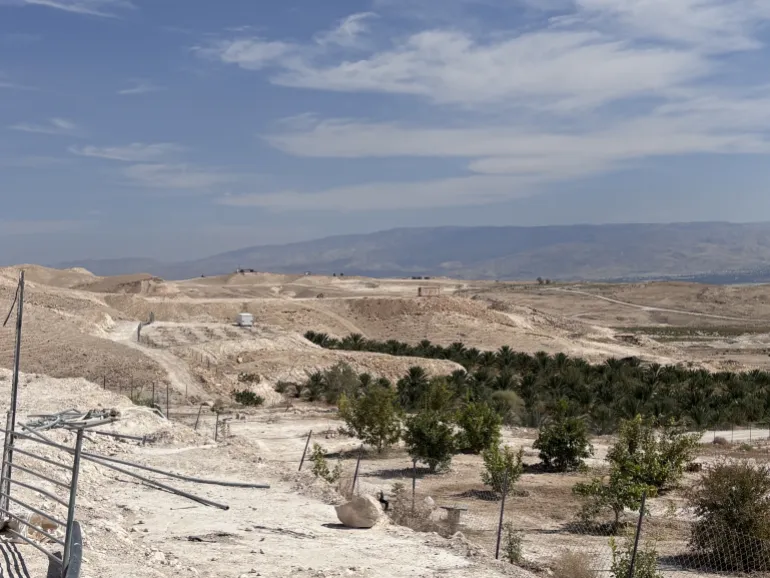
The view from Muhammad Ghawanmeh’s home in al-Awsaj, looking out towards an Israeli outpost on a hill in the background [Al Jazeera]
‘Not a single moment of joy’
Jamal Mleihat, Alia’s 45-year-old uncle, sits with eight relatives nestled inside a bare concrete-block house on the ridge in al-Awsaj, with his daughter Sewar hanging off his lap.
Below the ridge, rows of young trees climb a cultivated slope towards a factory at the foot of the hills. The ridge itself is rock and dust, now home to about 25 families from al-Muarrajat, among others forcibly displaced in the past three years.
“Before October 7 [2023 Hamas attack on Israel, and Israel’s subsequent genocidal war on Gaza], we were in the pastures – no harassment, we moved around freely,” said Jamal, a father of seven. “We had healthcare. We had a school. We had water in the same encampment. Life was a million times better than this.”
Since October 7, the Israeli government has stepped up its raids on the occupied West Bank, while settlers have largely been given free rein to pursue a pogrom against Palestinians, with little pushback from within Israel.
Just below Jamal’s shelter, alone on a slope, Muhammad Ghawanmeh lives with his wife and seven children. His toilet does not work; he relies on water tanks and has almost no electricity. The rocky track to the Mleihats’ area is too steep to drive. He built a fence around the house after recent settler attacks, and now faces constant drone surveillance from Israeli settlers.
Ghawanmeh is from Ras Ein al-Auja, which had been the largest Bedouin community in the central Jordan Valley – so robust that humanitarian coordinators told Al Jazeera in October 2023 that the village’s displacement was unlikely. Instead, its more than 600 Palestinian inhabitants experienced the largest single-community expulsion of Bedouins in the last three years, after repeated attacks by settlers from four surrounding outposts.
“From my childhood, the land was open. The water was open. We were living happily. We’d graze 10 kilometres, 15 kilometres with the sheep, and come back,” he said. “Today we can’t go 500 metres from the house.”
His flock has shrunk from about 300 to roughly 100 physically thinning sheep, which he now must buy fodder for, instead of letting them graze on the land, which he now says is largely forbidden by Israeli settlers and the army.
Jamal Mleihat with his daughter Sewar in al-Awsaj in the occupied West Bank [Al Jazeera]
‘Nothing was left except this’
A few hundred metres beyond Ghawanmeh’s fence, a white trailer and a few containers mark an Israeli outpost, established about six months ago on a hill overlooking Highway 90 and the displaced families along the ridge. Two months ago, Ghawanmeh said, soldiers came to his house and told him he could no longer pass to the highway. The settlers, he said, “are with the army”.
“You leave this place, go to another one, and it follows you – the same problem, unsolved,” Ghawanmeh said. “Every three months, there’s a displacement operation.”
Al-Awsaj barely existed as an inhabited place before, but Bedouin from different depopulated communities have now converged on this barren ridge, overlooking land largely declared – again – off-limits to grazing.
Allegra Pacheco, head of the West Bank Protection Consortium, calls al-Awsaj “basically a refugee camp, an internally displaced camp, that we see in other countries. But here, there’s no safe space. Wherever people like in al-Awsaj go, they’re chased by settlers or their tents are demolished by the Israelis.”
“It’s been very painful to get the authorities, the Palestinian authorities, the international leaders, to recognise that this is a mass displacement happening in front of us, and people have nowhere to go,” she said.
Project of forced transfer
In the West Bank, the United Nations Office for the Coordination of Humanitarian Affairs (OCHA) counts at least 130 Palestinian communities fully or partly displaced by settler attacks and related restrictions since January 2023, and more than 6,400 people uprooted. According to the Palestinian Colonization and Wall Resistance Commission, since October 7, 2023 there have been almost 15,000 attacks by settlers, with 66 Palestinians killed by settlers. OCHA says the rate of settler attacks increased from about three a day before October 7, 2023, to almost seven per day this year.
The increase in displacement after October 2023 can also be seen in the numbers for that year. Nearly 80 percent of all Palestinians displaced by settler violence in 2023 were uprooted after October 7.
A report by Peace Now and Kerem Navot found that Israeli farm outposts had seized roughly 18 percent of the West Bank by the end of 2025. “We’re talking about a land area bigger than the size of the Gaza Strip altogether,” Pacheco said.
“What we’re seeing is a continuous, sustained project of forced transfer and mass destruction,” she said. “Israeli authority demolitions and destructions by the Israeli army, and Israeli civilians – armed groups – carrying out destructions and sowing fear to push people out.”
Israeli NGO B’Tselem’s September report, “The Elimination Project”, links this to Smotrich’s 2017 “Decisive Plan”, which offers Palestinians three choices: live under Jewish supremacy, leave, or face violent repression.
“The Smotrich Plan has been implemented,” Pacheco said. “He laid out exactly what is going on now, and he’s very proud of his success. He now wants to transfer that success to [other areas of the West Bank], and also in the Galilee [an area in Israel with a large population of Palestinian citizens of Israel]. Wherever there are Palestinians living, he wants to make life so difficult that they will leave.”
With Smotrich exercising broad powers over the West Bank through the Settlement Administration within the Ministry of Defence, and leaders in the Israeli West Bank military command increasingly coming from far-right, settler backgrounds themselves, Palestinians across the West Bank describe a deepening symbiosis of military, police, administration and settlers in exacting Palestinian dispossession. “They all work together, like a cell, one completing the other,” said Jamal Mleihat. “The army, the police, the settlers – they’re the ones who displace, they’re the ones who establish the settlement, they’re the ones who take part in the thefts, in everything. And the army covers for them.”
Al Jazeera has reached out to the Israeli authorities for comment on this piece, but has yet to receive a response.
Worse future
Smotrich has withheld part or all of the tax revenues Israel collects for the Palestinian Authority – roughly 60 percent of its income – for much of the past three years. The PA now struggles to provide the most basic of services. In al-Awsaj and elsewhere, that means classrooms that do not open. “The government school is shut down today, no salaries,” Ghawanmeh said.
There is no school bus; families pay for private transport, and “one day they study, one day they don’t, depending on the mood of the driver,” Jamal said. It has left the displaced alone on an inhospitable patch of rock.
“Palestinians have no protection in the West Bank,” said Pacheco. “They are completely vulnerable to assault, attempted murder, arson, invasion of their homes. The Israeli army is supposed to protect them and doesn’t. The Palestinian Authority can’t come in, and the international community is not protecting them.”
“We started to feel there’s no safety anywhere,” Ghawanmeh said. “Fear. Terror. Persecution. Ethnic cleansing. That’s what we feel.”
Amid the dispossession, Ghawanmeh looks out at the unwelcoming land he knows will not be his family’s refuge – only another transient stop. He sees his own brother now only once every month and a half or two. “The threats to Bedouin life have almost become extinction,” he said. “We now live in enclaves, separated.”
“For three years now, the day that’s passing is better than the one that’s coming,” Ghawanmeh said. “Yesterday is better than today. Today is better than tomorrow.”
Country music star Zach Bryan signaled his support for Palestinians at the same stadium that recently banned rapper Macklemore over his efforts to do the same.
Grammy winner Bryan donned a black T-shirt emblazoned with the words “Free Palestine” and “Appeal to Heaven” during his Friday concert at Gillette Stadium in Foxborough, Mass., according to photos and videos shared on social media.
Members of his backing band also wore similar shirts, including drummer Nate Head, whose jersey paid homage to Hind Rajab, the 5-year-old girl killed alongside five members of her family in a 2024 attack by Israeli forces in Gaza.
Bryan’s Friday concert marked the first of two at Gillette Stadium, owned by billionaire Robert Kraft. The musician’s public display of support for Palestinians comes weeks after Kraft urged pop star Ed Sheeran to remove Macklemore from his tour, citing concerns over his pro-Palestinian messaging.
Last month, Sheeran and his touring team faced pressure to remove former opening act Macklemore from the rest of the tour. The Grammy-winning “Same Love” musician faced backlash from a number of Jewish advocacy groups over his performances at MetLife Stadium in New Jersey.
Days after the New Jersey shows, Messina Touring dismissed the rapper, who has been a vocal advocate for the Palestinian cause. “Shape of You” singer Sheeran denied playing a part in Macklemore’s departure, but confirmed in a statement that he spoke with Kraft, who was among the stadium owners expressing concern about Macklemore’s further involvement.
The remaining supporting acts for Sheeran’s tour, including Grammy winner Finneas (and brother of Billie Eilish) and folk band Beoga (Sheeran’s backing band), quit Sheeran’s Loop tour in solidarity. Sheeran carried on with his tour, but it hit another snag when his shows at Gillette Stadium last weekend were canceled “due to severe weather warnings” in the region.
Following the fallout, Macklemore announced his Free Palestine tour, which begins later this month with three shows in Dublin, Paris and London. Macklemore said he will be joined by artists “who have shown up and used their stages to stand in solidarity with the Palestinian people.”
The rapper announced on Wednesday that “all three shows sold out immediately.” He also said the full concert lineups and U.S. tour stops will come in a later announcement.
Macklemore, in his announcement, said all proceeds from the tour will go to a handful of charities supporting the Palestinians amid Israel’s war in Gaza. Macklemore previously said he would donate all $1 million of his earnings from his time on Sheeran’s tour to numerous pro-Palestinian charities.
Bryan’s With Heaven on Tour will return Saturday at Gillette Stadium. The “I Remember Everything” and “Pink Skies” singer will conclude his tour Oct. 10 at Jordan-Hare Stadium in Auburn, Ala.
The country star and U.S. Navy veteran, 30, is no stranger to channeling his political views in his music and performances. In 2025, Bryan released “Bad News,” a song critical of nationwide federal immigration enforcement operations.
Bryan’s pro-Palestinian stage gesture adds to a noticeable shift among mainstream artists speaking openly about their support for Palestinians amid Israel’s ongoing strikes on Gaza. Melissa Barrera, Rachel Zegler, Irish rap trio Kneecap and rap-punk group Bob Vylan have been among the entertainers who faced professional backlash for their criticism of Israel.
In April 2025, Cornell University also dismissed Kehlani from her headlining performance at the school after President Michael Kotlikoff accused the singer of espousing “antisemitic, anti-Israel sentiments in performances, videos, and on social media.”
In recent months, however, artists and entertainers, including Mark Ruffalo and the Israeli “NAZA” filmmakers Yuval Abraham and Rachel Szor (co-directors of Oscar winner “No Other Land”), continue to face backlash for criticizing Israel.
Saeed Ayed* watches over his livestock herd. The animals are starving and parched due to a two-week-long Israeli siege on the Ras al-Ahmar Bedouin community in the occupied West Bank’s Jordan Valley.
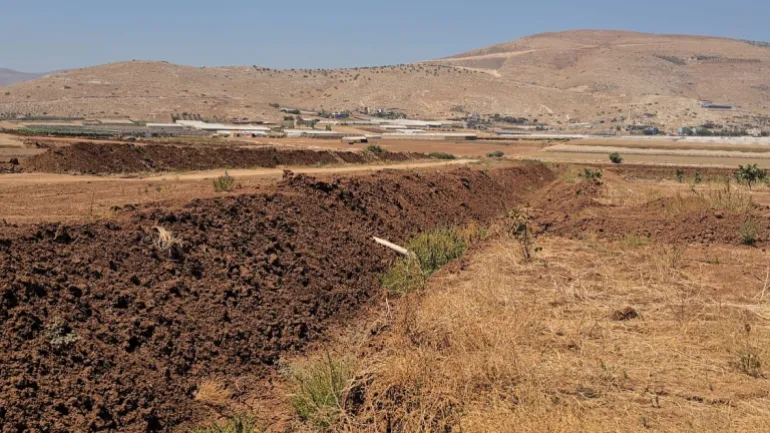
Access to the community has been blocked since mid-September, as Israeli forces continue building a barrier through Palestinian land in the area, including a road for military patrols, trenches and embankments.
Recommended Stories
list of 3 itemsend of list
Since the road closures began, movement for Palestinians has been severely restricted. They are forced to move around at night, transporting water, fodder and milk via donkeys under the cover of darkness to avoid detection by Israeli soldiers and settlers.
Ayed told Al Jazeera that no water had entered the community over the past three days after Israeli forces sealed the access points residents had been using to bring in supplies.
“The situation is dire. We are completely besieged, and the livestock cannot survive without water and food for this long,” Ayed said. “We own 15,000 head of livestock, and we fear they will perish because of the siege.”
Ras al-Ahmar is a 300-person village home to around 50 families who have lived off livestock and herding since the 1970s. Ayed said that Israeli settler attacks – part of a wider pogrom against Palestinians across the West Bank – had intensified since February, accusing settlers of trying to force residents out to seize their land.
“We have faced livestock theft, attacks on our dwellings, beatings of residents and vandalism of our homes. This was happening almost daily, yet we refused to leave. Now, they are completely besieging us to force us out,” he added.
The greatest challenge facing residents is restricted access to medical care as a result of the siege, a particular concern for the elderly.
Disease is also rampant among livestock, particularly newborn animals. And with veterinary teams unable to reach the area and treat the animals, deaths have been reported.
The military barrier – which Israel calls Crimson Thread and says it is needed for security – runs for roughly 20km (12 miles) through the northern Jordan Valley, with a width of up to 50 metres (165 feet).
Construction expanded early this year, including the digging of trenches and the bulldozing of agricultural land that damaged wells, water networks and greenhouses. The Israeli military seized nearly 115 hectares, 85 percent of which is privately owned Palestinian land, according to Kerem Navot, which monitors Israeli land policies in the West Bank.
Abdullah Bisharat, head of the village council of Ras al-Ahmar and Atuf, a nearby rural area also facing the military blockade, told Al Jazeera that the Israeli blockade has stopped 51 schoolchildren from attending classes for two weeks because vehicles can no longer reach them.
Israeli forces confiscated a tractor belonging to the village council on Sunday, detaining its driver as he was delivering animal fodder and water to Ras al-Ahmar, Bisharat said.
“We reached out to human rights organisations, but unfortunately no one was able to break the siege. Hundreds of people there are suffering, the majority of whom are women and children,” Bisharat added.
A trench dug by Israel around the rural Bedouin community of Ras al-Ahmar has restricted their movement [File: Moath Ghannam/Al Jazeera]
Broader context
The targeting of Bedouin and herding communities in the Jordan Valley is part of a mounting pressure campaign on residents to abandon their properties by restricting access to land and pastures. The tactics include settler violence, the demolition of structures and the closure of roads and access points.
The United Nations Office for the Coordination of Humanitarian Affairs (OCHA) has described Bedouin and herding communities as among the groups most vulnerable to displacement in the West Bank. Dozens of Palestinian communities across the West Bank have been entirely or partially displaced since 2023, when Israel began its genocide in Gaza and ramped up its attacks on the West Bank after the October 7 Hamas attack.
OCHA has reported that at least 130 Palestinian communities have experienced full or partial displacement since January 2023, with 48 communities completely displaced, including 12 from January to August.
According to OCHA, more than 2,500 Palestinians were displaced in 2026 due to settler attacks and related access restrictions, out of a total of more than 6,400 displaced since 2023.
As the Israeli elections – scheduled for October 27 – approach, Palestinian analysts and rights advocates argue that the measures being implemented on the ground are entrenching a new reality that may persist regardless of the next government.
Hassan Mleihat, chairman of the al-Baydar Organization for Defense of Bedouin Rights, told Al Jazeera that settlers appear to be rapidly intensifying measures aimed at displacing Bedouin communities in the lead-up to the elections.
Mleihat said that Israel’s objective was to expel as many Palestinians as possible and seize control of their land.
“The road being constructed near Ras al-Ahmar aims to dominate the area’s land under security pretexts and to isolate Palestinian communities into tiny geographical pockets, effectively confining their presence there,” he said.
A new reality
Observers believe the significance of these Israeli measures against Palestinian communities extends beyond their immediate impact on the population, creating demographic, geographic and security-related changes that may prove irreversible even if the Israeli political landscape shifts after the elections.
Adel Shadid, an expert on Israeli affairs, told Al Jazeera that Israel currently exercises an unprecedented degree of control over Palestinian territory in the West Bank. Palestinians, he said, live in small, fragmented and scattered enclaves with Israeli control over security, military and economic matters, as well as the minutiae of daily life.
He said the change was not only limited to geography but also entails normalising the presence of illegal Israeli settlements in the West Bank so that they are viewed as an integral part of the region’s fabric, rather than a temporary presence or a reality subject to change.
“This shift is accompanied by the entrenchment of the perception that the West Bank is no longer viewed as a Palestinian area – or even a disputed one – but rather as a territory where Jews have the right to live in safety and security,” he said.
Shadid argued that this perspective also shapes how Israeli and Palestinian communities in the West Bank are perceived by the Israeli state. Israeli settlers are presented as a population requiring protection, while Palestinians are increasingly framed primarily as a security threat.
“This logic extends to how the land and the very elements of life are treated. A tree, for instance, might be viewed as a potential resource for acts targeting the Jewish community; consequently, cutting it down is seen, within this framework, as a security measure that warrants no intervention,” he said.
Shadid said this was also changing perceptions of the role of the Israeli army and police in the West Bank. He argued that the security forces’ role was increasingly seen as protecting settlers against a so-called “Palestinian threat”, rather than restraining settler aggression against Palestinians.
“This new reality is not tied to the current Israeli government. Rather, it creates a dynamic that will persist beyond the elections, regardless of the outcome,” Shadid said.
*Saeed Ayed is a pseudonym used at the individual’s request for security reasons.
WASHINGTON — A pro-Israel Democratic advocacy group on Thursday released a framework intended to help the party better articulate its vision for the U.S. relationship with Israel, an issue that has deeply fractured Democrats this year and could lead to further divisions heading into the next presidential campaign.
Democratic Majority for Israel is calling on the party to continue providing security and military assistance to the country while supporting a negotiated path to statehood for both Israelis and Palestinians and a future for Gaza that doesn’t include Hamas.
It notably does not insist on unyielding support for Israel, acknowledging that “Israel’s security does not require support for every decision made by an Israeli government.” The document also calls on Israel to “act decisively against settler threats, intimidation, and violence.”
The framework is being released at a sensitive moment for Democrats following a primary season in which voters from New York to Michigan embraced candidates who backed positions including ending military aid to Israel. If Democrats retake control of the U.S. House or Senate in next month’s elections, these candidates could play a significant role in shaping the debate over America’s posture toward Israel.
The issue could also play prominently in the early stages of the next presidential campaign, which could begin shortly after the midterms.
Democratic Majority for Israel’s chief executive, Brian Romick, said his goal is to provide a “helpful guide for our mainstream Democratic candidates on how to engage with a complicated issue.”
“It’s important to remind Democrats and Americans that there’s value in the U.S.-Israel relationship,” he said. “We thought it was important to kind of lay out a forward-looking vision.”
The question is whether such a framework will go very far in shaping the views of Democrats, who are increasingly skeptical of Israel.
About 58% of Democrats said the U.S. is “too supportive” of the Israelis, according to a June survey by The Associated Press-NORC Center for Public Affairs Research, up from 45% in January 2024. Roughly half of Democrats believe that Israel has committed genocide against Palestinians during the war with Hamas, an accusation Israel rejects.
Former Obama administration chief of staff Rahm Emanuel, who has argued Democrats need to return to the political center ahead of launching a potential presidential bid, went to Israel in July and delivered a blistering speech warning the country was at risk of becoming a “territorial pariah.” He specifically called out Prime Minister Benjamin Netanyahu, who has closely aligned himself with President Trump, a Republican.
Emanuel, who’s also a former congressman, Chicago mayor and U.S. ambassador, blamed Netanyahu for driving Israel to a “dead end,” emboldened by poor decisions from American leaders.
The framework from Democratic Majority for Israel takes a less strident view on Netanyahu, who faces another election this month. “Support for Israel,” the group argued, “transcends any one Israeli government.”
The group took a similarly long view on military and security assistance for Israel, arguing it shouldn’t be stopped now even as it acknowledged the possibility of change in the future.
“Over time, and by mutual agreement, today’s partnership should be capable of evolving beyond the traditional assistance framework toward an increasingly reciprocal relationship centered on joint investment, innovation, and technological advantage,” the framework reads. “The objective should be to build the partnership both countries will need to confront the threats and seize the opportunities of the coming decades.”
Daniel Shapiro, the former U.S. ambassador to Israel under President Barack Obama, acknowledged “strong, passionate views” on the issue.
“Clearly, not everyone will agree with every aspect” of the framework, he said. “But I think there’s a lot there that many Democrats would find speaks to them.”
Coffins containing the remains of those killed will be carried in a funeral procession involving family members.
Published On 1 Oct 20261 Oct 2026
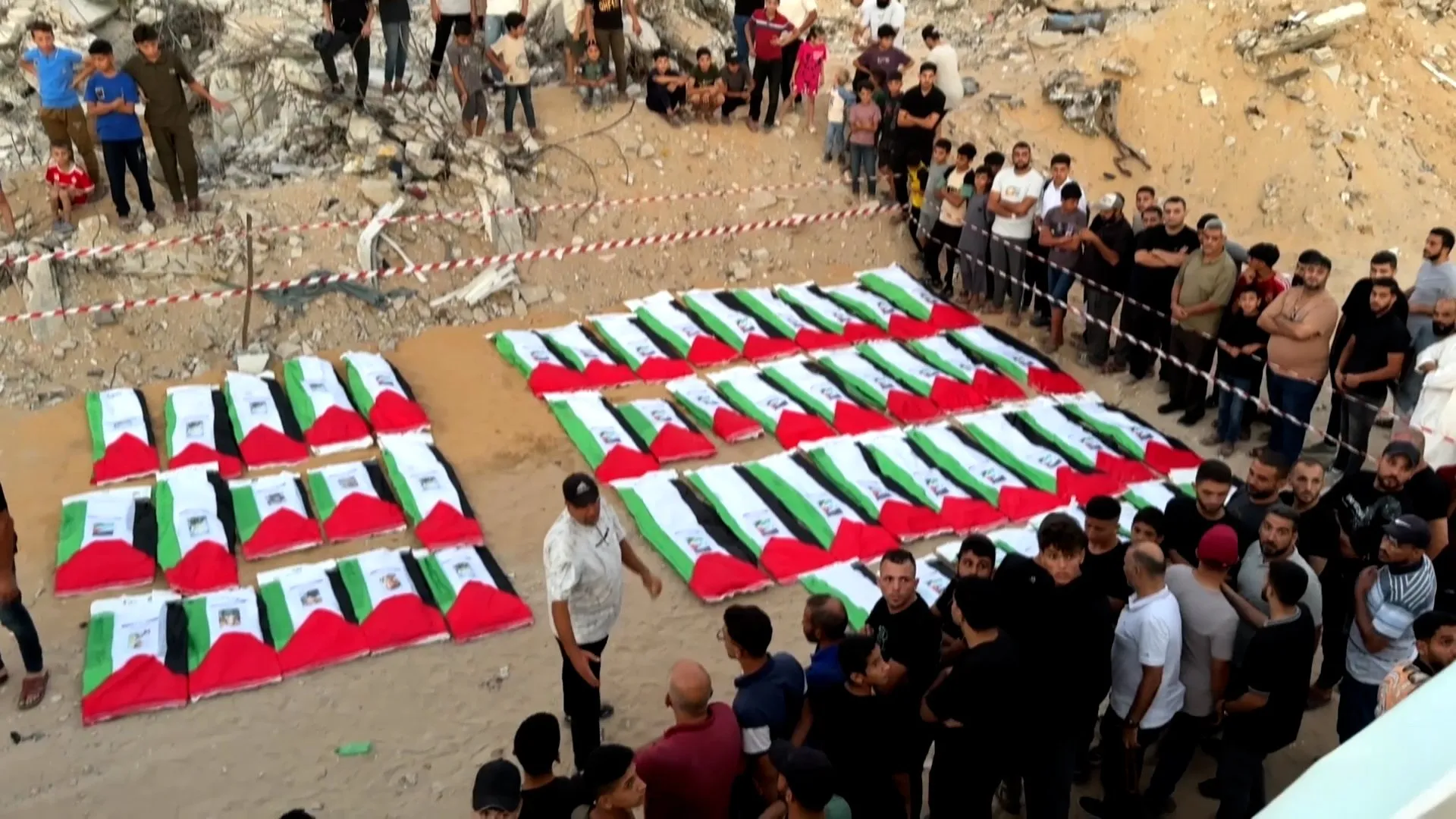
Palestinians are preparing to bury the remains of 105 people killed in a devastating Israeli attack on Gaza City in October 2023.
The victims were killed in a series of Israeli air strikes involving at least 20 bombs that levelled the seven-storey Al Taj 3 building and destroyed several other residential buildings in the Yarmouk Square neighbourhood on the afternoon of October 25, 2023.
Recommended Stories
list of 3 itemsend of list
Coffins containing the remains of those killed will be carried in a funeral procession involving family members on Thursday, the General Directorate of Civil Defence said.
The remains will be buried in the Sheikh Radwan cemetery, northwest of Gaza City.
Gaza’s civil defence said the recovery operation was carried out in coordination with an Egyptian committee.
Al Jazeera correspondent Ibrahim Khalili, reporting from Gaza City, said the recovery operation was the fifth largest of its kind since Israel launched its genocidal war against Palestinians in Gaza in October 2023, in terms of the number of bodies recovered.
Civil defence operations director Abdul al-Majdalawi said it had been “impossible” to reach the bodies at the time of the attack.
“Bulldozers, excavators and other heavy machinery used by civil defence teams in Gaza were directly and deliberately targeted,” he said.
Osama Sharaf said 37 members of his family were killed in the attack.
“We recovered some of them at the beginning of the war, and today [Wednesday] 16 more were recovered, including my father, my mother, and all of my siblings. My sister’s son was also there with them,” he said.
The bodies of 105 Palestinians have been recovered from the rubble of a residential block destroyed by Israel in the early part of its genocide on Gaza. The victims are being prepared for burial almost three years since the war began.
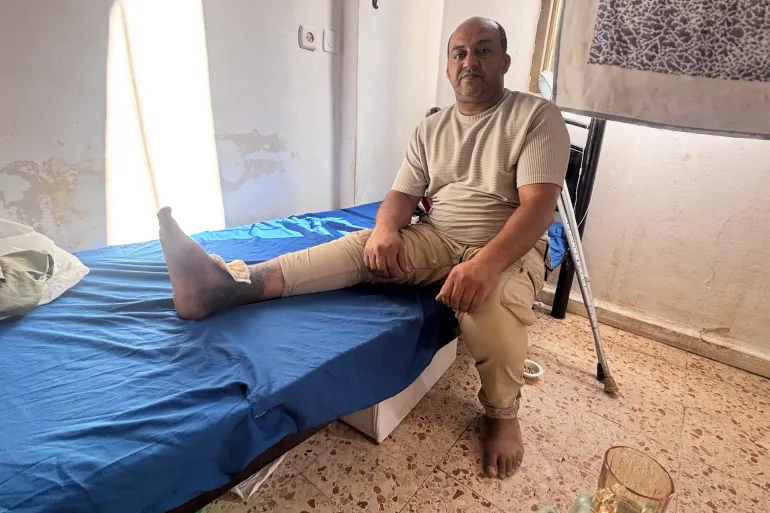
Tulkarem, occupied West Bank – Hakim Mar’i spends his days lying on a single bed, his disfigured leg raised. The windows of Mar’i’s dilapidated apartment, his latest temporary shelter, are covered with old blankets. Unable to work, Mar’i has no money for electricity, so the blankets have to do. At night, his family lives in near darkness.
The apartment is just around the corner from mounds of rubble and gnarled iron structures that mark one entrance to the now-emptied Tulkarem refugee camp. For Mar’i and other Palestinians, the camp was a home once considered temporary. But now, even the physical structure – their home – that tied those generations together is gone.
Recommended Stories
list of 4 itemsend of list
The apartment is just around the corner from mounds of rubble and gnarled iron structures that mark one entrance to the now-emptied Tulkarem refugee camp. For Mar’i and other Palestinians, the camp was a home once considered temporary. But generations lived there, and now, the physical structure – their home – that tied his family together over the years is gone.
Impoverished, Hakim’s family is in disarray. With its debts mounting and its members facing another eviction, he said he has considered taking his life several times over the past year and a half.
Mar’i cannot afford treatment for his debilitating leg injury, which has developed severe infections. He said he sustained it while working as a labourer inside Israel in 2019. The wound worsened after Israeli soldiers severely beat him when they forced his family from the Tulkarem camp. Diabetes and other untreated conditions have piled on, but he is unable to pay for the needed medical care.
“This joint here is completely gone,” he said, gesturing at the swollen, blackened lower leg that prevents him from working.
“The medicine – by God, the medicine, I haven’t been able to get. My wife and kids tell me: get out travel. Go to America, Turkey – so I can the medical treatment I need… I’m a sick man.”
His mother, Salwa, sat beside him, less than a kilometre (0.6 miles) from their former four-storey home. She wept when asked about the family home that was built floor by floor after they were first displaced in 1948 from al-Khudayra, the Arabic name for Hadera, a city in Israel. “We really put a lot into that house,” she said.
After their removal, the Israeli military razed the Mar’i home so a road traversing the now-emptied camp could be built. “Seeing it destroyed was really painful for us – all of us,” she said.
It has been more than 20 months since Israeli forces emptied the Jenin, Tulkarem and Nur Shams refugee camps in a sweeping military operation in the northern West Bank, displacing tens of thousands of Palestinians whose families had already been refugees for three generations. Constantly renewed orders for a closed military zone now prevent their return.
Since January 2025, Hakim’s family has been forced to move four times. First, they fled to a converted youth centre before landing in a cramped apartment with their four children, all under 15.
Unable to pay rent, the family could see the landlord’s generosity run its course as this once-temporary housing arrangement now has no end in sight. Hakim owes money at the local shops for food he bought on credit. Some nights, the children eat at neighbours’ houses.
“I have children. I have food. I have drink,” he said. “My hands are empty. Nobody is with me. Nobody is standing beside me.”
Hakim Mar’i in his family’s apartment with his injured leg, which prevents him from working [Al Jazeera]
‘We’re already at the brink’
The Mar’i family is among more than 33,000 Palestinians forcibly removed from the Jenin, Nur Shams and Tulkarem camps by Israeli forces in early 2025. This is the largest single episode of forced displacement in the West Bank since Israel’s occupation began in 1967, according to the United Nations agency for Palestinian refugees (UNRWA).
UN satellite imagery shows that 20 percent of all buildings across the three camps have been destroyed and another 28 percent are damaged.
“The level of destruction we are seeing is severe and unprecedented,” said Roland Friedrich, director of West Bank affairs for the UN agency for Palestinian refugees, UNRWA.
According to Friedrich, 85 percent of those displaced have no regular income after many lost jobs when the camps were emptied. More than 80 percent of residents are renting, an unfamiliar expense for families who never paid for housing or utilities inside the camps.
The closed military zone covering the camps is renewed every two months, Friedrich said, with no indication of when – or whether – residents will be allowed to return. “What we saw there is forced displacement,” Friedrich said. “The UN’s position is very clear: People have to be allowed to return. The camps must be rebuilt.”
Unlike after the 2000-2005 second Intifada when the Jenin camp was rebuilt, displaced families and UNRWA staff fear there is no return plan this time.
The Israeli military stated the camps were emptied for “operational security” in its effort to root out fighters from the camps. Friedrich worried the aim of the military operations is to “change the geographical expression of the Palestinian refugee issue”.
Now more than 20 months into what was meant to be an emergency response, funding shortages have left UNRWA unable to cover the vast needs of the displaced population. It has moved some operations to keep schools and basic health clinics functioning. With funds dwindling, the agency has shifted to a “targeted approach”, leaving thousands without support.
Friedrich pointed to a rise in gender-based violence linked to the economic strain on families and to growing depression and anxiety among displaced children observed by UNRWA’s psychosocial teams. “We’re already at the brink now,” he declared.
Members of the Zbeidat family sit on couches outside. The room they stay in is on the left [Al Jazeera]
‘Everyone went their own way’
While Hakim’s displacement plays out in the shadow of the camp, the family of Khadija Zbeidat face their own imminent eviction on the outskirts of Tulkarem. They live in the neighbourhood of Dhinnaba, where sparse houses are interspersed with greenhouses. They are unable to afford a residence closer to the city centre.
As Khadija sat on a couch in the middle of the yard, her many children and grandchildren ran past a small patch of plants she has planted – one of her few remaining joys. “I love plants,” she said. “We had many flowers in our home in the camp. Having the plants here is all I have to feel like myself,” she told Al Jazeera.
Khadija, a widow, shares a tiny spartan room with nine family members, nearly all children, along with a small bathroom and a kitchen barely big enough for one person to cook in. A worn couch takes up one corner. The ceiling is peeling above it.
The room was given to them rent free by a relative of Khadija’s brother-in-law after they spent four months crammed into her daughter’s house with nine other people. “It got really cramped, the pressure on each other,” Zbeidat said. “And we became a burden too.”
Khadija’s family was displaced in January 2025 from the Tulkarem camp’s Haret al-Nadi section, a significant part of which has been destroyed, she said.
“The camp was excellent,” she said of their life before. “I swear, I wish they’d take us back. Everything was close to us, dear – … the closeness, that sense of belonging and the warmth, the company and the neighbours.”
The memories that she cherishes most dearly and that bring her to tears are of food: the stuffed grape leaves and the maamoul cookies made as a neighbourhood together for Eid. This year, there was none of it.
“Nothing. No cookies,” she said. “Nobody even had it in them to do anything any more. Everyone went their own way – scattered.”
Like the Mar’i family and others, they were not allowed to bring their belongings during their abrupt displacement. Some residents have since been allowed to retrieve belongings once or twice from their homes in the camps, but much of what they own remains left behind. Khadija’s daughter-in-law at one point returned to the ruins of the camp – at the risk of being shot – to retrieve a doll left behind that Khadija’s granddaughter Sandy would not stop crying about.
In Tulkarem, displaced families live either in the poorest areas closest to the camp, like the Mar’is, or on the cheaper outskirts, like the Zbeidats, remaining close enough to the health and schooling services that UNRWA still provides. But even a simple trip to buy groceries requires Khadija, who has no car, to travel 2km (1.2 miles).
At night, the family sits outside rather than in the stifling heat of the poorly ventilated room, watching Israeli military drones pass low overhead. “What to do? We’re used to seeing them, to having them around, to them raiding houses,” Khadija said. “It doesn’t matter any more.”
The military raids that always haunted life in the refugee camps have now come to wherever the displaced refugees have fled to. “We don’t feel safe,” Khadija said. “Nor the kids. It’s dangerous. When they want to go out somewhere, my heart stays busy until they come back.”
The kitchen and bathroom the Zbeidats have are in the same room they sleep in [Al Jazeera]
Waiting to be kicked out again
For months after the displacement, landlords, relatives and shopkeepers absorbed much of the shock, allowing families to stay for free or buy food on credit. But as the emergency stretches to almost two years now, that informal safety net is fraying. The pressure is felt particularly in economically moribund Tulkarem, where many families had relied on jobs inside Israel before Palestinian work permits were revoked after the Hamas-led attacks in southern Israel and the start of Israel’s genocidal war in Gaza in October 2023.
The owner of the property where Khadija’s family is staying recently sent his sister to tell Khadija’s family to leave. “They think it’s been too long,” Khadija explained. “They want the land, to benefit from the land and the room. … But where can we get money, where to pay from? The rent is very high, and we can’t afford it. We don’t know what to do if she comes again and kicks us out.”
Hakim’s family is on the brink of eviction too. Like others, he received from UNRWA a one-time rental subsidy of 3,000 shekels ($985) and a separate 1,700-shekel ($560) multipurpose cash payment for short-term assistance. “Every minute, I am waiting for the landlord to kick us out,” he said.
Khadija’s family survives on credit from shopkeepers who know their situation and, for now, still extend it – but patience is wearing thin.
Hakim said this goodwill is collapsing: “You tell them: ‘Give me a day, two days. Be patient with me.’ They won’t bear it.”
As distant as a return to her family’s lands in 1948 feels now, Khadija still hopes to return to the camp one day. But she worries that her children may inherit an even more precarious existence than the one that preceded this latest dispossession – refugees for generations displaced yet again. “Only God knows what tomorrow will bring us,” Khadija said.
If you or someone you know is at risk of suicide, theseorganisations may be able to help.
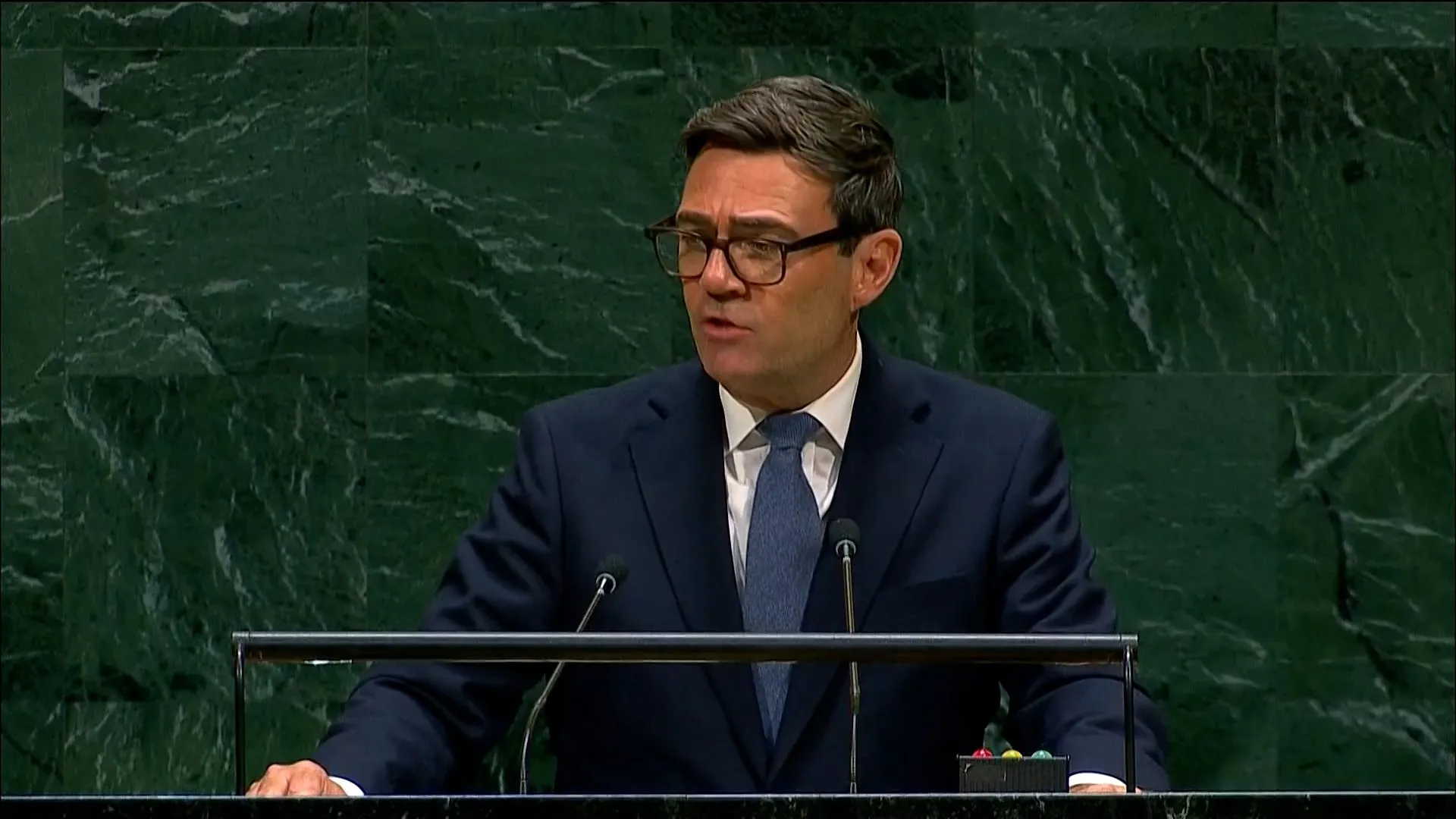
UK Prime Minister Andy Burnham condemned Israel’s genocidal war on Gaza during his UN General Assembly address. He also said continued Israeli military action had led the UK to impose sanctions on illegal Israeli settlements in Palestinian territory.
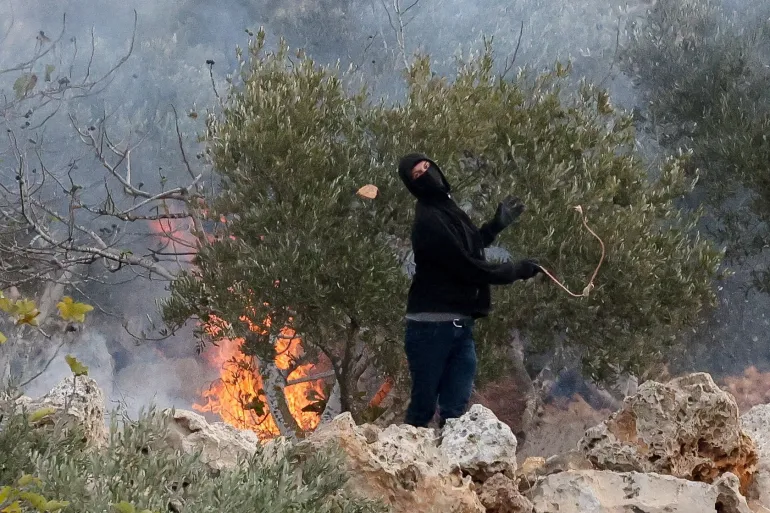
![An Israeli settler casts a stone towards Palestinians, next to a fire, amid clashes during Palestinians' olive harvest in Abu Falah near Ramallah in the occupied West Bank on October 16, 2026. [Ammar Awad/Reuters]](https://i0.wp.com/occasionaldigest.com/wp-content/uploads/2026/10/2026-10-16T075903Z_490381858_RC264OAWKT14_RTRMADP_3_ISRAEL-PALESTINIANS-SETTLERS-ATTACK-1792236497.j.webp?w=640&ssl=1)







![The view from Muhammad Ghawanmeh’s home in al-Awsaj, looking out towards an Israeli outpost on a hill in the background [Al Jazeera]](https://i0.wp.com/www.aljazeera.com/wp-content/uploads/2026/10/View-from-Muhammads-looking-out-towards-the-outpost-seen-on-hill-in-background-1791321948.jpeg?w=640&ssl=1)
![Jamal Mleihat with his daughter Sewar in al-Awsaj in the occupied West Bank [Al Jazeera]](https://i0.wp.com/www.aljazeera.com/wp-content/uploads/2026/10/Jamal-Mleihat-with-his-daughter-Sewar-1791322462.jpeg?w=640&ssl=1)


![Hakim Mar’i in his family’s apartment with his injured leg, which prevents him from working [Al Jazeera]](https://i0.wp.com/occasionaldigest.com/wp-content/uploads/2026/09/d9-1790406476.jpg?w=640&ssl=1)
![Members of the Zbeidat family sit on couches outside. The room they stay in is on the left [Al Jazeera]](https://i0.wp.com/occasionaldigest.com/wp-content/uploads/2026/09/s2-1790406485.jpg?w=640&ssl=1)
![The kitchen and bathroom the Zbeidats have are in the same room they sleep in [Al Jazeera]](https://i0.wp.com/occasionaldigest.com/wp-content/uploads/2026/09/s4-1790406489.jpg?w=640&ssl=1)