‘American Doctor’ review: Gaza from a medical perspective
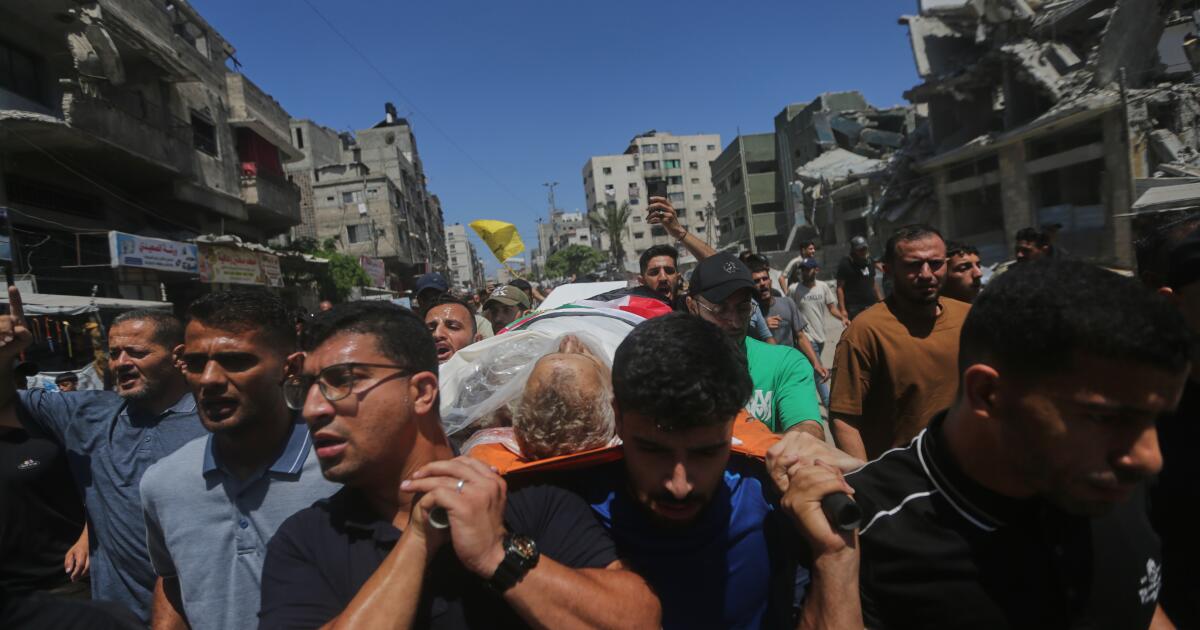
Most documentaries urge you to not turn away from the horrors they chronicle, but few make that request as explicitly as “American Doctor.”
Near the start of her despondent film, director Poh Si Teng spends time with Mark Perlmutter, a North Carolina surgeon who, like Teng’s other subjects, volunteers in Gaza, treating the many who have been severely injured in the ongoing Israeli-Palestinian conflict. Furious at the attacks on innocent Palestinian children, Perlmutter shows Teng photos of dead bodies. She says she may need to blur them for the movie. Perlmutter becomes indignant: “You’re not doing them a service by not showing them,” he says. “You have the responsibility, as I do, to tell the truth.”
Teng does reveal those stark faces and much more — not just the terrible human toll of Israel’s shelling of the Palestinian territories but also the strain on the doctors fighting to save lives while spreading the word about the atrocities they’ve witnessed.
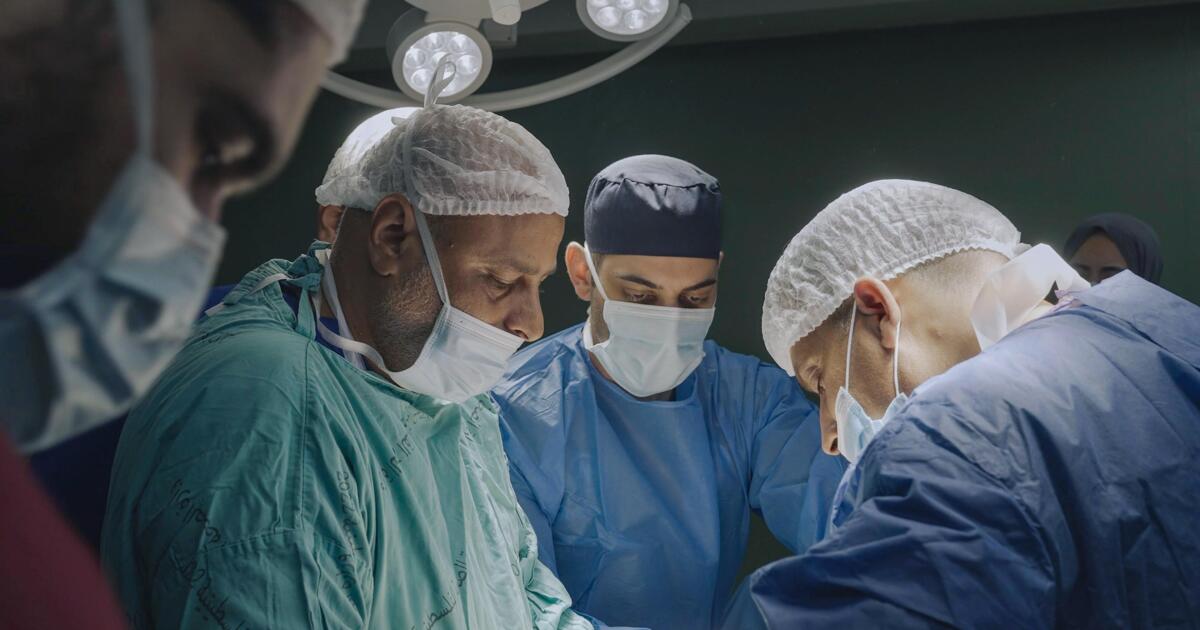
Perlmutter, who is Jewish, is one of three American physicians at the center of Teng’s documentary. The other two are Thaer Ahmad, a Palestinian, and Feroze Sidhwa, who is Zoroastrian. Each of them resides in the U.S. but is drawn to lending a hand at Gazan hospitals — that is, when they’re actually allowed entry into the region. (Because of Ahmad’s Palestinian heritage, he’s been barred by the Israeli government.) As part of their humanitarian efforts, Perlmutter and his colleagues go on Western media, such as CNN, to decry the conditions of the Palestinian people. They are often met with resistance, if not outright hostility. The casualties keep piling up, and nobody outside the walls of the hospital seems to care.
Teng, who produced the 2019 Oscar-nominated documentary short “St. Louis Superman,” a portrait of a local Black activist, once again ponders how much any one person can do to bring about change. She gracefully balances between a three-pronged character study and a larger examination of the unending war. We come to admire Ahmad, Perlmutter and Sidhwa, but Teng provides just enough shading so that subtle cultural tensions between the men start to emerge.
That strain is particularly evident during the bighearted but strident Perlmutter’s impolitic media appearances, in which he brandishes impassioned criticism of Zionism that angers the Palestinian Ahmad. “We’ll be guilty by association and we’ll just get crushed for it,” he worries. It’s a documentary with a paucity of inspirational moments. Teng and her subjects are embedded in a world of tough choices and grim conditions.
With Ahmad largely sidelined in the U.S., though still advocating for the Palestinian people, Sidhwa ultimately becomes “American Doctor’s” most striking figure. Armed with an eloquent, righteous fury, he speaks to journalists with a stirring moral authority. Teng mostly avoids on-camera interviews with her subjects, preferring to watch them interacting with patients or in the operating room. In the process, we come to know Sidhwa, who projects a calm confidence, even when he’s nearly killed by a missile.
But his self-assurance is intriguingly undercut during an unguarded exchange in which he acknowledges that no prospective romantic partner has been comfortable with his desire to keep returning to Gaza. “I think I’m just probably a hard person to get along with,” he admits, laughing. “I wish I could blame the fact that no woman can put up with me on the Israel-Palestine conflict, but I don’t think that’s the issue.”
There are myriad ways to document the violence in Gaza, and it’s telling that Teng includes only a very brief news clip of President Trump and Israeli Prime Minister Benjamin Netanyahu, the phantom figures hovering far above the film’s unfolding tragedy, even though they are among its chief architects. Instead, “American Doctor” focuses on the micro, giving voice to the doctors and caregivers who traditionally have been spared during armed conflicts, as laid out by the Geneva Conventions. In defiance of such norms, though, Israel’s government seems to be targeting hospitals, creating psychic wounds alongside mass casualties.
A closing text card indicates that more than 1,700 healthcare workers have died in Gaza, laying culpability at the feet of Israel and the United States. But it’s a testament to the physicians featured in “American Doctor” that none of them would suggest that this is the greatest crime occurring in the region. We observe them lamenting how powerless they feel: Their medical skills can do some good, but not nearly enough. And when they reluctantly return to America, they agonize over their guilt at not being able to do more — and what of Gaza will remain when they eventually get back.
‘American Doctor’
In English, Arabic and Hebrew, with subtitles
Not rated
Running time: 1 hour, 31 minutes
Playing: Opens Friday, Aug. 21 at Laemmle Royal