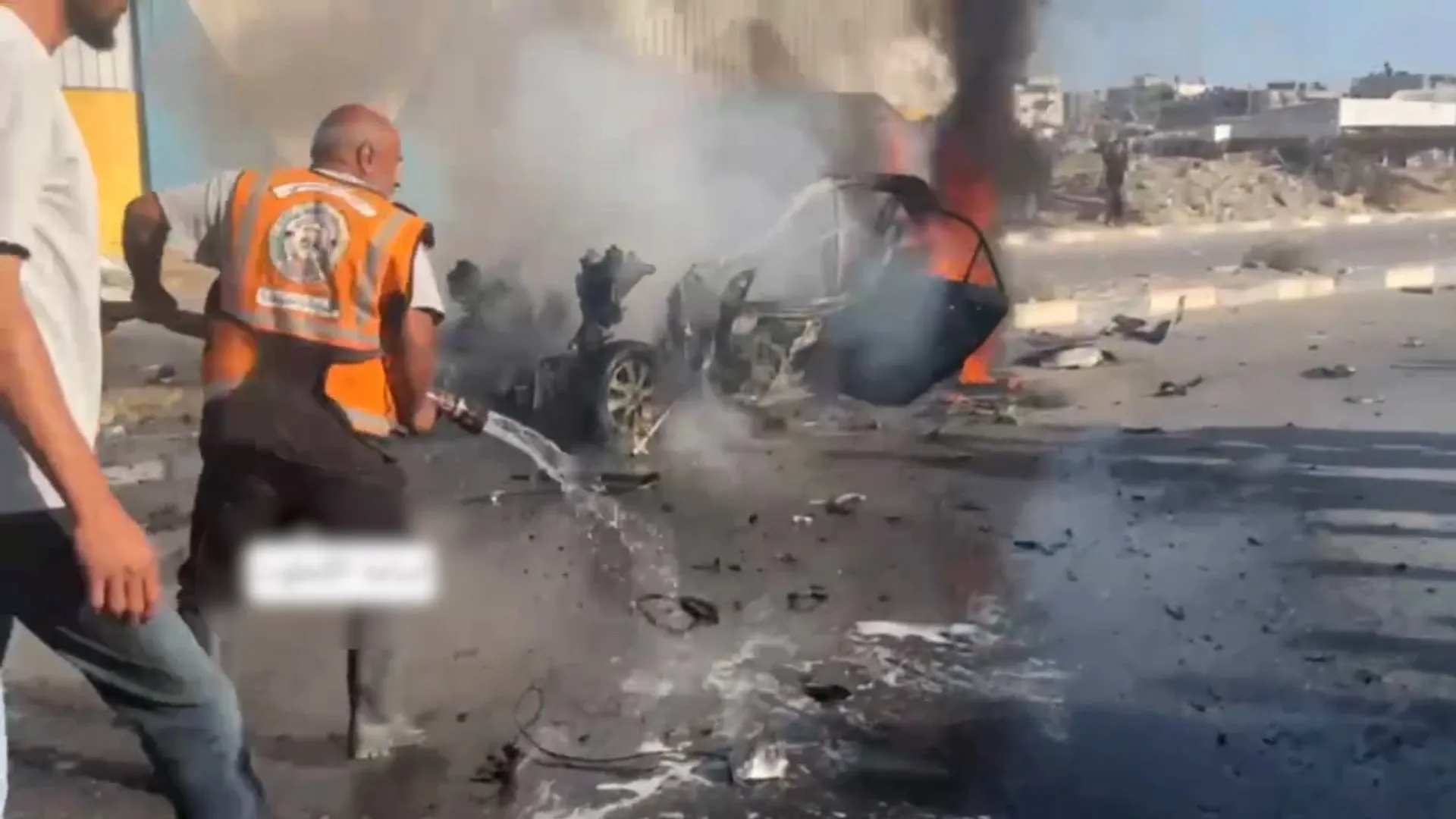
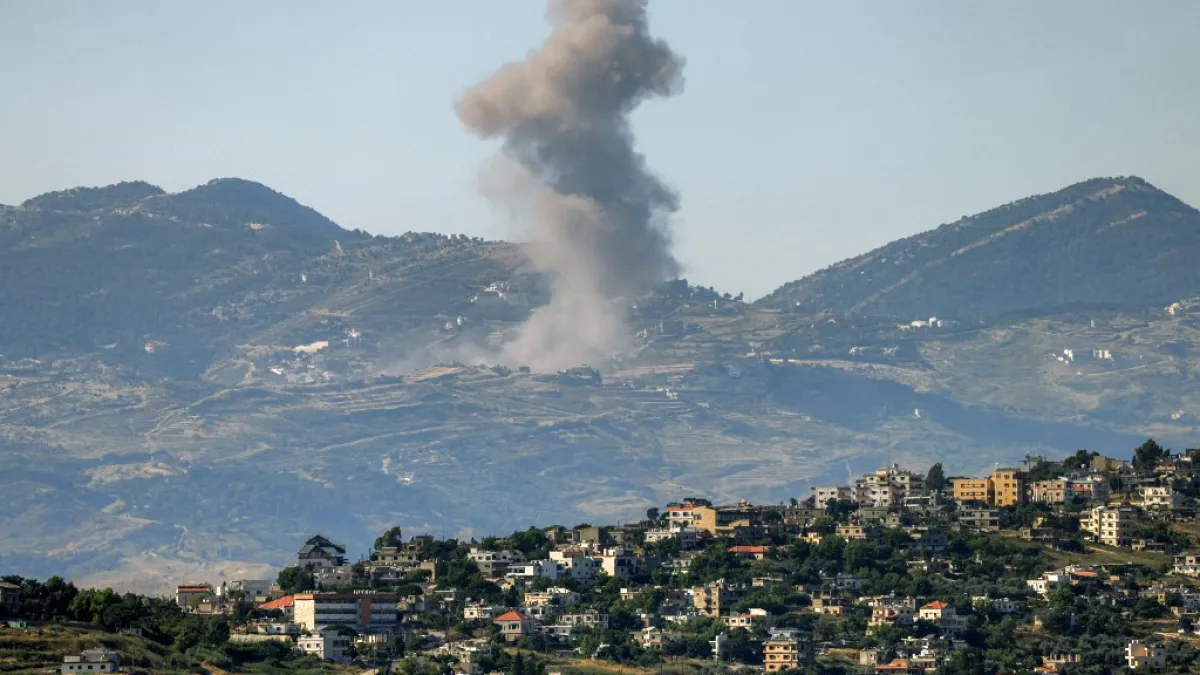
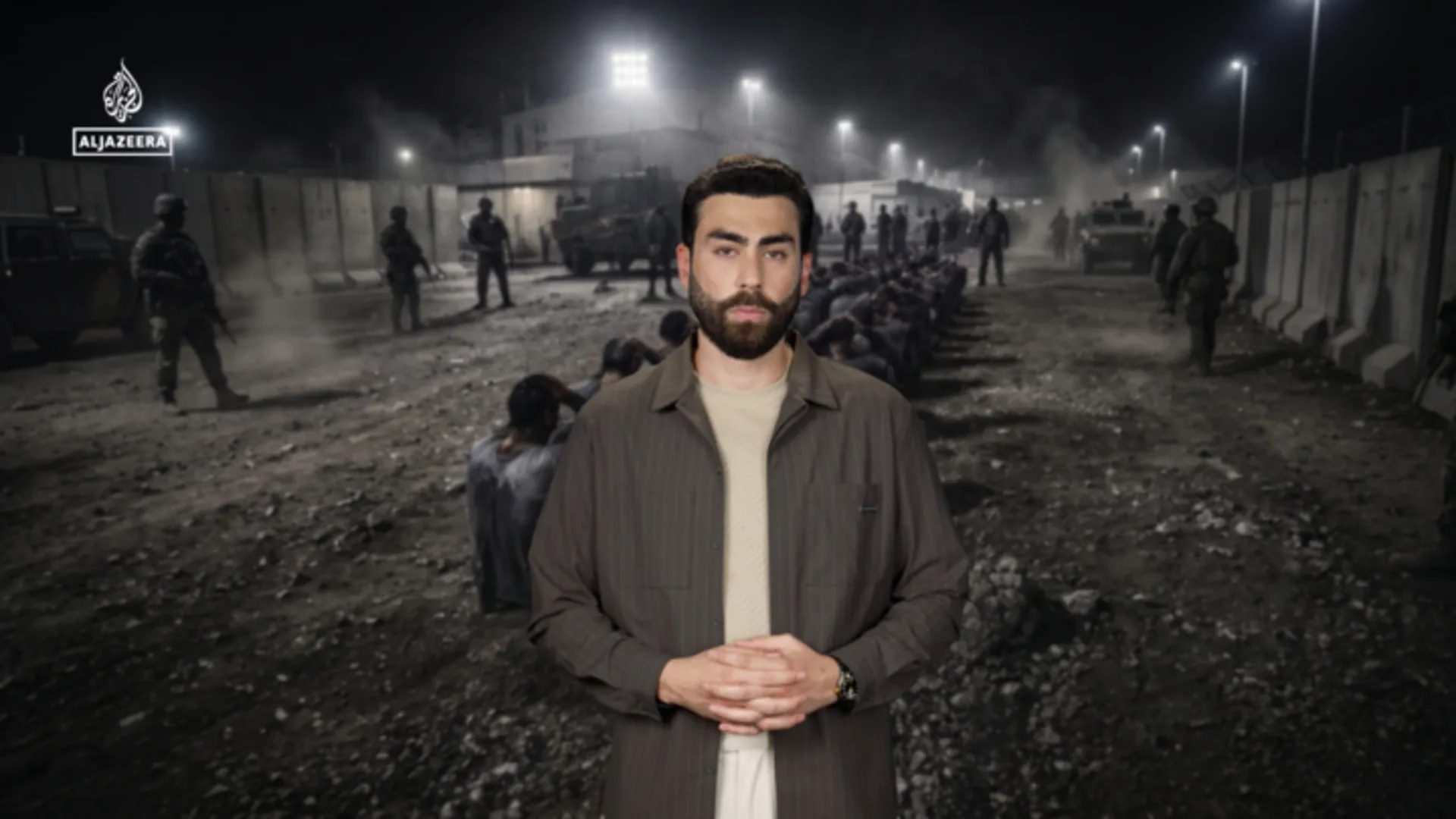
Israel bombed a car near the Maghazi refugee camp in central Gaza. As one of the men escapes, Israeli forces strike again. Double tap attacks are widely considered to be war crimes.
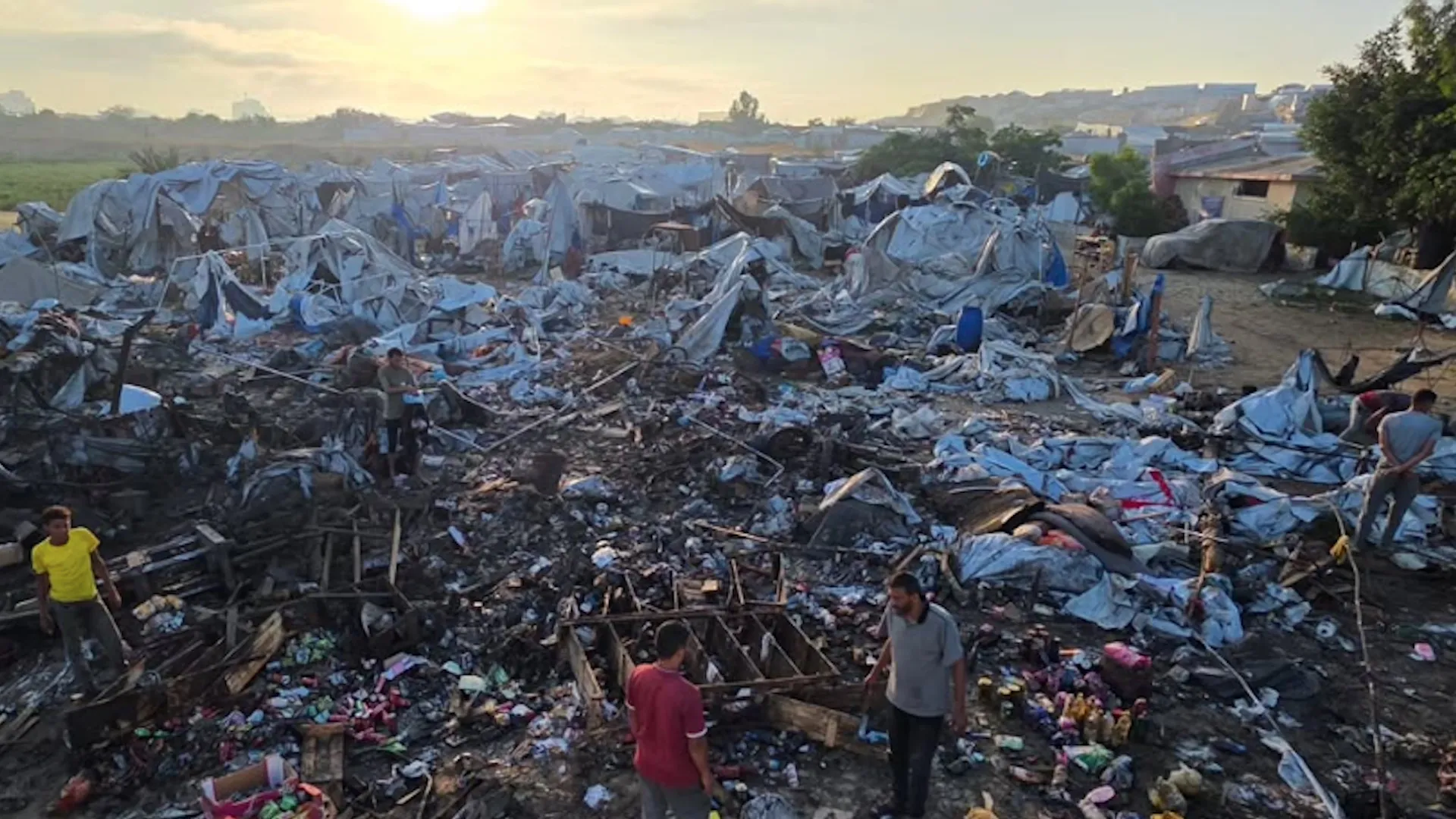
An Israeli attack on the al-Mawasi camp in Khan Younis has killed several people, including a mother and her child. More than one hundred tents belonging to displaced Palestinians were also destroyed.
The strike in Deir el-Balah is the latest Israeli attack amid ongoing ‘ceasefire’ violations.
Published On 29 Jun 202629 Jun 2026
At least three people have been killed in an Israeli air strike in Deir el-Balah in central Gaza, health authorities say.
An eight-year-old and two men were killed in Monday’s attack, and several people were wounded, Al-Aqsa Martyrs Hospital said.
Recommended Stories
list of 3 itemsend of list
The strike occurred near Wadi Salqa Bridge on al-Baraka Street. The Palestinian news agency Wafa named those killed as Ali Fayez Isbaitan, Hassan Salman al-Hanajra and eight-year-old Malik Wael Abu Shaweesh.
Israeli military vehicles also advanced on Salah al-Din Street in the Nuseirat refugee camp, also in the central Gaza Strip, amid gunfire and shelling, Turkiye’s Anadolu news agency reported. Two people were reported injured by shelling in Beit Lahiya in northern Gaza.
Despite the “ceasefire” that came into effect in October, Israeli forces continue to carry out strikes on the enclave.
Israeli attacks killed at least four Palestinians in Gaza on Sunday, including a 13-year-old girl, and wounded several.
Ongoing violations
Gaza’s Government Media Office reported that 1,045 Palestinians have been killed since the “ceasefire” took effect and 3,380 have been injured. It has documented 3,465 Israeli violations of the agreement.
“We strongly condemn the occupation’s systematic policies of targeting and destroying the Palestinian people,” it said.
It called on the mediators and parties sponsoring the “ceasefire” to compel Israel to implement all of its terms and “immediately cease its ongoing violations”.
The Palestinian Ministry of Health said on Sunday that a total of 73,054 Palestinians have been confirmed killed and 173,480 injured since Israel launched its genocidal war against Palestinians in Gaza in October 2023.
Also during the “ceasefire”, the Israeli military is continuing to expand the area it is occupying inside the Strip and to issue forced displacement orders. It says Palestinians are not allowed to approach the Israeli-occupied area beyond the “Yellow Line”, which encompassed 53 percent of Gaza’s territory at the start of the ceasefire and had increased to 64 percent by March.
Anadolu reported that Israeli military vehicles have moved the “Yellow Line” markers about 150 metres (165 yards) to the west in central Gaza.
Israeli Prime Minister Benjamin Netanyahu has called for Israeli forces to occupy 70 percent of the Strip.
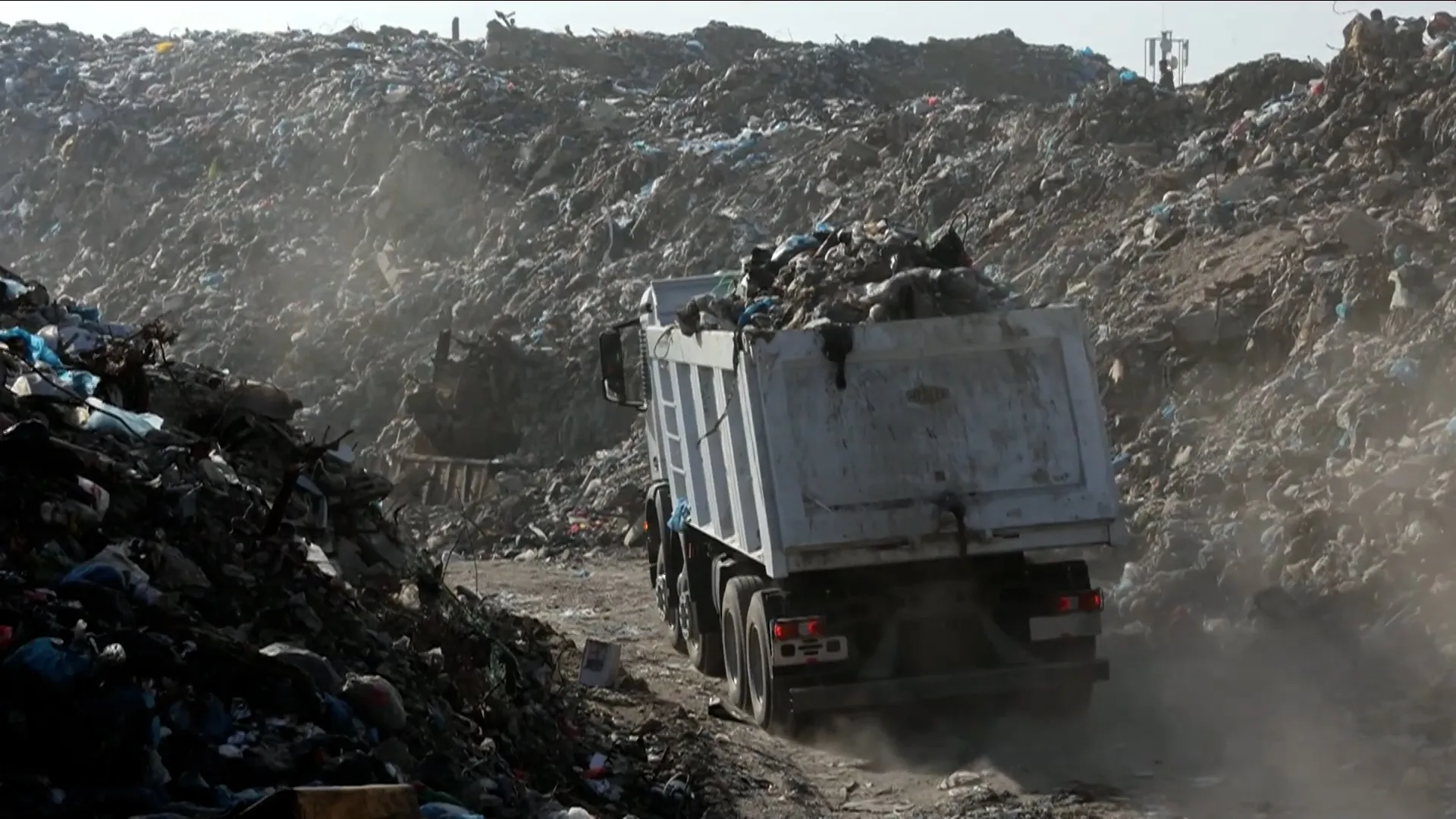
Rats are invading displacement camps across Gaza, where piles of garbage, overflowing sewage and overcrowded shelters are worsening a public health crisis. Doctors report more severe skin diseases as families struggle without proper sanitation or adequate medical care.
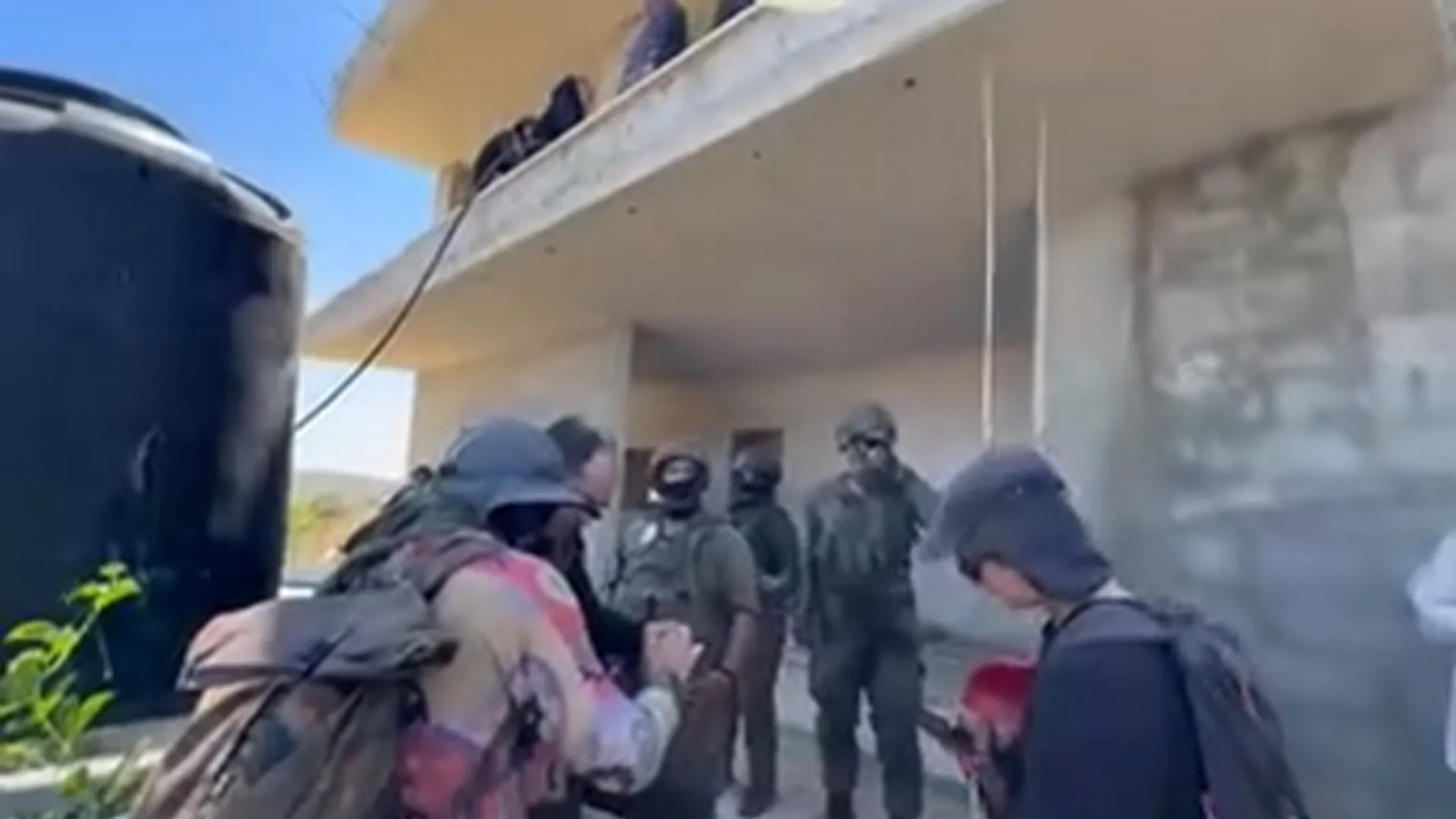
Videos show Israeli settlers, protected by Israeli soldiers, trying to seize a house under construction on the outskirts of the town of Qabalan, just south of Nablus, in the occupied West Bank.
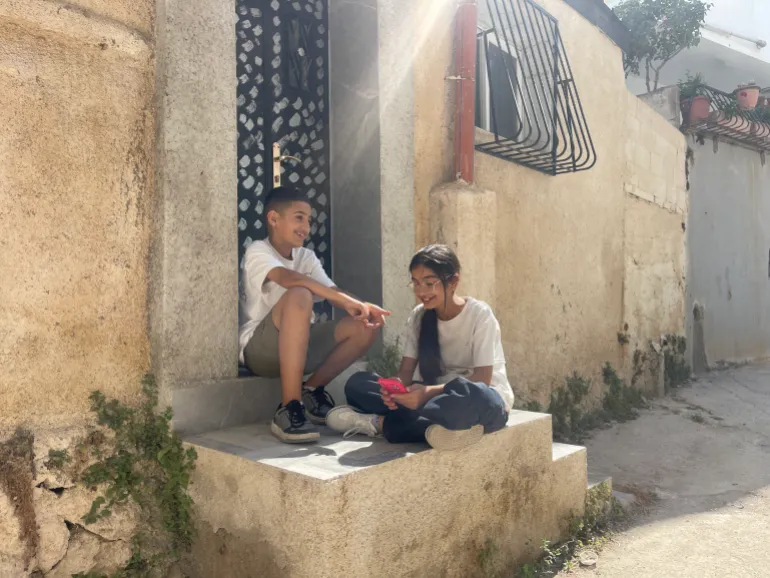
Bethlehem, occupied West Bank – In the narrow alleyways of the Dheisheh refugee camp, three children debate which of their encounters with the Israeli military is worth telling, and who gets to tell it.
Yanal, 14, wins the opening round on language skills alone. He speaks three languages: Arabic, English and Spanish, and insists on telling his story in English.
Recommended Stories
list of 3 itemsend of list
“Life in the camp is complex,” he says, because, as he explains, there is nowhere to run away to when the army comes.
Yanal keeps returning to one memory: a football match, soldiers entering the field, and there being no way out.
Mustafa Abu Aliyah, 13, counters with a raid that he ran into as he was on his way to his grandfather’s house. The Israeli army fired live rounds and tear gas, he says. “We were in the middle of the fire.”
He can’t remember his first encounter with soldiers, “but I definitely saw them when I was little, because they are always coming here”.
His sister Diyar, 12, was mid-piano lesson the last time the army came through.
“Whenever the army comes, there will be tear gas,” she says. “People will be beaten. There’s usually someone injured or killed.”
She compares it to life elsewhere. “I see children in other countries, in other worlds, living in safety, but we can’t even leave our front door without suffering.”
The raids happen so often that the children often can’t remember the dates of specific incidents. But what they do remember is the fear they experienced and the aggression displayed by the Israeli soldiers.
In the first nine months of 2025 alone, Israeli forces carried out nearly 7,500 raids across the occupied West Bank, or about 27 a day, and a 37 percent increase compared with the same period in 2024.
‘Essence of childhood destroyed’
The children in the Dheisheh refugee camp reflect a wider pattern of childhood experiences under Israeli occupation, set out in a report the UN’s Independent International Commission of Inquiry on the Occupied Palestinian Territory released on Tuesday.
It examines Israel’s treatment of Palestinian children in Gaza and the occupied West Bank since October 2023.
Titled, “The essence of childhood has been destroyed”, it found that Israeli forces have killed at least 20,179 Palestinian children and wounded more than 44,000 across the occupied territory, most of them in Gaza – where it said that the deliberate targeting of children constituted part of the genocide in the Palestinian territory.
The report also documents a pattern of killings, mass arrests, torture, sexual violence and attacks on schools and hospitals.
In the West Bank, it records a sharp rise in settler violence against children and killings by Israeli forces, among them a two-year-old girl shot dead in January 2025. Children, the report notes, are held in Israeli detention, with no lawyer and no word sent to their parents, a separation it says can amount to enforced disappearance. Schools, too, are targets: 85 across the West Bank are under demolition or stop-work orders, and others have been closed or attacked by soldiers and settlers.
Mustafa Abu Aliyah, 13, and his sister Diyar, 12, sit in the alleyways of Dheisheh refugee camp in the occupied West Bank [Leila Warah/Al Jazeera].
Beyond the casualty count
The UN commission argues that Israel has created conditions in which Palestinians live in a constant state of “diffused, ambient terror, that does not require constant bombing to remain effective”.
“We are talking about repeated shocks, about continuous events that never end,” says Lemis Farraj, a psychologist and the project coordinator at Shorouq in Dheisheh, emphasising that a child’s physical and mental health cannot be separated from each other.
The report calls this continuous traumatic stress, distinct from Post-Traumatic Stress Disorder (PTSD), because there is no single event to recover from. The danger does not just come from experiencing one raid, but from the fear that comes with waiting for the expected raids that will likely come in the future.
Diyar explains that when the army enters her neighbourhood, she has to stay home and wait, no matter what her plans were. “Our life stops,” she says.
Her brother, Mustafa, says that the repetition has worn the fear flat.
“When I see the army, I [am] used to it and I stop being afraid.”
Farraj sees the same in the young children she treats: a startle at an ordinary sound, certainty that a raid has begun, and regression – skills already learned suddenly lost again.
Five-year-old Khour Hammad, who lives a few alleys away from the older children, has experienced the same raids.
She explains that both of her parents are in prison. Israeli forces arrested her father in July 2023 and her mother last March, according to the family.
Khour remembers the night the army came for her mother. Half-asleep, she heard a man’s voice and thought her father had finally come home. She climbed out of bed expecting him. Instead, she found soldiers inside the house.
The soldiers tried to question Khour. She says that she “felt like I was going to throw up”.
Handed an old family photo, she brightens at once, pointing out her mother, Islam Amarna, and her father, Osama Hammad, and rattling off memories in bursts.
Khour Hammad, 5, stands on a rooftop overlooking Dheisheh refugee camp in Bethlehem, in the occupied West Bank. Both of her parents have been arrested by Israeli forces [Leila Warah/Al Jazeera].
Generational trauma
While Palestinian children in Gaza and the West Bank face different lived experiences, the UN finds the same cause behind the harm: a military occupation described as a “long-term mechanism of domination, subjugation and oppression”.
Farraj adds that children are affected not only by their own experiences of trauma, but also by what is passed down from parents and grandparents.
“The first generation of the Nakba lived in shock and passed it on to their children,” she says, referring to the ethnic cleansing of at least 750,000 Palestinians following the formation of the state of Israel in 1948.
The report similarly notes that Palestinian refugees, now in their fifth generation, have internalised a sense of “dispossession from the Nakba” alongside present-day experiences of occupation.
In the West Bank, roughly one in four Palestinians are refugees; in Gaza, it is about 70 percent.
Israeli violence and forcible displacement have been carried through generations of Palestinians, compounding as the cycle repeats. Farraj says trauma recovery depends on stability: family support, schooling, safe spaces and a predictable routine, all of which remain precarious under Israel’s occupation.
For Khour, that stability begins with her parents.
“I want the whole world to listen and see my picture,” Khour says, “and get my mom and dad out of prison.”
In the early hours of another day of Israel’s genocidal war on Gaza, 20-year-old Hamza al-Ghazali, who lives in the Zeitoun neighborhood south of Gaza City, set out once again in search of an insulin pen.
It was not the first time he had moved between pharmacies and medical centres, looking for a dose. The effort has become a recurring part of his life since the outbreak of war in October 2023 and the tightening Israeli restrictions on the entry of medicines and medical supplies into the Gaza Strip.
Recommended Stories
list of 3 itemsend of list
Hamza knows that delaying an insulin dose is potentially life-threatening. Type 1 diabetes requires strict daily treatment and continuous monitoring. However, under war and blockade conditions, managing the disease has turned into a daily, high-risk struggle.
A Palestinian pharmacist handles medicine as medical supplies run critically low, according to the World Health Organization, at Al-Ahli Arab Hospital in Gaza City, March 8, 2026 [Dawoud Abu Alkas/Reuters]
Hamza recalls how his health condition was more stable before the war. He used to obtain insulin from pharmacies at prices ranging between 25 and 35 shekels ($8.5 and $12) per pen, sometimes even less.
“I started to know all the pharmacies, and they also knew me, because I was always buying insulin pens,” Hamza says.
But this changed drastically with the war and the tightening of restrictions on the entry of medical supplies. The price of a single insulin pen rose to between 75 and 100 shekels ($25 and $34), and, as Hamza needs six to seven pens per month, he was forced to try to extend the use of each pen for as long as possible.
Insulin injections used in the treatment of Type 1 diabetes, essential for regulating blood glucose levels [Lina Ghassan Abu Zayed/Al Jazeera]
Fight for survival
The suffering of diabetes patients in Gaza extends to restrictions on the entry of medicines through border crossings, measures that have led to a severe shortage of insulin, glucose metres, and test strips.
Hamza notes that this shortage has created an unstable medical reality, where, in some cases, medicines that may have been stored for long periods or in improper conditions appear on the market, raising concerns about reduced effectiveness or uncertain quality due to the lack of alternatives.
A year ago, when an Israeli blockade on the entry of food led to a famine in northern Gaza, Hamza was forced to eat anything he could find.
But for Hamza, it wasn’t just about securing enough nutrition for his body, but also about finding the right balance between the insulin he had access to and the food he could find.
If he ate more without sufficient insulin doses, then he could have dangerously high blood sugar levels. If he reduced his food intake out of fear of running out of insulin, then that could result in severe and potentially fatal hypoglycemia (low blood sugar).
“I was afraid for myself during the shelling in northern Gaza,” said Hamza. “We were under siege. If the house was bombed, I might survive under the rubble, but die from low blood sugar. And if I ate without insulin, my sugar could rise dangerously. I was living between two fears all the time.”
He adds that the fear was not only about losing insulin, but also about losing glucose metres and test strips, which he relies on daily to monitor his condition. Every time he was forced to evacuate, the first thing he would carry was his “diabetes bag”.
Hamza al-Ghazali often struggles to find insulin in Gaza [Lina Ghassan Abu Zayed/Al Jazeera]
Equipment shortages
Glucose test strips have been in short supply, limiting Hamza’s ability to monitor his blood sugar levels on a daily basis and forcing him to rely on judging his physical symptoms.
Hamza notes that the cost of a glucose metre ranges between 250 and 300 shekels ($85 and $120), but the real problem lies in the availability of test strips.
Without them, the device becomes useless, forcing some patients to repeatedly buy new devices. Hamza estimates that more than 80 percent of diabetes patients in some areas are unable to test their blood sugar regularly, which he describes as a “medical disaster”, as it turns treatment into daily guesswork.
According to data from the Palestinian Ministry of Health in Gaza, between 70,000 and 80,000 diabetes patients in the Palestinian enclave are at risk due to the severe shortage of insulin and test strips, in addition to the collapse of medical follow-up services and poor nutrition.
Medicine shelves at Al-Ahli Arab Hospital as medical supplies run critically low [Dawoud Abu Alkas/Reuters]
Endocrinology and diabetes specialist Dr Adli al-Ghouti notes that about 2,500 children in Gaza are living with Type 1 diabetes, and are in a highly critical health condition.
As a result of insulin shortages, a lack of proper storage conditions, and power outages, a real crisis is unfolding.
Al-Ghouti warns that the deterioration of insulin quality, the expiration of the stock available in Gaza, and improper storage can all reduce effectiveness, creating a false sense of security while blood sugar levels remain uncontrolled, potentially resulting in severe complications such as diabetic ketoacidosis, a life-threatening emergency condition.
“Taking an expired dose of insulin may cause significant harm inside the body, while giving a temporary impression of improvement,” Dr al-Ghouti said.
Diabetes is therefore no longer a condition that can be managed easily in Gaza. Between the shortage of insulin, a lack of testing tools, rising prices, and deteriorating nutrition, even the simplest aspects of treatment turn into a daily struggle for survival.
A United Nations commission of inquiry has accused Israel of systematically targeting Palestinian children in the occupied Palestinian territory, saying Israeli actions amount to genocide, war crimes and crimes against humanity in Gaza and war crimes in the occupied West Bank.
In a report released on Tuesday, the commission said about 30 percent of those killed in Gaza since Israel’s war began in October 2023 were children, and that attacks on maternity and neonatal units, along with an aid blockade, have devastated children’s chances of survival.
The commission says Israeli forces have destroyed orphanages and schools, and Palestinian children have been arbitrarily arrested, tortured and subjected to sexual abuse in detention. It warns that killings and serious injuries have continued even after the October 2025 “ceasefire”, in defiance of international law.
UNICEF estimates more than 50,000 children have been killed or wounded since the war began, with at least one Palestinian child killed on average every day in the eight months since the October “ceasefire” took effect.
These images document the lives and losses of Palestinian children in Gaza and the West Bank as they struggle to survive bombardment, displacement and imprisonment – and to hold on to a future that is being systematically stripped away.
Israel is pushing humanitarian groups and rights defenders to scale down operations in Palestinian territories.
Published On 22 Jun 202622 Jun 2026
Children are “increasingly unprotected” as humanitarian groups and rights defenders are forced to scale back their operations in the Palestinian territories, the United Nations has warned.
Many civil society and aid organisations in Gaza and the West Bank have been labelled “terrorists” by pro-Israel groups or politicians, the UN Committee on the Rights of the Child warned in a statement issued on Monday, noting that their absence leaves children vulnerable.
Recommended Stories
list of 4 itemsend of list
“For more than three decades, these organisations have played a vital role in defending Palestinian children, including in the Israeli military courts, and in documenting grave violations against Palestinian children at the hands of Israeli forces,” the committee said.
“Without them, Palestinian children will be even less protected, and violations of their rights risk continuing with impunity,” it added.
Issued by the Office of the United Nations High Commissioner for Human Rights (OHCHR), the statement noted that tactics used to delegitimise these human rights groups also include “military raids, travel bans, personal financial sanctions, threats of arrest, destruction of records, and even threats of secondary sanctions against partners who support their work”.
The committee said this made it “increasingly impossible for these organisations to operate safely or protect the children and families who turn to them for help”.
The committee urged the international community to hold Israeli authorities accountable for the attacks committed against Palestinian human rights defenders.
It urged the Israeli authorities to lift the restrictions faced by humanitarian individuals and groups.
“Despite grave risks and limited resources, child rights defenders have continued to stand with Palestinian children and families in extraordinarily dangerous conditions. They must be protected, not punished,” the committee said.
Israel has cracked down significantly on humanitarian operations in Gaza since the “ceasefire” that began on October 10, banning Doctors Without Borders, known by its French acronym MSF, after it failed to provide a list of its Palestinian staff, further depriving Palestinians in the besieged enclave of life-saving assistance.
In February this year, 17 international aid groups petitioned Israel’s Supreme Court to be allowed to keep working in the Gaza Strip and other areas in the occupied Palestinian territory. The Israeli government has planned to halt their life-saving work.
The occupied West Bank has seen sustained and rising violence amid ongoing conflict between Israelis and Palestinians. Israeli forces conduct frequent raids in Palestinian areas, saying they are targeting militants and preventing attacks, while Palestinians and rights groups accuse the military of using excessive force and say settlement expansion is a major driver of instability. Israeli settlements in the territory are widely considered illegal under international law by the United Nations and most countries, though Israel disputes this and views the West Bank as disputed land with historical and security significance. In recent months, tensions have further escalated with increased restrictions on Palestinian movement near settlements, alongside a rise in attacks by both Palestinians against Israelis and by settlers against Palestinians, contributing to a cycle of violence that continues to claim lives on both sides.
Fatal Shooting Near Beit Ummar
The incident took place near the town of Beit Ummar in the southern West Bank.
Palestinian news agency WAFA identified the victims as teenagers aged 15 and 19. A relative confirmed their ages to Reuters.
Israeli Military’s Account
The Israeli military said its forces confronted three individuals who were throwing fire bombs and burning tyres near the settlement of Karmei Tzur.
According to the military, soldiers opened fire, killing two of the individuals and wounding a third.
Reuters could not independently verify the military’s account.
Third Teenager Hospitalized
WAFA reported that the third person involved in the incident was hospitalized in stable condition.
The Palestinian Red Crescent Society said the wounded individual is 15 years old.
Tensions Remain High in the West Bank
Israeli forces regularly conduct raids across the occupied West Bank and have tightened movement restrictions around Palestinian communities located near Israeli settlements in recent months.
The territory has experienced heightened tensions amid ongoing violence involving Israeli security forces, settlers and Palestinians.
Dispute Over Settlements
The international community, including the United Nations and most countries, considers Israeli settlements in the West Bank illegal under international law and a major obstacle to the creation of a Palestinian state.
Israel rejects that position, describing the territory as disputed and citing historical Jewish ties to the area.
Rising Violence
According to United Nations data, at least 57 Palestinians have been killed this year in incidents involving Israeli settlers and security forces.
At the same time, Palestinians have carried out attacks against Israeli soldiers and settlers in the West Bank, including at least one fatal attack in 2026, according to Israel’s Shin Bet domestic security service.
What’s Next
The Israeli military is expected to continue reviewing the circumstances of the shooting, including whether the individuals posed an immediate threat and how the confrontation unfolded near the settlement.
Palestinian officials are likely to pursue diplomatic and legal avenues, as similar incidents in the West Bank are often raised with international bodies, including the United Nations, amid ongoing disputes over the use of force by Israeli troops.
On the ground, the incident is likely to add to already high tensions in the West Bank, where Israeli raids, settlement activity, and Palestinian attacks have contributed to a cycle of violence in recent months.
Further clashes cannot be ruled out, particularly in areas close to settlements where movement restrictions and security operations have intensified.
International attention on West Bank violence is also likely to continue, especially as reported fatalities involving Palestinians and Israelis have remained elevated this year, keeping pressure on both sides amid an already fragile security situation.
Al Jazeera cameraman Ahmed Wishah dedicated his life to documenting the voices of his people, showcasing their grief, displacement, survival and resilience under Israel’s genocidal war on Gaza, before he was killed by an Israeli attack.
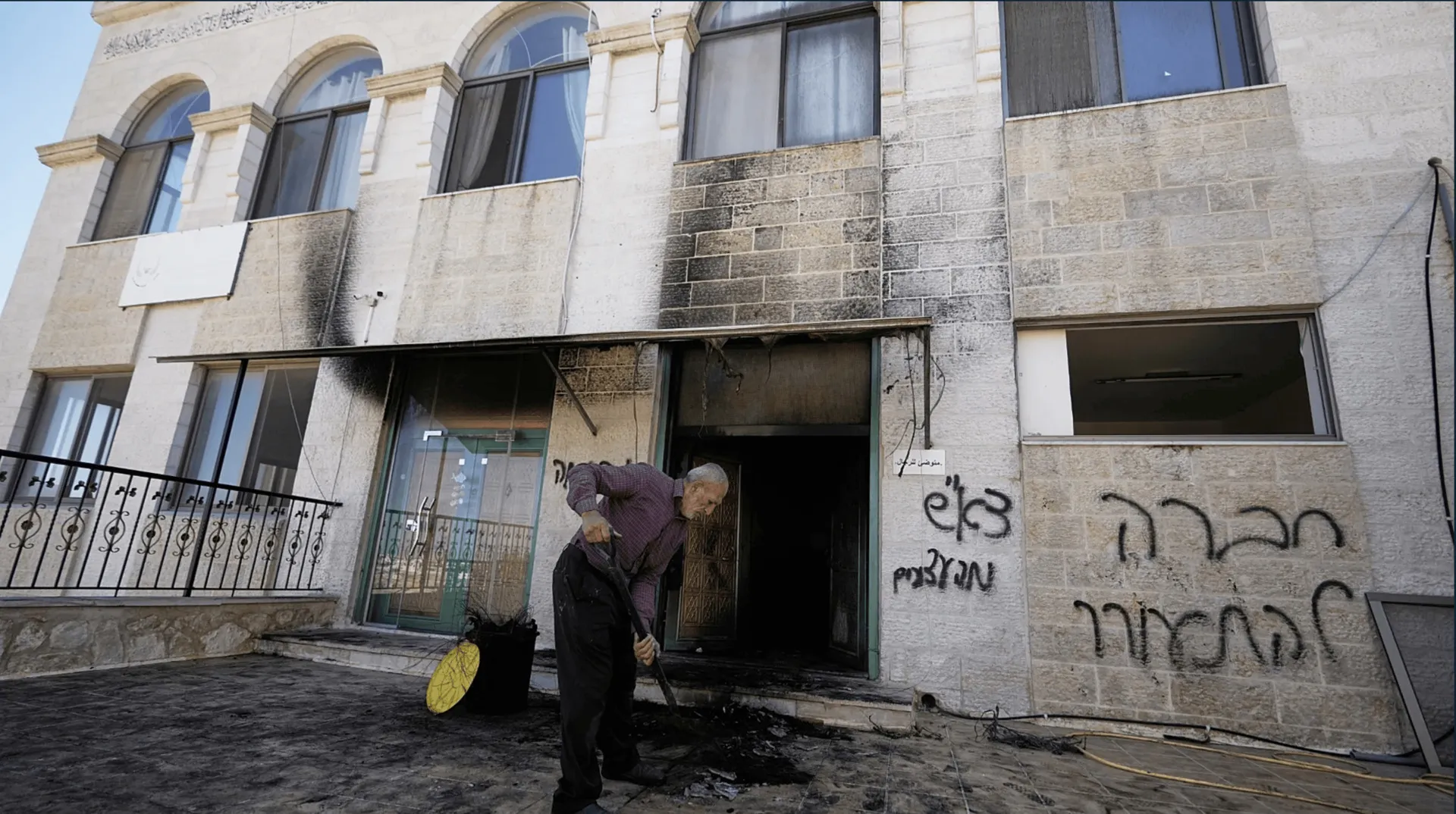
Israeli settlers have vandalised and burned a mosque in the occupied West Bank village of Jaljulia, north of Ramallah. Racist slogans were scrawled on the walls by the settlers.
London, United Kingdom – Activists who gained access to the widely condemned Great Israeli Real Estate Event in London have shared photos with Al Jazeera that show property in illegal settlements being marketed.
The invite-only event, held at Edgware United Synagogue, was part of a roadshow promoting the sale of land and property in Israel, but in reality, these included homes in areas such as Givat Zeev and Tivuch Shelly in the occupied West Bank, as well as settlements in East Jerusalem.
Recommended Stories
list of 4 itemsend of list
“Exciting new project just 10 minutes from Jerusalem!” read a leaflet advertising homes, “some with pools!” in Maale Adumim, a West Bank settlement illegal under international law.
Activists saw leaflets marketing homes in illegal Israeli settlements at the controversial property fair [Courtesy of Jewish Anti-Zionist Action group]
Isabel, a member of the Jewish Anti-Zionist Action group who spoke to Al Jazeera on condition of anonymity, said that the mood at the fair was peaceful and heavily protected, including by plainclothes men fitted with body cameras.
She did not hear any participants mention Palestinians, she said, adding that when it came to the occupied Palestinian territory, real estate agents spoke of “Anglo-communities” where English-speaking people from the United States, the UK and South Africa could relocate to.
She said a popular selling point used by real estate agents was that due to the war on Gaza, it was a good time to buy property in Israel, as prices had dropped and they might be willing to offer a discount.
The atmosphere reminded her of the opening week of university with social chatter, stalls and strangers pushing flyers at attendees.
“Unlike outside the synagogue, where there was lots of protests, it was calm inside with a heavy police presence, [security] people even wearing body cams. The room was all set up with stalls, in what I would describe as like freshers’ fair. On the tables were free pens, chocolates.”
Brochures offered people information about buying homes in ‘the heart of Israel’ [Courtesy of Jewish Anti-Zionist Action group]
When Isabel spoke with representatives from the Israeli real estate company Harey Zahav, she was shown advertisements for properties in Jerusalem as well as Netanya, a resort city in central Israel.
More than 100 British legislators, including members of Prime Minister Keir Starmer’s Labour Party, had signed a letter on Friday urging the government to “uphold its obligations under international law” and ensure the event “promoting illegal activities does not proceed”.
Layla Moran, a British MP of Palestinian descent and one of the letter’s signatories, described the sales as “unacceptable”.
Gaza war could mean discounts, said participants
When Isabel told participants she was interested in something a little quieter, they said in hushed tones that they also had a portfolio of properties in “Judea and Samaria”, the Israeli term for the occupied West Bank.
One representative said that organisers asked them not to advertise properties in these locations. When asked why, he said it was due to these “crazy times” when people wanted to stop purchasing property in Israel.
He said they had all the information packs for those properties, but requested her details so he could send them to her afterwards.
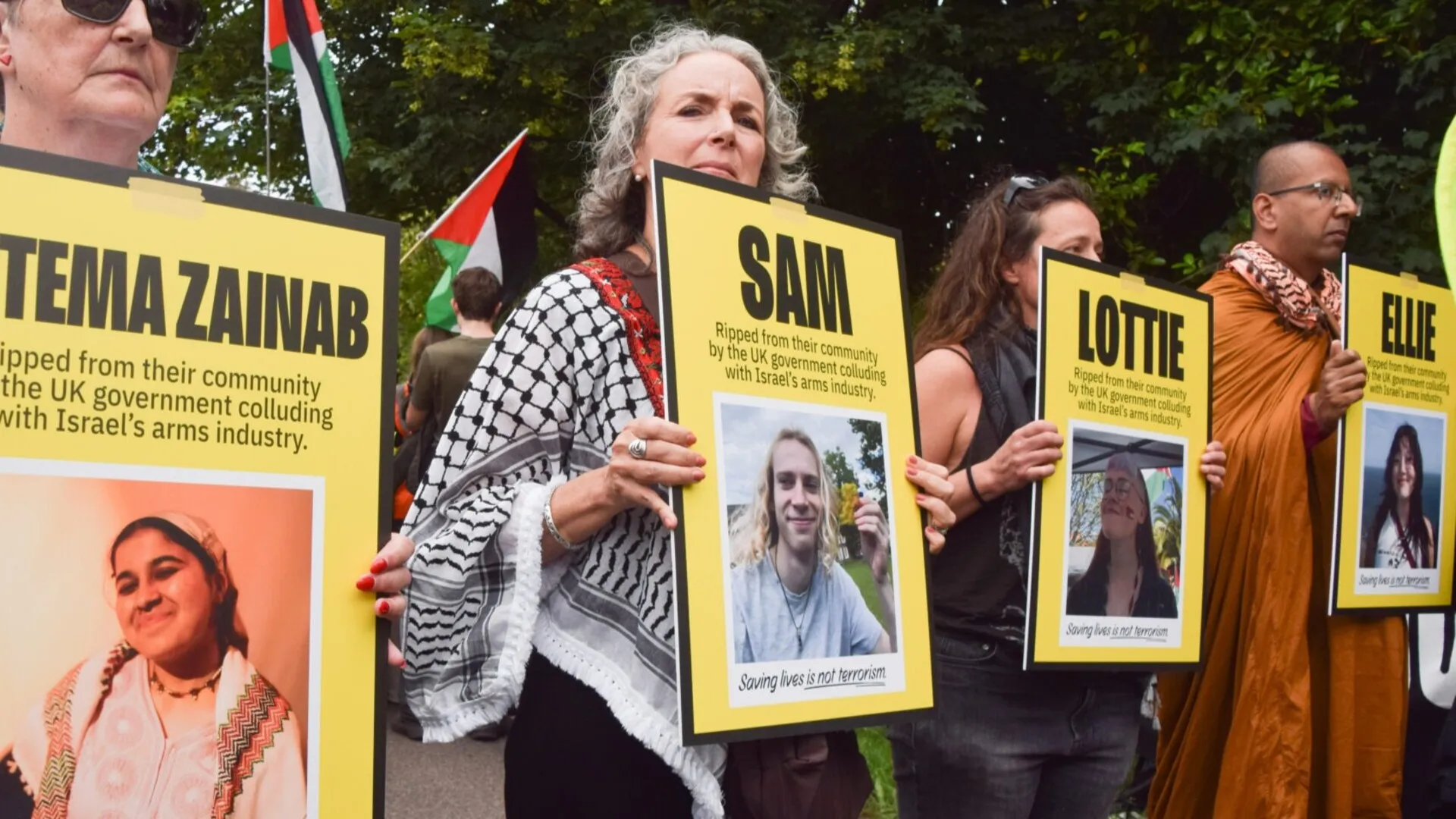
Pro-Palestine protesters, MPs and several rights groups had called on the UK to ban the event [Toby Shepheard/Reuters]
At the stand of Tivuch Shelly, another Israeli real estate company, Isabel said representatives were more reticent to discuss properties in the occupied West Bank, but were openly advertising properties in Givat Hamatos and Ramat Eshkol, two settlements in occupied Jerusalem, on their flyers.
An activist with Jewish Anti-Zionist Action at one point shouted out that “this event sells property on illegally occupied stolen Palestinian land” before he was removed by security.
But the overall mood inside the fair was in sharp contrast to the protests and tense atmosphere outside the event.
In the buildup, rights groups, including Amnesty International, as well as the mayor of London, Sadiq Khan, slammed the event for openly advertising the sale of land in illegal Israeli settlements.
Outside, hundreds of protesters shouted slogans and held posters reading, “Stop Israel’s illegal sale of stolen Palestinian land” and “Thou shalt not steal”.
The Metropolitan Police said 15 people were arrested during the demonstrations “for a range of offences, including public order matters”.
Green Party leader Zack Polanski has written to Khan, calling for the event to be investigated by the Metropolitan Police.
Khan earlier said he had discussed the event with the London police force and had been told that any allegations of criminality relating to the potentially unlawful sale of property at the fair would be assessed by the Met as part of a probe.
Israel started building illegal settlements after capturing the West Bank, East Jerusalem and the Gaza Strip in the June 1967 Six-Day War, and now, more than 700,000 settlers – 10 percent of Israel’s population – live in 150 illegal settlements and 128 outposts spread across the occupied West Bank and East Jerusalem.
The government has openly funded and built settlements, and Israeli authorities give their settlers in the occupied West Bank about $5.6m a year to monitor, report and restrict Palestinian construction in Area C, which is administered solely by Israel and comprises more than 60 percent of the West Bank.
United Nations bodies and most countries view the West Bank settlements as illegal, citing international conventions.
But the US has provided diplomatic cover to Israel for decades, with Washington consistently using its veto power at the UN to protect Israel from diplomatic censure.
A police officer stands guard near counterprotesters, as people from pro-Palestine groups gathered near the Edgware United Synagogue for a demonstration against the property fair organised by real-estate agency My Home in Israel, which markets property in illegal Israeli settlements in the occupied West Bank, in London, June 14, 2026 [Toby Shepheard/Reuters]
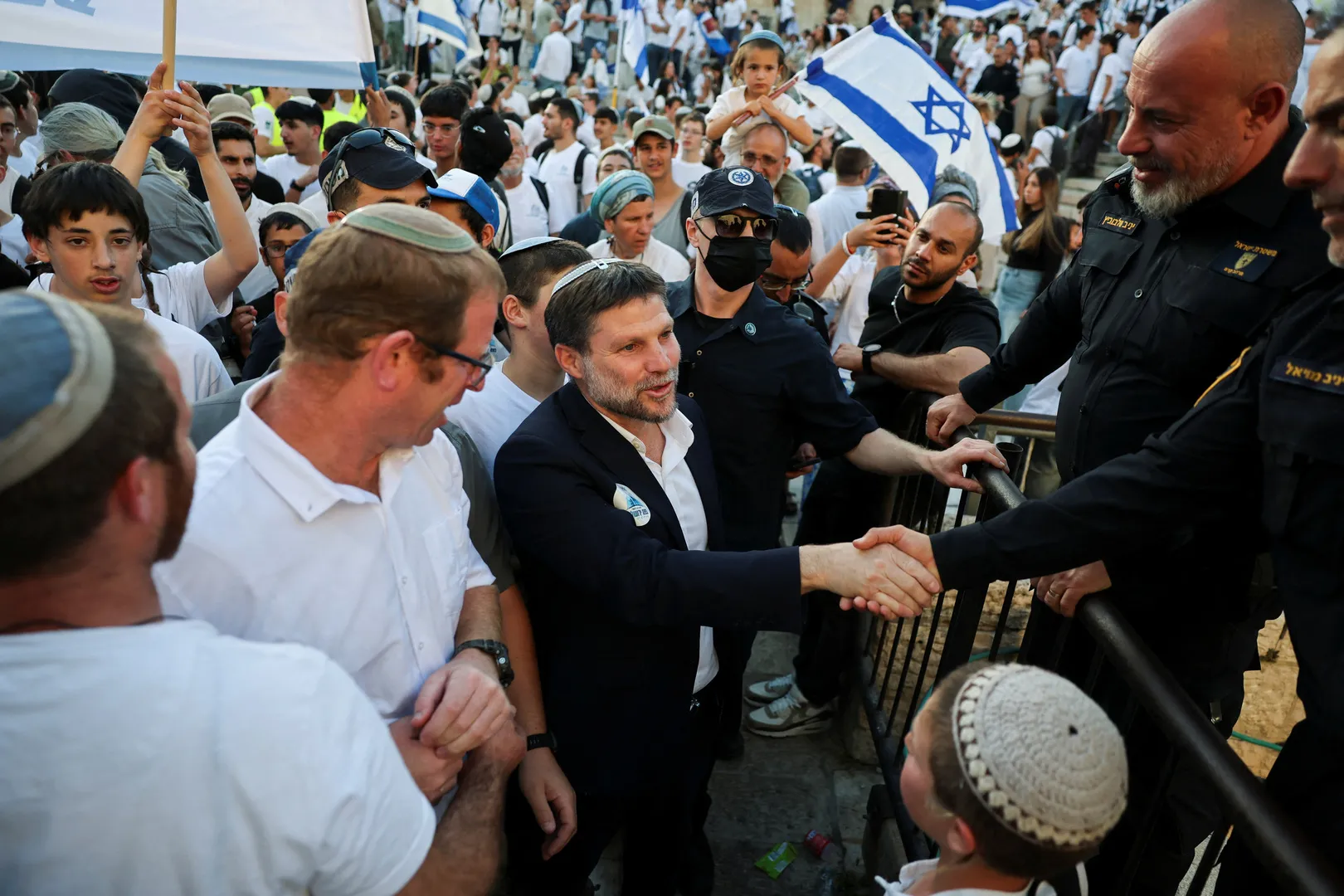
Israeli Finance Minister Bezalel Smotrich says Israel has transferred authority over Hebron to the army. It includes control of the key holy site, Cave of the Patriarchs. Al Jazeera’s Nour Odeh explains.
Gaza’s football fans once watched the World Cup from the comfort of their homes. Now, displaced in schools and tents, they face power cuts, sparse internet access and the threat of Israeli attacks.
June 15 (UPI) — The British Court of Appeals ruled Monday that the ban on the pro-Palestine organization Palestine Action is lawful and upheld its designation as a terrorist organization.
The five judges on the Court of Appeals ruled that the ban on the organization under the Terrorism Act is “justified and proportionate.” The proscription of Palestine Action as a terrorist organization makes supporting the group punishable by up to 14 years in prison.
More than 2,500 members of the group have been arrested.
Huda Ammori, the co-founder of Palestine Action who originally challenged the ban in court, said she plans to appeal the ruling in the British Supreme Court.
“We will fight this all the way,” Ammori said. “We will seek permission to appeal to the Supreme Court and, if need be, take this to the European Court of Human Rights.”
Palestine Action has remained banned since February, despite the High Court in London ruling that it is disproportionate and an unlawful violation of free speech rights.
“The future threats and risks posed to third-party individuals and property by Palestine Action are perhaps the most important factors to weigh in the balance,” Sue Carr, chief justice, read from the appeals court’s ruling. “In that connection, it is important to understand that the home secretary is in the best position to assess those future threats and risks. She is advised by experts on anti-terrorism.”
Carr acknowledged that the ruling may chill free speech and may deter people from lawfully assembling to protest Israel’s actions in Gaza or show support for Palestinians.
Non-government organizations, including Liberty, Human Rights Watch, Amnesty International UK and Greenpeace, said Monday’s ruling is a misuse of counter-terrorism authority.
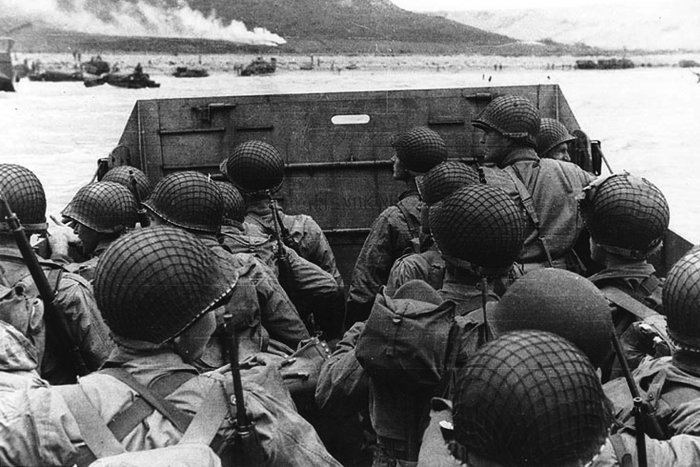
Troops in landing craft approach Omaha Beach on D-Day in Normandy, France, on June 6, 1944. D-Day was the largest seaborne invasion in history and turned the tide of World War II. Photo by UPI | License Photo
The United Kingdom’s Court of Appeal has ruled that the British government was right to proscribe the Palestine Action activist group as a “terrorist” organisation last year.
Palestine Action is a British protest group which was founded six years ago and describes itself as a movement “committed to ending global participation in Israel’s genocidal and apartheid regime”.
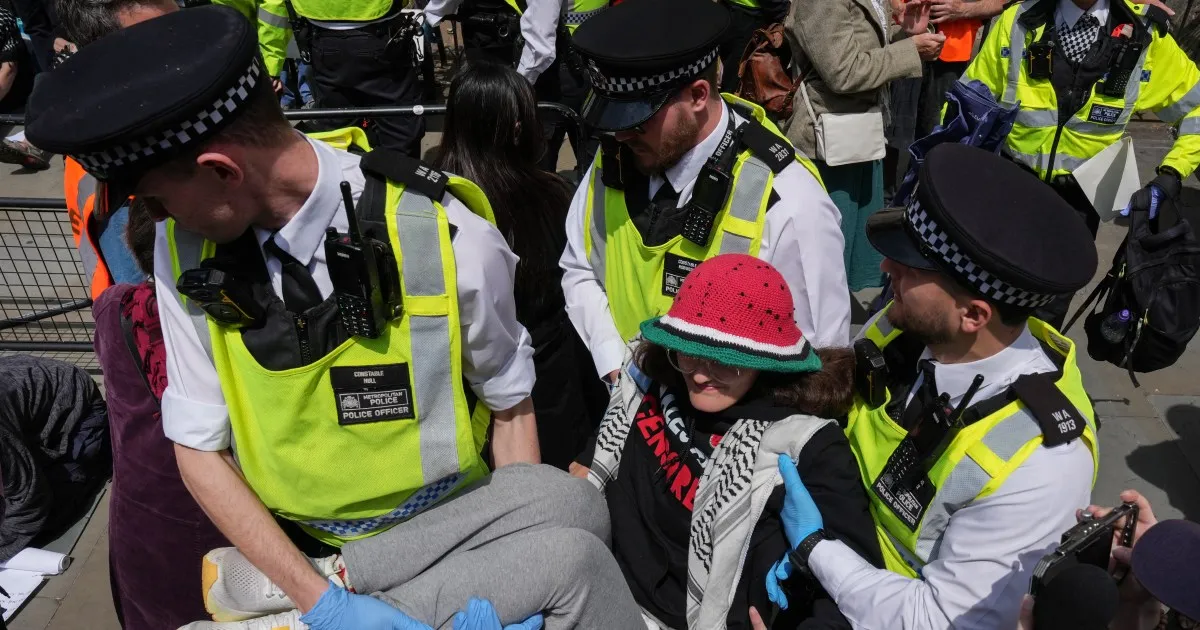
On Monday, police made more arrests of protesters demonstrating in support of Palestine Action outside the Court of Appeal in London.
Since the group’s proscription, which also bans support for proscribed groups, about 3,000 people have been arrested.
The Metropolitan Police welcomed the ruling and said it would continue to arrest those who protest in support of the group.
Here is what we know about the ruling:
What has the Court of Appeal ruled?
The judgement released on Monday states: “The proscription of an organisation like Palestine Action is highly controversial. But it is a fundamental mistake to overlook the fact that Palestine Action overtly promotes unlawful violence amounting to terrorism”.
The ruling was made by a five-strong panel, including the two most senior judges in England and Wales.
Palestine Action, which was formally proscribed by the UK last July, is a British protest group founded six years ago. It says it uses “disruptive tactics” to target “corporate enablers” and companies involved in the manufacture of weapons for Israel, such as Israeli group Elbit Systems, Italian aerospace company Leonardo, French multinational Thales and Teledyne from the United States. The group has targeted British facilities linked to those companies.
In all, British police say action by the group has resulted in millions of pounds of criminal damage.
A court in London ruled on June 12 that four Palestine Action members convicted of criminal damage at a British facility owned by Israeli weapons group Elbit Systems near Bristol, west England, would be sentenced on the basis that their actions had a “terrorist connection”.
Why was this case brought?
Following the proscription of Palestine Action last year, the group’s co-founder, Huda Ammori, challenged the decision in the High Court. In February, the High Court ruled that the government’s “terror group” ban was unlawful and disproportionate.
The government immediately said it would appeal. “I am disappointed by the court’s decision and disagree with the notion that banning this terrorist organisation is disproportionate,” Home Secretary Shabana Mahmood said.
The judgement on Monday agreed with her. Its ruling states: “The Home Secretary had the institutional competence and the democratic accountability to make the decision. The Proscription Decision was consistent with the Home Secretary’s Proscription Policy and was proportionate. It was not unlawful.”
Days after the Brize Norton attack, members of parliament voted in favour of proscribing the group. That classified Palestine Action as a “terrorist” organisation, bringing it into the same category as armed groups such as al-Qaeda and ISIL (ISIS).
Critics decried the vote, arguing that while members of the group have caused damage to property, they have not committed violent acts that amount to terrorism. More than 130 high-profile public figures have spoken out against the proscription.
Other previous actions the group has taken include:
In 2021, members protested for six days on the roof of Elbit Systems’ subsidiary, UAV Tactical Systems in Leicester, until some were arrested by police.
In 2022, the group broke into a Thales equipment factory in Glasgow, causing damage to weapons worth more than a million pounds ($1.3m).
In 2024, 10 months into Israel’s genocidal war on Gaza, Palestine Action activists broke into an Elbit Systems UK facility near Bristol in southwest England, causing another million pounds of damage.
How has Palestine Action responded to the ruling?
In a statement read by a representative following the ruling, Palestine Action’s Ammori said the group will challenge the judgement in the UK’s Supreme Court.
“We will fight this all the way. We will seek permission to appeal to the Supreme Court and, if need be, take this to the European Court of Human Rights,” Ammori said.
The European Court of Human Rights (ECHR), established by the Council of Europe, allows individuals to hold member states accountable for rights violations through a dedicated court. When the ECHR finds a violation, its judgements are legally binding on the state concerned under the European Convention on Human Rights.
“We will not stop fighting to overturn one of the most extreme attacks on free speech and the right to protest in modern British history,” Ammori added.
“This unprecedented abuse of power has devastated the lives of thousands of people while silencing dissent over Israel’s slaughter of the Palestinian people during the genocide, when that dissent could not be more urgent.”
How have others reacted to the ruling?
Anas Mustapha, Head of Public Advocacy at CAGE International, said: “This ruling tells us exactly what these powers are for. They are not safeguards against violence, they are authoritarian tools for crushing dissent.”
Mustapha added: “No ruling from any court is going to convince people that their conscience is wrong, and no amount of legislation will make support for Palestine disappear. The only sustainable outcome is the abolition of these laws in their entirety.”
Thomas Bell, acting UK Director of Human Rights Watch, said: “This disastrous decision further cements the UK’s place among countries that are backsliding on human rights by classifying acts of protest as terrorism.”
“When Palestine Action members have committed criminal damage, that should be dealt with under normal criminal laws, not by misusing overbroad and poorly defined terrorism powers. Defining a protest group as terrorists has created an absurd situation where thousands of people peacefully holding up signs have been arrested,” Bell added.
Al Jazeera’s Basel Ghazoghli traces the documented record from 1948 to the present. Sexual violence against Palestinians in Israeli custody is often framed as a post-October 7 issue. But historical records, academic research, and legal testimony suggest a much longer history.
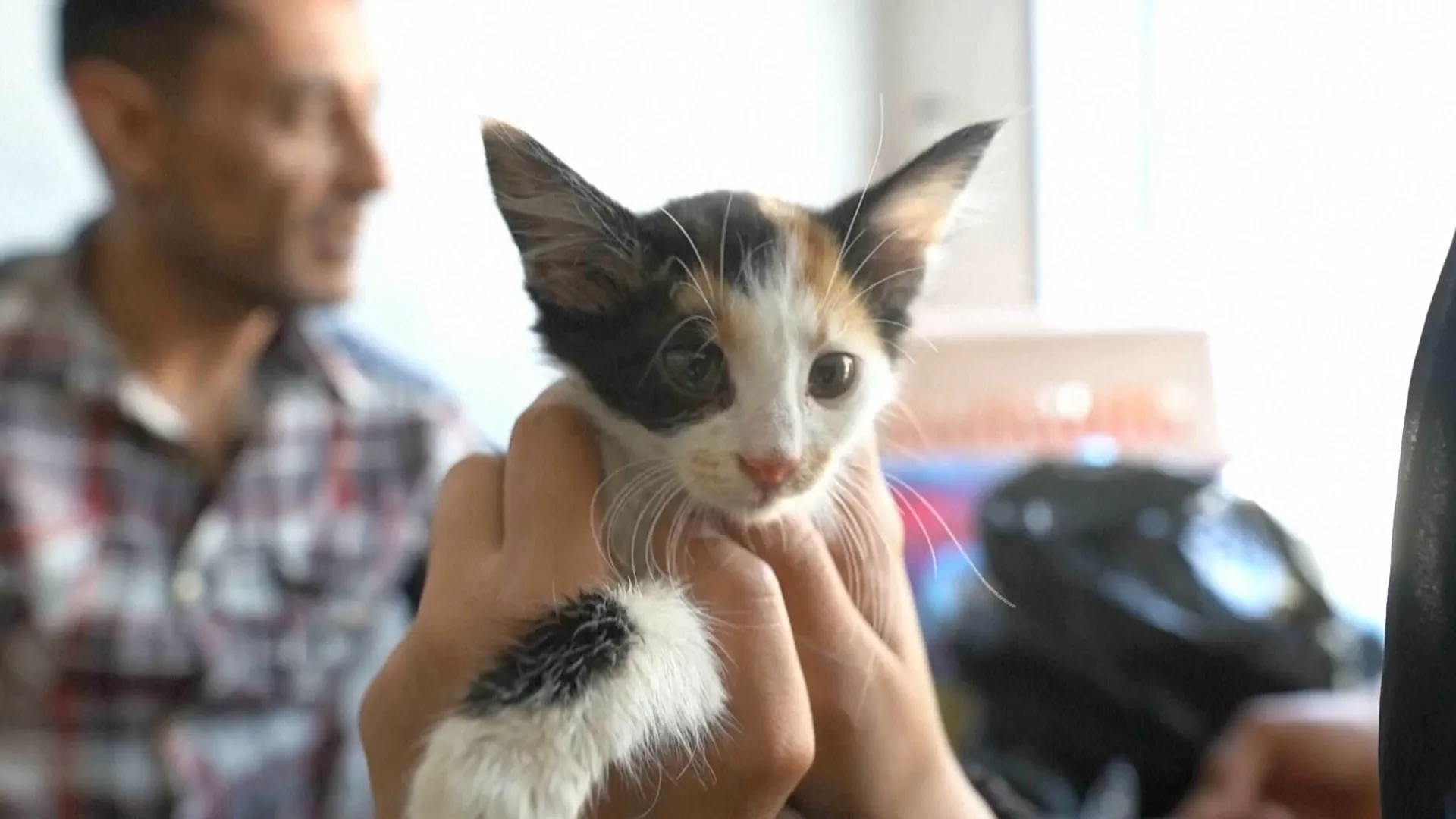
Animal lovers in Gaza are resorting to desperate measures to keep their pets alive and healthy. Only two pet clinics are still operating, and critical veterinary supplies and animal food are running low. Vets are warning animal deaths will rise unless supplies arrive soon.
Israeli attack reportedly kills one person in central Gaza’s Bureij camp, as a disabled Palestinian is shot in the West Bank.
Published On 13 Jun 202613 Jun 2026
Israeli forces have carried out a deadly attack in a refugee camp in central Gaza, according to Palestinian media reports, as casualties continue to mount in the enclave despite a “ceasefire” declared months ago.
The Israeli drone attack in the Bureij camp on Saturday killed one person and injured two others, reported the Wafa news agency.
The Palestinian Information Center identified the person killed as Muawiya al-Aydi, a local municipality worker.
Further north, a separate Israeli attack injured a person at a gathering in Gaza City’s Tuffah neighbourhood, according to Wafa.
Despite a ceasefire technically in effect since October, Israel’s military has regularly attacked Gaza, over half of which is under Israeli military control in defiance of the ceasefire’s terms.
According to Gaza’s Health Ministry, at least two Palestinians have been killed and 11 injured in Israeli attacks on the enclave in the past 48 hours.
The ministry said 983 people have been killed and 3,122 injured in Israeli attacks since the ceasefire was declared.
Hamas has accused Israel of repeatedly violating the agreement through its continued attacks and by shifting the so-called “Yellow Line” that demarcates Israeli-controlled areas in Gaza.
“Israeli actions reflect its unwillingness to implement the ceasefire agreement and aim to blow up the negotiation track and thwart the efforts being made, while continuing escalation to serve political and electoral considerations,” said Hamas spokesman Hazem Qassem on Friday.
Disabled Palestinian shot, injured in West Bank
Israeli troops also carried out a series of violent raids in the occupied West Bank on Saturday, part of a pattern of near-daily operations since the Hamas-led attacks on Israel on October 7, 2023.
According to Wafa, Israeli forces deployed stun grenades and tear gas during two separate incidents near Bethlehem, causing numerous injuries: one during a raid on the Dheisheh refugee camp and the other while blocking access to the Solomon’s Pools reservoirs.
A disabled Palestinian man was also shot and injured in the town of Duma, near Hebron.
Wafa said Israeli forces shot the man, while Israeli media cited Israeli police as saying an Israeli settler was responsible. According to Israeli police, the settler felt threatened by the man who was carrying a rock.
Other Israeli settlers attacked Palestinians and vandalised property near Bethlehem, including assaulting Palestinian electrical workers and stealing water pipes, said Wafa.
A UK court has sentenced four pro-Palestine activists to jail for a raid on an Israeli arms factory near Bristol in 2024. Palestine Action says their aim was to ‘dismantle drones and weaponry’ they believed would be used to kill people in Gaza.