An Israeli settler was filmed abusing and reportedly poisoning livestock in the village of Al-Mughayyir, northeast of Ramallah in the occupied West Bank. The animals reportedly belonged to Israelis and were poisoned in an attempt to frame Palestinians for killing them.
Israel has expanded its military occupation in the Gaza Strip in violation of a United States-brokered ‘ceasefire’, forcing Palestinians into an ever-smaller share of the besieged territory, devastated by Israel’s ongoing genocidal war.
Nearly two-thirds of Gaza is now under Israeli military control or subject to access restrictions.
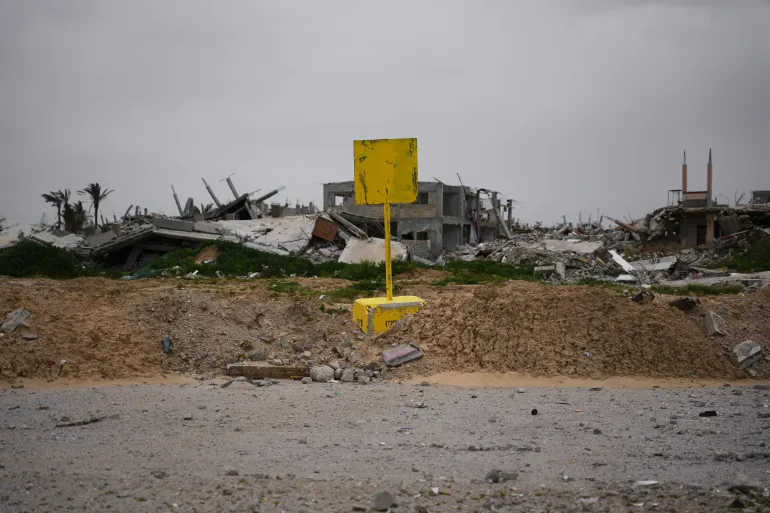
The original ‘Yellow Line’, established under US President Donald Trump’s 20-point plan to end the war, marked the area to which Israeli forces initially withdrew. They were expected to make further withdrawals gradually, but instead, they have seized more territory.
On Sunday, Israeli forces moved yellow concrete blocks dozens of metres west in Shujayea, a neighbourhood in southeastern Gaza City, forcing Palestinian families to flee and bringing more of the neighbourhood under Israeli military control.
A yellow block demarcating the ‘Yellow Line’, which has separated the Gaza Strip’s Israeli-held and Palestinian zones since a ‘ceasefire’ began a year ago, is seen in Khan Younis in the southern Gaza Strip on January 22, 2026 [Abdel Kareem Hana/AP Photo]
“It’s not simply about where the ‘Yellow Line’ is today but where it can move next,” Al Jazeera’s Ibrahim al-Khalili said, reporting from Gaza City. “For families who have been repeatedly displaced in the past three years, the situation remains dire, and they have to make the impossible decision of where they can go.”
More than 90 percent of Gaza’s 2.1 million population has been forcibly displaced by Israel’s war, launched on October 7, 2023, after Hamas-led attacks on southern Israel.
Using maps, Al Jazeera shows how much of Gaza Israel has grabbed since the ‘ceasefire’.
Gaza before the war
Before the war, Palestinians were spread across the Gaza Strip, a 365sq km (141sq-mile) territory roughly 41km (25 miles) long and from 6km to 12km (4 to 7 miles) wide.
That made it one of the most densely populated places on Earth with about 6,000 people per square kilometre, similar to Nairobi or London. Each person had, on average, about 160sq metres (1,722sq ft) of land.
Even then, not all of Gaza’s land was accessible. Israel enforced a buffer zone along the fence with Israel, and Palestinians who approached it risked being shot. In 2010, the United Nations Office for the Coordination of Humanitarian Affairs (OCHA) estimated that the restricted area covered 17 percent of Gaza’s land and 35 percent of its farmland.
Gaza has been under an Israeli land, air and sea blockade since 2007.
Gaza at the ‘ceasefire’
Under the first phase of the “ceasefire”, Israeli forces were to withdraw to the “Yellow Line” within 24 hours, after which a 72-hour period began for the handover of Israeli captives held in Gaza. Trump first published a map of the line on his Truth Social platform.
The line left Israel in control of 53 percent of the Strip, mostly farmland and border areas in the east, and confined Palestinians to the remaining 47 percent, about 172sq km (66sq miles).
By October 2025, two years of war had killed more than 67,000 Palestinians, and tens of thousands more had left the territory, reducing Gaza’s population to about 2.1 million.
Pushed into less than half of Gaza’s territory under the “ceasefire”, its density doubled to about 12,000 people per square kilometre, comparable to New York City. Each person was left with about 82sq metres (883sq ft).
(Al Jazeera)
Gaza today
Since the “ceasefire”, Israeli forces have repeatedly moved the yellow concrete blocks marking the “Yellow Line” farther west, sometimes overnight, expanding the areas under their control. Satellite imagery has also documented continued demolitions in areas held by Israeli forces.
The research group Forensic Architecture estimated that Israel controlled 58 percent of Gaza by December. In March, the Israeli military sent aid agencies maps of a new “orange line”, a restricted zone beyond the “Yellow Line” where humanitarian movements must be coordinated with the army.
According to OCHA, restrictions now cover 65 percent of Gaza. Israel itself said it controls about 70 percent of the territory, a UN official told the Security Council in June.
(Al Jazeera)
That leaves 2.1 million people in about 35 percent of the Strip, roughly 128sq km (49sq miles). The population density has nearly tripled since before the war to about 16,000 people per square kilometre, close to central Tokyo.
Each person now has about 61sq metres (657sq ft) of land for everything: shelter, roads, schools, hospitals and farmland.
Unlike Tokyo, Gaza has little space left to house its people. The UN Satellite Centre, UNOSAT, found 82 percent of structures in the Strip are damaged or destroyed. The UN Food and Agriculture Organization says only 3 percent of Gaza’s cropland is both undamaged and accessible.
(Al Jazeera)
OCHA says the remaining 35 percent of Gaza is “already overcrowded” and access restrictions are a key obstacle as aid groups try to relocate families before the rainy season. More than 950,000 people live in displacement sites at risk of flooding, according to the UN, most of them in tents and makeshift shelters, as seen in the satellite image below.
Approaching the ‘Yellow Line” can be deadly. Israel treats areas beyond it as a free-fire zone, and Palestinians who come near it have been shot. Nearly 1,500 people have been killed across Gaza since the ceasefire was announced.
Documentary draws on 24 anonymous Israeli sources accusing military of killing Palestinians in Gaza using AI systems.
Published On 12 Oct 202612 Oct 2026
Israeli Prime Minister Benjamin Netanyahu has called for an investigation into the anonymous sources featured in a documentary alleging that Israel’s military killed civilians in Gaza using AI-powered targeting systems.
The award-winning film, NAZA, draws on testimony from 24 unnamed Israeli military whistleblowers accusing the army of using the systems to kill numerous civilians in the besieged territory.
Recommended Stories
list of 3 itemsend of list
“I demand that the chief of general staff, the head of the Shin Bet, and the attorney general launch a comprehensive investigation into the participants in the film ‘Naza’ and prosecute them for serious information security violations, criminal libel, and harm to Israel’s diplomatic and security interests,” Netanyahu said on X on Saturday evening.
“The film presents a false, misleading, and biased narrative that defames the State of Israel and the [Israeli military] internationally, severely damaging Israel’s standing,” he added.
In a statement last month, the Israeli military said it “categorically” rejected the whistleblowers’ allegations, calling some of their assertions “absurd’ and contradictory.
It insisted that the selection and approval of strikes “are made by human personnel only”, in line with the military’s guidelines.
Israeli army Chief of Staff Eyal Zamir has called for legal action against the participants to be considered and ordered an investigation into suspected leaks of classified military information used in the film’s production.
NAZA takes its name from the Israeli military term for civilian casualties expected in air strikes, an abbreviated form of the Hebrew phrase for “collateral damage”.
The film was awarded a special jury prize at the Venice International Film Festival and received a historic 25-minute standing ovation.
It has also triggered a political storm in Israel.
The film’s directors, Yuval Abraham and Rachel Szor, have been accused of “treason”. Netanyahu and Culture Minister Miki Zohar have threatened to revoke their Israeli citizenship.
Last week, the head of Israel’s National Public Diplomacy Directorate, Tzipi Hotovely, awarded the creators of another film, NAZA: The Real Story, certificates of recognition for countering the “blood libels” made in the original NAZA film.
According to a statement from the Prime Minister’s Office, NAZA: The Real Story features testimony from soldiers refuting the original claims.
In contrast, 43 Israeli rights groups defended the filmmakers of NAZA and denounced the threats being directed at them, according to Israel’s Channel 12 news.
Israel’s genocidal war on Gaza began on October 7, 2023, after Hamas’s armed wing, the Qassam Brigades, and other Palestinian groups attacked southern Israel, killing 1,139 people and taking about 240 captive.
Since then, Israel has killed at least 74,000 Palestinians, including at least 21,000 children, according to Gaza’s Ministry of Health.
Zack Polanski calls for internal rule reforms to give party leaders greater control over policy after Zionism vote.
Published On 11 Oct 202611 Oct 2026
Zack Polanski, the leader of the United Kingdom’s Green Party, has proposed a potential overhaul of his party’s democratic mechanisms, calling for the leader to have larger control over strategic direction.
The appeal came in an article published in The Guardian on Sunday after party members passed a motion declaring that Zionism is racism at their annual conference on October 4 in a divisive vote.
Recommended Stories
list of 4 itemsend of list
Polanski also failed to grab a parliamentary seat in the wake of the row with Israel in a by-election.
The Labour Party won the election for the parliamentary seat vacated by former leader Keir Starmer in Holborn and St Pancras on Friday, fending off a strong challenge from the left-wing Green Party in a boost for British Prime Minister Andy Burnham.
“Our party democracy must now evolve to meet that – creating wider engagement for members, giving leaders more responsibility to set the party’s strategic direction, and making our processes as robust and accessible as possible,” he wrote.
“Above all, that unity must be deployed in the service of changing this country for the better,” the Green Party leader added.
Criticism over vote on motion
Polanski also replied to the criticisms of him for not participating in the vote on the motion on Zionism.
“I have been asked why I was not present for the vote. The answer is that my priority was fighting a hugely consequential by-election for our party,” he said, adding that he put all his “energy into the race in Holborn and St Pancras”.
He admitted that some members feel “let down” by his decision not to make an appearance there.
The Green Party’s motion, which called for “Palestinian liberation, the right of return, Boycott, Divestment and Sanctions (BDS), and a full arms embargo against Israel” was criticised by Jewish groups, other parties and most Green Party MPs.
After conceding defeat in the fiercely contested by-election, Polanski answered his critics, saying he would stay on as leader.
He was barred from entering Israel after his party backed a motion to define Zionism as racism.
Israeli attacks force Palestinians in Gaza to flee in panic, while home demolitions in occupied East Jerusalem and settler violence across the occupied West Bank further threaten Palestinian communities.
Palestinians have reacted to President Mahmoud Abbas’ decision to postpone the Palestinian legislative elections to September 2027, citing Israeli restrictions and conditions in Gaza and the occupied West Bank.
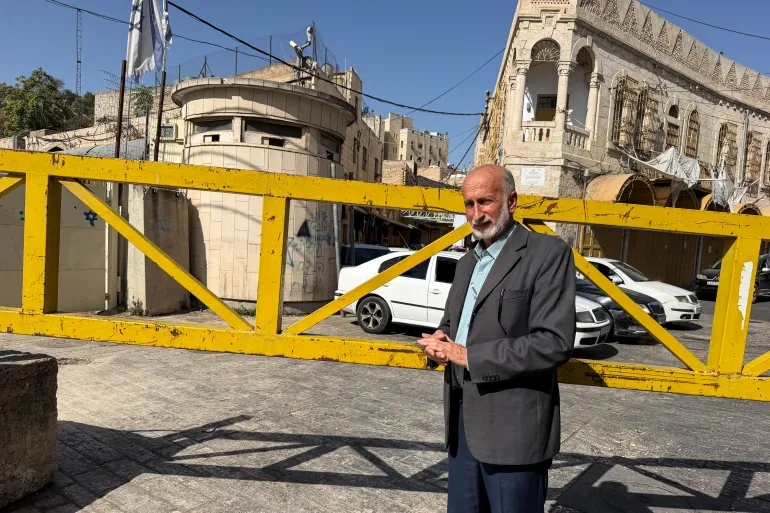
Hebron, occupied West Bank – Badr al-Tamimi, 60, lives in Hebron’s Old City, where Israeli checkpoints, iron gates and road closures turn the simplest tasks into a dispiriting daily ordeal for Palestinian residents.
The situation goes beyond mere restrictions on movement. Israel has created a ghost town in parts of Hebron, where residents feel they are being driven out. This is most pronounced in an area known as H2, where Israel has complete control and Palestinians are subject to the dictates of the military.
Recommended Stories
list of 3 itemsend of list
A few days ago, Israeli authorities installed three iron gates across a 200-metre (656-foot) stretch of Hebron’s Old City – amounting to just 0.2 dunams (200 square metres) – as part of Israel’s apparent attempts to restrict Palestinians’ freedom to move around the city.
Hebron Mayor Yousef al-Jabari told Al Jazeera that one gate was erected on al-Zahid Road, the only route accessible to vehicles reaching the Old City entrance. A second was placed at the start of al-Shalala Street, which leads to shops connecting to the Bab al-Zawiya area in the city centre. A third towers over another section of al-Shalala Street, a thoroughfare used by pedestrians to access the shopping area.
They are part of a wider web of travel restrictions across the occupied West Bank, but Hebron, which has a strong settler presence, has suffered more than most Palestinian cities.
Approximately 40 percent of the 89 checkpoints in the West Bank and 11 percent of all 925 movement obstacles are located in the H2 area of Hebron, which is under tight Israeli control, according to the United Nations Office for the Coordination of Humanitarian Affairs (OCHA).
About 7,000 Palestinians in an area of Hebron where hundreds of settlers live are affected by the latest travel restrictions. Since October 2023, when the genocidal war on Gaza began, only Palestinians with specific identification numbers could enter this area. Checkpoints at the entrance to this zone are generally only open from 7am to 8pm.
Badr al-Tamimi is forced to move between iron gates to reach other parts of the Old City where he lived his whole life [Sari Jaradat/Al Jazeera]
Al-Tamimi, who lives in the al-Sheikh neighbourhood adjacent to the city’s famed Ibrahimi Mosque, owns a shop in the Old City.
Palestinians can be kept waiting for hours at the checkpoints, and the mood of a soldier manning one can decide the commute time of a Palestinian. Worshippers attempting to enter the Ibrahimi Mosque can be held up for hours by soldiers.
“They might allow a limited number of people to enter while others are forced to wait, whereas resident movement comes to a halt during incursions, Jewish holidays, and the associated security measures,” he added.
Repeated closures have paralysed economic activity in Hebron, making it increasingly difficult for shops and companies to do business.
“Our presence in the Old City is a matter of steadfastness, not the availability of the elements needed for economic life,” al-Tamimi said.
Even after Israel’s occupation of the city in 1967, Hebron was once a bustling city with lively shops and markets. Residents could move more freely between neighbourhoods, which helped with economic life in the city.
From that point, the Old City’s geography changed, becoming isolated from its surroundings, al-Tamimi said.
He points to Shuhada Street, once a vital artery for transport and commerce in the city before road closures and restrictions transformed the area’s reality.
“They committed the crime, yet they continue to punish us for it,” he said.
In 1997, the Hebron Protocol was signed between the Palestine Liberation Organization (PLO) and Israel, dividing the city into two zones: H1, which was under relative Palestinian jurisdiction, and H2 – an area which includes the Old City, the Ibrahimi Mosque, and illegal settlements – remained under Israeli security control.
Issa Amro, coordinator of the Youth Against Settlements group, said Israeli prohibitions intensified with the outbreak of the second Intifada in 2000 when Hebron became a centre of the uprising.
During this period, vast areas of the city were sealed off, shops were forced to close, and residents often remained confined to their homes or neighbourhoods.
Since Israel’s genocidal war on Gaza began on October 7, 2023, the number of checkpoints has risen to 32, while other obstacles impeding Palestinian movement now exceed 130.
Israel installed new iron gates in Hebron’s Old City to restrict the movement of Palestinians [Sari Jaradat/Al Jazeera]
The “closed zones”, designated by Israeli authorities as areas of military activity with restricted access to Palestinians, have expanded around the Ibrahimi Mosque and the illegal settlements that lie in the heart of the city.
“The movement restrictions are effectively holding residents as hostages,” Amro said.
Mayor al-Jabari said approximately 10,000 Palestinians in the Old City and the surrounding closed zones are affected by these measures.
Some parts of Hebron are inaccessible to vehicles, and Palestinian residents are subject to curfews two or three days a week, usually over the weekend.
He believes these restrictions are aimed at hindering Palestinians’ ability to return home and stifle life in parts of Hebron.
Meanwhile, Israeli authorities have helped settlers expand in the area, imposing a new suffocating reality for Palestinians in the city.
Al-Jabari said Israel’s current government could be doing this to curry favour with settlers ahead of this month’s election.
Control of Hebron, its Old City, and the Ibrahimi Mosque is a key issue for settlers, and politicians in this group occupy key posts in the Israeli government.
This has coincided with a concerted effort by Israeli authorities to cement the settler presence in and around the city.
“The seizure of buildings and land, along with the installation of gates, is a continuation of Israeli policies that have been in place for decades,” al-Jabari said.
“These include the closure of Shuhada Street and the shutting down of over 500 shops, as well as the establishment of settlement outposts and military positions within the Old City.”
He has seen more restrictions on Palestinians’ freedom of movement over the past month, measures that will undoubtedly appease settlers.
Hebron municipality has responded to this by filing lawsuits in Israeli courts, despite its scepticism about the impartiality of the judiciary.
With these measures continuing, life for Palestinians is getting worse, making work, life and education a daily struggle.
Israel cites the security situation as a pretext for erecting more checkpoints and iron gates in Hebron, but there are no such restrictions on settlers.
Since 2015, Israel has limited the number of Palestinian residents of closed zones who can pass through these checkpoints. Students and teachers frequently have their bags searched by Israeli soldiers or are detained.
Ayat al-Jabari, a 40-year-old science teacher, worked for a year at Qurtuba School, located near the closed Shuhada Street, before transferring to her current position at Al-Fayha School, near the Ibrahimi Mosque.
Although reaching Qurtuba School from her home should have been a five-minute journey, it often took an hour.
On her unsettling morning route through a nearby cemetery, often in darkness during the winter months, settlers and soldiers often appear in the graveyard to block the path of Palestinians or abuse them.
“Every day, I was forced to take a long route and walk through a cemetery to avoid passing the checkpoint, as I don’t hold a [special identification card] number. Even those who do hold numbers are sometimes forced to take this path to escape the soldiers’ moods,” she said.
After moving to Al-Fayha School, al-Jabari hoped her commute would improve, but the situation is no better than before.
“Whenever Jewish holidays arrive, these schools are closed because all the students live in areas subjected to a total lockdown, to the point where residents are even forbidden from opening their front doors,” she said.
As Israel entered the final month before its October 27 election, Prime Minister Benjamin Netanyahu had a chilling warning to share.
Israel’s enemies, he said on September 29, were plotting an attack on the country before the vote. Without providing any evidence, he then quickly referred to continuing attacks by Israeli troops in the Gaza Strip, where he said they had killed more than 100 “terrorists” in recent weeks.
That link drawn by Netanyahu – between the genocidal war on Gaza that began after the Hamas-led October 7, 2023 attacks, the upcoming elections, and Israel’s national security – was not coincidental, say analysts.
Netanyahu’s insistence that he alone can secure Israelis from a range of threats they face from across the country’s borders, they say, lies at the heart of his re-election campaign, even as his alleged failures during the attack three years ago and in securing the quick release of captives have offered his opponents ammunition.
When a Flydubai flight packed with Israeli passengers on their way from Dubai to Tel Aviv a day after his recent warning nearly crashed after a co-pilot attacked his pilot with an axe in the cockpit, Netanyahu was quick to seize on the incident to argue that he is still man for the country’s top job.
Polls suggest that he faces a stiff test in what is the first general vote since the 2023 attacks, which led to the killing of 1,139 people in Israel and triggered the genocidal war on the Gaza Strip, where Israeli have attacks have since killed more than 74,000 Palestinians.
Three years later, the war has become inseparable from the domestic debate over Israel’s direction while also accelerating a political shift to the right – with once-fringe positions on Palestinians now very much the mainstream view.
Few embody this transformation more than Israel’s far-right financial Minister Bezalel Smotrich, sanctioned by a number of Western countries and known for his incendiary and racist language and policies towards Palestinians.
In one of his characteristically inflammatory statements, Smotrich told Israeli outlet Ynet late last month that the Israeli army should “go to war” in the occupied West Bank and “do there what we did in Gaza”.
Less than two weeks later, Smotrich’s electoral ally Moshe Feiglin added fuel to the fire.
“The enemy is Gaza, not Hamas”, he told the Jerusalem Post, calling for the annexation of the besieged territory after the election. “The baby that will be born tomorrow in Gaza will do exactly the same,” he said, in reference to the 2023 attacks.
Palestinian political analyst Ahmed Najar said these are not “stray comments” from marginal figures but an electoral message from power-seeking politicians aimed at portraying Palestinians as “not a people with rights, but a demographic and security problem to be expelled, conquered or destroyed”.
He added: “The frightening reality is that the coming election risks becoming a competition not over whether Palestinian life should be protected, but over who can promise to erase it most aggressively.”
‘This is madness’
Following October 7, the younger generation in particular slid rightwards, said Ahron Bregman, an Israeli security analyst and senior teaching fellow at King’s College London.
He said the forces driving Israel to the right had been gathering for decades.
“The trend toward the right began after the Yom Kippur War in 1973, but it has intensified dramatically since October 7,” Bregman told Al Jazeera, referring to the bloody 19-day October War, or the 1973 Arab-Israeli War – a conflict between Israel and a coalition of Arab states led by Egypt and Syria.
More recently, the far right has been emboldened through electoral politics as part of Netanyahu’s government since 2022 – the most right-wing government in Israeli history.
Another outspoken cabinet member alongside Smotrich is Minister of National Security Itamar Ben-Gvir, a far-right provocateur who has previously been convicted of inciting racism and of supporting a terrorist organisation.
“Netanyahu’s greatest mistake – among many – was bringing figures like Ben-Gvir and Smotrich into his coalition,” said Bergman. “By doing so, he legitimised them as influential forces in Israeli politics.”
Ben-Gvir has been so cemented into Israel’s political system, he has hopes pinned on becoming the next Israeli defence minister, the analyst pointed out.
“This is madness. But that’s contemporary Israel,” said Bergman.
Attendees listen and applaud during an election campaign meeting on October 5, 2026 in Tel Aviv, Israel [Erik Marmor/Getty Images]
Analysts also pointed out that several parties running, including ones that are currently in power and a number that are challenging the current coalition, all advocate for the expulsion of Palestinians from Gaza, as one of the examples of the shift to the right.
Omar Baddar, director of Palthink for Strategic Studies, said the messaging from across the Israeli political and military spectrum in the lead-up to the election shows that there is “a consensus” to continue the attacks on Gaza, where nearly 1,500 have been killed since a “ceasefire” last year.
“They’re using the threats to get more votes,” he said, pointing out to what he described as the radicalisation of the society.
With the election approaching, added Baddar, Israeli leaders are seeking to undo one another: “Who[ever]’s more radical is more likely to get more votes.”
As Ehab Jabareen, a Palestinian political analyst and researcher from inside Israel, writes, “what it means to be ‘right-wing’ in Israel today is above all to take a harder line on Palestinian national claims, security and territorial control.”
He adds: “On security and the Palestinians, a large part of Jewish Israeli politics already works from assumptions that would have been treated as right-wing a generation ago: Deep suspicion of a sovereign Palestinian state, a high tolerance for prolonged military control, and a stronger insistence on Jewish sovereignty as the starting point rather than one value among others.”
Observers and rights groups say the disparity is even evident in the electoral process. A prominent politician and Palestinian citizen of Israel, Sami Abu Shehadeh, has been forced to withdraw from the election over his remarks about the Gaza war, while Israeli far-right leaders have remained untouched despite their violent rhetoric against Palestinians.
Netanyahu’s security credentials endure
Recent polling indicates that the events of October 7 are top of mind for Israelis, who also have questions about who was responsible for the security failures of that day.
Just last month, reports surfaced indicating that Netanyahu had received two separate warnings about an imminent Hamas attack in 2023, from Egypt’s intelligence chief, Abbas Kamel, and United Arab Emirates President Sheikh Mohamed bin Zayed Al Nahyan.
Netanyahu’s two main rivals in the race for prime minister have cited the alleged warnings to call the prime minister “unfit” to remain at the helm of the country.
But Netanyahu has denied suggestions that he had been forewarned about the attack, and the reports do not appear to have had a significant effect on opinion polls.
While October 7 represents a profound rupture in Israelis’ sense of security, public trust in the Netanyahu government had already been badly shaken by its controversial judicial overhaul, introduced when the prime minister’s current coalition first came to power, said Mairav Zonszein, an Israel-Palestine analyst at the International Crisis Group based in Tel Aviv.
Despite these breaches of trust, the Israeli leader retains support.
“Israelis in general still see Netanyahu as kind of the guy on security. And more to the point, they don’t really see an alternative,” Zonszein told Al Jazeera.
A June survey by Mitvim – the Israeli Institute for Regional Foreign Policies found that the Israeli public supports its government’s military and security solutions, and rejects resolving the Palestinian issue and ending the Israeli occupation of Palestinian territory. This is the case even while it has been concerned about international isolation and the decline of Israel’s international standing since the beginning of the genocidal war on Gaza, the survey reported.
Yet Israelis are also increasingly war-weary, even as they back the use of more force. Its troops – stretched between six fronts of war in the last few years – are bearing the brunt of this fatigue in Israeli society.
Israel’s Ministry of Defence said on Tuesday that nearly 30,000 soldiers and security personnel are facing psychological trauma since the war.
The ministry said its rehabilitation department’s budget has increased by 88 percent over the past three years to 10 billion shekels ($3.3m), with the majority supporting treatment for mental health conditions and post-traumatic stress disorder.
As Israel expands, the two-state solution fades
Still, Israel in recent months has been more and more vocal about its expansionist vision, with officials brazenly stating the goal of “Greater Israel”. The claim for the conquest is based on a biblical verse (Genesis 15:18-21).
For decades, Israel has ignored international law in its continuous occupation of Palestinian and Syrian land, and has shown little respect for its neighbours’ sovereignty, occupying more land in Syria, as well as in Lebanon in more recent years.
According to Najar, the political economist, the “complete dehumanisation” of Palestinians as evidenced during the campaign reveal that Gaza “is being presented to Israeli voters not as a catastrophe or a crime for which there must be accountability, but as a blueprint to be repeated elsewhere”.
In southern Lebanon, where Israel has been carrying out near daily attacks and and has occupied large swathes of land, residents have told Al Jazeera they expect little to change even if Netanyahu is defeated in the election.
Netanyahu’s main political challenger, Gadi Eisenkot – head of the Yashar party and former army chief of staff – is the father of the so-called Dahiyeh Doctrine, and is just as hawkish about expansion. That doctrine, since Israel’s war with the Lebanese group Hezbollah in 2006, calls for the use of huge force, even against civilian infrastructure, as a deterrent against enemies and was deployed in Israel’s recent wars, particularly in Beirut’s southern suburbs.
If it were up to Eisenkot, the Lebanon front of war would have never scaled down: He has accused Netanyahu of bowing to US pressure to halt operations in Beirut, and has insisted that the military should be able to attack Hezbollah anywhere in Lebanon.
For Israelis still reeling from the events of October 7, Eisenkot could fill the security void many are feeling, said Zonszein.
“They really … see the world as kind of very hostile towards them, the world not understanding what they went through on October 7, and [therefore why] the need to have these security buffer zones in Lebanon, in Syria, and Gaza,” she said.
A two-state solution to the Israel-Palestine conflict is therefore out of the question, said the analysts – and has not even made a blip of an appearance in campaigning before the election.
The idea first emerged during the Oslo Accords more than 30 years ago, which set out a negotiating process aimed at resolving the Israeli-Palestinian conflict, predicated on the belief that the creation of a Palestinian state alongside Israel was imperative to forge peace.
But since the Oslo process began in 1993, the number of Israeli settlers in the West Bank has ballooned from about 260,000 to more than 700,000, embedded deep inside West Bank areas that would be needed for a contiguous Palestinian state.
“The concept of a two-state solution is currently irrelevant and likely will remain so for another decade or two, if not longer,” said Bergman. “It is unlikely to become a reality in the foreseeable future, as no Israeli leader can propose it to the Israeli public after the events of October 7.”
The only way it could regain prominence is if there is substantial international pressure, including severe sanctions on Israel, and a non-violent intifada, or an uprising by Palestinians, he said.
The outright rejection of Palestinian statehood has simply become much more “acceptable”, said Zonszein.
“There’s several parties who advocate these views, whereas there isn’t a single Jewish Zionist Party that puts the need for a two-state solution or a Palestinian political process at the forefront,” she said.
Taken all together, Israel’s election appears less a demand for change than a further entrenchment of the jingoism that surged after October 7, 2023.
“[There’s] more and more movement towards more military force, more need for pushing the borders … out of a lot of fear that another October 7 could happen,” said Zonszein.
Physicians accuse Israeli Medical Association of remaining silent as Palestinian healthcare is systematically destroyed.
Hundreds of doctors have gathered outside the World Medical Association (WMA) summit in the Netherlands, calling for the suspension of the Israeli Medical Association (IMA) from the grouping of physicians.
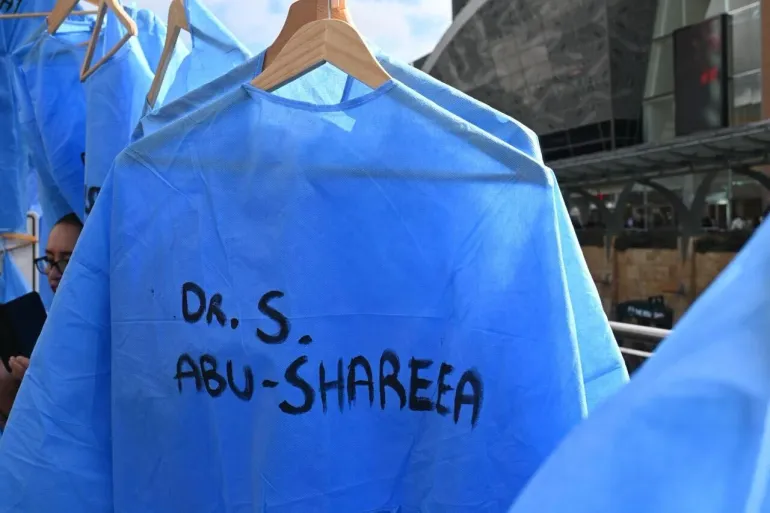
On Saturday, 81 healthcare workers removed their scrubs and hung them in a line facing the WMA assembly in Rotterdam, each bearing the name of a Palestinian healthcare worker currently held in illegal Israeli detention.
Recommended Stories
list of 3 itemsend of list
It was part of a protest against the continued membership of the Israeli association in the WMA, “despite them breaching almost every ethical principle in the WMA’s Code of Medical Ethics”, the IMA Out! coalition that organised the demonstration said in a statement.
“These scrubs should not be empty. Our colleagues belong with their patients, not in Israeli prisons. Today, we literally placed their names at the WMA’s doorstep,” said Mejrem Ahmetaj, a general practitioner and member of IMA Out!.
Since October 2023, Israel’s genocidal war on Gaza has killed more than 1,700 Palestinian healthcare workers and destroyed nearly all the hospitals and healthcare facilities in the enclave.
The campaign accused the Israeli medical association of remaining silent as Palestinian healthcare has been systematically destroyed.
“The IMA is not a bystander. It defends these attacks and blocks international condemnation while Palestinian healthcare is being destroyed. That is not medical neutrality. That is complicity,” added Ahmetaj.
Empty scrubs containing names of detained Palestinian healthcare workers hang outside the WMA summit [Courtesy of IMA OUT! campaign]
At a meeting of international doctors, medical leaders and human rights activists during the WMA summit on Thursday, the destruction of Palestinian healthcare and the responsibility of the international medical community were discussed, the campaign said.
“Our Palestinian colleagues are being killed and imprisoned, where they are starved and tortured. Their hospitals have been destroyed and patients driven out or murdered. The IMA has said and done nothing about these war crimes against health workers, patients and hospitals,” said a statement by Jonathan Fluxman on behalf of IMA OUT!.
“Thirty years of WMA dialogue with the IMA has done nothing but give the IMA a sense of impunity … It is time for national medical associations and the WMA to speak out and take action. Break your ties with the IMA and suspend the IMA from the WMA now,” he added.
The IMA OUT! campaign said it delivered a petition calling for the IMA’s suspension, signed by more than 6,500 health workers from around the world.
They also demanded accountability for the complicity of Israeli doctors in the starvation, torture and medical neglect of Palestinian prisoners.
Among those held by Israel is Dr Hussam Abu Safia, head of Gaza’s Kamal Adwan Hospital, whose unlawful detention has prompted an international outcry.
He was briefly held at the notorious Sde Teiman detention camp and has been subject to torture and medical neglect. Doctors protesting in Rotterdam held up placards demanding his release.
Abu Safia’s son Elyas, addressing a meeting organised by the campaign, said, “My father and all Palestinian detainees must be treated in accordance with medical ethics, and doctors must abide by the Hippocratic oath they have taken. Care cannot be given based on whose life is deemed worthy.”
November 2026 vote delayed and joint presidential and legislative elections set for next year, president says in decree.
Published On 10 Oct 202610 Oct 2026
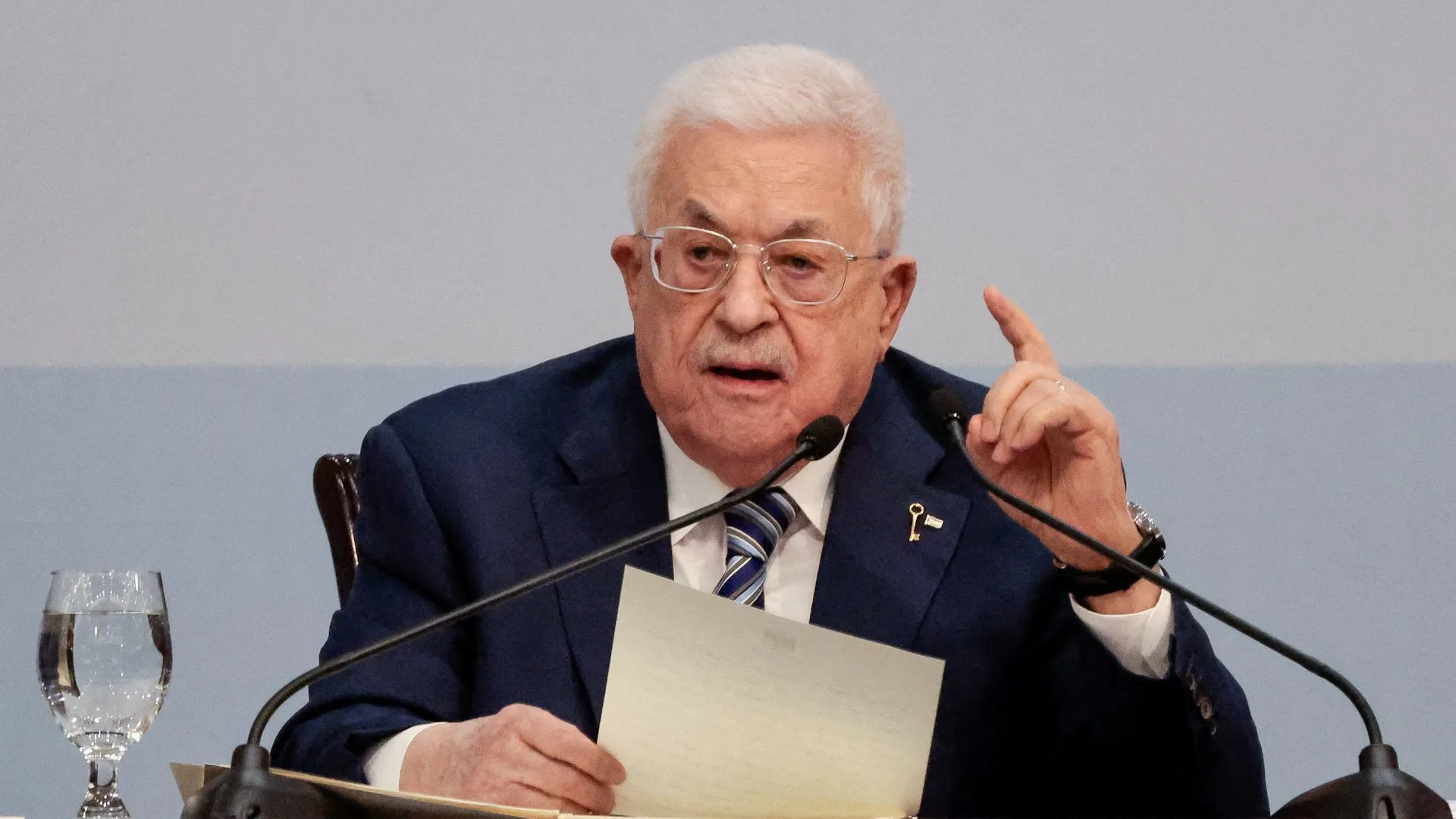
President Mahmoud Abbas has postponed what would have been the first Palestinian elections in nearly 20 years, issuing a decree to further delay voting for the Palestinian Legislative Council for almost another year.
According to the decree, legislative elections planned for next month will be combined with a presidential vote and set for September 11, 2027, Wafa, the official Palestinian news agency, said on Saturday.
Recommended Stories
list of 4 itemsend of list
The long-awaited parliamentary vote was originally set for November 28, with a presidential election expected in early 2027.
The decree came after a committee of top Palestinian officials met on Saturday morning to discuss postponing the vote.
The Palestine Liberation Organization’s (PLO) Executive Committee, which Abbas heads, said in a statement that conditions in occupied East Jerusalem, the West Bank and the Gaza Strip were not conducive to holding elections, noting that Israel had not allowed election materials or international observers to enter Gaza.
Israeli interference, including military raids, settlement expansion and settler violence in the occupied West Bank, has made a fair vote in November impossible, Wafa reported.
The agency also cited Israel’s systemic withholding of Palestinian tax revenues and its restrictions on electoral candidates and international observers entering Gaza and occupied East Jerusalem, as reasons.
As for Gaza, it said that the lack of progress on reconstruction and on deploying an international stabilisation force factored into the decision as well.
The postponement leaves entrenched Palestinian leaders unchallenged and threatens to further erode the Palestinian Authority’s (PA) credibility among Palestinians and donor countries who fund it.
On Friday, the Israeli Minister of Foreign Affairs, Gideon Saar, accused Abbas of “fooling the international community” by planning to cancel promised elections.
A source told the AFP news agency on Thursday that Palestinian factions, including Abbas’s Palestinian National Liberation Movement – also known as the Fatah party – had agreed to hold a “national dialogue” before legislative elections and that they wanted to postpone the vote.
The last parliamentary elections held in the Palestinian territories were in 2006, when Hamas defeated Fatah, which dominates the PA. The split led to factional fighting and Hamas later seized control of Gaza.
Ninety-year-old Abbas won the last presidential election in 2005. His term should have ended in 2009, but he has ruled by decree since then. In June, he signed a decree calling for the presidential election to be held in early 2027.
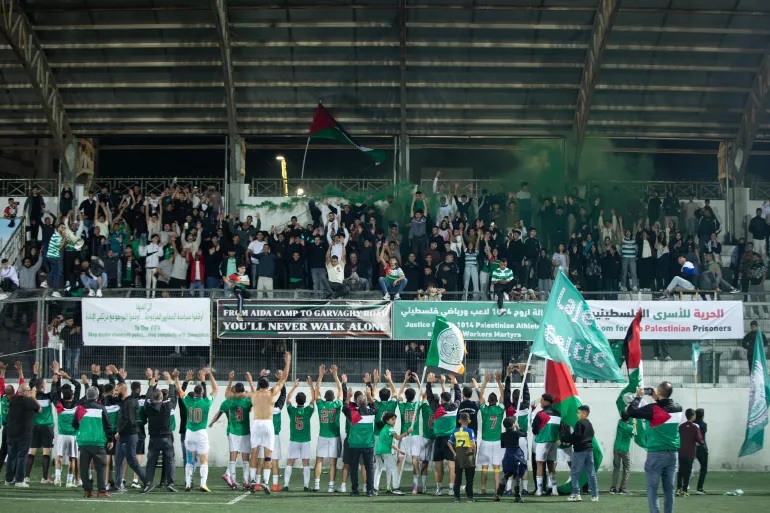
London, United Kingdom – Nearly 200 people packed into Edami, a small Lebanese bakery in east London, to celebrate a decade of Lajee Celtic, a grassroots sports club based in a Palestinian refugee camp in the occupied West Bank.
What began as a football project has grown into an international symbol of solidarity.
Recommended Stories
list of 4 itemsend of list
In London, the room was filled with Palestinian flags, the aroma of Edami’s freshly baked manousheh, and Lajee Celtic shirts – which have been worn by celebrities, including football icon Eric Cantona and the actor Hannah Einbinder.
Martin, a Lajee Celtic organiser, travelled down from Glasgow for the celebration in September. He first visited Aida Camp, in the occupied West Bank, more than 10 years ago, a trip he described as life-changing.
“I don’t think anyone would really have expected that the project would have been as successful as it’s been,” said Martin, who requested to be identified by his first name. “But Celtic is a unique football club with its foundation, its Irish identity, the diaspora community, its universal support and then the values, which tie so much of that together.”
Celtic fans support the project that is thousands of miles away [Courtesy of Lajee Celtic]
The relationship between Aida Camp, where Lajee is based, and Celtic supporters developed over years.
Mohammed al-Azzeh, director of the Lajee Centre, which provides services to the youth of the camp, remembers how it all began.
“We’d built up relationships with friends from Scotland and Ireland who had visited Palestine, and then in 2012, I travelled to Glasgow for the first time. We started to have conversations about creating a football academy,” he recalled.
By 2015, the idea was taking shape when a group of footballers from the camp travelled to Belfast to play a game.
Then came the 2016 Champions League draw. Celtic were paired with Israeli side Hapoel Be’er Sheva.
Supporters ignored warnings that displaying Palestinian flags could result in a fine. As the teams emerged, the stadium was transformed into a sea of Palestinian flags, an action led by Celtic ultras, the Green Brigade.
UEFA subsequently fined Celtic.
The Green Brigade responded by launching the Match The Fine For Palestine campaign. Not to pay the fine, but to support Palestinian organisations, including with the formation of a football academy in Aida Camp.
For al-Azzeh, it was a turning point.
“The support and solidarity shown in that game was really a pivotal moment,” he said. “And that’s what ultimately led to Lajee Celtic becoming what it is today.”
A boxing programme was launched at Lajee Celtic in 2025 [Courtesy of Lajee Celtic]
The team has brought together young Palestinians from villages around Bethlehem, refugee camps and communities in Hebron and Jerusalem.
“It means a lot, for us as Palestinians, to be in one place and meeting each other,” al-Azzeh said. “It becomes about more than just playing football.”
Lajee Celtic is competing in organised football for the first time. The club had been due to enter the Palestinian league three years ago, but the competition was cancelled when Israel’s genocidal war in Gaza began. Now, despite restrictions on movement between Palestinian cities and the wider disruption to football, the club has entered the Thousand Martyrs Cup, named after the 1,014 athletes killed in Gaza since October 2023.
Bassil Mikdadi, journalist and founder of Football Palestine, said that international reach has given Lajee Celtic a significance beyond the club itself.
“Lajee Celtic is a blueprint for ways in which fans of European clubs can directly support those on the ground in Palestine. It’s connective tissue,” he said.
For Martin, the popular shirts are more than merchandise.
“When people buy these shirts, they do so knowing that the money is funding football, sports and general youth development in Palestine. And then when the same people wear these shirts, whether they’re in Glasgow or London or New York, they’re each making their own individual solidarity action.”
The project provides a football academy and summer clubs for children, including many from refugee camps [Courtesy of Lajee Celtic]
Lajee Celtic created a link between clubs and communities inside Palestine and supporters and campaigners abroad.
“It has this kind of cross-cultural, cross-border solidarity,” he said.
That connection has become increasingly important as Palestinian football has struggled to continue since the genocide in Gaza.
For Mikdadi, the survival of grassroots clubs is essential: They are the groundwork for the national team.
“The success of the Palestinian national team in recent years … the base of that success has always been players provided by clubs in the West Bank and Gaza,” he said.
The club’s ambitions stretch beyond football. It has expanded into sports such as boxing and table tennis, while creating opportunities for young Palestinians across Palestine and the diaspora.
“Fundraising campaigns come and go all the time. But when you create a football club and when you have that sort of tangible idea at the heart of it, then you are creating a journey,” said Martin.
Mohammed al-Azzeh recalled a meaningful memory on a beach in Cape Town, South Africa, where the team played two friendlies in 2025.
Samir al-Amir, a coordinator with Lajee Celtic, had spent more than 19 years in Israeli prisons. When he travelled with the team to South Africa, it was the first time he had been able to leave the walls and checkpoints of the West Bank.
Al-Azzeh remembers watching him on the beach.
“He was acting like a young boy because it was the first time seeing the sea,” he said. “Without Lajee Celtic, I’m not sure Samir would have ever had that opportunity. That illustrates why the project is so important,” he said.
A US charity announced it will use an AI-software to monitor Gaza classrooms for ‘anti-Semitism’ and ‘hate speech’, while Israel airstrikes kill Palestinians across the strip.
Israeli settlers have carried out attacks and pogroms disrupting the Palestinian olive harvest in the West Bank, while Israeli forces separately detained several Palestinians across the occupied territory.
At least 19 settler attacks were recorded on Friday by the Palestinian Colonization and Wall Resistance Commission, a Palestinian government body operating under the Palestine Liberation Organization (PLO).
Recommended Stories
list of 3 itemsend of list
The commission said the incidents included attacks on Palestinian olive harvesters, the burning and uprooting of olive trees, and the theft of crops and livestock. Other Palestinians and their vehicles were also targeted.
Settlers set fire to Palestinian-owned groves and stole olives in what is considered the most important season for harvesting the single-seeded stone fruit.
More than 50 olive trees were uprooted by settlers in Qusra, the commission said.
Settlers also assaulted and injured Palestinian farmers involved in the harvest in the Tal, where a Palestinian-owned vehicle was set on fire, it added.
Additionally, olive harvesters were attacked in Jorish, Beita, Naqoura, Birzeit, Deir Bzeih and Farata.
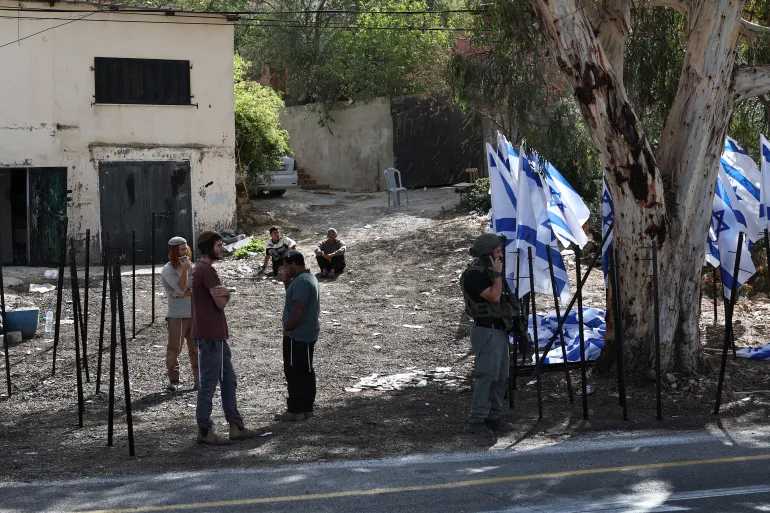
An Israeli security personnel member and Israeli settlers stand near Mou’ayad Mahmoud’s shop in al-Lubban Asharqiya, near Nablus in the West Bank, October 8, 2026 [Atef Safadi/EPA]
A farmer was injured in reported gunfire in Kafr ad-Dik, and the use of live ammunition was reported during a settler pogrom, backed by Israeli forces, in Deir Ballut.
Elsewhere, an elderly Palestinian woman in Berin, east of Hebron, was injured after settlers set their dogs on farmers while sheep were stolen in Ein Qinya.
A Palestinian man and his child were attacked and their vehicle stolen by settlers in Yabrud. Settler attacks on Palestinian-owned vehicles were also reported in the towns of Sarda and al-Rihan.
Brazen attacks against Palestinians
Al Jazeera’s Nida Ibrahim reporting from Ramallah in the occupied West Bank said settlers, backed Israeli forces, have grown more brazen in their attacks against Palestinians during the olive harvest despite the presence of foreign activists and observers.
“Palestinians have to go about the harvest in large groups, that include international solidarity activists, to try to stop settler intimidation and attacks,” Ibrahim said, adding that the settlers wait for the groups to start leaving at the end of the harvest, before springing into action.
“It has become a very difficult journey, as the Palestinians try to leave the harvesting areas, Israeli settlers continue to intimidate them under the protection of the Israeli army,” she said.
As Ibrahim reported, a Palestinian family was under attack by Israeli settlers who recently started building an illegal settlement outpost near Ramallah, “using it as a base to attack Palestinians”, she said.
“No one is being spared,” said Ibrahim.
For Palestinians, the olive harvest is supposed to be a joyous season, but instead, they fear settler attacks and intimidation backed by the Israeli forces.
Sixteen Palestinians arrested
As settler attacks and pogroms continue, the Israeli army arrested 16 Palestinians in raids across the occupied West Bank on Friday, according to the Palestinian Wafa news agency and local sources speaking to the Anadolu news agency.
In Hebron, southern West Bank, Israeli forces arrested nine Palestinians after raiding and searching their homes, including Ibrahimi Mosque Director Moataz Abu Sneineh and Hammam Abu Markhiya, an official responsible for the mosque’s custodians, Wafa reported.
In the city of Qalqilya, Israeli forces arrested five Palestinians during a raid, local sources said.
Two other Palestinians were arrested after Israeli forces raided and searched several homes in Beita, south of Nablus, the sources said.
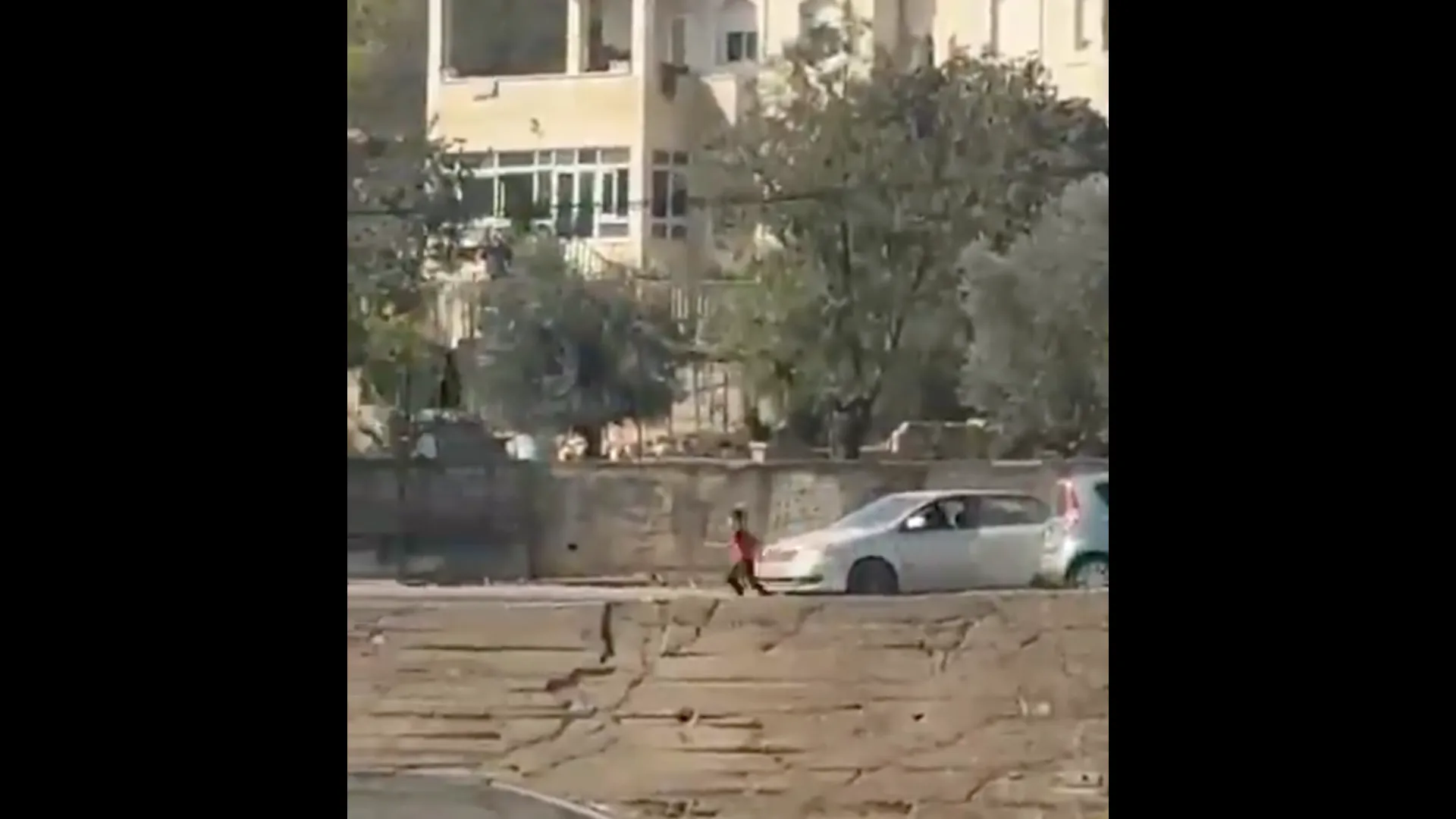
A Palestinian boy was seen fleeing after Israeli settlers attacked his father and stole their car in Ramallah. At least 19 pogroms by Israeli forces and settlers were reported across the occupied West Bank on Friday morning.
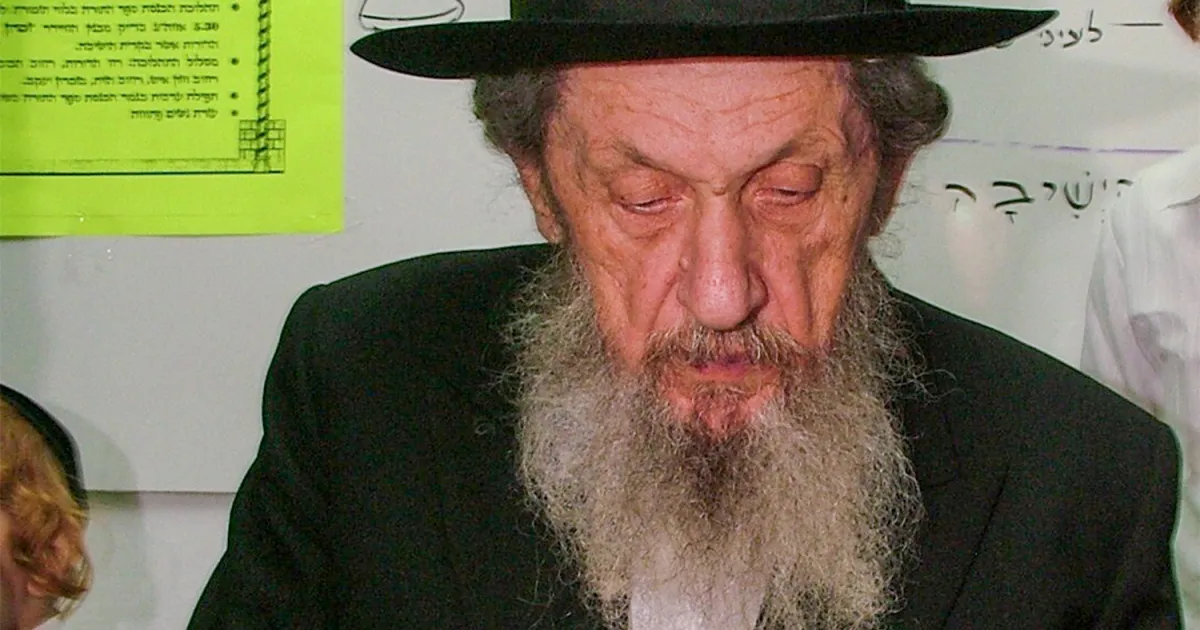
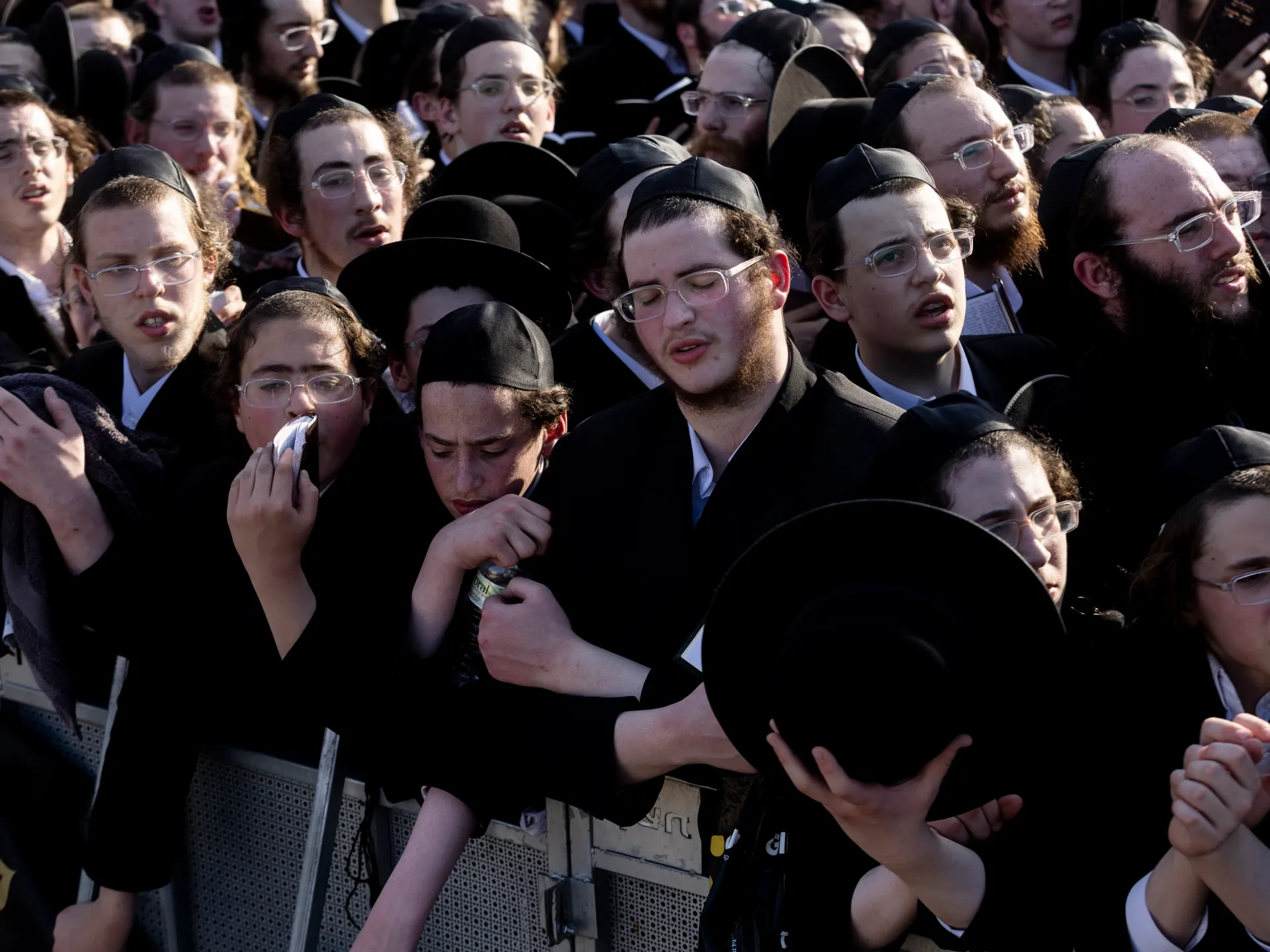
One of Israel’s top ultra-Orthodox rabbis, Dov Lando, has become the centre of controversy in Israel after comments emerged in which he denigrated Zionism.
In a recently released video recording, the 96-year-old rabbi is heard saying the ideology of Zionism caused the Jewish people to suffer “disasters”, and that Jewish Israelis may have been better off without a state.
Recommended Stories
list of 3 itemsend of list
The remarks have drawn rebukes from Israeli politicians weeks before landmark legislative elections, in which the role of the country’s growing ultra-Orthodox community – particularly over military service – is a major issue. The political alignment of ultra-Orthodox parties could also prove crucial to the formation of the next government.
So, who is Lando and why are his comments significant?
Who is Dov Lando?
Dov Lando is a 96-year-old rabbi regarded as the leader of Israel’s Lithuanian ultra-Orthodox community. Born in Poland and raised in the Lithuanian-style ultra-Orthodox tradition, Lando heads a yeshiva – a traditional Jewish academy – in the Israeli city of Bnei Brak.
He is a member of Moetzes Gedolei HaTorah, a council of senior ultra-Orthodox rabbis that offer religious guidance to the community, as well as the spiritual leader of Israel’s Degel HaTorah party. That party is part of the United Torah Judaism (UTJ) alliance, which is a member of Prime Minister Benjamin Netanyahu’s coalition.
What has Lando said about Zionism?
Earlier this week, Israeli media released a video of Lando making year-old comments that harshly criticise Zionism, military service and secular Israelis.
Lando, who has made similarly critical remarks before, is heard in the video saying that Zionism “caused the Arabs to hate us” and brought physical as well as spiritual “disasters” on the Jewish people.
“It is possible to live well with the Arabs without a state,” Lando said, adding that international or Palestinian rule would have been “the best situation” for Jews.
Lando went on to castigate soldiers who adhere to Religious Zionism – a strand of Orthodox Judaism that upholds Zionism – saying “they are killed because their rabbis teach them a distorted Torah.” Many military operations, he said, are carried out “not for saving lives, but for the honour of the state”.
The veteran rabbi also had harsh words for secular Israelis, who he said have “no connection to Judaism at all”. He described them as having built “a state of apostasy and heresy”.
What has been the reaction in Israel?
Lando’s remarks have drawn fierce criticism from numerous Israeli politicians, including all major figures that have joined an opposition alliance challenging Netanyahu.
Gadi Eisenkot, head of the Yashar party who is viewed as the opposition bloc’s most likely candidate for prime minister, said Lando’s “outrageous statements” were “the embodiment of anti-Zionism”.
Yair Lapid, the head of Israel’s opposition in the Knesset, called the comments “a disgrace to every Jew”.
Former Prime Minister Naftali Bennett, who leads the Together alliance co-founded with Lapid, said Lando’s remarks are “anti-Semitic, anti-Zionist” and against the Israeli military.
Netanyahu has not commented on Lando’s latest reported remarks, but he publicly condemned earlier statements by the rabbi in July, when Lando accused the Religious Zionism movement of “incitement to murder” for its support for drafting religious seminary students into the military.
Could the controversy impact Israel’s upcoming elections?
Potentially.
Members of the anti-Netanyahu opposition bloc have called for the UTJ, which Lando’s party is part of, to be cast out of any future government, and criticised Netanyahu for staying aligned with the group.
Yair Golan, head of the Democrats party, said Netanyahu is “silent because without Rabbi Lando and his emissaries, he has no government”.
Netanyahu’s “political survival is more important to him than Zionism, more than equality in service, and more than the blood of our soldiers”, Golan said.
But breaking with the UTJ would come at a huge political cost to Netanyahu, whose coalition is already in for a tough election battle on October 27 and is polling well below the 61-seat threshold needed for a majority.
UTJ is projected to win 8 seats in parliament, according to an October 5 poll by Israel’s Channel 12.
“If Netanyahu attacks Lando forcefully, he pays a price with the Haredim (ultra-Orthodox) he needs to form a government,” said Ehab Jabareen, a researcher on Israeli affairs. “If he stays silent, he hands his rivals material to tell right-wing voters that the man who speaks of Zionism and security depends on a religious leadership that doubts Zionism itself.”
Gaza City – More than 80 percent of Gaza’s buildings have been damaged or destroyed since Israel launched its war on the besieged enclave in October 2023, according to the Palestinian Central Bureau of Statistics, turning whole neighbourhoods into rubble and wiping out much of its infrastructure.
For generations, Gaza’s streets, markets, schools, hospitals and public spaces formed the backdrop to everyday life. They were places where people worked, studied, shopped, met friends and family, and built memories.
Many of the city’s familiar landmarks also carried a much longer history, reflecting Gaza’s thousands of years as a crossroads of different civilisations.
The war has also changed the face of Gaza by damaging or destroying many of those historic and recognisable landmarks.
UNESCO has verified damage to 164 cultural sites since October 2023, including 128 buildings of historical or artistic interest, 14 religious sites, nine monuments, eight archaeological sites, two museums and three depositories of movable cultural property.
Among them are the Great Omari Mosque, Gaza’s oldest mosque, Qasr al-Basha, the ancient Samaritan Bathhouse, al-Qissariya Market and the Church of Saint Porphyrius complex.
Some of these places have been reduced to ruins, while others remain standing but heavily damaged. The destruction has altered not only individual buildings but the streets and neighbourhoods around them, removing landmarks that once helped people recognise and navigate their city.
This photo series contrasts archive images of some of Gaza’s most recognisable streets, markets and public buildings with new photographs taken three years into the war, showing how these familiar places have changed after years of bombardment and destruction.
Islamic Relief calls for international action as Gaza endures deadly Israeli attacks and worsening humanitarian conditions.
Published On 8 Oct 20268 Oct 2026
Israeli attacks have killed or wounded a Palestinian in Gaza every 90 minutes on average since the ceasefire was announced in October last year, the aid group Islamic Relief says.
Islamic Relief, a United Kingdom-based charity, said on Thursday that at least 1,454 Palestinians were killed and more than 5,000 wounded over the year. At least 320 of those killed were children, close to one a day.
Recommended Stories
list of 3 itemsend of list
Gaza’s Health Ministry reported that 1,471 Palestinians have been killed and 5,189 wounded since the ceasefire, including four killed and 28 wounded in the past 24 hours.
Israel has killed at least 74,254 people since October 2023, the ministry added.
On Thursday, Israeli forces killed a Palestinian southeast of Deir el-Balah, in central Gaza, and an Israeli air strike on a house in central Khan Younis wounded several people, the Palestinian news agency Wafa reported.
In the occupied West Bank, a 13-year-old boy was shot in the foot during an Israeli raid on Yamoun, west of Jenin, the Palestinian Red Crescent said.
Islamic Relief said Israel has used the so-called Yellow Line, which marks the area under Israeli military control, to push Palestinians out of 65 percent of Gaza, crowding its nearly 2.1 million people into the remaining 35 percent.
According to the report, an Islamic Relief aid worker in Gaza whose name is withheld for their safety said: “There is no ceasefire in reality. They target displacement camps and crowded areas, so there is still a lot of fear.”
Israel continues to block shelter materials, fuel and medical supplies, the group said.
About 82 percent of Gaza’s structures are damaged or destroyed, more than half of health services have shut down and more than 20,000 severely ill patients are denied permission to leave for treatment.
The charity urged world leaders to increase pressure to protect civilians and uphold international law.
“A ceasefire in name only cannot be an excuse for international inaction,” it said.
In the past three years, following the October 7 attacks and the start of Israel’s genocidal war on Gaza, the wider region has been marked by conflict, economic turmoil, and a shattering of the balance of power.
The network of alliances maintained by Iran, long central to its regional power, has been hit hard and severely weakened. Yemen’s Houthi rebels remain one notable exception.
Recommended Stories
list of 4 itemsend of list
Israel has made gains. Many of the leaders of the Lebanese group Hezbollah and the Palestinian group Hamas have been killed, while Iranian Supreme Leader Ayatollah Ali Khamenei was also assassinated in February. Israel occupies most of Gaza, where it has also killed more than 74,000 Palestinians and reduced much of the enclave to rubble.
Its military aggression has come at a cost, isolating it from its traditional allies and making it globally unpopular, including in the United States. The potential for more normalisation deals with Arab countries seems unlikely, at least in the short term.
Instead, Israel continues to launch attacks across the region, crossing previously held red lines – such as the 2025 attack on Doha, Qatar – and making many governments around the world view it as the primary source of unrest in the Middle East.
US not a protector
“Before October 7, the US’s entire policy in the Middle East rested on normalising Israel’s presence in the region through its so-called Abraham Accords,” HA Hellyer of the Royal United Services Institute said, referring to the normalisation deals with several Arab states, including the United Arab Emirates. “Israel’s response to the October 7 attack ended that.”
Instead, rather than a stable Middle East with Israel at its centre, the US entered into a war with Iran this year, and has since looked on as Tehran targeted US allies across the Gulf, shattering the perceived security of the US security umbrella.
Drones and missiles hit Qatar’s Ras Laffan gas hub and started fires near Dubai airport and at Fujairah’s oil zone. In September, the Houthis surged down Yemen’s Red Sea coast, taking the port of Mocha and nearby islands. Their gains tightened their grip on the Bab al-Mandeb strait, threatening a key route for global trade and energy supplies that had become even more important amid disruption in the Strait of Hormuz.
“There’s been a loss of faith in the US as a singularly sufficient security guarantor,” Hellyer continued.
“This is why you’re seeing many in the region talk to other external actors, in addition to continuing, and in some cases deepening their US ties, as well as initiatives such as the Mecca security pact as states in the region look elsewhere for ways to safeguard their security,” he said, referring to the defence agreement between Saudi Arabia, Turkiye and Pakistan, signed in August, agreeing that an attack on one was to be regarded as an attack on all.
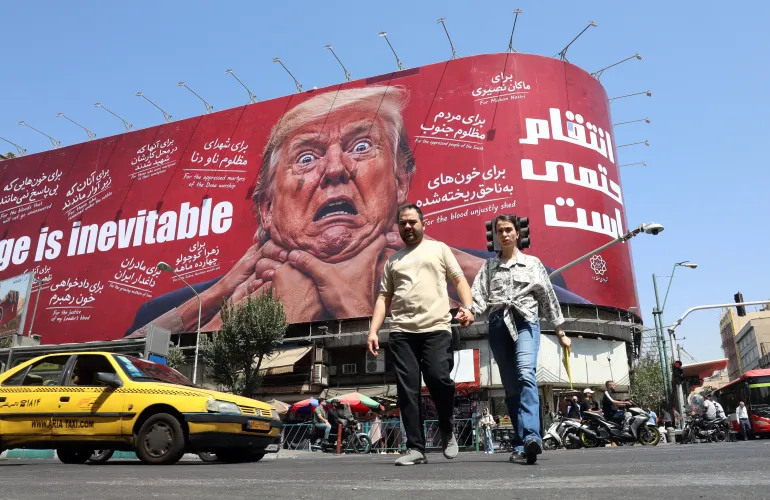
Iranians walk near an anti-Trump billboard in Tehran, Iran, August 19, 2026 [Abedin Taherkenareh/EPA]
Alliances
Alongside the loss of confidence in the US as a security guarantor has come a dramatic reordering of alliances and rivalries. Much of Iran’s network – most notably Hezbollah, whose reputation had long served as a deterrent against Israeli attack – appeared to buckle under Israeli pressure.
“The Middle East has always been multi-aligned. However, now it’s even more so,” Sanam Vakil, the director of the Middle East and North Africa Programme at Chatham House, said of the increased leverage given to external actors, such as Turkiye in Syria and China’s involvement in negotiations over the end to war on Iran, as Beijing finds its own energy supplies under threat.
“It’s ironic, since October 7, it’s Israel that has emerged as the revisionist power and Iran almost as the status quo power,” she said of the apparent reversal in status of the two belligerents, with Tehran seemingly more focused on regaining the ground it has lost in the last three years rather than advancing beyond them.
However, none of this was to overstate Israeli influence, or liken it to a regional superpower, Vakil cautioned. “Israel may currently be the preponderant military power in the Middle East, but real power is typically classed as being able to project stability, which Israel hasn’t shown itself able or willing to do,” she said.
Clogged arteries
While Israel and the US hoped February’s attacks would swiftly topple Iran’s government, they have instead opened a new front. Tehran now wields economic leverage over Israel, the US and their partners through the Strait of Hormuz, which borders Iran and typically carries about a fifth of the world’s oil and gas, and through Bab al-Mandeb, which is now threatened by its Houthi allies.
Whatever Tehran’s intentions, the economic pain has been uneven. The West, cushioned by emergency reserves, record US oil production and supplies from countries such as Norway, has so far avoided the turmoil of the 1970s oil shocks, when US drivers queued for petrol, even though the current disruption is on a greater scale. In April, the International Monetary Fund trimmed its 2026 global growth forecast only slightly, to 3.1 percent from 3.3 percent.
Gulf exporters, in contrast, have fared far worse. The same assessment cut its forecast for Saudi Arabia from 4.5 to 3.1 percent, and turned Qatar’s from growth of 6.1 percent into a contraction of 8.6 percent.
“It’s curious, in many ways the West’s reduced need for Gulf oil has increased the degree to which Israel has become a liability for the US,” Israeli political economist Shir Hever told Al Jazeera, referring to a diplomatic alliance between the two states long underpinned by Israel’s strategic position in an oil-rich region central to US interests.
“There’s a train of thought in Israel that the current crises may push the Gulf states into allying with it,” he said, while noting the irony that Israel had been the main aggressor in the conflicts that followed October 7. “Though that seems fairly unlikely.”
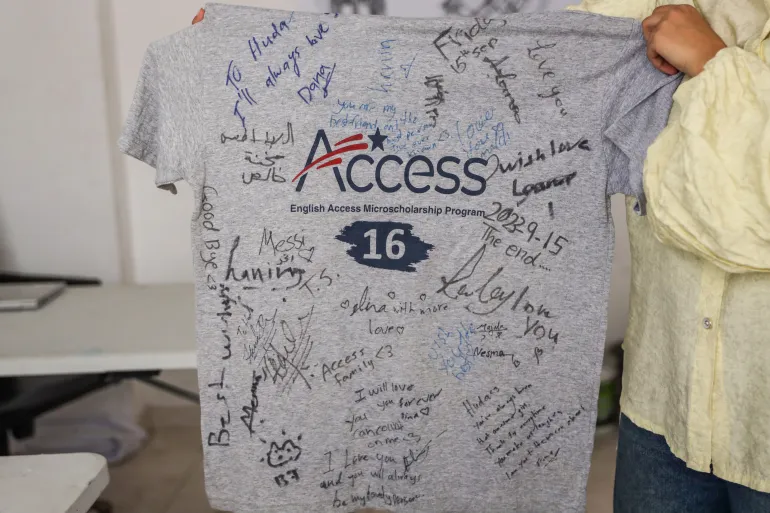
When Huda Helassa, 20, left her home in Tal al-Hawa, southern Gaza city, in the first hours of the war, she took a signed T-shirt from the Access Microscholarship Program, a United States-funded programme that provides English-language and cultural education to young people.
Her classmates had signed the shirt on September 15, 2023, during their final class, two years before she graduated on September 27.
“When we left our home on the first day of the war, the T-shirt was one of the first things that came to my mind,” Huda says.
She put it in her bag almost instinctively, wanting to hold on to something from a part of her life that had ended just days earlier.
[Abdelhakim Abu Riash/Al Jazeera]
Huda and her family first moved to her grandmother’s house in Gaza City, then were displaced south, walking part of the way, and eventually reached Rafah in the south of the Palestinian territory.
In May 2024, they were displaced again, this time to Khan Younis. When they returned to Gaza in January 2025, they found their home completely burned.
“There was nothing left of the life we had there,” she says. “No belongings, no photographs, no memories we could hold onto, just the blackened walls.”
They were displaced again in April 2025, moving to Remal and then Tal al-Hawa, before moving to az-Zawayda in September and returning to Gaza in October. They are currently in Tal al-Hawa.
For Huda, the T-shirt remains a link to the life she had before the war, a period of learning, friendships and experiences that shaped her.
Thursday marks 30 days since Israel’s foreign minister ordered the closure of the UK consulate in occupied East Jerusalem.
Published On 8 Oct 20268 Oct 2026
Workers at the UK consulate in occupied East Jerusalem have removed its signage as the Israeli shutdown deadline arrives, further damaging strained ties between allies.
Journalists from the Reuters news agency saw workers remove a plaque reading “British Consulate General” from the building on Thursday, as well as another sign for its consular section. The UK flag was still flying over the building.
Recommended Stories
list of 3 itemsend of list
Thursday marks 30 days since Israeli Foreign Minister Gideon Saar ordered the closure of the consulate in occupied East Jerusalem. The move was in response to the UK’s wave of sanctions on illegal Israeli settlements, including a ban on importing goods made there.
The United Nations and most countries consider the settlements illegal under international law. Israel disputes this.
The United Kingdom threatened to expel 27 Israeli diplomats if Israel proceeded to close the consulate in occupied East Jerusalem, according to unverified Israeli media reports.
The consulate has not responded to an immediate request for comment.
Israel has been adamant the consulate will close even as the UK has sought to keep it open, including sending the country’s top national security adviser to Israel last week for talks.
The UK’s presence in the city dates back almost 200 years, long before the state of Israel was established in 1948. The closure order does not affect the UK’s embassy in Tel Aviv, which handles diplomatic relations with Israel’s government.
The consulate, in the Sheikh Jarrah neighbourhood of occupied East Jerusalem, handles the UK’s relations with Palestinians in Jerusalem, as well as in the occupied West Bank and Gaza. It also provides consular services to Palestinians.
The UK Foreign Office on Wednesday declined to comment when asked whether the consulate was still operating or if diplomats working there had returned to the UK.
Despite the current strains, the UK and Israel are close economic, security and intelligence partners.
Comments by one of Israel’s most senior ultra-Orthodox rabbis postulating that Jews may have been better off without a state have prompted controversy in the country.
In footage broadcast by Channel 12 on Monday, the 96-year-old Rabbi Dov Lando, the spiritual leader of the Degel HaTorah party, also said that soldiers adhering to “Religious Zionism” killed in Israel’s wars were dying because of what their rabbis had taught them. The remarks, made at a closed meeting at his home in Bnei Brak, have set off a political storm three weeks before Israel’s October 27 parliamentary election.
Recommended Stories
list of 3 itemsend of list
“They are killed because their rabbis teach them a distorted Torah,” Lando said, adding that many military operations are carried out “not for saving lives, but for the honour of the state”.
Lando’s comment came in response to a question about admiration among some ultra-Orthodox Jewish men – who have traditionally refused the military draft – for religious Zionists who combine Torah study with military service.
His comments aren’t new – they were first published in February 2025. However, their reemergence this week comes amid an election campaign in which ultra-Orthodox military service has become one of the sharpest fault lines in Israeli politics.
The Israeli Supreme Court ruled in 2024 that there was no legal basis for ultra-Orthodox seminary students to have exemptions from military service, and the government has since not been able to pass legislation restoring the exemptions. The issue has led to large protests on both sides of the divide.
“The question is not what he said, but why this discourse has been placed at the heart of the Israeli debate three weeks before the election,” Ehab Jabareen, a researcher on Israeli affairs, told Al Jazeera.
Better ‘without a state’
Lando’s party is one of the two factions of the United Torah Judaism (UTJ) alliance, which won seven seats during the last election in 2022, and had been part of Israeli Prime Minister Benjamin Netanyahu’s government before its ministers resigned last year.
The bloc did continue to intermittently support the coalition government, however, and Netanyahu has been wary of removing the military exemption – despite widespread opposition to it from many in Israel – out of fear that the UTJ and similar parties would remove their support completely.
Along with his role within Degel HaTorah, Lando is also one of the spiritual leaders of Israel’s Lithuanian ultra-Orthodox community, which makes up roughly a third of the country’s estimated 1.45 million ultra-Orthodox Jews, also known as Haredim.
In the footage, he goes further. “It is possible to live well with the Arabs without a state,” he says, adding that international or Palestinian rule would have been “the best situation”.
Zionism, he argues, “caused the Arabs to hate us” and brought physical as well as spiritual disaster on the Jewish people. He describes secular Israelis as having built “a state of apostasy and heresy”.
The comments reflect non-Zionist and anti-Zionist positions that used to be dominant within ultra-Orthodox Judaism, but take on an overt reference to the possibility of living within a non-Zionist state, something that is even more controversial in Israel.
Ibrahim Khatib, a conflict studies scholar at the Doha Institute for Graduate Studies, said Lando’s remarks drew a line between Zionism and Judaism “from inside the Jewish community itself”, at a time when the official Israeli establishment “tries to bind them together”.
They also put to the test the narrative that Jewish communities in Arab societies were in danger and threatened, and that the Zionist movement came to “save them” at the formation of the state of Israel in 1948, he told Al Jazeera. However, Khatib cautioned that the ultra-Orthodox polity in Israel “is right-wing, its leaders hold right-wing positions, and some of them have made clearly offensive statements about Arabs and Palestinians”.
Political ammunition
Israeli opposition leaders moved quickly after the footage of Lando emerged this week, taking it as an opportunity to attack a figure from a party within Netanyahu’s electoral bloc.
Former Prime Minister Naftali Bennett – one of Netanyahu’s main challengers in the upcoming elections – called the remarks “anti-Semitic, anti-Zionist and anti-[Israeli military]”, but aimed his fire at Netanyahu and Finance Minister Bezalel Smotrich, who he said “back [Lando] and funnel tens of billions of shekels to him and his friends”.
Gadi Eisenkot, another opposition leader whose Yashar party has campaigned on enforcing the military draft, urged every Zionist party to pledge not to sit with Lando’s party.
Netanyahu, who publicly rejected Lando’s remarks in July when the rabbi accused the Religious Zionism movement of “incitement to murder” for its support of the drafting of religious seminary students to the military, has not yet commented.
Yair Golan, leader of the Democrats, put it bluntly: “Netanyahu is silent because without Rabbi Lando and his emissaries, he has no government.”
Jabareen sees Netanyahu’s silence as “calculated”.
“If Netanyahu attacks Lando forcefully, he pays a price with the Haredim he needs to form a government,” he said. “If he stays silent, he hands his rivals material to tell right-wing voters that the man who speaks of Zionism and security depends on a religious leadership that doubts Zionism itself.”
Who fights and who dies
The military draft of the ultra-Orthodox, Jabareen added, has turned “from an old dispute over religion and state into a question about the Israeli [social] contract itself: Who fights? Who dies? And who gets the exemptions, the budgets and the political influence in return?”
Mohammad Abu Rumman, an academic adviser at the Politics and Society Institute in Amman, said the significance of Lando’s remarks lay in the question that prompted them. The example of a young religious man who combines Torah study with military service, he said, “raises a question inside the ultra-Orthodox world itself: Why don’t we do the same?”
“When Lando describes their teaching as a distorted Torah, he is trying to close the door on emulating them,” Abu Rumman told Al Jazeera. “His words are aimed at his own audience as much as at his opponents.”
But Jabareen argued that the row exposes a rift more dangerous for Netanyahu than the familiar clash between secular and religious Israelis, because it runs through the right itself. Religious Zionists have paid a heavy human price in the war, while the ultra-Orthodox leadership still rejects conscription. Caught between those who pay the price of war and those who refuse to, Netanyahu needs both, and cannot satisfy them at once.
Whether the outrage over Lando’s comments translates into votes is less clear. Abu Rumman expects the remarks to “reinforce existing positions more than change voters’ choices”. The space where they could matter, he said, lies among right-wing voters who serve in the army and resent Netanyahu’s protection of ultra-Orthodox demands.
“If Netanyahu needs these parties to build a majority, that need will not disappear because of a rabbi’s remarks, however shocking,” Abu Rumman said. Netanyahu is also not the UTJ’s only suitor: Channel 12 reported that, frustrated by his failure to secure a law exempting ultra-Orthodox men from military service, the party would not rule out or oppose a government led by Eisenkot.
“The Israeli right has managed to bring under one political roof two currents with almost contradictory visions of the Jewish state,” Jabareen said. “One sanctifies the state and the expansion of its sovereignty. In the other, one of its most important rabbis can say it might have been better had the state never been founded.”








![Empty scrubs containing names of detained Palestinian healthcare workers hang outside the WMA summit [Courtesy of IMA OUT! campaign]](https://i0.wp.com/occasionaldigest.com/wp-content/uploads/2026/10/3c28041b-ba64-4a61-a62b-bb02868f9e39-1-1791663288.jpg?w=640&ssl=1)
![Celtic fans support the project that is thousands of miles away [Courtesy of Lajee Celtic]](https://i0.wp.com/occasionaldigest.com/wp-content/uploads/2026/10/1I2A38982-1791566479.jpg?w=640&ssl=1)
![A boxing programme was launched at Lajee Celtic in 2025 [Courtesy of Lajee Celtic]](https://i0.wp.com/occasionaldigest.com/wp-content/uploads/2026/10/IMG_3969-1-1791566622.jpg?w=640&ssl=1)
![The project provides a football academy and summer clubs for children, including many from refugee camps [Courtesy of Lajee Celtic]](https://i0.wp.com/occasionaldigest.com/wp-content/uploads/2026/10/IMG_4418-1791566711.jpg?w=640&ssl=1)