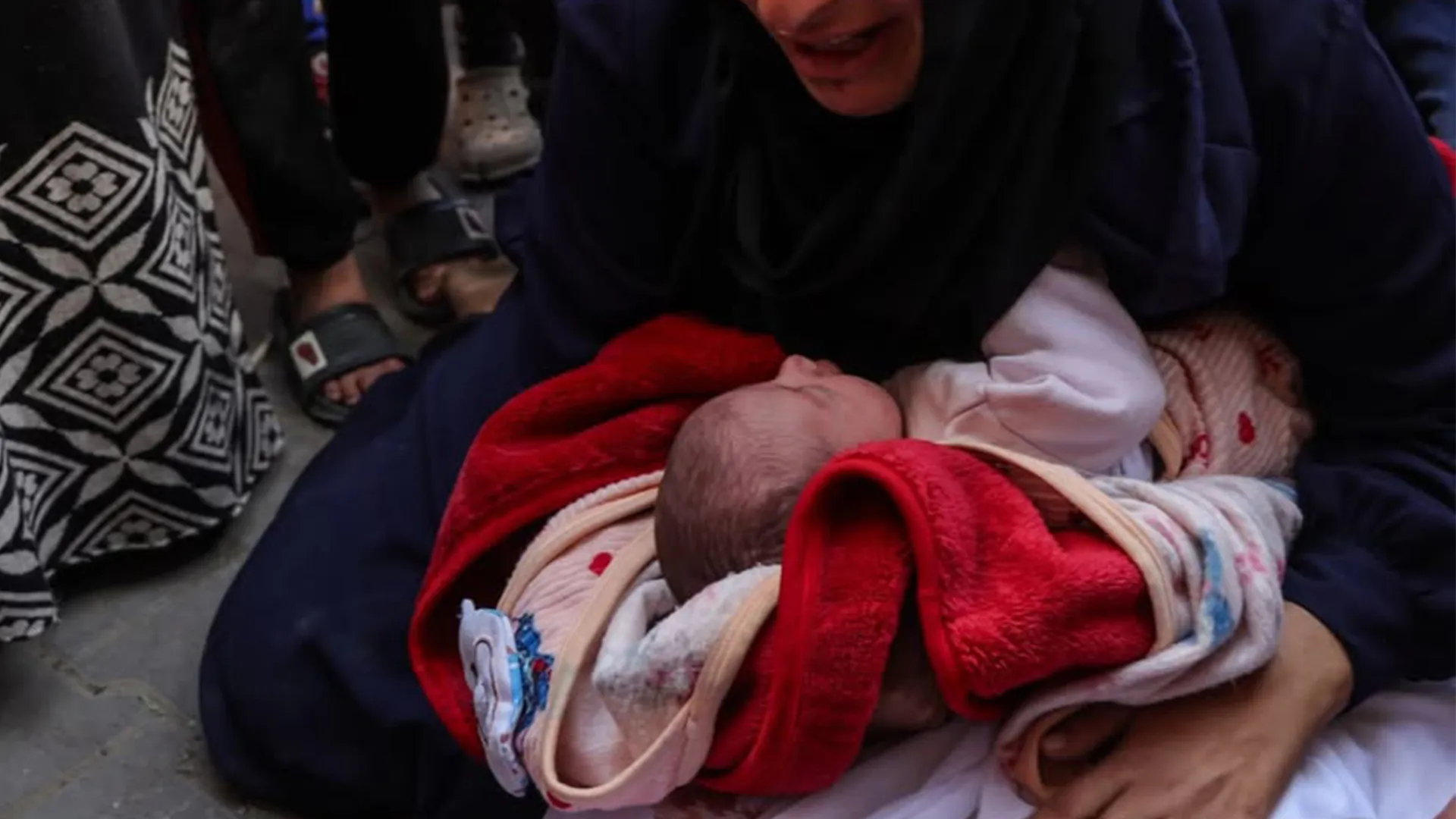
“Another gateway to the occupation of Palestine.” Many Palestinians in Gaza reacted to the inaugural meeting of Donald Trump’s so-called “Board of Peace” with deep scepticism, seeing it as a way to further Israel’s illegal occupation of the territory.
A new United Nations Human Rights Office report says Israel’s military campaign and blockade of Gaza have created living conditions “increasingly incompatible with Palestinians’ continued existence as a group in Gaza” as it presses its genocidal war on the enclave.
The report released on Thursday states that “intensified attacks, the methodical destruction of entire neighbourhoods and the denial of humanitarian assistance appeared to aim at a permanent demographic shift in Gaza”.
Recommended Stories
list of 3 itemsend of list
“This, together with forcible transfers, which appear to aim at a permanent displacement, raise concerns over ethnic cleansing in Gaza and the West Bank.”
Covering the period from November 1, 2024 to October 31, 2025, the report documents Israel’s security forces’ “systematic use of unlawful force” in the occupied West Bank and occupied East Jerusalem.
It highlights “widespread” arbitrary detention and the “extensive unlawful demolition” of Palestinian homes, stating that the measures seek to “systematically discriminate, oppress, control and dominate the Palestinian people”.
These policies are altering “the character, status and demographic composition of the occupied West Bank, raising serious concerns of ethnic cleansing”.
In Gaza, the report condemns the killing and maiming of “unprecedented numbers of civilians”, the spread of famine and the destruction of the “remaining civilian infrastructure”.
At least 463 Palestinians, including 157 children, starved to death during the 12-month period, according to the findings.
“Palestinians faced the inhumane choice of either starving to death or risking being killed while trying to get food,” it says, adding that the famine and “foreseeable and repeatedly foretold” deaths directly resulted from actions taken by the Israeli government.
Israel’s ongoing attacks on Gaza
Israeli forces launched new air strikes and artillery attacks across the Gaza Strip, as families in the besieged enclave woke to begin their Ramadan fast under bombardment.
Shelling struck areas east of Khan Younis in southern Gaza at dawn on Thursday, where Israeli troops remain deployed. Warplanes also hit Rafah and areas east of Gaza City, according to Al Jazeera’s correspondent.
A day earlier, medical officials at Nasser Medical Complex confirmed that two Palestinians were killed by Israeli fire near the so-called “yellow line” in Bani Suheila, east of Khan Younis.
Israeli forces continue to demolish homes and infrastructure in areas they control, flattening entire neighbourhoods and entrenching displacement.
The attacks form part of Israel’s repeated breaches of the ceasefire that began on October 10, 2025.
Gaza’s Ministry of Health says those violations have killed 603 Palestinians and wounded 1,618 others as of Monday.
‘Partnership between settlers and the occupation forces’
Violence has also intensified in the occupied West Bank.
On Wednesday evening, the Palestinian Ministry of Health announced the death of 19-year-old Nasrallah Mohammad Jamal Abu Siam, who succumbed to wounds sustained during a settler assault on Mukhmas, northeast of occupied East Jerusalem.
Settlers, operating under the protection of Israeli forces, opened fire and stole dozens of sheep from Palestinian farmers. Three of the wounded were shot with live ammunition.
With Abu Siam’s killing, the number of Palestinians shot dead by settlers alone since October 7, 2023 has risen to 37, according to the Wall and Settlement Resistance Commission.
Moayad Shaaban, head of the commission, described events in Mukhmas as a “dangerous escalation in organised settler terrorism”, citing a “full partnership between settlers and the occupation forces”.
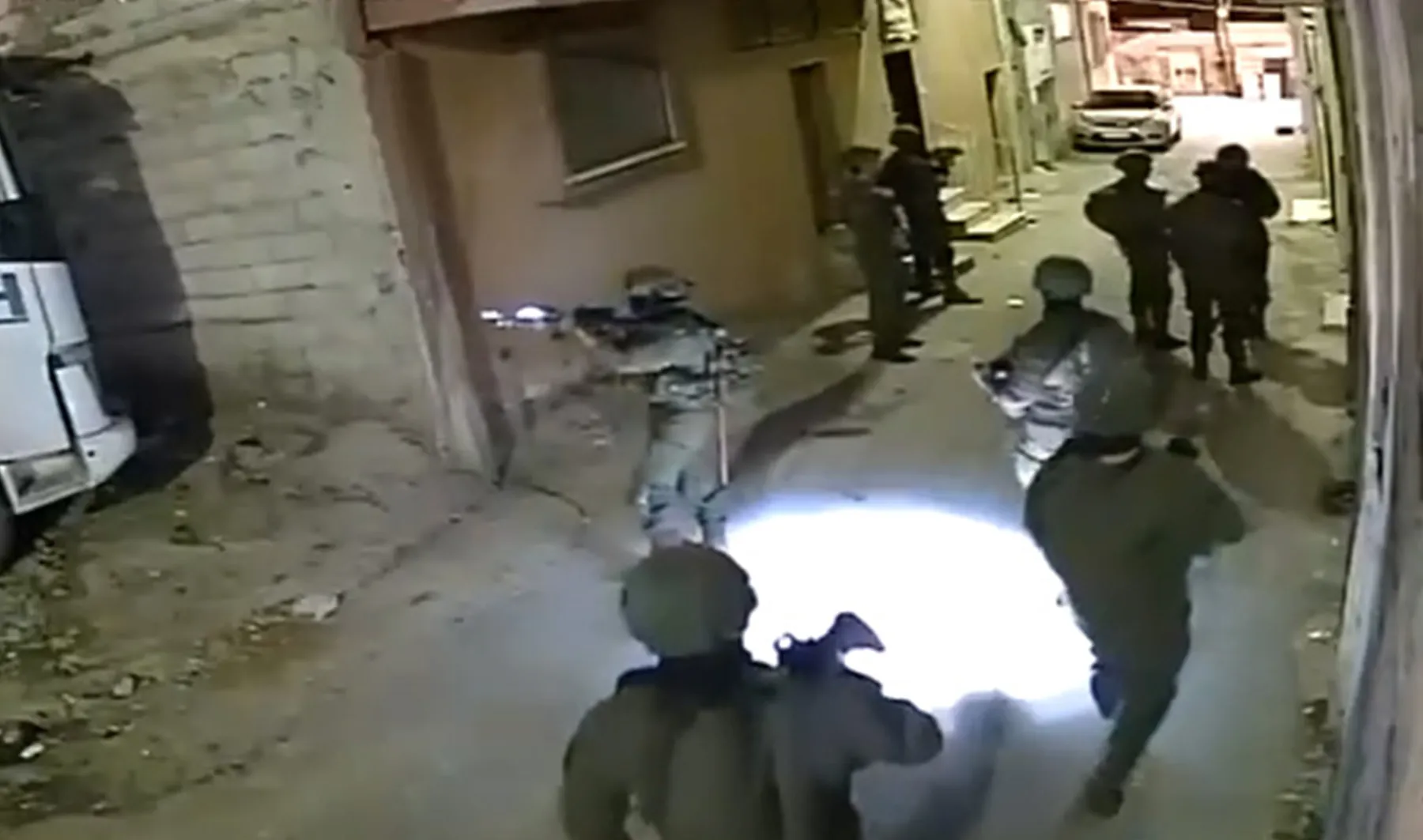
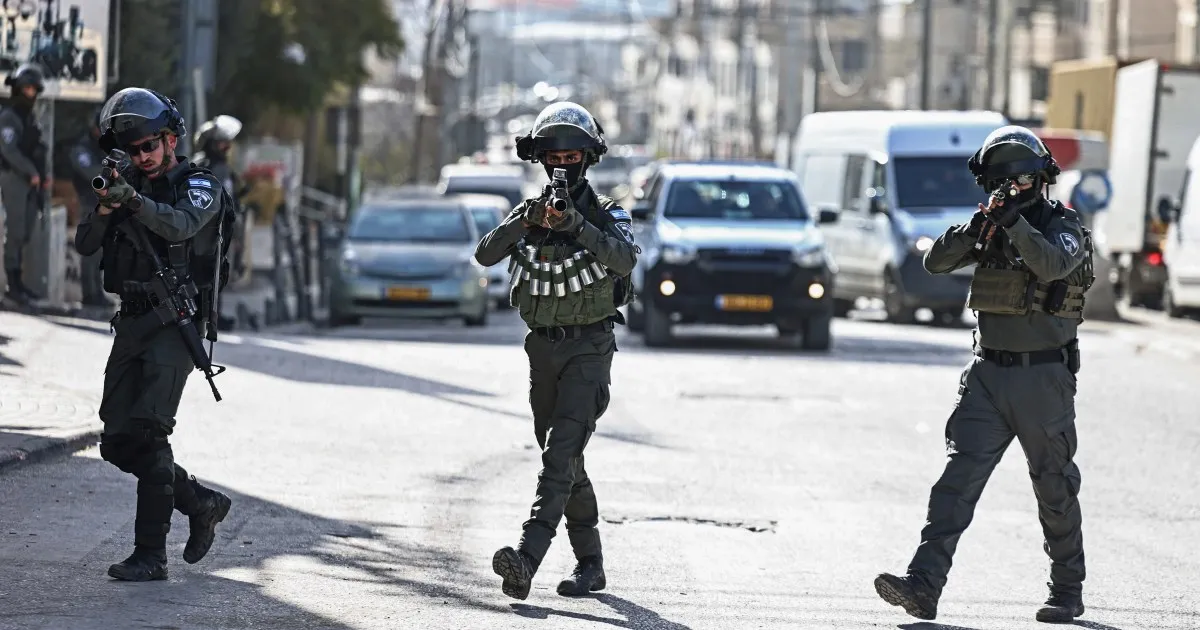
Israeli troops also raided the town of Arraba, south of Jenin, wounding two young men with live fire, one critically. Soldiers detained several others during the incursion.
In Jerusalem, Ramadan has brought further restrictions at Al-Aqsa Mosque. The mosque’s imam, Sheikh Akrama Sabri, said Israeli authorities are “imposing a reality by force” by limiting worshippers while allowing extremist Jewish incursions into the compound.
Occupation authorities have issued more than 100 deportation orders barring young Jerusalemites from entering the mosque and restricted West Bank worshippers to 10,000 permits under strict age and security conditions. Al-Aqsa can hold up to half a million people.
Sheikh Sabri said Israeli forces question worshippers during tarawih prayers in what he described as “provocation upon provocation”.
Israeli forces carried out violent raids across the occupied West Bank, detaining Palestinians and demolishing homes. A young man was killed by settlers in Mukhmas, Jerusalem, while restrictions on West Bank worshippers at Al-Aqsa added to tensions during Ramadan.
Since October 2023, UNRWA has faced attacks by Israel’s government, funding cuts from the US, and legal cases questioning the organisation’s neutrality. During that time, Israeli forces have killed more than 380 UNRWA staff in Gaza.
In this episode of Centre Stage, Al Jazeera’s Mohamed Hassan speaks with UNRWA’s commissioner general, Philippe Lazzarini, about Israel’s ban on the agency and what he calls a turning point for international law and the global order.
Washington, DC – United States President Donald Trump is set to hold his first “Board of Peace” summit in Washington, DC, an event where the US leader likely hopes to prove the recently launched panel can overcome scepticism – even from those who signed on in support – in the face of months of Israeli ceasefire violations in Gaza.
The summit on Thursday comes nearly three months to the day since the UN Security Council approved a US-backed “ceasefire” plan amid Israel’s genocide in Gaza, which included a two-year mandate for the Board of Peace to oversee the devastated Palestinian enclave’s reconstruction and the launch of a so-called International Stabilization Force.
Recommended Stories
list of 3 itemsend of list
Disquiet has surrounded the board since the November security council vote, with many traditional Western allies wary of the US administration’s apparent wider ambitions, which some have viewed as an attempt to rival the United Nations in a Trump-dominated format.
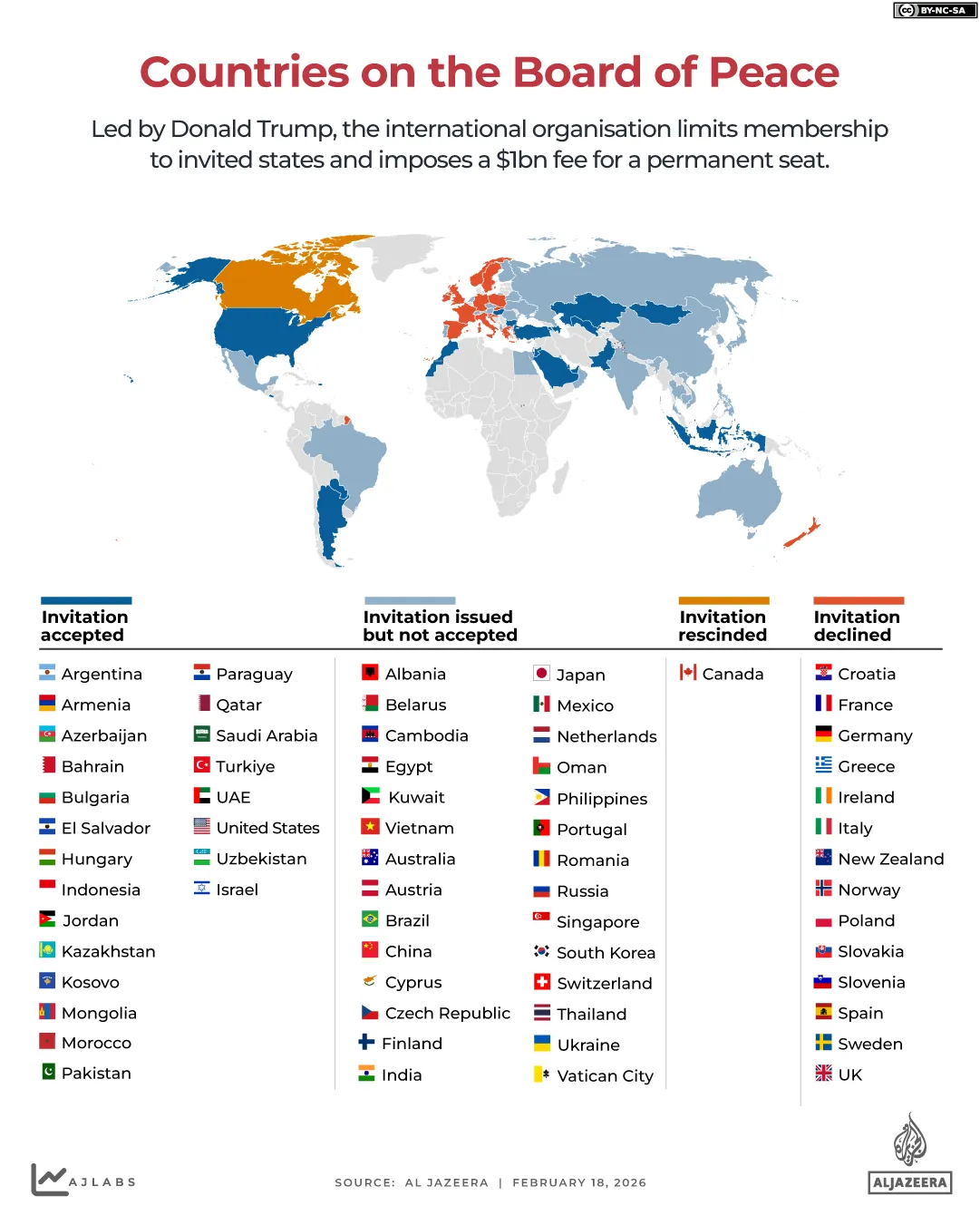
Others, including countries that have already signed on as members, have raised concerns about the board’s fitness to effect meaningful change in Gaza. Several regional Middle East powers have joined the board, with Israel becoming a late, and to some, disconcerting addition in early February.
As of Thursday’s meeting, the board still has no Palestinian representation, which many observers see as a major obstacle to finding a lasting path forward.
“What exactly does Trump want to get out of this meeting?” Yousef Munayyer, the head of the Israel-Palestine programme at the Arab Center Washington DC, questioned.
“I think he wants to be able to say that people are participating, that people believe in his project and in his vision and in his ability to move things forward,” he told Al Jazeera.
“But I don’t think that you’re going to see any major commitments until there are clearer resolutions to the key political questions that so far remain outstanding.”
‘Only game in town’
To be sure, the Board of Peace currently remains the “only game in town” for parties interested in bettering the lives of Palestinians in Gaza, Munayyer explained, while simultaneously remaining “extremely and intimately tied to the persona of Donald Trump”.
That raises serious doubts over the board’s longevity in what is likely to be a decades-long response to the crisis.
“Regional players that have a serious concern over the future of the region and concern over the genocide have no choice but to really hope that their participation in this Board of Peace allows them to have some leverage and some direction over the future of Gaza in the next several years,” Munayyer said.
He assessed the greatest opportunity for member states who “understand the challenges and understand the context” would be to focus on “what realistically can be achieved in the time period … to focus on the immediate needs and address them aggressively”. That includes health infrastructure, freedom of movement, making sure that people have shelter, pushing for an end to ceasefire violations, to name a few, he said.
At least 72,063 Palestinians have been killed in Gaza since October 7, 2023, with 603 killed since the October 11, 2025, “ceasefire” went into effect. Nearly the entire population of 2.1 million has been displaced, with more than 80 percent of buildings destroyed.
For his part, Trump, who has previously envisioned turning Gaza into a “Middle East Riviera”, struck a positive tone ahead of the meeting. In a post on his Truth Social account on Sunday, Trump touted the “unlimited potential” of the board, which he said would prove to be the “most consequential International Body in History”.
Trump also said that $5bn in funding pledges would be announced “toward the Gaza Humanitarian and Reconstruction efforts” and that member states “have committed thousands of personnel to the International Stabilization Force and Local Police to maintain Security and Peace for Gazans”.
He did not provide further details.
Meanwhile, Trump’s son-in-law, Jared Kushner, who is a member of the panel’s so-called “Gaza executive board”, unveiled the clearest vision yet of Washington’s “master plan” for Gaza in January.
The plan, assembled without any input from Palestinians in Gaza, outlined gleaming residential towers, data centres, seaside resorts, parks, and sports facilities, predicated on the erasure of the enclave’s urban fabric.
At the time, Kushner did not say how the reconstruction plan would be funded. He said it would begin following full disarmament by Hamas and the withdrawal of the Israeli military, both issues that remain unresolved.
Pressure on Israel?
As the US administration stargazes over sweeping construction plans, it is likely to face a starker reality when it meets with a collection of the 25 countries that have signed on as members, as well as several others that are sending observers to the meeting, according to Annelle Sheline, a research fellow in the Middle East programme at the Quincy Institute for Responsible Statecraft.
Any progress to show the board’s “proof of concept” would all-but-surely require asserting unilateral pressure on Israel, she noted.
“Trump is hoping to have countries back up his claim about the $5bn, to get actual commitments on paper,” Sheline told Al Jazeera.
“This is probably going to be challenging, because – especially the Gulf countries – have been very clear that they’re not interested in financing another reconstruction that’s just going to be destroyed again in a few years.”
Israel’s decision to join the board, which Israeli Prime Minister Benjamin Netanyahu had initially opposed, has piqued concerns about further influence over US policy. An act of good faith by the US to advance a more lasting peace could be the inclusion of a Palestinian official on the board, Sheline added.
She proposed widely popular Palestinian political prisoner Marwan Barghouti, who is continuing to serve consecutive life sentences in Israel, as a possible candidate. His release, she said, could be an example of an area where Washington could use its leverage to immediate effect.
In the shorter term, “[interested member states] are largely waiting for the security situation to resolve. Israel violates the ceasefire daily and moves the yellow line”, Sheline said, referring to the demarcation in Gaza behind which Israel’s military was required to withdraw as part of the first phase of the “ceasefire” agreement.
Indonesia’s government has said it is preparing to commit 1,000 troops to a stabilisation force, which could eventually grow to 8,000. But any deployment would likely remain delayed without better ceasefire guarantees, she said.
“It’s still an active warzone,” Sheline added. “So it’s very understandable that even Indonesia, which has hypothetically said it would contribute troops to the stabilisation force, is likely going to say we’re not actually going to do that until the situation is stable.”
An opportunity?
Ensuring an actual ceasefire is enforced – including creating accountability mechanisms for violations – remained “by far the most critical” task for the board’s inaugural meeting, according to Laurie Nathan, the director of the mediation programme at the Kroc Institute for International Peace Studies at the University of Notre Dame.
Trump’s Board of Peace is “not going to be able to play a meaningful reconstruction role in the absence of stability in Gaza, and stability requires adherence to the ceasefire”, he told Al Jazeera.
The next key step – and a major development that could come from Thursday’s meeting – would be a commitment of troops, although Nathan noted any deployment would still likely be deadlocked until a voluntary Hamas disarmament agreement is reached.
On the face of the situation, Trump would appear increasingly incentivised to use Washington’s considerable leverage over Israel to foster a stability in Gaza that the president has closely aligned with his own self-image.
After all, Trump and his allies have regularly portrayed the US president as the “peacemaker-in-chief”, repeatedly touting his success in conflict resolution, even if facts on the ground undermine the claims. Trump has been vocal in his belief that he should be awarded the Nobel Peace Prize.
Still, “Trump’s motivation is multifold,” Nathan explained.
“Does he care about peace? I think he does. Does he want to be a peace broker? Yes. Does he genuinely want the Nobel Peace Prize? Yes.”
“On the other hand, he is performative … it’s never quite clear how much of it is serious for him,” he added. “The further problem is that personal interests are always involved when Trump is doing these things.”
Wider ambitions?
Both Washington’s Western allies and experts in conflict resolution have scrutinised what appears to be the yawning scope of the Board of Peace, far beyond the Gaza purview approved by the UN Security Council last year.
A widely reported founding “charter” sent to invited countries did not directly reference Gaza as it took digs at pre-existing approaches to peace-building that “foster perpetual dependency and institutionalise crisis rather than leading people beyond it”. Instead, it envisioned a “more nimble and effective international peace-building body”.
Critics have further questioned Trump’s singular and indefinite role as “chairman” and sole veto-holder, which largely undermines the principles of multilateralism intended to be enshrined in organisations such as the UN. They have argued that the structure fosters a transactional approach both in dealings with the US government and Trump as an individual.
Richard Gowan, the programme director of global issues and institutions at International Crisis Group, said those concerns are unlikely to subside any time soon. Still, he did not see that precluding European countries from supporting the board’s effort if it is able to make meaningful progress.
“I think, in practical terms, you will see other countries trying to support what the board is doing in the Gaza case, while continuing to keep it at arm’s length over other issues,” he said.
Thursday’s meeting could indicate the Board of Peace’s dynamic and tone going forward.
“If Trump uses his authority under the charter to order everyone around, block any proposals he doesn’t like, and run this in a completely personalistic fashion,” Gowan said, “I think even countries that want to make nice with Trump will wonder what they’re getting into.”
“If Trump shows his mellower side. If he’s actually willing to listen, in particular to the Arab group and what they’re saying about what Gaza needs, if it looks like a genuine conversation in a genuine contact group,” he added, “that won’t erase all the questions about the board’s future, but it will at least suggest that it can be a serious sort of diplomatic framework.”
Attacks by Israeli settlers in the occupied West Bank have intensified recently, backed by Israeli forces.
A young Palestinian man was killed and four other people were injured when a group of Israeli settlers, backed by Israeli forces, opened fire on a village in the occupied West Bank.
The death of the young man on Wednesday evening, identified as Nasrallah Abu Siyam, 19, marks the first killing of a Palestinian by Israeli settler gunfire so far this year, the official Palestinian news agency Wafa reports.
Recommended Stories
list of 3 itemsend of list
During the attack on the village of Mukhmas, located northeast of occupied East Jerusalem, Israeli settlers also stole dozens of sheep from local Palestinian residents, Wafa reports.
The attack on Mukhmas and other Palestinian towns and villages constitutes a “dangerous escalation in systematic terrorism and reflects a complete partnership between the settlers and the occupation forces,” Mu’ayyad Sha’ban, head of the Palestinian Authority’s Colonization and Wall Resistance Commission, told Wafa.
Calling for international protection for Palestinian communities, Sha’ban said that settlers have now killed 37 Palestinians in the occupied West Bank since October 2023, but the escalating violence would not deter Palestinians from holding onto their land.
Mukhmas and the adjacent Bedouin community of Khallat al-Sidra have faced repeated attacks by Israeli settlers, often occurring with the protection or presence of Israeli forces, according to reports.
The governorate of Jerusalem, one of the 16 administrative districts of Palestine, said in a statement that the killing of the young man by Israeli settlers was a “fully-fledged crime… carried out under the protection and supervision of the Israeli occupation forces.”
Translation: Martyr of the town of Mukhmas, Nasrallah Abu Siyam, who ascended after succumbing to his injury from settler gunfire during the attack on the town northeast of occupied Jerusalem.
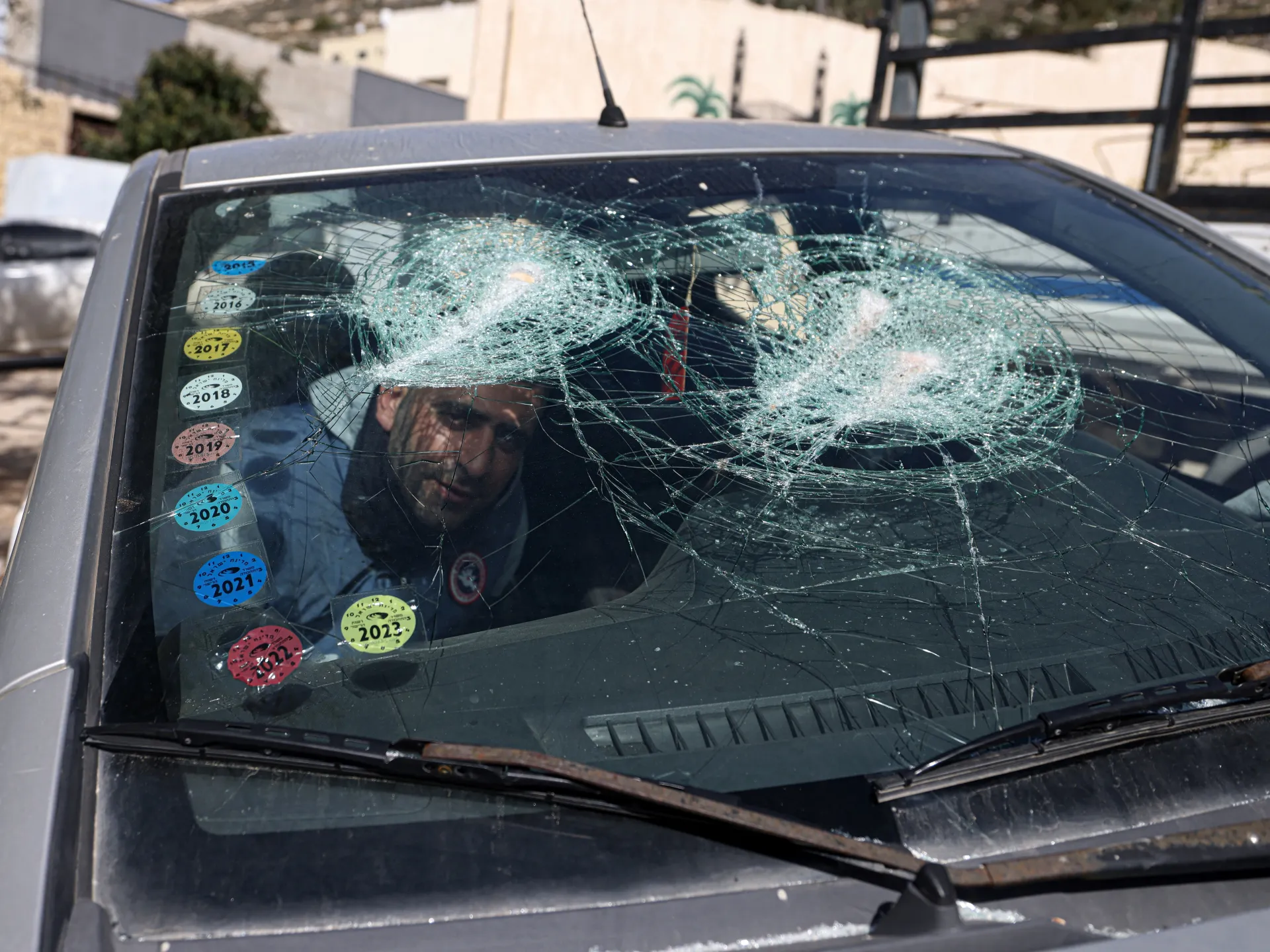
The governorate said the attack was part of a dangerous surge of violence carried out by settlers in the occupied West Bank, including East Jerusalem, and characterised by the widespread use of live ammunition, direct shooting at Palestinian citizens, as well as burning local Palestinian homes, damaging vehicles and property, and seizing land.
Armed settler violence is being supported by “pillars of the Israeli government”, foremost among them far-right ministers Itamar Ben-Gvir and Bezalel Smotrich, the governorate added, according to Wafa.
According to the United Nations Office for the Coordination of Humanitarian Affairs (OCHA), more than 1,000 Palestinians have been killed by Israeli forces and settlers in the West Bank since 2023, and more than 10,000 people have been forcibly displaced.
Since the start of this year alone, almost 700 Palestinians in nine communities have been displaced due to settler attacks, including 600 displaced from the Ras Ein al-Auja Bedouin community in Jericho governorate, OCHA reports.
Earlier this week, Israel’s government approved a plan to designate large areas of the occupied West Bank as Israeli “state property”, shifting the burden of proof to Palestinians to establish ownership of their land in a longstanding situation where Israel has made it all but impossible to obtain property titles.
Described as de-facto annexation of the West Bank, the Israeli government’s decision has drawn widespread international condemnation as a grave escalation that undermines the Palestinian people’s right to self-determination.
Israel’s attempted land grab and killings by settlers come amid a sharp increase in Israeli military operations across the occupied West Bank, where forces have intensified raids, carried out forced evictions, home demolitions, and other repressive measures in multiple areas.
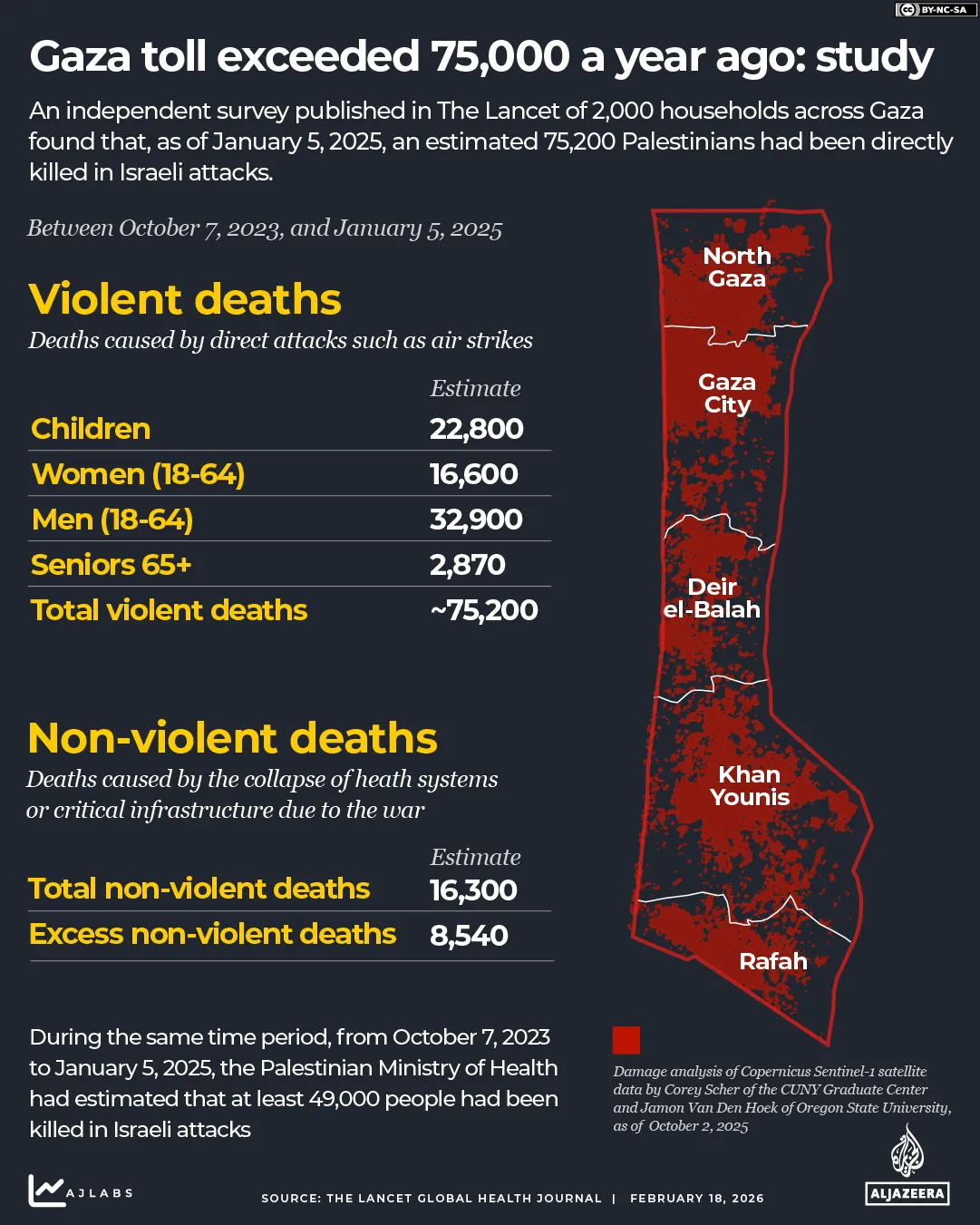
The true human cost of Israel’s genocidal war on the Gaza Strip has far exceeded previous official estimates, with independent research published in the world’s leading medical journals verifying more than 75,000 “violent deaths” by early 2025.
The findings, emerging from a landmark series of scientific papers, suggest that administrative records from the Gaza Ministry of Health (MoH) represent a conservative “floor” rather than an overcount, and provide a rigorous bedrock to the scale of Palestinian loss.
The Gaza Mortality Survey (GMS), a population-representative household study published in The Lancet Global Health, estimated 75,200 “violent deaths” between October 7, 2023 and January 5, 2025. This figure represents approximately 3.4 percent of Gaza’s pre-conflict 2.2 million population and sits 34.7 percent higher than the 49,090 “violent deaths” reported by the MoH for the same period.
The Gaza Health Ministry estimates that as of January 27 this year, at least 71,662 people have been killed since the start of the war. Of those, 488 people have been killed since the declaration of a ceasefire in the Gaza Strip on October 10, 2025.
Israel has consistently questioned the ministry’s figures, but an Israeli army official told journalists in the country in January that the army accepted that about 70,000 people had been killed in Gaza during the war.
Despite the higher figure, researchers noted that the demographic composition of casualties – where women, children, and the elderly comprise 56.2 percent of those killed – remains remarkably consistent with official Palestinian reporting.
(Al Jazeera)
Scientific validation of the toll
The GMS, which interviewed 2,000 households representing 9,729 individuals, provides a rigorous empirical foundation for a death toll.
Michael Spagat, a professor of economics at Royal Holloway University of London and the study’s lead author, found that while MoH reporting remains reliable, it is inherently conservative due to the collapse of the very infrastructure required to document death.
Notably, this research advances upon findings published in The Lancet in January 2025, which used statistical “capture-recapture” modelling to estimate 64,260 deaths during the war’s first nine months.
While that earlier study relied on probability to flag undercounts, this report shifts from mathematical estimation to empirical verification through direct household interviews. It extends the timeline through January 2025, confirming a violent toll exceeding 75,000 and quantifying, for the first time, the burden of “non-violent excess mortality”.
According to a separate commentary in the same publication, the systematic destruction of hospitals and administrative centres has created a “central paradox” where the more devastating the harm to the health system, the more difficult it becomes to analyse the total death toll.
Verification is further hindered by thousands of bodies still buried under rubble or mutilated beyond recognition. Beyond direct violence, the survey estimated 16,300 “non-violent deaths”, including 8,540 “excess” deaths caused directly by the deterioration of living conditions and the blockade-induced collapse of the medical sector.
Researchers highlighted that the MoH figures appear to be conservative and reliable, dispelling misinformation campaigns aimed at discrediting Palestinian casualty data. “The validation of MoH reporting through multiple independent methodologies supports the reliability of its administrative casualty recording systems even under extreme conditions,” the study concluded.
A decade of reconstructive backlogs
While the death toll continues to mount, survivors face an unprecedented burden of complex injury that Gaza’s decimated healthcare system is no longer equipped to manage. A predictive, multi-source model published in eClinicalMedicine quantified 116,020 cumulative injuries as of April 30, 2025.
The study, led by researchers from Duke University and Gaza’s al-Shifa Hospital, estimated that between 29,000 and 46,000 of these injuries require complex reconstructive surgery. More than 80 percent of these injuries resulted from explosions, primarily air attacks and shelling in densely populated urban zones.
The scale of the backlog is staggering. Ash Patel, a surgeon and co-author of the study, noted that even if surgical capacity were miraculously restored to pre-war levels, it would take approximately another decade to work through the estimated backlog of predicted reconstructive cases. Before the escalation, Gaza had only eight board-certified plastic and reconstructive surgeons for a population exceeding 2.2 million people.
The collapse of the health system
The disparity between reconstructive need and capacity is exacerbated by what researchers describe as the “systematic destruction” of medical infrastructure. By May 2025, only 12 of Gaza’s 36 hospitals remained capable of providing care beyond basic emergency triage, with approximately 2,000 hospital beds available for the entire population, down from more than 3,000 beds before the war.
“There is little to no reconstructive surgery capacity left within Gaza,” the research concluded, warning that specialised expertise like microsurgery is almost absent. The clinical challenge is further compounded by Israel’s use of incendiary weapons, which produce severe burns alongside blast-related fractures.
The long-term effect of these injuries is often irreversible. Without prompt medical treatment, patients face high risks of wound infection, sepsis, and permanent disability. The data indicate that tens of thousands of Palestinians will remain with surgically addressable disabilities for life unless there is a huge international increase in reconstructive capacity and aid.
The ‘grey zone’ of mortality
Writing in The Lancet Global Health, authors Belal Aldabbour and Bilal Irfan observed a growing “grey zone” in mortality where the distinction between direct and indirect death becomes blurred. Patients who die of sepsis months after a blast, or from renal failure after a crushing injury because they cannot access clean water or surgery, occupy a space that risks understating the true lethality of military attacks.
Conditions have only deteriorated since the data collection periods. By late 2025, forced evacuations covered more than 80 percent of Gaza’s area, with northern Gaza and Rafah governorates facing full razing by Israeli forces. Famine was declared in northern Gaza in August 2025, further reducing the physiological reserve of injured survivors and complicating any surgical recovery.
This series of independent studies serves as an urgent call for accountability and an immediate cessation of hostilities. “The healthcare infrastructure in Gaza is being repeatedly decimated by attacks despite protection by international humanitarian law,” researchers stated. They underscored that the only way to prevent the reconstructive burden from growing further is an immediate end to attacks against civilians and vital infrastructure.
The latest deaths come as just 260 people, out of 18,500 in urgent need, have been allowed to seek medical care via the crossing to Egypt, the United Nations says.
Published On 18 Feb 202618 Feb 2026
Share
Israeli fire has killed at least two Palestinians in separate incidents across the Gaza Strip on Wednesday, as Israel continues to block thousands of Palestinians from seeking urgent medical attention through the partially-reopened Rafah crossing in its ongoing, more than two-year genocidal war on the enclave.
Al Jazeera’s correspondent on the ground reported that one child was killed in the northern Strip when an Israeli drone targeted children on their way to check their destroyed homes in the area.
Recommended Stories
list of 4 itemsend of list
Meanwhile, soldiers opened fire on and killed Muhand Jamal al-Najjar, 20, near the Bani Suheila roundabout east of the city of Khan Younis, Palestinian news agency Wafa reported.
Gaza hospital sources told Al Jazeera that Israeli fire also wounded three Palestinians in al-Mughraqa in the central Strip and the al-Mawasi area of Rafah to the south.
Since the “ceasefire”, which Israel has violated on a near-daily basis, took effect in mid-October, more than 600 Palestinians have been killed and more than 1,600 wounded, according to the latest figures released by the Palestinian Ministry of Health earlier this week.
Limited reopening
The latest deaths come as the Israeli military maintains its blockade on Palestinians looking to exit Gaza via the Rafah crossing to Egypt for medical care.
The United Nations Office for the Coordination of Humanitarian Affairs (OCHA) has tallied a total of 260 patients leaving Gaza since the first day of reopening two and a half weeks ago, the office told Al Jazeera on Wednesday – a small fraction of the roughly 18,500 people who desperately require evacuation.
The figure even falls short of an earlier promise from an Egyptian border official that at least 50 Palestinians would cross in each direction starting from the first day. Instead, just five patients were permitted to leave.
Human rights and medical groups, including the World Health Organization (WHO), have repeatedly called for Palestinians to be able to access critical care outside Gaza.
WHO chief Tedros Adhanom Ghebreyesus wrote on social media earlier this month that the body wanted to see an “immediate reopening of the medical referral route to the West Bank, including East Jerusalem”, and for more countries to accept patients for specialised care not available in the Strip.
But Gaza’s health system – which Israel has largely decimated since starting its war on the embattled enclave in October 2023 – must look to “reduce reliance on medical evacuations”, he added.
“This is now the top priority,” Tedros said, ticking off necessities including scaling up health services inside Gaza, stocking fresh medical supplies, and repairing damaged facilities.
The rate of return to Gaza through the checkpoint has also been slow: 269 people had passed into Gaza as of February 11, OCHA said in its latest report.
One recent batch – made up of 41 people who were transported to Nasser Medical Complex – said Israeli soldiers subjected them to humiliating physical searches and intense interrogations, an Al Jazeera team reported.
Returnees have previously recounted being blindfolded during hours of political interrogations and psychological pressure before being allowed to re-enter Gaza.
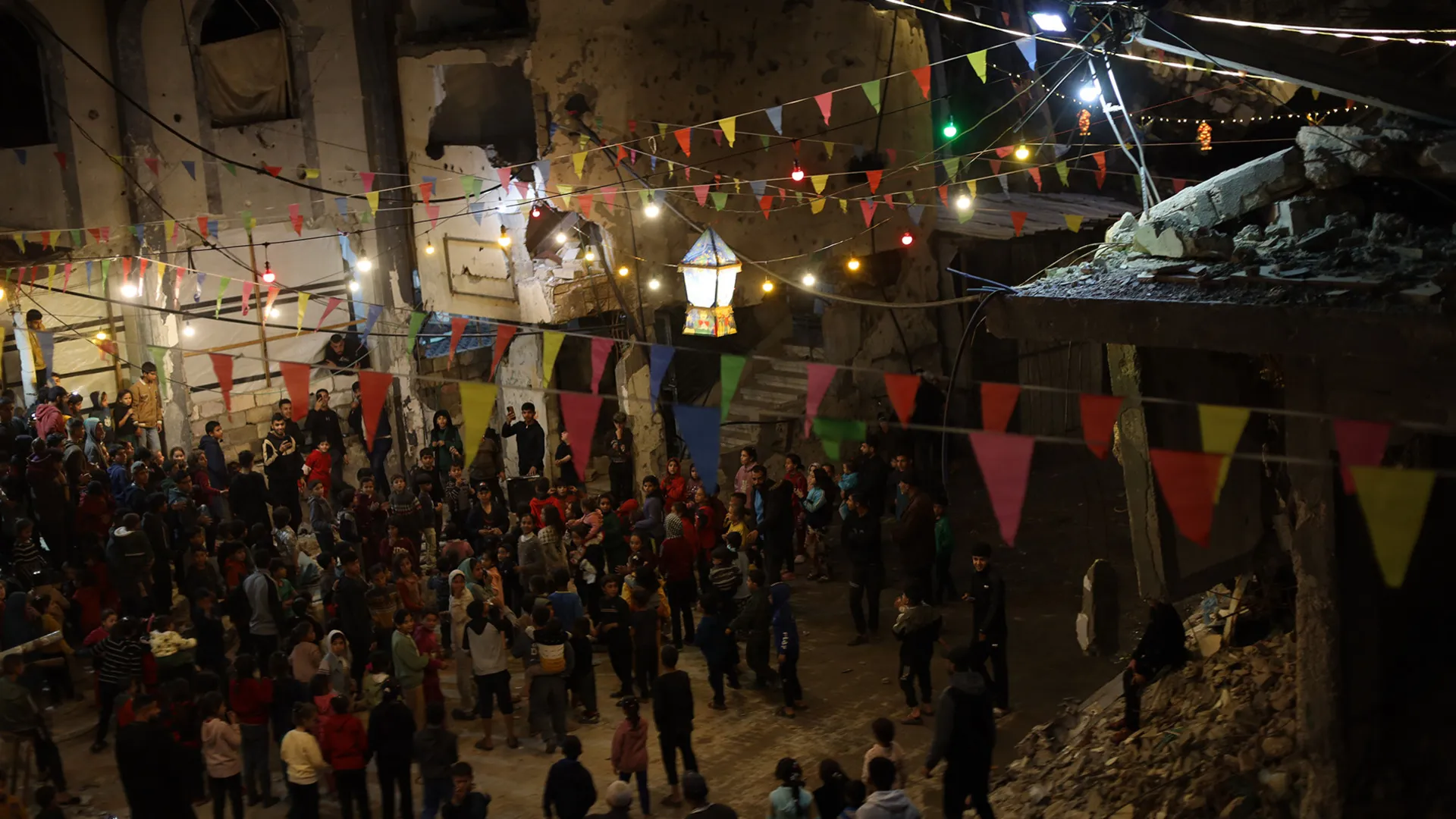
Palestinians are marking the start of the holy month of Ramadan in Gaza where the impact of Israel’s genocidal war continues to be felt, despite a ceasefire in place since October.
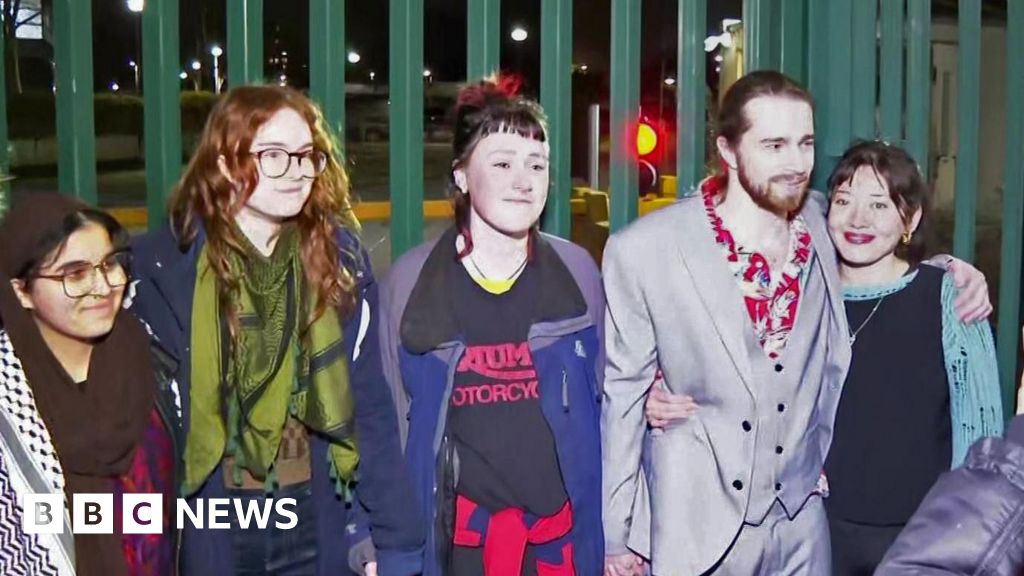
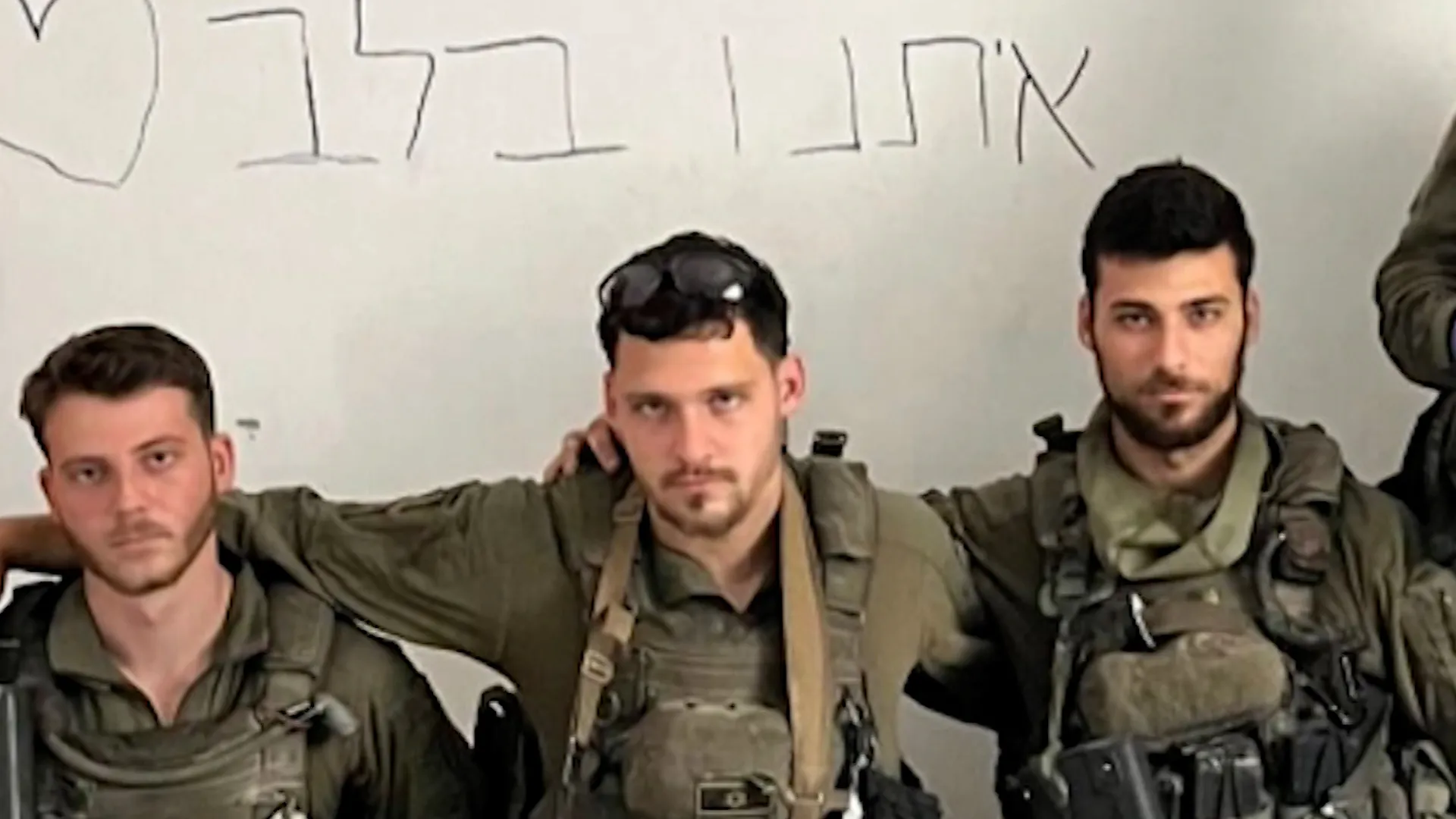
The Hind Rajab Foundation has filed a criminal complaint to a court in Chile, seeking the prosecution of an Israeli Ukrainian who was an Israeli sniper in Gaza. Lucia Newman investigates his role in the deaths in Gaza.
UN warns that Israel’s plan will lead to widespread dispossession of Palestinian land in the occupied West Bank.
More than 80 United Nations member states have condemned Israel’s plan to expand control over the occupied West Bank and claim large tracts of Palestinian territory as Israeli “state property”.
“We strongly condemn unilateral Israeli decisions and measures aimed at expanding Israel’s unlawful presence in the West Bank,” Palestinian Ambassador to the UN Riyad Mansour said on Tuesday, speaking on behalf of the coalition of 85 member states and several international organisations.
Recommended Stories
list of 4 itemsend of list
“Such decisions are contrary to Israel’s obligations under international law and must be immediately reversed. We underline in this regard our strong opposition to any form of annexation,” Mansour said.
“We reiterate our rejection of all measures aimed at altering the demographic composition, character and status of the Palestinian territory occupied since 1967, including East Jerusalem,” he said.
“Such measures violate international law, undermine the ongoing efforts for peace and stability in the region, run counter to the Comprehensive Plan and jeopardise the prospect of reaching a peace agreement ending the conflict”, he added.
The Comprehensive Plan is a November agreement between Israel and Hamas to end Israel’s genocidal war on Gaza, which includes a halt to Israel’s illegal settlement activity in the occupied West Bank.
Signatories to the joint statement on Tuesday include Australia, Canada, China, France, Pakistan, Russia, South Korea, Saudi Arabia, Turkiye , the United Arab Emirates, the European Union, the League of Arab States and the Organisation of Islamic Cooperation.
The joint statement follows Israel’s decision to implement land registration in Section C of the West Bank for the first time since 1967, when Israel began its occupation of Palestinian territory.
Section C makes up about 60 percent of the West Bank’s territory, according to the illegal settlement monitoring organisation Peace Now.
UN Secretary-General Antonio Guterres, earlier this week, warned that Israel’s land registration plan could lead to the “dispossession of Palestinians of their property and risks expanding Israeli control over land in the area”.
Guterres warned that the process could be both “destabilising” and unlawful, citing a landmark 2024 ruling by the International Court of Justice (ICJ) that stated Israel’s occupation of the West Bank and Gaza is unlawful and must end.
Israel’s “abuse of its status as the occupying power” renders its “presence in the occupied Palestinian territory unlawful”, the ICJ said in its ruling.
“Israeli settlements in the West Bank and East Jerusalem, and the regime associated with them, have been established and are being maintained in violation of international law,” the court added.
According to the ICJ, approximately 465,000 Israeli settlers live in the occupied West Bank, spread across some 300 settlements and outposts, which are illegal under international law.
Separately on Tuesday, a 13-year-old Palestinian child was killed, and two other children were seriously injured, in the occupied West Bank’s central Jordan Valley area by ammunition discarded by the Israeli military, the Palestinian Wafa news agency reported.
The injured children, aged 12 and 14, are receiving treatment in hospital, Wafa said.
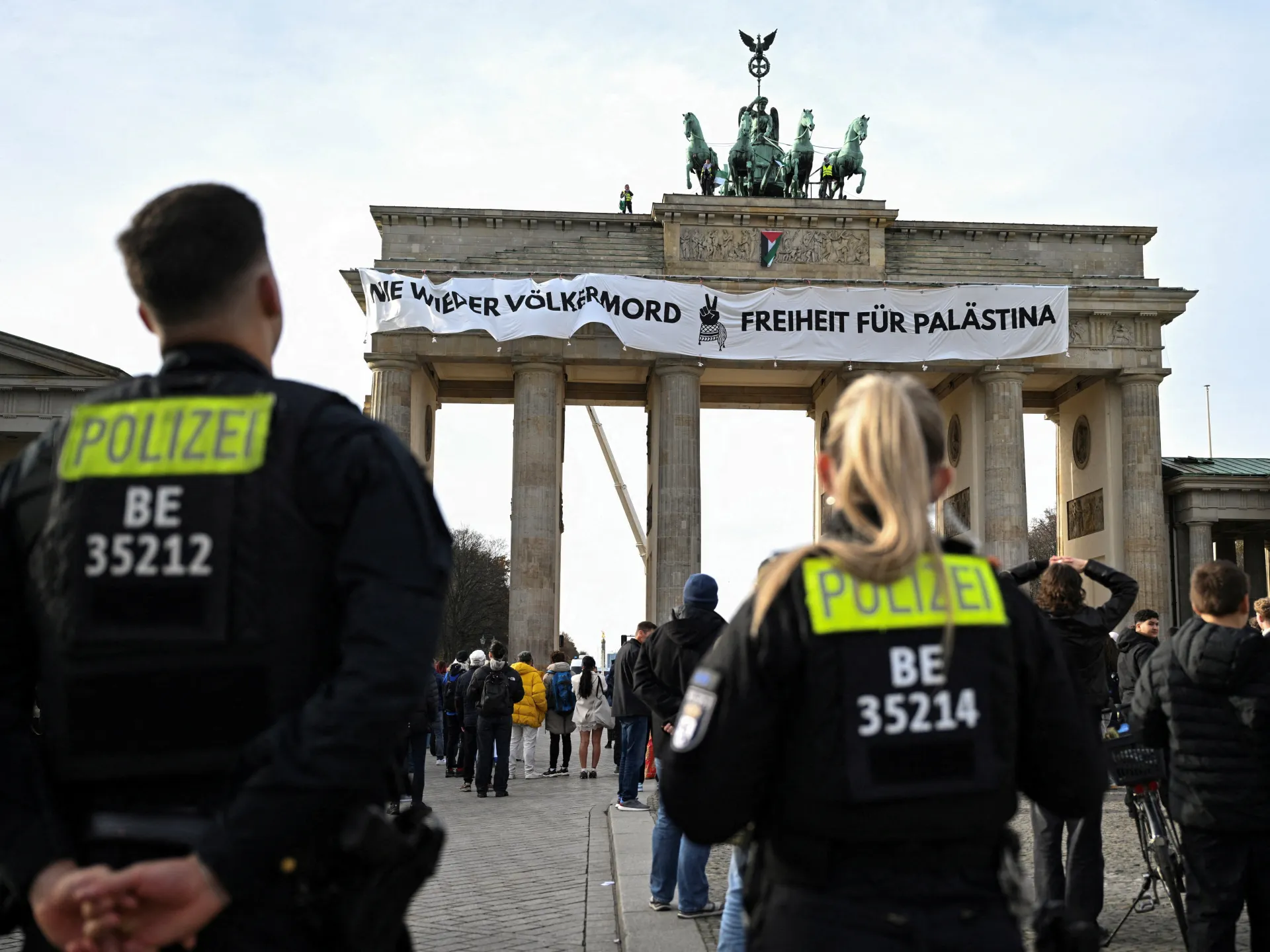
Dozens of actors and directors, including Javier Bardem and Tilda Swinton, have condemned the Berlin International Film Festival for its “anti-Palestinian racism” and urged organisers to clearly state their opposition to “Israel’s genocide” in Gaza.
In an open letter published in Variety on Tuesday, the 81 film workers also denounced comments by this year’s president of the awards jury, Wim Winders who – when asked about Gaza – said, “We should stay out of politics”.
Recommended Stories
list of 4 itemsend of list
They noted that the festival’s stance stands in direct contrast to its policy on Russia’s war on Ukraine and on the situation in Iran.
All of the signatories are alumni of the festival, which is also known as the Berlinale, and include actors Cherien Dabis and Brian Cox, as well as directors Adam McKay, Mike Leigh, Lukas Dhont, Nan Goldin, and Avi Mograbi.
In their letter, the film workers expressed dismay at the Berlinale’s “involvement in censoring artists who oppose Israel’s ongoing genocide against Palestinians in Gaza” and the German government’s key role in enabling the atrocities.
They said the festival has been policing filmmakers, and listed several examples from last year’s Berlinale.
“Last year, filmmakers who spoke out for Palestinian life and liberty from the Berlinale stage reported being aggressively reprimanded by senior festival programmers. One filmmaker was reported to have been investigated by police, and Berlinale leadership falsely implied that the filmmaker’s moving speech – rooted in international law and solidarity – was ‘discriminatory’,’ they wrote.
“We stand with our colleagues in rejecting this institutional repression and anti-Palestinian racism,” they added.
The film workers said they “fervently disagree” with Wenders’s statement that filmmaking is the “opposite of politics”, saying, “You cannot separate one from the other.”
Their letter comes days after Indian author Arundhati Roy said she was withdrawing from this year’s festival after what she called “unconscionable statements” by jury members, including Wenders.
This year’s festival runs from February 12 to 22.
The film workers noted that the Berlinale’s actions come at a time when the world is learning “horrifying new details about the 2,842 Palestinians ‘evaporated’ by Israeli forces” in Gaza through thermobaric weapons made by the United States.
An Al Jazeera investigation, published last week, documented how these weapons – which are capable of generating temperatures exceeding 3,500 degrees Celsius (6,332 degrees Fahrenheit) – leave behind no remains other than blood or small fragments of flesh.
Germany, too, has been one of the biggest exporters of weapons to Israel despite the evidence of Israel’s atrocities. It has also introduced repressive measures to discourage people from speaking out in solidarity with Palestinians, including in the arts.
In their letter, the Berlinale alumni noted that the international film world is increasingly taking a stance against Israel’s genocidal actions.
Last year, major international film festivals – including the world’s largest documentary festival in Amsterdam – endorsed a cultural boycott of Israel, while more than 5,000 film workers have pledged to refuse work with Israeli film companies and institutions.
Yet, the film works said, the Berlinale “has so far not even met the demands of its community to issue a statement that affirms the Palestinian right to life, dignity, and freedom”.
This is the least it can and should do, they said.
“Just as the festival has made clear statements in the past about atrocities carried out against people in Iran and Ukraine, we call on the Berlinale to fulfil its moral duty and clearly state its opposition to Israel’s genocide, crimes against humanity and war crimes against Palestinians, and completely end its involvement in shielding Israel from criticism and calls for accountability,” they added.
This week, the Israeli government approved a plan to designate large areas of the occupied West Bank as “state property”, shifting the burden of proof to Palestinians to establish ownership of their land.
The decision, which undermines the Palestinian people’s right to self-determination, has prompted regional condemnation, with many describing it as a de facto annexation which is illegal under international law.
In recent years, Israel has intensified its military incursions, expanded illegal settlements, and demolished Palestinian homes, all as part of a series of aggressive actions to steal more Palestinian land.
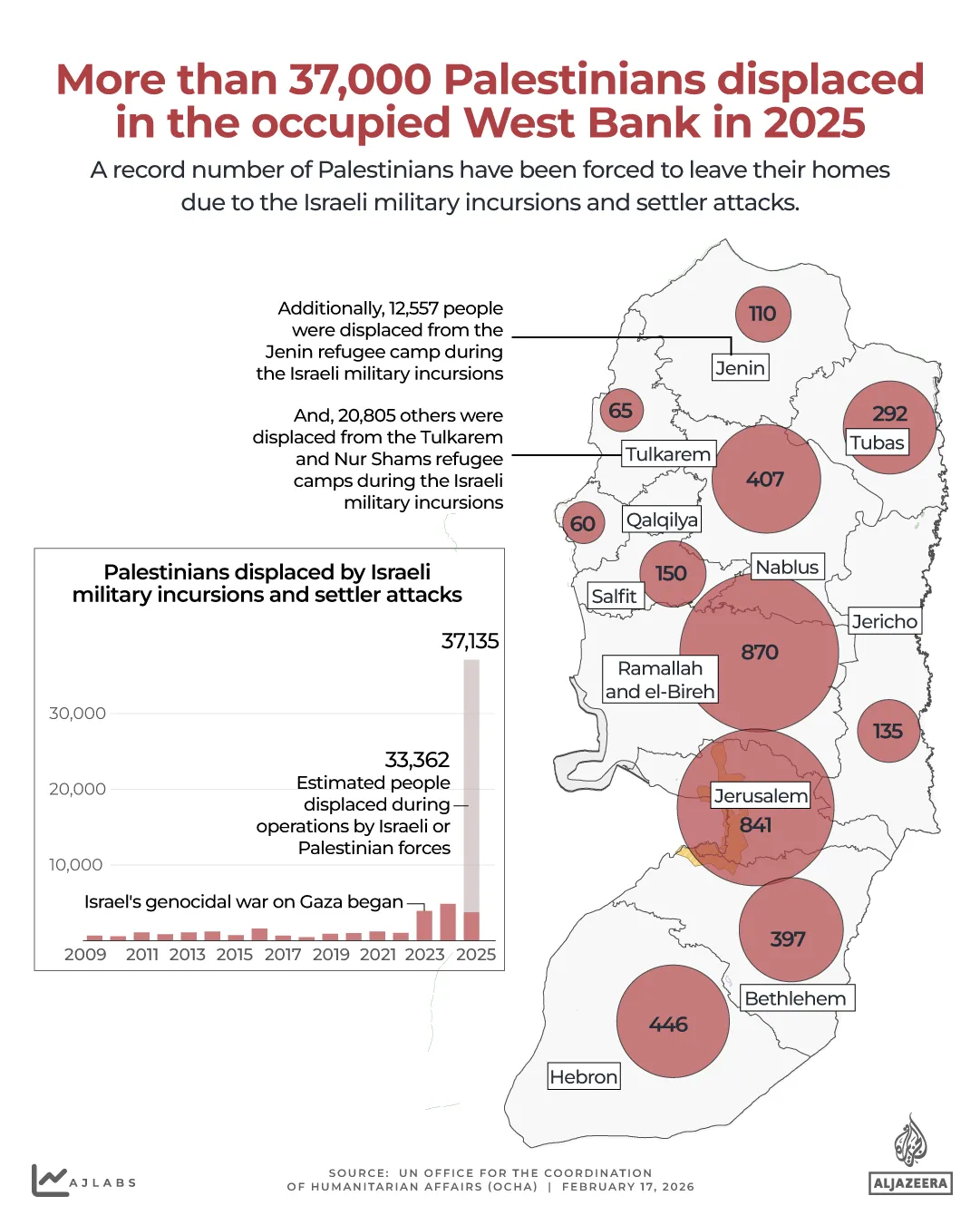
In total, at least 37,135 Palestinians were displaced across the occupied West Bank in 2025, a record high amid Israeli military incursions and settler attacks, according to figures compiled by the United Nations Office for the Coordination of Humanitarian Affairs (OCHA).
(Al Jazeera)
According to UNRWA, Israeli military incursions have forcibly displaced at least 33,362 Palestinians from three northern refugee camps: Jenin (12,557), Tulkarem(11,862) and Nur Shams (8,943).
In addition to those displaced during Israeli operations, at least 3,773 have been forced from their homes due to Israeli home demolitions, settler violence, and access restrictions.
The West Bank governorates with the largest number of forced displacements include:
Ramallah and el-Bireh: 870
Jerusalem: 841
Hebron: 446
Nablus: 407
Bethlehem: 397
Tubas: 292
Salfit: 150
Jericho: 135
Jenin: 110
Tulkarem: 65
Qalqilya: 60
Why most demolitions and attacks are in Area C
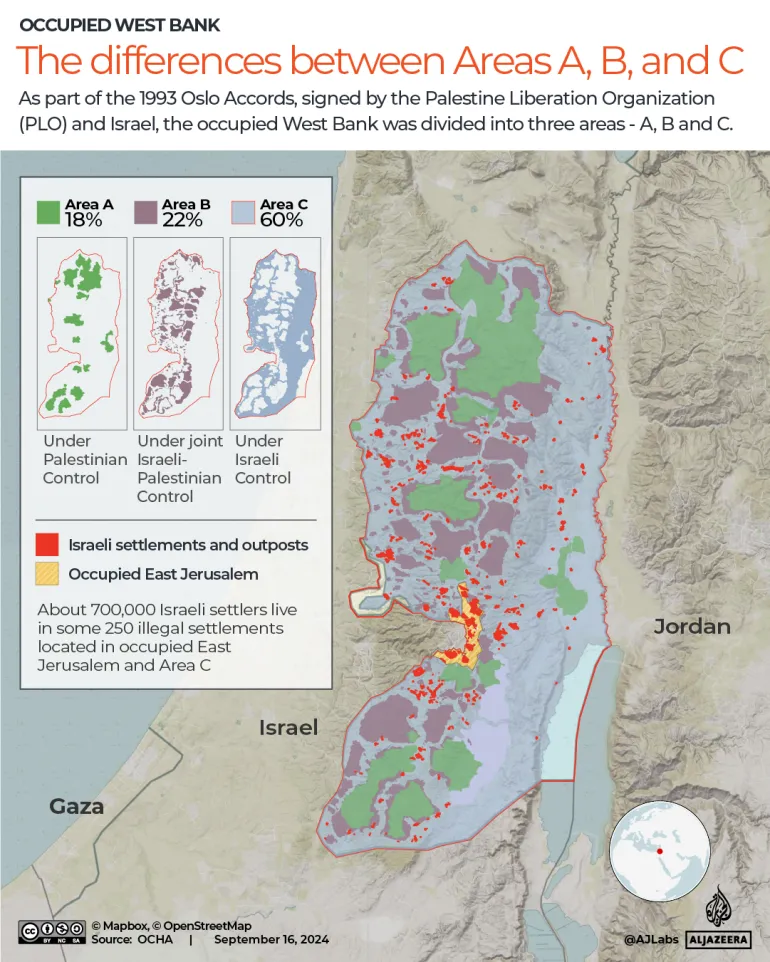
As part of the 1993 Oslo Accords, signed by the Palestine Liberation Organization (PLO) and Israel, the occupied West Bank was divided into three areas – A, B and C.
This led to the formation of the Palestinian Authority (PA) – an administrative body that would govern Palestinian internal security, administration and civilian affairs in areas of self-rule, for a five-year interim period.
Area A initially comprised 3 percent of the West Bank and grew to 18 percent by 1999. In Area A, the PA controls most affairs.
Area B represents about 22 percent of the West Bank. In both areas, while the PA is in charge of education, health and the economy, the Israelis have full control of external security, meaning they retain the right to enter at any time.
Area C represents 60 percent of the West Bank. Under the Oslo Accords, control of this area was supposed to be handed over to the PA. Instead, Israel retains total control over all matters, including security, planning and construction. The transfer of control to the PA never happened.
Although Area C is the least populated part of the West Bank, with about 300,000 Palestinians compared with about 3 million in Areas A and B, the vast majority of home demolitions and settler attacks occur there, due to it being under full Israeli military and administrative control.
The Israeli Civil Administration rarely grants building permits to Palestinians in this area, so nearly all construction is considered illegal and subject to demolition.
(Al Jazeera)
Record number of Israeli settler attacks
Since Israel’s genocidal war on Gaza began in October 2023, violence by Israeli settlers in the occupied West Bank has steadily risen.
According to data from OCHA, settlers have attacked Palestinians more than 3,700 times in the occupied West Bank over the past 28 months.
The number of settler attacks has risen sharply since 2016, with 852 recorded in 2022, 1,291 in 2023, 1,449 in 2024 and 1,828 in 2025 – an average of five attacks per day, according to data from OCHA.
Every West Bank governorate has faced settler attacks over the past year.
Data from OCHA shows that between January 1, 2025 and December 31, 2025, the Ramallah and el-Bireh governorate recorded the highest number of settler attacks with 523 incidents, followed by Nablus with 349 and Hebron with 309.
(Al Jazeera)
Who are Israeli settlers?
Settlers are Israeli citizens living in illegal, Jewish-only communities, known as Israeli settlements, built on Palestinian-owned land that Israel occupied in 1967.
Benjamin Netanyahu – Israel’s longest-serving prime minister – has bolstered settlement expansions since he first came to power in 1996, undermining the 1993 Oslo Accords, which called for the freezing of settlements and a mutually negotiated two-state solution.
Today, roughly 10 percent of Israel’s Jewish population, totalling between 600,000 and 750,000 people, live in about 250 settlements and outposts dispersed throughout the occupied West Bank and East Jerusalem.
Many of these settlements are located near Palestinian population centres, often leading to increased tensions and restrictions on movement for Palestinians.
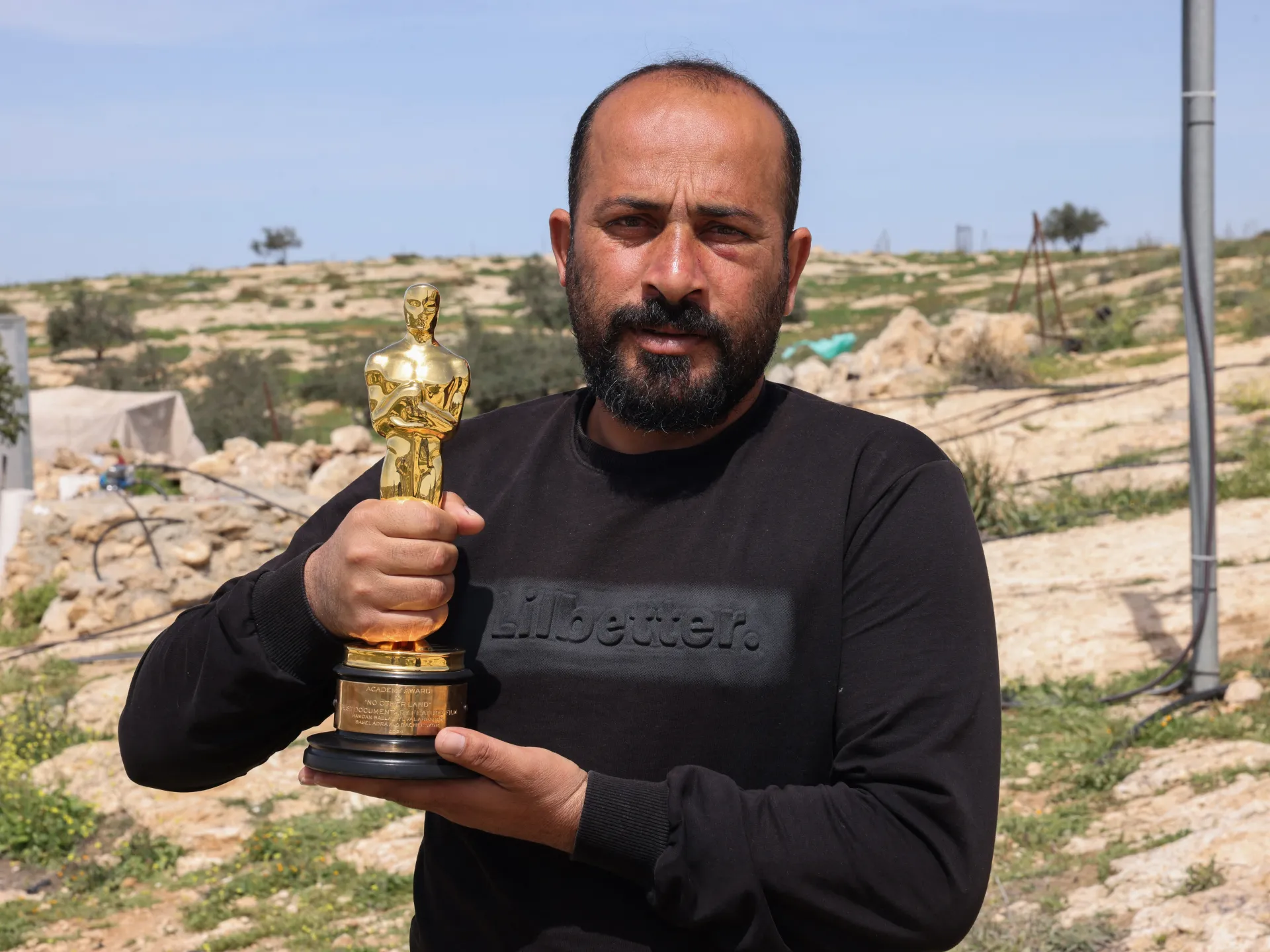
Nearly a year since the Palestinian-Israeli film No Other Land won an Academy Award, its co-director, Hamdan Ballal, says Israeli settler attacks on the cluster of occupied West Bank villages known as Masafer Yatta have only gotten worse, as those involved in the documentary bear the brunt of Israeli reprisals.
The latest bout of violence came on Sunday, when Israeli settlers stormed Ballal’s hometown of Susya, despite an Israeli court ruling designating the area around his home as closed to non-residents. Israeli army officers called by the family to enforce the ruling, issued two weeks prior, sided with the attackers.
Recommended Stories
list of 3 itemsend of list
“The ruling was supposed to make things better for us, but the opposite happened,” Ballal told Al Jazeera on Monday. “Israeli authorities did nothing to enforce the decision, but joined the settlers in the attack.”
One of his brothers was held in a chokehold by an army officer and later hospitalised with breathing difficulties. Four other relatives – two brothers, a nephew, and a cousin – were detained for several hours as they arrived at the scene. They have all since been released.
The Palestinian film director said his family was ambushed by the same Israeli settler who led an attack against him as he returned from the Oscar ceremony in Los Angeles last March. Then, he had been taken away in a blindfold by a group of Israeli settlers and army officers and released a day later with injuries to his head and stomach, leading to global condemnation.
Ballal said the retaliation for the documentary has since been directed against his family, rather than himself, to avoid media attention. His relatives have been routinely prevented from grazing sheep and ploughing the land. At times, they have been arrested, questioned about his work and whereabouts, or intimidated to vacate their homes.
“My family is paying because of me; because I shared the movie and I shared the truth,” he said.
The film, which won the Oscar for best documentary on March 2, follows Palestinian journalist Basel Adra and Israeli journalist Yuval Abraham as they try to protect Palestinian homes amid tensions with settlers in Masafer Yatta in the South Hebron Hills. Israeli filmmaker Rachel Szor also shares directing credits.
Israeli settlers in the area often graze their animals on Palestinian land to assert control, signal unrestricted access, and lay the groundwork for establishing illegal outposts, cutting Palestinians off from their farms and livestock.
The Israeli army argues that it has to demolish the Palestinian villages to convert the area into a military “firing” or training zone. It did not respond to Al Jazeera’s request for comment on Sunday’s incident.
Across the occupied West Bank, Israel’s far-right coalition government, led by Prime Minister Benjamin Netanyahu, has been openly promoting new measures to expand Israeli control over the Palestinian territory.
Most recently, it announced the resumption of the land registration processes for the first time since 1967, which Israeli rights groups say will accelerate the dispossession and displacement of Palestinians in violation of international law.
‘Right to live’
Ballal’s family has not been the only one to pay the price for the acclaimed documentary.
Adra, the Palestinian protagonist in the film, had his home in at-Tawani raided by the Israeli army in September, after clashes broke out with a group of Israeli settlers that trespassed in his olive grove.
In July, Awdah Hathaleen, an activist, football player and a consultant for No Other Land, was shot dead, in the chest, in the village of Umm al-Khair. The father of three was a key figure in non-violent resistance against settler violence in Masafer Yatta. His assailant, Israeli settler Yinon Levi, later said, “I’m glad I did it,” according to witnesses.
Ballal said he does not hesitate to describe these attacks as being “terrorist”, as they leave the Palestinian community in Masafer Yatta constantly fearing for their safety.
“It’s a simple right for Palestinians to feel safe in their homes,” he told Al Jazeera. “We are scared; we are in danger, and it’s been like this for a long time.”
“International law doesn’t work for Palestinians,” he continued. “But we are human, and we have a right to live.”
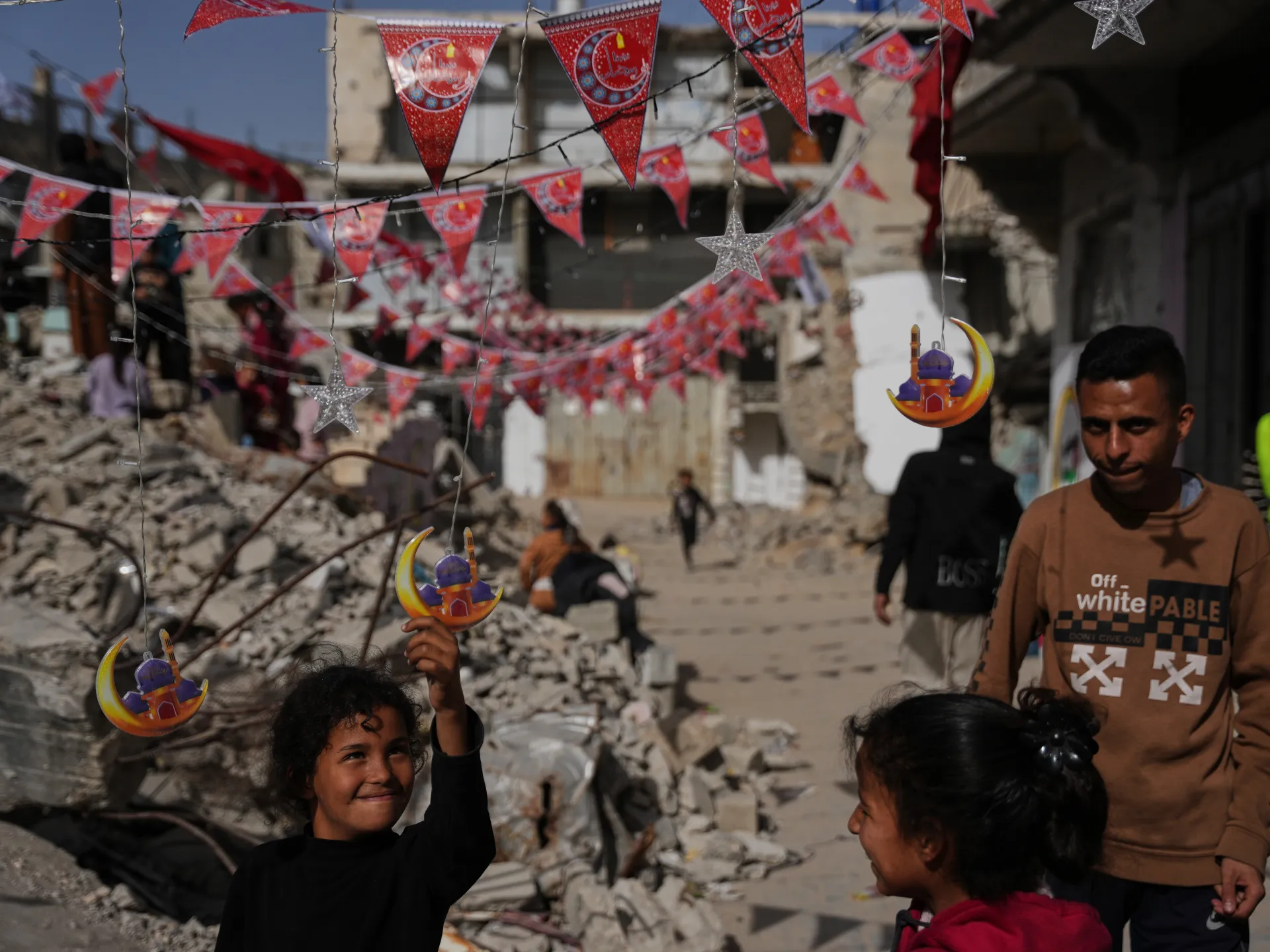
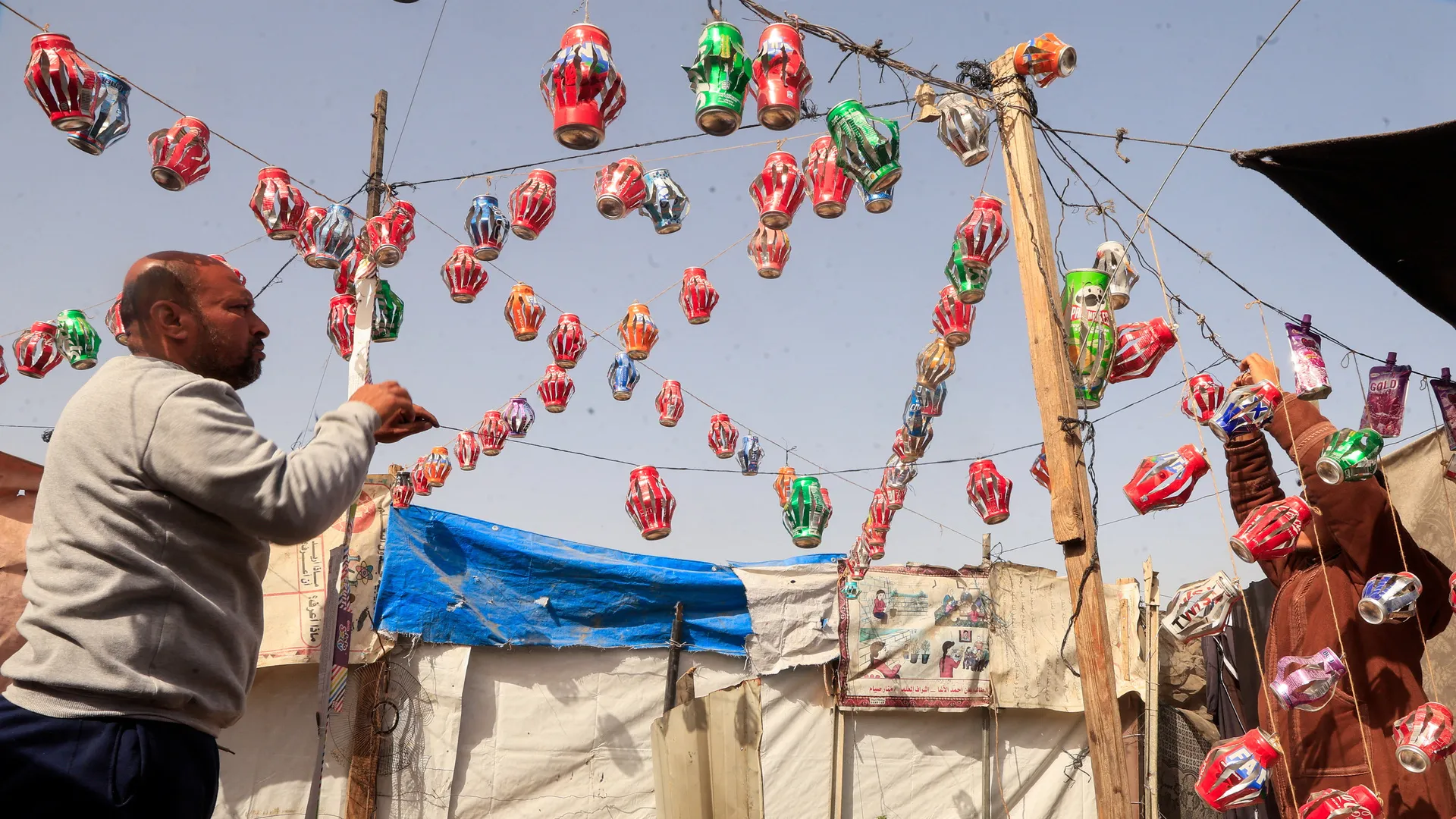
“Decorations and lanterns from cola cans.” Despite Israel’s restrictions on materials, many Palestinians are using creative ways to decorate Gaza for the holy month of Ramadan.
More than 457,000 European citizens have signed a petition calling for the full suspension of the European Union’s partnership agreement with Israel within the initiative’s first month.
Launched on January 13 as a formally registered European citizens’ initiative, the petition must reach 1 million signatures from at least seven EU member states by January 13 next year to trigger formal consideration by the European Commission. It is not a symbolic appeal. It is a mechanism embedded within the EU’s democratic framework, designed to translate public will into institutional review.
The speed and geographic spread of this mobilisation matter. The demand to suspend the EU-Israel Association Agreement is no longer confined to street demonstrations or activist circles. It has entered the EU’s formal democratic architecture.
The petition calls for suspension on the grounds that Israel is in breach of Article 2 of the association agreement, which conditions the partnership on respect for human rights and international law. As the initiative states, “EU citizens cannot tolerate that the EU maintains an agreement that contributes to legitimize and finance a State that commits crimes against humanity and war crimes.” The text further cites large-scale civilian killings, displacement, destruction of hospitals and medical infrastructure in Gaza, the blockade of humanitarian aid and the failure to comply with orders of the International Court of Justice.
As of Monday, the initiative had gathered 457,950 signatures, more than 45 percent of the required total in just one month. Signatories come from all 27 EU member states without exception. This is not a regional surge. It is continental.
The distribution of signatures reveals more than raw numbers. France alone accounts for 203,182 signatories, nearly 45 percent of the total. That figure reflects the country’s longstanding tradition of solidarity mobilisation, sustained mass demonstrations throughout the genocidal war on Gaza and the clear positioning of major political actors, such as La France Insoumise. France has emerged as the principal engine of this institutional push.
Spain follows with 60,087 signatures while Italy stands at 54,821, a particularly striking figure given the presence of a right-wing government that openly supports Israel. Belgium has registered 20,330 signatures from a population of roughly 12 million, reflecting high relative engagement. In the Nordic region, Finland with 12,649 signatures, Sweden with 15,267 and Denmark with 8,295 show sustained participation. Ireland has reached 11,281 signatures from a population of just over five million.
Several of these countries have already exceeded their required national thresholds under EU rules. France, Spain, Belgium, Finland, Ireland, Italy and Sweden have all surpassed the minimum number needed for their signatures to count towards the seven-member-state requirement. This is a critical development. It means the initiative is not merely accumulating volume but is also already satisfying the geographic legitimacy criteria built into the European citizens’ initiative mechanism.
The Netherlands, with 20,304 signatures, is approaching its national threshold. Poland, at 22,308 signatures, reflects engagement that extends beyond Western Europe. Even in smaller states such as Slovenia with 1,703 signatures, Luxembourg with 900 and Portugal with 4,945, participation is visible and measurable.
Germany presents a revealing contrast. Despite being the EU’s most populous member state and the site of some of the largest demonstrations against Israel’s genocidal campaign in Gaza, the petition has gathered 11,461 German signatures, only 17 percent of Germany’s national threshold of 69,120. This gap between visible street mobilisation and formal institutional participation highlights the particular political and legal environment in Germany, where pro-Palestinian expression has faced restrictions and where successive governments have maintained near-unconditional support for Israel as a matter of state policy. The relatively low percentage does not signal absence of dissent. Rather, it illustrates the structural constraints within which dissent operates. That more than 11,000 citizens have nevertheless formally registered their support indicates that institutional engagement is occurring even under conditions of political pressure.
Taken together, these patterns reveal something deeper than a petition’s momentum. Over more than two years of genocidal war, ethnic cleansing and the systematic destruction of civilian life in Gaza, solidarity across Europe has not dissipated. It has moved from protest slogans and street mobilisation into a formal democratic instrument that demands institutional response.
Petitions do not automatically change policy. The European Commission is not legally bound to suspend the association agreement even if the initiative ultimately reaches 1 million signatures. But the political implications are significant. A successful initiative would formally compel the commission to respond to a demand grounded in the EU’s own human rights clause. It would demonstrate that the call for suspension is rooted in broad and measurable public support across multiple member states.
The European Union has long presented itself as a normative power committed to international law and human rights. Article 2 of its partnership agreements is foundational. If hundreds of thousands, and potentially more than a million, European citizens insist that this principle be applied consistently, EU institutions will face a credibility test.
This petition is not merely a count of signatures. It is an index of political will. It shows that across France, Spain, Belgium, Italy, Ireland, the Nordic states and beyond, citizens are invoking the EU’s own democratic mechanisms to demand accountability.
Whether the initiative ultimately reaches 1 million, one reality is already established. The demand to suspend the EU-Israel partnership has entered Europe’s institutional bloodstream. It can no longer be dismissed as marginal rhetoric. It is embedded within the union’s formal democratic process, and that marks a significant development in Europe’s response to the genocide in Gaza.
The views expressed in this article are the author’s own and do not necessarily reflect Al Jazeera’s editorial stance.
The Israeli government has approved a plan to begin land registration in the occupied West Bank, meaning it will be able to seize land from Palestinians who cannot prove ownership.
For the first time since Israel’s occupation of the West Bank in 1967, it will register such land as property of the state – also known as settlement of land title – in Area C of the occupied West Bank.
Recommended Stories
list of 3 itemsend of list
Area C is the part of the West Bank that remains under direct Israeli control. It covers about 60 percent of the West Bank.
According to Israeli media, Israeli Minister of Finance Bezalel Smotrich, who submitted the proposal to restart land registration with Minister of Justice Yariv Levin and Minister of Defence Israel Katz, said the move was a continuation of “the settlement revolution to control all our lands”.
The Palestinian Authority presidency said the decision amounts to “de facto annexation” of the West Bank. It is the formalisation of the ongoing process of building settlements in the West Bank in violation of international law over the past several decades.
Here’s what we know about how this could be implemented:
What does the land registration process mean?
During Jordanian control of the West Bank from 1949 to 1967, the administration primarily followed the British Mandate of land ownership, under which land was registered as state or private property.
But only about one-third of the land in the West Bank was formally registered under this process. Large numbers of Palestinians living in the region had no documentation or other means of proving they owned their own land. Many of them had also lost documents or they had been destroyed during the 1967 six-day Arab-Israeli war, which resulted in the Israeli occupation of the West Bank.
When Israel took control of the West Bank, it discontinued the process of land registration.
Now, the government has decided to restart the land registration, a move that many Israeli human rights groups and political analysts have condemned.
Xavier Abu Eid, a political analyst based in the West Bank, described the Israeli government’s move as a “de facto annexation of Palestinian territory”.
“What they are doing is the implementation of annexation, packaging it as a mere bureaucratic process,” he told Al Jazeera.
He added that it reaffirms the idea that “there is a colonial power that sets two different sets of legislation depending on ethnic and religious identity, defined also as apartheid.”
Where will land registration be implemented?
In 1993 and 1995, the Oslo Accords were signed between Israel and the Palestine Liberation Organization. They laid out administrative control of the West Bank and Gaza and divided the occupied West Bank into three areas – Area A, Area B and Area C.
The new Palestinian Authority (PA) was granted full administrative control of 18 percent of the land – Area A – and joint control with Israel over 22 percent – Area B. Area C remained under complete Israeli military control. These areas were meant to be in place for five years, after which full administrative control would be handed to the PA. However, this transfer never took place.
The land registration that will now be restarted will apply to Area C, which is home to more than 300,000 Palestinian people.
(Al Jazeera)
According to the Israeli anti-settlement group Peace Now, in Area C, about 58 percent of the land remains unregistered. In a statement on Sunday, the group warned that the Israeli government’s land settlement process will now facilitate full Israeli control of this unregistered land.
How will land registration work?
Israeli authorities have provided few details about how the process will unfold, but essentially, it will likely involve transferring legal ownership of land to the Israeli state and issuing evictions to Palestinian communities, as has been happening in East Jerusalem in recent years, experts told Al Jazeera.
Michal Braier, an architect and the head of research at Bimkom, an Israeli human rights organisation that focuses on land and housing rights, said it is likely Israeli authorities will take the same approach in the West Bank as they have taken in East Jerusalem since 2018. In East Jerusalem, only 1 percent of settled land has been registered to Palestinians from 2018 to 2024, according to Bimkom.
Braier said Israel will begin by selecting the areas of land it wants to register. The government has set a goal of registering about 15 percent of the unregistered land within the next four years, she added.
“Now we can pretty clearly guess that this 15 percent will be lands where they assume that they can prove the state ownership easily or they can easily reject Palestinian ownership claims because a lot of these unregistered lands don’t have clear records and the records go a very, very long time back. So it will be very hard to prove Palestinian ownership,” she told Al Jazeera.
In theory, she said, Palestinians will be able to file land claims as part of the new process, but in practice, it is likely that they will be prevented from successfully doing so.
“Even if they do file claims, the legal bars they need to meet are very difficult to obtain. On top of this, there is the problem of Absentee Property Law, which moves land into the state’s hands and is yet unclear how exactly it will be practised in the occupied West Bank. So Palestinians are highly likely to lose their individual property rights,” she said.
The Absentee Property Law is an Israeli law enacted in 1950 that states that Israel has the right to seize property of “absentees” – people who were expelled, fled or who left the country after November 29, 1947, the day the United Nations General Assembly passed a resolution to end the British Mandate and recommend the creation of a Palestinian and a Jewish state. Israel was founded less than six months later.
Braier said land registration “will be used as another mechanism to grab land that they could not grab until now for different reasons and to build more settlements and push out Palestinians from Area C”.
According to a Times of Israel report, an Israeli government resolution linked to the land registration bill has allowed for an initial budget of $79m for the land registration process in Area C from 2026 to 2030. The report added that during this process, Israel, which already has civilian and military control of the area, will establish 35 ministerial positions and set up state agencies to begin the process of registering land.
What does this mean for Palestinian communities?
Peace Now described the Israeli government’s decision to restart land registration in the West Bank as “a mega land grab of Palestinian property”.
“Land registration will result in the transfer of ownership of the vast majority of Area C to the state, leaving Palestinians with no practical ability to realise their ownership rights,” the group said in a statement on Sunday.
Abu Eid said the land registration process the government intends to undertake amounts to a “full-fledged ethnic cleansing policy” and added that it is a moment that will be “remembered as a turning point in Israeli attempts at erasing the Palestinian cause”.
But he noted that the Israeli government’s decision has not arisen in a vacuum as Israel has “allowed for a wave of terror attacks by Israeli settlers and the expansion of colonial settlements all over the West Bank” for years.
“Palestinians in general are not just dispossessed of their land and natural resources but come under attacks that are dealt with utter impunity both by the Israeli regime and by the international community,” he said.
“In al-Auja, for example, near Jericho, from 100 Palestinian families that used to live in the place a few months ago, now there is not a single family left,” he added.
He said it is likely that Israel will expect thousands of displaced people from the West Bank to go to Jordan.
“You should not forget the incitement coming out from members of the Israeli government claiming that Jordan should be turned into Palestine while Palestine should be left for the Zionist project,” Abu Eid said.
(Al Jazeera)
How have Palestinian land rights been eroded before this?
The West Bank is home to about 3.3 million Palestinians. It is divided into 11 governorates with Hebron being the most populous at 842,000 residents. Jerusalem follows with 500,000, Nablus with 440,000, Ramallah and el-Bireh with 377,000 and Jenin with 360,000.
Since the Israeli occupation in 1967, the Palestinian people have been subject to land seizures and illegal settlement expansion.
Today, about 700,000 Israelis live in the West Bank and East Jerusalem in settlements and outposts that are Jewish-only communities built on Palestinian land. These range in size from a single dwelling to a collection of high rises. Last year, the Israeli government approved the construction of new settlements in the region, seeking to advance “de facto sovereignty” in the region.
In all, the number of settlements and outposts in the West Bank and East Jerusalem has risen by nearly 50 percent since 2022 – from 141 to 210 now.
Besides eroding Palestinian people’s land rights, Israel has also carried out frequent raids in the West Bank, where Palestinians are also subject to checkpoints, arbitrary arrests, home demolitions and settler attacks.
The Israeli human rights organisation B’Tselem estimated that settler attacks against Palestinians have forcibly displaced 44 communities across the West Bank in recent years. These attacks have also resulted in the deaths of Palestinian people. Since Israel’s genocidal war on Gaza began on October 7, 2023, settler attacks have also intensified.
At least 1,054 Palestinians were killed in the West Bank by Israeli soldiers and settlers from October 7, 2023, to February 5 of this year, according to the latest United Nations figures.
Braier said Sunday’s approval of Israel’s land registration in the West Bank will result in a rise in violence in the region.
“Area C is being cleared out by what is usually regarded as settler violence, but this violence is actually state violence, backed by state mechanisms, so this is all working together to expand Israeli control over Area C and expand settlement in Area C,” she said.
(Al Jazeera)
Is Israel’s land registration process legal?
In 2024, the International Court of Justice (ICJ) ruled that Israel’s “expropriation of land and properties, transfer of populations, and legislation aimed at the incorporation of the occupied section are totally invalid and cannot change that status”.
The ICJ has also ruled that Israel’s long-term occupation of Palestinian territory is illegal and must be terminated “as rapidly as possible”.
Braier said the Israeli government’s latest decision on land registration also contravenes international law.
“International law is clear: As an occupying power, Israel cannot exercise sovereign powers, including final determination of land ownership, in an occupied territory,” she told Al Jazeera.
“This position was reinforced by the International Court of Justice’s 2024 advisory opinion, which found that similar settlement of land title proceedings in East Jerusalem violate the laws of occupation,” she said.
“Furthermore, the decision to authorise Israeli civilian authorities to manage the land registration procedures likewise constitutes a clear indication of the annexation of the area,” she added.
What does this mean for Israel’s peace treaty with Jordan?
On October 26, 1994, Israel and Jordan signed the Wadi Araba Treaty, which formally ended the state of war between the two nations that had existed since the creation of Israel in 1948.
Under the agreement, Israel and Jordan established diplomatic ties, agreed to exchange territory and opened the way for cooperation in trade, tourism, transport links, water resources and environmental protection. Jordan also signed the agreement seeking to ensure a two-state solution between Israel and Palestine would be established.
But the public in Jordan, opposition groups and human rights groups have repeatedly called on the government to sever relations with Israel due to its continuing aggression in Palestine.
In 2014, many Jordanians took to the streets, calling on the government to scrap its peace treaty with Israel after clashes between Israeli police and Palestinians at Al-Aqsa Mosque in Jerusalem.
In 2024, a similar call was issued by Jordanian activists as Israel conducted its genocidal war in Gaza, which has killed more than 70,000 Palestinians.
On Sunday, Jordan, which shares a 482km (300-mile) border with Israel and the West Bank, condemned Israel’s decision to reinstate land registration in the West Bank. Jordan’s Ministry of Foreign Affairs described Israel’s move as a “flagrant violation of international law”.
While Jordan’s peace treaty with Israel still holds, Abu Eid said Sunday’s decision by the Israeli cabinet is a serious and sensitive matter for Jordan, particularly if thousands of people are forcibly displaced from the West Bank.
Furthermore, he said, Israel has been acting against the principles of the Jordan-Israel peace agreement for years.
“If peace agreements are aimed at creating the conditions to enhance cooperation and establish a two-state solution, Israel goes against all of such principles, seeking the expansionist ‘Greater Israel’ agenda,” he said.
“Jordan takes such matters seriously and will certainly seek to have collective action with other regional and international allies,” he added.
The world’s largest shipping company MSC has been moving goods to and from illegal Israeli settlements in the occupied West Bank and Syria’s occupied Golan Heights, with the help of European port operators.
The smell hits you before you even see the tents. In the al-Taawun camp, wedged between Yarmouk Stadium and al-Sahaba Street in central Gaza City, the line between human habitation and human waste has been erased.
Forced to flee their homes by Israel’s genocidal war in Gaza, 765 families have set up makeshift shelters directly on top of and adjacent to an enormous solid waste dump. Here, amid mountains of rotting garbage, they are fighting a losing battle against disease, pests and the psychological horror of living in filth.
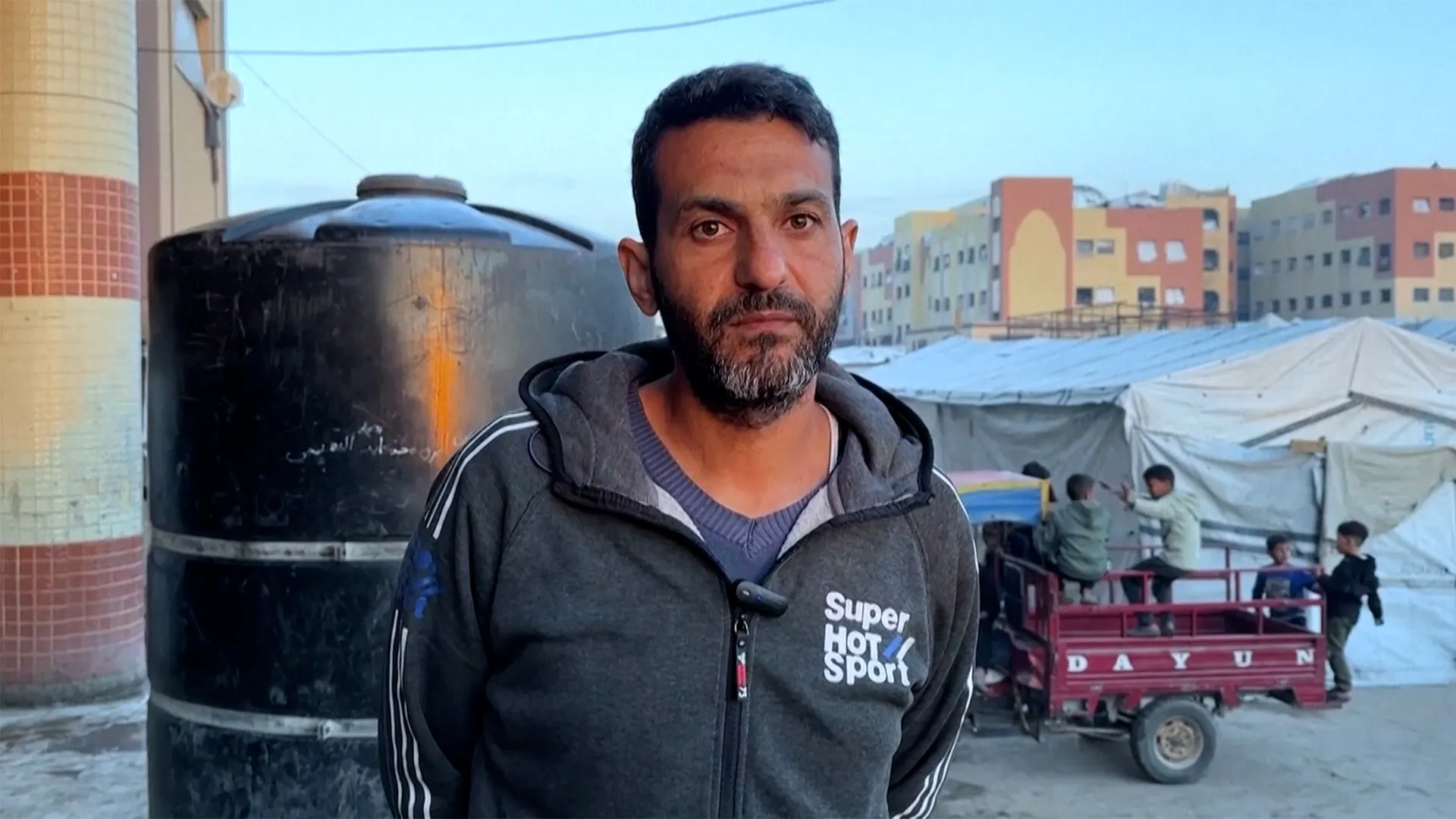
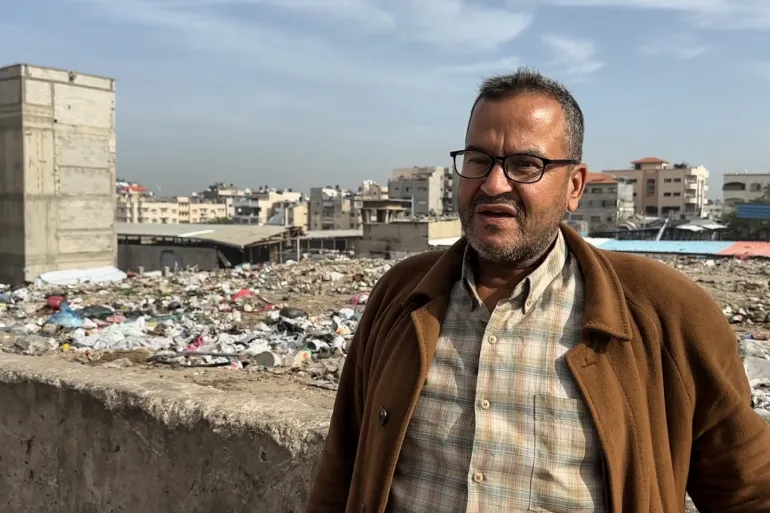
Fayez al-Jadi, a father who has been displaced 12 times since the war began, said the conditions are stripping them of their humanity.
“The rats eat the tents from underneath,” al-Jadi told Al Jazeera. “They walk on our faces while we sleep. My daughter is 18 months old. A rat ran right over her face. Every day, she has gastroenteritis, vomiting, diarrhoea or malnutrition.”
Al-Jadi’s plea is not for a luxury accommodation, just a mere 40 to 50 metres (130ft to 164ft) of clean space to live in, he said. “We want to live like human beings.”
Fayez al-Jadi, a Palestinian father displaced 12 times by the war, says rats run over his children’s faces while they sleep in their tent near a solid waste dump in Gaza City [Screengrab/Al Jazeera]
‘We wake up screaming’
The sanitary crisis has unleashed a plague of skin infections among the 4,000 residents of the camp. With no running water or sewage system, scabies has spread like wildfire.
Fares Jamal Sobh, a six-month-old infant, spends his nights crying. His mother points to the red, angry rashes covering his small body.
“He doesn’t sleep at night because of the itching,” she said. “We wake up to find cockroaches and mosquitoes on him. We bring medicine, but it’s useless because we are living on trash.”
Um Hamza, a grandmother caring for a large extended family, including a blind husband and a son suffering from asthma, said shame is no longer compounding their suffering.
“We’ve stopped being ashamed to say my daughter is covered in scabies,” she told Al Jazeera. “We’ve used five or six bottles of ointment, but it’s in vain.”
She added that the collapse of Gaza’s healthcare system has left them with nowhere to turn. “The hospitals, like al-Ahli, have started turning us away. … They write us a prescription and tell us to go buy it, but there is no medicine to buy.”
Six-month-old Fares Jamal Sobh suffers from severe skin infections and asthma caused by the unsanitary conditions at the al-Taawun camp in Gaza City, where displaced families are forced to live atop a solid waste dump [Screengrab/Al Jazeera]
A city drowning in waste
The conditions at al-Taawun are a microcosm of a citywide collapse. Hamada Abu Laila, a university lecturer who helps administer the camp, warned of an “environmental catastrophe” exacerbated by the lack of sewage networks and drinking water across Gaza City.
But the problem goes deeper than a lack of aid. According to Husni Muhanna, spokesperson for the Gaza Municipality, the crisis is man-made. Israeli forces have blocked access to the Gaza Strip’s main landfill in the east, forcing the creation of hazardous temporary dumps in populated areas like Yarmouk and the historic Firas Market.
“More than 350,000 tonnes of solid waste are piling up inside Gaza City alone,” Muhanna told Al Jazeera in January.
He explained that the municipality is paralysed by a “complex set of obstacles”, including the destruction of machinery, severe fuel shortages and constant security risks. With interventions limited to primitive means, the municipality can no longer manage waste in accordance with health standards, leaving thousands of displaced families to sleep atop a toxic time bomb.
Sleeping next to a tank shell
The dangers in al-Taawun are not just biological. Rizq Abu Laila, displaced from the town of Beit Lahiya in the north, lives with his family next to an unexploded tank shell that lies among the rubbish bags and plastic sheets.
“We are living next to a dump full of snakes and stray cats,” Abu Laila said, pointing to the ordnance. “This is an unexploded shell right next to the tents. With the heat of the sun, it could explode at any moment. Where are we supposed to go with our children?”
His daughter, Shahd, is terrified of the pack of wild dogs that roam the dump at night. “I’m afraid of the dogs because they bark,” she whispered.
Widad Sobh, another resident, described the nights as a horror movie. “The dogs bang against the tent fabric. … They want to attack and eat. I stay up all night chasing them away.”
For Um Hamza, the daily struggle for survival has reached a breaking point.
“I swear by God, we eat bread after the rats have eaten from it,” she said, describing the desperate hunger in the camp. “All I ask is that they find us a better place, … a place away from the waste.”
A 15-day-old baby lost her father in Israel’s latest violation of the Gaza ‘ceasefire’ during attacks that killed at least 11 Palestinians in 48 hours.












![Fayez al-Jadi, a Palestinian father displaced 12 times by the war, says rats run over his children's faces while they sleep in their tent atop a solid waste dump in Gaza City. [Screengrab/Al Jazeera]](https://i0.wp.com/www.aljazeera.com/wp-content/uploads/2026/02/image-copy-1771233044.jpg?w=640&ssl=1)
![Six-month-old Fares Sobh suffers from severe skin infections and asthma caused by the unsanitary conditions at the al-Taawun camp in Gaza City, where displaced families are forced to live atop a solid waste dump. [Screengrab/Al Jazeera]](https://i0.wp.com/www.aljazeera.com/wp-content/uploads/2026/02/image-1-copy-1771232395.jpg?w=640&ssl=1)