Kenya’s growing doping crisis overshadows legacy as athletics powerhouse | Athletics
Over decades, Kenya built a legacy of producing elite runners who dominated distance running. The recipe for success was simple: High-altitude training, a whole-foods diet, early nights, consistency.
But a quiet, underhanded addition over the past few years is threatening to tarnish its legacy and the dozens of global accolades that stemmed from it – doping.
Recommended Stories
list of 4 itemsend of list
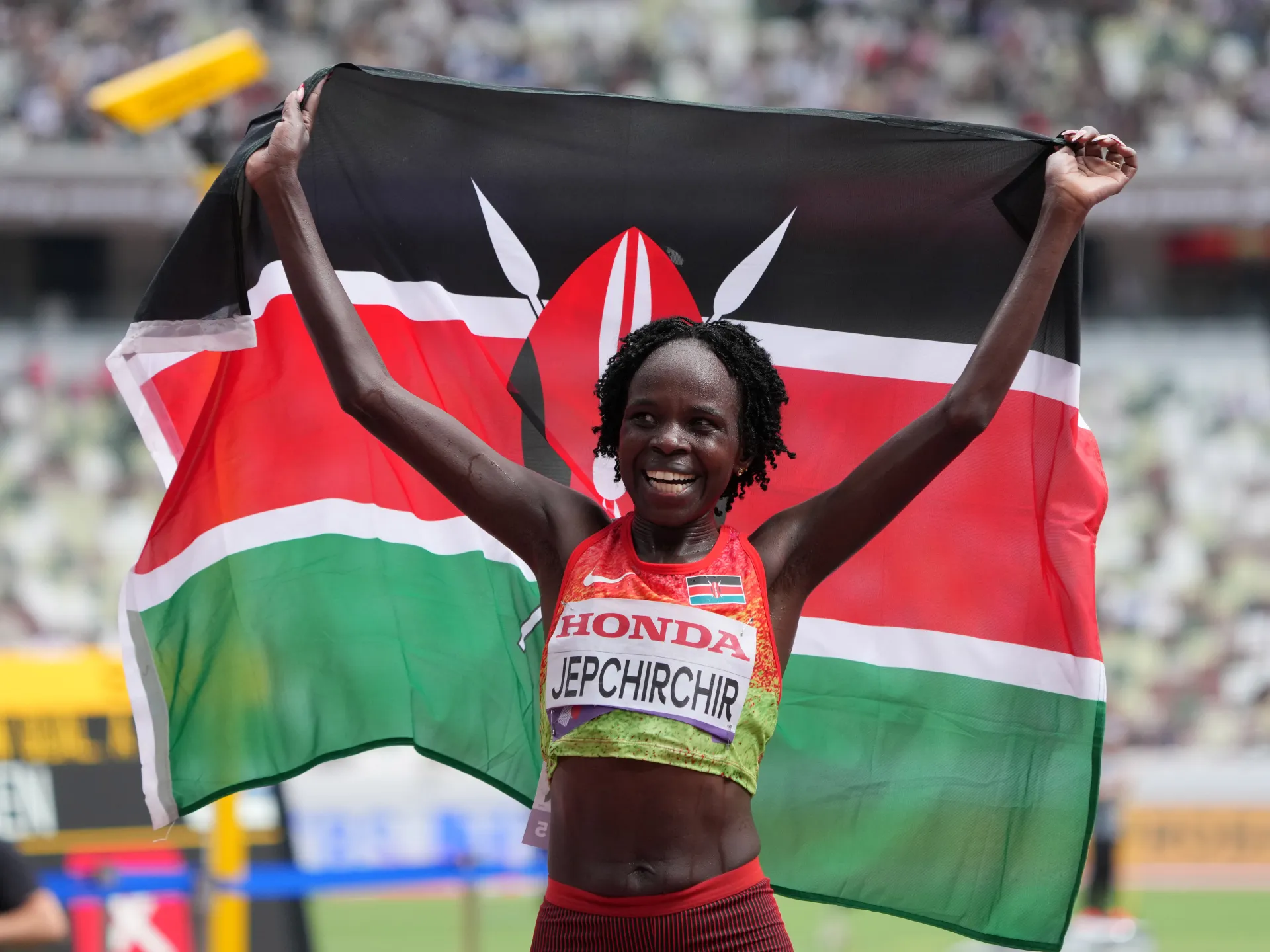
The African nation’s latest doping scandal is perhaps the most shocking; Peres Jepchirchir, world and Olympic marathon champion, was handed a three-year ban on Thursday for testing positive for banned blood booster EPO.
The Athletics Integrity Unit (AIU) said Jepchirchir’s sample was taken before her Sydney Marathon victory in August, where she stormed to her fourth World Marathon Majors win after triumph in New York (2021), Boston (2022), and London (2024). She’s also a former half-marathon world record holder.
Jepchirchir, who admitted to breaching anti-doping rules, is arguably the most prominent and successful in a string of Kenyan athletes who have faced formal doping sanctions over the past decade. Since 2017, more than 140 Kenyan athletes have been suspended by AIU, most of them distance runners.
How has Kenyan athletics ended up at this point and what comes next? Al Jazeera Sport spoke to experts to find out.
Why has there been a rise in doping violations among Kenyan runners?
Rather than seeing it as a rise, the reality is that more athletes are being tested, caught, and publicised for doping violations, former Kenyan middle-distance runner Martin Keino told Al Jazeera.
“Testing has expanded, particularly out-of-competition testing, and the AIU now goes after suspicious patterns instead of waiting for a positive sample,” said Keino, a former pacer who helped set seven world records.
“The problem is real, but the visibility is new.”
What drives athletes to dope?
Financial insecurity, fear of decline in performance, and pressure to deliver are some of the biggest factors, Keino explained.
“Kenya produces a huge number of runners chasing a very small number of life-changing contracts. When one breakthrough can lift a whole family out of poverty, the pull to find an edge gets much stronger.
“Add weak local controls on banned substances, unqualified ‘coaches’ and agents who push for quick results, and doping can spread quietly.”
For Kenyan Olympic champion Wilfred Bungei, men’s 800m champion at the 2008 Beijing Olympics, the rise in doping violations hits closer to home.
Bungei is a relative veteran compared with contemporary Kenyan greats like Eliud Kipchoge, Sebastian Sawe and Faith Kipyegon, who have continued the legacy built by the likes of Martin’s father Kip Keino, one of Kenya’s first Olympic champions in the 1960s. He says doping violations by the likes of Jepchirchir and Ruth Chepngetich jeopardise the legitimacy of future victories while tarnishing the current legacy.
“For decades, Kenya has built its athletics on solid hard work from dedicated athletes. Now, some athletes are choosing the shortest way to make it big in athletics, by cheating,” Bungei said.
“I can only describe it as greed, selfishness and above all just plain stupidity to not understand that it’s not you the doper who is damaged but thousands of Kenyan athletes who built their careers on pure sweat and discipline.”
Caroline Mwanzia, an international sports lawyer practising in anti-doping, safeguarding, and sports governance, had a more straightforward view.
“For some athletes, it is because of intentionally wanting to gain an unfair advantage over other athletes competing,” she said.
“Others may have taken medicinal drugs without first obtaining a Therapeutic Use Exemption [TUE], but most athletes are simply being ignorant.”
Are athletes always at fault for doping violations?
This is where the lines get blurred on whether athletes or their support personnel are responsible for what goes into their bodies. Bungei insists that the responsibility “sits squarely on the athlete”.
“I don’t believe that an athlete with integrity would be encouraged by anyone to do what is wrong,” he said.
Keino held a similar sentiment. “Most elite athletes know the basics: The prohibited list, testing, whereabouts rules, the penalties. You can’t compete at World Marathon Major level and claim total ignorance of the rules.”
But knowing the rules is different from understanding every product, injection, supplement, or “recovery treatment” handed to you, Keino explained.
“Some athletes take things without really understanding the risks, the dosages, the detection windows, or who is supplying them. Others take banned substances knowingly and hide behind ignorance later.”
Per a 2016 investigation, the World Anti-Doping Agency (WADA) found two Kenyan athletes who attempted to escape their sanctions by providing falsified medical records, one of which WADA termed the “culminating peak in an overall strategy of cover-up and concealment by the athlete”.
“That’s why education has to be practical. A seminar where someone reads out the WADA code isn’t enough,” Keino emphasised.
“Athletes need to hear it plainly: Never take an injection or unknown substance without checking it, keep records, ask questions, and walk away from any coach or agent who can’t explain what they’re giving you.”
WADA also concluded in its investigation that “athletes in Kenya are insufficiently educated on doping and/or wilfully blind as to the consequences of doping.”
Why do elite athletes risk doping?
Experience doesn’t make you immune to pressure, fear, or bad decisions, Keino explained.
“Established runners actually carry a different kind of pressure. They have a reputation to protect, a lifestyle to maintain, and people depending on them.
“An injury, a dip in form, or a few poor races can hit contracts, appearance fees, and sponsorship fast.”
Keino went on to explain that for veteran athletes like Jepchirchir and Chepngetich, doping is not to break into the elite circle but to stay on top longer, keep up with younger athletes, or bounce back from a setback.
“None of that excuses it – at that level, nobody can credibly say they don’t know what EPO is, how it works, or why it’s banned.”
Should Kenya be sanctioned by global bodies?
“Back in 2009 when a few doping cases had been reported, I advocated for the criminalisation of doping and people thought I was too harsh. Almost 20 years later, Kenya’s image is on the line,” said Bungei, who still believes the government should make doping a criminal offence in Kenya.
In September, Kenya signed the Anti-Doping Amendment Bill 2026 to align with WADA’s updated code, a decade after it was first signed into law after WADA declared Kenya non-compliant with global anti-doping rules and regulations.
“Better options [than sanctions] are stronger audits of Kenya’s anti-doping system, funding for testing and education, bans for repeat enablers, and conditions attached to hosting major events,” Keino said.
“Nairobi’s award of the 2029 World Athletics Championships should come with real accountability, not just prestige.”