Arab News | The overreaction to the UK settlement trade ban

For all the hysterical outrage that accompanied the announcement of the UK’s measures against illegal Israeli settlements last Tuesday, the world did not end. The reality is that these steps were merely bringing Britain into line with its legal obligation to act against an unlawful occupation and narrow the gaping chasm between the reality on the ground in Palestine and the rhetoric deployed in Westminster.
The reaction of those who support the Israeli settlements — war crimes under the Rome Statute — was frenzied. Anti-Palestinian bodies bellowed outrage. The chief rabbi declared this would be a “dark day for British Jews,” as if somehow they were the target of the measures or the victims of what has been happening. His comments were dangerous as he, along with “establishment” UK Jewish groups like the Board of Deputies of British Jews, blurred the distinction between the actions of the state of Israel and British Jews. This deliberately conflates antisemitism with anti-Israel sentiment.
Others also claimed, with no evidence, that the measures would make British Jews unsafe. The deplorable increase in antisemitic attacks in the UK and elsewhere has never been motivated by British actions against Israel, not least as there has hardly ever been any such action.
In fact, a sizable segment of the British Jewish community welcomed the settlement trade ban or at least accepted it as a reasonable response to the unprecedented building of settlements and frenzy of state-backed Israeli settler violence.
The reaction of those who support the Israeli settlements — war crimes under the Rome Statute — was frenzied
Chris Doyle
The mainstream media coverage was frequently dire. Many columnists depicted British Jews as a victim of the settlement ban. Very few outlets dared suggest that the actions were designed to help Palestinians under threat of ethnic cleansing, forced dispossession and settler pogroms. Once again, the victims were erased from the story.
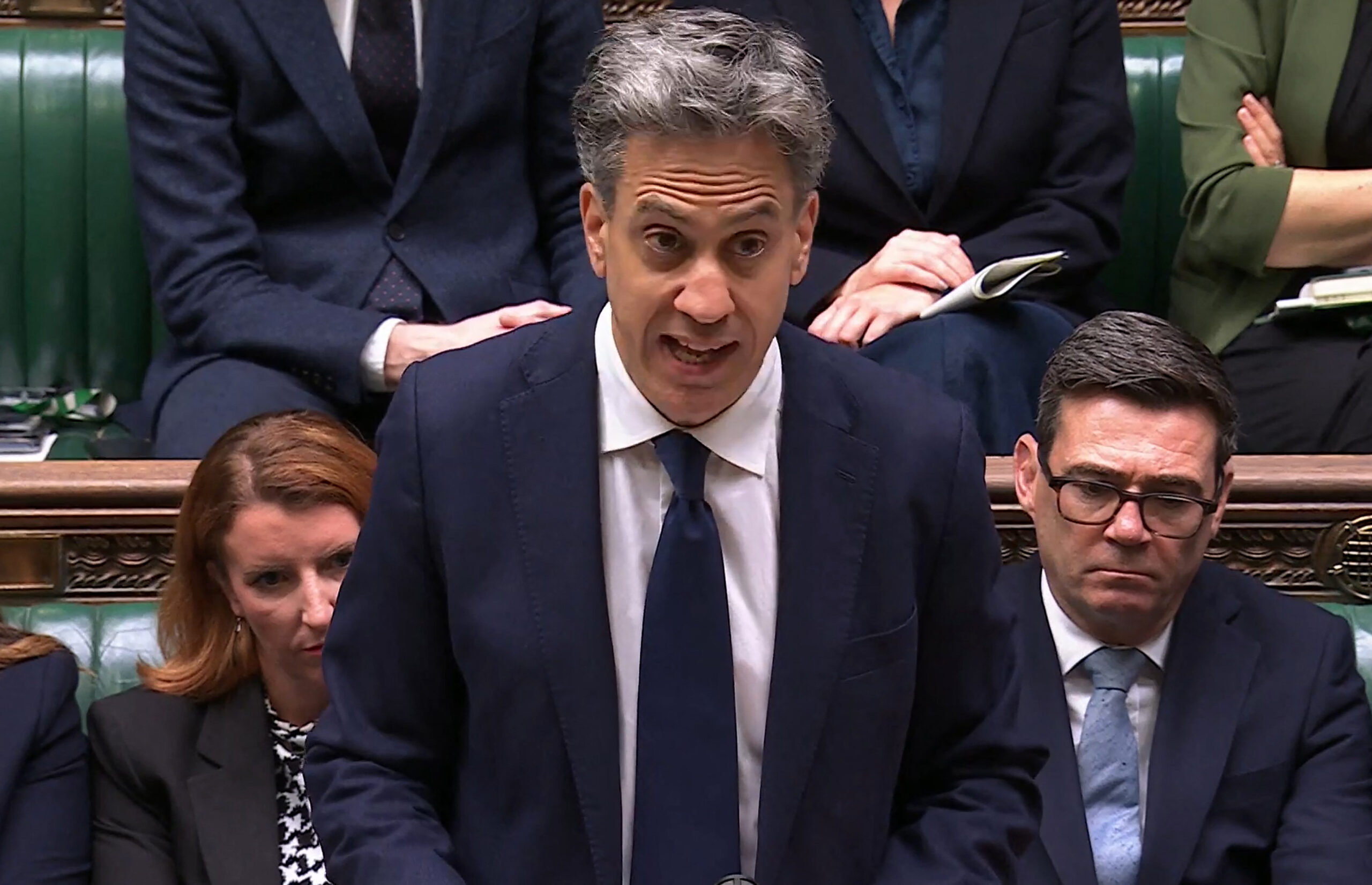
The other claim was that the US would retaliate against London. This was triggered in large part by the knee-jerk reactions of US Ambassador to Israel Mike Huckabee, who posted: “The Brits have lost it. The Jew hate of their government knows no boundaries and knows no facts.” He denies it but he probably did not know Ed Miliband, the foreign secretary, is a British Jew whose parents were refugees from Nazi-occupied Europe. But Huckabee is an extremist maverick, an ardent Zionist who believes in a “Greater Israel.”
Far from retaliating, the US State Department made clear Huckabee’s comments were not authorized. He had been freelancing again. One official said Washington was “staying out of it.” Secretary of State Marco Rubio was far more measured in his comments. He did not even condemn the British actions. President Donald Trump, who is rarely shy of airing any disagreement, has said nothing. In short, the US has taken zero steps. Trump looks increasingly disenchanted with Israeli Prime Minister Benjamin Netanyahu, not Andy Burnham or Miliband. The president has yet to declare support for Netanyahu ahead of next month’s Israeli elections, as the beleaguered leader hopes.
The settlement lobbies were almost certainly shocked by the 11 countries that joined the UK in confirming they were or would be adopting similar measures. This included France and Canada, meaning three of the G7 states are acting.
Those states yet to adopt the ban have at least condemned the settlements and are not opposing London’s actions
Chris Doyle
Britain was far from isolated, quashing yet another criticism. Those states that have yet to adopt the ban have at least condemned the settlements and are not opposing London’s actions.
In contrast, it is Israel and the US that find themselves once again in a crowd of two. These two states, as they were with the foolhardy war on Iran, align themselves against international law and accountability.
The retaliatory Israeli measures will also hardly dent the British interest. Foreign Minister Gideon Sa’ar announced the closure of the British Consulate in Jerusalem, the ejection of the British participants in the International Gaza Support Center that oversees aid flows into Gaza and the termination of the British support team that is helping to train the Palestinian Authority.
Note that all these measures hit Palestinians far more than the UK, which is of course the Israeli priority. It means fewer states overseeing aid into Gaza, less support to the PA and, by closing diplomatic premises linked to the Palestinians in Jerusalem, further severs the remaining Palestinian ties to the city.
Expect a raft of settlement announcements shortly. This will be the primary Israeli response to the actions of these dozen states.
Will these measures have an impact? Are they sufficient? Almost certainly not. And the Netanyahu coalition, in election season, will just press the accelerator on the aggression and violence. Other Israeli politicians may get the message: The patience of international actors has finally worn out, albeit decades too late.
These steps should not be belittled. The 12 states have shifted from a declaratory poise to a position of action. For once, the Israeli government is going to have to bear a cost for the occupation that has hitherto not existed.
The message is clear. If Israel behaves like a pariah state, it will start to be treated like a pariah state.
Chris Doyle is director of the London-based Council for Arab-British Understanding (CAABU). He has worked with the council since 1993 after graduating with a first class honors degree in Arabic and Islamic Studies at Exeter University. He has organized and accompanied numerous British parliamentary delegations to Arab countries. Twitter: @Doylech