Flight to Argentina: How significant is it for Israel’s LatAm outreach? | Politics News
Israel and Argentina have launched a direct flight starting in November as the two countries boost their ties under Argentina’s far-right President Javier Milei and Israeli Prime Minister Benjamin Netanyahu.
The twice-a-week flight comes as Israel is aggressively pushing to cement its geopolitical footprint in Latin America amid its growing international isolation and its entrenched image as an occupying power.
Recommended Stories
list of 3 itemsend of list
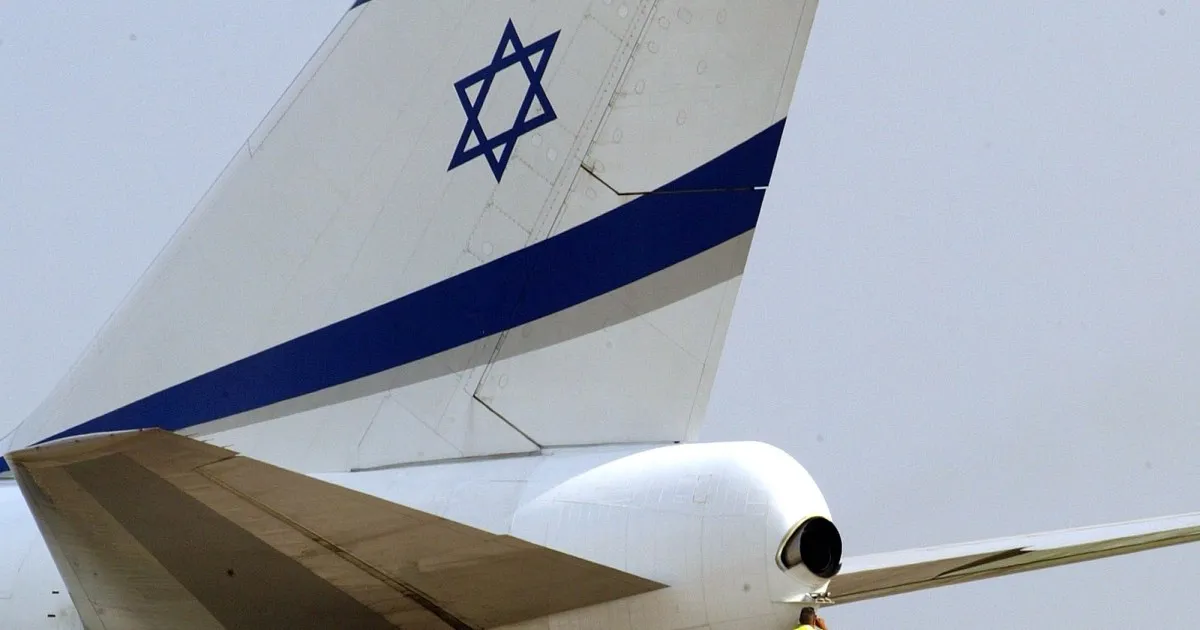
On May 7, Israel’s national carrier, El Al, opened bookings for a direct flight between Tel Aviv and Buenos Aires covering a distance of 12,000 kilometres (7,460 miles) – the longest route in the airline’s history.
However, the 16.5-hour journey is driven by political ambitions rather than mere commercial viability.
During a celebratory event in occupied East Jerusalem last month, Israeli Prime Minister Netanyahu welcomed Argentina’s Milei to hail the “first direct flight” between the two nations.
The event showcased a striking political alignment, further highlighted by the presence of US Ambassador Mike Huckabee, who jokingly promised to buy the first ticket and described the two leaders as US “President Donald Trump’s biggest friends”.
The route aims to translate the “Isaac Accords” – a Latin American framework inspired by the “Abraham Accords” – into tangible reality. Morocco and Sudan established diplomatic ties with Israel as part of the Abraham Accords signed under President Trump’s first term.
Championed behind the scenes by Rabbi Axel Wahnish, Argentina’s ambassador to Israel, the framework aims to establish strategic cooperation in security, counterterrorism, and artificial intelligence with Latin American nations, including Ecuador, Costa Rica and Paraguay.
Trading tech for legitimacy
Israel is acutely aware that its status as an occupying power, exacerbated by the genocidal war on Gaza, has severely damaged its international standing. To secure recognition and bypass boycotts, particularly from an increasingly critical Europe, Israel is leveraging its advanced military and surveillance technologies.
Ihab Jabarin, an analyst specialising in Israeli affairs, told Al Jazeera that Israel’s strategy has shifted.
“Israel’s moral image has completely eroded,” Jabarin said. “The logic now is: ‘you may not like us, but you need us.’ Israel is offering its expertise in cybersecurity, AI systems like Lavender, border management, and drones – technologies tested on Palestinian bodies and land – to countries grappling with internal conflicts and organised crime,” he told Al Jazeera.
Jabarin noted that Israel uses infrastructure – whether ports, underwater cables, or civilian aviation – as tools for national security and influence. “This flight is not just about transporting passengers; it is a permanent corridor for security and tech businessmen,” he explained.
This strategy of using technology and security to buy diplomatic loyalty mirrors Israel’s approach in Africa. It has forged close ties with Ethiopia, Kenya and Chad. Last December, Israel became the first country in the world to recognise Somaliland, a breakaway region of Somalia.
It has used smaller island states like Micronesia in the Asia Pacific to secure favourable votes at the United Nations and break its international isolation.
“Israel is trying to create a global network of interests that forces countries to weigh their relationship with Israel against their stance on the Palestinian cause,” Jabarin added. “It wants to make the world unable to live without it.”
The Milei-Netanyahu chemistry
The driving force behind this Latin American link is the ideological bond between Netanyahu and Milei. While left-wing leaders in the region, such as Brazil’s Luiz Inacio Lula da Silva, have severed ties or strongly condemned Israel’s actions in Gaza, Milei has embraced the Israeli narrative unconditionally.
For Milei, who declared himself the most Zionist president in the world in March, the alliance offers rapid positioning in the Middle East, closer ties to Washington lobbies, and a stance against Latin America’s traditional left. For Netanyahu, Milei offers unconditional emotional and symbolic support that Israel has largely lost in Europe.
“Netanyahu understands the value of a symbolic ally,” Jabarin said. “He needs leaders who can be marketed as proof that Israel can still forge ideological alliances, not just pragmatic ones. Argentina, under Milei, has become Israel’s most important ‘island of influence’.”
A ‘safe haven’ from war crime probes
The direct flight also serves a highly practical security purpose for Israel. With mounting legal challenges and arrest warrants targeting Israeli soldiers and officials in Europe over alleged war crimes in Gaza, the Tel Aviv-Buenos Aires route offers a crucial bypass.
On Tuesday, Israel’s far-right Finance Minister Bezalel Smotrich said he was informed that the International Criminal Court (ICC) had requested a warrant for his arrest. Prime Minister Netanyahu is also sought by the ICC for war crimes committed in Gaza.
Currently, travellers between the two countries rely on 21 to 33-hour transit flights through European hubs like Madrid or Paris.
Diego Ruzzarin, a Brazilian writer and analyst, argued that the project aims to secure hassle-free travel for Israelis, particularly military personnel, sparing them from international security interrogations or the risk of arrest in Europe.
Jabarin echoed this assessment, noting that the fear of legal pursuit in Europe is a significant concern within the Israeli establishment.
“The direct flight bypasses any potential legal harassment in Europe,” he said. “Latin America is now appearing in Israeli calculations as a more politically flexible space compared to rights-focused Europe.”
Economic risks and domestic pushback
Despite its strategic value, the flight faces significant logistical and economic hurdles. Because Israeli planes are banned from the airspace of several African nations, including Libya, the flights must take a costly detour over the Mediterranean and the Atlantic.
To mitigate the economic risks of the long-haul route, the Israeli government has taken the unusual step of granting El Al a 20-million-shekel ($5.4m) subsidy, spread over three years.
The success of the route will heavily depend on Argentina’s Jewish community – the largest in Latin America, estimated at up to 300,000. According to Sabre data, roughly 55,300 people travelled between the two countries in 2025, a 37 percent increase from 2024, but still below the 71,200 recorded in 2019.
The project has sparked domestic criticism in both countries. In Israel, the transport ministry reportedly warned that pulling Boeing 787 Dreamliners from highly profitable US routes to service Buenos Aires could drive up ticket prices for Israelis travelling to North America.
In Argentina, left-wing congresswoman Myriam Bregman accused Milei’s government of dragging the country into an “imperialist war” without congressional approval, warning of a constitutional overreach.
Furthermore, the influx of Israeli tourists, many of whom are recently discharged soldiers, has caused friction in southern Argentina. Local residents and activists have blamed Israeli tourists for devastating fires in the Patagonia nature reserves due to negligence, the most recent being a massive blaze in January 2026 that destroyed 77,000 hectares (190,000 acres) and led to the arrest of an Israeli tourist.
For Israelis, however, an El Al flight to Buenos Aires carries profound historical symbolism. In May 1960, the Mossad used an official El Al flight to smuggle captured former Nazi official Adolf Eichmann out of Argentina to face trial and execution in Israel.