output

Libya Oil Output Hits 12-Year High; Revenues Trickle In| Global Finance Magazine

Central bank bottlenecks and massive import costs delay the impact of a $4B windfall.

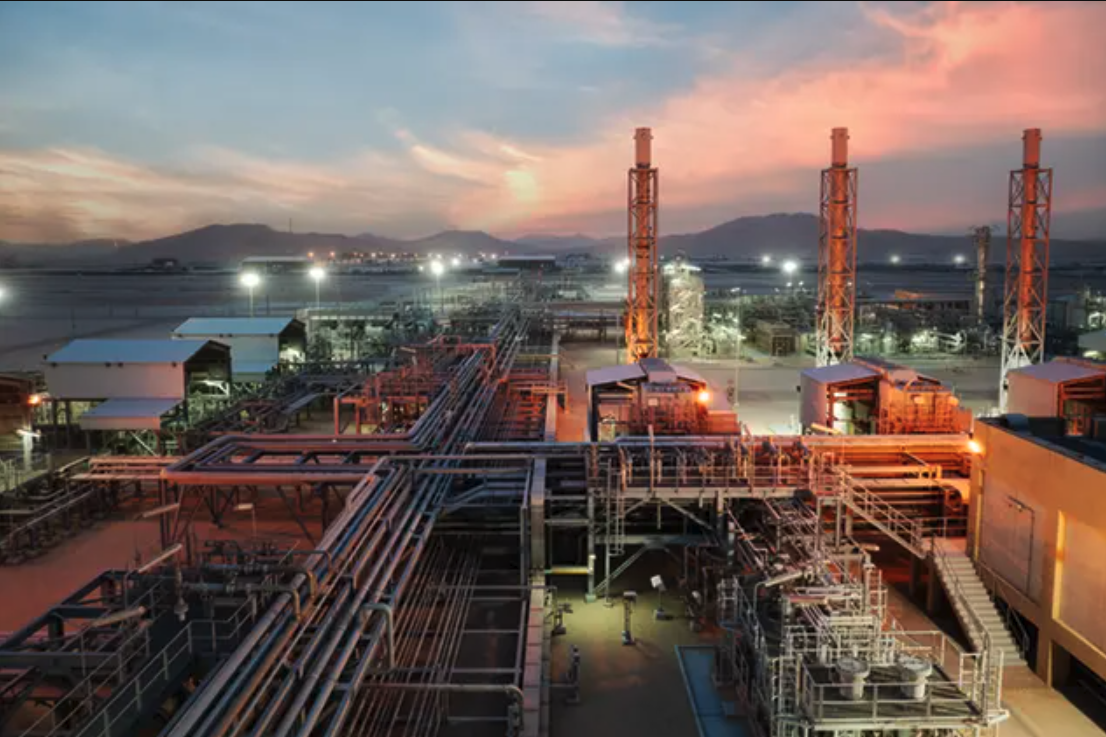
War-torn Libya is pumping oil at its fastest pace in more than a decade, averaging about 1.4 million barrels per day in April, according to National Oil Corp. operating data.

Still, refining capacity, distribution networks, and subsidy-financed imports remain strained by years of institutional division since the 2011 conflict, when production fell sharply from about 1.5 million barrels per day to near-collapse levels during the civil war.

The imbalance reflects Libya’s fragmented downstream system, where crude oil exports continue but refining capacity, distribution networks, and subsidy-financed imports remain strained by years of institutional disruption since the 2011 uprising and the overthrow of longtime dictator Muammar Gaddafi, when production fell sharply.

Tracking Libya’s Hydrocarbon Windfall

The state-owned NOC reported $2.82 billion in gross oil revenue in April, followed by nearly $4 billion in May, the highest monthly intake in over 10 years, according to local energy reports citing official data. Crude flows through Es Sider, Ras Lanuf, and Zawiya terminals into Mediterranean markets, where it is priced against Brent-linked benchmarks.

Translating stronger production and upstream earnings into direct benefits to the state and its people remains challenging, however.

The May surge coincided with a sharp increase in fuel imports; NOC Chairman Masoud Suleman confirmed the contracting of 17 gasoline tankers, the highest monthly fuel import volume in Libya’s history. Even as import activity rose, several cities in western Libya reported fuel shortages and long queues at filling stations, exposing persistent breakdowns in domestic distribution.

The cash conversion of oil earnings is still structurally uneven. In April, only $1.91 billion of $2.82 billion in gross revenue reached the Central Bank of Libya after fuel-import and settlement deductions routed through the Libyan Foreign Bank mechanism. That left roughly $910 million stuck within upstream settlement layers awaiting final transfer into the sovereign liquidity system.

On June 3, the central bank launched a $3.5 billion foreign currency allocation program to cover letters of credit (LOCs), foreign transfers, and retail foreign-currency demand, according to Libyan financial disclosures, amid persistent import financing pressure on food, fuel, and industrial inputs.

Central Bank at the Center of Fiscal Fault Line

The central bank sits at the center of this fiscal roundelay. It is the sole legal recipient of hydrocarbon revenues and converts inflows into domestic liquidity for salaries, imports, and foreign exchange allocations, making it the clearing hub for the national economy.

That role has repeatedly placed it at the center of political escalation. Last August, a dispute over central bank leadership triggered a production shutdown in the eastern half of the country that quickly cut output from nearly 959,000 barrels per day to 591,000, according to NOC data. The United Nations Support Mission in Libya warned that disruption of the central bank’s clearing function would freeze LOCs and salary payments, given that hydrocarbons account for more than 90% of export earnings.

The underlying political structure remains split between the UN-backed Government of National Unity in Tripoli and the Government of National Stability based in Benghazi and Tobruk in the east; UN mediation is ongoing, but national elections remain stalled. A rare shift occurred on April 11, however, when the rival eastern and western legislative bodies signed a landmark agreement to unify public spending, creating Libya’s first consolidated budget framework since 2013.

Foreign Majors Return as Political Risk Persists

Production recovery continues. Libya is targeting 1.6 million barrels per day by the end of 2026, supported by the rehabilitation of mature fields across the Sirte and Murzuq basins and incremental drilling gains.

Investment is also returning at scale.

In February, Libya awarded oil and gas exploration licenses for the first time in 17 years, granting acreage to Chevron, Eni, QatarEnergy, and Repsol, alongside other global operators competing for the Sirte, Murzuq, and offshore Mediterranean blocks. The round followed broader upstream agreements involving TotalEnergies and ConocoPhillips, BP, Shell, and ExxonMobil, signaling renewed international exposure to Libya’s estimated 48.4 billion to 50 billion barrels of proven reserves, the largest in Africa.

Libya’s constraint is now fiscal rather than geological, the analytics firm Geopolitical Desk notes; production has stabilized, but “funding flows remain irregular, procurement cycles constrained, and fiscal authority contested across parallel administrations.”

The result is a landscape where record output, rising revenues, and partial political coordination coexist with fragmented financial execution, ensuring that Libya’s oil recovery is measured in barrels but constrained in how fully it translates into state power.

Source link

OPEC to increase oil output amid continued closure of Strait of Hormuz

OPEC on Sunday announced that its member nations will increase oil production by nearly 200,000 barrels per day in July, despite the Strait of Hormuz remaining closed and it being very difficult to ship it anywhere out of the Middle East. Photo by Ismael Mohamad/UPI | License Photo

June 7 (UPI) — The Organization of the Petroleum Exporting Countries on Sunday agreed to increase production by nearly 200,000 barrels per day despite the Strait of Hormuz remaining closed, making it near-impossible to ship any of it.

Ordinarily, OPEC increasing oil production among the group of nations that comprise it would lower its cost, but experts have called the move largely symbolic because of the ongoing war in Iran, The New York Times and Wall Street Journal reported.

The Strait of Hormuz, which 20% of the world’s oil supply ordinarily would pass through daily, has been closed since early in the war as part of Iran’s effort to counter the war launched by the United States and Israel in February.

The OPEC members that agreed to the 188,000-barrel increase for July — the fourth month in a row that the group is increasing production — include Saudi Arabia, Russia, Iraq, Kuwait, Algeria, Kazakhstan and Oman.

The countries agreed to the increase as part of the group’s “commitment to support oil market stability” and said the latest production increase would also allow the participating nations to “accelerate their compensation,” OPEC said in a statement.

“The countries will continue to closely monitor and assess market conditions, and in their continuous efforts to support market stability, they reaffirmed the importance of a cautious approach,” the group said in the statement.

The Trump administration continues to negotiate an end to the war that would lead to the reopening of the Strait, in addition to working to limit Iran’s ability to build a nuclear weapon, amid a shaky weeks-long cease-fire.

President Donald Trump discusses renovations to the Lincoln Reflecting Pool and makes an announcement on coal in the Oval Office at the White House on Thursday. Photo by Samuel Corum/UPI | License Photo

Source link

Venezuela: Oil Output Surpasses 1M BPD as Western Corporations Crowd in

Venezuelan oil revenues are currently controlled by the US Treasury Department. (Archive)

Caracas, May 15, 2026 (venezuelanalysis.com) – Venezuelan oil production has moved past 1 million barrels per day (bpd) for the first time in over seven years.

The latest OPEC monthly report placed the Caribbean nation’s April output at 1.031 million bpd, as measured by secondary sources. The figure increased by 46,000 bpd compared to the previous month.

For its part, state oil company PDVSA reported April’s production at 1.136 million bpd, up from 1.095 million bpd in March. Direct and secondary measurements have differed over time due to disagreements over the inclusion of natural gas liquids and condensates.

With the oil industry under crushing US coercive measures, crude production plummeted from around 1.9 million bpd when the first sanctions were levied against PDVSA. Following the US imposition of an export embargo in January 2019, output fell under 1 million bpd, hitting decades-lows around 350,000 bpd in 2020 before a steady recovery in recent years.

Since the January 3 US military strikes against Venezuela and kidnapping of President Nicolás Maduro, the Trump administration has imposed control over the nation’s energy sector, with revenues deposited in US Treasury-run accounts before being partially returned to Caracas at US officials’ discretion. 

US Secretary of State Marco Rubio stated on Thursday that “for the first time in over a decade the wealth of Venezuela is benefitting the people of Venezuela,” though he did not mention the impact of US sanctions first imposed in late 2014.

While US coercive measures remain in place, the White House has issued a series of licenses allowing Western corporations to return to the Venezuelan energy sector.

BP, Chevron, Eni, Repsol, and Shell are among the companies to have struck oil and natural gas contracts with the Venezuelan government led by Acting President Delcy Rodríguez in past weeks, taking advantage of a recent pro-business legislative overhaul that slashed royalties and taxes, granted private partners increased control over operations and sales, and opened the way for disputes to be settled in international arbitration bodies.

Lesser-known companies Overseas Oil and Crossover Energy have likewise inked agreements for energy projects in the South American country. 

ExxonMobil and ConocoPhillips are also evaluating prospects for a return to Venezuela, according to the Wall Street Journal. The two oil giants saw their assets nationalized by the former Hugo Chávez government in the 2000s after refusing to accept the country’s reforms asserting sovereignty over the industry. Both corporations would go on to secure compensation via international arbitration, with an award of over US $10 billion to ConocoPhillips still outstanding. 

The recent rebound in oil production coincided with an increase in US-sourced diluent imports. Exports also surged in April to 1.23 million bpd, the highest figure in over seven years. Apart from a growing number of cargoes to US refineries, Indian refiner Reliance is receiving increased shipments after securing US Treasury approval.

In contrast, two tankers reportedly headed to China and Cuba, respectively, will return their cargoes to Venezuelan ports after being intercepted by US naval forces. Prior to the January 3 operation and US control over oil exports, China had been the primary destination for Venezuelan crude. Caracas had likewise been the main supplier of oil to Cuba in the last two decades.

Venezuelan and US authorities have offered no clarity on the return of export proceeds to the South American country, with US Secretary of State Marco Rubio stating that Caracas needs to submit a “budget request” before accessing its funds. The Venezuelan Central Bank’s handling of US-disbursed resources will be subjected to outside auditing, with Pentagon and CIA contractor Deloitte reportedly among the companies hired.

Despite the absence of official data on Venezuelan export revenues and the portion being returned to the country, the Rodríguez administration’s injection of foreign currency into exchange tables run by public and private banks increased in April and May. US authorities reportedly mandated that PDVSA revenues be funneled directly to private sector importers via forex auctions as opposed to having the Venezuelan Central Bank run foreign currency assignments.

Edited by Lucas Koerner in Caracas.

Source link

U.S. Antimony targets $125M 2026 revenue while planning 1,000 tons per month 99.9% hydromet output in 2028 (NYSE:UAMY)

Earnings Call Insights: United States Antimony Corporation (UAMY) Q1 2026

Management View

  • CEO Gary Evans said, “This is no longer just an antimony company” and pointed investors to a portfolio spanning “antimony, cobalt, gold, tungsten, and zeolite,” alongside ramping processing capacity and government-linked demand.

Seeking Alpha’s Disclaimer: This article was automatically generated by an AI tool based on content available on the Seeking Alpha website, and has not been curated or reviewed by humans. Due to inherent limitations in using AI-based tools, the accuracy, completeness, or timeliness of such articles cannot be guaranteed. This article is intended for informational purposes only. Seeking Alpha does not take account of your objectives or your financial situation and does not offer any personalized investment advice. Seeking Alpha is not a licensed securities dealer, broker or US investment adviser or investment bank.

Source link