Brazil opts for caution in U.S. tariff dispute

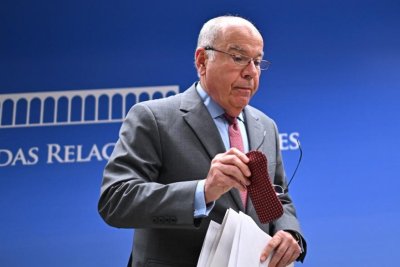
Brazilian Foreign Minister Mauro Vieira participates in a press conference in Brasilia on Thursday after the announcement of new U.S. tariffs on Brazilian goods. ‘It is clear that what bothers the U.S. government is that Brazil did not give in to the excessive demands and unreasonable requirements made during the negotiations,’ Vieira said. Photo by Andre Borges/EPA
BRASILIA, Brazil, July 17 (UPI) — Brazil’s government has delayed plans to invoke its Reciprocity Law after the United States imposed a 25% tariff on Brazilian exports. It opted instead for a more cautious strategy aimed at avoiding a broader trade conflict.
After meetings between the government’s economic team and the country’s leading industrial groups, President Luiz Inacio Lula da Silva‘s administration paused previous plans for immediate retaliatory measures.
According to Brazilian media reports, officials are concerned that reciprocal tariffs could trigger a trade war, increase the cost of imported inputs and drive up consumer prices in Brazil.
Industrial associations argued that the production chains of both countries are highly integrated, and that making U.S. imports more expensive would also hurt Brazilian manufacturers, CNN Brasil reported.
The Brazilian government also announced a support program for companies affected by the U.S. tariff.
“We already have mechanisms to protect our companies and our jobs,” Deputy Finance Minister Dario Durigan said. He added that, in coordination with affected industries, the government will strengthen the Brazil Sovereign Plan, which supports businesses “unfairly harmed by the increase in U.S. tariffs,” according to G1.
Analysts say Lula’s administration is expected to exhaust all negotiation channels before escalating the dispute, although they acknowledge that the prospects for direct bilateral negotiations with Washington are limited.
The Office of the U.S. Trade Representative has concluded its Section 301 investigation, determining that Brazil maintains “unfair trade practices.” That finding has left Brazilian diplomats with little room to continue technical negotiations.
Brazilian Foreign Minister Mauro Vieira on Thursday rejected Washington’s demands as “excessive and unreasonable.” He said U.S. negotiators had sought concessions that would undermine Brazil’s economic sovereignty in sensitive areas, including the country’s Pix instant payment system and environmental regulations.
Brazil’s manufacturing sector, particularly higher value-added industries, is expected to suffer the greatest impact from the 25% tariffs scheduled to take effect July 22. The measure will affect about 3,000 Brazilian products, representing nearly 18% of Brazil’s exports to the U.S. market, according to O Globo.
To limit the impact on everyday consumer goods in the United States, the Trump administration excluded products such as coffee, oranges and concentrated orange juice, beef and grains from the new tariffs.
With little indication that the White House will soften its position, Brazil has shifted its strategy away from direct bilateral negotiations and toward legal challenges before the World Trade Organization and the gradual use of its Reciprocity Law.
The government’s primary legal strategy will be to challenge the legality of the unilateral tariffs before the World Trade Organization.
Brazil has not ruled out using the Reciprocity Law, which was unanimously approved by Congress. The legislation authorizes Brazil to impose tariffs on the 76% of U.S. products that currently enter the country duty-free and even suspend intellectual property rights.
However, officials said implementation will be delayed while the government evaluates the economic impact of the U.S. measures.
“It is important to emphasize that we have the Reciprocity Law, unanimously approved by the National Congress, and the government will know how to implement it at the appropriate time,” Vice President Geraldo Alckmin said.
He said the law is not intended as retaliation but rather as a measure “that defends the national interest, the interests of Brazilians and the Brazilian economy.”