Opinions

Christmas is not a Western story – it is a Palestinian one | Opinions

Every December, much of the Christian world enters a familiar cycle of celebration: carols, lights, decorated trees, consumer frenzy and the warm imagery of a snowy night. In the United States and Europe, public discourse often speaks of “Western Christian values”, or even the vague notion of “Judeo-Christian civilisation”. These phrases have become so common that many assume, almost automatically, that Christianity is inherently a Western religion — an expression of European culture, history and identity.

It is not.

Christianity is, and has always been, a West Asian / Middle Eastern religion. Its geography, culture, worldview and founding stories are rooted in this land — among peoples, languages and social structures that look far more like those in today’s Palestine, Syria, Lebanon, Iraq, and Jordan than anything imagined in Europe. Even Judaism, invoked in the term “Judeo-Christian values”, is itself a thoroughly Middle Eastern phenomenon. The West received Christianity — it certainly did not give birth to it.

And perhaps nothing reveals the distance between Christianity’s origins and its contemporary Western expression more starkly than Christmas — the birth story of a Palestinian Jew, a child of this land who was born long before modern borders and identities emerged.

What the West made of Christmas

In the West, Christmas is a cultural marketplace. It is commercialised, romanticised and wrapped in layers of sentimentality. Lavish gift-giving overshadows any concern for the poor. The season has become a performance of abundance, nostalgia, and consumerism — a holiday stripped of its theological and moral core.

Even the familiar lines of the Christmas song Silent Night obscure the true nature of the story: Jesus was not born into serenity but into upheaval.

He was born under military occupation, to a family displaced by an imperial decree, in a region living under the shadow of violence. The holy family were forced to flee as refugees because the infants of Bethlehem, according to the Gospel narrative, were massacred by a fearful tyrant determined to preserve his reign. Sound familiar?

Indeed, Christmas is a story of empire, injustice and the vulnerability of ordinary people caught in its path.

Bethlehem: Imagination vs reality

For many in the West, Bethlehem – the birthplace of Jesus – is a place of imagination — a postcard from antiquity, frozen in time. The “little town” is remembered as a quaint village from scripture rather than a living, breathing city with actual people, with a distinct history and culture.

Bethlehem today is surrounded by walls and checkpoints built by an occupier. Its residents live under a system of apartheid and fragmentation. Many feel cut off, not only from Jerusalem – which the occupier does not allow them to visit – but also from the global Christian imagination that venerates Bethlehem’s past while often ignoring its present.

This sentiment also explains why so many in the West, while celebrating Christmas, care little about the Christians of Bethlehem. Even worse, many embrace theologies and political attitudes that erase or dismiss our presence entirely in order to support Israel, the empire of today.

In these frameworks, ancient Bethlehem is cherished as a sacred idea, but modern Bethlehem — with its Palestinian Christians suffering and struggling to survive — is an inconvenient reality that needs to be ignored.

This disconnect matters. When Western Christians forget that Bethlehem is real, they disconnect from their spiritual roots. And when they forget that Bethlehem is real, they also forget that the story of Christmas is real.

They forget that it unfolded among a people who lived under empire, who faced displacement, who longed for justice, and who believed that God was not distant but among them.

What Christmas means for Bethlehem

So what does Christmas look like when told from the perspective of the people who still live where it all began — the Palestinian Christians? What meaning does it hold for a tiny community that has preserved its faith for two millennia?

At its heart, Christmas is the story of the solidarity of God.

It is the story of God who does not rule from afar, but is present among the people and takes the side of those on the margins. The incarnation — the belief that God took on flesh — is not a metaphysical abstraction. It is a radical statement about where God chooses to dwell: in vulnerability, in poverty, among the occupied, among those with no power except the power of hope.

In the Bethlehem story, God identifies not with emperors but with those suffering under empire — its victims. God comes not as a warrior but as an infant. God is present not in a palace but in a manger. This is divine solidarity in its most striking form: God joins the most vulnerable part of humanity.

Christmas, then, is the proclamation of a God who confronts the logic of empire.

For Palestinians today, this is not merely theology — it is lived experience. When we read the Christmas story, we recognise our own world: the census that forced Mary and Joseph to travel resembles the permits, checkpoints and bureaucratic controls that shape our daily lives today. The holy family’s flight resonates with the millions of refugees who have fled wars across our region. Herod’s violence echoes in the violence we see around us.

Christmas is a Palestinian story par excellence.

A message to the world

Bethlehem celebrates Christmas for the first time after two years without public festivities. It was painful yet necessary for us to cancel our celebrations; we had no choice.

A genocide was unfolding in Gaza, and as people who still live in the homeland of Christmas, we could not pretend otherwise. We could not celebrate the birth of Jesus while children his age were being pulled dead from the rubble.

Celebrating this season does not mean the war, the genocide, or the structures of apartheid have ended. People are still being killed. We are still besieged.

Instead, our celebration is an act of resilience — a declaration that we are still here, that Bethlehem remains the capital of Christmas, and that the story this town tells must continue.

At a time when Western political discourse increasingly weaponises Christianity as a marker of cultural identity — often excluding the very people among whom Christianity was born — it is vital to return to the roots of this story.

This Christmas, our invitation to the global church — and to Western Christians in particular — is to remember where the story began. To remember that Bethlehem is not a myth but a place where people still live. If the Christian world is to honour the meaning of Christmas, it must turn its gaze to Bethlehem — not the imagined one, but the real one, a town whose people today still cry out for justice, dignity and peace.

To remember Bethlehem is to remember that God stands with the oppressed — and that the followers of Jesus are called to do the same.

The views expressed in this article are the author’s own and do not necessarily reflect Al Jazeera’s editorial stance.
Source link

Is the US making a great gamble to reshape Iraq? | Donald Trump

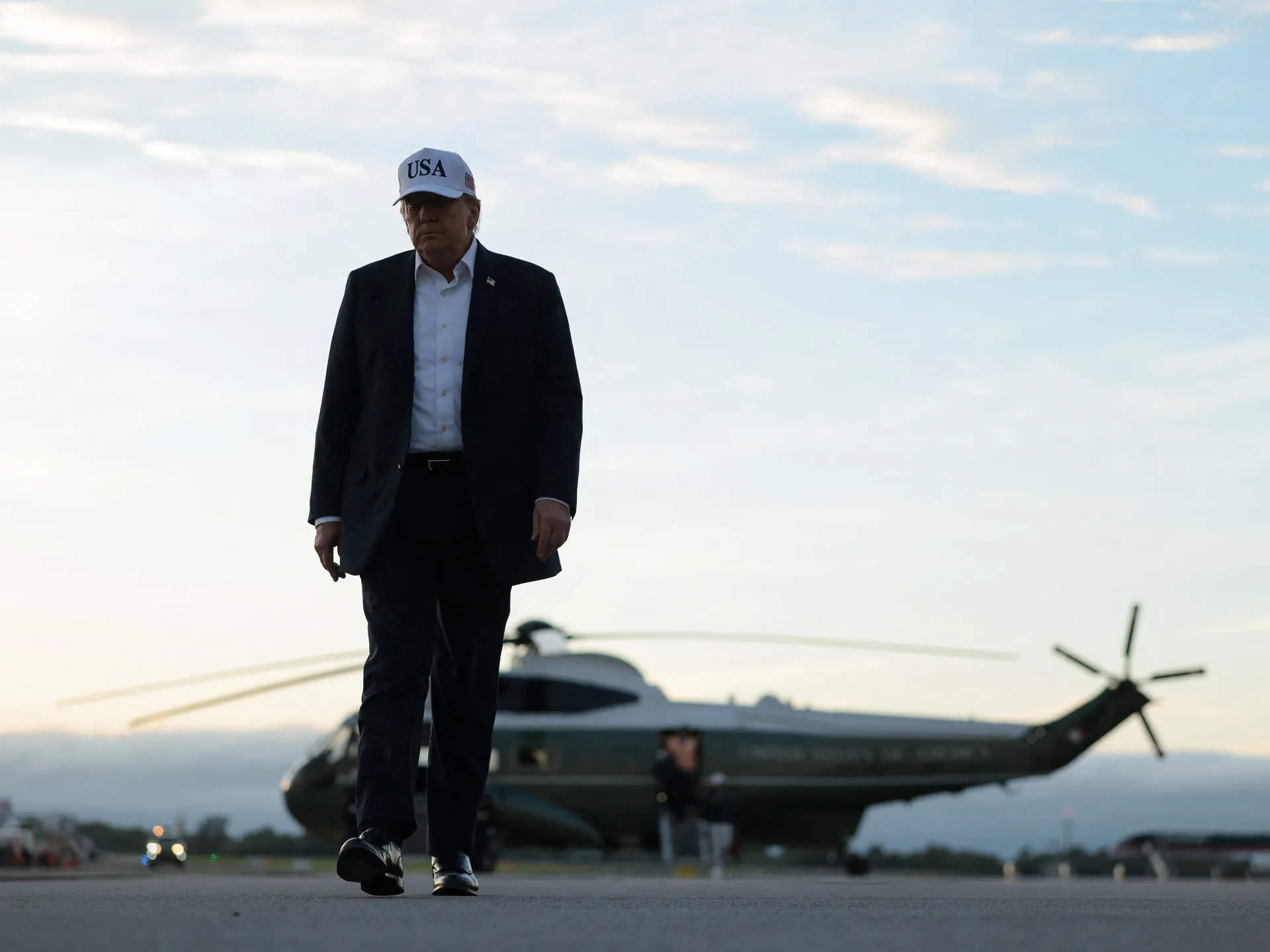
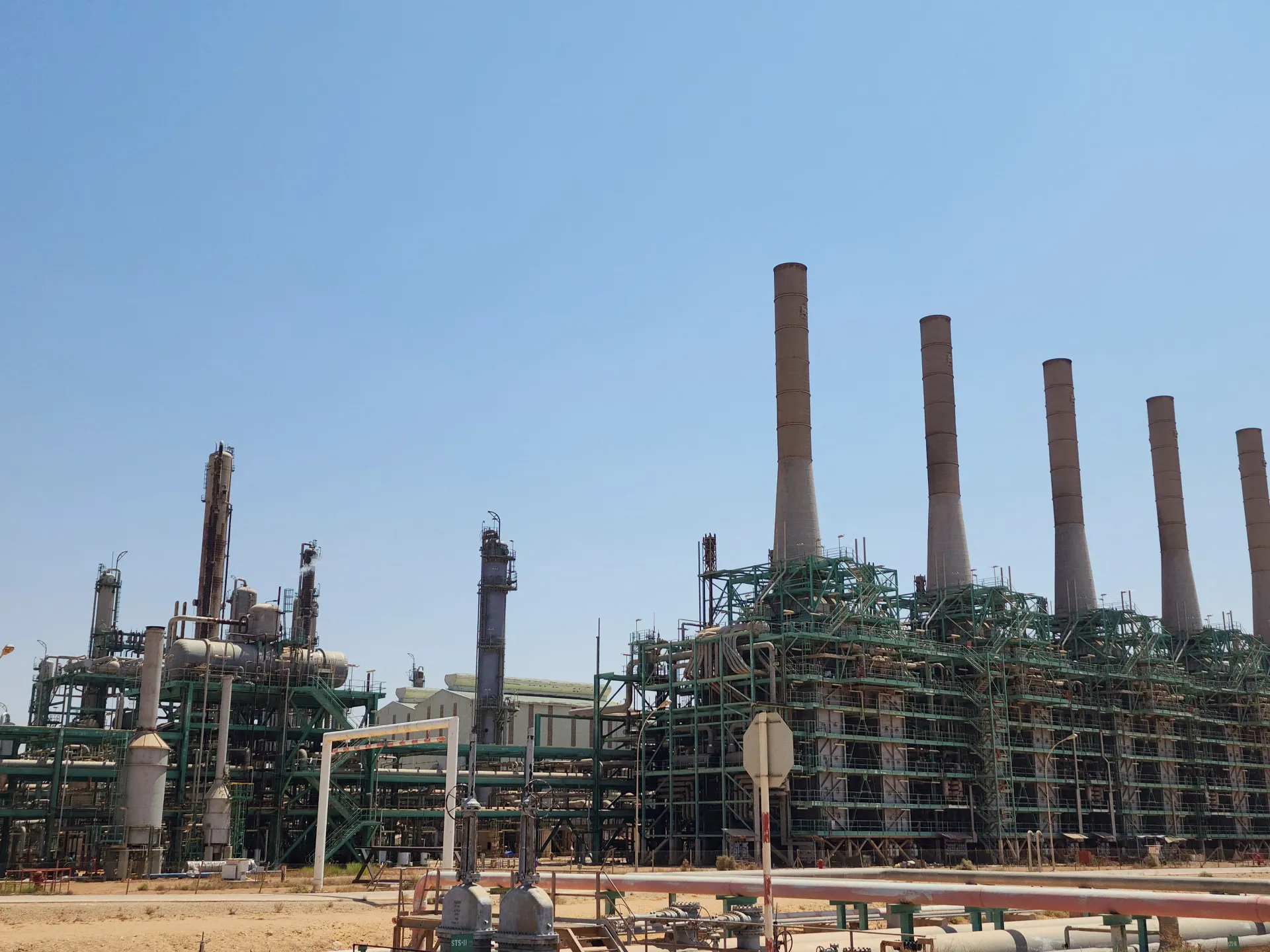
United States President Donald Trump’s second administration has introduced a bold and unconventional strategy for the Middle East. The administration intends to recalibrate US influence in a region historically scarred by conflict, prioritising regional stability through economic strength and military consolidation by asserting a stronger, business-minded US presence.

At the centre of Trump’s ambitious goal is what the new US envoy to Iraq, Mark Savaya, described as his goal to “make Iraq great again”. This approach moves away from traditional endless war tactics towards a transactional, results-oriented diplomacy that aims to restore Iraqi sovereignty and economic vitality. It could be the “great gamble” for Trump, who seeks an Iraq that serves as a stable, sovereign regional hub rather than a battleground for foreign interests.

Trump’s primary plans and wishes for Iraq involve a twofold mission: consolidating all armed forces under the command of the legitimate state and drastically reducing the influence of malign foreign players, most notably Iran. The administration seeks to open Iraqi markets to international investment, upgrade the country’s infrastructure, and secure the independence of its energy sector. Hence, the plan is to ground a genuine partnership that respects Iraq’s unity while ensuring that it is no longer a central node for militia activity or external interference.

Militias and political gridlock

This assertive US strategy lands directly in a highly contested and fractured political environment in Iraq, which is less a single state than a patchwork of competing powers. The heart of the problem lies not just in parliament, but also in the persistent shadow influence of armed factions and militias that often operate outside the formal chain of state command. Those groups were among the biggest winners in the November 2025 elections.

Now the ongoing government negotiations have thrown a stark light on these non-state actors.

Their power raises crucial concerns for the future: How can Iraq enforce the law and, crucially, attract the foreign investment needed for revival if armed groups challenge state authority? The consolidation of the country’s armed forces under complete state control is an urgent necessity, underscored by rising regional tensions and security threats.

Moreover, the path to achieving genuine stability is severely obstructed by entrenched political interests.

For Iraq to achieve stability, it must urgently strengthen its institutional frameworks and clearly establish a separation of powers. Yet, many political parties seem more focused on maintaining control over lucrative state resources than on implementing the meaningful reforms the country desperately needs. The result is a governance model struggling to stand firm amid the crosscurrents of competing loyalties and power grabs.

Washington’s play

To achieve these high-stakes goals, Trump has bypassed traditional diplomatic channels by appointing Mark Savaya as the US special envoy to Iraq on October 19. Such an appointment signals a shift towards “deal-making” diplomacy. Savaya’s mission is to navigate the complex political turmoil following Iraq’s parliamentary elections to steer the country towards a stable transition. His job is to bridge the gap between institutional support and massive financial investment, acting as a direct representative of Trump’s business-centric foreign policy.

Savaya is an Iraqi-born, Detroit-based businessman lacking the traditional diplomatic background; his experience is rooted in the private sector in the cannabis industry, but he gained political prominence as an active supporter of Trump’s campaign in Michigan.

He played a key role in the delicate negotiations that secured the release of Elizabeth Tsurkov, the Israeli-Russian academic and Princeton University student who had been kidnapped by an Iraqi militia for more than two years.

Savaya’s communal and ethnic ties have given him significant access to Iraqi power centres that traditional diplomats often lack.

The Iran factor

Iraq’s position in a geopolitical tug-of-war is compounding the internal struggles, forced to balance its critical relationships with two giants: the US and Iran. On the one hand, Washington’s objective is clear: it wants to bolster Iraq’s sovereignty while simultaneously pushing back against the dominance of powerful, often Iran-backed, militias. The US believes that allowing these armed groups too much sway could leave the nation isolated and wreck its fragile economic stability.

But Iranian influence remains a formidable and enduring force. Tehran views Iraq not just as a neighbour but also as a crucial strategic ally for projecting its power across the entire region. The Islamic Revolutionary Guard Corps (IRGC) has been actively working to maintain unity among key Shia factions in Baghdad. This move clearly signals Iran’s deep and enduring interest in shaping Iraq’s political alignment and its future path. Iraq must therefore navigate this high-stakes balancing act to survive.

Savaya’s mission unfolds at a time when Iran’s regional “axis of resistance” is under unprecedented pressure. Having already lost their primary foothold in Syria after the fall of the Assad regime in late 2024, and seeing Hezbollah’s political and military standing in Lebanon severely decimated by the 2025 conflict with Israel, Iranian proxies now face the very real prospect of losing their grip on Iraq too.

In Lebanon, a new government is committed to regaining the state’s monopoly on the use of force, leaving Hezbollah increasingly isolated. This regional retreat means that for Tehran, maintaining influence in Baghdad is a final, desperate stand to remain a relevant regional power.

Other regional actors

The success of Trump’s gamble also depends on the roles of other regional players. Turkiye has recently recalibrated its strategy to integrate Iraq into ad hoc regional trade and security frameworks, effectively diluting Iran’s centrality. Simultaneously, Gulf monarchies such as Saudi Arabia and the United Arab Emirates are emerging as key economic and security partners for Baghdad, offering an alternative to reliance on Iran.

However, these regional actors also bring their own agendas — such as Turkiye’s focus on containing Kurdish movements — which may conflict with US objectives. If Savaya can successfully align these diverse regional interests with Trump’s plan, he may fundamentally rewrite Iraq’s turbulent future.

A realist pragmatism

The “Make Iraq Great Again” strategy reflects a pragmatic reassertion of US interests within the anarchic international system, prioritising Washington’s security and economic power over idealistic goals.

By appointing Savaya — an unconventional, business-oriented envoy — the Trump administration is employing “transactional realism”, utilising economic diplomacy and personal ties as strategic tools to pull Iraq away from Iran’s orbit. This approach views the US-Iran rivalry as a zero-sum game of power politics, where integrating Iraq’s armed forces under centralised state control is fundamental to restoring a state-centric order and sidelining non-state militias that currently feed Tehran’s regional influence.

The new US envoy to Iraq has made clear that “there is no place for armed groups in a fully sovereign Iraq”. His calls resonated with Iraqi officials and militia leaders alike – now at least three militias close to Iran have publicly agreed to disarm. However, other groups have yet to do the same, while rejecting the call from the outset.

However, this high-stakes attempt to shift the regional balance of power faces a significant “security dilemma”, as aggressive moves to diminish Iranian influence may trigger a violent defensive response from Tehran to protect its remaining strategic assets. While the strategy seeks to exploit a regional shift – leveraging the weakened state of Iranian proxies in Syria and Lebanon – it must contend with the “hybrid” power of Iraqi militias and the narrow self-interests of neighbouring players like Turkiye and the Gulf states.

The success of this gamble depends on whether the US can dismantle the shadow economies that facilitate foreign interference and establish a stable, autonomous Iraqi state capable of navigating the intense geopolitical tug-of-war between Washington and Tehran.

The stakes for Iraq’s future

Ultimately, the appointment of Savaya serves as the definitive stress test for Iraqi sovereignty, marking a high-stakes transition towards a transactional “America First” strategy aimed at “Making Iraq Great Again”. By attempting to consolidate military command under the state and dismantle the shadow economies fuelling Iranian influence, Savaya’s mission seeks to exploit the current regional weakening of Tehran’s proxies to transform Iraq into a stable, autonomous hub.

However, the success of this “Great Gamble” hinges on Savaya’s ability to overcome entrenched political opposition and reconcile the presence of US forces with the demand for national unity. If this unconventional diplomatic push can bridge internal divides — particularly between Baghdad and the semi-autonomous Kurdish region in the north — Iraq may finally secure a path towards economic independence; otherwise, the nation risks remaining a perpetual battleground caught in the geopolitical crossfire between Washington and Tehran.

The views expressed in this article are the author’s own and do not necessarily reflect Al Jazeera’s editorial stance.

Source link

Sixty years ago, the world tried to stop racial discrimination and failed | Human Rights

The way the story is often told is that Western countries gifted human rights to the world and are the sole guardians of it. It may come as a surprise for some, then, that the international legal framework for prohibiting racial discrimination largely owes its existence to the efforts of states from the Global South.

In 1963, in the midst of the decolonisation wave, a group of nine newly independent African states presented a resolution to the United Nations General Assembly (UNGA) calling for the drafting of an international treaty on the elimination of racial discrimination. As the representative from Senegal observed: “Racial discrimination was still the rule in African colonial territories and in South Africa, and was not unknown in other parts of the world … The time had come to bring all States into that struggle.”

The groundbreaking International Convention on the Elimination of All Forms of Racial Discrimination (ICERD) was unanimously adopted by the UNGA two years later. The convention rejected any doctrine of superiority based on racial differentiation as “scientifically false, morally condemnable and socially unjust”.

Today, as we mark 60 years since its adoption, millions of people around the world continue to face racial discrimination – whether in policing, migration policies or exploitative labour conditions.

In Brazil, Amnesty International documented how a deadly police operation in Rio de Janeiro’s favelas this October resulted in the massacre by security forces of more than 100 people, most of them Afro-Brazilians and living in poverty.

In Tunisia, we have seen how authorities have for the past three years used migration policies to carry out racially targeted arrests and detentions and mass expulsions of Black refugees and asylum seekers.

Meanwhile, in Saudi Arabia, Kenyan female domestic workers face racism and exploitation from their employers, enduring gruelling and abusive working conditions.

In the United States, diversity, equity and inclusion (DEI) initiatives aimed at tackling systemic racism have been eliminated across federal agencies. Raids by Immigration and Customs Enforcement (ICE) targeting migrants and refugees are a horrifying feature of President Donald Trump’s mass deportation and detention agenda, rooted in white supremacist narratives.

Migrants held in detention centres have been subjected to torture and a pattern of deliberate neglect designed to dehumanise and punish.

Elsewhere, Amnesty International has documented how new digital technologies are automating and entrenching racism, while social media offers inadequately moderated forums for racist and xenophobic content. For example, our investigation into the United Kingdom’s Southport racist riots found that X’s design and policy choices created fertile ground for the inflammatory, racist narratives that resulted in the violent targeting of Muslims and migrants.

Even human rights defenders from the Global South face racial discrimination when they have to apply for visas to Global North countries in order to attend meetings where key decisions are made on human rights.

All these instances of systemic racism have their roots in the legacies of European colonial domination and the racist ideologies on which they were built. This era, which spanned nearly four centuries and extended across six continents, saw atrocities that had historical consequences – from the erasure of Indigenous populations to the transatlantic slave trade.

The revival of anti-right movements globally has led to a resurgence of racist and xenophobic rhetoric, a scapegoating of migrants and refugees, and a retrenchment in anti-discrimination measures and protections.

At the same time, Western states have been all too willing to dismantle international law and institutions to legitimise Israel’s genocide against Palestinians in Gaza and shield Israeli authorities from justice and accountability.

Just as the creation of the ICERD was driven by African states 60 years ago, Global South countries continue to be at the forefront of the fight against racial oppression, injustice and inequality. South Africa notably brought the case against Israel at the International Court of Justice and cofounded The Hague Group – a coalition of eight Global South states organising to hold Israel accountable for genocide.

On the reparations front, it is Caribbean and African states, alongside Indigenous peoples, Africans and people of African descent, that are leading the pursuit of justice. The Caribbean Community (CARICOM) has been intensifying pressure on European governments to reckon with their colonial past, including during a recent visit to the United Kingdom by the CARICOM Reparations Commission.

As the African Union announced 2026-36 the Decade of Reparations last month, African leaders gathered in Algiers for the International Conference on the Crimes of Colonialism, at which they consolidated demands for the codification of colonialism as a crime under international law.

But this is not enough. States still need to confront racism as a structural and systemic issue, and stop pretending slavery and colonialism are a thing of the past with no impact on our present.

Across the world, people are resisting. In Brazil, last month, hundreds of thousands of Afro-Brazilian women led the March of Black Women for Reparations and Wellbeing against racist and gendered historic violence. In the US, people fought back against the wave of federal immigration raids this year, with thousands taking to the streets in Los Angeles to protest and residents of Chicago mobilising to protect migrant communities and businesses against ICE raids.

Governments need to listen to their people and fulfil their obligations under ICERD and national law to protect the marginalised and oppressed against discrimination.

The views expressed in this article are the authors’ own and do not necessarily reflect Al Jazeera’s editorial stance.

Source link

Somalia’s 2026 election risks a legitimacy crisis | Opinions

For the past 25 years, Somalia’s political transitions have not succeeded by accident. They were sustained through international engagement, pressure, and mediation aimed at preserving fragile political settlements. Today, however, Somalia stands at a dangerous crossroads. The federal government’s unilateral pursuit of power, cloaked in the language of democratic reform, threatens to trigger a legitimacy crisis and undo decades of political gains and international investment.

Universal suffrage is an ideal that all Somalis share. However, deep political disagreement among groups, persistent security challenges, the looming expiry of the government’s mandate, and financial constraints make the timely implementation of universal suffrage nearly impossible.

Pursuing universal suffrage without political consent, institutional readiness, or minimum security guarantees does not deepen democracy or sovereignty; it concentrates power in the hands of incumbents while increasing the risk of fragmentation and parallel authority.

Instead of addressing these constraints through consensus, the government is engaged in a power grab, deploying the rhetoric of universal suffrage. It has unilaterally changed the constitution, which forms the basis of the political settlement. It has also enacted self-serving laws governing electoral processes, political parties, and the Election and Boundaries Commission. Moreover, the government has appointed 18 commissioners, all backed by the ruling Justice and Solidarity Party (JSP).

Meanwhile, Somaliland announced its secession in 1991 and has been seeking recognition for the last three and a half decades. Most of Somalia’s national opposition, along with the leaders of Puntland and Jubbaland Federal Member States, have rejected the government’s approach and formed the Council for the Future of Somalia. These groups have announced plans to organise a political convention in Somalia, signalling their intent to pursue a parallel political process if the government does not listen.

The Federal Government of Somalia does not fully control the country. Al-Shabab controls certain regions and districts and retains the ability to conduct operations well beyond its areas of direct control. Recently, the hardline group attacked a prison located near Villa Somalia, a stark reminder of the fragile security environment in which any electoral process would have to take place.

Given the extent of polarisation and the limited time remaining under the current mandate, the international community must intervene to support Somalia’s sixth political transition in 2026. The most viable way to ensure a safe transition is to promote an improved indirect election model. Somalia’s political class has long experience with indirect elections, having relied on this model five times over the past 25 years. However, even with political agreement, the improved indirect election model for the 2026 dispensation must meet standards of timeliness, feasibility, competitiveness, and inclusivity.

The current government mandate expires on May 15, 2026, and discussions are already under way among government supporters about a unilateral term extension. This must be discouraged. If a political agreement is reached in time, some form of technical extension may be necessary, but this should only occur while the 2026 selection and election processes are actively under way. One way to avoid this recurring crisis would be to establish a firm and binding deadline for elections. Puntland, for example, has maintained a schedule of elections held every five years in January.

The improved indirect election model must also be feasible, meaning it should be straightforward to understand and implement. Political groups could agree on a fixed number of delegates to elect each seat. Recognised traditional elders from each constituency would then select delegates. Delegates from a small cluster of constituencies would collaborate to elect candidates for those seats. This system is far from ideal, but it is workable under current conditions.

Unlike previous attempts, the improved indirect election model must also be genuinely competitive and inclusive. In past elections, politicians manipulated parliamentary selection by restricting competition through a practice known as “Malxiis” (bestman). The preferred candidate introduces a bestman, someone who pretends to compete but is never intended to win. For the upcoming election, the process must allow candidates to compete meaningfully rather than symbolically. A clear threshold of “no manipulation” and “no bestman” must be enforced.

Inclusivity remains another major concern. Women’s seats, which should account for about 30 percent of parliament, have frequently been undermined. Any political agreement must include a clear commitment to inclusivity, and the institutions overseeing the election must be empowered to enforce the women’s quota. Government leaders have also arbitrarily managed seats allocated to Somaliland representatives. Given the unique political circumstances, a separate, negotiated, and credible process is required.

Finally, widespread corruption has long tainted Somalia’s selection and election processes, undermining their integrity. In 2022, the presidents of the Federal Member States managed and manipulated the process. To curb corruption in the 2026 improved indirect election model, one effective measure would be to increase the number of voters per seat by aggregating constituencies. In practice, this would mean combined delegates from several constituencies voting together, reducing opportunities for vote buying.

The international community has previously pressured Somali political actors to reach an agreement, insisting there should be “no term extension or unilateral elections by the government” and “no parallel political projects by the opposition”. This approach, combined with the leverage the international community still holds, can be effective. Somalia’s political class must again be pushed into serious, structured negotiations rather than unilateral manoeuvres.

As before, the international community should clearly define political red lines. The government must refrain from any term extensions or unilateral election projects. At the same time, the opposition must abandon plans for a parallel political agenda, including Federal Member States conducting elections outside a political agreement.

Somalis have repeatedly demonstrated their democratic aspirations. What stands in the way is not public will, but elite polarisation and the instrumentalisation of reform for political survival. At this critical moment, the international community cannot afford to retreat into passivity. Proactive and principled engagement is essential to prevent a legitimacy collapse, safeguard the gains of the past 25 years, and protect the substantial investments made in peacebuilding and state-building in Somalia.

The views expressed in this article are the author’s own and do not necessarily reflect Al Jazeera’s editorial stance.
Source link

Europe’s efforts to undermine Trump’s plan on Ukraine may backfire | Russia-Ukraine war

This week is shaping up to be crucial for the European Union’s policy on Ukraine. EU foreign ministers met in Brussels on Monday; EU heads of state will gather on Thursday. Ukrainian President Volodymyr Zelenskyy is meeting United States envoy Steve Witkoff. At the top of the agenda is the peace plan put forward by US President Donald Trump and continuing funding for Ukraine’s war effort.

The European strategy so far has been to alter the US-proposed peace plan in such a way that it becomes completely unacceptable to Russia. This, as European leaders hope, will reinforce the core narrative emanating from their capitals over the past two months – that Russian President Vladimir Putin is just playing games and doesn’t really want peace.

The idea behind it is to try to sway Trump to their side and have him apply additional military and economic pressure on the Kremlin rather than pressing Ukraine into signing an unsavoury peace deal right away. But this effort could easily backfire.

The main practical issue with regards to Ukraine’s capacity to withstand Russian aggression during 2026 is who is going to fund its army as well as its state and social welfare system. Trump proudly states that the US is no longer financing Ukraine’s war effort because, in his parlance, it is “Biden’s war” – ie, his predecessor Joe Biden is to blame.

The burden of funding is now squarely on Europe – the EU and rich non-EU countries, such as the United Kingdom and Norway. The US keeps providing weapons to Ukraine, but these are being paid for with money from European coffers. US intelligence support, crucial in Ukraine’s war planning, is currently available to Kyiv for free.

European leaders have been vocal and aggressive throughout the year in rejecting any realistic compromise that could end the war. But even as 2025 is ending, there is no clarity as to how they are going to back up their jingoistic rhetoric with sufficient funding that would allow Ukraine not just to stay afloat but tip the balance in the conflict in its favour.

Their plan A is what they call the reparations loan. It envisages using the assets of the Russian Central Bank frozen by European banks to fund the Ukrainian defence. This means that rather than spending the money on actual reparations – as in Ukraine’s post-war restoration – it would be spent on the war itself.

The thinking behind this plan is that once Russia suffers a strategic defeat, it would retroactively agree to the confiscation rather than demand its money back, so European governments would not have to reach into their coffers to return the money to the Russians.

The obvious problem here is that exactly nobody – except war cheerleaders who have been promising Russia’s defeat for the past four years – believes this outcome is even remotely realistic. Belgium, which holds the bulk of these assets, is equally sceptical, which is why it opposes this plan. It has been joined by a growing number of EU states, including the Czech Republic and Italy.

The other big problem is that Trump’s peace plan has radically different designs for the assets in question. It envisages using them as actual reparations, as in spending them on restoring Ukraine’s economy. Most crucially, Moscow has on numerous occasions signalled that it agrees with this part of the plan. It considers the money lost and wants to make sure neighbouring Ukraine does not turn into a failed state.

This means that if the reparations loan plan goes ahead, it would undermine the most attractive provision of Trump’s plan. If this happens, the US and the EU may find themselves more at odds with each other than they already are, and that would hardly sway Trump.

His administration has indicated on a number of occasions that it could walk out of the peace process if it is derailed, which means ending any help to Ukraine, be it with weapons or intelligence.

The reparations loan plan also comes with an enormous risk for the European economy. The confiscation of Russian assets would discourage any central bank in the world from keeping its money in Europe, meaning the European banking system stands to lose.

More importantly, this move cannot guarantee that Ukraine would be able to stop Russia’s slow but steady advancement. Securing funding for another year under the current circumstances basically means that more Ukrainian lives and territory will be lost in 2026.

This money cannot in effect counter the biggest threat to Ukraine and its neighbours right now: that of Russia precipitating a humanitarian catastrophe that could spill over into the region by devastating Ukraine’s energy infrastructure this winter. The latest blackout in Odesa when the whole city was left without water and heating in the middle of winter is a dark prelude of things to come.

All this warrants the question of why European leaders are acting the way they are now. Could their irrational radicalism be explained by their extensive political investment in delusional outcomes of this war that they have been selling to voters for the past four years? Or are they engaging in incessant moral posturing so as to avoid being scapegoated for the real outcome of the war?

There is probably a bit of both. But there is perhaps also an even more sinister motive, recently expressed by Wolfgang Ischinger, chairman of the Munich Security Conference: the idea that “as long as this war is being fought, … Europe is safe because the Ukrainians have successfully tied down this mighty Russian army.” In other words, there are some within the European political elite who perceive ending the war as being against European interests.

But regardless of what those on top think or are motivated by, the war fatigue in Europe is real. The rise of pro-Russia far-right groups in Germany and elsewhere, capitalising on the ruling elites’ shining ineptitude in handling the conflict with Russia, is a clear sign of that.

If the reparations loan scheme does not pass this week, the EU would have to go to plan B, which envisages loaning money from the EU budget. That, of course, would be met with fierce opposition from the European public.

The failure to secure funding for Ukraine may be seen as an embarrassing failure in Europe, but it would make things easier for Zelenskyy. With his administration losing popularity amid continuing military upsets and a major corruption scandal, Ukraine’s president is well on his way to becoming the chief scapegoat in this debacle.

But no more funding from Europe would allow him to declare that the West has betrayed Ukraine and proceed with the inevitable: accepting an unsavoury peace largely on Russia’s terms.

The views expressed in this article are the author’s own and do not necessarily reflect Al Jazeera’s editorial stance.

Source link

The real reason Israel wants to open the Rafah crossing | Israel-Palestine conflict

On December 3, Israel announced that the Rafah border crossing with Egypt would reopen “in the coming days”, allowing Palestinians to leave Gaza for the first time in months. The statement was, of course, framed as a humanitarian gesture that would allow those in urgent need to travel for medical care, education or family reunification to leave.

However, Israel’s announcement was met almost immediately with Egypt’s denial, followed by a firm rejection from several Arab and Muslim states.

To the rest of the world, this response may seem cruel. It may seem like Arab states want to forcibly keep in Gaza Palestinians desperate to evacuate to safety. This fits right into the Israeli narrative that neighbouring Arab countries are responsible for Palestinian suffering because they would not “let them in”.

This is a falsehood that has unfortunately made its way into Western media, even though it is easily disproved.

Let us be clear: No, Arab states are not keeping us against our will in Gaza, and neither is Hamas.

They want to make sure that when and if some of us evacuate temporarily, we are able to come back. We want the same – a guarantee of return. Yet, Israel refuses to grant it; it made clear in its December 3 announcement that the Rafah crossing would be open only one way – for Palestinians to leave.

So this was clearly a move meant to jump-start forced displacement of the Palestinian population from their homeland.

For Palestinians, this is not a new reality but part of a long and deliberate pattern. Since its inception, the Israeli state has focused on the dispossession, erasure, and forced displacement of the Palestinians. In 1948, 750,000 Palestinians were expelled from their homes and were not allowed to return. My 88-year-old grandfather was among them. He still keeps the Tabu (land registry document) for the dunams of land he owns in his village of Barqa, 37km (23 miles) north of Gaza, where we are still not allowed to return.

In 1967, when Israel occupied Gaza, it forbade Palestinians who were studying or working abroad from returning to their homes. In the occupied West Bank, where colonisation has not stopped for the past 58 years, Palestinians are regularly expelled from their homes and lands.

In the past two years alone, Israel has seized approximately 55,000 dunams of Palestinian land, displacing more than 2,800 Palestinians. In Jerusalem, Palestinians whose families had lived in the holy city for centuries risk losing their residency there if they cannot prove it is their “centre of life”. In the past 25 years, more than 10,000 Palestinian residencies have been revoked.

Since October 2023, Israel has repeatedly attempted to engineer forced mass displacement in Gaza – dividing the Strip into isolated zones separated by military corridors and “safe” axes and launching successive operations to push residents of the north towards the south. Each wave of mass bombing carried the same underlying objective: to uproot the people of Gaza from their homes and push them towards the border with Egypt. The most recent push occurred just before the latest ceasefire took effect.

According to Diaa Rashwan, chairman of the Egyptian State Information Service, Cairo rejected Israel’s proposal because it was an attempt to shun its commitments outlined in the second phase of the ceasefire. That phase requires Israel to withdraw from Gaza, support the reconstruction process, allow the Strip to be administered by a Palestinian committee, and facilitate the deployment of a security force to stabilise the situation. By announcing Rafah’s reopening, Israel sought to bypass these obligations and redirect the political conversation towards depopulation rather than reconstruction and recovery.

That Israel wants to create the conditions to make our expulsion inevitable is clear from other policies as well. It continues to bombard the Strip, killing hundreds of civilians and terrorising hundreds of thousands.

It continues to prevent adequate amounts of food and medicines from getting in. It is allowing no reconstruction materials or temporary housing. It is doing everything to maximise the suffering of the Palestinian people.

This reality is made even more brutal by the harsh winter. Cold winds tear through overcrowded camps filled with exhausted people who have endured every form of trauma imaginable. Yet despite hunger, exhaustion, and despair, we continue to cling to our land and reject any Israeli efforts to displace and erase us.

We also reject any form of external guardianship or control over our fate. We demand full Palestinian sovereignty over our land, our resources, and our crossings. Our position is clear: the Rafah crossing must be opened in both directions; not as a tool of displacement, but as a right to free movement.

Rafah must be accessible for those who wish to return, and for those who need to leave temporarily: students seeking to continue their education abroad, patients in urgent need of medical treatment unavailable in Gaza, and families who have been separated and long to be reunited. Thousands of critically ill Palestinians have been denied life-saving care due to the siege, while hundreds of students holding offers and scholarships from prestigious universities around the world have been unable to travel to pursue their education.

Rafah should also be open to those who simply need rest after years of trauma – to step outside Gaza briefly and return with dignity. Mobility is not a privilege; it is a basic human right.

What we demand is simple: the right to determine our future, without coercion, without bargaining over our existence, and without being pushed into forced displacement disguised as a humanitarian project.

The views expressed in this article are the author’s own and do not necessarily reflect Al Jazeera’s editorial stance.

Source link

We now see the ugly face of Gaza’s ‘new normal’ | Israel-Palestine conflict

Winter came to Gaza last month with a violent storm. I woke up at night to a disaster. Our tent was flooded with water which had transformed our “floor” into a shallow pool. The mattresses and pillows were completely soaked, cooking pots were submerged, the clothes were drenched, and even our bags— which function as our “closets”—were filled with water. Nothing inside remained dry.

As I tried to understand what was happening, I suddenly heard children crying at the entrance of our tent. I opened it quickly and found three children from the neighbouring tents, their lips blue from the cold, with their mother trembling behind them saying, “We are completely soaked… the rain leaked inside and the water reached everywhere.”

The same tragic scene was repeated all around us: women, children, and elderly people sitting in the street under the rain, their bedding drenched and their belongings scattered, while confusion and cries filled the air.

All 1.4 million displaced Palestinians who lack proper shelter suffered that day—people with no protection against the weather or its sudden storms.

For us, it took two full days for our belongings to dry because the sun barely appeared; everything stayed cold and damp. We didn’t move to another place—we stayed where we were, trying to salvage whatever we could, because there was simply nowhere else to go.

Only a week later, an even stronger winter storm arrived with severe rainfall. Tents were flooded again; little children froze in the rain again.

This week, when Storm Byron hit, we were flooded once again. Despite all our efforts to reinforce the tents, secure them tightly, and bring in stronger tarps, nothing worked. The winds were fiercer, the rain heavier, and the water pushed its way inside from every direction. The ground no longer absorbed anything. The water began rising rapidly beneath our feet, turning the entire area into a swamp.

According to the authorities, the strong winds destroyed at least 27,000 tents. These are 27,000 families who already struggled and now have nothing, no shelter, nowhere to hide from the rain and cold.

The rain also brought down damaged homes where people had been sheltering. Every time there is a storm or strong wind, we hear the sound of falling debris and concrete pillars from badly damaged buildings near us. This time, the situation was so bad that 11 people were killed by collapsed buildings.

It is clear that after everything we have endured, we – like other displaced Palestinians – cannot survive a third winter in these harsh conditions. We survived two winters in displacement, living in tents that protected neither from cold nor rain, waiting with exhausted patience for a ceasefire that would end our suffering. The ceasefire finally came, but relief did not. We remain in the same place, with bodies drained by malnutrition and illness, under tents worn out by the sun and wind.

We are a family of seven living in a tent that is four by four metres (13 feet by 13 feet). Among us are two children aged five and 10 and our grandmother, aged 80. We, the adults, can push through the cold and hardship. But how can the elderly and children bear what we live every day?

We sleep on mattresses pressed directly against the ground, with cold seeping in from below and above, with only two blankets that can’t shield us from the freezing nights. Everyone in the tent has two blankets each, barely enough to offer temporary warmth. There is no source of heating—no electricity, no heater—just tired bodies trying to share whatever warmth remains.

My grandmother cannot tolerate the cold at all. I watch her shiver through the night, her hand on her chest as if trying to hold herself together. All we can do is pile every blanket we have on top of her and watch anxiously until she is able to fall asleep.

Many people in Gaza live in conditions far worse than ours.

Most families who just want a modest tent over their heads cannot afford one. The price of tents can go as high as $1,000; the rent one has to pay to pitch a tent on a piece of land can be as much as $500. Those who cannot pay live in the street in makeshift shelters.

Salah al-Din Street, for example, is crowded with them. Most are simply blankets hung and wrapped around small spaces for minimal privacy, offering no protection from rain or cold. With any strong gust of wind, they burst open.

There are also children living directly in the streets, sleeping on the cold ground. Many have lost their mothers or fathers during the war. When you pass by, you see them—sometimes silent, sometimes crying, sometimes searching for something to eat.

Despite repeated promises of aid and reconstruction, the trickle of supplies that entered Gaza has made almost no difference on the ground. Earlier this month, the United Nations announced it had managed to distribute only 300 tents during November; 230,000 families received a single food parcel each.

We did not receive any food parcel—there are simply too many people in need, and the quantities are far too small for everyone to access. Even if we had received one, its contents wouldn’t have lasted us longer than a week or two.

Food prices continue to be high. Nutritious items like meat and eggs are either unavailable or cost too much. Most families have not eaten a proper protein meal in months.

There is no mass campaign to remove rubble or level the ground so people can pitch their tents due to an equipment shortage. No steps have been taken to provide permanent housing for families.

All of this means we now face a terrifying possibility: that life in a tent—one that can be flooded or ripped apart by the wind at any moment—may become our long-term reality. This is an unbearable thought.

During the bombardment, we lived with the constant fear of death, and perhaps the intensity of the war overshadowed everything else—the cold, the rain, the tents shaking above our heads. But now, after the mass bombing has stopped, we are facing the full ugliness of Gaza’s “new normal”.

I fear this winter will be much worse for Gaza. With no heating, no real shelter, and the weather getting worse each day, we are likely to see many deaths among the children, the elderly and the chronically ill. Already, the first deaths from hypothermia were reported – babies Rahaf Abu Jazar  and Taim al-Khawaja and nine-year-old Hadeel al-Masri. If the world is really committed to ending the genocide in Gaza, it needs to take real, urgent action and ensure that we have at least the basic conditions for survival: food, housing and medical care.

The views expressed in this article are the author’s own and do not necessarily reflect Al Jazeera’s editorial stance.
Source link

It is not too late for the world to redeem itself on Gaza | Israel-Palestine conflict

Last month, I was waiting for a shared taxi at the Nuseirat roundabout when I witnessed a heartbreaking scene. As I stood by the side of the road, I felt a small hand tugging at my clothes.

I looked down and saw a little girl, no older than eight. She was barefoot, her shirt was torn, and her hair was messy and unwashed. Her eyes were beautiful, and her face showed innocence, yet exhaustion and despair clouded it.

She pleaded: “Please, please, give me just one shekel, God bless you.”

Before I gave her the money, I decided to speak with her. I knelt down and asked, “What is your name, my dear?”

She replied in a frightened voice, “My name is Nour, and I am from the north.” Her name, which means “light” in Arabic, stood in stark contrast to the darkness surrounding her.

I asked her, “Why are you asking for money, Nour?”

She looked at me hesitantly, then whispered, “I want to buy an apple… I crave one.”

In Gaza, a single apple now costs $7; before the war, a kilogramme of apples was less than a dollar.

I tried to ignore the pain rising in my chest. I thought about the circumstances we now face, where young children are forced to beg in the street just to buy an apple.

I gave Nour one shekel ($0.30), but as soon as I did, the situation worsened. A large group of children, all Nour’s age or younger, gathered around me, repeating the same request. I felt immense distress.

For more than two years, we have faced genocide. We have witnessed countless tragedies and horrors. But for me, the sight of children begging in the streets is particularly unbearable.

Before the war, Gaza was still a poor place. We used to see child beggars, but they were few, mostly roaming in a few areas. Now, they are everywhere, from the north to the south.

The genocidal war has destroyed families and livelihoods across Gaza. The carnage has orphaned more than 39,000 children, and the enormous destruction has deprived more than 80 percent of the workforce of their jobs, driving countless children into extreme poverty and forcing them to beg for survival.

But child begging is not just a result of poverty; it is a sign of a deep disintegration affecting the family, the education system, and the community. No parent sends their child to beg because they want to. The war has left many families in Gaza without options, and in many cases, there are no surviving parents to keep the children away from the streets.

Child beggars do not just lose their childhood; they also face exploitation, harsh labour, illiteracy and psychological trauma that leaves a lasting effect.

The more begging children increase in number, the more the hope for this generation diminishes. Houses can be rebuilt, infrastructure can be restored, but a young generation that is deprived of education and hope for the future cannot be rehabilitated.

The strength Gaza possessed before the war was not just about military power; it was about human power, the main pillar of which was education. We had one of the highest levels of literacy in the world. The enrolment rate for primary education stood at 95 percent; for higher education, it reached 44 percent.

Education stood as a counterforce to the debilitating siege that dispossessed the people of Gaza and crippled the economy. It nourished skills and ingenuity within the young generations to help them cope with an increasingly harsh economic reality. More importantly, education gave children a sense of direction, security and pride.

The systematic attack on Gaza’s education system – the destruction of schools, universities, libraries and the killing of teachers and professors – has pushed what used to be a remarkably resilient and effective educational system to the brink. The pillar that protected children and guaranteed them a clear future is now falling apart.

After I left the Nuseirat roundabout, Nour’s eyes stayed with me. It was not just because of the pain of seeing an innocent child being forced to beg. It was also because of the realisation that this encounter brought about: That the capacity of the next generation to rebuild Gaza one day is being taken away.

The world allowed Israel to carry out genocide in Gaza for two years. It knew what was going on, and yet it chose complicity and silence. Today, it cannot erase its guilt, but it can choose to redeem itself. It can take all necessary action to save the children of Gaza and to grant them the rights they are inherently given by the Convention on the Rights of Children: The right to food, water, healthcare, a safe environment, education, and protection from violence and abuse.

Anything short of that would mean continuing support for the slow genocide of Gaza.

The views expressed in this article are the author’s own and do not necessarily reflect Al Jazeera’s editorial stance.
Source link

Sweden’s push for an ex-IKEA CEO to lead UNHCR signals a new refugee order | Refugees

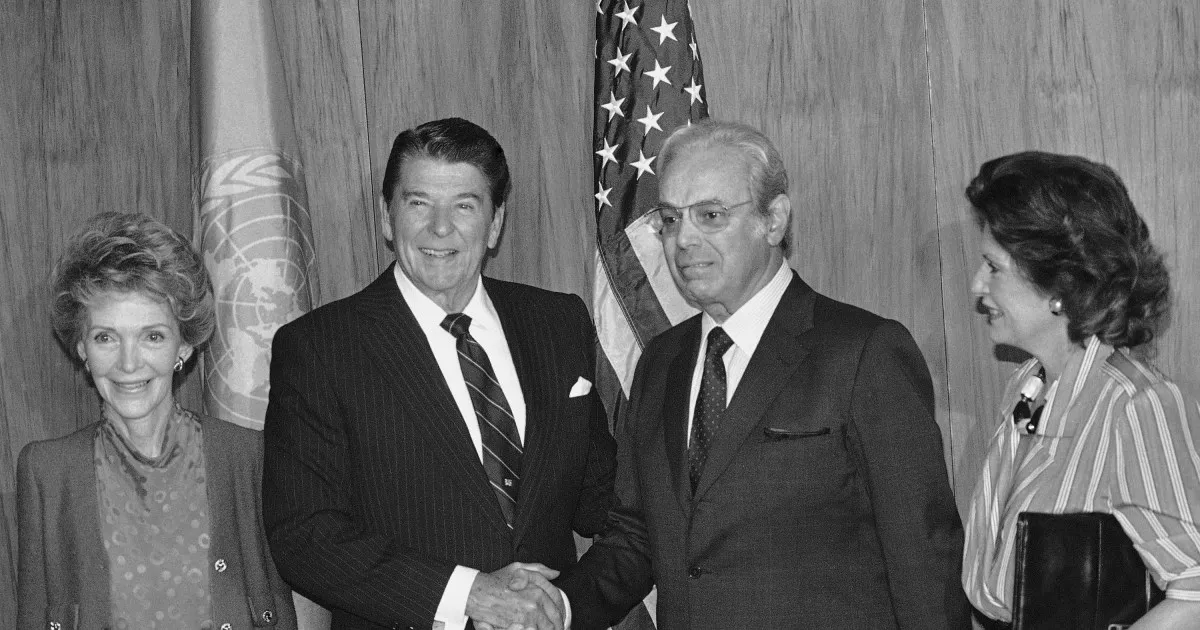
On October 14, the Swedish government announced it was nominating the CEO of IKEA, Jesper Brodin, as its candidate for United Nations High Commissioner for Refugees (UNHCR). Less than a month later, as the current high commissioner, Filippo Grandi, approached the end of his mandate, Brodin resigned from his position at the Swedish furniture giant, which he had led for eight years. In January 2026, the office of the UN secretary-general is expected to present a preferred candidate to the General Assembly for what former UNHCR head of research Jeff Crisp has called a “pro forma election”. Can the former chief of an iconic multinational company become the world’s highest authority on refugees — and what will it mean if he does?

In interviews, Jesper Brodin often refers to a small pamphlet by IKEA founder Ingvar Kamprad, titled The Testament of a Furniture Dealer, as outlining the values that inspire his way of doing business: innovation, sustainability and collective effort over individualism. Does the UNHCR need to learn lessons from a “furniture dealer”? The question matters because Brodin’s appeal is often framed in terms of corporate values, yet it remains unclear how — or whether — these translate into the protection of refugees. Whether Brodin has any chance of making it to the Geneva post or not, the question is worth asking, for the role of IKEA as a donor and operational partner of the UNHCR is significant and is likely to grow.

While humanitarianism and business have historically been companions, particularly since the end of the Cold War, this is the first time a business leader has been proposed to head the UN refugee agency. The nomination comes at a time when the UNHCR faces a dramatic cash crunch, and when political pressures and anti-refugee sentiment are increasing globally. Many scholars and practitioners believe the future of the global refugee regime itself may be at stake. Understanding the implications of Sweden’s choice, then, requires examining how corporate humanitarianism now shapes refugee protection.

Many were taken aback by the nomination. Yet the move by Sweden is anything but surprising. Over the past three decades, corporations have taken on increased responsibility for responding to humanitarian crises, while traditional organisations compete for a rapidly diminishing pool of resources. Research on the commodification of compassion has shown how, increasingly, “doing good” and “doing well” have become one and the same. This kind of “brand aid” involved both promoting commercial brands (from Toms shoes to Starbucks) through their involvement in humanitarian causes, and turning aid itself into a branded activity — something most effectively done through corporate partnerships. It began around two decades ago but has now become the dominant model of humanitarian engagement. As one major humanitarian donor in Kinshasa told us, “It’s now all about collaborations between the private sector, businesses and philanthropists.” Indeed, when the desire to help becomes something you can sell, corporations such as IKEA can profit from involvement in global helping that builds their ethical branding. But can the UNHCR profit from being led by IKEA’s CEO? The question goes to the heart of a growing unease about the direction of the refugee regime.

We see three main problems here. First, UNHCR is caught between contradictory demands from donor states in the Global North and hosting states in the South. Brodin and IKEA’s brand of feel-good capitalism cannot reconcile these fundamental tensions over sovereignty. Jesper Brodin has been lauded as a businessman and touts his credibility as a leader and negotiator. “Trump likes people in the business world,” we are told. However, the challenges to the agency’s protection mandate require a vision that goes well beyond the smiling face of compassionate capitalism. While formally remaining the guardian of the 1951 Refugee Convention, UNHCR has been operating in what scholars such as Bhupinder Chimni have described as an “erosion” of the international refugee regime — a long-term weakening of asylum norms and burden-sharing commitments. Donor governments in the Global North have used their limited support for UNHCR’s humanitarian activities in the Global South as a way to deflect attention from the disregard for refugee rights within their own borders. How will Brodin fare in navigating these competing pressures — from containment agendas in the Global North to protection obligations that lie at the heart of UNHCR’s mandate?

Second, Brodin often mentions his experience as a supply chain manager in a company that has put logistical innovation at the core of its business strategy as an important asset for the job. Indeed, this aligns with UNHCR’s current focus on renewing its own supply chain strategy. He also talks about “bringing the values and the assets of refugees to the business community,” a phrase he uses to refer to refugees’ skills and labour potential. However, this endeavour has proved far more complex than he makes it sound. Almost 10 years after IKEA’s first attempt to integrate refugees into its own supply chains in Jordan, the number of people the programme involves remains small, and refugees in the country still face significant barriers to work and social security.

A study we published in 2021 highlighted that a focus on refugee logistics actually meant working towards integrating displaced people into global supply chains rather than providing them with material support or infrastructure. Whether for business or for disaster relief, logistics depend on networks of infrastructure and rules that only function through ongoing negotiation with governments.

Finally, the contradictions of IKEA’s corporate and foundation ownership structure — what makes it work well as a business — embody the paradox of mixing public needs for refugee protection with private objectives for profit. The IKEA Foundation, the company’s philanthropic arm, has been working with UNHCR since 2010, supporting its operations in 16 countries. The UN agency defines the collaboration as “transformative”, highlighting how it has become a model for all its partnerships with the private sector. Moreover, the nomination comes at a time when major donor states, including the US, the United Kingdom and Germany, are slashing their budgets. In this geopolitical context, Sweden, while facing its own economic challenges, may well be seeking to stake its position as one of the last remaining humanitarian powers in the Western world. Brodin’s bid draws on Sweden’s perceived reputation for frugality and sustainability.

However, there is an unspoken yet fundamental contradiction between Brodin’s promise to address UNHCR’s crisis by “holding the purse strings” and the position of IKEA within global economic structures that have contributed to the humanitarian funding crisis in the first place. In 2017, following calls from EU parliamentary groups, the European Commission opened an in-depth investigation into the Netherlands — where the company is headquartered — for its tax treatment of Inter IKEA, one of the two groups operating the IKEA business. The company’s ownership structure, which benefits its commercial operations, may also reduce its tax burden, thereby reducing contributions to public finances. Here, as in many other cases, big business promises to fix global inequality it has helped create.

In the present global climate of hostility to migrants and refugees, Brodin and IKEA’s brand of feel-good capitalism risks further hollowing out UNHCR’s protection mandate, reducing humanitarianism to a matter of well-managed supply chains. The stakes are high: when humanitarian priorities are shaped by corporate logic, core protections — from asylum access to basic assistance — risk being eroded. What benefits a business organisation does not necessarily serve the rights or needs of refugees.

The views expressed in this article are the authors’ own and do not necessarily reflect Al Jazeera’s editorial stance.
Source link