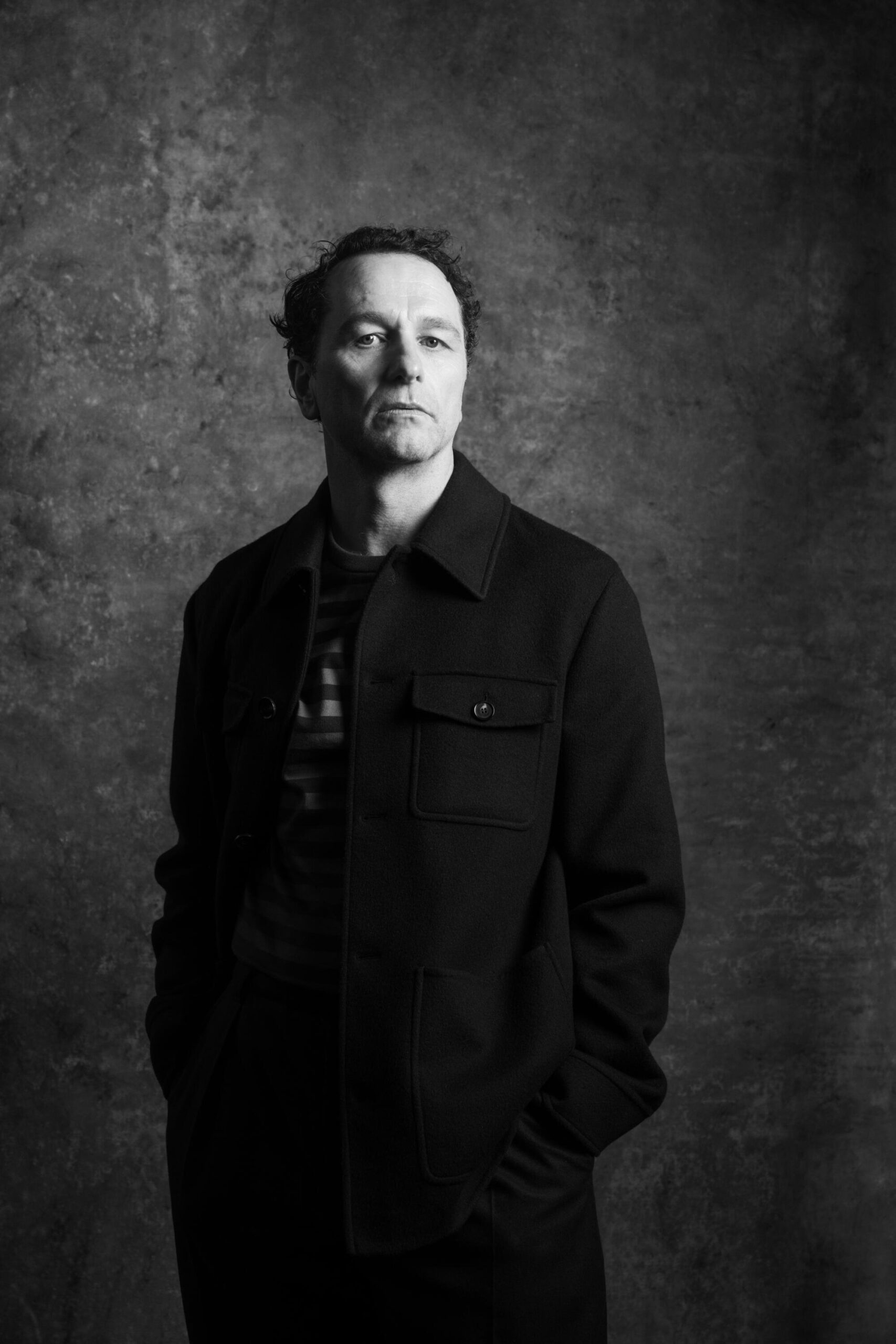
In this week’s episode of The Envelope podcast, Riz Ahmed talks about drawing on his own experience for “Bait,” his Prime Video series about a British Muslim actor whose life is upended when he’s rumored to be the next James Bond.
Kelvin Washington: Hello, everyone, and welcome to the next episode of The Envelope. Kelvin Washington, Yvonne Villarreal, we have Mark Olsen. And Mark, I’ll stay with you for a second. You had a chance to speak with Riz Ahmed, who is the creator and the star of “Bait,” which centers around the idea of who could be the next James Bond. So then, dang it, I’m asking you two the same question: Who could be, should be the next James Bond? Is there somebody or somebodies that you’ve thought about for a while and said, “Well, that would fit, that could work”?
Mark Olsen: It was recently announced that they have begun the casting process to replace Daniel Craig in the beloved and long-running James Bond franchise. And there have already been at least one sort of confirmed person, the actor Tom Francis, auditioned. But then there’s a lot of other names being thrown around, like Callum Turner, Jacob Elordi, Aaron Taylor-Johnson. Kind of everybody about that age bracket you could think of. You know, it’s funny, in the last movie, “No Time to Die,” Lashana Lynch was given the number 007, so she was not James Bond, but she was 007. And I always thought, actually, in the last couple of movies, that Léa Seydoux would make a perfect [00 agent] — she’s cool, she feels kind of dangerous. She would have seemed to me like a great person for that kind of role. But then also, that’s obviously not James Bond. So who knows who it could be. Yvonne, what do you think? Do you have anybody in mind?
Yvonne Villarreal: Can it be a toss-up between you two? How would you fare?
Olsen: I don’t know if I’d pass basic training.
Washington: They have doubles, OK? They got stunt doubles and CGI and AI for all of that and for you, OK.
Villarreal: It’d be like the Leslie Nielsen version.
Washington So it’d be like 007 with a question mark: 007?
Villarreal: More seriously — not that I don’t take you two seriously as candidates — I would throw my enthusiasm around Jonathan Bailey or Damson Idris.
Washington: I’m gonna one-up your Idris and just go [with] the obvious, Idris Elba. It’s been sitting there for the last 15 years or so.
Villarreal: That’s why I didn’t [say that], because I’m like, “It’s been sitting there and they still haven’t.”
Washington: But sometimes it just makes sense. Sometimes it’s just sitting smacking you in the face, or shooting you with a silent 9mm — whatever he uses, James Bond. It just makes sense, and to be honest, it’s one of those, he’s probably passing [on the role] because you wanna have a franchise you can hold on to for 20 years with a particular actor, give or take, and he seems like he’d be probably too senior for that at a certain point. The podcast, the conversation behind what really happened there is going to be fascinating because, to your point, it just seems like the momentum was building for it and it didn’t happen. So it would be interesting to hear what actually comes out of that. But those are my are my guesses right there.
All right, Mark, you had a chance to speak with Riz Ahmed, obviously the creator and the star of “Bait.” Fascinating to me, just the concept of the show as a whole.
Olsen: Riz Ahmed is someone who, he’s so thoughtful about his own career, but also his place in the world. And so he does such a great job with this show and taking this idea of like, “Could an actor like Riz Ahmed, could he be James Bond? Should he be James Bond? Why not?” And so the show is just so thoughtful and finds all these really inventive ways of exploring that idea. He’s playing a little-known actor who it becomes public that he’s auditioned for the role and that throws his whole life into tumult both within the industry, with sort of like online hate towards him, but then also with his own family. And the show is also meant to be kind of a real love letter to the South Asian communities of London. Riz in the conversation talks about how they went out of their way to shoot in parts of London that you don’t normally see. So the show, it’s just so inventive and fun in a lot of really terrific ways.
Washington: Well, let’s hear more of your conversation with Riz now.
Riz Ahmed.
(Christina House / Los Angeles Times)
Mark Olsen: On the show, you play an actor who auditions for the part of James Bond. It leaks to the press, and then his whole world turns upside down. For you, is the premise of the show predicated on the idea that someone like you would never get that part, or is it that, of course you should get that? Which end of the telescope are you looking at it from?
Riz Ahmed: Kind of neither, really. The premise of the show was something a bit more emotional than that. The James Bond thing came right at the end, to be honest, of the creative process. Really, the heart of the show is the idea of auditioning. James Bond really serves as a symbol in the show, a symbol of aspiration, pinnacle of achievement in this industry and also of alpha masculinity and all this kind of stuff. And so it’s really the idea of trying to be that guy, which on some level, we’re all trying to be this kind of preferred version of ourselves, right? We’re all performing. We’re actually all always auditioning. So it’s about that feeling, [which] I think extends outside this industry. We’re doing that on LinkedIn or social media, on this podcast right now. We’re performing a version of ourselves. When actually the true version of ourselves is kind of messy, chaotic and vulnerable. So it’s that distance between the public and private self that I was really interested in, and James Bond just served as an aspirational symbol of that public way that you would love to be seen.
Olsen: But Bond, because of the specific cultural baggage that comes with that franchise, did you feel like it fit thematically with what you were trying to do?
Ahmed: Oh, perfectly. It was a godsend. It was like one of those moments where it’s like, “OK, so we want to do something about, like, aspiring to be anything but yourself. We want to do something about feeling like life is one big audition, but we need something that encapsulates success and cultural acceptance.” And it was like … Of course: Bond. And because the process of making this show was one of pulling so much from my own personal life, there was a moment or two when my name was mentioned in that conversation. I mean, along with, you know, everyone and their dog. But it was an interesting kind of thought experiment, it was an interesting, as I said, kind of vessel to place all of the themes into. And so when that idea came about, it was like, “This is perfect. We can talk about everything we want to talk about using this symbol.” We’re like, “OK, now how are we gonna get it?” And everyone told us Barbara Broccoli would never let us use it. Rightly so, she was very protective of this IP. But I wrote her a letter, sat down with her, showed her the scripts and she understood. She understood that it’s not really about Bond. It’s a show about self-love, and she really kind of vibed with that. Shout out Barbara Broccoli, thank you for letting us use Bond exactly how we wanted to.
Olsen: You recently hosted the new “SNL UK” and in your monologue, you made this joke that you don’t just play intense roles, that there’s this image of you that it’s all that you do. Did you purposely want to make “Bait” as a way to break you out of that perception?
Ahmed: It wasn’t that careerist and calculating, to be honest. I was just trying to make something that was authentically me. And I think the people who know me know that I’m a lover of comedy. My first rap song was a comedy rap song. I got banned on British radio back in the day because it was a quite an acerbic kind of satire. And actually it’s funny because I think that’s an American perception of me. In the UK, nine times out of 10, when I get stopped is for a British comedy I did called “Four Lions.” Which is like a kind of cult classic British movie. It’s a very British comedy. That’s like me, that’s like how I am in real life. And so when I wanted to make my own show, it just stands to reason it would be a reflection of my taste. So the overall frame was comedy, but I kind of have quite a maximalist sensibility. I want to have my cake and eat it. So I also wanted it to be a spy thriller and a family drama and quite surreal and psychological thriller and all of these elements kind of put together, but the frame of it all, I would say, is comedy. And yet it was really actually important to us that we tried to defy genre and defy categorization in that way.
Olsen: Did you feel like this was a role that, like, nobody was going to give you, like you had to write this for yourself?
Ahmed: It wasn’t so much out of a kind of frustration or a desire to create work for myself or break out of a pigeonhole or anything like that. Honestly, I just tried to make something as honest and authentic and vulnerable as possible, if that doesn’t sound too eye-rolly. I guess I reached a point in my life as a creative where I realized, actually, performance isn’t about putting on the mask, it’s about taking it off. It’s about sharing with the world who you are, sharing your privacy and your insanity. And if you do that, people will connect with it because it’s honest. And if you name your pain and your craziness, there’s something healing in that for yourself and others. I had kind of gotten to that place in my life. And so I wanted to kind of follow that through to a place that felt quite scary and pull on the most personal aspects of my own neuroses and my life and my neighborhood that I grew up in — so many locations are literally where I’ve grown up. So many moments in the show I pulled very directly from my life experience. My character has a panic attack at the end of Episode 1 at this particular music venue in North London. I had a panic attack in that venue in North London when I was supporting Wu-Tang Clan. My character is approached by MI5 and MI6. They say, “Hey, you’re a rising actor, do you wanna work with us, help with messaging?” That happened to me specifically once I started to become a bit more well known. There’s just so many things that kind of came from that place, and it was all based on this idea of like, “If I wanna make a show about a character who needs to learn how to take off the mask, then I need to do that as well.” And we kind of had a mantra in the room, which was like, “If it feels scary and it’s true, do it.” And there were times when I didn’t want to do it, definitely times when I wanted to kind of hide, but I just increasingly have this feeling that if you can offer up a part of yourself, then that’s one of the most liberating things you can do as an artist. And also for an audience, it just feels honest. That’s where you can connect most with people, if you’re willing to share that vulnerability.
Olsen: What was the writing process of the show like for you? Was there a moment where you had like a whiteboard with a list of awkward things that had happened to you?
Ahmed: That whiteboard would be very, very big, very, very large. Let’s say we’ve got a lot left in the tank if we ever do another season. The writing process was a learning curve for me, never having been in an American writers’ room system before. Hugely grateful to my co-showrunner, Ben Karlin, who’s got himself a really eclectic background. He’s one of the founding writers of the Onion, the satirical website. He has this track record, “The Daily Show With Jon Stewart” and “The Colbert Report,” but also “Modern Family.” And so I wanted someone who had that eclectic background, and we had a writers’ room that was similarly very eclectic. We had stand-up comedians. We had novelists. We had playwrights. We had experienced TV writers. We had U.S. [people], we had UK people. I just knew that I wanted this to feel quite eclectic, and as I say, kind of genre-bending. And so I wanted that breadth. So actually the writing process for this was like, “How do we make this feel as chaotic and messy and unpredictable as possible?” That requires a crazy amount of craft. And there were a lot of late nights, there was a lot of hair being pulled out. And it was, I think, one of the most intense periods, more so than the shoot, even. It was just trying to figure out what this show was. And I came to this realization, which is, Shah Latif, my character, is having an identity crisis. He’s trying to work out who he is. So it stands to reason the show should also be trying to work out what it is. The show needs to be having an identity crisis. So then we gave up on this mission of trying to make it feel coherent and consistent. And we said, “Of course, he’s an actor trying to work out who he is. Every episode should be a different genre. We should have our James Bond-goes-to-the-gala-in-a-tux episode. We should to have our Bollywood-proper episode. We should have our Linklater walk and talk. We should have our Greengrass does a spy thriller.” So we really deliberately and really defiantly tried to embrace the identity crisis of the character in how we told the story. And when we did that, everything fell into place. We would stop trying to straitjacket this into something more predictable.
Olsen: And what was it like for you to be filling this role of not just actor but also writer, producer, showrunner? How did you feel about taking on all those roles?
Ahmed: I felt scared. I felt out of my depth. I felt like I needed the help of people much smarter than me. Luckily, I had that help. And more than that help, their patience. I continually said, “No, we’ve got to go back and do it again. We’ve got to rewrite that episode. We’ve gotta redo this whole section,” as it felt so personal to me. Not just because it’s my personal experiences, but because there’s a world that hasn’t quite been put on screen before in this show, and I felt a tremendous sense of responsibility and emotional connection to that world and these characters. So at times it felt overwhelming. ButI’m of this philosophy that usually when you’re making something, you kind of end up feeling how the character is feeling. The character feels out of his depth, feels overwhelmed, feels like he does not quite know what he’s doing, it stands to reason I should feel like that. If I really feel like I’ve got it all worked out and I’m in control, we’re doing something wrong. So as far as possible, I tried to remind myself that that was a sign of almost being in touch with the material. At least that’s how I tried to talk myself off the ledge, man.
Olsen: Can you just talk to me a little bit about the title? As I understand it, “Bait” is UK slang?
Ahmed: The title actually has many different layers to it. I always say this is a show that’s hard to sum up in a sentence, but it’s really easy to sum up in one word, and that word is bait, because it has like five or six different meanings. So one key meaning is British slang. It means really blatant and in your face. So if you’re blowing up someone’s spot, you’re baiting them up. You’re being really kind of, “Look at me, look at me,” you’re being bait. So that speaks to Shah Latif, the character, and his attention seeking. But bait also means, online, trolling. It also means, in Urdu, your loyalty or your allegiance. It also mean in Arabic, in Hebrew, home. And it also, in literal meaning, it’s something used as part of a trap, which speaks to the spy thriller element to the show. So all these different layers to the word bait correspond to a different layer of show, correspond to each different episode. That’s exploring that meaning. And I wish I could tell you we had this all worked out upfront, but we struggled with the title for so long and it kind of like hiccuped itself up into the ether in a late-night kind of hair-pulling session. We realized, “Oh, my God, that’s it. That’s exactly what it should be.” So yeah, the title I think encapsulates how we’re trying to explore these different genres and all the different narrative threads in the show.
Olsen: All the things that your character of Shah Latif is going through trying to move forward in his career as an actor, remaining true to his community and his sense of self, how much of those are your own issues? Are there things that you feel like you’re on the other side of now? Are those things that you’re sort of constantly trying to figure out for yourself?
Ahmed: Of course, like this idea of searching for your identity in a world that either commodifies it or punishes it, that’s something I relate to. But I also kind of feel like that’s something we all relate to. There’s a lot of me in Shah Latif, but I actually think there’s a lot of Shah Latif in all of us. This idea of feeling as though you’re not enough. This idea of trying to cultivate a public version of yourself because you’re ashamed of the private version of your self. I think that’s such a universal feeling right now in this performative culture that we live in. We all wanna be looked at, but we don’t wanna be seen. And somebody once told me that the distance between your public and private self is the amount of shame that you carry. I think it’s true, more or less. I’m not saying you shouldn’t have a private life and some things shouldn’t be kept private. It probably should. But in a kind of deeper sense, I think there’s a truth in that. So I wanted to make a comedy in this playground of shame because it’s something that I can relate to, but I just had a sense that this is a very universal feeling.
Olsen: How much of these are issues or things you were going through in your career maybe five years ago, 10 years ago? What are the the sort of top-line things that you feel like you’re struggling with now?
Ahmed: This is where it becomes a full-blown therapy session. I would say that there was a period of time when I was just really desperate to be in the room. And now I’m in a place where I’m really excited to try and build my own room. And that, in a way, is a journey that the character goes on. I think it’s a journey that I’ve gone on, and the show, in a way, is a culmination of that journey. You know, it was just such a privilege to be able to create a playground and bring together this kind of ensemble. I don’t think there’s ever quite been a brown ensemble like this on screen before and [to] showcase all that talent and create that sense of family and specificity. And yeah, as I said, kind of build my own room rather than asking for a seat at someone else’s table. So I think that journey is one that I’ve been on and one that, I think, the show is exploring.
Olsen: There are these title cards throughout the series that give you these neighborhoods and locations, and I don’t know London super well, but like, it feels like it’s a very specific version of London. What was the importance of those locations for you?
Ahmed: The shows that I really adore and the ones that really inspired me on this journey are ones that are unapologetically specific. The Holy Trinity in my mind was “Atlanta,” “I May Destroy You” and “Fleabag.” These half-hour shows that are super personal, but also super specific in the world they’re exploring, whether they’re a city like Atlanta or a certain kind of Black London, or a very particular kind of white, middle-class British family in “Fleabag.” And so I wanted that unapologetic specificity. I wanted it to be a love letter to my London. And so I wanted to shout out these neighborhoods that really mean something to me. But more than that, I wanted to give a nod to the spy genre with those title cards. You know, in a Bond movie it says like, “Somewhere in the Caribbean,” you know, “Mexico City.” I wanted do that with Kentish Town, with Brick Lane, with Wembley. I wanted to elevate our daily experience and those neighborhoods to that kind of grand stage and those epic stakes and say, “Actually, this is as magical, as important, as exotic, as thrilling as any of those locations within that kind of genre.” Jordan Peele, when he made “Get Out,” said, “Being Black in America is like living in a horror movie. That’s why I made ‘Get Out.’” I can add this thesis that being brown in the West is like being in a spy thriller. And that’s why we made this. So I wanted those neighborhoods to feel like those chyrons you have in a spy thriller.
Olsen: You’ve often mentioned in the past, it’s a phrase I’m very taken with, “stretching culture,” expanding the idea of what’s possible. And I’m just curious, like, how is that going for you?
Ahmed: There’s the idea that the universe is expanding in all directions at the same time. I feel like that with culture. I feel like things are getting crazier and better at the same time simultaneously at an accelerating pace. You know, that’s kind of how I feel about it. And it’s like our consciousness, right? You get a little bit crazier, even as you get smarter. It’s that kind of feeling. For whatever it’s worth, it may sound pretentious, but I kind of feel it’s important to try and anchor myself in some sense of purpose. And I think that’s the purpose of storytelling, is to kind of constantly expand horizons of who is considered human and what is considered human. And I think for me, at least in this moment in my journey, I want that to be about telling stories that haven’t been told before, portraying worlds and communities and characters that maybe we haven’t been that familiar with.
Olsen: You’ve expressed some frustration recently with the phrase “representation” — that it’s become kind of a hollow gesture. What would you like to see happen moving forward?
Ahmed: Well, I was really proud to be part of the conversation, when we were kind of collectively coining that term, right, going from diversity to representation. But I do think it’s not an end in itself. Like I said, being in the room doesn’t necessarily change anything. It’s what are you allowed to do in that room? Does the room change you, or do you change it? It’s what the show’s exploring. And so at least for me right now, the kind of representation I’m interested in is how authentically we can represent ourselves. Do you know what I mean? Like, do I have to code switch? Do I have put on a mask or do I get to take it off? That to me is, I think, the most exciting kind of knot to unpick right now. And as I said, that’s kind of at the heart of the show.
Olsen: I want to be sure to ask you about some of the other cast on the show, specifically Guz Khan. I feel like I could watch the two of you just driving around in a car together for hours.
Ahmed: I’ll send you the rushes.
Olsen: Did you two have an immediate chemistry?
Ahmed: Can I tell you, the story of me and Guz is its own bizarre bromance. Here’s how I thought I knew Guz. Guz went viral in the UK because he did a joke, kind of like [a] shout-out against Steven Spielberg, right? Because there’s a kind of dinosaur in his “Jurassic Park” reboot that sounds like a racial slur in the UK. I’m just gonna let people check it out for themselves. I’m not gonna say more than that. This is like 10 years ago, something like that. He goes viral, he starts blowing up, people start offering him his own TV show. He DMs me on Twitter and he’s like, “Bro, like, what’s the industry like? Is it like crazy Illuminati vibes?” I was like, “Yes, but the Illuminatis are actually very fun, come and join us.” And just started this banter with him, and he goes on his journey, becomes one of the most beloved comedians. I’m on set with him, shooting “Bait.” And he goes, “You don’t remember the first time we met and we spoke, do you?” I said, “I remember, you DM’d me like a crazy guy.” And he was like, “No, no. We met 20 years ago.” I was like, “What are you talking about?” I was doing a spoken-word performance in the Midlands in the UK. No one was coming to see it. It was a completely empty club. So I take it upon myself to go outside and start flyering passers-by. Down a dark alley, I see guys with some of his friends engaged in a business of some sort. His legal team have asked me to refer to it as “selling tulips.” They were selling tulips, OK? I go down to this alleyway, I hand him flyers, him and his friends. I’m like, “How are you doing there, gentlemen? Would you like to come and see me do some spoken word?” They’re like, “What the hell? We’re in their mid-tulip transaction.” He decides out of the kindness of his heart with his boys to come and watch me do spoken word at Coventry Student Union. And he said it was the first time he saw someone that looked like him doing something like that in a space like that. … Twenty years later, we’re on set together. We met when we were like 20 years old and I’d completely forgotten him, but he remembered. We have like a brotherhood and a friendship in real life. I wrote that role for him. He is someone who constantly reminds me that as an artist, your art can only be as expansive as your heart is. He’s just that guy on set you want to be around. He brings the positive energy, he reminds you this is meant to be fun. And actually, when you’re having fun, you’re feeling relaxed and loose, you do great work. He’s evidence of that. And so I just have so much love for him, but I would only say that because he’s not here. If he was here, I would be making fun of him aggressively.
Olsen: Now that to me seems like this notion of stretching culture, where you’ve had this influence on him that you kind of didn’t even know.
Ahmed: I would love it if he would say that publicly, rather than me having to tell the world that I’m responsible for his career. Thank you for saying it. If we can clip that bit, that would be great. Send it to Guz, yeah? Email that to him. I don’t know, man. I kind of feel like we’re all in this relay race, right, and we’re just fumbling the ball to one another and trying to move forward. And one of the great things about this show was being in community in that way. I think for some people, particularly in the UK, they’re familiar with the world that’s portrayed here. I think, for a lot of Americans, they’re really not. Interestingly, I’ve had a lot of Latin viewers and Latina viewers approach me saying, “That’s my family, I get that, I know what that is.” And so I don’t know, I just think it’s kind of exciting. One of the things I love most about storytelling on screen is we can bring people into worlds they haven’t been to before. That’s what I remember falling in love with when I watched “Goodfellas” and “Mean Streets” in that world that Scorsese creates. So yeah, I think as long as we’re all leaning into this specificity, doing so in community, maybe that’s how we get to stretch culture.
Olsen: In a recent profile on you, the actor Sandra Hüller, who you work with on the upcoming movie “Digger,” she said that one of the things she most admires about you is that you take yourself and your work seriously. And I think I feel the same way, like there’s an intentionality to what you do, there’s a sense of purpose to what do.
Ahmed: It sounds so boring, though, when you put it like that. Doesn’t it? I hope I don’t take myself too seriously. I guess I take it seriously that I’ve got this opportunity to try and tell stories, and I believe that they matter. But I actually hope I don’t take myself seriously, very seriously. I hope this show in a way is evidence of that. That’s Exhibit A. Yeah, you got Hüller’s testimony here and then you got “Bait” over here. Who do you believe?
Olsen: Is there anything you can tell me about “Digger”? It’s a new film from Alejandro González Iñárritu, it stars Tom Cruise, and it has quickly become, I think, one of the most anticipated movies of the year. People are very excited about it. And there’s very little known about it, is there anything you can say about it?
Ahmed: It’s funny you should say that because I spoke to Alejandro today and he gave me permission to reveal something exclusively to you on this podcast. No, not really. There’s nothing. Absolutely nothing. I actually might get assassinated for just saying that even.
Olsen: And have you seen it?
Ahmed: I feel like anything I say, there’s like a bomb on my leg that might go off. I’ll say this, it was a really unique and incredible experience. Alejandro is this crazy genius and being around that level of — Tom Cruise as well — they’re all obsessive perfectionists that have just like endless rocket fuel in them. It’s just inspiring to be around, honestly. Really, really unique. I don’t know if I’ll ever have an experience like that again.
Olsen: And then you were nominated for an Academy Award for acting for “Sound of Metal,” but you won an Academy Award for the short film “The Long Goodbye” that was based on an album that you put out. As you’ve become busier in your acting career, has it become difficult for you to still make time for your music?
Ahmed: The projects that I have out right now with “Hamlet” and “Bait” are things that I’ve built. I’m not saying this is the way, necessarily, it’ll always be, but at least over the last several years, acting is like this cherry on the cake. I’m spending all this time building these other things and writing these things and producing these things. And in a way making music is part of that. It’s like being in a writers’ room, with musicians in a studio. And one of the things that I’ve enjoyed most is bringing the development of stories together with the development of albums. “The Long Goodbye” short film is an example of that. But I mean, I joke about this to my friends, one of the main reasons I made “Bait” as a TV show is so that I could make a soundtrack. You know, I grew up on Bollywood where, in a way, the movie was just an excuse for the music. I partly almost feel the same way here. We’ve got a soundtrack for “Bait,” which I’m very, very proud of. And it’s a reflection, I think again, of that eclectic, multicultural London that I know and love. It pulls together artists from across the diaspora, from the Bay Area and the U.S. through to India and Pakistan, from Trinidad and Bangladesh and Karachi and London. And it’s something that I think kind of speaks to the genre-bendiness of the show as well. So in a weird way, as I’m developing more of my own stories, I’m able to incorporate music into that process more.
Olsen: But are you making music of your own?
Ahmed: Yeah, I’ve got two tracks on that soundtrack, for example. Yeah, one of them with a rapper who I’ve been a huge fan of for many, many years. So that was a lovely moment. His name is Casisdead, makes very kind of cinematic UK hip-hop. So I’ve got two tracks on that and yeah, I mean, watch this space. Hopefully I’ll have some more time.
Olsen: And then, this is a moment in the show, and I know it’s something that’s happened in the past, but are you still ever mistaken for Dev Patel?
Ahmed: Honestly, every time I’m mistaken for Dev Patel, I’ll take the flowers. I’m such a fan of his, personally, and he’s actually also from that very particular pocket of Northwest London where I’m from, that this show is almost a love letter to. That pocket of London has produced, if I may humbly put myself in that bracket, myself, but also Dev Patel, Jay Paul, Jay Sean and Jay Shetty. All the Jays. All of them. So I’m very proud of Dev and everything he’s doing, and he’s telling his own stories as well in a way that I find really inspiring.
Elizabeth Olsen has been a regular on our screens for the past 15 years with plenty more to come.
Hayley Anderson Screen Time TV Reporter
22:20, 12 Jun 2026Updated 22:20, 12 Jun 2026
Actress Elizabeth Olsen appears is some of the biggest shows and movies(Image: GETTY)
Elizabeth Olsen fans may be surprised to see an unexpected hit ranked as number one.
Actress Elizabeth is no stranger to some of the biggest shows and films around, including none other than the iconic Avengers franchise.
She initially found fame as the older sister of twin actresses Mary-Kate and Ashley Olsen, known for appearing in Two of a Kind, before creating her own path in the entertainment industry.
As it’s now been revealed that Olsen is pregnant with her first child with husband and musician Robbie Arnett, here’s a breakdown of how Elizabeth Olsen’s work is ranked.
Elizabeth Olsen shows and films ranked
10. In Secret
Coming in last place for Elizabeth Olsen’s work is 2013 film In Secret, also referred to as Therese with just 41% on Rotten Tomatoes.
Also starring Oscar Isaac, Jessica Lange and Tom Felton, the official synopsis reads: “Therese is stuck in a loveless marriage to her sickly cousin, Camille.
“Her life changes when she meets Camille’s childhood friend, Laurent.
“They have an affair, but things end rather tragically.”
9. Love & Death
Scoring a more respectable 63%, Love & Death is a 2023 biographical crime drama that aired on HBO Max in the US and ITV in the UK.
The description reads: “Two couples lead peaceful and happy lives in a small Texas Town.
“However, an extramarital affair tragically alters the course of their lives.”
Olsen stars alongside Jesse Plemons, Lily Rabe, Tom Pelphrey and Krysten Ritter.
8. Eternity
Supernatural romantic-comedy Eternity came out last year and earned an impressive 76%.
Starring opposite Olsen in the Apple TV film is Whiplash actor Miles Teller and Masters of the Air actor Callum Turner.
The synopsis reads: “In an afterlife where souls have one week to decide where to spend eternity, Joan is faced with the impossible choice between the man she spent her life with and her first love, who died young and has waited decades for her to arrive.”
7. Doctor Strange
One of the numerous films in the MCU (Marvel Cinematic Universe) to score big for Olsen is Doctor Strange with 73%.
The description reads: “In an accident, Stephen Strange, a famous neurosurgeon, loses the ability to use his hands.
“He goes to visit the mysterious Ancient One to heal himself and becomes a great sorcerer under her tutelage.”
Olsen is joined by the likes of Benedict Cumberbatch, Rachel McAdams and Chiwetel Ejiofor.
6. Kill Your Darlings
Released 12 years ago, the 37-year-old stars in thriller romance Kill Your Darlings with Harry Potter icon Daniel Radcliffe and The Amazing Spider-Man 2 star Dane DeHaan.
The synopsis for Kill Your Darlings, which earned 78% on Rotten Tomatoes, reads: “A literary revolution ensues when Ginsberg meets Carr at college.
“However, an unresolved murder invites trouble for Carr and sets Ginsberg on a path to reveal the truth through controversial poetry.”
5. Avengers: Infinity War
2018’s Avengers: Infinity War is the third Avengers film and the 19th film overall in the MCU (Marvel Cinematic Universe).
Starring as Wanda Maximoff, also known as the Scarlet Witch, Olsen features in all of the Avengers movies with this one ranking 85%.
In this chapter of the Avengers story, the team joins forces with their allies to stop Thanos from finding the infinity stones.
4. WandaVision
Olsen has her own time centre stage in the MCU sitcom WandaVision where “Vision and Wanda live a normal life in Westview and conceal their superpowers. “However, as decades pass by, they start doubting that everything is not what it seems.”
Joining her in the hit series are recognisable stars like Kat Jennings, Kathryn Hahn and Paul Bettany.
WandaVision scores a near-perfect 92% with fans on Rotten Tomatoes.
3. Avengers: Endgame
Of course, it’s no surprise that Avengers: Endgame is among Elizabeth’s most popular films with a whopping 94%.
Once again joined by the MCU’s usual suspects including Chris Evans, Robert Downey Jr and Chris Hemsworth, Endgame became the highest-grossing film of all time, making more than $2.79 billion.
The synopsis reads: “After Thanos, an intergalactic warlord, disintegrates half of the universe, the Avengers must reunite and assemble again to reinvigorate their trounced allies and restore balance.”
However, Avengers: End Game not only isn’t Olsen fans’ favourite but also comes in second place with two other projects scoring higher.
1. Sorry For Your Loss
One of those taking the top spot with a staggering 97% is the two-seasoned drama Sorry For Your Loss.
Originally debuting in 2018, the description for the drama states: “The sudden death of her husband upends and transforms every relationship in Leigh Shaw’s life, also forcing her to realize there was a lot about her husband that she didn’t know.”
Archive 81 and Uncorked actor Mamoudou Athie, Star Wars ’ Kelly Marie Tran and Ozark’s Janet McTeer join Olsen in this Prime Video series.
1. His Three Daughters
Also declared as Elizabeth Olsen’s top project is the 2023 comedy-drama film His Three Daughters with 97% from Rotten Tomatoes.
The description reads: “Three distant sisters reunite in NYC to care for their sick father.
“Tensions rise as they confront past issues, aiming to heal family bonds amid laughter and tears.”
Gilded Age star Carrie Coon and Poker Face’s Natasha Lyonne Rachel both lead the cast with Olsen.
In this week’s episode of The Envelope podcast, “Love Story” stars Paul Anthony Kelly and Sarah Pidgeon open up about inhabiting John F. Kennedy Jr. and Carolyn Bessette — and creating a cultural moment of their own.
Kelvin Washington: Welcome to the next episode of The Envelope, Kelvin Washington alongside Yvonne Villarreal; we got Mark Olsen as usual. And so you, my friend, had a chance to speak with stars of “Love Story” — Ryan Murphy, of course, tackling love with this. So it got me thinking, give me some real-life love stories that you’d like to see portrayed, maybe next season. Some love stories you always found interesting.
Villarreal: This one doesn’t have a tragic ending, and that’s why I want it. And that is Ina and Jeffrey Garten. “Barefoot Contessa”!
Olsen: I didn’t know that there was a great romance in her life.
Villarreal: Mark. You’ve never heard of Jeffrey? You don’t know Ina and Jeffrey. OK, this is why we need it. That man adores Ina and anything that she makes. Chicken, anything. This is a love story I need to see get the full display. I’ve read it in her book, but I need —
Olsen: So like “Julie & Julia.” Julia Child and her husband.
Villarreal: But cuter, sweeter, more adoring.
Washington: Loving the food theme here.
Villarreal: She’ll make anything and he thinks it’s delicious, and she laughs at everything he says, and I just want more of it, and I’m very curious what a Ryan Murphy take on Ina and Jeffrey would be.
Olsen: But see, that’s the thing. A Ryan Murphy take on that would ruin it for you.
Washington: That would be dramatic and spicy. Salacious.
Villarreal: Nothing could ruin it for me.
Washington: You got one?
Villarreal: Yeah, what’s yours?
Olsen: Well, I have two. One is because the sort of the ’90s vibes of “Love Story.” So you would obviously do Kurt Cobain and Courtney Love. And that one would be very exciting and dramatic and very ’90s-ish. But I think for more of a torn-from-the-headlines [version], Taylor Swift and Travis Kelce.
Villarreal: It’s too current.
Olsen: That’s why though.
Villarreal: How about you?
Washington: So I’m gonna stay with your ’90s. Instead of the pop grunge. I’m going to go R&B pop. I’m going to go Bobby and Whitney.
Olsen: I mean, that’s gold right there.
Washington: I’m just saying. You got love, you got fame, you got tragedy. You’ve got stuff that we didn’t know about behind the scenes.
Villarreal: Maybe he could hire us as head writers for each of these seasons and we can all have our say.
Washington: We can all have our own season. So as I mentioned, Yvonne, you had a chance to sit down with Paul Anthony Kelly and Sarah Pidgeon of “Love Story.” How’d that chat go?
Villarreal: They play John F. Kennedy Jr. and Carolyn Bessette, respectively, and it sort of looks at this seven-year tumultuous relationship and what they both endured navigating the spotlight and what that did to them, how they each felt about it. So it was interesting to get the take from Paul and Sarah about how they’re also navigating the spotlight, because I feel like social media fame is quite different than what John and Carolyn were navigating back then. And I was curious to see what it was like for them. So yeah, it was an interesting conversation.
Washington: All right, let’s get into that conversation now.
Sarah Pidgeon and Paul Anthony Kelly, the breakout stars of FX’s “Love Story.”
(Jason Armond / Los Angeles Times)
Villarreal: I imagine doing this series has been a sort of singular experience. What do you want to remember about this moment that you’re in?
Kelly: All of it’s so fun, it’s exciting. It’s definitely, for me, a new muscle that I’m learning to use and explore and stretch and flex. And I get to hang out with her a little bit more. It was wonderful.
Pidgeon: I think it’s just really hard to contextualize what this [is] — [to Kelly] I don’t know if you feel this way too — because there hasn’t been a ton of space from even the show having all the episodes come out. I don’t think I totally understand how this fits into the story of my life. I recognize that we’re experiencing something very exciting. And I think I speak for both of us that we feel really grateful and so honored to have taken on these roles and that it’s resonated and has excited people. But being out and about in New York and someone stops you and says, like, “Are you that girl from that show?” … When you’re making something, it can feel so insular. I remember when I started, I had a freak out sort of midway through like, “Oh, this is actually going to come out. It’s not just about the making of it. People will see it.” I had a huge heat rash. [To Kelly] Remember when we were in Hyannis Port? I just haven’t totally had that perspective. It’s just been very full-on in the most exciting, lovely, happy way.
Kelly: It’s all unfolded in succession. There’s been no period of time to really process. I can’t believe I did it, still. It’s out and it’s exactly the same thing … people are like, “Hey, you’re the guy in that thing, right?” I’m like, “Yeah.”
Villarreal: Has it happened in an awkward way?
Kelly: No, no, it’s all been overwhelmingly positive. I guess that’s best-case scenario, but I still try to walk around with a mustache and glasses and a hat and they’re still like, “Hey …!”
Villarreal: You didn’t try to go to the [JFK Jr.] look-alike contest in New York?
Kelly: Oh, my gosh, no.
Pidgeon: He would have won. That wouldn’t have been fair.
Kelly: It’s too many people. I got the show, so I think I already won.
Villarreal: A big theme of the series is exploring the heavy ramifications of fame on privacy. And aside from the great opportunities that come with doing the press or other things that come along with this, what has it been like adjusting your life to this experience?
Pidgeon: That idea was on both of our minds when we were filming. And we were filming in New York, so apart from the scenes and subject material we were exploring, we actually experienced it in real life as well. You have even more characters in a scene when you’re shooting on the streets of Tribeca and people stop and watch. And there was a lot of interest from the public while we were filming. I’ve been marinating on that idea. Maybe not marinating, but meditating. [Or] a little bit of both. Through our characterization of Carolyn and John, I think we felt those extremes. I haven’t felt anywhere close to that. But I don’t know about you [Kelly], but I feel like I’ve been quite busy going different places, coming on podcasts and things like that where my downtime hasn’t really been spent walking the streets so much. It’s been kind of going home and taking a shower and going to sleep.
Kelly: Same. I haven’t really had much time to go out and just be in the public, which I think has been kind of a gift. I recently had a child, so I have no time between the show and being dad. It’s been really great to live within that little privacy bubble I have at the moment. I’m going to New York for the first time in a little while tomorrow.
Villarreal: Has living in their story made you more conscious of what types of boundaries you do want to set?
Kelly: Absolutely. That was a really great gift of the show. And exploring the exponential setting of what privacy means to people, certainly those two individuals. But now I’ve adopted that within my own life, and it’s like, “OK, yeah, I like to be a private person.”
Villarreal: What about you, Sarah?
Pidgeon: So much, at least for Carolyn, was she was constantly battling this sense of how she was being perceived. And I really admire her ability, whether or not she felt the pressure [to do so] — she never spoke on the record and never had to correct the record despite, in my mind, a lot of those allegations being false in the stories about her. That sense of sort of self-possession is quite admirable and, again, this is so new for the both of us. Being able to embody her, that approach and attitude towards it, is something that’s quite interesting to me. And I mean, it definitely has a lot of self-restraint attached to it, so who knows if I possess that as well.
Villarreal: The love story between John and Carolyn, as well as their fateful flight, generated a lot of media attention. And I know you, Sarah, were a toddler, at the time of their deaths; and you, Paul, were a young boy — and you’re a Canadian. What was your image of them in terms of the lore that surrounded them before making the series?
Kelly: Growing up in Canada, I was familiar with who he was. I became even more familiar with them after living in the States for a while. I was a model before, and I had been told I looked like him, so after being told that, you kind of do a little bit of research. Who is this guy? And I was like, “I don’t look anything like JFK.” But then I realized [they meant] JFK Jr. “OK, maybe; yeah, I do look like him a little bit.” So I became more aware of them after that. But growing up, it definitely wasn’t in my cultural zeitgeist, whatever you want to call it.
Pidgeon: I knew that Carolyn worked at Calvin Klein. I knew they were married. I knew their story. I was such a young child when they passed, but they remained so in the cultural conversation because, especially in 1999, they represented such hope in politics. And they’re such a modern couple, sort of breaking the rules of what those norms are, especially coming from such a storied family that has such legacy in the States.
Villarreal: There’s an overwhelming amount of source material from the Kennedy side, but less so on Carolyn. What proved to be most useful to you? What were the things that you turned to to study or figure out who she was?
Pidgeon: That was such a mystery. [I was] taking these still photographs, mainly paparazzi images — and now that I’ve had a few photos taken of myself, you hold yourself differently when you know someone’s taking a photo of you that you also don’t know. That plus videos of her, very few in which she was speaking. And some of the candid photos, mainly from when she was younger. I sort of laid those on top of each other and then used as many books that I could find and interviews that people would give who knew her. But there’s scarcity in terms of that information. That at times felt arresting, but at other times … there’s a lot of freedom in that. And I think that’s what was so interesting about playing this character that is so well known and yet very enigmatic. Finding her walk and thinking about how that changes over the course of nine episodes and six-and-a-half, seven years. How this woman with so much freedom and anonymity — 26 years old, living in New York City, barreling down these streets in the East Village — then changes when she’s the most photographed woman in America. How that perception changes you physically.
Villarreal: Her walk was very striking for me, because I’m like, I can’t move that way.
Pidgeon: Yes you can. You can get a pair of Manolos.
Villarreal: It won’t look as elegant as you, Sarah, but talk to me about finding that walk because, like you said, it shifts from when the onslaught happens. Did you work with a movement coach? Was that all you?
Pidgeon: Julia Crockett is so incredible. There’s not enough hours in the day to sing her praises. We started with a lot of what I just mentioned, the quotes that people said of how she moved. She spoke with her hands. She could be a fast walker — most people who live in New York are. If there was a video of what I was doing in these hotel rooms, they’d think I was absolutely crazy. Rolling around on the floor, isolating different parts of my body, making it as dramatic as possible, and working it into a circle of attention that felt real. And understanding we were both 5-10, which helps. I think tall women carry themselves in a certain way. But understanding that my body is still my body, and our production I don’t think was particularly interested in doing huge physical transformations in terms of prosthetics or things like that. But getting the shoes, walking around in my spare time in New York in heels, which Carolyn does in the show and Sarah Pidgeon does not. That really changes you and it changes how you feel. And just always having that through line of, “What were the touchstones of Carolyn as a young woman, and where did I want her to end up physically?” You can see it through so many different versions in these different photographs — her hair changes, how she dresses changes, the red lip. I [was] always remembering that there was a journey that I was going on: “How can the world close in on her? What does that feel like?” Also, not only putting it into my body first, but feeling it in my body, imagining that. And what are the images that come up? We thought about [her as a] mossy ball; very tactile, just rolling down these hallways in the Roosevelt Hotel in Hollywood.
Villarreal: Paul, you had about three weeks from when you got cast and when production started. And there’s ample stuff to sift through. How did you figure your way out through the noise? What was the thing that really helped you lock in to who he was?
Kelly: He narrates his father’s book, “Profiles in Courage,” and that for me was a great asset. I had to learn how to use my tongue in a different way than I’ve ever spoken before. His speech patterns are different. I worked with a dialect coach. I would listen to that all day, every day — amongst ’90s alt music, some Nine Inch Nails and stuff because that’s what John would do.
Villarreal: Was that what he was into?
Kelly: I think so. One of my favorite photos of him is a candid photo, and he’s wearing a Nine Inch Nails shirt. I’m like, “My guy! Here we go. I can relate.” I watched a lot of his interviews just to see how he kept his cool and composure. He was a very relaxed individual under extreme stress situations. The Larry King interview was a great one; I relied on [it] a lot. I also looked at a lot of images and saw how he moved through the world. I was a model before so I’m pretty good at understanding how my body moves and how to move it; I also worked with Julia pretty briefly, but she gave me some really great tips and I took those throughout the entire duration of filming and just ran with it.
Villarreal: Are you someone that takes bike as your transportation often?
Kelly: Oh yeah. Four wheels moves the body, two wheels moves the soul.
Villarreal: How is it doing it with the suit on?
Kelly: It’s hot.
Pidgeon: Yeah, you did a lot of that in July during a heat wave.
Kelly: Oh, my gosh, when we started filming, the first scene where John is introduced on the bicycle, we shot that on a Sunday and it was like 103 degrees outside and I’m in a ’90s wool suit. It was great … And a hat. And a backpack. There’s a photo where there’s several hands coming at me with fans and spritzer.
Villarreal: How about finding John and Carolyn together? What did that look like for the two of you, figuring out who they were as a couple?
Kelly: I feel like it happened organically. We had like this unspoken bond and trust with each other from the moment we met and it was just like, “OK, we both understand the assignment.” Then we get to step into these shoes and we understand what that was like, I guess, but just going through it together [helped]. It’s also so well written and it is easy to fall into that. It’s very easy to fall in love with this one every day and then fight.
Pidgeon: Oh, you flatter me.
Villarreal: Because you both were so young at the time that they were a couple, were there modern-day couples of your generation that you looked to in terms of how they dealt with the spotlight? Was there someone you were looking to, to help you understand it?
Pidgeon: I think they were pretty singular, especially considering so much of how we view them as a couple was the time in which they existed. I don’t think I can really point to a couple … obviously there’s a comparison with [Princess] Diana, but I can’t really I put my finger on a couple that had the same essence of John and Carolyn, or the same challenges and obstacles of being a couple in public life. [To Kelly] Can you think of anyone?
Kelly: Not really, no.
Pidgeon: It was also that we were coming in on this advent of paparazzi. Obviously coming from such an important family, there was — and I want to speak for you [Kelly] in terms of how you felt about your characterization of JFK Jr. — but there was so much investment in them as a couple because America, and really the world, had watched him grow up. So of course there is this heightened interest in who America’s son marries. And again, that hope that they were this modern couple, one that we’ve never seen before, and what will they become in this new millennium? In terms of finding them together, what was so wonderful about the writing of the show was they were — granted, it happened in about three or four episodes [for the show’s purposes] — but as we were getting to know each other, so were Carolyn and John. They were falling in love with each other and figuring out what that dynamic was and having those misfirings and miscommunications and moments of intensity and questioning. The amount of times I’ve used the word “meta” while talking about the experience of making this show, that sort of mirrored life in a way. I was able to just absolutely give over to Paul and trust him and be excited working with him every single day and be so curious about who John and Carolyn were that day on set. No one better than Paul Anthony Kelly.
Kelly: Oh, you flatter me.
Villarreal: There are a lot of scenes that are stuff that we’ll never know whether they actually happened. But then there are the moments that were played out in tabloids — one of them is the Bryant Park episode. What can you tell me about what that was like shooting on the streets of New York? What do you remember about that experience?
Kelly: What was it, the Nextdoor app called?
Pidgeon: Citizen.
Kelly: The Citizen app. They called it [a] “domestic dispute” … so we were obviously doing our job correctly. It was interesting. Shooting in New York is a very interesting experience because you have all these outliers just watching and gawking. Everyone’s got phones and cameras and what have you. And we’re so in it and doing it and then to have like this blowup argument over and over and again, take after take, angle after angle.
Pidgeon: I wonder if someone reported us just to be like, “Make it stop!”
Kelly: Yeah, exactly. Nobody tried to save you in the moment. Maybe that was them trying to save you [by posting it in the app].
Pidgeon: That was always something to contend with or accept, really, at a certain point. This is an expectation of working in the city. And what I really liked about that scene was that — considering there was such little videography of her, especially because that was a private moment that was unfortunately caught on tape — they both had less inhibitions. I found it [to be] a really amazing exercise as an actor to finally be able to really take something and mimic it exactly and find how the words that Connor [Hines] had written [aligned with it]; it felt like such a great sign when it felt the writing really matched what I physically knew to be true. Because our interest in the story is what happens behind closed doors, as you said. But in those few moments that we did re-create, the real-life [moments], it felt very reassuring as an actor to feel like the words that we were speaking matched the physical footage. I just found it such an exciting way to go about it, to have it really be this outside-in approach. You take this physicality and vocal pattern that I had developed as Carolyn, but then really have some proof for that to be the jumping-off point. I love that we had that scene; we had when they take their first photo after their wedding; we had, in Episode 9, the [Newman’s Own/George Awards] event. Remember that clip that we watched? We’re in the exact same outfits, and I think it’s the Newman’s Own event. I always appreciated those moments. It felt like a different way in to a character that I had really started to get to know at that point.
Villarreal: Whenever I watch something based on a true story or people that were like historical figures, I can’t help but Google to see if something really happened. Is there something you Googled in the process of making the show where you were like, “Did this really happen?”
Pidgeon: There’s a bit of speculation as to how they met. There’s a couple of different stories. Considering this couple was so well known, the fact that there’s still a mystery into how they even met for the first time I think is quite interesting.
Villarreal: I Googled — and I will say I clearly am not the only one that thought this because there was a whole story of it — “Did they really eat KFC chicken?”
Pidgeon: They did.
Kelly: Fine dining.
Pidgeon: You didn’t eat any chicken.
Kelly: Noooo. I got secondhand chicken. That chicken, oh my gosh.
Pidgeon: They did warm it up a bit, but it was pretty cold, you know.
Villarreal: We can’t talk about this show without talking about the wardrobe, the costumes. It’s such a key piece to the storytelling here. Tell me about that collaboration and what the clothes said to you about who Carolyn is and then who John is.
Pidgeon: Yes, clothes are incredibly important to the story and to how most of the public knows and remembers Carolyn. Working with Rudy Mance was so incredible. What he was able to source, while we’re not necessarily sure if they were pieces that Carolyn herself wore, they were the exact pieces of the exact same collection. The very few pieces we weren’t able to source, they were impeccably re-created. Just the attention to detail, I had never really experienced something like that. It was just really watching a master at work, and the rest of our crew as well; not a detail was ever overlooked. The mystery that we really tried to solve in the beginning was: Wow, there’s so many photos of her [from] ’95, ’96 and beyond; there are far fewer photos of what she looked like when she was working at Calvin Klein. And we’re in that space and that time for quite a while. From the photos that we do have of her living in this time in her life, and then how we know she will dress, what are the through lines? What are the pieces she repeats? I don’t think I wore much Prada in the first two, three episodes, which makes sense, because she was just starting out at Calvin Klein. We [had her wear] a lot of Calvin pieces. What was so insightful to playing her was her sartorial choices and her understanding of how, especially since she never spoke on the record, [and] what she can communicate through fashion and how in those initial fittings, even before I really spoke the words of those episodes, how it immediately changed how I held myself as Carolyn was growing and getting older. I keep referencing this quote about Yohji Yamamoto, a designer whom she wore frequently. He liked making the association with his clothing to armor. I just thought that was such a great way into her sort of mental state and how she approached clothing. It was very her, she wore the clothes. That was something that I had to remember, that if I was going to try and embody her, I had [to] feel like I was wearing the clothes because that’s what really stuck out. You always saw her first, despite her wearing some incredibly beautiful clothing. Carolyn was No. 1.
Kelly: John had such great style. Sometimes it was pretty kooky. I also loved that too because it just is such a sense of him. Working with Rudy was a dream. He and his team were incredible. They were able to source so many things. And if they couldn’t find it, it was a direct re-creation, like exact copy of what it was. I remember even just like those shorts with the Knicks logo that he wears playing football. I remember seeing a comment, “John would never wear those.” [Sighs.] “OK, sure.” There’s something about getting into those outfits that it just was this whole other transporting layer of becoming. You hold yourself differently in these things and it just made it feel more real and you’re like, “OK, cool,” and you just live in it and it feels good and you get slouchy and whatever. It was really nice.
Villarreal: How does your style compare? Did they influence your style now?
Kelly: Honestly, it’s a little different, but it’s not that far off. I feel pretty good in a suit. I like to wear suits a lot. I’m the suited heavy metal guy.
Pidgeon: You also have that cool factor about you too. I think there’s something in that with John. He looked great in a suit, he looked great in a tux, but then there was a bit of an edge to him. There was bit of a realness, I think, that you guys share.
Villarreal: Everyone’s trying to emulate it. So many TikToks of people trying to re-create it. Sarah, do you feel like you can never go back to brunette now? Like this is your thing now? You have to stick with it?
Pidgeon: The blond seems to be working. I like being a different hair color. I don’t think I’ll be blond forever. Simply too much time [involved]. It’s so much work. My colorist is amazing — Kari Hill. Cannot sing her praises enough. And Alex Pardoe, who does extensions. It’s been really interesting to find how I [am as a blond] — so much of my time being blond was embodying Carolyn. [Paul and I] would both sleep on the weekends. We wouldn’t do anything while we were shooting. So I didn’t really get a chance to take a walk in this new hair. And when I started dressing again, to go out, I would put on my favorite clothes from when I was brunette. It’s like, “Oh, it just doesn’t hit.” It’s been cool to see how I present and how color theory is crazy. But we’ll see, I guess it depends on how much time I have on my hands.
Villarreal: The series really grapples with the media invasion that swirled around them. What do you say to the critics that feel that a show like this either reignites that craze or contributes to it? What do you want the takeaway of a show like this to be?
Pidgeon: Thinking about one of the first questions you asked — how are we now dealing with with being potentially recognized — I think the intensity of interest in famous people, famous couples, celebrity, actors, musicians, you name it, artists, it’s changed shape, but it has never gone away. Our intention in making this show was, again, what we know about their lived reality, but what can we infer might have happened behind those closed doors. To the general public, [they were] sort of two-dimensional … I knew very little about Carolyn, but I ingested so many photos of her far before this project was ever on my radar. While I recognize this may have contributed to reigniting interest in them, I hope that that interest feels like there’s a more intimate understanding of these people; that they weren’t just figures, that they were people with very full lives, feelings, a profound sense of privacy, intense relation to each other, very, very human. I guess that would be my answer to that. I hope that this is also a bit of a lens or a mirror that, again, if that intensity hasn’t changed, how might we [change it] in the future?
Kelvin Washington: Welcome back to The Envelope. I’m Kelvin Washington, alongside the usual suspects, Yvonne Villarreal, also Mark Olsen. It’s good to have you all here. Everybody doing well?
Mark Olsen: Yeah, I’m doing great.
Yvonne Villarreal: Good to see you.
Washington: Well, first of all, I didn’t get the green [wardrobe] memo. It’s OK. Leave me out.
Villarreal: I’m trying to blend in with the chair.
Olsen: That’s why you pop
Villarreal: You do pop.
Washington: Well, you took what I was going to say. You don’t blend in. You always stand out.
Villarreal: Thank you.
Washington: That’s true. All right, so we’re kicking off Emmy season in here. And there’s obviously a million different things to have seen. We’ll start it off with Yvonne — I’ll go to you. What have you seen? Give me a couple of things that stand out to you that you’re enjoying.
Villarreal: Look, I’m always gonna mention “The Pitt.” Season 2 really captivated me. Also, there’s “Pluribus.” Can never go wrong with Rhea Seehorn. Also, one that — surprisingly for me, just given the subject matter — I really enjoyed this season, is “The Testaments.” And I think it’s because of, you know, the young cast and feeling that sense of hope that these young teenage girls are gonna get us out of this. Those are my picks so far.
Washington: Did you say that we need that?
Villarreal: We do need that.
Washington: OK, I just wanted to make sure.
Villarreal: I won’t mention reality TV, because I know it makes Mark a little…
Washington: Let’s make him a little squirmy.
Olsen: Maybe one of these days, I’ll try!
Villarreal: “One of these days”?
Washington: Twenty-five years into it.
Villarreal: “Real Housewives of Rhode Island” is all I’m going to say. I’ll just leave it there.
Olsen: Rhode Island?
Villarreal: Rhode Island.
Washington: Mark, I’ll go to you next, but just to your point there, Yvonne, I haven’t seen much of it, but I did have some guests at the morning show that I anchor from “Love on the Spectrum.”
Villarreal: Oh yeah.
Washington: Folks love that show. I mean, when I tell you that we had a couple of the guests come in and they’re walking around, people were screaming, “Can I get their picture?” So you’re talking about reality TV, just that, that’s a big one there.
Villarreal: They’re stars. And hearing who’s broken up already. I won’t spoil it, because you should watch that one.
Olsen: Wait a minute, how do people on your morning show rate “The Morning Show”?
Washington: Oh, that’s a good question. Some of the [story] lines or the feel hits a little too real, too close to home at times, that’s for sure. But I think it’s run its course a little bit as far as the watercooler [chatter] around the job a little. You know, it’s had some seasons here. But there are some things that, you know, some us look at each other like, “Clearly someone in the business is on there writing that show because that was too close to home.”
Villarreal: Lots of conniving.
Washington: But that’s all sensationalized. We’re just an ordinary morning show. None of that going on.
Villarreal: There’s no Billy Crudups out there.
Washington: Watch how I turn over here to Mark and we switch subjects. What about you, Mark? What are you watching? What do you enjoy?
Olsen: You know, it’s funny, I find as we’re in sort of like post-peak TV, I definitely find that I’m liking my TV to just feel like TV. And so I definitely like the Bill Lawrence universe, [that] kind of comfort watch — the new show “Rooster” with Steve Carell and Danielle Deadwyler, who’s just like so charming, so good on that show. I have really grown to like that show. I really enjoy the week-to-week. Even as I’ve maybe fallen off with some of his other shows, it’s funny how he’s always giving you a new show, like, “Oh I like this one!” And again [with] the week-to-week, “Oh it’s my day to watch ‘Your Friends and Neighbors’! Let me see what my good friends Jon Hamm and Olivia Munn are all up to.”
Washington: Are your neighbors like that?
Olsen: I have not had any disputes over dogs with my neighbors, no.
Washington: By the way, have you been, you mentioned Steve Carell, like he’s in his ‘zaddy’ era. It’s amazing what a beard does for a lot of people. No one ever necessarily thought of him as a heartthrob and all of a sudden I’ve heard, I’ve seen some things on Threads or whatnot, and they’re like, “Oh girl, I didn’t know Steve Carell…”
Villarreal: Some of us have known all along, OK?
Washington: I digress.
You guys mentioned a couple for me. “The Pitt” is unexpected — I was going to say every episode, really every 10 minutes. So that’s always a wild ride. And in “Paradise,” the shift from the previous season for me, because, you know, it’s not that I’m spoiling it, but just the shift into the outside and prior to, that dynamic to me was interesting. Almost like two different shows between Season 1 and Season 2. That for me is interesting to see how folks do and Sterling K. Brown, where’s he in all of this? So those are the ones that I’m looking at there.
I swing to you, [Yvonne]. You had a chance to speak with Carrie Preston, of course, in “Elsbeth.” Kind of a “Columbo”-style of a show, if you will. Tell us a little bit more about that.
Villarreal: This is the thing. We should never discount what’s happening on broadcast TV.
Washington: Good point.
Villarreal: “Elsbeth” is one of those shows that is so compelling. It really expanded, Robert and Michelle King’s “Good Wife” universe. They’ve had the spin-off, “The Good Fight,” and “Elsbeth” is in that universe, but it feels totally different. It’s this comedy procedural that follows Elsbeth, who we were introduced to as this eccentric lawyer, and in “Elsbeth” she’s moved from Chicago to New York as this NYPD consultant and de facto detective. And she has these really unconventional, unorthodox, eccentric methods to solving cases. And it’s really fun to watch and it was really fun to have this conversation with her.
Washington: All right, well, let’s get into it. Here’s Yvonne and Carrie now.
Carrie Preston, star of CBS’ “Columbo”-esque hit “Elsbeth.”
(Christina House / Los Angeles Times)
Yvonne Villarreal: I’m always very eager to talk about this character that I’ve spent 15 years tracking. You made your debut as Elsbeth Tascioni in “The Good Wife,” and she leaves a memorable impression early on, with just three minutes [of screen time]. I did time it. What do you remember about the call about this character and what [creators Robert and Michelle King] told you about who she was?
Carrie Preston: They had offered me the role, and I was working on some other things and I had just dyed my hair red, but they didn’t know this yet. And so they all knew me as a blond and I thought, “Oh my gosh, I hope they’re going to be OK with this character being a redhead because in their minds I’m not that.”
But [Robert] called and he said, “We’re thinking about this character like a female Columbo.” I didn’t really watch a lot of “Columbo,” but I understood what he meant, which was, this is a person who is going to be coming at things in an unexpected and unorthodox way and people are going to underestimate her. I took that to heart. But nonetheless, I was going in as a guest. As a guest, you’re going into somebody else’s house, you wanna follow their rules, you don’t wanna jump in their pool and start swimming around without asking permission. So I was a little tentative with it, but I took myself to the set before we started shooting just to show them, “This is what I look like now, are we still good? Because I can’t change the hair right now ’cause I’m doing this other thing.” Luckily, they were like, “Oh I think that actually works really well for the character.” And little did I know, I was gonna then be the redheaded actor for a good 16 years now, or whatever it is. I look back at that time, I was just finding my way with this character and figuring out, “How can I make her something different but not too different that I don’t fit in with the world of the show and the landscape of that universe?” And so looking back, you can see how I was tiptoeing around and it took a little moment before they really let me just let what my instincts were telling me to do, fly.
Villarreal: Because you knew she would be coming back in some capacity.
Preston: I didn’t know. I did two episodes at the end of their first season. Did not get a call at all in Season 2. And I thought, “OK, well, I guess I was a little too weird or I wasn’t really what they were thinking.” You kind of start talking to yourself and then you go, “I can’t read their minds. I’m just gonna keep doing what I’m doing.” And that was a really fun time. Then they called in Season 3 and that was when they said, “OK, we’re gonna do a little arc; we want this to flesh this character out.”
Villarreal: She went on to appear in many episodes of “The Good Wife” and also [its spin-off] “The Good Fight.” Then they have the idea during the pandemic of, “We want to do a show centered around Elsbeth.” And I imagine that’s a thrilling call to get, just like that first call that you received. As an actor in this sort of fickle industry, where you’ve put in the time, when you get a call like that from these prolific TV producers that are really respected, and they say, “We see you as being able to lead a network series.” How do you wrap your brain around that?
Preston: It was kind of a slow buildup to that because even when I was doing “The Good Wife, “ at the end of that series they were talking about, “How can we spin off the show?” And some people like yourself and people who are in the industry, fans, et cetera, were saying, “Why don’t you spin it off with Elsbeth Tascioni?” And Robert King reached out and said, “Would you be interested in this?” And so I said, “Of course, I would do anything to be be doing that.” Then I heard they’re doing this spin-off and it’s starring Christine Baranski and Rose Leslie and Cush Jumbo — pretty much everybody but me. And I was like, “OK, well, I guess that’s what they’re gonna do.” But I did reach out again and said, “I’d love to be a part of this.” And they said, “Yes, we’re definitely gonna bring you on and have you continue as a guest.” I went and did other things. I did “Claws.” I had already been working on “True Blood.” So I was doing all these other shows and thinking, “OK, I guess this is their spin-off. I’ll just be a guest again, and that’ll be that.”
And again, people would keep calling and saying, “Hey, what if you did a spin-off of the spin-off?” And still I dared not dream. It really wasn’t until 2020 that it felt like it was more plausible, possible. They were coming to the end of “The Good Fight.” They had this idea. And it seemed like a good one, and it seemed like a good business model, frankly, to have Elsbeth Tascioni, maybe one or two other series regulars, and then bring in all these amazing guests. It still took another three years before we actually did a pilot that, then, got picked up. So it was just these many, many steps before we actually got to this. So each time, I tried not to hold on to that dream too much, but at the same time, treasure every moment, even treasuring just the thought that they pitched me as the center of a show to a network that hired them to write a script. Even that, I was like, “Wow, this is incredible.” When we finished the pilot, I looked at the crew and I said, “We need to really honor this moment because this might be it. This might be the last time [I’m] ever playing this character. And we came together, and we made something really special. Whether or not it’s going to go to series, we all know we did something really wonderful.” And I burst into tears. I was so grateful for that opportunity. So every moment is a moment of gratitude and humility, to be honest.
Villarreal: Was there any part of you that thought, “I don’t know if I can do this”? Or because you were reaching for it for that length of time, when it finally happened, you’re like, “I can do this.”
Preston: There is this sense of wanting to make sure that I am doing everything I can to make this situation collaborative, to lead in a way that is not overbearing, to be a part of an ensemble, not just with the cast but with the crew. All of these things that I’ve been meditating on for decades. And I direct as well, so I know what it’s like to lead, and I’ve learned from watching really great leads, and not-so-great ones that get caught up in certain things, that rob them of an opportunity of creating something in a collective way. So I was excited to take all of these things that I’ve learned along the way and funnel them and channel them into this opportunity. Every day is a blessing, every day is challenge, and every day I feel like I do something that I know I can do better the next day. I try to meditate on that, because I want this opportunity that I’m having to be as special for the 300 people that are around me who are doing this with me. That’s really my goal.
Villarreal: In the series, obviously, we’ve come to know Elsbeth as this Chicago lawyer; here she’s a New York City police consultant. I really want to know what Elsbeth would be like in Los Angeles. What do you think that looks like?
Preston: Elsbeth finds beauty wherever she goes. I think it would be tough for her because she so likes to be right in the middle of all of humanity and [in] L.A., you’re isolated a lot in your cars — having to kind of keep yourself sequestered from other people just because that’s how people get around. I bet she’d be on the subway, she’d be on transit, she’d be on buses, she‘d be out in the malls, she would be out on the beaches, meeting people, talking to people, learning about Venice Beach as compared to Sherman Oaks. She would be all about finding all the different vibes and how she fits in.
Villarreal: You’re known for being a scene-stealer supporting player. This role in particular sort of encapsulates that. Is playing a lead rather than a supporting player a particular kind of challenge? Do you have to learn how to have your character take up space differently?
Preston: I approach it the same way that I approach anything I do as a co-star, a supporting actor, a guest star, whatever. I’m there to serve the script and to work with the people who are around me to elevate a scene and make it work. And to make the the job of everyone around me easy. I really feel like when you come at it with that collaborative spirit, you don’t think about, “Oh, I’m the lead.” You don’t think about where you fall into that hierarchy. You’re just there to make the scene work. And I like that. Because then I don’t feel pressure to be something more than what that is. You’re building a house every day, and you’ve got to start with foundation and then move all the way up. You can’t just come in and the house is already built. That takes more than one person. And I like that, and I feel like Elsbeth is like that too. She’s very much about the other person. For me, if you’re ever stuck in an acting scene and you don’t know what you’re doing, you need to just focus on the other person, and then all of that other stuff starts taking care of itself. What does this person need? What am I giving this person? What am trying to get from this person? Just all the like the basic building blocks of acting and then you can get out of your own head and let the choices happen.
Villarreal: Something that’s so striking about the character is her physicality. She sort of darts into frame, or she’s crouching, even the movement of her hands as she’s reenacting what might have happened. What was that like, finding the movement of Elsbeth?
Preston: It started from the beginning. The scripts, at the beginning, would write in these pauses. They would just say “pause” in the middle of a sentence. And I was like, “Huh, what is that?” That became the most fascinating thing to me. “What’s happening there? What’s happening with this woman when she’s not speaking?” And, so, that’s where the physical stuff started coming. And in “The Good Wife” and “The Good Fight,” there was a little bit of an evolution of that. The tote bags were brought in very early on by Brooke Kennedy, who was the producing director and one of the main directors on “The Good Wife.” She said, “I want her to always have something going on.” And I was like, “Great, I love that.” That’s a gift for an actor. I’m someone who, if you give me a prop, I’m gonna do something with it. I just like that. It’s fun. I’ve trained for the theater. So I love that idea. There’s a term that sometimes we use — I don’t know if it’s OK to say it — but sometimes we call each other “props-titutes.” If you get a prop, you can’t help it; you’re gonna have to do a thing with a thing. And so the bags and all that stuff — I started thinking, “Oh, I guess [with] this woman, her mouth is saying one thing, her mind is thinking another and her body’s doing a third thing.” As soon as I came up with that little weird math equation, things started locking into place.
Robert King directed the pilot. He created the show with Michelle King. Robert loves any kind of physical comedy. Marx Brothers, Three Stooges, Lucille Ball, all of that stuff. He just loves it. He worships that stuff. We were doing a scene and he said, “I don’t want you to just walk up. Let’s have you like lean in like Charlie Chaplin or something.” And I was like, “Great!” So he had me lean into frame and wouldn’t you know, that just became then the signature thing for this new iteration of this character. And it became kind of a metaphor for the whole show. This woman is not ever gonna approach things straight. She’s always gonna approach things at an angle. That’s another fun, creative thing that you can run with. Then the writers and the directors and the other actors, we all just started playing with that. And I have to do these scenes where I sum up the entire crime. Sometimes it’s like a five-page monologue. Well, you don’t have that much time to memorize that stuff because you get the script and I’m learning 50 pages of dialogue every eight or 10 days. So the physicality helps me remember it. And I imagine it helps Elsbeth piece it together.
Villarreal: Are you like at home just [mimics exaggerated movements]?
Preston: Yes, I’m coming up with things.
Villarreal: Is Michael [Emerson, the actor], your husband, like, “What’s going on here?”
Preston: He lets me do my thing. What I’ll say to him is, “I’m gonna go close the door and talk to myself for a while.” And he’ll go, “OK.” I learn my lines by myself. I record my own cue lines. It all has to happen alone. Because I know I have to go back over and over and over again. And when somebody is running lines with me, I’m very concerned about how bored they must be. So I just have to do all that on my own. The funny thing is I learn my lines a lot when I’m on the train. I go back and forth between New York City and the Hudson Valley a lot. It’s like an hour and 20 minutes. So the people on those trains are seeing this crazy lady, because I’ve got my ear things in and I’m looking at my [script].
Villarreal: Do you have your own bags?
Preston: I’ve go my own bags, and I am sure if they don’t recognize me as Elsbeth, they just think I’m another insane person who lives in New York City and no one cares. The kooky redheaded lady on the train.
Villarreal: Let’s talk about that other element that’s so crucial to Elsbeth, which is the hair and the wardrobe. You talked earlier about how you dyed your hair for another role, and you didn’t know you’d be locked in for this long with it, but it’s such a feature of her. Obviously we’ve seen her wear wigs in the show.
Preston: Which was fun, to go back to my original blond look.
Villarreal: And you mentioned Lucy earlier, Elsbeth in the tutu this season was so, so good —
Preston: One of the best compliments that Jon Tolins, our showrunner, ever gave me was when he saw the dailies from that day of the tutu and dancing with the little 6-year-olds. Oh, my God, I was in heaven. He just wrote, “Lucy level.” And I was like [playfully belts a note], “This is a dream.” Because I decided this woman would really want to be trying to do her absolute best. She would really be wanting to try to dance the best way that she knew how, but her body doesn’t know how to do that. But her mind wants to. Plus, I like to entertain the crew. They often don’t laugh because the crew has seen everything and they’ve seen me do a million things. But if I can get them to laugh, that’s a win.
Villarreal: Her style is so intriguing — sometimes I’m like, this is what “And Just Like That” should have had, some of these wardrobe pieces.
Preston: Well, that’s Dan Lawson, our costume designer.
Villarreal: What does that do for you? And please tell me there is a bag closet. I’m obsessed with the bags.
Preston: Oh yes. If you were to walk into the costume shop and see my section, it’s like a circus had a party under a rainbow. There’s four or five racks of clothes, and they go on what seems like a mile. And then there’s [a] whole wall of the totes. And Dan finds special totes that he’ll shop for, but then he also has some of the totes made because he wants them — we decided early on it would be totes, of course, but like after the opera episode, she would then have an opera tote. We had to make very specific totes that would do callbacks to previous cases and things like that. Dan thinks about everything.
Villarreal: Do they put things in the totes?
Preston: They do, but early on there were a lot of things in the totes, and I was starting to have to go to physical therapy because people don’t understand when you’re working on a scene, it takes six hours to shoot a scene, and if I’m coming running in with totes on my shoulders a hundred times it’s gonna take a toll on my body.
Villarreal: But you also need things in them so they don’t fall down easily.
Preston: Carol [McLennan], who’s my on-set costumer, she’s constantly putting top sticks so that they’ll stay. She’s finding creative ways to safety-pin them on. The continuity of the bags, you have to make sure that they’re exactly the way they were for every take. It’s like I have a child — three children, my totes.
Villarreal: Such a feature of the show is obviously the sort of revolving door of guest stars. This season you’ve had Stephen Colbert, Griffin Dunne, Beanie Feldstein and Patti LuPone, who was in the finale. Are you ever just lost in the fact that you’re acting opposite these people? Is there a moment that stands out from that?
Preston: Dianne Wiest. I’m a huge, lifelong fan of Dianne Wiest, like top five. And when I found out she was gonna be in the episode where she plays a nun, a murderous nun, I just thought, “I’m not gonna be able to contain myself.” I usually reach out to everybody before to send them an email or a text or something and just tell them how thrilled I am that they’ve said yes. So I wrote her a thank-you for saying yes/stalker-level fan email. And she wrote back. And she’s like, “Oh, Carrie, I’m so happy to hear that.” It was just like, “Oh, my God, I could just hear her voice.” When she showed up — I mean, she’s Dianne Wiest. And she is wearing a nun’s habit, and I couldn’t stop staring at her face. She would catch me staring at her and then she would just smile, with that sweet gorgeous face of hers and I would say, “I’m sorry, I’m sorry. I know that it’s probably making you uncomfortable. I just am absolutely honored. I do not even understand how I got to be so lucky to have someone like you doing this.” And you could say that for every single person on the show. I fangirl on them in the way that the character fangirls on Diane Lockhart. You know what I mean? The same little spirit lives inside me that is Elsbeth. I have wonder and appreciation. And it’s become more infectious. She has become more infectious the more I play her.
Villarreal: There was the moment where, in the Griffin Dunne episode, where he’s threatening towards her. I’m trying to remember if there’s been a moment like that where I felt threatened for your character. What was that like filming with him?
Preston: It was wonderful. Robin Givens, who was our director, [and] who, as we know, is an actor as well, she was really directing us to reach a pretty scary place. I like it when our show gets scary like that because we have to remember that she’s hanging out one-on-one with murderers. She’s going into their space. And as unthreatening as she is, that in and of itself is threatening. And we need to remind the audience of that from time to time. She pushes buttons because she’s trying to get them to admit something, or she’s pinning the fly to the bulletin board and watching it squirm. And this one, I realized as I was playing it, I was like, “I’ve got to play up the flirtatious side because that’s what he gets really guarded about, the fact that he’s a womanizer. So if I play that up, it’s gonna infuriate him.” And so he backs me up, and then we realize there’s no way out. It’s great, but it’s scary. But she knows that he’s not gonna do anything to her because he still thinks he’s gonna get away with murder. But we added this one [look], and I wanted to make sure [it was kept]. I said, “Please, Robin, please don’t let them cut this.” I look back at him at the very end going, “Gotcha. I got you just where I wanted you. You fell into my trap.” And they kept that in the cut. I was very happy about that because we build these things together, and sometimes they just have to cut them for time. But they didn’t.
Villarreal: Because you’re also thinking with your director’s hat. And I know it must be hard to even think about whether you can direct an episode of “Elsbeth.” But is that something on your bucket list? Or would it just be too difficult to manage?
Preston: I love this job so much. This is the dream job, and I want to make sure that I am doing everything I can to do that in the best way that I can, every day. And I do feel like having directed myself before in the past, in things where I was just a part of the ensemble, the way I choose to direct, I found that I was shortchanging the acting a little bit. I don’t want to do that on this show. I do think it would cost the crew to have me do both things, and I care about them so much. I don’t have to prove that I can do both. The one thing I could do is direct the first episode of the season because I would be able to prep. Otherwise I wouldn’t be able to prepare. I feel like I trust our directors. I love our writers. I love our crew and I love how things are going.
Villarreal: We know Elsbeth as this person with a keen ability to read people, who can sniff out liars, murderers. What was so interesting this season was to see her vulnerable side in her personal life. And see that she has her blind spots too. Were you excited when you saw that they were going to explore this side of her? And what was that like to play?
Preston: I think it’s always a good thing to deepen the character as you go along because, you know, we’re a police procedural; we have to figure out how to put a crime each episode, just structurally. But we want texture to the character, and having that vulnerable side really gave us that. As an actor, if you can find the drama in the comedy, it makes the comedy stronger, and vice versa. It was a wonderful way to stretch myself as an actor. It’s important to always show the heart of a character that you’re playing. The more specific you are, the more universal it is. And I think people can relate to her in that way. Everybody has felt heartbreak or confusion or duped or confused or distrustful of their own intuition and all of that stuff. And so the complexity of that was, of course, great to play.
Villarreal: Are you, Carrie, as perceptive as Elsbeth?
Preston: I do have a little bit of an empath in me. I do feel like I can read a room really quickly and I can kind of tell what people are thinking or what people are feeling. A vibe. I don’t know what it is, but it’s an empathic kind of nature. I have way more boundaries than I think Elsbeth does, but I’m not nearly as brilliant as that woman. I don’t know how many people in the world are. That’s what makes her so special. But I key into that side of her and I can relate to it.
Villarreal: Final question for you. The show will return for a fourth season. What do you want to see from Elsbeth? Who’s your dream guest star? It must shift because you guys are getting everybody.
Preston: We’re getting wonderful people who are interested in the show and I’m so proud of that and I know Jon is too. Jon Tolins is our showrunner. We’ve really, both of us, made it our personal missions to create an environment — and he creates scripts — that people want to come and participate in, and a welcoming place where somebody gets to play a delicious character for eight or nine days and then go on with their busy careers. I never would have dreamed that, for example, Steve Buscemi would have wanted to be on a show like “Elsbeth,” but he did and he asked to be on it. That blew our minds and it still is blowing our minds. So I could not even dream of most of the people that have come on. That said, you know, I’ve said this before, I’m a huge Meryl Streep fan. I would love for her to come on. We think often about, maybe we should see a parent of Elsbeth, a mother maybe. So we play around with different ideas for that, and that would be nice to see because we’ve seen Elsbeth as a mother, but we haven’t seen her as a daughter. We’ve seen her as a friend but we haven’t seen deep into her her origin story. So I think that could be a fun thing to tap in Season 4. But I trust Jon and the writers.
Villarreal: I want Diane Lockhart to stop by.
Preston: I know, wouldn’t that be great? Or Alicia. But I don’t know. We got Sarah Steele who played Marissa [in “The Good Wife” and “The Good Fight.”] That was amazing. But like Michelle King was saying in an interview [for an L.A. Times’ Screen Gab event] yesterday, this show has kind of found its own place separate from that universe. It’s nice if we have people from that universe pop in, but it’s not required. And a lot of our fans never even watched those shows. So that speaks to what Jon and the writers are doing and what we’re, as a collective, bringing to the audience.
Villarreal: Thank you so much for being here. I, for one, can’t wait to see what the bag selection is like in Season 4.