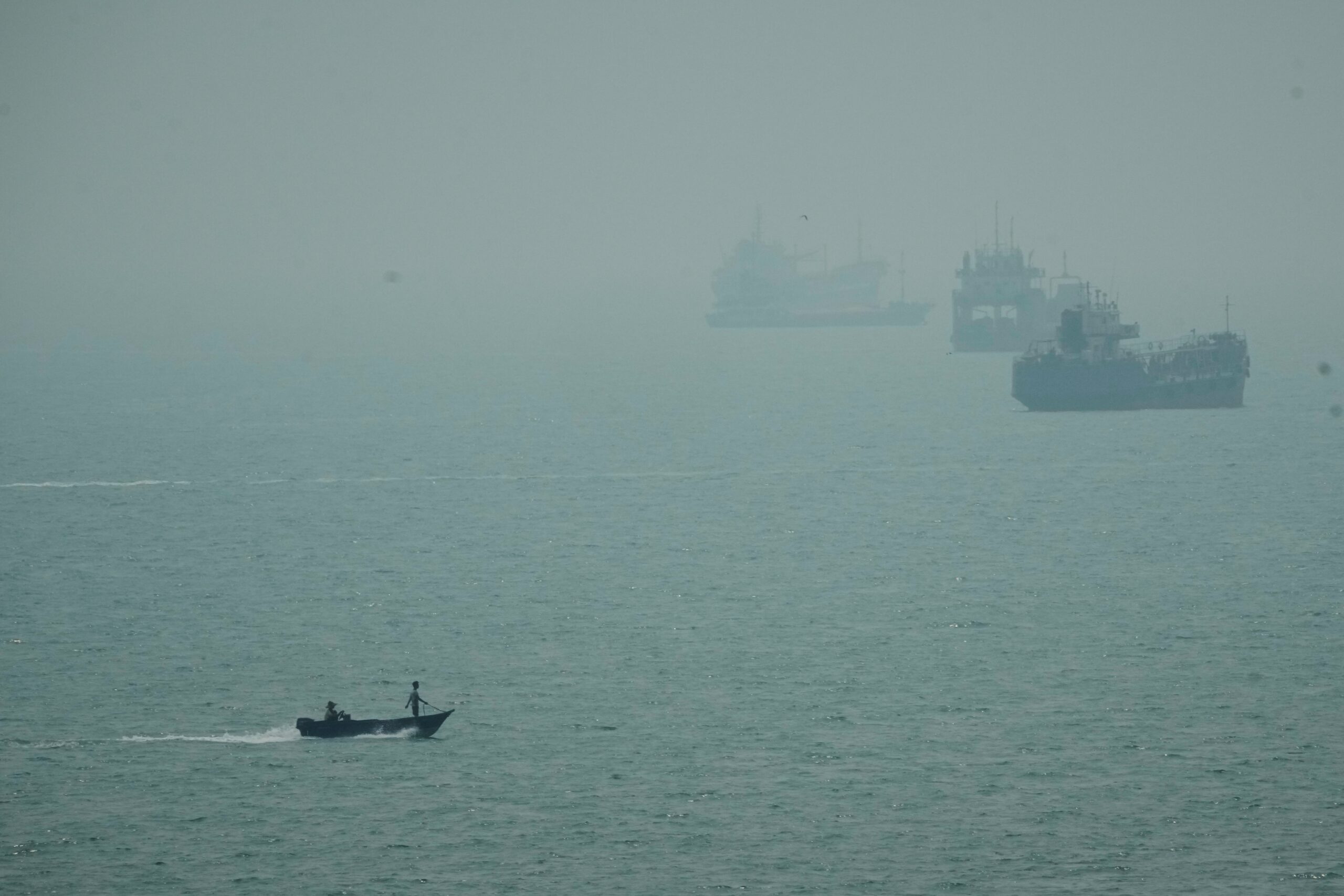
Amid the US-Israel war on Iran, the country’s economy has suffered a sharp contraction, with its crucial oil and gas sector taking the biggest hit as the United States tightens its economic and military pressure on Tehran.
Data released by the government-administered Statistical Center of Iran showed gross domestic product (GDP) shrank by 10.1 percent year-on-year between March 21 and June 20, the first quarter of the Persian calendar.
Recommended Stories
list of 3 itemsend of list
The period covers the opening months of the US-Israel war on Iran, which began on February 28.
The economic downturn has come as Iran struggles to export its oil, one of its most important sources of foreign currency, while also contending with high inflation, a weakening rial, and disruptions to trade and industry.
Here is what you need to know:
What does the economic data say?
The headline GDP number masks an even steeper decline in Iran’s energy industry. Crude oil and natural gas activity contracted by 26.4 percent compared with the same period a year earlier. GDP excluding oil, by comparison, fell by 4.6 percent.
The damage has spread beyond the energy sector. Industry and mining contracted by 14.7 percent, services declined by 4.8 percent, and manufacturing contracted by 2.5 percent. Agriculture was the exception, growing at 2.3 percent.
Those figures come amid an already difficult economic situation in the country. Earlier this month, Iran’s 12-month average inflation reached 69.9 percent, while food, beverage, and tobacco prices rose at nearly twice that rate. Official unemployment climbed to 9.1 percent in the spring.
The rial, meanwhile, fell from about one million to the US dollar a year earlier to more than 2.2 million in early September.
What is the latest with Iran’s oil exports?
Iran’s ability to sell crude has been dramatically curtailed by the US naval blockade, imposed for most of the war.
Iranian crude and condensate loadings collapsed from about two million barrels per day in March to roughly 740,000bpd in July and just 220,000-255,000bpd in August, according to estimates from Kpler and Vortexa.
TankerTrackers.com told the Reuters news agency that 29 tankers, carrying 36.11 million barrels of crude, were trapped in the Strait of Hormuz. Meanwhile, Vortexa estimated total Iranian crude afloat had fallen from 135 million barrels at the end of July to 107 million barrels by late August.
Is Trump winning the economic war on Iran?
By several economic measures, Washington’s pressure campaign is inflicting damage on Iran’s economy.
On September 6, total trade had fallen by 25 to 35 percent, President Masoud Pezeshkian said, with imports hit harder than exports. The US blockade of the Strait of Hormuz has made it hard for ships carrying imports to reach Iranian ports.
Tehran has also explicitly linked the end of the war to economic relief. Iran’s security chief Mohsen Rezaei told Al Jazeera on Saturday that its conditions include “the release of our frozen funds and an end to the naval blockade”.
In addition to the naval blockade, US Treasury Secretary Scott Bessent last month announced an economic pressure campaign against Iran, pledging to target its financial interests across the world. He said the US would target all of Iran’s sources of revenue, including oil, to prevent other countries and companies from doing business with Tehran.
The US-Israeli attacks and Iran’s retaliations have disrupted Tehran’s trade with one of its main economic partners, the United Arab Emirates.
The UAE last month announced an indefinite trade embargo on Iran after accusing its forces of carrying out several ballistic missile attacks, which Tehran denied, calling it a “false flag operation” by Israel and the US.
Chris Beauchamp, market analyst at IG Group, said, “Most wars are contests of stamina more than anything else.”
“The 10 percent drop in Iranian GDP is a sign that the US is succeeding in putting pressure on its foe. But the question rests, as it has done since March, on whether Iran can weather the fall in economic activity better than the US can stand the surge in energy costs,” he told Al Jazeera.
“For a regime prepared to do anything to stay in power, this news will make little difference, so long as the security forces remain loyal,” he added.
What is the latest with diplomatic efforts to end the war?
While Iran has taken a defiant stance against US economic and military pressure, it has indicated repeatedly that it remains open to diplomatic means to end the nearly seven-month-old war.
On Saturday, Rezaei told Al Jazeera that Iran conveyed a formal set of conditions to Washington through Qatari mediators for ending the war.
Iranian state media outlet IRNA reported on Monday that Pakistani Interior Minister Mohsin Naqvi was set to visit Tehran, without specifying the agenda or other details.
Mediators Qatar and Pakistan have been working to re-establish negotiations between the two sides since their memorandum of understanding (MoU) expired last month.
Meanwhile, Iranian Foreign Minister Abbas Araghchi will stop briefly in Qatar before going to New York for the UN General Assembly, IRNA reported.
Iran has repeatedly said it remains ready for any new strikes by Washington.
Rezaei said on Saturday Tehran did not rule out a new US strike against Iran, calling the possibility “very much on the cards” based on his country’s military assessments.
Mark Pfeifle, a Republican strategist and former White House and national security official, said Iran and the US are still willing to strike a deal.
“Sometimes in diplomacy it’s what’s taken off the table,” he told Al Jazeera.
Pfeifle said when Rezaei reiterated his demands for talks with the US, he spoke of “ending the blockade, releasing the frozen funds [and] stopping the attacks”.
“But he left off reparations and reconstruction money, which tells me that there’s a concrete sign that amongst all the rhetoric, which is still very strident, that the pressure campaign that the US is putting on Iran is having some effect,” he said.
“And it tells me that both sides are still looking for room to negotiate in the coming weeks.”
Minneapolis Federal Reserve President Neel Kashkari said inflation remains unacceptably high, with price pressures spreading well beyond energy markets disrupted by the Iran war.
“The inflation that the American people are feeling every day is much beyond just oil prices. It’s
Japan’s benchmark Nikkei 225 gained 1.9% to 65,332.57 after the Bank of Japan raised the benchmark interest rate to 1.25% from 1.0%, a 31-year high.
ADVERTISEMENT
ADVERTISEMENT
The move had been widely priced in, coming after the Federal Reserve also raised its key rate this week. Pressures have been coming from the US for Japan to raise rates because of concerns about the weakening yen.
The nations intervened together recently to prop up the yen. But the efforts haven’t had a big impact.
In currency trading, the US dollar rose to 157.11 Japanese yen from 155.95 yen. The euro cost $1.1487, up from $1.1480.
South Korea’s Kospi jumped 2.3% to 6,866.83. Australia’s S&P/ASX 200 was little changed, slipping less than 0.1% to 8,731.50. Hong Kong’s Hang Seng edged up nearly 0.7% to 24,769.80, while the Shanghai Composite added 1.0% to 3,916.08.
Falling oil prices and easing pressure from the bond market helped Wall Street reverse many of its losses from the prior day.
The S&P 500 jumped 1.1% for just its second rise in the last nine days. The Dow Jones Industrial Average added 316 points, or 0.6%, and the Nasdaq composite climbed 1.7%.
Wall Street stocks got a boost after the price of a barrel ofBrent crude oil slid from the nearly $110 it reached earlier in the week on worries that the war with Iran will keep oil bottled up in the Middle East instead of going to customers worldwide.
In Asian trading, Brent, the international standard, lost 0.94% to $103.83 a barrel. Benchmark US crude slid 0.83% to $101.06 a barrel.
Brent is still more expensive than the $72 per barrel that it cost earlier this summer, but the recent drop helped pull yields lower in the bond market and removed some pressure on stocks. The yield on the 10-year Treasury fell to 4.93% from 5.01% late Wednesday.
The Federal Reserve on Wednesday raised the short-term interest rate that it controls, the federal funds rate, by a quarter of a percentage point for its first hike in more than three years. Officials also hinted that they may raise the federal funds rate one more time this year as they try to get high inflation in the US under control.
The signals sent Wall Street on a roller coaster. Stocks initially remained higher for the day after the Fed made its announcement Wednesday. They then slid sharply before recovering a chunk of the losses before trading ended.
On the upside for markets, the shift to higher interest rates built confidence that the Fed is committed to getting inflation back to its target of 2%. On the downside for markets, higher rates undercut prices for stocks and other investments.
All told, the S&P 500 rose 85.95 points to 7,637.76. The Dow Jones Industrial Average gained 316.14 to 51,778.04, and the Nasdaq composite rallied 439.87 to 26,418.30.
New Delhi says it has ‘made clear’ its determination to ‘protect its trade and economic interests’.
Published On 17 Sep 202617 Sep 2026
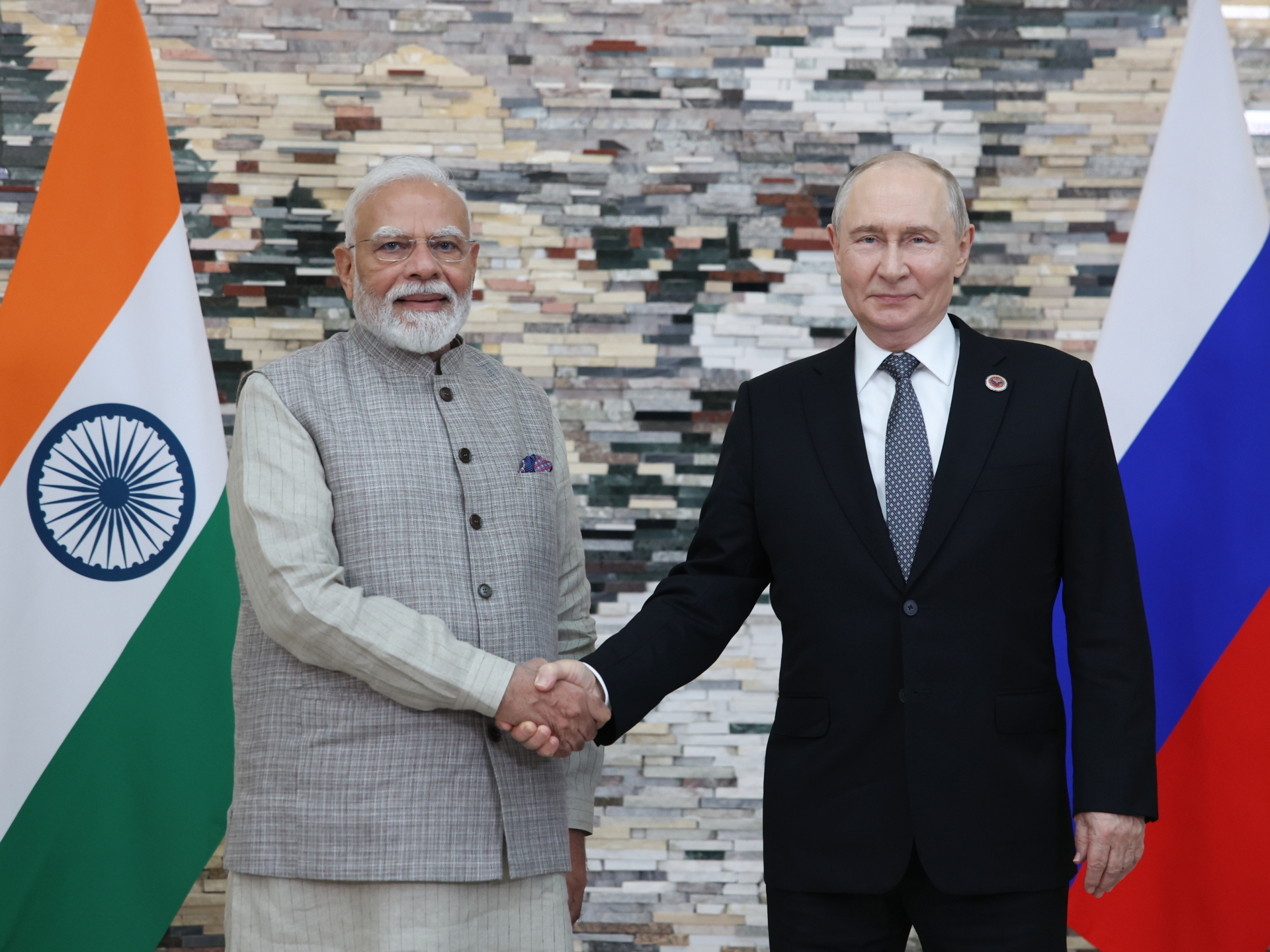
India has warned the United States that new measures to levy tariffs over the purchase of Russian oil could impact bilateral ties, hours after the US Congress approved a bill that would give President Donald Trump new abilities to punish buyers of Russian oil.
The US House of Representatives on Wednesday passed a sweeping sanctions and tariff bill intended to increase economic pressure on Russia over its invasion of Ukraine.
Recommended Stories
list of 3 itemsend of list
The bill targets Russia’s energy and defence sectors, President Vladimir Putin and other senior officials, as well as Moscow’s so-called shadow fleet of tankers used to circumvent Western sanctions.
It also authorises President Donald Trump to impose stiff tariffs of up to 100 percent on countries, including India, to reduce their dependence on Russian oil and gas, and extend sanctions on Iran.
The bill has been sent to Trump to sign into law.
India’s foreign ministry said on Thursday that it “remains firmly committed to ensuring energy security for its 1.4 billion people”.
The Indian foreign ministry said that it had noted the bill’s passage, adding that New Delhi had raised the issue with various US interlocutors in recent months, and had “very clearly articulated” the potential implications for the bilateral relationship and the international energy market.
“The Indian side has also made clear its determination to take all necessary measures to protect its trade and economic interests,” it said in a statement.
The government would work closely with trade and industry bodies to deal with the legislation’s implications, it added.
India, the world’s third-biggest oil importer, is among the biggest buyers of Russian oil, which is seen as helping Moscow replenish its budget since it launched its full-scale invasion of Ukraine in February 2022 and was hit with sweeping Western sanctions.
New Delhi has repeatedly sought to resist pressure to reduce its oil trade with Russia, saying its large population and economy need secure, affordable and reliable energy supplies.
The symbolic move comes as Argentina escalates its claim over the British-administered territory.
Published On 17 Sep 202617 Sep 2026
An Argentinian judge has ordered the suspension of a British-Israeli oil project near the Falkland Islands in a purely symbolic move as Argentina escalates its claim over the British-administered territory.
Wednesday’s interim ruling issued by a court in Argentina’s southernmost province, Tierra del Fuego, follows a lawsuit filed by 1982 war veterans and environmental lawyers earlier this month.
Recommended Stories
list of 3 itemsend of list
The plaintiffs sought to block Britain’s Rockhopper Exploration and Israel’s Navitas Petroleum from the Sea Lion oilfield, located about 220km (137 miles) from the islands.
The judge ordered the companies to “refrain from initiating, pursuing, carrying out or having carried out any material actions” that would involve drilling, installing infrastructure or extracting hydrocarbons, according to a ruling seen by the AFP news agency.
Additionally, the suspension applies “until such time as the environmental impact assessment procedure has been conducted before the national authority competent in environmental matters”.
The judge gave the parties 10 days to provide information, including details about the status of the project, its contractors and its financiers.
President Javier Milei’s administration has also taken legal action against the project, arguing it violates a United Nations resolution calling for both sides to desist from unilateral actions in the islands until their dispute is resolved.
The court order comes just a day after Argentina announced it would file further legal complaints against companies exploring for oil near the islands, intensifying its campaign against businesses operating in the British overseas territory.
Britain and Argentina fought a brief but bitter 10-week war in 1982 over the South Atlantic islands, known to Argentines as the Malvinas.
The 1982 war ended with an Argentinian surrender after 74 days of conflict that killed 649 Argentines and 255 British troops, as well as three Falkland Islanders.
Buenos Aires has doubled down on its claim over the Falkland Islands after US President Donald Trump said Washington was open to reviewing its historically neutral stance on the territory.
London maintains the islands are British and rejects the jurisdiction of Argentinian courts in the Falklands.
The islanders themselves voted overwhelmingly in 2013 to remain British.
But Argentina rejects that outcome, arguing that the principle of self-determination does not apply to a population it considers implanted by Britain after 1833.
Saudi Arabia has intensified air strikes against Houthi positions in Yemen as the Iran backed group expands its territorial gains along the Red Sea coast, opening a new front in the wider Middle East war and adding pressure to already disrupted global energy supplies.
The Houthis have swept through several Yemeni towns and seized islands near the Bab el Mandeb Strait, a strategically important maritime route connecting the Red Sea with the Gulf of Aden. The group has also released footage showing its fighters capturing armoured vehicles from Saudi backed forces.
Houthi military spokesman Yahya Saree claimed that the group had shot down a Saudi F 15 fighter jet and said Saudi Arabia had conducted as many as 450 air strikes in Yemen during the week. Saudi authorities have not confirmed the aircraft claim, while officials supporting the internationally recognised Yemeni government have acknowledged that Saudi and allied forces are carrying out strikes against Houthi positions.
Saudi Arabia faces growing security pressure
The escalation has brought the conflict closer to Saudi territory. The Houthis have repeatedly launched attacks toward Saudi Arabia over the past week, prompting alarms in cities across the kingdom’s south and west.
Stay ahead of the geopolitical week.
MD Briefing delivers expert analysis across five global fronts — the Indo-Pacific, energy, geoeconomics, European security, and the Middle East — every Monday morning. Free.
Saudi Arabia said its air defenses intercepted a Houthi drone south of Mecca before it entered restricted airspace over the holy city. Riyadh described the incident as a serious escalation because of the threat to religious sites. The Houthis denied targeting Mecca and accused Saudi Arabia of using the incident for propaganda.
The United States has also tightened its travel warning for Saudi Arabia, barring government employees from travelling within 20 miles of the Yemen border.
The latest escalation marks a sharp deterioration after several years in which the Saudi led conflict in Yemen had largely quietened under a ceasefire. The Houthis declared a naval blockade against Saudi Arabia in July and resumed attacks on areas in the kingdom before making rapid gains against forces aligned with the Saudi backed Yemeni government.
Energy markets face another shock
The renewed fighting is particularly significant because global energy markets are already under pressure from disruptions caused by the wider war involving Iran.
An attack blamed on Iran aligned fighters in Iraq last week knocked out Saudi Arabia’s East West Pipeline, an important route that allows the kingdom to move oil without relying entirely on the Strait of Hormuz.
Traders estimate that a prolonged closure of the pipeline could affect as much as 4% of global oil supply. Saudi Arabia has not given a timetable for restoring operations, although U.S. Energy Secretary Chris Wright said oil should begin flowing through the pipeline within days.
Brent crude was trading around $108 a barrel on Wednesday, close to its highest level since May. The average U.S. retail diesel price also reached a record above $6.30 a gallon.
The simultaneous disruption around the Strait of Hormuz and Saudi Arabia’s alternative export infrastructure increases the vulnerability of global energy markets to further regional escalation.
Washington faces another difficult choice
The developments also create a new challenge for the United States.
Saudi Crown Prince Mohammed bin Salman spoke with President Donald Trump last week seeking additional military support. So far, U.S. assistance has been limited to intelligence support.
The United States previously conducted a two month bombing campaign against the Houthis in 2025 before Trump announced a ceasefire with the group.
Washington now faces competing pressures. Greater support for Saudi Arabia could help contain the Houthi advance and protect regional energy infrastructure, but deeper military involvement could also expand the U.S. role in another theatre of the Middle East war.
What’s next
The immediate concern is whether the Houthi advance can be contained before the fighting causes further disruption to Saudi energy infrastructure and shipping routes.
For Saudi Arabia, the challenge is to push back against the Houthis while preventing the conflict from developing into a broader regional confrontation.
For global markets, the key issue will be whether disruptions to Saudi oil infrastructure remain temporary. Continued attacks on energy facilities or shipping routes could place additional pressure on already strained supplies.
The developments in Yemen therefore carry consequences well beyond the country’s existing conflict. The combination of Houthi territorial gains, pressure on Saudi Arabia and disruption to major energy routes has created another potential source of instability for the global oil market.
WASHINGTON — A bold military push by Iran and its proxies to create a choke hold on global oil supplies has once again caught the Trump administration off guard, threatening a market shock and a steep political backlash in the U.S. midterm elections.
A drone attack on Saudi Arabia’s most crucial pipeline, which siphons crude oil from the Persian Gulf to the Red Sea to bypass the Strait of Hormuz, has led to the line’s closure, potentially taking 4% of the world’s supply off the market.
And a lightning advance by Iran-backed Houthi rebels along Yemen’s Red Sea coast threatens commercial traffic through the Bab el-Mandeb Strait, second only to Hormuz in its importance to regional shipping.
The strikes put the Trump administration in a newly precarious position less than two months until the November midterms. President Trump’s military advisors have warned him that any retaliation could lead to a further depletion of critically low U.S. munition stockpiles, endanger American personnel in the field and risk escalation that could spiral out of Washington’s control.
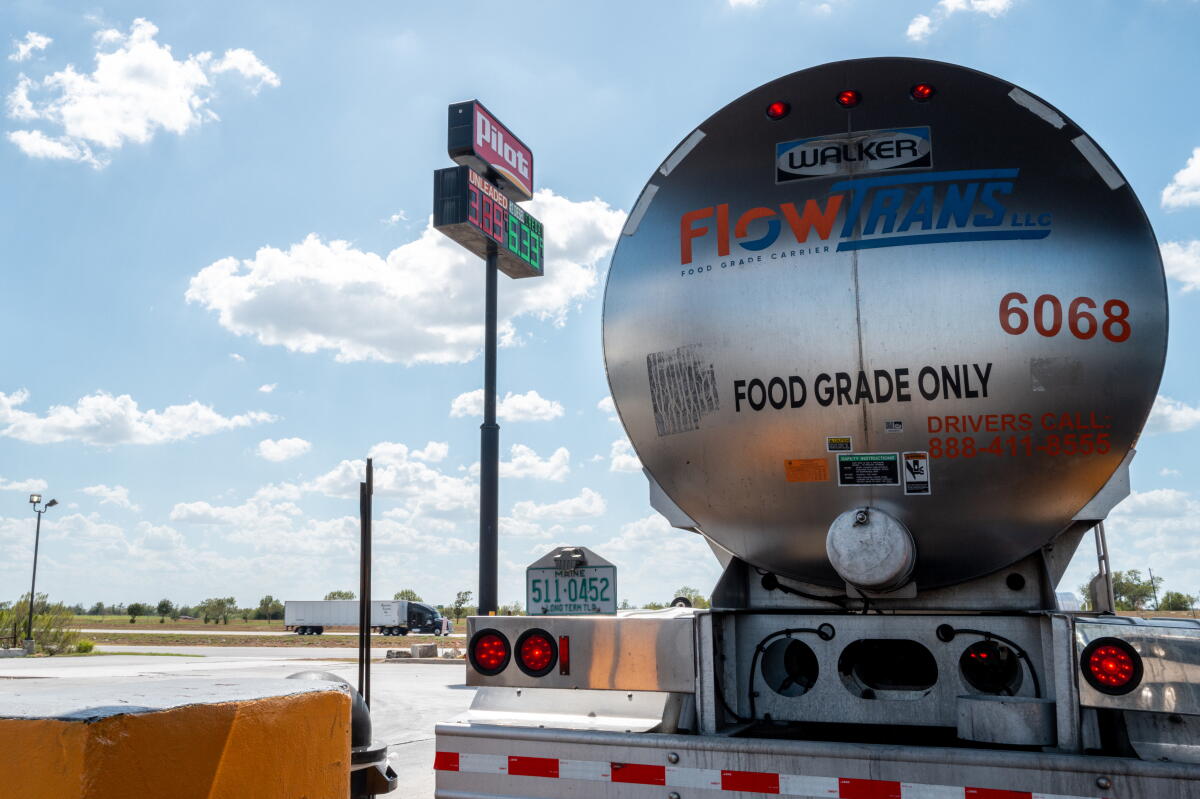
A semi prepares for departure from a Pilot fuel station Monday in Buda, Texas.
(Brandon Bell / Getty Images)
On Tuesday, the global price of oil topped $107 a barrel — the first time in U.S. campaign history that an incumbent president has faced rising pump prices at this stage of an election.
The Iranian strikes come as Europe and the United States are facing increased energy needs entering the fall and winter months, and as Ukrainian attacks on Russia’s energy infrastructure have surged, pushing diesel prices up to record highs.
Signs are emerging that the latest attacks could trigger an acute market panic, with Brent crude buyers paying a steep premium for early delivery — an indication that the industry fears an impending supply crisis.
“I fear there is a considerable risk of much higher gas and diesel prices in the weeks to come,” said Michael O’Hanlon, director of research of the foreign policy program at the Brookings Institution.
“No one is quite sure how to predict the fuel markets,” he added, “but the military dynamics are seriously worrisome.”
Last week, Trump told reporters that the Iranian government is “desperate to try and affect the election” and could be trying to keep oil prices elevated to hurt Republican prospects.
“Right after the election, oil prices are going to be tumbling downward,” Trump said. “I think it’s going to take a little bit longer than the midterm.”
Traders work on the floor of the New York Stock Exchange on Monday morning.
(Michael M. Santiago / Getty Images)
Polls have found that likely voters are prioritizing the economy far beyond any other policy matter going into the fall election season, with a New York Times poll published Tuesday showing voters trusting Democrats to handle the economy more than Republicans.
“There’s no quick fix,” said Simon Henderson, the director of the Washington Institute’s Gulf and Energy Policy program. “The main question is whether it is a big shock to the oil market or just another more minor shock. The answer depends on whether the damage to the East-West pipeline cable is repaired quickly.”
Region on edge
The latest Iranian campaign threatens Saudi Arabia’s economic core, straining a long-standing alliance built on robust U.S. defense of Riyadh’s vital interests.
The attack on the East-West oil pipeline originated in Iraq, where Iran continues to operate proxy militias, according to government officials in Riyadh and Baghdad. Saudi Arabia agreed not to retaliate militarily against targets on Iraqi soil, temporarily staving off a regional conflagration.
While the Iraqi militia group denied involvement, it also praised the Houthi advance in Yemen and the militants’ “ongoing battlefield victories against Saudi forces.”
Israel has been providing Saudi Arabia with intelligence to help thwart further attacks, using American military intermediaries, according to Israeli media reports.
Active combat in the war between Iran and the United States eased after a ceasefire was brokered in June. While that truce collapsed in July, the two sides have opted for asymmetric tactics over the resumption of direct attacks, with the United States maintaining a full naval blockade of Iranian ports.
The Trump administration has since focused instead on targeting Iran’s economic partners with aggressive secondary sanctions, seeking to further pressure Tehran into a meaningful peace agreement. But negotiations have failed for months to get back off the ground.
When he first launched the war in February, Trump projected the mission would last roughly six weeks. He said the goal of the U.S. operation was to incapacitate Iran’s ballistic missile program, its navy and its nuclear program.
Trump was warned ahead of the war by his joint chiefs of staff that Iran could attempt to close the Strait of Hormuz in response. But he dismissed the threat, anticipating Tehran would quickly back down from a direct confrontation with the United States.
More than six months on, Iran’s ballistic missiles continue to pressure U.S. defense systems across the Middle East. Traffic through the Strait of Hormuz remains disrupted and discussions on Iran’s future nuclear work have broken down. In private, Trump administration officials fear the war could drag through the remainder of the president’s term.
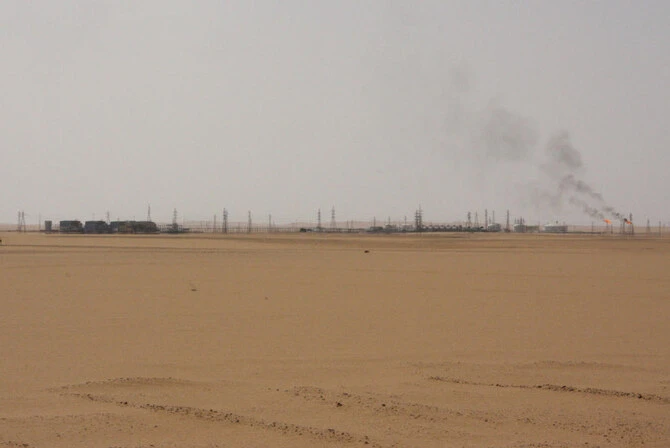
TRIPOLI: Operations were suspended at two oilfields and a pumping station after members of the security force charged with protecting Libya’s oil sector closed a valve on the main Hamada-Zawiya crude-loading pipeline, the National Oil Corporation said on Tuesday.
The NOC said it may declare force majeure if the valve remains closed or if other fields are subjected to similar forced shutdowns.
The company said production had completely halted at the Hamada and Tahara fields and at a pumping station. Libyan oil output has been subject to repeated closures for political and technical reasons since the 2011 uprising against Muammar Qaddafi.
In a statement obtained by Reuters, the Petroleum Facilities Guard, which provides security for Libya’s oil fields, pipelines and terminals, demanded that their agency be transferred “financially and administratively under the National Oil Corporation”.
They called on the prime ministry and the NOC to take urgent measures to complete the administrative and financial arrangements for this, and set a clear implementation timeline.
The agency currently operates under the defense ministry. The Guard said it would implement a partial production cut for one week as of Tuesday at several fields including Wafa, Al-Khamsa and El Feel, adding that a complete shutdown would follow if their demands were not met.
Oil production is Libya’s main economic source, representing approximately 90 percent of the economy of the entire country. “Shutting down oil fields and halting production operations at this critical juncture — as the world witnesses a rise in crude oil prices — constitutes a devastating blow to the national economy,” the NOC said in a statement.
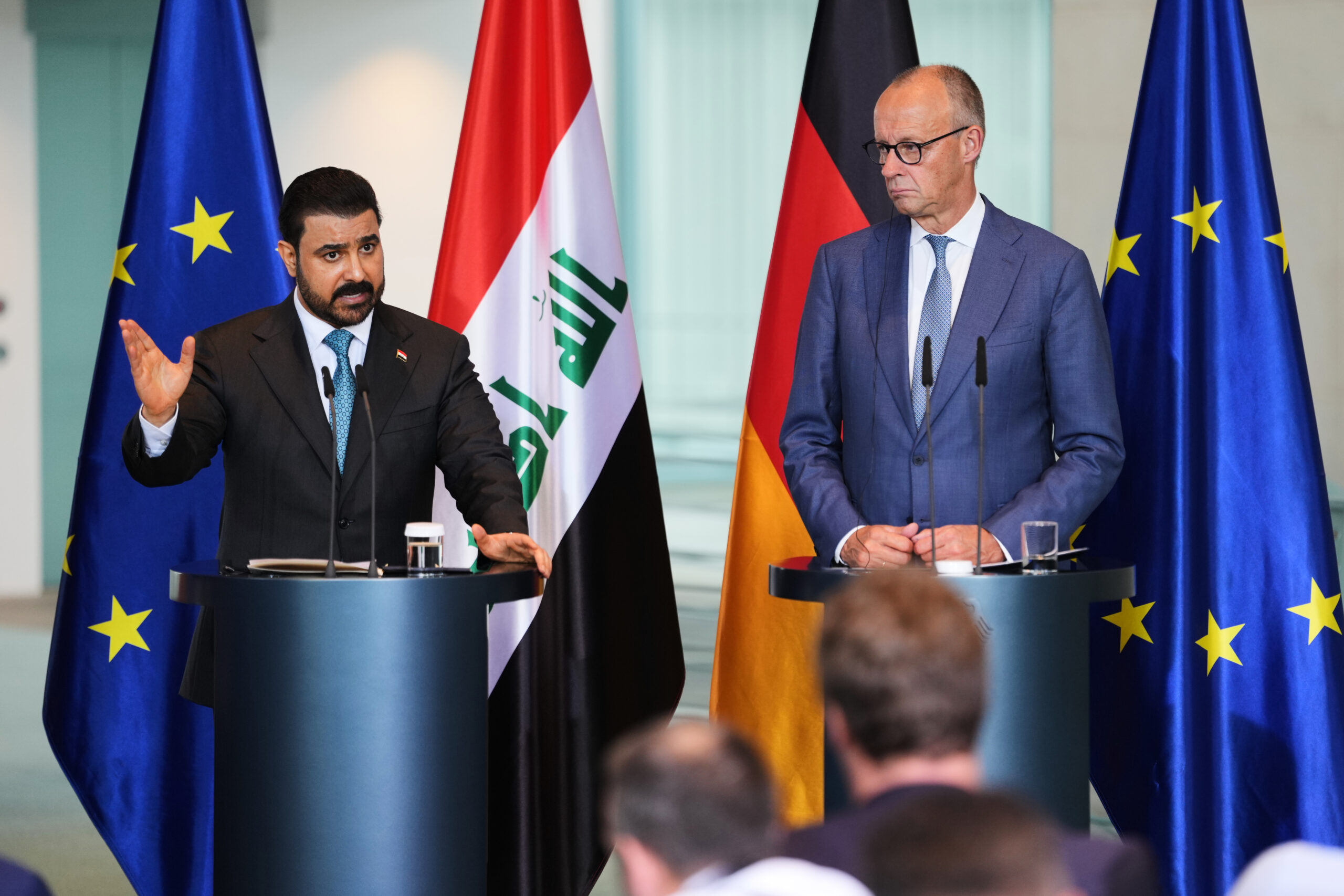
BERLIN: Iraqi Prime Minister Ali al-Zaidi said on Tuesday that he discussed selling oil to Europe during visits to France and Germany, as Baghdad seeks to diversify its export routes and reduce its reliance on the Strait of Hormuz.
During a press conference with German Chancellor Friedrich Merz in Berlin, Zaidi said “we want to expand and diversify our export routes”.
He added that “Iraq cannot remain hostage to a single corridor” as recent events have demonstrated, referring to the Strait of Hormuz, which has been blockaded by Iran during the Middle East war.
Zaidi said that he had discussed oil exports to Europe with Merz and French President Emmanuel Macron, whom he met in Paris on Monday.
Crude oil sales account for nearly 90 percent of Iraq’s revenue but its exports have been hurt by the outbreak of the Middle East war between Iran and the United States.
Before the war began in February, Iraq produced around four million barrels per day, and exported an average of 3.4 million bpd, mostly via Hormuz.
Most of its oil exports go to East Asia, with China and India its largest buyers.
Due to the disruption, Iraq began exporting crude using tanker trucks through Syria, as well as through a pipeline to the Turkish port of Ceyhan, although these routes can handle only a fraction of its usual sea-bound trade.
Zaidi said that Baghdad could “double its oil exports through the Mediterranean” to supply markets in Europe and the United States.
Zaidi, who hopes to increase Iraq’s oil production to 10 million barrels per day, said that “a large share, or nearly half, can go to European countries and the West”.
He said that Iraq and Germany were expected to reach “an understanding on the export of crude oil” while Baghdad would purchase German technology and equipment.
Merz said that the main focus for Iraqi-German cooperation is the economy.
“Many German companies are now active in Iraq. They are developing new solutions, for example for energy supply,” he said, adding that “the best example is an agreement on Iraq’s electricity supply, which we will sign today”.
Merz also expressed his concerns after Yemen’s Houthis cemented their control over the Bab al-Mandab waterway at the entrance to the Red Sea, a vital route for Saudi oil exports.
“This further exacerbates the situation on the energy markets, and also affects Germany,” he said.
The oil market spent Monday morning pricing in a weekend of bad news from the Gulf.
ADVERTISEMENT
ADVERTISEMENT
Brent for October and November deliveries gained over 3% and crossed $108 a barrel, while the US benchmark WTI for October rose 2.3% to around $102, both extending last week’s advance after each reclaimed the $100 threshold.
Prices moved following Saudi Arabia’s announcement that its East-West pipeline is temporarily closed after drone attacks.
The line carries crude across the kingdom to Red Sea ports, allowing oil to reach export terminals without passing through the Strait of Hormuz, so its loss removes the main alternative at the moment the strait itself is most dangerous.
That danger was also demonstrated on Sunday, when a merchant vessel was hit in the strait, killing one person and injuring three others, according to Iranian authorities.
Passage through the waterway now works very differently from before the war.
Vessels must obtain Iranian permission to transit, and Tehran is weighing a mechanism to charge service fees. Ships that fail to comply are routinely targeted, while US forces periodically bomb the Iranian coastline to contest Tehran’s claim to control the strait.
Diplomatic efforts have stalled too.
Oman has postponed planned talks between Iran and Gulf states on the future of the waterway, which carries a large share of the world’s seaborne oil trade.
Record fuel prices and finger-pointing
The consequences are extremely visible at American pumps.
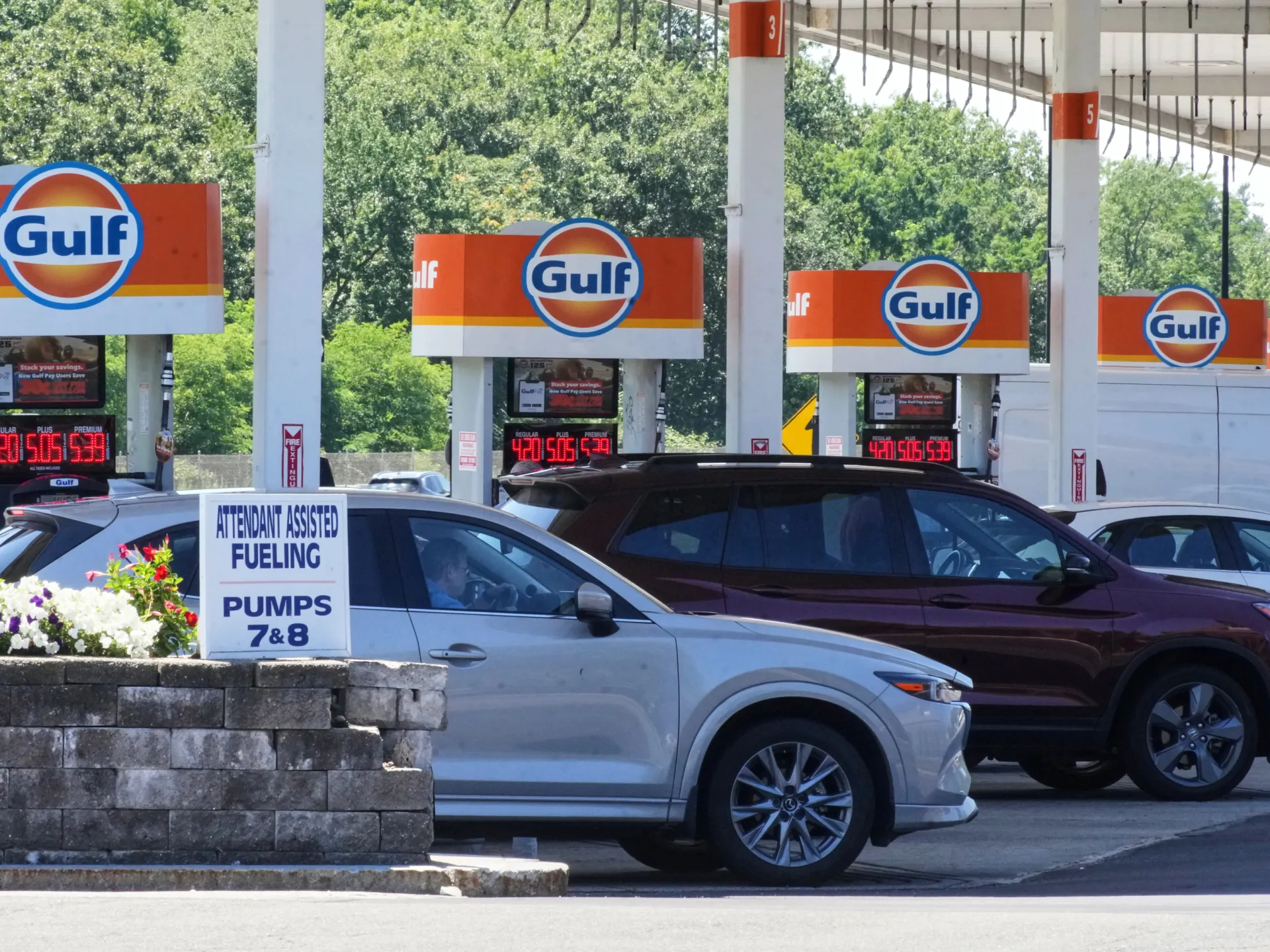
The US national average price of diesel crossed $6 a gallon on Friday for the first time in history, up from around $5.85 a week earlier and roughly 60% above the $3.71 drivers paid a year ago.
Petrol is also averaging $4.22 after setting records over the Labor Day weekend.
US President Donald Trump has pointed the finger elsewhere.
Speaking to reporters in Ireland on Sunday, where he was attending the Irish Open at his Doonbeg golf resort, Trump stated Ukrainian President Volodymyr Zelenskyy “has to stop knocking out diesel fuel in Russia.”
“Let him go after targets, but not diesel fuel, because he’s causing a shortage of diesel fuel,” Trump added.
Ukraine has struck more than 20 Russian refinery targets this summer, prompting Moscow to ban diesel exports.
On the flight back from his state visit to Ireland this weekend, Trump reiterated the claim.
However, the supply arithmetic suggests otherwise.
Analysts attribute roughly 800,000 barrels a day of lost diesel supply to Russia’s export ban, against about 1.2 million from disruption around the Strait of Hormuz, according to Lipow Oil Associates.
The wider picture is more lopsided still as crude flows through the strait have fallen from around 20 million barrels a day before the war to about 7 million.
Between them, the two wars have also shut refineries representing around 5 million barrels a day of capacity.
BEIJING: Oil prices jumped more than two percent on Monday, after new Houthi strikes on Saudi Arabia and Iranian attacks on ships in the Gulf compounded supply concerns following the closure of a key Saudi oil pipeline.
Brent crude futures rose $2.90, or 2.77 percent, to $107.51 per barrel as of 2313 GMT. WTI futures rose $2.27, or 2.27 percent, to $102.32 per barrel. Prices had initially risen more than 3 percent at market open.
Saudi Arabian state media on Sunday released video footage of damage to homes and a mosque from what it said was a Houthi attack on the country’s southern Jazan province. The Houthis said they had also struck a Saudi military base in a neighboring province.
A vessel in the Strait of Hormuz was struck by a projectile, causing a fire and forcing the crew to be evacuated, the British maritime security agency UKMTO said on Sunday.
Iran said one person was killed and four crew wounded aboard an Iranian commercial vessel struck off its coast.
Oil prices had been expected to rise on Monday amid growing concerns about risks to supply from Saudi Arabia, the world’s largest oil exporter, whose East-West oil pipeline was shut on Friday by a drone strike that originated in Iraq.
The loss of the pipeline, which helped Saudi Arabia re-route its exports avoiding the Strait of Hormuz, threatens up to 4 percent of global oil supply.
Meanwhile, Yemen’s Iran-aligned Houthis had reached the strategic island of Perim on Friday, moving to tighten their control over the Bab Al-Mandab Strait, another key oil transit lane that has been shipping 4-5 percent of global supply in recent months.
Oil surged 8 percent higher on the week due to the disruptions, rising above $100 for the first time since July.
“Looking ahead, unless this week’s talks in Oman produce something operational — or the East-West pipeline is brought back online quickly — the risk is that crude oil continues to extend its gains toward the $119.48 high of early March,” IG market analyst Tony Sycamore said in a note on Sunday.
Omani Foreign Minister Badr Albusaidi said on X later on Sunday, however, that a scheduled Monday meeting in Oman between Gulf countries and Iran to discuss the Strait of Hormuz had been postponed.
No peace talks have been held in the war, launched six months ago by the United States and Israel, since an interim agreement in June collapsed after a few weeks.
Saudi Arabia has closed its East-West oil pipeline due to a drone attack linked to Iranian-backed militias in Iraq. This pipeline is crucial for Saudi Arabia, as it allows the country to bypass the congested Strait of Hormuz, which has faced reduced tanker traffic due to an ongoing conflict between the U.S. and Iran. The Saudi Energy Ministry stated that the closure is a precautionary measure; the pipeline typically carries about 4 to 5 million barrels of oil per day, contributing 4% to 5% of global oil supply. The attack caused injuries and damage, but the exact impact on oil exports is still being evaluated.
President Trump, while attending a golf event in Ireland, suggested that Iran was likely responsible for the attack and predicted that oil prices would drop after the upcoming U.S. midterm elections. Recently, oil prices have surged, with diesel prices in the U.S. topping $6 a gallon due to tensions in the region. Reports surfaced that the Houthis, aligned with Iran, seized the strategic Perim Island in the Red Sea.
Crown Prince Mohammed bin Salman of Saudi Arabia reached out to Trump for military assistance against the Houthis, but Washington decided not to intervene directly at that moment, offering intelligence support instead. There were concerns that the attacks on the pipeline and Perim Island could escalate tensions further, especially since diplomatic efforts to resolve the war have stalled.
Iran’s parliamentary committee has stated that negotiations are futile unless the U.S. meets Iran’s demands, particularly concerning recognition of its control over the Strait of Hormuz. The Iranian foreign ministry announced plans for discussions with Gulf states in Oman regarding the strait. Meanwhile, Iraq’s government dismissed a military commander connected to the attack and has closed the Shalamcheh border crossing with Iran as a precaution to prevent further incidents.
The Saudis have not retaliated yet, following a request from Iraq’s prime minister, but they maintain the right to take necessary actions to protect their interests. Saudi Arabia’s oil production has plummeted to its lowest level in over 30 years, partly due to attacks on maritime vessels by Houthi factions. These forces, supported by Iranian guidance, are reportedly planning counterattacks to reclaim territories lost to the Houthis, who have advanced significantly along Yemen’s coast under Iranian direction. The Houthis have claimed that maritime navigation remains safe, except for Saudi vessels, which are subject to a ban.
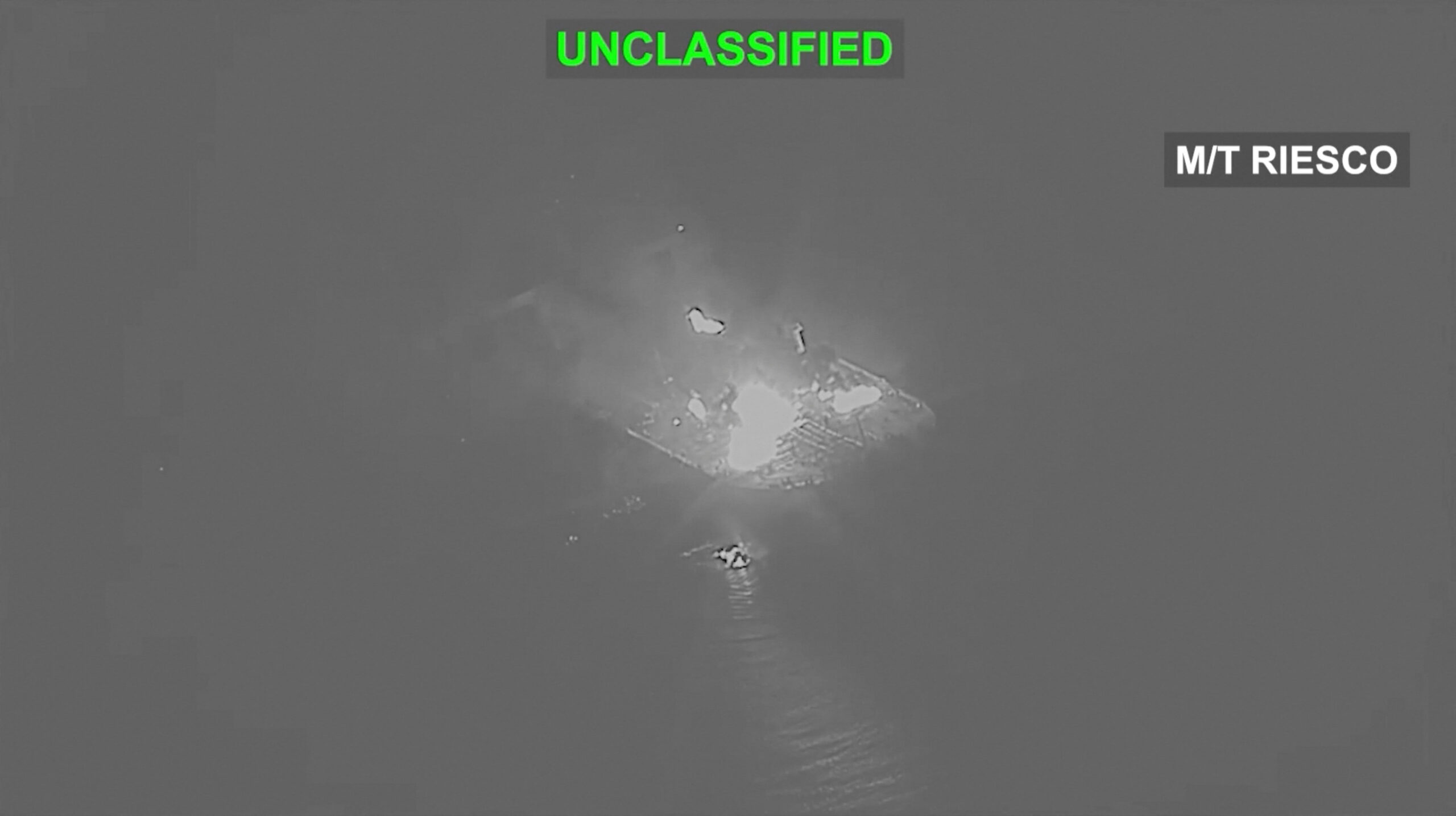
A large-scale oil spill, believed to be from a tanker struck by the US military, doubled in size between Wednesday and Thursday, endangering two protected areas off Oman and Iran, said Nina Noelle of Greenpeace Germany.
The tanker RIESCO was one of four attacked Tuesday in the Gulf of Oman. A fifth was destroyed in the Strait of Hormuz off Iran’s Kharg island.
The visible area of pollution measured about 400 square kilometers (154 square miles) on Thursday, Noelle said. Satellite images reviewed by The Associated Press showed the spill stretching almost 70 kilometers (43 miles) long.
The spill is located between the Musandam protected area on the Omani side, which includes one of the region’s most important seabird breeding islands.
On the Iranian side is the Hara-e Roud-e Gaz Protected Area in Hormozgan province that includes mangrove forests.
“The current situation in the Strait of Hormuz, together with our experience of oil spills since the beginning of the war, unfortunately suggests that an effective response is unlikely,” Noelle said.
The oil “mega-deal” signed between the US and Venezuela has caused major repercussions on plenty of themes: from the legality and timeframe of the agreement to the economic and political implications and, last but not least, the controversial role of Alejandro Betancourt.
A couple of issues are also missing from recent discussions: the effects of these new deals on Venezuela’s environment and its implications for the global climate crisis.
One exception was the coverage made by the NPR’s “All Things Considered” program, where energy and climate correspondent Julia Simon interviewed Paasha Mahdavi, a political science professor at University of California, Santa Barbara, who has this to say about what the new Orinoco Belt developments by major oil company Chevron could do.
“This expansion is effectively a carbon bomb. And so if Chevron does produce this field, that’s roughly 52 million tons of carbon dioxide equivalent per year additional. That is a huge number.”
On September 2nd, the same day those deals were signed in Miraflores Palace, the United Nations Environmental Program released the report “Limiting Overshoot,” which indicates that the 1.5° threshold to limit global warming established in 2015 by the Paris Climate Accords was already crossed and therefore the world must prepare for the fallout.
But in the last few days, several Venezuelan environmental NGOs and other civil society groups are sounding the alarm about the negative consequences that those agreements could produce here. Mongabay published this map about the areas that are impacted by oil extraction in Venezuela.
Venezuelan NGOs Clima 21 and Provea made public a joint statement in which they say that “the economic recovery cannot be made at the expense of environmental human rights. No economic interest can prevail over the constitutional and international right to a healthy, safe and sustainable environment…”
They proposed five points of commitment for all involved, which include transparency and public information, effective enforcement of environmental obligations, urgent management of oil spills, protection of vulnerable communities and a transition to a sustainable model for the country.
Local NGO Azul Ambientalistas claimed that in recent months there have been visible signs of spills and gas leaks in the Lake Maracaibo area, which increased after the reactivation of activities there earlier this year.
Alejandro Alvarez, director of NGO Clima 21 told Caracas Chronicles about what this overall commitment could entail: “It must take into a medium-to-long term strategic plan of reducing the fiscal dependence of the oil rent through investment in areas not related to the extraction and use of fossil fuels. There are already forecasts that could define alternative economic areas to generate currency without the extraction of petroleum.”
In similar terms, Transparencia Venezuela mentioned the need to adjust any oil investment and development to what’s established in Article 129 of the Constitution, including “environmental and socio-cultural impact studies” and “the obligation to preserve the balance…”
But some went further and openly denounced the US-Nabep deal as the surrender of our national sovereignty and civic rights, as Venezuelan sociologist Emilianio Teran-Mantovani wrote in an article for the Venezuelan Observatory of Political Ecology, an organization that he co-founded.
“The new Oil Agreement is the result of this process of political decomposition that has been unfolding in Venezuela for years; and it is the crowning achievement of the capitulation and dismantling of oil nationalism, which had already begun under Maduro and is now being fully unleashed through U.S. intervention…
“Ultimately, this means that Venezuelans themselves have no place. They hardly matter. Their decisions, expressed, for example, in the July 28, 2024 elections, do not matter. Neither do their social and labor rights. And the environment is even less relevant, an area that has been rendered completely invisible in this conflict.”
“There is no National Policy, National Strategy, nor a National Plan of Adaptation and Mitigation to Climate Change. There’s neither a Climate National Budget nor a National System for an Inventory of Greenhouse Gases…”
Besides these statements, the issue of how this oil deal will affect our surroundings has taken a backseat to other concerns while clouded by a lack of details and overall uncertainty around it, despite the promises of a prosperous recovery made by government officials in Caracas and Washington.
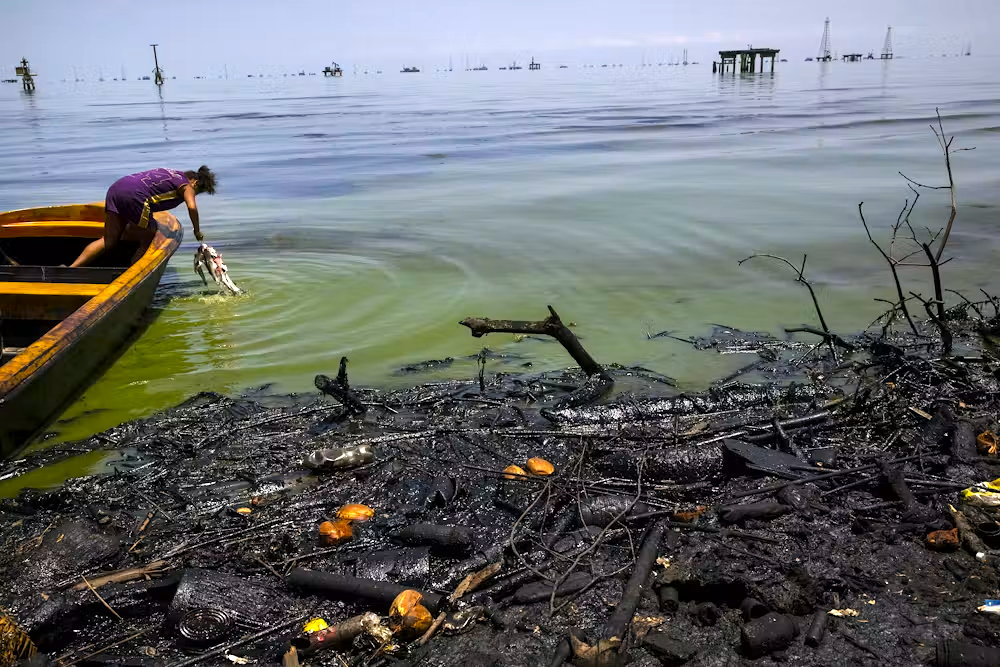
In the meantime, the problem of incidents like oil spills continues to be present to this day, with the most recent one occurring on the coast of Lake Maracaibo near Cabimas, as local NGO Azul Ambientalistas claimed that in recent months there have been visible signs of spills and gas leaks in the lake, which increased after the reactivation of activities in the area earlier this year.
Oil spills have sadly become commonplace over time, but reliable data on the matter is hard to come by, with NGOs like Clima 21 and the Venezuelan Observatory of Political Ecology filling the gap that the State is not providing.
“This possible impact (of the pollution produced by the projects of the oil deals) would add to the systemic chronic environmental crisis of the Venezuelan oil industry, which has a very high accident rate because of the abandonment of safety protocols and protections to the communities and ecosystems in the most affected areas. Our concern is the absence of guarantees in those agreements that these problems will be attended to and solved.”
And then there’s the concern of climate change and its already visible effects around the world. At the moment, the ongoing El Super Niño climate event is exacerbating temperatures, causing historical heatwaves like the recent one in Europe and creating serious worries about food crops and other essential natural resources in many nations, including here in Venezuela.
Evidence of how climate change has directly affected Venezuela can be found in the second academic report on climate change (DRACC), which was formally presented last December by the Venezuelan Academy of Physics, Mathematics and Natural Sciences. In its findings is the acknowledgment that the average temperature in the country has risen 0,22 °C per decade between 1980 and 2015, while global warming is responsible for anomalies in rainfall.
But the most damning conclusion is the complete disregard coming from the Venezuelan State.
“This is an important theme in which the government has made failed or incomplete advances” Alvárez, mentioning two failed projects: wind farms in Paraguaná and solar panels for an indigenous community in Amazonas state, which ended up abandoned.
“There is no National Policy, National Strategy, nor a National Plan of Adaptation and Mitigation to Climate Change. There’s neither a Climate National Budget nor a National System for an Inventory of Greenhouse Gases… …the climate institutional weakness accentuates the vulnerabilities of the national territory to the physical threats of the current climate change…”
“The climate change issue has completely disappeared from the Venezuelan political agenda. We have no information on the position of the government in the next international meetings on the matter,” Alvarez told us. He added that “in any case, we need a commitment of the State to fulfill the obligations of the Paris accords and the COP30 (the most recent UN’s climate change conference held in Brazil in November 2025) that promote an energy transition outside of fossil fuels.”
Given this assessment and the Trump administration’s doubling-down on the exploitation of fossil sources of energy, this oil deal could simply make those physical effects even worse.
Parallel to this is the inclusion of how clean energy sources like solar or wind could not only assist in alleviating the electricity shortage but create new opportunities for our economy. Now, it seems like the only one considered is the hydroelectric power that we largely depend on.
“This is an important theme in which the government has made failed or incomplete advances” Alvárez, mentioning two failed projects: wind farms in Paraguaná and solar panels for an indigenous community in Amazonas state, which ended up abandoned.
Overall, any discussion about the environmental consequences that this controversial oil deal could have for all Venezuelans is not at the forefront. It is not entirely erased from view, however.
The short-term argument also brings a long-term one that our society has been dodging for many years: finding a suitable compromise between the needs of our economic apparatus that require immediate attention and that our hydrocarbon industry can provide, while keeping safe basic things like the air we breathe or the water we use and even trying to preserve the natural wonders that this beautiful country of ours offers.
Acting President Delcy Rodríguez celebrated the agreement with Colombia’s Gilinski Group. (VTV)
Caracas, September 11, 2026 (venezuelanalysis.com) – Venezuela’s oil industry recovery has stagnated in recent months, notwithstanding pro-business reforms and rising global prices.
OPEC’s latest monthly report placed the Caribbean nation’s August production at 1.145 million barrels per day (bpd), up 23,000 bpd from the previous month, according to secondary sources.
Venezuelan state oil company PDVSA reported an August output of 1.201 million bpd, virtually unchanged from July. Direct and secondary measurements have differed over time due to disagreements over the inclusion of condensates and natural gas liquids.
The strong first-trimester recovery that followed Washington’s lifting of its naval blockade petered out by mid-year. Since May, output has grown by only 7 percent despite the acting Delcy Rodríguez government conducting a pro-investor overhaul of hydrocarbon legislation and signing deals with several multinational corporations.
Since the January 3 US military strikes and kidnapping of President Nicolás Maduro, the Trump White House has seized control over Venezuela’s energy sector. Venezuelan crude export revenues are currently deposited in a US Treasury account, an arrangement confirmed by PDVSA President Héctor Obregón, before US officials decide when and how much of the proceeds should be returned to Caracas.
Washington and Caracas recently announced a major oil deal that will further boost US access to Venezuelan hydrocarbons under favorable conditions. The acting Rodríguez government has granted long-term concessions of 17 prime oilfields, holding 65 billion barrels of proven reserves, to US-controlled NABEP, a company led by Venezuelan oil mogul Alejandro Betancourt.
The oilfields transferred to NABEP, several of which were previously run by joint ventures between PDVSA and Chinese partners, are split among extra-heavy-crude projects in the Orinoco Oil Belt and mature light- and medium-crude ones in the Lake Maracaibo basin. Production in the latter can be ramped up faster as Trump seeks to replenish the US strategic reserve.
After initially hailing the deal as “the biggest in history,” US officials have dampened expectations, lowering a US $100 billion investment pledge to “over $10 billion.” Caracas and Washington announced a 1.5 million bpd target, but NABEP disclosed to Bloomberg only a modest projected increase in the near future.
Venezuela’s loss of sovereignty over its flagship industry has prevented the country from reaping the benefits from surging global energy prices, with the Brent benchmark surpassing $100 per barrel for the first time in four months this week. The Trump administration has sought to leverage its long-term access to Venezuelan oil resources to minimize the fallout from the interrupted traffic through the Strait of Hormuz resulting from its war on Iran.
Since January, Trump officials have worked closely with the Rodríguez administration to grant decades-long energy concessions to Western corporate players and most recently local Latin American conglomerates such as Colombia’s Gilinski Group.
On September 4, Acting President Rodríguez signed a 25-year deal granting a concession of the heavy crude Bare block to GeoPark, a company belonging to Gilinski. Previously operated by PDVSA, Bare was one of the most productive fields in the Orinoco Oil Belt, with output surpassing 100,000 barrels per day (bpd) in 2011.
At a ceremony in Caracas, Colombian banking mogul Jaime Gilinski thanked Rodríguez for the confidence in awarding a major oilfield to his conglomerate. GeoPark set an 85,000 bpd target and vowed to invest more than $300 million.
The Gilinski Group began in manufacturing before expanding into finance, purchasing multiple Colombian banks and later acquiring positions in other Latin American countries, the US, and Italy. Investigations have implicated the Gilinski Group in parallel banking and tax evasion, including being named in the 2021 Pandora Papers leak alongside other leading members of the Colombian elite. The conglomerate has also ventured into other sectors such as food and media, with Jaime Gilinski currently the richest man in Colombia according to Forbes.
Of Lithuanian-Jewish descent, the Gilinski family is additionally known for its close ties to Israel. Jaime Gilinski’s father, Isaac, served as ambassador to Tel Aviv in 2010-2013, and his sister, Tania, was recently appointed to the same post by Colombian President Abelardo de la Espriella. Jaime’s son, Gabriel, traveled to Tel Aviv in 2025, meeting Prime Minister Netanyahu and evaluating business opportunities between Israeli and Colombian firms.
Edited and with additional reporting by Lucas Koerner in Philadelphia, USA.
Saudi Arabia has closed a critical oil pipeline after it was attacked by drones launched from Iraq, as conflict in the Middle East widens.
Iraq said it had fired a military commander and launched an investigation after admitting the drone attack on its neighbour’s East-West pipeline had originated in one of its provinces bordering Iran.
The 1,200km (745 mile) pipeline has helped Saudi Arabia – the world’s largest crude oil exporter – bypass the Strait of Hormuz.
The incident comes amid a major advance by the Iranian-backed Houthi rebels in Yemen, putting more pressure on global oil shipping routes as the US-Iran war stretches into its seventh month.
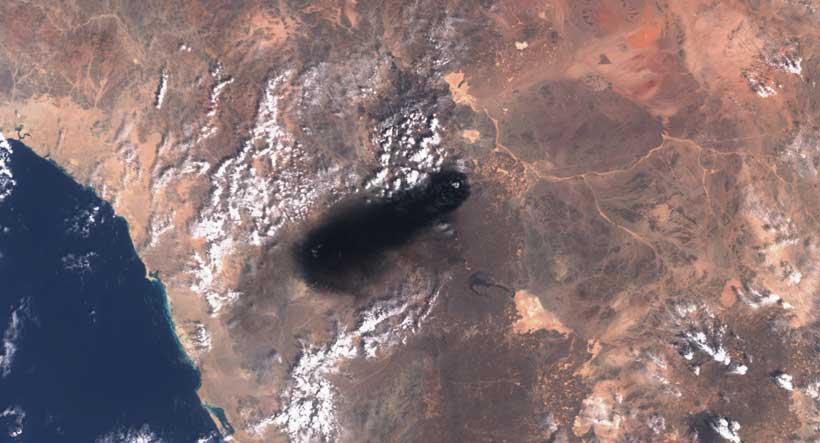
Riyadh on Friday said it had shut the pipeline as a precaution, as satellite images of scorched ground and smoke near the site emerged.
The foreign ministry said the attack resulted in some injuries and damage, which was still being assessed.
The pipeline has been moving 4% to 5% of global oil supply, news agency Reuters has reported, citing ship tracking companies and analysts.
Saudi Arabia has chosen not to retaliate at this stage, its foreign ministry says, following a call from Iraq’s prime minister.
It said the kingdom would “support the efforts of the Iraqi government” to “prevent attacks” launched from the country against neighbouring states.
“The Kingdom of Saudi Arabia affirms that it reserves its right to take all necessary measures to safeguard its sovereignty and security, protect its facilities, and ensure the safety of its citizens and residents,” the statement added.
The Iraqi prime minister’s office in its own statementsaid the operations commander in the Maysan governorate – a province which borders Iran – had been removed from his post following confirmation the drone attack had been launched from that region.
Saudi Arabia on Friday announced it had to temporarily shut down the key east-west pipeline after drone attacks on Thursday from an Iranian-backed militia group in Iraq. As we have explained in the past, the Kingdom has diverted millions of barrels of oil per day through pipelines to its Yanbu port on the Red Sea in an effort to minimize the energy shortages due to hostilities near the Persian Gulf that have closed the Strait of Hormuz.
The pipeline was shut down a day after the Houthi rebels of Yemen increased their control over the crucial Bab al-Mandab Strait (BAM), a narrow body of water separating the Red Sea from the Gulf of Aden. Combined with Iran vastly curtailing shipping through the Strait of Hormuz, this gives Tehran significant control over two of the world’s most crucial passageways for the flow of oil.
3. The Houthis have reportedly attempted to seize ROYG-controlled islands in the Red Sea from which Houthi fighters could launch attacks on international shipping. Houthi forces reportedly landed on the Hanish Islands in the southern Red Sea on the morning of September 10 after… pic.twitter.com/tiFPgNDOHZ
“The East-West pipeline, in the regions of Riyadh and Medina, was subjected to several attacks on Thursday morning, September 10, 2026,” Saudi Arabia’s Energy Ministry posted on X. “The line was shut down as a precaution. The attacks resulted in some injuries, and medical care has been provided to those injured.”
“Emergency teams and specialized technical teams began work immediately after the attacks occurred, and took the necessary measures to secure the line and verify its safety, in accordance with approved safety procedures and emergency plans, and in coordination with relevant authorities,” the ministry added. “Any updates will be announced in due course.”
A before and after of the East-West Pipeline pumping station showed that it wasn’t just “hit”, it was absolutely MANGLED.
The past 24 hours have been nothing short of catastrophic for the global energy markets, but the harsh reality?
Showing the complexity of this situation and the high degree of coordination among various Iranian-backed proxies, the Saudi Ministry of Foreign Affairs accused Iranian proxies in Iraq of carrying out the attack. The Kingdom subsequently said it would hold off on responding to “give the brotherly Iraqi government an opportunity to take the necessary measures to prevent attacks launched from Iraqi territory against the Kingdom and neighboring countries,” according to the Arab News.
Officials in Baghdad quickly responded to that request, firing a regional commander overseeing operations where the attack was launched from.
“The Prime Minister, the Commander-in-Chief of the Armed Forces, Mr. Ali Falih Al-Zaidi, directed the formation of an investigative committee regarding the Maysan Operations Command,” the Iraqi Prime Minister’s Office announced on X. “His Excellency ordered the dismissal of the Operations Commander from his position, following confirmation that the attacks targeting the brothers in the Kingdom of Saudi Arabia were launched from one of the sites within the province.”
وجّه رئيس مجلس الوزراء، القائد العام للقوات المسلحة، السيد علي فالح الزيدي بتشكيل مجلس تحقيقي بحق قيادة عمليات ميسان.
وأمر سيادته بإعفاء قائد العمليات من منصبه، على خلفية ثبوت انطلاق الاعتداءات التي طالت الأشقاء في المملكة العربية السعودية من أحد المواقع داخل المحافظة.…
On Friday, the Houthis acknowledged that they captured new stretches of Red Sea coast from the Saudi-backed factions they’ve been battling. This includes the port of Mokha and the key islands of Perim (also known as Mayun) and Zuqar.
The Bab al-Mandab Strait and the islands of Perim (Mayun) and Zuqar. (Google Earth)
In a quick recap of what’s changed, the port provides a potential new surveillance and launching point for the Houthis. From here they can deploy mines, standoff weapons, as well as uncrewed surface vessels (USVs) that can be used to attack shipping. The islands give the Houthis a presence in the middle of shipping lanes. This is especially true for Perim, which sits in the narrowest part of the BAM, less than two miles west of Yemen and about 13 miles east of Djibouti, giving the Houthis a commanding presence at the mouth of the Red Sea. Its position could even allow Houthis to launch attacks on shipping using lower-end munitions, such as anti-tank guided missiles and even rocket artillery.
However, maintaining a major military presence on these islands would be a challenge logistically, especially should the U.S. or its allies attack positions there. You can read more about how the fall of the islands unfolded in our report here.
As they swept through the coastal region, the Houthis captured a treasure trove of U.S.-made Oshkosh M-ATV mine-resistant vehicles, pickup trucks mounted with heavy weapons, artillery pieces, and large quantities of ammunition and small arms abandoned by retreating National Resistance and Giants Brigade forces.
Videos show the scale of equipment the Houthis captured during the western coast offensive.
The “booty” footage from Mokha and surrounding positions includes U.S.-made Oshkosh M-ATV mine-resistant vehicles, pickup trucks mounted with heavy weapons (technicals), armored… pic.twitter.com/n3VPyoSmHk
Houthis Display Vehicles and Weapons Seized in Mocha
Yemen’s Houthis have displayed vehicles, weapons and military supplies they say they captured in the Red Sea port city of Mocha after Yemeni government forces backed by Saudi Arabia and its allies withdrew from the city.… pic.twitter.com/JmTMNY6wIS
Iran, which has held off on getting the Houthis directly involved during Epic Fury, has now played its hand and is putting the Houthis in a better position to close the strait than ever before. This was always a ‘sum of all fears’ scenario for oil exports from the Middle East and now Iran could put maximum pressure on the United States and the world to end the conflict in their favor, with oil potentially being cut off from both the Red Sea and the Persian Gulf.
Houthis are likely preparing to close the strait with a much better position than they had before. Having both straits closed has long been a ‘sum of all fears’ middle east energy crisis. Been writing about this exact scenario for over a decade. U.S. stretched thin, especially in…
Still, on Friday, the Houthis tried to allay those concerns, promising they would limit their control of the BAM to just Saudi vessels.
“The Yemeni armed forces confirm that maritime navigation is safe for all companies, except for Saudi Arabian ships, which have previously been placed under a ban,” Houthi spokesman Brig. Gen. Yahya Saree proclaimed. “We are continuing to uphold the equation of blockade with blockade, striking enemy Saudi Arabian troop concentrations, and escalating in response to their actions, until the aggression ceases and the blockade is lifted from our dear people.”
Houthi spokesman Brig. Gen. Yahya Saree. (Houthi Telegram)
Their rationale is that this campaign is all about defending against attacks by the Saudis and their proxies.
The conflict between Saudi Arabia and the Houthis grew out of a civil war in Yemen that erupted in 2014. It expanded a year later when a Saudi-led coalition joined forces with the government ousted by the Houthis and raged on until the parties reached a tenuous ceasefire in 2022. Tensions, however, reignited after that conflict ended when the Houthis joined the U.S.-Iran conflict on the side of their major supporter. In addition to a blockade on Saudi shipping, the Houthis began striking Saudi refineries and other oil infrastructure, including pipelines near the coast.
Houthi assurances about their intentions have meant little in the past. In 2023, when they launched their earlier campaign against Red Sea shipping, the Houthis also claimed a narrow rationale. They said they were doing so on behalf of Palestinians being killed during the Israel-Hamas war. The reality turned out to be that the Houthis were striking even ships not connected to Israel. This ultimately led to the U.S. and allies deploying warships to protect commercial vessels, battles with the rebel group on the water and a campaign of airstrikes on Houthi land targets.
It should be noted that the Saudis held off on getting involved that fight.
The Arleigh Burke class destroyer USS Carney fires a surface-to-air missile at Houthi threats on October 19, 2023. U.S. Navy
Amid all this, the per-barrel price of Brent crude rose to more than $109 yesterday, but was back down to $104 today, according to OilPrice.com.
We have long suggested that the U.S. could get pulled back into a new conflict with the Houthis. Now the rebel group’s rapid defeat of the Saudi-backed forces has reportedly already led to an American role in that fight.
“More than 100 US military advisers are on the ground in Saudi Arabia providing intelligence and targeting support to the Kingdom in its military campaign against the Iran-backed Houthis in Yemen,” CNN reported on Thursday, citing multiple sources familiar with the effort. “The US military personnel are working as part of a newly-established joint forces command, which was formed in recent weeks amid signs Iran was ramping up its own efforts to aid Houthi attacks against Saudi Arabia, one of the sources, a US official, said. That official put the total at roughly 200 troops.”
Still, there are limits on the U.S. role.
“The US is sharing intelligence with Saudi Arabia — as it routinely does already — but it is not participating directly in strikes,” CNN noted. “The US is also not helping refuel Saudi warplanes or providing other operational support, as it has in past fighting with the Houthis.”
CENTCOM commander Adm. Brad Cooper “flew to the kingdom overnight Thursday as Yemen’s Riyadh-backed forces crumbled in the face of a lightning Houthi offensive southward along Yemen’s western coast this week,” Al-Monitor reported. “He was expected to meet with top Saudi officials as they seek to consolidate the battered military effort by forces aligned with Yemen’s government.”
Trump, as we noted at the top of this story, has already declined to intervene kinetically.
“Saudi Crown Prince Mohammed bin Salman (MBS) called President Trump twice Thursday, urging him to launch strikes against the Houthis as the Iran-backed group closed in on a vital Red Sea chokepoint,” Axios reported, citing two U.S. officials. “Trump declined, and U.S. officials stressed the administration has no plans to intervene directly against the Houthis for now.”
U.S. President Donald Trump (R) meets with Crown Prince and Prime Minister Mohammed bin Salman of Saudi Arabia during a bilateral meeting in the Oval Office of the White House on November 18, 2025 in Washington, DC. (Photo by Win McNamee/Getty Images) Win McNamee
Asked if the U.S. would take direct military action against the Houthis, a senior White House official didn’t rule it out but said it is currently relying on regional partners to carry the burden.
“The United States is focused on protecting our core national security interests—such as ensuring freedom of navigation in the Red Sea—while empowering our regional partners to take the lead in managing and resolving regional security challenges,” the senior official told us. “We are in continuous dialogue with Saudi Arabia and the Republic of Yemen Government regarding regional stability.”
The war against Iran and the ongoing mission to try to protect freedom of navigation in the Strait of Hormuz have already strained the U.S. military. There have been 18 troops killed, more than 800 wounded and wide scale destruction of U.S. bases and equipment. U.S. commanders have warned that the ongoing conflict is unsustainable without deeply degrading America’s ability to respond to other contingencies. How much the U.S. could commit to a fight against the Houthis is an open question, especially if the Iran war spun-up again. During the Red Sea operation, at times two carrier strike groups and many other assets in the air and on the sea, were needed to sustain that operation.
“A second front potentially adds more U.S. military risk as we try to sustain a military that has been involved in a protracted deployment to support our economic pressure-focused strategy,” former CENTCOM commander Joseph Votel told us on Friday. “The U.S. can do just about anything, but it will be a choice that will impact sustainment, create longer-term deployments and impact other national security priorities.”
Prices spiked as attacks on oil tankers escalated in the Middle East.
Published On 10 Sep 202610 Sep 2026
Oil prices have increased by four percent, with benchmark Brent crude hitting $105 a barrel after the biggest rise in attacks on shipping since the Iran war began spurred trader concerns about further supply disruptions.
Brent crude futures were up $4.05, or four percent, at $105.26 a barrel by 1215 GMT on Thursday. United States oil topped $100 a barrel for the first time since May, as West Texas Intermediate crude futures CLc1 rose $3.99, or 4.15 percent, to $100.04.
Recommended Stories
list of 4 itemsend of list
Brent prices have surged by more than 30 percent from lows touched in early August, as a permanent agreement between the US and Iran to cease attacks never materialised and fighting resumed.
Iran-aligned Houthis seized control of Yemen’s port of Mocha on Thursday, further threatening Red Sea traffic, while Gulf traffic remains restricted through the Strait of Hormuz as tanker attacks in the region have intensified in recent days.
“The recent run-up in prices lays bare the market’s approach: this conflict will last longer than anticipated even a month ago, let alone at the beginning of the summer. If oil supply and exports are diminished, the oil balance remains tight and prices remain elevated,” PVM analyst John Evans said.
Iran said it had attacked 10 ships near the Strait of Hormuz on Wednesday, after the US hit five Iranian oil tankers. Iran’s Islamic Revolutionary Guard Corps said it would escalate its response to any further attacks.
While fears of prolonged and more severe supply disruptions in the Gulf have lifted Brent above $100, analysts say the durability of the rally will hinge on China.
Chinese demand
China, the world’s largest crude importer, has stepped up purchases in recent weeks after months of subdued demand, boosting physical crude markets, ING analysts said in a note.
If Chinese buying continues to recover, it could amplify the impact of any supply disruptions and drive prices higher, while a pullback in imports could temper market gains, ING said.
“For months, the bearish case rested on soft Chinese demand,” said David Jorbenaze, global oil market lead at commodities information provider, ICIS.
Rising oil prices have worsened worries about inflation and cranked up pressure within the bond market, helping to lower stocks again on Wall Street.
The S&P 500 fell 0.6 percent and is on track for a fourth straight loss.
The increase in oil prices has pushed the price for a gallon of regular petrol to an average of nearly $4.28 across the US, according to the American Automobile Association. That is not only costing more at the pump but also through higher prices for all kinds of products that move by truck to store shelves.
Following Thursday’s reports, traders are betting on a close to 70 percent chance the Fed will raise the federal funds rate at its meeting next week. That’s up from the 61 percent probability seen the day before, according to data from CME Group. That’s also despite President Donald Trump’s consistent lobbying for interest rates to go lower rather than higher.
The Strait of Hormuz has become the central pressure point in the escalating confrontation between the United States and Iran. Before the conflict, roughly 20 million barrels of oil moved through the narrow waterway each day, equivalent to about one fifth of global oil consumption. For years, traders could therefore rely on relatively consistent estimates of the volumes passing through one of the world’s most important energy corridors.
That certainty has now disappeared.
The use of “dark crossings,” in which tankers switch off their identification and navigation systems, has made vessel movements increasingly difficult to monitor. Satellite imagery, port records, tanker drafts, loading schedules and shipping data are being used to reconstruct movements, but the information remains incomplete. Recent estimates of Hormuz flows have differed dramatically, leaving traders and governments uncertain about the true scale of oil moving through the waterway.
The uncertainty comes as Brent crude has moved above the $100 a barrel threshold for the first time since July, driven by renewed military escalation and concerns over Middle Eastern oil supplies.
Stay ahead of the geopolitical week.
MD Briefing delivers expert analysis across five global fronts — the Indo-Pacific, energy, geoeconomics, European security, and the Middle East — every Monday morning. Free.
The Hormuz Information Gap
The most unusual feature of the current oil crisis is not simply that supplies may have fallen. It is that markets cannot confidently determine how much oil is actually moving.
U.S. Energy Secretary Chris Wright said more than 17 million barrels crossed the strait on August 31 under U.S. Navy supervision. Shipping intelligence firm Kpler, however, estimated that only around 6 million barrels crossed that day. Kpler put average August flows at approximately 4.3 million barrels per day, with flows rising to nearly 5 million barrels per day during the first days of September.
The difference could partly reflect different methodologies, including whether shipments using alternative routes outside Hormuz are included. Tankers that remain invisible to tracking systems for days or even weeks make the picture even harder to reconstruct.
This means that traders are attempting to price global oil supplies without reliable visibility over one of the world’s most important supply arteries.
Why the Strait of Hormuz Matters
Hormuz is strategically important because of the enormous concentration of energy exports that normally pass through it. Any sustained disruption can affect crude supplies, tanker availability, insurance costs and shipping times, eventually feeding into fuel prices and broader inflation.
The current situation is different from a straightforward blockade. The strait has not necessarily become completely impassable. Instead, its reliability has been severely compromised.
That distinction matters because a tanker does not have to be physically prevented from crossing for markets to react. The possibility that vessels may be delayed, attacked or unable to cross safely is enough to increase the cost of transporting oil.
As a result, the market is responding not only to actual supply losses but also to the risk of future disruption.
Iran’s Strategic Leverage
Iran’s ability to disrupt maritime traffic remains an important source of leverage despite indications that its military capabilities around Hormuz have been weakened.
U.S. demining operations and a growing U.S.-protected shipping corridor along Oman’s coast have allowed more vessels to enter and leave the Gulf. At the same time, Iran-linked forces continue to threaten commercial shipping, meaning Tehran retains the ability to create uncertainty even if it cannot completely shut down the waterway.
This gives Iran a form of asymmetric leverage. Tehran does not necessarily need to close Hormuz completely to impose economic costs. Sporadic attacks, warnings or restrictions can increase insurance premiums, delay shipments and encourage traders to price in a greater possibility of supply disruption.
The renewed attacks on Saudi energy infrastructure have added another layer of risk by threatening alternative routes that have become increasingly important as traffic through Hormuz has declined.
Impact on Global Oil Markets
The immediate consequence is a higher geopolitical risk premium on crude.
Oil prices normally respond to measurable fundamentals such as production, consumption, inventories and transportation. But when the market cannot establish how much oil is moving through Hormuz, uncertainty itself becomes part of the fundamental picture.
This can keep prices elevated even if actual physical supply losses are smaller than feared.
Brent has already moved above $100 a barrel, while analysts and major financial institutions have raised their oil price forecasts as concerns about prolonged disruption increase.
For oil-importing countries, sustained high crude prices could translate into higher fuel and transportation costs, increased inflationary pressure and greater economic uncertainty. Airlines, manufacturers and businesses dependent on energy-intensive supply chains would also face higher operating costs.
Economic and Geopolitical Implications
The crisis demonstrates how vulnerable the global energy system remains to a single strategic chokepoint.
For the United States, maintaining freedom of navigation through Hormuz is not simply a military objective. It is also essential to preventing a regional conflict from becoming a wider global energy crisis.
For Gulf producers, the challenge is equally significant. Even countries with substantial production capacity cannot fully compensate for disrupted shipping if export routes remain vulnerable.
For major Asian importers, the risks are particularly serious because much of the energy normally passing through Hormuz is destined for Asian markets. A prolonged disruption could therefore create significant pressure on import bills, currencies and inflation across energy-dependent economies.
The crisis also highlights the limits of alternative routes. Pipelines and routes outside Hormuz can reduce some of the pressure, but they cannot immediately replace the enormous volumes that normally pass through the waterway.
What’s Next?
The key variable is whether the confrontation between Washington and Tehran moves toward negotiations or further escalation.
A diplomatic breakthrough could rapidly reduce the geopolitical risk premium by restoring confidence in shipping and improving visibility over oil flows. A further escalation, however, could produce additional attacks on tankers, restrictions around the Gulf or renewed pressure on alternative shipping routes.
The oil market will therefore be watching tanker movements as closely as military developments.
If shipping activity becomes more visible and flows recover, some of the current premium could disappear. If the information blackout continues, traders may continue pricing the possibility of a much larger supply disruption.
Analysis
The deeper significance of the Hormuz crisis is that information itself has become a strategic commodity.
Modern energy markets have traditionally depended on the ability to monitor ships, cargoes and supply chains with increasing precision. Satellite imagery, tracking systems and port data created an assumption that physical oil flows could be observed and measured with reasonable accuracy.
That assumption is now being challenged.
The result is a market where perception can influence prices almost as powerfully as physical shortages. If traders believe Hormuz is becoming less reliable, they will pay more for crude today even without definitive evidence of a catastrophic supply loss.
This gives Iran an important form of strategic leverage. The threat of disruption can generate economic consequences even when actual disruption remains limited.
At the same time, Washington faces a difficult calculation. Greater military protection may help keep shipping moving, but prolonged confrontation can also increase the geopolitical risk premium that the United States is trying to contain.
The central question, therefore, is no longer simply how much oil is passing through the Strait of Hormuz. It is how long the global market can function without knowing the answer.
If that uncertainty persists, the oil market could continue carrying a substantial security premium even if physical supplies prove higher than current estimates suggest. The longer the uncertainty lasts, the more deeply it can become embedded in prices, inflation expectations and global economic planning.
The front month contract on Brent crude, the international standard for oil prices, crossed $100 per barrel again on Wednesday morning while the US standard, WTI, hovered around $95.
ADVERTISEMENT
ADVERTISEMENT
Prices have risen almost 20% since the middle of last week as fighting around the world’s most important oil chokepoint has once again intensified.
It is also the first time since 23 July that oil has hit the $100 mark.
US Central Command said its forces destroyed five Iranian tankers carrying crude oil on 8 September after Iran’s Revolutionary Guard fired ballistic missiles at a US Navy warship twice within two days. The command did not identify the ship, but said it was not hit and continued patrolling regional waters.
It followed a similar strike on 5 September, when Iranian forces fired ballistic missiles at a US aircraft carrier and a destroyer, both of which evaded the attack. The command responded by disabling or destroying three Iranian tankers.
Tehran retaliated by firing missiles at a US military base in Jordan, where air defences intercepted most of them, and renewed threats to target tankers in Kuwaiti and Bahraini waters.
Iran has also repeatedly warned vessels against using unauthorised routes through the Strait of Hormuz.
Mohsen Rezaei, secretary of Iran’s Supreme National Security Council, said Tehran would soon declare an exclusion zone outside the strait, warning that any vessel entering without Iranian coordination would be added to a sanctions list.
Saudi Arabia has been drawn in too, with Aramco facilities at Jazan attacked again on Monday, though damage was reported as limited.
Roughly 7 million barrels a day are still moving through the Strait of Hormuz, against about 20 million before the war began on 28 February.
No end in sight
The military escalation is running alongside a financial one.
Washington launched Operation Economic Outcast in late August, an effort to sever Iran from the global financial system by targeting its access to digital assets, technology, gold, aviation and shipping.
The US Treasury designated close to 60 companies, individuals and vessels at the outset and has signalled fresh measures weekly, with the European Union endorsing the campaign this month.
Rhetoric on both sides has hardened.
US Secretary of War Pete Hegseth said the country “will destroy [and sink]” Iranian oil tankers if Iran fires on American vessels while the Iranian parliament speaker Mohammad Bagher Ghalibaf replied by stating “strike our assets and you get struck”.
US President Donald Trump has continued to insist the waterway is functioning, posting on Truth Social last week that “Hormuz volumes are BACK” and claiming 18 million barrels a day were flowing.
However, the US Energy Secretary Chris Wright put Monday’s figure at 17 million barrels of crude and products combined, while acknowledging the multi-day rolling average is considerably lower.
During last week’s White House press conference, US Vice President JD Vance also declined to categorise the ongoing conflict as a war and stated that “the only reason we do not have a worldwide energy crisis is because of the leadership of the President.”
Faced with the latest developments, analysts are adjusting upward.
Goldman Sachs raised its Brent and WTI forecasts by $5 on Monday to $85 and $80, respectively, for December and warned prices could exceed $120 next year should Gulf output remain 4 million barrels a day below pre-war levels, though the bank does not treat that as its base case.
Iran’s Revolutionary Guards said Wednesday they attacked two US vessels, eight oil tankers and 10 “non-compliant vessels” trying to pass through the Strait of Hormuz, state media reported.
“Two US vessels, eight oil tankers, and 10 non-compliant vessels attempting to pass through the prohibited and unsafe zone of the Strait of Hormuz were targeted,” the Guards said in a statement published by the official IRNA.
Meanwhile, six cargo ships transited the Strait of Hormuz yesterday, Tuesday, compared to nine ships the previous day and an average of about 12 ships over ten days, according to shipping data released today, Wednesday.
These numbers may change, as some ships typically choose not to operate their transponders during the voyage.
Preliminary data from Kpler at 0200 GMT showed that five of the six ships entered the strait while one exited, and the group included a Panamax-sized tanker and a medium-sized tanker.
The US-Israeli war on Iran escalated yesterday, Tuesday, as Houthi militia in Yemen, allied with Tehran, launched attacks on Saudi cities, further involving the kingdom in the conflict.
Simultaneously, US forces targeted several Iranian oil tankers, while Iran struck a US base in Jordan.
Meanwhile, 25 cargo ships transited the Bab El-Mandeb Strait yesterday, Tuesday, with 11 ships entering and 14 exiting the other vital Middle Eastern waterway.
This compares to an average of about 27 ships transiting the Bab El-Mandeb Strait over the past ten days.
Among the ships that transited the Bab El-Mandeb Strait were two Suezmax tankers, eight Aframax tankers, and a Very Large Crude Carrier.