oil drilling

The crazy new world of wildfire home-defense tech

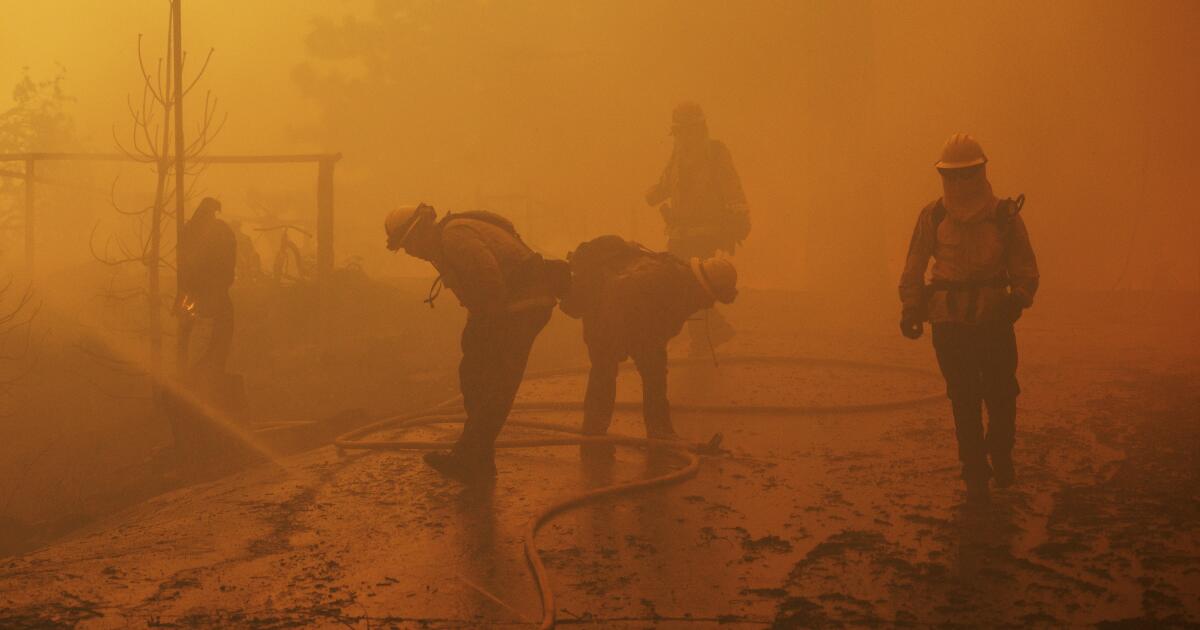
The emails continually fill my inbox: Startups exclaiming they have engineered a solution to protect homes from wildfires.

I’ve been pitched a system that monitors fires via satellite so it can automatically turn on water cannons when fire gets too close. Another offered high-tech speakers that homeowners can place around their home that blasts powerful but silent sound waves designed to disrupt the chemical process of combustion.

One recent one was so outlandish, I couldn’t ignore it:

An entrepreneur together with a former mayor of Malibu were appearing on Shark Tank to pitch a new system to literally lower an entire home into a subterranean vault when a wildfire approaches.

Many fire officials and experts are optimistic we really can find part of the solution to California’s wildfire crisis in the proliferating world of home defense tech. But they also warn these wild ideas are often expensive as well as largely unproven.

Of course I tuned in to Shark Tank.

You’re reading Boiling Point

The L.A. Times climate team gets you up to speed on climate change, energy and the environment. Sign up to get it in your inbox every week.

“I know, this sounds like a magic trick,” entrepreneur Holden Forrest told the Sharks.

“It sounds crazy,” investor and businesswoman Barbara Corcoran interjected.

Nonetheless, Corcoran, who lost her Pacific Palisades home in the 2025 fires, invested $1 million in exchange for a 20% ownership stake in the company — on the condition that its first proof-of-concept home is her own.

If you, like Corcoran, want to put down some serious money for exciting new tech, there are a few things you should know.

This kind of tech is often significantly more expensive than proven, less flashy approaches to reduce the risk of your home burning — such as covering vents with mesh so embers can’t sneak into the home and multipaned windows that are less likely to shatter in the extreme heat, allowing flames and embers to enter.

For example, Forrest expects the retractable homes to cost around $1,000 per square foot. The company hopes to eventually get it down to around $400.

For reference, Palisades fire survivors expect to pay around $800 per square foot to rebuild, while Eaton fire survivors expect to pay just shy of $600. It’s also more than a new series of fire-resilient homes in the Palisades that incorporate both tried-and-true and flashy new tech, sitting around $700.

Fire safety experts also warn that some of this technology can encourage dangerous behavior such as ignoring evacuation orders and staying to defend homes. For example, even when water cannon companies insist their technology can function autonomously, some homeowners nonetheless stay behind to operate them.

Forrest rejected the idea that his technology, HiberTec Homes, would encourage homeowners to disobey evacuation orders — he argued the opposite. The trust that comes with knowing your home will survive actually decreases the likelihood residents will stay behind, he told the Sharks.

Many of the new home protection systems remain unproven, in part because it takes time for researchers to evaluate them. There are three steps to that:

First, scientists head to the lab to see whether the physics behind the tech works as expected in controlled tests.

Second, they investigate individual homes that used the tech in major fires to piece together whether the same physics held together in the chaos and immense power of real-world fires.

Third, they determine whether what they saw in the lab and on the ground translates to a reduced risk at scale. To do this researchers survey thousands of structures that faced wildfires and compare the percentage with the tech that survived with the percentage without the tech that survived.

If you live in a fire-prone area, and you understand the risks and uncertainties of new tech and have money to spare, by all means, build the wildfire bunker of your dreams — just email me an invite to check it out.

Otherwise, Cal Fire maintains a list of the less flashy solutions that have already gone through their scientific paces.

More recent wildfire news

After months of fierce debate between fire officials and residents in fire-prone areas, California released a new “Zone Zero” proposal outlining landscaping restrictions within 5 feet of people’s homes. Unlike previous proposals, many Southern Californians seem to be … OK with this one.

California regulators determined State Farm “delayed, underpaid, and buried policyholders in red tape.” The Department of Insurance may now seek to suspend the company’s license. Meanwhile, the U.S. Justice Department filed a brief supporting 60 fire victims who are suing State Farm and other insurers, my colleague Laurence Darmiento reports.

Survivors of the 2023 Maui fires could start receiving their share of a $4-billion settlement with Hawaiian Electric, the state of Hawaii, Maui County and other defendants as early as June. However, few will break even, reports Stewart Yerton of Honolulu Civil Beat. Lawyers will get a slice for legal fees; the Internal Revenue Service may claw back as much as a third if Congress doesn’t resurrect a tax exemption for such settlements; and insurers who paid out claims will get 10% of the money.

Oh — and this Saturday is Fire Service Day. There’s a good chance your local fire station will hold an open house, complete with fire equipment demos and maybe even free pancakes.

A few last things in climate news

Tom Steyer, a Wall Street prodigy turned billionaire who made a portion of his money off investments in coal-fired power plants, is now trying to use that money to convince Californians he’s the best candidate on climate and energy affordability. Read my colleagues Ben Wieder and Hayley Smith’s full profile here.

The last California-bound oil tanker to pass through the Strait of Hormuz before the Iran war reached the Port of Long Beach, my colleague Blanca Begert reports. After the ship finishes offloading its crude oil, California will have to manage a deficit of roughly 200,000 barrels of oil per day.

The company that produces the widely used weedkiller Roundup promised to “provide a small thanks” to the Environmental Protection Agency administrator after the agency asserted it would not approve a label for the weedkiller warning it causes cancer, reports Sky Chadde of Investigate Midwest. The revelation came at a congressional hearing last week as the company seeks immunity in the Supreme Court.

This is the latest edition of Boiling Point, a newsletter about climate change and the environment in the American West. Sign up here to get it in your inbox. And listen to our Boiling Point podcast here.

For more wildfire news, follow @nohaggerty on X and @nohaggerty.bsky.social on Bluesky.

Source link

Why a major reorganization at the Forest Service has people concerned

I was on a road trip to visit a friend late in March when my phone started lighting up. The Trump administration had just announced a sweeping reorganization of the U.S. Forest Service. People — among them current and former agency staffers — had thoughts.

Under the overhaul, the Forest Service will move from a regional to a state-based leadership structure, relocate its headquarters from Washington, D.C., to Salt Lake City and close nearly three-quarters of its research stations. A news release described this as a much-needed shift to streamline the agency and bring its leadership closer to the forests and grasslands it manages, which are primarily west of the Mississippi.

But a common refrain emerged among the sources I spoke with: The Trump administration is trying to break the Forest Service, they claimed, to pave the way for privatizing or even selling off the 193 million acres of land it oversees.

You’re reading Boiling Point

The L.A. Times climate team gets you up to speed on climate change, energy and the environment. Sign up to get it in your inbox every week.

On a recent podcast, Forest Service Chief Tom Schultz said this is false, that the reorganization is about prudently stewarding taxpayer dollars, not dismantling the agency. Trump officials have also said that a public lands sell-off is not part of the president’s agenda.

I figured the controversy would die down a bit by the time I wrote this newsletter. But nearly a month later, it’s still top of mind for most of the former firefighters and recreation and environment advocates I speak with.

“I worry that I sound paranoid like a conspiracy theorist — why would anybody want to break a federal agency?” said Rich Fairbanks, a former Forest Service firefighter and board member of Firefighters United for Safety, Ethics and Ecology. “But that’s exactly what they appear to be trying to do.”

To him, the reorganization smacks of an attempt to sow chaos and drive experienced employees out the door. He described the decision to move the headquarters to Salt Lake City as a red flag. Not only is it likely to prompt more staff departures, he said, but Utah is widely seen as the epicenter of an ongoing movement for states to take over federal public lands. It’s also home to Sen. Mike Lee, who last year proposed selling off millions of acres of public lands.

Max Alonzo, a former Forest Service firefighter who now works as national secretary treasurer for the National Federation of Federal Employees, similarly believes the administration is setting the agency up to fail. He noted the president has also proposed deep cuts that would slash the USFS operations budget by 44% and eliminate funding for forest and rangeland research to refocus the agency’s mission primarily on timber sales.

The administration plans to replace its nine regional offices with 15 state directors. These changes to leadership structure make little sense to Alonzo unless the intention is to lay the groundwork for an eventual state takeover of the agency and its lands, he said.

“They’re putting the chess pieces in place to get rid of our national forests,” he said. He believes the goal is to open the door to more mineral extraction, logging and drilling.

“It’s all about breaking the government so people decide the government doesn’t work,” echoed Hugh Safford, a UC Davis researcher who worked for the Forest Service for over two decades.

Safford is concerned that the move to shutter dozens of research stations will prevent Forest Service scientists from doing on-the-ground work on issues affecting local lands, like seeing how different ecosystems respond to wildfire, pests and drought. This research has driven some of the most important global advancements in fire planning and forest management, he said. He would know: Until 2021, he managed a staff of ecologists that provided science support to Forest Service leadership.

“They are destroying the research part of the agency,” he said. “These plans are so draconian and so depressing my hair stands up when I even read about them.”

Dave Calkin worked for 23 years at the Forest Service, overseeing a team of scientists that researched wildfire management. He took an early retirement offer last April, just after the agency terminated thousands of probationary employees, including a young researcher in his office.

“The more you can demonstrate government isn’t working, the more you can argue to privatize and sell off public lands,” he said. “And that’s clearly one of the intentions of everything they’re doing.”

More recent land news

Although administration officials would later distance themselves from the effort, the Interior Department helped craft talking points that Sen. Lee used to pitch his controversial proposal to sell off federal public land last summer, Chris D’Angelo of Public Domain reports.

Trump has withdrawn hospitality executive Scott Socha as his nominee to lead the National Park Service, reports Jake Spring of the Washington Post. That comes as many parks face their peak seasons with a dramatically reduced staff and the agency braces for more potential cuts, my colleague Justine McDaniel writes.

It’s not just the Park Service: The president’s budget proposal also seeks to decrease staff at the Bureau of Land Management and eliminate its wilderness management funding in favor of focusing on energy production, reports Christine Peterson of Outdoor Life.

The Trump administration is again planning border wall-related construction inside Big Bend National Park, weeks after U.S. Customs and Border Protection backed away from such plans amid bipartisan backlash, according to Travis Bubenik of Marfa Public Radio, who cited an online map showing the planned construction.

A day after Bubenik’s report, the border wall map disappeared from the Customs and Border Protection website, leaving the public with no way to know where and when construction on the wall will take place, writes Mary Andino of Gear Junkie.

A few last things in climate news

Wildfire, insurance and the price of gas took center stage at the California governor’s debate on Tuesday night. My colleague Blanca Begert broke down each candidate’s defining statements.

In yet another escalation of President Trump’s efforts to obstruct clean energy projects in favor of fossil fuels, the administration said it will pay two energy companies to abandon their offshore wind projects in federal waters — including one off Morro Bay, according to The Times’ Hayley Smith.

Extreme drought is fueling wildfires in the southeastern U.S., Zachary Handlos writes for The Conversation, as concern also grows over intensifying drought conditions in Nevada and Northern California.

Winters have grown shorter in most places across the country, upending everything from tourism and recreation to the transmission season of certain diseases, report Ignacio Calderon, Ramon Padilla, Veronica Bravo and Janet Loehrke in this interactive USA Today project.

This is the latest edition of Boiling Point, a newsletter about climate change and the environment in the American West. Sign up here to get it in your inbox. And listen to our Boiling Point podcast here.

For more land news, follow @phila_lex on X and alex-wigglesworth.bsky.social on Bluesky.

Source link

The Wallis Annenberg Wildlife Crossing to open this December

Right-wing pundits and politicos recently attacked the gargantuan wildlife crossing being constructed over the 101 Freeway in Agoura Hills over ballooning costs and delays.

A March 18 post in an outlet published by a conservative think tank set the outrage in motion, calling the now $114-million project a “bridge to nowhere” and “jobs program for environmentalists.” The Murdoch-owned California Post republished it and social media lit up. In an X post, U.S. Transportation Secretary Sean Duffy compared it with the state’s long-delayed, budget-busting high-speed train.

In short, they painted it as a boondoggle. One that might never get done.

But now the Wallis Annenberg Wildlife Crossing has a completion date: Dec. 2, announced at an Earth Day news conference held on the structure rising over a 10-lane stretch of the freeway. Cars whizzed by below.

You’re reading Boiling Point

The L.A. Times climate team gets you up to speed on climate change, energy and the environment. Sign up to get it in your inbox every week.

That’s when the ribbon will be cut and mountain lions suffering from a lack of genetic diversity are expected to get their ticket out of the freeway-locked Santa Monica Mountains to seek mates elsewhere. Lions there have already shown alarming signs of inbreeding, including kinked tails and deformed testicles. The population could go extinct without intervention, and state wildlife officials listed the pumas as threatened earlier this year.

“This is a visionary project that was the impossible dream,” said Beth Pratt, California regional executive director with the National Wildlife Federation and the public face of the crossing. “This is something that’s captured the imagination of Angelenos, captured the imagination of the world.”

Driving under the crossing feels unremarkable; just another concrete behemoth. But it’s another world on top. Under a blue sky and puffy clouds, a gentle wind blew through a sea of about 6,000 native plants — Santa Barbara milk vetch, golden yarrow and purple sage.

It melts into the surroundings — and that’s the point. Soil that was hauled in was inoculated with the same microbes and mycorrhizal fungi that thrive in the nearby hills. The plants were grown just for the crossing, with another 40,000 on the way.

Miguel Ordeñana, senior manager of community science at L.A. County’s Natural History Museum, who discovered the late, great mountain lion P-22 in Griffith Park, saw the whole thing unfold.

Standing atop the suspended habitat, he envisioned bobcats hiding behind the bushes and ambushing ground squirrels: “I can see it now as this thing is coming to life.”

The event drew representatives from Caltrans, National Park Service, Santa Monica Mountains Conservancy, Agoura Hills City Council and other partners.

A photo of P-22 taken in the very early morning on Dec.19, 2016 in Griffith Park.

The plight of P-22, a celebrity mountain lion that once inhabited Griffith Park, helped inspire the wildlife crossing being built over the 101 Freeway in Agoura Hills

(Miguel Ordeñana)

There’s still significant work to be done before bobcats can come aboard.

Crews are currently building a second overpass over Agoura Road.

Once that’s completed over the summer, they’ll haul in 3 million cubic feet of soil — enough to fill half of SoFi Stadium — to bridge the gap between the two structures. Berms will be constructed to block out noise and light.

Like many dreams in California, the project didn’t come cheap. When it broke ground in 2022, it was expected to cost nearly $93 million. That held until last spring, when bids for the second stage of the project went out and “came back through-the-roof high,” Pratt told The Times earlier this year. The current estimate is $114 million but could potentially top out several million higher.

The surge came amid inflation and tariff-driven price increases. The National Highway Construction Cost Index, a figure calculated by the Federal Highway Administration, has increased by 67% since 2021. Torrential rains in 2022 and 2023 delayed the completion by a year.

There’s also the scale: It’s the largest wildlife crossing in the world, with two structures that together span roughly 320 by 175 feet.

The effort appears to be paying off. Driving down to L.A. earlier this month, Pratt was distressed because she was hitting painted lady butterflies in the midst of their long-distance migration. When she ascended the crossing the following day, she saw the dainty orange, black and white insects fluttering about. It moved her to tears.

They weren’t the only lepidoptera. American lady butterflies were laying eggs and white-lined sphinx moth caterpillars were inching along plants.

Then there’s Bob, a western fence lizard that’s taken up residence at the top of stairs that lead to the crossing. A rattlesnake has claimed the bottom. Birds like yellow-rumped warblers and California scrub jays round out the initial cast.

“I can say with some certainty that this is going to be the most popular reality show that L.A. produces,” Pratt said. Cameras will capture the action, though it won’t be broadcast live because “this is L.A. and someone will go try to pet the mountain lions.”

L.A. deserves a good show. The region is reeling from devastating wildfires, immigration raids and the upending of the state governor’s race. County residents reported record-low quality of life in a UCLA survey this year, with the high cost of living looming large.

Much is uncertain, uneasy. The soon-to-open crossing offers one non-abstract finish line.

More recent wildlife news

California lawmakers are considering a bill to create a statewide program to promote coexistence between people and wildlife, an issue reinvigorated by the euthanization of a beloved black bear with two cubs in Monrovia, writes Times reporter Katie King. The state’s wildlife agency operated a similar program until two years ago, when funding ran dry.

A bear wanders across a porch.

Blondie the bear wanders across a porch in Monrovia. The mama bear was euthanized by the California Department of Fish and Wildlife following two incidents where she swiped at residents.

(Brian Gordon)

The Golden State expanded the area in which boats are asked to slow down in an effort to avoid hitting and killing whales, reports the San Francisco Chronicle’s Brooke Park. Ship strikes are a leading cause of death for several whale species off California, where some of the world’s largest cargo ships pass through key feeding and migration routes.

Nutria, a hefty rodent with the tail of a rat, reappeared in California in 2017 — close to 40 years after it was deemed eradicated. As my colleague Samantha Lee explains, California wildlife officials recently published a study indicating the animal — considered a pest — was deliberately brought back to the state.

A few last things in climate news

California is in the midst of a powerful late-season storm, bringing significant rain to northern regions of the state. However, as fellow Times writer Ian James broke down, the state experienced the hottest March on record — a phenomenon that prematurely melted snow in the Sierra Nevada. The heat and early melt is expected to dry out forests earlier than normal, increasing the risk of wildfires.

After years of debate between fire officials arguing for the removal of anything that can burn within the first five feet of homes and ecologists backing selective landscaping, California proposed a compromise, reports my colleague Noah Haggerty. New regulations create a strict one-foot “Safety Zone” around homes where nothing burnable is allowed, while permitting some spaced-out plants beyond it.

Some who lost their homes in the Eaton and Palisades fires are rebuilding all-electric due to health and climate concerns. Per Times staffer Blanca Begert, burning gas and propane for cooking, as well as water and space heating, in California homes and businesses creates 10% of the state’s greenhouse gas emissions.

One last thing

A black-furred wolf that visited L.A. County before making her way to the Eastern Sierra.

BEY03F, the wolf pictured, briefly visited L.A. County before making her way to the Eastern Sierra.

(California Department of Fish and Wildlife)

Remember the wolf that stunned everyone by visiting Los Angeles County? She made history again by venturing into Inyo County earlier this month and remains in the Eastern Sierra. Experts believe she’s probably still looking for a mate.

This is the latest edition of Boiling Point, a newsletter about climate change and the environment in the American West. Sign up here to get it in your inbox. And listen to our Boiling Point podcast here.

For more wildlife and outdoors news, follow Lila Seidman at @lila_seidman on X and @lilaseidman.bsky.social on Bluesky.

Source link

Dust storms have overtaken Coachella. Researchers say it’s a sign of what’s to come

A powerful dust storm disrupted the first weekend of the Coachella music festival as blustery winds swept over the sprawling grounds and enveloped concertgoers in a whirlwind of desert sand.

Several social media videos from last Friday night showed attendees navigating the festival grounds amid wind-tossed tents and wearing face masks to guard against the airborne dust.

The weather conditions prompted the South Coast Air District to issue dust advisories for parts of the Coachella Valley, warning that strong winds could expose people to unhealthy dust levels. The dust storm caused festival organizers to cancel a highly anticipated performance by Italian EDM artist Anyma, who had been scheduled to perform Friday at midnight on the main stage.

“I don’t have many words other than to say I’m truly devastated and deeply sorry to everyone who showed up to the main stage, and to those watching the livestream at home,” he posted on X. “The dangerous winds not only prevented us and Coachella from building our stage, but also made it impossible for my entire live setup and performance to operate safely.”

You’re reading Boiling Point

The L.A. Times climate team gets you up to speed on climate change, energy and the environment. Sign up to get it in your inbox every week.

It was the latest instance in which dusty conditions hampered one of the nation’s largest and most profitable music festival, which has been called “Dustchella.” But it is just one fragment of the economy disrupted by this natural phenomenon.

Wind-driven dust is an overlooked environmental hazard — and one that carries a hefty price tag. A recent study estimated that dust storms cost more than $154 billion in the U.S. in 2017, alone. The evaluation puts dust events on par with natural disasters in terms of economic costs, eclipsing, for example, the 2017 wildfire season but shy of that year’s hurricane season, according to Irene Feng, the lead author of the 2024 study, who researched dust at the University of Texas at El Paso.

“Dust is kind of a big deal,” said Feng, now a post-graduate student at George Mason University. “The fact that it was even comparable to hurricanes … was a huge surprise to me.”

Since researchers last attempted to calculate the costs associated with dust pollution in the 1990s, the numbers overall numbers essentially quadrupled.

Some of the greatest costs calculated in the new study include:

  • $100 billion related to dust-related deaths and lost productivity from health issues, as inhaling dust particles can lead to serious respiratory illness and trigger heart attacks.
  • $40 billion from additional household costs from cleaning, painting and property damage.
  • $9.6 billion for damages to agriculture from lost water and weaker crop yields.
  • $4 billion in lost value of weakened renewable energy generation, because dust obscures solar panels and gum up wind turbines.
  • $280 million for traffic crashes caused by reduced visibility due to dust storms.

Among one of the most grave conditions Feng analyzed was a potentially life-threatening respiratory infection known as “valley fever.” Throughout much of Southwest, desert soil can be laced with Coccidioides fungus spores. When inhaled, this fungus can propagate in the lungs, potentially causing scarring and collapse of lungs.

In many cases, valley fever symptoms can mirror the flu or COVID, leading doctors to misdiagnose patients, and to not provide proper treatment.

Coachella, which is hosted at an irrigated polo field surrounded by desert, is particularly susceptible.

“When I heard that there was a dust event at Coachella, I was actually really concerned about the valley fever cases that might come out of that,” Feng said. “Because there’s so many people traveling from outside the state, and they don’t necessarily know what valley fever is.”

But devastating dust-related effects, like valley fever, can be mitigated, at least to some degree, according to environmental experts.

In California, state and local government agencies have launched dust-mitigation efforts by installing windbreaks, such as cultivating native plants or reshaping the topography with more ridges. About 200 miles north of Los Angeles, at the eastern base of the Sierra Nevada mountains, Owens Lake, a critical and controversial source of water for Angelenos, city officials say they have drastically reduced dust near the dry, exposed lake bed in recent years after implementing some of these measures.

Scientists say global warming is causing warmer temperatures and more intense droughts, paving the way for more dust emissions. Feng said that could require more innovative solution, more action and more money.

“From what I’ve seen, it’s projected to be dustier in the future,” Feng said. “So, all these effects, all these costs, they’re just only going to get worse.”

More recent air news

The NAACP sued Elon Musk’s artificial intelligence company this week, claiming xAI (the creator of Grok) violated federal clean air laws. The lawsuit, reported by CNBC’s climate tech reporter Lora Kolodny, accuses the company of installing and operating 27 natural gas-fired turbines to power its data center in Memphis without the necessary air permits.

Recent far-flung wildfire smoke has led to air quality risks in unlikely places. Now, Michigan, my beloved home state, is overhauling its air quality alerts system after having endured heavy smoke from Canadian wildfires in 2023 and 2025, per Planet Detroit’s senior reporter Brian Allnutt.

New research suggests methane emissions have been drastically underestimated in the country’s largest cities. An satellite analysis of 12 urban areas, including New York City and Los Angeles, found up to 80% more methane emissions than previously thought, according to ABC reporter Julia Jacobo.

Because methane warms the atmosphere far more than carbon dioxide, the findings underscore the need to investigate large emitters, such as landfills, gas pipelines and wastewater treatment facilities. One other, underreported source is California’s man-made lakes that we tap for drinking water, L.A. Times water reporter Ian James writes. Environmental groups are urging environmental regulators to investigate why.

A few last things in climate news

Sales of new electric vehicles have slumped as Trump has eliminated federal incentives for car buyers. But, as oil prices have spiked due to the war in Iran, used EV sales have jumped 20%, signaling a renewed willingness by Americans to ween themselves off fossil fuels, according to Bloomberg senior correspondent Kyle Stock.

Stingrays injuries in Southern California have been on the rise. LAist climate reporter Erin Stone, who was recently wounded by stingray’s barb herself, writes that warming waters attract more rays and make these painful encounters more likely.

Under an ambitious proposal, the Bay Area could host the world’s largest floating wind farm, taking California closer to its 100% renewable energy goal, L.A. Times climate reporter Hayley Smith writes. The plan would involve building hundreds of Eiffel Tower-sized wind turbines and towing them into the deep, breezy waters of the Humboldt Bay, where they could generate up to 15% of the state’s electricity.

This is the latest edition of Boiling Point, a newsletter about climate change and the environment in the American West. Sign up here to get it in your inbox. And listen to our Boiling Point podcast here.

For more air quality news, follow me at @_TonyBriscoe on X and on LinkedIn.

Source link