Oil and Gas

France preparing to escort ships in Strait of Hormuz when war calms: Macron | US-Israel war on Iran News

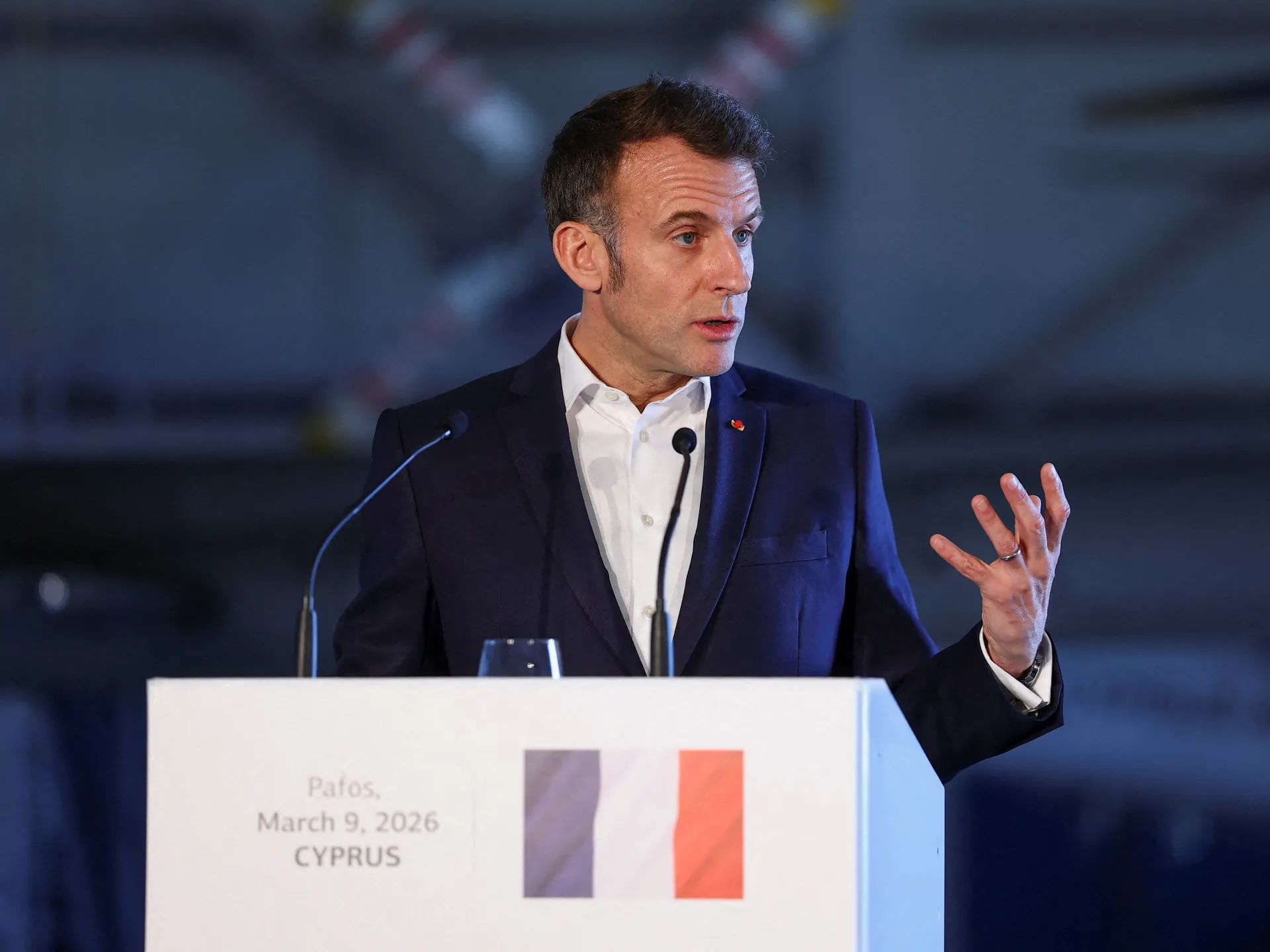
French President Emmanuel Macron has said France and its allies are preparing a “purely defensive” mission to escort vessels through the Strait of Hormuz once the “most intense phase” of the US-Israeli war on Iran ends.

Speaking in Cyprus on Monday, Macron said the “purely escort mission” must be prepared by both European and non-European countries.

Recommended Stories

list of 3 itemsend of list

Its purpose “is to enable, as soon as possible after the most intense phase of the conflict has ended, the escort of container ships and tankers to gradually reopen the Strait of Hormuz”, the French president said, without providing further details.

Macron’s comments come as global oil prices have surged amid continued attacks by the United States and Israel against Iran, as well as retaliatory Iranian missile and drone strikes across the wider region.

The war has effectively shut down the Strait of Hormuz, a strategic Gulf waterway through which about 20 percent of the world’s oil supplies pass, while Iranian attacks on energy infrastructure in the Middle East also have raised concerns.

Responding to Macron’s comments, top Iranian security official Ali Larijani said, “It is unlikely that any security will be achieved in the Strait of Hormuz amid the fires of the war ignited by the United States and Israel in the region.”

Larijani added in a social media post that security is also unlikely to be restored as a result of plans designed by “parties that were not far removed from supporting this war and contributing to its fanning”.

While European countries have been largely sidelined as the war escalates, several – including France, the United Kingdom and Greece – have sent military assets to Cyprus following an Iranian-made drone attack on a British base on the island.

Greece has dispatched four F-16 fighter planes to the Paphos airbase and its two state-of-the-art frigates Kimon and Psara are patrolling offshore Cyprus, tasked with intercepting any missiles or drones.

Last week, Macron ordered the French frigate Languedoc to waters off Cyprus to bolster the country’s anti-drone and anti-missile defences.

“When Cyprus is attacked, then Europe is attacked,” Macron said after meeting with Cypriot President Nikos Christodoulides and Greek Prime Minister Kyriakos Mitsotakis in Paphos on Monday.

The French president said he would also deploy a total of eight warships, two helicopter carriers and the nuclear-powered aircraft carrier Charles de Gaulle to the Eastern Mediterranean and the wider Middle East region, calling the move “unprecedented”.

France’s objective “is to maintain a strictly defensive stance, standing alongside all countries attacked by Iran in its retaliation, to ensure our credibility, and to contribute to regional de-escalation”, Macron said.

“Ultimately, we aim to guarantee freedom of navigation and maritime security.”

With the closure of the Strait of Hormuz sending oil prices soaring, finance ministers from the Group of Seven (G7) countries met in Brussels on Monday to discuss how to respond.

Crude oil prices have increased by about 50 percent since the US and Israel launched the war last month, with international benchmark Brent crude prices surpassing $100 a barrel on Monday.

French Finance Minister Roland Lescure told reporters that the G7 ministers did not make a decision on the potential release of emergency oil stocks amid the war. “What we’ve agreed upon is to use any necessary tools if need be to stabilise the market, including the potential release of necessary stockpiles,” Lescure said.

Paul Hickin, editor-in-chief and chief economist at Petroleum Economist, said getting the Strait of Hormuz reopened is the main priority. “That’s not going to happen in any shape or form until there’s a resolution to the conflict,” Hickin told Al Jazeera.

He explained that several countries in the Middle East, such as Kuwait and Iraq, are dependent on the strait to get their energy supplies to market.

“Kuwait and Iraq and those producers, they are really having a shut-in, and it will take a little bit of time to get back up and running,” said Hickin.

“That is the big risk, the knock-on effect … Getting those ships back, getting that infrastructure back up and running, it’s a slow process. So prices won’t come back down as quickly as many may think.”
Source link

Israeli attacks on Iran fuel sites aim ‘to break resilience of people’ | Climate Crisis

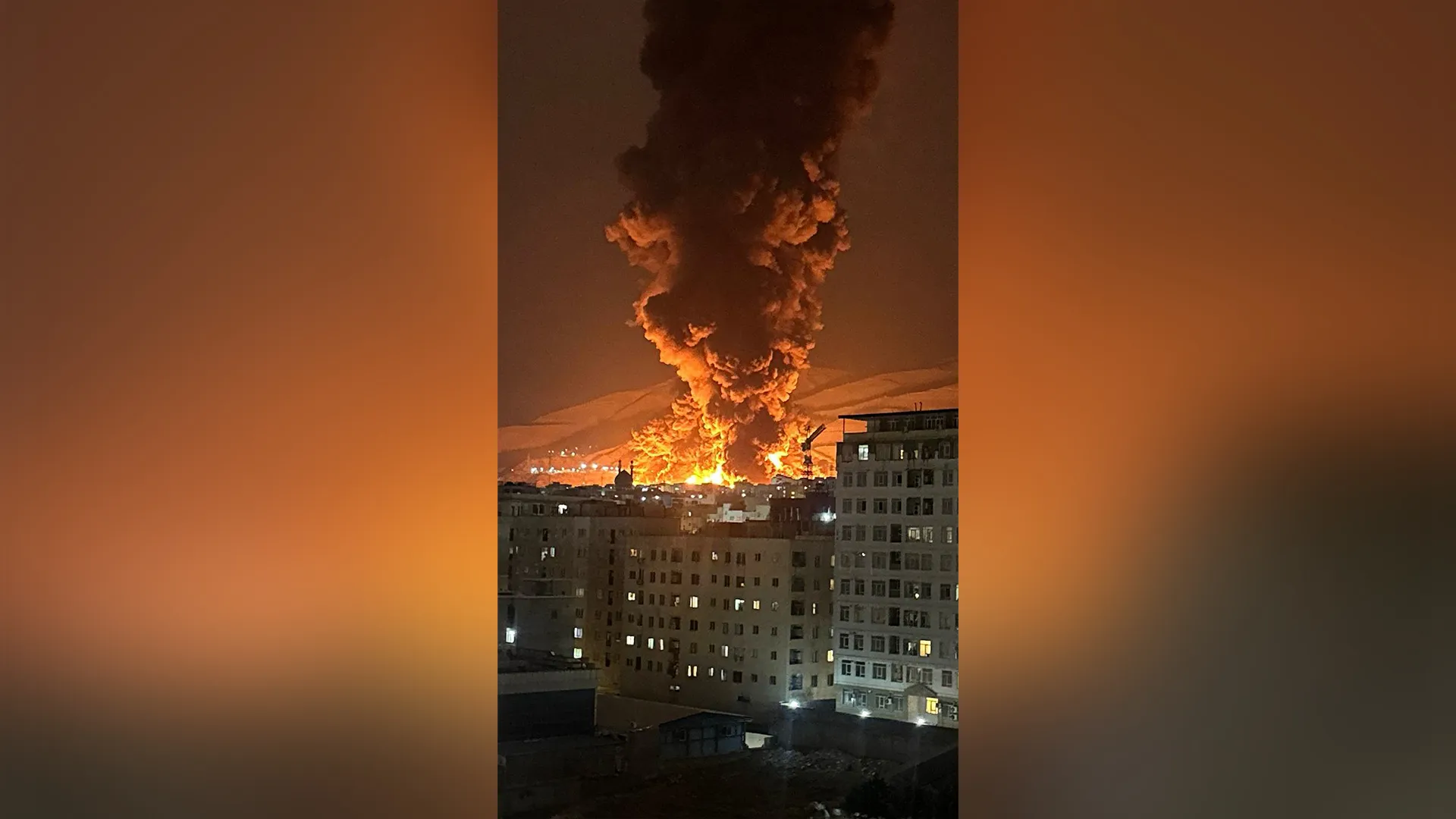
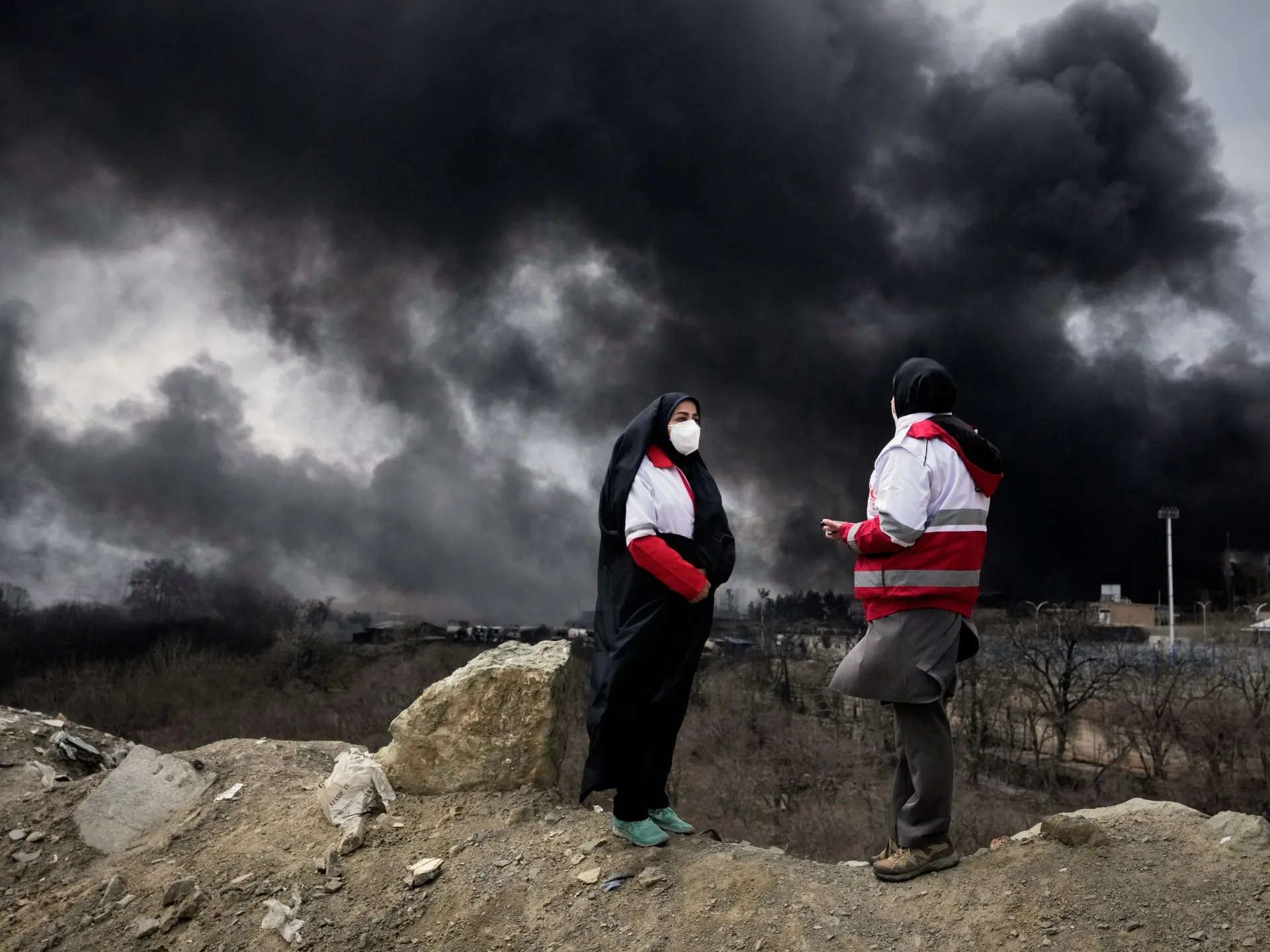
Israeli strikes on fuel depots and petroleum logistic sites in Tehran on Sunday saw apocalyptic images coming out of the Iranian capital, as the spilled oil ignited a river of fire, and thick black smoke blanketed the city of 10 million, leaving streets and vehicles covered with soot.

Israel and the United States claimed they were targeting Iranian military and government sites, but government officials and people say civilian structures such as schools, hospitals and major landmarks are increasingly coming under attack. At least 1,255 people have been killed in the strikes since February 28.

What Israeli and US military planners frame as a calculated degradation of state infrastructure is being described by local officials and environmental experts as an act of total warfare, and collective punishment.

Shina Ansari, head of Iran’s Department of Environment, described the systematic destruction of the oil depots as a blatant act of ecocide.


The attacks systematically targeted four major storage facilities and a distribution centre, including the Tehran refinery in the south and depots in Aghdasieh, Shahran, and Karaj. In the Shahran district, witnesses reported unrefined oil leaking directly into the streets as temperatures hovered around 13C (55F).

Ansari from Iran’s Department of Environment stated that the environment remains the silent victim of the war, noting that the incineration of vast fuel reserves has trapped the capital under a suffocating shroud of pollutants.

The medical and environmental fallout is immediate and severe. The Iranian Red Crescent Society warned that the smoke contains high concentrations of toxic hydrocarbons, sulphur, and nitrogen oxides. The organisation noted that any rainfall passing through these plumes becomes highly acidic, posing risks of skin burns and severe lung damage upon contact or inhalation.

Ali Jafarian, Iran’s deputy health minister, told Al Jazeera that this acid rain is already contaminating the soil and water supply. Jafarian added that the toxic air poses a life-threatening risk to the elderly, children, and those with pre-existing respiratory conditions, prompting authorities to advise residents to remain indoors.

The destruction has also forced the Iranian Ministry of Petroleum to slash daily fuel rations for civilians from 30 litres [8 gallons] to 20 litres [5 gallons]. At least four employees, including two tanker drivers, were killed in the depot strikes.

The strategic bombing myth

Major General Mamoun Abu Nowar, a retired Jordanian military analyst, told Al Jazeera that the primary objective of the strikes is to break the resilience of the Iranian people and paralyse the country’s logistics and economy.

“They are preparing the Iranian environment for an uprising against the regime,” Abu Nowar said, adding that the broader goal is to halt state operations and curb Tehran’s regional influence.

However, Abu Nowar raised urgent concerns about the specific munitions deployed, urging Iranian authorities to investigate the bomb fragments given the unusual density of the smoke and the resulting acid rain.

Some military strategists argue that striking an adversary’s vital infrastructure can paralyse the state from the inside out, bypassing the need to fight its military forces directly.

Modern warfare has increasingly relied on this strategic bombing via precision drones and missiles to destroy morale and incapacitate an adversary’s ability to wage war. For Israel, which is engaged in a genocidal war in Gaza and wider regional conflicts, targeting oil depots is viewed as a way to send a coercive message while avoiding a ground war.

However, Adel Shadid, a researcher in Israeli affairs, told Al Jazeera Arabic that the strategy is designed to make life hell for ordinary Iranians in hopes of sparking an uprising. Shadid noted a glaring contradiction in the rhetoric of Israeli Prime Minister Benjamin Netanyahu, who claims to support the Iranian people while overseeing the destruction of their basic means of survival.

Raphael S Cohen, director of the Strategy and Doctrine Program at the RAND Corporation, notes that such bombing campaigns consistently fail to achieve their primary goal of breaking a population’s will. Instead, Cohen argues, strategic bombing typically produces a rally-around-the-flag effect, unifying societies against a common foe rather than causing them to capitulate.

Historical echoes and retaliation

The reality of targeting oil infrastructure rarely aligns with sterile military theory, as history shows that such tactics reliably produce devastating, long-term environmental consequences.

During the 1991 Gulf War, the torching of Kuwaiti oil wells created a regional environmental catastrophe. Similarly, during the battle against ISIL (ISIS) in Iraq, the burning of the Qayyarah oil fields created a “Daesh Winter” that blocked out the sun for months.

The fires released vast quantities of toxic residues, including sulphur dioxide and polycyclic aromatic hydrocarbons, causing severe respiratory illnesses, soil acidification, and long-term carcinogenic risks for the local population.

Meanwhile, Mokhtar Haddad, director of the Al-Wefaq newspaper, told Al Jazeera Arabic that the targeting of energy hubs could trigger a global energy war.

According to Al Jazeera’s Sohaib al-Assa, reporting from Tehran, the Islamic Revolutionary Guard Corps (IRGC) has already retaliated by striking the Haifa oil refinery and targeting a US base in Kuwait, signalling that the conflict is no longer confined to military targets.

On Monday, Bahrain’s state-run oil company Bapco declared force majeure after waves of Iranian strikes targeted its energy installations. Iran has also been accused of also targeting energy facilities in other Gulf Cooperation Council (GCC) countries.

Source link

Oil soars past $100 a barrel amid Iran war | Oil and Gas

DEVELOPING STORY,

Crude oil prices rise by as much 20 percent as sprawling regional conflict threatens global energy supplies.

Oil prices have surged past $100 a barrel for the first time since Russia’s invasion of Ukraine, amid the widening fallout of the United States and Israel’s war on Iran.

Brent crude, the global benchmark, rose by as much as 20 percent on Sunday, topping $111 a barrel, as fears grew of prolonged disruption to global energy supplies.

Recommended Stories

list of 4 itemsend of list

US President Donald Trump, who campaigned heavily on cost-of-living concerns in the 2024 election, brushed off the surge.

“Short term oil prices, which will drop rapidly when the destruction of the Iran nuclear threat is over, is a very small price to pay for U.S.A., and World, Safety and Peace,” Trump said in a post on Truth Social.

“ONLY FOOLS WOULD THINK DIFFERENTLY!”

Crude oil prices have surged by about 50 percent since the US and Israel launched joint strikes on Iran on February 28.

Iranian threats and attacks in response have brought an effective halt to shipping in the Strait of Hormuz, a conduit for about one-fifth of the global oil supply.

Iraq, the United Arab Emirates and Kuwait, three of the biggest producers in The Organization of the Petroleum Exporting Countries (OPEC), have been forced to cut production amid dwindling crude storage capacity due to the collapse of shipping through the waterway.

Iran and Israel have also launched strikes on key energy facilities in Iran amid the sprawling regional conflict.

Stocks in Asia fell sharply on Monday morning, as investors braced for the fallout of rising energy prices.

Japan’s Nikkei 225 plunged about 6 percent in early trading, while South Korea’s KOSPI tumbled nearly 7 percent.

US stock futures, which are traded outside regular market hours, also saw substantial losses.

Futures tied to Wall Street’s benchmark S&P 500 were down by 1.7 percent, while those for the tech-heavy Nasdaq Composite fell by 1.90 percent.

Source link

Iran war threatens prolonged impact on energy markets as oil prices rise | US-Israel war on Iran News

The United States-Israeli war on Iran could leave consumers and businesses worldwide facing weeks or months of higher fuel prices even if the conflict, which is now in its eighth day, ends quickly, as suppliers grapple with damaged facilities, disrupted logistics, and elevated risks to shipping.

The outlook poses a global economic threat and a political vulnerability for US President Donald Trump leading into the midterm elections, with voters sensitive to energy bills and unfavourable to foreign entanglements.

Recommended Stories

list of 4 itemsend of list

Global oil prices have surged by more than 25 percent since the start of the war, driving up fuel prices for consumers worldwide.

The national average petrol price reached $3.41 per gallon ($0.9 a litre) on Saturday, according to the American Automobile Association (AAA), rising by $0.43 over the past week. Goldman Sachs warned oil prices could climb above $100 per barrel if shipping disruptions continue.

The US crude oil settled at just below $91 per barrel on Friday – its largest weekly gain on record in data dating back to 1983, indicating prices could continue to rise.

“The market is shifting from pricing pure geopolitical risk to grappling with tangible operational disruption, as refinery shutdowns and export constraints begin to impair crude processing and regional supply flows,” JP Morgan analysts said earlier this week, according to the Reuters news agency.

The conflict has already led to the suspension of about a fifth of global crude and natural gas supply, as Tehran targets ships in the vital Strait of Hormuz between its shores and Oman, and attacks energy infrastructure across the region.

A nearly complete shutdown of the strait means the region’s top oil producers – Saudi Arabia, the United Arab Emirates, Iraq and Kuwait – have had to suspend shipments of as much as 140 million barrels of oil – equal to about 1.4 days of global demand – to global refiners.

More than 80 percent of global trade moves by sea, according to the World Bank, meaning disruptions in the waterway could increase freight costs and delay deliveries of goods.

Storages in the Gulf filling

As a result, oil and gas storage at facilities in the Gulf is rapidly filling, forcing oilfields in Iraq and Kuwait to cut oil production, with the UAE likely to cut next, analysts, traders and sources told Reuters.

“At some point soon, everyone will also shut in if vessels do not come,” a ⁠source with a state oil company in the region, who asked not to be named, told Reuters.

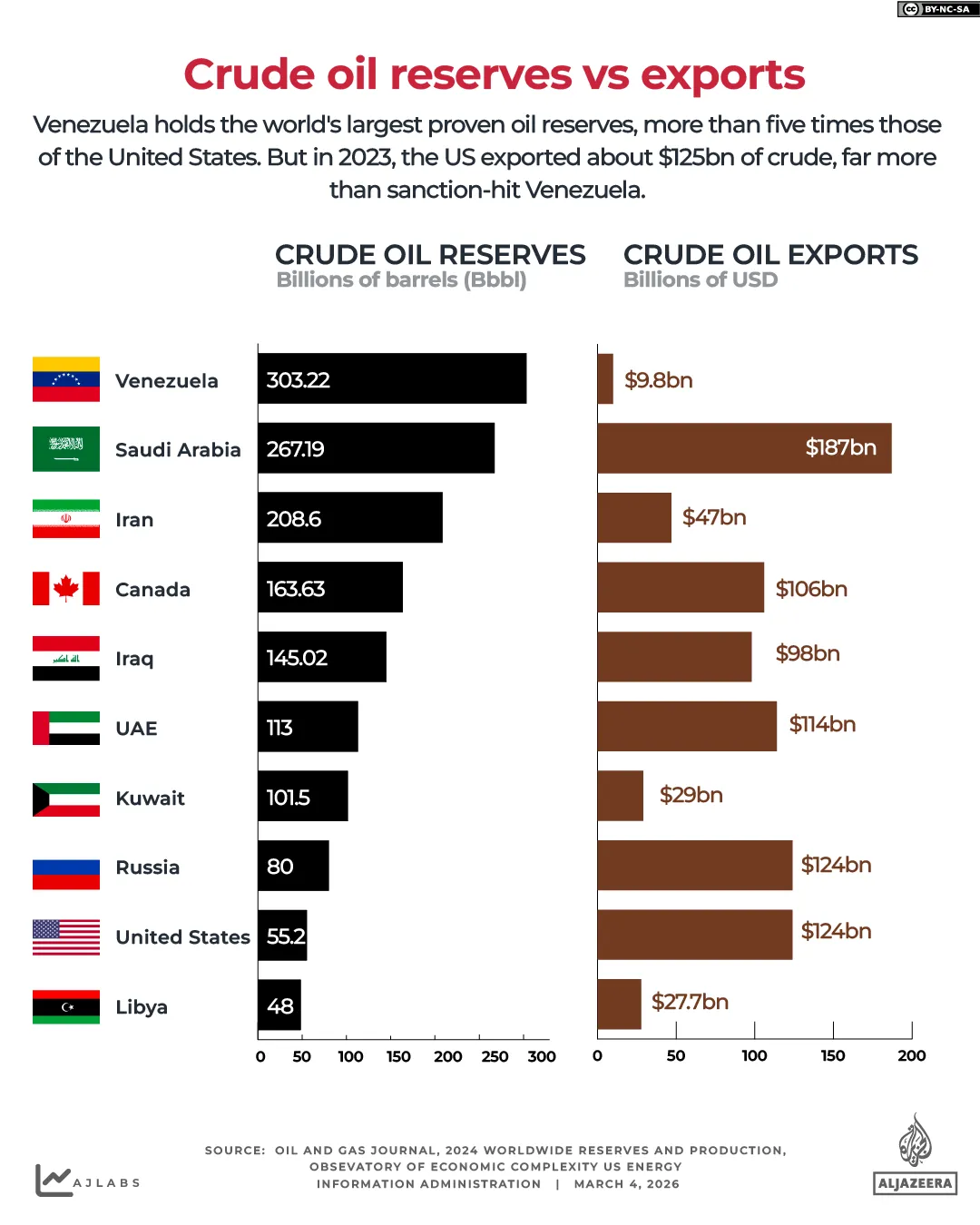
INTERACTIVE_IRAN_GCC_OIL AND GAS SUPPLY-CRUDE_OIL_MARCH4_2026

Oilfields forced to shut in across the Middle East as a result of the shipping disruptions could take a while to return to normal, said Amir Zaman, head of the Americas commercial team at Rystad Energy.

“The conflict could be ended, but it could take days or weeks or months, depending on the types of fields, age of the field, the type of shut-in that they’ve had to do before you can get production back up to what it once was,” he said.

Iranian forces, meanwhile, are targeting regional energy infrastructure, including refineries and terminals, forcing them to shut down too, with some of those operations badly damaged by attacks and in need of repairs.

Qatar declared force majeure on its huge volumes of gas exports on Wednesday after Iranian drone attacks, and it may take at least a month to return to normal production ‌levels, sources told Reuters. Qatar supplies 20 percent of global liquefied natural gas (LNG).

Saudi Aramco’s mammoth Ras Tanura refinery and crude export terminal, meanwhile, has also closed due to attacks, with no details on damage.

Economists warn that the situation could create a combination of higher prices and slower growth.

Source link

Huge fire rages at Tehran oil depot after Israeli attack | Israel-Iran conflict

NewsFeed

Footage captured a massive fire raging at the Shehran oil depot on the outskirts of northern Tehran following an Israeli attack late Saturday night. The Israeli military claimed responsibility for striking fuel storage and related sites it alleges are affiliated with the Iranian armed forces.

Source link