offramp

Trump signals Iran war offramp while administration reexamines NATO

President Trump signaled Wednesday that the United States is eyeing an offramp in its war with Iran, as he also raised the possibility of a major shift in U.S. alliances, including the potential withdrawal from NATO.

Trump indicated in a social media post that Iran’s president wanted a ceasefire, and that the United States would be open to doing so, if Iran agrees to reopen the Strait of Hormuz, a vital oil shipping route that has been affected during the monthlong conflict.

“Until then, we are blasting Iran into oblivion or, as they say, back to the Stone Ages!!!” Trump wrote.

The remarks appeared to outline a possible diplomatic opening with Tehran, but hours later Iranian officials said that Trump’s claims about being close to a deal were “false and baseless” and that the waterway remained “firmly and decisively under the control” of the Islamic Republic’s forces.

“The strait will not be opened to the enemies of this nation through the ridiculous spectacle by the president of the United States,” the paramilitary Islamic Revolutionary Guard Corps wrote in a statement.

Iranian President Masoud Pezeshkian on Wednesday also wrote a public letter denouncing what he described as a “flood of distortions and manufactured narratives” about the war from the U.S., arguing that Iran is not a threat and had only defended itself against American aggression.

He called on the American people to “look beyond the machinery of disinformation” to reach their own conclusions about the war and its purpose.

“Is ‘America First’ truly among the priorities of the U.S. government today?” he wrote, echoing recent complaints from Trump’s own base about the president’s commitments to his campaign promises.

The dueling messages underscored the uncertainty about how much longer the conflict in the Middle East will last and whether the United States will be able to achieve its main goal of preventing Iran from ever producing a nuclear weapon.

Trump, who on Tuesday said he expects the U.S. will leave Iran within three weeks, was poised to address the nation Wednesday night about the war. The White House said the president’s address would formally outline the objectives of Operation Epic Fury, whose mission has at times been convoluted even as Trump administration officials maintain their explanations for waging the war have been “clear and unchanging.”

White House Press Secretary Karoline Leavitt announced Trump’s speech late Tuesday, after Trump downplayed remarks made by Defense Secretary Pete Hegseth about Iran’s lingering military capabilities.

In the lead-up to those remarks, Trump told Reuters that he was looking to pull American forces from the region “quickly” with the possibility of returning to Iran periodically for “spot hits” when necessary.

The president, who said he believed the U.S. military is close to ensuring Iran loses its ability to possess a nuclear weapon in the future, did not seem too worried about Iran having highly enriched uranium in its stockpiles.

“That’s so far underground, I don’t care about that,” he told Reuters, adding that the U.S. military will be “watching it by satellite.”

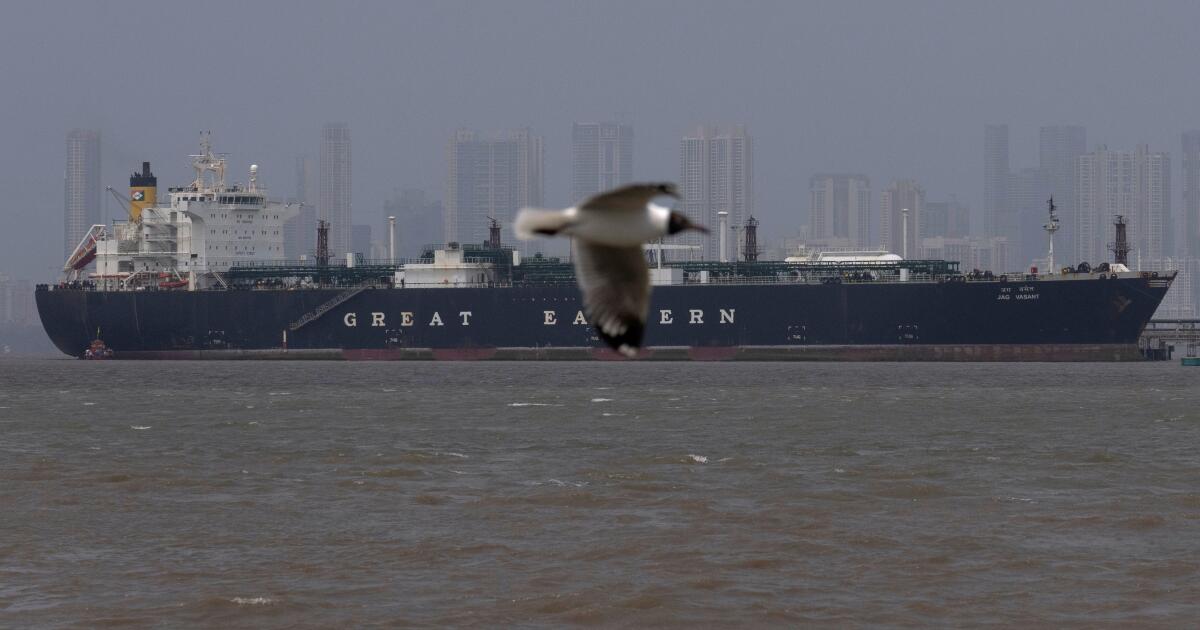
Trump, however, remained focused on having Iran reopen the Strait of Hormuz, an oil route through which a fifth of the world’s oil flows.

He said this week that he may pull American forces from the region and leave other countries to deal with the hurdles of reopening the waterway. But on Wednesday, he seemed to walk back that stance, and said a key part of the ongoing negotiations hinged on Iran ending the de facto blockade on the strait.

It remains unclear whether Israel, which began bombing Iran alongside the U.S. on Feb. 28, would agree to the same terms as Trump and stop hostilities against Iran.

Talks about the potential end of the conflict led stocks to rise Tuesday, but it remains unclear whether higher food prices could persist for months or longer. It is also uncertain when U.S. gas prices — which jumped past an average of $4 a gallon this week for the time since 2022 — would go lower.

NATO becomes a factor in the war

As Trump considers pulling out of Iran, he is also weighing a withdrawal from NATO, telling Reuters that fellow member states’ lack of support during the war has him “absolutely” considering withdrawing from the security alliance, which was ratified by the Senate in 1949.

In an interview with Fox News on Tuesday night, Secretary of State Marco Rubio said the U.S. is planning to “reexamine” its relationship with the North Atlantic Treaty Organization and whether it makes sense to be part of a “one-way-street” alliance.

“Why are we in NATO?” Rubio said. “Why do we send trillions of dollars and have all of these Americans stationed in the region, if in our time of need, we are not going to be allowed to use those bases?”

Rubio’s comment marks a notable evolution from his position in Congress. As senator in 2023, Rubio helped spearhead legislation that said the president “shall not suspend, terminate, denounce, or withdraw the United States” from NATO unless the Senate agrees by a two-thirds vote to do so.

On Wednesday, Rubio told CBS that he maintains Congress should play a role on whether the U.S. should withdraw from NATO. He added that he does not believe Trump “will remove us from NATO,” but he does believe the president will demand that NATO allies “do more.”

In a joint statement Wednesday, Sens. Mitch McConnell (R-Ky.) and Chris Coons (D-Del.) said that the United States will remain in the treaty and that the Senate “will continue to support the alliance for the peace and protection it provides America, Europe and the World.”

Although Trump has previously threatened to end U.S. membership in NATO, his most recent remarks have put added pressure on European allies to revisit the terms of their relationship.

In a post on X, Finnish President Alexander Stubb said he had a “constructive discussion” with Trump on Wednesday about NATO.

“Problems are there to be resolved, pragmatically,” Stubb wrote.

Their conversation came after Trump and Hegseth complained that European countries have been hesitant to help the U.S. in its war against Iran. Just this week, Italy and Spain refused to allow U.S. warplanes from landing at their military bases before flying to the Middle East.

Britain’s prime minister, Keir Starmer, defended NATO on Wednesday, saying it was the “single most effective military alliance the world has ever seen” and, more broadly, said he would not cave to pressure to join the Iran war.

“Whatever the pressure on me and others, whatever the noise, I’m going to act in the British national interest in all the decisions that I make,” Starmer told reporters. “That’s why I’ve been absolutely clear that this is not our war, and we’re not going to get dragged into it.”

As diplomatic efforts continue, the Trump administration has increased its military presence in the Middle East, with thousands of U.S. troops arriving in the region as ground operations in the war remain an option.

The U.S. military buildup in the Mideast came as fighting continued to escalate in the Persian Gulf region on Wednesday.

Iran hit an oil tanker off Qatar’s coast, prompting the evacuation of 21 crew members. In Bahrain, there were alerts for incoming missiles, while Kuwait’s state-run news agency KUNA reported that a drone hit a fuel tank at Kuwait International Airport. Meanwhile, Jordan’s military intercepted a ballistic missile and two drones fired by Iran, and an airstrike in Tehran appeared to have hit the former U.S. Embassy compound.

Additionally, Israeli strikes killed at least five people on a Beirut neighborhood. Israel invaded southern Lebanon in March after the Iran-linked militant group Hezbollah began launching missiles into northern Israel.

This article includes reporting from the Associated Press.


Source link

After Nearly A Month Of Epic Fury There’s No Off-Ramp In Clear Sight

As Operation Epic Fury slogs on for a 26th day, Iranian officials have publicly dismissed the Trump administration’s efforts to negotiate a way out of the crisis. Both sides have exchanged demands for any settlement of the war as Pakistan has agreed to hold peace talks, but there appears to be no quick off ramp to this conflict. Meanwhile, the missile and drones keep launching and the bombs keep falling.

White House press secretary Karoline Leavitt on Wednesday said Iran “refused to come to a deal,” adding that President Donald Trump “does not bluff and is prepared to unleash hell.”

Leavitt: “President Trump does not bluff … any violence beyond this point will be because the Iranian regime refused to understand they have already been defeated” pic.twitter.com/siWhW4yEp3

— Aaron Rupar (@atrupar) March 25, 2026

The Iranians claimed that they rejected any move to stop the fighting because of the demands made by the White House and, what they state, is their ongoing successful defensive strategy. They also hit back with their own peace deal demands.

Though the U.S. has started “efforts to establish a ceasefire and start indirect negotiations with Iran… Tehran considers a ceasefire and negotiations currently unjustifiable,” the official Iranian FARS news agency proclaimed on Wednesday. “While U.S. diplomatic movements for a ceasefire have increased in the past five days with mediation by some countries, experts describe the change in Donald Trump’s rhetoric as a sign of Washington’s retreat in the face of Iran’s resistance. However, according to observers, the U.S. government’s effort to maintain its prestige has caused these requests to be presented wrapped in military and media threats.”

“…the Islamic Republic of Iran, before making any decision regarding the ceasefire request presented by U.S. intermediaries, emphasizes achieving its strategic goals in confrontation with the hostile front, and only upon their fulfillment will there be a possibility to end the war (not just a ceasefire),” FARS added. “Political analysts also believe that Iran’s comprehensive resistance against the U.S., the Zionist regime, and their allies has narrowed the maneuvering space for the enemy, forcing them to seek a way out of the current situation.”

However, despite rejecting the peace deal, “Iranian officials nevertheless signaling privately that they are open to negotiations, raising the prospect of a cessation in hostilities, Israel moved to step up its efforts to destroy as much of Iran’s military capabilities as possible,” The New York Times reported.

Iranian officials are also wary of dealing with Trump at all, Axios posited.

“The U.S. is pushing for in-person peace talks as soon as Thursday in Islamabad, Pakistan. But during the two previous rounds of U.S.-Iran talks, Trump green lit crippling surprise attacks while still claiming to be seeking a deal,” the outlet noted. “Iranian officials have told the countries trying to mediate peace talks with the U.S. that they have now been tricked twice by President Trump and “we don’t want to be fooled again.”

🇮🇷🇺🇸Iran suspects Trump’s peace talk push is another trick. The U.S. made clear to the Iranians that Trump is serious and floated Vice President Vance’s possible involvement in the talks as proof. @MarcACaputo and I write for @axios https://t.co/DqY7aZMvQY

— Barak Ravid (@BarakRavid) March 25, 2026

The rejection came after the The New York Times reported on Tuesday that the United States sent Iran a 15-point plan to end the war. The publication cited officials briefed on the diplomacy.

The publication acknowledged that it did not see a copy of the plan, but explained that officials “shared some of its broad outlines, saying that it addresses Iran’s ballistic missile and nuclear programs,” the Times wrote. “The plan also discusses maritime routes, one of the officials said. Since the beginning of the war, Iran has effectively blocked most Western ships from safely passing through the Strait of Hormuz, the strategic waterway in and out of the Persian Gulf, cutting the global supply of oil and natural gas, and sending the prices soaring.”

It was unclear how widely the plan, delivered by way of Pakistan, had been shared among Iranian officials, the newspaper noted, nor was it clear whether Israel, which has been bombing Iran together with the United States, was on board with the proposal.

Israeli media offered more details about the plan, but said it involved 14 points. They include Iran dismantle its nuclear capabilities, promise not to strive to obtain nuclear weapons or enrich uranium inside the country, limit the number of range of missiles and end its support for proxies like Hezbollah and the Houthis among several other demands.

🚨JUST IN: The 14-point document that was given to Iran:

📌 Dismantling of existing nuclear capabilities that have already been accumulated
📌A commitment that Iran will never strive to obtain nuclear weapons
📌No material will be enriched on Iranian soil
📌All enriched… https://t.co/Nv5kXtf8v5

— Raylan Givens (@JewishWarrior13) March 24, 2026

BREAKING: The Trump administration offered a 15-point ceasefire plan to Iran, an AP source says, even as the U.S. military is preparing to send at least 1,000 more troops from the 82nd Airborne Division to the region. https://t.co/Yt51Hh6g4I

— The Associated Press (@AP) March 25, 2026

Iran set a high bar with its own proposal. It demanded the closure of all U.S. bases in the Gulf , guarantees of no further attacks, an end to Israeli strikes on Hezbollah, lifting all sanctions on Iran, the payment of war damage reparations and no restrictions on the missile program, according to the Wall Street Journal.

“A U.S. official called the demands ridiculous and unrealistic,” the newspaper added.

Iranian demands for an end to the war, according to the WSJ:

– Closure of all US bases in the Gulf
– Guarantees of no further attacks
– End to Israeli strikes on Hezbollah
– Lifting all sanctions on Iran.
– War damage reparations
– No restrictions on the missile program pic.twitter.com/j0GmXSjT0t

— Faytuks News (@Faytuks) March 25, 2026

“Trump’s special envoys Steve Witkoff and Jared Kushner, and US Vice President JD Vance, could travel to Islamabad if an agreement was likely to be reached,” Bloomberg news reported on Tuesday, citing one senior Western diplomat. “The US had also considered locations such as Muscat, Doha and Cairo for peace talks, but fraying relations due to the war or mistrust from either Washington or Tehran toward those governments made those options less viable, the person added.”

Iran, however, has reportedly refused to negotiate with anyone other than Vance, accusing Witkoff and Kushner of “backstabbing” because the U.S. launched Epic Fury hours after the two held talks with Tehran.

On Wednesday, Leavitt dismissed claims about any face-to-face negotiations, saying “nothing should be deemed official until formally announced by the White House.”

When asked if face-to-face talks are planned for negotiations with Iran, White House press secretary Karoline Leavitt tells CBS News’ @JenniferJJacobs: “I’ve seen a lot of speculation and reporting about potential talks that could happen later this week. Nothing should be deemed… pic.twitter.com/yeR1x2vpNK

— CBS News (@CBSNews) March 25, 2026

UPDATES:

The Speaker of the Iranian Parliament issued a veiled threat on Wednesday.

“Based on some data, Iran’s enemies, with the support of one of the regional countries, are preparing to occupy one of the Iranian islands,” Mohammad Bagher Ghalibaf posted on X. “All enemy movements are under the full surveillance of our armed forces. If they step out of line, all the vital infrastructure of that regional country will, without restriction, become the target of relentless attacks.”

While Ghalibaf didn’t specify the regional countries he wrote about, he is referring to a potential attack on Kharg Island or other Iranian islands in the Strait of Hormuz. As we previously noted, the U.S. is sending additional troops to the region for such a possibility. Last week, former CENTCOM commander Joseph Votel offered his candid views about the difficulty of taking Kharg Island. You can read our exclusive interview with Votel here.

براساس برخی داده‌ها، دشمنان ایران با پشتیبانی یکی از کشورهای منطقه، در حال تدارک عملیات اشغال یکی از جزایر ایرانی هستند.
تمام تحرکات دشمن تحت اشراف نیروهای مسلح ماست. اگر قدم از قدم بردارند، تمام زیرساخت‌های حیاتی آن کشور منطقه‌ای بدون محدودیت، هدف حملات بی‌امان قرار خواهد گرفت.

— محمدباقر قالیباف | MB Ghalibaf (@mb_ghalibaf) March 25, 2026

Meanwhile, the Iranians are beefing defenses on Kharg Island, CNN reported.

Amid the halting diplomacy, U.S. Central Command (CENTCOM) commander Adm. Brad Cooper released his fifth video update on Epic Fury, saying that the U.S. has hit more than 10,000 Iranian targets and just reached the 10,000 mark “just hours ago.”

Earlier today, CENTCOM released video showing strikes against Iran’s military infrastructure.

U.S. forces are striking targets to degrade the Iranian regime’s military infrastructure and capabilities that have threatened American troops and regional partners for decades. pic.twitter.com/wPIR1c6kA0

— U.S. Central Command (@CENTCOM) March 25, 2026

The IDF claimed it struck two naval cruise missile production sites in Tehran.

Iran continued firing missiles at Israel. The following video shows an intermediate-range ballistic missile with a cluster muntion warhead that is difficult to intercept in the terminal phase.

Iran said Wednesday it had fired cruise missiles in the direction of the the aircraft carrier USS Abraham Lincoln aircraft carrier.

FARS, which has close ties with the Islamic Revolutionary Guard Corps (IRGC), claimed that the missile attack had “forc[ed] the American naval fleet to change position.”

CENTCOM did not immediately respond to our request for comment.

The Iranian claim about the Lincoln came a day after Trump told reporters that Iran has unsuccessfully launched 100 missiles at the carrier.

CENTCOM on Wednesday shot down Tehran’s claim that a U.S. Navy F/A-18E/F Super Hornet was downed by Iranian air defenses.

🚫FALSE: The Islamic Revolutionary Guard Corps announced a U.S. F/A-18 fighter was struck over Chabahar using new advanced air defense systems.

✅TRUE: No U.S. fighter aircraft have been shot down by Iran. pic.twitter.com/I25QFjYo0l

— U.S. Central Command (@CENTCOM) March 25, 2026

That claim was made by the official Iranian Press TV news outlet in a post on X.

Two U.S. Air Force C-5M Super Galaxy heavy transports flew into Diego Garcia, in the past 48 hours, according to open source flight trackers. One was from Okinawa, Japan and the other from South Korea. Some believe this indicates the shipment of air defense systems and interceptors in the wake of claimed Iranian attempts to strike the island, about 2,500 miles away, with ballistic missiles. It remains unclear what the flights were actually about.

In the past 48 hours, two U.S. Air Force C-5M Super Galaxy heavy transports flew into Diego Garcia, one from Okinawa, Japan and another from South Korea.

They’re likely hauling interceptors, so the threat of Iranian strikes on the base is HIGH. https://t.co/16RpTWf2dk pic.twitter.com/7HTBVnQZvn

— Egypt’s Intel Observer (@EGYOSINT) March 25, 2026

Yesterday, we noted that open-source satellite imagery captured over the Indian Ocean yesterday indicates that the USS Tripoli is now docked at Diego Garcia. However, imagery posted today by open-source investigator MT Anderson shows that the Tripoli Amphibious Readiness Group (ARG) has pushed on toward the Middle East, while a lone Arleigh Burke class guided missile destroyer is now docked there.

That was a quick pit stop. 👇

NSF DIEGO GARCIA UPDATE: ARG Departs, DDG Arrives
Mar 25 imagery shows a fast turnover at the logistics hub.
➡️ Tripoli ARG has already pushed off to continue their transit. In their place, a lone Arleigh Burke-class destroyer is now alongside.… https://t.co/QoJhvvJvY0 pic.twitter.com/pgsewaBc80

— MT Anderson (@MT_Anderson) March 25, 2026

CENTCOM released images of A-10 Thunderbolt II close air support jets taking part in attacks on Iranian ships.

U.S. Air Force A-10 Thunderbolt II attack aircraft have been used to strike Iranian naval vessels during Operation Epic Fury. pic.twitter.com/VasnOrehax

— U.S. Central Command (@CENTCOM) March 25, 2026

As the Middle East energy war rages on, an Iranian missile struck near the Orott Rabin power plant in Hadera, Israel, with no reports of direct impact on the facility.

An Iranian missile struck near the Orot Rabin power plant in Hadera, Israel, with no direct impact reported on the facility, according to initial reports. pic.twitter.com/IZOrzEcIsN

— Faytuks Network (@FaytuksNetwork) March 25, 2026

Though Trump derided new Iranian Supreme Leader Mojtaba Khamenei, Spanish Prime Minister Pedro Sánchez sees him as a threat.

Spanish PM Pedro Sánchez on Mojtaba Khamenei:

Mojtaba Khamenei is just as dictatorial and even more bloodthirsty than his father.

And on top of that, he supports Iran developing nuclear weapons.pic.twitter.com/XXUaArApf2

— Clash Report (@clashreport) March 25, 2026

The “present” that Trump said Tuesday that Iran had given Washington “was allowing the safe passage of a number of fuel tankers through the Strait of Hormuz in recent days,” the Times of Israel reported on X, citing a senior Arab diplomat and a U.S. official.

The “present” that US President Donald Trump said Tuesday that Iran had given Washington was allowing the safe passage of a number of fuel tankers through the Strait of Hormuz in recent days, a senior Arab diplomat and a US official tell @TimesofIsrael (1/7)

— Jacob Magid (@JacobMagid) March 25, 2026

France may be organizing its own coalition to re-open the Strait, Reuters reported on X.

BREAKING – Looks like the French are organizing their own coalition! See these alerts:

* FRANCE TO HOLD VIDEOCONFERENCE SOON WITH ARMY CHIEFS KEEN TO PLAY ROLE IN RESTORING MARITIME NAVIGATION IN HORMUZ – FRENCH MILITARY

* FRENCH MILITARY: MEETING WOULD BE COMPLETELY…

— Phil Stewart (@phildstewart) March 25, 2026

However, several European leaders are pushing back against comments made by NATO Secretary General Mark Rutte that European allies would eventually ‘come together’ to heed Trump’’s call to deploy naval assets in the Strait of Hormuz, Financial Times reported.

Vessels seeking to gain Iranian protection while transiting the Strait of Hormuz are being asked to provide detailed information to the Islamic Revolutionary Guard Corps (IRGC), Bloomberg reported. The demand includes lists of crew and cargo, along with voyage details and bills of ladings.The publication also noted that the IRGC is exacting tolls on shipping, charging some vessels $2 million to transit.

Vessels seeking to transit the Strait of Hormuz under Iranian protection are being asked to provide lists of crew, cargo and voyage details to secure a green light from the IRGC https://t.co/EHYbSHxU4W

— Bloomberg (@business) March 25, 2026

With the Strait of Hormuz still largely closed for most shipping, China’s foreign ministry, asked whether Chinese ships are passing through, said Beijing has been in communication with all parties.

BREAKING: China’s foreign ministry, asked whether Chinese ships are passing through the Strait of Hormuz, said Beijing has been in communication with all parties. pic.twitter.com/5EJzeqjQC1

— Al Jazeera Breaking News (@AJENews) March 25, 2026

The Iraqi Ministry of Defense condemned a deadly U.S. airstrike on its medical and logistical facilities in Habbaniya on Wednesday. The incident is the latest in an ongoing series of attacks by Iranian-backed militias on U.S. and allied forces in Iraq, and resulting retaliation strikes that have seen a dramatic uptick since the launch of Epic Fury.

“At approximately 9:00 AM, the Habbaniya Military Clinic and the local Works Department came under a direct airstrike, which was immediately followed by concentrated cannon fire from the attacking aircraft,” The Iraqi Defense Ministry stated. Saying that seven soldiers were killed and 13 others wounded “while performing their national and humanitarian duties.”

The Ministry described the strike as “a flagrant violation of international law and a heinous crime, specifically citing global conventions that prohibit the targeting of medical facilities and personnel.”

In addition to Iraqi soldiers, the base is also shared by PMF/Hashd al-Shaabi, one of the Iranian-backed militias striking U.S. and allied forces.

The War Zone cannot independently verify this claim.

7 Iraqi Army soldiers were killed and 13 wounded after a U.S. airstrike hit the clinic and engineering department at the Habbaniyah base in Anbar.

The base, which is shared by the Iraqi Army and PMF/Hashd al-Shaabi, was struck in two consecutive U.S. attacks on March 24–25.… pic.twitter.com/FF9sFWHdst

— Clash Report (@clashreport) March 25, 2026

The reported attack came after Iraq gave permission to a quarter of a million paramilitary troops under the Popular Mobilization Forces umbrella to retaliate against strikes by the U.S., according to the Middle East Broadcasting Networks.

With no end to the fighting in sight, we will continue to provide updates on the status of Epic Fury and efforts to end the war.

Contact the author: howard@thewarzone.com

Howard is a Senior Staff Writer for The War Zone, and a former Senior Managing Editor for Military Times. Prior to this, he covered military affairs for the Tampa Bay Times as a Senior Writer. Howard’s work has appeared in various publications including Yahoo News, RealClearDefense, and Air Force Times.


Source link

Iran’s president sets terms to end the war: Is an off-ramp in sight? | US-Israel war on Iran News

Iranian President Masoud Pezeshkian has laid out terms for ending the war with the United States and Israel in what analysts say is a possible sign of de-escalation from Tehran as the US-Israel war on Iran entered its 13th day on Thursday.

In a post on Wednesday on social site X, Pezeshkian said he had spoken to his counterparts in Russia and Pakistan, and that he had confirmed “Iran’s commitment to peace”.

Recommended Stories

list of 4 itemsend of list

“The only way to end this war – ignited by the Zionist regime & US – is recognizing Iran’s legitimate rights, payment of reparations, and firm int’l guarantees against future aggression,” Pezeshkian wrote.

This is a rare posture from Tehran, which has maintained a defiant stance and initially rejected any possibility of negotiations or a ceasefire when war broke out nearly two weeks ago.

Pezeshkian’s statement comes as pressure mounts on the US to halt what has become a very costly mission. Analysts say speculation from Washington that Iran would quickly submit after the killing of Supreme Leader Ayatollah Ali Khamenei were misguided.

Tehran is likely going to determine the end of this war, not the US or Israel, because of its ability to inflict economic pain broadly, they say.

Amid a military pummelling by the US and Israel, Iran has launched heavy retaliatory strikes at US assets and other critical infrastructure in Gulf countries, upsetting global supplies. It has also adopted what analysts call “asymmetric” tactics – such as disrupting the critical Strait of Hormuz and threatening US banking-linked entities – to inflict as much economic pain on the region and wider world as it can.

This is what we know about Pezeshkian’s stance and what the pressures are on both sides to draw the conflict to a close, quickly.

Emergency personnel work at the site of a strike
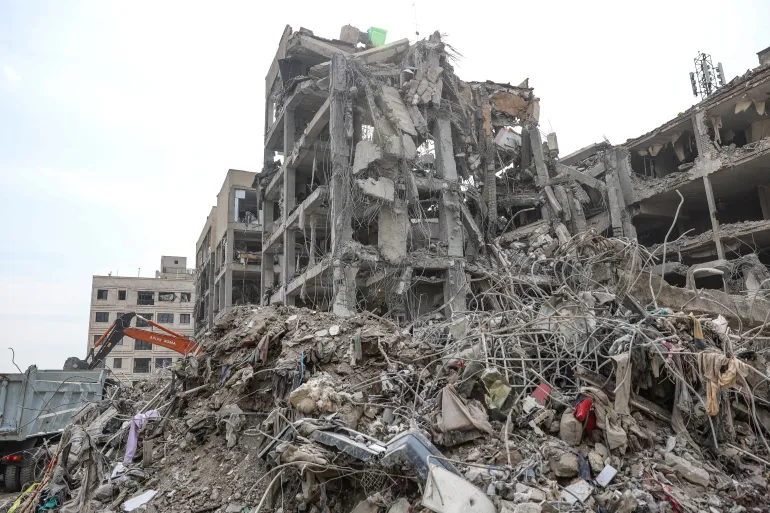
A building lies in ruins after a strike, amid the US-Israeli conflict with Iran, in Tehran, Iran, on March 12, 2026 [Majid Asgaripour/WANA (West Asia News Agency) via Reuters]

What has the war cost so far?

Economically, both sides have weaponised energy. Israel first targeted Iran’s oil facilities in Tehran on March 8, prompting an outcry from global health experts over the potential risk of air and water pollution.

Iran has, meanwhile, tightened its chokehold on the Strait of Hormuz shipping route – the only route to open sea for oil producers in the Gulf – with its military promising on Wednesday that it has the capabilities to wage a long war that could “destroy” the world economy.

Attacks on ships in the strait, through which about 20 percent of global oil and gas traffic normally passes, have effectively closed the route.

Oil prices rocketed above $100 per barrel late last week, up from around $65 before the war, with ordinary buyers feeling the increases at pumps in the US, Europe and parts of Africa.

On Wednesday, Iran upped the ante, saying it would not allow “a litre of oil” to pass through the strait and warned the world to expect a $200-per-barrel price tag.

“We don’t know how quickly it’ll revert back,” Freya Beamish, chief economist at GlobalData TS Lombard, told Al Jazeera. “We do think it’ll revert back to $80 in due course, but the ball is to some degree in Iran’s court,” she said, adding that because Iran needs oil revenue, the price hikes are expected to be time-limited.

The International Energy Agency agreed on Wednesday to release 400 million barrels from the emergency reserves of several member states but it is not yet clear what impact that will have, nor how quickly this quantity of oil can be released.

Tehran has also been accused of directly attacking oil facilities in neighbouring countries this week. Iraq shut all its oil port operations on Thursday after explosive-laden Iranian “drone” boats appeared to have attacked two fuel tankers in Iraqi waters, setting them ablaze and killing one crew member.

A drone was filmed striking Oman’s Salalah oil port on Wednesday, although Tehran has denied involvement.

What are Iranian officials saying about ending the war?

There has been conflicting messaging from the Iranian leadership.

Iran’s elite army unit and parallel armed force, the Islamic Revolutionary Guard Corps (IRGC), continues to show defiance, issuing threats and launching attacks on Israel and US military assets and infrastructure in neighbouring Gulf countries.

However, the political leadership has appeared more inclined towards diplomacy, analysts say. On Wednesday, President Pezeshkian said that ending the war would take the US and Israel recognising Iran’s rights, paying Iran reparations – although it’s unclear how much is being asked for – and providing strong guarantees that a future war will not be waged.

In a video recording last week, he also apologised to neighbouring countries for the strikes and promised that Iran would stop hitting its neighbours as long as they do not allow the US to launch attacks from their territory.

“I personally apologise to the neighbouring countries that were affected by Iran’s actions,” the president said, adding that Tehran was not looking for confrontations with its neighbours.

However, it is not known how much sway the political leadership has over the IRGC. Hours after the president’s apology last week, air defence sirens went off in Saudi Arabia, Qatar, the UAE and Bahrain, as strikes continued on the Gulf.

So, what is Iran’s actual position?

“Iran wants to go to the end to make sure that the United States and Israel never attack Iran again … so this has to be the final battle,” Al Jazeera’s Resul Serdar Atas explained.

Indeed, the IRGC sees this as an existential war, but the timing of Pezeshkian’s statement about ending the conflict also shows Tehran is pressured economically, politically and militarily, Zeidon Alkinani of Qatar’s Georgetown University told Al Jazeera.

“These differences and divisions [between IRGC and political leaders] always existed even prior to this war but we may notice it now more, given the fact that the IRGC believes that it has the right to take the front seat in leading this regional war, which is why a lot of the statements and positions are contradicting with the official ones from Pezeshkian,” he said.

The IRGC reports directly to Iran’s Supreme National Security Council (SNSC) and not to the country’s political leadership. That council is led by Ali Larijani, a top politician and close aide to the late supreme leader, Ali Khamenei, who analysts describe as a “hardliner”.

In a post on X on Tuesday, Larijani responded to threats from Trump about attacks on the Strait of Hormuz, saying: “Iranian people do not fear your hollow threats; for those greater than you have failed to erase it … So beware lest you be the ones to vanish.”

The newly elected supreme leader, Mojtaba Khamenei, was once in the IRGC and was put forward by the unit as the next ayatollah after his father was killed on the first day of the war, analysts say. He is thus not expected to follow the reformist, diplomatic ideals of President Pezeshkian and other political leaders which his father managed to marry with the IRGC militarised stance, they say.

Mojtaba Khamenei, son of Iran's supreme leader Ayatollah Ali Khamenei, attends a gathering.
Mojtaba Khamenei, son of Iran’s late Supreme Leader Ayatollah Ali Khamenei, attends a gathering in Tehran on March 2, 2016. Iran marked the appointment of Ayatollah Mojtaba Khamenei to replace his father as its supreme leader with a barrage of missiles against Israel and the Gulf states [File: Rouhollah Vahdati/ISNA via AFP]

What do the US and Israel say about ending the war?

There have also been conflicting messages from the Trump administration and Israel regarding when the war mission on Iran, codenamed Operation Epic Fury, is likely to end.

Trump told US publication Axios on Wednesday that the war on Iran would end “soon” because there’s “practically nothing left to target”.

“Anytime I want it to end, it will end,” he added. He had said earlier on Monday that “we’re way ahead of our schedule” and that the US had achieved its goals, even as speculation mounts about a possible US ground mission.

On the other hand, Israel’s Defence Minister Israel Katz said on Wednesday that the war would go on “without any time limit, for as long as necessary, until we achieve all the objectives and decisively win the campaign”.

Analysts say Trump’s stance that the conflict will be quick reflects increasing pressure on his administration ahead of upcoming mid-term elections in November.

Trump’s advisers privately told him this week to find a quick end to the war and avoid political backlash, according to reporting by The Wall Street Journal. That came as polls from Quinnipiac University and The Washington Post suggested that most Americans are opposed to the war in Iran.

In his 2024 presidential campaign, Trump promised to lower prices, and inflation had stabilised at 2.4 percent ahead of the war, according to government data released on Wednesday. Analysts speculate the conflict will likely push it back up.

The US spent more than $11.3bn in the first six days of the war, Pentagon officials told lawmakers in a classified briefing on Tuesday, Reuters reported this week – nearly $2bn a day.

The Washington-based think tank, Center for Strategic and International Studies (CSIS), estimated that the war cost Washington $3.7bn in its first 100 hours alone, or nearly $900m a day, largely due to its expenditure on costly munitions.

“It’s quite ironic that [Trump] chose a war that would make affordability worse, not better,” Rebecca Christie, a senior fellow at the Bruegel think tank, told Al Jazeera’s Counting the Cost.

“Every time the US loses even one object, air defence or a plane or something like that, that represents an awful lot of money that could have been used on some of these issues that have an impact on people’s day-to-day lives in the United States.”

Source link