officer

Supreme Court says ex-LAPD officer may be sued for excessive force in street shooting

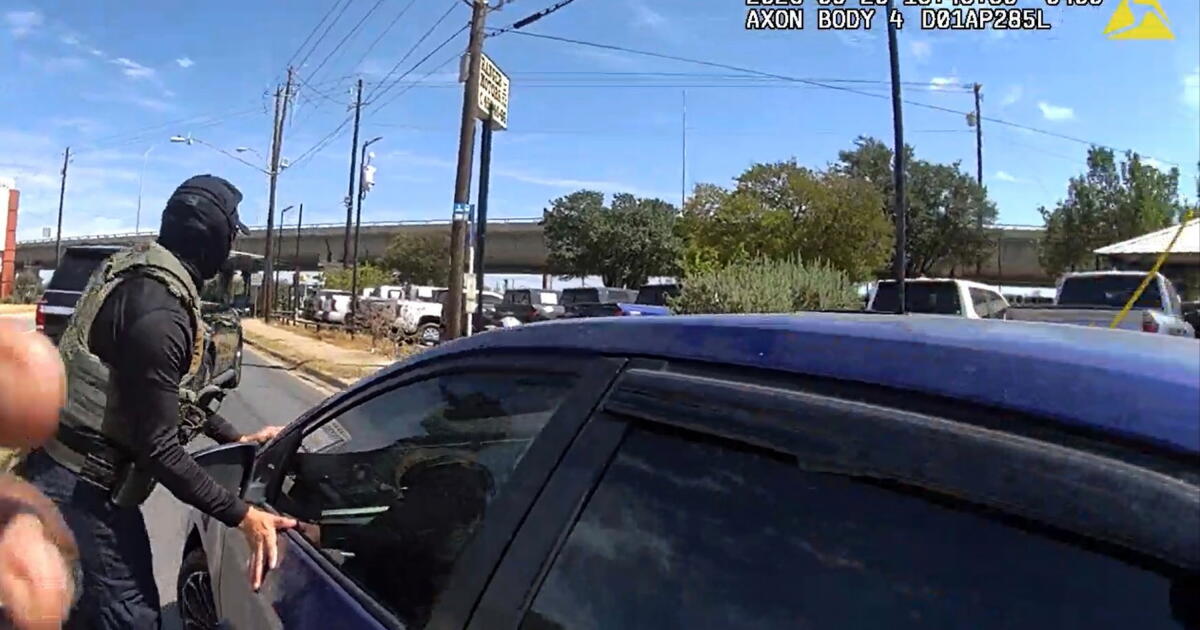
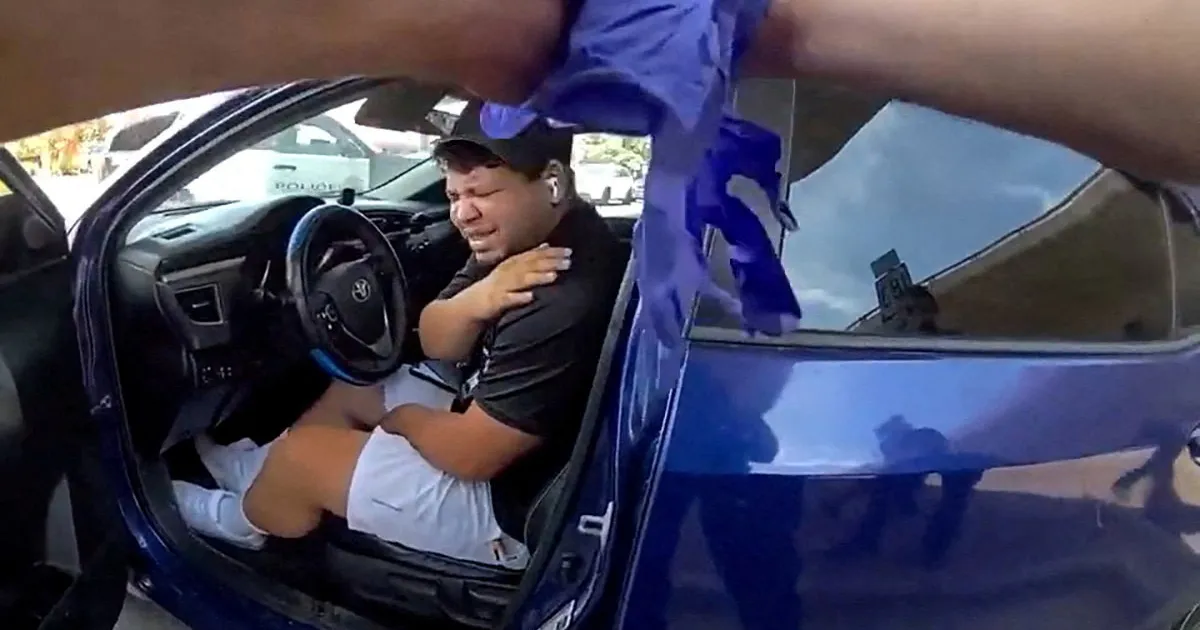
The Supreme Court refused Monday to block an excessive force lawsuit against a former Los Angeles Police Department officer who shot and killed a knife-wielding man whose speeding truck had slammed into several cars near downtown Los Angeles.

The court turned down an appeal petition from the Los Angeles city attorney’s office, over the objections of Justices Clarence Thomas and Samuel A. Alito Jr.

Litigation over the six-second shooting incident has extended over six years.

Federal judges in California agreed that Officer Toni McBride had reason to fire four shots at the suspect in April 2020 but not the two final shots that killed him.

Daniel Hernandez was alleged to be under the influence of methamphetamine when he got out of his truck and walked toward the officer. She repeatedly ordered him, “Drop the knife,” as he approached.

But the 9th Circuit Court of Appeals, by a 6-5 vote, ruled last year that a jury could decide the officer went too far when she fired two final shots after the suspect had fallen to the ground.

The majority reasoned that in the one-second pause between shots four and five, McBride “could have and should first reassessed the situation” and possibly concluded the suspect no longer posed a danger.

That ruling would have sent the case to a trial.

But the Los Angeles city’s attorney’s office appealed to the Supreme Court in October and urged the justices to review and reverse the 9th Circuit’s decision.

The city’s attorneys said the appeals court failed to consider the “totality of circumstances from the perspective of a reasonable officer on the scene” and its decision refused “to allow for reasonable mistakes in fast-moving, life-threatening encounters.”

UC Berkeley law dean Erwin Chemerinsky filed a response for the Hernandez family. He urged the court to stand aside and let a jury decide whether the officer’s actions were reasonable.

“The 9th Circuit simply held that it should be for the jury to resolve the factual dispute over what happened,” he said.

The justices had considered the appeal since late February before finally turning it down without comment on Monday.

The Supreme Court has repeatedly ruled police officers may be sued for unreasonable searches and seizures only if they are shown to have knowingly violated clearly established law.

However, this doctrine of “qualified immunity” has divided judges over whether a particular rule or limit has been clearly established.

The 9th Circuit majority said shooting a fallen suspect crosses the line.

“It has been clearly established for more than a decade that when an officer shoots and wounds a suspect, and he falls to the ground, the officer cannot continue to shoot him, absent some indication that he presents a continuing threat,” wrote Judge Jacqueline H. Nguyen.

“A fallen and injured suspect armed only with a bladed instrument does not present a continuing threat merely because he makes nonthreatening movements on the ground. … Under such circumstances, a jury could reasonably find that she employed constitutionally excessive force. If so, she is not entitled to qualified immunity,” she said.

The five dissenters said the officer made a reasonable split-second decision.

Judge Ryan Nelson said McBride “was justified in shooting Daniel Hernandez to alleviate the risk that he posed when he advanced toward her while armed and ignoring commands to stop. … She cannot be reasonably expected or required to reassess her shooting in a tight six second period during an intense and dangerous situation throughout which Hernandez was rising and never stopped moving.”

Judge Patrick Bumatay echoed this concern.

“Judges review police shootings only in hindsight. We review police tapes years after the fact. We get to rewind, pause, fast forward — analyzing the situation frame-by-frame. While the advent of police bodycam videos has been a welcome change, we can’t ignore that real life isn’t in slow motion,” he said.

Source link

Man falls to his death at concert at Madison Square Garden

A 51-year-old man fell to his death from an upper deck of Madison Square Garden during a rock concert Saturday night, police said.

Officers responding to a 911 call around 9:51 p.m. found the man unconscious and unresponsive with injuries indicating a fall from an “elevated position,” New York City police said. Police did not say how far the man fell, but said he was in Section 300. They declined to release his name.

The man was with his wife, according to police. He was taken to a hospital, where he was pronounced dead.

The rock band Goose was performing. In a statement on Facebook, the band said it was “deeply saddened and heartbroken to learn of the tragic event that occurred.”

Source link

Female Navy officers say they fear a career cap

After Defense Secretary Pete Hegseth cut nine Navy officers, including all the women, from a promotion list, several female officers say they see the unusual intervention as a sign that their careers now have a ceiling and worry for the future generation of female military leaders.

The Navy had selected 31 sailors to promote from the rank of captain to one-star admiral, but Hegseth recently intervened to strike nine people from the list, including three women and two Black men, according to a Defense official who spoke on condition of anonymity to discuss information not permitted to be released publicly.

As a result, the Navy is not promoting a single woman to the one-star admiral rank this year even though women make up about one-quarter of all Navy officers and nearly one-third of the sea service’s midgrade ranks, according to military data from 2024.

The Associated Press spoke with eight female Navy officers of varying ranks and time in service after Hegseth’s cuts, which were reported earlier by the New York Times, became public. They spoke on condition of anonymity out of fear of retribution from their superiors.

The more junior officers said they saw the development as a sign that their careers would become politicized if they rose too far in the ranks, and some said they felt they now had a limit on how far they could be promoted. Some said it made them feel less valued within the military and wondered whether that wasn’t part of the intent.

The Pentagon has not offered any rationale on why the women, or any of the other six people, were removed from the promotion list.

Sean Parnell, the Pentagon’s top spokesman, said on social media last week that “military promotions are given to those who have earned them” and that the Pentagon “will never consider the color of a service member’s skin or their gender as a factor in promotions.” The Pentagon did not immediately respond to a request seeking further comment.

The Navy’s process for choosing which officers to promote to the one-star rank has been relatively constant and transparent over the years. The service convenes a group of officers, called a promotion board, that examines the records of eligible officers and chooses those deemed to be the most qualified.

The board that selected the initial slate of 31 officers for promotion was directed by then-Navy Secretary John Phelan, an appointee of President Trump, to “recommend for promotion the best qualified officers within their respective competitive category.”

The order from Phelan, who abruptly departed his post in April, said the board should consider an officer’s performance, competence and character, among other traits, as part of those qualifications.

It also said that given China’s prominence in the Trump administration’s National Defense Strategy, “special consideration shall be given to officers who have excelled in their knowledge of the political military affairs and U.S. strategic interests in the Indo-Pacific region, and operational contingency planning for Indo-Pacific war plans.”

Hegseth has long argued, without offering evidence, that women in the military benefit from preferential treatment and are not suited for combat roles.

“For too long, we’ve promoted too many uniformed leaders for the wrong reasons based on their race, based on gender quotas, based on historic so-called firsts,” Hegseth told hundreds of military leaders in September.

The approach, he asserted, made the Pentagon “less capable and less lethal.”

‘A break from tradition’

Phelan’s order said the Navy cannot discriminate based on criteria such as race and sex, and it specifically noted that “this guidance shall not be interpreted as requiring or permitting preferential treatment of any officer or group of officers on the grounds of race, religion, color, sex.”

The full list of 31 people to be promoted was approved by Phelan, other Navy leaders and the chairman of the Joint Chiefs of Staff, Gen. Dan Caine, before it reached Hegseth, who chose to make the changes, the Defense official said.

While Hegseth is within his rights to intervene in the list, “it’s just not the norm” and is “a break from tradition,” said Katherine Kuzminski, a researcher specializing in military recruiting and retention at the Center for New American Security think tank. She said that promotions historically have been seen as “the services’ business.”

Kuzminski noted that “this is a decision that’s not being made by the Navy — it’s being made by the secretary of Defense,” and she said Hegseth’s growing interference in operational aspects of the military services such as promotions is creating “tension” about what “normal” will look like going forward.

Some of the more senior Navy officers who spoke with the AP expressed concerns about the message it sends to the next generation of young sailors.

In addition to pulling the recent promotions of three women to admiral, Hegseth shortly after he took office fired Adm. Lisa Franchetti, the service’s top officer and the first woman to hold the job. He never explained his rationale.

Since then, he also has fired two other female three-star admirals without explanation.

Some of the officers who spoke to the AP said that while they were encouraging female sailors to stick with the Navy, they acknowledged that message is coming at a difficult time.

Kuzminski said the rhetoric and actions surrounding women in the military “affects individual service member decision-making and it also affects family unit decision-making,” including whether people make a career of the military.

Kuzminski said that following the months-long hold on military promotions by Sen. Tommy Tuberville (R-Ala.) during the Biden administration, surveys showed that partisan politics spilling into the day-to-day lives of troops affected their decision-making.

One officer said this impact was not confined to women.

In conversations with other sailors in her unit, she said that male sailors were hesitant to deal with what appears to be a growing politicization of simply following the orders of previous administrations.

Toropin writes for the Associated Press.

Source link

CIA officer who had gold bars allegedly created a fake intelligence operation

David J. Rush, a former CIA officer who was arrested in May for stealing millions of dollars in gold bars and $2 million cash, allegedly set up a fake operation in order to convince a colleague to transfer the money to him. Photo by Chris Kleponis/UPI | License Photo

June 6 (UPI) — A former Central Intelligence Agency officer who was caught with $40 million in gold bars allegedly created a fake intelligence program in order to steal the money.

David J. Rush was arrested in May and charged with theft of public funds after he lied to the agency about his military history, education and pilot license, and was then accused of stealing the gold bars and $2 million in cash that was found in his home.

U.S. officials have now said that Rush created a fake intelligence operation, or “special access program,” related to the “continuity of government operations” that he used to convince another agent to transfer the money to his operation, The New York Times and The Washington Post reported.

“He made up a contract,” one of the officials told The Post.

Rush allegedly read in two CIA colleagues on the fraudulent operation, which he claimed was related to keeping the government running in the event of a catastrophic event, such as destructive weather or a military attack.

It is not clear how the former officer was able to create a secret program and obtain the funds without involving superiors in the agency, but he managed to convince one of the colleagues to purchase the gold and transfer it to him.

The fact that Rush managed to apply to and was hired by the CIA using false credentials has raised questions about the agency’s background checks and security when hiring, the Times and the Post reported.

Additionally, several former U.S. officials question how somebody could be hired and then assigned to a significantly sensitive intelligence-gathering program that is classified.

Rush was caught and charged after the agency conducted a review of expenses and could not locate the gold or cash he had requested.

President Donald Trump discusses renovations to the Lincoln Reflecting Pool and makes an announcement on coal in the Oval Office at the White House on Thursday. Photo by Samuel Corum/UPI | License Photo

Source link

ICE officer wanted for shooting a man during the Minneapolis crackdown is arrested in Texas

A federal immigration officer wanted for shooting a Venezuelan man during the Trump administration’s Minnesota crackdown was arrested Friday in Texas, authorities said.

Christian Castro, of the Immigration and Customs Enforcement agency, was taken into custody 11 days after Minneapolis prosecutors charged him with assault and falsely reporting a crime in the Jan. 14 nonfatal shooting of Julio Cesar Sosa-Celis.

Hennepin County, Minnesota prosecutors said the state’s Bureau of Criminal Apprehension located Castro, 52, in Texas and worked with agents from the Department of Homeland Security’s Inspector General’s Office and the Texas Rangers to arrest him.

“Today’s arrest is a critical step forward in our prosecution of Mr. Castro,” Hennepin County Attorney Mary Moriarty said.

Online court records do not list an attorney for Castro and it wasn’t immediately clear if he has one. Messages seeking comment were left with ICE, the Homeland Security Inspector General’s Office and the Texas Rangers.

Castro is the second federal agent to be charged over their conduct during the Minnesota crackdown, which was known as Operation Metro Surge. He is one of two agents that ICE Director Todd Lyons said lied about the circumstances of the incident.

Hennepin County attorney Mary Moriarty holds up a document containing charges

Hennepin County attorney Mary Moriarty holds up a document containing charges against ICE agent Christian Castro during a news conference at the Hennepin County Government Center in Minneapolis, on Monday, May 18, 2026.

(Renée Jones Schneider/Minnesota Star Tribune Via Associated Press)

According to prosecutors, Castro fired through a home’s front door and shot Sosa-Celis in the thigh after Castro and another officer chased a different man, Alfredo Alejandro Aljorna, to the Minneapolis apartment duplex where he and Sosa-Celis lived. Sosa-Celis and Aljorna were legally in the U.S., Moriarty said.

Federal authorities initially accused Sosa-Celis and Aljorna of beating an officer with a broom handle and a snow shovel. A federal judge later dismissed the charges, and ICE and the Justice Department opened an investigation into whether officers lied about what happened.

In a statement after the charges were announced, ICE said the U.S. attorney’s office was investigating statements made by officers, who could face disciplinary action including being fired and prosecuted. ICE called the Hennepin County attorney’s action “unlawful and nothing more than a political stunt.” DHS’s Inspector General’s Office, which Moriarty credited with assisting in the arrest, is separate from ICE and is meant to serve as a watchdog for DHS agencies, including ICE.

Minneapolis last month released video showing the moments before Sosa-Celis’s shooting, captured from a distance by a city-owned security camera.

The video appears to show a person standing with a snow shovel outside the house, near the street, then retreating toward the house and tossing the shovel into the yard. This happens as a person being chased by another person runs up from the street, falls on the sidewalk, gets up, and keeps heading toward the house.

The three appear to scuffle near the front steps for about 10 seconds. The exact moment when Sosa-Celis is shot isn’t clear. A car with flashing lights pulls up, and another person walks up.

The Trump administration sent thousands of officers to the Minneapolis and St. Paul area as part of President Trump’s national deportation campaign and considered Operation Metro Surge a success.

But tensions mounted during the weekslong campaign, and the shooting deaths of U.S. citizens Renee Good and Alex Pretti by federal officers sparked mass unrest and raised questions about officers’ conduct.

Minnesota leaders and the Trump administration have clashed over who has the authority to investigate and prosecute federal officers for on-duty conduct.

Moriarty’s office last month charged immigration agent Gregory Donnell Morgan Jr. with assault for allegedly pointing his gun at people in a car on a highway. He turned himself in last week and his lawyer disputes the charges.

The county is also investigating Good’s and Pretti’s killings and sued the Trump administration in March to gain access to evidence in those cases and the Sosa-Celis shooting.

Source link

To combat copper thefts, L.A. city agency seeks its own armed police

For thieves looking to strip Los Angeles for parts, copper has become a fast-moving currency.

The problem has become so persistent that the Los Angeles Department of Water and Power is now asking for its own armed police force to protect vulnerable utility equipment, street lighting and critical infrastructure, insisting that the department’s contracted and unarmed security guards aren’t cutting it.

“They lack the authority to detain or arrest suspects, intervene in crimes in progress, conduct searches, or carry firearms for enforcement purposes,” according to a May 21 report from the city agency. “Delays hinder timely intervention, reduce investigative effectiveness, and contribute to repeat victimization of LADWP facilities.”

Under DWP’s current “observe and report” security model, an officer who sees someone cutting a fence or stripping copper from a transformer has little authority apart from yelling a warning or making a 911 call, according to the department report.

The proposal asks for 20 to 50 sworn officers to start, hired over a five-year period, along with support staff. If approved, the force would give the agency’s officers the authority to carry a firearm, make arrests and investigate thefts. The plan was scheduled to be discussed Thursday by the City Council.

The push comes as citywide service requests for streetlight repairs have surged over the last several years.

Dark streetlights.

L.A.’s historic streetlights outside the Bureau of Street Lighting near Virgil Avenue and Santa Monica Boulevard.

(Jason Armond/Los Angeles Times)

The city logged 14,328 electronic streetlight service requests in 2018, according to data from the Bureau of Street Lighting. Requests have tripled since then, reaching an all-time high of 46,079 in 2024, the last full year of available data.

Mayor Karen Bass’ office said in March that copper thefts are a leading cause of streetlight outages. Repairs have been backlogged for months.

Prices for the metal are at an all-time high, driven by major supply disruptions in Indonesia and Chile, and soaring demand from artificial intelligence data centers and electric grid infrastructure. Thieves typically exchange the metal for cash at recycling centers, where it can fetch up to $5.30 per pound. The City Council last year approved a program offering up to $5,000 for information in metal and wire theft cases.

Theft losses alone exceed $1 million annually, according to DWP.

Establishing a new police force would require changing the city charter, meaning voters will have a say come the November midterm elections. Authorities will also need to obtain state legislative approval for the plan.

Officials said rolling out the police department would cost $9.7 million over three years, plus up to $6 million annually to pay for staffing. They maintain those costs are less than the $46 million combined DWP spends each year on private security contractors and unarmed staff security.

A metal pole and base, with an opening in the base.

On Hill Street in downtown L.A., streetlights have been targeted by thieves and vandals.

(Jason Armond/Los Angeles Times)

Any cost overflows would be paid for by DWP customers.

Timothy O’Connor, executive director for the Los Angeles Office of Public Accountability, a spending watchdog, said his office is not convinced that the agency could minimize long-term cost creep, or that the new force would offset enough costs to justify the program. The proposed force of a few dozen officers, he said, would be too small to get the job done.

“Theft losses at DWP are real and are increasing. However, eliminating these losses is not enough to offset the proposed costs,” he said. “Furthermore, DWP will be unable to fully eliminate theft given the diffuse nature of the DWP system.”

But O’Connor also said the department is faced with real security risks like those posed by drone attacks or terrorism threats, which he said “appear to justify the proposal at some level.”

In February, a man shot himself after he drove his car through the perimeter fence of a power substation while carrying explosives and several firearms. Dubbing the incident an attempted terrorist attack, officials said the episode could have caused catastrophic infrastructure damage.

David Levitus, executive director of the advocacy group LA Forward, said he was surprised to learn of the proposal so late in Los Angeles’ ongoing charter reform process, which his organization has monitored closely.

“The fact that this is being dumped in late May — what’s the rush?” Levitus said. “I think we really need to be wary of creating new police departments in general, but especially without a clear case and clear constraints and accountability mechanisms.”

Source link

What we know about the slain White House gunman

The 21-year-old man shot and killed after opening fire on U.S. Secret Service agents near the White House was a Maryland resident, according to online records.

Following Saturday’s shootout, the Associated Press identified the suspect as Nasire Best. According to virtual records, Best lived in the Prince George’s County suburb of Glenarden with his family.

The shooting occurred near a White House security checkpoint shortly after 6 p.m., according to a social media post from the Secret Service, which alleged that Best “pulled a weapon from his bag and began firing.”

Secret Service Uniformed Division officers returned fire, striking Best, who was taken to a hospital where he was pronounced dead a short time later, the post said. The Secret Service said no officers were injured, but a bystander was struck by gunfire and remained in serious but stable condition Sunday, according to the Associated Press.

The Secret Service said the bystander, who has not been identified, suffered a gunshot wound described as not life-threatening, the AP reported. It was not clear how the person was shot.

The Secret Service post also noted that President Trump was in the White House during the incident and was not harmed.

A person listed as having the same name as Best has three failure-to-pay rent cases for a dwelling in the Foundry by the Park Apartments in Dundalk, Md., from as recent as November. The Baltimore Sun could not confirm whether the cases are linked to the person killed Saturday.

The AP reported that Best was identified as the suspect by a law enforcement official who spoke on condition of anonymity due to not being authorized to discuss the investigation.

The AP noted that court documents indicated that Best was arrested in July 2025 after he attempted to enter a White House checkpoint without authorization. It wrote that the court records said Best did not heed officers’ commands to stop, “claimed he was Jesus Christ” and told officers he wanted to be arrested.

The court issued Best a “pretrial stay away order,” which typically requires defendants not to go near a person or area before a trail, the AP reported. In August, a bench warrant was issued against Best after a notice of “noncompliance.” He did not appear for a subsequent hearing, the AP reported.

The shooting remains under investigation, and additional information will be release as it becomes available, according to the Secret Service.

Saturday’s shooting was the third time in the last month that shots were fired near the president, including at the White House Correspondents’ Assn. dinner in late April and near the Washington Monument earlier this month.

Hubbard writes for the Baltimore Sun. This story was distributed by the Associated Press via Tribune News Service.

Source link

Secret Service shoots person near White House, bystander also shot

The U.S. Secret Service shot a person near the White House on Saturday, and a bystander also was shot, a law enforcement official said.

Both individuals were said to be in critical condition, according to the official, who spoke on condition of anonymity because they were not authorized to discuss the investigation.

Journalists working at the White House on Saturday reported hearing a series of gunshots and were told to seek shelter inside the press briefing room.

On X, the Secret Service said it was “aware of reports of shots fired near 17th Street and Pennsylvania Avenue NW” — one block from the White House — and was “working to corroborate the information with personnel on the ground.”

In a social media post, FBI Director Kash Patel said officers were responding to shots fired and said he would “update the public as we’re able.”

President Trump was inside the White House at the time.

Evidence of the shooting was visible on a sidewalk just outside the White House complex, where yellow crime scene tape snaked across the pavement and Secret Service officers placed dozens of orange evidence markers on the ground. Medical material, including what appeared to be purple surgical gloves and kits typically used by emergency medical personnel, were also seen.

In a post shared on X, Selina Wang, the senior White House correspondent for ABC News, shared video of the moment she said she heard what “sounded like dozens of gunshots” and ducked for cover. Writing that she had been performing an ordinary task that reporters at the White House do every day — filming themselves on a cellphone, for a social media post — Wang’s video shows her speaking for a few seconds about Trump’s statements earlier Saturday about a potential Iran deal.

As the sounds of gunfire are heard in the background, Wang’s eyes grow wider, and she ducks down in the media tent, which is among those situated in a line along the White House driveway where broadcasters film their reports. On X, Wang’s video had been shared thousands of times as of Saturday evening, and viewed at least 3 million times.

The Metropolitan Police Department said on its X account that the Secret Service was working the scene and cautioned people to avoid the area. The scene is near where a gunman ambushed two members of the West Virginia National Guard in November.

U.S. Army Spc. Sarah Beckstrom, 20, died from her wounds. Andrew Wolfe, then 24, was critically wounded. Rahmanullah Lakanwal has been charged in that incident.

The gunfire Saturday comes nearly a month after what law enforcement authorities said was an attempted assassination of the president on April 25 as he attended the annual White House Correspondents’ Assn. dinner at a Washington hotel. Cole Tomas Allen of Torrance recently pleaded not guilty to charges that he attempted to kill Trump and remains in federal custody.

Following that scare, Secret Service officers shot a suspect they said had fired at officers near the Washington Monument, also near the White House. Michael Marx, 45, of Midland, Texas, was charged in a complaint filed in U.S. District Court in connection with the May 4 shooting. A teenage bystander was wounded in that incident.

Superville and Durkin Richer write for the Associated Press. AP photojournalists Jose Luis Magana and Alex Brandon and writers Gary Fields, Meg Kinnard and Matthew Daly contributed to this report.
Source link

Officers who defended Capitol from rioters sue to block payouts from $1.8-billion ‘anti-weaponization’ fund

Two police officers who helped defend the U.S. Capitol from an attack by a mob of President Trump’s supporters sued on Wednesday to block anyone — including Jan. 6, 2021, rioters — from receiving payouts from a new $1.776-billion settlement fund for people who claim to be victims of politically motivated prosecutions.

The officers’ attorneys filed the federal lawsuit a day after acting Atty. Gen. Todd Blanche defended the fund’s creation during a congressional hearing. Blanche, a personal attorney for Trump before joining the Justice Department, wouldn’t rule out the possibility that rioters who assaulted police on Jan. 6 would be eligible for fund payouts.

The lawsuit claims the government’s “Anti-Weaponization Fund” is an illegal slush fund that Trump will use to “finance the insurrectionists and paramilitary groups that commit violence in his name.” It describes the fund’s creation as “the most brazen act of presidential corruption this century” and calls for dissolving it.

“No statute authorizes its creation, the settlement on which it is premised is a corrupt sham, and its design violates the Constitution and federal law,” the suit says.

The fund stems from a settlement of Trump’s $10-billion lawsuit against the IRS over the leak of his tax returns. It’s designed to compensate those who believe they were mistreated by prior administrations’ Justice Department. Decisions on payouts will be made by a five-member commission appointed by the attorney general.

More than 100 police officers were injured during the Capitol riot. Nearly 1,600 people were charged with Jan. 6-related crimes, but Trump used his pardon powers to erase all of those cases in a sweeping act of clemency last year.

The plaintiffs suing Trump over the fund are Metropolitan Police Department officer Daniel Hodges and former U.S. Capitol Police officer Harry Dunn, who is running in Maryland for a seat in Congress. Hodges and Dunn both testified before Congress about their harrowing experiences on Jan. 6. Videos captured a rioter ripping a mask off Hodges as he was pinned against a door during a fight for control of a tunnel entrance.

The officers claim the fund “encourages those who enacted violence in the President’s name to continue to do so.”

“Dunn and Hodges already face credible threats of death and violence on regular basis; the Fund substantially increases the danger,” the suit alleges.

On Tuesday, members of Congress peppered Blanche with questions about the fund. He described it as “unusual” but not unprecedented. Blanche failed to acknowledge that Trump’s Justice Department has investigated and prosecuted some of the Republican president’s political enemies, including former FBI Director James Comey and New York Atty. Gen. Letitia James.

Blanche and Treasury Secretary Scott Bessent also are named as defendants in the officers’ lawsuit. Spokespeople for the Justice and Treasury departments didn’t immediately respond to requests for comment on the suit.

One of the attorneys for the officers is Brendan Ballou, a former Justice Department prosecutor who handled Jan. 6 cases.

Kunzelman writes for the Associated Press.

Source link

Minnesota county charges ICE officer in nonfatal shooting during Trump’s immigration crackdown

A Minnesota prosecutor on Monday announced charges against an Immigration and Customs Enforcement officer in the nonfatal shooting of a Venezuelan man during the Trump administration’s crackdown in the state.

The officer, Christian Castro, is charged with four counts of second-degree assault and one count of falsely reporting a crime in the Jan. 14 shooting of Julio Cesar Sosa-Celis, Hennepin County Atty. Mary Moriarty said at a news conference. A warrant was issued for his arrest.

“Mr. Castro is an ICE agent, but his federal badge does not make him immune from state charges for his criminal conduct in Minnesota,” Moriarty said, adding that Sosa-Celis never posed a threat. “There is no such thing as absolute immunity for federal officers who commit crimes in this state or any other.”

A federal officer shot Sosa-Celis in the thigh after he and another officer chased a different man to the apartment duplex where the man and Sosa-Celis lived. Moriarty said both Sosa-Celis and the other man were legally in the U.S.

Federal authorities initially accused Sosa-Celis and Alfredo Alejandro Aljorna of beating an officer with a broom handle and a snow shovel during the incident. But a federal judge later dismissed the charges, and federal officials opened an investigation into whether two immigration officers lied under oath about what happened.

Minneapolis last month released video of the incident captured from a distance by a city-owned security camera.

Department of Homeland Security and Justice Department officials didn’t immediately respond to emails seeking comment. Homeland Security previously said that lying under oath is a “serious federal offense” and that making false statements could result in an officer being fired or prosecuted.

The administration sent thousands of officers to the Minneapolis and St. Paul area as part of President Trump’s national deportation campaign. Homeland Security, which oversees ICE, called Operation Metro Surge its largest immigration enforcement operation ever and deemed it a success.

But tensions mounted during the weekslong campaign, and the shooting deaths of U.S. citizens Renee Good and Alex Pretti by federal officers provoked mass unrest and questions about officers’ conduct.

Hennepin County, which includes Minneapolis, has been conducting investigations into multiple incidents and filed charges last month against an ICE agent for alleged actions while on duty.

Minnesota leaders and the Trump administration have since clashed over which has the authority to investigate and prosecute officers for conduct while on duty. The Trump administration has suggested that Minnesota officials don’t have jurisdiction.

State officials have said they don’t trust the federal government to investigate itself or hold officers accountable.

“There’s no modern precedent for what happened to the people here in Minnesota,” Moriarty said Monday. “So it requires a lot of us to dig in and look at ways to hold people accountable that we probably never thought we would be looking at in our careers.”

Hennepin County continues to investigate Good’s and Pretti’s killings and sued the administration in March over access to evidence in the two cases, as well as in the case involving Sosa-Celis. Although Moriarty hasn’t charged anyone in either killing, she has said she’s confident her office’s investigations will bring transparency, even if not criminal prosecution.

Fingerhut and Sullivan write for the Associated Press. Fingerhut reported from Des Moines, Iowa.

Source link

Secret Service says suspect fired weapon on National Mall, bystander injured

The Secret Service says a suspect who opened fire Monday on the National Mall did so after being confronted by officers.

Secret Service Deputy Director Matt Quinn said officers returned fire. A bystander was struck by the suspect, Quinn said.

Quinn said the motorcade of Vice President JD Vance transited through the area not long before the shooting, but there was no indication it was the target.

The incident happened Monday afternoon around 15th Street and Independence Avenue near the Washington Monument.

The Secret Service encouraged people to avoid the area as emergency crews responded to the shooting not far from the White House, where President Trump was holding a small-business event.

The White House was briefly locked down as authorities investigated the incident. The Secret Service ushered journalists who were outside into the briefing room, and Trump continued his event without interruption.

Vito Maggiolo, spokesman for the D.C. Fire and EMS Department, said emergency units took an adult male to a hospital and were treating what appeared to be a teenage male for minor injuries. He referred other questions to the police department.

The incident drew a large police presence, coming just over a week after a gunman tried to storm the White House Correspondents’ Assn. dinner with guns and knives. Cole Tomas Allen has been charged in that incident, in which a Secret Service officer was wounded.

Source link

Investigators say Trump assassination suspect shot officer at press gala | Donald Trump News

Secret Service agent at White House correspondents’ dinner was ‘definitively’ hit by suspect’s bullet, prosecutor says.

Authorities in the United States have said that the suspect accused of attempting to kill President Donald Trump was the one who shot a Secret Service agent at the White House correspondents’ dinner last month.

Officials initially did not provide details on how the agent – who was wearing a bulletproof vest – was injured. On Sunday, US Attorney Jeanine Pirro told CNN that investigators have confirmed that the agent was shot by the alleged gunman, Cole Tomas Allen.

Recommended Stories

list of 3 itemsend of list

“It is definitively his bullet. He hit at that Secret Service agent. He had every intention to kill him and anyone who got in his way, on his way to killing the president of the United States,” Pirro said.

“This was a premeditated, violent act, calculated to take down the president, and anyone who was in the line of fire.”

She added that a pellet that came from the suspect’s shotgun was “intertwined with the fiber” of the agent’s protective vest.

The determination could lead to additional legal charges against the 31-year-old suspect. It also rules out speculation that the agent may have been struck by so-called “friendly fire”.

The Justice Department announced three charges against Allen last week – attempting to assassinate Trump, the transportation of a firearm across states with intent to commit a felony and the discharge of a firearm during a crime of violence.

A sentence of life in prison faces anyone convicted of attempted assassination.

Last week, Acting Attorney General Todd Blanche said Allen had travelled via train from his home near Los Angeles to Chicago and then to Washington, DC.

He arrived in the US capital on April 24, the day before the dinner at the Washington Hilton hotel, and checked in.

According to Blanche, during the dinner, Allen approached a security checkpoint on the terrace of the hotel, one level above the ballroom where Trump was.

“He ran through the magnetometer holding a long gun. As he did so, US Secret Service personnel assigned to the checkpoint heard a loud gunshot,” Blanche said.

“One Secret Service officer was shot in the chest, but was wearing a ballistic vest that worked. This heroic officer, who was hit, fired five times at Allen, who was not shot, but fell to the ground and was promptly arrested.”

Officials have said Allen was carrying a shotgun, a semiautomatic pistol and three knives.

The shooting, considered to be the third assassination attempt against Trump since 2024, has shaken US politics. The White House has accused the US president’s Democratic rivals of inspiring political violence with their verbal attacks on the administration.

But Trump himself is known for personal attacks against opponents, and critics have accused him of using the shooting to censor his rivals.

Source link

Cole Tomas Allen case reveals Secret Service failures at D.C. gala

According to Acting Atty. Gen. Todd Blanche and other top administration officials, the U.S. Secret Service did a fine job protecting President Trump and Cabinet members from the gunman who breached the White House Correspondents’ Assn. dinner Saturday.

“That horrible act was stopped because of the courage and professionalism of law enforcement — the officers who responded without hesitation and did their jobs as they were trained to do,” Blanche said Monday.

However, according to a detailed accounting filed Wednesday by federal prosecutors in the criminal case against suspect Cole Tomas Allen, the performance of the nation’s preeminent protection agency was marred by inattentiveness and misfires and saved by “extraordinary good fortune” and the gunman falling to the ground.

“The defendant, armed with a 12-gauge shotgun, a .38 caliber pistol, two knives, four daggers, and enough ammunition to take dozens of lives, was apprehended by [Secret Service] officers mere feet away from the ballroom where his primary target was located, along with other members of the Cabinet,” prosecutors wrote Wednesday, in a filing arguing for Allen to be held in detention pending trial on one charge of trying to kill the president and two firearms charges.

Contradicting a prior claim by Blanche that officers had “promptly tackled and detained” Allen, prosecutors wrote that the 31-year-old tutor from Torrance simply “fell to the ground” after blowing past a team of agents just two open flights of stairs from the ballroom.

They wrote that one officer fired at Allen five times, but never hit him.

The same officer saw Allen fire his shotgun “in the direction of the stairs leading down to the ballroom,” prosecutors wrote, and officers later discovered “one spent cartridge in the barrel and eight unfired cartridges in the magazine tube.”

Prosecutors said nothing about the Secret Service officer who Blanche said was shot in his ballistic vest during the incident — adding to speculation that the officer may have been shot not by Allen, but by a fellow officer, or not at all.

Agency critiqued before

In all, the court filing brought further into focus a chaotic Secret Service response that appeared flawed from the start, including in a video Trump posted shortly after the incident in which agents appeared to be idling around an unobstructed entrance when Allen ran past them.

It added to concerns that law enforcement, security experts and members of Congress had raised about the performance of an agency that has been repeatedly called on to improve after previous attempts on Trump’s life. At a 2024 campaign rally in Butler, Pa., a gunman fired a bullet that grazed Trump’s ear, and that same year, another assailant prepared to shoot him from the unsecured perimeter of a Florida golf course.

Robert D’Amico, a former FBI deputy chief of operations for hostage rescue teams who is now a security consultant, said the security failures he saw in the Secret Service’s preparation for Saturday’s dinner — including its failure to set up basic barriers to prevent people from sprinting into the secured area — were stunning, especially given the past threats and the fact the nation is at war with Iran.

“It’s for a person like Trump, who’s had two assassination attempts before and is at war with Iran, which has terrorist training and proxies up, and you still don’t have the basics?” D’Amico said. “It’s unfathomable.”

Other concerns have been voiced by members of Congress, including Republicans.

The House Oversight Committee has requested a briefing from the Secret Service, and Sen. Josh Hawley (R-Mo.) has called for a hearing before the Senate Homeland Security and Governmental Affairs Committee, which also investigated the Butler incident.

In a letter urging the hearing, Hawley said the latest incident “raises questions about presidential security arrangements, potential resource needs, and the degree to which reforms previously proposed by Congress have been adopted.”

House Speaker Mike Johnson (R-La.) told Fox News that from “a layman’s perspective,” event security “looked a little lax in terms of getting into the building,” and that it “doesn’t sound like it was sufficient.”

Sean M. Curran, director of the Secret Service, has been on Capitol Hill in recent days briefing lawmakers.

He told CBS News that agents did a “great job,” but also that the incident remains under review. White House Press Secretary Karoline Leavitt has said that White House Chief of Staff Susie Wiles would be leading discussions on potential updates to Secret Service plans for securing the president.

Fear of graver threats

Blanche has argued that proof of the Secret Service’s effectiveness at the press gala was in the result: Allen was stopped, Trump and other officials were unharmed and no one was killed, despite Allen’s alleged intent.

However, the concerns being raised have to do with the vulnerabilities that were exposed as much as those that were exploited.

Because the dinner was not designated a major “national special security event” — such as a political convention — there were no trained counterassault agents on standby to prevent a breach or to take down a person with a weapon, officials have said.

Law enforcement experts said that was clearly a mistake given so many top officials — Trump, Johnson, Vice President JD Vance, Secretary of State Marco Rubio, Treasury Secretary Scott Bessent and Defense Secretary Pete Hegseth, among others — were in the room.

Such a gathering could have been targeted by foreign adversaries or others with far more experience, less regard for human life and much greater firepower than Allen, experts said.

“Most of my military friends are all saying the same thing,” said D’Amico, who is also a former infantry platoon commander in the U.S. Marines. “If you had had a team of three or four [gunmen], they would have gotten to [Trump].’”

In the initial criminal complaint against Allen, prosecutors included the text of an email Allen sent to family just as he was preparing to rush the security perimeter, in which he allegedly wrote that he had chosen to use buckshot in order to “minimize casualties” and prevent bystanders from being wounded by more powerful bullets penetrating walls.

He also allegedly wrote that he was willing to “go through most everyone” at the event to get to top administration officials, but that guests and hotel staff were “not targets at all.”

In Wednesday’s filing, prosecutors describe Allen’s actions as “premeditated, violent, and calculated to cause death,” and say he was “laden with weapons” as he breached security. But none of those weapons included assault-style rifles that can fire multiple bullets rapidly and have been used to kill civilians in mass shootings across the country for years.

The filing described Allen — a Caltech graduate and high school tutor — not as some trained tactical expert, but as an ideologue who spent part of his Amtrak journey from California to Washington waxing poetic about the landscape around him, describing Pennsylvania’s woods as “vast fairy lands filled with tiny trickling creeks in spring.”

Could have been worse

D’Amico said he and other Marines learned early on in Iraq that entrances to secured locations have to be designed in a “serpentine” fashion, forcing anyone approaching to move more slowly through the area and giving security officers more time to assess their intentions. And at an event the size of the correspondents’ dinner, with so many top officials gathered in a public hotel, you would want to make entrances “even more difficult.”

And yet no barriers seemed to be in place at the event, he said — something anyone trained more than Allen could have capitalized on.

“If they just had come through in a team of three or four who were coordinated and trained, there absolutely would have been penetration into the ballroom,” D’Amico said. “It would have been a gunfight.”

Allen himself questioned the security at the event, according to court records, allegedly writing that he had walked into the Washington Hilton with multiple weapons and no one considered “the possibility that I could be a threat.”

He wrote that if he “was an Iranian agent, instead of an American citizen,” he “could have brought a damn Ma Deuce in here and no one would have noticed” — referring to a powerful machine gun.

“It is fortunate he was only armed with what he had,” said Ed Obayashi, a California law enforcement expert on use of force.

Source link

Darrell Sheets dead: ‘Storage Wars’ star was 67

Storage Wars” star Darrell Sheets was found dead by police on Wednesday in Lake Havasu City, Ariz. He was 67.

According to Variety, which obtained a report from the Lake Havasu City Police Department, Sheets died from what appeared to be a self-inflicted gunshot wound. The statement said that on Wednesday around 2 a.m., officers were dispatched to Sheets’ home on Chandler Drive after reports of a deceased individual.

“Upon arrival, officers located a male subject who suffered from what appeared to be a self-inflicted gunshot wound to the head. The male was pronounced deceased on scene and the Lake Havasu City Police Department’s Criminal Investigations Unit was notified and responded to the scene to assume the investigation,” the statement read.

“The body was ultimately turned over to the Mohave County Medical Examiner’s office for further investigation,” the release continued.

Police said that they identified the man as Sheets and that his family had been notified. “This incident remains under active investigation, and additional information will be released as it becomes available.”

Sheets appeared across 15 seasons of the popular A&E reality show “Storage Wars” from 2010 to 2023. His son, Brandon Sheets, was also a cast member, and the father-son duo was often considered the heart of the show. Darrell would use his not-so-stealthy approach when bidding on storage lockers that he was willing to bet contained what he would describe as “wow factor” treasures.

“I’m a buyer by trade. I love buying storage sheds. It’s my addiction,” he said on the series. “I’m basically known for taking the good stuff and just getting the heck out of here.”

According to Sheets’ cast bio, the antiques enthusiast loved to brag about “four Picassos and the world’s most lucrative comic book collection” that he scored through storage auctions. He told The Times in 2015 that he once invested in a locker and discovered pieces of original artwork by Frank Gutierrez that he said appraised for about $300,000, making for the biggest take in the TV show’s then-five-year history.

Rene Nezhoda, another “Storage Wars” cast member who was often considered Sheets’ rival due to their onscreen antics, posted on Instagram after news of Sheets’ death broke and called out cyberbullies.

“Unfortunately, Darrell Sheets took his own life,” Nezhoda said. “I know a lot of you guys think we hated each other because we competed a lot on the show, and you know, we had our moments. We had our run-ins, but that’s because we were both competitors, right?

“Deep down, me and Darrell were friends. We talked every now and then. He is a very hard worker that cared more than anyone I’ve probably ever met about their family, about his son, about [his granddaughter] Zoie.”

Nezhoda said that Sheets had someone “really, really tormenting” him on social media.

The “Storage Wars” alum then addressed cyberbullies for their treatment of public figures, saying, “Just because you watch us on television doesn’t mean you know us. You never know what demons somebody faces.”


Source link