Fifa is set to propose a $3.4bn (£2.6bn) increase in the amount of money it hands out for football development across the world.
World football’s governing body wants to release the money from its reserves in a move which BBC Sport has been told would double the level of planned distribution funding for 2027-2030.
The proposal will be made at a meeting of Fifa’s council on Thursday and comes at a time when the organisation is under pressure following president Gianni Infantino’s aborted Fifa Forward Enterprise (FFE) plan.
Infantino wanted to sell stakes in the World Cup and other competitions to private investors but faced huge criticism for the proposal, with Uefa, Concacaf and the Asian Football Confederation questioning his position.
In a letter then sent to Fifa’s six continental confederations, Infantino – who will be standing for re-election for a fourth time in March 2027 – said he would support “the greatest level of additional funding that can responsibly be delivered”.
Fifa will now offer extra money from its reserves in addition to the current $2.7bn budgeted to be paid to all 211 member associations, the confederations, regional associations and certain non-Fifa affiliated associations.
The breakdown is as follows:
• $25m (£19m) per member association
• $99m (£75m) for each of the six confederations
• $8.25m (£6.3m) for each of the 13 zonal/regional associations
• $1.1m (£836,000) for 100 member associations for travel and equipment solidarity
The terms of the distribution would be as follows:
• One third would be allocated to women’s and youth football development
• One third would be allocated to infrastructure (of which there shall be equal access to women’s and youth football)
• One third would be allocated to projects
The plan, including the eligibility, application, approval, disbursement, control and audit requirements, will be finalised by the Fifa council at its next meeting in December 2026.
It will all be subject to approval by the 77th Fifa congress in March 2027.
More reports are emerging that Israeli PM Benjamin Netanyahu rejected a Hamas proposal to release all civilian captives taken on October 7, 2023. Netanyahu’s actions have become a key topic less than a month before national elections.
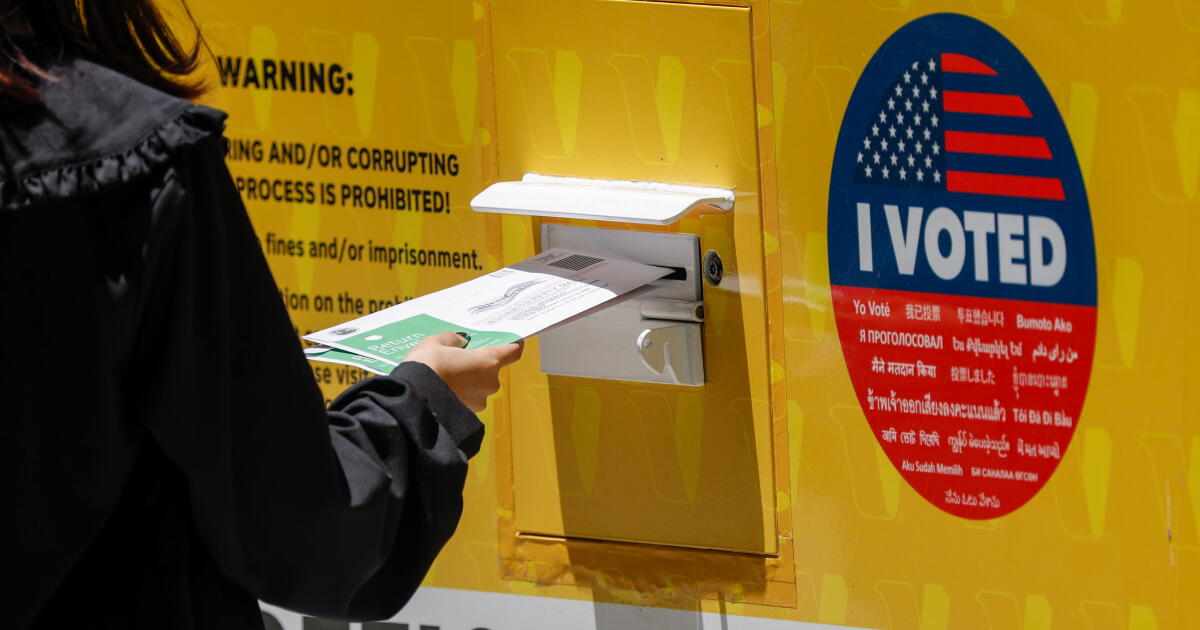
Federal investigators have sent Los Angeles County elections officials at least five grand jury subpoenas for individual voter records as part of a criminal investigation into illegal voting, according to partially redacted records reviewed by The Times.
The subpoenas — released in response to a public records request — appear related to a nationwide effort by the Trump administration to identify noncitizens who have illegally cast ballots in U.S. elections.
The subpoenas were issued in the U.S. District Court for the Central District of California. They were sent to L.A. County Registrar-Recorder/County Clerk Dean Logan’s office at the request of prosecutors in the office of First Assistant U.S. Atty. Bill Essayli.
“The enclosed subpoena has been issued in connection with an official criminal investigation being conducted by the Department of Homeland Security, Homeland Security Investigations,” Assistant. U.S. Atty. Michael Wheat — based out of the district’s Orange County office — wrote in a letter accompanying a Sept. 10 subpoena.
Wheat wrote that a custodian of records from Logan’s office must either appear before the grand jury to present the records or deliver the materials to a special agent from Homeland Security Investigations.
Four of the subpoenas — one issued on July 13 and three on Sept. 10 — request “any and all original and non-redacted voter records” from Jan. 1, 2020, to the present for a list of individual voters stretching across two pages. The lists were redacted by Los Angeles County officials, and it is unclear how many individuals each list contained.
Each of those subpoenas notes that records to be produced include information on individual voters, such as their “registration file” and “addresses listed, history and method of voting, [and] any and all attestation regarding citizenship status.”
A fifth subpoena, issued July 31, appears to request similar information for a single voter, and notes that the voter’s “ballot content or vote selections” should not be included.
Ciaran McEvoy, a spokesman for Essayli’s office, declined to comment on the investigations Monday.
The Times first reported the existence of the subpoenas, but not details from the records themselves, last week, after Logan confirmed that his office was complying with the federal inquiry despite having concerns that investigators may be using incorrect or outdated information to produce their lists of voters to investigate.
“We’re responding appropriately as directed through a subpoena, but that doesn’t afford the dialogue for us to get the background on what they’re looking for and how they came up with the names that they did,” Logan said. “There’s really no information being provided to us on that.”
President Trump has alleged for years that illegal voting by noncitizens is widespread, though experts say the problem — which they acknowledge occurs — is exceedingly rare. Homeland Security officials have been leading a campaign in recent months to identify such fraud nationwide, and the subpoenas received by L.A. County appear to match others received by elections officials elsewhere in the country.
Essayli — a Trump loyalist who has not been confirmed to lead the Los Angeles prosecutor’s office by the U.S. Senate and whose de facto leadership has been contested in court — has been vocal about his office’s pursuit of voter fraud, including by noncitizens.
His office has announced two voter fraud cases in recent weeks, including one involving the arrest of 30-year-old Honduran national on two felony charges of falsely claiming U.S. citizenship and fraudulently registering to vote. That man, Darwin Jonathan Rivera-Flores, has pleaded not guilty and is out on bond pending trial.
Rivera-Flores and his attorney declined to comment.
The Justice Department also recently announced it had charged 16 noncitizens in six other states with illegal voting and other election-related crimes.
Homeland Security Secretary Markwayne Mullin publicly claimed in July — without providing evidence — that there may be more than 190,000 such voters on California rolls, a claim California officials dismissed as baseless.
Three of the five subpoenas received by Logan’s office ask that the voter information be shared with Al Rossi, the acting assistant head of Homeland Security Investigations in Los Angeles.
Reached by phone, Rossi referred questions to an agency spokesperson, who did not respond to a request for comment.
Wheat had asked that the subpoenas be kept secret, so as not to impede an open investigation. Logan’s office released the records in accordance with California public records law, but redacted the names of voters on the grounds that doing so “protects those individuals from undue attention, harassment, intimidation, or possible harm” and “protects the integrity” of the investigation.
The U.S. Supreme Court on Friday upheld Trump’s expanded use of government data to search for noncitizens who are registered to vote. A lower court order had blocked use of the data over concerns — shared by the Supreme Court’s liberal wing — that the data are error-prone.
Voting rights experts have expressed concern that misuse of the data could lead to legitimate voters being purged from rolls.
States across the country, including California, have successfully fought off lawsuits from the Trump administration demanding the states’ complete voter rolls.
It is unclear why a subpoena for a single voter’s information would come between subpoenas for information on longer lists of voters. But it lines up with the case against Rivera-Flores.
In an affidavit filed with a criminal complaint against Rivera-Flores, Special Agent Christopher Kuzma — the same agent listed on the July 31 subpoena requesting a single voter’s information — said he received a series of texts he believed were from Rivera-Flores, who had previously been issued a misdemeanor citation on suspicion of disrupting immigration law enforcement operations at the federal building in Camarillo.
One text sent in April 2026 stated, “Your not the good guy I can’t wait until the mid terms you dont have qualified immunity then we can start and indict all you guys one bye one.”
Kuzma said in his affidavit that he took the message to mean Rivera-Flores “has both an interest in the voting process and an intent to participate in the election process.”
According to the affidavit, Kuzma said he conducted several record checks through public databases, including on the California secretary of state’s website, which “disclosed an online voter registration record” for a “Darwin Rivera” at Rivera-Flores’ address.
In July 2026, Kuzma said in the affidavit, he reviewed records from California Secretary of State Shirley Weber’s office for “Darwin J Rivera,” which showed the applicant had checked a box stating he was a U.S. citizen.
Kuzma’s affidavit said in August 2026 he received certified voter registration records from Los Angeles County.
The spokesman for the U.S. attorney’s office did not respond to a question about whether Kuzma’s July 31 subpoena was specific to Rivera-Flores, but the office has previously said Wheat is prosecuting the case.
When Rivera-Flores’ arrest was announced, Essayli said it was “the first of many to come.”
Iran’s foreign minister says his visit to the UN General Assembly last week was mainly to outline Tehran’s position on regional conflicts and the critical security situation in the Strait of Hormuz.
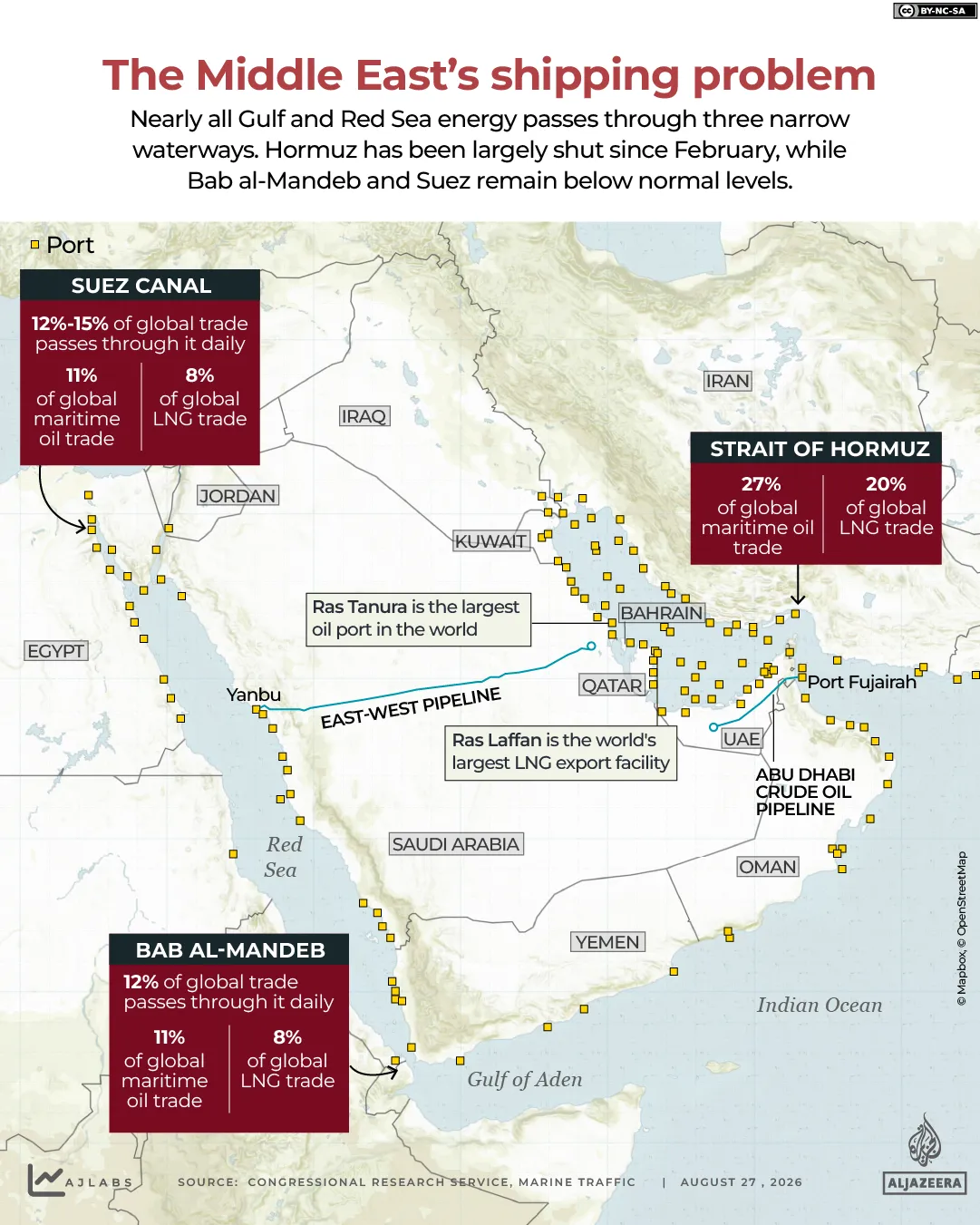
The Strait of Hormuz remains the most perilous choke point on the global map as Iran continues to disrupt traffic by attacking vessels. A recent proposal by the Islamic Republic to open the waterway within seven days raised hopes that the situation could go back to normal. United States President Donald Trump, however, rejected the offer.
To understand the strategic calculus behind his high-stakes decision, one must look beyond the immediate tactical noise and peer into the deeper logic of deterrence.
On its surface, the rejection of a temporary truce in the world’s most vital energy corridor appears to be a reckless gamble – a provocation inviting the very conflagration the West seeks to avoid. But viewed through the lens of cold realism, the rejection was not only a calculated necessity; it was the right decision.
The Iranian regime’s proposal was a classic exercise in asymmetric diplomacy. It offered a brief window of stability, a transactional pause, in exchange for what would have amounted to a de facto relaxation of American pressure. To accept such terms would have meant embracing the delusional belief that a terrorist power can be bribed into good behaviour by accepting its terms of engagement.
Had Washington accepted, it would have validated Iran’s self-assumed right to turn the spigot of global commerce on and off at will. By flatly rejecting the offer, Trump signalled that freedom of navigation is not a chip to be bartered in a week-long bazaar, but an absolute, non-negotiable prerequisite of international order.
The timing of this gambit – on the eve of the critical midterm elections – has naturally drawn the ire of the domestic political class. Critics argue that risking an energy crisis and a subsequent spike in oil prices weeks before Americans head to the ballot box is an act of political self-immolation. This view, while superficially plausible, misunderstands both the nature of the electorate and the psychology of our adversaries.
The Iranians chose this moment to put forward their proposal precisely because of the midterm elections. They are sophisticated observers of American domestic politics. They calculated that an administration facing an electoral test would be paralysed by the fear of rising fuel prices and would eagerly grasp at any diplomatic lifeline, however flimsy, to keep the peace until November.
Had Trump capitulated to save Republicans a few points at the polls, he would have handed Iran a profound psychological victory. He would have demonstrated that American foreign policy is subservient to the domestic election calendar – a vulnerability that every autocracy from Moscow to Beijing would immediately exploit.
By taking the gamble before the midterm elections, Trump has turned the tables. He has demonstrated that his administration is willing to absorb short-term political pain in pursuit of long-term strategic clarity. This is the essence of credible deterrence.
Deterrence is not merely a function of military hardware; it is a function of perceived will. When an adversary believes you are too weak, too compromised, or too worried about the next election cycle to defend your core interests, deterrence fails. By rejecting the seven-day proposal, the Trump administration proved it could not be blackmailed by the electoral calendar.
Trump’s decision reflects a sophisticated understanding of the regime in Tehran. The Islamic Republic is currently facing an acute internal economic crisis, a direct consequence of the sustained American maximum-pressure campaign.
The seven-day proposal was not a gesture of Iranian confidence; it was a sign of desperation disguised as a diplomatic overture. It was an attempt to buy breathing room, fragment the expanding international coalition against Tehran and project an image of being in control to its own restive population.
To grant Iran that reprieve would have been to throw a lifeline to an antagonist regime on the ropes. Clearly, this offer was only made because US strategy is working and Iran’s economy is cratering.
History teaches us that truces with terrorist regimes are rarely precursors to permanent peace; they are merely opportunities for the aggressor to rearm, recalibrate and choose the next moment of confrontation on more favourable terms. A short-term guarantee of open shipping lanes implied that any day, the threat could return, magnified by the legitimacy Washington would have afforded to Iran’s leverage.
The critics who cry havoc at this decision are the heirs of the foreign policy establishment that spent decades managing decline through endless, inconclusive and failed negotiations. They prefer the comfortable fiction of a temporary deal to the hard reality of a sustained geopolitical contest.
President Trump’s gamble is risky, yes. The potential for miscalculation in the narrow waters of the Gulf is always present. But the risk of inaction, or of a pliant accommodation, is far greater.
By holding the line, the administration has reaffirmed a foundational principle of US global stewardship: the US will not permit rogue states to hold the global economy hostage.
The rejection of the Iranian proposal is the correct path because it chooses clarity of American resolve over partisan political convenience. It signals to the regime in Iran that its leverage is artificial and its economic isolation is permanent unless its behaviour changes.
This November, American voters will decide the composition of the US Congress based on a multitude of domestic and foreign policy factors. But on the global stage, Trump remains steadfast by demonstrating that principle trumps political expediency.
The views expressed in this article are the author’s own and do not necessarily reflect Al Jazeera’s editorial stance.
Donald Trump has rejected Iran’s latest proposal to end the war and reopen the Strait of Hormuz as experts say the United States president believes Washington has more to gain by waiting than by accepting Tehran’s terms at this moment.
“I reject their proposal,” Trump told reporters on Saturday, arguing that Iran wants an agreement because it is “losing so badly”.
Recommended Stories
list of 3 itemsend of list
“They want to make a deal, and I think that’s fine,” Trump said. “I’d like to make a deal too. But that deal would not be acceptable.”
On Sunday, Iranian Foreign Minister Abbas Araghchi said Tehran had seen the initial reaction from Trump to its proposal but had yet to receive a response through mediators. In the latest diplomatic efforts, Qatar has played a role in mediating talks between Iran and the US on the sidelines of the United Nations General Assembly meeting in New York.
Iran’s seven-day proposal included Washington lifting its naval blockade of Iranian ports, waiving sanctions on Iranian oil sales, releasing an estimated $12bn in frozen Iranian assets and observing a wider regional ceasefire, including in Lebanon and Yemen.
Iran would then reopen the Strait of Hormuz and begin negotiations with Washington on a final agreement.
The latest proposals are similar to the June memorandum of understanding (MoU) the two countries signed. But the MoU collapsed last month due to differences on the terms of the deal, which resulted in an escalation in attacks, particularly in and around the Strait of Hormuz, which essentially remains under Iranian blockade.
According to experts, Trump’s rejection suggested that while both sides continue to publicly leave the door open for diplomacy, they remain far apart over who should make the first concessions.
“Trump’s calculation looks fairly straightforward. He believes the combination of the naval blockade and economic isolation is finally squeezing Iran hard enough that Tehran’s latest proposal is evidence of weakness rather than an offer Washington needs to seize,” Andreas Krieg, associate professor at King’s College London, told Al Jazeera.
His public argument that Iran is “losing badly” is important because it suggests he thinks time is improving the US bargaining position, Krieg said.
(Al Jazeera)
Why does Trump think he can wait?
A key part of Trump’s calculation appears to be a belief that the economic pressure on Iran has not yet run its course.
The Trump administration has escalated economic pressure on Tehran, tightening its naval blockade while imposing sanctions targeting Iranian oil revenues and threatening secondary sanctions against countries doing business with Tehran.
Last week, the US imposed aviation sanctions on Iran, disrupting flights. This came weeks after US Treasury Secretary Scott Bessent announced an economic pressure campaign against Iran, promising to target Tehran’s financial interests across the world.
Richard Weitz, a senior nonresident associate fellow at the NATO Defence College, told Al Jazeera that the White House may believe it can “wait a bit and get better terms”.
There is also concern in Washington about Iran’s proposed sequencing, he said.
Therefore, Weitz said Washington may be calculating that “economic pressure over time will induce the Iranian government to make more concessions”.
“This is what occurred arguably a decade ago, leading to the 2015 Iran nuclear deal as the Iranian government decided it [the US] needed to end the economic sanctions in return for making concessions on its nuclear programme,” he added.
It is, therefore, possible that “we could see the same kind of trade-off in the coming months”.
Iran could make Trump ‘pay’
However, waiting for a deal also carries considerable political risk for the US president, experts said, because his Republican Party could lose November’s midterm elections.
A late August Reuters/Ipsos poll suggested 63 percent of Americans opposed the US-Israel war on Iran while 31 percent supported it. Rising fuel and transportation costs could also feed into broader cost-of-living concerns before the elections.
The problem for Trump is that time does not only increase pressure on Iran, Krieg said. “The gamble is that time cuts both ways,” he noted.
With the midterms approaching, Trump does not want to appear to lift the blockade, waive oil sanctions and release Iranian assets simply to regain access to a waterway that Iran itself disrupted, Krieg said.
“But every additional week also means elevated energy prices, continued military exposure and mounting pressure on Gulf partners.”
The essential closure of the Strait of Hormuz has disrupted oil and gas flows from the Gulf nations, which depend on energy exports to finance their budgets.
Mohamad Elmasry, a professor at the Doha Institute for Graduate Studies, told Al Jazeera that Iran’s proposal could be viewed as “kind of throwing a bone to Trump” by offering a potential route towards lower oil and gas prices before the vote.
However, Iran may decide “to make Trump pay for declining the proposal and the increased economic pressure the country is under”, he told Al Jazeera.
“They may decide that this is the time to escalate … just as the midterms are approaching.”
The Republican Party is not doing well in the polls, and a number of its candidates are “distancing themselves” from Trump, he noted. Polls indicated that Republicans could lose their slim majorities in the US Congress.
It’s not just the Iranians under severe economic pressure because of the US naval blockade and ongoing sanctions, “it’s also the Trump administration,” Elmasry said.
Trump’s wait for more Iranian concessions could ‘backfire’
Trump “wants Tehran to reopen Hormuz without Washington paying the full economic and political price Iran is currently demanding”, Krieg said.
“The danger is that he is confusing Iranian pain with Iranian willingness to capitulate. Those are not the same thing.”
Iran is undoubtedly under pressure. Krieg said the sanctions and blockade are “biting”, which is precisely why Tehran needs an agreement.
But additional pressure does not necessarily produce additional concessions.
Iran could instead increase the costs of the conflict for its adversaries, Krieg said, including through the Strait of Hormuz, regional infrastructure and potentially Bab al-Mandeb, another strait between Yemen and the Horn of Africa.
In recent weeks, the strategic weight of Bab al-Mandeb has increased dramatically after the Iran-aligned Houthis expanded their control of Yemen’s Red Sea coastline.
This advance in effect has handed the Houthis unrestricted access to the narrow waterway, a worrying development for global shipping given the group’s track record of targeting vessels, including Israeli-linked ships, in solidarity with Palestinians in Gaza.
The Houthis have already declared a naval blockade on Saudi ships in the Red Sea, which Riyadh began to use as an alternative shipping route to Hormuz for its oil exports.
“So this can backfire,” Krieg warned. “Trump thinks Iran’s clock is running faster than America’s. Tehran thinks the opposite: that Qatar, Saudi Arabia, the UAE, global energy markets and ultimately Trump himself have a lower tolerance for prolonged disruption than Iran has for economic punishment.”
Ross Harrison, a senior fellow at the Middle East Institute, similarly told Al Jazeera that Tehran may now be “less worried about overplaying their hand than they are underplaying their hand”.
According to Harrison, Tehran now sees the risk of escalation as less costly than agreeing to something prematurely or appearing willing to compromise, particularly after Washington’s response to the proposal.
In an interview with Al Jazeera that aired on Saturday, Iranian President Masoud Pezeshkian said his country no longer trusts negotiations with Washington after attacks occurred during previous rounds of talks and were followed by sanctions.
“We have no trust in the American side and do not know on what basis an understanding can be reached with it,” Pezeshkian said.
Tehran betting ‘heavily’ on time
US-based analyst Harrison noted that Tehran was probably “not surprised at all” by Trump’s rejection and viewed the offer partly as a way to demonstrate to Iranians and the American public that it remained willing to negotiate.
Experts said Tehran understands the US president wants an exit he can present as a victory.
“Iran is betting heavily on time. … Its strategy is to keep the pressure high enough that he eventually comes back to negotiations while making that exit progressively more expensive,” Krieg said.
“The Iranian calculation is essentially: Do not give Trump the deal cheaply when he may need it more badly several weeks or months from now.”
Harrison said the Iranian offer was a “show of goodwill” intended to demonstrate Iran’s willingness to negotiate to both its domestic audience and the American public.
According to Krieg, “protraction” of the conflict was the “most likely outcome”.
“Both sides need a deal, but both currently think waiting will improve the deal they eventually get,” he added.
US President Donald Trump has rejected Iran’s latest proposal to reopen the Strait of Hormuz to shipping. Speaking to reporters at the White House, Trump insisted Tehran was attempting to strike a deal because “the money isn’t coming in” under an American naval blockade.
Arsenal interested in struggling Endrick, Liverpool insist on keeping Wirtz, and Barcelona may launch a huge offer for Haaland.
Arsenal are keen on a January move for Brazil and Real Madrid forward Endrick. Concerns are growing over the 20-year-old’s game time in the Spanish capital. (Teamtalk), external
Liverpool are expecting offers for German midfielder Florian Wirtz in January. They have no intention to let the 23-year-old leave. (Football Insider), external
Barcelona are still interested in Manchester City forward Erling Haaland and could launch a huge offer for the 26-year-old Norwegian next year. (Football Insider), external
Juventus and Atletico Madrid are monitoring Arsenal‘s 24-year-old winger Noni Madueke before a potential move in the January transfer window. (Football London), external
Paris St-Germain forwards Ousmane Dembele, 29, Khvicha Kvaratskhelia, 25, and Desire Doue, 21, are all in negotiations to sign new contracts in the French capital. (L’Equipe – in French), external
Juventus could move for a free agent goalkeeper after losing Polish loan signing Kamil Grabara, 27, to a torn ACL, suffered in training on Saturday. (Calciomercato – in Italian), external
Passengers on United Airlines’ (UAL) domestic flights will be able to watch live professional and college football games on their Starlink-enabled seatback screen thanks to an agreement with Dish Network (ECHO).
The carrier will offer live broadcasts from ABC, CBS, NBC, FOX, FS1, ESPN, ESPN2, NFL Network, and