
offenders

Ban on sex offenders running for office fails at California senate

California Democratic senators failed to advance a proposal Tuesday that would have barred registered sex offenders from running for office.

State Sen. Scott Wiener (D-San Francisco) voted against Assembly Bill 2753, while fellow Sens. Tom Umberg (D-Santa Ana) and Ben Allen (D-Santa Monica) abstained from a vote that ultimately failed 2-1-2 in the Senate Elections and Constitutional Committee.

The committee’s lone Republican, Steve Choi (R-Irvine), and Sen. Sabrina Cervantes (D-Riverside) voted in favor of the bill, which is likely dead because it failed to get support from a majority of the five-member panel.

AB 2753 could be reviewed in a floor session Thursday, but staff from the office of Assemblywoman Esmeralda Soria (D-Fresno), who authored the bill, are conceding that’s unlikely.

The defeat comes on the heels of unanimous support, including a 60-0 vote in favor on the Assembly Floor on May 7.

“I am deeply disappointed and disheartened after the Senate Elections Committee has failed to advance AB 2753, a bill that would have prohibited any registered sex offender in the State of California from running for local or state public office,” Soria said in a statement.

The bill’s wording said the legislation would “prohibit a person from being a candidate for, or elected to, any state or local elective office if the person has ever been required to register as a sex offender.”

Inquiries to the offices of Sens. Wiener, Umberg and Allen were not immediately returned.

Sex offenses in California are broken up into three tiers. First-tier offenses call for a minimum of 10 years placement on the sex offender registry. Second-tier offenses call for a minimum of 20 years and third tier crimes could result in a lifetime on the registry.

The types of offenses for each tier vary. Tier 1 offenses range from indecent exposure to misdemeanor child pornography and sexual battery. Tier 2 includes incest and penetration with a foreign object, and Tier 3 includes felony possession of child pornography, rape and pimping and pandering of a minor.

Wiener asked for amendments to the bill during the bill’s review and in the committee meeting, including that the lifetime ban only be applied to Tier 3 members.

He pointed to committee analysis of the bill that could affect so-called “Romeo and Juliet” couples — those close in age, for instance with one partner being 19 and the other being 17. If the younger partner sent sexually explicit digital content to the older partner (a misdemeanor), this law could ban the older partner from public office for life.

There were also concerns listed in the analysis that the registry, which dates back to 1947, could include LGBTQ+ offenders from decades ago who were convicted of offenses that are no longer crimes.

Wiener mentioned in the committee meeting civil rights strategist and fighter Bayard Rustin being placed on the California sex offender’s registry list after being arrested by Pasadena Police for having consensual sex with another man in 1953.

“Without the amendment contained in the analysis, I will be voting ‘no’ on this bill and recommending that the committee vote ‘no,’” Wiener said at the committee hearing.

He added that the sex offender list was “not punishment,” but instead “a tool for law enforcement to monitor who may potentially cause a risk.”

While Soria agreed to one bill amendment, she did not accept other provisions, including the elimination of lifetime bans on Tier 1 or 2 offenses.

“The bottom line is this: I was not willing to make additional amendments to this bill,” she said. “I made a promise to my community that I would do everything in my power to ensure they would never have to go through something like this again. Accepting additional amendments to this bill would have jeopardized that promise.”

Some of the impetus behind her bill revolved around the June 2 Fresno City Council election. Registered sex offender Rene Campos fell short of the necessary votes in his bid to run for Central Valley Council.

He was charged with possession of child pornography in 2018 and hosted his campaign kickoff in front of an elementary school.

Nelson Esparza, Fresno City Council President, spoke at the Senate Elections and Constitutional Committee meeting in favor of AB 2753.

“My office received dozens of calls from our residents asking how this could be allowed,” Esparza said of Campos’ candidacy. “AB 2753 closes this loophole.”

It’s unclear if this bill will be reintroduced next year at least at the Assembly level, as Soria is running for the state senate in November.
Source link

Release of sex offenders leads to clash over parole board confirmations

The Democratic-led state Senate has voted to reconfirm five commissioners to the California Board of Parole Hearings, a move that drew outcry from Republicans who argued the board recently made several egregious decisions.

“The current board is clearly not doing a good job protecting children and should be replaced,” said Sen. Steven Choi (R-Irvine), speaking June 1 on the Senate floor.

The parole board consists of 21 commissioners who are appointed by the governor and confirmed by the Senate for three-year terms. Five current commissioners — William Muniz, Michael Ruff, Rosalind Sargent-Burns, Mary Thornton and Jack Weiss — were reconfirmed June 1 in votes that fell along party lines.

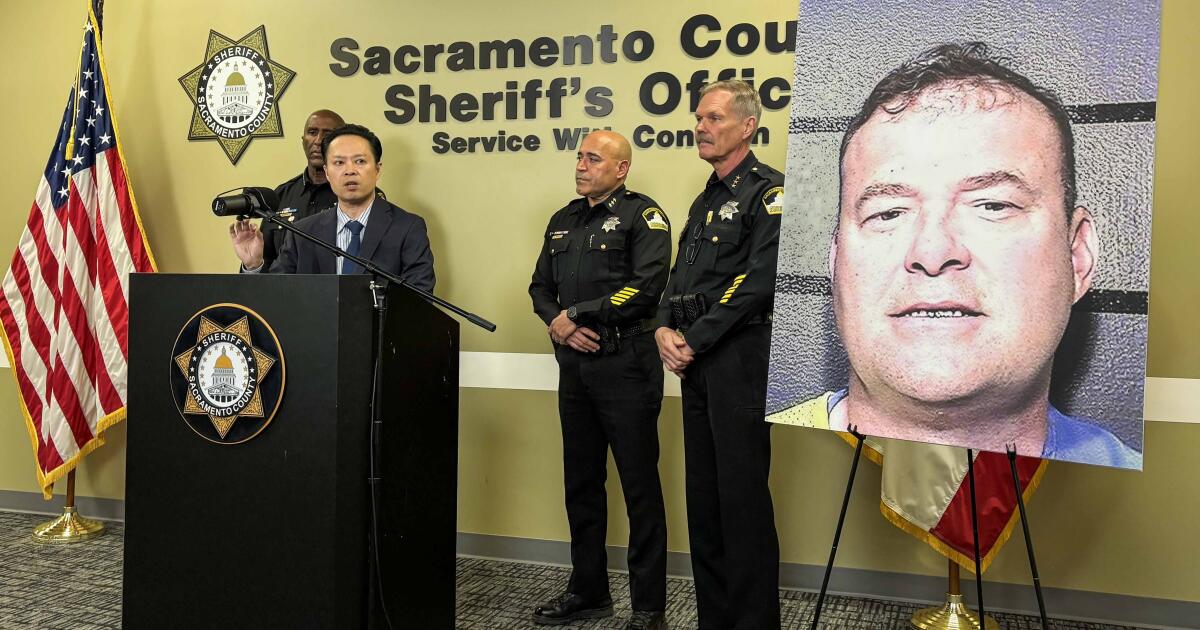
Senate Republicans spoke out from the floor, expressing anger over the board’s recent decisions to grant parole to serial sex offenders David Allen Funston, Gregory Lee Vogelsang and Roberto Antonio Detrinidad. (The vote of individual commissioners was not made public.)

Democrats defended the board, saying it was following a landmark 2008 ruling from the California Supreme Court that declared denying parole must be supported by evidence that the person poses a current risk.

“Parole decisions must be based on current safety risks not on the seriousness of the original offense,” said Sen. Eloise Gómez Reyes (D-Colton). “Evidence based risk assessment exists for this exact purpose.”

California’s elderly parole program allows inmates 50 and older to qualify for a parole suitability hearing if they have been incarcerated for at least 20 continuous years. The individual can then be released if commissioners determine they do not pose a public safety risk.

Republicans, however, questioned the board’s judgment.

Sen. Shannon Grove (R-Bakersfield) said a transcript of Funston’s initial parole hearing showed he acknowledged still being attracted to children and said he would splash cold water on his face to deter his urges.

Funston used candy and toys to lure children playing outside in the Sacramento suburbs into his vehicle in 1995 and 1996, prosecutors said. He was convicted of 16 counts of kidnapping and child molestation.

“There is not a single person in this chamber who would want this man to be alone with their children or grandchildren or any of our constituents,” Grove said. “But this board voted to let him out of prison.”

Sen. Rosilicie Ochoa Bogh (R-Yucaipa) criticized the board for not releasing the specific voting records of individual commissioners. She said she had asked the five commissioners to reveal their records, which California allows but does not require.

“They all refused,” Bogh said. “If you are not willing to publicly own how you voted to release a serial child molester or repeat rapist, you will not receive my vote.”

After the votes, Senate Minority Leader Brian W. Jones (R-Santee) criticized Democrats in a statement for “rubber-stamping” the reappointments and said the board had lost all credibility with the public.

A spokesperson for the board said commissioners follow California law and prioritize public safety.

“The Board’s standard is stringent, involves numerous steps and use of validated risk assessment tools, including evaluation by forensic psychologists,” spokesperson Emily Humpal wrote in an email. “Over 97% of parolees successfully transition into their communities without a new conviction within three years.”

Some prosecutors and victims recently expressed outrage over the board’s decisions. One victim, who was kidnapped by Funston at age 4 and sexually assaulted with a knife to her throat, previously told The Times that he should remain in prison.

Jones and Sen. Roger Niello (R-Fair Oaks) this year introduced Senate Bill 1278, which would have blocked those convicted of “rape, sodomy, lewd and lascivious acts, and habitual sex offenders” from the elderly parole program. Some offenders already are barred, including those convicted of first-degree murder of a law enforcement officer.

The bill ultimately died in the Senate Public Safety Committee in April.

Other legislation from Assemblymember Stephanie Nguyen (D-Elk Grove) would raise the minimum parole age for sex offenders convicted of rape, sodomy, or the aggravated sexual assault of a child to 65. Assembly Bill 2727 is advancing through the Legislature with bipartisan support.

If signed into law, the measure would amend legislation from former Assemblymember Phil Ting (D-San Francisco), which was signed into law in 2020 and lowered the minimum age requirement for elderly parole consideration from 60 to 50 years old.

Source link