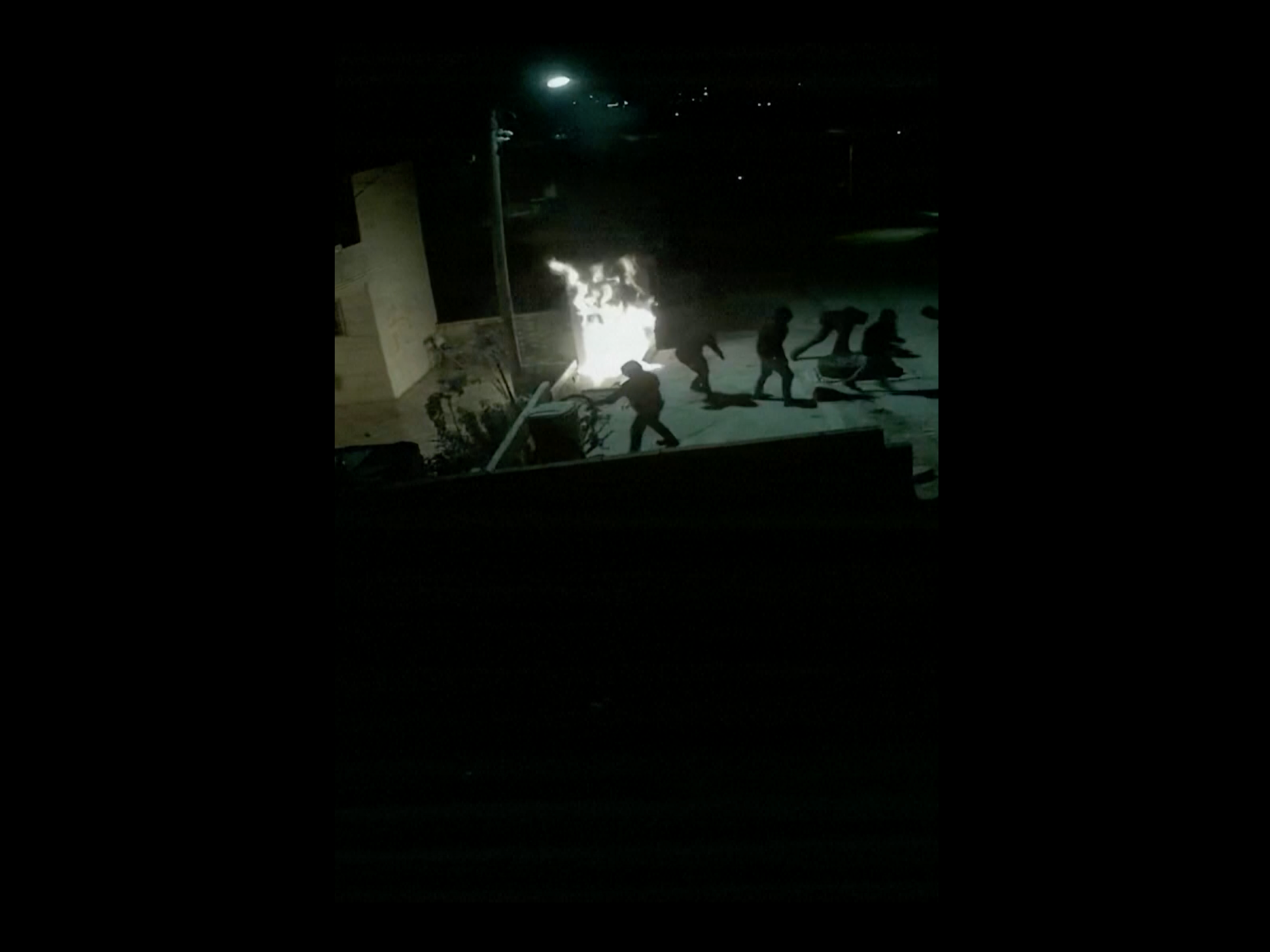
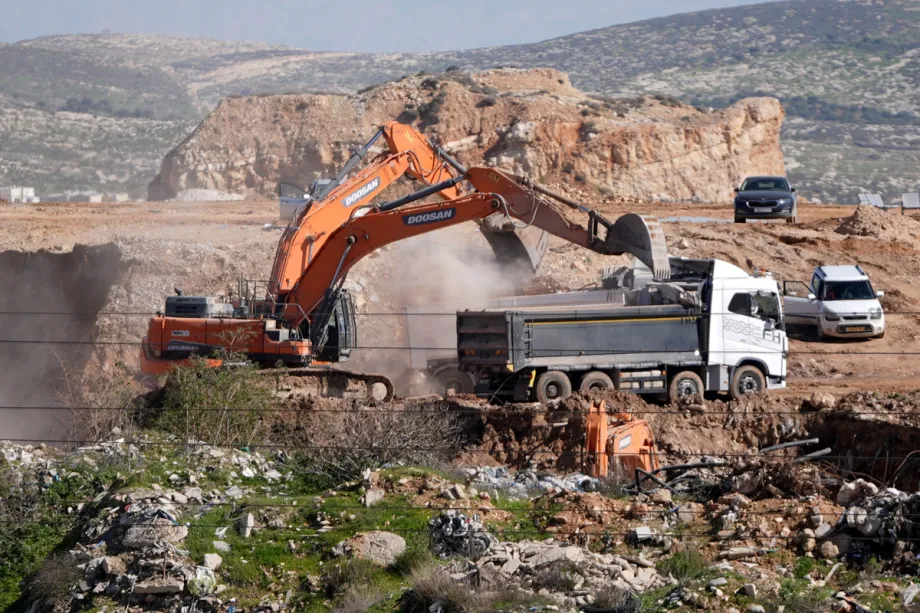
Videos show Israeli settlers attacking the Palestinian village of al Tuwani in Masafer Yatta, south of Hebron, setting homes, vehicles and a mosque on fire. According to Palestinian media, Israeli forces provided protection for the settlers during the assault.
The move lands as EU foreign ministers remain deadlocked over a bloc-wide ban on illegal settlement trade
Published On 18 Jul 202618 Jul 2026
Belgium’s federal government has approved a ban on importing goods produced in Israeli settlements in the occupied Palestinian territories.
It is the latest among a small but fast-growing group of European countries acting alone on a question still unresolved at EU level.
Recommended Stories
list of 3 itemsend of list
The decision came at the government’s final cabinet meeting before the summer break, the Belgian News Agency (Belga) reported on Saturday.
The move fulfils a commitment made last year over the scale of Israel’s bombardment of Gaza and its death toll.
Earlier this week, Belgian foreign minister Maxime Prevot pressed EU counterparts at a closed-doors meeting in Brussels for a bloc-wide ban, accusing the European Commission of offering ministers “a bone to chew on” rather than a genuine plan to act.
Belgium’s ban arrives as both a domestic pledge fulfilled and a signal to the EU leadership.
The case for tighter controls was strengthened this year by a Global Echo Litigation Center investigation, which examined more than 30,000 export documents covering thousands of Israeli agricultural shipments to Europe.
Roughly one in six contained goods grown in settlements in the occupied West Bank or Golan Heights, rising to nearly one in five among shipments bound for EU countries.
Investigators found exporters routinely obscured the true origin of the produce, labelling it Israeli, blending it with genuine Israeli stock, or shipping it under addresses unconnected to where it was grown.
Similar moves by others in Europe
The EU is Israel’s largest trading partner, buying close to 30 percent of its exports and accounting for nearly a third of its total trade in goods, worth 43 billion euros ($49bn) last year.
Belgium joins a list of states no longer waiting for EU-wide action.
Spain enshrined a ban in law last September, the Netherlands agreed to one in May and Slovenia adopted a similar measure earlier this year, though it has dramatically shifted its approach to Israel following the election of a more pro-Israel government.
Ireland’s parliament passed its own prohibition on July 15 , days before Belgium’s move.
The wave of national bans follows efforts earlier this month by the EU to coordinate action among its member states.
The European Commission reportedly circulated a paper to EU capitals setting out three options: an import ban, a licensing scheme, or high tariffs on settlement goods. However no decision was reached.
Five former European officials, including ex-Italian prime minister Enrico Letta and former German Vice Chancellor Sigmar Gabriel, published a joint call for the EU to adopt a bloc-wide ban.
They argued that national bans like Belgium’s carry limited weight alone, since goods cleared through customs in one member state can move freely across the rest of the bloc.
A ban, they wrote, would not amount to a sanction against Israel but would simply bring EU trade policy into line with restrictions it has applied before, including on conflict minerals and goods made with forced labour.
Several EU countries, including Spain, Italy and Germany, have also acted to restrict arms exports to Israel over the war in Gaza.
Pressure is growing on the EU to sanction Israel for its expansion of illegal settlements and violence against Palestinians in the Occupied West Bank.
Published On 17 Jul 202617 Jul 2026
The European Union has renewed its call on Israel to halt the expansion of settlements in the occupied West Bank, warning that continued construction and other unilateral measures threaten the viability of a future Palestinian state.
An EU spokesperson on Friday urged Israel to stop the legalisation of settlement outposts, land appropriation, demolitions, forced evictions of Palestinians, and other actions that “undermine the viability of the two-state solution”.
Recommended Stories
list of 3 itemsend of list
The statement came days after Israel’s security cabinet approved the allocation of 1.3 billion shekels ($427.8m) to establish 34 new settlements in the occupied West Bank.
The funding package marks one of Israel’s largest recent investments in settlement expansion and has drawn criticism from Palestinian officials and international partners.
The United Nations, the International Court of Justice and most countries consider Israeli settlements in territory occupied by Israel since 1967 to be illegal under international law. Israel rejects that interpretation.
The EU has long maintained that it does not recognise Israel’s sovereignty over the territories it occupied in 1967. However, the 27-member bloc remains divided over whether to take stronger measures against Israel’s settlement policy.
EU foreign ministers this week failed to reach a consensus on proposals that could restrict trade with settlements in the occupied West Bank, despite growing calls from several member states for tougher action.
The renewed diplomatic pressure comes amid continuing violence in the occupied West Bank, where Palestinians, including children, have been injured in separate incidents involving Israeli settlers and Israeli forces.
On Friday, two Palestinian children were taken to hospital after suffering head and facial injuries when Israeli settlers allegedly hurled stones at their family’s vehicle in the Wadi al-Sha’er area, according to the Palestinian news agency Wafa.
In another incident, a 16-year-old Palestinian boy was shot by Israeli forces in the occupied West Bank. He remains in hospital.
“Everybody agrees that the situation in the West Bank is really intolerable,” the EU’s foreign policy chief, Kaja Kallas, said ahead of talks among EU foreign ministers in Brussels on Monday.
“What is happening in the West Bank is actually making it more and more impossible that the two-state solution ever can come into effect,” she added.
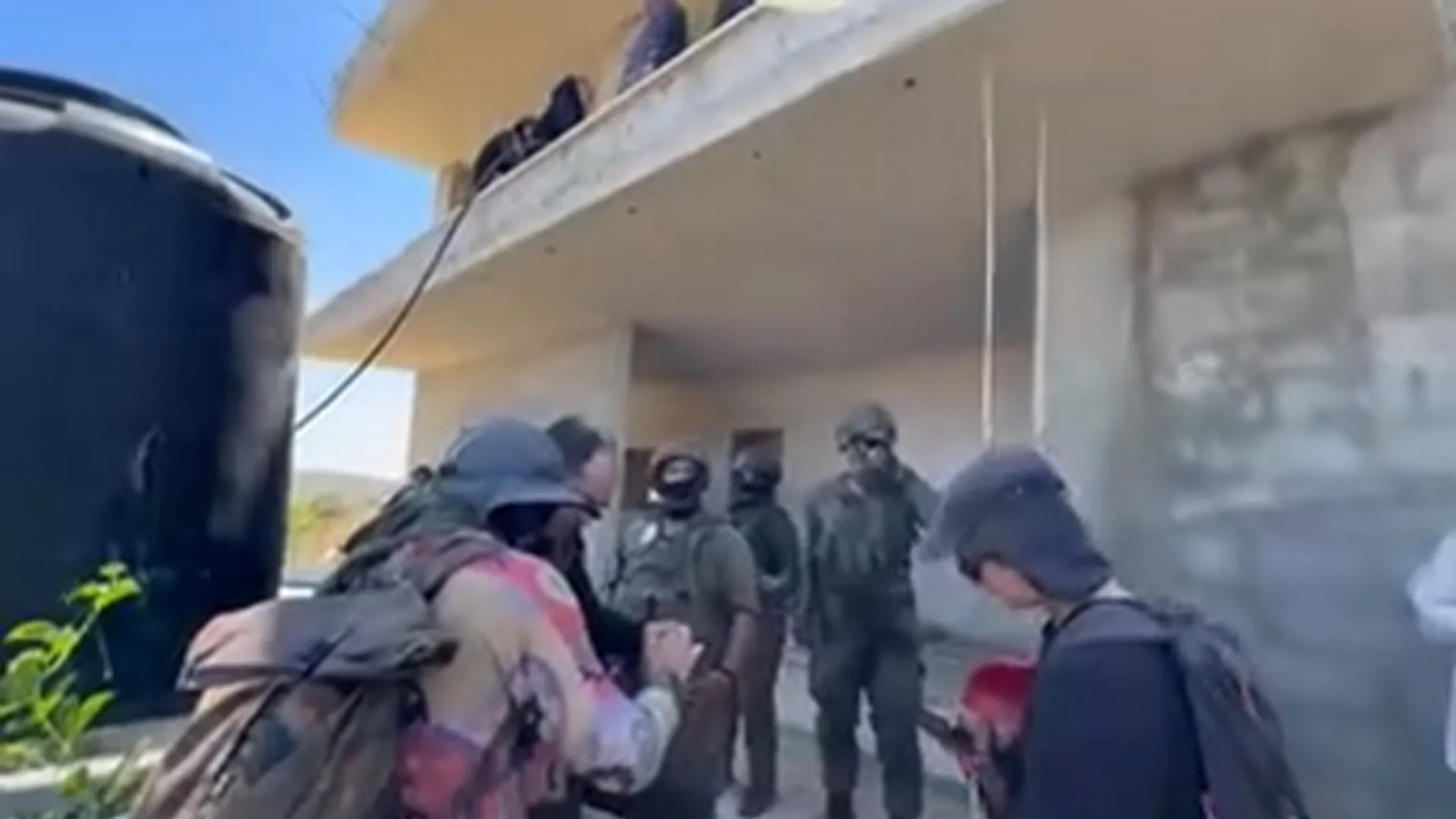
Videos show Israeli settlers, protected by Israeli soldiers, trying to seize a house under construction on the outskirts of the town of Qabalan, just south of Nablus, in the occupied West Bank.
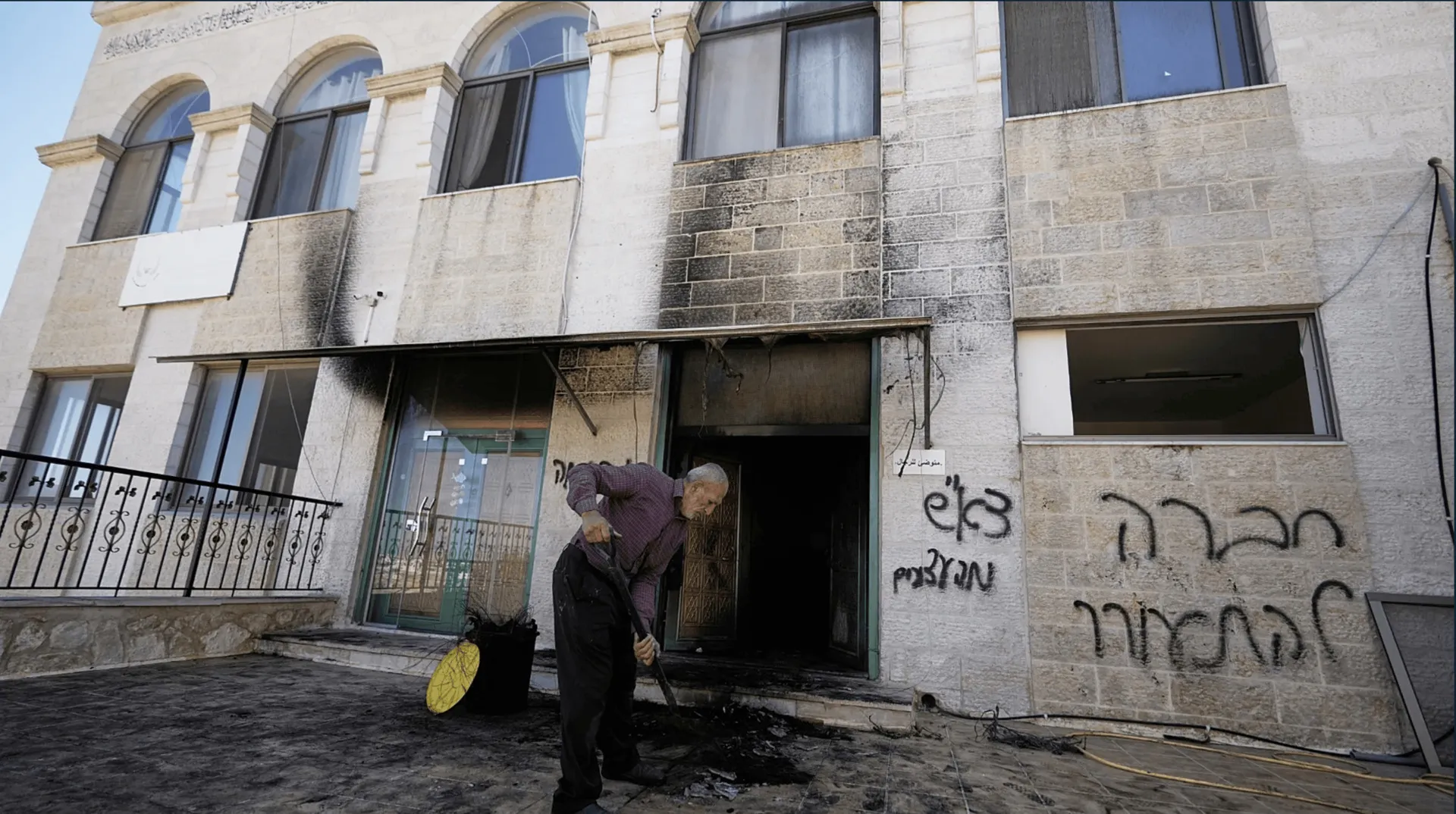
Israeli settlers have vandalised and burned a mosque in the occupied West Bank village of Jaljulia, north of Ramallah. Racist slogans were scrawled on the walls by the settlers.
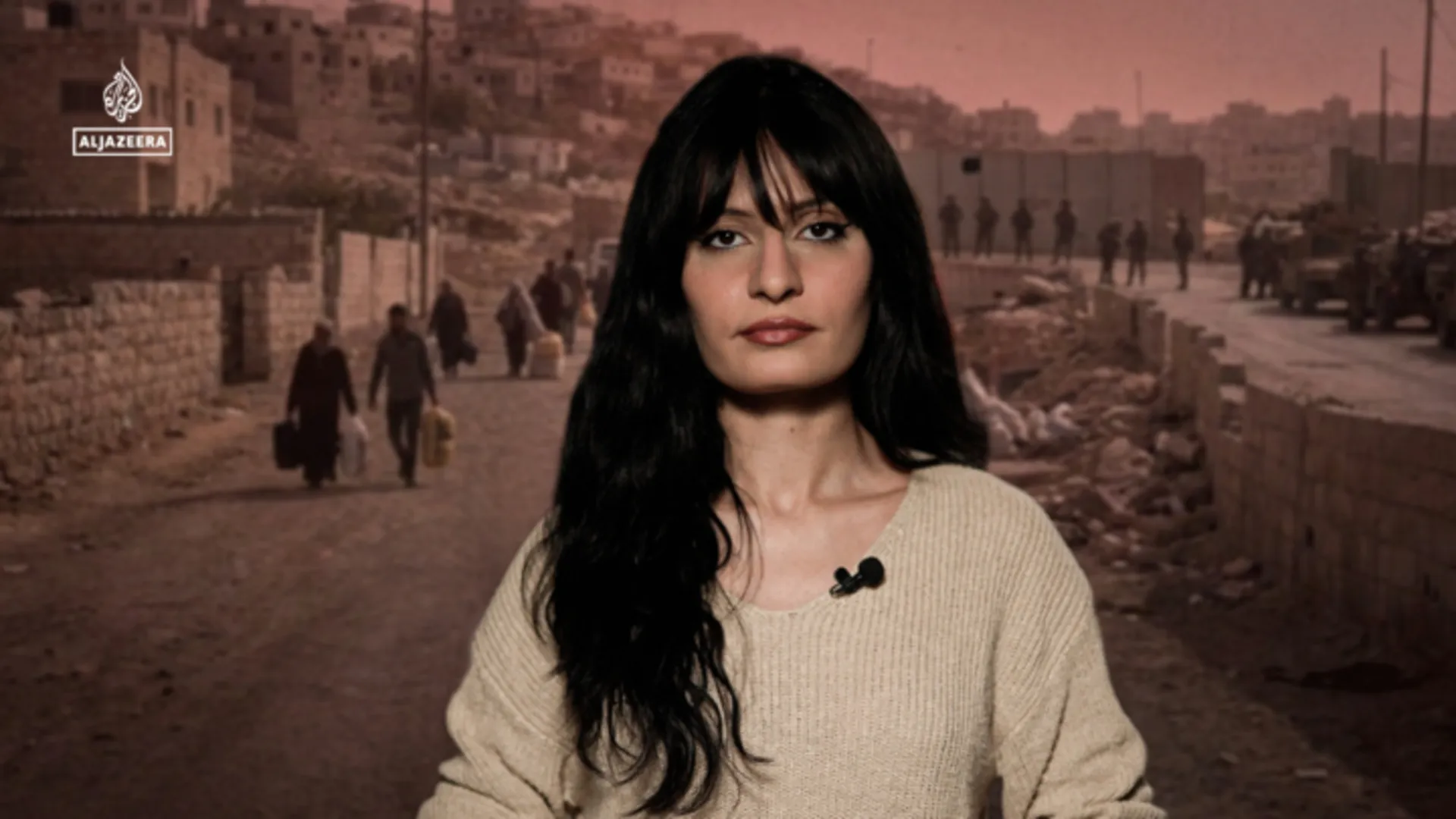
Both Amnesty International and Oxfam released reports this week documenting a rise in state-backed Israeli settler violence across the occupied West Bank over the past three years. What’s driving the escalation? Al Jazeera’s Marah Rayan breaks it down.
The Palestinian Authority condemned Israel’s decision to build 2,162 illegal settlement units in the occupied West Bank, calling for US intervention to halt the Israeli “madness.”
“All settlement activity is illegal under international law and does not confer legitimacy to anyone,” the authority said in a statement carried by the official news agency Wafa.
It said the Israeli decision constitutes a “blatant challenge to international law and UN resolutions,” particularly UN Security Council Resolution 2334, which affirms the illegality of the Israeli settlements in all occupied Palestinian territories, including East Jerusalem.
It held the Israeli authorities responsible for the “serious consequences” of the settlement policies, warning that they would push the region toward “further cycles of violence and escalation.”
The authority called on the US administration to intervene immediately “to stop the Israeli madness if it genuinely seeks to promote security and stability in the region and globally.”
It stressed that the Palestinian people would remain “steadfast on their land and committed to their legitimate national rights,” saying the illegal settlement plans would not deter them from continuing their struggle to establish an independent Palestinian state on the June 4, 1967 borders with East Jerusalem as its capital.
The statement came after Israel’s Higher Planning Council approved the construction of 2,162 new settlement units across several illegal settlements in the occupied West Bank.
The plans include 1,006 units in the Gevaot settlement within the Gush Etzion bloc south of Bethlehem, 922 units in the Har Brakha settlement south of Nablus, and 234 units in Kiryat Arba settlement built on land belonging to the city of Hebron.
Palestinians view the new plans as part of an accelerated Israeli policy aimed at expanding illegal settlements, confiscating Palestinian land and creating new facts on the ground.
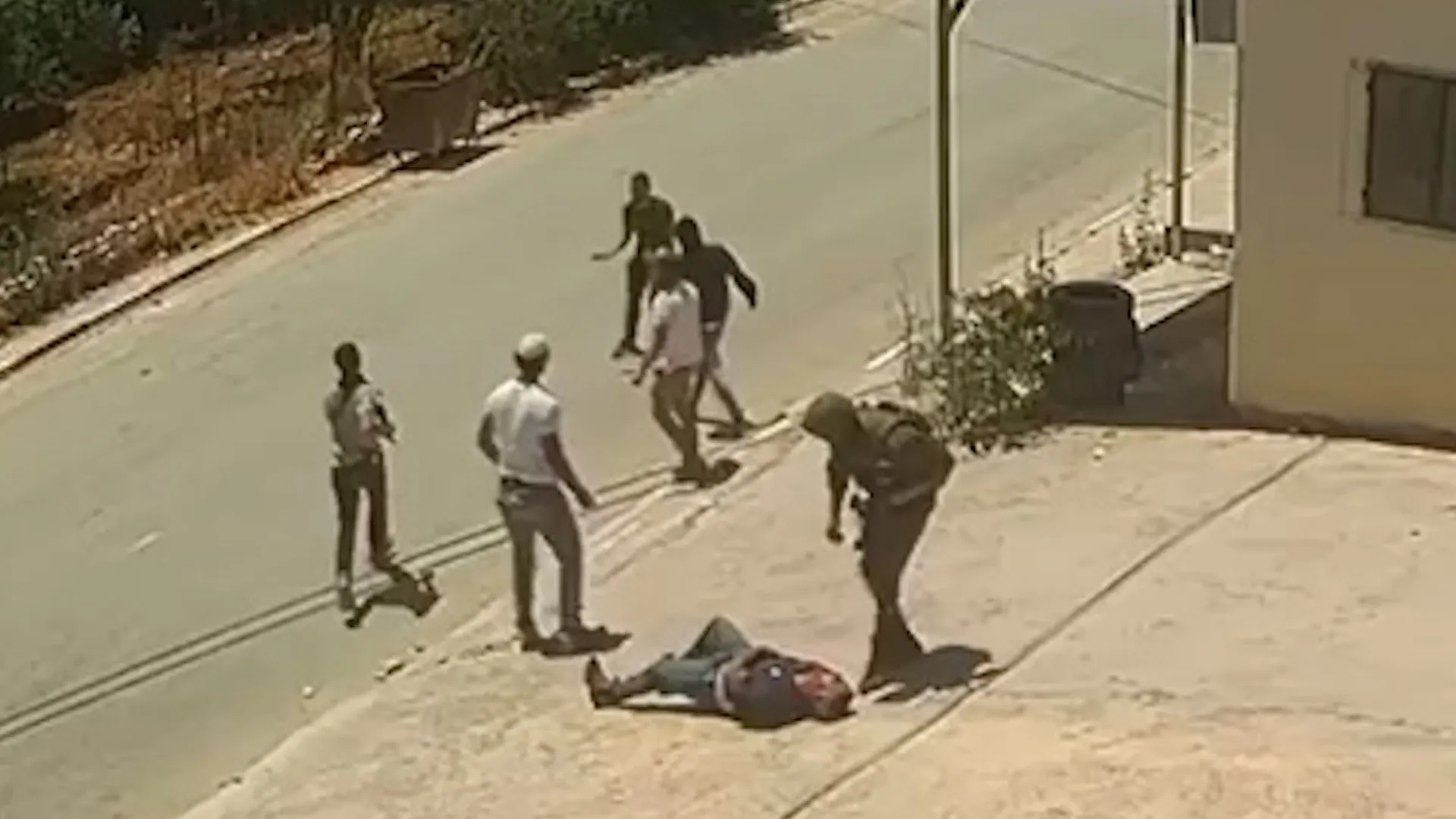
A surveillance camera caught a brutal assault by an Israeli soldier and settlers on two young Palestinians in the occupied West Bank. Video shows them slamming the victims onto the ground and repeatedly beating them, including with a plank of wood, leaving them motionless on the ground.
When the European Union issued its latest tranche of sanctions against Israeli settler groups and their leaders, Regavim, founded in part by the country’s Finance Minister Bezalel Smotrich, these groups welcomed the measures as a “badge of honour.”
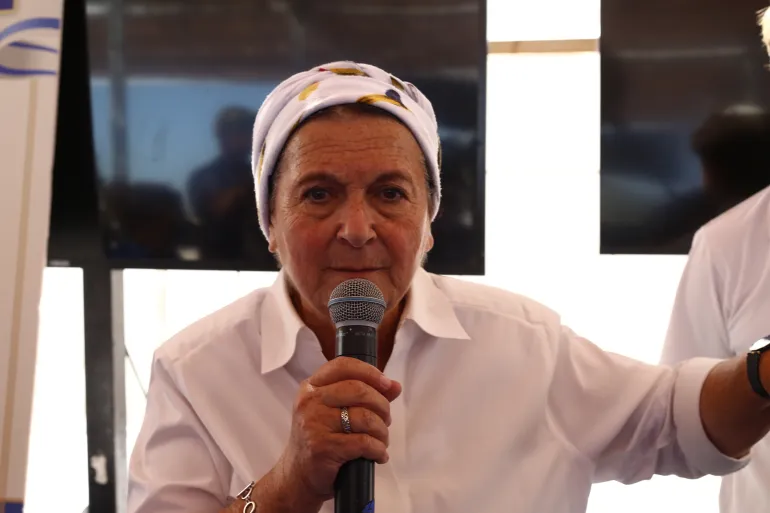
Another sanctioned figure, Daniella Weiss, whose movement, Nachala, has held conferences on the Gaza border to discuss plans for settlement expansion into the occupied Palestinian territory, likewise dismissed the European penalties as “ridiculous” and “banal”.
Recommended Stories
list of 4 itemsend of list
In total, the EU sanctioned four entities and three individuals associated with the settler movement, which includes high-profile characters such as Weiss, Regavim and its director, Meir Deutsch, and the Amana cooperative association, which offers logistical and financial support to settlements in the occupied West Bank.
Even government figures have been targeted in recent Western actions. Finance Minister Bezalel Smotrich, a son of the settler movement, was sanctioned by the United Kingdom, Canada and several other countries for his alleged role in supporting or enabling violence in the West Bank, highlighting how the settlement project has the support of the highest echelons of the Israeli state.
Overall, the nonchalant response from the targeted figures and entities suggests that none of the EU measures will do anything to stop settlement expansion or make individuals accountable for the growing wave of violence against Palestinians.
Ironically, the largely toothless measures might instead become a source of domestic prestige for their leaders, analysts say, as few would expect these hardline settler figures to spend their summers in Paris or London and thus be affected by the sanctions. Instead, a wave of terror in the occupied West Bank will likely continue, with the tacit support of the government.
Endemic violence
In the eyes of many activists and observers who spoke to Al Jazeera, the EU’s focus on group and individual “violations” falls far short of articulating the scale of the highly coordinated settler attacks or the extent to which the state and society support them.
Following the Hamas-led attack of October 2023, United Nations and human rights monitors have documented systemic lethal settler attacks in places such as the South Hebron Hills, where residents of villages like Susiya and Umm al-Khair have been killed or seriously injured in collective incursions.
In the northern West Bank, Palestinian residents of villages around Nablus and Ramallah have seen their homes, vehicles and olive groves torched during nighttime settler raids. Entire Bedouin herding communities in the Jordan Valley have also been forcibly displaced following sustained campaigns of intimidation and violence.
All of this underscores the depth and breadth of settler activity, which, according to people on the ground, has the direct support of the Israeli government.
“It’s gotten much worse since October 2023. They now have the courage to attack into the heart of densely populated Palestinian villages. I see them, they came into the heart of my village outside Ramallah, they feel safe to do so,” Tahseen Alayan, deputy director of Al-Haq, told Al Jazeera.
“If you buy a sheep, they will steal it. If you build a house, they will destroy it. If you buy a car, they will burn it.”
Daniella Weiss, founder of the Nachalot Association, described the EU sanctions as “ridiculous” and “banal” [Enes Canli/Anadolu Agency]
Examples of Israeli government complicity in these settler raids are not hard to find, and the statistics indicate collective efforts to entrench Israeli control over the West Bank, which has been occupied since 1967.
Israeli forces and settlers are accused of killing an estimated 1,168 people in the occupied West Bank since October 2023 and injuring a further 12,666 Palestinians. Another 33,000 people have been displaced, while Israel has also detained nearly 23,000 Palestinians in the West Bank during this period, many without charge.
“The violence does not happen in a vacuum,” Alayan continued. “This is an extension of the Israeli government; settlement is at the core of their identity. They are protected by the government and by the occupying services, and they freely admit it.”
A tragic incident that comes to mind is settler Yinon Levi, who allegedly shot dead Palestinian activist Awdah Hathaleen in Masafer Yatta last year. Despite the murder being captured on video, Levi nevertheless remains at large.
“Even if they are ever prosecuted, the sentences rarely reflect the severity of the crime,” Alayan said. “These people return to their homes and are seen as heroes.”
‘Entitlement and superiority’
This sense of impunity that settlers appear to be imbued with cannot be detached from the appointment to ministerial positions of leading figures or sympathisers of the settler movement – notably Ben-Gvir and Smotrich, the latter born in an illegal settlement in the occupied Golan Heights.
In a sign of state-settler cooperation to achieve direct control of the West Bank, in contravention of the Oslo Accords, Israel last year announced plans for the establishment of the E1 settlement that would link occupied East Jerusalem with its growing Maale Adumim bloc.
According to plans outlined by Smotrich, when established, this settlement would kill any hopes of the creation of a Palestinian state in the West Bank and Gaza and fulfil a biblical prophecy that many in the movement have been working towards.
Israeli far-right Finance Minister Bezalel Smotrich holds a map of an area near the settlement of Maale Adumim, a land corridor known as E1, outside Jerusalem in the occupied West Bank, on August 14, 2025, after a news conference at the site [Menahem Kahana/AFP]
Daniel Bar-Tal, a professor of social-political psychology from the Department of Education at Tel Aviv University, interpreted the thinking behind the settlers leading this violence across the West Bank.
“It is divine order to settle West Bank. With divine order you do not argue but achieve it in the way Yehoshua carried it 3,000 years ago when he entered the promised land,” he explained. “He achieved it with sword, so we need to do the same.”
Shai Parnes of the Israeli human rights group B’Tselem told Al Jazeera that the absence of international pressure has bolstered the alliance between the state and settler movement.
“The Israeli regime is an apartheid regime based on Jewish supremacy and institutionalised discrimination against Palestinians,” Parnes told Al Jazeera.
“Any Israeli, civilian or soldier, who harms a Palestinian receives full immunity and support from the Israeli systems, and Israel itself receives this from the international community. These facts explain the Israelis’ sense of entitlement and superiority.”
Palestinian Nazem Saleh Shoman stands inside a pen at a sheep farm that was set on fire the previous night by Israeli settlers in the Palestinian village of Khirbet Abu Falah in the central occupied West Bank [AFP]
Yehouda Shenhav-Shahrabani, one of Israel’s leading sociologists, described the channelling of “Jewish supremacy” from the individual to the group, to the state, and back again, as a “closed loop”.
This, he said, fosters a sense of superiority among individuals, and when combined with a militarised society, makes violence against the native Palestinian population, who are in the way of realising this supposed biblical prophecy, almost inevitable.
“Some believe they’re in the West Bank because God said it was theirs. Others are there because they’re too poor to be anywhere else, and have been told they’re superior anyway,” he said.
“Two-thirds of the time, these same people are soldiers. They carry guns all the time. Looking on while they carry out this violence against Palestinians are other soldiers who believe almost exactly the same thing, and behind them politicians. Like I said, it’s a closed loop.”



![Israeli far-right Finance Minister Bezalel Smotrich holds a map of an area near the settlement of Maale Adumim, a land corridor known as E1, outside Jerusalem in the occupied West Bank, on August 14, 2025, after a press conference at the site. [Menahem Kahana/AFP]](https://i0.wp.com/www.aljazeera.com/wp-content/uploads/2025/08/AFP__20250814__69HV6DR__v1__HighRes__IsraelPalestinianConflictSettlementPolitics-1755194568.jpg?w=640&ssl=1)
