Euro Tech Holdings Company Limited (CLWT) announced its entry into the Norwegian market through a 50/50 joint venture between its wholly owned subsidiary, Euro Tech Global Pte Ltd, and Sea Clean AS.
The newly formed joint venture, CleanPACT Environmental and Marine
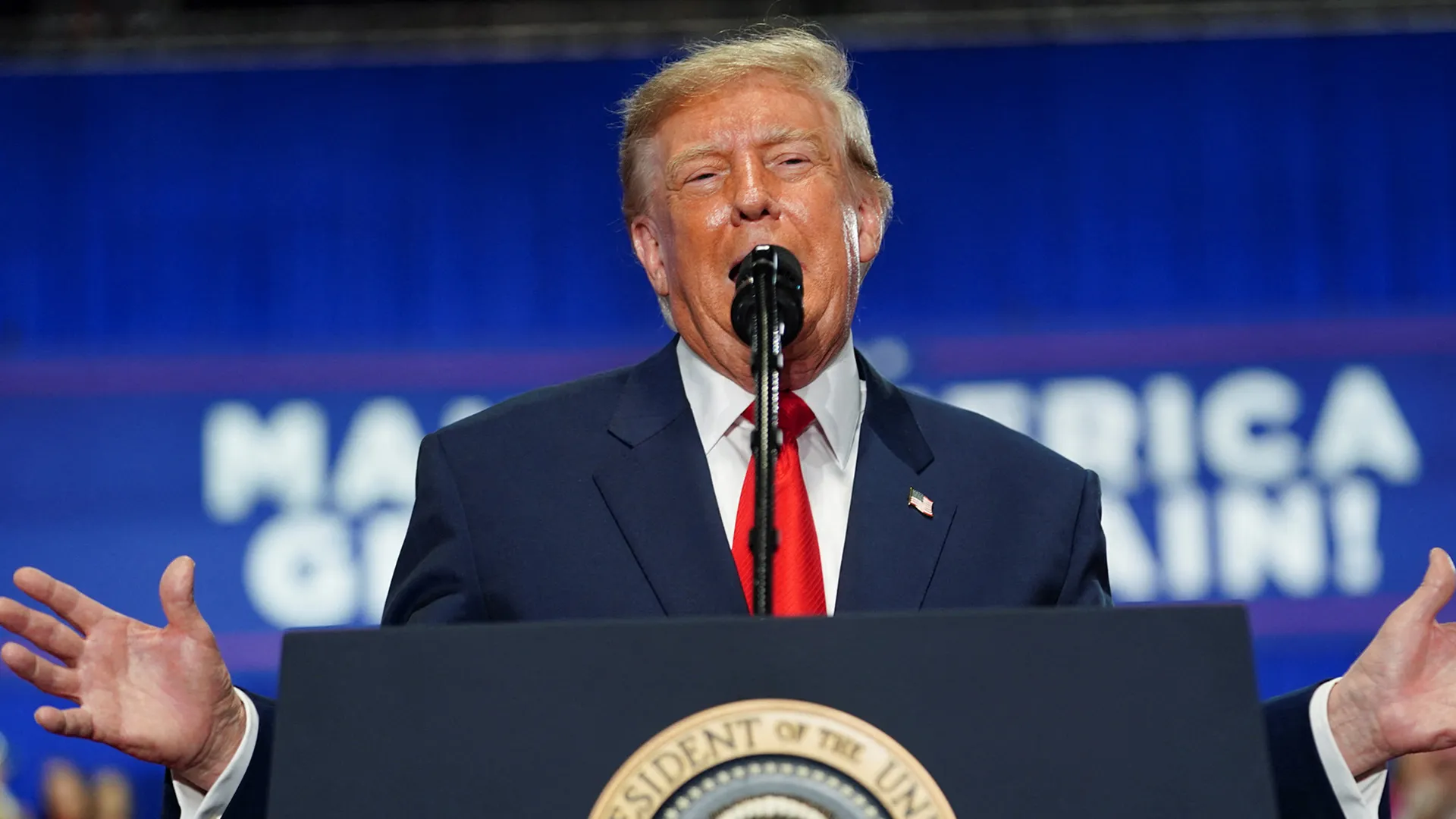
US President Donald Trump said that Norway’s decision to not award him a Nobel Peace Prize is disgraceful and embarrassing, and has left an ‘indelible stain’ on the country. ICJ judge Navi Pillay was awarded the prize for her efforts to prosecute genocide and war crimes.
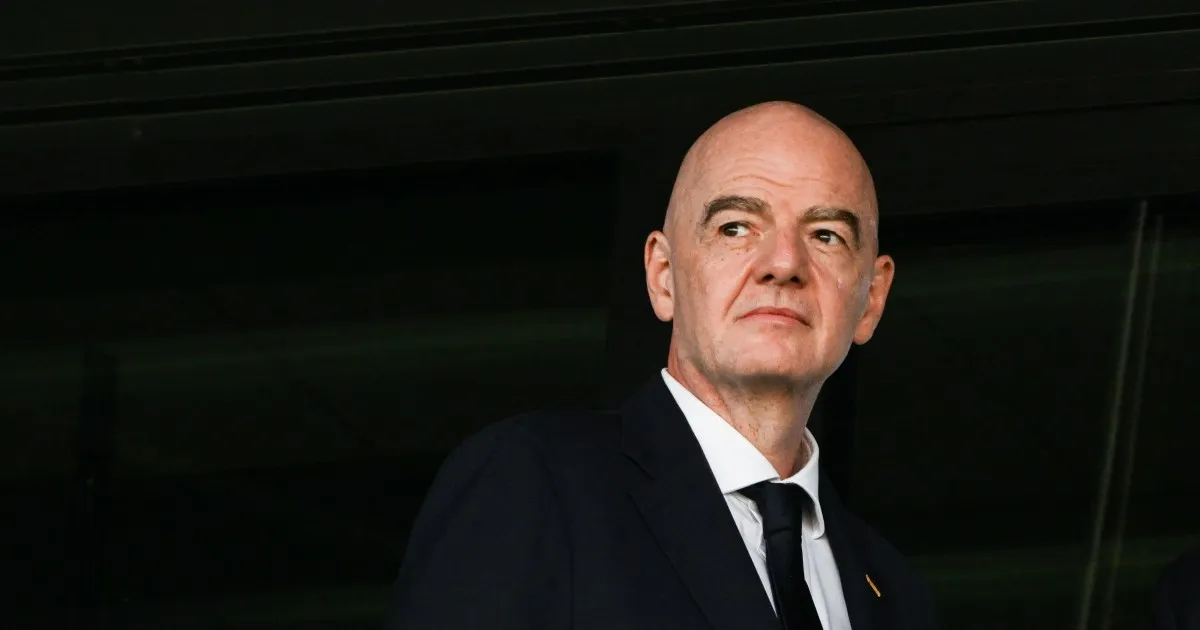
Embattled FIFA President Gianni Infantino has been accused of a potential abuse of power and conflict of interest after the Norwegian Football Federation (NFF) filed formal complaints to two FIFA committees.
Infantino’s aborted plan to open up the World Cup to private investors, the lifting of US forward Folarin Balogun’s suspension at the 2026 World Cup following an intervention by United States President Donald Trump, and FIFA’s awarding of a so-called Peace Prize to Trump form the basis of the filings.
Recommended Stories
list of 4 itemsend of list
The first filing made on Tuesday “asks the Ethics Committee to examine the conduct of FIFA President Gianni Infantino and any other individuals identified through the investigation for potential breaches of FIFA’s Code of Ethics”.
The second filing is aimed at FIFA’s Governance, Audit and Compliance Committee (GACC) and “asks whether FIFA’s governance, financial oversight, internal controls and decision-making processes [have] worked as intended”.
Lise Klaveness, the NFF’s straight-talking president and longtime critic of Infantino, told British media that Trump was the common thread in all three issues.
The venture capital firm of Josh Kushner, the brother of Trump’s son-in-law Jared, was to be the chief investor in the ill-fated FIFA Forward Enterprise (FFE) plan.
Infantino’s plan, launched just after this year’s hugely successful World Cup cohosted by Canada, Mexico and the US in July, would have allowed private investors to acquire stakes in a company created under the FFE initiative.
“FIFA Forward Enterprise is a governance issue, but it’s connected to the two other cases because [of] conflict of interest and abuse of position, potentially,” Klaveness said in her interview with a British newspaper.
“There is a line between all these three cases, and it’s the same political regime.”
Klaveness, a former international footballer, said Infantino had some serious questions to answer over a lack of transparency.
Balogun’s red card in the last-32 win over Bosnia and Herzegovina during the World Cup resulted in an automatic suspension for the match with Belgium.
But FIFA stepped in and suspended his ban, leading to widespread condemnation, especially when it emerged that Trump had intervened by phoning Infantino.
The FIFA Peace Prize award that Infantino presented to Trump in December has also been widely criticised.
“These are three very different factual cases, but they all have something in common that we want examined,” said Klaveness.
“Is it an abuse of power, an abuse of position? Is it a breach of political neutrality?
“Is it in accordance with the rules of governance, as the FIFA Council should be the strategic body, and the president shouldn’t really have any unilateral power?”
‘Misinformation campaign’
Klaveness, 45, had, in August, called upon Infantino to resign and forgo his bid to be elected to a fourth and final term as president.
The 56-year-old Swiss has insisted he will seek re-election in Rabat next March, and as yet no other candidate has declared themself.
Infantino, who was first elected in 2016, must secure a majority of the 211 votes from the organisation’s members in order to be re-elected.
The deadline to declare a candidacy is November 18.
Klaveness has said she will not be a candidate — despite some observers, including Infantino’s predecessor Sepp Blatter, believing she would be a good fit as FIFA chief.
Aleksander Ceferin, president of European football’s governing body UEFA, has said he is not interested.
UEFA have been unsparing in their verbal assaults on Infantino and FIFA, dismissing the FFE plan as “a shady and opaque backroom deal”.
The likeliest rival is thought to be Canadian Victor Montagliani, president of CONCACAF, whose body, along with UEFA and the Asian Football Confederation (AFC), has formed an anti-Infantino alliance.
However, while a swath of UEFA’s members have publicly withdrawn their support for the 56-year-old Swiss, some of the AFC’s associations, such as 2034 World Cup hosts Saudi Arabia and 2022 hosts Qatar, have pledged their loyalty to him.
African football’s governing body CAF and South America’s CONMEBOL are also supportive.
UEFA has also gone to a court in Florida in an attempt to access documents related to Infantino’s failed plan, hoping to gather evidence for a potential criminal complaint in Switzerland, where UEFA and FIFA are based.
The latter responded by accusing UEFA of a “misinformation campaign” and saying it was attempting to “influence” the election.
The Manchester City star asked to be substituted and was replaced in the 67th minute of the 2-1 defeat in Porto.
Published On 6 Oct 20266 Oct 2026
Norway coach Stale Solbakken has revealed that he had a “heart-to-heart conversation” with Erling Haaland regarding concerns about the striker’s heavy workload ahead of a Nations League loss to Portugal, in which the Manchester City star asked to be substituted.
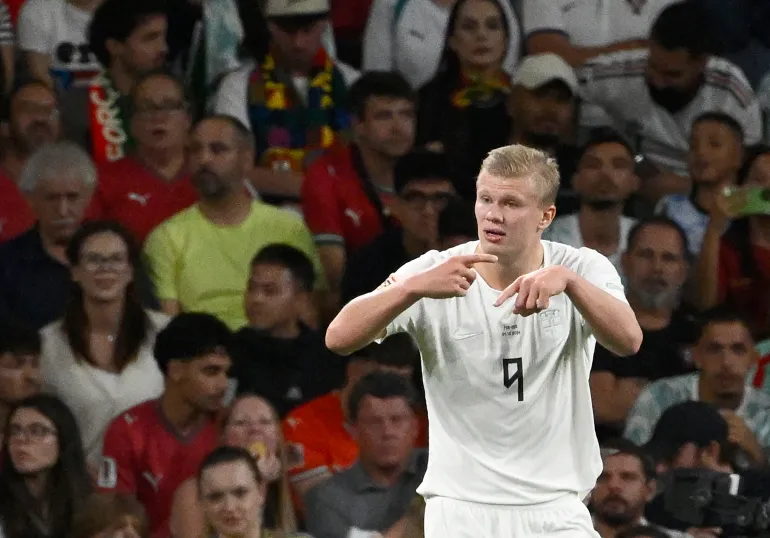
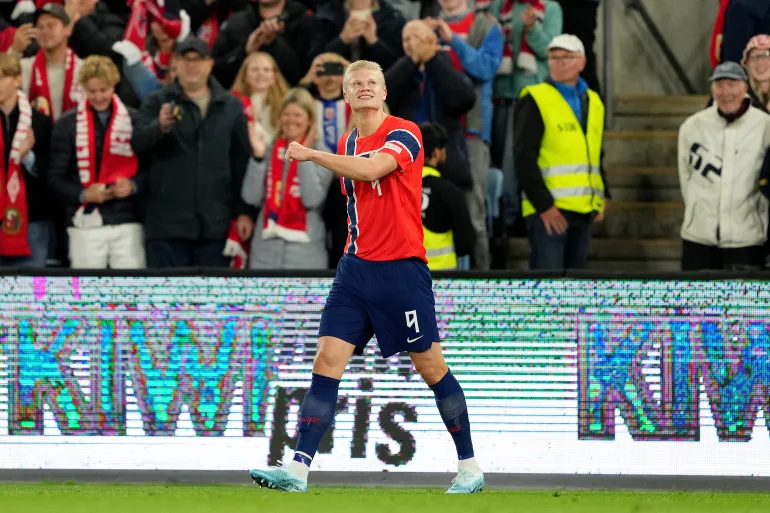
Haaland gestured to Norway’s bench that he needed to come off and was replaced in the 67th minute of the 2-1 defeat in Porto on Sunday.
Recommended Stories
list of 4 itemsend of list
He was seen limping on the field in advance of the substitution, raising concerns about his fitness before his return to City — a club under heavy scrutiny as the subject of a huge financial scandal in the Premier League.
Norway’s Erling Haaland asks for substitution during the match against Portugal [AFP]
Speaking after the Portugal match, Solbakken did not say Haaland had sustained an injury but talked about the heavy workload the striker had been facing after playing the full game in each of Norway’s first three Nations League fixtures — a win over Denmark and losses to Portugal and Wales.
That came after a busy start to the English season with City, after reaching the World Cup quarterfinals with Norway over the summer.
“He [Haaland] was tired against Wales. That’s why we had a heart-to-heart conversation yesterday. We went through the possible options,” Solbakken said in quotes carried in the Norwegian media.
“He might have played the last 45 minutes against Portugal. That was a discussion. But he has very bad vibes and feelings about it … I am very pleased that he managed to pull out 60 good minutes.”
Haaland did not score on Sunday or against Wales on Thursday — the two games Norway has played since the verdict by an independent commission on City’s financial case was published. He had scored in the first two games in this international break and is on a record 65 goals in 59 appearances for his country.
Haaland is the only senior, out-and-out striker in City’s squad whose first match back after the internationals is at Liverpool on Sunday.
“He plays pretty much everything on the club team,” Solbakken said.
Holders Portugal first team to qualify for 2026-27 UEFA Nations League despite Cristiano Ronaldo’s absence.
Published On 4 Oct 20264 Oct 2026
Portugal defeated Norway 2-1 on Sunday, without superstar striker Cristiano Ronaldo, to qualify for the UEFA Nations League quarterfinals.
Goncalo Ramos secured victory for Jorge Jesus’s Portugal in the Group A4 clash after Joao Cancelo’s rocket levelled Kristoffer Ajer’s stunning opener for Norway.
Recommended Stories
list of 4 itemsend of list
Portugal played out the final minutes with 10 men after Francisco Conceicao was dismissed for two yellow cards in the space of a few seconds for dissent following his unsuccesful appeal for a penalty.
Former Real Madrid and Manchester United striker Ronaldo walked out on the squad on Wednesday, ahead of the previous game against Denmark, after Portugal’s all-time top goalscorer learned he would not start.
Portugal are now guaranteed to finish in the top two spots in the group, thus granting them passage to the last eight in March 2027.
Norway took the lead in Porto against the run of play with a stunning effort from Brentford defender Ajer after 36 minutes.
The Norwegian met a bouncing ball on the edge of the box perfectly and bent it into the top corner.
However, two minutes later, Barcelona defender Cancelo scored a similarly superb goal, rifling home from about 20 yards.
Manchester City striker Erling Haaland fired across the face of goal after an hour and was replaced by Jorgen Strand Larsen a few minutes later.
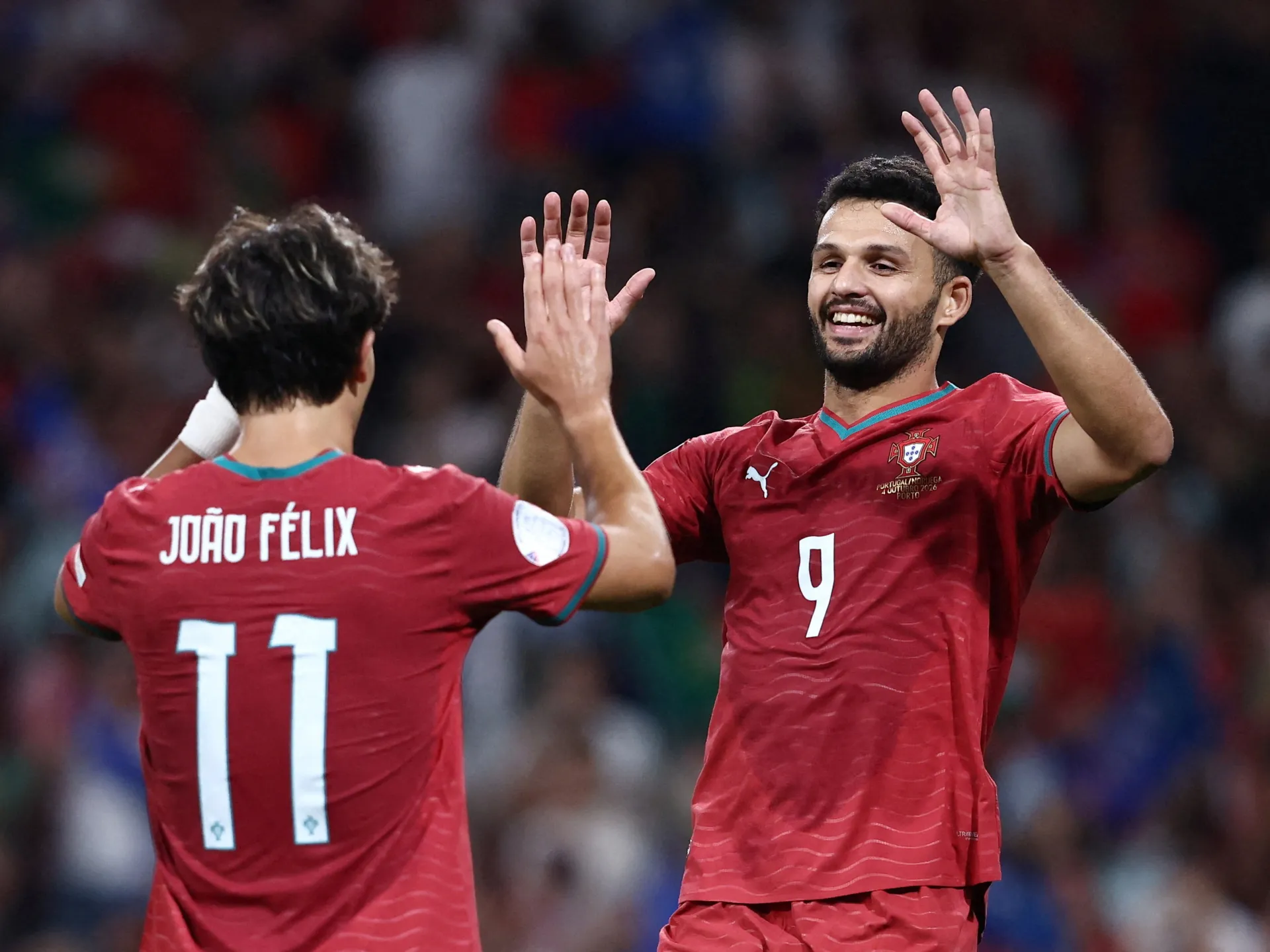
Nations League holders and two-time record champions Portugal nosed in front when AC Milan striker Ramos, starting in place of Ronaldo, tucked home from close range after being teed up by Joao Felix.
Conceicao’s foolish dismissal left Jesus’s team in a tough spot for the final few minutes, but they held on to triumph for the fourth time in four games in the group.
Cristiano Ronaldo withdrew from the Portugal squad, but Bruno Fernandes says forward remains team’s ‘greatest symbol’.
Published On 3 Oct 20263 Oct 2026
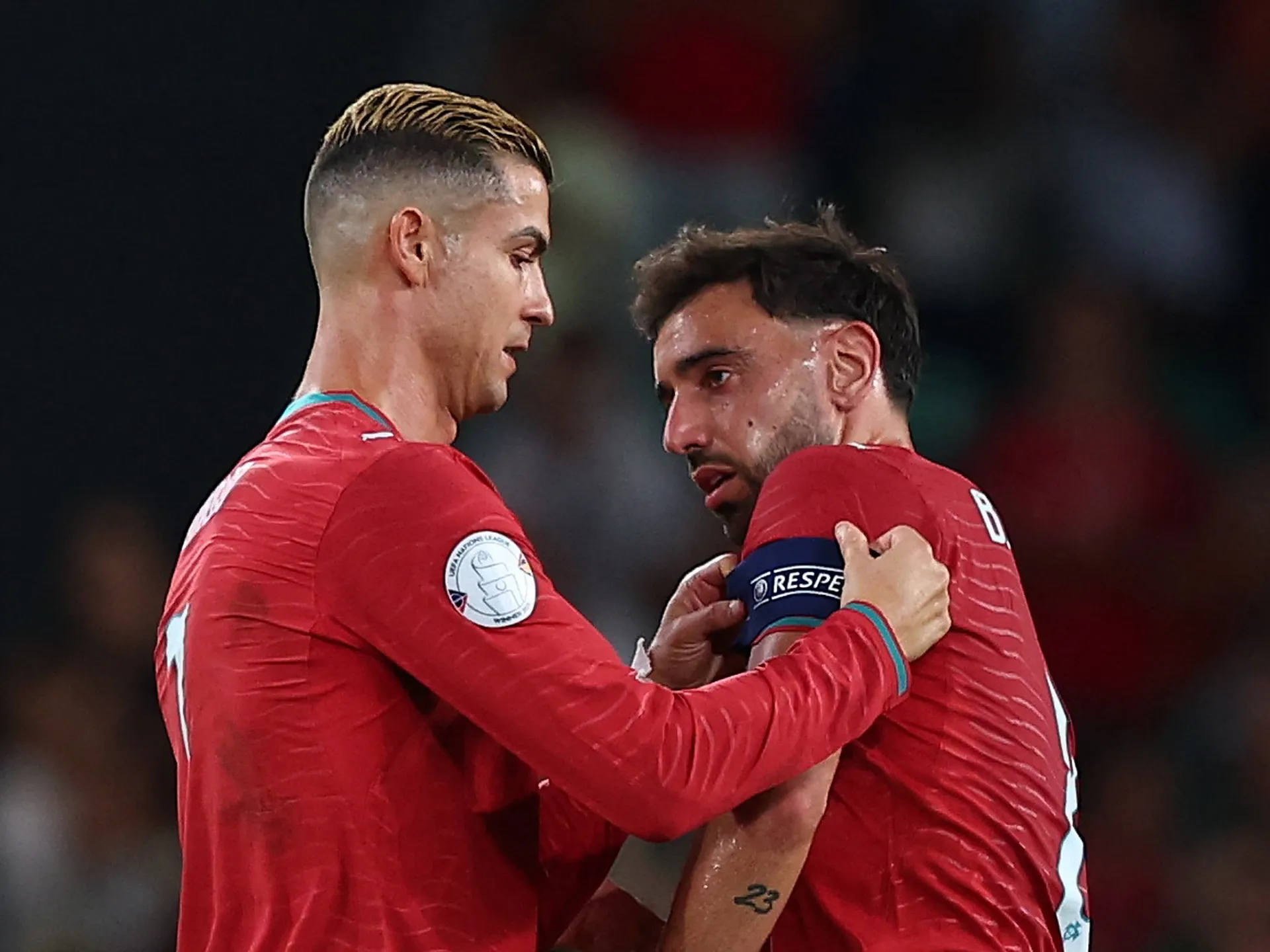
Portugal playmaker Bruno Fernandes said Cristiano Ronaldo remains the country’s greatest footballing icon despite walking out on the squad this week after finding out he would not start a match.
The 41-year-old superstar said on Wednesday that he had left the team after coach Jorge Jesus said he would not start against Denmark in the Nations League, a match Portugal won 4-2 without him.
Recommended Stories
list of 4 itemsend of list
The former Real Madrid and Manchester United attacker’s future with the national team, for whom he is the leading goalscorer and most capped player, is in doubt after his walkout.
“Regarding Cristiano, I had a conversation with him, and what I told him, and what I repeat here, is this – the most important thing is that, regardless of what happens, Cristiano Ronaldo will never cease to be the greatest symbol of our national team, of our football, and of the country, for what he has done not only in Portugal but throughout the world,” Fernandes told reporters on Saturday.
Manchester United midfielder Fernandes called for unity after a tumultuous few days in which Portugal fans’ opinions have been split over Ronaldo’s decision.
“He has a reserved place not only among the best of all time, but also in the hearts of all Portuguese people and the most important thing is that we stop dividing things,” said Fernandes.
“There are no divisions in the national team, it is one and will remain so, despite any noise that may come from outside…
“We are outside of this controversy, but what I ask is that the country does not divide itself, does not make choices, that it respects all sides, but, at the same time, Cris is and will be the biggest icon of our national team, he deserves everyone’s respect, regardless of who likes him more or (who likes him) less.”
Portugal beat Norway and Denmark away from home without Ronaldo starting and face Norway again on Sunday.
Coach Jesus said Ronaldo was a “symbol of Portugal” and said there would be time to speak about him after Sunday’s game in Porto.
“I’m going to focus on the team, on the opponent which is Norway, one of the five best teams in Europe. That’s the problem right now,” said the 72-year-old coach.
Who: Portugal vs Norway What: UEFA Nations League 2026-27, Group A4 match Where: Estadio do Dragao, Porto, Portugal When: Sunday, October 4, at 8:45pm local time (18:45 GMT) How to follow: Al Jazeera Sport will bring you all the build-up and live updates from 15:45 GMT.
For the second time in a week, Portugal and Norway clash in the UEFA Nations League. But this time, things are not quite the same in the Selecao camp.
Recommended Stories
list of 4 itemsend of list
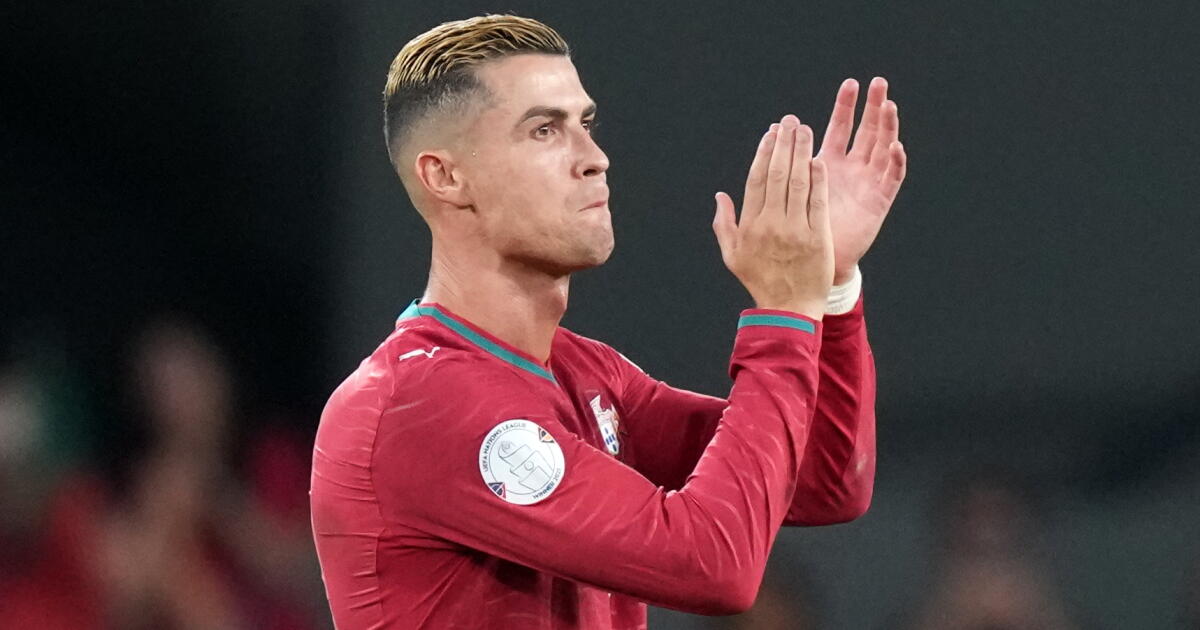
Sunday’s fixture in Porto will see the Nations League title holders play without their talisman, Cristiano Ronaldo, after the 41-year-old abruptly left their camp, raising questions about his international future.
Ronaldo’s dramatic exit and apparent rift with new coach Jorge Jesus have dominated headlines worldwide. Portuguese players have largely blocked the outside noise, however, maintaining a perfect record at the tournament where they are chasing a record-extending third crown.
However, their striker Erling Haaland – one of Europe’s most lethal players – poses enough danger to put Portugal under pressure ahead of this weekend’s thrilling encounter.
What is the UEFA Nations League?
The UEFA Nations League was founded in 2018 to reduce the number of meaningless friendlies and give nations competitive matches against top-ranked teams.
In this competition, countries from across Europe participate in a league structure which features promotion and relegation.
What is the latest news on Cristiano Ronaldo?
Ronaldo left the squad late on Wednesday, shortly after a news conference in which coach Jesus confirmed the five-time Ballon d’Or winner would be left out of his starting line-up for a second consecutive Nations League game.
The 41-year-old’s decision to walk out came as a shock as he had been due to train with his teammates at the Parken Stadium in Copenhagen.
Portugal’s leading scorer with 146 goals had already spent the entirety of last weekend’s 2-1 Nations League win in Norway on the bench, having captained the side in the 1-0 home victory over Wales last Thursday.
He appeared to indicate that the reasons behind Jesus’s decision ran deeper and hinted at a departure from the national team he has graced for more than two decades.
“In due course, I will tell the truth to all the Portuguese people about my reasons for leaving the national team, to which I have always been dedicated,” Ronaldo said in a cryptic Instagram post, announcing his sudden exit from the camp.
Spanish sports daily Marca said that Jesus and Portuguese federation president Pedro Proenca followed Ronaldo to Copenhagen airport in an attempt to persuade him to stay with the squad, before the player boarded his private jet.
Jesus insisted earlier on Wednesday that there was no rift between them, although the 72-year-old, who was appointed in July, acknowledged that his captain was disappointed to remain on the bench against Norway.
How have Portugal and Norway played in the Nations League?
Portugal are on top of Group A4 on nine points, with three wins out of three. They started their campaign with a 1-0 home win over Wales, before adding a 2-1 victory over Norway in Oslo. In the last match, they thrashed Denmark 4-2 in Copenhagen.
Norway are second-bottom in the group, with only three points. They started their campaign with a 3-2 home win over fellow Scandinavians Denmark but suffered identical 2-1 defeats at home to Portugal and to Wales in Cardiff.
Joao Felix and Goncalo Ramos scored for Portugal, while Haaland struck the consolation goal for Norway.
Portugal vs Norway: Head-to-head
Matches: 12
Portugal wins: 9
Norway wins: 1
Draws: 2
Portugal vs Norway: Form guide
(Last five games, latest results first)
Portugal: W-W-W-L-W
Norway: L-L-W-L-W
Who are the top players to watch?
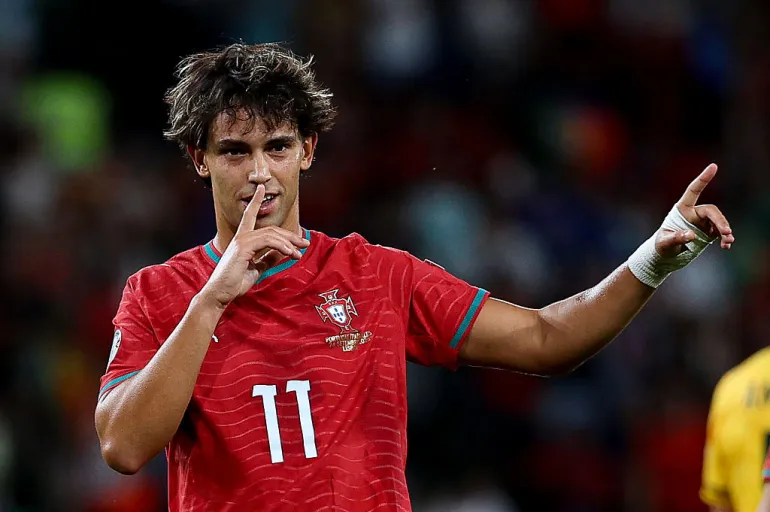
Joao Felix and Goncalo Ramos (Portugal): Al Nassr forward Felix has emerged as the reliable scorer in the Portugal setup, finding the net in each of the three games this term. Meanwhile, Ramos, playing in place of Ronaldo, has made up for CR7’s absence with goals in the last two matches.
João Felix of Portugal has scored in every Nations League game this season [File: Diogo Faria Reis/MB Media/Getty Images]
Erling Haaland and Oscar Bobb (Norway): All of Norway’s goals in the ongoing competition have come through Haaland (three) and Bobb (two). While their partnership proved successful in the opening match, their goals were not enough in the following matches, as the Norwegians suffered back-to-back defeats. Norwegians will demand better from Haaland, especially after the Manchester City talisman’s incredible start to the club season that features seven goals in as many games.
Team news and predicted lineups
Portugal
Winger Francisco Conceicao is doubtful for the game due to a thigh injury.
Probable Portugal XI: Diogo Costa; Joao Cancelo, Ruben Dias, Renato Veiga, Nuno Mendes; Ruben Neves, Vitinha; Pedro Neto, Bruno Fernandes, Rafael Leao; Goncalo Ramos
Norway
Wing-back Julian Ryerson is doubtful with a muscle injury, while centre-back Torbjorn Heggem is suspended.
Probable Norway XI: Orjan Nyland; Julian Ryerson, Kristoffer Ajer, Torbjorn Heggem, David Moller Wolfe; Martin Odegaard, Sander Berge, Patrick Berg; Oscar Bobb, Erling Haaland, Antonio Nusa
Norwegians need Erling Haaland to be on the scoresheet if they are to beat Portugal [File: Marius Nordnes / Nordnes Foto/Getty Images]
Portugal vs Norway: TV channel, livestreaming
Portugal
Norway
United Kingdom: ITV1
United States: FOX Sports, FuboTV, ViX
India: Sony Sports Network
Middle East and North Africa: beIN SPORTS
South Africa: DStv Stream
You can find your regional broadcaster on UEFA’s official broadcaster listing.
In the same news conference, Jesus said he did not expect to start Ronaldo against Denmark.
“I don’t know what’s going to happen in the game,” Jesus said. “If we need him to play, he’ll play. If not, he won’t.”
This time, the player did make the decision for the coach.
“Following the national team coach’s news conference, and after a conversation with the president of the Portuguese football federation, I decided to leave the national team’s training camp,” Ronaldo posted on social media hours after Jesus spoke.
“In due time, I will tell all the Portuguese about the reasons that motivated my departure from the national team, which I always dedicated myself to. Now it’s time to wish good luck to Portugal and all my teammates, without exception.”
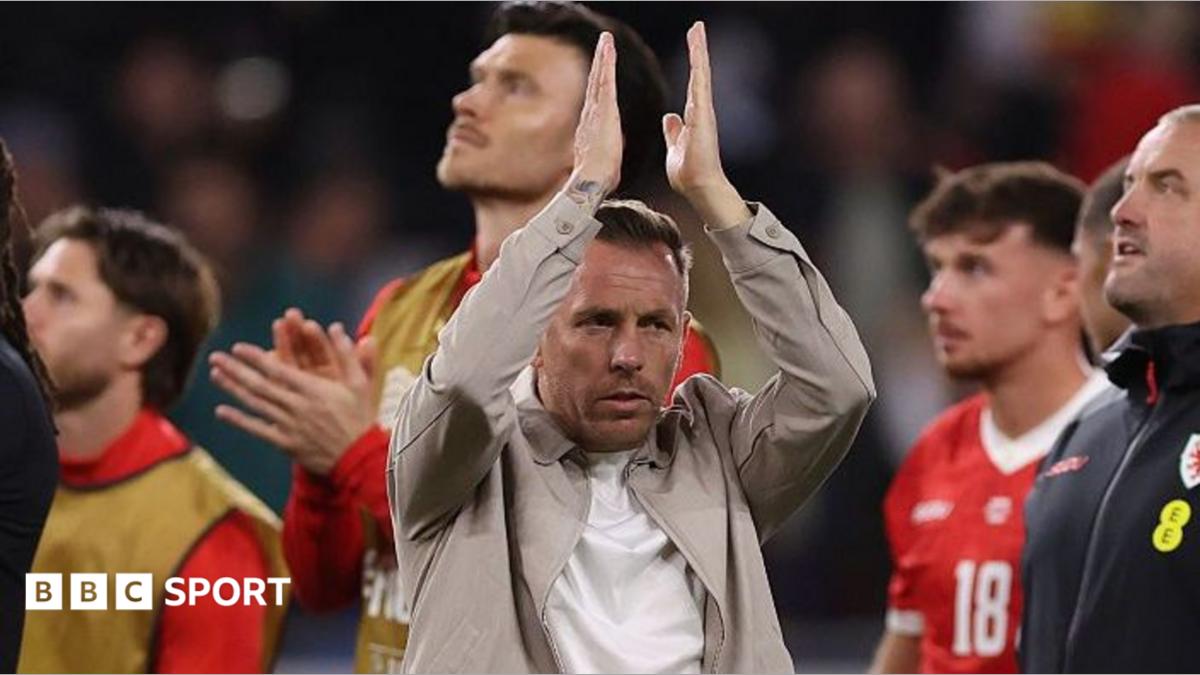
Former Wales striker Bellamy, who was appointed national boss in July 2024, faced criticism from some fans after holding talks over a potential move to Burnley in June.
In a lengthy news conference after the Norway triumph, he said he feels people “could be kinder to each other” after revealing the negativity aimed at him had also affected his family.
“It’s not me but I have kids and a wife; it’s for them – they see it,” he said.
“I’ve lived in this environment and I had it as a player, but I think there’s ways we can speak to people, and just because it’s the game we love, it doesn’t give us the right to think we can say whatever we want to.
“We’re such a small country, I’m like… why can’t we have each other’s backs? Why don’t we look after each other more? Maybe that’s me.
“I’m not saying everyone’s above criticism, far from it. But I think it’s too easy, and we’re too quick.”
Who: Norway vs Portugal What: UEFA Nations League 2026-2027, Group A4 match Where: Ullevaal Stadion in Oslo, Norway When: Sunday at 7:45pm (18:45 GMT) How to follow: Al Jazeera Sport will bring you all the build-up and live updates from 15:45 GMT.
Record two-time UEFA Nations League champions Portugal continue their title defence on matchday two with a trip to Oslo against an exciting Norway side.
Spearheaded by Erling Haaland, arguably one of Europe’s most dangerous strikers, and captained by midfield maestro Martin Odegaard, Norway made a winning start too, beating their Scandinavian rivals Denmark 3-2 in a thrilling opener.
Frustrated after a string of missed chances in the first game, Portugal’s talisman Cristiano Ronaldo will hope to rediscover his form as the team embraces a new chapter under coach Jorge Jesus, whose first game in charge was on Thursday against Wales.
What is the UEFA Nations League?
The UEFA Nations League was founded in 2018 to reduce the number of meaningless friendlies and give nations competitive matches against equally ranked teams.
In this competition, countries from across Europe participate in a league structure that features promotion and relegation.
When did Norway and Portugal last meet?
The teams last met in a 2016 international friendly in Porto when hosts Portugal defeated Norway 3-0.
Norway vs Portugal: Head-to-head
Matches: 11
Norway’s wins: 1
Portugal’s wins: 8
Draws: 2
Norway vs Portugal: Form guide
(Last five games, latest results first)
Norway: W-L-W-W-L
Portugal: W-L-W-D-W
Who are the top players to watch?
Haaland and Oscar Bobb (Norway): A double from Haaland and another goal from Bobb set Norway on course for a winning start, and the attacking pair should be in the limelight in front of their home crowd this weekend. Manchester City’s Haaland, especially, has been in top form this term with an incredible seven goals in as many games across all competitions.
Ronaldo and Joao Felix (Portugal): Portugal’s striking pair of Ronaldo and Felix ought to be careful in the final third this time out after Felix’s lone strike in the opening win in Lisbon. Ronaldo had a goal ruled out and was among the players who missed a flurry of chances as Portugal registered a whopping 23 total shots but with only five on target, of which just one hit the back of the net.
On average, Erling Haaland scores more than one goal a game for Norway [File: Marius Nordnes/Nordnes Foto via Getty Images]
Will Haaland, Ronaldo and Bruno Fernandes play?
Both forwards are fit to play, but Portugal will miss the services of their talismanic midfielder Bruno Fernandes, who is injured.
Fernandes has played in all seven of Manchester United’s matches this season and featured from the start for Portugal against Wales before being withdrawn in the 90th minute.
Jesus said he doesn’t want to “risk” the player against Norway.
“Against Wales, we went in with practically everyone physically available and came out with a complicated problem with Bruno Fernandes,” the coach said.
“He’s coming off an injury at United, and he told me he’s been playing with that pain for the last three games, which is hindering him.
“It was one of the factors that prevented Bruno from playing at his best against Wales. I’ve already spoken to him, and I prefer not to risk it in this game, so he’s fully fit for the Denmark match.”
Haaland: The King of the North
Haaland’s double against Denmark on Thursday marked another milestone in the 26-year-old striker’s enviable career. He is now the highest-scoring Nordic man in international football history, surpassing Sweden’s Zlatan Ibrahimovic.
Haaland’s goal tally for Norway stands at 64 goals compared with Ibrahimovic’s 62. Incredibly, Haaland has shattered that record in 56 appearances – less than half of the 122 matches Ibrahimovic needed.
“It is not possible to explain nor is it possible to learn. He is born with it. It is instinct,” Norway manager Stale Solbakken said about Haaland.
Having made his senior debut in 2019, Haaland boasts a record of scoring more than one goal per game for Norway.
“It’s madness,” midfielder Sander Berge said about Haaland’s talent. “It’s everyday business that Haaland scores goals, so it’s reasonable that he is up there, but it’s powerful.”
What have the coaches said?
Jesus: “Norway are one of the strongest teams in Europe. They have players we know like Haaland and Odegaard who play at a very high level in England. They will create more goalscoring opportunities against us than Wales, and I hope we have the defensive capacity.
“There’s not much to improve. We’ll evolve the game we’ve already played, but I trust that the team will respond defensively and will be more creative offensively.”
Solbakken: “They changed the coach, and if you look at what he did at his previous clubs and the football they played, the way they played against Wales was a little different to what it was with [Roberto] Martinez. There were players in other positions, and we took that into account in our game plan. Obviously, they have good players all over the field. We expect a close and balanced game. It’s our home game, so we’ll try to stop their biggest assets, but it’s also important for us to play our game and be loyal to the way we’ve been playing in recent years.”
Have Haaland and Ronaldo ever played each other?
No, the 26-year-old and 41-year-old greats have never crossed paths. Norway and Portugal have not played each other frequently either.
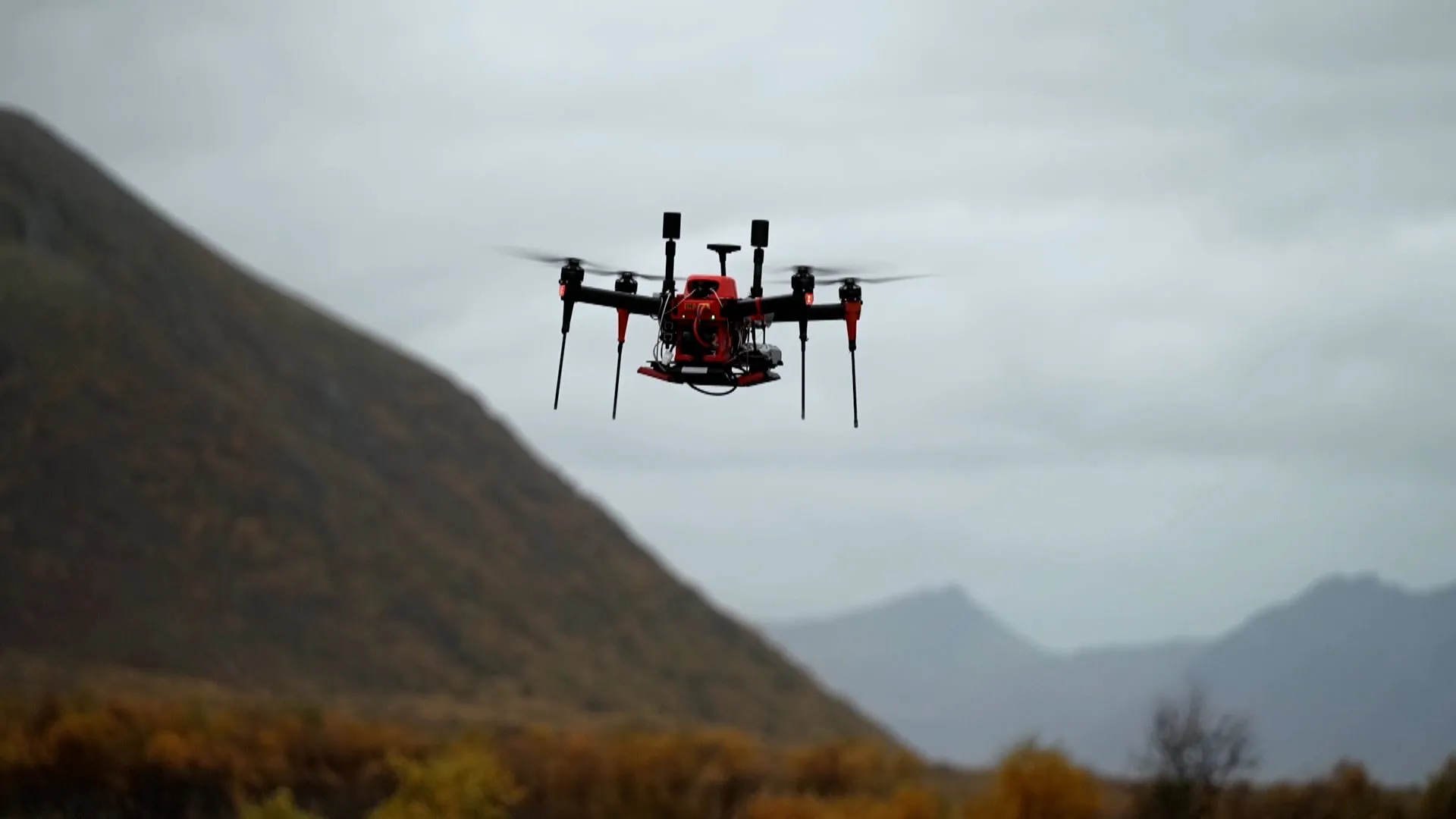
Defence and tech companies have been taking part in annual exercises in Norway aimed at countering the threat against satellite signal jamming, which can affect everything from aircraft and ships to financial markets. Paul Rhys explains from Norway.
Moscow and Copenhagen trade blame for the incident as Denmark says it will not invoke NATO treaty.
Published On 15 Sep 202615 Sep 2026
Moscow has warned Denmark to avoid “reckless” action after a Russian frigate fired two flares that narrowly missed a Danish military helicopter.
Moscow’s ambassador in Copenhagen, Vladimir Barbin, on Tuesday insisted that “dangerous manoeuvres” taken by the Danish aircraft were to blame for the Baltic Sea incident.
Recommended Stories
list of 3 itemsend of list
The Russian diplomat told state news agency RIA Novosti that he had delivered a formal note demanding steps to prevent a repeat of the episode.
He said that the helicopter’s actions were provocative and condemned Danish attempts to call them routine, saying they raised “serious concern about the possible consequences of such recklessness”.
The Fennec helicopter was on a routine mission to photograph the frigate as it sailed in international waters off Denmark, the Danish defence command said. Ships typically use such flares as warning signals.
Denmark’s Defence Minister Jeppe Bruus told TV 2 News that one flare passed within a “matter of metres” of the aircraft, and accused Russia of “deeply unprofessional seamanship”.
When asked if Denmark would seek Article 5 consultations over the incident – invoking the NATO measure that considers an attack against one member of the bloc to be an attack against all of them – Bruus said the incident was being taken seriously, but “we are not there”.
Barbin said he had complained last year about what he called dangerous fly-bys and low hovering by a Danish helicopter over the Russian warship Vice-Admiral Kulakov.
Kremlin spokesman Dmitry Peskov declined to comment, saying he lacked details.
The Danish Straits – where most Danish incidents with Russia have taken place – are the Baltic’s main shipping gateway and a key oil route, including for Russian oil tankers.
Danish Prime Minister Mette Frederiksen called the incident serious but not surprising, describing it as part of a pattern of intensifying Russian hybrid warfare against Europe and testing NATO.
‘Fear and discord’
“Russia wants to sow fear and discord,” Frederiksen said, calling for closer unity and stronger defences for Denmark and Europe.
Russia denies carrying out hybrid attacks in Europe. However, the potential for the war in Ukraine to escalate and entangle Europe’s NATO member states is rising.
A spokeswoman for Russia’s Foreign Ministry later on Tuesday warned Western politicians and diplomats to “soberly” assess the risks of travelling to Ukraine, following a Russian drone strike on a rail line on which a train carrying former British Prime Minister Boris Johnson and former Swedish Prime Minister Carl Bildt had passed minutes earlier.
Rail hubs and transport infrastructure serving Ukraine’s military are legitimate targets, she said, and Russia warned foreign diplomats in May to leave Kyiv because of strikes on Ukraine’s military-industrial complex.