Chances were at a premium at Windsor Park as both defences came out on top.
Patrick Kelly hit the crossbar in the first half for Northern Ireland, and Isaac Price had an effort beaten away by Balazs Toth.
After Dan Ballard controversially conceded a penalty in Georgia, Shea Charles also had a penalty appeal waved away in the lead-up to the Kelly chance for a similar incident.
While O’Neill said he had yet to see it back, he did quip that “the referee never seems to make the walk for us to the side of the pitch. It never seems to happen for us.”
The threat of Liverpool midfielder Dominik Szoboszlai was largely nullified throughout the game as Hungary, like Northern Ireland, struggled to create any clear-cut chances.
The only save that Pierce Charles had to make in goal was when a lethargic clearance led to Alex Toth shooting towards goal in the closing stages, but the QPR stopper was otherwise untroubled.
After a 5,000-mile trip from Georgia in their opening game, Northern Ireland had to quickly reset and O’Neill admitted he saw “two tired teams” at the end of the game.
“I think our preparation, our first game in terms of being away from home and everything, was more difficult.
“I felt like Hungary got a little bit stronger towards the end.”
For the first time in 315 days, Northern Ireland are back in Belfast.
Michael O’Neill’s side welcome Hungary to Windsor Park for a Nations League Group B2 contest on Monday night, just 51 days shy of a year since a Jamie Donley penalty saw the side to a 1-0 win over Luxembourg in their previous home fixture.
In the interim, they have played five times on their travels, a run that began with World Cup play-off defeat by Italy in Bergamo in March and concluded with victory over Georgia on Friday night.
If that win in Tbilisi represented a something of a breakthrough in terms of away performances – they had won just two of their previous 12 competitive away games – form back at Windsor has been strong despite the sporadic fixtures.
Since losing to Slovenia in October 2023, only Germany have left Belfast with a win and that a 1-0 triumph on a night the hosts missed numerous good chances.
A run of seven wins in nine home games is in stark contrast to what went before when, in the preceding nine at Windsor Park, Northern Ireland had beaten only San Marino and Kosovo, the latter courtesy of a 94th-minute winner.
O’Neill said he does not put much stock in such runs of form given the changing squads in international football, but acknowledged his team are in “a really good phase” at Windsor Park.
“This is a new team, so they’re not saddled by the performance of previous teams,” he said.
“They love playing here at the stadium. You know there was a period where the team of 2016 [who qualified for the European Championships of that year] didn’t enjoy playing at home.
“Then suddenly they started to win games and they loved playing at home. Teams go through phases and at this moment in time this team is in a really good phase in terms of the home form.”
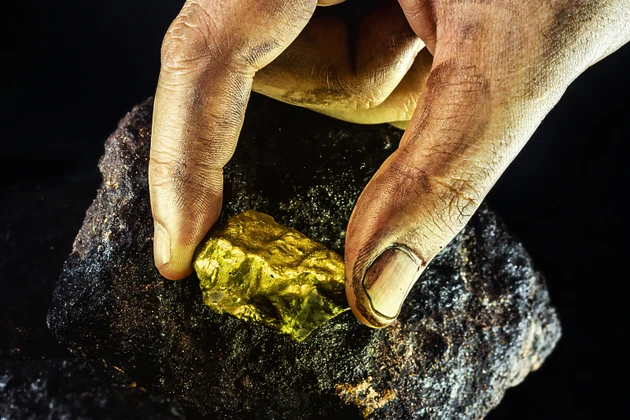
Shares in Australia’s Northern Star Resources (NESRF) rose more than 9% on Monday after the gold miner rejected a $27B takeover proposal from South Africa’s Gold Fields (GFI).
Gold Fields proposed acquiring 100% of Northern Star through a combination of
Northern Star Resources (NESRF) said Sunday it rejected a cash-and-shares takeover approach from Gold Fields (GFI) valuing the Australian gold miner at A$38.7B (~US$27.1B).
Gold Fields (GFI) proposed acquiring 100% of Northern Star (NESRF) through a combination
World-ranked number 15 Northern Ireland’s emphatic 73-50 victory over Republic of Ireland in their final qualifier was not enough to secure one of the two qualification spots automatically.
However, Scotland’s narrow win over Wales in Sunday’s later game booked both teams spots with Wales, who are ranked ninth in the world, missing out.
“It was a real rollercoaster of a day,” O’Hanlon continued.
“Obviously we started out with a hard-fought win against the Republic of Ireland, but we knew that we were still relying on Scotland.
“That match was just up and down the whole way through, so we were nerve-wrecked watching that. Just sitting in the stands, not being able to control anything, was nerve-wracking.”
O’Hanlon was captain of the side when they finished 10th in the World Cup seven years ago.
But, now, the 42-year-old said the squad will head to Sydney with ambitions of competing for results rather than simply gaining experience.
“The last one we were at was in Liverpool and there was a lot of home support, but Sydney is the home of netball at the minute,” O’Hanlon added.
“Sydney is the centre of the best league in the world. It’ll be a brilliant spectacle and it’s just class to be a part of it.
“The group will be going into the games not just to experience, not just to learn, but to actually go on and compete and try to win games and get results. That’s the next step for us really.”
Scotland and Northern Ireland secured qualification for the Netball World Cup after a three-day event in East Kilbride.
The top two sides from the four-team tournament won their spots in the finals, which take place in Sydney, Australia, with Wales and Republic of Ireland failing to qualify.
Northern Ireland’s emphatic 73-50 win in the early match on Sunday meant they would qualify should Scotland win or draw, while Wales’ only path to qualification was through a victory over Scotland.
Heading into the final match of the tournament between the Scots and Welsh, the event hosts had their spot in the finals secured unless Wales won with an overwhelming points haul and Scotland ran out 55-48 victors.
The World Cup runs from 25 August-5 September 2027.
Crowd gathers on Garvaghy Road early on Sunday morning to protest against the ruling allowing the march.
Published On 27 Sep 202627 Sep 2026
Northern Ireland’s High Court has permitted the Orange Order, a Protestant organisation, to march through a mainly Catholic area in the town of Portadown for the first time in 28 years, reviving one of the region’s most contentious marching disputes.
The court rejected a final attempt by residents to stop the parade passing through the Garvaghy Road early on Sunday, after Northern Ireland’s Court of Appeal overturned a temporary injunction granted on Saturday.
Recommended Stories
list of 2 itemsend of list
Large crowds gathered on the road before the procession, with the Belfast Telegraph reporting that protesters planned to block the route peacefully by linking arms.
First Minister Michelle O’Neill, vice president of Sinn Fein, an Irish nationalist party that supports a united Ireland, joined residents opposing the march.
In a statement posted on X on Sunday, she backed their right to protest and urged restraint, saying, “I am calling for calm on all sides.”
Sinn Fein leader Mary Lou McDonald also condemned the court decision in a post on X early on Sunday, calling it “disgraceful” and saying her party stood with the Garvaghy Road community.
Deputy First Minister Emma Little-Pengelly, from the Democratic Unionist Party (DUP), which supports Northern Ireland remaining part of the United Kingdom, urged people to stay away from the area.
She said on Sunday that threats of violence were unacceptable and added: “No one in Northern Ireland wants violence or disorder.”
The Orange Order is a Protestant organisation closely associated with unionism, the political tradition that favours Northern Ireland remaining in the UK.
The Parades Commission, the independent body that rules on disputed marches in Northern Ireland, approved Sunday’s procession with a 35-person limit, barred bands and accompanying supporters, and required the march to finish by 9:30am (08:30 GMT).
The dispute over the Drumcree parade and Garvaghy Road became one of the most bitter marching confrontations of the “Troubles”, the decades-long conflict over Northern Ireland’s political status that largely ended with the 1998 Good Friday Agreement.
Repeated attempts by the Orange Order to return from Drumcree church along Garvaghy Road triggered protests, violence and major security operations during the 1990s.
Tigray was cutoff from the world during the 2020-2022 civil war, which killed around 600,000 people.
Published On 25 Sep 202625 Sep 2026
Fears of a communications blackout in northern Ethiopia have increased as fighting flares between the federal military and forces from the Tigray region and their allies.
Telecom and internet networks were reported to have stopped working on Friday as the conflict threatened to develop across the country into a full-scale war.
Recommended Stories
list of 4 itemsend of list
The interruptions have provoked fears of a repeat of the communications blackout and supplies blockade during the 2020-2022 civil war in northern Ethiopia, when Tigray was largely cut off from the outside world.
Web monitor NetBlocks said it had detected an “internet disruption in northern Ethiopia corresponding to reports of a telecoms blackout in Tigray”.
The Reuters news agency reported that Tigray’s ruling party, the Tigray People’s Liberation Front, had ordered private operator Safaricom and state-owned Ethio telecom to cut off access to phone and internet networks in the region.
Full-scale war
A source said the restrictions may be part of a tactic to neutralise the advantage of government forces using battlefield drones.
Lower-level clashes between federal and Tigrayan forces have been ongoing for some time. However, fighting intensified this week across Tigray and later spread to the neighbouring Afar and Amhara regions, after seven armed groups announced they have formed an alliance.
The Ethiopian Peoples’ Forces Alliance for Survival has committed itself to removing the government of Prime Minister Abiy Ahmed.
The Tigray Army said the federal government had launched a “full-scale offensive” involving infantry, mechanised units and drones, and said its forces had begun what they called a defensive war to counter aggression by Abiy’s government.
The alliance forces have seized three airports and launched attacks against federal troops in Afar and Amhara.
The federal government has accused Eritrea of financially backing the TPLF and its allies, which leaders in the capital Asmara deny.
Abdisalam Balema, a member of the Tigray People’s Liberation Front’s (TPLF) central committee, told Al Jazeera that the situation has become a “full war”.
The outbreak of violence is the most serious escalation since the civil war in 2020-2022. During that conflict, which killed an estimated 600,000 people, the telecoms blackout and supplies blockade imposed on Tigray caused famine-like conditions for hundreds of thousands of people.
People in Tigray are reported to have rushed to stock up on basic supplies and withdraw cash.
The renewed fighting comes at an awkward moment for the United States, which only this month lifted sanctions on Ethiopia and Eritrea related to atrocities committed during the last civil war, saying the “national emergency… has expired”.
The conflict could also draw in neighbouring Eritrea, which fears landlocked Ethiopia is planning to invade it to gain access to the Red Sea.
A Northern California community college wrestling star slipped and fell to his death Sunday at Yosemite National Park, officials confirmed.
Santa Rosa Junior College sophomore Ryan George died in an apparent accident, his college coach, Fred Duerr, posted in a statement Tuesday.
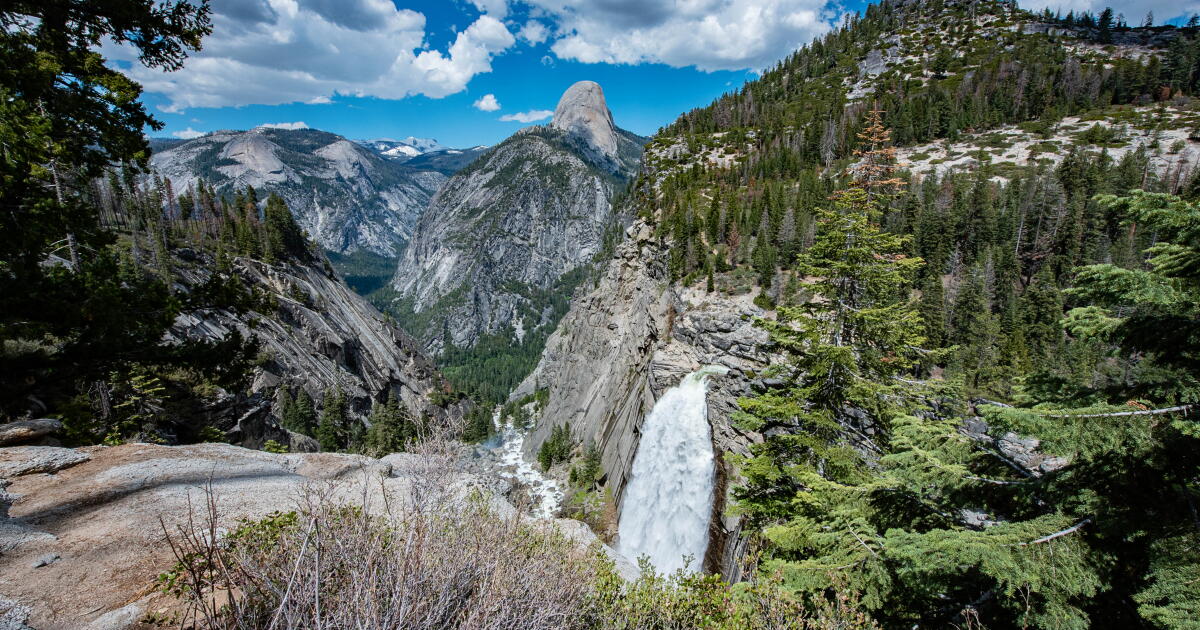
The Santa Rosa Press Democrat broke the news Tuesday, saying the 19-year-old “was hiking with friends near Illilouette Falls in Yosemite when he reportedly slipped and fell to his death.”
“Details are limited right now, and it’s been a really hard time for us all trying to process everything,” Duerr said in the statement. “If you knew Ryan, you know he was one of the most genuine, positive people you could ever meet. He had this way of lighting up a room, making you feel welcome, and bringing out the best in everyone around him.”
Yosemite National Park officials did not immediately respond to an email seeking comment.
George is listed as a Santa Rosa native in the school’s media guide and graduated from Montgomery High School in that city.
Last season, he enjoyed a strong run through the state championship in the 197-pound division. He entered sixth-ranked and finished with five victories, including two falls, en route to third place.
His finish was impressive considering he lost in the second round of the double-elimination tournament.
George rallied with perhaps his best effort of championships, defeating No. 5-ranked Dominic Sanders Jr. with a pin in 2 minutes, 38 seconds, in elimination bracket action.
He picked up the bronze in that tournament by defeating teammate Joe Ellis via a 6-2 decision.
“He was an amazing leader and wrestler, but more than that, he was an amazing human — kind, loyal, funny, and the kind of friend everyone wishes they had in their life,” Duerr said. “We love you and we will miss you so much, Ryan. Thank you for everything you gave us all.”
While current Northern Ireland boss Michael O’Neill was not yet born when Best won the Ballon d’Or off the back of a European Cup with Manchester United, he can appreciate what a global superstar means to a small footballing nation.
“George Best, an iconic figure in in world football and obviously we’re very privileged that he came from Northern Ireland. In many ways, he puts our country on the map.” he said.
“I think in Georgia, you have that situation now with Kvaratskhelia who I think is a world-class player.
“For me he was probably the best player in the Champions League last season over the whole competition. We obviously have to give him special attention.
“It’s the same when you play against any world-class player in any country that you have to be aware that he can win the game in a moment, that he can create so much and he can lift his team as well.”
Despite being in the running for such prestigious individual accolades, Kvaratskhelia’s national coach Willy Sagnol praised the player’s focus on the collective.
The former France international was a Les Bleus team-mate of Zinedine Zidane, winner of the Ballon d’Or in 1998.
“You were talking about Ballon d’Or, times maybe change but I think sometimes the past was better where players were playing and waiting to the end to see who would be Ballon d’Or and then be happy to be or disappointed not to be,” said the 49-year-old.
“Too many times in the last weeks, I see players saying ‘I’m the best, I’m the best, I’m the best.’
“Khvicha never said that and that’s why I’m very proud to be his head coach because he’s not just about a fantastic football player, but he’s also a fantastic personality who thinks always about the team and not about himself and I’m sure [on Friday] he will show it again.”
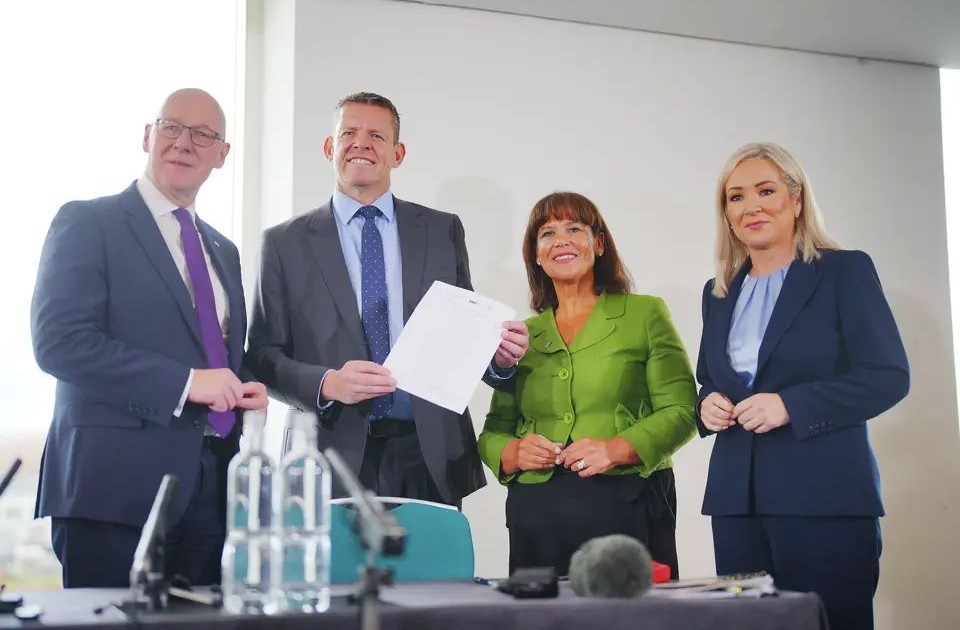
LONDON: The leaders of Wales, Scotland and Northern Ireland signed a pact Monday that threatens to lead to the breakup of the United Kingdom.
The first ministers of the three semiautonomous regions of the U.K. told Prime Minister Andy Burnham and his government to prepare for constitutional change and that their future lies with the European Union.
“For people watching across these islands — for people watching around the world — there could be no clearer sign that Westminster’s time is coming to an end,” they said in a memorandum of understanding, referring to Parliament.
The announcement came about 48 hours after U.S. President Donald Trump waded into the waters of the politically contentious issue when he said he would “ love to see ” a reunified Ireland during a trip to visit his golf course hosting the Irish Open.
It’s the first time the leaders of all three countries are either from pro-independence parties, or pro-unification in the case of Northern Ireland, which was partitioned and remained part of the U.K. when Ireland won independence from Britain over a century ago.
Tensions remain despite devolution of power
Burnham’s spokesperson brushed aside the threat and said the prime minister strongly believes in the union and was more focused on lowering the cost of living than dealing with constitutional debates.
“The United Kingdom is at its best when people come together around our shared values and problem-solving, rather than division,” Tom Wells said.
Nicola McEwen, director of the University of Glasgow Center for Public Policy, said the summit was symbolically important but has no legal significance.
“I don’t see the threat to the union being bigger today than it was yesterday,” McEwen said.
In the late 1990s, the U.K. passed legislative acts that decentralized government through the process of devolution, giving each country except England some level of policy independence and self-governance through their own parliaments. But tensions have remained with the U.K.-wide government in London, which retained control over national issues and those concerning England.
Scotland’s John Swinney and Northern Ireland’s Michelle O’Neill called for independence referendums in their countries, while Rhun ap Iorwerth did not provide a timetable for one in Wales.
The three leaders appeared in their political capacity, rather than their official one, possibly because O’Neill is in a power-sharing government with the Democratic Unionist Party.
Northern Ireland’s Deputy First Minister Emma Little-Pengelly, of the DUP, accused O’Neill, of the Sinn Fein party, of “weaponizing” the role of first minister by signing the agreement.
“I am first minister in the north of Ireland,” O’Neill replied. “This is about historic change happening all around us.”
Scottish nationalists believe support for independence is rising
Scotland tried unsuccessfully to break away in 2014, with voters rejecting a referendum 55% to 45%. But McEwen said support for Scottish independence has grown since Brexit, in which the U.K. formally left the European Union in January 2020, following a referendum in June 2016.
Swinney, leader of the Scottish National Party, said he believed voters would now vote for independence if the U.K. government approved a referendum.
Burnham told Parliament last week he would allow such a vote to be held if there was a “clear consensus” in Scotland, but later sent Swinney a letter saying a vote was “off limits.”
The 1998 Good Friday peace accord that ended three decades of sectarian violence in Northern Ireland known as “The Troubles,” requires a vote on unification if polls there indicate it would likely pass, a threshold the U.K. government says has not been met. Ireland would also have to approve the change in a referendum.
Burnham has made devolution a major theme since taking office less than two months ago, but his focus has been on regional governments across England, a reflection of his years as mayor of Greater Manchester.
Swinney tried to turn Burnham’s ideology to his advantage, saying his frequent talk of devolution “leads you to the logic of recognizing the right of the people of Scotland, in my case, to decide their own future.”
Beyond any threat of departing the union, McEwen said the greatest impact of the three joining forces could be that they agreed to cooperate with each other routinely and that could help to exert more influence on the U.K. government.
“It does keep on the agenda that question about, well, if the United Kingdom is a union based on consent, what is the pathway where it looks like that consent may no longer be there?” McEwen said. “Any U.K. government has been very reluctant to engage in that discussion.”
‘I don’t eat mozzarella outside Puglia,” says our friend Savio. “It’s not the same.” Savio is a very opinionated foodie, so I take his words with a pinch of good Puglian sea salt (see below). He was adamant about the superiority of the stretched-curd cheese from his home turf.
Puglia is also the birthplace of ingredient du jour burrata, which originated in Andria, a few miles from Savio’s home town of Barletta. Andria forms one part of the triangular Barletta-Andria-Trani (BAT) province, often passed over for better-known parts of Puglia, despite the cheese connection and Barletta having miles of palm-backed, sandy beaches.
Illustration: Guardian Graphics
About a century ago, in the hills outside Andria, farmer Lorenzo Bianchino was snowed in and couldn’t get his milk to market. To save what he could, he revived an old technique for preserving butter (burro, hence burrata), stuffing cream mixed with mozzarella scraps (stracciatella) in a casing of the stretched-curd cheese.
There are now several burrata makers in Andria, the most famous being Caseificio Olanda, which offers demos, tastings and a museum. Late one morning, we watch Riccardo “Dino” Olanda, son of the founders, work his magic. He adds almost-boiling water to the curds, then mixes with hands red from doing this every day. As he stretches and massages the curds, a smooth velvety mass forms. “See how it’s shiny?” he says. “Means it’s ready.” Working quickly, he squeezes out round lumps between thumb and forefinger into the familiar mozzarella balls. This action is mozzare, hence the name.
He also makes little knots and plaits before moving on to burrata. Taking a warm mozzarella ball, he works it into a hollow bag with his fingers then fills it with cream and stracciatella before tying the top with string.
Riccardo Olanda making burrata
Afterwards, a dairy-heavy meal totally worth the cholesterol and calories: mozzarella and burrata to start, then bread with chunks of caciocavallo (a stretched-curd cheese), and a dessert of heart-shaped fresh ricotta with strawberry jam or cocoa.
And, I have to say, Savio is right. The mozzarella and burrata have a juicy, elastic texture and a gorgeous cheesy, umami flavour; the salt and flavour leached out by the whey the cheeses later sit in. How will I ever settle for Tesco Finest after this?
Over the next few days, eating our way around the province’s restaurants and food producers, I wonder whether it’s because the ingredients are so good that this area has so many food obsessives, or the other way round.
Barletta sees few foreign tourists, but it is full of Italian life. There are lots of independent shops, a Norman castle and cathedral to visit, and every evening people pour into the bars, clubs and gelaterie of thesette strade, seven parallel streets in the old town.
Down the coast, Trani, with its sea-facing romanesque cathedral and pretty harbour, attracts some tourists, but they are not in evidence at 7am when the fishing boats return. The men complain of rough seas and a poor catch, but from the back of the boats they’re soon selling mullet, octopus, skate, fat sea snails, monkfish and palombo (small shark) to restaurateurs and fishmongers. Thirtysomething Nicola says he went out at midday and got back at 3am. When does he sleep? “Never.” A fifth-generation fisher, he began helping on the boats aged six.
Fish straight off the boat at Trani docks. Photograph: Vittorio Sciosia/Alamy
We’ll eat fish later, but today is for pizza. Portento in Barletta is run by food nut Luigi Lacerenza. He has us try so many local products as antipasti – caprino goat’s cheese tasting of green mountains, grilled caciocavallo from an old couple who make just six a week and small-batch salami – that we’re almost too full for pizzas. But they are wonderful: one with sausage, olives, oyster mushrooms and yellow tomatoes; another with aubergines and grated cacioricotta.
In Cerignola, west of Barletta, Rosario Didonna used the money he won on a TV standup competition to turn his family’s deli into a cosy, wood- panelled restaurant, U’ Vulèsce (dialect for “peckish”). Rosario knows fishers by name, works with small farmers and wine producers, and invites nonne from all over southern Italy to demonstrate recipes in his kitchens.
We start with tasty goat prosciutto and plum-sized local olives called bella di Cerignola. Then an unforgettable prawn tartare served in sea urchin shells, hairy crab spaghetti (“the juice is better than lobster”), octopus with bean puree, and sea bass with orange mayo. He waves away our thanks: “I’m doing the best job in the world!”
Nicola Barbera at Masseria Barbera, a farm restaurant in the Alta Murgia national park, is equally inspired, but rather by what grows on the estate founded by his great-great-great-great-grandfather Riccardo, who fought with Garibaldi.Exuberantly bouncing us around the farm – it produces 90% of what the 100-cover restaurant needs – he shows us olives and vines, but also the “weeds” growing around them. “They’re eatable,” he says, grabbing handfuls of peppery rocket, and bitter but delicate wild chicory. From the abundant kitchen garden, he makes eight varieties of tomato sauce.
Masseria Barbera farm restaurant
We tuck into a lot of this for lunch: a pie with white onions, anchovy and sultanas; courgettes with mint and garlic; spaghetti with yellow tomatoes. (“I call it bastard sauce,” says Nicola. “Those tomatoes take three times as long to pick.”) Then, something I never thought I’d eat: grilled donkey fillet. I feel bad about the patient, mild-tempered beasts, but this is healthy, low-fat food, never intensively farmed. It’s also the best meat I’ve ever tasted.
Good food is made better by good olive oil, and producers here include Muraglia, known for organic oil in hand-painted, rainbow-stripe ceramic bottles, and Sabino Leone, offering tours of its ancient groves and oil mill for €15, plus tastings.
Sabino Leone olive oil
This area also offers plenty to do between meals. Barletta was the home of Italian painter Giuseppe De Nittis, who hung out with Degas and Manet, and took part in the first impressionist exhibition in Paris, in 1874. Over 200 of his works are now displayed in the 16th-century Palazzo della Marra (€6).
At Europe’s biggest salt pan, Salina Margherita di Savoia, there’s an expanse of peaceful ponds with a snow-white salt mountain to climb. Another day, an exhilarating ebike ride in the Alta Murgia with Filippo Tito of Cycling ’n’ Trek, through dense forest to peer with awe into an old bauxite mine that resembles a mini grand canyon. We get back ravenous, but in this corner of northern Puglia, that’s a blessing.
Where to stay
Until this century, Barletta had little tourist accommodation. Pick of the few B&Bs is Antica Dimora (doubles from €97), a restored 17th-century palazzo run by Lilly and Riccardo Manna. There are three smart bedrooms with lots of plants and breakfast features different local specialities each day.
Lama di Luna (doubles from €230) is an organic farm in deep countryside, with six rooms set around an 18th-century stone courtyard. A well and solar panels make it energy and water self-sufficient; half of its 200 hectares are left wild, the rest are planted with olives, vines, almonds and cherries. There’s a cinema, a library and a large pool shaded by 600-year-old olive trees.
Where (else) to eat
The view from A Sud dell’Anima restaurant, Minervino
Barletta’s 60-year-old Mosébakery is revered for its krapfenfilled doughnuts and sourdough croissants. There are also chocolates, ice-cream and cakes, all housemade, and great coffee.
Puglia has hundreds of gelaterie but experts rate Scoop in Canosa (which is called Puglia’s “Little Rome” for its catacombs, temple ruins and Roman bridge). Francesco Di Nunno makes ice-cream with local seasonal ingredients: raspberry and strawberry sorbets are available only in early summer; percoca yellow peach until mid-August.
There’s affordable fine dining at chef Luciano Matera’s Il Turracciolo in central Andria. Highlights for me are broad bean and chicory “meatballs”, bright green inside; a “hidden mushroom” under baked eggy topping; and pasta discs with whole and pureed green beans and peas.
At A Sud dell’Anima, chef Nadia Tamburrano uses modern techniques and hyper-local ingredients to make food of astonishing quality for a small hilltop town (Minervino, population under 8,000). Her antipasti explode with flavour thanks to house-cured capers and homemade mustard, syrups and purees. A main of sweetbreads wrapped in intestines feels a bit out-there, but is delicious, the intestines crispy as crackling.
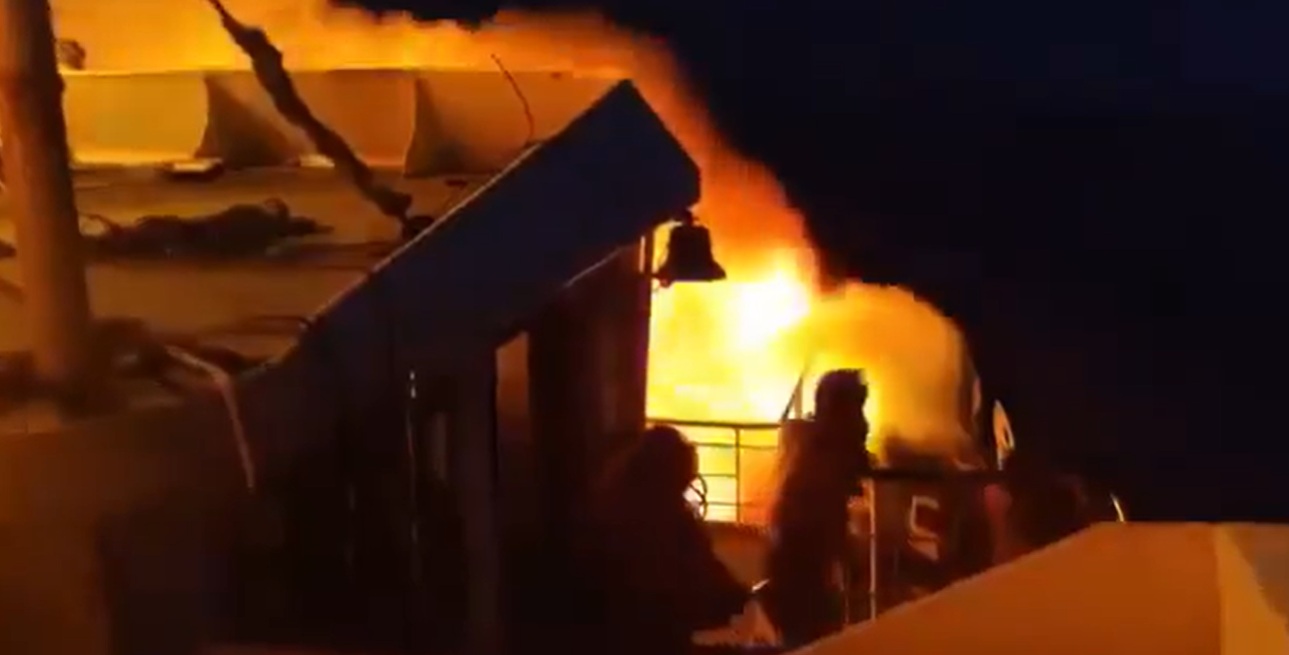
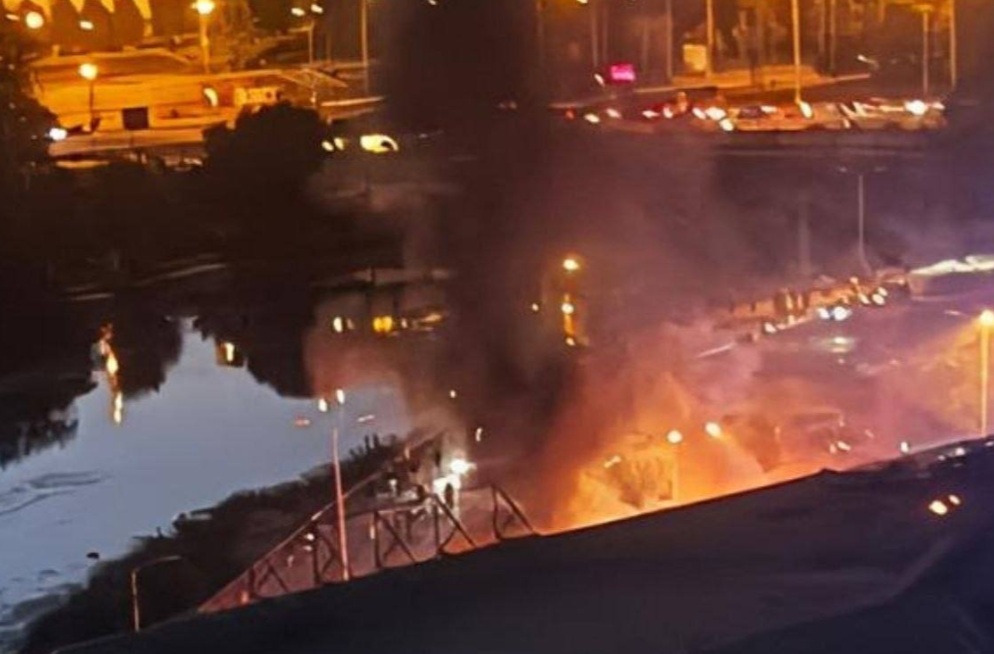
MANILA: A fire broke out Wednesday evening aboard a vessel carrying over 100 passengers near a tourist hotspot in the Philippine province of Palawan, leaving at least five people dead, local media and the coast guard said.
“The Philippine Coast Guard (PCG) immediately responded to a fire incident involving M/V June Aster at the vicinity waters approximately 1.2 nautical miles northeast of Barangay Marcilla,” in the Coron municipality, the service said late Wednesday on Facebook.
Video shared by the coast guard showed the vessel completely engulfed in flames.
Another post over two hours later said “five casualties were initially reported” and brought ashore, with accompanying photos showing several body bags.
The post said 42 people had been rescued, while GMA News reported the ship had been carrying 117 passengers and 17 crew, citing a coast guard official.
Tracking data from MarineTraffic showed the June Aster had departed from Manila.
KYIV: A Russian drone strike on a shopping centre in the northern Ukrainian city of Sumy killed three people and injured two, Regional Governor Oleh Hryhorov said.
Hryhorov, writing on Telegram, said a fire had broken out, and a photo posted online by the governor showed a badly damaged building and rubble strewn on the ground.
He said rescue teams were tackling the aftermath of the strike.
Sumy and the surrounding region along the Russian border have long been subject to heavy attacks and Moscow has said it wants to establish a buffer zone in the area.
Once upon a time, in the woods outside Pola de Somiedo, lived a family of Cantabrian brown bears. The villagers reported sightings of a mother bear who had lost a leg to a hunter’s trap, her two cubs and two adult males, either of which might have been the father. In those days, at the end of the 1980s, they seemed to be the last of their kind in this part of Asturias. Meanwhile, the wider population dropped to about 60 bears across the surrounding Cantabrian mountain range that gave the species its name.
They have since clawed their way back from the edge of extinction here in northern Spain, and nature guide Luis Frechilla believes their numbers may now be upwards of 500 again. “They’re still classed as endangered,” he tells me, until the official count hits 1,000. But relative abundance makes them much easier to see today in Somiedo natural park – one of Spain’s first such protected areas, established in 1988.
Somiedo natural park. Photograph: Biosphoto/Alamy
Setting his scope on a tripod in a steep-angled pasture, Frechilla spots a bear almost as soon as we start looking. A juvenile, apparently, which means the animal is old enough to be foraging alone, but it’s still too small, and too far away, for him to tell if it’s a male or female. Another bear-spotter standing near us seems more willing to take a guess.
“Ooh, look at his little ears,” she says delightedly, beaming behind binoculars. No expert myself, I watch that distant fuzzy shape move across the viewfinder and along the sharp ridges opposite, blinking in and out of sight like a cursor on the trend line of a graph. I’m not sure that we are close enough to call this an encounter, but it is an experience.
The sun drops behind the peaks; the birds sing a dusk chorus in the birches and oaks; cowbells ring through the valley from the dairy herds that help this region of so-called “Green Spain” look and sound like the Swiss Alps. It gets cold at night up here, and it’s been known to snow in summer, though my own visit in late spring sees the mountaintops looking whiter than anyone around here can remember so deep into May.
That weather, and the sheer calorific spend of living and working at a median altitude of 1,300 metres, has made the traditional cuisine much sturdier here than elsewhere in Spain.
Down at the village inn, Casa Miño, we share a bottle of regional cider and a cachopo (beef fillet topped with serrano ham, peppers and goat cheese, and pounded into a single solid unit the size of a solar panel). I want fabada,too, the famous Asturian stew of white beans, pork belly and blood sausage. Frechilla says it’s a winter dish, customarily eaten for lunch – too heavy for the body to process later in the day. But I would order fabadaat midnight in a heatwave, and keep eating it even while they loaded me into the ambulance.
The Lake of the Valley. Photograph: Manu Garcia/Alamy
The bears, meanwhile, don’t have much to feed on at the moment. They only woke from hibernation a few weeks ago, explains Alicia Madrid the next day, on a forest trail above the century-old hydroelectric power station at La Malva. A biologist with the conservation group Fundación Oso Pardo, Madrid tells me that Cantabrian bears don’t hibernate as long or deeply as other brown bears and are generally smaller and lighter than American grizzlies.
“They’re adapted to this terrain, and they can’t be too heavy because they have to climb a lot,” she says. Their paw prints in the mud look big enough to me, and the bite marks where they chewed clumps of long grasses, and the hairs shed where they scratched their backs against trees. Madrid shows us, too, the hefty rocks they overturned looking for insects. Further into the summer, there’ll be plenty of berries, acorns, chestnuts and maybe some meaty carrion to fatten them up.
The foundation has played a major role in the regrowth of bear populations, building bio-corridors with strategic placements of trees and bushes full of all the things they like to eat. Another key factor is the hunting ban, introduced in 1973. The trick now, says Madrid, is coaxing isolated cohorts to breed with other groups and boost genetic diversity.
Also: managing the tourists who come to see them, and balancing ecological imperatives against financial incentives. Later, after a long hike through the Valley of the Lake to reach the aptly named Lake of the Valley, I overhear Frechilla fielding the related concerns of two local women. Against a backdrop of blue sky, bright wildflowers and silver waters, the women seem to argue that conservation efforts amount to commercial exploitation. Frechilla gently insists that Somiedo natural park is a model of good practice in Spain. Much of the bears’ territory is closed to the public, and spotting expeditions are only permitted in the company of licensed guides. Nature tourism, he says, keeps villagers in jobs where farming culture cannot, and is proving vastly more sustainable than hunting bears for sport. As for protecting humans, there has been only one bear attack in recent memory, on an elderly lady whose evening stroll led her between a mother and cubs. She survived.
For now, at least, most residents seem willing to share the bears with outsiders. That evening, a small crowd gather by the side of a winding back road near Saliencia, some sitting comfortably on camping chairs with spotting scopes in their hands. Everyone is watching a large male bear – so big and so close that they don’t need the viewing equipment – as he lopes across a meadow to take a quick splash in the river. Another male is spotted in the treeline above, and the two circle each other at a distance for a while. There is some speculation that they might fight for this turf, and a man with two leashed greyhounds seems ready to take bets on it. Frechilla shakes his head.
“Maybe later in the season, when they’ve gained enough weight.”
A bear in Somiedo natural park. Photograph: Lucas Vallecillos/Alamy
These bears are doing better now, but it’s still a tough life. The reality of their ongoing baby boom is that only 30% of juveniles will survive on their own, after a year of maternal supervision. This is surely why I find it so moving when we follow reports of another sighting in the twilight: a mother and her two young cubs have been seen climbing a slope called El Diente, or “The Tooth”.
It’s getting dark and cold, but we can see them through the scopes, about a mile away from us across the high mountain pass at La Peral. I watch the mother bear waiting and cajoling as needed while the siblings struggle up the vertical planes of rock like toddlers trying to climb a baby gate. On the ridgeline, they turn to silhouettes, play-fighting against a white sky.
They disappear over the far side, but then a little one comes back, seeming to wave goodbye with both front paws in the air. I remember a story I read to my daughter once, which put a poignant time limit on the usual fairytale ending: “And they all lived happily together, for as long as they could.”
SEEING the Northern Lights tops many a traveller’s bucket list.
The problem is, they can be elusive and costly to find and because they are at the whim of nature, there are never any guarantees . . . until now, that is.
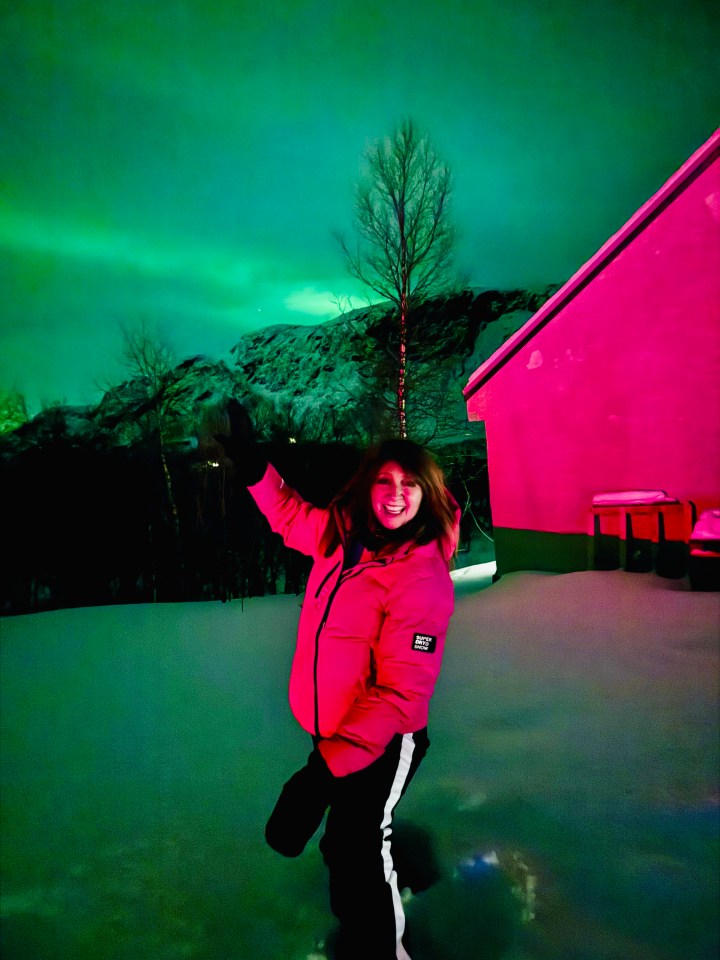
Jo Kessell beams in front of the Aurora borealisCredit: SuppliedJo poses in front of the Arctic TrainCredit: Supplied
There is a new Northern Lights Train in Norway which promises to take you where there’s a greater chance of spotting the Aurora Borealis than ever before. It costs £115pp and looks so good I booked a ticket.
Meeting point: Narvik Station, high in the Arctic Circle. Waiting on Platform 1 is a four-carriage train, guide Lill and buckets of white stuff. It’s been snowing non-stop from thick, heavy clouds.
Sign up for the Travel newsletter
Thank you!
Spotting the Aurora normally requires a clear sky, so these conditions are far from ideal. Do we really have a chance of seeing them? Lill consults an app and smiles. “Yes,” she says.
The three-hour experience includes a 90-minute stop in the Arctic wilderness and, as the train pulls off, lights are dimmed to better see the Aurora.
After we’ve rattled past Narvik’s fjord and suspension bridge, a fellow passenger points excitedly at the window. Outside, a green plume is painting the sky.
Well I never — our first sighting.
From here, we climb north into the mountains towards the Swedish border. This historic track was built in 1902 and is still used to transport iron ore from Sweden’s Kiruna mines to the port of Narvik and beyond.
Our destination is Katterat — a remote, 373m-high (1,224ft) outpost accessible only by train or foot.
There’s no light pollution or civilisation and, thanks to its altitude, the sky is usually clear here when elsewhere else it’s not.
Once we’ve arrived and descended on to the platform, nobody budges — we’re too busy looking up.
Streaking overhead are bands of green criss-crossing a starlit sky.
Necks crane, photos are taken and the excitement is palpable. A trail leads to a makeshift camp where there are snowshoes to try, fires to warm hands and an indigenous Sami tent called a “lavvu” for shelter, with hot drinks, biscuits and sausages.
Despite the sub-zero temperatures (it’s -20C), nobody cares about warming up because we’re all too fixated on the sky show.
One moment the aurora shines to the right, the next to the left.
They come, they go; they fade, they flare; they keep us guessing, eyes peeled. It’s a magical night.
This train is one of many ways to chase the Northern Lights but there’s still magic to be found when the Green Lady plays shy.
On an excursion with Arctic Moments the next night, we sip hot chocolate and toast cinnamon buns on a fire in a Narnia wonderland.
No Aurora but happy memories with photos included in the package.
Narvik’s also a superb base for other adventures. There’s downhill skiing — it’s hosting the 2029 FIS Alpine World Ski Championships — as well as cross-country skiing, considered Norway’s national sport.
I give it a go but it’s harder than it looks — even on flat terrain.
There are also historical links. A fierce World War Two naval battle was fought and lost in Narvik in 1940 — Norway was occupied by Germany afterwards — and the town’s War Museum tells this story.
A new boat excursion even sends a drone underwater so you can see the shipwrecks on the ocean floor.
Narvik has everything from self-catering apartments to hotels offering Scandi-style breakfasts — think herring and smoked salmon — to the deluxe glass cabins of Camp 291, which cling to the mountainside.
This is my favourite accommodation, with superb fjord views.
Hiring a car allows you to explore even further. Polar Park is home to lynxes, musk oxen, moose and wolves. I’m taught how to howl and, amazingly, they howl back.
Best of all is the Arctic fox experience. You get to feed them but be prepared — they’re playful and love nothing more than clambering all over you.
For a final treat, I head to Narvik’s floating Arctic Sauna where a hole and a ladder lead directly from the heat into the chilly sea.
But the ultimate thrill is the Aurora Borealis. Travellers have been trying to find the best and most reliable way to see them.
Norway’s Northern Lights Train may just be the coolest way to do just that.
GO: NARVIK, NORWAY
GETTING/STAYING THERE: Four nights’ B&B in Narvik with Best Served Scandinavia is from £1,995pp including return flights with Norwegian Airlines, hire car, activities, entrance to Polar Park, one night in a glass cabin and the Northern Lights Train. See best-served.co.uk.
OUT & ABOUT: The Northern Lights Train costs £115 for adults, £58 for under-17s; under-6s go free. See arctictrain.com.
For driving advice for winter roads in arctic Norway, see northernnorway.com.
MORE INFO: See norwegian .com and visitnarvik.com.
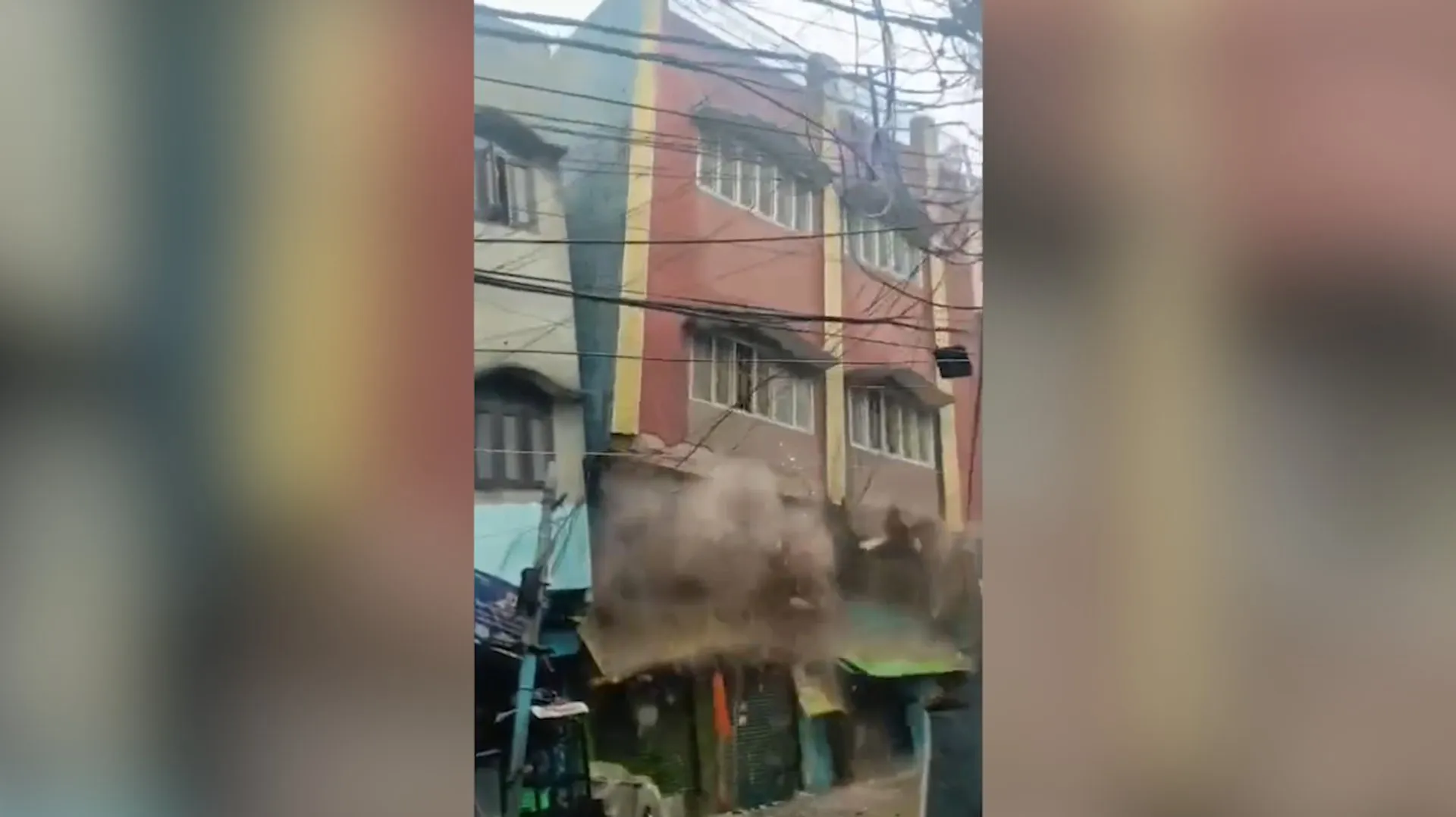
A multi-storey building collapsed in Muradabad, northern India, tearing through power lines and sending sparks into the street. Local media say it had been evacuated after cracks appeared following days of rain. No casualties were reported.