By the time the announcement that Abu Bilal Al-Minuki was killed reached the outside world, the strike itself was already hours old. In the early hours of Saturday, May 16, somewhere in Metele, in Borno State, northeastern Nigeria, a compound had been hit.
First, US President Donald Trump posted a statement on Truth Social. Another came from Bayo Onanuga, Special Advisor to Nigeria’s president on Information and Strategy, on Facebook and X. Al-Minuki, described as one of the most senior figures inside Islamic State West Africa Province (ISWAP), was dead, both statements claimed.
“Tonight, at my direction, brave American forces and the Armed Forces of Nigeria flawlessly executed a meticulously planned and very complex mission to eliminate the most active terrorist in the world from the battlefield. Abu-Bilal al-Minuki, second in command of ISIS globally,” Trump said in the post.
The Nigerian military said special forces were deployed to block escape routes while air components executed precision strikes against what was described as a “concealed and fortified terrorist enclave.” The mission was completed, the military added, “without casualties or equipment loss on the part of friendly forces.”
During a televised interview, the Director of Nigeria’s Defence Media Operations, Major Gen. Michael Onoja, explained that the US military provided intelligence and surveillance support, while Nigeria deployed boots on the ground for the operation.
“There were no foreign boots on the ground during this operation. What we received were intelligence, surveillance, reconnaissance support and other force enablers,” he said.
There was only one problem: according to the Nigerian military itself, Al-Minuki had already been killed once before – in 2024.
For nearly two years, Al-Minuki’s name – also known as Abubakar Mainok or simply Abu-Mainok – had existed in the strange afterlife of Nigeria’s counterterrorism war; a conflict where terrorist commanders are frequently declared dead only to reappear later through propaganda videos, from Abubakar Shekau to Abu Mus’ab Al-Barnawy.
“Our determined Nigerian Armed Forces, working closely with the Armed Forces of the United States, conducted a daring joint operation that dealt a heavy blow to the ranks of the Islamic State,” President Bola Ahmed Tinubu said in a statement issued from Aso Villa on Saturday. “Early assessments confirm the elimination of the wanted IS senior leader, Abu-Bilal Al-Manuki, also known as Abu-Mainok, along with several of his lieutenants, during a strike on his compound in the Lake Chad Basin.”
However, in the counterinsurgency operations in northeastern Nigeria, where insurgency and information warfare have become deeply intertwined, certainty is always expensive.
Strategic realignment
Saturday’s strike was the first major public success to emerge from the military partnership between Nigeria and the US. The operation, designated under Nigeria’s existing counterterrorism framework as falling under Operation Hadin Kai, commenced at 12:01 a.m. and ended at 4:00 a.m. on May 16, according to a statement from the Joint Task Force North-East spokesperson, Lt.-Col. Sani Uba.
The operation reflects a rebuilding of the partnership after it had been almost damaged after a single catastrophic night on Christmas Day 2025, when Donald Trump ordered missile strikes into Sokoto State. Trump framed the strikes as retaliation against militants killing “innocent Christians”—a language that resonated with parts of his domestic base but landed badly across northern Nigeria, where the conflict is far more complicated than the religious framing imposed on it from abroad.
Several of the missiles reportedly malfunctioned. One strike landed near a civilian settlement with no known militant presence. Nigerian officials found themselves balancing two competing realities: the military needed American intelligence and surveillance capabilities, but the Nigerian government could not afford to appear subordinate to the US narrative of the war.
The months that followed produced a quieter arrangement. American military personnel arrived in northeastern Nigeria – eventually around 200 troops – under a structure designed carefully around optics as much as operations. Nigerian authorities retained formal command. The Americans supported intelligence gathering, aerial coordination, and technical operations around the A-29 Super Tucano fleet already deployed against insurgent groups in the Lake Chad Basin.
The choreography surrounding the recent announcement of Al-Minuki’s death was as deliberate as the operation itself. Donald Trump spoke first. Tinubu issued his statement a few hours after Trump posted on Truth Social. Major Gen. Samaila Uba, Director of Defence Information, released a detailed press statement under the Armed Forces of Nigeria letterhead, complete with Al-Minuki’s full array of aliases — Abu Bakr ibn Muhammad ibn Ali al-Minuki, Abor Mainok, Abubakar Mainok, Abakar Mainok — and a comprehensive accounting of his alleged roles.
Everyone involved in the recent communication appeared determined not to repeat the Sokoto embarrassment on Christmas Day, when Washington’s messaging had almost completely overshadowed Abuja’s.
“Nigeria appreciates this partnership with the United States in advancing our shared security objectives,” Tinubu said. “I extend my sincere gratitude to President Trump for his leadership and unwavering support in this effort. I look forward to more decisive strikes against all terrorist enclaves across the nation.”
The statement was noted for its tone and content. Tinubu’s public gratitude to Trump marks a significant shift from the friction that defined the relationship only five months ago, when parts of Nigeria’s political and diplomatic establishment, along with some ordinary Nigerians, were quietly furious over both the Christmas strikes and the framing of responding to the claims of Christian genocide that accompanied them.
So who exactly was Al-Minuki?
Trump described him as “the second in command of ISIS globally.” AFRICOM called him “the director of global operations for ISIS”. The Nigerian Defence Headquarters offered the most specific claim: that as recently as February 2026, Al-Minuki “may have been elevated to the position of Head of the General Directorate of States, placing him as the second most senior leader within the ISIS global hierarchy.”
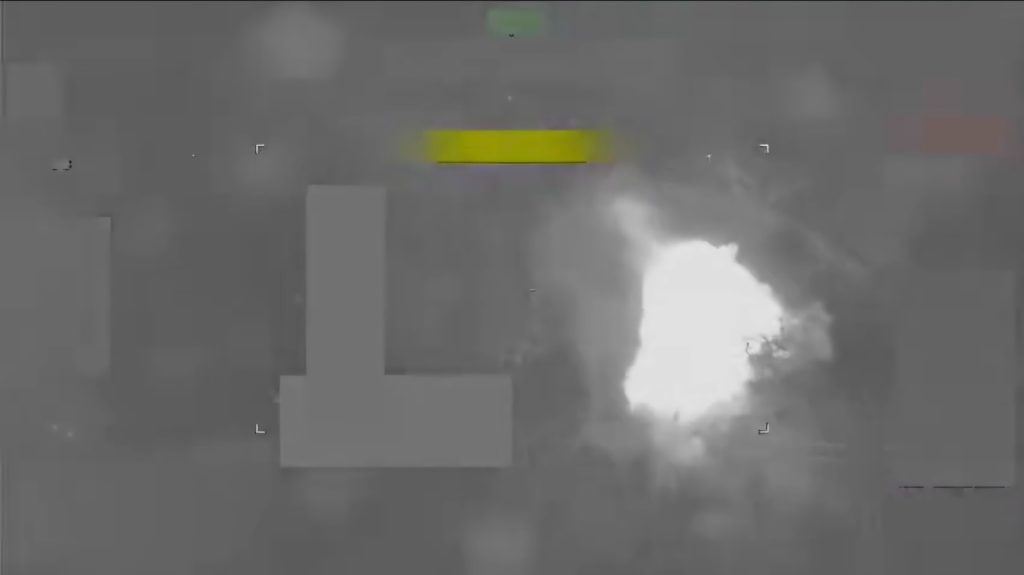
A screenshot of the explosion that allegedly killed Abakar Mainok and several other ISIS fighters in northeastern Nigeria at dawn on Saturday, released by the US AFRICOM.
The same statement linked him to the 2018 Dapchi kidnapping of more than 100 schoolgirls, to the facilitation of fighters into Libya between 2015 and 2016, to weapons manufacturing and drone development, and to “economic warfare” coordination across the Sahel.
Get our in-depth, creative coverage of conflict and development delivered to you every weekend.
Subscribe now to our newsletter!
“His death removes a critical node through which ISIS coordinated and directed operations across different regions of the world,” the Defence Headquarters’ (DHQ) statement said.
Al-Minuki was a product of the insurgency itself. Born in 1982 in Mainok, a town along the Benisheikh axis of Borno State, he took his nom de guerre (pseudonym) from his hometown. Those who knew him in his early years, during the rise of Mohammed Yusuf, the founder of Boko Haram, told HumAngle that he was a young man who ran a small barbing salon in Mainok village, about 58 kilometres west of Maiduguri in northeastern Nigeria. Long before his name became associated with violence and insurgency, he was known simply as a village barber.
Before pledging allegiance to the Islamic State in 2015, he was a senior Boko Haram commander with a documented antagonism toward Abubakar Shekau. His split with Shekau was a result of competing visions of insurgency: Shekau operated through spectacle, brutality, and deliberate isolation from the Islamic State central command. The faction that became ISWAP sought structure, territorial governance, and integration with the IS international hierarchy. When IS reportedly requested fighters for Libya during the height of the Syrian conflict, Shekau refused. Al-Minuki, then commanding ISWAP’s Lake Chad division, complied — one reason, analysts say, he rose within IS’s provincial bureaucracy while Shekau remained suspect in its eyes.
The DHQ’s assertion that Al-Minuki served as “Nigeria-based al-Furqan GDP Office Emir” from 2023 onward is consistent with what analysts had been tracking for several years: his role as the connective tissue between ISWAP’s local operations and the IS’s transnational administrative architecture. His designation as a Specially Designated Global Terrorist by the US in June 2023 under Executive Order 13224, cited in Saturday’s military statement, reflected assessments that he had become central to ISWAP’s financial networks, weapons procurement, drone acquisition, and communications between the Lake Chad insurgency and IS-linked structures across West Africa and the Sahel.
The “second in command of ISIS globally” framing is a political claim, pitched to an American domestic audience that requires a recognisable villain. Still, it doesn’t situate Al-Minuki well within ISIS’s formal hierarchy.
Al-Minuki had long occupied a powerful position within the ranks of ISWAP, but his influence deepened after the deaths of Abu Musab al-Barnawi and, later, the death of Abu Rumaisa or Abba, both sons of Boko Haram founder Mohammed Yusuf in 2023, as reported by HumAngle. Their deaths created a vacuum at the centre of the ISWAP leadership structure and how it interacts with the Islamic State global networks, thrusting Mainok into a more strategic role in coordinating operations of the terror group across the Lake Chad region.
Al-Minuki was the man most responsible for keeping ISWAP wired into the Islamic State’s international infrastructure. His death is a meaningful disruption, but not the decapitation of a global terrorist hierarchy.
ISWAP has repeatedly demonstrated that it can regenerate leadership after losses. It replaced leaders and survived the loss of top commanders. Its resilience has never derived primarily from any single commander; rather, it has stemmed from the political and economic conditions within Borno and across the Lake Chad Basin that continue to enable recruitment, taxation, and territorial control. The DHQ acknowledged as much, noting that “Battle Damage Assessment is ongoing, while follow-up exploitation operations are being conducted to clear remaining terrorist elements in the area.”
“Mistaken identity”
The official statement from the Army said it was common for numerous terrorists to use the same names or aliases, suggesting that both the individual killed in 2024 and the commander killed in this strike shared the same name. It did not acknowledge any mistakes.
“This time around, this individual [we killed] is the original owner of that name,” the Director of the Defence Media Operation said.
Meanwhile, Bayo Onanuga, President Tinubu’s spokesperson, in a Facebook post on Saturday, claimed the discrepancy between the person killed in 2024 and the one killed now was due to a case of mistaken identity. He also warned that sceptics had “rushed to question the authenticity of the Nigerian-American joint military operation” and said the criticism was “premature and not grounded in the realities of modern counterterrorism operations.” He noted that Nigeria’s Armed Forces were “operating in one of the world’s most complex insurgency environments where targets often move across borders and use multiple identities.”
Nigeria has lived through this before. Shekau was declared dead multiple times across more than a decade until soldiers grew to distrust the announcements and civilians in Borno learned to reserve judgment until they saw real change on the ground.
The Presidency’s warning that “premature dismissal of military claims can inadvertently undermine operational morale and strategic messaging” is a legitimate concern. But it is also an argument for public deference rather than public accountability.
For now, Trump has another example to point to as evidence that American military engagement abroad delivers results. Tinubu also has a successful joint operation that projects competence and international partnership without appearing commanded from outside.
The Armed Forces of Nigeria, in Major Gen. Uba’s words, have demonstrated “unwavering resolve to confront terrorism and deny extremist groups the ability to threaten national, regional and international security.”
But in the displacement camps and farming communities scattered across Borno State, the significance of Saturday’s strike will be measured differently.
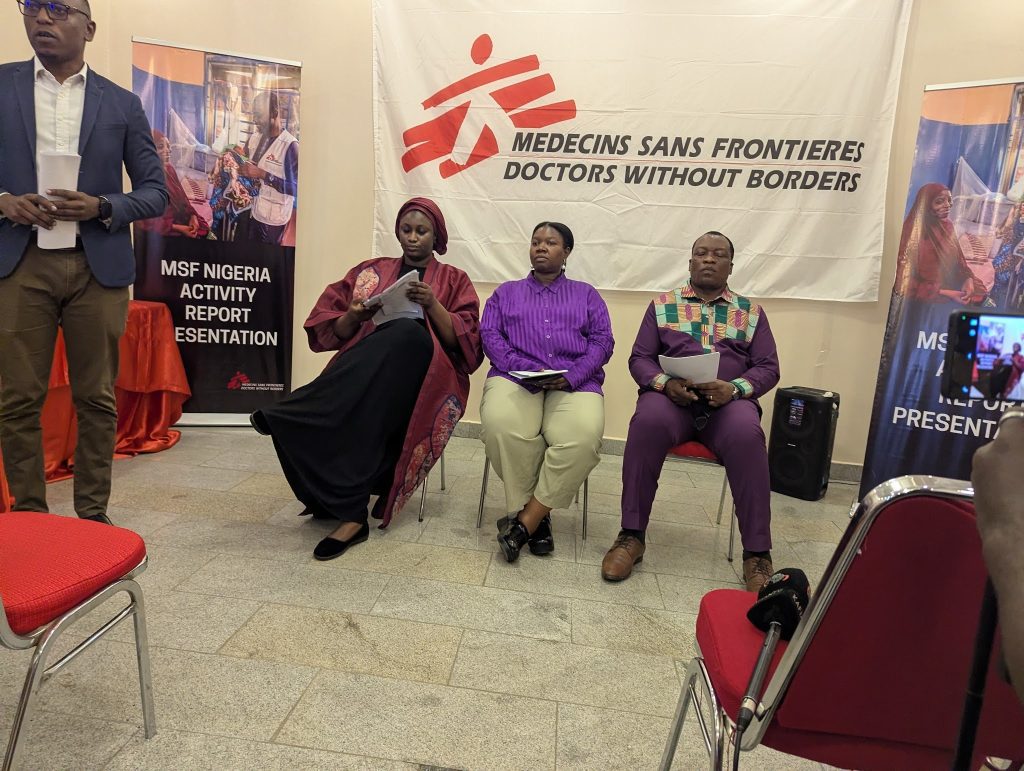
Médecins Sans Frontières (MSF), an international humanitarian organisation, has released its 2025 activity report for Nigeria, and the findings are sobering. The medical emergency organisation, also known as Doctors Without Borders, unveiled the report during an event in Abuja, North Central Nigeria, on Wednesday, May 13, documenting the disturbing rise in malnutrition cases in the country’s northern region.
With more than 3,500 workers delivering essential healthcare services across ten states, MSF reported treating over 440,000 children for malnutrition, more than 300,000 individuals for malaria, and assisting with over 33,500 deliveries in 2025.
This surge, according to the humanitarian organisation, underscores the fragility of Nigeria’s health system and the growing vulnerability of women and children in conflict-affected regions.
The 2025 report shows that MSF recorded more than 600,000 outpatient consultations, 48,000 inpatient admissions, and treated 341,239 patients for malaria, 38,753 children for measles, 6,123 patients for diphtheria, and 985 others for meningitis across its facilities in the region.
These findings are specific to the ten Nigerian states where MSF has been operating since 1996, including Jigawa, Kano, Katsina, Kebbi, Sokoto, Zamfara, and Cross River. The organisation says it has provided a wide range of essential medical services, including paediatric and maternal health care, treating children with malnutrition, responding to disease outbreaks, caring for survivors of sexual violence, offering mental health support, and performing life‑saving surgical interventions.
The MSF country representative, Ahmed Aldikhari, revealed that in 2025, the organisation observed a pattern consistent with that of previous years, starting in 2022. Aldikhari stated that malnutrition is one of the year’s greatest challenges, linking it to the region’s fragile conditions, which are severely affected by insecurity that has worsened food security.
Representatives of MSF unveiling the 2025 report, which revealed the rise in cases of malnutrition in Nigeria. Photo: Isah Ismaila/HumAngle.
“We are seeing a vicious cycle where malnutrition is both a cause and a consequence of diseases such as measles, malaria, and diphtheria, among others, which continue to affect vulnerable communities, especially when healthcare is delayed or inaccessible,” he said, suggesting that Nigeria might soon experience the peak of the malnutrition crisis.
“That is why we are consistently working side-by-side with the ministries of health, humanitarian affairs, budget and planning at the state and federal levels, and also, with our Nigerian colleagues to ensure that efficient services are provided, but they are not enough.”
HumAngle has previously reported on the broader impact of the crisis, stressing how displacements, insecurity, and climate change, among other natural and human-induced disasters, have compounded the problem. In July 2025, MSF, in collaboration with the Katsina State government, mobilised state and non-state actors to address the escalating malnutrition crisis in the northwestern region.
During the 2024 MSF conference in Abuja, organised in collaboration with the North West Governors’ Forum and the Katsina State Government, stakeholders emphasised that malnutrition in the northwestern region is no longer a seasonal emergency but rather a structural crisis that requires urgent mobilisation. The governors acknowledged that insecurity and climate pressures were eroding food systems, but MSF urged greater investment in therapeutic feeding centres and preventive programmes.
Representatives of the humanitarian organisation address journalists on malnutrition, disease outbreaks, and maternal health in Nigeria. Photo: Isah Ismaila/HumAngle.
Northern Nigeria continues to face a critical malnutrition crisis, with Katsina particularly affected, according to MSF’s 2025 activity report. Findings reveal that since 2021, MSF has been present in the state, with the organisation’s leadership revealing that they have witnessed a sharp rise in the number of malnourished children since responding to the growing crisis in recent years.
In 2025, MSF reported treating the highest number of malnourished children in Katsina. With the support of the state Ministry of Health, the organisation focused on preventing illness and malnutrition to reduce mortality and morbidity among children suffering from acute malnutrition.
“Katsina State has faced a chronic malnutrition crisis for over a decade, driven by insecurity, climate shocks, limited primary healthcare services, and high birth rates,” the report revealed. “Throughout 2025, MSF admitted 26,445 patients for inpatient care, provided treatment to 146,301 children through its outpatient centres, and conducted 15,387 outpatient consultations for malaria.”
In response to this, MSF established a new Ambulatory Therapeutic Feeding Centre (ATFC) in Mashi and a second inpatient therapeutic feeding centre at the Turai Yar’aduwa Hospital to handle the increased patient load during peak seasons.
Beyond nutrition in Kebbi, the report states that MSF responded to multiple infectious disease surges and outbreaks by tackling the increase in meningitis cases from February to May, while supporting the Ministry of Health facilities in Jega, Gwandu, and Aliero with logistics, medical supplies, staff training, and facility rehabilitation.
Following the escalating insecurity in neighbouring Zamfara and Niger that led to mass displacement to the Danko-Wasugu areas of Kebbi State as of June, the humanitarian organisation provided basic healthcare and distributed non-food relief kits to vulnerable households.
In Zamfara alone, MSF admitted 47,164 children to inpatient therapeutic feeding centres and provided 14,167 outpatient consultations in 2024, with numbers continuing to rise in 2025. According to Aldikhari, this increase in admissions is due to multiple overlapping crises, including conflict and insecurity in the northwestern and northeastern regions, which have displaced thousands of families, cutting them off from farmlands.
While the 2025 activity report warns that malnutrition is no longer a seasonal emergency but a permanent feature of Nigeria’s humanitarian landscape, it also highlights the fact that the sheer scale of admissions suggests the crisis is outpacing the humanitarian response.
Médecins Sans Frontières (MSF) released its 2025 activity report for Nigeria, highlighting a troubling surge in malnutrition, especially in the northern region.
MSF treated over 440,000 malnourished children, more than 300,000 malaria patients, and assisted with 33,500 deliveries, illustrating the fragility of Nigeria’s health system amid growing challenges in conflict-affected areas. The report details their operations across ten states since 1996, offering a range of essential medical services and responding to disease outbreaks and the chronic malnutrition crisis, particularly in conflict-driven regions like Katsina and Zamfara.
Get our in-depth, creative coverage of conflict and development delivered to you every weekend.
Subscribe now to our newsletter!
The report emphasizes the cyclical nature of malnutrition being both a cause and consequence of diseases, exacerbated by insecurity and climate pressures. Collaboration with local government and NGOs is ongoing, yet MSF warns that the crisis has transformed into a structural issue requiring significant investments in therapeutic feeding centers and preventive programs. Despite increased efforts, the scale of malnutrition and related health crises like measles, diphtheria, and meningitis, is outpacing humanitarian response, marking malnutrition as an enduring element of Nigeria’s humanitarian landscape.
It is Ramadan, and Bintu Suleiman, a 55-year-old mother and trader from Ngoshe in Borno State, North East Nigeria, is about to break her fast with her family.
Then, the gunshots begin, and within the hour, her home is on fire. As the terrorists round people up, she manages to slip away with her children and grandchildren into the bush. Later, she realises four of them did not make it with her. They are somewhere up in the mountains.
In this episode of #VOV, we see that, after the attack, Bintu, now displaced, is sheltering at a government primary school in Pulka and has no news of her children and grandchildren.
Reported by Sabiqah Bello
Voice acting by Rukayya Saeed
Multimedia editor is Anthony Asemota
Executive producer is Ahmad Salkida
Bintu Suleiman, a 55-year-old mother from Ngoshe, Borno State, is disrupted during Ramadan as terrorists attack her home, forcing her to flee with part of her family. Unfortunately, four family members are left behind in the mountains. Now displaced, Bintu seeks refuge at a primary school in Pulka, anxiously waiting for news of her missing children and grandchildren. This episode of #VOV highlights her plight amidst the ongoing violence.
On a hauntingly cold night in 2008, a 28-year-old impressionable fan of Mohammed Yusuf sat in the latter’s compound in the London Ciki area of Maiduguri, northeastern Nigeria, at 1 a.m., placed his hand in his, and swore to give his life for Boko Haram. He would advance to become a top commander in the terror group.
That night, the Man was accompanied by a few trusted friends, all of whom pledged their allegiance to the cause. Yusuf started by reciting eight commandments to the small group and asking that they swear to abide by them. He made it clear they could refuse to join the army, in which case, they were not to disclose any of the things that happened that night to another living soul.
Many of them would die in battle in the years that followed, and Yusuf himself would be killed in a matter of months, but the Man would survive. He had been led there by his friend, who had also been led there by his own friend.
Mohammed Yusuf, the founder of the Boko Haram terror group, was preparing to wage war against the Nigerian state and was assembling what would later become an army. This army would go on to kill over 35,000 people between 2009 and 2020, indirectly lead to the death of over 300,000 others, and displace over two million more. Through fieldwork involving extensive interviews with a few first-generation members of the terror group who are still alive, victims, and a review of nearly 100 archival materials, such as newspapers and videos, this report documents the strategy that made that army possible.
Since his preaching was still largely peaceful at the time, Yusuf recruited men covertly, so as not to alert the government to the war he was planning.
But the story of the Man’s radicalisation began long before that night. As far back as 1995 and 1996, the Man, then merely a boy, had begun to listen to Mohammed Yusuf’s preaching, agreeing with a lot of the things he was hearing. But beyond Yusuf, the Man was also an ardent follower of Sheikh Jafar Mahmud, who had been schooled at the University of Madina, Saudi Arabia, a feat he found astonishing.
“That time, I was impressed with the way Malam [Mohammed Yusuf] was. He was a young man like me–he was just a bit older than me. But he was so educated, and that was my dream, too. To become so knowledgeable about the religion,” the Man told me one October afternoon in 2025 in northeastern Nigeria. We were sitting on a mat just outside a rafia hut.
“He had started becoming popular among the Izala and the Abba Aji students, just like how the likes of Gambo Kyari, Bukar Mustapha, Umoru Mustapha, and the rest were popular then. Like Malam Ibrahim Gomari, Bashir Kashara, who was killed, and so on. He [Mohammed Yusuf] was their peer when it came to Islamic scholarship.”
His ideologies aligned with those of scholars like Sheikh Jafar, who was based in Kano but was preaching regularly at and leading prayers at the Indimi mosque every Ramadan in Maiduguri. In 1999, Yusuf’s fame began to rise beyond his immediate community, his words taking root in the minds of young men and women all across Borno State. The support and fandom were massive. The Man thinks this was due to two things.
“One, he was very young then. Two, he used to preach in both Hausa and Kanuri.” This enabled him to reach a wider audience without a language barrier, as these were among the most widely spoken languages in Borno State.
Over time, around 2000 and 2002, his preaching began to diverge from that of the likes of Sheikh Jafar and other revered scholars popular at the time. He began to speak against Western education, voting, democracy, and modern science and civilisation. He preached about a radical form of religion that had total government control over the people’s private and public lives.
This used to be the main entrance to Yusuf’s house. Photo: Al’amin Umar/HumAngle.
In about 60 videos of him around this time that HumAngle reviewed, each 3-6 minutes long, he can be seen preaching against democracy and the West. “The thing the West brought is apostasy,” he said in one of them. “We reject it. This democracy is not good. These soldiers are not genuine soldiers–they do not protect the religion of Islam… God said we should kill them. Allah said in the Qur’an that he would humiliate the enemy by our hand. Did you think he meant our hands holding prayer beads?” and here he chuckles. “Of course not,” he answered himself to the ecstatic screams of his congregation. “He was referring to our hands wielding guns.”
At this time, many of the scholars he used to be known with began to withdraw from him. Rather than see this as the alarm that the larger public saw it as, the Man and many young people like him saw it as a sign of legitimacy. They saw Yusuf as brave, courageous, and unwavering.
“We believed what he was preaching was the truth because what he was saying regarding the government, jihad, correlated with Qur’an verses and hadiths,” he said. He quoted verses from Chapters Ahzab and Taubah to back up his claim, saying that the scriptures had already said that nothing could change the world if not jihad, which he personally interpreted as war.
Islamic scholars have long disproved this interpretation of scripture and the word ‘jihad’. HumAngle shared the Man’s interpretation of the verses in Ahzab and Taubah with a prominent Islamic scholar, Prof. Ibrahim Maqari, who currently serves as the Chief Imam at the central mosque in Abuja, the federal capital. He said the interpretation was inaccurate.
“Those verses have been taken out of context. Islam is very clear on there not being compulsion in religion,” he said. “Islam allows war only when war is brought upon you. In that sense, you have a responsibility to fight back in order to protect yourself. There are laws on how warring parties must treat even animals and trees–how can the same religion be used as an excuse to slaughter innocent, unarmed populations, if even animals and trees are expected to be protected even in times of war?”
He also offered an additional, but often ignored, definition of the word: restraint, whether emotional or mental.
“To stay away from what one craves but has been outlawed by Islam could also be a form of jihad.”
The Boko Haram group views it differently. “Jihad means blood must be spilt,” the Man said.
Following his split with Sheikh Jafar, Yusuf stopped preaching at the Indimi mosque and began preaching in his home, then at the Al’amin Daggash Mosque for several months before he was kicked out again, before eventually establishing the Markaz (Ibn Taimiyya) mosque.
Get our in-depth, creative coverage of conflict and development delivered to you every weekend.
Subscribe now to our newsletter!
“Only about 40-50 of us went with him then. That was 2002–2003. With the help of Allah, after like two years, Markaz couldn’t even contain people; we could not even count the number of students anymore.”
Mohammed Yusuf’s Markaz mosque used to stand here. Now, it’s rubble and bushes. Photo: Al’amin Umar/HumAngle.
There were very few journalists or researchers at the time who were able to accurately document this sociological (and religious) revolution. One of them was Ahmad Salkida, who dispatched the first-ever news article on Mohammed Yusuf in 2006 and was the first to alert the public to what was brewing. He observed in one report that Yusuf enjoyed wide acceptance from young people at the time because of the effects of bad governance and the resulting socioeconomic inequalities—corruption, rampant inequality, lack of education.
By appealing to a shared victimhood philosophy, he created an Us (victims) Vs Them (the government/the oppressor) dichotomy and garnered a large following. The weaponisation of a sense of community to further genocidal violence is a tactic that is recurring in speeches of warlords or leaders of violent movements. It was apparent in the popular 1943 speech made by Heinrich Himmler, one of the key military leaders who executed the Holocaust. In it, he frames the killing of jews as a moral obligation, while making the Nazis out to be the victims. “We have a moral right, we had the duty to our people to do it, to kill [some use the word ‘destroy’ here as the original speech was in German] these people who would kill us… We have carried out this most difficult of tasks in a spirit of love for our people,” he said in the speech.
A screenshot from one video in which Mohammed Yusuf was delivering a sermon.
As the number of his students and followers began to increase, Yusuf decided it was time to take his message beyond his house and Maiduguri. He began to travel to Konduga, Bama, and Gwoza. He soon went beyond Borno State into Yobe State, to places like Potiskum, Gashua, Geidam, and others. He also went to Bauchi.
“We started getting senior students like Abu Mohammed Bauchi, Abu Maryam, etc. It later crossed to Kano, and there, we got senior scholars, even though they later withdrew.”
It was at this time, when his preaching became regular in Bama, that Fatima, another first-generation member of the group, began to attend. Alongside her entire family, she became a loyal follower of Yusuf. She took the bay’ah in a way that resembled what the Man described.
“We were gathered around 4 p.m. and then separated into men and women, then took the oath,” she recalled. At this time, the preaching was mainly that the government did not have their best interest at heart, and did not care about Islam. Fatima went alongside her parents and husband. She remembers being told that the Nigerian constitution was forbidden for them to follow or abide by. They also told them that they might be killed, but they should rest assured that they would go straight to paradise if that happened.
“There are people, these days, who claim that the drinking of blood is somehow part of the oath-taking process. This is not true. At least, not during our time,” she said.
The preachings, at this time, had started to grow more and more radical and inciting.
“This caused some people to lose their wives, some their parents, some their trading partners, and some to destroy their school certificates,” the Man said. Young people, in compliance with the very foundation of Boko Haram, which directly translates to “Western education is forbidden”, began to publicly burn school certificates that they had already acquired before they became radicalised.
Remnants of the classrooms where Yusuf used to teach. Photo: Al’amin Umar/HumAngle.
“We all knew this was going to happen; it wasn’t a secret,” the Man said of the eventual uprising. “There are scholars who would preach saying we have to shed blood in this country, but once they are done preaching, you will see them with the same government they are criticising in their houses, with cars given to them. But Malam was never like that. He was never in cahoots with the government, so we all believed in him and that he was going to carry out what he had intended–the war.”
The early army
The Man claimed that Yusuf first appointed 11 close friends, whom he termed his commanders. They were the first members of the Boko Haram army. He sat with these 11 and explained the reason for the war, assuring them it would happen soon. He told them they each must be willing to sacrifice their lives if it came to that, and also bring men who believed in the cause and would be willing to do the same.
He trained them for an initial period of nine months. Some CDs were played for them on war preparation. There were long periods of preaching and indoctrination.
“Some of these men are in prison, but most of them have died. The only person who is not in prison and is alive was released from prison two years ago: Mohammed Idris. He was imprisoned in 2009. There is Usman Sidi in the Malam Sidi deradicalisation centre in Gombe, and Ibrahim Agaji, who is still in prison. And so on.”
It was one of these first 11 commanders who reached out to the Man, inviting him to join the army. Yusuf had mandated that each of them come with three trusted men who could join. This was not as easy as it sounded, especially because speaking to the wrong person could jeopardise the entire plan if they chose to go to the authorities with what they knew. When the commander reached out to the Man, he explained this, adding that he himself did not know up to three people he could trust, only the Man. He asked the Man to bring the other two. He, too, only trusted one person and asked that person to bring one person as well. In that way, the commander fulfilled his assigned quota of three. Soon, the 11 commanders and their individual recruits totalled 40. Together, they formed the first version of the army, gathering in Yusuf’s house that night in the London Ciki area of Maiduguri and taking the bay’ah after listening to the commandments.
“The first commandment was that we must agree to give our lives if it came to it; then, seeking Islamic knowledge to understand our ancestors; we must also not do things except as stated in the books, whether we like it or not; then, there was confidentiality. I have forgotten most of the conditions. There were like eight conditions. If you agree to them, Malam would take your hand and hold it as you took the bay’ah. You would promise never to discuss it with anyone. If you do, it’s like you have betrayed the religion.”
After that night, they proceeded to undergo a four-month intensive period of prayer and training. They had access to one man, Habib, who used to be a sergeant in the Nigerian Army but whom Yusuf had won over with his preachings. He trained them in combat. Yusuf had also won over one medical doctor, a prominent consultant from Yola known as Abu Adam. He equipped them with basic medical skills, including how to remove a bullet lodged in a wound and how to stitch a wound.
“To this day, whenever my kids get sick, I am able to administer injections for them once they are prescribed and I buy them, because of the skills I learned from that doctor,” the Man said.
The initial group of 40 was also mandated to come with recruits – some were mandated to come with up to 10 recruits each, others were mandated to come with only three – and in that way, the army expanded little by little. Once they were in their hundreds, Yusuf broke them into battalions and named each battalion after an Islamic historical figure. The Man was under the Zubair Ibn Awwam battalion. Those who later moved to the Timbuktu triangle were named after Umar Farouk. Each of the 11 commanders was also assigned four sub-commanders known as Munzir. The Man was a Munzir at this time. Each Munzir was in charge of about 70–100 people. The Munzirs, in turn, appointed people they called the Naqeeb, each of whom had 25 people under their care. This system made organising easier.
Organogram of Boko Haram’s command structure at the time. Photo: Damilola Lawal/HumAngle.
“Whenever Mohammed Yusuf says to the leader of Zubair Ibn Awwam battalion, ‘I want you to gather your people for me,’ the leader would look for other Munzirs and me. At that time, four of us were Munzirs under that battalion: Mohammed Sani Tela, Bako Mai Madara, Abdullahi, and me. So, when Malam says to our commander, ‘Gather your people for me,’ he would just call us (the Munzirs) and say, ‘Gather your people.’ If, for example, I have 100 people under my care, how would I reach them? They’re too much for me, so I would call my Naqeeb and tell them to each bring the 25 people under their individual care. You see, this way it is easier for both me and my superior because 25 people are not a lot to gather.”
“That time, we had not yet relocated to the forest. This all happened in Maiduguri,” he clarified.
There were several locations used for training in Bauchi and Biu in Borno. As things began to heat up, with preparation for the war being heavily underway, Yusuf got word that the government suspected a war was brewing and planned to attack him and his followers. He was invited multiple times by the DSS and the police in both Maiduguri and Abuja, where he was detained briefly and interrogated over those allegations. He denied arming or preparing for war.
“Since they were planning to attack us, we were supposed to also get ready for them. Before they attack us, let’s attack them. We should just be prepared. So we got ready as much as we could. We got our war arms–Malam and a few people had been getting the arms ready all this time with the help of the former sergeant in the Nigerian Army.”
Just then, they began to face some logistical challenges. Some members of the group who had been entrusted with guns in the past few months of preparation and had been told to bury them for safekeeping suddenly said they no longer remembered where they had buried the guns. This caused a setback with planning, and Yusuf, at first, found it puzzling.
“But he later said we are going to be optimistic, whether they did not buy it, whether they cheated, or they did buy it and truly couldn’t find the place they buried it, it was still amusing. But he said we will not dwell on this, we will just seek Allah’s help with what we have with us.”
According to another source, another setback in the arms gathering department involved a man known as Aliu Tashaku, whom Yusuf met and presumably radicalised during one of his detentions at the Police headquarters in Abuja. Tashaku was later accused by Yusuf and several Boko Haram leaders of defrauding the group. They say he collected millions of naira with a promise to deliver dozens of AK-47 rifles, which he never fulfilled.
Still, plans continued. From Friday to Sunday, dawn till dusk, they were trained to use the guns they did procure: how to cock and shoot them. “Only a few of us were taught how to wield guns. Just the leaders. Not everyone.”
Finally, on that fateful day in June 2009, the ‘helmet’ incident happened. The incident has since been regarded as the beginning of the war. Some even say it was what caused it.
“I need you to understand,” the Man said, “that the helmet incident was not what led to the war. We had already assembled the army, gathered arms and supplies, and put the structure in place.”
What the incident did was accelerate the inevitable.
The helmet incident
In January 2009, authorities in Borno announced that anyone wishing to ride a bike in Maiduguri must wear a helmet as a safety precaution. The Boko Haram group did not agree with the rule (“how dare an illegitimate body tell us what to do?”). And so on that fateful day in June 2009, they came out en masse to bury four members who had died in a motor crash, flooding major roads. Many of them rode on bikes, and there was not a single helmet in sight. The police formed a blockade and refused to let them through, daring them to cross a particular line. They crossed the line, literally, and the police opened fire on the unarmed crowd. It was an act of extrajudicial violence, but for a people who already fancied themselves a parallel and legitimate government, the sect saw it as an act of war. And so they responded, warring for five days and killing indiscriminately across Borno, Yobe, and Kano. A review of Daily Trust newspapers during the whole week showed that the war dominated its front pages from July 27 to July 31 2009. Reports say that up to 800 people were killed. Abubakar Shekau, who was second-in-command at the time and would later lead the violent group after Yusuf, was wounded.
Yusuf himself was in Kaduna, northwestern Nigeria, on the day of the helmet incident. Sources say he flew into a rage when he learned of it. It was when he returned that he became more public and explicit about the war that must be fought, since the state, he said, had drawn first blood.
A snapshot of the front pages of the Daily Trust paper from July 27 to July 31, 2009, featuring a headline about the incident.
“He preached that if we didn’t do anything about these soldiers talking about helmets, there wouldn’t be peace, so at that time, he had not yet been captured. It wasn’t long after that the war happened in July, when everything became messy in Markaz. He spoke during evening prayers that this war was beyond us. For three days, it was like victory was on our side, but now security forces were well prepared, planning to attack us, and the little we had was already finished, and our senior commanders were all dead, so he said everyone should just find their way. That was when we went out, that was when he was arrested.”
The last time the Man saw Yusuf, they were trying to escape from their location as authorities advanced. One of his students insisted that Yusuf hop in his car so they could leave together, but Yusuf refused. By this time, he had sustained a bullet wound to the arm. And so when news of his capture and eventual summary execution arrived, it did not come entirely as a shock to the Man.
Ahmad Salkida, who was being held in a cell at the police headquarters at the time Yusuf was killed there, wrote that over 50 policemen emptied bullets into his body, making sure to avoid his head so that his identity could never be disputed.
In a video of Yusuf’s remains that HumAngle obtained, there were tens of bullet wounds, his body mangled as though slashed open repeatedly, the inner bloody flesh hanging out in several places. The only body part that remained unwounded was his head. His eyes remained open, as though staring straight ahead. In the background, voices could be heard worrying about the stench. In another video I reviewed, this time of Yusuf being interrogated after he was arrested, he was questioned about medical supplies and arms being found in his home. This corroborates the Man’s accounts about medical supplies and arms having already been gathered.
Later, the government claimed he had been trying to escape when he was shot and killed. The execution drew nationwide condemnation, and the then-President Umaru Musa Yar’adua ordered a probe into the officers responsible.
In the immediate aftermath, authorities went on a hunt for all members of the group. So the premature army and other followers of the group dispersed, and the Man himself relocated to Gwagwalada in Nigeria’s federal capital, Abuja.
He lived there for about two years with his wives and children, until one day, when former associates found him. Abubakar Shekau had healed, emerged from hibernation, and was ready to lead the army into war, the associates told him. He had sent them to him to deliver the message, and they would do so to as many key members of the army as they could find. They put him in touch with Shekau on the phone.
“We spoke, and he said he was in good health, and he tasked me with gathering the people from my battalion and to lead them since our leader, as I told you, got captured and was only released last year. That was when I felt the weight of the world on my head because we were in hiding, and now we were being told we were to continue with operations.”
Old classrooms where Yusuf taught. Photo: Al’amin Umar/HumAngle.
And so the work of regrouping commenced. The structure that Yusuf had put in place helped in this process. Each commander searched for his Munzirs, and each Munzir searched for his Naqeebs. It was not as easy as it would have been were they all still in Maiduguri and not in hiding, because now they were scattered everywhere, and some people had even died.
HumAngle gathered that at this time, several members whom Yusuf facilitated in their travels to North Africa for arms training and other terrorism-related operations, a clear signal that preparations for war were underway long before the July 2009 ma’araka, returned to boost the army Shekau was assembling. Many of them were unable to return by the time the conflict erupted.
Once they had regrouped, the strategic efforts to topple the Nigerian government and establish what they believed to be an Islamic state started. This strategy, mainly, had to do with bombings, abductions, assassinations, and taking control of certain villages and towns to be able to forcefully radicalise and loot.
“We bombed towns, mosques, markets, and churches, too. We were the ones who put everything together. We later realised staying in town would not work because they started arresting our people. So we went to the forest.”
When the group migrated to Sambisa Forest, they turned it into their daulah – the “sovereign territory” – and operated fully from there. But this, in no way, lessened the brutality of the operations. This brutality was due, in part, to the fact that they had run out of supplies and money and were frantic. The Man had sold the lands he owned and used the money to purchase arms, and so had many others. Yusuf’s death had decimated a lot of plans. So they began to take villages.
On the surface, when villages fell to them, it was because they wanted to recruit or radicalise. But they were aware that no village or town could stay in their grip for long, as the Nigerian Army would eventually take it back. So, the more urgent reason was to loot the banks in the villages as soon as they took possession.
“We held towns for months, except for places like Mubi, which wasn’t held for long but which still yielded us a lot of money because it had like nine to ten banks then. Only three banks were looted before the soldiers came and took over the town. So we started using the money, though a jet came and burnt down the money later on.”
HumAngle has interviewed dozens of people who were stuck in villages like Bama, Kirawa, Gwoza, Kumshe, Boboshe, Andara, and many others, during the periods when Boko Haram held the villages hostage. They described a heavily militarised setting, with people being killed on often unfounded allegations of spying. Baana Alhaji Ali, a man who used to be a trader in Andara before it fell to Boko Haram, told me that many of the laws sought to take complete control of their lives. “They refused to let us go out of the village; they imposed their laws on us; they said we shouldn’t allow our women to fetch water, gather firewood, and that we should be doing all that for them. Our women were never to be seen publicly. They took foodstuff away from us.”
During this time, the government was announcing on the radio that if anyone was brave enough to escape the villages and make it to Maiduguri, the capital city, they would be safely accepted and put into Internally Displaced Persons (IDP) camps. Thousands of people took the risk. Some were caught by the terrorists and brutally killed, but others made it out safely. Tragically, many of them were intercepted on the road and profiled by the Nigerian Army as members of the terror group. They went on to be detained without trial at detention centres like Giwa barracks, Borno Maximum Security prison, and Wawa military cantonment for about a decade. Some of them died. Others disappeared and have never been seen again. Baana and his family made it to Cameroon, where the local army transferred them into the hands of the Nigerian Army in Banki, a border town. While his wife and children were allowed to go, Baana was detained on allegations of being part of the terror group and held for seven years in conditions that bring tears to his eyes to recount.
“We didn’t get enough water … some people died of thirst,” he said. “There were about 400 people in one cell, and people died from the heat … We didn’t have proper toilets at first, just plastic buckets to urinate and defecate. People would take them out when they were full and empty them.”
Baana Alhaji Ali sits in the Dalori IDP camp, Maiduguri, northeastern Nigeria. Photo: ‘Kunle Adebajo/HumAngle.
Amid all these, when taking villages became no longer sustainable, the Man said, they began to abduct for money. Though the Chibok abduction of 276 schoolgirls, as has already been extensively reported, was not planned but executed by lower Boko Haram members on their way back from a different assignment, it turned out to be one of their most successful money-making attempts. The Man says up to ₦300 million was paid as ransom for each girl who was released. Reports show that between 2016 and 2018, 103 girls were released, with the BBC reporting that $3.3 million was paid for them. The government, officially, insists that no ransom was paid.
“Abducting the Chibok girls became a blessing for us all in the forest because it touched the whole world. We got a lot of money. Money was made that time! At the time, the group was already facing financial difficulties. You know, when we first migrated to the forest, we would go and break into a shop and steal money, or steal cows and sell. We were struggling financially.”
The Man lived in Sambisa for over a decade with his three wives and nine children. He held numerous positions, including commander, judge, and, later, member of the Shura council.
Once in Sambisa, under the heavy-handedness of Shekau, he began to find ideological differences between what Shekau was doing and what he himself believed the scriptures said to do. This is a popular complaint among members of the group. Shekau believed deeply in violence and had no patience for negotiations. He believed that anyone who did not live in the daulah deserved to be killed. Hence, the bombing of markets, motor parks, mosques, churches, and other public places within state-controlled territories.
“We, on the other hand, believed our target was the Nigerian security forces and those who deserved it. We all agreed on that, but carrying out attacks on mosques, churches, motor parks, and killing children? We were not in support of Shekau doing that,” the Man said of himself and a growing group that had begun to plan to rebel.
“With Shekau, anybody that does not live within those forests, even if he prays, even if he goes to the Holy Ka’abah in Saudi Arabia to pray, then comes back every day, he sees him as a non-believer. He can be killed, and his money or belongings can be collected.”
There were also allegations of witchcraft against some elderly women in the group, who would then be stoned to death and sometimes beheaded. According to Fatima, the follower from Bama, things escalated wildly during that time and caused many people to fear.
And so in 2016, a faction led by Mamman Nur, another high-ranking member, decided to break away into what is now known as the Islamic State West Africa Province (ISWAP), linked to the global Islamic State (IS) group.
ISWAP, at the time and perhaps even now, fancied itself purer and less violent than the Shekau-led sect. Still, over time, the Man began to feel as though even they were “not honest about the work they were doing.”
As he spoke, it became clear to me that though he was no longer part of the group, he still believed in the cause and thought there was an “honest” or “right” way to do it. And so I asked: Why did he leave the terror group and return to state-controlled territories?
He paused for a moment, then asked, “Are you a Muslim?”
I said yes.
“So you know about the Islamic Khalifs?” he enquired.
“Yes, Ali, Umar Ibn Khattab, Usman Ibn Affan and the rest?”
He nodded in satisfaction. “Those people you mentioned were among the Prophet’s most knowledgeable and trusted advisors. So, whenever they spoke or offered counsel during that time, they were listened to and taken seriously. We were supposed to be that for ISWAP, but whenever we spoke up against things that were wrong, nobody listened to us. It was made as though we were the ones spoiling people, even when all we were doing was finding them ease.”
He explained that his decision to leave was the culmination of many things, not just one, but the refusal to listen to him and his peers made it clear that the original cause, which he believed in and was once prepared to lay down his life for, no longer existed.
Leaving was risky because he was very high-ranking, he said. It meant that he could never just change his mind and decide to go back because he would be executed. It meant he would leave behind all the wealth he had acquired over the past decade. It also meant he would leave behind a life of status and comfort and take on an uncertain future, doubtless filled with hardship.
Finally, in 2024, less than two full years ago, he defected with his entire family and surrendered to the Nigerian state. He underwent the Borno state-modelled deradicalisation programme – which is different from Operation Safe Corridor – and offered up his services to the state to aid its fight against the insurgency. He provides regular high-level intel to the government, remains a law-abiding citizen, and in return, the state pays his house rent.
“They paid last year, and they just renewed it this year,” he said.
Towards the end of our interview, I asked what he would do if a young man came to him today seeking guidance on how to join Boko Haram.
“Kai. I’ll stop him!” he said immediately. “I can’t tell anyone to go, I am even trying to tell those there to come back. I won’t advise anyone to go because if that’s the case, I wouldn’t have come back.”
His own children now go to school. I ask what has changed to make him agree to them going to school, especially since the very foundation of the insurgency was that school was forbidden.
“There were a lot of mistakes I made from the start, and I admit this without shame. One thing we didn’t understand then was that, despite our fears about the ills of Western education, it was still useful. Now, I have come to understand that I only need to arm my children with a good upbringing at home and Islamic knowledge, so that when they come across any harmful teachings in school, they would have the sense to not take them to heart… I have a daughter who has graduated from secondary school, a son who is now in SS1 and another who is going to JSS1 soon.”
I spoke to several other former members whose children are now in school and who now share the same line of thinking.
The Man is now engaged in efforts to deradicalise young people at risk of falling into the same errors he made many years ago. Sometimes, he posts videos on TikTok, countering violent extremism and challenging violent interpretations of scripture.
Researchers insist that accepting surrenders from people like the Man has always been integral to counter-terrorism efforts worldwide. But many Nigerians, especially those who have lost loved ones, feel differently, because there is still so much suffering, there is little justice and chance of reparations to those who have been wronged, and the institutional failures that led those young boys to Yusuf’s house that cold night in 2008 to take the bay’ah still remain.
Before the war, Baana Alhaji Ali, the man who fled with his family when Boko Haram attacked his village and was subsequently held for seven years in detention, was a trader who lived peacefully with his family. Now, he lives in a tarpaulin tent in Nguro Soye, cramped with his family, with no access to education, healthcare, or basic amenities. The past decade has seen him in prison, in a camp for internally displaced persons, and now in a resettlement site.
When I talked to his wife about their feelings about former combatants being allowed back into the community, she was angered.
“All I can say is that we have been cheated, we have been violated, and we have been dehumanised.”
HumAngle has chosen to use the phrase “the Man” to anonymise the central source for this story in order to protect him from harm.
In one of the world’s most deprived and volatile regions, HumAngle’s reporting and experience reveal that journalists in Nigeria are not just observing suffering but are pulled into it as they try to report it. Consequently, they say, they find themselves paying out of pocket to feed the people whose stories they are trying to tell.
In theory, the profession is expected to observe some emotional distance from its sources and the stories they tell. However, that model is inoperable in conflict-affected regions of northern Nigeria and the Sahel.
Journalism here is embedded in environments shaped by violence, poverty, and dense social networks. Since these variables affect people at random, the reporter is not an outsider; sometimes, the conflict directly affects them as well. Ethical decisions are then made under pressure, repeatedly, and often without the comfort of certainty.
HumAngle operates in this space. Its work across Lake Chad, Central Africa, Nigeria’s Middle Belt, the North West, the South East, and other conflict zones forces a confrontation with a difficult question: What does ethical journalism look like when the people you report on are not just sources, but individuals whose survival may intersect directly with your presence?
The limits of imported ethics
Global journalism standards discourage payment for information, and while exceptions exist, they do so under strict editorial oversight, a clear public-interest justification, and transparency. Journalism teachers say that, though these frameworks are expected to provide clarity, they don’t in conflict-affected Nigeria, where the assumed context doesn’t apply. The ideal context has clear distinctions between sources and service providers and functioning identity systems. This is hardly obtainable in conflict-affected environments.
Dr Kabiru Danladi, a Mass Communication scholar with the Ahmadu Bello University in northwestern Nigeria, says, “Our curriculum borrows heavily from Euro-American ethical frameworks – objectivity, detachment, neutrality – principles rooted in relatively stable societies. The failure becomes evident when our graduates are deployed to cover issues that weren’t directly taught in class, or they are sent to cover conflicts in places like Zamfara, Sokoto, Kebbi, Borno, Yobe or Benue, where journalism is not just a profession but a survival exercise.”
Dr Obiora Chukwumba, a researcher and media expert in Abuja, identifies the same problem in the moral obligation created by field contact. “There is no ethical barrier to a journalist intervening on grounds of goodwill to assist a source who is in a vulnerable position,” he said.
The reality of field reporting
A fixer in Zamfara, where terror groups continue to kill, abduct, and loot, is not simply an access broker but may also translate, assess risk, and act as a negotiator in certain environments. A driver in Borno, North East Nigeria, may carry more situational intelligence than any formal briefing. An intermediary in the southeast may navigate relationships across vigilante groups and separatist networks.
These individuals are essential. Without them, our reporters’ access vanishes. But they are also embedded in the same systems the journalist is trying to understand, which creates layered risks, including legal risks that emerge when payments made for legitimate services are later interpreted as material support.
Barrister Joseph Danboyi, a senior lawyer in Jos, North Central Nigeria, says, “Payment to a fixer creates liability if the journalist knew his connection with criminals. Ordinary payment for information is insufficient. The journalist will be aiding and abetting when payment is purposefully linked to criminal conduct.”
He goes further to add, “The practical bottom line is that a journalist who unknowingly pays a criminal for information is generally not liable… liability requires knowledge… and intent to help or further it.”
This distinction between knowledge and intent anchors the legal reality that sits beneath field decisions.
Dr Obiora also treats fixers and access arrangements as part of newsroom operations, not automatically as ethical breaches. “Parts of the routine (investigative) costs tied to the operations of a newsroom include such services as engaging fixers, obtaining access to a reasonably considered newsmaker, and appreciation handouts,” he said. “They are all legitimate operational costs.”
There is no procedural checklist that eliminates these risks. What exists instead is a need for structured awareness and disciplined judgment in newsrooms.
The Knifar women: A case that reshapes the debate
HumAngle’s engagement with the Knifar movement brings these tensions into focus. The Knifar women are part of a grassroots movement shaped by prolonged suffering. Their husbands, sons, and brothers were detained during military operations, often for years, without trial. In many cases, these men were the primary providers, and so their absence triggered cascading consequences for these women, including food insecurity, poverty, and social fragmentation. The women organised into a pressure group to demand accountability for the detention of their male relatives.
HumAngle’s reporting amplified their efforts, influencing outcomes that ultimately led to the release of over a thousand men that the women were advocating for.
Our work required prolonged engagement with the women, whose daily reality was defined by deprivation. In some instances, our journalists provided stipends. In other cases, some of these women became part of the reporting process as fixers and contributors with fixed incomes in our newsroom. We have even given some of them ‘additional reporting’ credit for their work. Since they are both sources and resource persons for our newsroom, we are often clear about what we are paying them for – their work, not their information. We have spoken publicly about the dynamics of our relationship with these women, including in a Pulitzer Centre-supported documentary.
Kunle Adebajo, a renowned award-winning investigative journalist, reflects on his own experience in being moved to provide money to vulnerable sources: “I’ve often had to pay vulnerable sources. This is because the majority of them live from hand to mouth and rely on wages from daily labour to get their sustenance, and so such interviews could be very disruptive and uncomfortable for them. Oftentimes, they also have to transport themselves to meet at the interview location. The sums given were trifling, and there was never an understanding that the interview itself was transactional.
Dr Obiora agrees that the understanding must always be clear. “If the source or interviewee presents the personal need to overshadow the reason for the meeting with the journalist, then that could be a red flag,” he said, “pointing to potential compromised narrative or ‘adjusted facts’ from the source or interviewee.”
When observation is not enough
Journalists are trained not to pay sources because it could risk distortion and affect credibility, but what happens when the people you are interviewing live in destitute conditions?
Get our in-depth, creative coverage of conflict and development delivered to you every weekend.
Subscribe now to our newsletter!
“I met residents, elderly men and women who could not feed themselves, who could not afford basic healthcare. I met a father who lost his wife to a particular ailment, and whose two kids are still suffering from the same ailment. Yet, he could not help.”
The award-winning journalist said he felt compelled to help. “I offered to buy meals for some of them through my fixer. Yes, I offered them some cash to buy what they needed. When I got back to my hotel room that evening, I actually cried. I felt the depth of these people’s suffering.”
He is not unaware of the ethical grey spots in giving money to sources. “Ethically, I did not really care at that point whether offering them some cash would be seen as an inducement. I told myself that I had to act as a human being at the moment and drop the toga of ‘a journalist’ at that point.”
Dr Danladi understands this and says that “Students must be taught that they are a journalist, yes – but they are also human beings. Refusing to help in the name of ‘objectivity’ can itself be an ethical failure.” He says that liability only becomes possible “where the journalist knows or is willfully blind to criminal activity… or where the payment itself is tied to illegal conduct.”
Another journalist from southwestern Nigeria, who declined to be named, described facing similar situations in which his sources were suffering.
“They had had to eat rotten food sourced from the nearby markets, and sometimes they went days without eating anything because their husbands, who provided for them, had been killed. I saw that most of their children were malnourished and looked so skinny. It was such a touching situation, and I couldn’t help but give them some money that I had with me so that they could buy food and cook.”
The practice of support
Payment for content implies a transaction because it links money to information, but support that exists independently of reporting is different. It protects the integrity of the story while still acknowledging the reality of the environment.
Hauwa Shaffii Nuhu, an award-winning journalist and newsroom manager, said that though in her early days as a journalist, she could not resist the urge to help vulnerable sources, she has now learned to favour long-term external support. “Now, I connect them [the vulnerable subjects of her story] with NGOs… or make it possible for society to donate directly to them or through an independent third party like a fixer.”
In cases where reporters have to provide any form of support, journalism scholars like Obiora say documentation matters. Record decisions and rationale for such actions while in the field. According to Obiora, “one of the most important structures for documenting and reviewing ethical footprints in the newsroom is within the internal editorial space.” He proposed an Editorial Board of Line Editors, chaired by the title editor, and another layer through an Editorial Advisory Board, where “it would be necessary to bring the platform’s legal advisor as a member.”
“These steps will not protect you from state action if authorities choose to act,” a senior security official said. What they only do is to protect the integrity of your journalism, he implied. They help you draw a line between necessary support and inducement, between humanitarian assistance and conduct that could be interpreted as enabling someone directly or indirectly tied to the crime you are investigating.
The unresolved tension
Speaking more to the legal position of a source, unknown to the journalist, being tied to criminal activity, Danboyi reiterates that a journalist who unknowingly pays a criminal is generally not liable, as exposure begins when there is knowledge, or when you consciously ignore signals that should raise concern.
Consider the fixer a journalist has worked with closely. Not a transactional contact, but someone embedded in the reporting process, with days, sometimes weeks, spent together. The journalist has covered his meals, made stops at his home during fieldwork, supported him beyond the assignment, helped with school fees, and contributed when his child was ill. Then, months or years later, the fixer is named in a crime. The record of the journalist’s relation with him exists: Transfers, messages, shared locations. A traceable history of proximity that can be turned into proof of complicity.
A different kind of responsibility
The Knifar women’s story forces a reconsideration of responsibility and demands a different approach to how journalism ethics is taught and judged. “We graduate students who know the code, but cannot survive in the field,” says Dr Danladi.
Dr Obiora returns the question to dignity. “A journalist whose interaction with a source contributes to lifting the source’s dignity has discharged his or her obligation professionally.”
In environments where silence sustains suffering, the act of telling a story, and the way that story is told, carries consequences beyond journalism.
In Nigeria’s North East, the Boko Haram insurgent group once carved out territory and declared a caliphate. In the North West, terrorist groups operate as fluid, profit-driven networks, embedding themselves in local economies. In the Middle Belt, communal violence reflects deeper contests over land, identity, and survival. In the South East, separatist agitation by the Indigenous People of Biafra (IPOB) has fused with armed enforcement and criminal opportunism. Along the southern waterways, oil theft and piracy threaten economic lifelines.
Across all these theatres, one institution has remained consistently engaged: the Nigerian military, often as the default responder in the absence of effective civilian governance. Public perception often frames this engagement as a failure as attacks continue and civilians remain vulnerable. A closer, evidence-based reading tells a more complex story, however, though available data remains incomplete and, at times, contested.
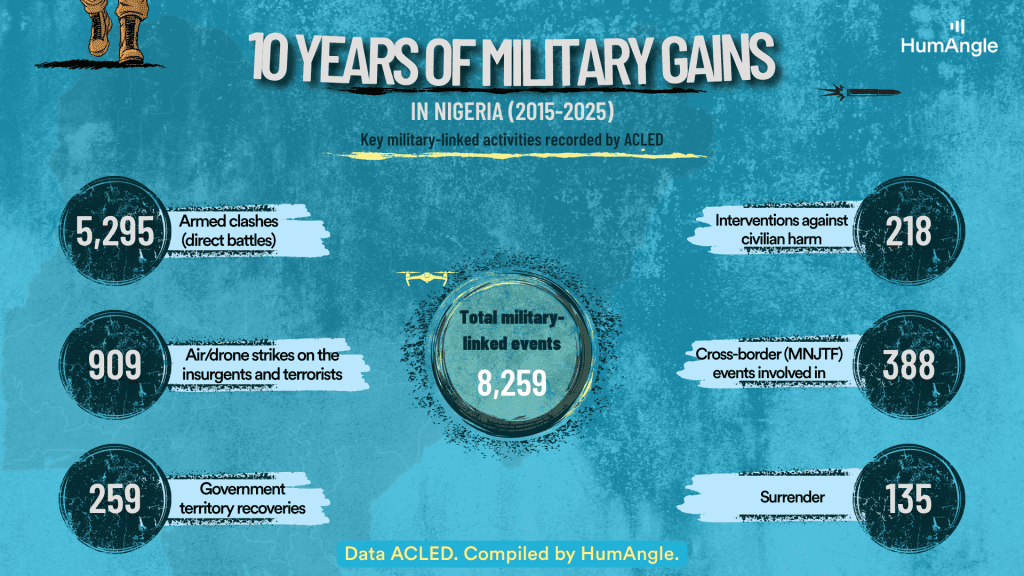
The Nigerian military has recorded gains that have accumulated over the years. Infographics: Damilola Lawal/HumAngle.
The Nigerian military appears to have adapted under pressure and recalibrated aspects of its doctrine, and, in key moments, helped reverse trajectories that once pointed toward state collapse. It has delivered tangible gains, some strategic, others tactical, many costly. Still, those gains sit on unstable ground because governance gaps, political interference, corruption, and weak institutional follow-through have repeatedly blunted them. Communities liberated from one threat find themselves exposed to another.
The North East war: reversing a collapse
By early 2015, Nigeria was on the brink of losing control in the North East. Boko Haram had evolved from an insurgent group into a territorial force controlling large swathes of Borno State and parts of Yobe and Adamawa. It administered territory, collected taxes, and imposed its authority over local populations. Gwoza was declared the headquarters of a so-called caliphate. Entire communities were displaced, and military formations overrun.
The turning point came with a shift in military posture, in which command structures were reconfigured, and the operational headquarters was relocated to Maiduguri, the Borno State capital, bringing leadership closer to the frontline. Coordination with regional forces under the Multinational Joint Task Force (MJTF) also intensified as air and ground operations were synchronised.
The results were immediate and significant, though the durability of these gains has varied across locations. Key towns like Monguno, Bama, Dikwa, and even Gwoza, the symbolic heart of Boko Haram’s territorial claim, fell back under government control in rapid succession. Data from ACLED shows that between 2015 and 2025, the military recovered at least 259 territories.
With this territorial success, supply routes were disrupted, and fighters were killed in large numbers. Civilians began to return to these areas, in some cases under fragile security conditions.
It marked the collapse of Boko Haram’s experiment with territorial governance, and the battle for Sambisa Forest reinforced this shift.
Counter-insurgency early in the war featured the rapid reconquest of Boko Haram territory from 2015–16, followed by various clearance ops in 2017–20, which was wound down by 2022. Much of this reconquest was essentially complete by 2021. Data: ACLED. Infographics: Damilola Lawal/HumAngle.
For years, Sambisa had functioned as a strategic sanctuary where fighters trained, hostages were held, and leadership structures operated with relative security. It also carried psychological weight. As long as Sambisa remained intact, Boko Haram retained a sense of permanence.
The military’s assault on the forest required sustained effort involving navigating difficult terrain, dealing with improvised explosive devices, and confronting entrenched fighters. Airstrikes softened targets while ground troops advanced in phases, enabling special forces units to penetrate deeper into the forest.
The symbolic impact was significant, though not decisive in ending insurgent capacity. Boko Haram could no longer claim a fixed territorial base for as long as was once the case. Its command structure was disrupted, and its image of invincibility weakened.
And so Boko Haram fragmented into factions. The Islamic State West Africa Province (ISWAP) emerged as a more structured and strategic actor while the Shekau-led faction became more erratic, marked by extreme violence and unpredictability.
The military adjusted again.
Operations shifted from territory holding to mobility and disruption. Intelligence-led raids targeted leadership and logistics. Airpower became central to deep strikes in difficult terrain. Operation Lafiya Dole, the codename for the counter-insurgency operation, transitioned into Operation Hadin Kai, reflecting a recalibrated effort.
Today, the insurgency remains active, particularly in remote areas and along the Lake Chad basin. But the scale and nature of the threat have changed.
The air campaign is sustained and expanding in line with the trend. Over the years, the top regional targets have included the Northeast: 485 strikes (6,063 deaths), the Northwest: 309 strikes (3,629 deaths), and the South-South: 50 strikes (15 deaths). Data: ACLED. Infographics: Damilola Lawal/HumAngle.
The North West: fighting a war without frontlines
The North West posed a different challenge. Armed groups here are diffuse. It lacks a central command and is driven by economic incentives rather than ideology, so groups form, splinter, and realign quickly. Local grievances and criminal enterprise also intersect here.
Estimates suggest tens of thousands of terrorists operate across this region, covering multiple states including Zamfara, Katsina, Kebbi, Sokoto, and Kaduna. This fragmentation complicates the military response, as frontlines, headquarters, and leadership structures (the usual strategic targets) are not clear. The military has responded by leaning heavily on airpower and targeted ground operations. This has not gone without major problems, such as the repeated “accidental bombing” of civilian populations, which have drawn criticism from rights groups and affected communities.
Still, airstrikes have been used to hit camps deep within forested areas that are difficult for ground troops to access. Intelligence plays a critical role in identifying targets. Data shows that the sustained air campaign has yielded at least 909 strikes and 10,237 fatalities in 10 years. ACLED data shows that about 560 of these fatalities were civilians.
Ground forces usually conduct follow-up operations to recover weapons and temporarily secure areas.
The airstrikes targeted insurgent sects in the North East, and in the North West, the raids targeted various non-state actor groups with varying agendas. Oil thieves and pirates are mainly the targets in the South South. Data ACLED. Infographics: Damilola Lawal/HumAngle
Large numbers of kidnapped victims have been rescued during coordinated operations. Livestock, often a key economic asset for communities, has been retrieved. Such attacks have also killed some high-profile terrorist leaders, but they have also led to the loss of officers.
Get our in-depth, creative coverage of conflict and development delivered to you every weekend.
Subscribe now to our newsletter!
In some areas, these operations appear to have had a temporary stabilising effect, though violence frequently resurges. Communities report periods of reduced attacks, farming activities have resumed in limited corridors, and confidence in security presence has improved, though often temporarily.
Still, armed violence regenerates as the effects of weak governance in the North East are the same in the North West: new leaders emerge, and fighters disperse and regroup. Economic incentives remain strong.
The Middle Belt: stabilising a political conflict
Violence in the Middle Belt is often described as a farmer-herder conflict, but the region’s violence reflects a complex mix of land disputes, ethnic tensions, and environmental stress. Armed militias operate alongside opportunistic criminal actors, while cycles of reprisal deepen mistrust between communities.
There are too many dynamics in play here to reduce the crisis to a “military versus any specific group” conflict. Most of the time, softer kinetic actions, such as arrest and deterrence, are used.
In certain corridors, the presence of military forces has reduced the frequency of mass casualty events. But the limits are clear. Several parts of the region still depend on self-help vigilante groups, who are often outgunned during terror attacks.
There is also a growing distrust between communities and security operatives, who are sometimes accused of slow response and complicity. In April, residents of Gashish, a rural community in Barkin Ladi Local Government Area of Plateau State, staged a protest over continued attacks in the community despite military presence. A checkpoint manned by troops of Operation Enduring Peace was destroyed during the demonstration.
The military has denied such accusations, but independent verification remains limited.
However, in other areas, the visibility of armed forces has also had a deterrent effect on opportunistic attacks.
At its core, the conflict in the region is driven by political and environmental factors. It revolves around identity and access to land and water. While military deployments can suppress violence temporarily, they cannot resolve competing claims or rebuild trust between communities. Without political solutions, stability remains provisional.
The military has also recorded arrests where softer kinetic actions and deterrence are required. This cuts across war theatres and international boundaries, notable examples include the 642 Nigerian refugees arrested in Cameroon (2017), the 72 suspects from Jos violence (2018), and 30 men arrested by MNJTF (2022)/ Infographics by Damilola Lawal/HumAngle.
The South East: managing a hybrid threat
The South East presents a hybrid security challenge. Separatist agitation, particularly linked to IPOB, has evolved into a mix of political mobilisation and armed enforcement. The group has enforced sit-at-home orders through violence and intimidation while the Eastern Security Network (ESN) operates in forested areas.
The military’s response has been presented as targeted and intelligence-driven. Operations focus on dismantling camps, intercepting arms, and arresting key figures. Urban centres are secured to prevent escalation into wider insurgency.
Yet the approach carries risks.
Heavy-handed operations have generated grievances. Allegations of abuses have eroded trust in some communities. This complicates intelligence gathering, which is critical in a conflict where fighters blend into civilian populations.
Targeted and intelligence-driven operations have led the military to dismantle camps, IEDs, and intercept arms across Nigeria, among other gains. This trend is growing in the Southeast. Infographics: Damilola Lawal/HumAngle
The Niger Delta and maritime domain: securing economic lifelines
In the South South and along Nigeria’s maritime corridors, the military, particularly the navy, has delivered some of its most visible successes. A decade ago, the Gulf of Guinea was a global hotspot for piracy. Sustained operations, including improved surveillance, increased naval patrols, and collaboration with international partners, have changed that landscape. These have led to the destruction of illegal refining sites and to arrests that disrupt networks involved in oil theft.
These gains have helped to protect revenue streams, stabilise energy production, and reinforce Nigeria’s position in regional maritime security, although illegal activities have not been fully eradicated.
“The Nigerian military is overstretched”
According to World Bank data collected from development indicators in 2020, Nigeria has roughly 223,000 active personnel across the army, navy, and air force. The army, which carries out most internal operations, has about 140,000 to 150,000 troops.
In the battlespace, there are simultaneous operations in at least six theatres. That constitutes multi-domain internal security warfare. Nigeria has about 0.1 per cent of its population under arms. When compared to countries facing sustained internal conflict, which often exceed 0.3 to 0.5 per cent, the country is operating below the threshold needed to dominate territory.
On the geography front, Nigeria is over 923,000 square kilometres, with vast forests, porous borders, and ungoverned rural space. It is impossible to hold ground everywhere with the limited available personnel. So troops are cycled, which then leads to fatigue because units stay deployed for long periods with limited rest.
Retired Lt. Gen. Tukur Buratai, the country’s former Chief of Army Staff, recently said, “The military is overstretched, defence budgets are diverted to routine policing duties, and the Armed Forces’ preparedness for conventional threats is reduced.”
However, there are also welfare issues and equipment gaps, especially at the tactical level in remote theatres. The result is predictable: Tactical wins, like killing terror commanders or rescuing hostages are visible, but strategic stagnation remains because you cannot sustain presence everywhere.
Military intervention is a subset of the over 8,259 total military-linked events reported in the past decade. Infographics: Damilola Lawal/HumAngle
The structural constraint: why gains do not hold
Despite these efforts, Nigeria’s security situation remains volatile.
In many areas, once the military has cleared armed actors, there is limited follow-through by civil authorities, as local administration is weak. So, communities do not experience the full return of the state, allowing armed groups to exploit this gap to re-enter or reorganise.
Economic conditions sustain conflict. Studies have shown that high levels of poverty and unemployment, particularly among young people, create a pool of potential recruits when armed groups offer income, however precarious.
Trust deficits also weaken intelligence because communities that distrust state actors are less likely to share information. This limits the effectiveness of intelligence-led operations and increases reliance on force.
Finally, strategy remains fragmented. Nigeria faces different types of violence that require tailored responses. Yet policy often treats them through a similar lens. Counterterrorism approaches are applied to terrorist attacks, while military solutions are prioritised in conflicts that require political negotiation.
The Nigerian military has played a significant role in preventing state collapse in multiple regions.
At the height of Boko Haram’s expansion, the possibility of sustained territorial loss was real. That threat has been largely reversed. In the North West, despite persistent violence, terrorist groups have not been allowed to consolidate into a territorial authority. In the South East, tensions have been contained below the threshold of full insurgency. In the maritime domain, economic lifelines have been secured.
However, good governance remains the only real pathway out of a cycle of violence.
Data from HumAngle Tracker
Yet the reality remains harsh. Lives are still lost daily. Families continue to sell everything they own to pay ransoms. The military has contributed to pushing back elements of the threat with measurable, though uneven, success, but it has not eliminated them.
September 2024 came with water. It moved through Maiduguri, in Nigeria’s North East, in fast, stubborn currents, destroying homes and property, and displacing thousands.
In many affected areas, like London Ciki, where Khadija Usman lives, it washed away firewood and charcoal, a critical source of cooking fuel for many homes. She was home alone one afternoon when that absence settled into something practical. Khadija wanted to cook, but there was nothing to burn.
“The water destroyed almost everything,” she said. “It became difficult to find firewood and charcoal.” Moving out to search for fuel was not easy, as she uses a wheelchair. And like for most people here, the expectation did not shift with the flood. Meals still had to be prepared.
So, Khadija turned her attention to what was left behind: charcoal residue, bits of waste, and a technique she had once seen. “I decided to come up with a solution,” she stated. She gathered what she could, shaping it into compact pieces that might hold a flame. When it finally caught, it was small, steady, and enough.
Not yet a long-term solution, but a way through that day.
In the weeks that followed, that small flame evolved into something more substantial. The turning point came when she visited a friend, Zara Tijjani, who also has a disability and was cooking over firewood. The smoke stung Zara’s eyes as she struggled to keep the fire alive. Inspired, Khadija went home, made briquettes, and then returned to show her friend how to make them as well.
From there, the knowledge began to spread among women, particularly those for whom gathering firewood posed significant risks or challenges. What Khadija started in the aftermath of the flood has since contributed to a broader shift in Borno, where biochar is gradually being adopted. However, her focus remains shaped by those around her: women navigating limited mobility, daily cooking demands, the risks of gathering firewood in terror-controlled territories, and a changing climate.
When cooking depends on the forest
Across Maiduguri and much of northeastern Nigeria, cooking still depends heavily on firewood and charcoal. For many households, especially in low-income and displaced communities, these remain the most accessible and affordable sources of energy.
National data reflects this dependence. The 2024 Nigeria Residential Energy Demand-Side Survey by the National Bureau of Statistics (NBS) shows that about 67 per cent of households rely on firewood, 22 per cent on charcoal, and only 19.4 per cent on liquefied petroleum gas (LPG). In the North East, the pattern is even more pronounced.
The report shows that wood use rises to 93.4 per cent in the region, the highest in the country, while LPG remains limited, particularly outside urban centres. Electricity and kerosene play only marginal roles in cooking.
In Borno State, reliance is near-total. A 2019 joint assessment by the Food and Agriculture Organisation (FAO), the United Nations High Commissioner for Refugees (UNHCR), and the World Food Programme (WFP) found that 98.7 per cent of households rely on firewood and charcoal, with only a small fraction using cleaner fuels. Even access to these traditional sources is constrained. Many households purchase firewood rather than gather it, reflecting both scarcity and restrictions on movement in conflict-affected areas. This aligns with humanitarian reporting that “firewood is the primary source of cooking energy” in Borno.
This dependence carries layered costs. Trees are cut steadily to meet demand, placing pressure on already fragile ecosystems. For women in these communities, who are primarily responsible for cooking, the burden extends beyond the home. Finding fuel often means travelling to the outskirts of town or into nearby bush areas, where risks of harassment and violence persist.
The September 2024 flooding deepened these pressures. Supply chains were disrupted, stored firewood was washed away, and charcoal became scarce and more expensive. In homes already navigating scarcity, cooking became uncertain.
Beyond immediate access, the environmental toll is significant. The NBS 2024 General Household Survey shows that Nigeria consumes an estimated 30 billion kilogrammes of fuelwood annually, driving deforestation. In regions like Borno, where vegetation is already sparse, this accelerates land degradation and desertification, reinforcing a cycle of environmental stress and energy poverty.
Health and safety risks are also closely tied to this dependence. Smoke from firewood and charcoal contributes to indoor air pollution, which is linked to respiratory illnesses, particularly among women and children. In the North East, these risks extend further. Women who gather firewood often face threats of harassment, violence, and abduction, making the simple act of cooking fuel collection a dangerous task.
Women in Borno, especially in displaced communities, often trek into the bush to gather firewood for household use, risking abduction and harassment from terrorists. Others gather to sell in order to buy food items with the proceeds. Photo: Al’amin Umar/HumAngle.
Within this system, energy, environment, and security are tightly bound. It is this reality that shapes both the problem Khadija is responding to and the limits of the solutions emerging around it.
Improvising in the aftermath of the flood
Khadija’s first attempts were small, almost tentative, as though she was testing not just the materials in her hands but the possibility that something useful could still be made from what the flood had left behind.
Without equipment or formal training, she worked with what was available: charcoal residue, scraps of household waste, fragments others might have discarded without a second thought. She burned them, pressed them, broke them apart again when they failed — testing what held, what crumbled, and what caught fire and stayed lit. The process was slow.
There was no machine then. No structured method. Only a need that could not be postponed.
Khadija Usman at the Faaby Global Services briquettes production facility in Maiduguri. Beside her, two women manually mould biochar into briquettes. Photo: Al’amin Umar/HumAngle.
The knowledge has since gone from one woman to another: Women with limited mobility. Women navigating spaces where stepping out to collect fuel is not always safe.
Get our in-depth, creative coverage of conflict and development delivered to you every weekend.
Subscribe now to our newsletter!
Within the disability community, the effort did not go unnoticed.
“We rallied behind her,” said Hassana Mohammed Bunu, women’s leader of the Association of Persons with Physical Disabilities in Borno State.
“I have stopped using charcoal and firewood ever since I began using her briquettes,” Zara said. Although Zara has been taught how to make them, she prefers to buy them from Khadija. “She uses a machine to make them. And they are more compressed than handmade,” she added. “It is smokeless, and they burn longer.”
Climate shocks uniquely affect persons with disabilities in Nigeria and other parts of the world. These disasters deepen already existing barriers. Mobility becomes more difficult. Access to resources narrows. In conflict-affected settings like Borno and much of the North East, those constraints are often sharper, less visible, and rarely addressed directly.
In energy access, the gaps are even more pronounced. Clean cooking programmes, where they exist, are not always designed with accessibility in mind. Physical barriers, cost, and social exclusion often limit participation. Nigeria’s legal framework, including the Discrimination Against Persons with Disabilities (Prohibition) Act, exists, but its translation into everyday interventions, particularly in climate and energy responses, remains uneven.
Scaling a local idea
To sustain what she had started, Khadija began to think bigger.
She raised her first capital in small, deliberate ways, selling caps and setting aside the earnings. With that, she bought sawdust, Arabic gum, and starch, enough to stabilise her production and move from improvisation to something more consistent. What began at home remained modest but steady, supported by family, friends, and members of the disability community who saw the value in what she was building.
In 2025, her work drew the attention of the United Nations Development Programme (UNDP). After three months of training at the Abdul Samad Rabiu Centre for Innovation and Entrepreneurship at the University of Maiduguri, she received a grant that marked a turning point. With it, she purchased a briquette-making machine.
With the machine, she could produce up to 100 bags of briquettes per day, each sold at ₦6,500.
To deepen her technical knowledge, she partnered with Faaby Global Services, a Maiduguri-based environmental organisation, where she now works closely with a production team. There, she contributes not only as a learner but as a practitioner.
“She shares her ideas in production and on tackling some challenges,” said Heriju Samuel John, an assistant manager at the organisation. “She is also a native of this town, so she helps us in sourcing raw materials.”
Two Faaby Global Services workers mould briquettes with a machine at their production facility in Maiduguri. The organisation operates three machines, one of which belongs to Khadija, whom the UNDP supported in buying. Photo: Al’amin Umar/HumAngle.
Her machine is now one of three in the facility, a small but significant marker of how far the work has moved from its starting point.
Yet, the broader briquette ecosystem in the region remains uneven. Programmes led by organisations such as FAO have introduced briquettes and fuel-efficient stoves to thousands of households across Borno, Adamawa, and Yobe, often linking energy access to protection concerns.
But outside these interventions, the market is still thin. Production is limited. Adoption is inconsistent. Many initiatives remain tied to donor funding rather than sustained commercial demand.
In that landscape, Khadija’s work sits somewhere in between, not fully independent of institutional support, but not entirely defined by it either.
A block of briquette moulded at the Faaby facility in Maiduguri. Photo: Al’amin Umar/HumAngle.
Can briquettes change the equation?
The briquettes Khadija produces are made largely from what others leave behind. Charcoal residue. Sawdust. Rice husks. Groundnut stalks. Agricultural waste is sourced from farmers and traders who would otherwise discard it. Coconut shells, when available, add density, though they are harder to find in places like Maiduguri and are more expensive.
The materials are burned in a low-oxygen environment, then converted into biochar, and finally ground into fine particles and bound together using eco-friendly binders such as gum arabic or starch. What emerges is a compact fuel that holds its shape and, according to Khadija, burns longer and with less smoke.
“We are recycling,” she said, describing a system that pulls from multiple points in the local economy.
A stock of groundnut stalk at the Faaby production facility in Maiduguri. Photo: Al’amin Umar/HumAngle.
Farmers sell their waste. They also source leftover charcoal and firewood particles from traders. Additionally, waste management actors like the Borno State Environmental Protection Agency (BOSEPA) deliver degradable materials.
To manage fluctuations, especially during the rainy season when materials become scarce, Khadija stores raw inputs in bulk in a rented facility in the Abbaganaram area of Maiduguri.
Her briquettes now move through different layers of the market; restaurants, bakeries, and roadside food vendors buy in bulk. Households purchase for daily use. Some consignments travel beyond Maiduguri, to nearby towns like Bama, and even across borders into Cameroon, with up to two trucks dispatched weekly.
For women, particularly those with disabilities, the impact is measured less in scale than in use. Khadija sells at discounted rates within the community and has trained more than 20 women to produce their own briquettes. “She taught some of our members,” Hassana said.
In some households, Khadija told HumAngle, the shift is already complete. Firewood has been replaced. “This gives me joy,” she said, adding that the transition could extend further. “If people fully understand the benefits, they would stop using charcoal and firewood.”
But the shift is not without constraints.
Raw materials fluctuate. Storage remains limited. Transport is still a challenge. And beyond logistics, there are social barriers that do not disappear with production. “People say I am doing what able-bodied people should be doing,” she said. “Being a woman makes it even worse.”
Still, she continues to plan, looking toward a larger production facility that could employ more women and stabilise supply.