nonprofit

Newsom says wife is target of Trump. Here’s what we know of her finances

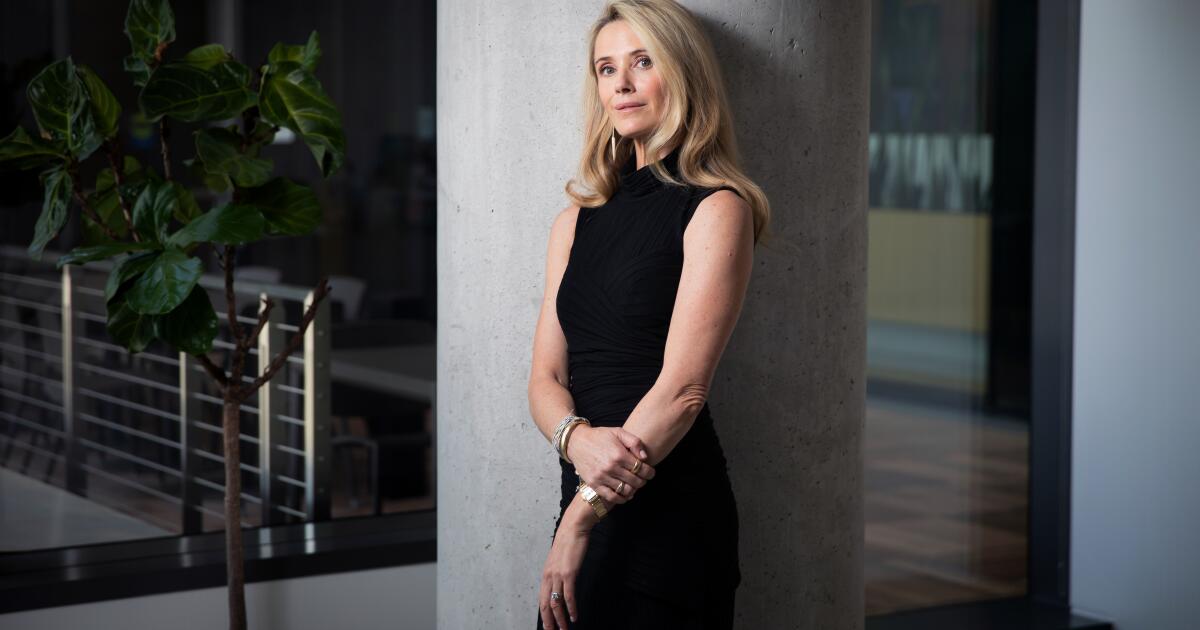
Jennifer Siebel Newsom has spent more than a decade cultivating an identity distinct from her husband, Gov. Gavin Newsom, as an active documentary filmmaker and gender equity activist with her own organizations, staff and salary.

The 51-year-old calls herself California’s “first partner,” a title she coined herself to signal an equal footing with the governor and gender inclusivity.

Her independent streak has generated her a steady income. She earns money from a set of organizations she founded or controls. They include the Representation Project, a nonprofit that advocates for gender equity through film and education programs; Girls Club Entertainment, a for-profit production company she owns that holds the copyrights to her documentaries; and the California Partners Project, a second nonprofit that works closely with her government office and receives donations solicited by the governor.

Since its creation in 2020, the California Partners Project has received nearly $5.1 million from so-called “behested payments,” raising alarms over the years about the influence large companies have amassed in Sacramento.

California law allows officials to solicit donations to specific charitable or governmental causes when the payments are reported within 30 days. The public donation system, however, came under scrutiny in 2020 when payments made at Newsom’s behest — to a variety of organizations, not just the California Partners Project — ballooned to an unprecedented $226 million to help fund the response to the COVID-19 pandemic.

With no limit on how much money can be donated by organizations or individuals at the behest of the governor, millions of dollars flowed in to prop up public services during the pandemic and fund Newsom’s favored programs, including an effort to address homelessness and a public safety campaign promoting the importance of wearing masks. The top donor of Newsom-behested payments in 2020 was tech giant Facebook, which gave $27 million for gift cards that went to front-line healthcare workers and for public health ads.

“It’s not illegal, but it certainly pushes the bounds of campaign finance law, and the first couple has been doing this for some time,” said David McCuan, a political science professor at Sonoma State University. “In this battle between Newsom and [President] Trump this makes their [the first couple’s] actions, these payments and the operation of the nonprofits a rich target for scrutiny.”

The Newsoms’ financial arrangements are now the subject of renewed scrutiny. The governor has accused the Trump administration — specifically, the FBI and the Internal Revenue Service — of questioning their friends and former employees about him and his wife. The governor said the probes are politically motivated, a personal vendetta because he’s considering a run for president in 2028.

Newsom said he and his wife have nothing to hide, and promised to release all of his recent tax returns — though he has not announced when.

In turn, the governor has demanded that the Department of Justice release all records pertaining to the probe.

“The American people deserve to know who ordered this abuse of power and how far it goes,” the governor wrote on social media last week.

“These are dark days in our nation’s history when the leader of the free world spews animus openly and without shame — aiming to silence and destroy not only his political opponents, but their friends, colleagues, and families,” Siebel Newsom said in a statement to The Times. ”My husband and I will continue to push back on this vindictive attack — and I certainly will not let this distract me from the important work ahead to protect the health, wealth, and safety of women and children and give California kids the best start in life. Together, we can set an example of strong leadership that protects people rather than preys on them.”

To better understand the finances, here is a breakdown of how Siebel Newsom’s company and nonprofits are working.

The Representation Project

Alongside the release of her first documentary, “Miss Representation,” in 2011, Siebel Newsom created her nonprofit, which originally shared the same name as her film. The organization licenses her films and reimburses costs to her production company.

The nonprofit earns some revenue from licensing the first partner’s documentaries for use in classrooms, college campuses and workplaces. Licensing for film screenings at schools starts at $49, while corporate licensing for her films starts at $995; purchase of screening rights also comes with curricula to facilitate discussions.

The Representation Project has earned more than $5.2 million in revenue from film screenings, licensing and speaking fees since 2011, according to a review of its tax filings.

The Representation Project is not required to disclose its donors but has received at least $2.6 million since 2014 from various charitable foundations that disclosed the gifts in their own tax filings. Several corporations that have had business before the state have donated to Siebel Newsom’s nonprofit, including Pacific Gas & Electric Co., AT&T and Kaiser Permanente.

Its past donors also include entrepreneur and progressive donor Susie Thompkins Buell, who is credited as a producer on several of Siebel Newsom’s documentaries, as well as the Marin Community Foundation and Onward Together, the political action organization founded by Hillary Clinton.

Four months after Newsom took office in 2019, the state Department of Education recommended that high schools screen two of his wife’s films, “Miss Representation” and “The Mask You Live In,” a move that has garnered criticism from conservative media outlets. The state said the films “can help facilitate a discussion about the impact of mass media and gender socialization on self-image and relationships with others.”

Though it does not specify where its films have been licensed, the nonprofit boasts in annual impact reports that its films and curricula have “reached over 2 million students” and “are being used in over 5,000 schools in fifty U.S. states.”

Since founding the Representation Project in 2011, Siebel Newsom has received more than $1.9 million in compensation from the nonprofit organization, according to a review of federal tax records. Her separately owned film production company, Girls Club Entertainment, has collected about $2.2 million in independent contracts from the nonprofit, records show.

Combined, the two streams of money total about $4.1 million flowing from the charity to Siebel Newsom personally or to entities she controls over the span of a little over a decade.

Her current annual salary is $161,250 for a 40-hour workweek, records show. Siebel Newsom earns income from both her production company and her nonprofit, according to state financial disclosures.

Jeff Tenenbaum, a nonprofit attorney with 30 years of experience advising nonprofit, tax-exempt organizations, declined to comment on Siebel Newsom’s specific case. But generally, he explained the legal framework that would apply to an arrangement like the one described in the filings.

Under federal tax-exempt organization law, he said, the “private benefit doctrine” governs whether a nonprofit’s overall activities unduly benefit any single individual — including through indirect payments to entities they own. The tax law asks whether too much benefit flows to one person or entity.

This is separate and distinct from the “private inurement” doctrine, which prohibits nonprofits from paying greater-than-fair market value compensation to insiders, including founders, and which requires that such compensation arrangements be approved by individuals with no conflicts of interest.

“Theoretically, a situation like this could raise some private benefit concerns,” Tenenbaum said, when the structure of the arrangement was described to him.

The doctrine does not prohibit all private benefit, he said, only what the federal tax code calls “impermissible” private benefit.

“There has to be too much benefit compared to the benefit to the public,” he said. Whether that threshold is crossed here, he said, would require a fuller review of the organization’s finances, contracts, and other considerations, including copyright ownership issues relating to the films produced.

Girls Club Entertainment

An actress and documentary filmmaker, Siebel Newsom founded her production company to develop independent films with a focus on combating gender stereotypes and empowering girls and women. She serves as the company’s chief creative officer.

She has written, produced and directed five films exploring themes of inequality and traditional gender roles. Siebel Newsom is best known for her 2011 documentary “Miss Representation,” which focused on the few and narrow representations of girls and women in American media.

Tax records show that the production company owns the rights to “Miss Representation” and has licensed the film to the Representation Project for a minimum of seven years for the purpose of distributing and screening the film in public. Costs associated with film production — including the writer, director and producer fees — have been reimbursed by the Representation Project, tax filings show.

Her latest documentary, “Miss Representation: Rise Up,” examines “the rising backlash against women’s progress and the hostile landscape of technology designed to harass and, ultimately, silence women.” The film premiered this month at the Tribeca Film Festival.

California Partners Project

In 2020, Siebel Newsom founded the California Partners Project, a nonprofit focused on improving gender equity in the workplace and the safety and well-being of children in online spaces. She does not collect compensation from the nonprofit or serve on its board.

It hosts an annual “gender equity summit” and provides resources for parents on issues such as social media safety and child mental health.

In the fall of 2024, Siebel Newsom and the California Partners Project hosted representatives from TikTok, Meta, Pinterest and other social media platforms for an event about children’s online safety. A day before the panel, state Atty. Gen. Rob Bonta took a more forceful tack to go after the tech industry by joining with 13 other states in a lawsuit against TikTok that accused the platform of exploiting young app users with its addictive features.

In September of 2024, the governor signed a bill to prohibit internet services and applications from providing “addictive feeds,” defined as media curated based on information gathered on or provided by the user, to minors without parental consent.

The California Partners Project also does not publicly disclose its donors in its tax filings, but much of the nonprofit’s funding appears to come from behested payments. Siebel Newsom does not receive a salary from the organization.

Since its founding, the Newsoms have steered more than $5 million to the nonprofit via behested payments, according to a review of the disclosures. While many donations to the California Partners Project come from charitable foundations, it also received hundreds of thousands from companies including Silicon Valley Bank, Pinterest and the charitable arm of Blue Shield of California.

Its biggest funder is the Federated Indians of Graton Rancheria, a Sonoma County tribe that operates a casino in Rohnert Park and spends heavily in state and federal elections. The tribe has given $2.3 million to the nonprofit since 2022. In June 2023, Newsom appointed tribal Chairman Greg Sarris to the University of California Board of Regents. Newsom has also supported efforts by the tribe to block a smaller tribe from building a casino in nearby Vallejo.

Blue Shield, which has reported giving $100,000 to Siebel Newsom’s nonprofit, also has a cozy relationship with her husband. The nonprofit health insurer was an early donor to Newsom’s 2018 campaign for governor and later received a $15-million no-bid contract to distribute COVID vaccines. State regulators in 2024 also signed off on the nonprofit’s request to restructure and establish a new parent corporation out of state, a move that raised alarm among healthcare advocates.

The California Partners Project did not respond to questions about its donors and spending.

Source link

Behested payments aren’t illegal, but they are a problem

After Gov. Gavin Newsom announced this week that the U.S. Department of Justice may be investigating his wife, Jennifer Siebel Newsom, media and pundits pounced on millions in charity payments he has solicited for nonprofits, including ones she is involved in.

Those donations, known as “behested payments,” aren’t illegal in California, but, long before Newsom started asking for them, many have found them unsavory — with good cause. A behest, after all, is by definition a command or at least a strong suggestion.

Anytime a politician is commanding money, regardless of the purpose, there is at least the appearance that the giver — Meta, Google, Blue Shield for example — may expect something in return.

It may seem absurd that the Trump administration could be investigating Newsom for questionable ethics, when Trump has hawked everything from crypto-coins to sneakers from the Oval Office. But the problem Newsom now faces is that behested payments are actually skeevy, and legal or not, they make an excellent target for pummeling the presidential contender. Especially because some of the charities are tied to his wife.

“The Newsom case has blown it wide open, but this has been an issue for years,” Sean McMorris told me. He’s the transparency, ethics and accountability program manager at Common Cause, a nonpartisan organization that has been raising alarms over behested payments for more than a decade.

McMorris said that while these payments don’t violate any laws, they are “ripe for abuse” because companies and people likely aren’t ponying up cash just to be good citizens. If you or I called up PG&E and asked them to give a few million to our favorite cause, I doubt we’d have much luck, even if it involved kittens, puppies or small children in need.

The entire system, McMorris points out, “doesn’t really work unless you’re shaking down people who you know need things from you as a politician.”

Jerry Brown used behested payments to get millions for charter schools he supported. Lesser luminaries such as mayors (including Antonio Villaraigosa, Eric Garcetti and Karen Bass, just to name the last three in L.A.) have used them for all kinds of stuff from jobs programs to fixing up official residences.

And it’s far from a Democratic thing. Arnold Schwarzenegger, a Republican, used them to pay for travel and after-school programs. Republican James Gallagher, who recently won a congressional seat, used them to fund computers for schools while he was in the state Legislature. Senate Minority Leader Brian Jones has raised millions, including helping to get $800,000 in donations to fund a replica of a historic ship for the maritime museum in his San Diego district.

Trump himself could be considered king of behested payments, with his corporate-paid ballroom and birthday bash.

Literally, folks, find me a politician with an itty-bitty bit of clout, and I’ll show you a trail of behested payments stretching through their pet projects. For that reason alone, it’s unlikely that California legislators will take any action to curb them, especially now when doing so would appear as a criticism to Newsom and Democrats in general.

And, to be fair, behested payments can do a lot of good. Newsom supercharged behested payments during the pandemic, raising hundreds of millions for programs to get Californians through that social disaster.

For that reason and others, not all experts find them terribly troubling. Jessica Levinson, a Loyola Law School professor with an expertise in election and governance issues, points out that money in politics is nothing new and at least behested payments are (mostly) required to be acknowledged. Anything over $5,000 and the politician has to report it to the California Fair Political Practices Commission, which keeps a public database.

That makes behested payments far more transparent than, say, dark money donations to a mysterious political action committee. And at least the money is going to a good cause, be it historical ships or computers for kids.

“I actually don’t think that they’re the evil mechanism that other people do,” Levinson said. “I mean, my feeling is like, let’s live in reality, right? People are going to want to give as much money to or close to powerful people as possible, and I think that we have a choice between money going to independent expenditure groups or political committees or going to nonprofits.”

So behested payments in and of themselves might not be much of a headache for Newsom. But some of the payments Newsom solicited went to nonprofits Siebel Newsom is involved with, and which have paid her a salary. That proximity is uncomfortable for many of us. There is no distinction for a behest given to a charity with direct ties to the politician, but maybe there should be.

Still, salaries being paid by behested payments also aren’t illegal, and it’s been done before, even by Newsom. Villaraigosa was paid through behested funds for his work as the state “infrastructure czar” back in 2022. Bass considered paying former L.A. Police Commissioner Steve Soboroff through behested-funded nonprofits for his work after the recent fires before public scrutiny pushed him to forgo the funds.

None of that is to say the Newsoms are off the hook in a federal investigation. Newsom’s office said that along with the FBI, agents from the IRS have been knocking on doors and asking questions. All of us — probably the Newsoms included — will just have to wait to see if the fine-tooth combs of the feds pick up any dirt.

If there is any lesson to be learned at this point, it’s about ambition and hubris. Behested payments are easy money for California politicians and business as usual — everyone does it. But maybe they shouldn’t. It’s not black or white.

Newsom is learning quickly what it means to have a powerful enemy like Trump, one who has shown he will use the full power of the American government for his own purposes. One who can tip the scales and slide white to gray and gray to felony.

Federal investigators do not like to come up empty-handed, and the wink-wink nature of behested payments creates just that kind of ambiguity that provides reasonable cause for investigation — a self-inflicted vulnerability that surely has every California politician nervous.

Source link

Political watchdog fines Newsom for failing to report $5.5M in solicited donations on time

California’s political watchdog commission on Thursday finalized a $31,500 fine against Gov. Gavin Newsom, alleging that the Democratic leader failed to report three dozen behested payments totaling $5.5 million mostly to support wildfire recovery by the deadline under state law.

The Political Reform Act requires elected officials to disclose payments of $5,000 or more that they solicit or direct others to give to a charitable, legislative or governmental purpose within 30 days.

The California Fair Political Practices Commission said 34 of the violations were for failing to report on time that Newsom and his staff directed outreach from companies and foundations that wanted to help after the Los Angeles wildfires to the California Fire Foundation. The nonprofit was started in 1987 by the California Professional Firefighters to support the families of fallen firefighters and communities impacted by fire.

The donations include $1 million from the Chuck Lorre Foundation and $500,000 apiece from Lockheed Martin, the Anthem Blue Cross Foundation and BlackRock, among others gifts.

The governor also failed in 2024 to report on time two behested payments, totaling $100,000 from the Schmidt Family Foundation and Schwab Charitable Funds to the Institute for Local Government, a nonprofit within the League of California Cities.

The commission said the governor reported all of the payments “prior to public discovery” or contact from its enforcement division, which it considered a mitigating factor. Newsom also signed the stipulation and agreed to the fine.

Tara Gallegos, a spokesperson for Newsom’s office, said the issue involved late paperwork at a time when the governor’s staff was focused on emergency response and supporting survivors. She also underscored the fact that the reports were filed before he was contact by the FPPC.

Gallegos said the fine is unrelated to an alleged investigation into the governor and his wife by the Department of Justice, which Newsom announced this week.

Newsom alleged Monday that Trump is using the government as political weapon to target him and his wife, Jennifer Siebel Newsom. Newsom announced the investigation after he learned that the FBI and Internal Revenue Service asked his associates questions about nonprofits and businesses related to the couple.

The governor’s office characterized the investigation as a fishing expedition. The Trump administration declined to comment.

A source familiar with the matter, who requested anonymity because they were not authorized to discuss it publicly, said two federal probes have been going on for about a year, and that they originated not from Washington, D.C., but from conversations between whistleblowers and federal prosecutors based in Sacramento. The probes are linked to Newsom’s former chief-of-staff, Dana Williamson, and Siebel Newsom’s taxes, the source said.

The FPPC violations mark the second time Newsom has reported payments late, which increased his penalty for the new infractions. The commission fined Newsom in 2024 for failing to timely report 18 payments totaling $14.4 million.

Source link

Sensing opportunity, Newsom touts investigation he says is Trump’s doing

Gov. Gavin Newsom did something this week that most politicians would only in a nightmare: He announced that the federal government is investigating him and his wife.

The revelation, delivered in a direct-to-camera 4½-minute video set against a backdrop of U.S. and California flags, became a top headline across the country.

In the upside-down politics of the Trump era, that was exactly as intended.

“He seems to be wearing this as a badge of honor because his brand is being the strongest opponent of Donald Trump,” said Thad Kousser, a professor of political science at UC San Diego. “The ability to show that you’re going on offense and that you know how to effectively fight back against this president is part of making your case for office.”

As he eyes a run for president in 2028, an antagonistic relationship with President Trump is Newsom’s political currency.

So when friends and former employees said the FBI and Internal Revenue Service had knocked on their doors and asked about him and his wife, Jennifer Siebel Newsom, last Wednesday, the governor took advantage of the situation to boost his political profile.

“Mr. President, come after me,” Newsom said in the video he posted online. “I’m not going anywhere, and the country is watching.”

Newsom, who is in his final year as California’s governor, has not declared his intent to run for president, though his claim that Trump is targeting him because he’s considering a bid for the White House was an open acknowledgment of his thoughts about the future. Announcing the probe himself — before federal authorities had a chance to describe it on their terms — allowed him to get ahead of and try to discredit any findings as a “personal vendetta” long before potential charges are brought.

Celinda Lake, a Democratic strategist and national pollster, said Newsom publicly defending his wife could also play well with voters.

“He’s positioned himself as the front-runner because he’s the one who’s under attack,” Lake said. “Primary voters love it when he engages Trump, and I think the combination of engaging Trump and then also the sexism of going after your wife is just a real home run for a primary electorate that’s 59% female.”

The video released Monday seemed similar to a speech Newsom delivered after Trump sent federal troops to Los Angeles last summer.

That address, in which he countered Trump’s version of events and challenged the president to come after him instead of women and child immigrants, made Newsom the captain of the Democratic response to the unprecedented deployment and ended his attempt to play the part of respectful statesman and ease political tensions following the 2024 election.

Liberals have since seemed to relish Newsom’s near-constant derision of the president on social media.

But David McCuan, a professor of political science at Sonoma State University, said casting the case as another instance of Trump’s political weaponization ignores questions about the murky timeline and origin of the investigation.

Newsom’s aides point to Trump saying that the governor should be arrested during last summer’s anti-ICE protests as evidence that he personally called for the inquiry. The claim has gained oxygen — and been echoed by other Democratic leaders in the state — while going largely unchallenged by federal officials. The Justice Department has declined to comment, as has the White House.

A source familiar with the matter, who requested anonymity because they were not authorized to discuss it publicly, said two federal probes have been going on for about a year, and that they originated not from Washington, D.C. but from conversations between whistleblowers and federal prosecutors based in Sacramento. The probes are linked to Newsom’s former chief-of-staff, Dana Williamson, and Siebel Newsom’s taxes, the source said.

Newsom’s critics have also noted that federal prosecutors under the Biden administration had pursued questions about his involvement in a state lawsuit against Activision Blizzard Inc., a major video game distributor, before Trump retook office.

“This is something that could lead to other elements that blow up, so there’s a risk,” McCuan said.

Newsom’s aides described the investigation as a fishing expedition, with federal authorities searching for anything they can use against the governor.

They said federal authorities appeared to initially investigate allegations that turned up nothing about the Activision case before refocusing their questions on nonprofits and other entities tied to the couple. Investigators also asked about personal information related to the family’s household, Newsom’s office said.

McCuan said three nonprofits that surround the couple have received millions of dollars from donors and political interests and are not subject to campaign finance limits.

The California Partners Project is a nonprofit that promotes gender equity. The Representation Project is an avenue for Siebel Newsom’s documentary films. The California State Protocol Foundation uses private donations to pay for gubernatorial expenses and was founded under former Republican Gov. Arnold Schwarzenegger.

“It’s a long-running game,” McCuan said. “It’s just the Newsom first couple has perfected it and moved it forward.”

Newsom getting out ahead of prosecutors and framing their probes as nothing but a “witch hunt” — borrowing a phrase often used by Trump during his own previous prosecutions — carries risk.

If prosecutors do turn up evidence of wrongdoing, Newsom’s decision to parade his indignation could backfire.

Publicly challenging Trump also runs the risk that the president could instruct the Justice Department to dig in deeper on an investigation that might have otherwise petered out.

But Lake and others said there’s no placating Trump, who has targeted Newsom and other Democrats.

While traditional politics suggest facing federal charges could sink Newsom’s political ambitions, the rules have been thrown out under Trump.

“You know the last person who got tied up in courts on the campaign trail?” Kousser asked. “That was Donald Trump, and nothing elevated Donald Trump more than doing courthouse press appearances and being seen as the target of an unfair political prosecution.”

Source link

Foundations are emphasizing their community services to counter narratives of fraud and partisanship

A nationwide network of charitable foundations is encouraging its members to emphasize their positive contributions to American life, a 250th anniversary campaign aimed at quelling what it calls the “greater intensity” of scrutiny felt from the federal government and populist movements.

Popular notions of philanthropy as merely a game for the ultrawealthy to fund partisan projects and commit fraud have left the sector vulnerable to political attacks, as the Council on Foundations sees it, influencing policies that hamper essential community services. The advocacy group, which represents about 1,000 nonprofits, hopes to overcome what CEO Kathleen Enright calls the sector’s “perception gap” with its “Generosity Builds” campaign, launched Monday.

Enright believes most Americans don’t recognize their reliance on the charitable sector. Just about 1 in 20 adults said they or anyone in their immediate family received nonprofit services in the past year, according to a 2023 Indiana University Lilly Family School of Philanthropy report.

“This week, I got an MRI at Georgetown University Hospital, I participated in my church at St. Columba’s, my daughter was inducted into National Junior Honor Society. Four or five nonprofits have been instrumental in my life this week,” she said. “Folks just aren’t putting that tag on it.”

And that tag is growing increasingly important, Enright said. Last year, negotiations over President Trump’s tax and spending bill included proposals to levy new taxes on private foundations that Enright said would have taken resources from communities if they made it into the final law.

The battle over defining what nonprofits actually do has recently been amplified from the highest rungs of the Trump administration, which has upended decades of partnerships built with nonprofits. Trump froze, cut or threatened a sweeping range of social service grants characterized by the White House as “government largesse that’s often riddled with corruption, waste, fraud, and abuse.” More recently, the Department of Justice charged the Southern Poverty Law Center — a civil rights nonprofit accused by Republicans of targeting conservatives in its work tracking extremists — with defrauding donors through payments to informants.

Vice President JD Vance described the Ford Foundation, the Gates Foundation and the Harvard University endowment as “cancers on American society” back as a 2021 U.S. Senate candidate, telling Tucker Carlson that “we are actively subsidizing the people who are destroying this country and they call it a charity.”

“All across our country, we have nonprofits — big foundations — that are effectively social-justice hedge funds,” he said in a talk that year on “woke capital.”

Narratives about nonprofits being “overly politicized” or wasteful are “extreme minority stories” that don’t reflect how philanthropy operates, according to Enright.

Across many surveys, trust in the nonprofit sector has remained higher than most others. But its impact is sometimes difficult to measure and explain. The sector hasn’t faced an environment this challenging in almost six decades, according to Kathryn Thomas, the vice president of communications for the Charles Stewart Mott Foundation in Flint, Michigan.

She cited the congressional effort to increases taxes on foundations’ investment incomes and acknowledged the Trump administration’s federal funding cuts.

“In an era when everything is under partisan attack and there’s so much polarization, we really have to do a better job of emphasizing why we exist,” Thomas said.

Enright said the story of philanthropy is not one where a rich person “saves the day.” She sees growing concerns about billionaires’ influence fueling suspicion about philanthropists’ motivations. Some argue the charitable sector allows moneyed interests to decide how tax dollars are spent rather than elected officials.

The campaign will emphasize that most donors “have just a little bit more than they need and therefore want to give back,” she said, especially at the local level.

“Money does not solve problems. It’s a tool that creative people and institutions inside communities use to solve problems,” she said. “The real heroes of most of these stories are nonprofit leaders, religious leaders, civic leaders who just roll up their sleeves and get something done — but do it with some financial underpinning by charitable foundations.”

That’s the story told by the Gulf Coast Community Foundation in Sarasota, Florida. A 10-apartment affordable housing complex for military veterans opened last year with the foundation’s support.

The area has an “embarrassingly high” number of veterans without housing, according to Jon Thaxton, the foundation’s director of policy and advocacy. Many are priced out in Sarasota, increasingly a luxury destination with high real estate prices.

Local donors had been trying to build a similar project when they approached the foundation in 2020 for help. Thaxton secured land already vested for affordable housing, corralled $2.2 million in donations, got $800,000 from the city and won the backing of their U.S. representatives.

The foundation’s leaders believe their track record made that possible. Phillip Lanham, the president and CEO, noted the project was completed across multiple election cycles and a pandemic, suggesting that community foundations are well situated to “play the long game.”

“Most people think that foundations like us deal with money and donors. We really don’t. We deal with relationships and trust,” Thaxton said. “That’s our commodity. That’s what we earn. That’s what we save. And that’s what we contribute back to the community.”

The Council on Foundations will also elevate examples of early, ordinary philanthropists as part of its case for philanthropy as an integral “part of the American story.” Enright credited a formerly enslaved man with donating land in North Carolina that became an African Methodist Episcopal church that endures as a pillar of the local community.

Lillian Kuri, the president and CEO of the Cleveland Foundation, welcomed the focus on everyday philanthropists. The Cleveland Foundation is considered the first community foundation, established in 1914 by lawyer Frederick Harris Goff as a way to fund durable change in the city.

The foundation aims to find new ways to expand today’s tent of philanthropists dedicated to improving their surrounding areas. It announced new investments this week in a fund dedicated to turn vacant industrial land into job-ready work sites. They’ve also launched a fund that allows donors to invest in major Northeast Ohio companies, supporting local business growth while that money increases into a sizable amount that can be donated to nonprofits.

“Generosity cuts across everybody,” she said, adding that community foundations offer “a way for everyday people — not just the largest, wealthiest people — to participate in the change they want to see in their communities.”

Pollard writes for the Associated Press.

Source link

What Afghanistan’s rotten apples tell us about its non-profit sector | Poverty and Development

In April, I accompanied a friend on a visit to villages in Daikundi province, central Afghanistan. The purpose of the trip was to speak to farmer beneficiaries of a project that an NGO operating in the agriculture sector had carried out and to follow up on its impact. The week I spent travelling with him was quite eye-opening regarding the state of the non-profit sector in the country.

The project in question provided zero-energy storage houses to preserve harvests, such as fruit and vegetables, in rural areas. On the surface, the idea was promising: provide farmers with storage space so they could sell their produce over a few months.

However, the farmers we spoke to in several villages showed us heaps of apples decaying beneath the trees. They complained that the storage houses had space for the apples of only two to three families in the entire village.

In another village, we saw frustration with another project from a different NGO. That organisation had bought imported seeds for various vegetables and distributed them among farmers. Staff members provided training, conducted weeks of workshops on cultivation methods and techniques, and regularly monitored the crops.

The local participants invested significant time, energy, land, and water in the project. But the harvest they got from these imported seeds was very little and of poor quality. Despite the enormous amount of money spent by the NGO on surveying, training, logistics, transportation, and staff salaries, the vegetables for each family amounted to about 450 Afghans (roughly $7). There was no accountability for the farmers’ losses.

Such stories are common across rural communities in Afghanistan. While aid organisations publish reports of their achievements, many beneficiaries gain little from poorly designed projects that fail to address the real challenges they face. The cost of these projects is extremely high, but the output is often too little.

Since the Taliban took over Kabul and the US-led coalition withdrew from the country, humanitarian aid and funding in Afghanistan have dramatically collapsed. The struggle to secure funds, however, has not led to better efficiency, accountability, and transparency among the NGOs still operating in Afghanistan.

This is not a recent phenomenon. Between 2001 and 2021, Afghanistan became the poster child for corruption, embezzlement, and waste of foreign aid. One US journalist described it as “the $148 bn failure”.

According to the Special Inspector General for Afghanistan Reconstruction (SIGAR), set up by the United States to investigate fraud with US funds, between $26bn and $29bn was lost due to embezzlement or wasteful spending. This was just funding provided by the US government; there is no estimate for how much was wasted from other donors.

While much of the foreign funds went to the security sector, a significant amount went to the non-profit sphere, where waste was also widespread. Millions, if not billions, worth of projects became a missed opportunity to improve the lives of Afghans, especially in rural areas. This is a legacy that persists to this day.

This situation is not unique to Afghanistan. The development sector across the world is known for waste and inefficiency. In the Afghan context, that is exacerbated by the lack of control and difficulty of ground work.

Many foreign NGOs do not directly implement their projects; instead, they work through implementing partners (IPs), which themselves outsource implementation to subcontractors. This extended chain of actors means that often there is a lack of proper quality control and supervision, and there is motivation to carry out lower-quality work in order to increase profit.

Furthermore, the primary concern of IPs is securing funding. So they often present project proposals that look great on paper but do not necessarily have a substantial impact on the circumstances of the local population or address their most urgent needs.

Finally, there is a lot of waste in remuneration, especially when it comes to international staff. Foreign employees often have salaries as high as $10,000–20,000 for doing work that a local hire can do for much less.

It is clear that amid global cuts to donor funding, the development sector is struggling. This should be a moment of change. In Afghanistan, where the need of the local population is enormous while available financing is shrinking, NGOs can take this change into their own hands.

The simplest first step NGOs can take is to employ qualified locals to plan and lead projects. They would know the local culture, realities, and actual needs of communities, as well as market prices and field conditions. They can help not only optimise project costs but also ensure that they actually have a real, measurable impact.

In addition, NGOs should avoid having an extended chain of IPs and subcontractors. They should also regularly collect feedback from local communities and field workers directly in order to evaluate project effectiveness during implementation in order to avoid repeating the same mistakes.

Projects are more likely to produce sustainable results if NGOs invest in addressing pressing nationwide challenges, such as unemployment, infrastructure, and market access.

Improving efficiency and effectiveness would not only ensure Afghan beneficiaries get better services and help, but it would also make organisations more competitive for the dwindling pool of funding. This is the only way to salvage the NGO sector not only in Afghanistan but in the rest of the world.

The views expressed in this article are the author’s own and do not necessarily reflect Al Jazeera’s editorial stance.

Source link

Nonprofit sues Trump over Lincoln Memorial Reflecting Pool renovation

May 11 (UPI) — A nonprofit organization filed a lawsuit against the Trump administration Monday over renovating the Lincoln Memorial Reflecting Pool.

The lawsuit, filed by the Cultural Landscape Foundation and founder Charles Birnbaum, argues that the National Mall renovation violates environmental and preservation laws without proper authority by changing the “historic character” of the reflecting pool.

“The dark grey, achromatic basin was not incidental to the design,” the lawsuit reads. “It was the design.”

The lawsuit seeks a preliminary injunction to block the renovation from moving forward.

The National Historic Preservation Act, the main law cited in the lawsuit, requires a review process before changing historic properties like the reflecting pool.

The Trump administration plans to add a coat of “American flag blue” paint to the base of the reflecting pool.

“The [Interior] Department is proud of the work being carried out by our Park Service to ensure this magical spot can be enjoyed for not only our 250th, but for many generations to come,” the Interior Department said in a statement.

The Cultural Landscape Foundation called the project and other renovations led by President Donald Trump, such as the demolition of the East Wing of the White House to build a ballroom, a “desecration.”

“A blue-tinted basin is more appropriate to a resort or theme park,” Birnbaum said in a statement.

Trump announced the project last month with an estimate for it to be completed by July 4.

President Donald Trump delivers remarks at an event he is hosting for a group that includes Gold Star Mothers and Angel Mothers in honor of Mother’s Day in the Rose Garden of the White House on Friday. Photo by Aaron Schwartz/UPI | License Photo

Source link