Despite RFK Jr.’s claim, Arabs do win awards. Getting a visa to receive their prize is harder
“There’s 500 million Arabs in the world, and yet they don’t produce science, they don’t win the Nobel Prize, they don’t win the Fields Prize, they don’t win the Wolf Prize, they don’t produce literature.”
Secretary of Health and Human Services Robert F. Kennedy Jr. spoke those words last month while campaigning for Michigan Republican U.S. Senate candidate Mike Rogers, right before Rogers lost to an Arab American.
RFK Jr. has never been one for factual accuracy. Plenty of Arabs have been honored by the award bodies he mentioned, but with so much at stake, he wasn’t about to adopt an “Honesty Is The Best Policy” strategy as Republicans faced impending doom at the polls.
But let’s pretend for a minute that he had a flash of conscience and decided to present a more honest picture. “Arabs do win,” he might say. “We just won’t let them in the country to collect their prizes.”
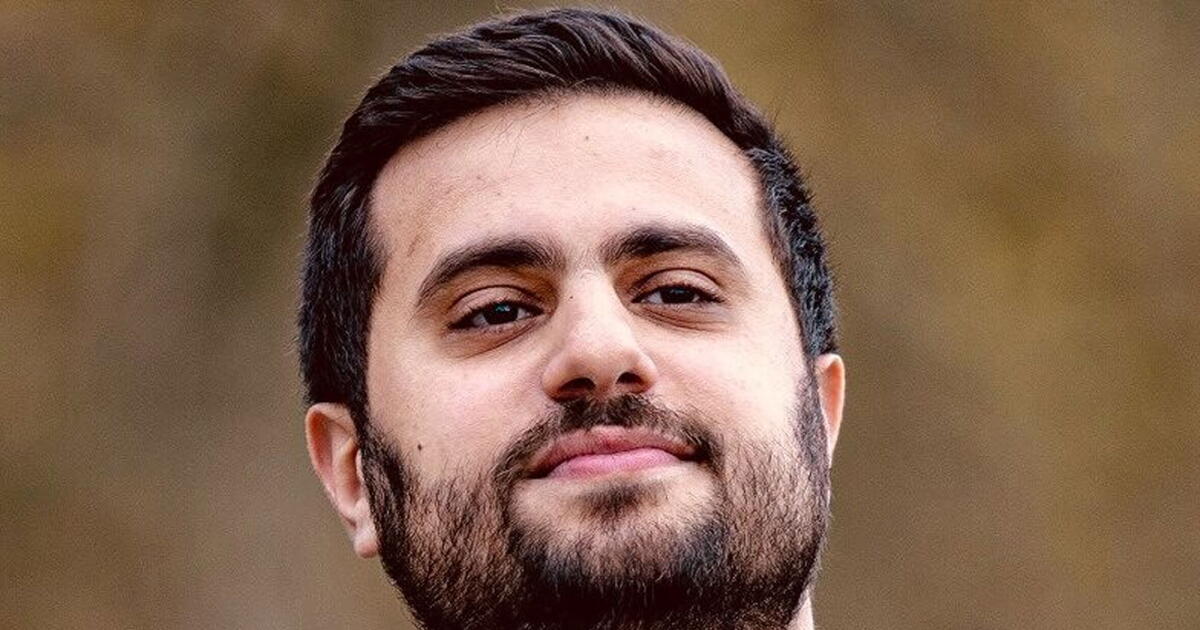
Look no further than last Wednesday, when Abdelrahman ElGendy won the National Book Award for his nonfiction work, “Huna: A Memoir of Revolution, Prison, and Becoming.” He was invited to the ceremony in New York City but couldn’t attend after the U.S. consular office denied the Egyptian author a visitor visa.
ElGendy built a literary career and completed his memoir in the U.S., but left in April 2025 fearing that he would be deported back to Egypt, where he was a political prisoner for more than six years.
His book recounts his experience living through the political upheaval after the military-backed coup of Egyptian President Mohamed Morsi in 2013. He was just a teen when he was arrested.
ElGendy now resides in exile in the U.K. His editor delivered the author’s acceptance speech at the awards gala Wednesday.
“If you’re listening to this, then a years-long dream of mine has come true, and I’m not there to live it with you,” he wrote. “Today, that dream should have come full circle, but like so many of the circles ruptured in my life, it will remain unfinished, broken by an oppressive regime with a fascist ideology whose concentration camp stands ready to swallow the bodies it deems undesirable.”
He dedicated the award to Palestinians, political prisoners and to the “tens of thousands of souls disappeared into ICE concentration camps.”
ElGendy joins the ranks of other Arabs who have won prestigious honors but have been denied entry into the U.S. to receive their prizes.
Yemeni journalist Maad al-Zikry was part of the Associated Press team that won the 2019 Pulitzer Prize for International Reporting. He was unable to attend the New York ceremony after being denied a U.S. visa amid travel restrictions affecting Yemeni nationals.
Syrian cinematographer Khaled Khatib’s documentary “White Helmets” won the Oscar for documentary short in 2017, but he was refused entry into the U.S. to attend the ceremony.
Syrian director Feras Fayyad was also reportedly denied a U.S. visa to attend the Academy Awards for his film, “The Cave,” which was shortlisted for the 2020 Oscars.
Note to RFK Jr.: Had ElGentry been at the gala for the 77th National Book Awards this week, he would have stood alongside four more writers of Arab heritage being recognized for their work.
They included fiction winner Hannah Lillith Assadi, who was recognized for her novel “Paradiso 17.” The other three finalists were Palestinian American poet Fady Joudah, Cuban Palestinian poet Carolina Ebeid and Syrian writer Samar Yazbek.
Arabs that RFK Jr. chose to omit while attempting to paint the Michigan Democratic Senate candidate — now senator-elect — Abdul El-Sayed as part of a group of people who’ve never contributed to the greater good include Egyptian American scientist Ahmed Zewail, who was awarded the 1999 Nobel Prize in chemistry for his work on femtochemistry.
Omar M. Yaghi is a Palestinian American chemist who won the Wolf Prize in chemistry in 2018 for his work on reticular chemistry and metal-organic frameworks. Tawakkol Karman is the Yemeni journalist, politician, and human rights activist who was a co-recipient of the 2011 Nobel Peace Prize.
RFK Jr. could learn from the Arab or 20 who’ve “produced science” (his words, not mine) and won prestigious awards for doing so. But it’s not the junk science he prefers, such as brain worm fog and 5G cellphone networks altering our very DNA. Is it any mystery why he doesn’t value their contributions?
His promotion of anti-vaccine conspiracy theories and dubious claims that inoculations are linked to autism has directly led to the resurgence of a formerly eradicated disease in the U.S.
It was announced Tuesday that measles is no longer eliminated in the United States, reversing what’s been called one of the country’s greatest public health achievements this century. An independent commission of the Pan American Health Organization (PAHO) revoked the nation’s measles-elimination status this week after determining that the virus circulated nonstop for more than a year.
That dubious distinction came within months of Egypt’s Deputy Minister of Health and Population, Dr. Amr Mohamed Kandeel, being awarded the 2026 World Health Organization’s Nelson Mandela Award for Health Promotion. They were honoring his work toward modernizing Egypt’s immunization systems, thereby helping the country achieve certification for eliminating measles and rubella.
Fingers crossed that America catches up to Egypt someday. Meanwhile, Arabs will keep contributing to humanity and winning those awards, despite RFK Jr.’s insistence that they are way, way behind.