Fuel shocks from the US-Israel war on Iran are rippling worldwide, as Strait of Hormuz disruptions push prices higher. From Nigeria to Vietnam and India, workers face soaring costs, longer hours and lost jobs amid a deepening global energy crisis.
On a quiet afternoon in Bare, a farming community in Numan Local Government Area of Adamawa State, northeastern Nigeria, Clement Coleman sat beneath a neem tree with an old friend. Alhaji Sadiki, a herder from the nearby village of Sabewa, had come to visit.
Clement had recently bought two calves, and he believed that Sadiki was best positioned to raise them. There were no contracts to sign, no witnesses to summon. By the end of their conversation, he handed them over to Sadiki. At the time, this was not unusual in Bare. It was the system.
Farmers routinely bought a handful of calves and entrusted them to herders they knew. In return, the herders were given access to farmland within the community, land they could not cultivate themselves because of their nomadic life and the demands of managing large herds. Farmers, in turn, worked those fields on their behalf.
It was an arrangement built on mutual dependence. At harvest, farmers handed over the yields to the herders. When they needed money or access to their cattle, they turned to the herders to whom they had entrusted their animals. Over time, the cattle multiplied. Farmers who never grazed a single animal came to own sizeable herds. Herders, meanwhile, secured steady food supplies through farms they did not till themselves. Risks were shared, and so were rewards.
That afternoon, Clement and Sadiki sealed their agreement with a handshake.
The pact that fed generations
For years, the system worked with remarkable ease.
Clement recalls how Sadiki managed the cattle as though they were his own, alerting him whenever one fell ill. “One time, the cows entered someone’s farm and destroyed their crops. Sadiki told me, and I went to the farmer and covered the loss in cash,” Clement told HumAngle.
A decade on, by 1985, his herd had grown to four cattle. By 1990, it had increased to six. The herd continue to multiply.
“They were healthy and big. I considered myself a rich man back then,” he recounted.
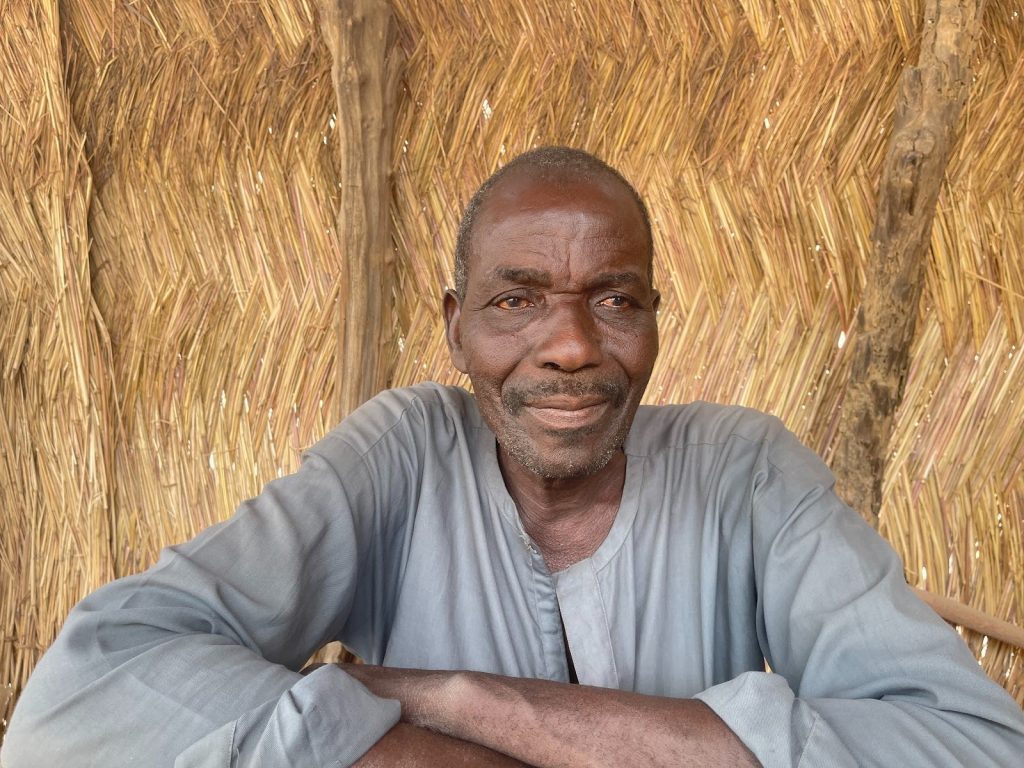
Clement Coleman in his compound in Bare, Adamawa State. Photo: Saduwo Banyawa/HumAngle.
The cattle became a financial lifeline. One time when Clement was short of funds and needed to pay for his children’s education, he went to Sadiki and one of the big cows was sold. He paid his children’s fees and used the balance to support his household. He continued to use the system for years to support his family.
Others relied on the same system.
Buba Sarno, a lifelong herder in Mararaban Bare, never had time to farm. Yet, for four decades, each harvest season, he received about 25 bags of rice and 30 bags of maize. It was simple. All he did was seek land for free and reached an agreement with a local who tended to the farm on his behalf. If the farm required manual labour or fertiliser, Buba sorted it through the farm attendant. “With time, I also cultivated soya beans and other crops, and my family never had to buy food,” Buba told HumAngle.
Magaji Yakubu, another herder in Mararaban Bare, told HumAngle that he combined grazing with both rainy season and irrigation farming, relying on locals to manage his fields. “I cultivated rice, guineacorn and soya beans,” Magaji noted. Like Sadiki, he tended farmers’ cattle.
The same arrangement played out in Bwashi community in Adamawa’s Demsa Local Government Area, where Theophilus Tapu built his livelihood around it. The 80-year-old farmer is a father of 10 and grandfather of over 40 children. He is considered an accomplished cattle rearer in his community, but Theophilus never led a herd to graze. Instead, he bought young male calves, handed them to trusted herders, and sold them at maturity.
“I sold them to sort my needs and purchase more young ones, then hand them back to the herders,” he told HumAngle, adding that when some of the herders were migrating, they would hand over his herd to him, and he would entrust it to a new batch of herders.
The cycle sustained him for over 60 years.
By 2000, he had lost count of his herd. He explained that his relationship with the herders thrived to the extent that he didn’t have to follow them to the market; the herders sold the cattle and brought him the proceeds.
80-year-old farmer Theophilus Tapu has lived in Bwashi for most of his life. Photo: Saduwo Banyawa/HumAngle.
It was, in every sense, a shared economy rooted in trust.
From trust to tension
The trust began to fracture in 2017.
Get our in-depth, creative coverage of conflict and development delivered to you every weekend.
Subscribe now to our newsletter!
That year, violence broke out between farmers and herders in several communities in Adamawa State, with Numan and Demsa among the hardest hit local government areas. What had once been isolated disputes escalated into deadly clashes, displacing communities and destroying livelihoods.
Despite government intervention and multiple peacebuilding efforts, the violence has persisted for almost a decade.
At its core, the conflict is about land and water. Farmers have accused herders of encroaching on farmlands. Herders, in turn, said grazing routes had been taken over.
In Bare, the turning point came in 2017, when a confrontation between a farmer and a herder spiralled out of control. “The herder took his cattle to the farm, and when the owner of the farm confronted him, things got out of hand, and they started fighting,” Jackson Amna, the District Head of Bare, told HumAngle.
What began as a verbal confrontation that day turned into full-blown violence, leading to deaths and displacement. The clashes now follow a pattern, according to locals; they subside during the dry season and resurface when farming resumes with the rains.
HumAngle has extensively covered the conflict in Bare and Mararaban Bare.
Bare is nicknamed “Home of Hospitality”. Photo: Saduwo Banyawa/HumAngle.
With each recurrence, trust erodes further.
The long-standing system, in which farmers entrusted cattle to herders and herders relied on farmers for farm produce, is steadily collapsing across Numan and Demsa. Even though a few farmers still hand over farmland to herders, the District Head of Bare explained that it is rare.
“During the 2017 conflict, some herders ran with people’s cattle and have not been seen to date,” Jackson said. “My herd was also taken away by the herder I entrusted them with, so I won’t give my cattle to somebody who can run away with them.”
Strained lives
The consequences have been profound.
When clashes between farmers and herders continued in Bwashi, Theophilus’ relatives urged him to retrieve his cattle from the herder he had entrusted to them. He noted that most herders had already started leaving the area at that time.
“They [herders] were considered our enemies, and we could no longer trust them, but I knew some of them were good, but my people wanted me to do nothing with them,” he said.
Theophilus succumbed and took over his cattle from the herder.
Not long after, thieves stole the animals he had struggled to manage himself. The old farmer doesn’t have a single cow to call his own. “I lost everything,” he said. “I’m very poor now, and survival is hard.”
Theophilus had a well-planned retirement. He was to stop farming in 2024 and live off his herd, but now he says his entire life has been altered, and with many mouths to feed, he had to go back to the farm that yields little.
Things didn’t change only for the farmers. In 2019, two years after the conflict began, the man who had given the farmland to Buba Sarno in Mararaban Bare told him never to set foot on the land again, so Buba migrated with his herd and family to Lamurde, a nearby local government area. In Lamurde, he tried to rent land for farming but couldn’t get any.
“I went to a hill and established a farm there, but unfortunately, the soil is not good, and the land is not fertile, so my crops didn’t yield,” he said.
Like Buba, several other herders who once lived in Bare have been displaced to settlements such as Sabewa, Ubandoma, and Mararaban Bare. However, since they are not indigenous to those communities, they told HumAngle that farming has become restricted as locals have taken over their lands and broken the pact that existed between them for generations.
Magaji Yakubu, who lost his farmland at Mararaban Bare after locals took charge of it, has also retired all the cattle he had been tending for locals. “Feeding has become very hard for my family and me since the conflict began,” he stated. As someone who had access to large harvests in past years, Magaji said navigating a new life without owning farmland or grain is difficult.
A herder stands behind his herd in a grazing field at Mararaban Bare. Photo: Saduwo Banyawa/HumAngle.
For Clement, the loss is both economic and deeply personal. Sadiki, the man he trusted for decades, disappeared with his cattle during the 2017 crisis. Although his phone rings occasionally when he dials it, no one has ever responded. Clement says he is not sure whether the man is dead or alive.
“Some say the herders around here migrated to Cameroon for safety due to the recurring clashes. We also heard that some have moved to other states. I’ve looked for Sadiki everywhere I can in the past nine years and haven’t seen him,” he said.
He had planned to fund his children’s education by selling cattle. Without them, those plans collapsed. Even if Sadiki returns, Clement believes the relationship might not be as usual.
“Right now, I believe he intentionally ran away with my herd,” he said.
Searching for solutions
Efforts to restore peace continue, but progress remains slow.
The Justice, Development, and Peace Commission (JDPC), a faith-based organisation affiliated with the Catholic Diocese of Yola, has worked for decades to address the crisis. According to Jareth Simon, JDPC’s Project Manager in Adamawa State, land and water were the initial triggers, but new pressures have emerged.
“The one that is glaring to us now is the climate-related issues,” he said. “We’ve also seen where there is an increase in population, leading to more people wanting to cultivate more land.” Additionally, Jareth noted that displacement caused by the Boko Haram insurgency in the region has further intensified competition for resources.
While most of Adamawa’s 12 LGAs have been affected by the farmers-herders crisis, Jareth said that JDPC’s engagements have identified Demsa, Numan, and Yola South as the hardest hit areas. “This is as a result of the number of cases that have been reported,” he said.
To mitigate the crisis, JDPC’s approach focuses on community-led solutions, bringing together local government representatives, religious leaders, women, and persons with disabilities. Currently, about 415 stakeholders in conflict-prone areas are engaged in this initiative.
“These are people who cut across the local structures at the local government level. That includes the local government representative and religious leaders from the Muslim and Christian associations. We have women’s representation and persons with disabilities,” he said.
Jareth explained that people meet at least once a month to discuss issues related to peaceful coexistence, social cohesion, and community protection, and to identify local actions to mitigate them. “We don’t dictate to them. We only strengthen their capacity, and they themselves identify the leadership structure,” Jared said.
Illustration: Akila Jibrin/HumAngle
In some communities, such as Namtari in Yola South, the approach has helped reduce clashes. “We have programmes for children like Peace Clubs, and we also have the one that targets adults using informal education and informal approaches,” he added.
But challenges remain, particularly around funding and sustainability. “So we’ve seen where we’ve intervened, and then the projects have to end, but you also see that there is an increased need for you to also go out and support, and the funds are limited,” he said.
Jareth said that government authorities should set up and maintain multiple community-based interventions. “Because one of the gaps we’ve noticed is that from the community to the local government, from the local government to the state, there seems to be some gaps sometimes even in terms of information sharing,” he said.
Government interventions to resolve the farmers-herders conflict across Nigeria have struggled over the years. For instance, the Rural Grazing Area (RUGA) scheme, introduced in 2019, was derailed by mistrust and controversy and later suspended by the former President Muhammad Buhari’s administration.
Another intervention, the National Livestock Transformation Plan (NLTP), remains largely unimplemented. It was initially introduced to “create a peaceful environment for the transformation of the livestock sector that will lead to peaceful coexistence, economic development, and food security…”
While Jareth acknowledged the efforts of the Adamawa State government in establishing a peace commission comprising committees across the LGAs, he said there’s a need to strengthen security across the locations. “We also want to see the government come out with policies […] that help resolve some of these tensions that arise as a result of scarce resources within these communities,” Jareth stressed.
Government interventions and community-led peace initiatives continue, but the deep scars of mistrust, competition for land, and recurring violence make reconciliation slow and fragile.
What is being lost in Adamawa is not just a livelihood, but a way of life.
It was just past 10:30 p.m. on Sunday, Sept. 14, 2025, when Allwell Nelson was abducted from her family residence in Dong, a community in Jos North Local Government Area (LGA), Plateau State, North Central Nigeria.
She and her niece had just finished bathing and were in their pyjamas, settling down to watch a film before bed, when her brother-in-law burst into the room.
“Armed robbers! Armed robbers! Call the police!” he shouted.
Her heart leapt. She grabbed her phone and called a friend who works at a nearby police station, barely ten minutes away, then tried to alert the neighbours. No one came out. Outside, the attackers struggled to break the front doors.
At the time, Allwell was serving with the National Youth Service Corps (NYSC) in Bauchi, northeastern Nigeria. She had returned home to prepare for her wedding, scheduled for the following Saturday.
The attackers, armed with handguns, cutlasses, an axe, and a digger, operated for over 45 minutes, she recounted. They first went to the master bedroom, which was empty. Her brother-in-law had fled through the back door, jumping over the fence to get help. From there, they moved to the children’s room, where the children were sleeping, before arriving at Allwell’s room.
“We were five in my room,” she said. “Me, my sister, my one-year-old niece, my older niece, and my cousin. We ran into the bathroom and locked ourselves in.”
When the attackers found them, they asked after her brother-in-law, insisting they had heard his voice, but they told them that he wasn’t around. After firing a gunshot, the four kidnappers moved the family to the living room and continued questioning them. “They eventually asked my cousin and me to follow them,” Allwell said.
Before leaving, they went to the kitchen and packed foodstuffs such as noodles and garri. One of them never spoke; his face was covered, and he carried the food. They forced the victims through the fence and across a nearby river, pausing at one point to make a phone call.
“The question here is, who were they calling?” she asked. “The person who sent them [informant], or the security agency?”
A spreading pattern across Jos
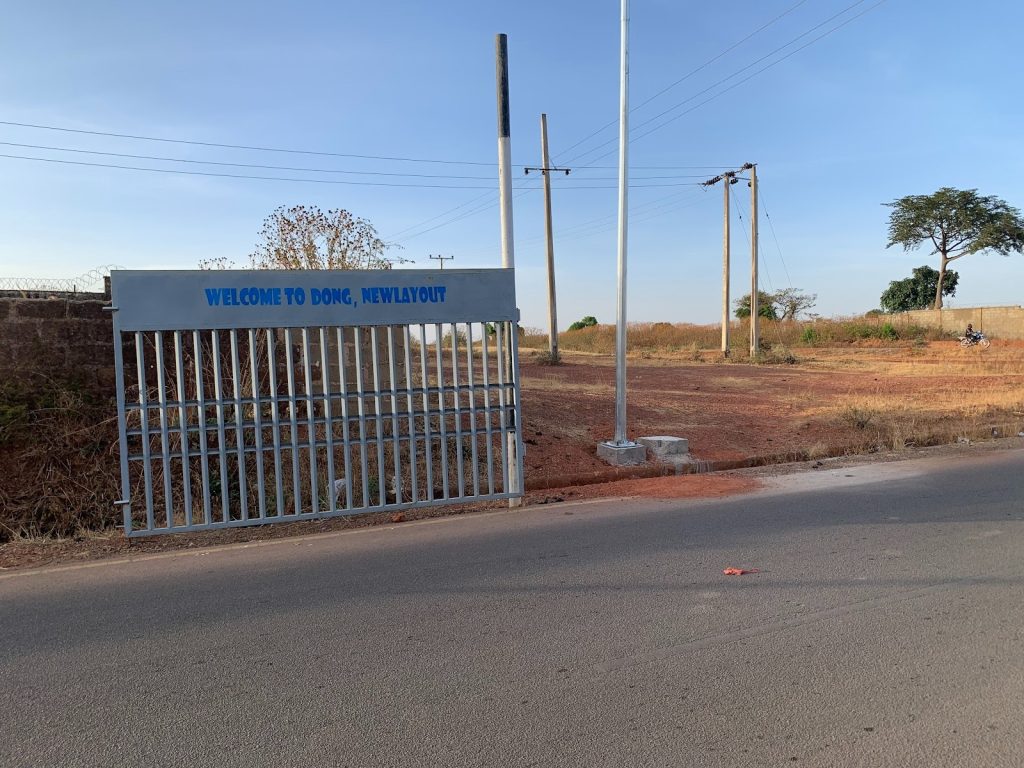
Welcome to Dong. Photo: Johnstone Kpilaakaa/HumAngle.
Dong is a fast-growing neighbourhood, bordering the conflict-hit Bassa Local Government Area and the Jos Wildlife Park. Despite nearby security posts and military checkpoints positioned at both ends of the route into the community, kidnappings have continued. Notably, these measures were already in place as the attacks persisted.
But the pattern seen in Dong is not confined to a single neighbourhood. Across the Jos-Bukuru metropolis, which includes Jos North and Jos South LGAs, similar incidents have emerged, suggesting a far-reaching threat.
Dong borders the Jos Wildlife Park and Bassa LGA. Map illustration: Mansir Muhammed.
On March 24, Sunday Agang, chairperson of the Board of Trustees of Evangelical Church Winning All (ECWA), was abducted from his residence in the Faringada area of Jos North. Earlier, in January 2026, three daughters of the Managing Director of the Plateau State Water Board, Apollos Samchi, were abducted during an attack on his residence in Rantya, in Jos South, about a fifteen-minute drive away from Dong.
In the same month, a retired Nigerian Army colonel was kidnapped in Rukuba Road, not far from Dong, and he was later rescued by security operatives. Barely weeks after Allwell’s abduction, Laven Jacob, a member of the Plateau State House of Assembly, was abducted in Dong.
These incidents, alongside others that often go unreported, reinforce the sense that kidnapping in Jos has evolved into a citywide crisis rather than a series of isolated events. Between September 2025, when Allwell was abducted, and March 2026, at least four reported kidnapping incidents were recorded in the Jos-Bukuru metropolis.
Similar incidents stretch back years. For instance, in 2022, a retired naval officer, Hellen Godos, was killed in her home in Dong by kidnappers, who were attempting to abduct her son.
The role of informants
Many of these incidents, residents and officials say, are driven by insiders within the communities themselves.
“The people work with informants,” said Peter, a community elder in Dong who gave only his first name. “They target specific people, who they believe are doing well.”
He added that during a security meeting held in the community in December 2025, the role of informants was discussed as one of the major factors responsible. “These criminals don’t know the communities; they depend on people from within.”
Generally, kidnappers often rely on information from inside communities to identify their targets, quietly shaping who is taken and when. A recent HumAngle investigation in Kano State found how kidnappers targeted a man after local knowledge of his movements and finances was passed on to criminals.
Get our in-depth, creative coverage of conflict and development delivered to you every weekend.
Subscribe now to our newsletter!
In December 2025, troops of the Joint Task Force, Operation ENDURING PEACE, neutralised a suspected kidnapper and arrested three alleged informants who were targeting Dong. In October 2025, the Plateau Police Command also arrested suspected kidnappers, including an informant who supplied foodstuffs to kidnappers in the mountainous Mazah community in Jos North.
Even so, the sense that local knowledge is being used to enable abductions persists.
Chris Iyama, an influential civil society leader in the state, described a similar pattern after he was abducted on March 8 in front of his residence in Rayfield-Guratopp.
“One of them, I presumed to be the leader of the [kidnappers], called my name and wanted to be sure if my name was Chris. I immediately affirmed. That was the beginning of my ordeal as we walked through different forests, mountains…,” he said.
He added that they took him to a forest somewhere between Bokkos and Barkin Ladi.
Captivity, ransom, and survival
A fact-finding committee set up by the Plateau State government reported that at least 420 communities across 13 local government areas – particularly in Bokkos, Barkin Ladi, and Riyom – were attacked between 2001 and 2025, with more than 11,000 people killed.
“They have been taken over, renamed, and people are living there conveniently on lands they pushed people away to occupy,” said Governor Caleb Mutfwang. “For those who think that the current situation is a farmer-herder issue, let me disabuse your mind from that perception; it is a product of organised crime by malicious elements who do not want peace to reign in the state.”
Allwell’s abduction unfolded within that wider landscape. She and her cousin were taken towards Bassa LGA, another hotspot. In April 2025, terrorists killed 52 people overnight in Zike village, in the Kimakpa/Kwall District of Bassa.
She said they were forced to walk through nearby Dong Kassa towards the Rafiki-Miango axis in Bassa. Along the way, they saw a police truck, and the kidnappers made them squat in the bush. “We trekked for over an hour,” she said.
The region where Allwell and her abductors went through. Illustration: Mansir Muhammed/HumAngle.
When they arrived in Bassa, the abductors, who she said did not speak Hausa properly but Fulfulde, led them towards an area where herders kept cattle. At the time, she was serving in the country’s North East, and she said she was able to identify the language.
“When we got nearby, the people tending the cattle started shining torchlights at us and asked who we were and why we were in their territory,” she said. The kidnappers shot two of the herders who questioned them. “At that point, I felt like I was dying.”
Hannah Silas, a development worker in the region, said incidents like this can feed into cycles of violence. “For instance, when the herders wake up and see someone dead, they will assume it was the locals who killed them, and it will lead to reprisals that should not happen,” she said.
The Miyetti Allah Cattle Breeders Association of Nigeria (MACBAN) has stated that “bad elements” and criminals have infiltrated their ranks, masquerading as herders to commit kidnappings and violent crimes. Misidentification, in this context, risks reinforcing the very cycles of violence residents are trying to survive.
They continued walking until they reached the captors’ den.
Allwell and her cousin spent more than three nights in captivity. Unlike Chris Iyama, who said he “was beaten black and blue and at some point they wanted to pull the trigger on my head”, Allwell told HumAngle that they were not physically assaulted and were given food, but she described intense fear and psychological pressure.
“I remember I was sick at that time, and one of them went to town to get medication for me,” she recounted. “I couldn’t take it because I was scared.”
The abductors demanded ₦50 million. “I told them that I am a civil servant and I don’t have [such an amount of money],” said Solomon Dansura, her brother-in-law.
As the incident gained attention on social media, NYSC officials visited the family.
“The authorities knew about the incident, but nothing was done,” Allwell said.
While negotiations continued, the abductors threatened to kill her cousin if the ransom was not paid. The family tried to raise funds without assistance from authorities.
A ransom was eventually paid, and they were released on Wednesday, Sept. 14, 2025.
Allwell does not know the exact amount, but the last figure she overheard was about ₦5 million. “The security did not rescue us,” she said.
A security post at the entrance of Dong. Photo: Johnstone Kpilaakaa/HumAngle.
Chris Iyama also said his family paid a ransom, and that his release was arranged in a forested, mountainous area in Bokkos.
Security gaps and fading trust
For residents, these experiences are rarely reflected in official communication.
Kidnap-for-ransom remains one of Nigeria’s most persistent security crises. Although ransom payments are illegal, families often treat them as the only viable option, citing slow responses from authorities. In some cases, influential public figures, including government officials, have openly crowdfunded ransom payments.
Between July 2024 and June 2025, at least 4,722 people were abducted across nearly 1,000 incidents nationwide, according to SBM Intelligence. Kidnappers demanded about ₦48 billion in ransom during that period, while families paid an estimated ₦2.57 billion. At least 762 people were killed in abduction-related violence.
Earlier in January, the Jos North Local Government Council launched a police outpost in Dong to improve security.
“This police outpost is not just a structure of blocks and mortar; it is a symbol of our resolve to protect lives and property,” said John Christopher, the local government chairperson, at the launch. “For the people of the Dong community who have endured the trauma of insecurity and kidnapping, this facility represents hope, reassurance, and a renewed sense of safety.”
A police post beside the Jos Wildlife Park, near the entrance of Dong. Photo: Johnstone Kpilaakaa/HumAngle
When HumAngle visited the facility, which is five minutes on foot from the main entrance to Dong, in March, it was deserted. Dry weeds filled the compound, the gate was locked, and no officers were present.
An 8 p.m. curfew imposed in Dong in 2025 was later relaxed in January, according to a security officer at a local church. “But once it is 10 p.m., you will not see people outside,” he said. “Some of the local hunters, who protect the community, recently engaged in a gun battle and killed a suspect, so the incidents have reduced.”
Even with that, some residents say they still feel unsafe.
Sunday evenings are usually a beehive of commercial activity at Angwan Rukuba Junction, but it turned deadly on March 29, at around 7:45 p.m., when assailants opened fire on people at random in the area, located in Jos North Local Government Area (LGA), Plateau State, in North Central Nigeria.
Eyewitnesses gave differing accounts of the attackers’ arrival, with some saying they came in a red Sharon van, while others reported they arrived on motorcycles. They were described as dressed in black camouflage, with their faces covered, and armed with guns and cutlasses. The motive and identity of the assailants remain unknown, and no group has claimed responsibility.
At least 27 people were killed, including a pregnant woman, while others were injured, according to Dalyop Mwantiri, President of the Berom Youth Moulders Association.
Sunday Akintola, a resident, said the high number of casualties was due to people being caught unawares, as residents initially assumed the gunshots were stray bullets from officers of the National Drug Enforcement Agency, which “usually come to harass young men in the area”. “Once people stepped in, they were shot at close range, while others were chased and struck with machetes,” he noted.
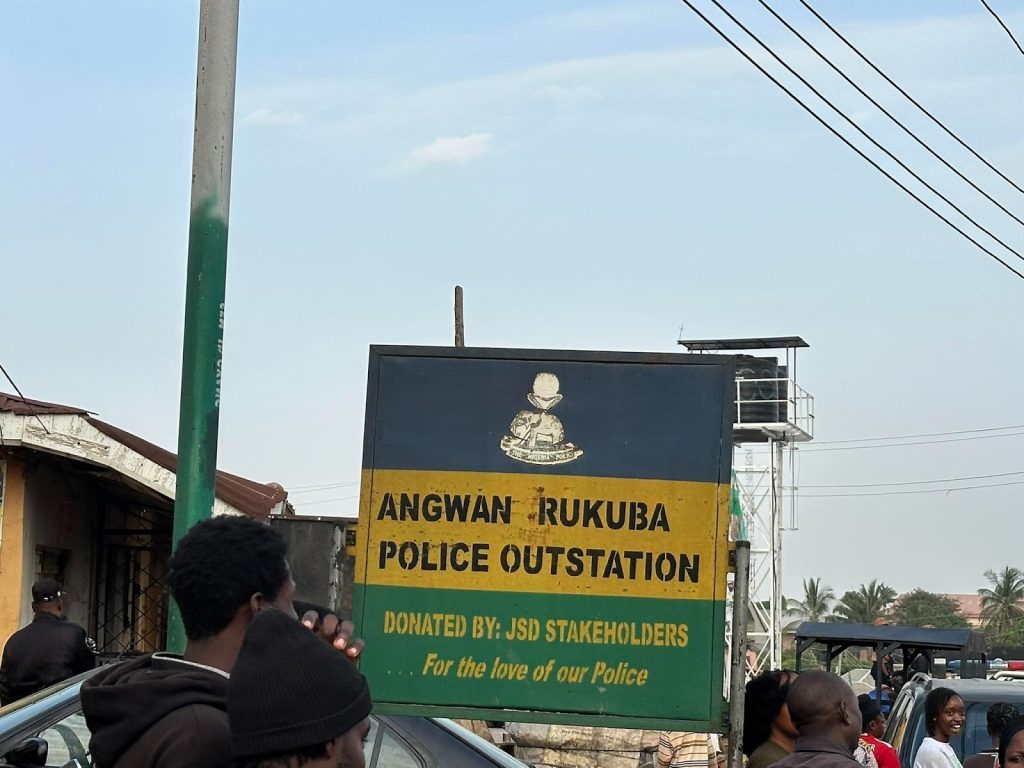
Although there is a police station at the junction where the incident occurred, residents said the response was slow, alleging that some officers on duty fled when the attack began, before reinforcements later arrived from the state headquarters.
The police outpost at Angwan Rukuba. Photo: Matthew Tegha.
Alfred Alabo, the spokesperson of the Plateau Police Command, says they “are currently combing the nearby bushes to ensure that the suspects are arrested or dislodged”.
Angwan Rukuba is located just 10 minutes from both the Jos Main Market and University of Jos facilities, including the Senior Staff Quarters, Main Campus, and Permanent Site, as well as private housing for university staff and students. It also borders a large stretch of hills, including the popular Gog and Magog.
Notably, it is not a rural farming settlement or a mining community, but a densely populated, urban residential area with a diverse mix of residents, including students, civil servants, and traders. As such, the incident does not fit the typical pattern of farmer–herder clashes often reported in Plateau State.
Residents at the Angwan Rukuba junction. Photo: Matthew Tegha.
“This is right inside Jos. It is a mixed community; it is really a melting pot because everybody is here, and an injury to one is an injury to all,” said Julie Sanda, Director General of the Plateau Peace Building Agency (PPBA). “It was an unprovoked attack.”
Violence in Plateau State is multidimensional, involving terror attacks, conflict between farmers and herders in rural communities, and ethno-religious tensions that have rocked the city since 2001. However, one thing is common about these incidents in the Jos–Bukuru metropolis: they often lead to revenge attacks among ethno-religious groups, driven by deep-seated mistrust, which has in turn contributed to polarised settlements.
“If you know anything about Jos, if this incident had happened ten years ago, I don’t think we would be here today. It shows the resilience of the people and their courage,” Julie said.
Shortly after the attack on Sunday, the Plateau State Government imposed a dusk-to-dawn curfew in Jos North LGA until Wednesday, April 1. However, residents took to the streets in protest, displaying the bodies of the deceased. Additionally, the University of Jos has rescheduled its ongoing semester examinations. Caleb Mutfwang, the state governor, also visited the community on Monday, March 30.
Governor Mutfwang addressing residents in Angwan Rukuba, Jos Metropolis. Photo: Matthew Tegha.
“I assure you that those responsible for this evil act will not go unpunished,” he said.
The state government has also reiterated its ban on commercial motorcycles in the Jos–Bukuru metropolis, which covers Jos North and Jos South LGAs. “Meanwhile, the hours of operation for tricycle riders (keke) still remain 6:00 a.m. to 7 p.m.,” according to Davou Gyang Jatua, the state Commissioner of Transport.
Residents who spoke to HumAngle said that, in recent months, unfamiliar motorcyclists — some of whom do not know locations within the metropolis — have been moving around. “Whenever I see keke and okada (motorcycles) out very late, I know there’s a risk of evil acts being perpetrated using them,” said Zoe Machunga, a Jos resident.
In the weeks leading up to the attack, some social media accounts had posted videos inciting violence in Jos, although it remains unclear whether such messaging contributed to the incident. The governor said the social media users responsible for the posts have been apprehended, a claim confirmed by Alfred, the police spokesperson, during a radio interview on Monday.
“Injustice has made healing difficult in Plateau State,” said Joseph Lengmang, a peace and security expert and former Director General of PPBA. “Peacebuilding efforts remain incomplete, and some underlying issues still need to be addressed.”
A sudden armed attack occurred on March 29 at Angwan Rukuba Junction in Jos North, Plateau State, Nigeria, resulting in the death of at least 27 people, including a pregnant woman.
Assailants, dressed in black camouflage, attacked the area with guns and machetes, and despite being near a police station, the initial response was slow.
Get our in-depth, creative coverage of conflict and development delivered to you every weekend.
Subscribe now to our newsletter!
The local community, comprising a mix of students, civil servants, and traders, organized protests following the incident, which was described as an unprovoked attack, distinct from the farmer-herder clashes common in the region.
In response, the Plateau State Government imposed a curfew and affirmed the ban on commercial motorcycles. It also took steps against violence incited by social media, with some arrests made. The attack reflects the ongoing ethnic and religious tensions in Plateau State, with peacebuilding efforts criticized for being incomplete. The incident underscores the broader challenges in achieving lasting peace and addressing deep-seated mistrust among various groups in the region.
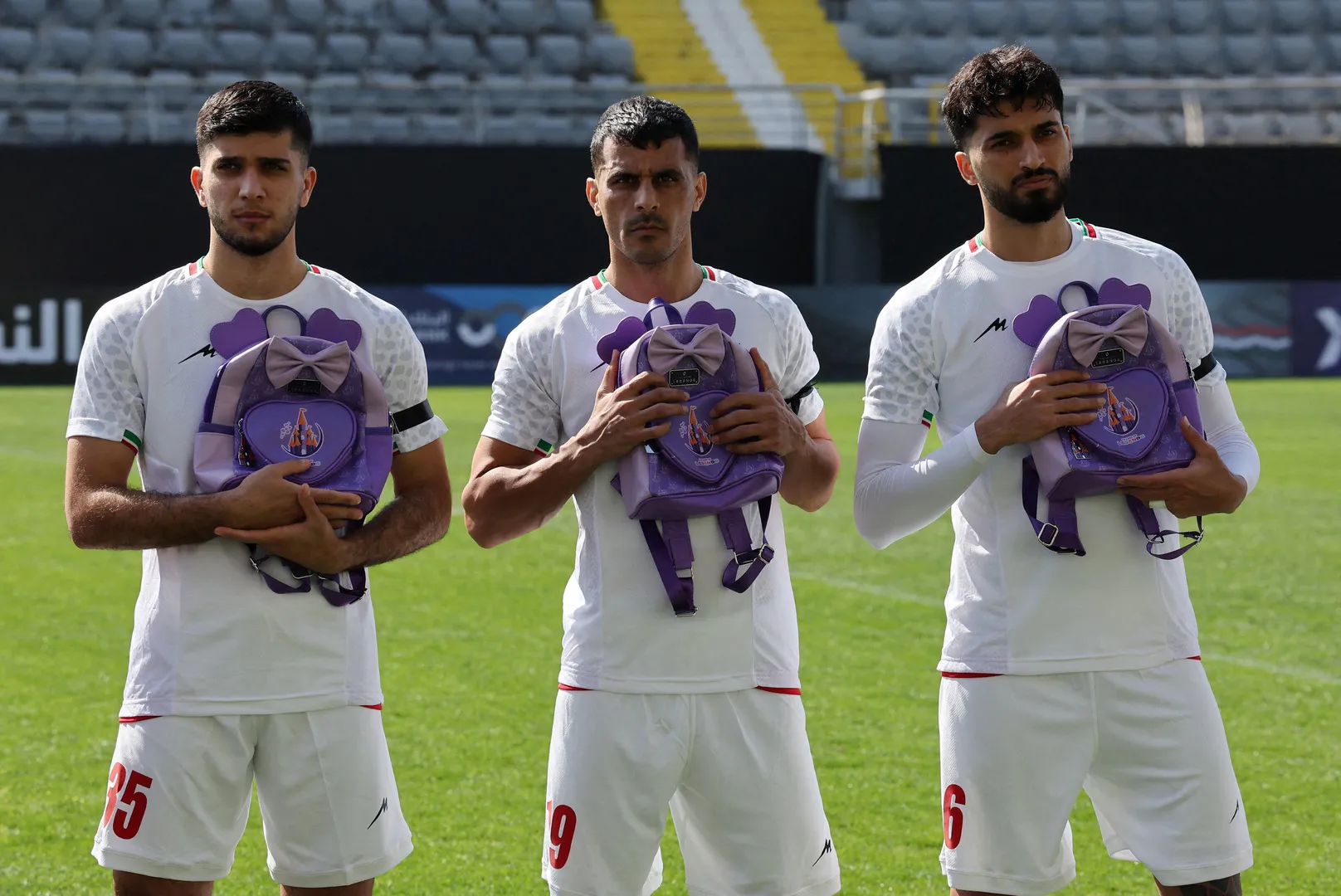
Iranian football players laid backpacks on a football pitch in Turkey to pay tribute to the children killed in a US-Israeli strike on Minab elementary school last month. The tribute came ahead of a friendly match against Nigeria.
Kano, Nigeria – On a bustling day in northern Nigeria, Marian Shammah made her way to the Sabon Gari Market, one of the largest electronics hubs in Kano state.
The 34-year-old cleaner was in need of a refrigerator, but with rising costs and a meagre income, she saw the second-hand appliances sold at the market as a lifeline.
Recommended Stories
list of 3 itemsend of list
After locating the one she wanted, she paid the vendor 50,000 naira ($36) and took it home. But just a month later, the freezer collapsed.
“Only the top half of the refrigerator was working, and the freezer wasn’t working,” said Shammah.
Her food spoiled, her savings disappeared, and she was soon back in the market searching for another appliance.
Although Shammah could have bought a new local appliance for just over 30,000 naira ($30) more, she – like millions of Nigerians – believes second-hand products from America and Europe “last longer” than new products sold in Nigeria.
Observers say this trend is part of a larger crisis. Nigeria has become a major destination for the developed world’s discarded electronics – items often near the end of life, sometimes completely dead, and frequently toxic because they contain hazardous materials. When they break down, they add to landfills, worsening an already dire e-waste crisis on the African continent.
Around 60,000 tonnes of used electronics enter Nigeria through key ports each year, with at least 15,700 tonnes already damaged upon arrival, according to the United Nations.
The trade in used electronic goods is powered largely by foreign exporters. A UN tracking study between 2015 and 2016 showed that more than 85 percent of used electronics imported into Nigeria originated from Germany, the United Kingdom, Belgium, the Netherlands, Spain, China, the United States, and the Republic of Ireland.
Many of these imports violate international restrictions, like the Basel Convention, an environmental treaty regulating the transboundary movement and disposal of hazardous electronic waste to developing countries with weaker environmental laws.
Across West Africa, the Basel Convention’s “E-Waste Africa Programme”, a project focused on strengthening e-waste management systems across the continent, estimates that Benin, Ivory Coast, Ghana, Liberia, and Nigeria collectively generate between 650,000 and 1,000,000 tonnes of e-waste annually – much of it the result of short-lifespan second-hand imports.
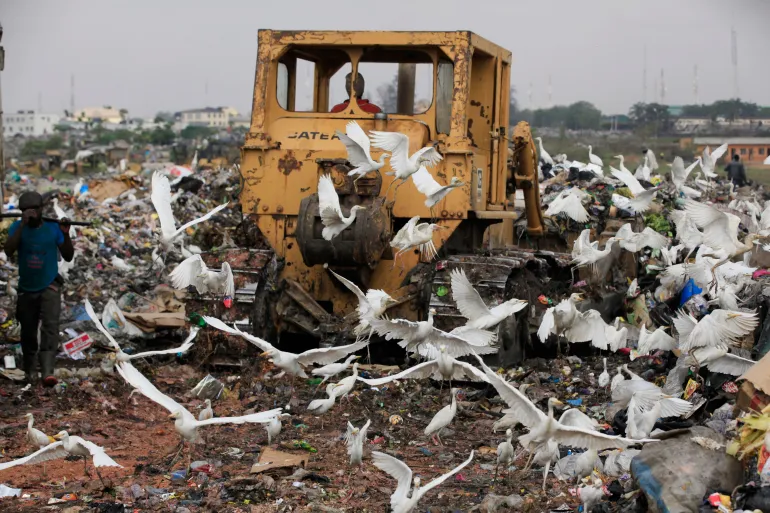
A man sorts out iron and plastic to sell while a bulldozer clears the garbage and birds surround it in a dump site in Lagos, Nigeria [File: Sunday Alamba/AP]
Health risks
The United Nations describes e-waste as any discarded device that uses a battery or plug and contains hazardous substances – like mercury – that can endanger both human health and the environment. Several of the toxic components commonly found in e-waste are included on the list of 10 chemicals of major public health concern maintained by the World Health Organization (WHO).
According to the WHO, used electrical and electronic equipment (EEE) presents a growing public health and environmental threat across Africa, with Nigeria at the centre of the trade.
“Much of the equipment shipped as used electronics is close to becoming waste,” said Rita Idehai, founder of Ecobarter, a Lagos-based environmental NGO, warning that devices imported and sold as affordable second-hand goods often fail shortly after arrival and quickly enter the waste stream.
The consequences are far-reaching. Many imported fridges and air conditioners, for instance, still contain CFC-based and HCFC-based refrigerants such as R-12 and R-22 – chemicals banned in Europe and the US for causing ozone depletion or being linked to cancer, miscarriages, neurological disorders, and long-term soil contamination. These gases live for 12 to 100 years, meaning leaking equipment adds to a multi-generational environmental burden.
After these imported items stop working or fall apart, informal recyclers then dismantle the electronics with their bare hands, Al Jazeera observed. In Kano, the recyclers inhale poisonous fumes and manage the heavy metals without protection. Their work earns them a meagre 3,500–14,000 naira ($2.50-$10) per week, they said, and the after-effects linger – including persistent coughing, chest pain, headaches, eye irritation, and breathing difficulties after long hours of burning cables and dismantling electronic devices.
The health crisis extends into Kano’s communities.
Among casual recyclers and residents who live close to e-waste dumps, many report symptoms that range from chronic headaches and skin irritation to breathing issues, miscarriages and neurological concerns, according to health surveys done by the International Journal of Environmental Research and Public Health. These ailments are consistent with longtime toxic exposure, the researchers said.
Recent field assessments conducted by Nigeria’s Federal University Dutse also stressed that in and around Kano state, where the Sabon Gari Market is located, there are rising levels of heavy metals in soil and drainage channels.
Dr Ushakuma Michael Anenga, a gynaecologist at the Benue State Teaching Hospital and second vice president of the Nigerian Medical Association, warned that toxic exposure from informal e-waste recycling poses grave health risks to communities in Kano.
“Exposure to heavy metals and refrigerant gases in e-waste causes extreme brief and long-term health issues, generally affecting the breathing and renal organs,” he told Al Jazeera.
“Common casual practices like exposed burning and dismantling result in direct, high-level exposure for workers and nearby residents. Children and pregnant girls are particularly inclined due to the fact that those toxicants can disrupt development or even skip from mother to unborn baby, [while] recyclers who work without defensive equipment face repeated, frequently irreversible damage.”
Old computer monitors discarded as electronic waste are pictured at a recycling facility in Lagos, Nigeria [File: Temilade Adelaja/Reuters]
Profits over protection
In Sabon Gari Market, second-hand electronics are advertised as less costly lifelines for households and poor business owners burdened by inflation.
Many customers say foreign-used home equipment appears sturdier and seems like better value for money than new imports from the developing world. Meanwhile, others are just looking for cheap options in difficult economic times.
“I usually go for second-hand or foreign-used electronics because brand-new ones are too expensive for me,” Umar Hussaini, who sells used electronics at the market, told Al Jazeera.
“Sometimes you can get them for half the price of new ones, and they look almost the same, so it feels like a good deal at the time.”
But the last refrigerator he bought stopped cooling after just three months. With no warranty or guarantee, the seller refused responsibility.
“For weeks, we couldn’t store food properly at home, and we ended up buying food daily, which was more expensive,” he said. “However, I have to buy another one again.”
For small business owners like Salisu Saidu, the losses can be even more devastating. He bought a used freezer for his shop, believing it had been serviced. Within weeks, it failed.
“I lost a lot of frozen food, which meant I lost money and customers,” he told Al Jazeera.
Around his neighbourhood, broken electronics are often dumped out in the street, sometimes emitting smoke or sparks.
“There’s also a lot of electronic waste piling up around,” he said, calling for tighter import controls, proper certification, and mandatory warranties to protect buyers from being sold what he described as “damaged goods disguised as fairly used”.
Umar Abdullahi’s second-hand electronics shop in Kano, Nigeria [Abdulwaheed Sofiullahi/Al Jazeera]
Bought as bargains, sold as burdens
At Sabon Gari Market, another vendor, Umar Abdullahi, is surrounded by imported refrigerators, air conditioners and washing machines stacked tightly together.
The products in his shop are advertised as “London use” or “Direct Belgium”, while he negotiates the sale of a double-door fridge for 120,000 naira ($87).
Abdullahi’s store is where Shammah returned after the refrigerator she bought failed. But he admits that much of what he sells to customers arrives unchecked.
“We buy them untested from suppliers in Europe, and we also sell them untested so we can make our profit,” he told Al Jazeera.
This despite the fact that international rules under the Basel Convention, as well as Nigerian environmental regulations, prohibit the shipment of material considered e-waste – with penalties including fines and jail terms.
Nwamaka Ejiofor, a spokesperson for Nigeria’s National Environmental Standards and Regulations Enforcement Agency (NESREA), said the country does not permit the import of e-waste. However, the entry of used electronics is allowed under regulated conditions.
“The importation of used electrical and electronic equipment is regulated and may be allowed only where such equipment meets prescribed conditions, including functionality and compliance requirements,” she told Al Jazeera.
“Nigeria applies a combination of regulatory, administrative and enforcement measures to ensure that imported used electronics comply with national law and the country’s international obligations,” she added, listing out measures including environmental regulations, cargo inspection and verifying that imported equipment is “functional”.
However, despite this, some traders find loopholes in the system, including declaring cargo they plan to sell as personal belongings or second-hand household goods to avoid scrutiny.
Although NESREA says enforcement has improved, critics say the steady flow of mediocre goods continues largely unchecked. Even dealers at Sabon Gari Market acknowledge that most appliances are sold “as is”, without certification or guarantees.
Baban Ladan Issa’s worker washes a second-hand fridge before selling it to a customer [Abdulwaheed Sofiullahi/Al Jazeera]
‘Loopholes’
Behind the second-hand electronics trade is a network of collectors and exporters who source discarded appliances across Europe.
Baban Ladan Issa, who ships used electronics from Ireland to Nigeria, said items are gathered from weekend markets, private homes that are replacing old gadgets, and contractors clearing out equipment from offices, hotels and hospitals.
“Some suppliers mix working and damaged goods together,” he told Al Jazeera, noting that while he tries to avoid faulty items, not all buyers do the same.
Once assembled, shipments worth millions of naira are sent to Lagos through ships then down to sellers in the market in Kano state, sometimes packed in containers or hidden inside vehicles to reduce inspection risks.
Shipping records seen by Al Jazeera showed consignments labelled as “personal effects”, a classification that can limit detailed checks at ports.
Chinwe Okafor, an environmental policy analyst based in Abuja, said the problem is systemic.
“Exporting nations regularly take advantage of loopholes by means of labelling nonfunctional e-waste as ‘second-hand goods’ or ‘for repair,’” she told Al Jazeera. “In some instances, research estimates that over 75 percent of what arrives in developing countries is truly junk.”
“This permits wealthy countries to keep away from highly-priced recycling at home while pushing unsafe materials into nations with weaker safeguards.”
Ibrahim Adamu, a programme officer with the NGO Ecobarter, added that mislabelling, poor inspection technology and corruption at ports make enforcement difficult.
“The highest profits are captured by exporters and brokers who arbitrage the gap between disposal costs in Europe or Asia and the strong demand for ‘tokunbo’ goods in Nigeria,” he said, using the local name for used imported electronics.
To forestall this, he said Nigeria “must reinforce border inspections” and implement a policy whereby producers and manufacturers bear financial responsibility. At the same time, “the international network has to adopt binding bans that [hold] manufacturers and exporters responsible”, Adamu said.
People shop at a market in Nigeria [File: Sodiq Adelakun/Reuters]
Little oversight, mounting risks
Although Nigeria has regulations governing the import of electrical and electronic equipment, enforcement gaps keep exposing markets like Kano’s Sabon Gari to ageing and near-end-of-life appliances, locals say.
Ibrahim Bello, a used electronics importer with a decade in the business, said many shipments that arrive from Europe are in less-than-ideal condition.
“Around 20 to 30 percent of the items we receive have issues when they arrive,” he told Al Jazeera. “Some are already damaged, while others stop working after a short time because they are old.
“That’s just part of the business.”
Retailer Chinedu Peter gave similar estimates. “From what I’ve experienced, maybe 40 percent of the electronics have some fault as they come,” he said, adding that environmental and protection checks don’t happen as they are meant to.
“Such a lot of items enter without special checks.”
Both men feel that clearer rules and certified testing systems will improve trust. But until then, thousands of ageing, unsuitable products will continue to flood Nigeria.
Shammah, back at Sabon Gari Market just weeks after her refrigerator broke, was once again searching through rows of stacked appliances, hoping her next purchase might last longer than the last.
“I don’t really trust these fairly used appliances again, but I still have to buy something because we need it at home,” she told Al Jazeera.
“This time I’m thinking … I can buy a new one from a proper shop, even if it takes longer, because I don’t want to lose my money again.”
For a long time, people in Bultu-Briya have lived in anguish; their environment seems to be at war with them, and they spend most of their lives fighting back. Climate crises like desert encroachment is eating deep into the community, killing fertile lands, and uprooting trees and homes. Drought has brought a plague to the land, drying up rivers and wells in the locality and across many communities in the Yusufari Local Government Area of Yobe State, northeastern Nigeria.
The climate crisis has triggered food and water scarcity, forcing villagers to move to urban areas in Lagos and Abuja, while hundreds of others have migrated to neighbouring countries like the Niger Republic and Cameroon. Those who refused to leave became the victims of the climate crisis. In far-to-reach communities like Tulo-Tulo and Bula-Tura, dunes have moved so close that hundreds of families have been displaced into the shadows of despair. Thirty miles away, in Zakkari town, locals say they have not harvested in more than seven years. Farmers have had to abandon farming for other menial jobs, as famine crept into the communities.
The curious cases of terrorism and insurgency have made lives even more difficult for people battling environmental crises. Thousands have been killed and displaced in the northeastern region due to recurring attacks from terrorists subjugating communities under the influence of radical Islamist ideologies. Local and state authorities appear to have lost touch with remote villages affected by the climate crisis, transforming once-populated areas into ghost communities.
The scourge of extreme weather and ecological collapse in the region has exacerbated a vicious cycle of poverty, food insecurity, and mass displacement, providing a fertile environment for extremist groups like Boko Haram to thrive. Environmental shifts have devastated climate-sensitive industries such as farming and fishing, which support 70 per cent of the regional workforce, leaving the youth highly vulnerable to radicalisation as a means of survival, according to a study by the Growing Thought Leadership Award.
“Climate change seems to act as a threat multiplier, since it worsens every component of the cycle of issues harming the area of Lake Chad,” said Camilla Carlesi, the author of the study. “The tendency to produce suicide bombers is greater in a community defined by mass misery and joblessness than in one in which the basic needs of food, education, health, housing, and sanitation are met.”
The reporting approach
For six months in 2025, HumAngle travelled to the fringes of villages affected by drought and desertification in Yobe State. Working with local journalists in Cameroon and the Niger Republic, we tracked the stories of Nigerian climate migrants seeking greener pastures in the neighbouring countries.
What we found shows that state authorities’ mismanagement of climate funding has left communities helpless amid harsh environmental realities. Our reporting has however triggered some positive action by the government.
An expanse of deserted land in Yusufari, Yobe State. Photo: HumAngle.
Our reporting documented first-hand accounts from villagers in the affected area. Most of them told HumAngle that contaminated water sources and barren fields have led to forced migration. HumAngle also conducted cross-border reporting across the Sahel, spotlighting the lives of climate migrants who are lost in host communities. We documented journeys into Libya, Cameroon, and Niger Republic, exposing the realities of forced migration as a transnational crisis rather than a localised problem.
Using satellite imagery and land-cover analyses from sources such as NASA’s GRACE mission and Landsat datasets, we validated villagers’ testimonies by showing vegetation loss, shrinking water bodies, and advancing desert dunes. The report also blends local testimonies, expert analysis, and UN predictions to triangulate the findings. For instance, villagers’ accounts of poisoned wells are juxtaposed with UNHCR warnings about climate-driven displacement, and expert commentary from the Global Centre for Climate Mobility provides policy-oriented perspectives.
By tracking billions of naira earmarked for climate adaptation projects and contrasting them with the absence of results on the ground, the investigation exposes governance gaps and leadership failures in the state.
Strategy for impact
An expanse of land in the Yusufari area of Yobe State. Photo: HumAngle.
To reach a wider audience, the investigation was produced in English, French, and Hausa, across four media organisations in Nigeria, Cameroon, and the Niger Republic.
We published on HumAngle to target policymakers in the disaster and humanitarian sectors across the Sahel. TheCable, the Nigerian online newspaper, syndicated the story to a broader Nigerian audience. Echo Du Niger published the story in French to grab the attention of the Niger Republic audience. In Cameroon, we published both online and print versions via the Guardian Post to target young and traditional news consumers. We also produced a short video explainer in English and Hausa to reach local audiences.
These distribution plans were effective in educating locals and prompting them to hold the government accountable. Following the investigation, we launched online campaigns for change in local languages. One such campaign by HumAngle’s local reporting partner, Usman Adamu, caught attention on Facebook, garnering thousands of reactions and comments. In October 2025, Usman addressed the locals’ concerns about contaminated water in their rivers and wells, which was making life even more challenging. He noted that in the past, a local from Bultu-Briya village in Yusufari LGA had called him in a state of extreme distress and panic, about their current situation, as their water source had become completely contaminated – as we reported.
“As it stands, the residents have to travel long distances to various valleys or neighbouring villages just to find water for their daily use and consumption,” Usman said.
HumAngle’s impact-driven reporting caught the attention of state and local officials, who reached out, promising to swing into action. For months, we didn’t just rely on their promises; we followed up with calls and messages.
A flicker of hope
A donkey sniffing through shrinking green land in the Yusufari desert. Photo: HumAngle.
In December 2025, the Yobe State Government, through the Agro-Climatic Resilience in Semi-Arid Landscapes (ACReSAL) project, handed over 10 designated sites for the construction of hybrid solar-powered boreholes across 10 oasis communities in the Yusufari LGA to cushion the effects of climate-induced crises contaminating water sources in the area. State officials said the intervention would enhance access to clean water, support livelihoods, and strengthen environmental stability in areas severely affected by water scarcity and climate-induced challenges.
Shehu Mohammed, the ACReSAL State Project Coordinator, remarked that the initiative aligns with Governor Mai Mala Buni’s directive to focus on communities without dependable water sources and those facing severe shortages. He said the effort is part of a broader strategy to restore oases and improve the living conditions of rural households.
“Let me assure you that by the grace of Almighty God, your communities will have access to safe and clean water within the next three months. This intervention is a direct response to the governor’s commitment to addressing water scarcity and improving community resilience,” Shehu stated.
The benefiting communities include Kafi-Kere, Boridi, Gaptori, Bula Ariye, Lawan Ganari, and Bulamari, all in Yusufari LGA. They were selected based on their urgent need for sustainable water solutions. Speaking on behalf of the contracting firm, AI-Import & Export, Mohammed Ali, the project manager, assured ACReSAL and the state government of quality service delivery and timely completion of the project. He emphasised the company’s commitment to carrying out the borehole operations in full compliance with the contract’s technical specifications.
Although the project has not been completed as of the time of reporting, locals told HumAngle that the initiative has given them a flicker of hope that a good water system will be installed in their communities after decades of drinking from contaminated wells.
Get our in-depth, creative coverage of conflict and development delivered to you every weekend.
Subscribe now to our newsletter!
A poisoned well in Bultu-Briya, Yobe State. Photo: HumAngle.
Following HumAngle’s investigation, the Yusufari LGA chairperson, Adam Jibrin, said that at the local level, his government is committed to building solar-powered water systems in communities not covered by ACReSAL’s interventions. Adam wondered why the state government refused to work with them on the ACReSAL’s solar-powered water system projects.
“There hasn’t been effective stakeholder engagement before deciding to construct the boreholes. As LG officials, we are supposed to be contacted because we are closer and more aware of the needs of our citizens,” he said.
Adam had reached out to the affected communities spotlighted in HumAngle’s investigation to understand how to intervene. He said he had lobbied for more funding to execute massive water projects in the area, but there had been delays until recently. Adam became the LGA chairperson in December 2025, after the sudden death of his predecessor, who had laid the groundwork for the water projects upon reading HumAngle’s story.
“As I speak to you, I am in Damaturu to follow up about it so that the approval will be given. But even without the approval, we look at other opportunities to see how we can support our communities,” he told HumAngle. “You know the water issue is very broad and big in Yusufari. Since I became the chairman following my predecessor’s death, we have rebuilt many boreholes to use solar power. And of all the communities we have visited, they are severely in need of the water (like in Bultu-Briya).”
In Yusufari, hand pumps were installed in many communities, but the LGA chairperson said he has directed the Department of Works to conduct an assessment to convert all of them to solar-powered water systems. Adam said that when he went to Bultu-Briya, he confirmed HumAngle’s report that water sources are causing diarrhoea and stomach pain.
“You know this is government work, and we are only doing what is possible within our means; there’s a lot of concern regarding this water issue,” he added. “I know some used to travel far to get it, while others will not get it even if they travel. For Bultu-Briya, we reached out to them a few weeks ago to construct a hand pump, but they said they don’t want a hand pump; they want a solar-powered borehole.”
He noted that, following HumAngle’s story, the late LGA chairperson had ordered someone to go to Bultu-Briya to assess the need for a hand pump, but the villagers insisted they wanted a solar-powered one. “After my swearing in, the people of Bultu-Briya have come to my office regarding the water issue. I told them that, since they don’t want the hand pump, I will mobilise funds to construct the borehole to their needs. You know, the terrain of the place is also an issue, but that will not deter us from doing what is expected.”
The local administrator made these commitments when contacted over the phone earlier in March. Later that month, however, Yusuf Abdullahi, a community stakeholder in Bultu-Briya, told HumAngle that plans to install a solar-powered water system in the village had commenced. He said engineers have recently visited the construction sites and have pledged to complete the project as soon as possible.
Amid these developments at the local level, some climate migrants who left Nigeria for Cameroon joined hundreds of refugees repatriated into the country. About 300 Nigerians taking refuge in Cameroon’s Far North, including climate migrants, have voluntarily left the Minawao refugee camp to return home. On Jan. 27, they were transported in five buses, as part of an ongoing scheme to repatriate a total of 3,122 refugees from the camp. Most of them were displaced many years ago by a hail of insurgency and environmental collapse in the northeastern region.
HumAngle’s Investigations Editor, Ibrahim Adeyemi, has been announced one of the 14 journalists selected from all over the world to participate in the 2025 Journalism programme at the Fellowships at Auschwitz for the Study of Professional Ethics (FASPE), a prestigious programme that trains professionals to navigate ethical dilemmas in the course of their careers.
The fellowship offers training to young professionals working in disciplines like journalism, business, religion, law, technology, and medicine. Each year, 13 to 16 fellows are chosen from each discipline through a rigorous selection process.
In June and July, Ibrahim will be joining other fellows in a two-week study across several cities in Germany and Poland to examine the historical events surrounding the Holocaust, how professionals acted during that time, and what journalists working now can learn from that conduct.
Ibrahim has done extensive work covering conflict and human rights violations in Nigeria and has received wide recognition for his work. An enterprise journalist covering humanitarian crises, defence, and security, he heads investigations and knowledge management at HumAngle. Although he studied English Language at the Usmanu Danfodiyo University, Sokoto, Ibrahim deploys accountability journalism to interrogate humanitarian crises, illuminating the grey areas in local and international conflicts. His work has produced remarkable impact, including justice for disadvantaged communities, a voice for the less privileged, punishment for exposed officials, and a contribution to global peace and security.
While his works have tackled criminality and injustice, they have also earned him both local and international journalism accolades, including the One World Media Award, the Kurt Schork Award in International Journalism, the Thomson Foundation Young Journalist Award, the Wole Soyinka Awards for Investigative Reporting, and the Kwame Karikari Fact-checking Award for African journalists.
Commenting on being selected for the fellowship, he said he was honoured.
“I feel quite excited about the FASPE programme because it’s about journalism ethics,” he added. “As a humanitarian journalist, I face ethical dilemmas that require specialised training to tackle. I feel seen as a reporter and an editor covering delicate matters such as conflict, armed violence, terrorism, insurgency, and humanitarian crises. I strongly believe that this fellowship will not only equip me to tackle these ethical conundrums but also empower me to be a better journalist overall. Being accepted into the fellowship makes me even prouder of the work we do at HumAngle and of the unique techniques we deploy to tell human-centred stories.”
Ibrahim is the second HumAngle journalist to be selected for the fellowship. Last year, Managing Editor, Hauwa Shaffii Nuhu, was also selected.
“I must thank my super boss and Editor-in-Chief, Mr Ahmad Salkida, for providing an enabling environment for us to thrive. My sincere appreciation also goes to HumAngle’s Managing Editor, Ms Hauwa Shaffi Nuhu, for recommending that I apply for this great fellowship, having seen the ethical dilemmas I often face in the course of my duties. I also thank the FASPE jury for considering me for this year’s programme. This means a lot to me, and I am most grateful to God Almighty,” Ibrahim said.
Ibrahim Adeyemi, HumAngle’s Investigations Editor, has been selected as one of the 14 global journalists for the 2025 Journalism programme at FASPE, a renowned fellowship to help professionals address ethical dilemmas in their careers. This two-week training program in Germany and Poland will focus on historical events like the Holocaust and the role of professionals, offering insights relevant to journalism today.
With an extensive background in covering conflict and human rights in Nigeria, Ibrahim has garnered local and international accolades, including the One World Media Award and the Wole Soyinka Award for Investigative Reporting. He is committed to using this fellowship to enhance his understanding of journalism ethics, particularly in areas related to conflict and humanitarian issues. Ibrahim expressed gratitude to his colleagues and the FASPE jury for this significant opportunity. He is the second journalist from HumAngle to be selected, following Managing Editor Hauwa Shaffii Nuhu from the previous year.
As Ramadan, the Islamic holy month of fasting, prayer, and reflection, entered its second week, specifically on March 5, terrorists from the Islamic State West Africa Province (ISWAP) attacked multiple military positions in Borno State, northeastern Nigeria, in a single night.
The attacks killed at least 16 soldiers and officers. The following day, a suicide car bomb detonated near Njimya village inside Sambisa Forest, forcing Nigerian troops to retreat.
That same week, Nigeria’s Minister of Defence, General Christopher Musa, convened a closed-door security meeting with President Bola Tinubu at the Presidential Villa in Abuja. When he came out, his explanation for the rise in attacks was unusually direct.
“As usual with the terrorists during the Ramadan period,” he told journalists, “they feel when they die, they are going to heaven, so they are ready to commit any offence or get killed because they believe there is a reward.”
He assured Nigerians that security forces had adjusted their strategies. “You can see in the past few days we’ve taken over those locations. We’ve killed their commanders and taken over their assets. We’ll continue to do more,” he said.
The assurance arrived against a backdrop of twelve confirmed attacks on Nigerian military bases since January 2025 — eleven of them in Borno State alone.
However, the violence did not stop.
On March 17, three suspected suicide bombings rocked Maiduguri, killing at least 23 people and wounding more than 100 others. The military said the attacks were carried out by “suspected Boko Haram terrorists”. Earlier, on March 6, terrorists from Jama’atu Ahlussunnah Liddaawati Wal Jihad (JAS), also known as Boko Haram, attacked Ngoshe in Borno’s Gwoza Local Government Area (LGA), abducting over 300 people and killing more than a hundred.
The real question is whether Ramadan genuinely drives this violence, or whether it merely overlaps with a war that was already escalating. HumAngle’s analysis of Armed Conflict Location and Event Data (ACLED)’s five-year data shows the answer is both.
But only one part of that answer is getting worse.
Sacred month recast as a season of war
Just as it encourages insurgents to migrate to Africa, the Islamic State, ISWAP’s parent organisation, has long designated Ramadan as what its propaganda formally frames as a “season of jihad and harvest”.
The ideological foundation reaches back to events central to Muslim memory.
Prophet Muhammad waged his first major battle, the Battle of Badr, in 624 CE, during Ramadan. The conquest of Mecca in 630 CE also fell within the month.
For ordinary Muslims, these are historical moments shaped by circumstances. For jihadist organisations, they are annual instructions.
While mainstream Islam understands Ramadan as a month of fasting, prayer, and restraint, jihadist ideology inverts this completely. In their reading, violence is not a departure from religion — it is its highest expression. For them, history is more than a context; it is a whole calendar.
JAS was the first Nigerian jihadi organisation to work from this theology, though inconsistently. Its former leader, Abubakar Shekau, was unpredictable. During his time, attacks came when opportunity appeared, not when doctrine demanded.
ISWAP, which split from JAS in 2016, partly over Shekau’s methods, brought a different discipline. Trained by Islamic State commanders who operate on fixed ideological cycles, ISWAP insurgents do not treat Ramadan as one month among twelve. They treat it as a deadline. For them, the 2026 attacks were deliverables.
What the data shows and what it doesn’t
Between 2021 and early 2026, Nigeria recorded 20,317 violent incidents involving armed groups: battles, explosions, and attacks on civilians, according to ACLED. Of these, 1,774 occurred during the months of Ramadan. That is roughly one in every twelve incidents nationally occurring in a month that lasts one in twelve months. On the surface, there is no obvious spike.
The total number of annual attacks also climbed sharply, from 3,269 in 2021 to 5,242 in 2025, a 60 per cent rise in four years. Ramadan months tracked that general rise without breaking dramatically above it. When you count incidents per day rather than per month — which is fairer, since Ramadan is only 30 days — the Ramadan daily rate of 9.5 attacks only sits slightly below the non-Ramadan daily rate of 10.2. If anything, the country as a whole is marginally quieter during Ramadan than outside it.
Illustration: Akila Jibrin/HumAngle.
But that national picture hides a more important local one.
Get our in-depth, creative coverage of conflict and development delivered to you every weekend.
Subscribe now to our newsletter!
Borno State alone accounts for 277 of Nigeria’s 1,774 Ramadan incidents — more than Zamfara and Kaduna combined, two states notorious for non-jihadi terrorism. Most of Borno’s violence traces to either ISWAP or JAS. And ISWAP’s Ramadan record tells a completely different story from the national trend.
In 2021, ISWAP recorded zero Ramadan attacks in the data. By 2022, that number rose to 7; by 2023, 16; by 2024, 12; and by 2025, 19. In the first three weeks of Ramadan in 2026, the figure had already reached 31, ISWAP’s highest Ramadan count on record as of the time of filing this report.
Every other major actor in the data, including communal militias from Kaduna, Zamfara, and Katsina, unidentified armed groups, and even the Nigerian military, shows a flat or inconsistent Ramadan pattern. ISWAP alone shows a line pointing upward, year after year, specifically during the holy month.
What does this mean at the national scale? ISWAP accounts for just 85 incidents across all Ramadan periods in the dataset — 4.8 per cent of all Ramadan violence in Nigeria. The majority of other attacks during Ramadan are carried out by non-jihadi terrorists, communal fighters, and unidentified groups with no relationship to the Islamic calendar whatsoever.
From the data, we can deduce that Nigeria’s broad Ramadan violence problem is a governance crisis. But ISWAP’s Ramadan violence problem is an ideological one — and it is the only one that is systematically growing.
The tactical evolution
What distinguishes ISWAP’s Ramadan 2026 campaign from previous years is not its scale, but its method.
The group has launched at least twelve coordinated attacks on military bases and infrastructure across Borno State since January 2025 alone — a pace comparable only to its 2018-2019 operational tempo, the period when it briefly seized Baga, the Lake Chad headquarters of the Multinational Joint Task Force.
The March 5 night assault hit multiple locations simultaneously.
In April 2025, fighters detonated IEDs on bridges along the Biu-Damboa road, cutting off military reinforcements to a surrounded town. This is a deliberate encirclement strategy designed to isolate and starve bases of supply.
The weapons have changed, too. ISWAP insurgents have used armed drones, rocket-propelled grenades capable of destroying armoured vehicles, and suicide car bombs. These are not the weapons of an organisation improvising from local materials; they suggest sustained external supply chains.
Reports indicate that foreign insurgents have also entered and compounded the situation. At least ten have been killed in the past two years during engagements with regional security forces, including a Senegalese national previously resident in Sweden. Cameroonian forces also killed additional foreign insurgents in February 2026 near the border.
The internationalisation of ISWAP’s fighter pool reflects the Islamic State’s central documented effort to reinforce its West African province ahead of what its propaganda calls the Ramadan offensive season.
State-backed regional cooperation, meanwhile, has deteriorated. Niger’s withdrawal from the Multinational Joint Task Force in March 2025 disrupted intelligence-sharing arrangements and opened corridors along the Nigeria-Niger border, which ISWAP has since exploited.
The geography of an insurgency
The ACLED data draws a line across Nigeria. To the North East of it, in Borno and Yobe, jihadist Ramadan operations follow a doctrinal tempo. But in the northwestern region – in Zamfara, Kaduna, and Katsina – and in the North Central, Ramadan-period violence is driven by land disputes, ethnic militia competition, and criminal enterprise. These conflicts share a calendar window, not a cause.
The distinction matters. Strategies built to counter ISWAP’s religious framing will not reduce militia attacks or cult violence in other states. Operations designed for terror suppression in Zamfara are poorly suited to ISWAP’s organised, doctrinally motivated attacks in Borno. Nigeria is not fighting one war during Ramadan. It is fighting several actors with different motives.
The northern Muslim-majority states make this clearest. Kano recorded 18 Ramadan incidents across five years. Jigawa recorded five. Gombe, three. These are some of Nigeria’s largest Muslim populations.
However, the infrastructure that turns a holy month into an operational order – the preachers, the propaganda, the pipeline from grievance to detonation – is not spread across Muslim Nigeria. It is concentrated, almost entirely, around Lake Chad.
Overall, Nigeria’s conflict is worsening across all months, actors, and regions. A 60 per cent rise in four years is a trend that contains every other story, and Ramadan does not create that trajectory. But for one group, in one geography, with one ideology, it sharpens it. And that group is growing faster, fighting harder, and planning more carefully than it was this time last year.
With trade between the two countries at a record high, Charles is using the two-day visit to highlight the pair’s deep cultural and commercial links.
Published On 18 Mar 202618 Mar 2026
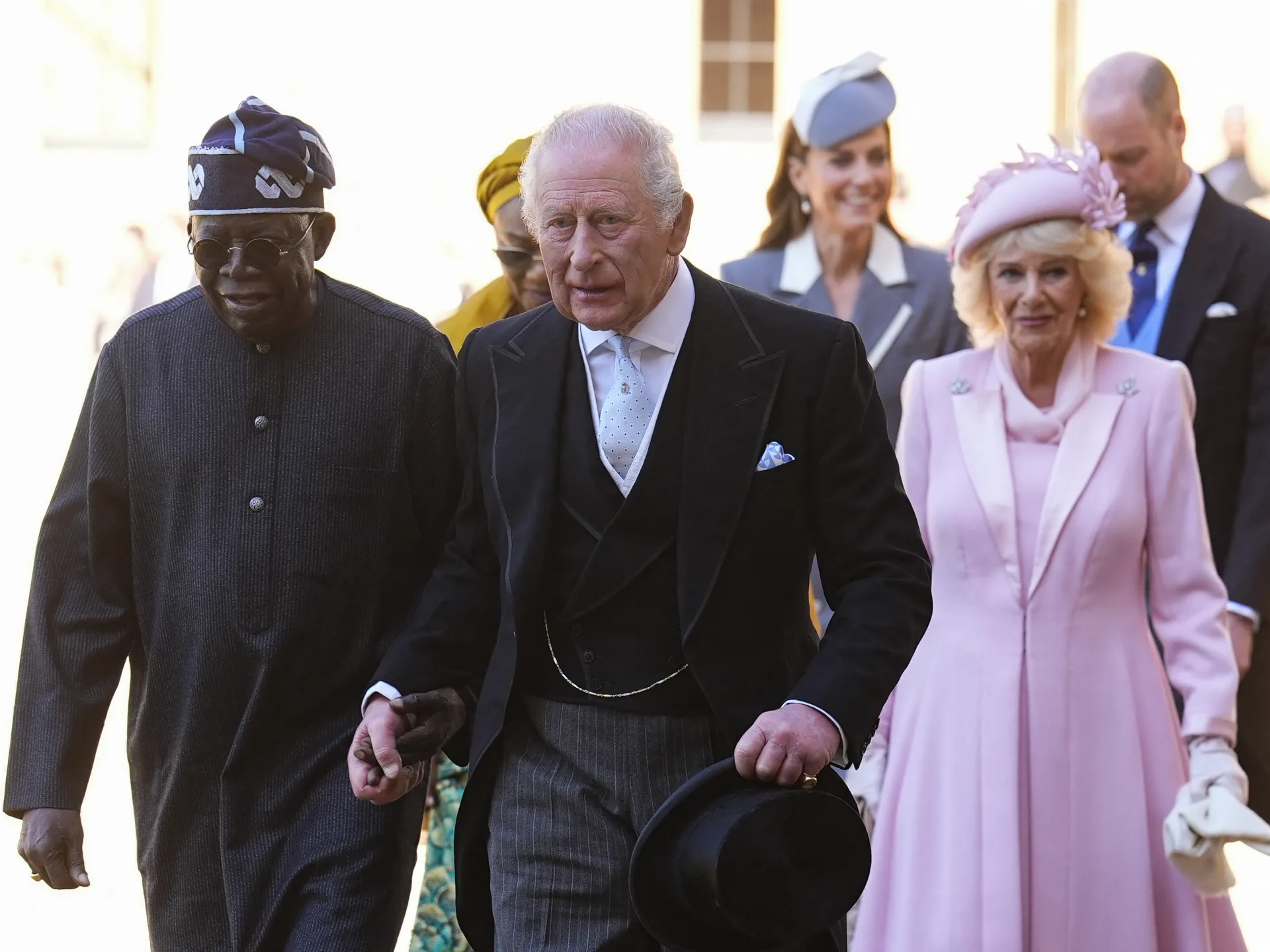
The UK’s King Charles III has welcomed Nigerian President Bola Tinubu at Windsor Castle in the first state visit by the leader of Africa’s most populous nation in nearly four decades.
More than 1,000 soldiers were out in force on Wednesday for the diplomatic show of soft power by the royal family.
Recommended Stories
list of 3 itemsend of list
With trade between the two countries at a record high, Charles is using the two-day visit to highlight the pair’s deep cultural and commercial links.
Tinubu has made less formal visits to the United Kingdom several times during his tenure, and the two countries remain major partners in trade, aid and defence. London is also home to a large Nigerian diaspora of about 300,000 people.
Nigeria’s presidency said the visit signalled a “renewed chapter” and reflected a shared commitment to “advancing trade and strengthening diplomatic ties”.
Calling the visit “historic”, London announced Nigerian companies, including banks, are expanding operations and creating hundreds of jobs in the UK, strengthening it as a global hub for African business.
Nigerian flags and Union Jacks
King Charles and Queen Camilla greeted the president and his wife in Windsor, west of London, as artillery fired salutes.
Both Nigerian flags and Union Jacks fluttered amid the procession.
The Nigerian president and his wife earlier chatted with heir-to-the-throne Prince William and his wife Catherine, at a hotel in the town.
The party then rode in carriages to the historic Windsor Castle.
Later, the king and queen showed the president and first lady items from the UK’s colonial rule of Nigeria, which existed until 1960.
Later on Wednesday evening, a lavish state banquet took place.
On Thursday, Tinubu is expected to meet British Prime Minister Keir Starmer, as well as members of the Nigerian community abroad, according to the official schedule.
Missing from the official schedule is the traditional meeting between the visiting head of state and the British opposition.
Conservative Party leader Kemi Badenoch, who is of Nigerian descent, has repeatedly publicly criticised the country she was raised in over corruption and violence.
The last Nigerian state visit to the UK took place in 1989, although Tinubu was received by Charles in September 2024.
Before the death of his mother, Queen Elizabeth II, in 2022, Charles also visited Nigeria four times as prince of Wales.
Tinubu’s visit went ahead, despite a deadly bombing in northeastern Nigeria’s Borno State on Monday, which killed 23 people and injured more than 100, with the president condemning the attacks and insisting “Nigeria will not succumb to fear.”
Umar Muhammad Mustapha had just stepped out of the mosque when he heard someone say an explosion had gone off in the Maiduguri Monday Market area on the evening of March 16. He panicked and asked when. “Just a moment ago,” someone replied, “while we were praying.”
Immediately, Umar began dialling his nephew’s number as he rushed toward the scene without first returning home. “The phone kept ringing, but he did not answer. A few moments later, it prompted ‘switched off’,” he recalled.
That was when the panic deepened.
“I began dialling those whose shops were close to ours.”
Umar sells gabgab at the market. His nephew, Muhammad Ibrahim, makes the local incense while he sells it. The 27-year-old has been with Umar since he was nine.
As he moved through the city that Monday evening, his thoughts raced ahead of him. “I began to imagine the condition in which I would meet him,” Umar said. “Is he alright? Is he alive? Is he dead? Is he injured? And how bad his injuries might be.”
They both work at the market, but that day, Umar stayed at home.
That night, at around 7 p.m., three explosions simultaneously rocked parts of Maiduguri, the Borno State capital in northeastern Nigeria, including the Monday Market, the Post Office area along Ahmadu Bello Way, and the entrance of the University of Maiduguri Teaching Hospital (UMTH).
As he hailed a tricycle to rush to the market, Umar was restless. “I felt as though the keke was not going fast enough and kept urging the driver to go faster,” he said.
From the market to the ward
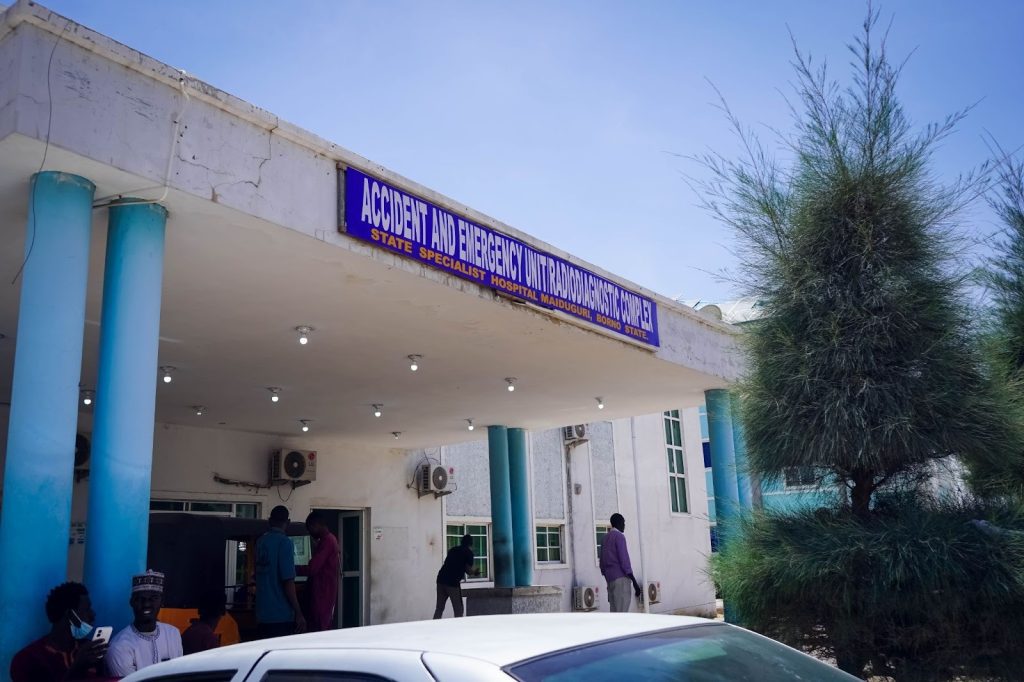
Before he reached the market, Umar’s phone rang, and Muhammad’s name was displayed. But when he answered, a different voice spoke. “Come to the emergency ward of General [State Specialist Hospital],” the person said.
In that moment, uncertainty gave way to reality. “An explosion occurred; he was affected,” the person continued. “He was brought to the hospital. You are the last person he talked to, so we are reaching out.”
Immediately after the explosions at the Monday Market and Post Office area, victims were rushed to the emergency ward of the State Specialist Hospital, Maiduguri. Photo: Al’amin Umar/HumAngle.
The blasts at the market and the Post Office were especially devastating. The two locations sit minutes apart. Traders had closed for the day and were heading home when the first explosion tore through the Elkanemi junction, near the market.
Following the explosions the next morning on March 17, the Monday Market was locked, and traders had delayed entry. Security operatives, including the police and NSCDC, scan the site for leftover explosives while sanitation workers clean the site of blood stains. Photo: Al’amin Umar/HumAngle.
In the immediate aftermath of the first blast, many people scattered and ran towards the Post Office area. Muhammad was among them. At the time Umar was trying to reach him, he had already escaped the market blast. In the confusion, he could not hear his phone. As he ran towards the Post Office area, another explosion went off.
It caught him, and he sustained injuries to his chest and legs.
When HumAngle visited the hospital on Tuesday, March 17, Muhammad could not speak, only nodding when spoken to. Umar said he was scheduled for surgery later in the evening.
Muhammad lies on his hospital bed on the morning of March 17. He sustained injuries on his right leg and chest. Photo: Al’amin Umar/HumAngle.
Other survivors also carry similar stories.
Mohammed Babagana Bukar had just bought a pair of shoes for Eid al-Fitr, which is in a few days, with money he earned as a porter at the market. When the blast happened, the 15-year-old said, “We panicked and began running towards the Post Office when another one went off, close to where the flyover is being constructed.”
He was brought to the hospital by a stranger. “He carried me as I could not walk.”
Fantami Modu didn’t escape the first blast that rocked the market; he was injured.
“It affected my leg,” the 40-year-old said. “We were brought to the hospital by the police.” Fantami sells clothing materials and earns about ₦7,000 daily. It is what he uses to feed his family.
Get our in-depth, creative coverage of conflict and development delivered to you every weekend.
Subscribe now to our newsletter!
Now, he cannot work. Beside him, his brother, Babagana, said they are contributing to support the household until he recovers.
According to the Borno State Police Command, 23 people were killed, and 108 were injured in the multiple bomb blasts. No terror group has claimed responsibility for the attacks, but the Nigerian Army said they were “carried out by suspected Boko Haram terrorist suicide bombers”.
“Preliminary information further indicates that the terrorists may have deployed multiple suicide bombers into Maiduguri with the intention of carrying out coordinated suicide bombings at crowded locations,” Lieutenant Colonel Sani Uba, Media Information Officer of the Joint Task Force North East Operation Hadin Kai, said in a statement.
At the State Specialist Hospital, where victims were first rushed to, HumAngle counted 13 survivors on admission. The hospital is less than two kilometres from the scenes. Of these 13, 11 were males and two females, with varying degrees of injuries to the arm, leg, and chest.
Nurses at the hospital said at least 40 people were brought to the emergency ward that night, with many later referred to the UMTH. Only 14 survivors were eventually admitted, but one died on arrival.
Many of the over 40 survivors that were rushed into the State Specialist Hospital on the night of the attack were later referred to the University of Maiduguri Teaching Hospital. Photo: Al’amin Umar/HumAngle.
UMTH was also targeted that night. An explosion that went off at the hospital’s entrance. Although no civilian casualties were recorded, sources said that a suspected suicide bomber, who tried to enter the hospital on a bicycle before he was stopped by security operatives, died in the incident.
A city remembering fear
For some residents, the events revived familiar anxieties.
“We had just broken our fast and were waiting for a tricycle to return home when we heard the explosion close to the Monday Market,” Sulaiman Muhammad, a resident, recounted. “Less than 20 minutes after, we heard another one from the Post Office area. In panic, we scattered.”
He did not go to the scene. “It is dangerous,” he said. “I remember in one explosion like this inside the market at the peak of the [Boko Haram] insurgency, another explosion went off immediately people gathered to help victims.”
The second explosion on the evening of March 16 occurred at the Post Office area, near a flyover construction site. Most people fleeing the Monday market blast were caught here. Photo: Al’amin Umar/HumAngle.
Now, those memories are resurfacing. “People are in panic,” he said. “We had begun to experience relative calm until the past few days.”
Sulaiman has sold shoes at the market for more than 20 years. He believes the attacks will affect business. “As you can see, no one is out [to sell],” he said.
These incidents are part of a broader pattern of escalating violence.
The explosions came barely 24 hours after terrorists attacked a military base in Kofa, a community close to Ajilari on the outskirts of Maiduguri, on March 16. Joint security operatives repelled the attack, leaving many terrorists dead.
However, before then, there had been attacks by terror groups across Borno State, including assaults on rural military bases and resettled communities like Ngoshe and Dalwa. Also, on Dec. 25, 2025, a suicide bomber detonated at a mosque in the Gamboru Market area of Maiduguri. Five people were killed, and 35 others were injured.
Taken together, these incidents point to what observers describe as a violent resurgence. HumAngle has reported that the terror groups operating in the region have undergone several technological shifts that have aided their expanded attacks and operations, including the use of artificial intelligence and drones.
For Umar, the incident has narrowed into something smaller, more personal.
Muhammad, he said, loves to read.
“He would read verses from the Qur’an after his morning prayer. And after breakfast, he would head to the market. And by evening, he would return home. He would read in the evening too, before going to bed.”
When asked what he hopes for, Umar paused.
“I would have hoped for more security or for more vigilance,” he said. “But what would an empty hope solve? Authorities know what to do. They would act properly if they intend to.”
“If they rebuild and you return, we will kill you.”
That was the threat Abubakar Dalwa received before fleeing to Maiduguri, Borno State’s capital in northeastern Nigeria, on the night of March 8. Abubakar was sitting in the compound of his home in Dalwa, a recently resettled community in Konduga, a few kilometres from Maiduguri, with his children and wife. The children slept curled together on a plastic mat while his wife tended a pot over the fire. It was during Ramadan, the Islamic month of fasting, and she was preparing the meal they would eat before dawn.
Then the gunfire came in rapid succession around 10:20 p.m. The children woke up as Abubakar and his wife rushed them inside the room. Moments later, someone began knocking impatiently on the door.
“Open this door,” the person shouted. Abubakar’s wife clung tightly to him. He stepped outside and opened the door. About ten armed men stood in the darkness. Most wore military camouflage. Others were dressed in black uniforms. Belts of ammunition hung across their shoulders, some trailing toward the ground.
“They told me, ‘Get out and leave for Yerwa [Maiduguri],’” Abubakar recalled. The terrorists said they had come to burn the buildings. “They told me the buildings belonged to the government,” he added. “They said their fight was with the government, not us.”
Abubakar did not argue. By then, it was nearly midnight. He gathered his wife and children and fled into the darkness. “We left without taking anything,” he said.
Behind them, the town burned, and three people were killed: a man, a woman, and her baby. The man’s daughter survived but was shot in the leg. She was later taken to the Maimalari Cantonment Hospital in Maiduguri.
By 2 a.m., Abubakar and his family had reached the city. Soldiers received them at a military checkpoint. They were displaced again.
The assault on Dalwa was not an isolated raid. On the same night, another attack was unfolding hundreds of kilometres away in Kukawa. A member of the Civilian Joint Task Force (CJTF) stationed there said the terrorists attacked around midnight.
“They killed our men, including our Commanding Officer, carted away weapons and vehicles, burnt one building,” he said.
The seizure of weapons and vehicles during these attacks has become a recurring feature of recent raids across Borno, weakening security formations in rural areas and forcing some forces to consolidate around larger bases closer to Maiduguri.
How the attacks unfolded
In Dalwa, the attack lasted about an hour. A frontline member of the NFSS said the terrorists entered the town after overpowering the security units stationed there. “We knew they would overpower us from the first sounds of their gunfire,” he said.
Many of the terrorists carried heavy weapons, including PKT machine guns capable of sustaining rapid fire; others carried rocket-propelled grenades (RPGs).
The terrorists strategically positioned themselves in Dalwa. “They went from house to house,” the NFSS member said. “They ordered residents to leave the town.” Then they began setting buildings on fire.
Security officers attempted to resist the attack. They sought reinforcements from Maiduguri, but the vehicles sent to support them ran into buried landmines. Two soldiers were killed in the explosions. “And so we retreated,” the NFSS member said.
According to the volunteer security operative, the attackers approached Dalwa in coordinated groups. One group blocked the road leading to Damboa. Another positioned itself at the entrance of the town near a cemetery on the outskirts. A third group advanced directly into the town to engage the security forces.
“They came through the eastern side,” he said. “That used to be the original Dalwa before the first displacement.”
The security volunteers estimated the number of attackers to be between 80 and 100. Most of them arrived on foot, while others rode on motorcycles, they said.
File: Young girls queued up, with their plastic containers at a water point in an Internally Displaced Persons camp in Borno. Photo: Hauwa Shaffii Nuhu/HumAngle.
During the March 8 attack, only about 20 soldiers were stationed in the town. Volunteer forces, including members of the NFSS, CJTF, and repentant terrorists known locally as “the hybrid”, numbered fewer than 100. Five days before the raid, surveillance drones had spotted terrorists gathering in nearby areas. “We anticipated the attack,” the NFSS member said.
But anticipation did not stop it. “The attacks keep increasing,” he added. “More than the previous year.”
Get our in-depth, creative coverage of conflict and development delivered to you every weekend.
Subscribe now to our newsletter!
In Kukawa, the insurgents used similar tactics. A CJTF member stationed there said the attackers arrived in three coordinated groups. One advanced toward the military base. Another waited on the outskirts of the town. A third group positioned itself along the road leading to Cross Kauwa to ambush reinforcements. He claimed that more than 200 fighters participated in the assault.
“They came mostly on foot,” he said. “They were all wearing military camouflage.”
The fighting lasted about three hours. After the terrorists withdrew, the commanding officer of the base, Umar Farouq, pursued them with a convoy, which was later ambushed, and most of his men were killed.
A pattern of attacks on rural security
The recent attacks on Dalwa and Kukawa are part of a broader pattern. Across Borno State, terrorists have increasingly targeted military bases, convoys, and resettled communities, often ambushing reinforcements and seizing weapons and vehicles during the attacks. Security volunteers say these raids are gradually weakening smaller rural security formations and concentrating forces around larger garrison towns closer to Maiduguri, leaving many outlying communities increasingly exposed.
The incidents suggest a deliberate campaign by terrorist groups, particularly the Islamic State West Africa Province (ISWAP). Their strategy appears to involve weakening security forces, isolating rural communities, and driving civilians out of resettled towns. These attacks are occurring against the backdrop of a significant government policy.
Over the past years, the Borno State government has implemented a resettlement programme to close camps for internally displaced persons and return families to their hometowns.
An illustration of armed terrorists in uniforms and a military vehicle. Illustration: Akila Jibrin/HumAngle.
The resettlement schemes started in 2020 when the state government began rebuilding homes, schools, clinics, and public facilities in previously abandoned communities as part of what was described as a transition toward a “post-conflict recovery phase”. Thousands of displaced residents have been moved out of camps in Maiduguri and returned either to their original communities or to nearby host settlements considered relatively secure.
But the recovery effort depends heavily on movement. Contractors, labourers, and materials must travel from Maiduguri into rural areas. That movement has increasingly become a point of vulnerability. Roads leading to resettled communities have suffered damage or been mined, isolating towns and delaying military reinforcements. When security forces attempt to respond, they often encounter roadside bombs or ambushes along the routes connecting rural communities to larger bases. Military installations themselves have also become targets. Such attacks on bases allow terrorists to seize weapons, vehicles, and ammunition that can be used in subsequent operations while weakening already thinly stretched security formations in rural areas.
On March 5, terrorists attacked a military base in Konduga, burning several buildings. A member of the Nigerian Forest Security Service (NFSS) told HumAngle that several soldiers were killed, and vehicles and weapons were stolen. Two days earlier, on March 3, the insurgents attacked Ngoshe, a town under the Gwoza Local Government Area (LGA) that had been resettled since 2020. The attackers first targeted a military base before spreading through the town and setting houses ablaze. Local sources and survivors said the attack lasted several hours and forced thousands to flee. Nigeria’s President, Bola Tinubu, condemned the attack on March 6, describing it as a “heartless assault on helpless citizens” and directing security agencies to rescue those abducted.
File: An image of a burnt residence in Ngoshe during the March 3 attack. Credit: Survivors of the incident.
Earlier attacks followed a similar pattern.
On Feb. 14, terrorists attacked a military base in Pulka, about ten kilometres from Ngoshe. On Feb. 5, another attack targeted a base in Auno along the Maiduguri-Damaturu road, according to a military source who asked not to be named. Several soldiers were killed, and vehicles were taken.
On Jan. 28, about 30 construction workers were killed in Sabon Gari in Damboa. The same day, terrorists attacked an army base in the town, killing nine soldiers and two members of the CJTF. A military base in Damasak was also overrun by terrorists, who killed seven soldiers, captured 13 others, including their commanding officer.
Earlier incidents also targeted reconstruction efforts and security infrastructure. On Dec. 25, 2025, a suicide bomber detonated at a mosque in the Gamboru Market area of Maiduguri. Five people were killed, and 35 others were injured. On Nov. 17 of the same year, workers fled after terrorists stormed a construction site in the Mayanti area of Bama. In the same town, terrorists attacked the Darajamal community in September last year, killing at least 63 people, including five soldiers, and burning about 24 houses.
On Nov. 20, the attackers invaded a CJTF base in Warabe, killing eight people and leaving three others missing. On Nov. 14, terrorists ambushed a military convoy along the Damboa-Biu road. Two soldiers and two CJTF members were killed. Brigadier General M. Uba, the Brigade Commander of the 25 Task Force Brigade, was abducted and later killed.
HumAngle has previously reported that terror groups have undergone several technological shifts that have expanded their attacks and operations, including the use of drones. Despite the violence, the resettlement programme continues. On Jan. 28, the Borno State government received about 300 Nigerian refugees from Cameroon and resettled them in Pulka. The government later received 680 more refugees on Feb. 8.
Why are the attacks happening?
Umara Ibrahim, a professor of International Relations and Strategic Studies at the University of Maiduguri, said the attacks may be aimed at constraining the government’s resettlement efforts.
“Because their movements are observed and monitored, and perhaps challenged, it is not in their interest for resettlement to proliferate,” he told HumAngle during a February interview.
The attacks also serve a logistical purpose.
“Some of their tactics include ambushing and carting away weapons and supplies from peripheral bases in unfortified areas,” the professor said. “It also includes attacks on bases, especially in places where backup might take time to arrive.”
As attacks on rural bases continue, residents and volunteer security operatives say the shrinking presence of security forces in some outlying communities is raising fears that large parts of rural Borno may again become vulnerable.
Many of these families, now fleeing towns like Dalwa, had already experienced displacement. Some years ago, insurgent violence forced them to abandon their homes and seek refuge in camps around Maiduguri. When the government announced resettlement plans, they returned. They rebuilt their lives slowly. Children went back to school. Farmers returned to their fields.
Now they are running again, and the promise of returning home is once again slipping out of reach.
Kasuwan Daji, once a bustling village, now lies in haunting silence.
The aftermath of the Jan. 3 terror attack has stripped the community and market of their familiar rhythm, leaving behind charred homes and empty streets.
In the village market, located in the Borgu Local Government Area of Niger State, North Central Nigeria, where voices once mingled in trade and laughter every Wednesday, only the wind now moves through its abandoned, burnt makeshift tents.
When HumAngle visited the community in February, the village felt hollow, its people gone—either displaced, abducted, or buried.
Shops in the market that were burnt down by terrorists who attacked the Kasuwan Daji. Photo: Isah Ismaila/HumAngle.
Amid the ruins, Sule Amadu, an elderly man in his late 60s, moved slowly through the debris of his burnt house, searching for anything that might have survived the flames. He was dressed in the same clothes he wore on the day of the attack.
Sule lost his brother and his house, and nine of his grandchildren were abducted by the same terrorists who attacked his community on Jan. 3. Photo: Isah Ismaila/HumAngle.
His quiet scavenging symbolised both survival and loss.
“I was at the farm when I first heard the roar of their motorcycles heading towards our village,” he recounted. “Moments later, they began shooting sporadically. In panic, I exclaimed, ‘Innalillahi wa inna ilaihi raji’un’ [from God we are and to Him we shall return].”
Sule said the violence was relentless, as the terrorists aimed their bullets directly at people.
“Those who tried to run were chased down by terrorists on motorcycles. Two of them rode together—one driving, the other firing at random. What was our crime?” he added, his voice carrying both grief and bewilderment.
A distant view of some of the burnt houses and food storage facilities in Kasuwan Daji, now sitting in eerie silence. Photo: Isah Ismaila/HumAngle.
State authorities said no fewer than 30 people were killed in the attack. However, eyewitnesses who spoke to HumAngle say 57 people were buried that day, while 49 others were abducted, contradicting the official figures.
Sule narrowly escaped death. His younger brother was killed, and nine of his grandchildren and his son’s wife were abducted that day.
“When the terrorists stormed in, I was trying to bag my millet. One of them chased me while shooting, but by God’s mercy, I escaped the bullets. I ran and jumped into the river to save my life,” he said.
How the attack unfolded
Sule was not alone in witnessing the chaos that engulfed Kasuwan Daji. HumAngle met another resident, Isa Mamman, who said he was among the first to notice the approaching attackers and raise the alarm in the community that day.
Isa, a resident in his 40s, is a living witness to the atrocities committed by the terrorists who stormed his village on Jan. 3, 2026. He vividly remembers the horrifying scenes. Photo: Isah Ismaila/HumAngle.
He recalled how the attack began and how quickly it unfolded.
Isa was alone in a nearby bush around 4 p.m. when he noticed heavy dust rising in the distance and the sound of motorcycles approaching. He immediately ran towards the community to raise the alarm, where he met another villager who was also fleeing. Isa learned from him that the attackers had stormed in from the market axis.
Within minutes, chaos engulfed Kasuwan Daji.
Gunshots echoed across the village as people screamed and scattered. Terrorists on motorcycles fired indiscriminately, chasing down those who tried to escape. Shops and homes were set ablaze, and the once-thriving market became a scene of devastation.
Just like Amadu, Isa narrowly survived, as he was shot at twice as he fled into the bush. From his hiding place, he watched helplessly as villagers were slaughtered and houses reduced to ashes.
Isa narrowly escaped death when the terror struck. Photo: Isah Ismaila/HumAngle.
The violence stretched into the night as Isa remained hidden, fearing an ambush, while the community lay in ruins.
“By dawn, when I came back to the community, lifeless bodies were scattered across the village, food storage facilities were destroyed, and every house and the market were burnt,” he said. That day, I escaped by God’s grace. I ran into the bush to hide, but I could still see what was happening. I saw our people being slaughtered like rams.”
Get our in-depth, creative coverage of conflict and development delivered to you every weekend.
Subscribe now to our newsletter!
The area where people were tied and slaughtered by terrorists. Residents told HumAngle that dead bodies littered this area in pools of blood. Photo: Isah Ismaila/HumAngle.
Isa noted that, “There was no part of the community where we didn’t find dead bodies. Every house in Kasuwan Daji was set ablaze. Our market and storage facilities, where we kept food, were burnt down. We’ve all fled because we are terrified they might attack again.”
A new terror base
Field investigations conducted by HumAngle across the Kasuwan Daji, Wawa, and Babanna areas of the Borgu LGA of Niger State, in February show that terrorist factions are now entrenched in and around the Kainji Lake National Park axis.
Terror groups such as Mahmudawa (Mahmuda faction), Lakurawa, elements of Ansaru, and Jama’atu Ahlis Sunna Lidda’awati wal-Jihad (JAS) led by Sadiku and Umar Taraba, as well as a newly emerged cell affiliated with Jama’at Nusrat al-Islam wal-Muslimin, have turned the Kainji Forest Reserve into a safe haven.
These groups operate in interconnected networks rather than in isolation, exploiting local cover to conceal their movements. They conduct attacks in distant areas before retreating to established hideouts within the park’s surrounding communities.
Kasuwan Daji is situated within this geographic corridor and has become a focal point due to its depth, accessibility, and lack of security presence. It sits about 14 kilometres from the Saint Mary’s Catholic School, where some schoolchildren were abducted in Nov. 2025.
The largely ungoverned terrain provides violent groups with mobility, supply routes, and escape paths across state and national boundaries. This strategic advantage has made the area increasingly attractive to extremist factions seeking to expand their operational reach.
Recent incidents in Niger State and adjoining areas — including coordinated assaults on villages and high-profile abductions — have heightened concerns that extremist networks are embedding themselves beyond the country’s North East, their traditional stronghold. Their spillover into villages such as Kasuwan Daji, Agwara, Babanna, and Kaiama LGA of Kwara State underscores the emergence of a hybrid threat ecosystem in which ideology, criminal enterprise, and local grievances converge to reinforce instability.
This evolving dynamic positions Kainji not only as a local security challenge but also as a critical node in the broader extremist landscape of the North Central region.
Earlier attacks
The Kasuwan Daji attack of Jan. 3 was not the first.
Months before, precisely in September 2025, residents told HumAngle that terrorists had entered the community and abducted several of its most significant figures. Among them was Usman Jatau, the village head, along with five others: Ibrahim Jatau (zone chair of Kambari), Anthony Yakubu Takura (youth leader), Mathew Ibrahim (head of vigilante), David (businessman), and Abu Agwara.
Relics of the Jan. 3 attack. Photo: Isah Ismaila/HumAngleThis rhombus had over 20 stacks of sorghum that were stored by a farmer in Kasuwan Daji, but was razed by terrorists. Photo: Isah Ismaila/HumAngle.
To date, none of them has been heard from, a situation that has left families in anguish and the community without its leadership.
After the abduction, Ajikali Jatau, the brother of the village chief and head of the Kasuwan Daji market, said the same attackers returned with greater brutality.
“This time, their intent seemed clear—to wipe out the community. Villagers were slaughtered mercilessly, some tied with their hands behind their backs before being killed,” Ajikali told HumAngle. He believes the market was deliberately attacked because of its boom and constant business activities.
Ajikali Jatau is burdened by the pain of losing his brother, nephew, and relatives in the terror attack. Photo: Isah Ismaila/HumAngle.The remains of the Kasuwan Daji weekly market burnt by terrorists in the Borgu area of Niger State. Photo: Isah Ismaila/HumAngle.
Ajikali told HumAngle how the market itself had its own history of struggle.
“Before establishing Kasuwan Daji, we used to trade at Sokomba market every Wednesday. But after two young men from our tribe [Kambari] were killed and burnt there in broad daylight, we decided to stop going there.
“One of the victims had tried to escape but was shot dead. The repeated harassment and targeting forced us to request that the market be moved somewhere else, but after several futile efforts, we created our own,” he revealed.
Debris of burnt grains from the storage facilities razed by terrorists in Kasuwan Daji Market. Photo: Isah Ismaila/HumAngle.
For seven years, Kasuwan Daji market thrived, residents say, as they paid revenue to the local government—until it was reduced to ashes in the January attack.
Displacement and human toll
More than 300,000 people have been displaced across 10 LGAs in Niger State, including residents of Kasuwan Daji, according to Governor Umaru Mohammed Bago.
Hajara Shuaibu, a resident of Kasuwan Daji, is one of them. Her husband, Malam Shuaibu, a farmer, had made the village his home, cultivating produce with his family and planning to relocate there permanently. When the terrorists struck, Hajara’s world collapsed. Two of her younger brothers were kidnapped along with her husband’s other wife and daughter, forcing the family to flee to Papiri, a 14-kilometre drive from Borgu to Agwara LGA of Niger State, in search of refuge.
Hajara Shuaibu [in pink] and one of her daughters are now seeking refuge in the Papiri, Agwara Local Government Area of Niger State, after fleeing from Kasuwan Daji in Borgu. Photo: Isah Ismaila/HumAngle.
Before arriving at Papiri, Hajara said she and her children hid in the bush for three days, waiting for the violence to subside.
“Our house was burnt to the ground, along with our belongings and food supplies. About two truckloads of grains and groundnuts that were harvested by my husband were destroyed in the fire, erasing our year-long hard work in a single night,” she said.
Days later, her brother’s wife managed to escape captivity, only to return with devastating news: her husband [Hajara’s brother] and several others who had been abducted had been killed.
The terror was felt even among the youngest.
Suleiman, Hajara’s four-year-old grandson, was among the abducted persons from the attack but was later abandoned in the Gallah area of Agwara LGA, near the house of the village chief.
His cries were said to be so persistent that the attackers eventually dropped him off before leaving with the other captives.
Hajara said that the joy at seeing him [Suleiman] alive was quickly overshadowed by grief, as she remembered her slain brother and relatives still in captivity.
‘We’re not thieves’
In the aftermath of the Jan. 3 attack, the Niger State Governor described Kasuwan Daji as a “market of thieves”, claiming that the community had become notorious for the sale of rustled cattle. He made the remarks during a condolence visit to the Emir of Borgu.
Some of the houses that were burnt by terrorists who stormed the Kasuwan Daji community of the Borgu LGA of Niger State, North Central Nigeria. Photo: Isah Ismaila/HumAngle.
Adding to the despair, he instructed the survivors to leave the Kasuwan Daji village altogether, even though no plans were announced for their relocation or resettlement, leaving families displaced, vulnerable, and uncertain of their future.
However, survivors of the attack strongly refuted the governor’s framing.
Isa Mamman and Sule Amadu are the two people who have refused to leave the community; since they have nowhere to go, they serve as watchdogs watching over the ruins left behind. Photo: Isah Ismaila/HumAngle.
Ajikali, brother of the village chief and leader of the now-destroyed market, told HumAngle, “We are not thieves. We are hard-working people, and the emirate is aware of us and our market. We are farmers—that is our business and what we are known for. We do not deal in the cattle business, so how can we be called thieves?”
Sule also echoes this rejection of the governor’s claim: “I strongly disagree with the governor’s assertion that our market is ‘a market of thieves.’ We do not sell cows in Kasuwan Daji, yet he accuses us of selling rustled cows. He’s been misled by those around him.”
“The only thing I want is to have my grandchildren back. Even if they [terrorists] demand ransom, I have nothing to give except the clothes I am wearing. They burnt everything I owned—my food, my savings, and my animals were stolen,” he noted.
The Niger State Commissioner for Homeland Security, Bello Maurice Magaji, while reaffirming the government’s commitment to tackling insecurity through intelligence gathering and grassroots collaboration, also defended the governor’s branding regarding activities at the market, stressing that it was based on verified intelligence.
“We are adopting an intelligence-gathering strategy to understand the patterns of these crimes and attacks so that we can tackle the situation head-on,” the commissioner told HumAngle. He noted that the government is also engaged in advocacy to help citizens recognise early warning signs that may not have been obvious in the past.
“Also, I believe that whatever information was released by His Excellency is based on facts that were made available. Our government does not simply go out to brand or profile people based on unverifiable information. Our government is too serious to speculate or issue statements without evidence. Therefore, we stand firmly by what the Governor said about the market,” he stated.
Investigation by HumAngle revealed that there are two markets with the same name: Kasuwan Daji. One is situated in Niger State, North-Central, and another in the Kauran Namoda area of Zamfara State, in northwestern Nigeria.
Further checks also indicate that Kasuwar Daji Market in Kaura Namoda local government area of Zamfara State, is a popular hub for cattle rustling. Terrorists, in January, stormed the market and rustled over 500 cattle.
Aminu Garba, Chairman of the Cattle Breeders Association of Nigeria in the state, told journalists that the operation was not an isolated incident noting that similar attacks have occurred in the past, with one recorded about four years ago.
He explained that the terrorists infiltrate the market and nearby villages during the day, monitoring livestock transactions before striking.
It is not impossible that the Niger State government is mistaking one Kasuwan Daji for the other.
For Isa Mamman, another survivor of the attack in Niger State, the governor’s words add insult to injury. He explains that he and Amadu stayed behind in the community because they had nowhere else to go, even as their livestock was rustled and nearly fifty women and children were abducted.
“It has been almost two months since the attack, yet nothing has been done. Neither the state governor nor the district head of Kabe has visited our community. Instead, we were insulted and labelled as thieves. We pay revenue to the government, yet they claim our market is illegal. Now, we have no food, no peace, and countless lives have been lost, and nothing has been done.”
Audu Danbaba is in his fifties but trudges like someone in his eighties. He walks carefully, sometimes raising his hands as if they were scales calibrating his body’s equilibrium.
As he emerged from his house on Feb. 25, he moved with visible effort – his feet swollen – counting each step as if needles were being pressed into the soles of his feet. With a laboured exhale, he eased himself down onto a mat that faced his home. The house, made of mud bricks, is located in Nassarawa village, Gwarzo Local Government Area (LGA), in Kano State, northwestern Nigeria.
Audu cannot remember the exact date when the armed kidnappers pulled him from his house, but he does know that it happened roughly two months ago, maybe a little longer. “I spent about 40 days with them, and now I’m in my fourth week since I was released,” he told HumAngle.
Audu’s ordeal is a window into a calculated and expanding kidnapping economy that has quietly taken root in the Gwarzo LGA. Kidnapping in Kano is fuelled by informant networks, strengthened by a porous border with Katsina State, and maintained by a ransom cycle that is systematically draining the little resources left in the poorest communities of the northwestern region.
Late at night, he was lying down when he heard screaming. The attackers had already entered his home and were beating both of his wives and children. He rushed outside and asked what was happening. They told him directly that they had come for him. To protect his family, he surrendered.
Nasarawa village in Gwarzo LGA. Photo: Aliyu Dahiru/HumAngle.
“Here is where they tied my hands and started beating me with the butt of a gun on my legs,” Audu recalled, gesturing toward the spots he said still ache. “Then they pushed me forward, beating me and shoving me until we had walked a long distance through farmland and crossed a road.”
Audu could not recall how long they had trekked with him because he was barely conscious as they dragged him. His sense of measurement also appears faulty, as he confuses miles and kilometres several times while narrating his story.
And so they kept pushing him.
“It was on the road that I noticed security operatives on patrol, as though they had received a tip and were following us. I tried to lift my head, and they struck me with the rifle butt and pinned me down. I couldn’t speak. We stayed like that until the patrol passed, then they pulled me up and kept beating me as we walked,” he added.
What Audu described, the systematic beating of victims after abduction, has emerged as one of the most disturbing features of the kidnapping crisis in northern Nigeria. After reaching the forest, he said he was tied alongside another man who had also been abducted. The torture continued with such ferocity that the other man died a week after he was abducted.
“After his death, his corpse lay there with me for two days before they took him away,” he said.
Different clips showing how abducted victims are tortured by their abductors have recently been circulated online. One footage featured a member of the National Youth Service Corps (NYSC) being tortured repeatedly by his abductors while pleading for help. In another widely shared video, three women were shown being struck as the abductors pressured them to urge their families to pay a ransom.
Another harrowing case is the testimony of a man published by a local media outlet in Zamfara, Maibiredi TV. The man narrated that his abductors burned one of his hands using molten rubber during ransom negotiations to force his family to speed up payment. Only two of his fingers remain.
What is happening in Gwarzo?
At least five Local Government Areas (LGAs) in Kano share borders with neighbouring Katsina State, namely Rogo, Tsanyawa, Shanono, Gwarzo, and Ghari (formerly Kunchi). While Tsanyawa and Shanono have suffered the most attacks, Gwarzo is particularly vulnerable. The town’s western and northern borders are adjacent to Katsina’s Malumfashi and Musawa LGAs, which have been heavily impacted by terrorist activities for a long time.
The dense and ungoverned forests in these regions provide terrorists with continuous cover for their operations. From there, locals say, they flow into Gwarzo.
Gwarzo is particularly vulnerable. Map illustration: Mansir Muhammad/HumAngle.
Locals say that the first recorded case of kidnapping occurred on Dec. 14, 2025, when terrorists on motorcycles attacked the Kururawa community in the Lakwaya district of Gwarzo. They invaded the home of an elderly man known locally as Yakubu Na Tsohuwa and abducted him. His eldest son, Badamasi, was injured while attempting to stop the assailants from taking his father. Within the same week, a second kidnapping incident was reported.
Gwarzo’s security crisis did not start in December 2025. In January 2024, police operatives arrested Isah Lawal, a 33-year-old man from Giwa LGA in Kaduna, during a clearance operation in Karaye LGA along the Kaduna-Kano border. He confessed to fleeing a terrorist camp in Birnin Gwari due to internal gang violence and expressed his intention to establish a new camp in the Gwarzo-Karaye forest. This arrest, which was largely unreported at the time, served as a warning that the authorities did not adequately heed.
The Gwarzo-Karaye forest corridor, straddling Kano’s border LGAs and stretching toward Katsina’s ungoverned zones, had already been identified by displaced armed factions as a viable new territory.
The December 2025 attacks followed a pattern that exposed how openly these groups now operate. Around 20 armed men were spotted in Danjanku village in Malumfashi LGA, heading toward the Kano axis, according to sources. The attack on Zurum Mahauta in the Gidan Malam Sallau community came at midnight on the same day.
To address the growing threat, the Kano State Government deployed forest guards to monitor the woodland areas around Gwarzo. These guards serve a dual purpose: overseeing the reforestation efforts critical to the state’s climate change response, and functioning as an early-warning layer for security threats emerging from the forest.
Get our in-depth, creative coverage of conflict and development delivered to you every weekend.
Subscribe now to our newsletter!
Dahir Hashim, the Commissioner for Environment and Climate Change, told HumAngle that the guards were recruited to tackle both challenges simultaneously: “Managing the forests because of their critical role in halting desertification, and providing rapid alerts whenever security threats are detected.”
HumAngle spoke to Abdullahi Hamza, who leads the team managing one of the forests in Mainika, Gwarzo. He is cautiously optimistic about the project, saying: “This initiative by the government has delivered results; at least for now, we have gone many days without a security incident inside Gwarzo, though there may be areas we are not yet aware of.”
Abdullahi Hamza says the activities of forest guards have reduced the fear of insecurity in Mainika. Photo: Aliyu Dahiru/HumAngle.
There are two forests in Gwarzo. One is known as Dajin Katata, where the forest guard Musa Muhammad previously worked.
“There were constant criminal incidents in that forest; the fear eventually led the previous government to fell the trees to deny criminals cover,” he told HumAngle.
Musa was later reassigned closer to home in Mainika. He does not hide his discomfort with that decision. The felling of Dajin Katata, he said, was ecologically damaging — those trees were a bulwark against the advance of the desert. But he has made his peace with the logic behind it.
“Security comes first,” he said. “You must be alive to breathe the shade of a tree.”
Kidnapping the poor for ransom
Why was Audu a target for abduction in the first place? By every visible measure, even within his own village, Audu is not a wealthy man. His mud-brick house sits among the more neglected on the street, unrepaired and unremarkable.
He told HumAngle himself that shortly before his abduction, he had tried to sell his farmland out of financial desperation, but the offer he received felt so insulting that he walked away from the deal.
“The land was worth between three and a half and four million naira, but they offered me two and a half million naira. I felt disrespected, so I refused,” he said.
Then came a coincidence that, in hindsight, feels like anything but.
Around the same period, the Kano State government began disbursing outstanding allowances owed to former ward councillors across the state. Audu’s son, Anas, had served as a councillor between 2020 and 2023, which placed him among the beneficiaries. The payment, amounting to roughly ₦6 million, was not made quietly; the state government publicised it widely. Photographs were taken at the government house. Screenshots of bank alerts began circulating on social media, shared by recipients whose names and faces were now attached to a specific, traceable sum.
The publicity became something else entirely.
“Many people had their eyes on that money,” said Mallam Saidu, Audu’s neighbour. “There is a strong suspicion that it was this payment that drew the kidnappers to Danbaba’s house that night.”
Audu suspects the same. He says his captors told him, as they held him, that someone had directed them to him. They did not tell him who.
“They showed me about five people from a distance,” he said. “I could barely lift my head to look, and when I did, I didn’t recognise any of them.”
Later, during ransom negotiations, Audu says he kept hearing one side of a phone conversation — someone telling the kidnappers that they should push his family harder to bring more, insisting they had the money and should produce it.
Across northern Nigeria, kidnapping has evolved from opportunistic crime into a sophisticated industry, and at its operational core lies a network of human intelligence that security agencies have struggled, and often failed, to penetrate or counter.
Transborder lands between Katsina and Kano. Illustration: Mansir Muhammed/HumAngle
Kano has witnessed a surge in kidnapping and criminal operations aided by local informants and snitches within the state’s localities. This development seems to have inflated security threats in local communities. Musbahu Shanono, for instance, is originally from Faruruwa in Kano but works in Lagos, in Nigeria’s South West.
When HumAngle spoke with Musbahu in 2025, he described the creeping anxiety that now accompanies what should be an ordinary homecoming – the fear of informants making him a stranger in his own community.
“Now I only come at night,” he said. “No one should know I’m around. Not even my friends. Not until I’m sure it’s safe.”
According to security authorities across northern Nigeria, kidnappers conduct detailed advance planning before armed teams execute raids at vulnerable hours, overwhelming lightly protected targets and transporting captives deep into remote forest hideouts.
In 2021, the Zamfara State government announced the arrest of more than 2,000 suspected informants. The following year, the state went further to enact legislation prescribing life imprisonment for anyone found to have aided kidnapping operations or other criminal activity in the state.
Yet the problem has not abated. Security authorities across Nigeria acknowledge that informant networks remain one of the most intractable elements of the crisis, embedded in communities, operating in plain sight, and extraordinarily difficult to root out.
Even Nigeria’s Minister of Defence, then-Chief of Defence Staff, Christopher Musa, admitted publicly in 2024 that informants were being used not only to identify and track targets, but to actively misdirect security forces pursuing terrorists.
“They make the troops go elsewhere, and when they get there, they meet nothing,” Musa said.
The price of coming home
Now Audu is back. But his return has cost his family everything.
“They only released me after we paid ₦8 million and three motorcycles,” he recalled.
The family sold whatever they could find. The farm that he had refused to part with for two and a half million naira, the offer he had walked away from as an insult to his dignity, went for only ₦1.8 million in the end due to desperation.
Danbaba’s legs are recovering a month after he returned home. Photo: Aliyu Dahiru/HumAngle.
“Then we went around asking for help – some people gave us gifts, others gave us loans,” said Anas, his eldest son. Today, after his father’s release, the family is saddled with a debt of approximately ₦4.5 million and has no clear idea where to begin repaying it.
Audu carries the weight in his body as much as in his finances. “Even after I returned, everyone who saw me broke into tears at the state I was in,” he said. “Doctors have examined me and given me medication, but the pain in my body has not stopped.”
His deeper anguish is the problem he cannot solve: how does a man who had nothing rebuild from less than nothing? “We sought help from every direction and found very little,” Anas added. “We are still appealing to the government, even if it is just to help settle the debt, because everything we had was consumed by this ordeal.”
For the remaining residents of Nassarawa and the villages clustered along Gwarzo’s edges, the haunting question is not about debt. It is about prevention and how to protect themselves from the fate that swallowed Audu before the kidnappers come again.
At the start of every school day, Martha Ayuba marks the attendance register of her class of about 50 pupils in Nassarawo Primary School, Jimeta-Yola, in Adamawa, northeastern Nigeria. The 38-year-old is the class teacher of Primary 3B. With a pencil in hand, she calls out names from the register. Each pupil answers, “Present, Ma”, before she ticks the box next to those who are “present” and crosses those who are “absent”.
Her worn attendance book is stuffed with handwritten names, erased marks, and faded ink. A leaking roof threatens to soak its pages, and a scurry of termites could erase weeks of work. Marking attendance is not just a routine; it’s a promise of accountability, and it appears on the report card at the end of each term and in the school’s database.
However, across Nigeria, this ritual of paper and pencil is increasingly out of step with the country’s emerging Digital Public Infrastructure (DPI), a national effort to build interoperable digital identity, payments, and data systems that serve citizens at scale.
Nigeria’s education system faces a tragic paradox: millions of children remain out of school, yet even those who attend often lack basic record-keeping and support. According to UNICEF, one in four primary-school–age children in Nigeria (about 10.5 million children) are not enrolled in school. In rural areas of Adamawa State, for instance, years of conflict and poverty have made schooling precarious.
At Nassarawo Primary School, Martha juggles teaching and attendance record-keeping duties.
“There was a time when rain fell, and the register got wet,” she recounts. “I lost almost an entire term’s record, and no one could tell how many students were in class during those periods. I had to get another register and start afresh. Imagine if I didn’t have a backup?”
Several schools in Nigeria, including some public tertiary institutions, still rely heavily on manual recordkeeping, as Olubayo Adekanmbi, the CEO of Data Science Nigeria, notes.
For Martha, that means precious minutes of class are spent on paperwork. This drudgery breeds frustration. “I know these kids by heart,” she says, “but we have to write it down. Otherwise, next year the next teacher won’t know what happened to them.” She keeps one copy at school and one at home, fearing theft or damage. Yet neither copy can travel with her if the children move to a different school or state. Even a single register lost in a fire or flood can erase months or years of history.
Why paper recordkeeping fails
Manual registers not only burden teachers; they distort national planning.
In Nigeria’s basic education subsector, school funding, teacher allowances and student support programmes all hinge on accurate attendance and enrolment data. Each child “counts” not just for classroom pride but for allocation of resources. For example, the Universal Basic Education Commission (UBEC) earmarks School-Based Management Committee (SBMC) funds (for feeding programmes, sanitation, and learning materials) based on pupil numbers. In 2024, UBEC disbursed SBMC – School Improvement Programme support funds to 1,171 schools in all 36 states.
If Martha’s register fails to reflect every student, such support might not reach deserving children. A missing name in the data could mean missed school meals, missing textbooks, or even being excluded from government scholarship programmes. Hence, school officials cannot adjust to “changing patterns in attendance” or identify which children need support.
Beyond individual schools, the absence of reliable data hampers policy and planning. At best, education officials compile annual school census figures, but these are months old and riddled with errors. Many rural schools report at a snail’s pace, if at all, because principals must physically carry piles of handwritten forms to local government offices.
Recognising this gap, Nigeria has begun transitioning toward a national Education Management Information System (EMIS) built on District Health Information System Version 2 (DHIS2). An overview of the UNICEF-supported says Nigeria is “moving from fragmented, manual processes to a unified, digital platform”, aiming for “real-time, accurate data for evidence-based planning and decision-making”.
In plain terms, that means that if Martha could click an app on her smartphone to log her attendance, higher-ups could see up-to-the-minute figures: student dropouts, teacher absences, resource gaps, and everything else. Real-time school data would highlight, for instance, which classes are short on books or which districts have the most teacher vacancies.
What Nigeria is doing
The Nigerian government has taken tentative steps toward digitisation.
In 2024, UBEC launched a digital quality assurance platform to evaluate schools electronically. This system is designed to stream data on school infrastructure, teacher qualifications, and learning resources into a centralised dashboard, replacing laborious paper inspections. Although the platform is operational within UBEC’s inspection and monitoring system, nationwide adoption is still scaling up as infrastructure, connectivity and digital capacity in schools improve.
Marking attendance is not just a routine; it’s a promise of accountability. Photo: Abubakar Muktar Abba/HumAngle.
Similarly, the Federal Ministry of Education unveiled the Nigeria Education Data Initiative (NEDI) to build a “single, secure platform” of educational data across basic and tertiary levels.
NEDI aims to “leverage the National Identity Management Commission’s (NIMC’s) unique identification number” – the national ID, “for accurate student tracking”. In other words, each child’s attendance and progress would be linked to a lifelong digital ID, so that Martha’s tallies could follow her students even if they moved schools or states.
At the state level, pilots are underway, but slow.
A consortium led by HISP Nigeria and UNICEF is rolling out a District Health Information System Electronic Management Information System (DHIS2 EMIS) module in twelve states, including Adamawa, to “improve education planning and outcomes for millions of children”.
Get our in-depth, creative coverage of conflict and development delivered to you every weekend.
Subscribe now to our newsletter!
Local education authorities have been trained to use tablets and smartphones to enter enrolment, attendance, and infrastructure data directly into the system. In Bauchi State, for example, ministry officials held workshops for local supervisors to practice uploading school census data via mobile devices.
Complementing government action, non-governmental organisations and agencies have jumped in. For instance, Data Science Nigeria helped launch the Gates Foundation-funded EdoCert, a digital certificate registry piloted in Edo State. EdoCert uses Sunbird, an open-source, “digital public good” to archive students’ exam results and transfer credentials online. EdoCert has since secured 1.9 million paper certificates since its launch. Its developers emphasise that the same approach could be used for attendance records. Experts point out that collecting comprehensive data could help “better track and adapt to changing patterns in school attendance” and guide the allocation of resources such as the national school lunch programme.
Meanwhile, other partners focus on connectivity.
UNICEF’s GenU9ja initiative, local telecos, and the Federal Ministry of Education are racing to wire schools to the internet. By early 2025, more than 1,000 public schools had been connected via routers and provided with devices for digital learning, according to UNICEF. Training modules have been rolled out to thousands of teachers on basic computer skills and e-learning platforms. These efforts aim to lay the foundation for any future digital register: after all, you cannot click an app without power or Wi-Fi.
Even so, Martha and her peers remain on the front lines of a slow handover from paper to digital.
Lessons from elsewhere
Nigeria is not alone in this challenge. Across Africa and the global south, educators have confronted broken attendance systems with creative digital fixes. In Rwanda, for example, the Ministry of Education introduced a mobile attendance app for teachers in 2025. Teachers simply log in and tap each day’s present students. The app immediately flags prolonged absences so that counsellors can intervene before a child drops out. At the end of 2025, more than 2,300 schools were enrolled in the system, and the government hopes that rapid data collection will reduce dropout rates. Rwanda’s example shows that with modest smartphones and training, even large rural systems can leapfrog paper.
In India and Uganda, UNICEF piloted a simple SMS/voice system called EduTrac. Community monitors phone schools daily to collect attendance via interactive voice-response or text. Since school records can be altered later, EduTrac’s immutability ensures honesty: once a teacher reports numbers, they cannot be changed. In India, EduTrac covered over 15,000 schools across four states by 2015. Cluster coordinators, each overseeing about 20 schools, used it to verify reports and spot chronic absenteeism.
The system required only basic phones and connectivity, making it ideal for remote villages. UNICEF noted that EduTrac has cultivated a culture of accountability: teachers and school heads know their numbers are being checked in real time.
What needs to change
Nigeria needs a pragmatic overhaul of its attendance system. Obaloluwa Ajiboye, an innovation governance specialist who has worked at the African Union, UNDP, and UNICEF, said one practical way to address gaps in student tracking is to assign every child a unique digital identity built on Nigeria’s existing framework, managed by the National Identity Management Commission.
“By linking school attendance records to a single, nationally recognised ID number, each child would retain one continuous education record, even when transferring between schools or moving across local government areas,” Obaloluwa noted. He explains that this kind of consistency is central to what DPI is designed to achieve. If properly implemented, it would allow attendance data to follow the child rather than remain tied to a specific school.
However, Obaloluwa added that such digital solutions will fail without power and connectivity.
An overcrowded classroom at GSS Michika in Adamawa State. Photo: Yahuza Bawage/HumAngle
Although internet penetration has increased across Nigeria, about 41 per cent of the country’s population remains offline, according to the Nigerian Communications Commission. According to Obaloluwa, the government should prioritise solar panels, school internet, and devices (tablets or laptops) for teachers.
Nigeria’s GenU9ja programme shows what is possible: it connected over 1,000 schools and trained 63,000 educators in one year. Scaling such programmes nationwide, with specific funding for data systems, is critical, Obaloluwa noted.
Additionally, Olubayo Adekanmbi, CEO of Data Science Nigeria, noted that schools like Nassarawo Primary School should be equipped with affordable digital registers that work even without constant internet access. “Many of the needed solutions already exist: for example, Sunbird (used by EdoCert) can run on laptops or tablets offline and sync later,” he added.
Olubayo said that the attendance register should not live in isolation. “It must feed into larger platforms (UBEC reports, state EMIS). Systems should be interconnected to include open APIs so that daily attendance synchronises with the annual school census”. In practice, that means digital systems built on standards (the way EdoCert operates).
Martha believes that “if only we had a quick way to mark attendance, I could spend that time helping the kids”. Nigeria has various frameworks and local and international support to make the shift, but how long will it take to achieve?
This report is produced under the DPI Africa Journalism Fellowship Programme of the Media Foundation for West Africa and Co-Develop.
Martha Ayuba’s experience at Nassarawo Primary School in Nigeria illustrates the challenges of manual attendance record-keeping, a common practice in the country’s education system. Despite the critical role accurate attendance records play in resource allocation and educational support, issues like damaged registers can lead to significant data loss. Nigeria aims to transition to a digital Education Management Information System (EMIS), supported by initiatives like UBEC’s digital platform and Nigeria Education Data Initiative (NEDI), which aims to streamline educational data and link it to national IDs. While efforts are being made to digitize records and improve connectivity, significant challenges remain due to infrastructure and systemic gaps. Lessons from Rwanda’s mobile app and UNICEF’s EduTrac in India highlight the potential of digital solutions in enhancing accountability and reducing dropout rates, stressing the need for power and internet for successful implementation.
When Catherine Bello received a text message from the World Food Programme (WFP) in August 2025, she was excited. She had been anticipating it ever since she applied for the Anticipatory Action Response (AAR), a WFP programme that provides “multipurpose cash assistance” to reduce the humanitarian impact of flooding in vulnerable communities.
Catherine lives in the Jimeta-Yola metropolis, an area in Adamawa State, northeastern Nigeria, that has experienced repeated flooding. A mother of four, she is a retired public-school teacher who now sells kunun zaki (Hausa for corn juice) to make ends meet.
She had hoped that the ₦208,184 AAR support would help her expand her business and save more to support her family.
However, that excitement faded when she arrived in Yola for data capture.
Officials asked Catherine to provide her National Identification Number (NIN) for verification. To her shock, the system flagged a mismatch. The name on the beneficiary list appeared as “Bello O. Catherine”, while her NIN record read “Catherine Bello”.
“It was the same NIN I gave them while filling the form,” she says. “They told me the name they saw didn’t match, so I couldn’t be captured.”
A missing middle-name initial was enough to exclude her from receiving assistance. Instead, she was advised to reconcile her records with the National Identity Management Commission (NIMC).
Across Nigeria, thousands of people, like Catherine, are locked out of essential services because of missing initials, misspelt names, and minor inconsistencies that trigger verification failures.
Nigeria’s digital identity system was built to include and connect millions of citizens to welfare, banking, education, and other opportunities. But for a growing number of Nigerians, the same system is becoming a barrier to accessing those services.
Identity as the backbone
Nigeria’s emerging digital public infrastructure (DPI) rests on three foundational pillars: digital identity (NIN); digital payments and financial inclusion (Bank Verification Number (BVN) and the Nigeria Inter-Bank Settlement System (NIBSS)); data exchange; and verification infrastructure.
At the centre of this system is the NIN, managed by NIMC. By late 2025, Nigeria had issued about 127 million NINs, roughly 60 per cent of the population, but millions remain unregistered or mismatched. Under the World Bank–supported Identification for Development programme, Nigeria aims to scale capacity to 250 million records and reach 85 per cent population coverage by 2027.
Digital identity is no longer optional. It is now increasingly required for SIM card registration, bank account linkage (NIN–BVN integration), social protection enrolment, scholarship applications, and access to tax and government services.
In theory, this integration promises efficiency, transparency, and inclusion. In practice, data inconsistencies, limited interoperability, and infrastructure gaps expose citizens to the risk of exclusion.
Experts warn that when people lack a valid digital ID, they can literally be locked out of basic services. Dennis Amachree, a national security analyst and former Assistant Director at the Department of State Security, notes that the rural-urban divide and the lack of enrolment infrastructure leave many, especially the elderly and rural populations, without the documentation they need to fully participate in banking, travel, and government services.
Meanwhile, the World Bank notes that Nigeria still has “a considerable gap” in identity coverage, especially among women, persons with disabilities, and other vulnerable groups. The global financial body observed that the lack of any recognised ID “prevents individuals from accessing critical government services, participating in the digital economy, and financial inclusion”.
For instance, Catherine’s hope of benefiting from the welfare package was dashed; a tiny database error translated into lost hopes.
SIM-NIN linkage – Security births exclusion
Alpha Daniel, a trader in Jimeta Modern Market, faced a different but related problem.
In 2024, the Nigerian Communications Commission, the country’s telecom regulator, demanded that all mobile phones be linked to NIN or risk being shut off. In September of the same year, millions of Nigerians woke up to find their SIM cards blocked. Alpha was one of them.
“I did everything right,” he says. “I went to the MTN shop, gave them my NIN, but after two tries, my line was still blocked.”
This was a familiar pattern. By mid-2024, telecoms reported that 13.5 million lines were barred for NIN non-compliance (8.6 million on MTN, 4.8 million on Airtel). By August 2024, Nigeria had linked 153 million SIMs to NIN (96 per cent of active lines). But that last 4 per cent represented some 6–7 million SIM connections that could no longer send or receive calls. Many complained that even after they finally registered or re-registered, their lines remained locked.
Get our in-depth, creative coverage of conflict and development delivered to you every weekend.
Subscribe now to our newsletter!
As one subscriber with Airtel put it, “Painfully, I have done this linkage at least twice, but still the line was barred”.
The government’s goal was to reduce phone-based fraud and make the digital economy safer, but for many Nigerians, losing a phone line means losing opportunities and even contact with relatives.
Signpost of SIM services outpost in Jimeta-Yola. Photo: Obidah Habila Albert/HumAngle
Ruth James, a graduate of Modibbo Adama University, Yola, had a scholarship application derailed when Nigeria’s ID system struck again. In early 2024, Ruth logged onto the Petroleum Technology Development Trust Fund (PTDF) scholarship portal and entered her details. The portal displayed a “NIN validation failed” message and locked her out.
“I filled out the form perfectly,” she says. “Then it said my NIN verification failed. I kept trying different browsers, but nothing worked. There was a help icon for failed verification on the portal. I clicked and sent several emails, but there was no response.” In the end, Ruth missed the deadline and lost a chance at much-needed financial aid.
Many federal programmes, from scholarship funds to youth training schemes, now require NIN verification. Online forums are filled with frustrated applicants: Jobs Inform noted dozens of “Not eligible” errors from a NIN mismatch or “verification failed” during registration.
These stories show how minor technical issues in Nigeria’s ID system can translate to a lack of access to education, banking, and social support, all of which are increasingly tied to digital identity.
Government policies and infrastructure gaps
The Nigerian government is aware of these issues. In 2024 and 2025, it rolled out several projects to strengthen Nigeria’s DPI, the foundational systems that underpin services. For example, the revised National Digital Identity Policy for SIM Card Registration explicitly ties SIM-NIN linkage to curb fraud.
The authorities also launched a NINAuth smartphone app in late 2025, which President Bola Tinubu hailed as “a milestone in our nation’s digital public infrastructure journey”. Tinubu has repeatedly emphasised that a “credible and inclusive National Identity Management System is fundamental to our national development goals”. In practice, the NINAuth app is meant to simplify identity checks for banks, hospitals, and government agencies, thereby reducing the need to manually look up each person’s NIN. However, the platform has not seen widespread adoption.
On the data side, Nigeria enacted a new Data Protection Act in June 2023, replacing the previous regulation. The new law imposes stricter rules (including special protections for children and a “duty of care” on data controllers). It was also a condition for the World Bank–supported Digital ID4D project.
These efforts are already yielding results: linking NIN with financial systems (NIN/BVN linkage) coincided with a jump in financial inclusion from 56 per cent in 2020 to 65 per cent by 2023. However, digital experts note that Nigeria’s DPI remains fragmented. Many government platforms and private services do not fully share data, forcing citizens to repeatedly verify their identity. Network outages and limited registration centres (especially in rural areas) still slow down NIN enrollment.
Worse, some Nigerians distrust the system after reports of lax data security. Khadijah El-Usman, a Senior Programme Officer for Anglophone West Africa at Paradigm Initiative, a digital rights group, warn that “the NIMC’s role is to secure this data. They have failed to do so”, referring to recent incidents where NIN data were allegedly sold on private websites.
Turning challenges into opportunities
Experts in digital governance say Nigeria must turn these challenges into opportunities for reform. Vincent Olatunji, National Commissioner and CEO of the Nigeria Data Protection Commission (NDPC), stresses that effective identity management must be built on harmonised policies, secure technologies, and inclusive systems to strengthen national digital trust. “Effective identity management requires harmonised policies, secure technologies, and inclusive systems,” he noted, linking strong governance with citizens’ confidence in digital IDs.
Likewise, Iremise Fidel-Anyanna, Head of Application Security, Governance, and Security Operations at the Nigeria Inter-Bank Settlement System (NIBSS), warns that “data privacy is the foundation of digital trust,” noting that privacy and security are essential to citizens’ willingness and ability to participate in digital services.
Chy Ameh, a digital identity expert based in Abuja, stresses the need for stronger privacy and trust protections, arguing that “to ensure the privacy and security of individual personal information, implement robust data protection measures such as strong encryption, secure authentication, consent and control over personal data, compliance with regulations, and regular audits” to distribute responsibility between both government and private actors.
Several other experts also highlight infrastructure bottlenecks and low public awareness: “Network glitches, poor connectivity, and limited registration centres impede effective ID rollout,” they note. In addressing this, experts urge large-scale outreach and education programmes to help people understand how and why to register for a NIN.
In simple terms, these experts say Nigeria needs to make digital ID registration easier by opening more NIMC centres in underserved areas and reducing unnecessary bureaucracy. There should also be clear public information campaigns, in local languages, to explain what the NIN is and why it matters. To build trust, the government must fully enforce data protection laws and ensure people’s personal information is safe.
Finally, better coordination among the government, banks, and telecom companies is needed so that systems work together smoothly and people do not have to repeat the same processes.
Best practices and cautionary tales
Globally, there are lessons for Nigeria. India’s Aadhaar programme, the world’s largest biometric ID system, now covers about 95 per cent of India’s population. Aadhaar made government transfers and SIM registration much smoother, but not without controversy; it has faced numerous legal challenges over data privacy and mandatory linking. Nigeria can learn from India’s experience by building strong privacy safeguards before demanding universal linkage.
In Kenya, the Huduma Namba initiative aimed to create a single ID for all services, but was suspended by the courts in 2020. Privacy advocates there won a ruling saying that collecting biometric data (even GPS or DNA) without adequate legal protection was unconstitutional. Kenya’s case shows that inclusion programmes can backfire if citizens fear their data will be mishandled. Nigeria’s reforms, such as the new Data Protection Act and the planned changes to the NIMC Act, seem aimed at avoiding such mistakes.
In Estonia, nearly 100 per cent of adults have a government-issued electronic ID card, and all state services are accessible online. This allows citizens to vote, pay taxes, and use healthcare portals seamlessly. Achieving this took decades of investment in both technology and public trust. For Nigeria, such a level of integration is a distant goal, but it shows what’s possible if the digital ID becomes reliable and user-friendly.
Bridging the divide
Catherine, Alpha, and Ruth all share a sense of being stranded by a system that was supposed to help them. Their stories reveal that digital infrastructure failures can be as damaging as physical ones. As President Tinubu himself put it, Nigeria must “eliminate unnecessary bottlenecks and ensure that every Nigerian has access to essential services without the frustration of bureaucratic delays”.
To avoid leaving people like Catherine on the sidelines, experts say the government needs to act on multiple fronts: fix the glitches, protect people’s data, and make the system easy to use. Only then can Nigeria’s grand digital ID ambitions translate into real help for its people.
This report is produced under the DPI Africa Journalism Fellowship Programme of the Media Foundation for West Africa and Co-Develop.