Nicolasito Faces the Ire of La Guaira Survivors
We have seen several scenes of relatives of victims of the earthquakes telling soldiers they are not helping, or even forcing them and police officers to return or destroy the goods and money they were caught looting in the ruins. Rather than the return of freedom of speech with Maduro’s capture, what we have witnessed in La Guaira is the crisp, absolute ire of someone who already lost everything, someone who is living the ultimate experience of struggling to find the body of a loved one to bury them in a cemetery instead of smelling them decompose under the rubble of a building.
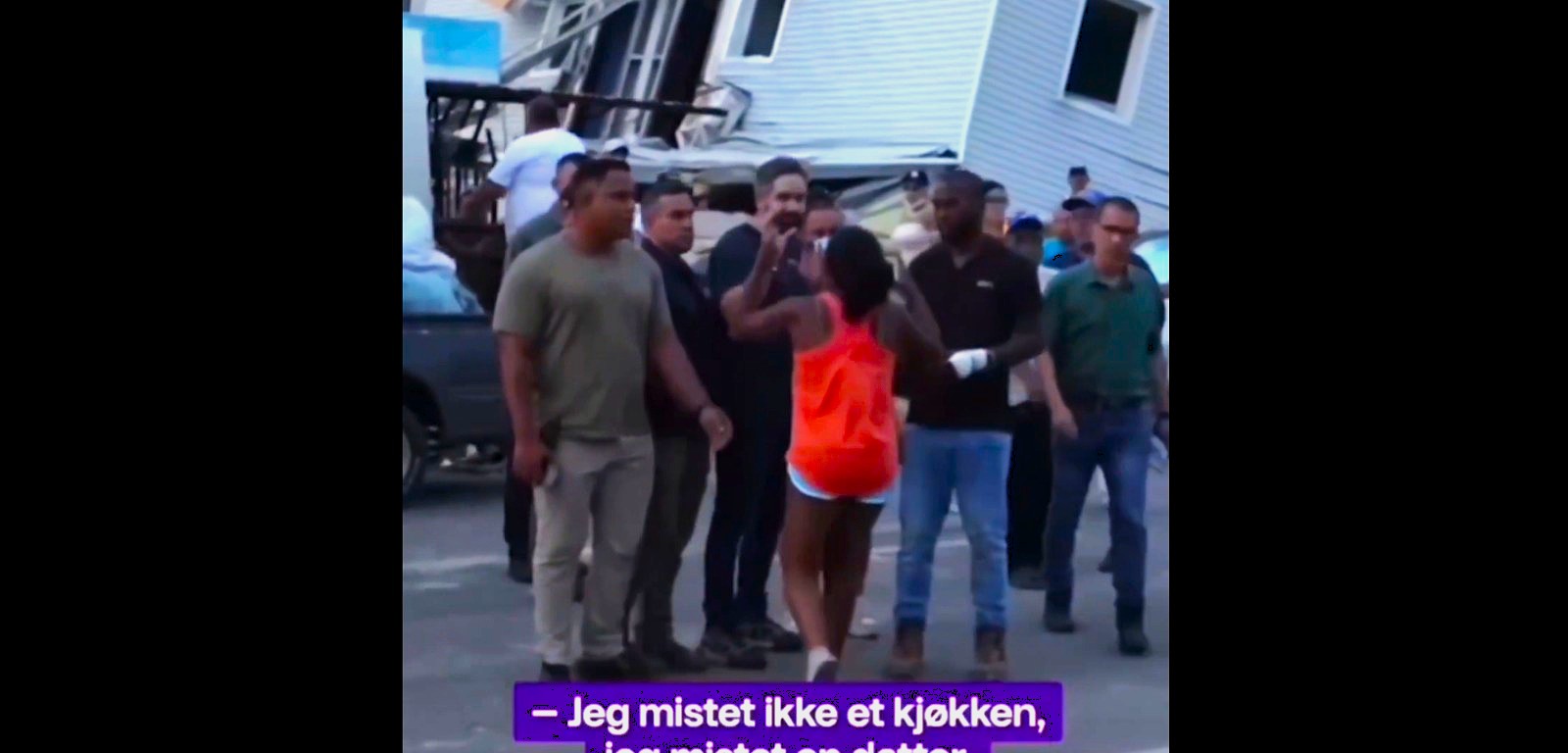
But we hadn’t seen something like this: a woman who lost a daughter and a home walking through a security detail and screaming in the face of Nicolás Maduro Guerra, a local lawmaker and son of the imprisoned dictator.
This scene is a powerful proof of the reality exposed by this tragedy: collective anger against a useless regime that lost its leadership even among the people who once supported it, and that failed to prevent the truth from reaching the world.
This happened when Sonja Skeistrand Sunde, Simen Askjer and Synnøve Gjerstad, journalists from TV 2, the second-largest TV station in Norway, were interviewing former residents of a State-built neighborhood destroyed on June 24.
First, Moraima Antón showed them what was left of her home in the 200-house complex:
“These buildings are very poorly constructed. They should never have been built,” Antón rages. It is still not known how many lives were lost right here. “The smell from the ruins bears witness to the fact that deceased victims still lie under the debris.”
Then, Damely Díaz talked to them to tell them her story:
“Damely Díaz was among those who survived. She was standing just outside her house when the ground began to shake. Her six-year-old daughter, Daymaris, was inside. Within seconds, the building collapsed on top of her. ‘My daughter was buried for four days. She could have been saved during that time. She was a little child who didn’t ask to be born, and who didn’t ask to die either,’ Díaz says. The mother is convinced that poor foundations and weak construction caused her daughter’s death. She cries incessantly and demands that those responsible be held accountable. While she is speaking with TV 2, a motorcade slowly rolls into the neighborhood. It turns out that Nicolas Maduro Guerra is sitting in one of the cars… ‘You need to go to prison! Go to prison, all of you!’ Díaz shouts at the motorcade. ‘That bastard Nicolas,’ another shouts. When Maduro Guerra gets out of the car, Díaz storms toward the entourage. ‘I didn’t just lose a kitchen, I lost a daughter! You are responsible for all of this and you must pay for it!’ she screams until her voice cracks. ‘They built garbage! Garbage!’ she yells”.
Maduro Guerra did his best to calm the woman and look reasonable before the Norwegian crew, but his escort attempted to hide the whole thing:
“Maduro Guerra’s security guards try to prevent TV 2 from filming the incident, but the people in the neighborhood form a ring around the TV crew and demand that the documentation continue. ‘Film it! Film it!’ a man urges.”
This scene is a powerful proof of the reality exposed by this tragedy: collective anger against a useless regime that lost its leadership even among the people who once supported it, and that failed to prevent the truth from reaching the world.
This case also confirms how the Rodríguez regime lost the battle to control the narrative. After they recorded the scene, two officers from the Maduro Guerra detail asked the Norwegian journalists for their names, and later they contacted them to “have a meeting”. The crew refused to go, left Venezuela, and once they were back home, they ran the story today, on July 9:
“TV 2 declines the meeting with the authorities. It is difficult to know what the risks are. Equipment or recordings could be confiscated, or in the worst-case scenario, they could face arrest.”
The chavista regime was slow and lousy to corral so many foreign correspondents they had to let in, and Delcy Rodríguez only looked worse in her press conference. TV 2’s story in particular shatters the image of efficiency and moderation that Maduro’s successor is trying to sell to the country and the world.
This feature from TV 2 also quotes political scientist Benedicte Bull, a Latin America researcher at the University of Oslo’s Center for Global Sustainability: “There is an enormous anger among the people against the authorities because they were slow to respond. I am getting reports of this anger through all channels now. The disaster has exposed all the deficiencies that have actually been there for a long time, but have now become visible to everyone…The discourse we are now hearing from President Delcy Rodríguez…suggests that the authorities are ready to implement harsher repression again, and this is what people are afraid of,” Bull says…While the situation felt unsafe for the journalists, it is Díaz who lives with the greatest risk by openly defying the regime. ‘These people must leave Venezuela. They can kill me, I don’t care. I’m not afraid to die anymore, Díaz says.